Keywords
English curriculum reform, ELT, Pedagogical orientation shift, Indonesian education policy

English curriculum reform, ELT, Pedagogical orientation shift, Indonesian education policy
English serves as a worldwide lingua franca, facilitating communication, knowledge transfer, and international cooperation across linguistic and cultural divides (Adriansen et al., 2023; Sung, 2024). In the age of globalization and swift technological advancement, competency in English has become crucial for academic achievement, career advancement, and engagement in global networks (Chea & Lo, 2022; Zhang, 2024). As a result, numerous countries where English is instructed as a foreign language (EFL) have persistently updated their curricula to conform to international norms and changing societal demands (Banafi, 2025; Maghsoudi & Khodamoradi, 2023). In addition to their instructional functions, language curricula frequently reflect national ideologies and policy frameworks that influence educational priorities and the identities of learners (AlShareef, 2024; Liu, 2025).
Throughout Asia, EFL changes demonstrate common ambitions for communication ability and intercultural awareness. Japan’s educational curriculum prioritizes communication over grammatical accuracy (Kubota & Takeda, 2021), whereas Korea and China have adopted task-based and student-centered approaches to enhance practical language application (Liu & Fang, 2022; Park and Lee, 2025). These tendencies demonstrate that curriculum reform is not solely technical but fundamentally ideological, reflecting how nations perceive the function of English in contemporary education.
Curriculum design is a dynamic system that integrates objectives, content, teaching, and assessment. Their efficacy is contingent upon the alignment of theoretical principles with local reality (Chhatria et al., 2024; Richards, 2013). Curriculum reform necessitates balancing global communicative objectives with sociocultural settings and the requirements of learners (Guarda, 2025; Indriyani, 2025). In underdeveloped nations, such alignment frequently dictates whether change is merely aspirational or results in durable transformation.
Since its independence in 1945, Indonesia has designated English as an essential subject for promoting global interaction (Cirocki & Farrell, 2019; Zein et al., 2020). Nevertheless, implementation issues endure owing to regional differences, resource inequity, and linguistic variety (Gayatri et al., 2023). Educators frequently encounter difficulties in implementing curriculum objectives in the classroom, hindered by inadequate training, inconsistent institutional backing, and varying pedagogical philosophies (Arrafii, 2023; Sukma et al., 2023). These challenges highlight an ongoing discrepancy between the creation of policies and their execution in the classroom, which has been a significant problem throughout Indonesia’s long history of reforming its English curricula.
While numerous studies have examined particular reforms or pedagogical methods, few have offered a thorough synthesis of the evolution of English curriculum frameworks over several decades. The lack of a longitudinal perspective constrains comprehension of how pedagogical philosophies, political shifts, and international influences have influenced English instruction in Indonesia.
This study performs a systematic literature review (SLR) to examine the progression of Indonesia’s English curriculum from its initial post-independence iteration in 1947 to the Merdeka Curriculum (2022–present). The review seeks to identify significant paradigmatic shifts, policy directions, and instructional trends seen in current research. It specifically addresses the essential inquiry: How have English curriculum reforms in Indonesia evolved from 1945 to 2022, focusing on their major shifts and underlying teaching approaches?
By mapping the trajectory of English language teaching (ELT) in Indonesia, this study seeks to clarify how historical, pedagogical, and reflective dimensions interact in shaping current curriculum practices. The findings are expected to offer valuable insights for policymakers, educators, and researchers working toward more context-sensitive and globally responsive ELT reforms.
This study utilized a Systematic Literature Review (SLR) methodology to synthesize literature regarding the development of Indonesia’s English curriculum. According to the paradigm established by (Grant & Booth, 2009), a systematic literature review (SLR) methodically identifies, chooses, analyzes, and interprets current research within a well-defined scope. This method allows researchers to aggregate existing knowledge and identify longitudinal trends in educational improvements (Soyoof et al., 2021). This review analyzed journal articles and academic papers regarding the development of Indonesia’s English curriculum during the last seventy years, focusing on persistent pedagogical tendencies and policy changes seen in the literature.
The use of two scholarly databases, Scopus and Google Scholar, ensured thorough and reliable coverage. The most recent and pertinent decade of English curriculum research, from 2013 to 2025, was the focus of the search. We used the following search to find possible studies:
(TITLE-ABS-KEY (*EFL AND curriculum) OR TITLE-ABS-KEY (*English AND curriculum) OR TITLE-ABS-KEY (*English AND language AND teaching AND curriculum)) AND TITLE-ABS-KEY (Indonesia) AND (TITLE-ABS-KEY (evolution OR change OR development OR policy OR implementation))
To uphold academic rigor and relevance, the evaluation employed distinct inclusion and exclusion criteria outlined in Table 1. Only peer-reviewed journal publications or academic reports that satisfied the inclusion criteria were retained for analysis.
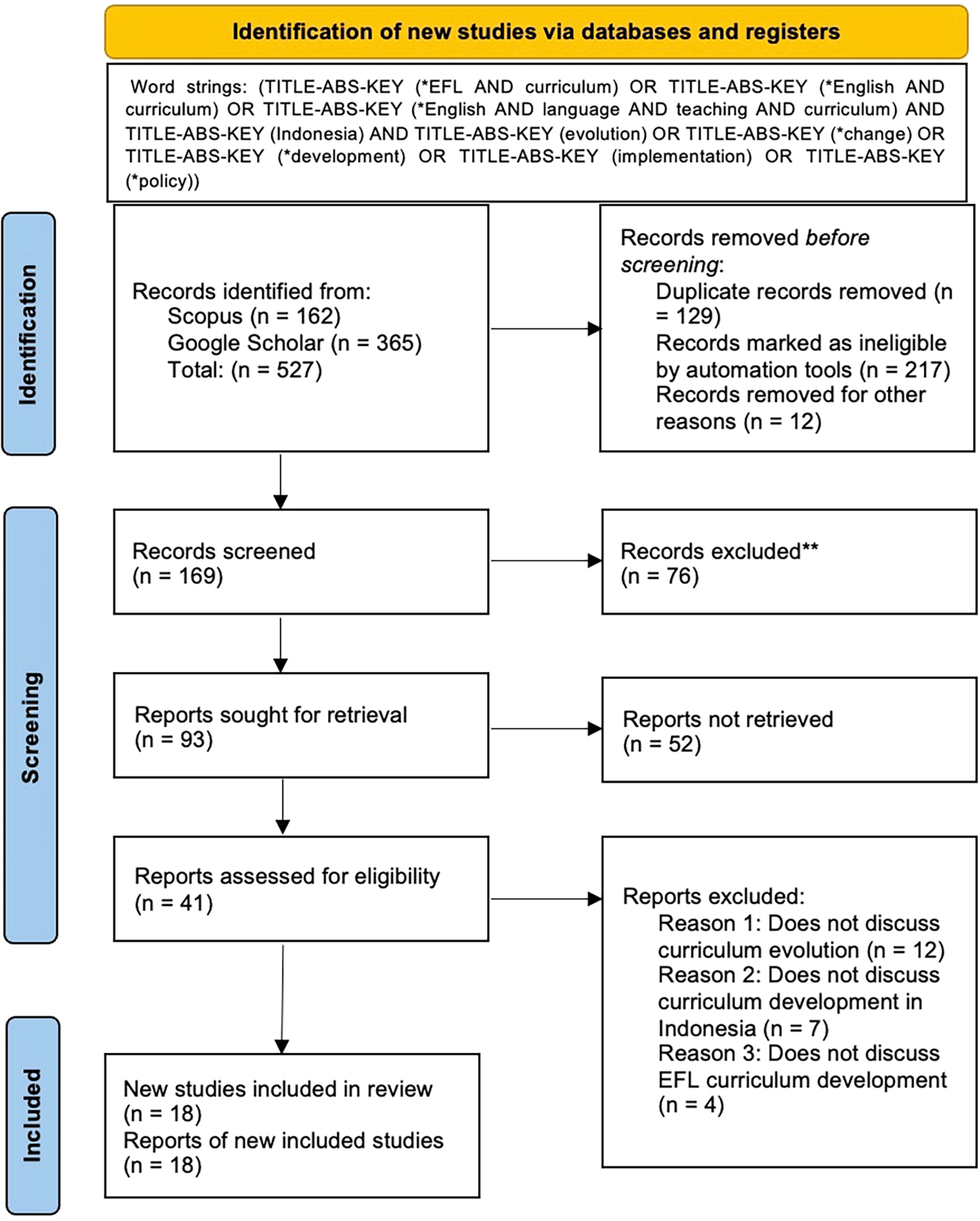
The article selection adhered to the PRISMA 2020 guidelines (Sarkis-Onofre et al., 2021) and transpired in three sequential phases: identification, screening, and eligibility evaluation. In the identification step, 527 records were acquired from two databases: 162 from Scopus and 365 from Google Scholar. After removing duplicate records (n=129), records marked ineligible by automation tools (n=217), and those removed for other reasons (n=12), a total of 169 records were retained for further screening. During the full-text retrieval stage, 93 reports were sought for full-text examination, but 52 reports could not be retrieved due to accessibility limitations. The remaining 41 reports were then assessed for eligibility based on the inclusion and exclusion criteria. Finally, in the final selection stage, a thorough manual review of titles, abstracts, and full texts was conducted. Several reports were excluded for specific reasons, such as not discussing curriculum evolution (n=12), not addressing curriculum development in Indonesia (n=7), and not focusing on the EFL curriculum (n=4). This procedure guaranteed the inclusion of solely credible and contextually pertinent research. The comprehensive process is depicted in the PRISMA flow diagram ( Figure 1).
The data analysis was conducted in two complementary phases: bibliometric mapping and thematic synthesis. Initially, the chosen papers were analyzed with VOSviewer (v.1.6.x) to discern prevalent themes and relationships within the literature. The keyword co-occurrence technique identified three predominant clusters: curriculum development and innovation, historical and policy orientation, and curriculum reflection, each signifying a unique facet of English curriculum evolution in Indonesia (Donthu et al., 2021; Perianes-Rodriguez et al., 2016). These clusters offered a quantitative assessment of the evolution and interaction of research themes in English Language Teaching (ELT) curriculum studies across time.
In the second stage, a qualitative thematic analysis was performed in accordance with (Braun & Clarke, 2021) six-phase methodology, which includes familiarization, initial coding, theme identification, theme review, theme definition, and reporting. Every item was methodically coded to identify recurring themes about curriculum reform, pedagogical transition, and implementation techniques. The findings were systematically categorized into three principal thematic dimensions: (1) Evolution of the ELT Curriculum in Indonesia, encompassing historical and ideological changes; (2) Shifting Pedagogical Orientations in ELT, indicating methodological developments and innovations; and (3) Reflection on Curriculum Implementation, emphasizing concerns regarding evaluation, teacher agency, and professional adaptation.
To guarantee the reliability of the research, the analysis employed data source triangulation, clear inclusion criteria, and sole dependence on peer-reviewed literature. The amalgamation of quantitative bibliometric visualization and qualitative theme interpretation augmented both the analytical rigor and interpretative validity of the data, yielding a comprehensive synthesis of seventy years of English curricular reform in Indonesia.
The co-occurrence analysis revealed three interconnected elements throughout English curriculum research in Indonesia, as depicted in Figure 2. The color-coded mapping delineated separate yet interconnected conceptual domains: the red group, signifying historical and policy orientations; the green group, highlighting curriculum development and innovation; and the blue group, representing review-based and evaluative perspectives.
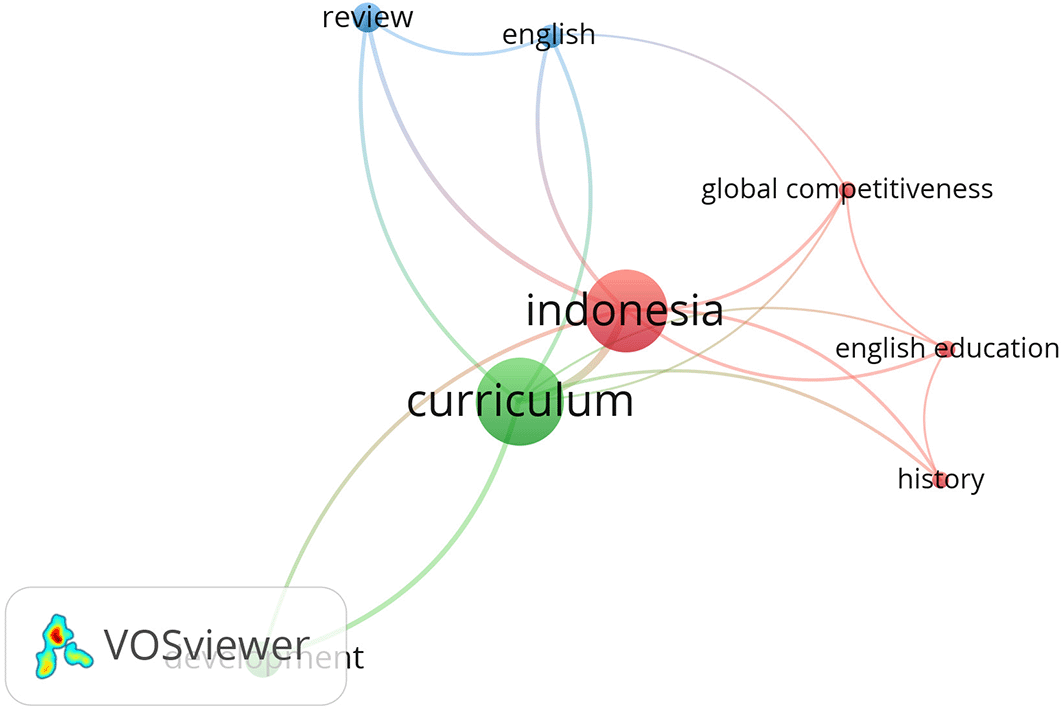
The red category emphasizes the historical-policy connection in English education, where curricular reforms have developed in reaction to global competition and changes in national education agendas. This pattern corroborates Renandya et al. (2018) assertion that alterations in the English curriculum in Indonesia are often influenced by geopolitical and economic shifts rather than only by educational advancements.
The green category highlights continuous curriculum development initiatives focused on incorporating communicative and competency-based principles to conform to international standards. This discovery aligns with the assertions of Widodo (2016) and Lie (2017), who underscore Indonesia’s endeavors to reconcile global proficiency objectives with the practicalities of classroom environments.
Simultaneously, the blue category illustrates a reflective and evaluative dimension in contemporary research, concentrating on the assessment and reinterpretation of English curriculum implementation in practice. According to (Goldman & Pellegrino, 2015), these reflective methodologies emphasize the necessity of ongoing curriculum assessment to guarantee coherence between policy objectives and instructional implementation.
Collectively, these factors indicate that English curriculum research in Indonesia is complex, incorporating historical developments, pedagogical advancements, and evaluative considerations. The overarching trend indicates that curriculum change is not a linear process but a dynamic interaction among policy, pedagogy, and contextual adaptation.
A theme clustering analysis was performed to enhance the conceptual interpretations obtained from the VOSviewer mapping, based on these bibliometric insights. Based on 19 strategically chosen journal articles, the analysis classified publications according to citation strength, conceptual connections, and thematic focus (refer to Table 2).
| No | Clusters | Documents | Years | Title | Citations | Total link strength | Theme |
|---|---|---|---|---|---|---|---|
| 1 | Red Cluster | Hidayat, M. Topit | 2021 | Evolution of The Education Curriculum in Indonesia | 11 | 2 | Evolution of the ELT curriculum in Indonesia |
| 2 | Riadi, Agus | 2019 | An Empirical Studies on Indonesian English-Curriculum Changes: Opportunities and Constraints in an Underdeveloped Region | 24 | 3 | ||
| 3 | Isadaud, Dzulkifli; Fikri, M. Dzikrul; Bukhari, Muhammad | 2022 | The Urgency of English in the Curriculum in Indonesia to Prepare Human Resources for Global Competitiveness | 18 | 3 | ||
| 4 | Sulistyaningrum, Dyah; Sumarni, Sri | 2023 | English Language Education Curriculum in Indonesia: A Historical Review within 77 years | 9 | 2 | ||
| 5 | Maharani, Windy A.; Qamariah, Z.; Mirza, A. A. | 2023 | The History of 90s English Curriculum in Indonesia | 2 | 1 | ||
| 6 | Pajarwati, Dian et al. | 2021 | Curriculum Reform in Indonesia: English Education Toward the Global Competitiveness | 57 | 4 | ||
| 7 | Amanda, M.T.; Mirza, A. A.; Qamariah, Z. | 2023 | A history of Merdeka Curriculum for English education in Indonesia | 13 | 2 | ||
| 8 | Mappiasse, S. S; Sihes, A. J. B (Mappiasse & Sihes, 2014) | 2014 | Evaluation of English as a Foreign Language and Its Curriculum in Indonesia: A Review | 217 | 5 | ||
| 9 | Widodo, H. P. | 2016 | Language Policy in Practice: Reframing the English Language Curriculum in the Indonesian Secondary Education Sector | 237 | 4 | ||
| 10 | Green Cluster | Puspita Ningsih, Jasmine | 2025 | Tracing The Shifting Goals and Curriculum Trends in English Language Teaching (2015-2025): A Systematic Literature Review and Bibliometric Analysis | 1826 | 4 | Shifting theme of pedagogical approach in ELT in Indonesia |
| 11 | Subandi, Subandi | 2014 | Indonesian Curriculum Development: Meaning-Based Curriculum and Competency-Based Curriculum in the Context of Teaching English Subject | 3 | 1 | ||
| 12 | Novasyari, Ressy | 2021 (Novasyari, 2021) | The Development of Curriculum in Indonesia | 2 | 2 | ||
| 13 | Blue Cluster | Darsih, Endang | 2014 (Darsih, 2014) | Indonesian EFL Teachers’ Perception on The Implementation of 2013 English Curriculum | 32 | 2 | Review and reflection on the English curriculum implementation in Indonesia |
| 14 | Poedjiastutie, D.; Akhyar, F.; Hidayati, D.; Nurul G., F. | 2018 | Does Curriculum Help Students to Develop Their English Competence? A Case in Indonesia | 78 | 3 | ||
| 15 | Lorenza, V.; Huang, J. | 2025 | Perceptions of Primary English Teachers in Indonesia on Shifting Curriculum from Compulsory to Extracurricular | 1 | 1 | ||
| 16 | Efendi, T. A.; Sulistiyani; Prihantini; Kristanto; Yatul J. | 2025 | Insights Into ELT Curriculum Implementation In Indonesia: Challenges, Trends, and Implications | 1 | 1 | ||
| 17 | Zein, S.; Sukyadi, D.; Hamied, F. A.; Lengkanawati, N. S. | 2020 | English Language Education in Indonesia: A Review of Research (2011–2019) | 421 | 5 | ||
| 18 | Abidin, M. Z.; Malisa, M. | 2024 | Implementing Kurikulum Merdeka (The Independent Curriculum) in the Teaching of English in Indonesia: A Critical Literature Review | 11 | 2 |
The synthesis identified three fundamental thematic domains that encompass the progression of English curriculum research in Indonesia: (1) the historical and policy-oriented evolution of curriculum, (2) pedagogical transformations in English language instruction, and (3) reflective examinations of curriculum execution. Each subject signifies a unique yet interrelated aspect of Indonesia’s ELT discourse, collectively demonstrating the evolution of the curriculum over decades in response to shifting educational philosophies, policy trajectories, and classroom methodologies. The next sections explore these issues in greater detail to clarify the underlying patterns and educational implications of this prolonged evolution.
This section presents two interrelated discussions to comprehensively illustrate the evolution of Indonesia’s English language curriculum. The initial outline delineates the historical development of the national curriculum, which functions as the policy framework for English Language Teaching (ELT). The second examines the specific developments in English Language Teaching within this national framework.
Overview of Indonesia’s National curriculum development
The evolution of Indonesia’s national curriculum from 1947 to the present illustrates continuous adaptation to changing social, political, and global contexts. The foundational curriculum, Rentjana Pelajaran 1947 and Rentjana Pendidikan 1964, were intended to create national identity, moral integrity, and civic responsibility in a newly independent state. During this time, education served as a means of unifying diverse communities and promoting patriotic values. During the New Order era (1968–1994), there was a focus on centralization, efficiency, and systematic learning to enhance national stability and economic advancement. The curriculum reforms during this period emphasized centralized authority and consistency in educational goals, reflecting the government’s development-oriented policy.
Between 2004 and 2006, Indonesia experienced a notable paradigm shift during the reform and decentralization era with the introduction of the Competency-Based Curriculum (KBK) and the school-Based Curriculum (KTSP). These frameworks exemplified learner-centered and teacher-autonomous approaches, allowing educational institutions to customize instruction according to local needs and student characteristics (Subandi, 2014; Widodo, 2016).
The 2013 Curriculum (K-13) and the Merdeka Curriculum (2022–present) illustrate Indonesia’s strategy for addressing 21st-century educational challenges. K-13 utilizes a scientific and character-focused approach, integrating observation, inquiry, and reflection to promote higher-order thinking. The Merdeka Curriculum, aligned with the concept of “freedom to learn” (Merdeka Belajar), promotes creativity, adaptability, and project-based learning while including Pancasila ideals as the ethical and cultural underpinning (Abidin & Malisa, 2023; Amanda et al., 2023). These curricula demonstrate Indonesia’s ongoing efforts to prepare students for global competitiveness and lifelong learning in an increasingly digital and multicultural landscape.
The following table summarizes the twelve curriculum changes in Indonesia, highlighting their focus, key characteristics, and contextual background from 1947 to the present.
The historical evolution of Indonesia’s national curriculum reflects the nation’s continuous efforts to align education with social, political, and global transformations. As explained by Hidayat et al. (2021) and Sulistyaningrum & Sumarni (2023), each curriculum reform has served as a response to shifts in national ideology, governance, and global educational trends. The early post-independence curricula emphasized character formation and national identity, while during the New Order era, education became centralized and standardized to support political stability and national productivity. In the reform era, the introduction of the Competency-Based Curriculum (KBK) and the School-Based Curriculum (KTSP) marked a significant shift toward decentralization, teacher autonomy, and student-centered learning. These developments illustrate Indonesia’s alignment with global educational movements such as constructivism, lifelong learning, and the democratization of education. Pancasila values to prepare students for future global and industrial challenges.
Table 3 summarizes the twelve major curriculum reforms that have taken place since 1947, outlining their philosophical orientation, instructional approach, and contextual influences. The table illustrates how Indonesia’s education system has evolved from nation-building and moral education to learner-centered and competency-based paradigms aligned with international benchmarks such as PISA, TIMSS, and the Common European Framework of Reference (CEFR).
The historical progression of curriculum reform thus highlights the nation’s enduring efforts to harmonize local identity formation with global educational demands. Early post-independence curricula emphasized national unity and moral citizenship, whereas during the New Order period, education became a centralized mechanism for economic productivity and ideological conformity (Hidayat et al., 2021; Sulistyaningrum & Sumarni, 2023). In contrast, the Reform Era marked a significant decentralization of authority, introducing flexibility and learner agency through KBK and KTSP. These developments align with global educational movements such as constructivism, lifelong learning, and the democratization of education.
While scholars vary in defining the precise boundaries of each curriculum phase, they agree that reform in Indonesia remains dynamic and cyclical. For instance, (Pajarwati et al., 2021) identified the 2013 Curriculum as the most comprehensive to date for integrating the scientific approach, whereas more recent studies emphasize the Merdeka Curriculum as an adaptive model suited to the demands of the digital era. This diversity of perspectives reflects the evolving and context-sensitive nature of curriculum reform in Indonesia.
Linking National curriculum development to english language education
The development of English language education in Indonesia has been a long journey of reform that mirrors the country’s broader educational and social transformation. The development of the national curriculum has directly influenced the direction and characteristics of English Language Teaching (ELT) in Indonesia. Riadi (2019) and Widodo (2016) contend that the English Language Teaching curriculum has transitioned from structural and grammar-focused frameworks to communicative and competency-oriented paradigms. These shifts signify Indonesia’s recognition of English as a global necessity and a driver for human capital development in an interconnected world (Isadaud et al., 2022; Pajarwati et al., 2021).
Earlier curricula viewed English primarily as a tool for academic advancement and international diplomacy. Nonetheless, the adoption of competency-based and communicative techniques in English teaching has redirected emphasis towards significant communication, student independence, and contextual application. The 2013 Curriculum (K-13) institutionalized these principles by incorporating scientific inquiry, character development, and elevated cognitive skills, while the Merdeka Curriculum augments this methodology through flexible, project-based learning that fosters creativity and reflective practice (Abidin & Malisa, 2023; Amanda et al., 2023).
Consequently, the evolution of Indonesia’s national curriculum not only revolutionized educational theory but also adapted English pedagogy to align with worldwide standards while preserving local cultural relevance. The shift from policy-driven regulation to teacher-driven adaptation signifies a notable transformation in the understanding of English as a medium for global interaction, personal empowerment, and intercultural competence.
The growth of Indonesia’s English curriculum from the 1950s to the present signifies a transition from structure- and form-based education to communicative, competency-oriented, and reflective methodologies. Every reform altered educational ideologies in reaction to sociopolitical transformations and worldwide pedagogical trends. These developments transcend policy, redefining the instruction, acquisition, and valuation of English in Indonesian classrooms. To illustrate these developments more concretely, Table 4 provides a chronological summary of English curriculum changes in Indonesia from 1954 to the present.
The findings reveal that the pedagogical orientations of ELT in Indonesia have evolved significantly over time, reflecting major ideological and methodological transformations. Historically, English teaching was primarily shaped by structural linguistics and traditional classroom practices that prioritized grammatical mastery. During the 1950s to 1980s, the instructional paradigm was dominantly accuracy-based and teacher-centered, emphasizing rote memorization, translation, and grammatical drills (Hidayat et al., 2021; Mappiasse & Sihes, 2014; Subandi, 2014). The grammar-translation and audio-lingual methods were predominant, and language instruction aimed primarily at developing learners’ grammatical accuracy rather than communicative competence (Maharani et al., 2023; Widodo, 2016).
The pedagogical approaches to English Language Teaching (ELT) in Indonesia have undergone substantial evolution over the last seventy years, illustrating the interaction among linguistic theory, educational reform, and classroom dynamics. Initial methodologies from the 1950s to the 1980s were mostly characterized by grammar-centric and instructor-led techniques, notably the Grammar-Translation Method (GTM) and the Audio-Lingual Method (ALM). These approaches emphasized precision, retention, and structural proficiency, designating teachers as authoritative purveyors of knowledge and students as passive recipients (Hidayat et al., 2021; Mappiasse & Sihes, 2014; Subandi, 2014). This time established a robust grammatical basis but allowed minimal opportunities for communicative interaction or creative expression (Widodo, 2016).
In the 1990s and early 2000s, worldwide educational reforms and sociolinguistic changes prompted Indonesia to embrace communicative and competency-based methodologies. The Competency-Based Curriculum (KBK, 2004) and School-Based Curriculum (KTSP, 2006) emphasized learner autonomy, contextualized learning, and functional language use (Hidayat et al., 2021; Pajarwati et al., 2021). In practice, implementation significantly differed owing to variations in teacher training, institutional resources, and assessment methods (Riadi, 2019; Sulistyaningrum & Sumarni, 2023). Despite these issues, this period marked a significant shift in pedagogy from viewing language as a system to seeing it as a communication tool.
During the 2010s to 2020s, English Language Teaching (ELT) in Indonesia underwent a reflective and adaptive period, marked by the implementation of the 2013 Curriculum (K-13) and the Merdeka Curriculum (2022–present). These frameworks enhance communicative education via empirical investigation, project-based learning, and critical reflection. Educators are reconceptualized not merely as purveyors of knowledge but as facilitators, designers, and reflective practitioners who tailor learning to the requirements of students and their local contexts (Amanda et al., 2023; Puspitaningsih et al., 2025). Today’s communication requires creativity, critical thinking, cooperation, and digital literacy, not only linguistic frameworks (Abidin & Malisa, 2023; Widodo, 2016).
The evolution of pedagogical orientations in Indonesian English Language Teaching demonstrates a consistent shift from instructional rigidity to pedagogical flexibility, reflecting the country’s wider educational transition. Each level, from structural accuracy to communicative competency and reflective practice, enhances a humanistic and context-responsive approach to English education, emphasizing learner autonomy, intercultural awareness, and ongoing professional reflection.
The implementation of English curriculum reform in Indonesia demonstrates a continual conflict between governmental aspirations and classroom reality. Despite the promotion of communicative competence, critical thinking, and learner autonomy by frameworks like the 2013 Curriculum (K-13) and the Merdeka Curriculum (2022–present), numerous educators persist in utilizing grammar-focused and examination-centric teaching methods (Poedjiastutie et al., 2018; Zein et al., 2020). This misalignment is frequently associated with inadequate professional training, inconsistent access to educational resources, and established pedagogical practices that emphasize precision over communication (Badaruddin et al., 2023; Lorenza & Huang, 2025).
Recent studies emphasize the significance of teacher reflection and agency as crucial mediators in closing this gap. Reflection allows educators to reframe national policies within the context of local classrooms, converting abstract reform ideals into significant instructional practices (Abidin & Malisa, 2023). Educators who engage in reflective inquiry adjust curricular requirements to match their students’ linguistic contexts, fostering contextualized learning and adaptive assessment. In this regard, reflection serves not merely as an evaluation instrument but also as a pedagogical strategy for ongoing enhancement (Widodo, 2016).
The viability of curriculum implementation is partly contingent upon institutional and leadership support. Educational institutions that promote collaborative professional discourse and acknowledge teachers as co-designers of the curriculum are more likely to implement reforms successfully (Efendi et al., 2025). Conversely, when curriculum adoption is perceived as compliance rather than partnership, implementation becomes mechanical and disconnected from communicative objectives (Abidin & Malisa, 2023).
This highlights the necessity for reflective governance at the policy level, wherein input from classroom practices informs continuous curricular enhancement. Incorporating educators’ perspectives into national evaluation frameworks fosters coherence between policy expectations and teaching practices (Widodo, 2016; Zein et al., 2020). Reflective assessment methods, including peer review, self-evaluation, and performance-based tasks, boost learners’ awareness, confidence, and accountability for their progress (Lorenza & Huang, 2025). Reflection has become the cornerstone of transformative English instruction in Indonesia. When educators engage as reflective practitioners and institutions foster dialogic learning communities, curriculum reform transforms into a dynamic process of adaptation and renewal, rather than remaining a fixed policy direction. These strategies are crucial for maintaining communicative, equitable, and forward-looking English education within Indonesia’s varied educational environment.
The systematic review demonstrates that the evolution of English curriculum reform in Indonesia has been shaped by historical, pedagogical, and reflective elements that interact dynamically throughout the decades. The evolution of curriculum development in Indonesia has transitioned from post-independence efforts centered on nationalism and moral education to modern reforms aligned with global standards and learner autonomy. This highlights the ongoing tension between local identity and global educational trends.
In Indonesia, English Language Teaching (ELT) has evolved from structural and teacher-centered methods to communicative, competency-based, and reflective approaches. This trend illustrates a growing emphasis on student autonomy, contextual engagement, and critical analysis as essential components of language training in the 21st century. The persistent gap between curriculum creation and classroom implementation underscores the need for improved professional training, institutional support, and reflective teaching methods.
Reflection is the principal mechanism for sustaining curricular enhancement. Educators who rigorously evaluate policies, customize education to particular situations, and participate in collaborative professional dialogue are vital for transforming reform ideals into actionable classroom practices. Therefore, successful curriculum implementation depends not only on well-crafted policy but also on empowering educators as reflective practitioners capable of bridging theory and practice.
In conclusion, Indonesia’s English curriculum reform represents not just a sequence of legal changes but also a dialogue between global educational advancements and local academic goals. Future projects must prioritize the strengthening of educator competencies, institutional collaboration, and ongoing reflective evaluation to ensure that transformation is adaptable, equitable, and sustainable. By emphasizing reflection and contextual responsiveness in English teaching, Indonesia may develop learners who are globally competent yet locally rooted, prepared to tackle the linguistic and cognitive demands of a linked world.
This study did not require ethical approval as it is a systematic literature review and does not involve human participants, identifiable data, or personal information.
All authors contributed substantially to the study and approved the final version. Hoirul Ummah led the study design, analysis, and manuscript preparation; Diana Indah Fitriyah provided supervision and validation; Wanda Hamida supported data acquisition and curation; Rendi Dwi Putra handled software and visualization; Hengki Kris Sanjaya assisted with data extraction and editing; Muhammad Haikal Attabik refined methodology and literature review; Ach Fauzi ensured analytical rigor and final approval; and Nia Ifatul Mufidah contributed to data analysis and manuscript review.
| Views | Downloads | |
|---|---|---|
| F1000Research | - | - |
|
PubMed Central
Data from PMC are received and updated monthly.
|
- | - |
Provide sufficient details of any financial or non-financial competing interests to enable users to assess whether your comments might lead a reasonable person to question your impartiality. Consider the following examples, but note that this is not an exhaustive list:
Sign up for content alerts and receive a weekly or monthly email with all newly published articles
Already registered? Sign in
The email address should be the one you originally registered with F1000.
You registered with F1000 via Google, so we cannot reset your password.
To sign in, please click here.
If you still need help with your Google account password, please click here.
You registered with F1000 via Facebook, so we cannot reset your password.
To sign in, please click here.
If you still need help with your Facebook account password, please click here.
If your email address is registered with us, we will email you instructions to reset your password.
If you think you should have received this email but it has not arrived, please check your spam filters and/or contact for further assistance.

Comments on this article Comments (0)