Keywords
MgSO₄, Neuroanesthesia, Neurocritical care, Neuroprotection, Cerebral vasospasm

This article is included in the Neuroinflammation collection.
MgSO₄, Neuroanesthesia, Neurocritical care, Neuroprotection, Cerebral vasospasm
Patients undergoing neurosurgical procedures or those admitted to neurocritical care units often face life-threatening conditions such as aneurysmal subarachnoid hemorrhage,1 traumatic brain injury (TBI),2 or stroke.3 In these settings, maintaining cerebral perfusion, controlling intracranial pressure, and preventing secondary brain injury are fundamental goals. However, achieving these objectives is particularly challenging due to the brain’s limited tolerance for fluctuations in blood flow, oxygenation, and metabolism. Even transient disturbances can have irreversible consequences, making neuroprotective strategies not just desirable, but essential.4,5
Despite advances in neuromonitoring, surgical techniques, and critical care protocols, secondary complications such as delayed cerebral ischemia (DCI6,7), cerebral vasospasm,8 intraoperative hemodynamic instability, and postoperative neurologic deterioration9 continue to contribute to poor outcomes. Moreover, in the perioperative setting, high doses of anesthetics and opioids are often required, which may prolong recovery, depress respiration, and mask early signs of neurological decline.10 Although numerous pharmacologic agents have been investigated over the past decades for neuroprotection, many have failed to demonstrate consistent benefit in large clinical trials. This highlights an ongoing gap in effective adjunct therapies that can enhance brain protection without compromising systemic safety.
Amid this unmet need, MgSO4 (MgSO4) has gained interest for its potential neuroprotective properties. As a naturally occurring intracellular cation, magnesium plays a critical role in modulating ion transport, neurotransmitter release, and cellular energy metabolism.11 Its pharmacologic effects—particularly NMDA receptor antagonism, calcium channel blockade, and vasodilatory action—have been linked to reductions in excitotoxicity, neuronal apoptosis, and cerebral vasospasm.12,13 These mechanisms are especially relevant in neurosurgical and neurocritical contexts, where excitatory neurotransmitter surges and calcium overload are common pathways of injury. Furthermore, magnesium has demonstrated benefits in attenuating sympathetic responses to surgical stimuli, stabilizing hemodynamics, and reducing perioperative anesthetic and opioid requirements.13 Several studies have suggested that magnesium infusion may also lower the incidence of complications such as cardiac arrhythmias, systemic hypertension, and postoperative pain.3
Therefore, there is a pressing need to systematically evaluate the existing data and determine whether MgSO4 should be recommended as a routine adjunct in neuroanesthesia and neurocritical care. This systematic review aims to synthesize the available clinical evidence regarding the role of MgSO4 in neurosurgical and critically ill neurological patients.
This study was conducted according to the Cochrane Handbook 6.2 and reported based on the Preferred Reporting Items for Systematic Review and Meta-Analysis (PRISMA) guideline.14
A comprehensive literature search was conducted across the following electronic databases: PubMed, Scopus, Cochrane Library, ProQuest, and ScienceDirect, from inception until April 18, 2025. The search aimed to identify studies evaluating the use of MgSO4 in neuroanesthesia and neurocritical care settings. Search strategies were customized for each database using a combination of Medical Subject Headings (MeSH), controlled vocabulary, and free-text terms. Boolean operators (AND, OR) and advanced search filters were applied to optimize sensitivity and specificity of the results. The detailed search strategy for each database is presented in Table 1.
Studies were included if they met the following criteria: (1) observational studies; (2) adult patients undergoing neurosurgical procedures or managed in a neurocritical care setting; (3) interventions involving the administration of intravenous or intracisternal MgSO4 in any dosage, timing, or duration; (4) comparator group receiving either placebo or standard care; and (5) reporting at least one relevant clinical outcome, such as neurological recovery (e.g., modified Rankin Scale or Glasgow Outcome Scale), occurrence of cerebral vasospasm or delayed cerebral ischemia, intraoperative anesthetic or opioid requirements, hemodynamic parameters, pain scores, or adverse events. Studies were excluded if they were non-randomized (e.g., observational studies, case reports, case series), involved pediatric or animal populations, lacked complete outcome data, were not conducted in neuroanesthesia or neurocritical care contexts, or were not available in English.
Two independent reviewers screened all titles and abstracts for eligibility. Full-text articles of potentially relevant studies were assessed in detail. Discrepancies in study selection or data interpretation were resolved through discussion, with input from a third reviewer when necessary. From each included study, we extracted data on the first author and publication year, study design, country of origin, clinical setting, patient population, MgSO4 regimen (including dose, route of administration, timing, and duration), comparator treatment, and all reported outcomes relevant to this review.
The methodological quality of the included RCTs was assessed using the Cochrane Risk of Bias 2.0 tool. This tool evaluates bias across five domains: randomization process, deviations from intended interventions, missing outcome data, measurement of outcomes, and selection of reported results. Each study was rated as having a low risk of bias, some concerns, or a high risk of bias. Moreover, case control or series were assessed using the Newcastle-Ottawa Scale (NOS) criteria. All assessments were performed independently by two reviewers, and any disagreements were resolved by consensus.
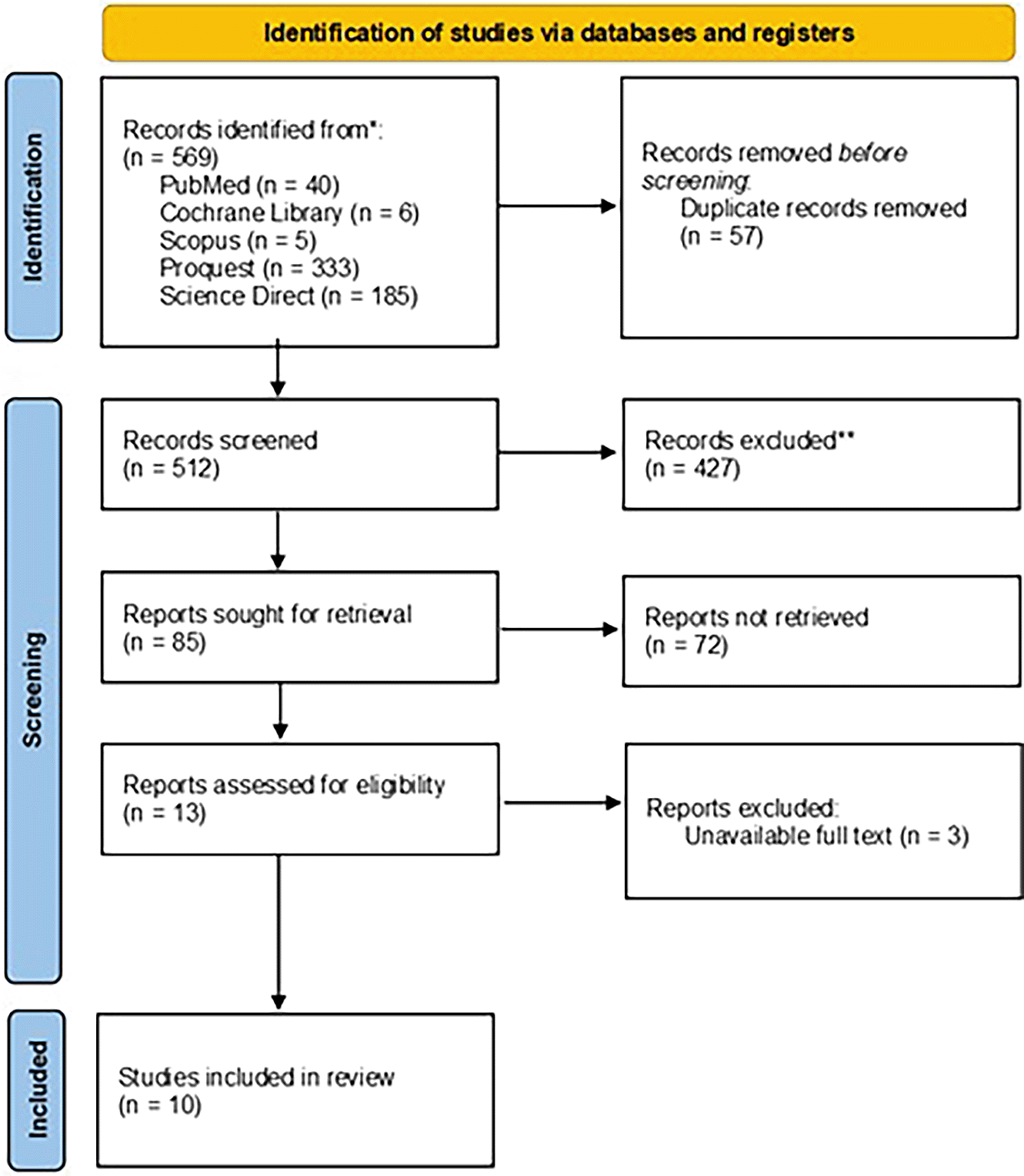
Our comprehensive literature search on 5 international databases resulted in 569 identifiable articles, from which 57 studies were removed as duplicate. Furthermore, from 512 studies screened by title, 427 record were excluded due to inadequate similarity with our inclusion and exclusion criteria. Subsequently, 85 studies were screened by abstract and 72 studies were excluded. Finally, 3 studies were excluded as the full-text version is unavailable. In total, 10 studies were included in our systematic review. The detailed flow of literature search according to the PRISMA guideline is shown in Figure 1.
Ten included studies in this systematic review consisted of 8 RCTs and 2 case reports conducted in diverse neurosurgical and neurocritical care settings. The trials ranged from 2010 to 2024 and were conducted in both high-income and middle-income countries, including Germany, Japan, South Korea, India, and the United States. Participants across studies were adult patients undergoing various neurosurgical procedures such as aneurysm clipping, craniotomy, and spine surgery, or those being treated for subarachnoid hemorrhage or acute ischemic stroke in neurocritical care units.
The intervention across all trials was the administration of MgSO4 via intravenous or intracisternal routes, with variation in dosage and duration. Comparators included placebo (e.g., saline), standard care, or in some cases, no treatment. Primary outcomes assessed included neurological recovery measured by the modified Rankin Scale (mRS), incidence of cerebral vasospasm and delayed cerebral ischemia (DCI), intraoperative anesthetic and opioid requirements, pain scores, intraoperative hemodynamic stability, and occurrence of adverse events. The detailed characteristics of each studies can be seen in Table 2.
| Author; year of publication | Study design | Country | Field of study | Population | Intervention | Control | Outcome |
|---|---|---|---|---|---|---|---|
| Feulner et al,15 2024 | Retrospective case-control | Germany | Neurocritical care | Patients who underwent microsurgical or endovascular treatment of a ruptured cerebral aneurysm | IV MgSO4 (50 mg/kg load, 81 mmol/day ×14 d) | Nimodipine | Cerebral vasospasm:
I: 8 (33%) C: 11 (46%) Delayed cerebral ischemia: I: 3 (13%) C: 10 (42%) |
| Choudhary et al,16 2021 | Case series | India | Neuroanesthesia | 10 ASA physical status II patients undergoing intracranial aneurysm surgery | IV MgSO4 (50 mg/kg bolus, 15 mg/kg/h) | Standard care |
|
| Sohn et al,17 2021 | Randomized double-blind placebo-controlled study | South Korea | Spine surgery | 72 patients undergoing major spine surgery with intraoperative neurophysiological monitoring (IOM) | IV MgSO4 (30 mg/kg + 15 mg/kg/h) | Isotonic saline | Pain intensity at 24-hour post-surgery:
I: 3.2 ± 1.7 C: 4.4 ± 1.8 (p = 0.009) Pain intensity at 48-hour post-surgery: I: 3.0 ± 1.2 C: 3.8 ± 1.6 (p = 0.018) |
| Bechler et al,3 2020 | Randomized phase-3 clinical trial | USA | Stroke | 1126 patients with suspected acute stroke | IV MgSO4 (4 g + 16 g over 24 h) | Isotonic saline | Cardiac adverse events:
I: 79 (14%) C: 80 (14.3%) (p = 0.93) |
| Takeuchi et al,18 2020 | Randomized double-blind placebo-controlled trial | Japan | Subarachnoid hemorrhage | 37 patients with poor-grade subarachnoid hemorrhage | Intracisternal MgSO4 (2.5 mmol/L ×14 d) ± H2 | Ringer solution | Cerebral vasospasm:
I: 1 (8%) C: 8 (62%) (p = 0.014) Delayed cerebral ischemia: I: 1 (8%) C: 7 (54%) (p = 0.023) Modified Rankin Scale scores of 0 to 2: I: 5 (67%) C: 2 (23%) (p = 0.019) |
| Shkirkova et al,19 2017 | Multicenter, randomized, double-blind, placebo-controlled trial | USA | Stroke | 1700 patients with suspected acute stroke | IV MgSO4 (4 g + 16 g over 24 h) | Isotonic saline | Mean serum magnesium levels:
I: 3.91 ± 0.8 mEg/L C: 1.92 ± 0.3 mEg/L (p-value not available) |
| Saver et al,20 2015 | Multicenter, randomized, double-blind, placebo-controlled trial | USA | Stroke | 1700 patients with suspected acute stroke | IV MgSO4 (4 g + 16 g over 24 h) | Isotonic saline | 90-day mRS score:
I: 2.7 C: 2.7 (p = 1.00) Mortality incidence: I: 132 (15.4%) C: 131 (15.5%) (p = 0.95) |
| Etezadi et al,21 2014 | Randomized controlled trial | Iran | Neuroanesthesia | 60 patients undergoing elective craniotomy for supratentorial brain tumors | IV MgSO4 (5 g × 3 sessions) pre/intra-op | Isotonic saline | Mean arterial pressure:
I: 71.3 ± 4.3 C: 84.5 ± 5.6 (p = 0.03) C-reactive protein serum levels: I: 4.5231 ± 1. 429 C: 4.8957 ± 1.663 (p = 0.243) |
| Wong et al,22 2010 | Multicenter, randomized, double-blind, placebo-controlled trial | Multiple countries | Aneurysmal subarachnoid hemorrhage | 327 patients with aneurysmal subarachnoid hemorrhage | IV MgSO4 titrated to 2 × baseline (10–14 d) | Isotonic saline | Favourable outcomes at 6 months:
I: 108 (64%) C: 100 (63%) (OR, 1.0; 95% CI, 0.7-1.6) |
| Saver et al,23 2004 | Open-label clinical trial | USA | Acute stroke management | 20 patients with suspected acute stroke | IV MgSO4 (4 g + 16 g over 24 h) | None (open-label) |
|
Most included RCTs had a low risk of bias across key domains, including randomization, intervention adherence, and outcome reporting (See extended data36). Trials by Sohn et al. (2021), Bechler et al. (2020), and others demonstrated strong methodological quality with minimal limitations. Two case-control studies (Feulner et al., 2024; Choudhary et al., 2021) were rated as high quality using the Newcastle-Ottawa Scale. These findings support the overall reliability of the review.
The anti-inflammatory properties of magnesium sulfate (MgSO4) were evaluated by Etezadi et al in a randomized controlled trial involving patients undergoing elective craniotomy. Although C-reactive protein levels did not differ significantly between groups (p = 0.243), patients receiving MgSO4 had significantly lower mean arterial pressure (I: 71.3 ± 4.3 vs. C: 84.5 ± 5.6 mmHg; p = 0.03), improved hemodynamic stability, and reduced intraoperative anesthetic requirements. These findings suggest that magnesium may mitigate surgical stress and systemic inflammation, contributing to neuroprotection through reduced neuronal excitotoxicity and enhanced perfusion.
Several trials examined the effect of MgSO4 on neurological recovery using the modified Rankin Scale (mRS). Feulner et al15 found improved long-term functional outcomes in patients treated with magnesium following microsurgical or endovascular intervention for ruptured cerebral aneurysms, with more patients achieving favorable mRS scores (0–3) in the intervention group (22 vs. 15). Similarly, Takeuchi et al18 reported that 67% of patients receiving intracisternal MgSO4 achieved good outcomes (mRS 0–2) at one year, compared to 23% in the control group (p = 0.019). Furthermore, the combination of magnesium with hydrogen therapy (Mg+H2) showed an even higher proportion of favorable recovery (75%). However, findings from larger multicenter trials were mixed. However, Wong et al22 Wong et al. reported no significant difference in favorable mRS outcomes at six months between magnesium and control groups (64% vs. 63%; OR 1.0, 95% CI 0.7–1.6), suggesting that benefits may depend on patient selection, timing, and method of administration. Likewise, Saver et al20 and Shkirkova et al19 found no difference in 90-day mRS scores (both 2.7; p = 1.00) or mortality (15.4% vs. 15.5%; p = 0.95) among acute stroke patients, indicating limited efficacy of MgSO4 when administered later or in less targeted populations.
Magnesium sulfate demonstrated significant benefits in reducing the incidence of cerebral vasospasm and delayed cerebral ischemia. In Feulner et al.’s study, patients receiving MgSO4 had a lower incidence of angiographic vasospasm (33% vs. 46%) and DCI (13% vs. 42%), with early initiation and dose titration based on mean arterial pressure.15 These findings were further supported by Takeuchi et al., who reported a dramatic reduction in vasospasm (8% vs. 62%; p = 0.014) and DCI (8% vs. 54%; p = 0.023) in the magnesium group compared to controls. Notably, the Mg+H2 combination group also showed a substantial benefit, indicating a synergistic neurovascular protective effect.18
The analgesic benefits of magnesium were highlighted in a randomized controlled trial by Sohn et al., which included 72 patients undergoing major spine surgery. Patients in the magnesium group experienced significantly lower postoperative pain scores at both 24 hours (3.2 ± 1.7 vs. 4.4 ± 1.8; p = 0.009) and 48 hours (3.0 ± 1.2 vs. 3.8 ± 1.6; p = 0.018) compared to controls. Additionally, the magnesium group required more than 30% less fentanyl and had a reduced need for supplemental neuromuscular blockers, emphasizing magnesium’s dual analgesic and muscle-relaxant roles in perioperative care.17
Choudhary et al16 demonstrated that intraoperative magnesium infusion improved hemodynamic stability in patients undergoing intracranial aneurysm surgery. Patients treated with magnesium maintained more consistent blood pressure and heart rate, required lower doses of opioids, and experienced no postoperative complications such as nausea, vomiting, or shivering. These findings suggest that magnesium may enhance anesthetic depth and reduce perioperative drug requirements without compromising safety.
The safety profile of magnesium sulfate across studies remained reassuring. Bechler et al3 reported that 14.1% of patients experienced at least one cardiac event, including atrial fibrillation, bradycardia, or cardiac arrest, with no statistically significant difference between the magnesium and placebo groups (p = 0.93). Similarly, Saver et al20 and Shkirkova et al19 found no significant difference in the rates of serious adverse events or mortality, supporting the tolerability of MgSO4 even in high-risk neurocritical care settings. These consistent findings underscore the relative safety of magnesium administration in neurosurgical and stroke populations when used within therapeutic dosing limits.
This systematic review highlights the emerging role of MgSO4 (MgSO4) as a neuroprotective and anti-inflammatory agent in neuroanesthesia and neurocritical care. The findings suggest that MgSO4 contributes meaningfully to several domains of patient care, including improved neurological recovery, reduction in cerebral vasospasm and delayed cerebral ischemia (DCI), decreased postoperative opioid requirements, enhanced hemodynamic stability, and minimal adverse events.
MgSO4 (MgSO4) has emerged as a promising candidate for neuroprotection in the fields of neurocritical care and neuroanesthesia. Its appeal lies in a range of physiological effects that may help preserve brain tissue integrity during acute neurological events such as stroke, subarachnoid hemorrhage, or during neurosurgical procedures. Although preclinical studies and select clinical trials have reported favorable outcomes with MgSO4 administration, consistent and robust evidence demonstrating significant improvements in long-term neurological function in human populations remains limited.24–26
The neuroprotective properties of MgSO4 are believed to be mediated through several mechanisms. One key pathway involves the regulation of intracellular calcium and antagonism of N-methyl-D-aspartate (NMDA) receptors. By acting as a non-competitive NMDA receptor blocker, MgSO4 can inhibit calcium influx into neurons, thereby reducing excitotoxicity—a major contributor to neuronal death during ischemic and reperfusion injuries. Additionally, magnesium may enhance cerebral perfusion and stabilize neuronal membranes by modulating voltage-gated ion channels. These effects collectively help to reduce secondary injury and improve cellular resilience during critical neurological insults.24–26
Despite this biological plausibility, there are concerns about pharmacokinetics. Lozada-Martinez et al. noted that while therapeutic serum magnesium levels are achievable and safe, the rise in cerebrospinal fluid (CSF) magnesium concentrations is only modest, raising questions about whether sufficient drug levels reach the brain parenchyma to exert a meaningful neuroprotective effect.27,28 These concerns are echoed in several clinical studies in our review, which reported no significant neurological outcome differences between treatment and placebo groups despite serum magnesium elevation.20
In ischemic stroke, although MgSO4 was hypothesized to reduce infarct size and enhance neurological recovery through vasodilatory and anti-excitotoxic mechanisms,29,30 results from large clinical trials have been disappointing. Saver et al20 and Bechler et al3 showed no significant benefit in functional outcomes or mortality despite early magnesium administration within 45 minutes of symptom onset.3 These findings suggest that systemic magnesium therapy may be limited by pharmacodynamic barriers or that its therapeutic window is narrower than initially assumed.
On the other hand, studies in SAH patients offer more encouraging results. Magnesium’s ability to attenuate cerebral vasospasm—a leading cause of delayed cerebral ischemia in SAH—has been supported by both experimental and clinical data.31 The neuroprotective effects in this setting are attributed to NMDA receptor blockade, calcium channel antagonism, and modulation of vascular tone. Notably, Takeuchi et al. demonstrated that intracisternal infusion of MgSO4, alone or with hydrogen therapy, significantly reduced vasospasm and improved functional outcomes at 1 year.18 These findings also reinforce Lozada-Martinez et al.’s recommendation to explore more targeted delivery routes, such as intra-arterial or intracisternal, which may enhance central nervous system bioavailability.32
In neuroanesthesia, MgSO4 has been associated with improved intraoperative hemodynamic stability, reduced anesthetic and opioid requirements, and lower postoperative pain scores. Etezadi et al. found that perioperative MgSO4 infusion significantly decreased mean arterial pressure, heart rate, blood loss, and propofol consumption without increasing complications. These findings are consistent with magnesium’s known ability to inhibit NMDA receptors and reduce central sensitization.33–35
Despite these promising signals, the heterogeneity of study designs, dosing regimens, patient populations, and outcome measures limits the generalizability of results. Furthermore, a significant limitation of our review is the absence of a meta-analysis. This decision was primarily due to the marked clinical and methodological heterogeneity observed across the included studies. Given these limitations, we opted for a narrative synthesis to better explore the context, mechanisms, and outcome patterns of magnesium sulfate use in neurocritical care and neuroanesthesia. Nevertheless, future studies with more standardized protocols and consistent outcome reporting are necessary to enable robust meta-analytical assessment and evidence-based clinical recommendations.
In conclusion, although further high-quality trials are needed to determine optimal dosing and clarify long-term effects, current evidence supports MgSO4 as a promising adjunctive agent in neuroanesthesia and neurocritical care. Its anti-inflammatory and neuroprotective properties may help reduce complications and improve outcomes in this high-risk population.
| Views | Downloads | |
|---|---|---|
| F1000Research | - | - |
|
PubMed Central
Data from PMC are received and updated monthly.
|
- | - |
Provide sufficient details of any financial or non-financial competing interests to enable users to assess whether your comments might lead a reasonable person to question your impartiality. Consider the following examples, but note that this is not an exhaustive list:
Sign up for content alerts and receive a weekly or monthly email with all newly published articles
Already registered? Sign in
The email address should be the one you originally registered with F1000.
You registered with F1000 via Google, so we cannot reset your password.
To sign in, please click here.
If you still need help with your Google account password, please click here.
You registered with F1000 via Facebook, so we cannot reset your password.
To sign in, please click here.
If you still need help with your Facebook account password, please click here.
If your email address is registered with us, we will email you instructions to reset your password.
If you think you should have received this email but it has not arrived, please check your spam filters and/or contact for further assistance.

Comments on this article Comments (0)