Keywords
acute pancreatitis, pre-pan score, diagnosis

acute pancreatitis, pre-pan score, diagnosis
Acute pancreatitis (AP) is a lethal condition that is widely diagnosed in emergency settings. In an epidemiological study across 51 European states based on local studies from 1970 to 2015, AP’s incidence ranged from 4.6 to 100 per 100000 habitants.1 Its occurrence shows an increasing trend. In 2024, a Global Burden Of Disease based study noted an increase of global AP cases from 1.73 million to 2.75 million from 1990 to 2021; representing a 59% rise.2
Despite diagnostic and therapeutic improvements, there has been a parallel increase in the number of AP-related deaths. From 1990 to 2021, an increase of 78.7% was reported.2 A recent prospective study reported a mortality rate of 7.14%.3 This disease inflicts local and systemic repercussions, which can be responsible for late mortality, even after withdrawal from the hospital. The Hungarian Pancreatic Study Group stated that there is a threefold higher incidence of mortality after the onset of AP than in the general population.4
Early diagnosis is warranted for better prognosis. In fact, if a diagnosis is made a week after the onset of clinical symptoms, mortality increases threefold.5 This rule suggests early recognition of APto offer the best cure measures. However, given that AP diagnosis requires the conjunction of two criteria from three: clinical, biological, and radiological,6 the inclusion of multiple diagnostic parameters can lead to late diagnosis. Failure to order an appropriate diagnostic tool is the main cause of missed diagnoses in the emergency room.7 This is more true in developing countries, such as Tunisia,8 where biological and radiological investigations are costly and sometimes unavailable in emergencies.
This prompted us to search for cheaper and more ready diagnostic algorithms for AP. In 2022, the PRE-PAN score was compiled with promising high accuracy.9 Therefore, we conducted a prospective study to validate this screening tool.
We conducted a prospective monocentric study of patients attending emergency department of Rabta Hospital, Tunis, Tunisia.
All patients who presented for epigastric pain between October 2024 and April 2025 were included.
Patients who consulted for non epigastric pain were excluded. Other pain locations were not considered.
AP revealed by symptoms other than pain was excluded, given that the PRE-PAN score is based on pain characterization.9
Data was prospectively extracted from pre-established forms.
PRE-PAN score was calculated using clinical relevant parameters.
Lipase or CT scans were ordered when AP was suspected, based on epidemiological and clinical data. A diagnosis was made accordingly.
Continuous variables are expressed as means/medians and standard deviation/interquartile ranges. Categorical variables were expressed as frequencies and percentages.
Data were analyzed using SPSS v21, applying statistical functions such as cross-tabulations, Student’s t-test, chi-square test, and ROC curve analysis. These methods were used to assess the associations between categorical variables and the diagnostic performance of the predictive models.
Written informed consent for participation in the study has been obtained from patients. We confirm that our study involved minor participants. Written informed consent was obtained from the legal guardians of all minors enrolled in the study.
A total of 200 patients were enrolled duringthe study period. The median age was 56 years (interquartile range = 31 years) and ranged from 15 to 90 years. We noted a female predominance (64%) with a sex ratio of 1.8. Only seven patients had a history of AP (3.5%). However, nearly half had a significant personal medical history (46%). Only nine patients (4.7%) consumed alcohol prior to the declaration of pain.
All patients reported abdominal pain, located in the epigastrium in 67.5% and the right upper quadrant in the remaining cases. The pain intensity was at a median of 3 (interquartile range = 3), and oscillated between 1 and 10. It radiated in 21 cases (10.6%): cramp cramp (83.9%), stabbing (10.8%), and gravity (5.4%). They had a paroxystic pattern (87.7%). Forty-four percent of patients had associated symptoms, primarily vomiting (42.9%). Our patients sought emergency care after a median of 2 days (interquartile range = 1). Symptoms sparked 1– 20 days prior to consultation.
On physical examination, only two patients (1%) had abdominal guarding. All our patients had stable vital signs.
The pre-pan score had a median of 3.5 (interquartile range = 3). It was at a minimum of 0 and maximum of 9.5.
Lipase dosage was not feasible in five cases (2.5%) because of the absence of working reactives. When ordered, 10.1% of the patients had significant hyperlipaemia, three times the normal value. Twenty-two patients had acute renal injury (11.1%). Ionic disorders were present in 21.7% of the cases. Only one case had hypercalcemia. Four patients exhibited cholestasis (2%), and 12.6% had elevated liver enzyme levels.
The following Table 1 details biological parameters of our studied patients.
An Abdominal CT-scan was required in 51 patients (25.8%) to aid in the diagnosis process.
Multiple differential diagnoses were made during the diagnostic process. Nonspecific abdominal pain was the most commonly referred for differential diagnosis (57.1%). All included patients had acute epigastric pain. Given the pain semiology and patient history, certain pathological conditions were suspectedFurther biological or radiological tools were ordered according to the diagnostic suspicion.
The following Table 2 represents all differential diagnosis.
When comparing the AP group to other patients, patients with AP had more intense pain (p = 0.007), more frequent radiating pain (p < 0.001), and fewerassociated symptoms (p = 0.004). However, both groups had similar demographic and biological characteristics.
The following Table 3 compares both studied groups.
AP was diagnosed in 11.6% of the patients (23 patients). When CT-scan was ordered in an emergency setting for diagnostic purposes, the majority of AP were Balthazar B (46.2%). Grade B was observed in 30.8% of patients with AP. The remaining patients (23.1%) were classified as having C.
Most of our patients had a yellow health card (72.2%), followed by a white health card (18.9%). Only 6.6% of the patients had a blue card. A minority (2.5%) had green cards. Table 4 summarizes the different types of health booklets used in Tunisia according to the health coverage scheme.
| Booklet color | Affiliation scheme | Target population | Care coverage mode | Reimbursement & Costs |
|---|---|---|---|---|
| Yellow Booklet | Private Sector Employees Scheme | Employees in the private sector and their dependents | Free choice of physician | CNAM* covers most costs; patient pays small co-payment |
| White Booklet | Public Sector Employees Scheme | Government employees and public sector workers | Care through public or approved private system | CNAM* covers majority of costs; public institutions preferred |
| Blue Booklet | Reimbursement Scheme | Any person eligible for partial reimbursement | Patient pays upfront, gets reimbursed later | Patient pays full cost upfront; partial reimbursement by CNAM* |
| Green Booklet | Free Medical Assistance Scheme | Low-income individuals or those without stable income | Free care in public health facilities | All services covered in public sector; no cost to the patient |
The length of stay was 5 h (interquartile range = 5). We recorded that some patients were waiting for 18 hours in the emergency ward before being discharged or diagnosed with an illness.
The area under the curve of the PRE-PAN score was 0.955 (p < 0.001; 95% interval confidence: 0.921 – 0.989), indicating excellent diagnostic performance of the pre-pan score.
The Figure 1 demonstrates the ROC curve.
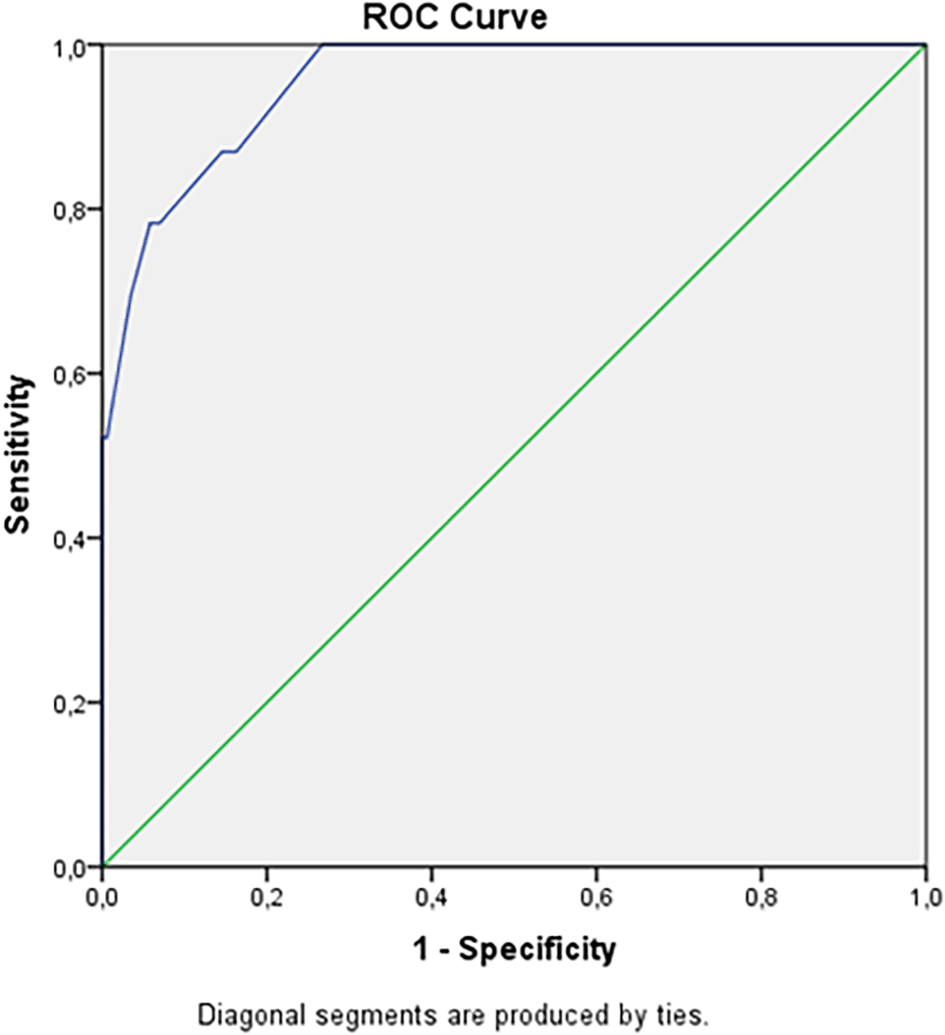
For a score cut-off greater than 5.75, the PRE-PAN score had a sensitivity of 87% and specificity of 85.5% for diagnosing acute pancreatitis. It had a positive predictive value of 44.5% and a negative predictive value of 98%. The high sensitivity and negative predictive value make the PRE-PAN score especially useful for ruling out acute pancreatitis. A score ≤ 5.75 strongly suggests that the patient does not have the condition. However, due to the low positive predictive value, a score > 5.75 does not confirm the diagnosis on its own; it would require further clinical or laboratory confirmation.
Despite these promising results, our study has several limitations. First, it was conducted at a single center, which may limit the generalizability of the findings to other healthcare settings, particularly those with different patient demographics or resource availability. Second, the diagnosis of acute pancreatitis was partly dependent on the availability of lipase assays and CT imaging, both of which were occasionally unavailable owing to technical or logistical constraints, potentially affecting diagnostic accuracy. Third, the relatively low number of confirmed AP cases (11.6%) could impact the statistical power and precision of the sensitivity and specificity estimates. Finally, the exclusion of patients presenting with atypical symptoms or non-epigastric pain may have underestimated the true spectrum of AP presentation. Future multicenter studies with larger sample sizes and external validation are required to confirm and refine the clinical utility of the PRE-PAN score.
AP is a frequent complaint in the emergency department, representing a significant cause of hospitalization for severe abdominal pain. Its incidence varies from country to country but is generally estimated to be between 13 and 45 cases per 100000 inhabitants per year.10 In Europe, acute pancreatitis is the leading cause of hospitalization for pancreatic pathology, with a gradual increase in incidence over the last few decades, partly linked to an increase in alcohol consumption and cholelithiasis.11 In emergency departments, it accounts for approximately 0.5%–1% of admissions for abdominal pain.12 Mild forms predominate (80% of cases), but approximately 20% progress to severe forms, requiring intensive care.13 Diagnosis is based on the clinical, biological, and radiological triads.14
One of the principal challenges in diagnosing acute pancreatitis in emergency settings is reliance on imaging and laboratory tests, which may be costly or unavailable.
Serum lipase is the preferred biomarker for diagnosing acute owing to its high sensitivity and specificity, often reducing the need for imaging.15,16 However, routine ordering and repeated testing can result in significant costs. In one tertiary emergency department, lipase was ordered in 20.6% of visits (4976 out of 24133), generating unnecessary expenses of over $51000—plus an added $28975 for subsequent imaging and specialist consultations in patients without AP.17
Imaging is often necessary when the clinical or laboratory findings are inconclusive.18,19 CT-scan is regarded as the gold standard for detecting complications or positive diagnosis, but it is expensive (averaging $4500 per scan in one study) and may be overutilized without improving clinical outcomes.18,19 Furthermore, in some hospitals, emergency CT scanners may not be available around the clock, thus delaying vital diagnosis.
The PRE-PAN (Predictive early diagnosis of Pancreatitis in the emergency department) score is a clinical prediction tool specifically designed to diagnose AP early in settings where serum lipase levels, CT-scan, or specialist advice may be limited or costly. This score incorporates six bedside variables: history of alcohol use, epigastric pain, posterior radiation, persistent pain, nausea/vomiting, and pain severity, eliminating the need for biochemical markers or radiological confirmation.9 It demonstrates excellent diagnostic accuracy, with an AUC of 0.88 (95% CI 0.84–0.93), sensitivity of 66.7%, specificity of 90.2%, and a positive likelihood ratio of 6.8 for scores >7.5.9
By avoiding reliance on expensive or unavailable serum lipase and CT-scan, PRE-PAN reduces both direct and downstream costs while enabling rapid, evidence-based decision-making at the bedside. Its applicability in resource-constrained facilities makes it a powerful alternative to standard diagnostic pathways, minimizing delays in management and hospital admissions where AP diagnosis may otherwise be inaccessible or delayed.
In our prospective observational study conducted in the emergency department, we aimed to validate the diagnostic accuracy of the PRE-PAN score for early identification of AP. A total of 200 adult patients presenting with acute abdominal pain suggestive of pancreatitis were enrolled consecutively over a 7-month period. Clinical variables were recorded on admission, and the PRE-PAN scores were calculated for each patient before the laboratory and imaging results were obtained. The final diagnosis of AP was confirmed based on the revised Atlanta criteria: clinical presentation, elevated serum lipase level, and/or imaging findings consistent with AP.
We compared patients with AP to those with other diagnoses. Patients with AP had more intense pain (p = 0.007), more frequent posterior radiating pain (p < 0.001), and fewer associated symptoms (p = 0.004). However, both groups had similar demographic and biological characteristics.
Age plays a well-established role in AP presentation and prognosis of acute pancreatitis. Large-scale observational studies have reported a median age of 58 years in a European registry of 1,203 cases,20 while a Turkish single-center analysis (n = 602) found a mean age of 55.2 (±19.5).21 Another multicenter cohort from Romania (n = 947) reported a median age of 54 (±15.9) years.22 Across these studies, the typical patients were in their mid-50s. In comparison, our own prospective cohort of patients with AP had a median age of 62 years, aligning closely with the existing data. This similarity suggests that our study is representative of at broader clinical population.
While global data consistently show a higher incidence of acute pancreatitis in men, subtype-specific patterns often reveal female predominance, particularly in biliary-related cases. A recent study reported that the age-standardized incidence rates of AP are notably higher in males than in females across all regions.23 However, subtype-specific registries tell a different story: in a Chinese cohort, female patients outnumbered male patients in biliary AP cases (75% vs. 43% in 2011) and remained higher in 2016.24 Similarly, a retrospective study of 1924 patients showed that while 58.4% of the patients were male, females predominated in the biliary-etiology subgroup (62%).25 In contrast, our prospective validation cohort demonstrated a female predominance, with a female-to-male ratio of 1.8. This aligns with the documented overrepresentation of women with biliary pancreatitis and suggests that biliary lithiasis was likely the leading etiology in our sample.
Comorbid conditions are common in acute pancreatitis and have been linked with worsened outcomes. A recent single-center series reported comorbid illness in 30.5% of 217 patients.26 A large U.S. population-based study involving 940789 hospitalized patients found that 27.3% had pre-existing diabetes, with even higher rates of hypertension (77.4%).27 In contrast, our prospective cohort demonstrated a lower comorbidity profile, with 15.3% of patients having associated illnesses.
The PRE-PAN scoring tool was developed to aid in the early diagnosis of AP without requiring immediate imaging or extensive laboratory tests. Such diagnostic tools offer a great aid to our institutions. In fact, given the lengthy turnaround time in the emergency department (5 h) and the high costs of both lipase and CT scan, a clinical score based solely on bedside parameters is of great interest to avoid missing the diagnosis of acute pancreatitis.
Our analysis showed that the PRE-PAN score had an AUC of 0.955 (p < 0.001; 95% interval confidence, 0.921 – 0.989). A score > 5.75 had a sensitivity of 87% and specificity of 85.5%, which is comparable to previously published results.9
Our findings support the utility of the PRE-PAN score as a rapid, bedside, and low-cost diagnostic tool, particularly in settings with limited access to biochemical tests and imaging modalities. In our country, lipase costs 12.8 tunisian dinars, and its results take 4 to 6 h to validate.28 An abdominal CT scan is costlier and requires 545 tunisian dinars.29 There are four types of social security cover in Tunisia30:
Blue card: almost 100% of the cost of treatment is covered, with a small token contribution.
- Yellow card: The insured person pays only part of the costs after consulting their family doctor.
- Green card: The insured person pays the full cost, which is advanced and then reimbursed following a request to the health insurance fund.
- White card: Free of charge.
Our study population had a yellow card (72.2%), which means that they had to pay a co-payment percentage of 25% for radiological and laboratory tests – 30% for family doctor consultations.
Tunisia is experiencing a difficult economic climate, with high inflation (5.9%), persistent unemployment (16%), and weakened currency. The average monthly income is around 835 dinars, while the minimum wage is around 448–528 tunisian dinars.31 In contrast to the potential assistance from CNAM, which covers public health care or offers partial third-party payment in the private sector, these costs can represent between 10% and 100% of the monthly salary for people who are not indigent or not affiliated with the right scheme. As a result, many people are forced to put off appointments for long periods, delay examinations, or cut back on other essential needs, exacerbating inequalities in access to health care.
Our study had some limitations, including its small sample size. However, its prospective nature is its greatest strength.
Other clinical diagnostic tools are welcomed to aid the rapid and accurate diagnosis of AP, especially in poor institutes.
Our prospective study demonstrates that the PRE-PAN score is a highly accurate tool for identifying AP. Given the limited availability and high cost of lipase testing and CT scans in many settings, this score offers a practical and reliable alternative for early diagnosis, particularly in resource-constrained environments.
This study was approved the Rabta Hospital Ethics Committee, on 21/04/2025, under the registration reference CERB 16/2025. Written informed consent for participation in the study has been obtained from patients. We confirm that our study involved minor participants. Written informed consent was obtained from the legal guardians of all minors enrolled in the study.
| Views | Downloads | |
|---|---|---|
| F1000Research | - | - |
|
PubMed Central
Data from PMC are received and updated monthly.
|
- | - |
Provide sufficient details of any financial or non-financial competing interests to enable users to assess whether your comments might lead a reasonable person to question your impartiality. Consider the following examples, but note that this is not an exhaustive list:
Sign up for content alerts and receive a weekly or monthly email with all newly published articles
Already registered? Sign in
The email address should be the one you originally registered with F1000.
You registered with F1000 via Google, so we cannot reset your password.
To sign in, please click here.
If you still need help with your Google account password, please click here.
You registered with F1000 via Facebook, so we cannot reset your password.
To sign in, please click here.
If you still need help with your Facebook account password, please click here.
If your email address is registered with us, we will email you instructions to reset your password.
If you think you should have received this email but it has not arrived, please check your spam filters and/or contact for further assistance.

Comments on this article Comments (0)