Keywords
Narrative Curriculum Vitae, Research Integrity, Research Funders, Research Assessment, Research integrity, Science funding, Research ethics, Responsible Conduct of Research, Science communication, Research environment

This article is included in the Research on Research, Policy & Culture gateway.
Narrative Curriculum Vitae, Research Integrity, Research Funders, Research Assessment, Research integrity, Science funding, Research ethics, Responsible Conduct of Research, Science communication, Research environment
Narrative Curriculum Vitae (NCVs) are a type of CV with a focus on written descriptions of a researcher’s skills, experiences, collaborations, and achievements across a broad range of research activities.1 NCVs seek to promote more equitable and responsible research assessment for funding, awards, grants, and hiring and promotion decisions, as compared to traditional academic CVs,2 which are typically heavily dependent of quantitative metrics (e.g., number of publications). Early adopters of NCVs include The Dutch Research Council,3 the Health Research Board Ireland,4 the Luxembourg National Research Fund,5 the National Institutes of Health in the United States,6 Science Foundation Ireland,7 the Swiss National Science Foundation,8 and UK Research and Innovation.9 A shift by funding organizations towards the use of NCVs is part of a broader global effort to reassess how research and researchers are evaluated, aiming to better align research incentives with mission-driven goals.10 Initiatives such as the Declaration on Research Assessment (DORA),11 the Leiden Manifesto,12 and the Coalition for Advancing Research Assessment (CoARA)13 have been pivotal in raising awareness of the shortcomings of reducing research (er) assessment to quantitative metrics. For example, researchers have traditionally been evaluated based on quantitative metrics such as the number of publications they produce, and the prestige, or “impact factor”, of the journals in which their research is published.14,15 These metrics are heavily impacted by factors like geographical location,16 significance of the results,17 study type,17 funding and other declarations,17 and reputation of the researcher’s institution.14 This creates biases that perpetuate inequities by favouring established researchers and significant results17 over emerging scholars and innovative ideas with less resources.18 Moreover, the biases can decrease the diversity of research endeavours, which makes it more difficult for researchers to move between institutions, disciplines, or roles and stifles creativity.19 Lastly, the biases from quantitative metrics can distort research priorities by shifting the focus away from meaningful scientific contributions onto high publication volumes and significant results.
NCVs offer the ability to reform research assessment by shifting the focus away from numbers and putting the power back in the hands or researchers to reflect qualitatively on what they have done and what its impacts have been. NCVs permit assessments centered around the research subject; the broad skills, competencies and experiences of researchers; the contributions of researchers to the dissemination of knowledge and innovation of research4; and the rigor behind the research.10 When used by funding organizations, NCVs can provide a more holistic overview of grant applicants’ academic and community contributions – leadership and mentorship experience, broader societal impacts. When compared to traditional CVs, NCVs also provide grant applicants with more flexibility regarding how they described their listed items, thereby allowing applicants to tailor their descriptions to each individual grant and better showcase their potential for meaningful impacts.20
Despite their numerous benefits, certain limitations to NCVs have also been noted. Completing unique and detailed NCVs for distinct funding calls may increase the workload for grant applicants.19 Additionally, concerns have been raised regarding how to complete NCVs and especially with respect to how they will be evaluated. This introduces subjectivity, which can lead to varied interpretations and hence inconsistent evaluations of researcher contributions,21 thus creating confusion and undermining the credibility of the NCV approach.21,22 Some funding organizations have tried to address these challenges associated with a lack of clarity around NCVs by providing grant applicants with guidance or instruction, often in the form of NCV templates. The objective of this is to remove some of the subjectivity ingrained in the NCV approach, while retaining its benefits, facilitating applicants’ ability to effectively highlight their contributions and express their significance. However, continued efforts to improve upon NCV implementation for research funding requires a better understanding of the current breadth of NCV template used by funding organizations, as well as a mapping of the said templates’ characteristics.
Our objectives for this scoping review were to answer the following research questions: 1. Which research funding agencies currently provide NCV templates as part of their grant application process? and 2. What are the characteristics of NCV templates provided by funding agencies?
Transparency statement. The protocol for this study was registered on the Open Science Framework (OSF)23 a priori; all study data, and a pre-print of this manuscript are also available on OSF (DOI: 10.17605/OSF.IO/4DGBR). This manuscript is reported in adherence to the PRISMA-ScR checklist for scoping reviews24 (refer to supplemental materials). For details on our data management plan, see Appendix 1.
Following the guidance of Arksey and O’Malley25 and Levac and colleagues,26 our scoping review consisted of five distinct steps: 1) Identifying the research question, 2) Identifying NCV templates, 3) Selecting the templates, 4) Charting the data, and 5) Analyzing, summarizing, and reporting the results.
Step 1: Identifying the research question(s)
In this scoping review, we aimed to answer the following questions: 1. Which research funding agencies currently require NCVs as part of their grant application process? and 2. What are the characteristics of NCV templates provided by said funding agencies?
Step 2: Identifying NCV templates
We did not conduct a traditional electronic search (e.g., Medline) because we felt that narrative CVs from funders were unlikely to appear in the traditional published literature.
To identify relevant NCV templates, we employed grey literature searches via two approaches. First, we conducted a grey literature search using Google to identify potential documents available outside of standard peer-reviewed literature. We piloted several search terms before settling on the following as our final search terms: “Narrative CV”, “Research CV Template”, and “Research Funder CV Template”. These selected search terms were intentionally broad to maximize the likelihood of capturing all available funder NCV templates. Each search was conducted by one individual and limited to documents reported in English. The full search strategy is described in Appendix 2.
Next, to identify any additional templates we used the website healthresearchfunders.org 27 to compile a list of research funders from across the globe, and then manually searched the websites of any funders for whom we did not identify an NCV template through our initial Google search. This manual search of funder websites involved using same three search terms. Acknowledging that this health researchers’ funders list has not recently been updated, we also supplemented this list based on our team’s knowledge of additional funding agencies and subsequently conducted manual searches of any additional funders’ websites using the same approach.
Step 3: Selecting the NCV templates
Inclusion and exclusion criteria: We included all NCV templates utilized by research funders published in English. We did not restrict our search by date or year. We also included NCV templates that are not in current use but have been used in the past, and NCV templates that exist but have not yet been used in practice. We excluded NCV templates published in languages other than English, as well as any documents not publicly available online. Reasons for exclusion were noted for all excluded documents and are reported below in our results. These inclusion/exclusion criteria are outlined in Table 1.
| Inclusion criteria | Exclusion criteria |
|---|---|
|
|
Selection/Screening: The Grey literature search was performed by two individuals (AQ & GdPD) who collated the citations using Zotero,28 and subsequently added the identified documents into Covidence29 for screening. The search based on the list from healthresearchfunders.org 27 was performed by one individual (AQ), who followed the same steps to aggregate the documents for screening. All documents were then independently screened against our inclusion criteria in duplicate; any conflicts were resolved via discussion between reviewers, and third-party arbitration when needed.
Step 4: Charting the data
We extracted data regarding several document characteristics in duplicate from all included NCV templates using Covidence.29 The initial extraction was performed by one individual, while a second individual performed a quality-control review. We deductively created a purpose-built data extraction form ( Appendix 3) after conducting a preliminary scan of a few known NCV templates. The extraction form was piloted by three individuals prior to finalization to ensure its relevance; some minor modifications to the form were made throughout this process to improve clarity and completeness. For instance, despite planning to only collect initial dates of release for the templates, after noticing that multiple templates had undergone official updates, we modified our extraction form to also capture these update dates.
Extracted data included the name of the funding organization, the country of the funder, the date of the NCV template implementation, the number of questions and pages, and the name of the organization that created the NCV template. We also mapped the content of the NCV questions to gauge what topics were being asked about, and in what format responses were being captured. For qualitative data, we conducted a content analysis of the extracted text using Microsoft Excel. Without using preconceived categories, two researchers independently identified key themes in the data using inductive coding and then discussed these until consensus was achieved. The coded elements were re-incorporated into the dataset. Key themes were summarized and presented using a narrative synthesis with illustrative quotes or as counts and percentages reflecting the codes. All percentages presented in the text and tables were calculated using 21 NCV templates as the denominator, unless otherwise stated.
Step 5: Report the results
We have reported the results of this study by summarizing the features of the NCVs using descriptive statistics. These summarized features include both the explicit categories listed in our extraction form (for each item), as well as some additional features captured in our open-text extraction items, which we identified and organized via qualitative analysis.
Protocol amendments
We amended our initial protocol (registered on the OSF DOI:10.17605/OSF.IO/4DGBR) by changing our qualitative analysis approach from Braun and Clarke’s thematic analysis to a content analysis. This decision was made because traditional thematic analysis (as described by Braun and Clarke) involves an in-depth analysis of themes and their meanings,30 which we do not believe would be appropriate for the small amount of qualitative data collected via our few open-text extraction items. Thus, we modified our approach to perform a content analysis instead.
The key findings of this scoping review are summarized below; however, all extracted data are available as supplemental material in CSV format. Our screening process is outlined in using a PRISMA flow diagram31,32 (refer to Figure 1).

The primary search conducted via a general grey literature search using pre-specified key search terms. These same search terms were then used manually search the websites of funders for whom our primary search did not identify any templates – which websites to search was based on a list of funders compiled using healthresearchfunders.org.27 The flow diagram is adapted from the PRISMA Statement, 2009.32
*Two retrieved records were from the same funder (one template; one illustrative example) and thus were combined for data extraction.
In total, we extracted and analyzed data from 22 NCV templates, each from a different funding organization, originating from 13 different countries: the United Kingdom (n = 5), New Zealand (n = 2), Switzerland (n = 2), Canada (n = 2), the United States (n = 2), Ireland (n = 2), Norway (n = 1), the Netherlands (n = 1), Germany (n = 1), Belgium (n = 1), Brazil (n = 1), Finland (n = 1), and Luxembourg (n = 1). The templates belonged to three types of funders: National Granting Agencies (n = 17, 77%), Foundations/Philanthropic Bodies (n = 4, 18%), and a Hospital Research Institute (n = 1, 5%). The funders pertained to several research disciplines (some to multiple disciplines): Medicine/Biomedical Sciences (n = 10, 45%), Natural Sciences (n = 3, 14%), Social Sciences and Humanities (n = 2, 9%), Business and Economic Development (n = 1, 5%), and Arts (n = 1, 5%). Additionally, nine funders (41%) were discipline agnostic. These demographic characteristics of the funders to whom the NCV templates belong, as well as the names of the funders, are outlined in Table 2.
| Count (n, %) | |
|---|---|
| Type of funding organization | |
| National Granting Agency | 17 (77%) |
| Foundation/Philanthropic Body | 4 (18%) |
| Hospital Research Institute | 1 (5%) |
| Discipline of funding organization | |
| Medicine/Biomedical Sciences | 10 (45%) |
| Natural Sciences | 3 (14%) |
| Social Sciences and Humanities | 2 (9%) |
| Business and Economic Development | 1 (5%) |
| Arts | 1 (5%) |
| Discipline agnostic | 9 (41%) |
| Country of origin and name of funding organizations | |
| United Kingdom | 5 (23%) |
| |
| New Zealand | 2 (9%) |
| |
| Switzerland | 2 (9%) |
| |
| Canada | 2 (9%) |
| |
| United States | 2 (9%) |
| |
| Ireland | 2 (9%) |
| |
| |
| Norway | 1 (5%) |
| |
| The Netherlands | 1 (5%) |
| |
| Germany | 1 (5%) |
| |
| Belgium | 1 (5%) |
| |
| Brazil | 1 (5%) |
| |
| Finland | 1 (5%) |
| |
| Luxembourg | 1 (5%) |
| |
The templates were introduced over a wide range of years (range: 2012-2024), with the most common year of introduction being 2022 (n = 3, 14%). Some templates (n = 5, 23%) have been updated since their initial release, with the longest period between initial release and official update being from the Research Council of Finland’s template, which was updated in 2020 – eight years after its initial release. There were also 10 templates (45%) for which the year of introduction was unclear. All 22 NCV templates are currently being used by their respective organizations.
We also extracted several data characteristics regarding structure and content (e.g., the number, type, and subject matter of the questions listed) of each NCVs to map what information is being requested of grant applicants by funders. NCVs varied in length with respect to the number of pages (range: 2-9 pages; median = 4 pages). Similarly, the total number of questions/items in the templates varied widely (range: 3-31 questions; median = 8.5 questions). Most NCV templates did not contain any multiple-choice questions (n = 19, 86%), but the three templates which did, contained one, one, and four multiple choice questions, respectively. Conversely, all templates included short answer questions; the distribution of which was nearly identical to the total number of questions (range: 3-31 short answer questions; median = 8 short answer questions). Regarding these short answer items, most templates did not indicate a desired response length (n = 14, 64%), but a few did indicate average expected response lengths (range: 1/5 page- 400 words/question; mode: 1/2 page per question). The length and question distribution of the NCV templates is depicted in Figure 2.
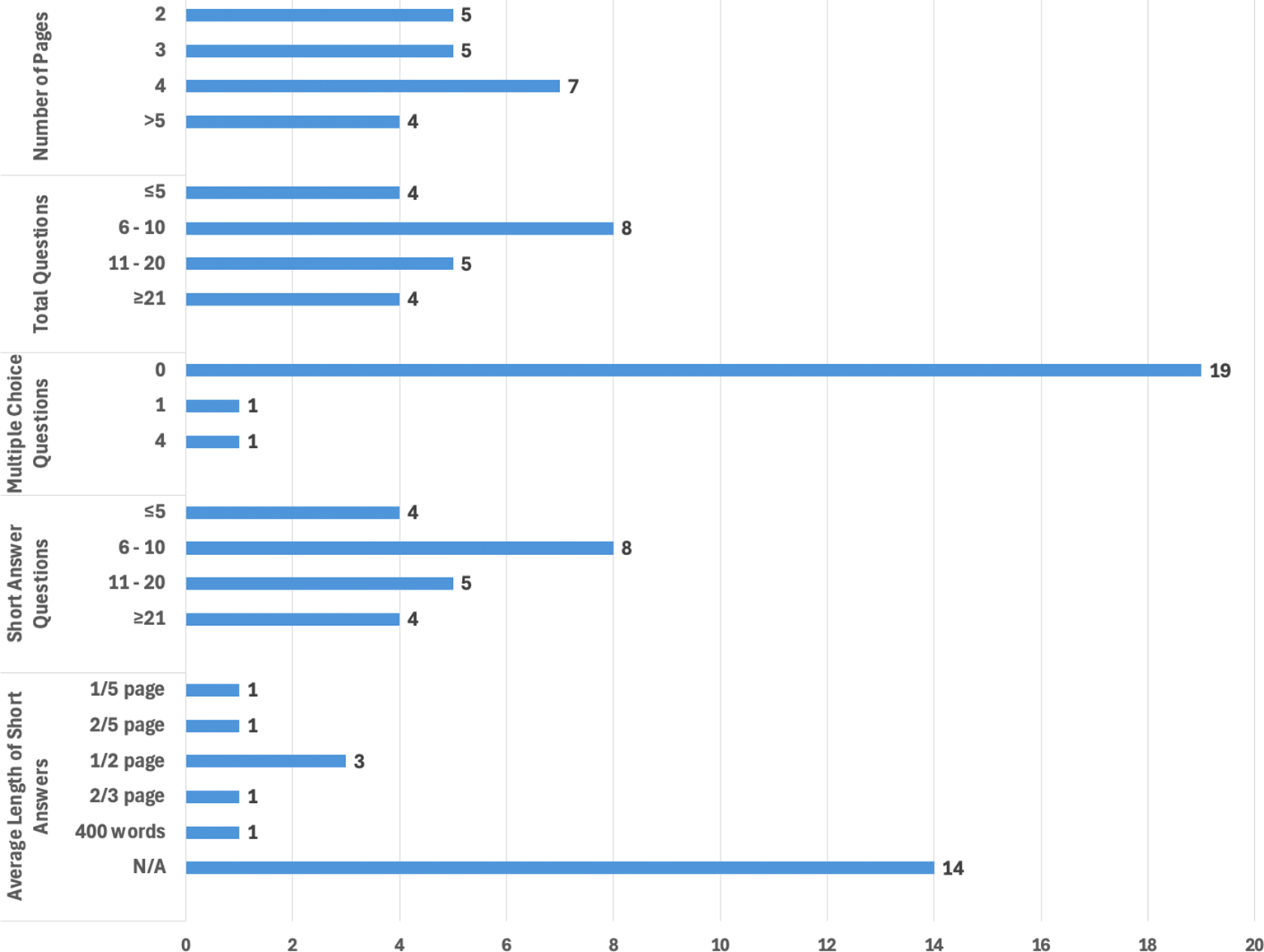
“Average Length of Short Answers” refers to the recommend average length of each short answer item within the template.
Applicant information to be included when completing the NCVs.
The NCV templates requested a range of information from prospective grant applicants, all of which is outlined in Table 3. Most templates included general questions about applicants’ journal publications (n = 18, 82%), career breaks or major life events (n = 17, 77%), relevant areas of expertise (n = 16, 73%), academic record/educational qualifications (n = 16, 73%), career stage (n = 13, 59%), and awards & prizes (n = 13, 59%). Additionally, some templates collected information regarding other grant funding received (n = 10, 45%) or conference presentations given (n = 8, 36%). Some templates also asked applicants to provide a personal statement (n = 8, 36%), or a description of how they were impacted by the COVID-19 pandemic (n = 4, 18%).
| Item | Count (n, %) |
|---|---|
| General information | |
| Information about journal publications | 18 (82%) |
| Career breaks or major life events | 17 (77%) |
| Relevant areas of expertise | 16 (73%) |
| Academic/educational qualifications | 16 (73%) |
| Current career stage | 13 (59%) |
| Awards/Prizes | 13 (59%) |
| Grant funding received | 10 (45%) |
| Conference presentations given | 8 (36%) |
| Personal statement | 8 (36%) |
| Impact of the COVID-19 pandemic | 4 (18%) |
| Journal publications section | |
| A general request to provide publication information | 9 (41%) |
| Specific request for a selected number of important publications1 | 9 (41%) |
| A requirement to list one’s total number of publications | 3 (14%) |
| A requirement to indicate the peer-reviewed status of publications described | 3 (14%) |
| A requirement to specify the open access status of each publication | 2 (9%) |
| A requirement to outline one’s full list of publications | 1 (5%) |
| A requirement to provide the Digital Object Identifier (DOI) of publications | 1 (5%) |
| A requirement to provide a link to publication(s) | 1 (5%) |
| No journal publication-specific section2 | 4 (18%) |
| Other grant funding received section | |
| A general request for achievements | 4 (18%) |
| A requirement to indicate the position/role on grants listed | 2 (9%) |
| A requirement to specify the amount(s) awarded | 2 (9%) |
| A requirement to list all research grants | 1 (5%) |
| A requirement for a detailed description of a selected number of grants | 1 (5%) |
| A request to list a selected number of significant research grants | 1 (5%) |
| N/A | 12 (55%) |
| Contributions to the generation of new ideas/knowledge | |
| New/Innovative tools, software & instruments | 12 (55%) |
| New/Innovative ideas and hypotheses | 11 (50%) |
| Patents & designs | 10 (45%) |
| N/A | 7 (32%) |
| Teaching/mentoring contributions | |
| Supervision skills/mentoring (e.g., trainees, students, staff ) | 14 (64%) |
| Teaching responsibilities (e.g., course(s), class (es), workshop(s)) | 12 (55%) |
| Teaching achievements/awards | 5 (23%) |
| N/A | 7 (32%) |
| Contributions to open science | |
| Knowledge mobilization/translation | 8 (36%) |
| Data sharing | 7 (32%) |
| Preprints | 4 (18%) |
| Open access publishing | 1 (5%) |
| Open educational resources | 1 (5%) |
| General open science | 1 (5%) |
| Open research | 1 (5%) |
| Open source | 1 (5%) |
| Open Science Initiatives | 1 (5%) |
| No mention of open science | 11 (50%) |
| Contributions to the scientific/research community | |
| Committee membership (e.g. boards, editorial roles, working groups) | 15 (68%) |
| Leadership activities | 12 (55%) |
| International involvement | 12 (55%) |
| Editing or reviewing responsibilities | 12 (55%) |
| Activities contributing to research integrity | 10 (45%) |
| Activities contributing to equity, diversity and inclusion practices | 9 (41%) |
| Event planning (conferences and workshops) | 7 (32%) |
| N/A | 5 (23%) |
| Contributions to broader society | |
| Partnerships with industry, healthcare or businesses | 11 (50%) |
| Patient/public engagement | 10 (45%) |
| Engagement with the media | 9 (41%) |
| Involvement with policy development or public understanding | 7 (32%) |
| Impacts on businesses | 5 (23%) |
| General societal impact(s) | 4 (18%) |
| Indigenous engagement | 2 (9%) |
| Social impact | 2 (9%) |
| Commercial impact | 1 (5%) |
| Environmental impact | 1 (5%) |
| General cultural impact | 1 (5%) |
| Research culture impact | 1 (5%) |
| Does the NCV template include a section for ‘Additional Information’? | |
| No | 14 (64%) |
| Yes | 8 (36%) |
| Additional information specifically requested but not asked for in previous sections | |
| ORCID or another unique researcher identifier | 6 (27%) |
| Any additional outputs/impacts | 4 (18%) |
| Indigenous impacts/considerations | 1 (5%) |
| Language skills | 1 (5%) |
| Other skills | 1 (5%) |
Among those templates that included a section specific to journal publications, nine (41%) simply contained general requests for outputs, whereas nine (41%) others asked applicants to outline a specific number of important publications – often referred to as “main”, “important” or “relevant” publications, “key outputs”, or “publications in major national or international peer-reviewed journals”. Three templates (14%) required applicants to provide their total number of publications, while one template (5%) required applicants to provide a complete list of their publications. Additionally, some templates asked applicants to indicate the peer-review status (n = 3, 14%) or open access status (n = 2, 9%) of their publications. One also generically asked for links to their listed publications, whereas another explicitly asked for the DOIs of their listed publications.
Among templates that collected information around other sources of grant funding received by prospective applicants, four (18%) contained general requests for achievements (i.e., listing other funding sources), whereas one explicitly asked applicants to list a specific number of significant research grants, and another asked for all other research grants to be listed. In addition, some templates asked for specific information pertaining to said other sources of funding, such as the applicant’s position/role on the grant (n = 2, 9%), or the specific dollar amounts that were awarded (n = 2, 9%). Two templates asked for a detailed description of a specific number of other awarded research grants.
Many templates asked for information regarding applicants’ various contributions to the academic or research landscape, including contributions to the generation of new knowledges or ideas, teaching or mentorship, open science efforts, the general research/scientific community, or to broader society. With respect to contributions to the generation of new knowledges or ideas, roughly half of the templates had questions specific to new/innovative tools, software, and instruments (n = 12, 55%); new/innovative ideas and hypotheses (n = 11, 50%); or patents and designs owned (n = 10, 45%). Regarding teaching or mentorship contributions, many templates asked about supervision skills or mentoring experience (e.g., trainees, students, staff ) (n = 14, 64%), teaching responsibilities (n = 12, 55%), or teaching achievements and awards (n = 5, 23%). While many templates did not mention open science at all (n = 11, 50%), some specifically asked about knowledge translation or mobilization efforts (n = 8, 36%), data sharing (n = 7, 32%), preprints (n = 4, 18%), or other open science aspects (n = 6, 27%). All but five templates asked about general contributions to the scientific research community (n = 17, 77%), with the most common items being committee membership (e.g., roles on editorial boards or working groups) (n = 15, 68%), general leadership activities (n = 12, 55%), international involvement (n = 12, 55%), or editing or reviewing responsibilities (n = 12, 55%). With respect to other general societal contributions, the most frequently requested were partnerships with industry, healthcare, or business (n = 11, 50%); patient or public engagement (n = 10, 45%); engagement with the media (n = 9, 41%); and involvement with policy development or public understanding (n = 7, 32%).
Finally, some templates specifically asked for additional information that was not captured in other sections of template, these included any additional outputs or impacts (n = 4, 18%); ORCIDs33 or other unique researcher identifiers (n = 6, 27%); indigenous impacts or considerations (n = 1, 5%), language skills (n = 1, 5%), or ‘other’ skills (n = 1, 5%). Many of the NCV templates also included a section wherein applicants could provide additional information at their own discretion (n = 14, 64%).
In addition to investigating the structure and contents of the templates, we also explored whether any guidance or instruction was provided to grant applicants by the funders. A majority offered at least some guidance within their template regarding how to complete the NCV (n = 12, 55%), whereas a slight minority (n = 10, 45%) provided similar guidance online (i.e., on the funders’ website). Guidance was offered in several forms: a total page limit (n = 9, 41%), section headers with detailed step-by-step instructions and examples (n = 6, 27%), section headers with general instructions (n = 6, 27%), specific formatting instructions (n = 5, 23%), a total word limit (n = 1, 5%), and links to additional resources (n = 1, 5%). Additionally, two templates included comprehensive examples of how they should be completed (n = 2, 9%), one template mentioned that it was optional to use, another template denoted certain sections as optional to complete, and two templates specifically mentioned that they were adapted from another template or resource (n = 2, 9%). Finally, four (18%) of the templates were accompanied by a description of how the NCV would be appraised by reviewers. The body of guidance and instruction provided across our sample of NCV templates is outlined in Table 4.
| Count (n, %) | ||
|---|---|---|
| Guidance provided in the template document | ||
| Yes | 12 (55%) | |
| No | 10 (45%) | |
| Guidance provided online | ||
| Yes | 10 (45%) | |
| No | 12 (55%) | |
| Type of guidance | Illustrative example | |
| Total page limit | “The final version must not exceed four pages” | 9 (41%) |
| Section headers with detailed description/instructions and examples | “1b. Academic qualifications
| 6 (27%) |
| Section headers with general instructions | “Section 5 – Societal Impact
| 6 (27%) |
| Specific formatting instructions | “This document should be completed in Arial 11pt.” | 5 (23%) |
| Links to additional resources | “The University of Glasgow has created an online resource giving guidance on filling out narrative-style CVs. Here is the link to the website and accompanying videos:” | 1 (5%) |
| Total word limit | “Total word limit section 1 + section 2: 1200 words” | 1 (5%) |
| Specific section optional | “Optional Personal Statement:
| 1 (5%) |
| Whole template optional | “You can use this optional template to build your CV, or you can use one you already have” | 1 (5%) |
| Description of appraisal process | ||
| Yes | “Applicants should be advised that evidence and examples provided in sections 1-4 will form a significant part of the assessment of applications” | 4 (18%)1 |
| No | N/A | 18 (82%) |
This scoping review sought to address two key research questions: (1) Which research funding agencies currently require NCVs as part of their grant application process? and (2) What are the characteristics of the NCV templates used by these agencies? We identified 22 NCV templates from funders in 13 countries—a relatively modest number considering that healthresearchfunders.org alone lists 287 organizations across 30 countries.34 Nevertheless, this group includes prominent national funders such as the Canadian Tri-Agency, UK Research and Innovation (UKRI), and the U.S. National Institutes of Health (NIH), suggesting that interest in NCVs is growing among key funders. We were a little surprised that few ‘qualitative’ disciplines promoted NCVs; medicine/biomedical sciences most frequently used NCVs (50%) and few philanthropies (18%) used NCVs.
The limited uptake of NCVs compounds a frequently raised concern: they add to applicant workload in an already demanding grant application process.19 Unlike traditional CVs, NCVs require applicants to provide qualitative narratives and reflect on the impact of their work, making them more time-consuming to complete. This burden is exacerbated by the lack of standardization across NCV formats, requiring applicants to tailor their CVs differently for each funder. Additionally, 45% of the organizations requiring NCV provided no guidance as to how to populate them. This inefficiency is reminiscent of the academic publishing industry’s non-standardized formatting requirements, which are estimated to waste $200 million USD annually [36]. Just as initiatives have emerged to harmonize article submission processes, similar efforts could help streamline grant applications by promoting consistency in NCV requirements.
Despite these challenges, we observed encouraging consistency across many of the templates reviewed. Most NCVs requested similar types of information—such as journal publications, career breaks, research areas, educational background, awards, and career stages—and used predominantly short-answer questions. These commonalities suggest that funders broadly agree on the types of contextual information that are valuable for evaluating a researcher’s contributions. Some quantitative metrics were still included, but many templates reflected a shift toward more holistic assessments of scholarly impact, aligning with principles endorsed by DORA (the Declaration on Research Assessment). For instance, some funders maintained references to “high-impact journals,” but the overall trend favored narrative descriptions over purely bibliometric indicators. Additionally, the degree of instruction varied widely—from minimal guidance to highly detailed examples and completed templates. This variability may lead to confusion for applicants and inconsistencies in how reviewers interpret and assess NCVs.
A particularly concerning gap is the lack of transparency around the evaluation of NCVs. Only a few templates outlined how responses would be appraised by reviewers. This lack of clarity introduces subjectivity, which could undermine both the credibility and consistency of NCV-based assessments.21,22 Increasing transparency about the review evaluation process will help standardize expectations and build trust in the use of NCVs. It may be prudent to strike up an interest holder committee to address this important shortcoming.
To improve NCV adoption and effectiveness, we suggest several strategies. First, given the structural similarities already present, funders could collaborate to further harmonize NCV formats. While some variation is inevitable due to differing disciplinary norms and funder priorities, a coordinated approach would ease the burden on applicants and support broader uptake. Reporting guidelines have proven successful in harmonizing (across journals) ways to report specific types of study designs, such as randomized trials (CONSORT). Second, funders should prioritize providing robust guidance on how to complete NCVs, ideally including example responses. Third, and perhaps most importantly, funders must be more transparent about how NCVs are evaluated. Clear criteria and reviewer guidelines would go a long way toward ensuring fair and consistent assessments. We would also like to see an evaluation of the effectiveness of any training administered to peer reviewers to demonstrate effectiveness.
Several funders have now embraced open science and included mandates or recommendations about how this information should be included in grant applications, such as study registration, data management and sharing plans, and data deposits. Yet we found that 50% of funders had no requirements to report on any open science information, such as use of preprints or open access publications, in NCVs. We believe it is important for funders to align their open science policies or recommendations with what they are asking applicants to include in their NCV.
Our review only included templates written in English, which may have excluded NCVs from non-English-speaking countries. Additionally, our supplemental search strategy relied on healthresearchfunders.org, a health-focused resource. While this was the most comprehensive list available, it may have led to the exclusion of templates used by funders outside the health domain and of NCVs that might have been captured in a traditional search.
This scoping review highlights several key insights. First, while the number of funders currently requiring NCVs remains low overall, federal granting agencies are among the early adopters. Second, some funders do not provide formal templates or explicit examples and guidance on how to complete narrative CV’s—this may create barriers for the researcher community as they confront this new CV format. Third, among the NCV templates identified, there are structural commonalities, and the possibility to streamline further to the extent that funders’ interests overlap. As interest in NCVs grows, addressing these gaps will be essential to realizing their potential as a fairer and more holistic tool for research assessment.
| Views | Downloads | |
|---|---|---|
| F1000Research | - | - |
|
PubMed Central
Data from PMC are received and updated monthly.
|
- | - |
Provide sufficient details of any financial or non-financial competing interests to enable users to assess whether your comments might lead a reasonable person to question your impartiality. Consider the following examples, but note that this is not an exhaustive list:
Sign up for content alerts and receive a weekly or monthly email with all newly published articles
Already registered? Sign in
The email address should be the one you originally registered with F1000.
You registered with F1000 via Google, so we cannot reset your password.
To sign in, please click here.
If you still need help with your Google account password, please click here.
You registered with F1000 via Facebook, so we cannot reset your password.
To sign in, please click here.
If you still need help with your Facebook account password, please click here.
If your email address is registered with us, we will email you instructions to reset your password.
If you think you should have received this email but it has not arrived, please check your spam filters and/or contact for further assistance.

Comments on this article Comments (0)