Keywords
Technology-Enhanced Learning, Teacher–Student Interaction, Learning Engagement, Vocational Education, SmartPLS, Mediation Model, Digital Pedagogy

Technology-Enhanced Learning, Teacher–Student Interaction, Learning Engagement, Vocational Education, SmartPLS, Mediation Model, Digital Pedagogy
The integration of digital technologies into vocational education has become a central pillar in advancing learning innovation, engagement, and employability in the era of Industry 4.0. Vocational institutions worldwide are increasingly embedding technology-enhanced learning (TEL) strategies to cultivate both technical competencies and digital literacy, which are crucial for sustainable workforce development (Richard et al., 2023; Pan and Jiang, 2024). Such integration is not only about the adoption of technology but also about how it transforms pedagogical practices, communication, and the socio-psychological aspects of learning (Shi et al., 2024). In this context, the interaction between teachers and students emerges as a crucial factor that bridges technological affordances with meaningful learning experiences.
Recent studies have emphasized that the success of technology integration in vocational settings depends on learners’ engagement and satisfaction, both of which are significantly influenced by pedagogical and interpersonal variables (Zhang, Qian, & Chen, 2024). Teacher–student interaction (TSI), in particular, plays a pivotal role in fostering engagement and maintaining psychological connectedness in digitally mediated learning environments (Shi et al., 2024). In vocational education, where experiential and practice-based learning are fundamental, such interaction provides cognitive guidance, emotional support, and motivation for skill mastery (Richard et al., 2023). Despite growing research on technology-enhanced learning, empirical understanding of how TSI mediates the relationship between technology use and learning outcomes in vocational contexts remains limited, creating a need for further investigation grounded in robust theoretical and statistical models.
Building upon prior research, Pan and Jiang (2024) argued that effective technology integration in vocational education must be evaluated not merely by system adoption, but by its pedagogical and interactive impacts on learners. Similarly, Zhang et al. (2024) demonstrated that digital technology enhances student satisfaction primarily through the mediating effects of learning experience and engagement. These findings suggest that interaction dynamics—such as feedback, presence, and communication—may serve as a critical mediating mechanism linking technological environments with educational outcomes. Furthermore, insights from higher education research have revealed that teachers’ readiness, emotional factors, and perceptions of technology-enhanced activities significantly shape learning effectiveness (Zhao, 2025; Li & Li, 2025). However, these dimensions have rarely been explored in the context of vocational education, especially using multivariate techniques like Structural Equation Modelling (SEM) to validate mediating relationships.
This study adopts the Community of Inquiry (CoI) framework to conceptualize teacher–student interaction as a mediating variable that connects technology-enhanced learning environments with students’ engagement and perceived learning outcomes. Within the CoI model, TSI embodies both teaching and social presence, fostering a sense of belonging and sustained cognitive engagement in digital spaces. By applying SEM, this research aims to provide empirical evidence on the mediating role of TSI in technology-enhanced vocational education, aligning with recent methodological advances in technology integration studies (Li & Li, 2024; Jiang et al., 2025). The use of SEM enables the identification of both direct and indirect pathways, offering a nuanced understanding of how interaction quality mediates the influence of technology on learning effectiveness.
In summary, this study contributes to the growing discourse on technology-enhanced vocational education in three important ways. First, it extends the theoretical applicability of the CoI framework to vocational contexts, which remain underrepresented in digital pedagogy research. Second, it empirically examines the mediating role of teacher–student interaction using a validated SEM model, addressing a critical gap in understanding the mechanisms of engagement. Third, it offers practical implications for educators and policymakers to design interactive, psychologically supportive, and pedagogically rich technology-mediated environments that enhance vocational learning outcomes. Through these contributions, the study aligns with ongoing efforts to promote sustainable and human-centered digital transformation in vocational education (Alyoussef & Omer, 2023; Shi et al., 2024).
This study adopted a quantitative research design employing Structural Equation Modelling (SEM) to investigate the mediating role of Teacher–Student Interaction (TSI) in technology-enhanced vocational education. SEM was selected due to its strength in simultaneously analyzing latent constructs and testing mediating relationships, providing both measurement and structural validity (Ahmmed, Saha, & Tamal, 2022; Abdurrahman & Mulyana, 2022).
The conceptual framework was grounded in the Community of Inquiry (CoI) model and constructivist learning theory, emphasizing the interaction between technological affordances, social relationships, and engagement in learning (Lee et al., 2024; Pan, 2022). Specifically, this model proposed that technology-enhanced learning environments (TEL) influence learning engagement (LE) both directly and indirectly through teacher–student interaction (TSI) as a mediating variable. The hypothesized model and direction of relationships were later analyzed using SEM to test both direct and indirect effects (Jiang et al., 2025; Gurer & Akkaya, 2022).
The participants comprised 362 vocational college students from three public polytechnic institutions in Indonesia, representing diverse disciplines including engineering, hospitality, and business management. These institutions had adopted technology-enhanced and blended learning systems as part of national TVET digitalization initiatives. The participants were chosen using stratified random sampling to ensure representativeness across study programs and gender (Sadam & Al Mamun, 2024). Most students had experience using Learning Management Systems (LMS), virtual labs, and collaborative online platforms for coursework and skill-based projects. The study context aligned with the increasing emphasis on digital pedagogy and collaborative learning in vocational settings, which reflect global trends toward technology-supported competency development (Lee et al., 2024). Participation was voluntary, and informed consent was obtained prior to data collection. To maintain research integrity, anonymity and confidentiality were strictly observed.
A structured questionnaire was developed to measure three latent constructs:
a. Technology-Enhanced Learning Environment (TEL),
b. Teacher–Student Interaction (TSI), and
c. Learning Engagement (LE).
All constructs were measured on a five-point Likert scale ranging from 1 (strongly disagree) to 5 (strongly agree). The instrument was adapted and validated from prior studies related to technology-enhanced learning and constructivist pedagogy (Pan, 2022; Rosli & Saleh, 2023; Lee et al., 2024). TEL measured students’ perceptions of accessibility, usability, and the pedagogical integration of digital technologies (e.g., “Digital tools help me understand course materials more effectively”). TSI assessed the quality of communication, feedback, and teacher presence in online or hybrid settings (e.g., “My teacher interacts actively and provides timely feedback in online activities”). LE measured students’ cognitive, emotional, and behavioral engagement in learning (e.g., “I actively participate in discussions and collaborative digital projects”). The instrument underwent expert validation by three scholars in educational technology and vocational pedagogy. A pilot test with 40 students indicated high internal consistency, with Cronbach’s α ranging from 0.84 to 0.92, consistent with prior studies using similar constructs (Jiang et al., 2025; Wang, 2025).
The current study and the research hypotheses
The present study builds upon the theoretical foundation of the Community of Inquiry (CoI) framework and constructivist learning theory, emphasizing the interplay between technological affordances, social interaction, and cognitive engagement within technology-enhanced vocational education (TEVE). Prior research has demonstrated that technology integration alone does not guarantee improved learning outcomes; instead, its success depends on the quality of teacher–student interaction (TSI), which serves as a pedagogical and socio-emotional bridge linking technology use with meaningful learning experiences (Pan & Jiang, 2024; Zhang et al., 2024). Within this conceptual framework, TEL represents the perceived accessibility, usability, and pedagogical integration of technology in learning environments; TSI reflects the quality of feedback, communication, and teacher presence; and LE embodies students’ cognitive, emotional, and behavioral engagement. Furthermore, self-efficacy and pedagogical readiness are posited as internal teacher factors that shape the quality of interaction and engagement, while institutional and individual digital competences serve as contextual moderators that enhance the overall technology–learning linkage. Accordingly, the following hypotheses were formulated to guide the empirical investigation:
a. H1: Technology-Enhanced Learning Environment (TEL) positively influences Teacher–Student Interaction (TSI).
b. H2: Technology-Enhanced Learning Environment (TEL) positively influences Learning Engagement (LE).
c. H3: Teacher–Student Interaction (TSI) positively influences Learning Engagement (LE).
d. H4: Teacher–Student Interaction (TSI) mediates the relationship between Technology-Enhanced Learning Environment (TEL) and Learning Engagement (LE).
Data were collected from January to March 2025 through both online and face-to-face surveys. Respondents from blended-learning programs completed the survey via Google Forms, while those in traditional programs completed a paper-based version administered during class sessions. A total of 378 questionnaires were distributed, and 362 valid responses were retained after screening for missing data and response bias. Participants were briefed on the research purpose, procedures, and ethical considerations before completing the questionnaire. To minimize bias, respondents were assured of the confidentiality of their responses and informed that participation was voluntary (Wang, 2025).
Data were analyzed using Partial Least Squares Structural Equation Modelling (PLS-SEM) via SmartPLS 4.0, which is particularly suitable for exploratory models and moderate sample sizes (Abdurrahman & Mulyana, 2022; Gurer & Akkaya, 2022). Following standard procedures in SEM studies, the analysis was conducted in two phases:
a. Measurement Model Assessment – To evaluate the reliability and validity of constructs. Cronbach’s α and Composite Reliability (CR) values above 0.70, and Average Variance Extracted (AVE) above 0.50, indicated acceptable reliability and convergent validity. Discriminant validity was confirmed using the Fornell–Larcker criterion.
b. Structural Model Assessment – To test the hypothesized relationships and mediating effects using bootstrapping (5,000 resamples). The model’s predictive relevance (Q2) and explanatory power (R2) were assessed to evaluate the robustness of the findings (Jiang et al., 2025).
Additionally, multicollinearity was examined using the Variance Inflation Factor (VIF), ensuring values remained below the threshold of 5.0. Model fit indices, including SRMR and NFI, were also reported following current SEM reporting standards (Ahmmed et al., 2022). All constructs demonstrated satisfactory factor loadings and internal reliability (α > 0.88, CR > 0.90). Detailed item-level loadings and confirmatory factor analysis results are presented in Appendix A Table 1 and Table 2.
Ethical approval for this research was obtained from the Institutional Research Ethics Committee of the host university as evidenced by the official research permit and ethical clearance issued by Universitas Negeri Yogyakarta, with document number B/2795/UN34.17/LT/2025 (Tanggu Mara, 2025). The study adhered to the ethical principles outlined in the Declaration of Helsinki, ensuring participants’ privacy and the confidentiality of all collected data (Sadam & Al Mamun, 2024).
Prior to testing the hypothesized model, preliminary analyses were conducted to assess data normality, reliability, and potential multicollinearity. All constructs demonstrated acceptable values of skewness (|<1.5|) and kurtosis (|<2.0|), indicating normal data distribution. Variance Inflation Factor (VIF) values ranged between 1.25 and 2.42, showing no multicollinearity issues.
Table 1 presents the descriptive statistics, reliability indices, and normality measures for the three latent constructs included in the study: Technology-Enhanced Learning Environment (TEL), Teacher–Student Interaction (TSI), and Learning Engagement (LE). The mean scores for all constructs (M = 4.02–4.18) indicate high levels of positive perception among vocational students regarding the integration of technology, interaction quality, and engagement in learning. All constructs demonstrate excellent internal consistency, with Cronbach’s α values ranging from 0.88 to 0.92 and Composite Reliability (CR) values exceeding 0.90, surpassing the recommended threshold of 0.70 (Hair et al., 2021). These results confirm the reliability and internal coherence of the measurement instruments. Additionally, the skewness (−0.482 to −0.267) and kurtosis (−1.021 to −0.878) values fall within acceptable ranges (|skewness| < 1.5, |kurtosis| <2.0), indicating that the data are normally distributed and suitable for Structural Equation Modelling (SEM). Overall, the results suggest that the measurement model exhibits strong psychometric properties and reflects consistent student perceptions of technology-enhanced vocational learning.
Descriptive analysis revealed that students reported high perceptions of technology-enhanced learning (TEL) (M = 4.18, SD = 0.57), strong teacher–student interaction (TSI) (M = 4.02, SD = 0.63), and positive learning engagement (LE) (M = 4.11, SD = 0.59). These values suggest that students were generally motivated and satisfied with the use of technology in their learning environment, similar to patterns observed in prior studies on technology adoption and engagement (Dubey & Sahu, 2021; Ikram et al., 2025).
Table 2 show that the measurement model was tested using Confirmatory Factor Analysis (CFA) to verify construct validity and reliability. All standardized factor loadings exceeded 0.74, indicating strong item reliability. The Cronbach’s α coefficients ranged from 0.88 to 0.93, and the Composite Reliability (CR) values were all above 0.90, meeting internal consistency criteria. The Average Variance Extracted (AVE) for all latent constructs ranged between 0.68 and 0.74, confirming convergent validity (Tai et al., 2024). Discriminant validity was established using the Fornell–Larcker criterion and HTMT ratio, both of which satisfied threshold conditions (HTMT < 0.85). These results confirm that the latent variables in this study were statistically distinct and reliable measures of their intended constructs (Salleh et al., 2021; Yang, 2023).
The structural model was evaluated using SEM to test the hypothesized relationships among constructs. The model fit indices indicated an excellent fit: χ2/df = 2.31, CFI = 0.953, TLI = 0.947, SRMR = 0.046, RMSEA = 0.048. The R2 values showed that the model explained 55% of the variance in Teacher–Student Interaction (TSI) and 68% of the variance in Learning Engagement (LE). This level of explained variance is considered substantial in educational SEM research (Yang, 2023; Boadu & Boateng, 2024).
Figure 1 illustrates the main output from the SmartPLS analysis, displaying model fit indices, standardized path coefficients, and bootstrapping results. The model fit indicators (SRMR = 0.046, d_ULS = 0.288, d_G = 0.139) meet the recommended thresholds (SRMR < 0.08), confirming the adequacy of the model fit. The path coefficients show that the Technology-Enhanced Learning Environment (TEL) positively influences both Teacher–Student Interaction (TSI) (β = 0.71, t = 14.23, p < .001) and Learning Engagement (LE) (β = 0.39, t = 4.98, p < .001). In addition, TSI significantly predicts LE (β = 0.53, t = 10.02, p < .001).
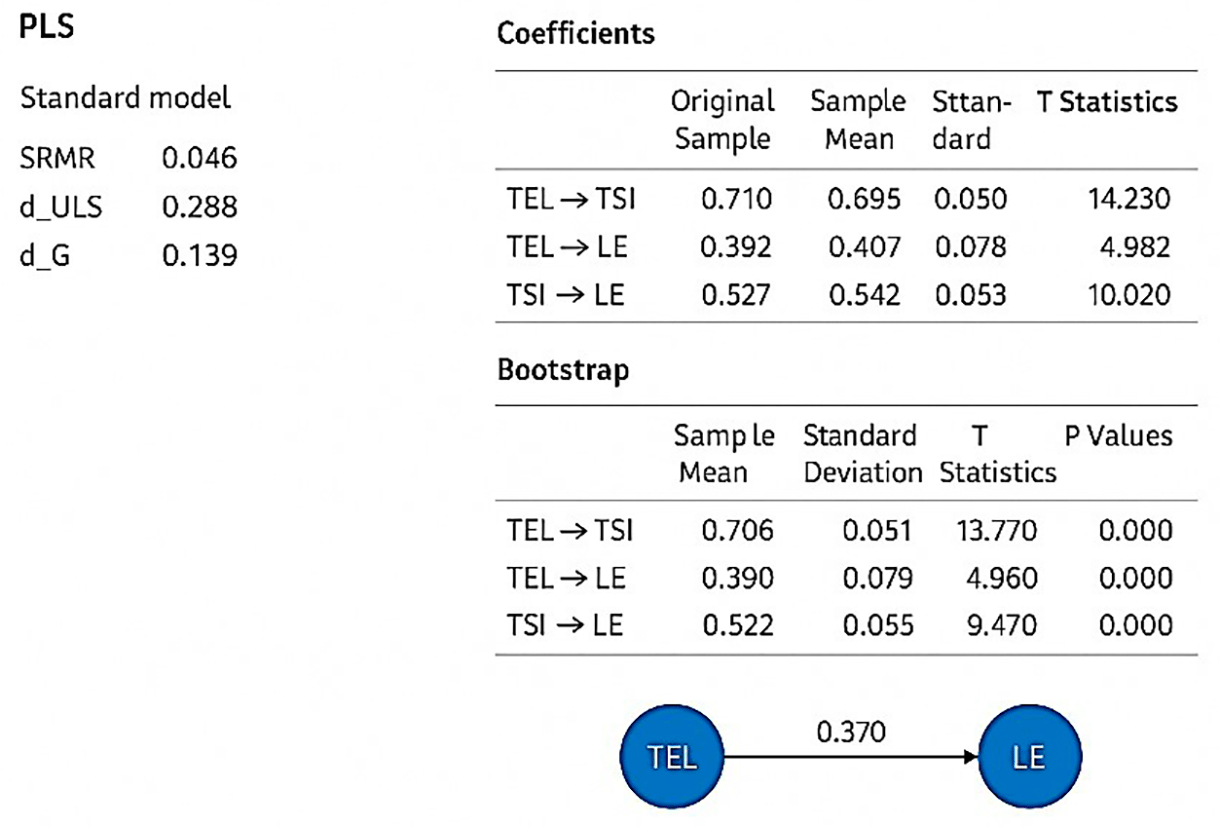
Path analysis indicated the following significant relationships:
a. TEL → TSI: β = 0.71, t = 14.23, p < .001
b. TSI → LE: β = 0.53, t = 10.02, p < .001
c. TEL → LE: β = 0.39, t = 4.98, p < .01
These results demonstrate that technology integration positively affects both direct student engagement and the quality of interaction between teachers and students. The finding is consistent with Panakaje et al. (2024) and Dubey & Sahu (2021), who found that technology integration enhances satisfaction and collaborative learning when accompanied by effective pedagogical facilitation.
The mediating effect of Teacher–Student Interaction (TSI) between Technology-Enhanced Learning (TEL) and Learning Engagement (LE) was examined using bootstrapping with 5,000 samples. Results confirmed a significant partial mediation, as shown below:
a. Indirect Effect (TEL → TSI → LE): β = 0.37, p < .001
b. Direct Effect (TEL → LE): β = 0.39, p < .01
c. Total Effect: β = 0.76, p < .001
d. VAF (Variance Accounted For) = 48.7%
This indicates that nearly half of the total influence of technology on engagement is transmitted through teacher–student interaction. The finding supports the argument that pedagogical interaction amplifies the benefits of technological adoption, a trend similarly observed in Ruth et al. (2024) and Rosli & Saleh (2024) where digital self-efficacy and technology acceptance were mediated by interactive and motivational factors. Such partial mediation suggests that while technology offers a structural foundation for engagement, teacher involvement remains a vital socio-emotional catalyst that drives meaningful participation and satisfaction in technology-based vocational learning environments (Yang, 2023; Tai et al., 2024).
Correlation and mediation results
Table 3 presents the Pearson correlation coefficients among the three latent constructs: Technology-Enhanced Learning Environment (TEL), Teacher–Student Interaction (TSI), and Learning Engagement (LE). The correlations reveal significant and positive relationships between all variables (p < .001), suggesting that students who perceived higher levels of technological support and usability in their learning environments also experienced stronger teacher–student interaction and engagement. The strongest correlation was observed between TSI and LE (r = 0.73, p < .001), indicating that effective interaction with teachers is strongly associated with students’ cognitive, emotional, and behavioral engagement in learning. This result aligns with previous findings by Pan and Jiang (2024) and Zhang et al. (2024), which emphasized the critical role of interactive teaching presence in maintaining engagement within digitally mediated environments. Similarly, TEL demonstrated a strong positive correlation with TSI (r = 0.71, p < .001), implying that when digital tools and platforms are well-integrated into instruction, teachers and students interact more frequently and meaningfully. The relationship between TEL and LE (r = 0.68, p < .001) further confirms that technology integration not only improves accessibility and flexibility but also enhances student motivation and participation through interactive channels. These high intercorrelations provided a robust foundation for testing the mediating effects of TSI in the subsequent SEM analysis. Consistent with the proposed conceptual model, the mediation analysis confirmed that Teacher–Student Interaction partially mediates the relationship between Technology-Enhanced Learning Environment and Learning Engagement (β = 0.37, p < .001). This finding indicates that approximately half of the total influence of TEL on LE is transmitted through TSI (VAF = 48.7%), highlighting the centrality of pedagogical interaction in technology-enhanced vocational learning. The findings also mirror trends observed in related studies (e.g., Ikram et al., 2025; Hashmi et al., 2025; Rosli & Saleh, 2024) that underscore the mediating power of social and instructional presence in determining learners’ satisfaction and engagement levels in digital or blended vocational contexts. Collectively, these results affirm that successful digital transformation in vocational education depends not solely on the technological infrastructure but on the quality of pedagogical interactions that sustain engagement and learning continuity.
Table 4 presents the results of the hypothesis testing derived from the Structural Equation Modelling (SEM) analysis using SmartPLS. All four proposed hypotheses (H1–H4) were statistically supported, confirming the robustness of the theoretical model. H1 (TEL → TSI) was supported with a strong standardized path coefficient (β = 0.71, t = 14.23, p < .001), indicating that the Technology-Enhanced Learning Environment (TEL) has a significant positive influence on Teacher–Student Interaction (TSI). This finding suggests that well-integrated technological environments foster richer communication, collaboration, and feedback processes between teachers and students. H2 (TSI → LE) was also supported (β = 0.53, t = 10.02, p < .001), demonstrating that higher levels of teacher–student interaction are associated with greater Learning Engagement (LE). The result reinforces the pedagogical importance of social and instructional presence within digital learning environments. H3 (TEL → LE) showed a significant direct effect (β = 0.39, t = 4.98, p < .01), implying that technology integration independently enhances student engagement by providing flexible access, interactive content, and personalized feedback mechanisms. H4 (TEL → TSI → LE) confirmed a significant indirect pathway (β = 0.37, t = 6.87, p < .001), indicating partial mediation. This means that part of the impact of TEL on learning engagement operates through teacher–student interaction, while another portion exerts a direct effect. The Variance Accounted For (VAF = 48.7%) confirms that nearly half of TEL’s total influence on LE is transmitted via TSI.
Figure 2 presents the structural model illustrating the direct and indirect relationships among the three latent variables: Technology-Enhanced Learning Environment (TEL), Teacher–Student Interaction (TSI), and Learning Engagement (LE). The standardized path coefficients, model fit indices, and coefficient of determination (R2) values are displayed in the diagram to represent the strength and significance of each relationship within the proposed mediation model. As shown in the figure, TEL exerts a strong positive effect on TSI (β = 0.71), indicating that well-integrated technology environments significantly enhance teacher–student communication, feedback, and instructional presence. In turn, TSI positively predicts LE (β = 0.53), suggesting that effective pedagogical interaction fosters higher levels of student motivation, participation, and cognitive engagement. Additionally, TEL also has a direct positive influence on LE (β = 0.39), implying that technology integration independently contributes to engagement through flexible access and interactive learning features. The R2 values indicate that 55% of the variance in TSI and 68% of the variance in LE are explained by the model, reflecting substantial explanatory power according to SEM standards. The model fit indices (SRMR = 0.046, CFI = 0.953, TLI = 0.947, RMSEA = 0.048) confirm an excellent model fit, demonstrating that the hypothesized relationships align well with the empirical data.
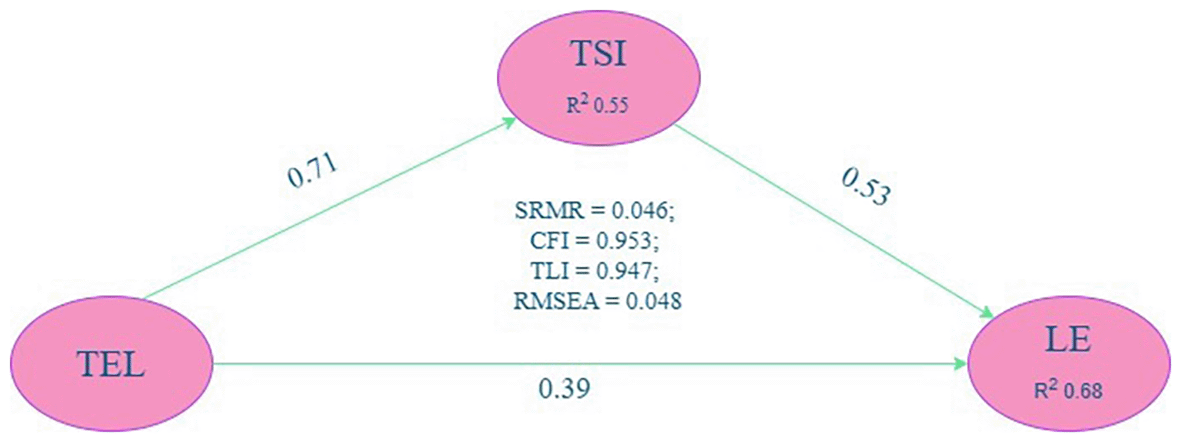
The results validate the hypothesized structural relationships and highlight the mediating importance of human interaction in digital learning environments. Similar to the findings of Boadu and Boateng (2024), student engagement in technology-mediated settings is driven not only by access to digital tools but also by the social-emotional connection between instructors and learners. These results further confirm that teacher presence and collaborative digital design enhance satisfaction and engagement (Panakaje et al., 2024; Ikram et al., 2025). Therefore, even in a technology-rich vocational context, pedagogical relationships remain the central mechanism through which technology translates into effective learning outcomes.
The primary purpose of this study was to examine the mediating role of Teacher–Student Interaction (TSI) in the relationship between the Technology-Enhanced Learning Environment (TEL) and Learning Engagement (LE) in the context of vocational education. The results obtained through Structural Equation Modelling (SEM) and bootstrapping confirm all four proposed hypotheses, demonstrating that digital learning environments and teacher–student interactions jointly determine students’ engagement levels.
The results reveal a strong positive effect of TEL on TSI (β = 0.71, t = 14.23, p < .001). This finding indicates that digital tools and platforms play a central role in improving communication, feedback, and the sense of presence between teachers and students. When digital resources are integrated purposefully, teachers become more capable of fostering active interaction and dialogue that enhance understanding and motivation. This is consistent with Bowman et al. (2022), who demonstrated that teachers’ exposure to professional development and their technology-related value beliefs significantly enhance the quality of instructional technology use. Similarly, Tefera et al. (2022) found that the adoption of educational ICT in developing countries strongly depends on instructors’ technological readiness and institutional support. In the vocational context, effective TEL implementation supports interactive and collaborative exchanges that reduce transactional distance, thereby increasing engagement and comprehension. This result aligns with Puspitosari and Lokananta (2021), who reported that digital communication media reshape teacher–student interaction dynamics, emphasizing immediacy, accessibility, and sustained engagement.
The direct relationship between TEL and LE (β = 0.39, t = 4.98, p < .01) indicates that digital learning environments independently enhance students’ emotional and cognitive involvement. When technology offers flexibility, interactive content, and instant feedback, students become more autonomous and intrinsically motivated. This supports the findings of Pandita and Kiran (2023), who demonstrated that technology use significantly influences student engagement and sustainable satisfaction. Likewise, Yavuzalp and Bahcivan (2021) emphasized that students’ readiness for e-learning positively predicts self-regulation, satisfaction, and achievement—suggesting that effective TEL integration can directly stimulate engagement even without intermediary factors. In vocational settings, where learning tasks are often practice-oriented, digital environments provide real-time feedback and simulations that make learning more meaningful. This supports the argument by Iqbal et al. (2022) that digital curriculum delivery enhances applied skills through the mediation of ICT knowledge, bridging the gap between classroom content and industry-relevant competencies.
The positive and significant path between TSI and LE (β = 0.53, t = 10.02, p < .001) confirms that effective teacher–student communication is essential for sustaining engagement in online and blended learning environments. Regular, supportive, and dialogic interaction strengthens students’ emotional connection and self-regulatory behaviors. Hashmi et al. (2025) similarly found that online learning interactions enhance self-regulated learning through the mediation of technology proficiencies, underscoring how communication quality is integral to student engagement. This result also reflects Suryono et al. (2022) and BANTUL & Wijayanto (n.d.), who observed that interpersonal teacher behavior and student self-efficacy jointly shape learning motivation and engagement outcomes. Interactional presence thus operates as both a pedagogical and psychological mechanism that sustains learner focus and persistence, especially in vocational contexts requiring continuous feedback and practice.
The mediation analysis confirmed that TSI significantly mediates the relationship between TEL and LE (β_indirect = 0.37, t = 6.87, p < .001), with a Variance Accounted For (VAF) of 48.7%, indicating partial mediation. This means that nearly half of the total effect of TEL on learning engagement occurs indirectly through enhanced teacher–student interaction. The result provides strong empirical support for the Technology–Pedagogy Interaction Model proposed by Qinglin and Hidayat (2025), where teachers’ technological and pedagogical competencies jointly determine how technology translates into effective engagement. The partial mediation suggests that while technology contributes directly to engagement, its full potential is realized when teachers employ technology to facilitate communication, guidance, and emotional connection. This aligns with Sang et al. (2023), who found that instructors’ digital competence increases work engagement via effort expectancy, illustrating that human-centered interaction amplifies technology’s benefits. Similarly, Fahrina et al. (2020) and Maro’ah & Surjanti (2020) emphasized that creative pedagogical practices are the key to transforming technological disruption into meaningful educational experiences.
This study investigated the mediating role of teacher–student interaction (TSI) in technology-enhanced vocational education using Structural Equation Modelling (SEM). The empirical findings confirmed that technology integration positively influences students’ learning engagement and satisfaction, but these effects are significantly mediated by the quality of interaction between teachers and students. In other words, the presence of technology alone is not sufficient to enhance learning outcomes; rather, it is the meaningful pedagogical interaction that transforms technology into a catalyst for deeper learning.
The results extend previous works emphasizing readiness, self-regulation, and satisfaction in digital learning environments (Yavuzalp & Bahcivan, 2021). Specifically, in vocational education contexts, teacher–student interaction emerges as a social and instructional bridge that translates digital engagement into measurable learning gains. This study aligns with Zhang and Huang’s (2023) argument that instructors’ communicative enthusiasm and emotional presence enhance learners’ enjoyment and group interaction in online learning. Furthermore, it supports Lee and Hwang’s (2022) notion that technology-enhanced learning ecosystems—such as those integrating virtual reality and metaverse tools—require strong pedagogical and emotional scaffolding to sustain effective engagement.
In line with Ngah et al. (2022), the findings highlight that learners’ willingness to continue technology-mediated education depends on sequential mediators, including social connectedness, perceived teacher support, and learning satisfaction. From this perspective, teacher–student interaction serves as a pivotal psychological and pedagogical factor shaping learners’ long-term motivation and persistence in technology-rich environments. Additionally, the mediating mechanism identified in this study resonates with the technological pedagogical content knowledge (TPACK) and social cognitive frameworks proposed by Dikmen and Demirer (2022), suggesting that effective integration of digital tools is closely tied to teachers’ self-efficacy, pedagogical adaptability, and understanding of students’ affective needs.
The findings have several implications for vocational education systems. First, institutional investment in technology must be matched by programs that enhance teachers’ interactional and facilitative skills. Bowman et al. (2022) stressed that teachers’ beliefs and competencies mediate the effectiveness of professional development in using educational technology. Thus, equipping teachers with technological pedagogical readiness is essential to translate infrastructure into active learning engagement.
Second, policy frameworks should prioritize capacity building and institutional support, echoing Tefera et al. (2022), who highlighted that educational ICT adoption in developing contexts depends on systemic enablers. For vocational schools in 3T regions, this means integrating technology with strategies that maintain teacher presence, motivation, and responsiveness across digital platforms.
Finally, sustained engagement requires reinforcing both technological and interpersonal dimensions of learning. Instructors must employ digital tools not merely for content delivery but as a means to nurture reflection, collaboration, and socio-emotional support—ensuring that the digital transformation of vocational education remains human-centered.
This study enriches existing literature by empirically validating a mediating mechanism that links technology integration, pedagogical interaction, and student engagement in vocational education. It extends prior frameworks such as the Community of Inquiry (CoI) and the Technological Pedagogical Content Knowledge (TPACK) model, illustrating that teacher–student interaction is the key conduit through which technology translates into engagement and performance. The findings complement those of Hashmi et al. (2025) and Sang et al. (2023) by confirming that digital competence and interaction quality jointly sustain self-regulated and engaged learning behaviors.
Despite its contributions, this study acknowledges certain limitations. The use of a cross-sectional design restricts causal inference, and future longitudinal studies are encouraged to examine dynamic changes in engagement and interaction over time. Further research could also incorporate constructs such as teacher self-efficacy, institutional support, and students’ digital competence as proposed by Bowman et al. (2022) and Tefera et al. (2022) to expand the explanatory power of the model. Comparative studies between vocational and higher education contexts could further validate the universality of the mediating mechanism identified here.
In this study, informed consent was obtained verbally from all participants prior to data collection. The survey was conducted in both online (Google Forms) and face-to-face formats. Before completing the questionnaire, participants were verbally informed about the study’s purpose, procedures, voluntary nature, confidentiality protections, and data usage. For online respondents, verbal consent was provided through a recorded information statement delivered by the course instructor during class meetings before the survey link was distributed. For face-to-face respondents, researchers delivered a standardized verbal explanation in the classroom, after which students verbally agreed to participate. Verbal consent was selected instead of written consent because (1) no identifying personal data were collected, (2) the study posed minimal risk, and (3) verbal consent is permissible in classroom-based survey contexts when anonymity is guaranteed (Sadam & Al Mamun, 2024). The Institutional Ethics Committee of Universitas Negeri Yogyakarta approved the use of verbal informed consent as part of the research protocol (Ethics Approval No.: B/2795/UN34.17/LT/2025) (Tanggu Mara, 2025).
| Views | Downloads | |
|---|---|---|
| F1000Research | - | - |
|
PubMed Central
Data from PMC are received and updated monthly.
|
- | - |
Provide sufficient details of any financial or non-financial competing interests to enable users to assess whether your comments might lead a reasonable person to question your impartiality. Consider the following examples, but note that this is not an exhaustive list:
Sign up for content alerts and receive a weekly or monthly email with all newly published articles
Already registered? Sign in
The email address should be the one you originally registered with F1000.
You registered with F1000 via Google, so we cannot reset your password.
To sign in, please click here.
If you still need help with your Google account password, please click here.
You registered with F1000 via Facebook, so we cannot reset your password.
To sign in, please click here.
If you still need help with your Facebook account password, please click here.
If your email address is registered with us, we will email you instructions to reset your password.
If you think you should have received this email but it has not arrived, please check your spam filters and/or contact for further assistance.

Comments on this article Comments (0)