Keywords
Traumatic Brain Injury, Surgical Waiting Time, Craniotomy, GOSE

Traumatic Brain Injury, Surgical Waiting Time, Craniotomy, GOSE
TBU can be categorized into two major types: primary and secondary brain injury. Primary brain injury occurs immediately following trauma, resulting in direct mechanical damage to the skull and intracranial structures. In contrast, secondary brain injury develops hours to days after the initial insult, triggered by physiological disturbances such as ischemia, reperfusion, hypoxia, and elevated intracranial pressure. These processes can disrupt cerebral metabolism and blood flow, potentially exacerbating neurological damage. Timely and appropriate therapy is therefore essential to prevent secondary injury and improve clinical outcomes. In anesthetic management, the principal objective is to ensure optimal cerebral oxygenation and perfusion pressure. The interval between injury and medical intervention plays a critical role in determining patient morbidity and mortality. The “golden hour” principle highlights that prompt intervention following trauma can significantly reduce mortality and morbidity rates. This study aimed to evaluate the impact of surgical waiting time on outcomes in patients with traumatic brain injury undergoing craniotomy.
This prospective observational cohort aimed at examining the relationship between surgical waiting time and outcomes in traumatic brain injury (TBI) patients undergoing craniotomy at Dr. Sardjito General Hospital, Yogyakarta, from May to November 2024. The study protocol was approved by Medical and Health Research Ethics Committee (MHREC) of Gadjah Mada University with approval number KE/FK/0787/EC/2024. The research permit letter was obtained from the Director of Human Resources, Education, and Research of Dr. Sardjito General Hospital, with the reference number DP.04.03/D.XI.2/16115/2024. Reporting of this study follows the STROBE guidelines for observational studies.
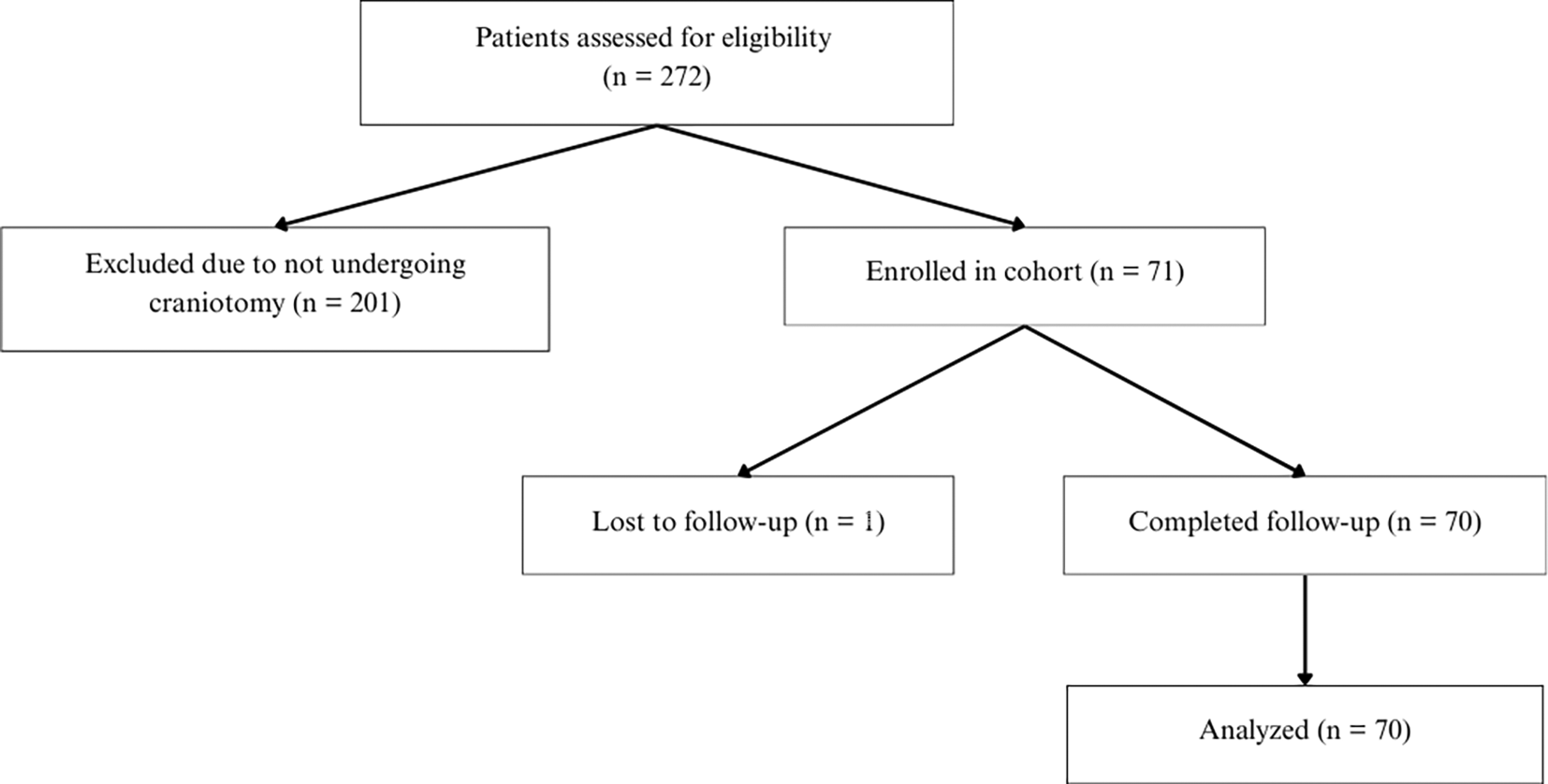
The study included a total of 71 patients who met the inclusion criteria, selected using a whole sampling method, thereby reducing selection bias. Inclusion criteria were TBI patients managed in the emergency department and undergoing craniotomy, while patients with missing data on timing or outcome variables in their electronic medical records (EMR) were excluded. Patients with incomplete medical records or those who did not continue treatment after initial emergency management were considered lost to follow-up and were considered drop out. Study flowchart presented in Figure 1. Patient outcomes were assessed using the GOSE score as the dependent variable. GOSE was assessed by the research team using a standardized instrument. Independent variables included the waiting time from emergency department admission to craniotomy, age, sex, Glasgow Coma Scale (GCS) at admission, and other clinical findings such as airway status, presence of bleeding, neurological lateralization, head CT scan findings, and hemoglobin levels.
To develop prediction models for the association between injury-to-admission and injury-to-incision time with GOSE outcomes, non-parametric ROC curve analyses were employed to dichotomize continuous variables, using cut-off points determined by the median, Liu’s index,1 and Youden’s index.2 Additional analyses assessed rounded cut-off values to enhance clinical applicability, and equality of ROC areas was tested to evaluate discriminatory differences across cut-offs. Variables with p < 0.250 in bivariable logistic regression were included in multivariable logistic regression to identify independent predictors of poor GOSE outcomes, with significance set at p < 0.05. All analyses were performed using STATA version 17 (StataCorp, USA).
This study included 272 patients with TBI admitted during the observation period. Of these, 201 patients did not undergo craniotomy, while 71 patients met the inclusion criteria. One patient was lost to follow-up. Therefore, 70 patients were included in the final analysis. Most patients were 19 years old and 71.4% were male. Based on GCS scores at admission, 51.4% of patients had a score of 13–15, indicating relatively preserved consciousness, 20% had a score of 9–12, and 28.6% had a score ≤8, reflecting more severe injury. Regarding clinical status at admission, most patients (92.9%) did not exhibit airway or breathing difficulties, whereas 32.9% were intubated. Head CT scans revealed that 35.7% of patients had cerebral edema, 62.9% demonstrated intracranial hemorrhage, and 70% presented with skull fractures. Based on the GOSE assessment, 27.1% of patients achieved good recovery, 27.1% had upper moderate disability, 10% had lower moderate disability, 21.4% had upper severe disability, 5.7% had lower severe disability, and 8.6% died. These findings are summarized in Table 1.
The analysis involved determining cutoff points for admission-to-incision time (surgical waiting time) and injury-to-incision time for craniotomy using the Liu/Youden method. Although no statistically significant differences were observed between the calculated cutoff points, the highest area under the curve (AUC) was identified at 7 hours, which was selected as the definitive cutoff for admission-to-incision time ( Table 2). For injury-to-incision time a cutoff of 17 hours was determined ( Table 2).
| Independent variable | Method | Cut-off points (hours) | AUC | SE | 95%CI | p-value |
|---|---|---|---|---|---|---|
| Admission-to-incision time | Liu/Youdena | ≤6.5; >6.5 | 0.597 | 0.062 | 0.476–0.718 | 0.908 |
| Liu/Youdenb | ≤7; >7 | 0.597 | 0.062 | 0.529–0.718 | ||
| Median | ≤8.5; >8.5 | 0.6 | 0.061 | 0.493–0.733 | ||
| Injury-to-incision time | Litu/Youdena | ≤16.875; >16.875 | 0.677 | 0.059 | 0.561–0.793 | 0.335 |
| Liu/Youdenb | ≤17; >17 | 0.668 | 0.060 | 0.551–0.785 | ||
| Median | ≤16; >16 | 0.655 | 0.060 | 0.538–0.772 |
Multivariable logistic regression analysis demonstrated that age (OR = 1.04; p = 0.028) and an injury-to-incision time exceeding 17 hours (OR = 7.94; p = 0.022) were significantly associated with poor GOSE outcomes, including upper severe disability, lower severe disability, and death. In contrast, an admission-to-incision time (surgical waiting time) greater than 7 hours was not significantly associated with poor GOSE outcomes (p > 0.05) ( Table 3).
| Variable | Poor GOSE+ n (%) or Median (IQR) | Unadjusted OR | Adjusted OR | ||
|---|---|---|---|---|---|
| OR (95% CI) | p-value | OR (95% CI) | p-value | ||
| Age (years) | 21 (17–53) | 1.03 (1.00–1.06) | 0.039 | 1.04 (1.00–1.09) | 0.028 * |
| Gender | |||||
| Female | 7 (28.0) | Ref | |||
| Male | 18 (72.0) | 1.01 (0.34–2.99) | 0.981 | ||
| GCS on Admission | |||||
| 9–15 | 11 (44.0) | Ref | Ref | ||
| ≤ 8 | 14 (56.0) | 3.23 (1.10–9.46) | 0.032 | 0.20 (0.02–2.47) | 0.211 |
| Airway and/or breathing problems on admission | |||||
| No | 22 (88.0) | Ref | |||
| Yes | 3 (12.0) | 0.76 (0.18–3.24) | 0.710 | ||
| Intubated | |||||
| No | 14 (56.0) | Ref | Ref | ||
| Yes | 11 (44.0) | 6.44 (1.90–21.80) | 0.003 | 13.65 (1.05–176.73) | 0.045 * |
| Hemorrhagic complications on admission | |||||
| No | 19 (76.0) | Ref | |||
| Yes | 6 (24.0) | 1.30 (0.40–4.19) | 0.652 | ||
| Lateralization | |||||
| No | 19 (76.0) | Ref | Ref | ||
| Yes | 6 (24.0) | 2.59 (0.70–9.55) | 0.153 | 2.22 (0.38–12.75) | 0.373 |
| Cerebral edema on CT scan | |||||
| No | 11 (44.0) | Ref | Ref | ||
| Yes | 14 (56.0) | 3.23 (1.17–8.94) | 0.024 | 1.74 (0.49–6.23) | 0.390 |
| Intracranial hemorrhage on CT scan | |||||
| No | 9 (36.0) | Ref | |||
| Yes | 16 (64.0) | 1.63 (0.60–4.43) | 0.339 | ||
| Skull fracture detected on CT scan | |||||
| No | 8 (32.0) | Ref | |||
| Yes | 17 (68.0) | 0.93 (0.33–2.65) | 0.892 | ||
| Hemoglobin level on admission (g/dL) | 11.8 (11.0–14.6) | 1.13 (0.89–1.44) | 0.311 | ||
| Admission room | |||||
| General ward/Intensive Care Unit (ICU) | 7 (28.0) | Ref | |||
| Operating room | 18 (72.0) | 0.91 (0.30–2.71) | 0.862 | ||
| Admission-to-incision time (surgical waiting time) | |||||
| ≤7 hours | 12 (40.0) | Ref | |||
| >7 hours | 13 (60.0) | 1.58 (0.19–1.80) | 0.113 | ||
| Injury-to-incision time (hours) | |||||
| ≤17 hours | 9 (36.0) | Ref | Ref | ||
| >17 hours | 16 (64.0) | 4.06 (1.45–11.38) | 0.008 | 7.94 (1.35–46.67) | 0.022 * |
To date, there are very few studies in Indonesia examining the interval between emergency department admission and craniotomy, as well as its impact on patient outcomes, particularly with respect to the GOSE score. This study aimed to identify factors contributing to delays in the management of TBI patients, both during the pre-hospital phase and throughout hospital care. The study was conducted at Dr. Sardjito General Hospital, a type A referral center that manages severe trauma cases, particularly TBI. The findings are expected to provide insights into the effectiveness of referral systems, the readiness of healthcare facilities, and the efficiency of medical transport involved in the emergency management of traumatic brain injury.
Comparing the interval from admission to craniotomy incision across studies presents several challenges. These include differences in healthcare systems, infrastructure, and triage protocols implemented in different countries. For instance, the availability of emergency facilities and referral systems can significantly influence patient management times. Variations in the methods used to measure time intervals also pose challenges, as the time of injury may be determined from patient reports, accident witnesses, medical records, or ambulance documentation. Additionally, external factors such as geographic conditions, traffic congestion, and local health policies contribute to the observed differences in time intervals.
In the present study, the median of injury-to-admission time was 8.5 hours. The median of admission-to-incision time (surgical waiting time) was 7 hours and median of injury-to-incision time was 16 hours. These durations are longer than those reported in a similar study in New Zealand, where the injury-to-admission time was 7 hours and the injury-to-incision time was 7.5 hours.3 Surgical waiting times in this study were also longer compared to a study in the United Kingdom, which reported a median duration of 6.7 hours.4 These differences highlight the need to improve pre-hospital triage systems and referral efficiency. In a study conducted in Malaysia,5 the median door-to-skin time was 605 minutes (10 hours), with an interquartile range of 494–766 minutes. At hospital discharge, 68.2% of patients had poor outcomes; this proportion decreased to 37.7% at six months. Factors such as polytrauma, episodes of hypotension, mechanical ventilation, severe TBI, and door-to-skin time were associated with adverse outcomes.
The interval from injury to neurosurgical intervention has a significant impact on patients’ neurological outcomes. According to the Brain Trauma Foundation in the United States, a four-hour window is considered the optimal threshold for surgical intervention.6 In Europe, guidelines emphasize the importance of rapid referral and transfer to neurosurgical centers to improve patient outcomes.7 Multiple studies have demonstrated that earlier intervention is associated with better prognosis, particularly in terms of neurological recovery.8,9 Although the findings of the present study did not reach strong statistical significance in multivariable regression analysis, longer intervals from injury to incision were associated with poorer GOSE outcomes, consistent with prior research.10
This study also demonstrated that increasing age was associated with poorer GOSE outcomes, consistent with previous findings.11,12 In elderly patients, physiological factors such as brain atrophy and impaired neuroplasticity increase vulnerability to brain injury and worsen functional recovery.13,14 Systemic comorbidities, including hypertension and diabetes, further influence the prognosis in older adults.15 Additionally, this study found that patients who were intubated in the emergency department had a higher risk of poor GOSE outcomes, likely reflecting more severe clinical conditions upon arrival at the referral hospital.16,17
This study is limited by its single-center design, which may reduce generalizability to other healthcare settings. The relatively small sample size may have limited statistical power to detect associations between surgical waiting time and GOSE outcomes. Time intervals such as injury-to-admission were partly based on patient or witness reports and medical records, which could introduce measurement bias. Unmeasured confounding factors, including injury severity, pre-hospital care, and intraoperative management, may also have influenced outcomes. Follow-up was limited to hospital discharge, preventing assessment of long-term recovery.
Future studies should involve multicenter cohorts with larger sample sizes and standardized time recording to reduce bias. Long-term follow-up is needed to evaluate functional outcomes beyond hospital discharge. Investigating interactions between surgical timing, injury severity, comorbidities, and pre-hospital interventions could inform predictive models to optimize emergency neurosurgical care and patient outcomes.
Craniotomy performed more than 17 hours after injury was associated with an increased risk of severe disability or death. A median surgical waiting time of 7 hours was not significantly associated with GOSE outcomes. Age was also a significant factor, with older patients exhibiting a higher risk of poor outcomes. Although surgical waiting time did not show a significant association with clinical deterioration, expedited intervention remains a critical factor in improving the prognosis of patients with traumatic brain injury.
This study was conducted in accordance with the Declaration of Helsinki and was approved by the Medical and Health Research Ethics Committee of Dr. Sardjito General Hospital (ethical clearance number: KE/FK/0787/EC/2024). Written informed consent was obtained from all participants or their legally authorized representatives prior to enrollment in the study. The authors are prepared to provide signed consent forms upon request.
| Views | Downloads | |
|---|---|---|
| F1000Research | - | - |
|
PubMed Central
Data from PMC are received and updated monthly.
|
- | - |
Provide sufficient details of any financial or non-financial competing interests to enable users to assess whether your comments might lead a reasonable person to question your impartiality. Consider the following examples, but note that this is not an exhaustive list:
Sign up for content alerts and receive a weekly or monthly email with all newly published articles
Already registered? Sign in
The email address should be the one you originally registered with F1000.
You registered with F1000 via Google, so we cannot reset your password.
To sign in, please click here.
If you still need help with your Google account password, please click here.
You registered with F1000 via Facebook, so we cannot reset your password.
To sign in, please click here.
If you still need help with your Facebook account password, please click here.
If your email address is registered with us, we will email you instructions to reset your password.
If you think you should have received this email but it has not arrived, please check your spam filters and/or contact for further assistance.

Comments on this article Comments (0)