Keywords
Women’s engagement in decision-making, gender composition, industry context, critical mass

Women’s engagement in decision-making, gender composition, industry context, critical mass
Women’s participation in organisational decision-making has increasingly been recognised as a driver of inclusive growth, innovation, and sustainable development.3,14,19 Global frameworks such as the United Nations Sustainable Development Goals (SDG 5 and SDG 10) underscore the importance of gender equality and leadership diversity in fostering equitable governance and improved socio-economic outcomes.51,53 Despite these commitments, women remain underrepresented in leadership positions, particularly in male-dominated sectors such as logistics, transport, construction, and engineering.16,33,39 These industries often exhibit entrenched gender norms, rigid institutional cultures, and structural barriers that constrain women’s upward mobility and engagement in decision-making.12,47
Scholars identify industry gender composition as a key determinant of women’s leadership engagement. In male-dominated environments, informal “old boys’ networks” and gendered stereotypes frequently exclude women from mentorship opportunities, high-visibility projects, and strategic decision-making forums.18,22 Conversely, the presence of female leaders creates role-modelling effects, inspiring younger women, expanding professional networks, and reducing barriers to entry.2,23,26 Equally important is the industry context, which encompasses sectoral norms, operational demands, and institutional frameworks. Research shows that male-dominated contexts often reinforce exclusionary practices through rigid working hours, mobility requirements, and performance expectations shaped by masculine norms of endurance and availability.1,2,13,21 In sub-Saharan Africa, weak regulatory frameworks, patriarchal cultures, and limited enforcement of gender-sensitive policies exacerbate these challenges, resulting in persistent disparities.36,38
In Uganda, these patterns are particularly evident. Although women have increasingly entered professional pipelines in logistics, transport, and related industries, their progression into decision-making positions remains constrained by gender stereotypes, institutional fragmentation, and weak implementation of gender equity policies.7,50 Reports by the Auditor General37 and the Uganda Bureau of Statistics49 highlight the limited participation of women in governance structures, despite policy commitments under Vision 2040 and the National Development Plan III. Existing literature has primarily focused on individual-level factors, such as work–life balance, self-efficacy, and gender roles.31,35 However, industry-level factors, particularly gender composition and industry context, remain underexplored, especially in African settings where systemic and cultural barriers strongly shape leadership pathways. Without integrating these dimensions, policies that emphasise recruitment and training risk failing to translate into genuine engagement in strategic decision-making.
This study seeks to address this gap by examining how industry gender composition and industry context influence women’s engagement in decision-making in male-dominated sectors in Uganda. Specifically, it aims: (i) to assess the effect of industry gender composition on women’s decision-making engagement; (ii) to evaluate how industry context shapes women’s leadership participation; and (iii) to analyse the combined effect of gender composition and context on women’s decision-making roles. The following research questions guide the study: How does industry gender composition influence women’s engagement in decision-making? In what ways does industry context affect women’s engagement in decision-making? And what is the combined influence of industry gender composition and industry context on women’s decision-making engagement? By answering these questions, the study contributes to both theory and practice by highlighting how structural and cultural realities within male-dominated industries shape women’s leadership outcomes, and by providing evidence-based recommendations for strengthening gender-inclusive decision-making in Uganda and beyond.
This sub-section presents the findings from the literature review, structured around the four established research hypotheses. The directional relationships illustrated in Figure 1 below provide a visual representation of the outcomes from this comprehensive literature review.
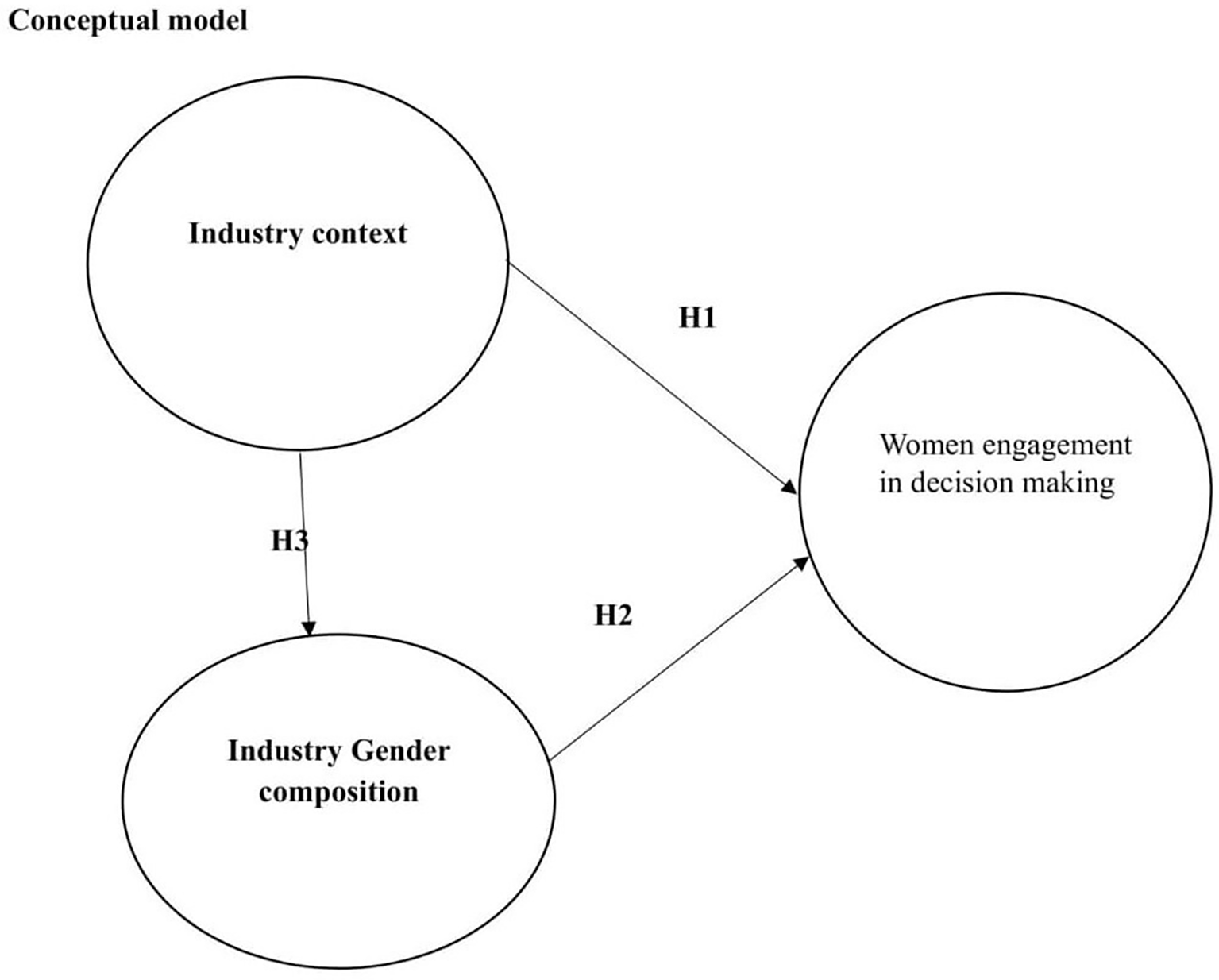
This study is grounded in Social Role Theory (SRT developed by Eagly and Wood.13 The theory posits that gendered divisions of labour within society give rise to expectations about the roles and behaviours deemed appropriate for men and women. These socially constructed expectations extend into organisational contexts, where leadership and decision-making are frequently associated with masculine, agentic qualities, such as assertiveness, independence, and risk-taking. At the same time, women are stereotypically linked to communal traits, including caregiving, support, and nurturance.12 Consequently, women who aspire to or occupy leadership positions in male-dominated sectors often encounter prejudice and bias because their roles are perceived as incongruent with societal gender norms.
Industry context, defined as the institutional norms, professional practices, and operational structures characteristic of a given sector, exerts a significant influence on women’s decision-making engagement. Male-dominated industries such as logistics, transport, and engineering are often characterised by long working hours, extensive travel requirements, and masculine performance expectations that privilege “always available” leaders.1,13 These contextual norms reinforce the role incongruity women face, as they conflict with societal expectations that assign women primary responsibility for caregiving and domestic roles.13 In sub-Saharan Africa, patriarchal cultural norms and weak enforcement of gender-sensitive policies further exacerbate these dynamics, limiting women’s participation in leadership despite policy commitments to gender equality.36,38
This perspective has been essential in explaining why stereotypes and role incongruence constrain women’s participation in male-dominated sectors such as logistics. However, while Social Role Theory helps explain why barriers exist, it is less equipped to explain the conditions under which women’s representation begins to overcome those barriers and translate into substantive influence. For this reason, this study adopts Critical Mass Theory (CMT) as its principal theoretical framework. CMT offers a more comprehensive explanation of the observed industry-level dynamics, particularly the relationship between industry gender composition and women’s participation in decision-making.
Critical Mass Theory9,29 posits that minority groups, such as women in male-dominated sectors, require a “critical mass” of representation before they can exert meaningful influence in decision-making. When women are few in number, they are often treated as tokens and lack substantive voice in shaping organisational outcomes. Once representation crosses a threshold (commonly suggested as 30%), women’s participation normalises, reducing stereotyping and fostering influence.30 Recent studies extend this theory, showing that while numeric thresholds matter, women’s impact also depends on positional authority, organisational culture, and the presence of supportive networks.48,55 In logistics, where women remain underrepresented, CMT offers a valuable lens for understanding how industry gender composition significantly influences women’s engagement in decision-making.
Research consistently demonstrates that industry context plays a decisive role in shaping the opportunities available for women to engage in decision-making processes. De Jonge10 highlighted that the sector in which an organisation operates is a significant predictor of women’s representation in leadership. Industries differ in their structural demands, cultural expectations, and historical gender norms, all of which influence women’s access to leadership and decision-making positions.34 Male-dominated industries such as construction, energy, and logistics tend to exhibit more pronounced gender disparities due to entrenched occupational segregation, perceptions of physical intensity, and male-oriented recruitment and promotion practices.17,41 By contrast, industries with a tradition of female participation, such as education and healthcare, often display comparatively higher levels of women’s engagement in strategic decision-making.25 Additionally, legal and institutional reforms are often advanced as mechanisms for improving women’s participation in leadership and decision-making. However, research suggests that the implementation of gender equality laws remains uneven in East African contexts. For example, Kagaba28 in a study of rural Rwanda found that despite the presence of progressive gender equality laws, women continued to face barriers rooted in patriarchal norms, cultural expectations, and limited institutional enforcement.
Within the logistics sector, structural and cultural barriers remain particularly salient. Long working hours, geographically dispersed operations, and masculine-coded perceptions of operational demands have historically restricted women’s advancement into both operational and strategic decision-making roles.45,52 Scholars and policymakers increasingly argue that industry-level interventions, including sector-wide diversity targets, inclusive leadership initiatives, and advocacy from industry associations, are essential to counteract these systemic barriers and promote women’s leadership participation.2,21 Building on this evidence, the study hypothesises that:
Industry context has a significant influence on women’s engagement in decision-making.
The proportion of women within an industry, often referred to as industry gender composition, strongly influences women’s likelihood of attaining leadership and decision-making positions. Ali et al.5 conceptualised this through “trickle-down” and “bottom-up” effects, showing that in male-dominated industries (16–39% women), leadership opportunities for women are constrained by limited professional networks, scarcity of role models, and persistent gender stereotypes. By contrast, gender-balanced industries (40–60% women) tend to exhibit greater opportunities for equitable representation, while female-tilted industries (61–84% women) reduce structural barriers yet may expose women leaders to “glass cliff” positions associated with heightened risk of failure.15,40
Lyness and Grotto’s BAFFLE Female Leadership Model35 similarly underscores gender composition as a critical determinant of leadership pathways. In male-dominated contexts such as logistics, women are often perceived as “tokens”,29 which heightens performance scrutiny and marginalises them from informal decision-making circles. However, Critical Mass Theory suggests that once women surpass a threshold (commonly cited as 30% representation), tokenism declines, collective influence increases, and organisational cultures become more inclusive.24
In the logistics industry specifically, women occupy only about 21% of leadership roles globally,54 falling significantly below the critical mass threshold. This underrepresentation not only limits women’s influence over industry strategy and policy but also perpetuates structural conditions that discourage women from entering or remaining in the sector. Thus, the study hypothesises:
Industry gender composition positively influences women’s engagement in decision-making.
The industry context encompasses the structural, cultural, and operational characteristics of a sector, such as work schedules, mobility demands, hierarchical norms, and gendered stereotypes.1 In male-dominated industries such as logistics and transport, these features often create barriers to women’s progression into decision-making roles. Long working hours, travel requirements, and perceptions of logistics as “technical” and “masculine” reinforce occupational segregation and discourage women from advancing into leadership.2,32 Thus, while industry context sets the stage for women’s career trajectories, contextual barriers alone cannot fully explain why some industries achieve greater gender inclusivity in decision-making.
Industry gender composition (IGC), the relative presence of women and men within an industry, functions as a mediating factor that shapes how industry context influences women’s engagement in leadership. When women constitute only a small minority, contextual barriers such as rigid schedules or discriminatory cultures are reinforced by tokenism, marginalisation, and stereotype threat.27,29 However, as women’s representation increases, they collectively challenge exclusionary norms, normalise female authority, and enhance the inclusivity of decision-making processes.5
CMT underpins this mediation mechanism. It argues that women must reach a critical mass commonly estimated at around 30% representation before their presence shifts from symbolic to substantive.9,30 In industries with higher female representation, contextual barriers have less constraining power because a diverse gender composition moderates cultural stereotypes and strengthens organisational incentives for inclusion.55
Recent research supports the idea that industry gender composition mediates the effect of industry context on women’s leadership outcomes. For instance, Ali et al.5 demonstrated that in industries with higher female representation, organisational practices (such as recruitment and promotion policies) are more likely to translate into greater participation in women’s leadership. Similarly, studies of board governance show that gender-diverse industries are more open to inclusive leadership styles and less constrained by traditional gender-role expectations.46,48 In the logistics sector, where structural barriers such as mobility demands and 24/7 operations persist, industry-wide representation of women creates visible role models, mentorship networks, and advocacy platforms (e.g., WiLAT). These collective forces mitigate contextual constraints, enabling women not only to enter the sector but also to engage substantively in decision-making processes. Thus, the study hypothesises:
Industry gender composition mediates the relationship between industry context and women’s engagement in decision-making.
This section outlines the research design, study population, sample size, sampling techniques, data collection methods, and preliminary findings.
This study employed a quantitative cross-sectional survey design, in which data were collected from respondents at a single point in time. This design was selected for its suitability in examining hypothesised relationships among constructs within a defined population, and in testing theoretical models derived from prior literature. By focusing on associations between variables rather than causal inferences, the cross-sectional approach provided a pragmatic means of capturing perceptions and experiences of professionals in Uganda’s logistics sector. The adoption of this design was guided by a deductive reasoning framework, whereby hypotheses were formulated based on established theoretical foundations, including Critical Mass Theory and Social Role perspectives. The survey enabled the systematic collection of standardised data that could be subjected to statistical analysis using structural equation modelling (SEM). This approach allowed the study to assess both direct and indirect effects across multiple constructs simultaneously, in line with the complexity of the conceptual framework. The cross-sectional design was also appropriate given the study’s scope and resource considerations. It allowed for efficient data collection from a relatively large and diverse sample encompassing logistics companies, industry associations, and regulatory agencies.
The study population consisted of 4,730 logistics officers, drawn from three key sectors: industry associations (n = 700), government regulatory bodies (n = 350), and registered private logistics companies (n = 3,680). Guided by the sample size determination formula of Krejcie and Morgan (1970), a target sample of 369 logistics practitioners was selected, proportionately distributed across industry associations (106), government regulatory bodies (41), and private logistics companies (222). Of the 369 questionnaires administered, 298 were successfully completed and returned, representing an effective response rate of 81%.
Data for this study were collected using a structured survey questionnaire anchored on a five-point Likert scale, which is widely recognised for its ability to measure attitudes, perceptions, and behavioural tendencies with both reliability and comparability.6 The instrument was designed to capture three core constructs: industry context, industry gender, and women’s engagement in decision-making (operationalised through behavioural, cognitive, physical, and emotional engagement dimensions).
A drop-and-pick-up method was employed for administering the questionnaire. This technique is commonly used in survey research to enhance response rates and ensure data quality, as it enables researchers to provide instructions and clarifications directly to respondents, thereby minimising errors and omissions.43 Establishing personal contact during distribution further enhanced respondent trust and legitimacy, increasing the likelihood of participation.11 Informed consent was obtained from all participants, who were given a four-week period to complete the questionnaire. Respondents who did not return the survey within this timeframe were considered to have voluntarily opted out.
Ethical approval for this study was obtained from the Faculty of Graduate Studies and Research, Makerere University Business School (MUBS) under the Makerere University Research Ethics Framework. Approval was granted on 15 July 2023, through an official introduction and clearance letter, Reference No. MUBS/FGSR/2023/07/015, which authorized the researcher to conduct data collection among logistics companies, industry associations, and regulatory agencies in Uganda. Independent Institutional Review Board (IRB) approval was not required, as the study involved non-clinical survey and interview data obtained from adult professionals (aged 18 years and above) and posed minimal risk to participants.
The study adhered to the ethical principles of the Declaration of Helsinki, ensuring informed consent, confidentiality, and voluntary participation. All participants were provided with a full explanation of the study’s purpose and voluntarily provided informed written consent prior to participation. Confidentiality and anonymity were strictly maintained throughout the research process.
Data were analysed using the Statistical Package for the Social Sciences (SPSS) along with SmartPLS software. Measurement model assessment confirmed that the constructs demonstrated satisfactory reliability, validity, and absence of multicollinearity. Cronbach’s alpha values ranged from 0.794 to 0.831, exceeding the recommended threshold of 0.70.8 Composite reliability values were also acceptable, ranging from 0.809 to 0.882, surpassing the 0.60 benchmark.20 Convergent validity was established, as the average variance extracted (AVE) values were all greater than 0.50, ranging from 0.521 (IC) to 0.599 (WEDM). VIF values ranged from 1.000 to 1.808, well below the 3.3 threshold, indicating no concerns about multicollinearity29 ( Table I).
Discriminant validity was evaluated using the heterotrait–monotrait (HTMT) ratio. All HTMT values were below 0.90, confirming that the constructs are empirically distinct.56 Specifically, the HTMT ratio between IC and IGC was 0.734, between IC and WEDM was 0.532, and between IGC and WEDM was 0.504 ( Table II). These results demonstrate that the measurement model satisfies the criteria of reliability, convergent validity, and discriminant validity, providing a robust basis for assessing the structural model.
To evaluate construct validity, Factor Analysis (FA) was conducted as an initial step. FA was applied to identify and retain items aligned with the intended theoretical constructs. The primary objective of the Exploratory Factor Analysis (EFA) was to condense and summarise a large set of observed variables into a smaller, more meaningful, and interpretable set of latent factors, thereby uncovering the underlying theoretical structure of the constructs. All items displayed strong loadings on their respective factors, indicating high construct validity, and no significant cross-loadings were observed, confirming discriminant validity among the variables.
Each retained factor had an Eigenvalue greater than 1, following the Kaiser criterion. The Kaiser-Meyer-Olkin (KMO) measures were 0.801and 0.803, reflecting excellent sampling adequacy for factor analysis. Additionally, Bartlett’s Test of Sphericity produced statistically significant results (Approx. Chi-Square = 2,866.808 and 4,700.207; df = 276 and 780; Sig. = 0.000 for all), indicating that the correlation matrix was not an identity matrix and confirming the suitability of factor analysis. The constructs examined in the study included industry context, industry gender composition and women’s engagement in decision-making, as presented in Tables III and IV.
Table V presents the demographic and institutional characteristics of the 298 respondents. The majority were drawn from logistics companies (50.7%), followed by industry associations (35.6%) and regulatory bodies (13.8%), ensuring representation from key sectoral actors whose perspectives are vital to understanding women’s roles in decision-making. In terms of ownership, locally owned institutions (38.7%) accounted for the largest share, followed by government-owned (22.5%), foreign-owned (21.5%), and family-owned entities (7.4%), reflecting both the strong presence of indigenous firms and opportunities for international collaboration. With respect to institutional longevity, 39% of organisations had operated for more than 15 years, signalling stability and accumulated sectoral knowledge, while newer entities (1–5 years) suggest openness to innovation and adaptive practices. Organisational size was also diverse: 32.9% employed 50–100 staff, 31.5% fewer than 50, 15.1% between 100–500, and 20.5% more than 500 employees. Larger organisations, with their more formalised structures, may create both opportunities and constraints for women’s participation in leadership. The workforce profile further highlights a predominantly young demographic, with 52.7% under 35 years, 38.6% aged 35–45, and only 8.7% above 45. Education levels were relatively high, with 56.7% holding bachelor’s degrees and 22.8% master’s degrees, reflecting substantial human capital and leadership potential within the sector.
The demographic profile of respondents reflects the diversity of Uganda’s logistics sector. Over half were drawn from logistics companies, with the remainder representing industry associations and regulatory bodies. Most organisations were locally owned, though government, foreign, and family-owned entities were also represented. The sample combined both long-established firms and newer entrants, with variation in workforce size from small firms to large organisations employing over 500 staff. Respondents were predominantly young and highly educated, with more than half under 35 years and the majority holding at least a bachelor’s degree, underscoring the sector’s strong human capital base and leadership potential. These characteristics suggest that while the industry has the capacity to support greater women’s participation in decision-making through a skilled and youthful workforce, institutional ownership patterns and organisational size may shape the extent to which inclusive leadership practices are adopted.
Hypothesis 1: Industry context and women’s engagement in decision-making
Consistent with H1, Table VI and Figure 2 displays that, Industry Context (IC) exerted a positive and statistically significant effect on Women’s Engagement in Decision-Making (WEDM) (β = 0.484, SE = 0.049, t = 9.929, p < .001). Bias-corrected bootstrap confidence intervals (95% BCa CI = [0.360, 0.577]) excluded zero, reinforcing the robustness of the estimate. In standardised terms, a one-standard-deviation improvement in the supportiveness of the industry context (e.g., more predictable temporal demands, transparent advancement processes, fewer masculine gatekeeping norms) is associated with roughly a one-third standard-deviation increase in women’s decision-making engagement. The magnitude is moderate and practically meaningful, indicating that structural and cultural features of industries materially shape women’s participation in strategic decisions. These results provide empirical backing for industry-level interventions (e.g., process redesign, scheduling reforms, bias-resistant governance) aimed at strengthening women’s voice in decision forums.

β = Path coefficient; SE = Standard error; t = t-value; p = p-value.
These results align closely with long-standing organisational gender scholarship arguing that sectoral structures and cultures, irregular hours, mobility demands, informal gatekeeping, and masculine performance norms shape who gains voice and influence.1,13 In other words, when the context becomes more supportive (predictable scheduling, transparent advancement criteria, bias-resistant decision processes), women’s participation in strategic forums rises correspondingly.
Evidence from male-dominated sectors underscores the exact mechanism. Studies in logistics and transport document how workload intensity, geographic dispersion, and culturally masculinised expectations constrain women’s progression into influence roles; conversely, context reforms are associated with better leadership outcomes.2,21 At the executive level, ideological biases can prolong inequality even in the presence of formal policies, underscoring the importance of shifting not just rules but also day-to-day managerial logics a point consistent with our finding that context matters beyond pipeline numbers.16 These sectoral insights align with broader reviews indicating that women’s leadership participation improves when organisations redesign processes (such as evaluation, scheduling, and assignment allocation) rather than relying solely on symbolic inclusion.22,44,47
Regionally, work from Sub-Saharan Africa highlights how patriarchal norms and uneven enforcement blunt the impact of formal gender policies.36,38 Uganda’s sectoral reports echo these constraints: despite policy commitments, women remain underrepresented in governance structures, and fragmented institutional practices limit real participation.7,49 Our finding that context predicts engagement is therefore consistent with this evidence base: where implementation is weak and day-to-day practices remain exclusionary, women’s decision-making roles lag even when policies exist.
From a theoretical standpoint, the positive IC→WEDM path coheres with Social Role arguments: shifting evaluative criteria and work designs can reduce incongruity between “masculine-coded” leadership norms and women’s leadership behaviour, thereby increasing women’s voice and uptake of their proposals.12,13,22 It also resonates with practice-oriented syntheses that link process redesign (e.g., clear criteria, documented rationales, moderated airtime, and transparent sponsorship) to improved leadership outcomes for women.23,44 Reviews specific to logistics suggest that resilience and sustained participation depend on industry-wide efforts, standards, association-led advocacy, and leadership programs, precisely the kinds of contextual interventions our results imply.42,45
Therefore, the significant IC→WEDM effect found here strengthens a growing consensus: changing the context changes the outcomes. In male-dominated industries, especially within African settings, industry context is not a neutral backdrop but a governance instrument that can be deliberately redesigned to expand women’s real participation in decision-making.
Hypothesis 2: Industry gender composition and women’s engagement in decision-making
Table VI and Figure 3 displays that industry gender composition has a significant positive effect on women’s engagement in decision-making (β = 0.475, SE = 0.055, t = 8.698, p < 0.001). The small standard error suggests the estimate is precise, while the t-value exceeds the critical threshold of 1.96, confirming statistical significance. The p-value of 0.000 further demonstrates the strength of this relationship. Moreover, the bias-corrected 95% confidence interval (0.165–0.409) lies entirely above zero, reinforcing the conclusion that as industry gender composition becomes more balanced, with greater representation of women, women’s engagement in decision-making increases in a statistically reliable manner.

The significant positive relationship underscores the pivotal role of representation in dismantling structural inequalities in male-dominated sectors such as logistics. Acker’s theory of gendered organisations1 and Ely and Meyerson’s work suggest that organisational and industry structures are inherently gendered, reproducing barriers unless critical levels of female participation are achieved.13 This aligns with,4 who showed that increased female representation generates both trickle-down and bottom-up effects, whereby women’s visibility in leadership encourages aspirants while reshaping industry norms. Supporting this,44 emphasised that role models provide not only inspiration but also networks and identity resources, which strengthen women’s professional legitimacy. More recent evidence confirms that inclusive workforce structures in logistics reduce barriers and foster equitable participation.2,42 Conversely, the persistence of biased ideologies and “old boys’ networks” in transport and logistics7,16,22 illustrates why women remain underrepresented in leadership despite formal equality policies. The current finding demonstrates that moving beyond tokenism24,29 towards meaningful gender balance at the industry level can normalise women’s authority, consistent with role congruity theory12 and global evidence that equitable representation accelerates SDG progress.14,51 Thus, the results reaffirm that structural change in industry gender composition is not only an enabler of individual women’s career trajectories but also a transformative factor for sector-wide inclusivity and leadership equity.
Hypothesis 3: Industry context, Industry gender composition and women’s decision-making roles
Table VI and Figure 4 reveal a significant indirect effect of industry context on women’s engagement in decision-making through industry gender composition (β = 0.170, SE = 0.040, t = 4.205, p < 0.001). The bias-corrected confidence interval (0.097–0.257) lies entirely above zero, confirming the robustness of the mediation effect. This suggests that while a supportive industry context is crucial, its impact on women’s decision-making engagement is determined mainly by the degree of gender balance within the industry. In essence, inclusive industry structures and policies create conditions that foster women’s participation. Still, it is the actual presence of women in the industry that transforms these conditions into meaningful engagement in leadership and decision-making roles.

The finding that industry context influences women’s engagement in decision-making indirectly through industry gender composition highlights the mediating role of representation in translating structural conditions into substantive outcomes. Acker’s theory of gendered organisations1 and Ely and Meyerson’s work both argue that industries and organisations reproduce inequality unless visible shifts in participation accompany structural change.13 This result aligns with,4 Q2 who demonstrated that industry gender composition produces both trickle-down and bottom-up effects, ensuring that supportive contexts only yield leadership engagement when women are numerically represented. Similarly,7,16 demonstrated that, in logistics, inclusive regulatory frameworks alone cannot overcome entrenched “old boys’ networks” unless women’s presence is normalised within the sector. The mediation result, therefore, suggests that industry-level initiatives, such as gender equity policies, professional training, and supportive networks,2,42 must be coupled with actual increases in women’s participation to generate meaningful engagement in decision-making. This is consistent with role congruity theory12 and critical mass arguments,24,29 which emphasise that representation is not merely symbolic but serves as the conduit through which industry context is translated into equitable leadership outcomes.
The study provides robust evidence that both industry context and industry gender composition play significant roles in shaping women’s engagement in decision-making within the logistics sector. The direct effect of industry context on women’s engagement in decision-making is positive and statistically significant (β = 0.484, p < 0.001), underscoring the importance of supportive regulatory frameworks, industry norms, and inclusive policies in enabling women’s leadership participation. Similarly, industry gender composition has a significant positive effect (β = 0.475, p < 0.001), indicating that a more balanced representation of women within the industry enhances their visibility, normalises their authority, and creates pathways for participation in decision-making.
In addition, the mediation analysis confirms that industry gender composition serves as a critical channel through which industry context translates into greater women’s engagement in decision-making (β = 0.170, p < 0.001). This highlights that while inclusive industry structures and policies are necessary, their effectiveness depends on actual improvements in women’s representation within the sector. Therefore, these findings emphasise that achieving gender equity in decision-making requires both structural support at the industry level and the critical mass of women whose presence can transform norms and dismantle entrenched barriers. The results contribute to theory by affirming role congruity and critical mass perspectives, and they provide practical implications for policymakers and industry stakeholders seeking to foster sustainable gender inclusion in logistics leadership.
5.1.1 Theoretical implications
The findings confirm that industry context (IC) and industry gender composition (IGC) significantly influence women’s engagement in decision-making (WEDM), with a positive mediation through individual-level mechanisms. Drawing on Social Role Theory (Eagly & Wood, 2012), these results suggest that as gendered expectations within logistics shift through supportive organisational and industry practices, women are increasingly likely to perceive decision-making roles as congruent with their identities. At the same time, Critical Mass Theory29 is validated: when women’s representation within the industry reaches meaningful thresholds, their presence normalises female authority, reduces tokenism, and creates collective efficacy. The confirmed mediation effect highlights that structural and contextual enablers translate into substantive engagement primarily through women’s agency, skills, and confidence, thereby expanding existing theoretical understanding of how multilevel factors interact.
5.1.2 Practical implications
For logistics companies and industry associations, these findings demonstrate the importance of building supportive contexts, such as fostering inclusive workplace cultures, ensuring equitable access to leadership pipelines, and highlighting visible female role models. Firms that intentionally increase women’s representation in management and decision-making spaces not only benefit from diverse perspectives but also strengthen employee engagement and organisational performance. Human resource managers, training programs, and mentorship initiatives are particularly vital in leveraging the mediating role of individual-level factors to translate representation into active engagement.
5.1.3 Policy implications
At the regulatory level, the results emphasise the role of gender-responsive laws and national frameworks in shaping industry practices. Policies that promote equal opportunities, enforce anti-discrimination measures, and require gender-balanced representation on boards and associations can accelerate progress. Industry regulators (e.g., Ministry of Works and Transport, Civil Aviation Authority, Uganda Revenue Authority, Uganda Railways Corporation) and professional bodies (e.g., CILT, WiLAT) can use these findings to design policies that mandate or incentivise inclusion, ensuring that women’s presence at decision-making tables is both substantive and sustainable.
5.1.4 Social implications
Beyond the organisational and policy spheres, the findings carry strong societal relevance. Increasing women’s decision-making engagement in logistics challenges persistent gender stereotypes and broadens perceptions of women’s capabilities in male-dominated sectors. This has ripple effects in communities, as young women see logistics as a viable career path; families benefit from empowered female leaders; and society progresses towards achieving SDG 5 (Gender Equality) and Uganda’s Vision 2040 goals. By fostering an environment where women’s voices shape logistics decisions, the industry not only advances equity but also contributes to broader socio-economic transformation.
While this study provides important insights into women’s engagement in decision-making within Uganda’s logistics sector, several limitations should be acknowledged. First, the use of a cross-sectional design restricts the ability to establish causality between the studied factors and women’s engagement. The observed relationships reflect associations at a single point in time, rather than changes or dynamics that occur over time.
Second, the geographical scope was confined to Uganda, with data collected from logistics companies, regulatory bodies, and associations within the country. Although the findings are relevant to similar contexts, they may not be directly generalisable to regions with different socio-cultural or institutional environments.
Building on these limitations, several avenues for future research are recommended. Longitudinal studies would help to assess how women’s engagement evolves over time and provide stronger evidence of causality. Comparative research across different countries or regions could highlight how diverse policy frameworks and cultural contexts shape outcomes. Including informal sector actors in future investigations would broaden the scope and provide a fuller picture of gender dynamics across the logistics industry.
Additionally, targeted studies on women in top executive positions would yield deeper insights into overcoming barriers at the highest levels of decision-making. Methodological expansions such as experimental or ethnographic approaches could also enrich the understanding of cultural and organisational dynamics. Finally, future research could apply an intersectional lens, examining how gender interacts with age, education, marital status, and regional background to influence leadership trajectories.
| Views | Downloads | |
|---|---|---|
| F1000Research | - | - |
|
PubMed Central
Data from PMC are received and updated monthly.
|
- | - |
Provide sufficient details of any financial or non-financial competing interests to enable users to assess whether your comments might lead a reasonable person to question your impartiality. Consider the following examples, but note that this is not an exhaustive list:
Sign up for content alerts and receive a weekly or monthly email with all newly published articles
Already registered? Sign in
The email address should be the one you originally registered with F1000.
You registered with F1000 via Google, so we cannot reset your password.
To sign in, please click here.
If you still need help with your Google account password, please click here.
You registered with F1000 via Facebook, so we cannot reset your password.
To sign in, please click here.
If you still need help with your Facebook account password, please click here.
If your email address is registered with us, we will email you instructions to reset your password.
If you think you should have received this email but it has not arrived, please check your spam filters and/or contact for further assistance.

Comments on this article Comments (0)