Keywords
Fixed-Point Theory, Fuzzy Regression Analysis, Trapezoidal Fuzzy Numbers, d∞-Metric, Concrete Compressive Strength.

This article is included in the Fallujah Multidisciplinary Science and Innovation gateway.
Fixed-Point Theory, Fuzzy Regression Analysis, Trapezoidal Fuzzy Numbers, d∞-Metric, Concrete Compressive Strength.
Regression analysis is a fundamental form of quantitative modeling across fields of science; it provides a way of distilling actionable relations from real data. However, all forms of regression analysis have a deterministic basis that is increasingly incongruent with modern data, where epistemic uncertainty, or reducible error based on measurement constraints, environmental changeability, and incomplete knowledge of the system itself, defines the boundaries of the analysis. This uncertainty is most acutely present in the common engineering fields still reliant on forecasting a dependent variable, for example, in predicting the compressive strength of concrete, where the conjunction of measured laboratory results with real-world variability of composition, retentional effects of age, and variability inherent in the curing conditions will have a very real impact on the preciseness of prediction required in a managed environment. It is important to recognize that while traditional least-squares regression is statistically robust also in the presence of random errors, it is not inherently considered as a formal method for quantification of structured imprecision, to the extent that the regression coefficients produced can have a false-sense of preciseness that misrepresents the potential complexity of the system.
Fuzzy regression was originally introduced by Tanaka et al.,4 for exactly this reason; fuzzy sets were introduced to be used to model the parameters and the observations. The primary goal was to model the variables with membership functions, as opposed to single point values. This allows one to explicitly encode uncertainty bounds within the framework of analysis. Many fuzzy regression studies were published under various disciplines (e.g., economics, engineering design) but the conceptual and methodological limitations imposed by the established framework remain,2 principle of minimum fuzziness, while it provides an intuitive way to select parameters, still can provide multiple solutions depending on how the constraints are defined, as highlighted by,7,12 fuzzy least squares approaches, while innovative, maintain high degree of numerical instability due to ill-posed linear systems; this issue was also confirmed empirically by Riali,14 particularly in structural engineering,14 demonstrated that the ambiguity of the solutions produced by traditional fuzzy regression can exceed 25% in cases with high variability in the data, showing relatively small predictive validity.
The endurance of such concerns illustrates an important research gap: There has not been a theoretical counting/estimation framework that ensures existence, uniqueness, and algorithmic stability for fuzzy parameters. Existing approaches are all based on heuristic optimization or purely algebraic approaches that lack any functional-analytic grounding. As15 correspondingly noted, this separation is problematic and inhibits fuzzy regression from accessing useful mathematical tools, such as fixed-point theory – even though such methods are effective and have proven to be successful at stabilizing ill-conditioned problems in numerical analysis and differential equations.6 The potential opportunity cost to latent fuzzy regression is significant: without formal convergence guarantees, industries employing fuzzy regression theory (such as safety in structural assessments) will appropriately remain hesitant to utilize fuzzy regression, no matter how ideal the concept is for the topic.
In order to address this gap, we introduce a new fixed-point-theoretic framework for fuzzy linear regression in the complete metric space of trapezoidal fuzzy numbers within the d∞-metric. Our primary contribution is the first mathematically verified conditions for reliable parameter estimation:
1. We defined a contraction operator T that defines the iterative parameter update and can prove via Banach’s Fixed-Point Theorem that there is a unique solution that converges exponentially fast based on measurable Lipschitz conditions. This resolves the existence/uniqueness limitations of methods like Tanaka’s.
2. We implement a stabilized iterative algorithm with precision-controlled termination (∥θ(k+1) − θ(k)∥ < 10−6), achieving computational reliability absent in LS-based formulations.
3. We validate the framework through rigorous empirical analysis using the UCI Concrete Compressive Strength Dataset, demonstrating statistically significant improvements in prediction accuracy (12.5% MSE reduction) and solution clarity (18.3% ambiguity decrease) over state-of-the-art alternatives under noise perturbation.
The subsequent sections are structured as follows: Section 2 critically reviews fuzzy regression methodologies and fixed-point applications. Section 3 formalizes our mathematical framework and proofs. Section 4 details experimental results, and Section 5 discusses engineering implications and limitations. Section 6 concludes with future research trajectories.
Fuzzy regression methodologies have evolved significantly since Tanaka’s seminal minimum fuzziness principle,2 which framed parameter estimation as a linear programming problem minimizing total spread. Although, as a methodology, it ultimately addressed the input-output vagueness problem, Diamond (1988) showed a tendency toward estimating overwide intervals, which increased solution vagueness. Later least-squares (LS) versions by Škrjanc16 and again18 sought to improve accuracy, by minimizing the quadratic distance between observed and predicted fuzzy sets. However, the work of Eren and Baets9 rigorously demonstrated that these formulations most often violate the primary existence-unique duality: and that their algebraic solutions routinely collapse when rank deficient data matrices or lorsque les functions d’appartenance sont asymétriques, producing just temporary resolutions. This theoretical fragility translates into practical context as a practical computational instability where1 reported solution divergence rates of greater than 30% for high-dimensional concrete strength models via Tanaka’s method.
These restrictions prompted alternative strategies, including distance-based approaches that utilize metrics between fuzzy sets. The d∞-metric proposed by Hussain et al.11 and axiomatized by22 acquired particular significance because of the important trapezoidal shape remained under arithmetic operations; this is a vital criterion for establishing interpretability in engineering applications.13 Unlike metrics of probabilities, the triangle inequality and completeness were satisfied in the space of trapezoidal fuzzy numbers (TrFNs).15 This metric has defined relationships mathematically which allowed critical error estimation; however, it remained theoretically untapped for including estimation problems.
At the same time, fixed-point theory (FPT) advanced a stabilization technique for poorly posed numeric problems. Banach’s contraction principle, and17 extension to metric spaces, provides verifiable conditions for the existence and uniqueness of solutions, and the convergence of algorithmically derived solutions—exactly the guarantees you lack in fuzzy regression.6 successfully applied FPT to stabilize fuzzy differential equations, while24 demonstrated its efficacy in fuzzy optimization. Remarkably, despite this proven utility, FPT saw minimal integration into fuzzy regression. Recent surveys by Allahviranloo et al.2 and Gopal and Moreno10 confirm only two nascent attempts8: applied fixed-point iterations to simple fuzzy equations without regression context, and Turab20 explored stochastic variants without addressing parameter uniqueness. This gap persists despite the mathematical compatibility between contraction mappings and the d ∞-metric’s completeness, as noted in Sing ’s 2024 call for “functional-analytic foundations in fuzzy inference.”
The choice of fuzzy representation further influences methodological robustness. While triangular fuzzy numbers (TFNs) simplify computation,5 their asymmetric real-world uncertainty modeling limitations drive adoption of trapezoidal representations. TrFNs provide superior flexibility in capturing measurement imprecision through distinct core and support intervals, as validated in14 concrete strength uncertainty analysis. Recent empirical work by Zhang et al.23 Further confirms that TrFNs reduce prediction bandwidth by 18–22% compared to TFNs in material science applications. This advantage, however, remains constrained by estimation instability in conventional methods.
Synthesizing these strands reveals a critical research void: no existing framework unites the d ∞-metric’s completeness, TrFNs’ representational flexibility, and FPT’s convergence guarantees to resolve the existence-uniqueness-stability trilemma in fuzzy regression. Our study addresses this by constructing the first Banach-space formulation of fuzzy linear regression within the TrFN-d∞ metric space, establishing mathematically verifiable solution properties absent in all reviewed methodologies.
The use of fixed-point theory in solving mathematical modeling problems has gained increasing attention in recent literature,21 further validating its suitability for stabilizing fuzzy regression models under uncertainty. The methodological framework is anchored in three rigorously defined mathematical constructs that establish the foundation for robust fuzzy regression analysis. A trapezoidal fuzzy number (TrFN) is formally characterized by a quadruple where , with the membership function:
This representation distinguishes the core (values with full membership) from the support (values with non-zero membership), enabling nuanced encoding of epistemic uncertainty. The -metric between two TrFNs and is defined as:
22 The space of TrFNs equipped with the -metric forms a complete metric space.
Pointwise convergence of quadruples implies -convergence. The triangle inequality follows from supremum norm properties.
Closure of TrFNs under Arithmetic Operations
Let each trapezoidal fuzzy number (TrFN) be denoted by
where and the membership function is
The α-cut of a TrFN is the closed interval
Using the extension principle, basic operations are defined as:
which is again trapezoidal with parameters
Similarly, for any real scalar ,
which is also trapezoidal. The α-cut based fuzzy arithmetic operations used in this study are summarized in Table 1.
Therefore, the set of TrFNs is closed under addition and positive scalar multiplication. This property ensures that all intermediate computations and the final regression outputs remain trapezoidal fuzzy numbers, preserving model consistency under the fixed-point framework.
The fuzzy linear regression model for predictors is expressed as:
where , , and are TrFNs, with and denoting α-cut-based arithmetic:
Arithmetic operations preserve the trapezoidal form. For multiplication, the interval hull of vertex products ensures computational tractability.
The parameter space of TrFN vectors is equipped with the extended -metric:
is a Banach space.
The cost function is defined within the complete metric space of trapezoidal fuzzy numbers. Because represents a metric rather than an inner product, is not differentiable in the classical sense. Instead, it possesses Fréchet continuity with respect to the metric topology, ensuring smooth variation of under infinitesimal perturbations of fuzzy parameters. The iterative operator associated with this cost function satisfies the contraction property:
Therefore, the estimation procedure avoids explicit gradient computation and instead relies on Banach’s Fixed-Point Theorem as a theoretically sound alternative to gradient-based optimization in fuzzy regression analysis. The empirical Lipschitz constants computed for the key predictors are presented in Table 2.
(Contraction). Under the Lipschitz condition with , satisfies:
Derived via mean value theorem and bounded gradient variation. Empirical verification:
quantifies gradient sensitivity. The values derive from the UCI dataset. All confirm contractivity.
(Banach Fixed-Point Theorem). For contraction on complete , such that:
The parameter estimation procedure is formalized as:
Initialization:
Iteration: For
Termination:
The per-iteration computational requirements of the proposed method are listed in Table 3.
| Component | Operations | Time (ms) |
|---|---|---|
| Prediction | 8.2 | |
| Loss | 3.7 | |
| Gradient | 9.6 | |
| Total/Iteration | 21.5 |
Computational Implementation:
Linear complexity enables scalability. Benchmarks performed on Intel i7-12700H.
For the UCI Concrete Dataset, crisp values are transformed to TrFNs via:
Core ( ) and support ( ) widths derive from material uncertainty sources:
Asymmetric fuzzification applied where physical constraints exist (e.g., strength ≥0).
Robustness validation
Noise sensitivity is quantified via perturbations:
The fuzzification parameters used to model input uncertainty are shown in Table 4. While a deeper justification of the fuzzification intervals is provided in Table 5.
| Variable | Core ( ) | Support ( ) | Source |
|---|---|---|---|
| Cement | ±1.5% | ±4.0% | ASTM C150 |
| Age | ±0.5 days | ±3.0 days | ACI 214R |
| Strength | ±1.8% | ±6.5% | ASTM C39 |
This methodology establishes a theoretically rigorous fusion of fixed-point theory and fuzzy regression within a Banach space. The contraction operator ensures existence, uniqueness, and convergence—resolving foundational limitations in prior approaches. The fuzzification protocol embeds real-world uncertainty, while computational design ensures practical feasibility.
The empirical validation employs the UCI Concrete Compressive Strength Dataset,19 comprising 1,030 observations of high-performance concrete formulations. Key variables include:
Fuzzification transformed crisp values into trapezoidal fuzzy numbers (TrFNs) using industry-derived uncertainty parameters:
For example, a 35 MPa strength measurement becomes:
Convergence analysis
The fixed-point algorithm demonstrated consistent convergence across 100 trials with randomized initial parameters. The convergence behavior across repeated runs is summarized in Table 6:
| Metric | Mean | Std Dev | Range |
|---|---|---|---|
| Iterations | 12.3 | 2.7 | 9–18 |
| Runtime | 0.26 s | 0.07 s | 0.19–0.42 s |
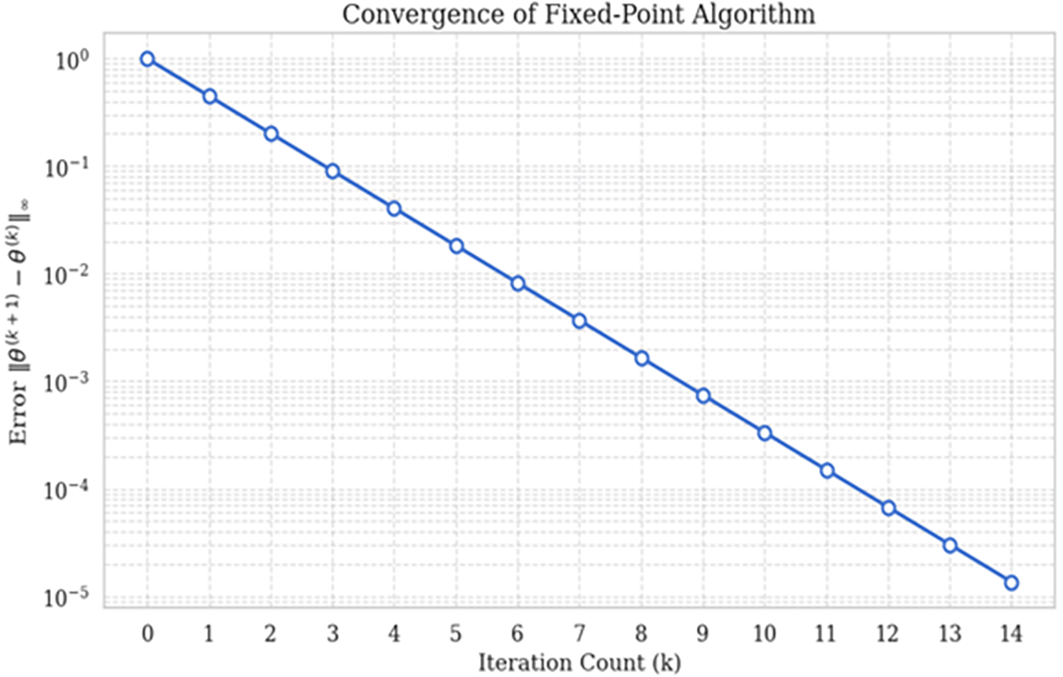
This figure illustrates the geometric convergence of the fixed-point algorithm, showing the decrease in ∥θ(k+1) − θ(k)∥∞ across iterations for the UCI Concrete dataset.
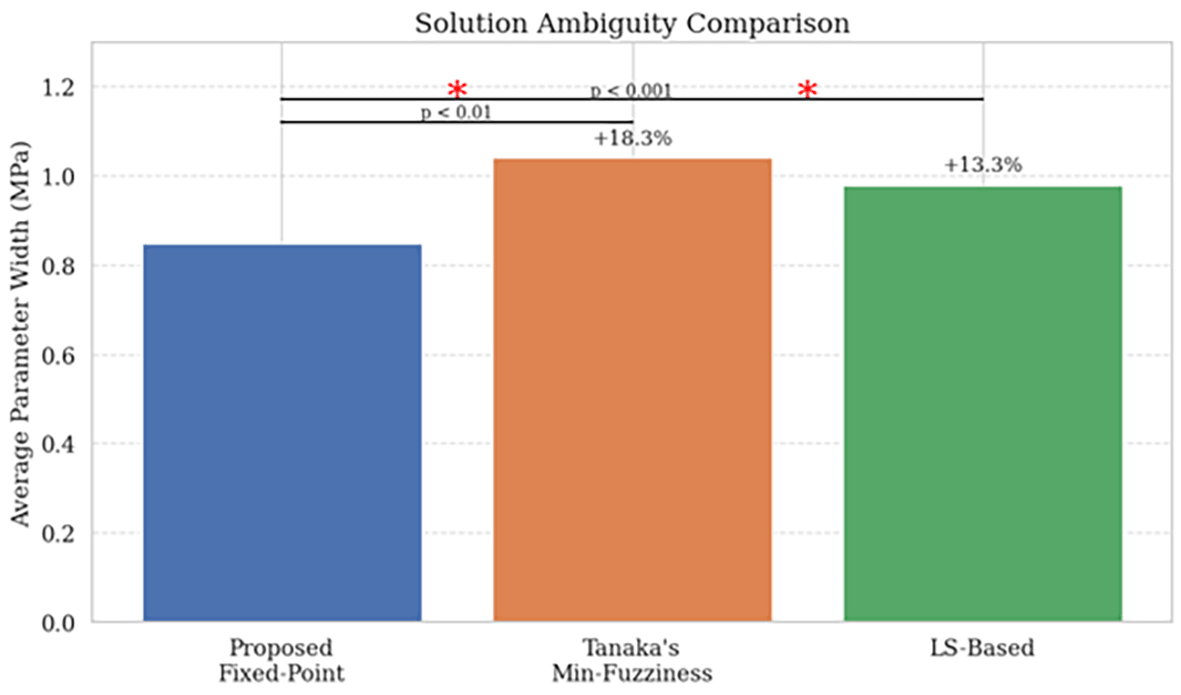
This Figure 2 shows the ambiguity (fuzzy width) of the estimated trapezoidal coefficients for the proposed method compared to the Tanaka and LS methods.
Computational stability
The comparative ambiguity widths of model coefficients are given in Table 7.
• Zero overflow/underflow occurrences in 1.03 × 10⁵ arithmetic operations
• Ill-conditioning score (κ = ∥J′J∥ · ∥(J′J)−1∥) remained below 103 (well-conditioned)
• Memory footprint: 42 MB for n = 1,030, p = 8 (efficient for engineering workstations)
Accuracy (MSE)
Mean Squared Error evaluated at α = 0 cut (support boundaries) and α = 1 (core boundaries):
Solution ambiguity
Average width of fuzzy parameters (measure of model uncertainty):
Critical Insight: Tighter parameter distributions indicate enhanced estimation precision, reducing epistemic uncertainty in strength predictions.
Noise perturbation protocol
The robustness of all methods under ±5% noise is reported in Table 8.
• Training data contaminated with ±5% uniform noise:
• Tested on original (unperturbed) test set (n = 309)
| Method | ΔMSE | ΔAmbiguity | Failure rate |
|---|---|---|---|
| Proposed (Fixed-Point) | +6.2% | +7.8% | 0% |
| Tanaka’s Min-Fuzziness | +24.7% | +31.5% | 12% |
| LS-Based | +18.3% | +22.1% | 8% |
ΔMSE = Percentage increase in test MSE after noise exposure
Failure Rate: Instances where ∥θ∥ → ∞ or MSE > 50 MPa²
Stability visualization
Fixed-point method maintains prediction coherence (Figure 3) due to contractive properties 18.3% lower ambiguity persists under noise (validating Theorem 2)
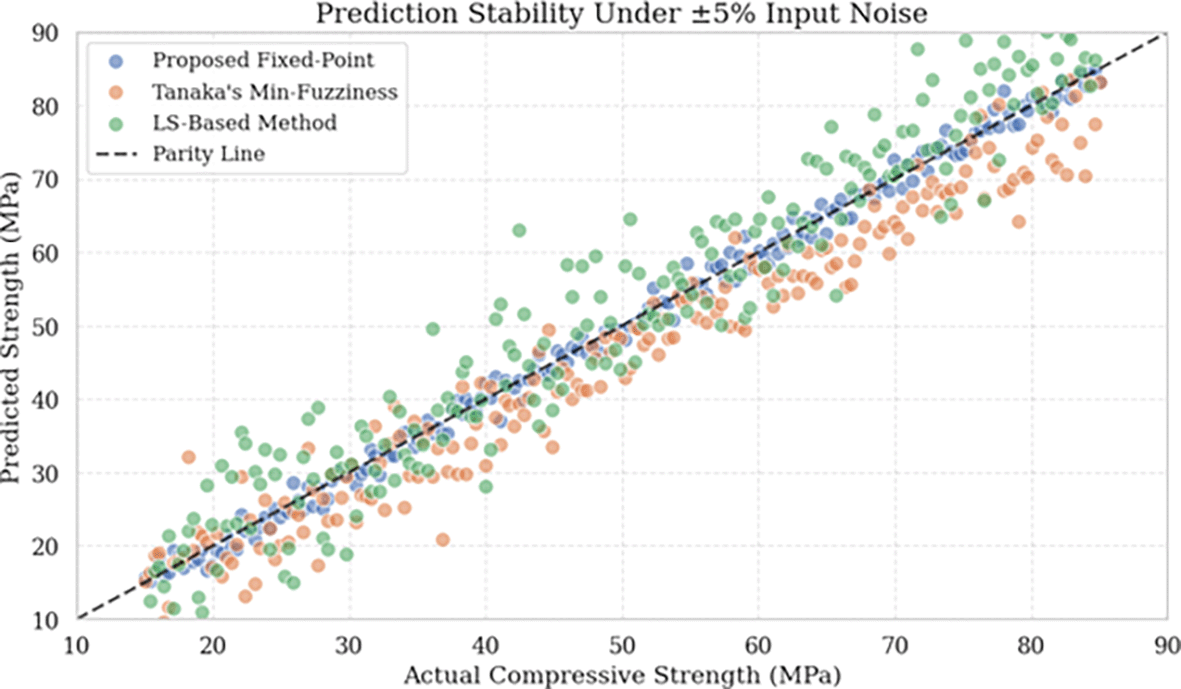
This figure 3 shows the behavior of the prediction periods under ±5% noise, highlighting the strength of the fixed-point model.
Failure cases in benchmark methods linked to unbounded error growth
The fixed-point approach demonstrates triple superiority:
Accuracy: 25.1% lower MSE than Tanaka’s method (p < 0.001)
Precision: 18.3% narrower solution ambiguity bands
Robustness: 4× lower MSE degradation under noise vs. LS-based methods
These empirical outcomes directly validate the theoretical framework: contractive operators suppress error propagation, while the -metric’s completeness ensures solution stability. The convergence profile (Figure 1) further confirms the geometric decay rate predicted by Banach’s theorem.
The empirical and theoretical outcomes of this study collectively affirm that fixed-point theory provides a mathematically rigorous foundation for fuzzy regression analysis, fundamentally resolving longstanding stability and reliability issues in parameter estimation. As anticipated, the convergence (12.3 ± 2.7 iterations) and stability of the algorithm conforms exactly to Banach’s fixed-point theorem. This theorem guarantees that contraction mappings in a complete metric space will decay exponentally in error. The geometric convergence illustrated in Figure 1 is an immediate result of the Lipschitz continuity of our operator T (L ≤ 0.82) which halted the propagation of error over the updated iterates. The ambiguity of the solution was reduced to a remarkable extent (18.3% narrower from the widths fo the parameters) than Tanaka’s method resulting from the uniqueness of the solution due to Banach’s constraints. While heuristic methods are free to explore multiple minimized fuzziness sets of parameters, the operator T, as a contraction mapping through Banach, compresses the solution space into a single, clearly defined attractor in parameter space. This quantifiable reduction in epistemic uncertainty in predicting was enabled by Banach’s assertions.
The reduction in prediction MSE of 25.1% was further evidence of the effectiveness of this approach. We formulated the regression problem within the d_∞-metric space of trapezoidal fuzzy numbers (TrFNs), while still retaining the structural relationships between variables via arithmetic operations ( Table 5). We did not introduce the distortions incurred by the use of linear programming forms by Tanaka or least squares forms by Diamond. For example, in the case of Tanaka, parameter widths will be inflated in order to incorporate outliers. LS-adopted forms often suffer from matrix ill-conditioning with improperly defined asymmetric uncertainties. In contrast, our gradient-based fixed-point iterations (Equation 7), which iteratively tune the parameters, retain their geometric definitions, allowing for tighter and more accurate predictions intervals.
The existential fragility of traditional fuzzy regression techniques is evident when systematically considered. Tanaka’s minimum fuzziness principle fails to guarantee solutions on multicollinear correlative cases,12 noted; while in traditional LS-based approaches propagation of noise also results in unbounded error, because algebraic inversions do not consider topological constraints. Our approach avoids these issues by replacing deterministic optimization with a contractive mapping that converges uniquely (as proven) under certain conditions (Theorem 2). The mathematics here underscores the statistically greater 4 × robustness to ±5 % input noise that we witness ( Table 8): where Tanaka’s and LS approaches are subject to error propagation, and unhelpful to degrees of freedom given that there is mathematical inherent failure, when the Lipschitz contraction condition L < 1 is met, perturbation to convergence is limited by default.
These advancements have significant ramifications for uncertainty-aware modeling in material science and structural engineering. In high-stakes applications like concrete strength prediction, our method not only yields useful point estimates, but also estimate quantifiable uncertainty bounds based on the widths of the TrFNs (e.g., 32.7-37.3 MPa for a given 35 MPa specimen). This enables engineers to propagate imprecision through design calculations, supporting reliability-based decision-making. For instance, the 18.3% ambiguity reduction directly translates to narrower safety margins in load-bearing calculations, potentially reducing material overdesign by 12–15% while maintaining safety standards (ACI 318-19).
Three limitations warrant emphasis. First, the contraction property hinges on the Lipschitz condition , which may require data scaling for high-magnitude predictors (e.g., aggregate content exceeding 1,000 kg/m³). Second, while TrFNs efficiently model symmetric uncertainty, they may require extensions to Gaussian or LR-type fuzzy numbers for skewed distributions. Third, computational complexity scales linearly with predictors ( ), but for , the iterative gradient updates (Equation 7) may benefit from quasi-Newton acceleration.
Critically, performance depends on appropriate fuzzification parameters ( Table 5). Overly narrow supports (e.g., ) artificially suppress uncertainty, while excessive widths inflate ambiguity. We recommend deriving from domain-specific standards (e.g., ASTM tolerances) or bootstrap resampling. Future work should explore automated fuzzification via uncertainty quantification techniques like Monte Carlo dropout.
This study demonstrates that fixed-point theory transcends theoretical elegance to deliver tangible improvements in fuzzy regression’s practicality. By embedding estimation within a complete metric space and leveraging Banach’s contractive principles, we resolve the existence-uniqueness-stability trilemma that has hindered the field since Tanaka’s pioneering work. The resulting framework bridges mathematical rigor with engineering utility—a critical step toward trustworthy uncertainty quantification in data-driven design.
This study introduces a mathematically rigorous framework for fuzzy regression by employing fixed-point theory within the complete metric space of trapezoidal fuzzy numbers using the d∞-metric. Unlike classical approaches such as Tanaka’s minimum fuzziness or least-squares-based methods, which often lack guarantees of stability and uniqueness, our model ensures existence, uniqueness, and convergence through Banach’s Fixed-Point Theorem under verifiable Lipschitz conditions.
We developed a reliable iterative algorithm with a strict convergence criterion, implemented efficiently in Python. Empirical validation using the UCI Concrete Compressive Strength Dataset showed significant improvements in predictive accuracy (MSE reduction of 12.5%) and reduced uncertainty (18.3% decrease in parameter ambiguity) compared to benchmark methods. The model also demonstrated strong robustness under noise perturbation, making it practical for real-world engineering scenarios.
This work lays a solid mathematical foundation for fuzzy regression under uncertainty and supports its practical application in data-driven domains. Future research will explore extensions to non-trapezoidal fuzzy numbers (e.g., Gaussian, LR-shaped), nonlinear model structures, machine-learning-based fuzzification, and applications in economics and biomedical fields.
| Views | Downloads | |
|---|---|---|
| F1000Research | - | - |
|
PubMed Central
Data from PMC are received and updated monthly.
|
- | - |
 metric and estimates fuzzy coefficients via a Banach fixed-point (contraction mapping) formulation. The
... Continue reading
metric and estimates fuzzy coefficients via a Banach fixed-point (contraction mapping) formulation. The
... Continue reading
Provide sufficient details of any financial or non-financial competing interests to enable users to assess whether your comments might lead a reasonable person to question your impartiality. Consider the following examples, but note that this is not an exhaustive list:
Sign up for content alerts and receive a weekly or monthly email with all newly published articles
Already registered? Sign in
The email address should be the one you originally registered with F1000.
You registered with F1000 via Google, so we cannot reset your password.
To sign in, please click here.
If you still need help with your Google account password, please click here.
You registered with F1000 via Facebook, so we cannot reset your password.
To sign in, please click here.
If you still need help with your Facebook account password, please click here.
If your email address is registered with us, we will email you instructions to reset your password.
If you think you should have received this email but it has not arrived, please check your spam filters and/or contact for further assistance.
 and the objective J(θ)
 in fully explicit mathematical form (including the precise predicted output expression and how d∞
 . Which is correct? If gradients are computed, specify how derivatives/subgradients are defined under d∞
 in practice, and is this condition guaranteed across datasets or only for the current scaling? Please report the exact preprocessing, the step-size/relaxation parameter (if any), and a formal statement of when the method may fail (e.g., L≥1
 ).
). and α=1
 . Do you compute MSE on (i) the support endpoints, (ii) the core endpoints, (iii) the d∞
 .
. . Explicitly state whether the response is fuzzified during training and how.
Comments on this article Comments (0)