Keywords
Neutrosophic distributions, NNOWIW distribution, probability weighted moments, entropy measures, statistical estimation methods

This article is included in the Fallujah Multidisciplinary Science and Innovation gateway.
Neutrosophic distributions, NNOWIW distribution, probability weighted moments, entropy measures, statistical estimation methods
The new version of this article has been substantially revised in response to all reviewer comments. The manuscript was carefully edited to improve mathematical rigor, notation consistency, clarity of exposition, and overall readability. Definitions, formulas, and derivations were revised and standardized, and ambiguities in the presentation of the neutrosophic component were resolved. We also strengthened the description of the estimation and simulation procedures to improve reproducibility and clarified the rationale for the parameter settings.
See the authors' detailed response to the review by Salah Abid
Modeling failure and lifespan data is a fundamental topic in applied statistics, given its importance in various fields such as engineering, medicine, economics, and the environment. Among the classical distributions widely used in this field are the Weibull and inverse Weibull distributions, due to their flexibility in representing increasing and decreasing hazard functions. However, the limitations of these models in handling complex data have prompted many researchers to propose more sophisticated and flexible distributions.
One of the most prominent methods that contributed to the emergence of these new distributions is the T-X method, proposed by Alzaatreh et al. in 2013,1 which opened the door to generating a large number of general-form distribution families based on basic distributions. This method has led to the development of a wide range of generative families, including: A modified T-X family,2 A new logarithmic family,3 Odd inverted Topp Leone-H family,4 Shifted exponential-G family,5 Generalized Odd Maxwell family,6 Odd Lomax-G family,7 hybrid Odd exponential- 8
Despite the wide variety of these generative distributional families, most of them assume that the data used are exact and precise. This means they do not account for ambiguity, indeterminacy, or partial information. This represents a clear knowledge gap in the field of modeling real-life data, especially in medical, industrial, environmental fields, where data are often incomplete, derived from expert estimates, or subject to ambiguity. Furthermore, these families, despite their flexibility, have not been used within a Neutrosophic logic framework, which weakens their ability to comprehensively handle uncertain or probable data.
The importance of this research stems from bridging this gap by combining the flexibility of statistical models generated by T-X method with the power of uncertainty representation provided by Neutrosophic logic, to construct an integrated probabilistic model capable of handling both ambiguous. The proposed distribution represents a step toward creating more realistic and accurate statistical tools for analyzing non-deterministic phenomena.
Unlike fuzzy logic, which primarily represents uncertainty by degrees of membership, and Bayesian approaches, which rely on prior assumptions, Neutrosophic logic explicitly incorporates truth (T), falsity (F), and indeterminacy (I) into the modeling framework. This three-component structure allows the proposed NNOWIW distribution to handle interval-valued parameters and contradictory information more effectively, which is particularly useful in real datasets with incomplete or imprecise observations. This distinctive feature provides an additional layer of flexibility and realism compared to traditional approaches, thereby strengthening the motivation for introducing the Neutrosophic extension.
The main contribution of this study is not merely the extension of a classical lifetime model into an interval-valued setting, but the construction of a neutrosophic new odd Weibull–inverse Weibull distribution that explicitly incorporates indeterminacy into model formulation, estimation, and interpretation. In contrast to existing inverse-Weibull-based generalizations that are built for exact observations, the proposed model is designed for data affected by ambiguity and partial information. This feature allows the model to preserve the flexibility of generated lifetime families while offering a more realistic framework for uncertain observations encountered in practice.
This paper is organized as follows: Section 2 presents the mathematical formulation of the new Neutrosophic inverse Weibull distribution (NNOWIW), including the probability density function (NPDF), the cumulative distribution function (NCDF), and the survival and hazard functions. Section 3 covers the basic statistical properties of the proposed distribution, such as function expansions, the moment generating function MGF, and probability weighted moments PWM, as well as entropy measures (Renyi, Tsallis, Havrda-Charvat). Section 4 reviews parameter estimation method (MLE, LSE, and WLSE), presents the required derivatives of the maximum likelihood functions. Section 5 presents a Monte Carlo simulation study to evaluate the efficiency of the estimation methods according to metrics such as MSE, RMSE, and bias. Section 6 then highlights the practical applications of the proposed distribution by analyzing real battery life data and comparing it with competing distributions using statistical fit measures (AIC, BIC, HQIC) and goodness-of-fit tests. Finally, Section 7 concludes the paper with a summary of the main results and conclusions, indicating some potential avenues for future work.
The section discusses the mathematical representation of the NNOWIW distribution by presenting its basic components, including the CDF, the hazard function and survival function. Graphs illustrating the behavior of the understanding of the formal properties of the distribution. The CDF of the NNOWIW distribution is represented as follows:
This section presents the mathematical structure of the neutrosophic new odd Weibull–inverse Weibull distribution (NNOWIW). To ensure clarity and consistency, a unified notation is adopted throughout the manuscript. Let the neutrosophic random variable be defined by , where denotes the determinate component and denotes the indeterminate component. We assume that , and consequently . When , the neutrosophic representation reduces to the corresponding classical form. The model parameters are written consistently as interval-valued quantities: , and .
Notation used throughout the manuscript
• : denotes the neutrosophic observation
• : the determinate part
• : the indeterminate part
• : the interval of indeterminacy
• The parameters and represent the shape-related parameters, whereas and correspond to the inverse Weibull scale and shape parameters.
This notation is used consistently in all derivations, tables, and interpretations.
Let X N is Neutrosophic random variable, the Neutrosophic model reduces to the classical new odd Weibull family. The NPDF and NCDF are characterized by the Neutrosophic shape parameter and , and they take the following general form:
Let X N is Neutrosophic random, the Neutrosophic model reduces to the classical inverse Weibull distribution. The NPDF and NCDF are characterized by the Neutrosophic shape parameter and , and they take the following general form:
The NCDF of the proposed NNOWIW distribution is derived through appropriate substitution into the general form Equation (3) into (1) as follows:
The NPDF of the NNOWIW distribution is derived either by differentiating Equation (5) or by substituting Equations (4) and (3) into Equation (2), as detailed below
The following expression is used to derive the Neutrosophic survival function, as stated in Ref. 9:
The calculation of the neutrosophic hazard functions for the NNOWIW distribution is based on the following formula, as presented in the Ref. 10:
Figure 1 includes a representation of the NCDF of the NNOWIW distribution, using variable intervals for its Neutrosophic coefficients. Figure 2 includes a representation of the NPDF of the NNOWIW distribution, using variable intervals for its Neutrosophic coefficients. Figure 3 shows the Neutrosophic survival function (NSF) for the NNOWIW distribution, plotted using different values for its Neutrosophic coefficients. In all Figures 1 to 3 the graphical interpretation of the proposed model is interval-based. Therefore, the lower and upper curves should be understood as corresponding to the lower and upper parameter bounds rather than to generic labels such as “Line 1 = the lower parameter bounds” and “Line 2 = the upper parameter bounds”. This representation is more consistent with the neutrosophic structure of the model and reflects the uncertainty carried by the parameter intervals.
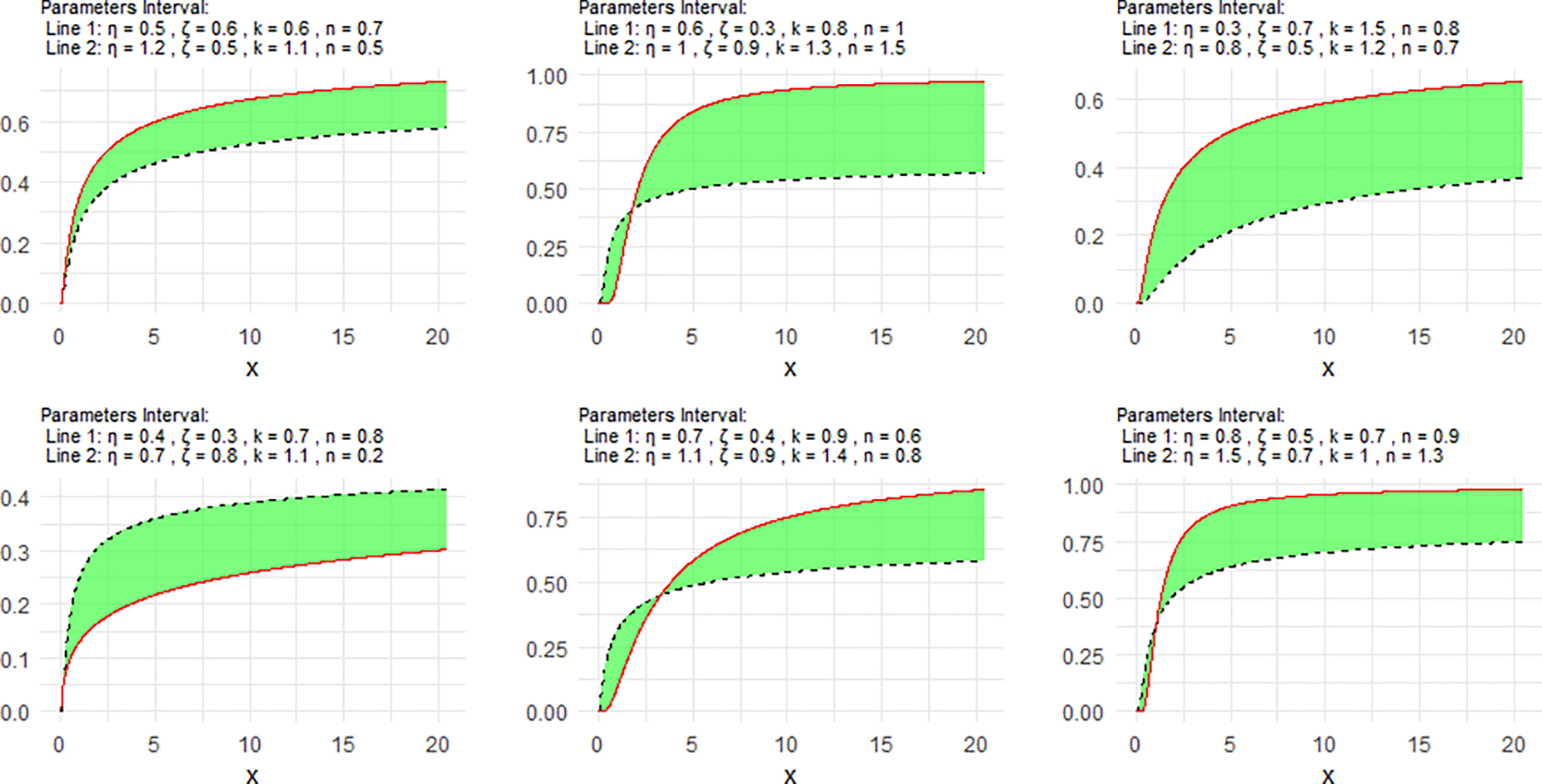
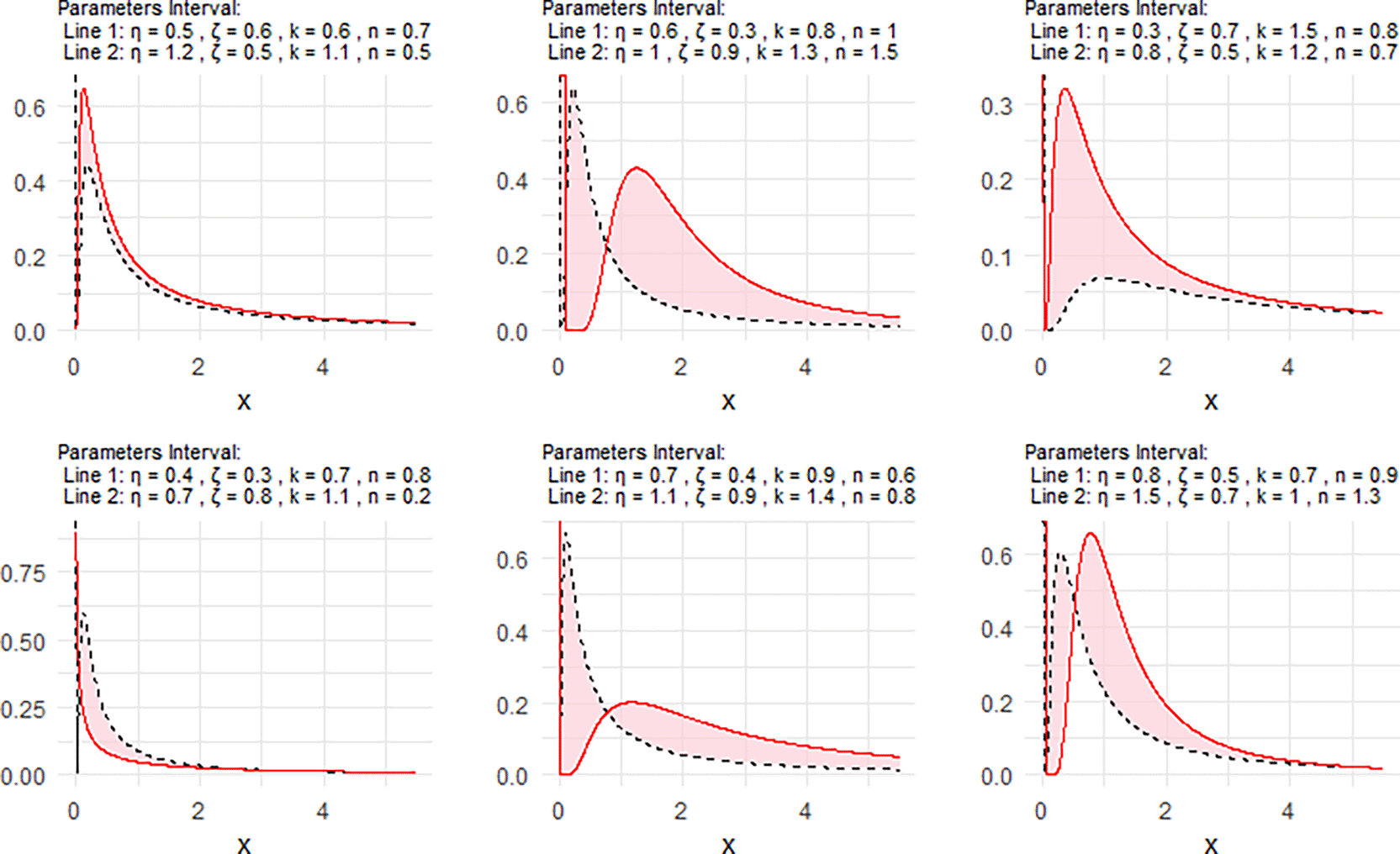
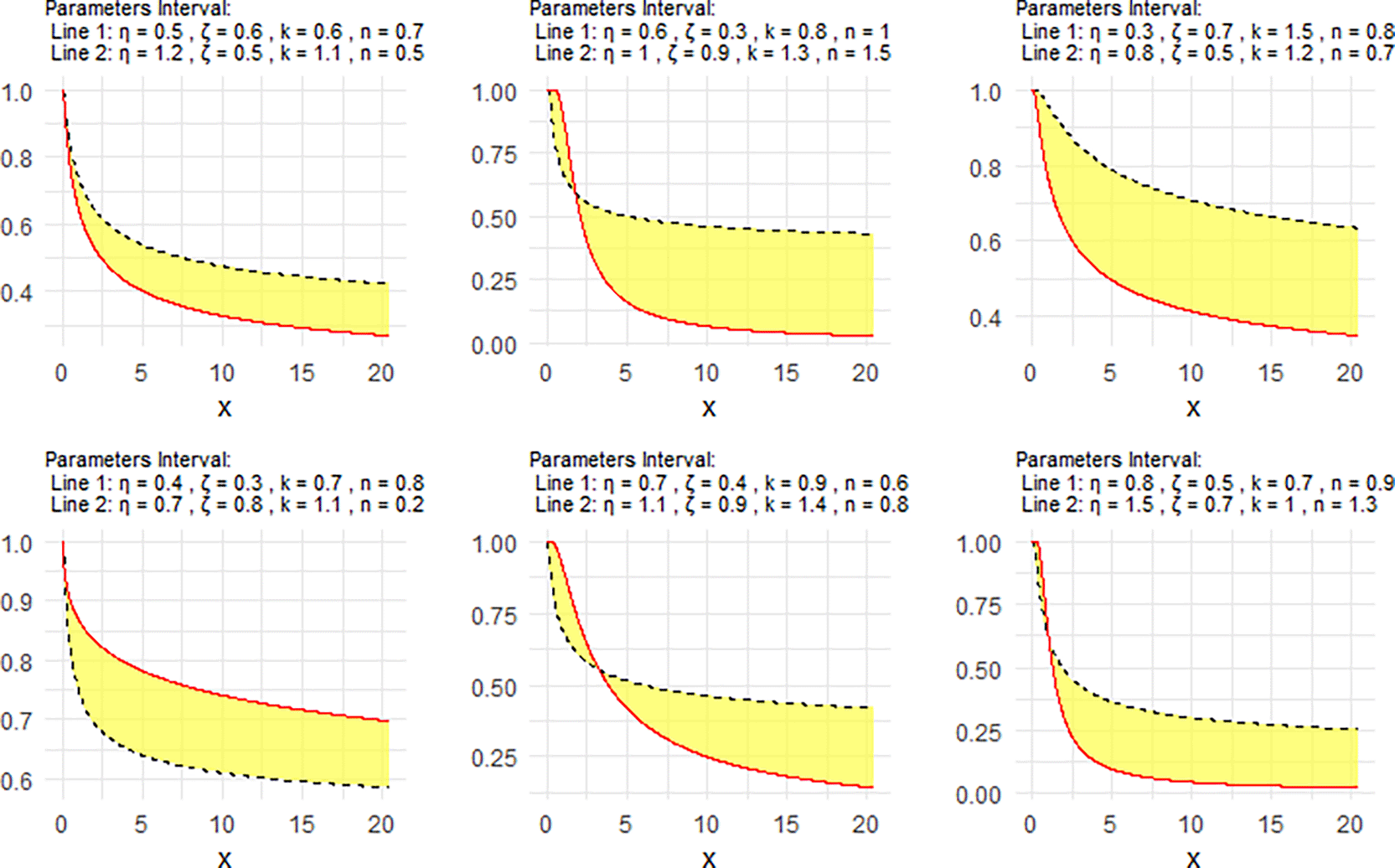
The parameter values were chosen as neutrosophic intervals to represent the degree of uncertainty in the system under consideration. These intervals were designed to cover different value levels for the parameters , and , allowing for the representation of multiple patterns of distribution behavior. Lower interval boundaries generate more concentrated distributions, while upper boundaries produce distributions with greater spread or heavier tails. Thus, the graphs are used to highlight the flexibility of the proposed model. Figure 1 shows the behavior of the NCDF, where parameter variations lead to different probability accumulation rates, demonstrating the model's ability to represent varying probability growth rates. Figure 2 shows that the NPDF can take different forms in terms of skewing, peak height, and tail behavior, reflecting the distribution's flexibility in modeling multiple data types. Figure 3 shows that the NSF can take decreasing or progressively changing patterns, confirming the model's ability to represent different failure rate behaviors in reliability and lifetime analysis applications.
This section provides a detailed examination of the statistical properties of the NNOWIW distribution, beginning with the function expansions of both the NCDF and NPDF, followed by the derivation of the quantile function. These expansions facilitate the extraction of several key statistical measures, including the non-central moments, moment generated function, incomplete moment, Lorenzo and Bonferroni curves, probability weighted moments, the characteristic function, and entropy measures.
Due to the mathematical complexity of the NCDF and NPDF in Equations (5) and (6), respectively, both functions have been simplified to facilitate the analysis and derivation of the statistical properties of the NNOWIW distribution. This simplification is based on the binomial expansion, exponential function expansion, and logarithmic expansion. Accordingly, the simplified form of the NCDF is obtained as follows:
Similarly, the NPDF can be expanded to derive the following form:
The quantile function is one of the fundamental tools in analyzing the statistical properties of the NNOWIW distribution. It’s obtained by inverting the NCDF, which enables Monte Carlo simulation and provides deeper insights into distributional characteristics such as skewness, kurtosis, and the median. For the NNOWIW distribution, the quantile function is derived by solving the equation where is a probability value within the open interval (0,1). This function is expressed as , and it is derived for the NNOWIW distribution as follows10:
Where W(.) refers to the Lombard function.
Table 1 shows the values of the quantile function at different intervals parameters.
The non-central moments are fundamental statistics that provide deep insight into the distribution’s key characteristics, including measures of central tendency, variability, skewness, and kurtosis. These moments are essential for both theoretical developments and practical applications, as they help quantify the shape and behavior of the proposed NNOWIW distribution. The non-central moment is defined as the expected value of , and for the NNOWIW model, it is derived as follows11,12:
By simplify to get a final form as follows:
By same way for to get a final form:
The first four moments are found by substituting the value of and as follows
The skewness and kurtosis of the NNOWIW distribution are calculated respectively as follows13:
Table 2 shows the values of first 4 moments, variance, skewness, and kurtoses at different intervals parameters.
The MGF is an important mathematical tool in statistical and probability. It provides an effective means of deriving properties of probability distributions, such as mean, variance, skewness, and flatness. This function helps uniquely characterize and distinguish and is widely used in theoretical analysis and statistical modeling because it simplifies the process of calculating the different moment of distributions.
After including the moments values derived from our proposed model, we arrived at the following result14:
Incomplete moments represent a natural extension of the concept of traditional statistical moments, as they are calculated over a specific portion of the distribution domain rather than the entire domain. Their importance lies in their ability to characterize the behavior of a distribution within specific ranges, which making them a powerful tool for analyzing of truncated or skewed data, calculating measures such as mean deviation, studying indices of dispersion and asymmetry, and analyzing inequality curves such as the Lorenz and Bonferroni curves. They also play a key role in economic applications, risk studies, and insurance. The rth incomplete moment of the NNOWIW is mathematically defined as15,16:
For
Following a similar procedure for , we arrive at the final form
The Lorenz curve is a traditional graphical tool used to represent the cumulative distribution of income or wealth and compare this distribution to an ideal line of equality, helping to measure the degree of inequality. The Bonferroni curve an extension and improvement of the Lorenz curve, provides a more accurate analysis by incorporation additional measures of inequality, making it more sensitive to changes in lower-income groups. Thus, the Bonferroni curve provides deeper insights than the Lorenz curve, especially when studying economic inequality. The Lorenz and Bonferroni curves are mathematically defined by17,18:
Accordingly, the Lorenz curve and the Bonferroni curve are derived, respectively:
If random variable follows the NNOWIW distribution, the Probability Weighted Moments (PWM) can be calculated using the following formula19:
By using the NCDF and NPDF into the expression , a series expansion can be used to simplify the algebraic formulation, resulting in the following linear representation19:
The characteristic function is a fundamental tool in probability and statistics, used to accurately describe the probability distribution of a random variable. It is defined as the expected value of the exponential complex number , where is the imaginary unit. This function is distinguished by its ability to derive moments and understand the behavior of a sum of random variables, in addition to its persistence even in cases where the moment generating function (MGF) is not present. The Characteristic function can be calculated using the following formula18:
Using exponential expansion for above equation, to get a form:
Entropy is a fundamental concept in information theory and statistics, used to measure the level of uncertainty or randomness in a probability distribution. In the context of continuous lifetime distributions, entropy provides deep insights into the internal properties and variance of the data. This paper relies on three different entropy measures to characterize the proposed distribution. The Rényi entropy measure for NNOWIW distribution, denoted by , is derived using chain expansions, yielding the following expression20,21:
The mathematical representation of the Havrda and Charvát entropy is given by22:
It is noted that the integration used here is very similar to that used in calculating the Renny entropy. Therefore, the Havrda and Charvat entropies for the NNOWIW distribution can be represented as follows:
The mathematical representation of the Tsallis’s Entropy is given by23:
For the NNOWIW random variable, the Tsallis entropy is given by:
The mathematical representation of the Arimoto Entropy is given by24:
for the NNOWIW random variable, the Arimoto entropy is given by:
In this section the estimation procedures used for the NNOWIW distribution are presented in a reproducible form. Three methods are considered: maximum likelihood estimation (MLE), least squares estimation (LSE), and weighted least squares estimation (WLSE). The objective function of each method is defined, the interval-valued nature of the parameters is preserved, and a computational procedure description is given to make it clear how the estimates are obtained in practice.
In this paragraph, we review one of the most common estimation methods, the MLE which is used to estimate the parameters for the NNOWIW distribution. Suppose that represents a random sample from the NNOWIW distribution, and that represents the observed values of this sample. In this case, the log-likelihood function is given by25–27:
This paragraph discusses the use of the LSE method to estimate the parameters of the NNOWIW distribution. This method relies on finding estimated values for the parameters by minimizing the square error function between the theoretical and experimental values. LSE are defined as the values that minimize the function given in Equation (30), thus ensuring that the difference between the theoretical CDF and its experimental counterpart is minimized.28
This paragraph presents for the parameters of the NNOWIW distribution. These estimators are obtained by minimizing the function in Equation (31), ensuring that the differences between the theoretical and experimental values are minimized while giving greater weight to more accurate observations.29
In the Neutrosophic framework, the parameters are considered as interval-valued rather than single-point estimates, i.e, . For MLE, the likelihood function is maximized within these bounds, yielding estimates expressed as parameter intervals. Similarly, in LSE and WLSE, the minimization of the error functions is performed while accounting for the interval nature of the parameters. This adjustment allows the estimation methods to explicitly reflect the inherent indeterminacy and partial information in the data, which would not be possible under the classical framework.
Under the positivity constraints η N > 0, ζ N > 0, k N > 0, and n N > 0, we estimated the parameter vector θ N = (η N, ζ N, k N, n N) for all estimation procedures. In the neutrosophic setting, each parameter was treated as an interval-valued quantity, and the lower and upper bounds were computed consistently from the corresponding interval observations. The implementation is carried out by first ordering the interval observations, second evaluating the relevant objective function for MLE, LSE, or WLSE, third obtaining numerically admissible parameter estimates under the imposed constraints, fourth checking convergence and excluding inadmissible solutions, and lastly computing fitted criteria and goodness-of-fit measures from the resulting interval estimates. This description provides an additional clarification that clarifies the practical estimation workflow and increases reproducibility.
Monte Carlo simulation was applied to study the finite-sample performances of the MLE, LSE, and WLSE estimators for the NNOWIW distribution. The simulation took place over 1000 replications and for sample sizes n = 20, 50, 100, and 200. In each replication, a sample was generated from the proposed model within the chosen interval-valued parameter setting, the three estimation methods were applied, and their performance was evaluated based on mean estimate, bias, and RMSE. This simulation will allow the behavior of the estimators to be examined as the sample size increases while keeping the data-generating mechanism fixed, across 1000 iteration, where = [2.300000, 2.800000], = [1.100000, 1.600000], = [1.500000, 2.000000], = [1.800000, 2.300000].
Table 3 provides a summary of the simulation results, showing the three performance measures for each sample size, allowing for a practical assessment of the effectiveness of the estimation methods used.
The results of Table 3 compares the performance of the MLE, LSE, and WLSE estimation methods based on RMSE and bias. At N = 20, clear differences emerge between the methods. MLE achieves lower bias and error values for most parameters, while LSE registers the highest RMSE values, particularly for the parameter ζ N, indicating its poor performance at small sample sizes. As the sample size increases to N = 50 and N = 100, the RMSE and bias values decrease for all methods, with MLE remaining the most stable, followed by WLSE. At N = 200, the estimation accuracy improves significantly for all methods due to the increasing sample size. The simulation results show that with larger sample sizes in the simulation, estimation accuracy increases, since bias and RMSE decrease for the three estimators. In the parameter setting analyzed for this work, we find MLE to exhibit the most stable overall behavior, while WLSE operates competitively and LSE appears relatively less stable for smaller sample sizes. Nonetheless, the results must be interpreted as case specific not generalizable, since the simulation was conducted under a limited neutrosophic parameter configuration.
In this section, we demonstrate the practical implementation of the proposed NNOWIW distribution using one interval-valued battery lifetime dataset. This application focuses on the behaviour of the model in a real-data scenario, and comparisons between it and other distributions under neutrosophic uncertainty. Since the empirical analysis is based on a single dataset containing 23 observations, the results reported should be regarded as illustrative and preliminary rather than conclusive. Table 4 presents a comparative analysis between the NNOWIW distribution and several other distributions using the validated data.
These distributions were chosen due to their similar mathematical structure and ability to handle uncertain data. All of these distributions belong to extended or modified families of the Inverse Weibull distribution, making them direct competitors to the NNOWIW distribution. They are characterized by their ability to represent ambiguous or time-interval data, which is the primary goal of the NNOWIW model. Four informative criteria were used30–35:
In addition to four statistical measures to assess accuracy36:
The data represent the lifetime of batteries. The lifetime in 100 hours of 23 batteries is given as.37
[2.9, 3.99], [5.24, 7.2], [6.56, 9.02], [7.14, 9.82], [11.6, 15.96], [12.14, 16.69], [12.65, 17.4], [13.24, 18.21], [13.67, 18.79], [13.88, 19.09], [15.64, 21.51], [17.05, 23.45], [17.4, 23.93], [17.8, 24.48], [19.01, 26.14], [19.34, 26.59], [23.13, 31.81], [23.34, 32.09], [26.07, 35.84], [30.29, 41.65], [43.97, 60.46], [48.09, 66.13], [73.48, 98.04].
Table 5 shows that the number of observations (23) is sufficient for a preliminary statistical analysis, despite the relatively medium sample size. The mean (mean) ranges between [20.59, 28.19], which represents approximately the expected value for the variable under study. However, this value may be affected by outliers, especially in the presence of skewness. The standard deviation (SD) of [15.93, 21.46] indicates a moderate amount of variance among the values. The skewness coefficient (SK) of [1.77, 1.71] indicates a clear positive skew, with most values concentrated on the lower end of the data, with the tail extending to the higher values. This is a common pattern in life expectancy data or similar data. Kurtness (KU) of [3.32, 4.48] indicates that the distribution is steeper than the normal distribution (which has skewness = 3), meaning there is greater centering around the mean values compared to the normal distribution.
| Var | N | Mean | SD | Median | Trimmed | Mad | Min | Max | Range | SK | KU | Se |
|---|---|---|---|---|---|---|---|---|---|---|---|---|
| 23 | [20.59, 28.19] | [15.93, 21.46] | [17.05, 23.45] | [18.1, 24.89] | [8.08, 11.1] | [2.9, 3.99] | [73.48, 98.04] | [70.58, 94.05] | [1.77, 1.71] | [3.04, 2.71] | [3.32, 4.48] |
The descriptive statistics confirm the significant dispersion and positive skewness in the recorded battery lifetimes. The interval-valued mean is greater than the interval-valued median, which is consistent with right-skewed lifetime behavior. Skewness and kurtosis measurements indicate that a flexible non-normal model is suitable. However, the small sample size suggests that the empirical evidence should be interpreted with caution.
Table 6 shows a summary of the criteria for selecting the models used in comparing the distributions, while Table 7 shows the values resulting from the statistical tests. Table 8 includes the estimated values of the parameters of each distribution under study.
Table 6 shows the results of the distribution evaluation criteria using -Log, AIC, CAIC, BIC, and HQIC. We note that the NNOWIW distribution has the lowest values in most of these criteria, indicating its superiority and better fit compared to other distributions.
Table 7 shows the results of the statistical goodness-of-fit measures: the Cramer-von-Mises (W) statistic, the Anderson-Darling (A) statistic, and the Kolmogorov-Smirnov (K-S) statistic, in addition to the probability value (p-value) for each distribution.Comparing the values shows that the NNOWIW distribution has the smallest values for W, A, and K-S, with a high p-value (exceeding 0.7), indicating that it is the most suitable model for representing the data. In contrast, other distributions, such as NBeIW and NEGIW, showed higher values for these measures, indicating a poorer fit. The NLGamIW distribution, on the other hand, showed very high values, reflecting its poor fit to the data.
Table 8 displays the estimated intervals for the various model parameters using the maximum likelihood (MLE) method. These parameters include . It is clear that the NNOWIW distribution has balanced parameter ranges compared to other distributions, reflecting its flexibility and ability to accurately represent data. These results demonstrate that NNOWIW provides a better balance between accuracy and reliability in parameter estimation than competing models.
To further evaluate model adequacy, several goodness-of-fit tests were employed, including the Kolmogorov-Smirnov (K-S), Anderson-Darling (A), and Cramer-von Mises (W) tests. These tests were selected because they capture different aspects of discrepancy between the theoretical and empirical distributions: the K-S test is sensitive to overall deviations, while A and W give more weight to tail behavior. Using multiple goodness-of-fit tests provides a comprehensive and reliable assessment of model performance.
The comparative distributions (NBeIW, NKuIW, NEGIW, NLGanIW, NGoIW, and NIW) were chosen as they represent widely used extensions of the Inverse Weibull family in reliability and lifetime data analysis. Benchmarking the proposed NNOWIW distribution against these flexible alternatives highlights its superior performance in terms of parameter stability and goodness-of-fit, thereby demonstrating its practical applicability to real datasets.
Tables 6– 8 indicate that for this study, the NNOWIW distribution has the best overall fit for the competing models analyzed. More specifically, the interval-valued information criteria are the smallest for the proposed model, and goodness-of-fit measures also support its adequacy for the present dataset. Such findings suggest that the NNOWIW distribution may indeed serve as a promising model for interval-valued lifetime data. However, as such findings are based on a single small sample, they should be interpreted as supportive rather than definitive.
The NNOWIW distribution is compared with the experimental histogram data in Figure 4. The fitted neutrosophic model for NNOWIW demonstrates a close fit to the data, effectively capturing variability and uncertainty. The green shaded area indicates the neutrosophic uncertainty range, while the curves (Distribution 1 and Distribution 2) demonstrate the model’s flexibility in adapting to different parameter sets, in Figure 5: The empirical CDFs are compared with the fitted neutrosophic cumulative functions (NCDFs) for the NNOWIW distribution in Figure 5. Both fitted curves follow the steps of the empirical functions exactly with minimal deviation, indicating that the NNOWIW neutrosophic distribution provides an accurate fit to the data and effectively represents its cumulative behavior.
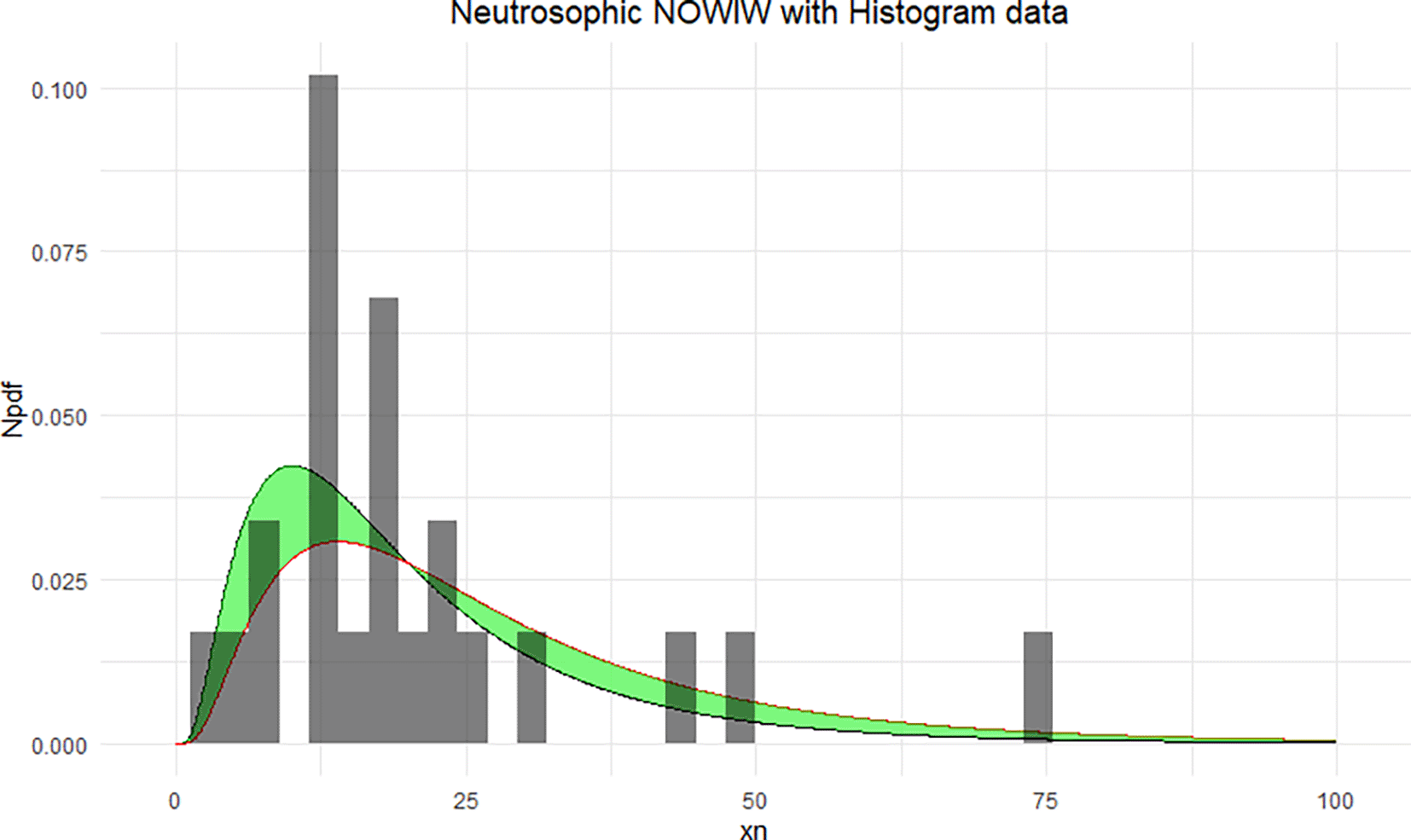
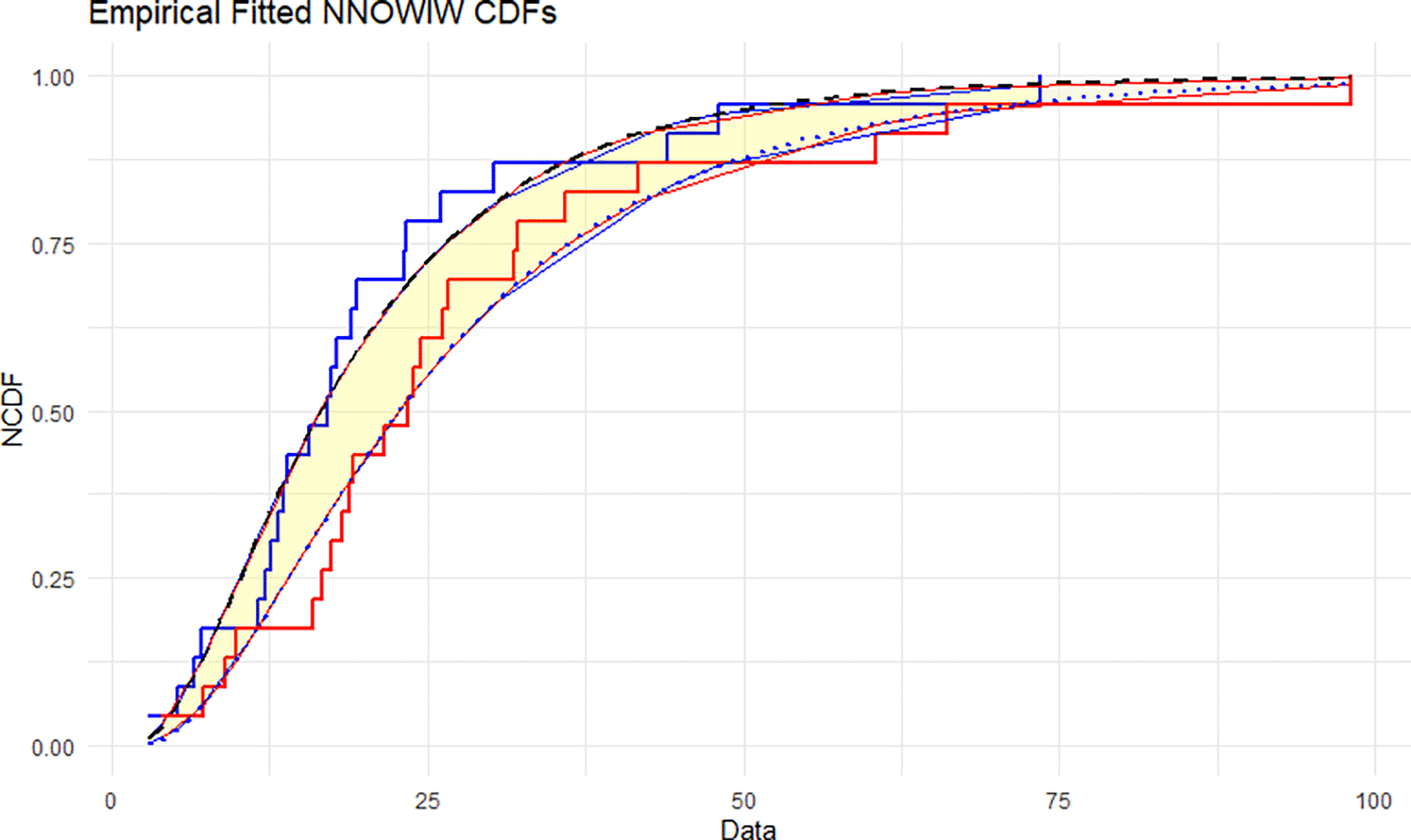
For comparative interpretation, the fitted NNOWIW curve should be evaluated against both the empirical neutrosophic CDF and the fitted curves of the competing models. This comparison provides a clearer visual assessment of model adequacy and shows whether the proposed distribution captures the main pattern of the interval-valued data more closely than the alternative candidates.
In this paper the neutrosophic new odd Weibull–inverse Weibull distribution will be introduced and its main mathematical properties such as neutrosophic density, cumulative distribution, survival, hazard, quantile, moment and entropy-related functions are outlined. Moreover, three estimation procedures were studied, which include MLE, LSE and WLSE. Simulation results revealed that accuracy improves when the sample size is larger. Within the reported scenario, MLE displayed the most stable overall performance. Our empirical test on interval-valued battery lifetime data indicates that the proposed model is competitive and, in our case, the best fit from the different distributions. This indicates that NNOWIW distribution is practically useful for uncertain lifetime observations. The empirical evidence provided here is still very limited to one small dataset, and so the results should be interpreted as an early sign. Future research will potentially extend the model to other datasets, compare it with broader classes of competing distributions and develop reproducible software implementations to perform applied neutrosophic statistical analysis.
| Views | Downloads | |
|---|---|---|
| F1000Research | - | - |
|
PubMed Central
Data from PMC are received and updated monthly.
|
- | - |
Provide sufficient details of any financial or non-financial competing interests to enable users to assess whether your comments might lead a reasonable person to question your impartiality. Consider the following examples, but note that this is not an exhaustive list:
Sign up for content alerts and receive a weekly or monthly email with all newly published articles
Already registered? Sign in
The email address should be the one you originally registered with F1000.
You registered with F1000 via Google, so we cannot reset your password.
To sign in, please click here.
If you still need help with your Google account password, please click here.
You registered with F1000 via Facebook, so we cannot reset your password.
To sign in, please click here.
If you still need help with your Facebook account password, please click here.
If your email address is registered with us, we will email you instructions to reset your password.
If you think you should have received this email but it has not arrived, please check your spam filters and/or contact for further assistance.

Comments on this article Comments (0)