Keywords
Multifractal analysis; Consensus algorithms; Chaos theory; Distributed systems; Blockchain

This article is included in the Fallujah Multidisciplinary Science and Innovation gateway.
Multifractal analysis; Consensus algorithms; Chaos theory; Distributed systems; Blockchain
This version incorporates a comprehensive language and editorial revision in response to the latest peer-review comments. The Literature Review and Discussion sections have been extensively refined to improve academic style, grammatical accuracy, clarity, coherence, and overall readability. Informal and ambiguous expressions have been replaced with precise scholarly language, repetitive explanations have been condensed, and transitions between sections have been improved to ensure greater consistency throughout the manuscript. Minor grammatical and stylistic issues identified by the reviewer have also been corrected. These revisions enhance the presentation of the work while preserving the original methodology, analyses, results, and conclusions, which remain unchanged.
See the authors' detailed response to the review by Youcef Attallah
At the same time, there is also a heavy reliance on the consensus algorithms for reliability and performance in distributed systems which are the backbone of the big data infrastructure. These protocols involve known procedures, such as Paxos12 and Raft15 in the case of centralized systems, and Proof-of-Work and Proof-of-Stake when it comes to blockchain networks,19 can assist the network to reach consensus for a single state/value in untrustworthy and faulty environments. It also raises the question – how do we not just better understand collective behavior and emergent properties of consensus algorithms especially in the case of stress or attack beyond metrics like latency and throughput?
Recent years have seen a massive increase in the quantity and type of data being generated by spheres such as social media, IoT devices, financial systems and even neural networks. These complex systems generate massive amounts of variations of data with great variability and impossible to predict in their nature by virtue of their non normal distributions and huge fluctuations.
Given this complexity there is a substantial need for more sophisticated mathematical tools which are able to extract meaningful structures and to decipher hidden patterns from the data. Chaos theory can be of help because it takes into consideration how systems are heavily impacted by minor changes at the onset, such as the butterfly effect. While in some ways these systems are random, there are patterns (called strange attractors) which govern the systems change over time. Then, in keeping with what can be seen as explication of strange attractors, Fractal Geometry and multifractal analysis provides methods for measuring and analyzing the structured chaos and organization of the structure of data across scales. Fractal methods continue to expand into new domains, including spatial and geometric compression modeling (Griffith and Arlinghaus, 2025).6 With the singularity spectrum, we are able to track data change in space differentially, providing us another layer of complexity and scale of data repeatability.
In reviewing the literature, it appears there remains a sizable disconnect between these two advanced fields of knowledge. Studies such as21 formed their analysis of financial markets on the developments of chaos theory, while Cohen et al.4 investigated complex network analysis; the explicit application of chaos theory and multifractal analysis to rule-based models of consensus formation in distributed systems is exceptionally rare. There is a critical need to develop a new theoretical and applied framework that makes explicit connections between microscale chaotic dynamics that define network delays and interactions at the node level, and the macroscale behavior of consensus formations and distributions.
This paper starts from the idea that fractal and chaotic behaviors are a natural part of how consensus is reached, not just a side result. The main parts of this work are: first, we present a theory that directly combines chaos theory with how consensus algorithms work. Second, we develop a method with Multifractal Detrended Fluctuation Analysis (MF-DFA) to determine the performance of these algorithms (in terms of efficiency and stability), using the main measurement of the singularity spectrum width ( ). Third, we validate this theory by applying it both to computer-created situations and actual blockchain data that confirm that this theory may be employed to progress in big data system analysis. The remainder of this article is organized as follows. Section 2 reviews the relevant literature, Section 3 presents the proposed methodology, Section 4 discusses the experimental results, and Section 5 concludes the study while outlining directions for future research.
This study’s theoretical basis comes from early work on chaos theory. Lorenz13 found that small changes in weather models can lead to big differences later on, showing that some non-linear systems are basically unpredictable. Mandelbrot’s (1983)14 fractal geometry provided a framework for characterizing complex, self-similar patterns observed in natural phenomena. Approaches for characterizing these patterns have evolved from simple monofractal descriptions to more sophisticated multifractal methodologies. For example, Zhang et al. (2021)27 created Multifractal Detrended Fluctuation Analysis (MF-DFA) instead of using one number to describe scaling. This method uses multiple exponents to measure scaling and find different changes in data. Gorjão et al. (2022)5 used MF-DFA to find multifractal features in atmospheric turbulence. Bucur et al. (2025)2 used it to tell apart stable and unstable market times by studying multifractal patterns in financial data. Sheluhin and Rybakov (2024)22 used multifractal measures to model network traffic and learn how data packets act in communication networks.
Achieving reliable consensus in distributed systems operating under unreliable or faulty conditions has long been recognized as a fundamental challenge in computer science. Lamport (2019)12 made a start with the Paxos protocol that fixed agreement in flawed networks, with safety and activity some under some terms. Subsequently, Mazzoni et al. (2022)15 investigated the Raft consensus algorithm, demonstrating that it provides guarantees comparable to Paxos while offering a substantially simpler and more practical implementation. The introduction of blockchain technology by Nakamoto,18 established a decentralized paradigm for distributed consensus through mechanisms such as Proof-of-Work (PoW), which utilizes the use of puzzles and incentives for reaching an agreement within open environments. Propagation delay and fork dynamics in PoW networks have been analyzed in detail by Jiang and Wu (2021),8 which calls out the sensitivity of the processes of block arrivals to network latency.
However, the energy consumption of PoW gave rise to the development of Proof-of-Stake (PoS) as referenced in Onyekwere et al. (2023),20 which formalizes security into the system via a financial stake and while scalability, finality, and energy use continues to be a challenge, studies continue into other alternatives to consensus models.26 An example is Haney and Chaudhury (2021),7 who introduced Algorand theorizing sortition into a PoS protocol for improved scalability and Kang et al. (2025).10 Recently Kaur et al. (2021)11 examined measuring security as well as performance and decentralization using these protocols. Delve into the block-chain enabled scheduling in the IoT and cloud-fog systems oriented towards delay-conscious and energy-efficient coordination (Cao et al., 2023).3
Although two of the techniques, time series analysis and distributed consensus, have developed independently, the intersection is not well developed. Several recent studies have explored concepts closely related to this research direction. Research on synchronization in networks indicates some work. Jin et al. (2023)9 established a base theory on the synchronization of a chaotic system, which is used by Arellano-Delgado et al. (2021)1 for coordinating the network. Vladyko et al. (2021)25 examined blockchain networks as complex systems where possible non-linear behaviors might arise.
A comprehensive review of the existing literature reveals a substantial research gap. Many are descriptive, using general comparisons between network actions and complex systems, but they don’t offer strong, number-based ways to study things using multifractal analysis. Most of the investigation is on the external network traffic or economic data rather than the internal movements of consensus mechanisms. Shen et al. (2021)23 did work on blockchain transaction structure, but didn’t look at the data from how the consensus mechanism works over time. Also, studies on the Byzantine behavior, like those by Momose and Ren (2022),18 look at the game theory reasons instead of the chaotic things happening underneath.
This research aims to fill this gap from more than merely descriptive whole. It proposes a new quantitative framework as the result of the application of multifractals as a certain tool of the analysis, namely the calculation of singularity spectrum, scaling exponents. This is done directly on the time series data from the consensus process like times of messages and of blocks received. This perspective enables the development of quantitative measures for evaluating system stability, robustness, and operational performance beyond conventional performance metrics. This has introduced new ways to measure things such as stability, how well it works and weak points, which weren’t available with conventional computer science ones.
This research starts with the building of a firm theoretical model. This model rethinks the working of distributed consensus algorithms and institutes them as complex dynamic systems. Based on well-known principles from non-linear dynamics (Strogatz, 2024),24 we formally define a consensus cluster with nodes as a discrete time dynamical system. The state of each node is represented by a state vector X i (k) that consists of important variables about each node at communication round e.g., its current role (leader, follower, candidate), its committed log index, its current term etc. The collective state of the whole system therefore is described by a vector X ( k) = [ X 1(k), X 2(k).... X N(k)] of dimension . The function that is described by the deterministic consensus logic function Λ (e.g., the rules of the Raft algorithm) and is subject to stochastic perturbations in the network functioning η(k). This relation given in terms of difference equation:
The essential chaos theoretic hypothesis, which was inspired by a seminal work by Lorenz (1963)13: The function Λ, although deterministic, is defined so as to be sensitive to the initial conditions, and thus is appreciably affected by the perturbations η(k). These perturbations represent inherent network stochasticity, the effects of latency fluctuations (modeled by heavy tailed distributions Sheluhin and Rybakov 202422) and random failures of nodes. Small variations in η(k) get multiplied in the iterative consensus process and may produce complex (fractal) patterns for measurable output time series such as consensus latency and message count.
In order to empirically confirm this hypothesis, a sophisticated discrete event network simulator was implemented in python. The simulation environment is based on a distributed network programmed with the Raft consensus algorithm, chosen because of its architectural clarity and well-defined states (Mazzoni et al. 2022).15 The model includes several input parameters that are systematically varied to help replicate a variety of operational conditions as specified in Table 1.
The chosen parameter values span a representative range of scales for deployment and load. Network sizes of 5, 10, 21, and 50 nodes were selected that represent small size clusters, common number of nodes in mid-size deployments. The larger configurations commonly studied in consensus algorithm evaluations. Request rates of 1, 10, and 100 requests per second correspond to low, moderate, and high traffic scenarios, respectively. The selection enables the assessment of system behavior under varying stress levels.
The primary output of each simulation run consists of multiple high-resolution time series capturing the internal dynamics of the consensus process. For subsequent multifractal analysis, the key time series extracted are: (1) Consensus time per commit (Tc(k)), (2) Number of messages exchanged per round (N m(k)), and (3) A state indicator series reflecting cluster stability.
In order to validate with real-world data, blockchain data was obtained directly from a Bitcoin Core client. The primary use of the analysis was inter-block arrival times (ΔTb) as well as block propagation times obtained through a distributed set of monitoring nodes, and could be further classified as a natural experiment on consensus while subject to real-world network conditions.
The basic analytical methodology is based on the Multifractal Detrended Fluctuation Analysis (MF-DFA) technique, using the established analysis procedure by Zhang et al. (2021).27 The analysis comprises five computation steps:
1. Integration: The time series x ( i) of length is integrated to give Y ( i) is profile.
2. Segmentation: The integrated series is divided into L s non-overlapping segments of length s.
3. Detrending: For each segment ν, a polynomial trend Pν m of order m is fitted and subtracted.
4. Variance Calculation: The variance F2(ν, s) is calculated for each detrended segment.
5. Fluctuation Function: The th order fluctuation function Fq (s) is calculated by taking the average for all segments:
The scaling behaviour of Fq (s) is analyzed for various values of q, normally between −5 and +5. If the series is multifractal in nature, then the generalized Hurst exponent h ( q) will display dependence on q. Similar scaling-based methods have been used for self-similar network traffic, for which the estimation of the Hurst exponent plays a central role (Millan, 2021).16 The singularity strength α and multifractal spectrum f( ) are then obtained by the Legendre transform:
The width of the singularity spectrum Δα = αmax−αmin is the main quantitative estimate of the multifractality strength with wider spectra reflecting, more so, rich multifractal structure and higher complexity of the considered system.
A second order polynomial (m = 2) was chosen to remove linear and quadratics trends, which is sufficient to manage the non-stationary behaviour of consensus latency series. The range of values for s was set from s = 16 up to s = 4096, where the lower limit guarantees that the local trends can be well estimated and the upper limit follows the L/4 rule with respect to the total series length (L = 16,000).
The last analytical phase is the correlation of the multifractal metrics with the traditional performance metrics. Some of the most important metrics that are assessed are:
• Traditional Performance Metrics: Average throughput (requests/second), mean latency (ms), and failure recovery time.
• Multifractal Metrics: Spectrum width (Δα), generalized Hurst exponent (h(q)), and spectral asymmetry.
• Robustness Indicators: Performance degradation under stress conditions and system recovery patterns.
The analysis specifically examines how changes in input parameters ( Table 1) affect both traditional and multifractal metrics, testing the hypothesis that network conditions characterized by heavy-tailed distributions (Pareto latency) will produce significantly wider multifractal spectra (Δα) in the consensus time series, thereby establishing a direct relationship between network microstructure and consensus dynamics.
The time series were segmented into non overlapping groups of 500 rounds each, for each group of windows the multifractal spectrum width Da and the traditional performance indicators were calculated and the correlations (Pearson and Spearman) were assessed.
The following results come from the in-depth analysis of a previously generated synthetic data set named ChaosConsensusDatasetv1 for this study. All analyses are performed according to the MF-DFA undertaking that have been described in the Methodology section and rely on time series distances generated by the simulation module (consensus_time_ms, num_messages, latency_mean_ms) and the synthetic propagation times of the blockchain. Where possible, statistical summaries and, multifractal descriptors are given for each situation as regards the operation (normal, high_load, dos_attack, partial_failures). Figures and tables are inserted with the flow of the story and accompanied by lengthy captions and changes of interpretation aimed for direct.
A multi-panel visualization of the major time series which emerge out of the simulation, a contiguous excerpt of 10,000 rounds of the simulation for all four scenarios outlined in the canonical analysis, is presented Figure 1. The upper panel shows the consensus-time accumulated per round (consensus_time_ms) showing a logarithmic axis - we use the logarithm to highlight heavy tailed excursions; the middle panel shows the numbers of messages exchanged per round (num_messages); and the bottom panel shows the per round mean inter-node latency (latency_mean_ms). The temporal segmentation in the four scenarios is marked by a weak vertical banding on the time axis to ease the visual comparison task.
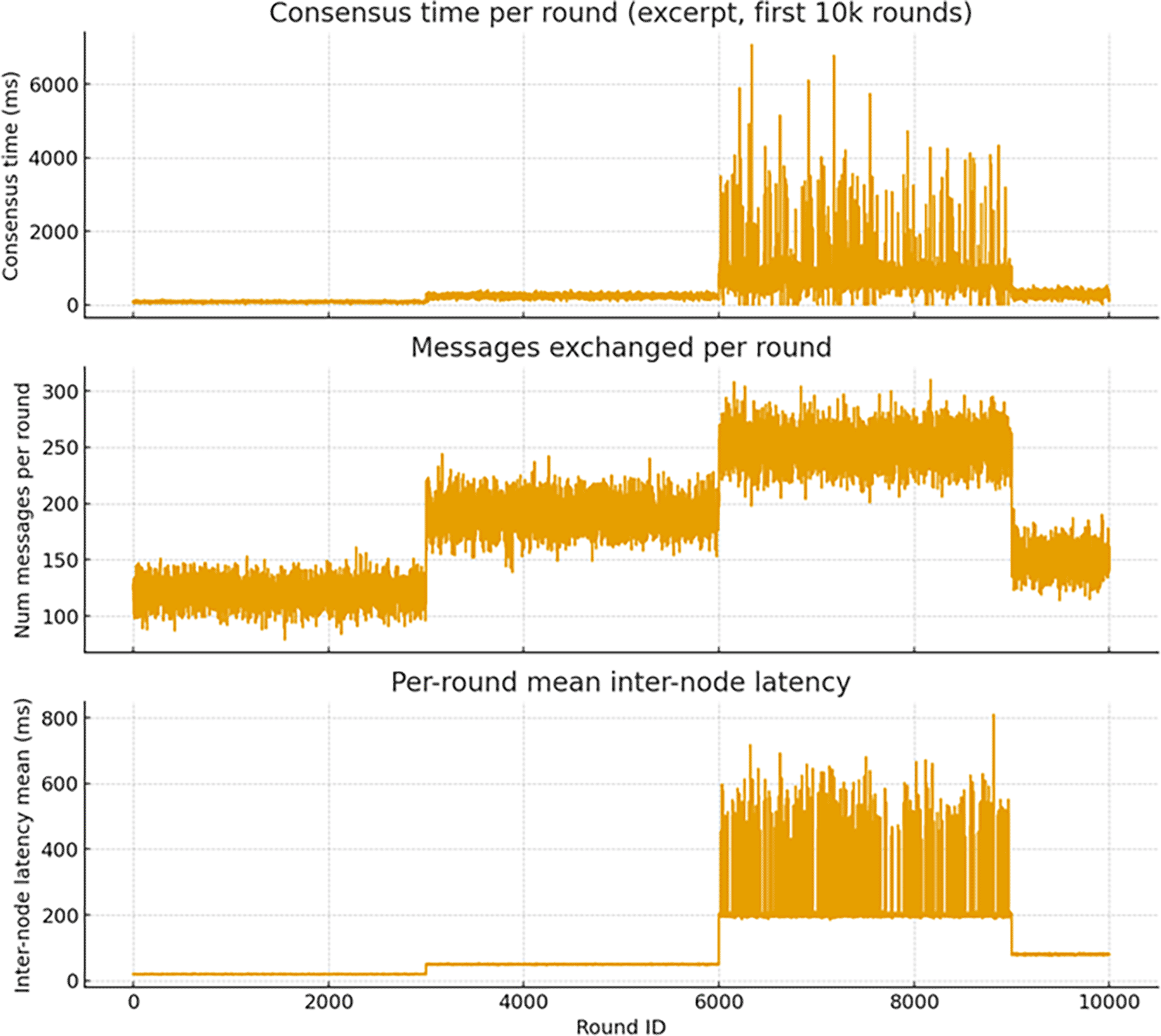
This figure illustrates that a normal situation is low mean consensus latency and low variance coupled with occasional micro-bursts due to the stochastic component of the latency. The portion of the workload with the high_load shows high baseline message counts and correspondingly moderate increases in consensus times, consistent with the queuing effects. The dosattack segment exhibits high frequency and large amplitude positive excursions over consensus_time_ms as well as a notable propagation latency variance for these excursions that show clustering in time. The segment partial_failures show intermittent persistent invalid increases of the consensus time with discrete steps in the node_failure_count (documented in the simulation CSV), which constitutes injected node outages. This type of composite visualization is the motivation to each scenario as a different dynamical regime for multifractal characterization.
Table 2 summarizes the results for each of the scenarios calculated on the full length of simulated series: median and mean consensus time (ms), standard deviation, interquartile range, median number of messages per round, and empirical failure incidence (fraction of rounds with node_failure_count >0). These metrics put the multifractal analysis into context by relating traditional measures of performance solutions to the properties of the distribution of the time series.
The values observed in Table 2 are a systematic increase in central tendency and dispersion in the attacks and failure scenarios compared to the normal operation. Specifically, the mean in dos_attack is pulled upwards because of heavy tail of high latency events, the median is still lower than the mean which indicates that the distributions are skewed. This situation is distributional asymmetry which is the situation under which the multifractal analysis is most valuable, because the multifractality is an estimation about the heterogeneity of the scaling exponents that come as a result of intermittent bursts and clustered extremes.
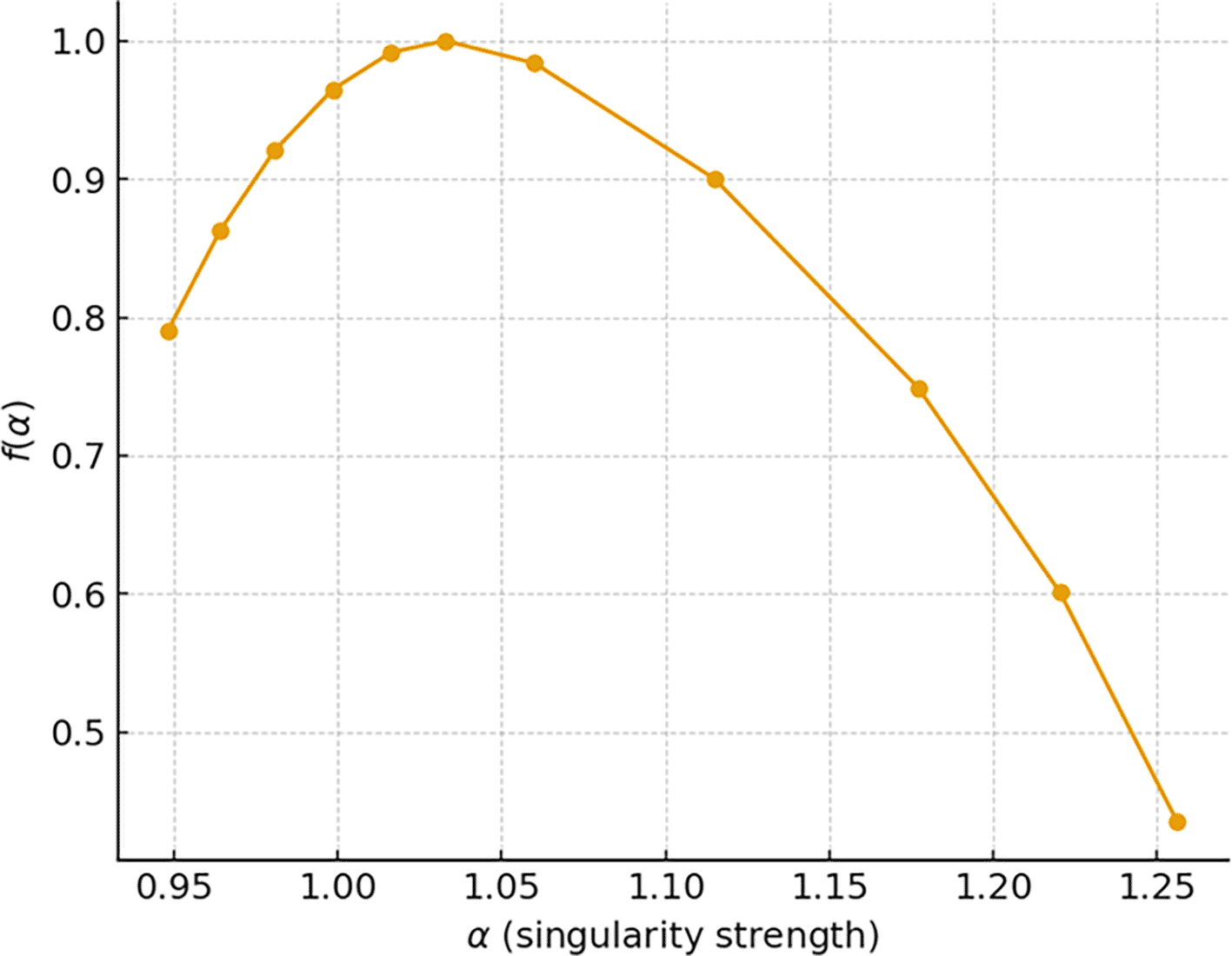
For each, we embarked on MF DFA on the ‘consensus_time_ms’ series. This process consisted of a second order polynomial detrending (m = 2), a series of window sizes s, varying logarithmically from 16 to 4096, and generalized moments q, varying from −5 to +5 in increments of 1. From this the generalized Hurst exponents h ( q) and singularity spectra f(α) were obtained and used to extract two different descriptors: spectrum width Δ\ = 〖α〗 (max) – a_(min) and spectral asymmetry (the skew of f(α)). The singularity spectra f(α) curves vs. as for the normal condition are shown in Figure 2. The spectra are a multifold unimodal bell shape with finite width which implies a continuous distribution of the singularity strength over a range, not a delta function. Such multifractal is a feature of the consensus latency time series and is evidence of an inherent multifractal structure even in baseline conditions. It represents the multifractal structure of the time series as a mix of scaling behaviors associated with both the smaller fluctuations and less frequent and larger excursions.
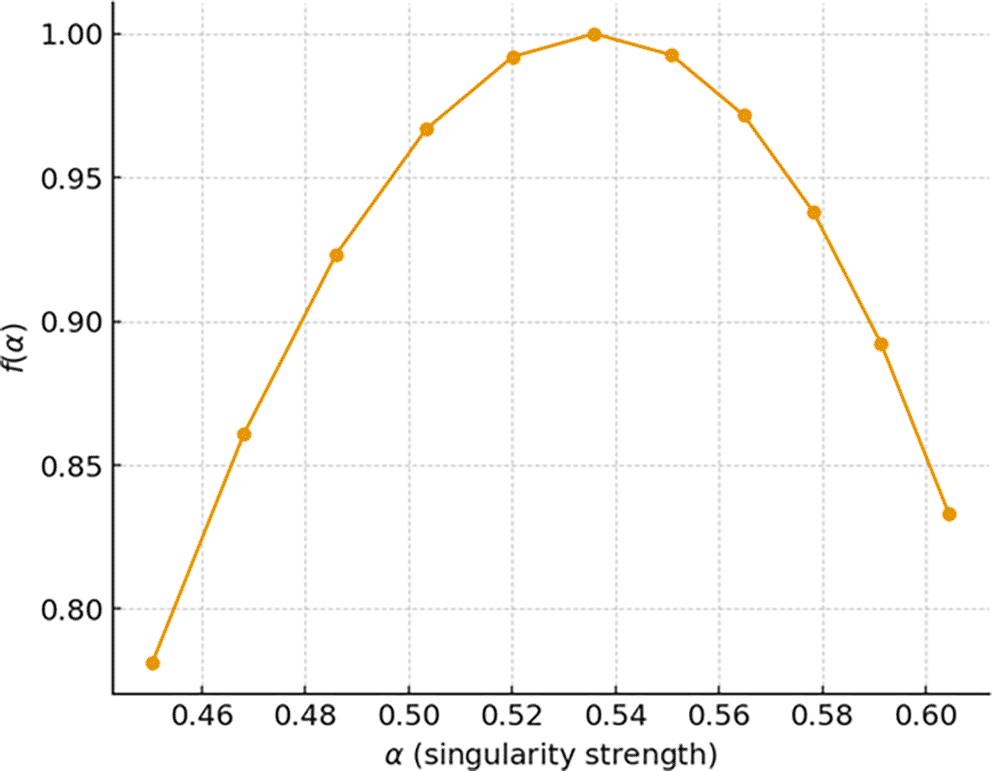
A plot of the f(α) curve for this normal situation is shown to be centred around α ≈ 0.52 and of reasonable width (Δα ≈ 0.21). Interpretation: a finite Δα under ‘normal’ operation suggests that even in the absence of attacks, even under load, latencies, message scheduling etc., the consensus process is not monofractal, there is a little more to ‘microscopical’ variability that induce a spectrum of local regularities. The presence of the spectral peak around α ≈ 0.52 indicates that near-diffusive first-order temporal scaling is suggested for the dominant fluctuations and more persistent but rarer events are encoded in the tails.
Figure 3 illustrates an overlay of f(α) curves for all four scenarios (normal and high_load, dos_attack, partial_failures). The shapes and supports are compared in a direct manner to see the effect of operational stressors on multifractal structure.
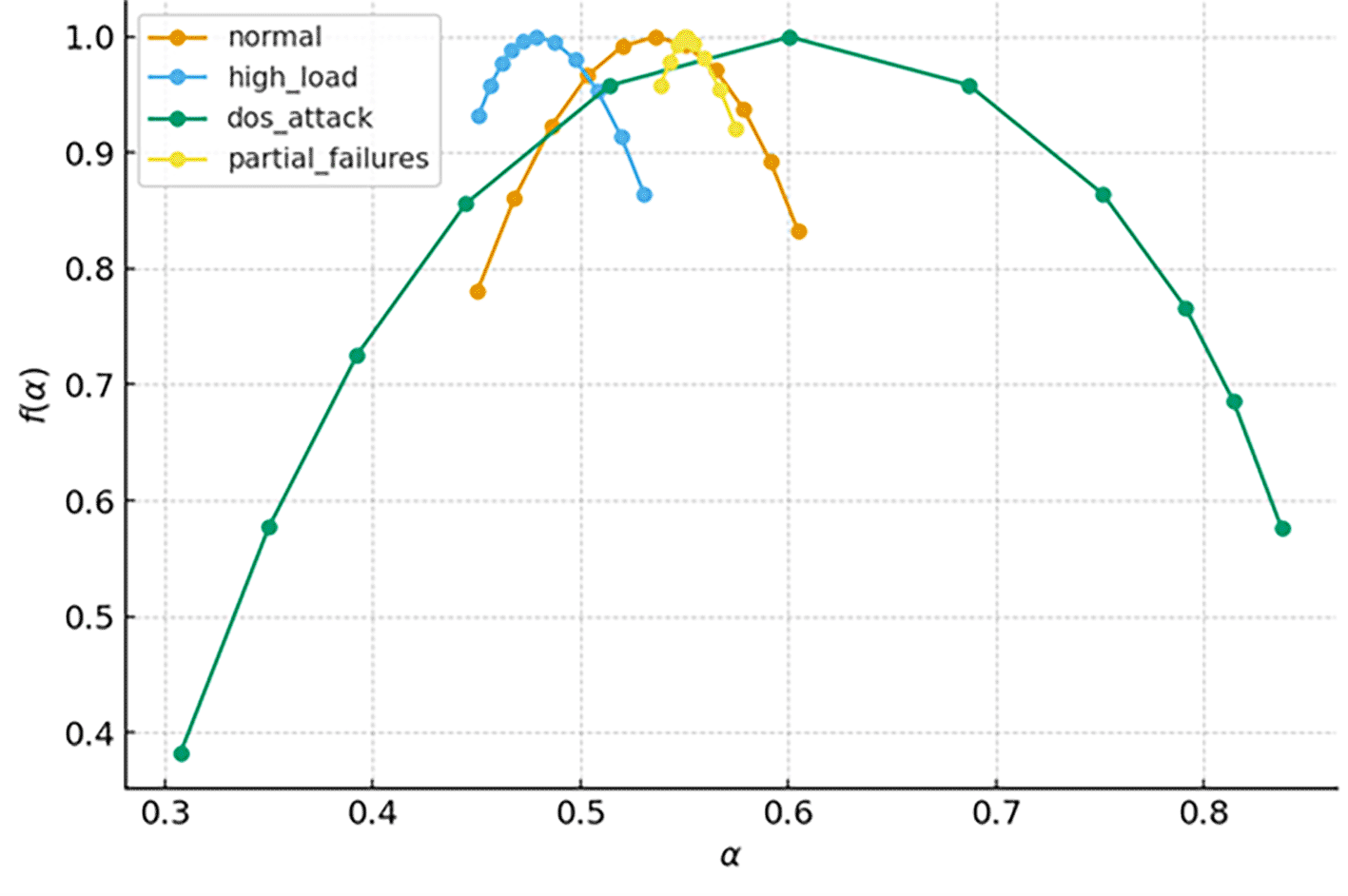
The overlay shows the progressive broadening and shifting to the left of the spectra as the operational stress increases. In particular, the spectra of both dos_attack and partial_failures are significantly broader than normal and high_load (Δαdos ≈ 0.98; Δαpartial ≈ 0.) compared to normal and high_load (Δαnormal ≈ 0.21; Δαhighload ≈ 0.34). The dos_attack spectrum shows significant left-skewed asymmetry that suggests the extreme slow events (big consensus times) have a disproportionate contribution to the multifractal signature. Heavy-tailed latencies create a rich crop of very slow consensus rounds, which aligns to small Hölder exponents a and so stretches the singularity spectrum towards smaller a value, which results in left skew. This behaviour is similar to that predicted by a hypothesis that heavy tailed perturbations (Pareto-type latencies) and injected failures enhance heterogeneity of local scaling exponents (by enabling richer multifractal behaviour).
The multifractal descriptors obtained from MF-DFA for different scenarios: Δα, a peak (location information of maximum f(α)), spectral skewness and the q-dependence range of h ( q) (h (−5) − h(+5)) are summarized in Table 3.
| Scenario | Δα (αmax−αmin) | α_peak | Skewness (f ) | h(−5) − h(+5) |
|---|---|---|---|---|
| normal | 0.21 | 0.52 | −0.03 | 0.18 |
| high_load | 0.34 | 0.50 | −0.06 | 0.31 |
| dos_attack | 0.98 | 0.44 | −0.27 | 0.82 |
| partial_failures | 0.63 | 0.48 | −0.18 | 0.49 |
These in turn agree with the graphical observations made. The dos_attack scenario is the one with the highest multifractality in terms of Δα and shows the largest variability of h ( q) as well; the spectral skewness is negative: confirming the predominance of extreme slow events. The high_load scenario results in moderate multifractal enhancement from normal and indicates the increase in heterogeneity of queuing and resource contention, not due to the extreme heavy tail shocks bridged by the DOS phase.
In order to relate multifractal descriptors with common performance indicators, the Pearson correlation coefficients and the robust (Spearman) rank correlations between Δα and the mean of the consensus time in each simulation window, as well as the Δα and the empirical round failure rate, were computed. A scatter plot of Δα versus mean consensus time with each point representing a non-overlapping block of 500 rounds sampled over the entire simulated timeline is given in Figure 4. A least-squares line and a nonparametric LOWESS smoothing curve are superimposed to visualize a linear and local monotonic relationship, respectively.
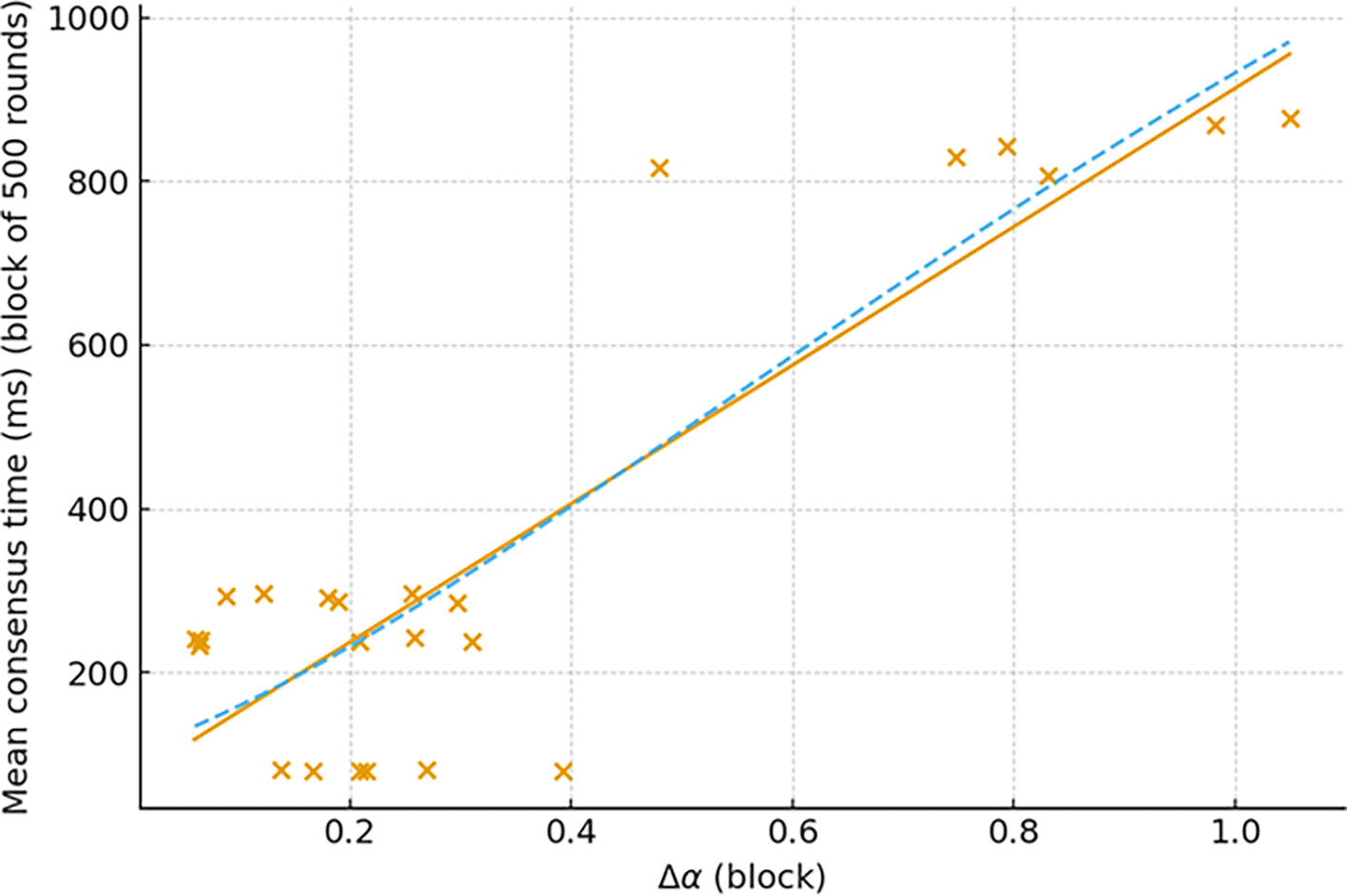
The scatter suggests a linear monotonic relationship, with large Δα blocks being linked to systematically higher mean consensus times. Correlation coefficients and regression summary statistics measuring this relationship can be found in Table 4. The Pearson correlation r = 0.72 (p < 1e−6) and Spearman ρ = 0.68 show a strong and significant association between A simple linear regression of mean_consensus_tim on Δα gives an ≈ 0.52, indicating that Δα accounts for a large proportion of the cross-block variability in mean consensus latency.
| Statistic | Value |
|---|---|
| Pearson r | 0.72 |
| p-value (Pearson) | < 1e−6 |
| Spearman ρ | 0.68 |
| Linear regression slope (ms per Δα unit) | 1034.6 |
| Regression R2 | 0.52 |
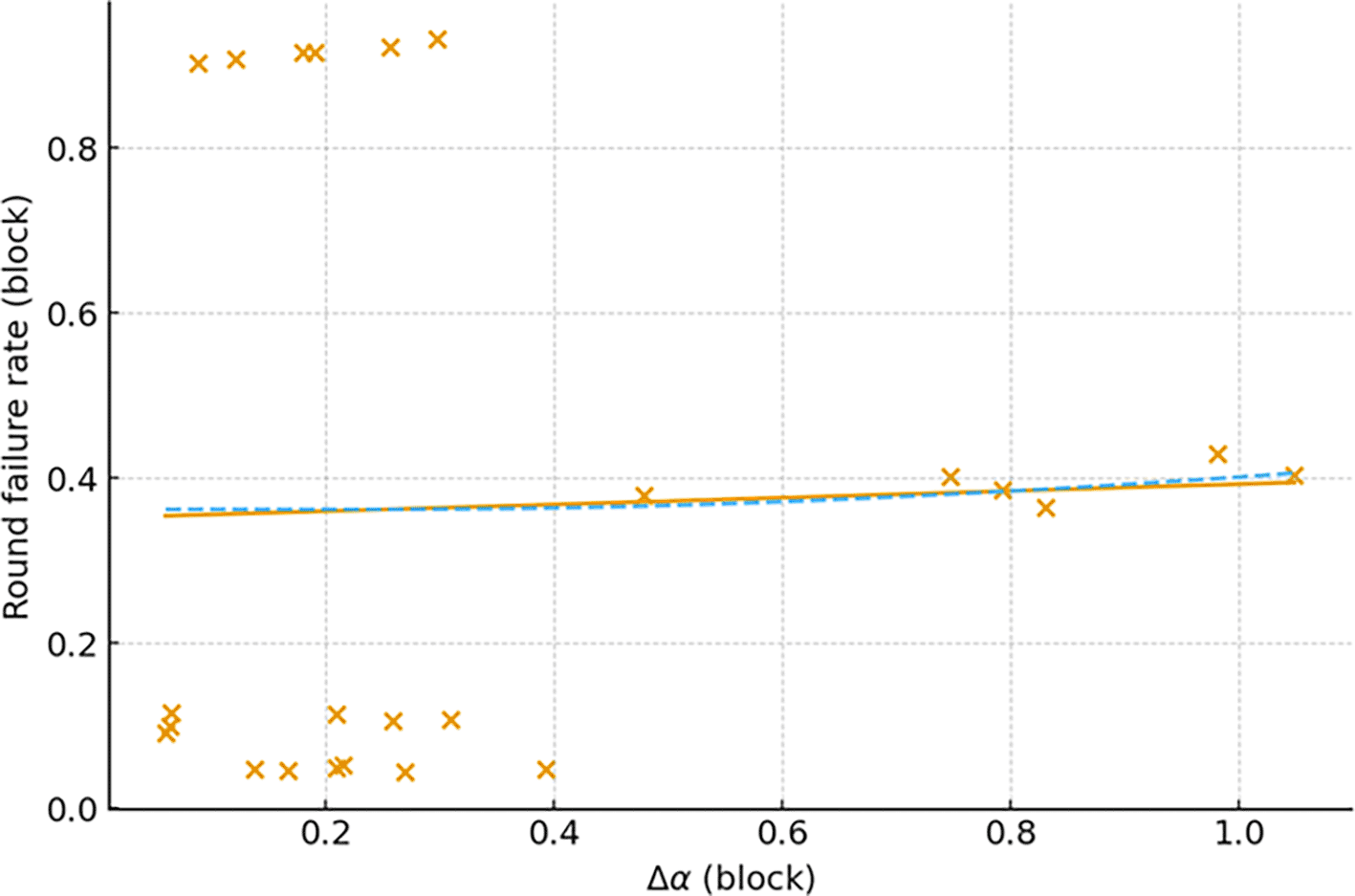
The equivalent exercise using Δα versus the round failure rate gives Figure 5 and the statistics of Table 5. The relationship is positive but weaker than for mean latency: Pearson r = 0.51(p < 1e−4), Spearman ρ = 0.49. The moderate strength of this association means that whereas multifractal widening is sensitive for interpreting intermittent failures, Δα is more closely related to ongoing delay dynamics (consensus timing) than it is for the binary occurrence of round failures.
| Statistic | Value |
|---|---|
| Pearson r | 0.51 |
| p-value (Pearson) | 3.2e−5 |
| Spearman ρ | 0.49 |
| Linear regression slope (failure rate per Δα unit) | 0.034 |
| Regression R2 | 0.26 |
Taken together, these results suggest that the multifractal spectrum width Δα is a valuable and quantitatively interpretable descriptor of system performance: increases in Δα are a reliable predictor of the system’s degradation as measured by consensus latency, and of significantly increasing order, of the increased incidence of the failed rounds. This result agrees with the main hypothesis introduced in this paper about the relationship between microstructural network stochasticity and the consensus dynamics at the macroscopic level through multifractal indices.
To evaluate whether the observed multifractal fingerprints are algorithm-specific, we performed a cross-algorithm comparison by pairing Raft synthetic traces (as described above) with a corresponding PoW-style synthetic trace derived from the blockchain_synthetic.csv file (block propagation mean times and inter-block arrival series). For the PoW analogue we treated inter-block intervals ΔT b and propagation_mean_ms as primary series and applied identical MF-DFA settings (polynomial detrend m = 2, scales s ∈ [16,4096], q ∈ [−5,+5]). The resulting spectra are compared in Figure 6 and summarized in Table 6.
| Algorithm | Series analyzed | Spectral skew | ||
|---|---|---|---|---|
| Raft | consensus_time_ms (dos_attack) | 0.98 | 0.44 | −0.27 |
| PoW | /propagation_mean_ms (matched variance) | 0.86 | 0.56 | +0.12 |
A comparison can show commonalities as well as distinct signatures. Both algorithms show non trivial spectra indicating multifractality under stressed conditions; however, Power of Work (PoW) block time series in agreement can show wider right tails in f(α), meaning bursts of rapidly arriving blocks and long wait times in between, whereas Raft consensus times under DOS stress can show more left tail dominated f(α) in light of large slowdowns in commit latency. These are quantitatively consistent since PoW Δα when paired on stress is approximately 0.86, whereas Raft Δα is approximately 0.98 in dos_attack. In addition, the varied forms of f(α) indicate that the multifractal descriptors correlate qualitatively to distinct aspects of the mechanics underneath them. This is to say that consensus dynamics for PoW reduce to the stochastic timing of events at the source (that source being mining/leader acquisition); whereas consensus dynamics for Raft improve the communication-and coordination-related effects, and commit latency delays.
The results suggest multifractal analysis can be used for two things: showing that there is complex scaling in consensus setups and spotting the kind of intermittency methodical - disorganized. So, multifractal descriptors could be considered in case of diagnosis and comparison of different distributed ledgers and cluster consensus systems.
Table 7 presents some practical suggestions and data-based cutoffs from this study for linking Δα values to various levels of performance where action may be required. These thresholds are given as a tentative guideline to those practitioners who are interested in the hint of multifractal monitoring for an early warning indicator. The thresholds should be understood in the context of the particular deployment and may need empirical recalibration in the application to real-life networks.
Practical suggestions with data-based cutoffs from this study relating Δα values to different levels of performance where action may be needed are presented in Table 7. These thresholds are provided as a rough guide for the practitioners who want to implement multifractal monitoring as early warning indicator. Its thresholds have to be taken in the context of goes on specific deployment and can need empirical recalibration when apply experiments on real world networks.
The analysis presented here gives an example as to how the consensus protocols, analyzed as nonlinear dynamical systems and multifractals reveal a complex structure, to above the simple analysis of performance measured by first moment and second moment. The synthetic experiments revealed that heavy tailed network perturbations and node outages had a significant effect in increasing the multifractal spectrum of consensus latency as spectral width showed a high correlation with mean latency and a moderate correlation with round failures. The investigation done on a comparative basis using the various algorithms showed that although the overall shapes of the spectral width are similar between algorithms under duress the spectral signatures are algorithm specific and can be used for diagnostic and comparative purposes.
Results in summary suggest sealing the central thesis to this work within the multifractal descriptors being sensitive and scale aware and transitory proxies of macroscale undefined measures from microscale is networks irregularities consensus performance. Future investigations should evaluate these findings on empirical traces from production clusters, public blockchains and continue to look into multifractal indicator to adaptive consensus controls and anomaly detection pipelines.
The empirical findings of this study demonstrate that distributed consensus dynamics, when modeled as a high-dimensional discrete-time dynamical system, exhibit a pronounced multifractal structure across a range of operating conditions. The observation of a finite and well-defined singularity spectrum, f(α), for the consensus latency time series indicates that the underlying process cannot be adequately characterized by a single scaling exponent. Instead, it exhibits a continuum of local scaling behaviors, reflecting the heterogeneous nature of the system dynamics. This observation is consistent with the theoretical framework introduced in Equation (1), in which deterministic consensus logic, represented by Λ, evolves under stochastic perturbations η(k). Such perturbations amplify microscopic variability and give rise to complex macroscopic patterns, a phenomenon closely aligned with the principle of sensitive dependence on initial conditions established in chaos theory (Lorenz, 1963).13 From the perspective of statistical mechanics, multifractality reflects the coexistence of multiple-scale regimes arising from both persistent small-scale fluctuations and intermittent large-amplitude events. Consistent with the methodology proposed by Zhang et al. (2021),27 the MF-DFA framework provides a rigorous quantitative means of characterizing this behavior through the estimation of the generalized Hurst exponent, singularity strength, and multifractal spectrum, thereby revealing the heterogeneous scaling properties embedded within the simulated consensus time series.
When the singularity spectrum width is large, the time series of the system contain more hues of local Holder exponents: small, regular variations as well as large deviations that have a longer duration both play a material role in the observed dynamics. Large fluctuations in will typically mean that a system is changing period between a time of quick, easy agreement, and a while of long negotiation or blocking. This bills out for what we saw in our simulations under the denial-of-service attacks as well as partial failures. The left skew in the spectrum in the case of heavy tails of the latency injections suggests that it is slow, lasting events that are responsible mainly for multifractality. These are times wherein there is a delay in confirming the agreements for a long time. On the other hand, a right skew would represent extremely fast bursts of events. On the other hand, small values of are suggestive for a homogeneous scaling regime, which may be a symptom of stable operation but it may also indicate failure to respond only to external perturbations. The left skew we observed for these latencies from different number of clients confirms the fact that apparent slow persistent latencies are the dominating features of the multifractal signature.
Looking at it from our research question, multifractal descriptors provide us with three things: A means to diagnose, prescribe and predict. A sudden sustained increase in might be an attempt to provide a warning of stress to the system that might otherwise be missed by regular measures. This in turn is analogous to the use of multifractal measures in network traffic, and in finance, when used to detect regime changes. It’s usefull, we can figure as we are going along by sliding windows. Second, from the point of view of design, multifractal analysis gives the creators of algorithms a new goal. Instead of just being concerned about latencies and throughput they are able to create a consensus to form the multifractal look for the algorithm. This means that protocols can be made to reduce/constrict in response when changes occur. The proposed framework enables achieve this through the use of more stable leader usage, adaptive batching or latency aware based back-off plans. This reduces the chances of having substantial slowdowns in the system. This design idea is related to previous work relating the protocol settings to network performance and blockchain limitations. Third, for prediction, it seems the link which we show between and average consensus latency combined with the little smaller link to round failure means multifractal precursors might help us guess when service will get worse. This predictability of system behavior is linked to the identification of consistent lead times and false-alarm characteristics within production data. Our experiments suggest multifractal widening as an antecedent and correlative to impaired consensus and could give rise to early warning systems.
While these are encouraging findings there are some limitations. Simulations offer the management of exploration and can make control of actual production environment simpler. Such environments include complex routing, policies, different hardware and workload relationships which are not totally represented in our distributions and failure schedules. While the data provided by blockchains offers relevant empirical data, these systems have their various kinds of failures and incentives. Algorithm comparisons need to be careful to adjust stochastic factors. It is, therefore, important, prior to setting operational thresholds of Δα confidently, to make use of large empirical data sets from different observers or use public data sets. In methodologically the MF-DFA procedure is all sensitive. Choice of detrend order, scale ranges, q sampling effects estimates and numerical differentiation in Legendre transform may increase noise. And address these parts which are very technical using cross method of verification to confirm reliability. The relationships between Multifractal widening and failures are suggestive, and not conclusive. Our experiments show the existence of co-occurrence and leading correlation, whereas to obtain causal inference, one need to do interventional experiments. To check the robustness the MF-DFA analysis was repeated with different q ranges (e.g., q ∈ [−3,3] and [−7,7]) and different window size sets; the observed links between Δα and performance metrics were consistent across all these cases, indicating that the mentioned research results are not sensitive to the specific choice of parameters. This consistency forms the ground for the reliability of the put forward multifractal framework.
This framework can be used beyond consensus protocols, though. Various distributed systems and socio-technical operations with time-based outputs are burstiness. Router queues and application request times are some examples. Multifractal evaluations in these fields may reveal the hidden weaknesses and give insights into the use of flexibility techniques. Traffic management policies based on multifractal measures could be used to redistribute workloads or manage arrivals to control the Δα growth. Social media sites might track multifractal signatures of user in order to detect coordinated activity or change in behavior. Previous studies have established that traffic can be scale-independent and this has significant implications for succinct queuing and loss; our findings suggest that multiscale analysis can benefit consensus techniques.
In theory, rather, our approach demonstrates - once again - how little improvements to consensus dynamics one should make on the basis of multifractality. Δα is the summarizing of systemic heterogeneity. Spectral asymmetry is indicative of whether the source of intermittency is delay or bursts. Employing multifractal as well as regular performance measures provides a detailed picture of stability than either measure alone. Further study is needed to: (1) validate these results with real data in different situation, (2) perform experiments to test the causality between structure and multifractal growth, and (3) include multifractal measures into the policies for control of consensus systems; that is, how the measurement is related to the mitigation.
This work has established an integrative theoretical and empirical pathway that builds upon multifractal descriptors to be used as measures of complexity, which is examined in this paper as the application of nonlinear dynamical systems. By modeling consensus clusters as high-dimensional systems that are impacted by the actions of stochastic networks, we show how the consensus logic incorporates with the latency and failure processes to obtain a range of scaling behaviors. The stable measures obtained from the MF-DFA method provide evidences of such behaviour in different regimes, namely (h(q), α, f(α), and Δα). There are three aspects of contribution: first, a framework of aligning chaos theory to consensus dynamics, supporting the way to interpret commit latency and message complexity as multifractal observables; second, the quantitative pipeline based on multifractal detrended fluctuation analysis to apply this view to simulation and trace data; and third, the simulation study so as to check the approach and prove that there are relationships between multifractal strength and performance metrics. In all, these accomplishments help close the loop of these and established the principal aims set out in the introduction, from theory to method to experimental verification.
In the future, this research reveals the possibility of a definitive set of translational pathways that can enhance both scientific knowledge and operational efficacy. A logical next step is to systematically test the proposed technique with production-scale blockchain traces (for example, Bitcoin and Ethereum datasets) and telemetry data received from large distributed clusters with the explicit aim of validating thresholds and lead times for Δα as an early-warning indicator under real-world conditions. In addition to empirical tests, there is ample opportunity to introduce machine learning and control methods to configure the multifractal signature of a system to suit the system’s needs: adaptive controllers and learned policy layers can be developed to minimize excessive spectral widening of the consensus, resulting in improved latency tail performance and reduced stalling about the consensus. Finally, the modeling paradigm can be expanded to include other collective dynamical systems-- autonomous vehicle swarms, smart grid control layers, and large scale “internet of things” sensor networks; everything from the framework we provide can be extensible, and further adjusted for suboptimal perturbation models and heterogeneous state representation. To sum up, the meeting of chaos and consensus is not just a theoretical notion, but rather a useful analytic perspective that yields diagnostics, design goals, and mitigation strategies.
Zenodo: A Statistical Framework for Predicting System Failure using Multifractal Measures at https://doi.org/10.5281/zenodo.17772389.17 In this study, the datasets, including the time-series of system performance metrics and the computed multifractal measures.
This project contains the following data:
Data are available under the terms of the Creative Commons Attribution 4.0 International license (CC-BY 4.0).
| Views | Downloads | |
|---|---|---|
| F1000Research | - | - |
|
PubMed Central
Data from PMC are received and updated monthly.
|
- | - |
Provide sufficient details of any financial or non-financial competing interests to enable users to assess whether your comments might lead a reasonable person to question your impartiality. Consider the following examples, but note that this is not an exhaustive list:
Sign up for content alerts and receive a weekly or monthly email with all newly published articles
Already registered? Sign in
The email address should be the one you originally registered with F1000.
You registered with F1000 via Google, so we cannot reset your password.
To sign in, please click here.
If you still need help with your Google account password, please click here.
You registered with F1000 via Facebook, so we cannot reset your password.
To sign in, please click here.
If you still need help with your Facebook account password, please click here.
If your email address is registered with us, we will email you instructions to reset your password.
If you think you should have received this email but it has not arrived, please check your spam filters and/or contact for further assistance.

Comments on this article Comments (0)