Keywords
business location, statistical analysis, accounting perspectives, optimal choice, decision-making, ordinal logistic regression

business location, statistical analysis, accounting perspectives, optimal choice, decision-making, ordinal logistic regression
The process of selecting a business type and optimal location is a complex decision that requires thorough consideration of various factors. To Perez-Benitez et al. (2021), decision on the physical place where to locate an entity is a strategic one that must be made not only at the inception of business activities but also as the business is expanding. In addition, choosing the type of business to establish is a key and crucial strategic decision, as it lays the foundation for the long-term survival and financial stability of any company. Factors which are considered in choosing the type and location of a company include population density, energy costs, labour cost and quality, local economic conditions, security in the environment, raw material supplies, agglomeration economies, as well as access to technology and digital infrastructure (Perez-Benitez et al., 2021; Arauzo-Carod et al., 2010; Che’ Man & Timmerman, 2016; Button, 2019)
The location of a business is a critical factor influencing a company’s overall strategy and success. The choice of business type and location can affect various aspects of a business, including customer reach, operational efficiency, cost structure, and competitive advantage (Thum & Wolf, 2018; Piacentini, 2016; Sweeney, 2015; Van Dijk & Leeuwen, 2014). In this regard, the decision to locate a business in an urban or rural area or to deal in consumer goods, industrial goods, foodstuff materials, or run a supermarket outlet and how this choice would impact the turnover of the business becomes critical to the strategic positioning, growth, and survival of the organization. For this reason, among others, Perez-Benitez et al. (2021, p. 1) submitted that business choice and location decisions have become “complicated, turning them into multi-criteria decision problems.”
Drawing from neoclassical theory, location theory, value-maximizing firm theory, discrete choice models, and Radom Utility Models (RUM), this study argues that in order to position any company in its industry so as to enable it gain a competitive advantage, there is a need to apply adequate statistical and accounting tools in the optimal choice of its location and type of activities it engages in. Emphasizing the importance of a holistic approach, this study seeks to provide a comprehensive understanding of the viability and profitability of potential business choices and locations.
There has been limited research on using statistical approaches as an accounting aid to guide business type and location choices in sub-Saharan African countries, such as Nigeria. This gap inadvertently contributes to business survival volatility (Kim et al., 2025; Ukamaka, 2021; Enyi, 2018; Sefiani et al., 2016). This study aims to bridge this gap by exploring the significance of integrating statistical and accounting considerations into business type and location decisions, and highlighting the implications for strategic planning and business performance. In doing this, the study has the main objective of exploring how statistical methods can enhance accounting practices in determining the choice of type of business and the ideal business location that can guarantee operational stability and maximum financial performance. The sub-objectives are to:
1. Determine the statistical methods that are most useful in guiding the location of businesses.
2. Investigate the extent to which the location of a business in a rural or urban area impacts its turnover.
3. Examine the separate and distinct effects of dealing on consumer goods, industrial goods, foodstuffs, or supermarket outlets on the turnover of the business.
Following this introduction is a literature review (section 2). Section 3 presents the methodology; Section 4 gives the analysis, results, and discussions, while Section 5 concludes.
The choice of business type usually occupies the greater aspects of the concerns of budding entrepreneurs because it builds on the experience, knowledge, and passion the business proposer attaches to the proposed business. Closely aligned to this is the choice of location that is critical in attracting patronage and eventual profitability. These decisions are important for customer reach, market access, cost savings, competitive advantage, and strategic flexibility.
One of the primary considerations in selecting a business location is its proximity to target customers. A strategically chosen location can enhance a business’s ability to attract and retain customers by providing easy access to its products and services (Kauko, 2016; Porter, 1990). For example, a retail store situated in a high-traffic area with a large customer base is more likely to experience higher footfall and sales than a remote store.
The location of a business also affects its operational efficiency. Proximity to suppliers, transportation networks, and infrastructure can reduce logistics costs and streamline supply chain management (Dunning, 1998). Efficient operation can lead to cost savings and improved profitability, which are essential for long-term success.
It has been argued that location decisions directly impact a business’s cost structure. Factors such as rent, labor costs, taxes, and utility expenses vary significantly across regions (McDonald & Donohue, 2012). Businesses must carefully evaluate these costs to ensure that the chosen location aligns with their budget and financial goals. For instance, establishing a manufacturing plant in an area with lower labor costs can result in substantial cost savings.
A well-chosen location can provide competitive advantage by differentiating a business from its rivals. Competitive advantage results from the premium gained by an entity in the value creation process (Nwaobia & Akintoye, 2024). Therefore, being situated in a prime location can enhance brand visibility and attract a larger customer base (Bertrand & Mullainathan, 2003). Additionally, businesses can leverage location-specific advantages, such as access to skilled labor or favorable regulatory environments, to strengthen their market position.
Location decisions also influence the strategic flexibility of a business. The ability to adapt to changing market conditions and customer preferences is crucial for long-term success (Cantwell & Mudambi, 2005). A strategically chosen location can provide businesses with agility to respond to market shifts and capitalize on new opportunities. Cantwell and Mudambi (2005) opined that multinational enterprises (MNEs) use their subsidiaries to create and exploit competencies. The authors found that R&D intensity and strategies differ between subsidiaries based on their mandates and locations.
Many business analysis studies posit that an improper choice of business location can significantly affect a business’s financial performance. Some of these factors include customer access, operating costs, supply chain efficiency, labor availability, and regulatory environment (Kim et al., 2025; Ukamaka, 2021; Sefiani et al., 2016). Businesses that command more patronage with good customer access will lead to higher sales output, whereas businesses located in higher rent areas, unfriendly tax regimes, and higher utility charge rates, among others, will be subjected to increased operating expenses and lower profitability (Mandl, 2007). On the other hand, businesses that are chosen based on proximity to suppliers and sales outlets can improve profitability by improving supply chain efficiency and reducing haulage costs. A business located in an area of hostile regulation, such as opening an alcoholic tavern in a designated Sharia jurisdiction, is a recipe for early liquidation. Affordable skilled labor availability also plays an important role in business choice and location, which is probably why most American tech companies choose to establish their manufacturing plants in Asia (Source of Asia, 2024; Boston Consulting Group (BCG), 2023).
Statistical analyses play a crucial role in evaluating potential business choices and locations. Several methods can be employed to analyze the data and derive insights. Such methods include regression, factor, and cluster analyses. Regression analysis is particularly popular because it has proven to be the ultimate method for identifying relationships between variables such as location characteristics and business performance metrics. Regression analysis can be used to predict how changes in location variables may impact business outcomes. Businesses can use regression analysis to determine which location factors (e.g., proximity to suppliers and customer demographics) significantly affect their performance (Hair, et al., 2018).
In statistics, factor analysis remains an important tool for reducing data complexity by identifying the underlying factors that influence location decisions. This helps businesses focus on the most critical variables affecting their choice, thereby narrowing their choice criteria. By using factor analysis, businesses can identify key factors such as market size and competition that influence success or otherwise of different locations (Bryman & Bell, 2015). Cluster analysis is another statistical tool closely linked to factor analysis, and is used extensively for business type and location choice.
Cluster analysis is a valuable tool for grouping similar businesses by location, based on specific criteria that enable businesses to identify regions with comparable attributes. This helps businesses compare potential locations and narrow down choices by grouping areas that share characteristics with the proposed business (Hair et al., 2018). This study posits that cluster factors significantly influence the choice of the business type. For example, establishing a pharmaceutical business in a market that is fully developed and devoted to selling auto parts simply because a business space is available for the taking would be imprudent. Such a decision would not only make the business incongruent in its objectives, but also negatively impact its fortunes in the long run.
Accounting considerations are equally important in the decision-making processes. Key accounting methods include cost-benefit analysis, financial forecasting, and risk assessment. A cost-benefit analysis evaluates the financial implications of different locations by comparing the costs and benefits associated with each option. This analysis helps businesses identify locations that offer the highest net benefit, considering factors such as rent, labor costs, and potential revenue (Horngren et al., 2015). Financial forecasting estimates future financial performance based on location-specific data, allowing businesses to project revenues, expenses, and profitability for potential locations, thereby aiding informed decision making (Shim & Siegel, 2015). Risk assessment identifies and evaluates potential risks associated with different locations, considering factors such as market volatility, regulatory environment, and competitive landscape, to assess the risks that could arise from locational choices (Ghosh & Craig, 2017).
Integrating the statistical and accounting perspectives provides a more comprehensive approach to business location decisions. By combining data-driven insights with financial considerations, businesses can make informed choices aligned with their strategic objectives. Hwang and Jang (2012) present a statistical approach to evaluating business location choice and finds that the consideration of statistical factors, such as market potential and cost-benefit analysis leads to optimal location decisions for businesses. Bebeseléa and Patache (2019) highlighted the connection between accounting and statistics. The study inferred that there is a historical connection between statistics and accounting as a quantitative method of analysis. They further suggested that since accounting data on property and wealth were requested in the census of the great ancient civilizations, statistical and accounting data-setting systems provide a framework to identify, record, classify, and summarize the economic activities of entities (Bebeseléa & Patache, 2019).
Some studies have stressed the importance and relevance of integrating accounting and statistics into business type and location choice decisions. Anderson et al. (2017) provide comprehensive coverage of statistical methods and their applications in business and economics and emphasize real-world examples and case studies to illustrate how statistical data can inform business decisions. Ying and Chen (2019) explores the factors influencing business location decisions through statistical analysis. These findings indicate that factors such as economic conditions, government policies, and local competition play crucial roles in determining business locations.
Several theories and models govern accounting metrics and business location decisions. Notable examples include neoclassical theory, location theory, value-maximizing firm theory, discrete choice models, and random utility models (RUM).
Neoclassical Theory posits that firms choose locations to maximize profits by minimizing costs and maximizing revenue. It relies on principles such as economies of scale and transportation costs (Anderson, 2019). On the other hand, Location Theory examines the spatial distribution of economic activities and how location decisions are influenced by factors such as transportation costs, labor availability, and market access (Dubé et al., 2016).
The Value-Maximizing Firm Theory is a modern approach which suggests that firms aim to maximize shareholder value rather than just profits. It considers long-term strategic goals and the overall value created for stakeholders (Anderson, 2019). Discrete Choice Models use statistical methods to analyze the choices made by firms regarding location, considering various factors, such as costs, benefits, and risks (Dubé et al., 2016). The Random Utility Model (RUM) evaluates the utility or satisfaction that a firm derives from different location options, helping to predict the most preferred location based on various criteria (Dubé et al., 2016; Horngren et al., 2015).
This study adopted an empirical survey research design utilizing a structured questionnaire validated using Cronbach’s alpha reliability test, a public domain research instrument for testing the reliability of questionnaire in a pilot study of a sub-sample. The pilot study for this research was conducted using 21 respondents and the results for the five turnover sub-groups ranged from 0.8935 to 0.9264 as presented in Table 1.
The Cronbach alpha statistics requires no permission or license for deployment. In addition to the use of questionnaire, telephone interviews were scheduled for physically unreachable respondents through phone calls with the consent of the respondents obtained through the same. A total of 1,275 copies of the questionnaire were distributed, and only 1200 were returned valid and usable. The questionnaire administered clearly left out personal details of respondents. Consents of all respondents (both telephone and questionnaire) were obtained verbally because most respondents averred that they had little or no time to give written consent; and since much of the questionnaire were distributed on a person-to-person and telephone calls made on same basis which gave prospective respondents the opportunity to decline or accept to answer the questions posed the verbal consents were considered appropriate. No form of physical contact, exercise or taking of samples was required from any of our respondents. Other respondents contacted by phone were only asked if they could be reached through email or WhatsApp, which majority agreed to.
The responses from the questionnaire were analysed, codified, and arranged according to the factors and levels of turnover to be tested for influence. The predictor options were identified as urban and rural locations, supermarket outfits (supmkts), industrial goods (indgoods), consumer goods (consgood), and foodstuff materials, while five turnover ranges of below 2 million (Below2m), 2 to 5 million (B2T5m), 5 to 50 million (B5T50m), 50 to 100 million (B50T100m), and above 100 million (Above100m) were used as the options for the outcome or dependent variable “Turnover.”
The data were analysed using ValuStats (VSP 2.0) Ordinal Logistics Regression Analysis software.
The literature reviewed extensively reveals the connection between the success of business location decisions and the consideration of factors such as customer access, operating costs, supply chain efficiency, labor availability, and the regulatory environment (Kim, et al. 2025; Ukamaka, 2021; Sefiani et al., 2016). Other factors that are in perfect agreement with the reviewed theories include proximity to suppliers, economic conditions, government policies, and local competition. These factors also play a significant role in business choice and location decision-making. The results of the ordinal logistic regression analysis presented in Table 1 also echo the findings from the literature review in that direction.
The empirical studies reviewed in this study posit that introducing accounting metrics and statistical analysis as support in aiding business choice and location decisions will greatly improve business operational effectiveness and profitability (Horngren et al., 2015; Shim & Siegel, 2015; Hwang & Jang, 2012; Ying & Chen, 2019).
The results of the ordinal logistic regression analysis for the data collected from the 1,200 respondents during the survey period are presented in Tables 2 and 3.
The MN Logit Regression Results for the dependent variable “Turnover” are interpreted as follows:
1) Number of Observations: 1200
2) Degrees of Freedom (Residual): 1172
3) Degrees of Freedom (Model): 24
4) Method: Maximum Likelihood Estimation (MLE)
5) Log-Likelihood: -1414.4
6) Pseudo R-squared: 0.2268
7) LL-Null: -1829.2
8) Covariance Type: Nonrobust
9) LLR p-value: 1.113e-159 (this is less than 0.00000000 indicating the model is highly significant)
Turnover = B2T5m
1) const: Coefficient = -0.6931, Standard Error = 0.204, z = -3.399, p-value = 0.001
2) consgood: Coefficient = 0.7365, Standard Error = 0.226, z = 3.260, p-value = 0.001
3) indgoods: Coefficient = 0.9551, Standard Error = 0.287, z = 3.328, p-value = 0.001
4) supmkts: Coefficient = -1.7254, Standard Error = 0.235, z = -7.350, p-value = 0.000
5) urban: Coefficient = -0.0294, Standard Error = 0.012, z = -2.507, p-value = 0.012
6) rural: Coefficient = -0.0776, Standard Error = 0.121, z = -0.640, p-value = 0.522
7) foodstuff: Coefficient = 1.3799, Standard Error = 0.127, z = 10.880, p-value = 0.000
Turnover = B50T100m
1) const: Coefficient = -0.4141, Standard Error = 0.233, z = -1.776, p-value = 0.076
2) consgood: Coefficient = 0.2303, Standard Error = 0.279, z = 0.825, p-value = 0.409
3) indgoods: Coefficient = 0.2968, Standard Error = 0.351, z = 0.845, p-value = 0.398
4) supmkts: Coefficient = -3.0570, Standard Error = 0.264, z = -11.601, p-value = 0.000
5) urban: Coefficient = -0.0259, Standard Error = 0.014, z = -1.799, p-value = 0.072
6) rural: Coefficient = -0.0550, Standard Error = 0.144, z = -0.381, p-value = 0.703
7) foodstuff: Coefficient = 2.4714, Standard Error = 0.214, z = 11.561, p-value = 0.000
Turnover = B5T50m
1) const: Coefficient = 0.1172, Standard Error = 0.194, z = 0.603, p-value = 0.546
2) consgood: Coefficient = -0.6324, Standard Error = 0.221, z = -2.856, p-value = 0.004
3) indgoods: Coefficient = 0.2705, Standard Error = 0.288, z = 0.939, p-value = 0.348
4) supmkts: Coefficient = -1.4307, Standard Error = 0.239, z = -5.981, p-value = 0.000
5) urban: Coefficient = -0.0027, Standard Error = 0.011, z = -0.248, p-value = 0.804
6) rural: Coefficient = 0.2488, Standard Error = 0.107, z = 2.322, p-value = 0.020
7) foodstuff: Coefficient = 1.6353, Standard Error = 0.164, z = 9.963, p-value = 0.000
Turnover = Below2m
1) const: Coefficient = -2.2775, Standard Error = 0.252, z = -9.030, p-value = 0.000
2) consgood: Coefficient = 0.7957, Standard Error = 0.242, z = 3.290, p-value = 0.001
3) indgoods: Coefficient = 1.6177, Standard Error = 0.307, z = 5.275, p-value = 0.000
4) supmkts: Coefficient = -1.8067, Standard Error = 0.245, z = -7.372, p-value = 0.000
5) urban: Coefficient = -0.0048, Standard Error = 0.013, z = -0.359, p-value = 0.720
6) rural: Coefficient = -0.0386, Standard Error = 0.153, z = -0.252, p-value = 0.801
7) foodstuff: Coefficient = 1.2341, Standard Error = 0.133, z = 9.267, p-value = 0.000
1. A positive coefficient indicates that, as the predictor variable increases, the likelihood of the dependent variable being in the turnover category increases.
2. A negative coefficient indicates that as the predictor variable increases, the likelihood of the dependent variable being in the turnover category decreases.
3. The p-values indicate the significance of the coefficients. A p-value less than 0.05 generally indicates statistical significance.
Each turnover category was compared to the baseline category Turnover of Above100 m. The variables consgood, indgoods, supmkts , urban , rural , and foodstuff play roles in determining the likelihood of being in each turnover category.
The choice of the type of business to be considered and the location of such business depend heavily on factors that guarantee operational success and business sustainability. These factors include proximity to the source of supply, availability of cheap labor, regulatory environment, government policies, customer access, low operating costs, and a friendly tax regime (Kim, et al., 2025; Ukamaka, 2021; Sefiani et al., 2016). The choice of business type must be based on the competence, experience, funding capacity, and passion of business promoters. The choice of an incorrect business or location is a clear invitation to business failure. The empirical literature reviewed in this study affirms this assertion. Other empirical evidence unearthed within this study points to the fact that employing accounting metrics and statistical analysis as support in aiding business choice and location decisions will greatly improve organizational effectiveness and profitability (Horngren et al., 2015; Shim & Siegel, 2015; Hwang & Jang, 2012; Ying & Chen, 2019).
The general model information shows that the data were collected from 1,200 observations, providing a residual degree of freedom of 1172 and a model degree of freedom of 24. It also indicated that the maximum likelihood estimation (MLE) was used to estimate the parameters of the model. Log-Likelihood of -1414.4 indicates that the model was not perfectly fitted, and this was also indicated by the Pseudo R-squared of 0.2268, which means that approximately 22.68% of the variance in the dependent variable (Turnover) is explained by the model. Nevertheless, a Log-Likelihood Ratio (LLR) p-value of 0.0000 indicates that the model is highly significant, which compensates for the low LLR value. This means that the fitted model is a much better fit than the null model value of -1829.2; it also means that the predictors in the model significantly contribute to explaining the variance in the dependent variable.
Gleaning from the outcome of the ordinal logistic regression analysis on the research data collected, it is evident that factors such as urban, rural, supermarkets, consumer goods, industrial goods, and foodstuff exerted their own levels of influence on the turnover range. Table 5 shows how.
| Predictors | ||||||
|---|---|---|---|---|---|---|
| Urban | rural | consgood | indgoods | foodstuff | supmkts | |
| count | 246 | 246 | 246 | 246 | 246 | 246 |
| mean | 8.98 | 1.47 | 1.48 | 0.99 | 1.11 | 1.98 |
| std | 10.13 | 1.30 | 1.35 | 0.90 | 0.06 | 1.80 |
| min | 0.04 | 0.00 | 0.00 | 0.00 | 1.01 | 0.00 |
| max | 45.66 | 5.71 | 5.71 | 3.80 | 1.24 | 7.61 |
Given a 95% confidence level, urban as a predictor variable was significant for generating between the 2 million and 5 million turnover range and was marginally significant for generating between the 50 million and 100 million range. The analysis assumed that the baseline range of 100 million and above was used as the major comparator and that the urban variable was more related to that range than any other predictor. This is revealed by the descriptive statistics of the 246 occurrences of the “Above 100 million” turnover category in Table 4, which shows that the urban predictor has the highest mean of 8.98 compared to other predictors with less than 2. In addition, the maximum value of 45.66 for the urban predictor, which is 38.05 points higher than the nearest predictor (supermarkets) at 7.61 points, clearly proved that the urban predictor was mostly responsible for turning out the “Above 100 million” category turnover. The reason for this is not far-fetched because businesses with sales outlets located in urban areas can easily generate a turnover of up to 100 million naira and above annually.
Surprisingly, the rural predictor was only significant in the 5–50 million turnover categories. This could be attributed to the misconceptions held by respondents in rural areas who were largely uninformed about the reasons behind the questions posed to them. The results for the supermarket predictor are highly significant across all turnover categories, indicating that supermarkets remain a vital sales outlet that should never be overlooked as a business choice. The consumer goods results were highly significant for four of the five turnover categories, including the “Above 100 million” category. The reason for the insignificance in the 50 million to 100 million category is not entirely clear; however, it might be attributed to misjudgment by many respondents in that category, as consumer goods encompass the most basic family needs.
The results for industrial goods, on the other hand, were significant in the “Below 2 million,” “2 million to 5 million,” and “Above 100 million” turnover categories but were inexplicably insignificant in the “5 million to 50 million” and “50 million to 100 million” categories. The foodstuff predictor (including groceries) was significant across all turnover categories, highlighting the importance of food in human communities. This further demonstrates that well-managed investments in foodstuffs and grocery businesses can consistently succeed. See Figures 1 and 2 for pictorial clarity.
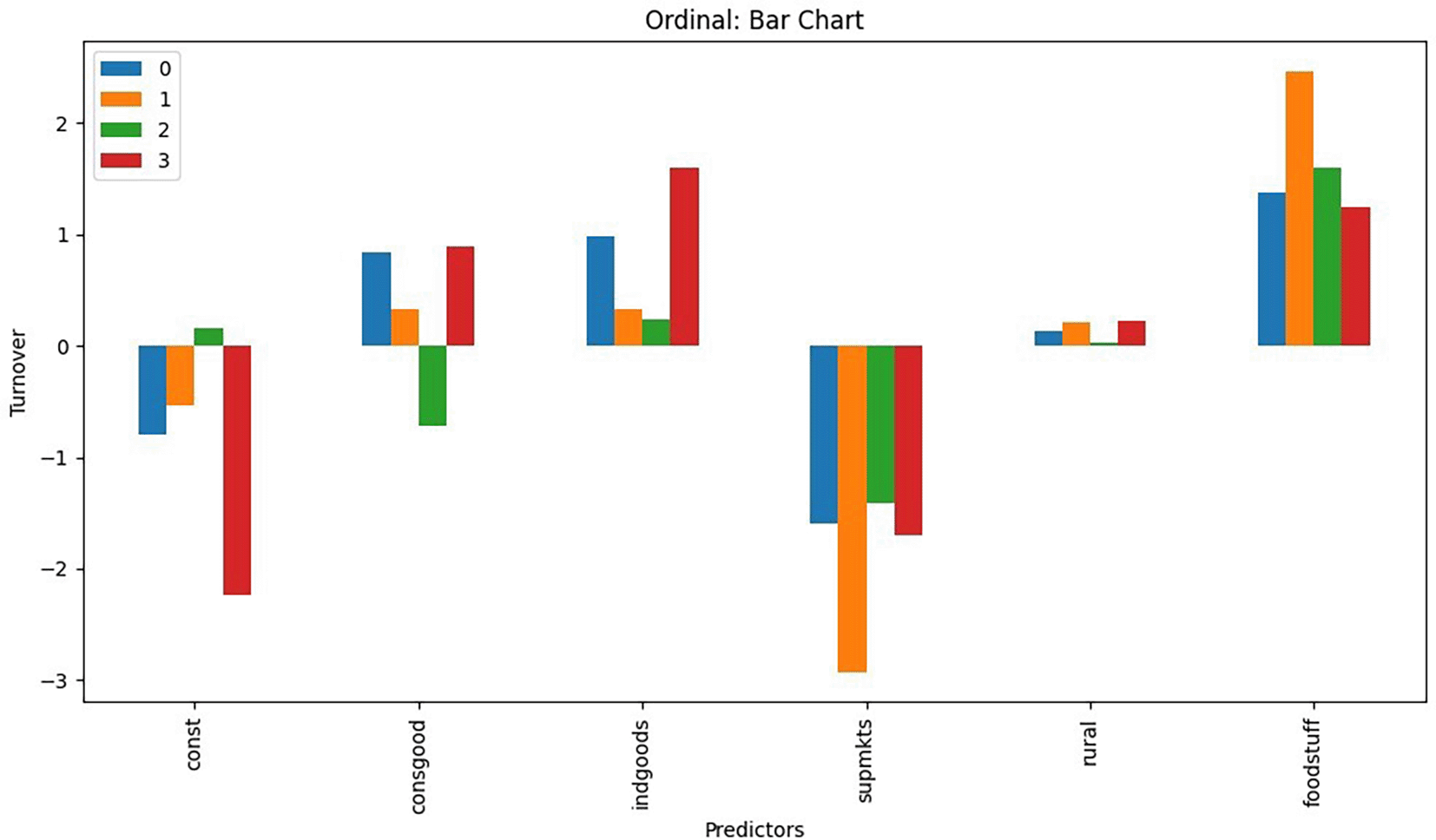
Source: ValuStats (VSP 2.0) February 2025.
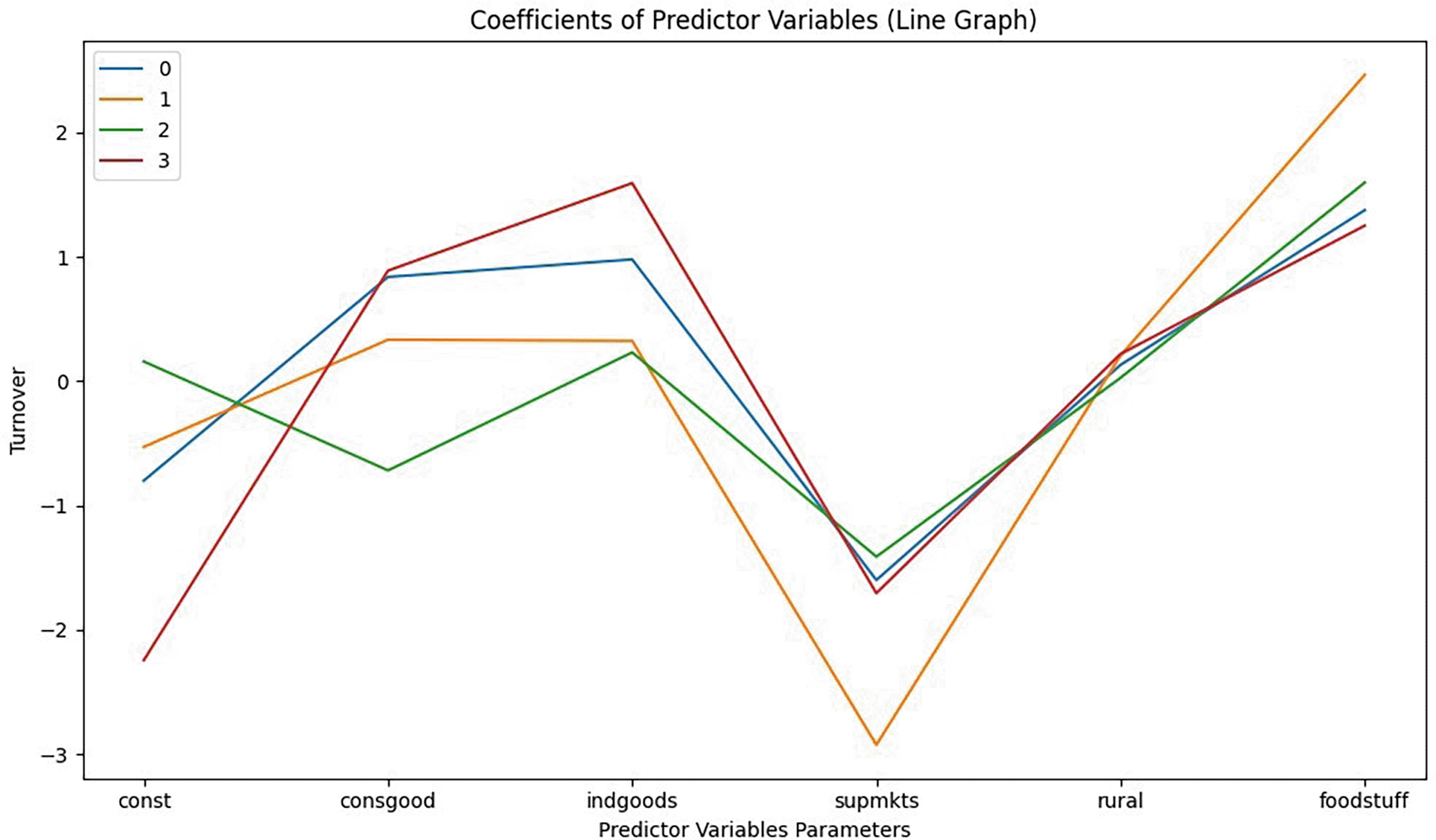
Source: ValuStats (VSP 2.0) February 2025.
These findings are in line with the findings of the works of Anderson (2019), Ying and Chen (2019), Dubé et al. (2016), Bryman and Bell (2015), Horngren et al. (2015), and Hwang and Jang (2012) on the decision criteria for the business type and location choice.
In conclusion, the importance of business location in the overall strategy and success of a business cannot be overlooked. A well-chosen location enhances customer reach, operational efficiency, cost structure, competitive advantage, and strategic flexibility. The selection of an optimal business location is a critical decision that requires careful consideration of both statistical and accounting perspectives. By employing regression analysis, factor analysis, cluster analysis, cost-benefit analysis, financial forecasting, and risk assessment, businesses can make more informed business choices and strategic location decisions. This integrated approach enhances the likelihood of operational efficiency and long-term profitability.
The implication of the findings of this study is that entrepreneurs who choose to ignore the importance of data analytics in business choice and locational decisions are likely to flounder and lose value, while the efforts of others with more discerning minds are crowned with great successes.
This study is limited in scope to the six locational and choice variables of consumer goods, industrial goods, supermarkets, foodstuffs, and rural and urban areas used in the study and covers only the southern and middle belt regions of Nigeria. Also, it covers only turnover as a measure of performance and did not consider profitability or any of its proxies. Future researchers can broaden the research horizon and include other factors not addressed in this study.
In line with the Babcock University Health, Research, and Ethics guidelines, the telephone interviews conducted were scheduled through phone calls with the consent of the respondents obtained through the same. The Babcock University Health, and Research Ethics Committee (BUHREC) does not require researchers using questionnaire to obtain special written permission to conduct the study so long as the questionnaire does not contain any intimidating, coercive, or personalized questions. This implicit approval of BUHREC requires that no personal details of the respondents were to be collected or published in accordance with its guidelines. The execution of the data collection aspect of this research followed the BUHREC guidelines strictly.
Informed consent of every respondent sampled was duly obtained orally during the data collection stage and the consent of those surveyed with phone calls were also obtained prior to every data collection conversation. No personalized details, images, or videos of any individual were used in the preparation of this document; thus, no consent for publication was required.
| Views | Downloads | |
|---|---|---|
| F1000Research | - | - |
|
PubMed Central
Data from PMC are received and updated monthly.
|
- | - |
Provide sufficient details of any financial or non-financial competing interests to enable users to assess whether your comments might lead a reasonable person to question your impartiality. Consider the following examples, but note that this is not an exhaustive list:
Sign up for content alerts and receive a weekly or monthly email with all newly published articles
Already registered? Sign in
The email address should be the one you originally registered with F1000.
You registered with F1000 via Google, so we cannot reset your password.
To sign in, please click here.
If you still need help with your Google account password, please click here.
You registered with F1000 via Facebook, so we cannot reset your password.
To sign in, please click here.
If you still need help with your Facebook account password, please click here.
If your email address is registered with us, we will email you instructions to reset your password.
If you think you should have received this email but it has not arrived, please check your spam filters and/or contact for further assistance.

For instance, the beginning comment read: "This is (a) rare occasion that researcher(s are) using Multinomial Logistic Regression model. Most authors (prefer) using Binary Logistic regression. This is author novelty"
Again the closing comment reads: I confirm that I have read this submission and believe that I have an appropriate level of expertise to confirm that it is of an acceptable scientific standard.
My comment:
I cannot understand why a supposedly novel article that is of an acceptable scientific standard became flawed with methodological defects and unable to support the conclusion drawn with the appropriate results.
I also disagree with the notion that the study cannot be replicated because the data source and data preparation method and repository were clearly indicated contrary to the reviewer's opinion.
For instance, the beginning comment read: "This is (a) rare occasion that researcher(s are) using Multinomial Logistic Regression model. Most authors (prefer) using Binary Logistic regression. This is author novelty"
Again the closing comment reads: I confirm that I have read this submission and believe that I have an appropriate level of expertise to confirm that it is of an acceptable scientific standard.
My comment:
I cannot understand why a supposedly novel article that is of an acceptable scientific standard became flawed with methodological defects and unable to support the conclusion drawn with the appropriate results.
I also disagree with the notion that the study cannot be replicated because the data source and data preparation method and repository were clearly indicated contrary to the reviewer's opinion.