Keywords
Artificial Intelligence, Digital Financial Reports, Comparability of Accounting Information.

This article is included in the Fallujah Multidisciplinary Science and Innovation gateway.
Artificial Intelligence, Digital Financial Reports, Comparability of Accounting Information.
With the rapid technological development and digital transformation that the world is witnessing, artificial intelligence (AI) has become one of the main tools that revolutionize various fields, including preparing financial reports, increasing their comparability and increasing the quality of the information they contain, as traditional financial reports rely on manual processes that may be subject to errors and manipulation, which negatively affects the accuracy and reliability of the information provided.
By applying AI technologies such as machine learning and big data analytics, the accuracy and speed of financial reporting can be improved, contributing to enhanced transparency and trust among investors and stakeholders. AI can also detect unusual patterns and identify potential risks, enhancing the possibility of making wise decisions.
Based on a review of the relevant literature, the researchers identified a need to examine the impact of employing artificial intelligence (AI) technologies in enhancing the process of preparing digital financial reports, and to assess the extent to which such technologies contribute to improving the comparability of accounting information, which represents one of the key foundations for investors’ decision-making.
The significance of this study stems from the selected variables and constructs, as well as from the potential role that artificial intelligence can play in the preparation of digital financial reports and in enhancing the comparability of financial information across different periods or among competing firms. Moreover, the study seeks to explore the nature of the relationship among these variables and dimensions.
It is expected that the findings of this manuscript will benefit multiple stakeholders — particularly accounting information preparers, by integrating artificial intelligence (AI) technologies into accounting practices, as well as users of accounting information, including investors in the capital market, for the purpose of enhancing the comparability of financial information to support decision-making.
In Iraq, formal Institutional Review Boards (IRBs) or Research Ethics Committees are not available in most universities, including the University of Kufa. that participation was entirely voluntary. Before participating in the survey, individuals were allowed to decline participation in the questionnaire. Participation in this study was entirely voluntary, free of coercion, and uncompensated. Participants provided informed, written consent as part of the questionnaire. Throughout the study, anonymity and confidentiality were maintained. All data were saved in a secure file, with only the researchers in charge of the questionnaire accessing the information. The study was carried out according to Declaration of Helsinki.
In light of the rapidly changing environment and increasing competition, as well as the complexity of financial reports in light of the increasing size of economic units and the diversity of their activities, there has become a difficulty in the comparability of information in a way that enables investors to make efficient economic decisions. Hence, this matter requires some study and analysis, and the research problem can be focused on the following questions:
• What is the impact of artificial intelligence in preparing digital financial reports?
• What is the impact of artificial intelligence on the comparability of accounting information?
• What is the impact of digital financial reports on the comparability of accounting information?
• Do digital financial reports mediate artificial intelligence’s impact on accounting information’s comparability?
The research gains its importance from the variables and elements that are adopted and from the role that artificial intelligence can contribute to in preparing digital financial reports and improving the comparability of financial information in different periods or between competing companies. It also tries to uncover and investigate the nature of the relationship between these variables and dimensions.
In light of the research problem and its importance, this research aims to study and analyze the role of artificial intelligence and its contribution to preparing digital financial reports, the extent to which this role is reflected in the comparability of information, how to improve financial forecasts and their accuracy, and reduce human errors.
The research hypotheses are as follows:
1- Artificial intelligence has a statistically significant effect on digital financial reports.
2- There is a statistically significant impact of artificial intelligence on the comparability of accounting data.
3- Digital financial reports have a statistically significant impact on the comparability of accounting data.
4- Digital financial reports mediate the effect of “artificial intelligence” on the comparability of accounting information.
The research community comprises university professors, financial managers, auditors, and accountants. A random sample was selected from among them. A questionnaire was designed and distributed. The distributed questionnaires amounted to (165) to test the research hypotheses and achieve its objectives.
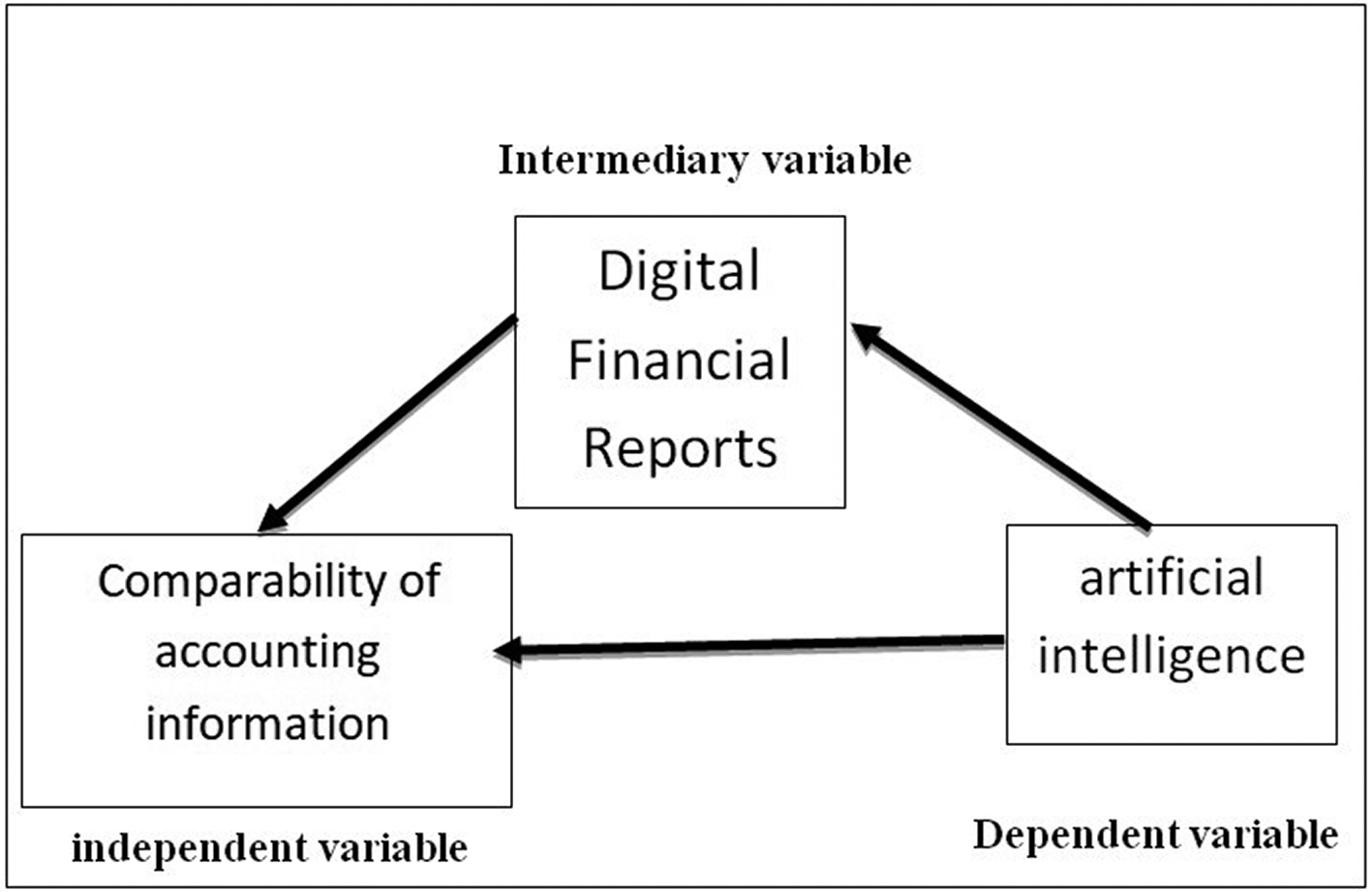
The research model adopted by the researchers is shown in Figure 1.
Artificial intelligence is considered a tool for digital transformation in companies, and it has been referred to as a comprehensive and radical change in these companies’ business models by adopting technological techniques and methods for performing various operational processes, building relationships between customers and suppliers, and interacting with stakeholders (Ali, 2022: 15).
“Artificial intelligence” is a branch of computer science whose goal is to create and form systems that can simulate human intelligence through understanding language and the ability to learn, think, and solve problems through the use of a set of technologies such as neural networks, machine learning, and language processing, which requires giving importance to this concept, by understanding its meaning and understanding how to use it, because of its significant impact on society in general and companies in particular (Zúñiga, et al., 2024).
It can be defined as a science that contains computer programs with specific characteristics that make them capable of simulating human mental abilities, the most important of which is the ability to learn.
It is also known as simulating human intelligence and understanding its nature by creating computer programs that are characterized by their ability to mimic human behavior that is characterized by intelligence (Bakr & Abdel-Aziz, 2019).
It is known as the science that studies how to make the computer perform the tasks that humans do better than humans, such as logical inference, learning, and the ability to analyze the cause.
Artificial intelligence can also be defined as a field that relies on computer technologies and methods to analyze the intelligence and behavior that humans possess and design systems capable of performing tasks that exceed human capabilities to help them perform tasks (Bakr & Abdel-Aziz, 2019).
The importance of artificial intelligence in our daily lives increases through its use in various fields, the most important of which are financial, economic, industrial, military, educational, and industrial services, as follows:
1- Artificial intelligence is used in smart devices capable of performing mental operations such as monitoring processes, making decisions, and examining industrial designs.
2- The most important applications of artificial intelligence are robots, which are mechanical devices programmed to work independently of humans and are designed to perform and accomplish tasks instead of humans. They are also used in the automobile industry, nuclear reactors, and other precise fields (Afrouzy et al., 2016).
3- Artificial intelligence tests theories using computers about how the human mind works and recognizes familiar faces, voices, or handwriting by extracting valuable data and information.
4- Artificial intelligence is used in video games, chess, and others.
5- It is used to learn different languages, understand written languages, answer all questions, and use automatic translation systems immediately.
6- Artificial intelligence is used in phones, televisions, self-operating weapons, smart home services, and other applications.
Many economic sectors depend on artificial intelligence, including (the education sector, health sector, services sector, etc.) (Essam et al., 2022) because it provides many great economic opportunities for these sectors in the country and helps to achieve significant profits if it is applied and used and relies on the information it provides (Hussein, 2023), and what it leaves of a positive impact in reducing reliance on the human element, thus raising the level of product quality and reducing costs.
1. General artificial intelligence: The only examples of this kind of artificial intelligence are research studies and the artificial neural network method, which is an application of general artificial intelligence since it resembles the neural network present in the human body. This kind focuses on giving the machine the ability to think and plan independently like a human since it can operate with a capacity for thought that is comparable to that of a human. General artificial intelligence is still in its early stages since it is created using the human brain as a model (Fourtane, 2019).
2- Limited artificial intelligence: This type performs a limited number of tasks, and these tasks are straightforward, such as a self-driving car, image, and speech recognition programs, or games such as chess, which is found in smart devices and is considered one of the most popular games at present (Ahmed, 2023).
3- Super artificial intelligence (super intelligence): This type of artificial intelligence is a hypothetical concept and does not exist in our current era, as it exceeds the level of human intelligence, which can perform many tasks better than those performed by humans themselves, and among the essential characteristics of this type are the ability to learn, the ability to plan, issue judgments, and communicate automatically, according to this type, the machine has cognitive skills that are more intelligent than humans (Szabadfoldi, 2021: 158).
Artificial intelligence has new opportunities for giving creative answers and sensible remedies for difficult issues and challenges as technology advances. In the years to come, artificial intelligence will be a major driver of growth, prosperity, and advancement due to the incredible technical advancements and changes the world is experiencing as a result of the Fourth Industrial Revolution. Because artificial intelligence is used so extensively in many industrial, commercial, educational, and service domains, it is therefore regarded as one of the Fourth Industrial Revolution’s most significant outcomes (Малік et al., 2024).
Applications of artificial intelligence are crucial in many domains. They are an absolute must for business organizations, as numerous studies conducted both abroad and in the Arab world have attested to the significance of these applications. These allow businesses to attain a number of benefits, chief among them being enhanced decision-making, resolving administrative issues, cutting expenses, raising quality, and a host of other advantages that help businesses expand in a way that secures their continued existence (Kaggwa et al., 2024).
Countries have moved towards entering the field of artificial intelligence, competing on its methods and techniques, and developing solutions to the challenges facing their work. Some countries have resorted to investing and activating the technologies of the fourth generation of the industrial revolution, foremost of which was artificial intelligence, to achieve the desired goals (Bakr & Abdel-Aziz, 2019), as the role of the human element was limited to auditing and monitoring. The condition for reaching this was the presence of scientific capabilities employed in possessing advanced digital technologies (Ahmed, 2023). Modern technology, especially artificial intelligence, can achieve several advantages, including (reducing the cost, time, and effort required to prepare traditional financial reports, reducing information asymmetry, and improving the quality of reports for its application in different sectors. The study (Ahmad et al., 2023) shows the central role of artificial intelligence in financial reporting processes, including reporting on sustainability accounting. With the continued development of artificial intelligence, financial reporting becomes more accurate, leading to optimal decision-making and better strategic planning for companies worldwide (Lawrence et al., 2024:6).
A digital financial report is a financial report that includes an organized data format that a computer can read. This data allows investors to compare and analyze information efficiently on a wide scale (Юніон et al., 2025). Digital financial reports are prepared and analyzed using digital technology, such as cloud computing, artificial intelligence, and big data analysis. These reports aim to improve the accuracy and efficiency of the financial reporting process and preparation and provide a strategic vision for making the right financial decisions (Le et al., 2020).
Although financial reports in PDF format are contextually understandable to humans, this format does not easily enable users of financial reports to extract, compare, or analyze company information efficiently (Алі et al., 2024).
Financial reports provide financial information to users to help them make better decisions by enhancing the reliability and accuracy of data (Lestari et al., 2021). They also facilitate the work of investors and other information users in terms of their ability to efficiently search for information on corporate accounting and financial disclosure and extract and compare this information (Альхафаджі et al., 2024).
Currently, in the changing business environment, traditional financial reports cannot provide reliable information, so countries have moved to oblige companies to prepare financial reports electronically (Fais et al., 2024). Many regulatory bodies, companies, and investors have become somewhat dependent on digital financial reports.
Digital financial reporting is now required in most major economies around the world.
In 2009, the US Securities and Exchange Commission (SEC) introduced requirements for listed companies to submit their financial statements in Extensible Business Reporting Language (XBRI), which is a structured data format that a computer can read (Bakr & Abdel-Aziz, 2019).
The shift from preparing traditional or paper financial reports to preparing them digitally began in the nineties, as many developed countries obliged companies to submit their financial reports digitally, the most prominent and essential of which are (the United States of America, Japan, China, Canada, Spain, and Denmark). All European companies have become required to prepare all their annual financial reports in a unified digital form and a single electronic format (FRC, 2017: 5).
Preparing financial reports digitally has many advantages, the most important of which are (Afaq, 2018):
1- Supports and helps in the possibility of making comparisons with high efficiency.
2- Increase the reliability of the financial information disclosed.
3- Increase the quality of accounting disclosure and reduce disclosure costs.
4- Speed of access to financial information and its availability.
5- Increase transparency and productivity.
6- Rationalize decision-making.
Digital financial reports go through three primary stages (Beerbaum et al., 2019: 2):
• The first stage is the stage of producing digital financial reports:
This stage focuses on collecting and integrating the company’s financial and non-financial information to publish it.
• The second stage is the distribution stage:
This stage focuses on publishing information in the application of accounting standards to meet regulatory oversight requirements and communicate with stakeholders and external users.
• The third stage is the use stage:
This stage focuses on using financial reports and analyzing the information they contain.
The information included in financial reports is the main output of the accounting system in establishments, and this information must be characterized by reliability and high quality to enable its users to make decisions and help them evaluate performance. Primary and secondary qualitative characteristics, including relevance, understandability, reliability, and comparability of information, characterize the information included in financial reports. Comparability of financial statements is one of the most important descriptive characteristics of accounting information and is one of the determinants of the quality of financial statements. Big companies have highly comparable financial statements since they follow rules and procedures as spelt out (Shuraki, 2021). The comparability characteristic of accounting information means the possibility of the information available in the financial statements being comparable to financial statements for previous periods of the same company or being compared to others practicing the same activity in the same period, enabling users to compare to make sound decisions.
The main objective of financial reports is to provide valuable information to users of financial reports and help them make sound decisions (Al-shiblawi et al., 2023). This goal can be achieved when the financial statements of companies are comparable. The Financial Accounting Standards Board’s list of financial accounting concepts indicates that the company’s information in financial reports is more helpful to users if they compare similar information with other companies. The comparability of financial statements is not limited to one company but includes several companies. It is not limited to one financial period but contains more than one. It is also not limited to one element but includes two or more components (Rashwan and Abdullah, 2019).
1- Comparability of financial statements helps management evaluate the efficiency of using available resources by comparing one company with its counterpart in similar companies in the same industry, thus taking the necessary measures to assess and improve performance.
2- Helps investors and financial analysts make rational decisions based on comparing financial performance between different companies.
3- Comparability of accounting information improves the transparency and reliability of financial reports.
4- Enhances confidence in the financial information provided and increases its credibility, which contributes to improving transparency and accountability.
5- It enables users to compare the company’s financial performance over different periods, which helps identify trends and changes in economic performance.
The areas of use of artificial intelligence in the field of preparing financial reports can be summarized as follows: (Ali, 2022:15):
1- Artificial intelligence can analyze financial data very quickly and accurately using various techniques, such as machine learning and deep learning. Thus, it guides decisions and extracts results, improving financial reporting quality.
2- Artificial intelligence has a remarkable ability to predict, which is positively reflected in its ability to enhance decision-makers confidence by developing prediction models to estimate future financial performance.
3- Artificial intelligence can continuously monitor financial operations, which significantly reduces fraud and forgery in reports. It also detects unusual operations by classifying data, reducing the company’s expected risks.
4- Using artificial intelligence techniques to analyze financial reports will increase transparency and credibility when dealing with economic data.
According to (Hussein, 2023), the use of artificial intelligence in the field of preparing financial reports can be summarized as follows:
5- Artificial intelligence can process vast amounts of data quickly and accurately, reducing human errors in preparing financial reports. This ensures that the financial information provided is more accurate and reliable, facilitating comparisons between companies or different time periods.
6- By analyzing financial data and preparing reports using AI algorithms, better standardization can be achieved in presenting information. This improves comparability because reports will be more consistent with unified accounting standards.
7- AI can detect unusual patterns or deviations in financial data early, which helps identify potential problems and correct them before reports are affected, which enhances the quality of reports and makes information more reliable for comparison (Ali & Hameedi, 2024).
8- AI can analyze data in advanced ways, such as predictive analysis and future trends (Mohammed et al., 2022), which provides deeper insights and can help better understand the financial context and make comparisons between financial performance more accurate and comprehensive.
9- AI-powered automation can reduce repetition in reporting and improve efficiency (Kumbure et al., 2022), reducing the time and resources required to prepare financial reports, allowing for more focus on analysis and interpretation.
Artificial intelligence includes a set of technologies that allow different systems to study and analyze data and make decisions based on it (Малік et al., 2024). In the context of the uses of artificial intelligence in digital financial reports and their reflection on the comparability of accounting information, the following can be stated:
Machine learning and text analysis are part of artificial intelligence applications that can help improve the accuracy of financial reports by discovering unusual patterns and trends in reports. Intelligent systems also enable the automatic correction of errors and reduce the rate of human errors in preparing reports (Kokina & Davenport, 2017). Also, the automation of routine and repetitive processes in producing financial reports, such as collecting data and updating records. This speeds up processes and reduces the required human effort, allowing stakeholders to focus on various analytical activities (AICPA, 2020). Artificial intelligence tools provide the ability to conduct in-depth analyses and produce accurate financial forecasts. Intelligent systems can analyze huge amounts of data in a short time, enabling companies to gain valuable insights into financial performance and future trends (Sutton & Pardo, 2018).
The comparability of accounting information also helps investors and analysts compare financial data between companies over different periods. AI can positively impact this comparability by improving standardization through unifying financial reporting standards. AI tools help balance data diversity and ensure compliance with international and local standards by analyzing and unifying data according to specific standards (Yang et al., 2024). The quality of information can also be improved using techniques such as predictive analysis and machine learning. Through AI, the quality of financial information can be improved to provide accurate and in-depth studies. This contributes to enhancing the predictive ability of information and makes it more suitable for comparison across time (Wang and Liu, 2019). The transparency of financial reporting can also be enhanced by documenting processes and providing accurate analytical statements. This increases the confidence of different parties using financial information and makes it more transparent and comparable (Bierstaker et al., 2020).
The research relied in its applied aspect on a questionnaire form that was designed to test the research hypotheses and achieve its objectives. This form was distributed to a sample1 of university professors, accountants, auditors, and financial managers. The questionnaire included 30 questions in three axes, each with ten questions. The first axis is dedicated to measuring artificial intelligence, the second axis is committed to measuring digital financial reports, and the third axis is dedicated to measuring the comparability of accounting information. The five-point Likert scale was used to express the five-dimensional sentences, in which the measurements range between one point with content that I’m afraid I have to disagree entirely with and five points with content that I agree with.
Cronbach’s alpha coefficient measurements and the split-half reliability method were used to confirm the scale’s stability. The results, which were obtained with the use of the SPSS software, As shown Table 1:
The questionnaire’s two axes have high stability coefficients, as seen in the above table, and all axes have stability coefficients more than 70%.
Using Pearson’s correlation coefficient, the internal consistency between each dimension of the questionnaire and its constituent parts was assessed. The SPSS computer reported the results As shown in Table 2.
The previous table shows that the correlation coefficients between each axis and the questions that compose it were high and statistically significant, as the value of (Sig) was less than 0.05. After verifying the scale’s validity, it was distributed electronically and 165 responses were collected from the questionnaire sample members. The following is a description of the individuals in the sample. The results of the descriptive statistical analysis of the survey sample are shown in Table 3, which illustrates the descriptive statistics for the sample.
The results of the descriptive statistical analysis of the questionnaire sample responses are shown in Table 4:
The table above shows the order of importance for all axes as well as the order of importance for the questions within each axis based on the least coefficient of variation. It is noted from the table above that the weighted arithmetic mean for all axes and all the questions consisting of them is greater than the default mean for the scale of 3 degrees.
There is an impact of artificial intelligence on financial reports, and in order to demonstrate this, the regression equation was formulated as follows:
=Intervening variable: digital financial reports.
=Independent variable: Artificial intelligence.
= Represents the value of the variable in the regression equation when the variable is equal to zero.
= It is called slope and is used to measure the effect and its type.
ɛit= Estimated errors.
Using the statistical program,(spss) the following results were reached in Table 5:
| R | R Square | F | Sig | B | Result |
|---|---|---|---|---|---|
| 0.665 | 0.442 | 129.027 | 0.000 | 0.695 | Accept the hypothesis |
The independent variable accounts for 44% of the variance of the mediating variable, which is shown in the table above. The independent variable’s computed F value is 129.027, and the Sig test is 0.000. This is less than the social sciences’ previously recognized error value of 0.05, indicating that the inquiry hypothesis is accepted. With a positive sign showing the existence of a direct influence between the two variables at a rate of 69.5%, the Sig test score was 0.695. The study’s findings clearly support the research premise.
There is a statistical impact of artificial intelligence on the comparability of accounting information by users. In order to test the research hypothesis, the regression equation was formulated as follows:
Where:
= Dependent variable: Comparability of accounting information.
According to and using the SPSS statistical program, the results were as shown in Table 6:
| R | R Square | F | Sig | B | Result |
|---|---|---|---|---|---|
| 0.645 | 0.416 | 116.316 | 0.000 | 0.726 | Accept the hypothesis |
According to the table above, the independent variable accounts for 41.6% of the variation of the dependent variable. This is demonstrated by the correlation coefficient (R), which stands at 0.645 between the independent and dependent variables. Since the research hypothesis has a R squared of 0.416, it can be considered an independent variable. At a significance level of 0.000, the Sig test value was found to be less than the previously established acceptable error level of 0.05 in the social sciences. 116.316 was the determined F value for the independent variable.
There is a statistical impact of digital financial reports on the comparability of accounting information.
To test this hypothesis, the following linear regression model was formulated:
According to and using the SPSS statistical program, the results were shown in Table 7:
| R | R Square | F | Sig | B | Result |
|---|---|---|---|---|---|
| 0.772 | 0.597 | 241.005 | 0.000 | 0.831 | Accept the hypothesis |
With a correlation value (R) of 0.772 and a coefficient of determination (R squared) of 0.597 between the mediating variable and the dependent variable, the data displayed in the preceding table indicate that the independent variable accounts for 59.7% of the variation in the dependent variable. The research hypothesis is accepted since the computed F value for the mediating variable was 241.005, and the significance level of the Sig test was 0.000, which is less than the permissible error value in the social sciences, which was previously established at 0.05. Ultimately, a positive sign is shown by the value 0.831, which represents 83.1% of the variation between the two variables.
Digital financial reporting mediates the impact of artificial intelligence on the comparability of accounting information.
Path analysis, which considers the relationship between the independent and mediating variables while assessing their influence on the dependent variable, will be used to evaluate this hypothesis. The outcomes of the earlier theories demonstrated that the following path analysis requirements were satisfied:
As the first hypothesis demonstrated, there is an effect of the independent variable (artificial intelligence) on the mediating variable (digital financial reports).
The third hypothesis demonstrated that there is an effect of the mediating variable (digital financial reports) on the dependent variable (comparability of accounting information).
Accordingly, the following path was drawn to test the extent of mediation and its type As shown in Figure 2:
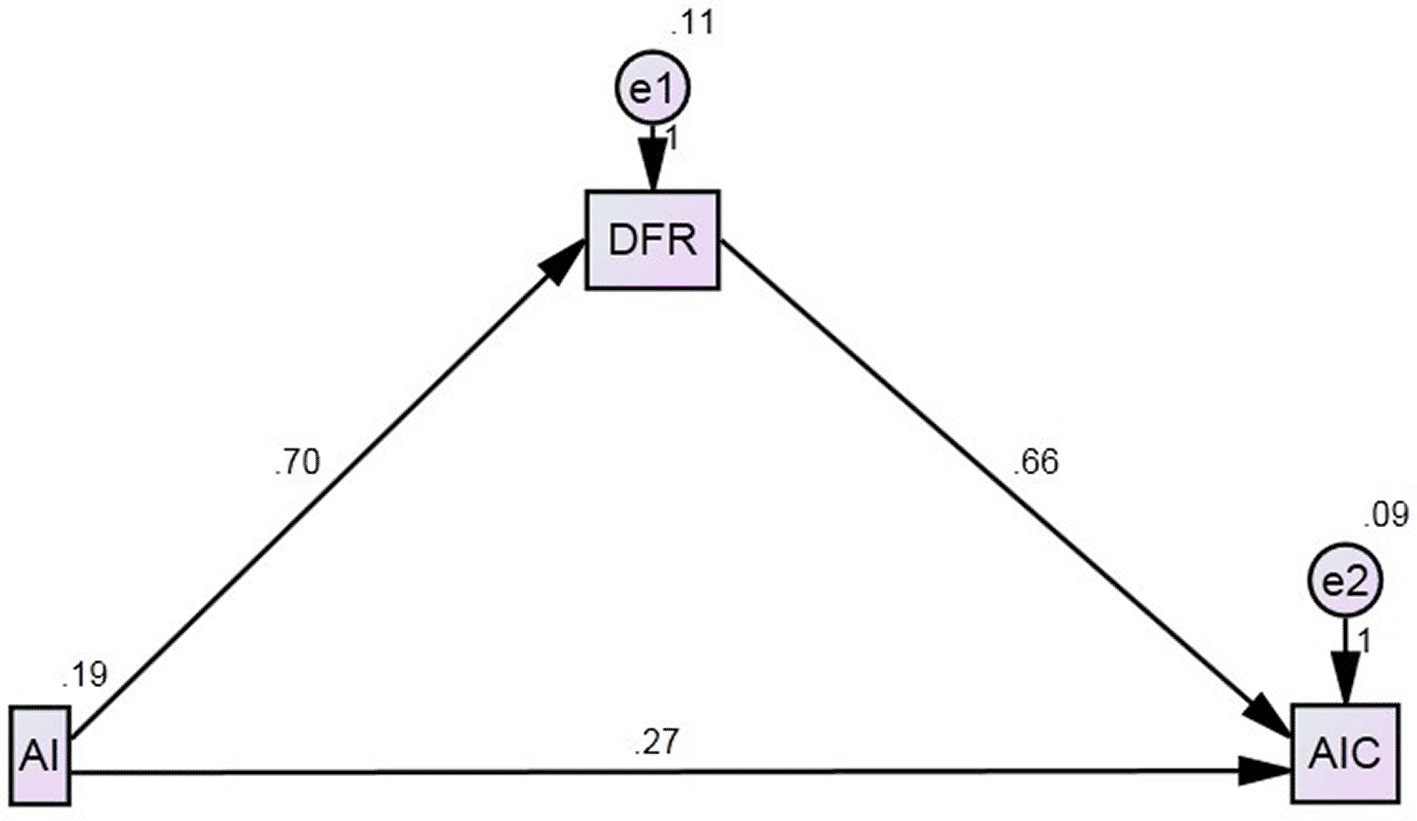
The following Table 8 shows the results of testing the fourth hypothesis:
| Regression Weights: (Group number 1 - Default model) | ||||||
|---|---|---|---|---|---|---|
| Path | Estimate | S.E. | C.R. | P | ||
| DFR | <−-- | AI | 0.695 | 0.061 | 11.394 | 0.000 |
| AIC | <−-- | DFR | 0.662 | 0.069 | 9.648 | 0.000 |
| AIC | <−-- | AI | 0.266 | 0.072 | 3.706 | 0.000 |
Because the P-value value for that path reached 0.000, which is less than the acceptable error value in the social sciences, which is 0.05, it can be observed from the results of the path analyses table above that the independent variable (artificial intelligence) still influences the mediating variable (digital financial reports). Similarly, the P-value value for that path reached 0.000, which is less than the The social sciences’ acceptable error threshold is 0.05, indicating that the mediating variable (digital financial reporting) still affects the dependent variable (comparability of accounting information). However, the effect of the independent variable on the dependent variable is still statistically significant because the p-value of this path was less than the social sciences’ acceptable error value of 0.05, at 0.00. Therefore, and according to (Baron & Kenny, 1986) the study hypothesis was accepted because the digital financial reporting variable partially mediates the effect of the independent variable (artificial intelligence) on the dependent variable (comparability of accounting information).
1- Artificial intelligence techniques facilitate transparent dealings with financial data, which contributes to increasing decision-makers confidence.
2- The use of artificial intelligence enhances the process of monitoring and processing financial operations.
3- Artificial intelligence contributes to reducing fraud and forgery by analyzing and providing accurate and rapid information.
4- In general, artificial intelligence contributes to improving the quality and reliability of digital financial reports, which enhances information comparability and provides added value to investors and financial departments.
5- There is a statistically significant relationship between artificial intelligence in digital financial reports and the comparability of accounting information, and digital financial reports positively impact this comparability.
6- The comparability of accounting information partially mediates the impact of artificial intelligence in digital financial reports.
1- Paying attention to the uses of information technology, especially artificial intelligence applications and means, in all sectors through courses, seminars, and educational workshops that introduce artificial intelligence and how to use it.
2- Enhancing the role of artificial intelligence in all economic, political, medical, and financial sectors.
3- Training leaders and employees to use and understand artificial intelligence techniques and applications to improve the administrative process.
4- Developing accounting programs, enhancing technological education, and encouraging and motivating accountants and auditors to develop in using artificial intelligence in performing their various tasks.
5- To ensure transparency and confidence in accounting information, it is necessary to document all processes of using artificial intelligence technologies in preparing digital financial reports, including details of the algorithms and models used.
6- Strategies should be developed to address ethical issues related to the use of artificial intelligence in accounting, such as data protection and privacy, to ensure the responsible and sustainable use of this technology.
| Views | Downloads | |
|---|---|---|
| F1000Research | - | - |
|
PubMed Central
Data from PMC are received and updated monthly.
|
- | - |
Provide sufficient details of any financial or non-financial competing interests to enable users to assess whether your comments might lead a reasonable person to question your impartiality. Consider the following examples, but note that this is not an exhaustive list:
Sign up for content alerts and receive a weekly or monthly email with all newly published articles
Already registered? Sign in
The email address should be the one you originally registered with F1000.
You registered with F1000 via Google, so we cannot reset your password.
To sign in, please click here.
If you still need help with your Google account password, please click here.
You registered with F1000 via Facebook, so we cannot reset your password.
To sign in, please click here.
If you still need help with your Facebook account password, please click here.
If your email address is registered with us, we will email you instructions to reset your password.
If you think you should have received this email but it has not arrived, please check your spam filters and/or contact for further assistance.

Comments on this article Comments (0)