Keywords
Analytics Capacity, Digital Health, DHIS2, Data Use, Superset

This article is included in the Health Services gateway.
Analytics Capacity, Digital Health, DHIS2, Data Use, Superset
A consistent health information system is the basis for decision-making in all areas of the health system. Globally, health systems are increasingly using timely, high-quality data to boost performance, improve accountability, and enhance service delivery. The World Health Organization (WHO) highlights the importance of integrating digital health systems and analytics into everyday services to accelerate progress toward the Sustainable Development Goals (SDGs) and Universal Health Coverage (UHC).1 Investment in electronic health records, the District Health Information System 2 (DHIS2), and national data platforms is increasing to support evidence-based decision-making and system responsiveness.2 In Sub-Saharan Africa, countries show different levels of digital health maturity. While many have adopted DHIS2, effective planning and real-time decision-making still face challenges. Only 23% of countries have developed cost-effective national digital health strategies backed by functional governance systems.3 Even though DHIS2 is in use in over 40 countries, challenges like poor interoperability, inadequate infrastructure, low technical capacity, and ineffective feedback loops continue to limit its full potential.4
Ethiopia has made notable progress in strengthening its digital health system through national strategies led by the Ministry of Health, Ethiopia. Initiatives like the scale-up of DHIS2, Superset dashboards, the Connected Woreda Strategy, and training programs have improved data visibility and system performance.5,6 However, gaps still exist at the sub-national level, including a weak data culture, limited analytical skills, and poor system integration, which hinder effective data use.7,8
Despite significant investments, there is still a gap between data availability and its regular use for decision-making, especially in low- and middle-income countries. While many countries adopted national health information platforms, fewer have operational data use systems at sub-national levels.9 Challenges like low data literacy, fragmented systems, and weak accountability restrict data use for planning and resource allocation.10 In Ethiopia, even though digital health platforms are widely implemented, their use varies significantly across regions and facilities. This underscores the need for a systematic review to understand data use practices and strengthen evidence-based decision-making throughout the health system.
Therefore, this baseline survey aimed to systematically evaluate the health data use, analytics capacity, and digital systems gaps in a nationally representative sample of Ethiopian regions, woredas, and facilities to inform improvements in data-driven decision-making at sub-national levels.
This study used a convergent parallel mixed-method that combined quantitative and qualitative approaches to evaluate system functionality, analytics capacity, and data use practices in the selected sub-national units in Ethiopia. Both statistical measurement and a deeper understanding of the barriers and facilitators of using digital health systems were employed. The assessment took place from August to September 2025.
The study was conducted in ten woredas or towns across six regions and administrative areas of Ethiopia. The study population included people and institutions involved in generating, managing, and using health information at various levels of the health system. A purposive sampling strategy ensured representation of urban, rural, and pastoralist settings.
All health facilities in the selected woredas were included for the quantitative part, along with one purposively selected woreda health office for each site, resulting in a total of 53 facilities and 9 health offices. One respondent per site, including data clerks, clinicians, and Health Management Information System (HMIS) officers, participated. For the qualitative part, one key informant from a health facility and one from a woreda health office were selected. Site selection considered factors like infrastructure readiness, data management capacity, geographic diversity, program relevance (HIV, TB, malaria), accessibility, and institutional readiness scores.11
Data collection involved tools such as a facility checklist, a structured survey, and KII guides. Desk reviews included national documents like the Digital Health Strategy and Health Information System (HIS) Roadmap.11 Standard tools, such as the WHO Digital Health Readiness Tool and national Performance of Routine Information System Management (PRISM) frameworks, were adjusted to evaluate infrastructure, system use, and workflows.12 The data were collected using Kobo Toolbox/ODK to gather information on digital tool use, data literacy, and reporting practices. The KIIs were used to examine governance, data culture, and interoperability challenges.
To ensure data quality, the team conducted training, supervision, digital data validation (using timestamps and GPS), and transcription verification. Quantitative data were analyzed using SPSS v27, while qualitative data were coded and thematically analyzed using ATLAS.ti v9.13 The findings of both methods were integrated through triangulation to provide a comprehensive understanding of the results.
A mixed-method approach was used, and evidence from both quantitative and qualitative methods was integrated, covering 10 zones across six regions of Ethiopia. A total of 62 participants, mostly data clerks, clinicians, and HMIS officers, were interviewed (53 from health facilities and 9 from woreda health offices).
In addition, 19 key informants from woreda offices and health centers took part in qualitative interviews. They were HMIS focal persons, Health Information Technicians (HITs), and disease program coordinators, and they were chosen based on their positions in health data management and program coordination.
Smartphones (58.1%) and laptops (43.6%) were less common among the 62 health facilities assessed than desktop computers (91.9%). Only 42.1% of the 463 functional computers available across 56 facilities were utilized to manage HIV, TB, malaria, and Resilient and Sustainable Systems for Health (RSSH) data. Despite 74.2% of facilities reporting internet access, only 45.7% had consistently reliable internet access ( Table 1).
The qualitative findings showed few and non-functional computers, forcing users to use personal devices and paper-based systems, and increased workload and errors. Participants emphasized improving key priority areas such as Information and Communication Technology (ICT) infrastructure, reliable internet, and power supply, Electronic Medical Record (EMR) implementation, DHIS2 strengthening, system integration, dedicated HIS units, adequate budgets, and facility improvements to enhance data use.
“As the digital infrastructure, we can face many challenges like computers, the Internet with high speed, and any devices” (Health Informatics, Male, 32, Health Center).
Capacity Building and Trainings
The assessment indicated that of the 3,192 Primary HealthCare (PHC) employees, only 107(3.4%) received data use and analytics training. The majority of training took place off the job through mentoring and experience sharing. Although 71.0% reported partner support, overall training coverage and practical capacity remained low ( Table 2).
Strong demand for training in data quality, DHIS2, HMIS indicators, data analysis and visualization tools, and digital systems (Electronic Community Health Information System-eCHIS, EMR) was revealed by qualitative findings. Along with refresher training and capacity building on dashboards and new technologies for HIV, TB, malaria, and RSSH programs, participants also emphasized mentoring, data triangulation, and program-specific tools.
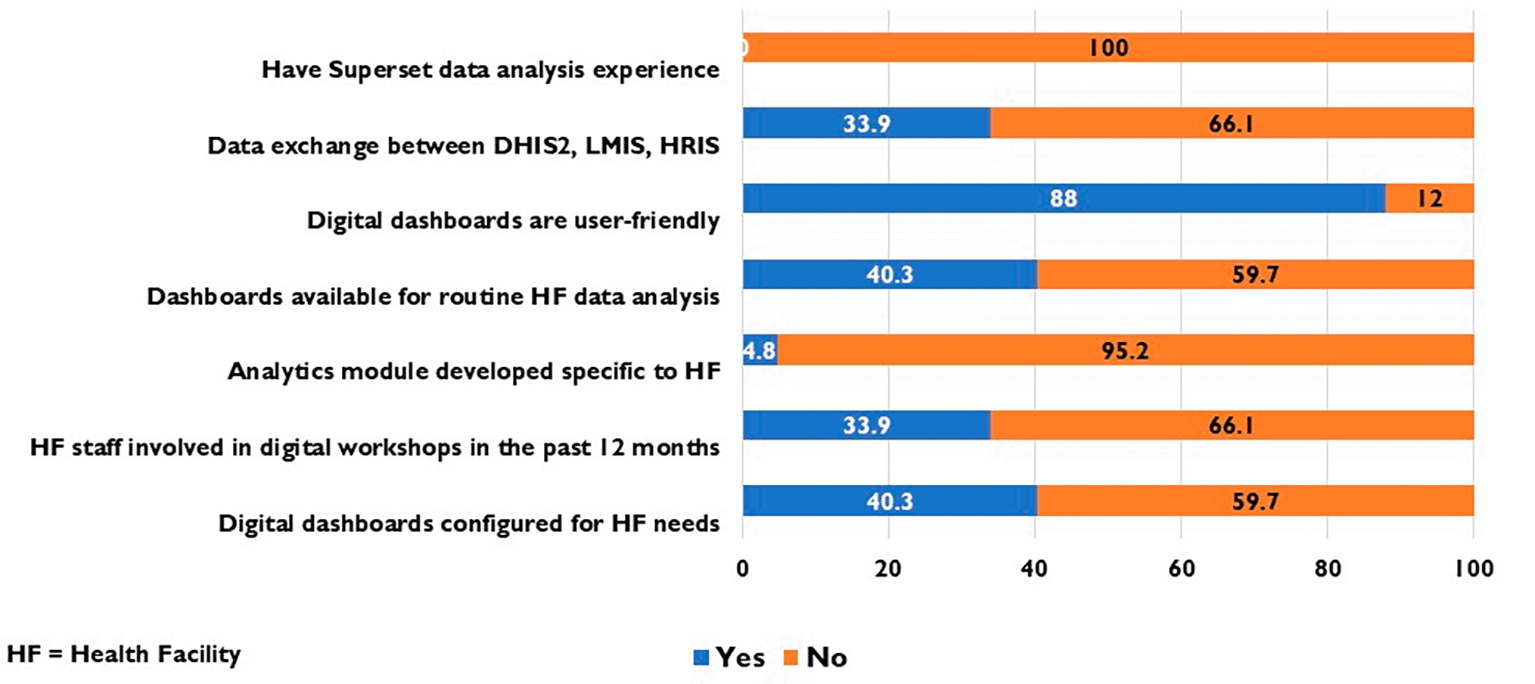
The assessment showed low digital analytics capacity across all facilities, with about 60.0% had no dashboards, while 66.0% of staff were not trained in digital systems. Limited facilities created analytical tools, and 33.9% were with limited data interoperability. There was little exposure to advanced tools like Apache Superset, indicating large gaps in digital capability ( Figure 1).
The Key Informant Interview (KII) participants also suggested additional digital systems and tools, including web-based platforms for HIV data, Excel and DHIS2 enhancements, Superset applications, SMART Care, Dagu system, Human Resource Information System (HRIS), Logistics Management Information System (LMIS), eCHIS, EMR, Tableau, and Power BI. They also recommended improved dashboards and new digital tools to support HIV, TB, malaria, and RSSH programs.
Institutional Capacity that supports Regular Data Analysis and Use
The assessment showed that 29.0% of facilities lacked focal persons, indicating uneven institutional capacity for data analysis and use. Best practices were not shared by the majority (87%.0). There are gaps in technical support and knowledge sharing for HIV, TB, malaria, and RSSH programs, as only roughly half received regular mentorship, mostly quarterly ( Table 3).
Qualitative findings showed that the Performance Monitoring Team’s (PMT’s) function is inconsistent, limiting effective data review and use. The members’ capacity gaps to interpret and apply data reduce its impact. To increase institutional capacity, participants stressed the need for improved infrastructure, digital tools, training, mentorship, and easier access to HMIS.
Availability of Data Systems (specifically for TB, HIV, Malaria, and RSSH)
The assessment showed that the DHIS2 was the widely available system, which 77.8% of facilities used online, but the rest continued to use paper records. Only 29.0% of facilities had access to the eCHIS system, but 55.6% of them used it offline, and only 21.0% of facilities had access to the LMIS (Dagu and related systems) system, but 53.8% of them used it online.
Ethiopia has fully adopted DHIS2 as its primary platform for managing routine health data. There are other systems, such as eCHIS, SMART Care, and EMR, but their functionality is limited, and their implementation is uneven. Interoperability between systems is still a challenge, hindering integrated data use across programs.
“Currently, we are using DHIS2, eCHIS, ART SmartCare, and EMR; however, these systems are not interoperable with each other. The challenges…inconsistency of figures from the systems” (Health Officer, Male, 31, Agulae Health Center).
Data Quality Status
The data quality status across facilities and health offices showed that content completeness was not achieved by 53.2% of facilities during the survey year and 54.8% in the previous year. Regarding representative completeness, 51.6% of facilities or woreda health offices did not conduct both assessments in the last year and during the survey year. Timeliness of reports was performed by only 64.5% of facilities for both the previous year and this year, while 48.4% of facilities conducted data accuracy checks for both years ( Figure 2).
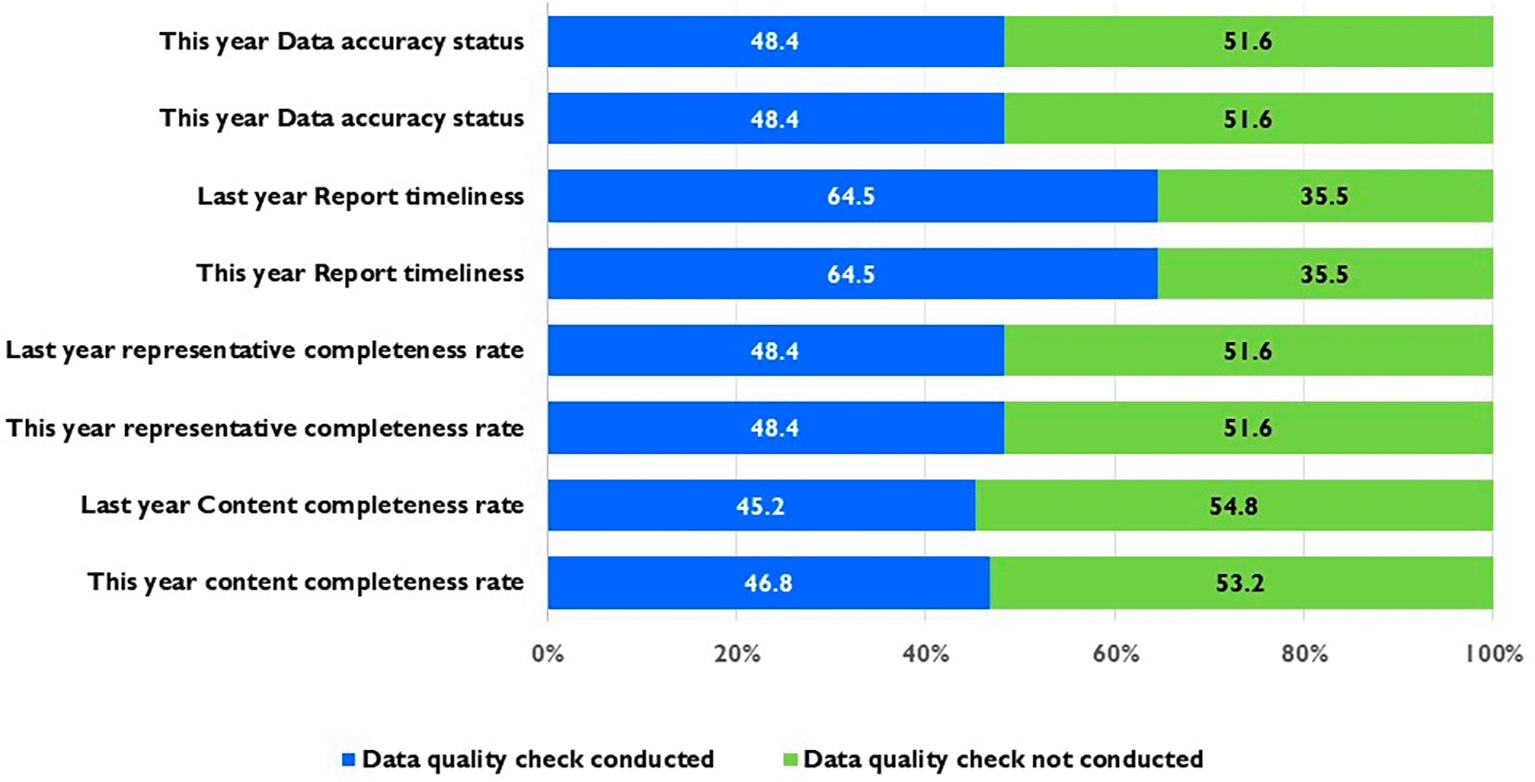
Data quality is still a major problem because of inconsistencies, errors, and a lack of capacitated staff, which makes people less likely to trust and use the data, even though some improvements were noted. Timeliness is a big challenge because delays at all levels make the data less useful. Poor infrastructure, limited staffing, workload, and weak connectivity are some of the root causes that affect the overall system performance.
“There are a lot of gaps, including timeliness of report, skill and knowledge gap among staff regarding supportive supervision, data management and analysis, and resource limitations. Additionally, the distance to health posts affects our timeliness in data collection and reporting. Because the Health Extension Workers submit their report to the Primary Health Care Unit (PHCU) via hard copy. So, it takes time to travel from the health posts to the health center” (Deputy Woreda Head, Male, 51).
Data Quality Assurance Practices
Most facilities (82.3%) conducted data quality audits (Lot Quality Assurance Sampling-LQAS), and routine cross-checking was practiced by 59.7% of facilities, while 67.7% of them conducted external supervision and validation, showing inconsistent data quality assurance practices ( Figure 3).
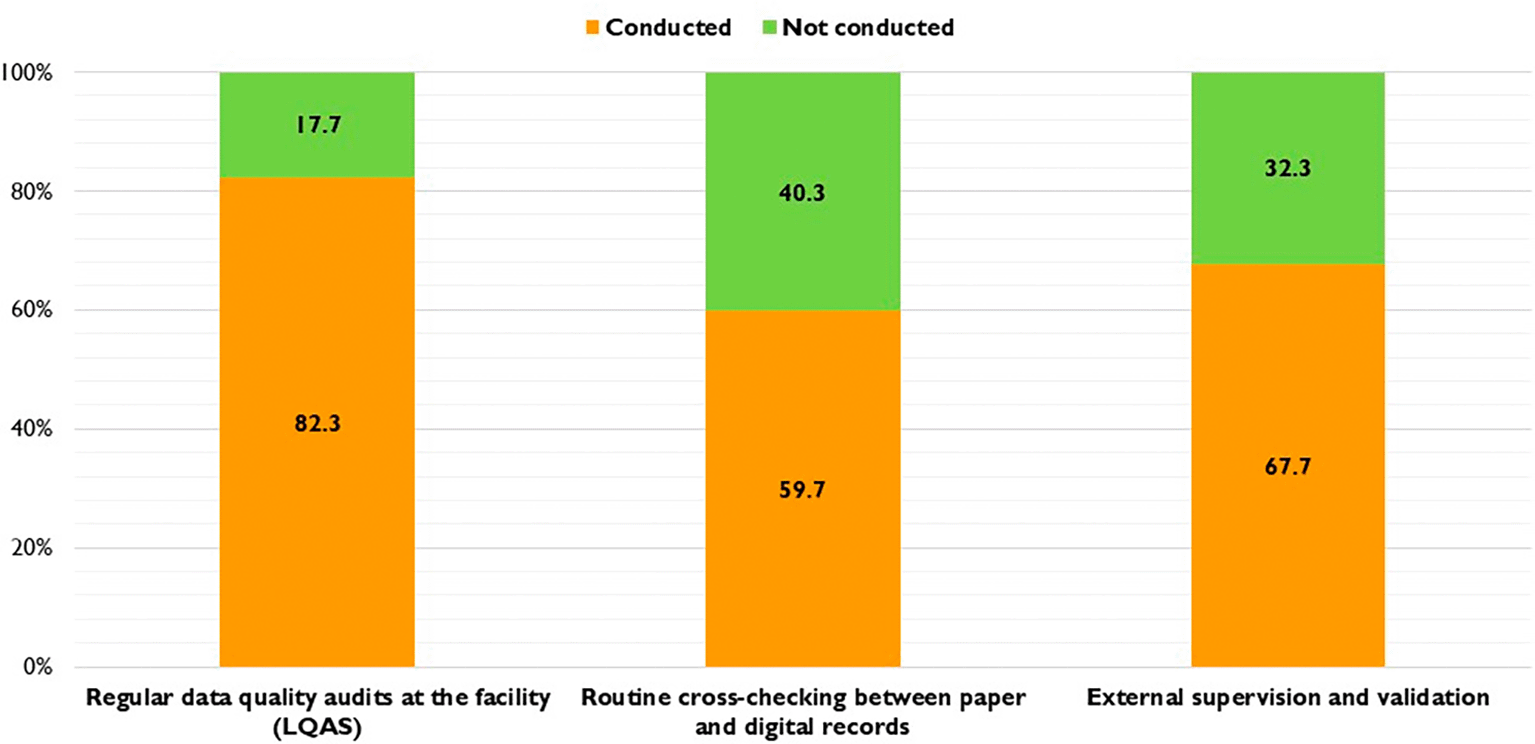
The qualitative findings indicate that though data quality assurance processes such as LQAS and Routine Data Quality Assessment (RDQA) are believed to support decision-making, their implementation varies across the facilities. Data reliability is affected by standardization gaps, even though there are improvements due to training and supervision. Routine data quality checks and promoting data use were identified as key to sustaining improvements in data quality.
“The data quality is better now. Previously, there was an issue with registration, but it has improved now. Based on the feedback we receive, we also provide feedback, but now the data quality is better” (HMIS Focal, Female, 26, 03 Health Center).
Challenges in Data Quality
Major challenges affected data quality, and the utilization of HIV, TB, Malaria, and RSSH programs for decision-making at health facility and woreda health office levels were identified through the assessment. These challenges include a shortage of skilled staff for data management, limited integration between data systems, frequent system downtime, limited internet access that affects the system, delays in data reporting, and incomplete data entry in DHIS2.
Digital Analytical Practices and Capacity
The findings revealed weak data use practices, with 54.8% of facilities not conducting gap analysis, while 66% did not perform data triangulation in the past 12 months using both routine and non-routine data sources. Only 51.6% facilities conducted disaggregated or monthly data analysis, and only 4.2% of the total workforce had digital data analysis skills and competency ( Table 4).
Data Triangulation
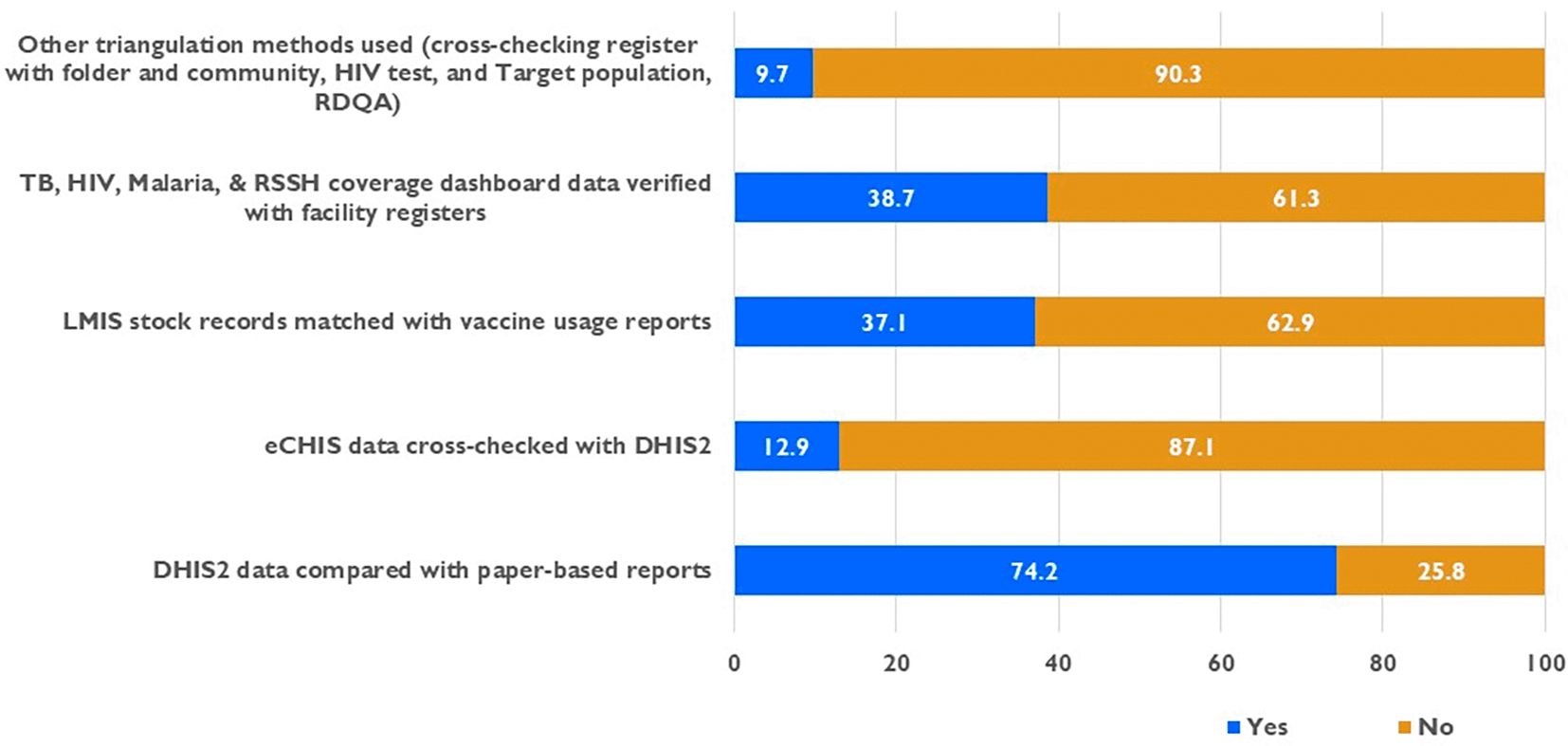
The baseline assessment showed that data triangulation practices varied across methods, with the most common 46(74.2%) facilities performing comparisons of DHIS2 data with paper-based reports, whereas 24 (38.7%) facilities conducted verification of TB, HIV, and malaria program coverage dashboard data with facility registers, followed by 37.1% facilities performing matching of LMIS stock records with vaccine usage report ( Figure 4).
Data use practice
The qualitative findings showed that some facilities effective data use though there are problems. Woredas identified TB cases, did a root cause analysis, and conducted screening. This targeted, data-driven intervention improved case detection and reduced transmission of the disease, indicating the importance of data for decision-making. Other woredas successfully used data in malaria control, where facilities mapped cases and targeted high-burden areas with community interventions, such as sanitation campaigns, bed net distribution, and health education. Regular data reviews showed a reduction in malaria incidence. These data-driven, geographically targeted strategies improved outcomes and resource efficiency.
“Yes, we have identified the breeding grounds for malaria in each village… We will go and clean the village. We will involve them in the use of bed nets… We have found a change. Malaria is very common. It used to be very common. But after we woke people up, it decreased a lot” (Malaria Focal, Female, 28, 07 Health Center).
Barriers to Program Data Use
The participants identified multiple barriers affecting effective data use for HIV, TB, Malaria, and RSSH programs at health facility and woreda levels. These challenges include human resource capacity, infrastructure, organizational systems, and financial constraints, alongside issues of data quality and reporting timeliness.
Human resource and technical capacity gaps were evident. Many facilities depend on a single HMIS/HIT staff member, which creates vulnerability during absences or turnovers. High staff turnover results in lost expertise and disrupts data quality. Frontline health workforces often lack skills in data analysis and interpretation, limiting their use of real-time data. Computer illiteracy and limited familiarity with systems like DHIS2 and DATIM further restrict performance, while a weak culture of data use continues.
“At my level, the technical capacity within the organization is somewhat limited, particularly when it comes to advanced data analysis and utilization. While we are capable of recording and inputting data accurately, the tasks of analyzing, reviewing, and effectively using the data are primarily handled by the HIT or the director” (BSc Nurse, Male, 28, Jimma Health Center).
Infrastructure challenges include weak internet connectivity, frequent power outages, and computer shortages, which force reliance on paper-based systems.
“As the digital infrastructure, we face many challenges like computers, the Internet with high speed, and any devices” (Health Informatics, Male, 32, Health Center).
Organizational problems like weak integration between systems, delayed reporting, weak feedback mechanisms, and weak coordination decrease data use. Financial issues, including insufficient budgets, supply shortages, and low support for supervision and data quality assessments, further declined general system performance.
Program data use enablers
Several enabling factors that could help with better utilization of data were pointed out by the respondents. These included the commitment of leadership, staff capability, the technology available, and external support. Leadership plays an important role in ensuring data quality and supportive supervision, among other practices that rely on the availability and utilization of data. Some staff-related enabling factors are motivation, willingness to embrace technology, access to capacity building on data utilization, quality, and computer skills. Technologies that can enable data utilization include the use of systems like DHIS2, EMR, and SmartCare, together with computers, the internet, and a power supply. Support from woreda offices and partners on training provision, experience sharing, supervision, and finance is also an important factor.
This baseline assessment used a mixed-methods design to evaluate preparedness, capacity, and gaps in digital health analytics, as well as the routine use of TB, HIV, malaria, and RSSH data for decision-making at district and health facility levels in Ethiopia. It was conducted in ten zones across six regions (Addis Ababa, Amhara, Oromia, Somali, Sidama, and Tigray), and it included 53 health facilities and 9 woreda health offices.
The findings highlight considerable challenges in infrastructure, human resource capacity, and data use practices at both facility and woreda levels. These challenges match global and regional evidence indicating that poor technical skills, poor infrastructure, and fragmented governance hinder effective data use for decision-making.1–4 Even though 91.9% of facilities had desktop computers, only 42.0% used them for managing program data, and 74.0% reported internet access, but only 46.0% had reliable connectivity. These challenges reflect experiences in other African contexts, where inconsistent electricity, insufficient ICT resources, and unstable internet hinder progress in digital health transformation.5,6 National strategies like the Connected Woreda Strategy and Health Sector Transformation Plan (HSTP-II) also note sustained issues with infrastructure and mentorship, especially in remote and pastoralist areas that rely on paper-based systems.7,8
Gaps in human capacity showed that only 3.4% of primary healthcare staff received training in data use and analytics in the past year, and just 4.2% showed competency in digital analysis. These results align with WHO and national assessments that identified data literacy and analytics skills as major obstacles.9,10,14,15 Inadequate exposure to DHIS2, Power BI, and Superset further restricts routine analysis. High staff attrition and reliance on a small number of Health Information Technicians worsen these issues, consistent with findings from other African countries.14,16
Only 53.0% facilities received regular mentorship, but 87.0% did not share best practices using subnational platforms. Qualitative findings suggest data are often seen as a reporting requirement rather than a decision-making tool. This reflects the PRISM framework, which focuses on behavioral and organizational factors influencing data use.17,18 Poor feedback mechanisms and a lack of incentives further reduce accountability for data quality and use.
Facilities that incorporated data use into PMT meetings showed improved outcomes, including targeted TB interventions and reduced malaria cases. These examples support global evidence that routine data use improves both data quality and organizational learning.19,20 However, the lack of systematic documentation limits the ability to scale such best practices.
System fragmentation is another major problem. Although 58.0% of facilities used DHIS2, only 29% implemented eCHIS and 21.0% LMIS, with just 33.9% reporting interoperability. The presence of multiple systems without integration hampers comprehensive analytics. This is consistent with World Health Organization – Regional Office for Africa (WHO-AFRO) findings, which state that many African countries lack interoperable digital architectures despite having various platforms.3,21 Enhancing Ethiopia’s National Enterprise Architecture and enforcing data governance frameworks is crucial.22,23
Data quality challenges also persist, with 82.0% of facilities conducting LQAS, but only 48.0% consistently verifying data accuracy. Reporting timeliness improved from 83.6% to 89.8%, showing progress, but gaps still exist. Qualitative findings link delays to poor connectivity, manual processes, and competing clinical demands. These results align with global evidence that data quality and timeliness remain major barriers to effective data use in lower-middle-income countries.24,25
This study has limitations. The use of a smaller sample size and a purposive sampling approach limits the ability to generalize the findings to other study settings. Self-reported data may also introduce social desirability bias, particularly in responses related to data analysis, quality, and use practices. Finally, the cross-sectional study design restricts the ability to draw cause-and-effect conclusions between interventions and outcomes.
The baseline assessment highlights the current status of infrastructure, human capacity, and data utilization practices in the TB, HIV, malaria, and RSSH programs across selected districts and facilities in Ethiopia. Findings reveal a lack of readiness for digital technologies, including poor connectivity, insufficient ICT resources, limited data analysis skills, weak system integration, and inadequate routine use of data in decision-making. These challenges hinder the development of a functional digital health environment.
To address these gaps, efforts must be taken that include the enhancement of human capacity through continuous training, mentoring, and coaching. Investments in ICT infrastructure, such as secure internet connectivity and power, are also vital, especially in remote areas. The data use culture should be strengthened through regular review meetings, and data quality assessment should be encouraged. System interoperability, adherence to data governance standards, and knowledge transfer through documentation and peer learning should also be considered.
Ethical approval was obtained from the Ethiopian Public Health Association (EPHA) with approved number EPHA/06/539/25, issued on 12/08/2025. Verbal consent was obtained from all participants, and regions and districts were informed. The verbal consent was chosen because it has a lower risk for the study participants, which mainly focused on the digital health implementation status in public health facilities.
• Main findings: Despite several digital health systems being implemented in the country, major gaps persist in data use, analytics capacity, digital infrastructure, system interoperability, data quality, and routine data use at the subnational levels.
• Added knowledge: This study gives mixed-methods evidence linking infrastructure, workforce capacity, and system integration gaps that impact the real-time health data use and decision-making at district and facility levels in the country.
• Global health impact for policy and action: The findings emphasize the need for coordinated efforts in digital infrastructure, workforce development, and system interoperability to enhance data-driven decision-making in resource-limited settings.
| Views | Downloads | |
|---|---|---|
| F1000Research | - | - |
|
PubMed Central
Data from PMC are received and updated monthly.
|
- | - |
Provide sufficient details of any financial or non-financial competing interests to enable users to assess whether your comments might lead a reasonable person to question your impartiality. Consider the following examples, but note that this is not an exhaustive list:
Sign up for content alerts and receive a weekly or monthly email with all newly published articles
Already registered? Sign in
The email address should be the one you originally registered with F1000.
You registered with F1000 via Google, so we cannot reset your password.
To sign in, please click here.
If you still need help with your Google account password, please click here.
You registered with F1000 via Facebook, so we cannot reset your password.
To sign in, please click here.
If you still need help with your Facebook account password, please click here.
If your email address is registered with us, we will email you instructions to reset your password.
If you think you should have received this email but it has not arrived, please check your spam filters and/or contact for further assistance.

Comments on this article Comments (0)