Keywords
Organizational Commitment; Organizational Climate; Organizational Citizenship Behavior; Employee Performance; Local Government Employees

Organizational Commitment; Organizational Climate; Organizational Citizenship Behavior; Employee Performance; Local Government Employees
Rapid changes in public service demands and increasing expectations for accountability and service quality have placed greater pressure on local government institutions to enhance employee performance beyond formal job requirements. In this context, discretionary and extra-role behaviors have become increasingly important for ensuring organizational effectiveness, particularly in bureaucratic environments where formal rules and procedures may limit flexibility. A growing stream of organizational behavior research suggests that employees’ psychological attachment to their organization, shared values, and perceptions of the workplace are crucial in determining these kinds of actions and performance results.1–4 Empirical evidence further indicates that supportive organizational cultures and climates encourage employees to voluntarily contribute additional effort, collaborate with colleagues, and adapt to organizational challenges, thereby enhancing overall performance5,6 However, within local government settings in developing countries, these behavioral dynamics remain insufficiently understood, creating a need for a more integrated examination of how internal organizational conditions and extra-role behavior interact to support employee performance in public administration contexts.
Although prior studies have extensively examined the relationships between OCM, OCU, OCL, and OCB, the existing literature remains fragmented and presents several unresolved issues. Most empirical research confirms that OCM is positively associated with OCB,2,7,8 while organizational culture and organizational climate are also found to significantly encourage discretionary and extra-role behaviors.3–5 However, these studies predominantly investigate each organizational factor separately or focus on limited organizational settings, such as private firms, educational institutions, or specific service sectors. Moreover, inconsistent findings have been reported, particularly in public-sector contexts, where organizational structures, bureaucratic procedures, and institutional constraints may alter employee behavioral responses.9 As a result, there is still limited empirical evidence that integrates organizational commitment, culture, and climate within a unified analytical framework to explain how these organizational conditions jointly shape OCB among public-sector employees, particularly in developing countries.
Furthermore, although OCB is widely theorized as a key behavioral mechanism linking organizational conditions to employee performance,6,10 its mediating role has not been sufficiently examined in local government settings. Existing studies largely focus on the direct effects of OCM, OCU, or OCL on employee performance11–13, while only a limited number explicitly test OCB as an intervening variable. Even when mediation is considered, research often concentrates on a single antecedent or is conducted outside the public administration context, leaving uncertainty regarding the robustness and generalizability of the findings. Consequently, there remains a clear research gap in systematically examining both the direct and indirect effects of OCM, OCU, and OCL on employee performance through OCB within local government institutions.
Addressing this gap is particularly important in the Indonesian public sector, where enhancing extra-role behavior is essential for improving service quality, organizational effectiveness, and overall employee performance. Therefore, this study aims to comprehensively examine the effects of OCM, OCU, and OCL on OCB and Indonesian local government employees’ performance. Specifically, the study investigates the direct effects of o OCM, OCU, and OCL on OCB, as well as their direct effects on employee performance. In addition, this study seeks to analyze the mediating role of OCB in the relationships between OCM, OCU, OCL and the performance of local government employees. By adopting this approach, the study aims to generate a more comprehensive understanding of how extra-role behaviour contributes to enhancing the work-related performance of Indonesia’s local government workforce.
This study contributes to the literature by addressing these gaps through an integrated analytical framework that simultaneously examines OCM, OCU, and OCL, while explicitly positioning OCB as a central mediating mechanism. First, this study extends organizational behavior and social exchange theory by moving beyond fragmented approaches and demonstrating how multiple organizational conditions jointly shape discretionary behavior and employee performance, consistent with the arguments of.14,10 Second, by empirically testing the mediating role of OCB, this study responds to prior calls to clarify the behavioral pathways through which organizational factors are translated into performance outcomes.6,15 Third, drawing on the commitment framework of1 and the cultural perspective of,16 this study provides evidence that psychological attachment, shared values, and perceived work environments operate collectively rather than independently in fostering extra-role behavior. Finally, by focusing specifically on Indonesia’s local government employees, this study enriches the relatively limited public-sector literature in developing country contexts, where bureaucratic structures and institutional constraints may shape employee behavioral responses differently from those in private-sector organizations.17,2
This study is anchored in organizational behavior theory, which emphasizes that employees’ attitudes, perceptions, and psychological attachments to their work environment play a crucial role in shaping discretionary behaviors and performance outcomes. Organizational commitment refers to an employee’s psychological bond with the organization and is widely regarded as a critical antecedent of positive work attitudes and behaviors, including organizational citizenship behavior.18 Organizational culture, conceptualized as a collection of shared beliefs, values, and conventions that direct behavior inside an organization, functions as a cognitive framework that aids employees in understanding their tasks and motivates them to exceed official job responsibilities.16 Likewise, organizational atmosphere encompasses employees’ collective perceptions of organizational procedures, practices, policies, and which significantly influence motivation, engagement, and the willingness to display extra-role behaviors.17 OCB, as conceptualized by,15 refers to discretionary behaviors that are not formally rewarded yet contribute substantially to organizational effectiveness. Despite being perceived as a contemporary construct, the intellectual origins of OCB may be traced to the 1930s, with formal acknowledgment arising in the late 1970s and early 1980s.19 Since then, OCB has become one of the most extensively studied constructs in business and management research, highlighting the critical role of employee well-being and discretionary behavior in enhancing organizational performance and effectiveness. Nevertheless, prior studies have reported conceptual overlaps and inconsistent findings, with scholars sometimes using different terms to describe similar extra-role behaviors.19 From a social exchange perspective, when employees perceive strong organizational commitment, a supportive culture, and a positive organizational climate, they are more likely to reciprocate through OCB, which subsequently enhances individual performance10,14 Accordingly, this study theoretically positions OCB as a central mediating mechanism through which OCM, OCU, and OCL are translated into improved performance among local government employees in Indonesia.
OCM is consistently identified in the literature as a key antecedent of OCM because it reflects employees’ psychological attachment, loyalty, and identification with organizational goals.1 conceptualize organizational commitment as comprising continuance, normative, and affective dimensions, with affective commitment playing a particularly important role in motivating voluntary and extra-role behaviors.2 demonstrates that organizational commitment is positively associated with OCB in both public and private sector organizations, with affective commitment showing the strongest relationship, especially in public institutions where interpersonal citizenship behaviors are more salient. Empirical evidence from Indonesia and other contexts further supports this relationship, demonstrating that workers with greater organizational commitment are more inclined to support coworkers, adhere to organizational policies, and go above and above the call of duty.7,8,20,21 Studies in public service and health sector organizations confirm that organizational commitment significantly enhances OCB, either directly or as part of broader motivational mechanisms involving job satisfaction and organizational support.22,23 However, because of contextual constraints like limited sample sizes or particular organizational settings, several research indicate little or adverse impacts,9 the dominant body of evidence supports the view that committed employees tend to reciprocate favorable organizational conditions through discretionary behaviors, consistent with social exchange theory. Related research underscores the fact that employees’ propensity to participate in citizenship behaviors that improve organizational effectiveness is bolstered by psychological attachment, trust, and perceived organizational support.24–26
OCU is also widely acknowledged as a critical driver of OCB because it shapes shared norms, values, and behavioral expectations that encourage employees to perform beyond formal job requirements. OCB reflects voluntary and extra-role behaviors that support organizational effectiveness, and a robust corporate culture provides the social and psychological foundation that motivates such behaviors.3 Empirical evidence consistently demonstrates that OCU has a positive and significant effect on OCB across various organizational contexts, including manufacturing firms, schools, public institutions, SMEs, and service organizations.3,4,27 A supportive and adaptive culture fosters employee engagement, learning orientation, and shared commitment, which in turn stimulate employees’ willingness to help colleagues, abide by the standards of the organization, and contribute voluntarily to organizational goals.28 Studies further show that organizational culture enhances OCB both indirectly and directly through mechanisms such as job satisfaction, employee engagement, competence development, and learning organization practices.29,30 In public sector settings, a well-embedded OCU strengthens cooperative behavior and reinforces citizenship behavior as a means of improving service quality and organizational performance.4,31 Evidence from Indonesian organizations also suggests that governance practices, institutional environments, and organizational systems interact with organizational culture in shaping employee behavior and discretionary effort.32,33
Because it reflects employees’ common views of organizational rules, leadership support, communication styles, and work environment, OCL is also seen as a significant predecessor of OBC. Prior empirical studies consistently demonstrate that a positive OCL fosters employees’ willingness to engage in voluntary, extra-role behaviors that support organizational effectiveness.34 provide early and robust evidence that OCL accounts for a significant portion of the variance in OCB, emphasizing the importance of supervisory support, feedback, autonomy, participation, and role clarity. More recent studies reinforce these findings across diverse contexts.5 show that organizational climate positively affects OCB by promoting open communication, managerial support, and inclusive policies, even in multicultural work environments. Similar evidence is reported by35 in the Malaysian private sector, where a supportive climate characterized by effective leadership and communication is associated with higher levels of altruism, civic virtue, and conscientiousness.36 further demonstrate that employee participation and training emphasis significantly enhance OCB, highlighting the relevance of social exchange mechanisms in non-Western contexts. Studies in financial and public-oriented organizations also suggest that favorable internal conditions and supportive environments strengthen positive employee attitudes and discretionary behaviors.37 Although other studies focus on broader institutional, governance, and environmental factors,38–41 their results collectively emphasize the significance of supportive organizational systems and climates in the development of proactive and value-adding behaviors.
Beyond their influence on discretionary behaviors, OCM, OCU, OCL are also widely regarded as key determinants of employee performance. OCM is indicative of the attachment, loyalty, and willingness to devote effort toward achieving organizational goals. Empirical evidence from public sector contexts strongly supports its positive relationship with performance.11 demonstrate that organizational commitment positively affects employee performance in local government institutions, both directly and indirectly through OCB.12 similarly find that organizational commitment enhances performance at the Aceh High Prosecutor’s Office, with OCB strengthening the commitment–performance linkage. Consistent findings are reported by,42 who show that emotionally committed employees are more likely to exceed performance expectations during organizational transformation. Evidence from higher education and service organizations further confirms the positive association between OCM and employee performance,43,44 while broader human resource perspectives emphasize the roles of affective and normative commitment in shaping performance outcomes.45 More recent studies underline that leadership practices and supportive work environments strengthen OCM, which in turn enhances employee performance,46 reinforcing commitment as a foundation for sustained productivity and adaptability.47
OCU is acknowledged as a critical factor in the development of employee performance, as it influences the shared behavioral norms, values, and expectations that guide employees in the execution of their responsibilities. Empirical evidence consistently supports a positive relationship between OCU and employee performance across sectors and countries.13 demonstrates that organizational culture enhances in-role performance both indirectly and directly through OCB.48 similarly show that OCU positively affects employee performance, even when leadership style and OCB exhibit weaker direct effects. Studies in energy and power sectors further confirm that strong organizational cultures foster higher performance by encouraging cooperation, responsibility, and adaptive behavior.49 Evidence from Indonesian organizations also supports this relationship,50,51 while broader syntheses emphasize that cohesive cultures promoting collaboration, trust, and value alignment consistently enhance motivation, engagement, and performance.52 Although some studies focus on innovation and intellectual capital rather than performance directly, they nonetheless underscore the importance of internal values and systems as foundations for effective performance outcomes.53–55
Similarly, OCL is widely recognized as a critical determinant of employee performance because it reflects employees’ perceptions of leadership practices, communication quality, support systems, and the overall work environment. Empirical evidence shows that a positive OCL enhances performance indirectly and directly through psychological and behavioral mechanisms.56 demonstrate that OCL improves organizational effectiveness, with employee performance serving as a key mediating mechanism and job satisfaction strengthening this relationship.57 report similar findings, showing that OCL positively affects employee performance both indirectly and directly through reduced work stress. Studies in private-sector contexts further confirm that supportive climates increase motivation, satisfaction, and efficiency, leading to higher performance outcomes.58,59 Broader theoretical syntheses emphasize that climates characterized by open communication, managerial support, and fair reward systems play a central role in improving motivation and performance,60 while evidence from work-environment studies highlights the mediating role of job satisfaction.61 Research on digital transformation underscores the significance of conducive internal environments in maintaining high performance.62
Finally, OCB is broadly regarded as a critical behavioral mechanism that enables employees to convert favorable organizational conditions into improved performance by participating in discretionary, extra-role activities. Across organizational contexts, empirical evidence overwhelmingly corroborates a positive correlation between OCB and employee performance.6 demonstrate that multiple OCB dimensions, including sportsmanship, courtesy, civic virtue, and altruism, significantly improve employee performance.49 similarly show that OCB enhances performance in the power sector by supporting organizational effectiveness and adaptability. In Indonesia,51 confirm that OCB positively affects performance alongside leadership and organizational culture, while42 find that employees engaging in OCB tend to exceed performance expectations during organizational transformation. Evidence from the public sector further reinforces this relationship, as63 show that OCB not only directly improves performance but also mediates the effects of competence and OCM. Although48 report an insignificant direct effect in a specific context, their findings still emphasize the importance of fostering OCB within supportive organizational environments. Complementary insights from64,65 further highlight the performance relevance of discretionary and knowledge-related behaviors.
Based on the proposed conceptual framework ( Figure 1) and theoretical foundations, the following hypotheses are developed:
OCM has a positive effect on OCB among local government employees in Indonesia.
OCU has a positive effect on OCB among local government employees in Indonesia.
OCL has a positive effect on OCB among local government employees in Indonesia.
OCM has a positive effect on employee performance among local government employees in Indonesia.
OCU has a positive effect on employee performance among local government employees in Indonesia.
OCL has a positive effect on employee performance among local government employees in Indonesia.
OCB has a positive effect on employee performance among local government employees in Indonesia.
OCB mediates the relationship between OCM and employee performance among local government employees in Indonesia.
OCB mediates the relationship between OCU and employee performance among local government employees in Indonesia.
OCB mediates the relationship between OCL and employee performance among local government employees in Indonesia.
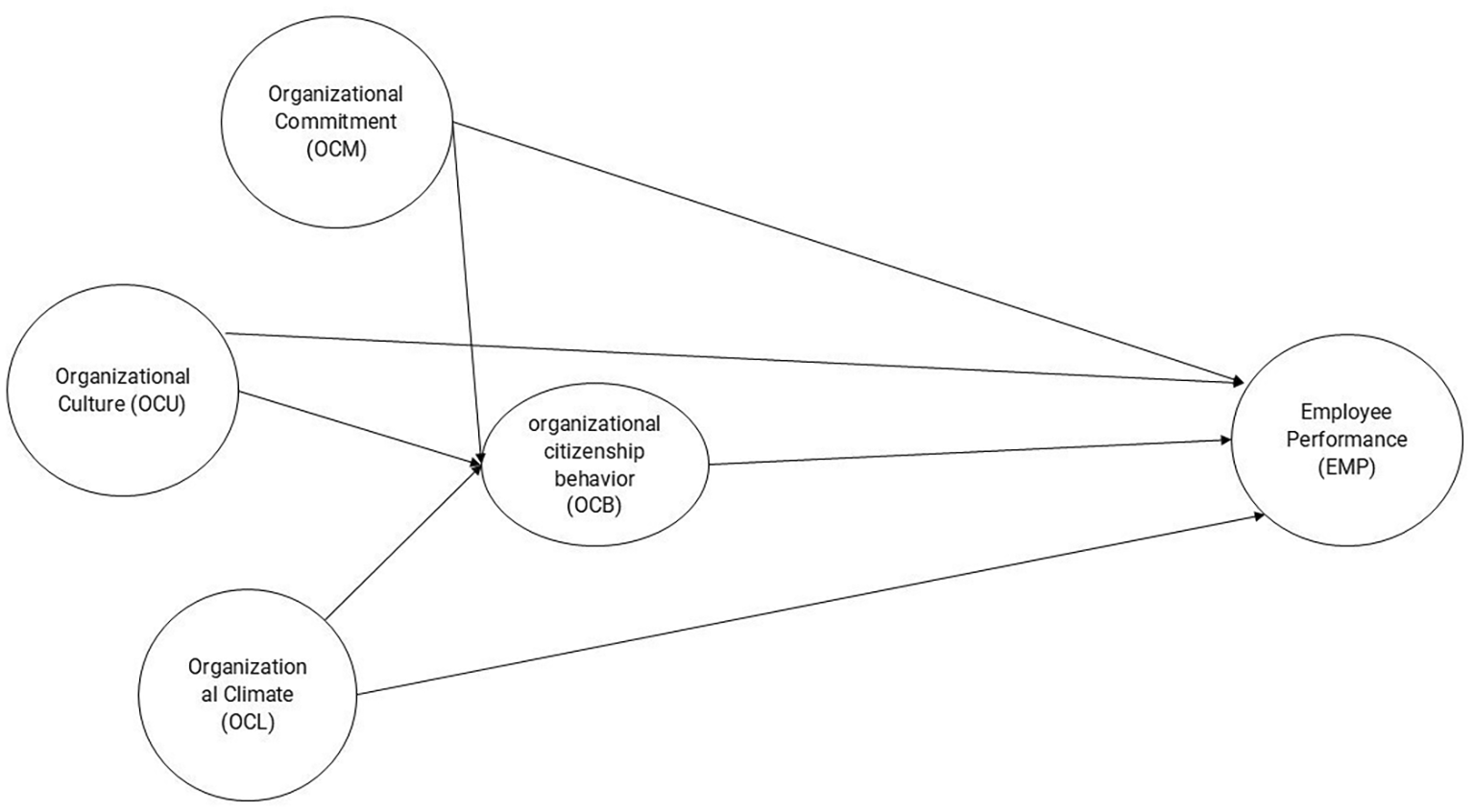
This paper adopts a quantitative approach with the primary objective of testing theory through the collection of numerical data analyzed using statistical techniques, thereby allowing for generalization to the target population. Based on its research objectives, the study is classified as descriptive and causal, as it seeks to describe empirical conditions while explaining cause and effect relationships among the variables examined. The data consist of primary data collected through questionnaire surveys and direct interviews with respondents and relevant officials, which were subsequently tabulated for further analysis. The study was conducted in Kutai Kartanegara Regency, Tenggarong, East Kalimantan, Indonesia, selected due to its role as a key regional administrative center, with the research period spanning from December 2025 to April 2026.
The research model was developed to examine both indirect and direct effects of OCM, OCU, and OCL, on employee performance, with OCB serving as a mediating variable. The study population comprises civil servants employed by the Kutai Kartanegara Regency Government, Indonesia. Sample selection was conducted using a purposive sampling technique, whereby respondents were chosen based on predefined criteria relevant to the research objectives. Based on these criteria, a total of 240 respondents were included through questionnaire distribution, achieving a 100 percent response rate. The majority of respondents were male (161 individuals; 67%) and predominantly within the 41–45 age group (156 respondents; 65%). In terms of educational background, most respondents held a Diploma IV qualification (166 respondents; 69%), while those with medium to long tenure (16–20 years) constituted the largest proportion of the sample. Verbal informed consent was obtained from all participants prior to data collection. Verbal consent was considered appropriate because the survey was conducted online/anonymously and no personally identifiable information was collected.
This study operationalizes five main variables, namely OCM, OCU, OCL, and OCB, and employee performance, each measured using indicators that have been widely validated in prior literature. Affective connection, loyalty, identification with the organization’s objectives, willingness to go above and above for the organization, perceived duty to stay with the organization, and long-term dedication to organizational success are all used to evaluate OCM.1,2,7 Organizational culture is operationalized through shared behavioral expectations and norms, values and beliefs, organizational rituals and symbols, and supportive work practices and organizational traditions.3,4,16 OCL is measured based on leadership support and managerial style, quality of communication, perceived fairness and clarity of policies, work environment and support systems, as well as employee participation and involvement.5,17,35 OCB is captured through four core dimensions, namely sportsmanship, civic virtue, conscientiousness, and altruism, which reflect employees’ voluntary and extra-role actions that enhance the efficacy of an organization8,10,15 Employee performance is evaluated through the quality of work output, timeliness and efficiency in task completion, work competence and skills application, initiative and responsibility, and the achievement of work targets and objectives.11,12 Data were collected using a structured questionnaire as the primary instrument to capture respondents’ perceptions, complemented by interviews and direct observations to enhance data accuracy The five-point Likert scale, which ranges from strongly disagree to strongly concur, was implemented for all measurement items. The data collection procedure began with the pilot testing and design of the questionnaire to ensure item clarity and relevance, followed by research socialization and the distribution of questionnaires, either directly or online, to civil servants in the Kutai Kartanegara Regency Government, Indonesia, with sufficient time provided for respondents to complete the survey.
Data analysis in this study was performed using PLS-SEM or Partial Least Squares Structural Equation Modeling, which is well suited for analyzing complex relationships among multiple latent variables and for testing mediation effects. This method is consistent with the objectives of the study, which aim to examine both the direct effects of OCM, OCU, OCL on OCB and employee performance, as well as the indirect effects of these organizational factors on performance through OCB. Testing the measurement model to guarantee the convergent validity, reliability, and discriminant validity of all constructs comprised the initial phase. Following the measurement model’s compliance with the necessary standards, the second stage focused on assessing the structural model to test the proposed hypotheses and to estimate the strength and significance of the relationships among variables.66
To ensure reliable statistical conclusions, this study employed a bootstrapping technique using 5,000 subsamples to estimate standard errors, t-values, and p-values for all structural relationships, including the indirect effects associated with OCB. The model was further evaluated by examining the coefficient of determination (R2) to assess the extent to which OCB and employee performance were explained by the model, along with predictive relevance (Q2) to determine its forecasting accuracy. Additionally, effect size (f2) measures were computed to evaluate the relative influence of OCM, OCU, and OCL on both OCB and employee performance. Hypotheses were deemed supported when the t-statistic exceeded the critical value of 1.96 and the corresponding p-value was less than 0.05. Overall, this analytical approach strengthens the rigor of hypothesis testing and offers comprehensive empirical support for the role of extra-role behavior in improving the performance of Indonesia’s local government workforce.
Table 1 presents a comprehensive assessment of the measurement model focusing on convergent validity internal consistency reliability and indicator reliability. The findings show that each measurement item exhibits high standardized factor loadings, with values between 0.700 and 0.897. These values surpass the commonly accepted cutoff of 0.70, indicating that all indicators sufficiently capture and reflect their respective latent constructs. OCM is measured by five indicators with loadings between 0.700 and 0.781, reflecting employees’ affective attachment, loyalty, willingness to exert extra effort, perceived obligation, and long term commitment to organizational success. OCU shows particularly high indicator loadings ranging from 0.743 to 0.897, suggesting that shared values, norms, organizational rituals, and supportive work practices are consistently perceived by respondents. OCL is also reliably operationalized with indicator loadings between 0.720 and 0.812, capturing leadership support, communication quality, policy clarity, work environment, and employee involvement. Furthermore, OBC is robustly represented by five dimensions including courtesy, sportsmanship, civic virtue, conscientiousness, and altruism, with loadings ranging from 0.755 to 0.819. Employee Performance is adequately reflected by indicators related to quality of work output, timeliness and efficiency, work competence, initiative, responsibility, and achievement of work targets, with loadings between 0.708 and 0.843. In terms of internal consistency reliability, Composite Reliability values range from 0.860 to 0.892 and Cronbach’s Alpha values range from 0.715 to 0.848, indicating satisfactory reliability for all constructs. In addition, all Average Variance Extracted values exceed the threshold of 0.50, confirming adequate convergent validity.
As reported in Table 2, the structural model exhibits a satisfactory level of explanatory capacity for the endogenous variables based on the R2 and adjusted R2 statistics. The analysis indicates that OCB attains an R2 value of 0.484, with an adjusted R2 of 0.475, implying that nearly half of the variation in OCB is accounted for by the explanatory constructs specified in the model. This magnitude of explained variance reflects a moderate model strength and highlights the meaningful contribution of OCM, OCU, and OCL in influencing employees’ citizenship-related behaviors. In addition, the results for Employee Performance reveal an R2 of 0.531 and an adjusted R2 of 0.525, demonstrating that slightly more than half of the variability in employee performance is captured by the set of predictor variables.
| Construct | R2 | R2 Adjusted |
|---|---|---|
| Organizational Behavior Citizenship (OBC) | 0.484 | 0.475 |
| Employee Performance (EMP) | 0.531 | 0.525 |
The outcomes of the direct hypothesis testing are summarized in Table 3, which reports the estimated path coefficients along with their corresponding t-values and significance levels. The analysis reveals that organizational commitment to mission (OCM) exerts a positive and statistically significant influence on organizational citizenship behavior (OBC), as indicated by a coefficient of 0.344 (t = 4.117, p < 0.001), thereby lending support to H1. Likewise, organizational commitment to users (OCU) is found to have a significant positive effect on OBC (β = 0.133, t = 2.464, p = 0.014), confirming H2. A similar pattern is observed for organizational commitment to learning (OCL), which demonstrates a strong positive association with OBC (β = 0.351, t = 4.891, p < 0.001), supporting H3.
In contrast, neither OCM nor OCU shows a statistically significant direct relationship with employee performance (EMP), as reflected by coefficients of 0.144 (t = 1.817, p = 0.069) and 0.131 (t = 1.812, p = 0.070), respectively, leading to the non-support of H4 and H5. Conversely, OCL exhibits a significant positive effect on EMP (β = 0.231, t = 2.672, p = 0.008), providing empirical support for H6. Additionally, OBC is shown to be a significant predictor of EMP, with a path coefficient of 0.306 (t = 3.788, p < 0.001), thereby confirming H7. Taken together, these findings indicate that OCM and OCU mainly operate through OBC, while OCL and OBC emerge as key determinants of employee performance.
The mediation analysis results are reported in Table 4 and focus on how organizational citizenship behavior (OBC) conveys the effects of organizational commitment dimensions, namely OCM, OCU, and OCL, on employee performance (EMP). The findings reveal that the indirect relationship between OCM and EMP through OBC is positive and statistically significant, with a path coefficient of 0.105, a t-value of 2.860, and a p-value of 0.004, thereby supporting hypothesis H8. In contrast, the indirect effect of OCU on EMP via OBC is not statistically significant, as indicated by a coefficient of 0.041, a t-value of 1.859, and a p-value of 0.063, leading to the rejection of hypothesis H9.
| Hypothesis | Path Coefficient | t-Statistic | P-Value | Hypothesis Testing | |
|---|---|---|---|---|---|
| H8 | OCM → OBC → EMP | 0.105 | 2.860 | 0.004 | Accepted |
| H9 | OCU → OBC → EMP | 0.041 | 1.859 | 0.063 | Rejected |
| H10 | OCL → OBC → EMP | 0.108 | 3.037 | 0.002 | Accepted |
Conversely, OCL demonstrates a significant positive indirect effect on EMP through OBC, with a path coefficient of 0.108, a t-statistic of 3.037, and a p-value of 0.002, which confirms hypothesis H10. Taken together, these results suggest that OBC serves as a partial mediator in the relationships between OCM and EMP as well as between OCL and EMP, emphasizing the important role of employees’ citizenship behaviors in translating organizational factors into performance outcomes
The results indicate that OCM has a significant positive effect on OBC but does not directly influence EMP. This finding is consistent with organizational behavior theory, which emphasizes that employees’ psychological attachment to the organization motivates discretionary behaviors.18 Prior empirical evidence shows that committed employees are more inclined to participate in extra-role activities that support organizational effectiveness.7,20 The lack of a direct effect on EMP suggests that OCM influences performance primarily through OBC, highlighting OBC as a mediating mechanism in line with social exchange theory, where employees reciprocate favorable organizational conditions through voluntary behaviors.10,14
OCU significantly affects OBC, whereas its direct impact on EMP is not significant. According to organizational behavior theory, culture, defined as norms, beliefs, and shared values, provides a framework that pushes workers to go above and beyond the requirements of their jobs.16 A supportive and well-aligned culture fosters employee engagement and voluntary cooperation, which enhances OBC.3,27 The indirect effect of OCU on EMP through OBC emphasizes that cultural influences on performance operate largely by motivating discretionary behaviors rather than directly affecting output, reinforcing the role of OBC as a mediator.
OCL is found to significantly influence both OBC and EMP directly, as well as indirectly via OBC. Organizational behavior theory suggests that climate reflects employees’ shared procedures, perceptions of policies, and practices, which shape motivation, engagement, and willingness to perform extra-role behaviors.17 Positive climates characterized by supportive leadership, effective communication, and clear policies enhance both discretionary behaviors and task performance.5,34,35 These findings confirm that OCL functions as both a direct driver of performance and an enabler of OBC, which mediates the translation of favorable climate conditions into enhanced performance outcomes.
Finally, OBC is confirmed as a significant predictor of EMP and mediates the effects of OCM and OCL on performance. As conceptualized by,15 OBC comprises discretionary behaviors that are not formally rewarded yet contribute substantially to organizational effectiveness. The mediation results support the theoretical position that when employees perceive strong commitment, supportive culture, and positive climate, they reciprocate through OBC, which in turn enhances performance.10,14,19 These findings underscore the importance of fostering OBC among local government employees, suggesting that managerial strategies targeting commitment, culture, and climate will indirectly improve performance by encouraging voluntary, value-adding behaviors.
This study aimed to examine the effects of OCM, OCU, and OCL on EMP, with OBC serving as a mediating mechanism. Using a quantitative approach with survey data from local government employees in Indonesia, the study employed structural equation modeling to test both indirect and direct relationships. The findings indicate that OCM and OCU significantly enhance OBC, while OCL significantly affects both OBC and EMP. Furthermore, OBC was found to mediate the relationships between OCM and EMP as well as between OCL and EMP, highlighting the critical role of discretionary behaviors in translating organizational factors into performance outcomes. These results demonstrate the theoretical relevance of organizational behavior constructs in shaping employee attitudes and behaviors that contribute to organizational effectiveness.
The findings have practical implications for local government management, suggesting that strategies aimed at strengthening employees’ commitment, fostering a supportive organizational culture, and improving organizational climate can enhance both discretionary behaviors and performance outcomes. Policymakers should prioritize initiatives that build psychological attachment, clarify values and norms, and create participatory and supportive work environments to stimulate OBC. Nevertheless, this study has certain limitations that may restrict how broadly the findings may be applied, such as its cross-sectional design and concentration on a single regional environment. Future research is recommended to employ longitudinal designs, explore additional mediators or moderators such as job satisfaction or leadership practices, and extend the analysis to other sectors or countries to further validate the mechanisms linking organizational factors, OCB, and performance.
Prior to the commencement of data collection, ethical clearance was granted by the Ethics Committee of the Faculty of Economics and Business, Mulawarman University (Ethical Approval No. 28/2025). As the institutional body responsible for overseeing research involving human subjects, the committee reviewed and approved all study procedures. The research was carried out in compliance with applicable ethical principles and institutional regulations governing human participant research. Informed consent was obtained in writing from all respondents before participation. Participation was entirely voluntary, and measures were implemented to ensure the confidentiality, privacy, and anonymity of all participants throughout the study.
The authors declare their approval for publication in F1000Research and confirm that this manuscript is an original contribution that has neither been published previously nor submitted simultaneously to another journal. Any personal data reported in this study were included only after obtaining informed consent from the relevant individuals, and documentation of consent is retained and available upon reasonable request.
| Views | Downloads | |
|---|---|---|
| F1000Research | - | - |
|
PubMed Central
Data from PMC are received and updated monthly.
|
- | - |
Provide sufficient details of any financial or non-financial competing interests to enable users to assess whether your comments might lead a reasonable person to question your impartiality. Consider the following examples, but note that this is not an exhaustive list:
Sign up for content alerts and receive a weekly or monthly email with all newly published articles
Already registered? Sign in
The email address should be the one you originally registered with F1000.
You registered with F1000 via Google, so we cannot reset your password.
To sign in, please click here.
If you still need help with your Google account password, please click here.
You registered with F1000 via Facebook, so we cannot reset your password.
To sign in, please click here.
If you still need help with your Facebook account password, please click here.
If your email address is registered with us, we will email you instructions to reset your password.
If you think you should have received this email but it has not arrived, please check your spam filters and/or contact for further assistance.

Comments on this article Comments (0)