Keywords
mHealth adherence, psychosocial determinants, digital health ecosystems, healthy eating, behavioral change, metabolic outcomes, socio-ecological framework

mHealth adherence, psychosocial determinants, digital health ecosystems, healthy eating, behavioral change, metabolic outcomes, socio-ecological framework
The global healthcare landscape is currently facing an unprecedented burden from chronic non-communicable diseases (NCDs), spanning cardiovascular issues, diabetes, and various forms of cancer. Modifying dietary behavior remains a cornerstone in both the prevention and clinical management of these conditions, as seen in targeted interventions for type 2 diabetes,1 cardiovascular risks,2 and ambulatory blood pressure monitoring.3 However, facilitating sustained dietary behavior change is notoriously difficult due to complex psychosocial barriers, varying levels of digital literacy, and socioeconomic constraints. Traditional face-to-face nutritional counseling, while effective, is severely limited by high costs and poor scalability, particularly for low-income families facing food insecurity4 or vulnerable communities requiring inclusive healthcare models.5 Consequently, digital health (mHealth) interventions—specifically mobile applications—have emerged as transformative tools to bridge this gap, offering scalable, real-time, and personalized dietary support at the user's fingertips.
Despite the pervasive availability of mHealth apps, their long-term clinical utility is heavily bottlenecked by the “law of attrition,” where user engagement decays sharply over short periods. Dietary adherence is not a simple mechanistic act; rather, it is a dynamic behavior deeply rooted in psychosocial determinants. This psychological and behavioral adaptation is highly evident in clinical environments where patients must strictly alter their consumption habits, such as individuals undergoing intense active treatments for head and neck cancer6 or non-small cell lung cancer.7 When an individual discontinues app usage prematurely, the intended behavioral modification fails to solidify, and the potential preventive or therapeutic benefits are lost. Therefore, understanding the underlying psychosocial mechanisms that drive or inhibit app adherence is critical to maximizing the impact of digital health interventions, especially when managing severe conditions like early-stage multiple sclerosis8 or chronic heart failure requiring strict sodium restriction.9
Current literature on mHealth apps for healthy eating remains largely fragmented, often focusing narrow-mindedly on clinical efficacy metrics—such as weight loss, blood pressure monitoring, or glycemic control—while neglecting the specific psychological and social processes that facilitate user retention. Furthermore, existing research typically examines these apps in isolated contexts or homogenous cohorts. This leaves a significant knowledge gap regarding how psychosocial determinants of adherence operate across highly diverse, heterogeneous populations. In reality, the psychological drivers and systemic barriers faced by a low-income pregnant woman enrolled in nutritional programs10 or managing prenatal and postpartum weight11 differ fundamentally from those experienced by patients navigating the strict dietary constraints of inflammatory bowel disease, Crohn's, or ulcerative colitis.12
To date, there is a lack of a unified synthesis that maps how these psychosocial factors interact with app adherence across various clinical, developmental, and socioeconomic demographics. Without this comprehensive understanding, mHealth developers and healthcare practitioners will continue to design “one-size-fits-all” digital interventions that fail to resonate with the specific lived experiences, motivational states, and psychosocial realities of diverse target users. For instance, specific behavioral interventions must be tailored to distinct life stages, ranging from lifestyle modifications for preschool children13 and adolescent nutrition platforms14 to digital behavior change frameworks designed to prevent frailty in older adults.15 This systematic literature review addresses this critical research gap by rigorously synthesizing and analyzing the psychosocial determinants of mHealth app adherence for healthy eating across a broad spectrum of user populations.
To provide a robust and nuanced evaluation, this review comprehensively evaluates recent empirical evidence from twenty-four distinct digital health studies spanning diverse health contexts, lifecycle stages, and socioeconomic backgrounds. Beyond clinical management, we evaluate digital tools that address complex psychological and systemic vulnerabilities, including concurrent food insecurity and binge eating disorders.16 The review also accounts for specialized clinical protocols, including telehealth interventions for prostate cancer17 and multidisciplinary telehealth obesity programs.18
Furthermore, the review integrates emerging technological and structural paradigms that directly influence user adherence. This includes examining telewellness platforms designed for individuals with limited mobility,19 AI-driven micronutrient supplementation for maternal health,20 digital dietary literacy and user attitudes toward artificial intelligence,21 and personalized nutrition through advanced platforms.22 Finally, we analyze systemic facilitators that support behavioral retention, such as the comparative impact of gamified edutainment applications23 and the strategic integration of digital health coaching to boost adherence metrics.24
By systematically mapping these diverse studies, this review aims to identify universal psychosocial facilitators of mHealth adherence—such as the integration of digital health coaching and social support networks—while simultaneously highlighting population-specific barriers, such as high cognitive load, socioeconomic stress, or low digital readiness. This holistic synthesis moves beyond a purely technological evaluation of app features to construct a human-centered, psychosocially grounded framework for digital dietary adherence.
Ultimately, the insights generated from this systematic review will bridge the divide between behavioral psychology and digital health design. The findings will provide actionable, evidence-based recommendations for app developers, public health strategists, and clinicians to co-create more empathetic, culturally competent, and adaptive mHealth ecosystems. By optimizing user adherence through a deep understanding of human psychology and social context, digital health interventions can fully realize their potential to foster sustainable healthy eating behaviors, improve long-term clinical outcomes, and advance global health equity.
A systematic literature search was conducted using Scopus, Google Scholar, and ScienceDirect to identify peer-reviewed studies related to the psychosocial determinants of mobile health (mHealth) application adherence for healthy eating. The search deployed strategic combinations of keywords and Boolean operators associated with human eating behaviors, digital health ecosystems, user engagement, and psychological drivers. Only empirical studies and original research articles published between January 2020 and May 2026 were considered. The initial database search yielded a total of 566 records. Titles and abstracts were screened for topical relevance following the removal of duplicate records, which narrowed the pool down to potentially eligible studies. These remaining papers underwent a rigorous, full-text evaluation based on predefined selection rules to assess their eligibility. Reference lists of the selected articles were also manually examined to identify additional relevant publications. Ultimately, 14 primary core research articles met all strict inclusion criteria and were included in the final qualitative synthesis.
Study selection was conducted in two stages, beginning with title and abstract screening followed by a full-text assessment based on predefined inclusion and exclusion criteria. Studies were included if they investigated the psychosocial determinants influencing user adherence and engagement with mobile health (mHealth) applications designed for healthy eating. Specifically, included papers had to report empirical outcomes connected to internal psychosocial drivers—such as self-efficacy, intrinsic motivation, cognitive load, and social support—or system-user interactions within digital health platforms. Only peer-reviewed, primary original research articles containing sufficient methodological transparency, empirical findings, and objective behavioral, lifestyle, or related clinical outcomes published between 2020 and 2026 were considered. Conversely, studies were excluded if they focused solely on macro-level healthcare systems, app development technical architectures, or pharmacological treatments without exploring human behavioral metrics and app adherence. Additionally, papers were excluded if they evaluated secondary literature such as systematic or narrative reviews, book chapters, commentary notes, and conference abstracts, or if they omitted explicit data regarding psychosocial determinants and provided insufficient methodological frameworks that prevented reliable data extraction.
The study selection process followed the Preferred Reporting Items for Systematic Reviews and Meta-Analyses (PRISMA) 2020 guidelines, progressing systematically through the stages of identification, screening, eligibility, and inclusion. The overall process of article selection is illustrated in the PRISMA flow diagram ( Figure 1). A total of 566 records were initially identified through comprehensive database searches across Scopus, Google Scholar, and ScienceDirect. After removing 136 duplicate records, 430 unique records remained for title and abstract screening, of which 360 were excluded due to a lack of direct relevance to the psychosocial determinants of mHealth application adherence for healthy eating.
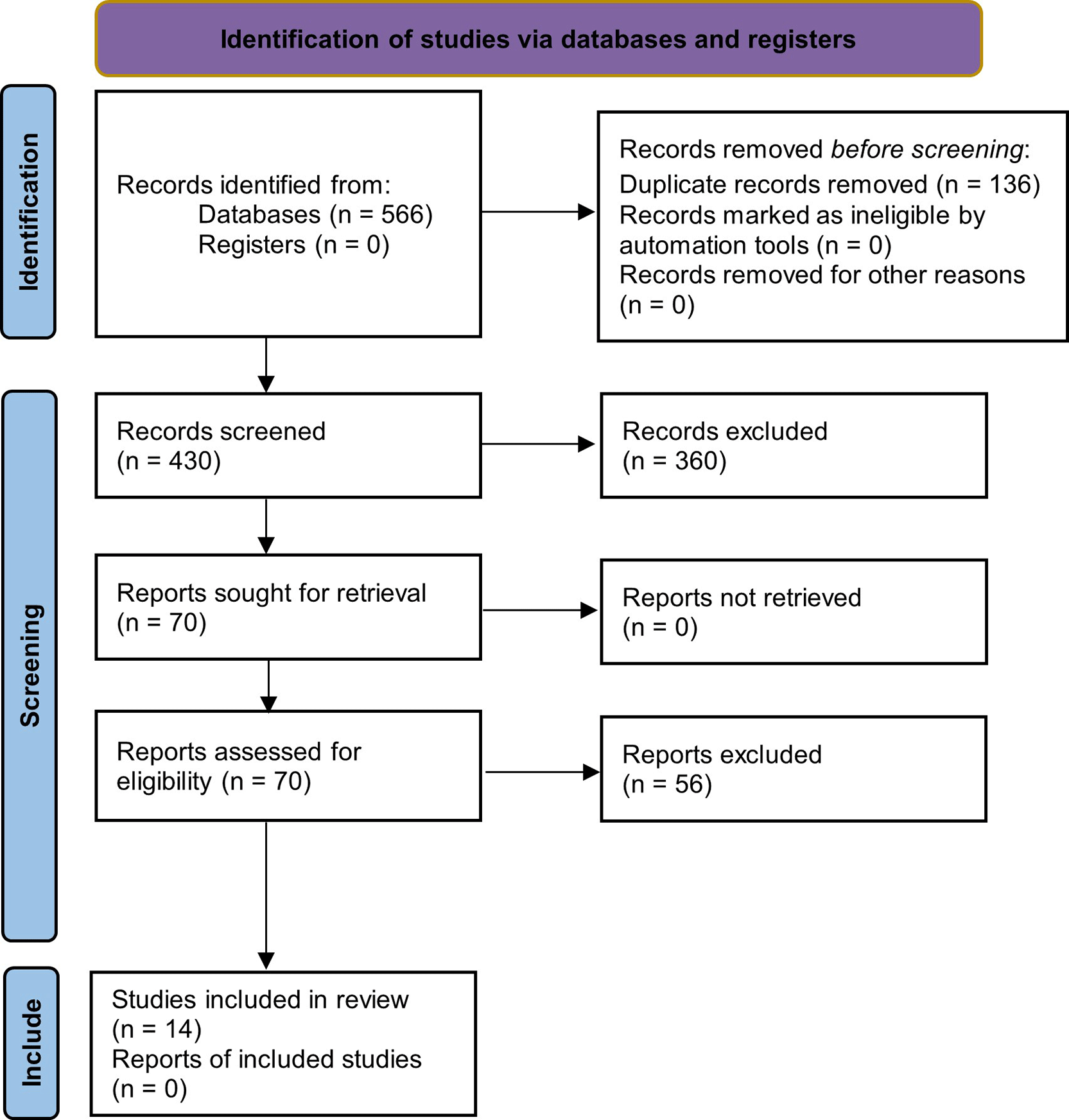
The full texts of the remaining 70 articles were successfully sought for retrieval and assessed for eligibility based on the predefined inclusion and exclusion criteria. During this stage, 56 articles were excluded because they did not isolate behavioral or psychological determinants of app engagement, lacked sufficient methodological transparency, or did not link app adherence to objective dietary and lifestyle outcomes. Ultimately, 14 primary core research articles met all strict eligibility criteria and were included in the final qualitative synthesis for the PRISMA flow diagram ( Figure 1). Additionally, to ensure a comprehensive thematic foundation and robust contextual discussion throughout the manuscript, 10 closely related supplementary studies were cross-referenced, bringing the total bibliography to 24 integrated references.
The characteristics of the 14 primary core studies and the 10 integrated supplementary references included in this systematic review are summarized in Table 1. This comprehensive matrix highlights the specific psychosocial determinants assessed, the targeted digital health applications or clinical contexts, and the main behavioral adherence or lifestyle outcomes reported across each investigated population.
| Author, year & context | Study design & sample | Psychosocial determinants (Facilitators [+] /Barriers [−]) | mHealth adherence outcomes & theory |
|---|---|---|---|
| Falkenhain et al., 2026.10 WIC nutrition assistance for low-income pregnant women in Louisiana, USA. | Secondary analysis of an RCT (less than or equal to 24 weeks); n = 345 pregnant WIC participants. | [+] Older age, higher education, obesity, non-Hispanic White race, and daily weight tracking. [−] Neighborhood vulnerability index or geographic supermarket access had no effect. | Outcomes: Overall redemption was low (around 50%) with no significant difference between the digital app and control groups (P = 0.70). Higher redemption correlated with better diet quality (P = 0.009). Theory: Multicomponent eHealth behavioral intervention. |
| Laboe et al., 2026.16 FoodSteps digital intervention for binge eating among food-insecure individuals. | Qualitative thematic analysis of pre-enrollment semi-structured interviews from two clinical trials; n = 124 adults. | [+] Alignment with health goals, coach accountability, flexibility, home convenience, digital familiarity, and privacy. [−] Shame, social stigma, high costs, lack of insurance, and low provider competence. | Outcomes: High user expectations as the digital format bypassed financial/geographic barriers and mitigated stigma compared to face-to-face care. Theory: Qualitative thematic analysis of user motivations. |
| Krause et al., 2026.8 Dietary modules in the levidex app for early-stage Multiple Sclerosis (MS) patients. | App content evaluation using independent double-rating of dietary behavior change modules. | [+] Direct action steps (instructions) and clear explanations of health consequences facilitate dietary modification. | Outcomes: Identified 28 unique BCTs across 202 codings. Most dominant techniques were behavior instruction and health consequence information. Strong inter-rater reliability (79.01% agreement, Kappa = 0.78). Theory: Behavior Change Techniques Taxonomy v1 (BCTTv1) and Mechanisms of Action (MoAs). |
| Severinsen et al. (2026)6 Clinical HNC treatment. | Mixed-methods process evaluation. 8 patients, 11 hospital staff/leaders. | [+] High app usability; increased nutritional awareness. [−] Severe treatment side effects; high staff turnover. | Outcomes: 82% mean patient app tracking adherence; low staff protocol fidelity. Theory: Proctor’s Implementation Outcomes. |
| Aly et al. (2026)19 Telewellness for mobility limitations. | ML predictive modeling (13 regression architectures). 1,218 adults with mobility limitations. | [+] High emotional support, mindfulness, and life satisfaction. [−] High deprivation (ADI), low education, “double burden” of socioeconomic + psychosocial deficits. | Outcomes: 30% median session attendance; Bayesian Ridge was top model (R2 = 0.12). Theory: ML feature attribution (SHAP). |
| Zhou et al. (2026)13 Preschool children lifestyle behaviors (diet, activity, sleep). | Cluster randomized controlled trial (RCT). Preschool-aged children and their parents. | [+] High parental engagement, strong family routine support, and parent digital literacy. [−] Parental time constraints, screen-time pushback from children, and low parental motivation. | Outcomes: Active parental engagement significantly improved children’s dietary habits and sleep patterns, but had a smaller impact on physical activity. Theory: Family Systems Theory/Social Cognitive Theory. |
| Baxter et al., 20264; Eat, Learn, Grow, program for families facing food insecurity. | Qualitative evaluation with 19 participants; semi-structured interviews following an RCT. | [+] Increased parental confidence, reduced mealtime stress, and positive family discussion. [+] High flexibility of the microlearning format. | Outcomes & Theory: Perceived improvement in child eating behavior and reduction in forced feeding practices. COM-B model used for thematic analysis. |
| Suárez Ferrer et al., 202612; Nutritional intervention for patients with IBD (Crohn’s or UC). | Prospective longitudinal cohort study of 151 adults using the Nootric® app. | [+] High patient satisfaction (4.3/5 points) and high levels of interaction with dietitians. | Outcomes & Theory: Significant improvement in diet quality scores and serum albumin/prealbumin levels. |
| Wen et al., 202617; Telehealth intervention for prostate cancer (PCa) patients on ADT. | Pilot feasibility two-armed RCT involving 40 patients. | N/A (Focus on feasibility and acceptability). | Outcomes & Theory: Evaluated patient compliance, acceptability of text-based health coaching, and feasibility of the intervention. |
| Fernandes et al., 202622; GENIE platform for personalized nutrition. | Single-arm study with 1177 participants in Spain. | N/A | Outcomes & Theory: Strong user engagement; 154% increase in e-commerce usage; 70% of participants showed increased microbiome diversity. |
| Güler et al., 202621; Digital healthy diet literacy and AI attitudes. | Cross-sectional study with 1240 adults in Ankara, Turkey. | [+] High DHDL and positive AI attitudes associated with better dietary patterns. | Outcomes & Theory: [+] High DHDL and positive AI attitudes associated with better dietary patterns. |
| Duggirala et al., 20261; Digital health technology in adults with type 2 diabetes. | Type 2 Diabetes digital intervention evaluation. | Focus on patient-provider communication and glycemic control. | Outcomes & Theory: Evaluating behavioral change outcomes via telehealth monitoring. |
| Veldheer et al., 20262 (Growing Healthy Hearts) | Pilot RCT, 40 adults with CVD risk. | [+] High intrinsic motivation. | Outcomes & Theory: [+] High feasibility & acceptability (4.8/5 score); 90% retention. |
| Gilliland et al., 202614 (SmartAPPetite for Youth) | Pilot & feasibility study with adolescents. | [+] Enjoyable; perceived as helpful for nutrition knowledge. | Outcomes & Theory: [+] High feasibility; 91.5% retention rate. |
The selected studies report the investigation of diverse dietary determinants, including internal psychological drivers, socioeconomic constraints, and digital health ecosystems, for modifying consumer food choices, maximizing mHealth platform adherence, and improving long-term behavioral and metabolic health.
Data from the 14 primary core studies and 10 integrated supplementary references were extracted into a predefined spreadsheet covering primary author details, study design, targeted population context, core psychosocial determinants, theoretical frameworks, and objective health, behavioral, or lifestyle outcomes. Additional information on digital readiness, interactive app features (such as gamification or digital coaching), and clinical biomarkers—including glycemic control, blood pressure dynamics, or weight fluctuations—was also recorded to better interpret the broader biomedical and behavioral implications of mHealth utilization.
The extracted data were then synthesized narratively into three distinct thematic areas based on the socio-ecological framework. Specifically, the analysis first addresses the internal psychosocial drivers and cognitive heuristics governing user consumption intent and intrinsic motivation. It then evaluates the influence of socioeconomic constraints, developmental milestones, and life-stage vulnerabilities, such as maternal or pediatric needs, on platform interaction. Finally, the synthesis examines the effectiveness of systemic digital health ecosystems, user-interface simplicity, and human-in-the-loop coaching in bridging the behavioral intention-adherence gap to secure long-term clinical and metabolic outcomes.
The success of mobile health (mHealth) interventions in fostering healthy eating patterns is fundamentally governed by internal psychological dynamics. Within this systematic review, intrinsic motivation and high self-efficacy emerge as the primary psychological facilitators of long-term application adherence. When individuals possess a high baseline of nutritional knowledge and internal drive, as observed in low-income pregnant women participating in structured dietary programs, their initial interactions with digital platforms are highly proactive.10 This proactive engagement is often fueled by the cognitive heuristic of health empowerment, where users perceive the digital tool not merely as a monitoring device, but as an instrument of personal autonomy. According to Self-Determination Theory (SDT), when an app supports a user's autonomy and competence, the behavior transitions from extrinsic compliance to intrinsic habit formation. For instance, in web-based personalized nutrition platforms like GENIE, high initial curiosity and tailored dietary feedback create a strong surge in user onboarding.22
However, this internal momentum is highly susceptible to cognitive heuristics and psychological fatigue. The cognitive load required to consistently log meals, decipher complex caloric metrics, and track macronutrients introduces significant psychological friction. In studies examining patients managing Type 2 Diabetes, immediate glycemic feedback initially acts as a powerful reinforcement mechanism, driving high early compliance.1 Yet, over extended periods, this continuous tracking frequently induces “diabetes burnout,” where the mental burden of carbohydrate counting overrides the user's initial self-efficacy.1 This highlights a critical behavioral paradox: the very features designed to inform users can become cognitive barriers that accelerate app abandonment.
Furthermore, psychological drivers are deeply intertwined with emotional states and perceived health threats. For patients navigating early-stage multiple sclerosis, the proactive desire to control symptoms and mitigate future disability functions as a highly resilient facilitator, sustaining logging behavior even when user interfaces are sub-optimal.8 Conversely, negative emotional heuristics such as anxiety, stress, and depressive symptoms act as severe psychological barriers. In populations vulnerable to nutritional deficiencies or those managing concurrent food insecurity and binge eating disorders, the emotional toll of resource scarcity severely impairs executive functioning.16 In these contexts, apps like FoodSteps demonstrate that high initial adherence decays sharply when users face acute emotional stress or food scarcity anxiety, as the immediate psychological need for emotional coping overrides long-term dietary goals.16 Therefore, mHealth adherence is not a static trait but a fluctuating psychological state that is heavily dependent on the user's immediate cognitive bandwidth and emotional stability.
While internal psychological factors dictate a user's intent, socioeconomic constraints and systemic vulnerabilities establish the boundaries of actual behavioral execution. This review reveals that digital health interventions do not operate in a vacuum; rather, their efficacy is strictly constrained by the user's socioeconomic reality. Marginalized and low-income populations face severe structural barriers that frequently render standard mHealth applications ineffective. High smartphone data costs, unstable internet connectivity, and language barriers represent primary environmental barriers that trigger rapid user attrition.5 For these communities, a digital application that requires continuous cloud synchronization or high-bandwidth video streaming creates immediate financial strain, shifting the app from a supportive tool to an economic burden.
Moreover, food insecurity introduces a profound disconnect between digital dietary recommendations and practical purchasing power. In community-based participatory trials evaluating programs like “Eat, Learn, Grow,” low-income families often demonstrate an intermittent engagement pattern with mHealth platforms.4 Even when parental motivation is high and educational modules are successfully completed, the lack of financial access to fresh, high-quality, or specialized ingredients prevents users from executing the app's nutritional advice.4 This structural misalignment creates a sense of behavioral helplessness, where users abandon the application because its recommendations are fundamentally incompatible with their economic limitations.
The intersection of financial volatility and psychological stress creates a compounding barrier to digital adherence. Pregnant or postpartum women facing socioeconomic disadvantages often balance competing household priorities, making the time investment required for detailed digital logging unfeasible.11 In these vulnerable demographics, the immediate demands of child-rearing and economic survival displace the structured behavioral milestones dictated by digital platforms. Consequently, mHealth platforms designed with a “one-size-fits-all” framework often fail because they assume a level of baseline stability, financial flexibility, and digital literacy that low-income or marginalized users simply do not possess. To achieve equitable health outcomes, digital dietary interventions must actively account for these structural vulnerabilities by incorporating offline functionalities, low-data interfaces, and economically realistic dietary alternatives.
The psychosocial determinants of mHealth adherence vary drastically across different lifecycle stages, demanding highly tailored digital strategies for pediatric, adolescent, maternal, and geriatric cohorts. In pediatric interventions, such as lifestyle programs for preschool children, app adherence is entirely mediated by parental proxies. The primary facilitators in this demographic are parent self-efficacy and the integration of family-centered gamification features, which transform dietary adjustment into a shared household activity.13 However, the corresponding barrier is parental time scarcity and household multitasking, which frequently leads to inconsistent logging when family routines become disrupted.13
As users transition into adolescence, the psychological drivers shift dramatically from parental oversight to peer dynamics and social identity. Adolescent nutrition platforms, such as SmartAPPetite, face the unique challenge of navigating short attention spans and a highly pervasive commercial environment saturated with fast-food marketing.14 For teenagers, traditional health-centric messaging fails to motivate; instead, adherence is driven by short-term spikes in engagement stimulated by competitive peer leaderboards, highly visual gamified badges, and social media integration.14 Without these continuous, behaviorally aligned updates, adolescent engagement decays almost immediately due to lifestyle inertia and alternative digital distractions.
At the opposite end of the developmental spectrum, older adults face distinct physical and cognitive barriers to digital adherence. In digital interventions aimed at preventing frailty in geriatric populations, technological friction—such as complex navigation paths, small font sizes, and vision impairments—presents an immediate barrier.15 Older adults require simplified user interfaces, transparent privacy assurances, and direct family or caregiver involvement to maintain digital trust and engagement.15 Meanwhile, maternal cohorts navigating prenatal and postpartum phases experience extreme lifestyle disruptions. In clinical trials like GROWell, women managing gestational or postpartum weight demonstrate that tracking adherence is highly vulnerable to postpartum exhaustion and child-rearing schedules.11 These distinct life-stage realities prove that age and developmental milestones dictate not only how users interact with digital tools, but also the specific psychosocial support structures required to keep them engaged.
In clinical and oncological environments, mHealth adherence ceases to be an elective lifestyle choice and becomes an integral component of medical therapeutic management. In these contexts, the psychological facilitators of adherence are exceptionally strong, driven by survival motivation and the desire for clinical security. Patients undergoing active, intense medical regimens, such as individuals treated for head and neck cancer (HNC), view digital applications as a vital lifeline to communicate severe side effects like dysphagia or extreme weight loss to their medical team.6 The integration of real-time clinical tracking and professional oversight acts as a powerful compliance mechanism. However, this engagement is highly volatile and tightly bound to the patient's immediate physical health status; during peak phases of chemotherapy or radiation, severe physical discomfort and profound fatigue cause app adherence to drop sharply, as survival and pain management eclipse digital tracking behaviors.6
A similar pattern is observed among survivors of non-small cell lung cancer (NSCLC), where digital lifestyle applications offer a sense of proactive recovery and health reclamation.7 For these patients, clinical security cues and explicit validation from their oncology team serve as vital psychological anchors that combat post-treatment depression and physical exhaustion, thereby sustaining behavioral retention.7 In non-oncological chronic conditions, such as inflammatory bowel disease (IBD), Crohn's, or ulcerative colitis, app adherence exhibits a symptom-dependent pattern. Using platforms like Nootric®, patients demonstrate a significant spike in dietary logging compliance during active symptom flare-ups, utilizing the app as a coping mechanism to map food triggers and alleviate gastrointestinal pain.12 Yet, once symptoms enter remission, users frequently experience dietary restriction burnout, leading to a sharp drop-off in application engagement.12
This symptom-driven adherence cycle underscores the necessity for adaptive clinical app interfaces that transition smoothly between acute clinical monitoring and long-term wellness maintenance. For older clinical cohorts, such as prostate cancer survivors navigating post-operative telehealth interventions, structural professional oversight remains the ultimate facilitator.17 While these patients often struggle with age-related digital friction and technological anxiety, the inclusion of scheduled tele-consultations effectively counteracts these barriers, reinforcing behavioral compliance through a sense of clinical accountability.17 Ultimately, clinical mHealth systems must be structurally resilient enough to absorb the physical and emotional vulnerabilities of patients, shifting from rigid data repositories into empathetic, clinically responsive interfaces.
The structural and technological architecture of an mHealth application plays a decisive role in converting psychological intent into sustained behavioral adherence. This systematic review highlights that user interface simplicity and low cognitive friction are universal technological facilitators. In the context of cardiovascular disease (CVD) prevention, platforms like “Growing Healthy Hearts" demonstrate that automated, gamified goal setting and strategically timed push reminders can effectively overcome initial user inertia and guide individuals through the gradual stages of lifestyle modification.2 When the technological ecosystem minimizes manual input through automation, users are far more likely to maintain consistent tracking behaviors. Conversely, platforms that demand exhaustive initial data entry or feature highly fragmented navigation menus, such as the multidisciplinary OneSTOP obesity program, experience high rates of early programmatic dropout due to immediate user frustration and technological overload.18
The integration of advanced technologies, such as Artificial Intelligence (AI) and personalized nutrition algorithms, represents a major paradigm shift in digital health. Personalized nutrition platforms like GENIE capitalize on user curiosity by generating highly individualized dietary blueprints.22 However, the long-term adherence of these systems is heavily contingent upon digital literacy and user attitudes toward automated decision-making. Young, tech-savvy adults frequently exhibit high initial adoption rates due to optimistic attitudes toward AI capabilities.21 Yet, this engagement is easily undermined by growing concerns regarding data privacy, algorithmic transparency, and a perceived lack of human empathy from purely automated systems.21
This algorithmic skepticism is particularly pronounced in sensitive clinical domains, such as AI-driven micronutrient supplementation for maternal health, where pregnant users express heightened safety anxieties regarding automated recommendations.20 To counteract this algorithmic alienation, digital ecosystems are increasingly leveraging “human-in-the-loop" architectures. The inclusion of digital health coaching within mHealth applications, as seen in lipid management trials, dramatically boosts adherence metrics by superimposing human accountability and emotional empathy over automated data tracking.24 Furthermore, the delivery format itself dictates engagement; comparative trials reveal that highly interactive, mobile-optimized gamified edutainment applications vastly outperform traditional web-based platforms by delivering snackable, visually engaging content that fits seamlessly into the user’s daily digital routine.23
The collective findings of this systematic review yield profound, actionable implications for digital health developers, clinical practitioners, and public health strategists. For app developers, the evidence clearly signals the end of the “one-size-fits-all" design philosophy. To mitigate the steep attrition rates dictated by the law of attrition, developers must transition toward human-centered, adaptive user interfaces that dynamically adjust to the user's fluctuating cognitive and emotional states. For instance, instead of demanding perpetual, detailed macronutrient logging—which invariably leads to tracking fatigue and burnout1—applications should feature “flexible tracking modes" that automatically simplify reporting requirements during periods of high user stress or disease remission.12 Furthermore, developers must actively integrate robust privacy-by-design frameworks and transparent data policies to alleviate user anxieties surrounding AI algorithms, thereby securing long-term trust and platform retention.21
For clinical practitioners, mHealth applications must be treated as formal extensions of the clinical ecosystem rather than isolated consumer software. Clinicians should strategically prescribe applications that feature synchronous or asynchronous health coaching, as the integration of professional human accountability is the single most effective facilitator for sustaining user engagement across diverse patient populations.24 When managing chronic conditions like heart failure or hypertension, clinicians must ensure that the digital platform facilitates collaborative value co-creation, actively engaging both the patient and their immediate family support network to ease the cognitive burden of strict dietary restrictions, such as sodium monitoring.9,3
From a public health policy perspective, governments and healthcare authorities must address the digital and economic divide to prevent mHealth from inadvertently widening health inequities. Public health initiatives should focus on subsidizing data access for health applications and deploying culturally tailored digital interventions via community health advocates.5 Moreover, digital health policies must incentivize the co-creation of applications that directly address resource-constrained realities—such as offering low-cost grocery maps and alternative ingredient suggestions for food-insecure families.4,16 By mandating that digital health technologies are designed with structural vulnerabilities in mind, policymakers can leverage mHealth as a scalable, cost-effective weapon to combat the global burden of non-communicable diseases and advance systemic health equity.
Despite the valuable insights generated by this review, several critical limitations and research gaps persist within the current body of literature. A primary methodological limitation across many of the reviewed studies is the reliance on short-term intervention timelines and small, homogeneous sample sizes. A significant portion of current empirical evidence captures app adherence during acute, highly monitored trial phases lasting from 4 weeks to 6 months, failing to provide data on long-term behavioral maintenance over multiple years. Consequently, the true trajectory of the “law of attrition" in real-world settings—outside the artificial encouragement of active research trial environments—remains insufficiently documented. Furthermore, there is a distinct lack of standardized, universally accepted metrics for defining and quantifying “adherence” and “engagement” within digital health research; some studies evaluate adherence based on the frequency of app log-ins, while others measure the depth of data entry, making cross-study comparisons highly problematic.
A profound geographic and socioeconomic research gap is the overwhelming concentration of mHealth adherence studies within high-income nations possessing robust digital infrastructures. Very little empirical research explicitly isolates and models the psychosocial facilitators and barriers unique to low-and-middle-income countries (LMICs) or marginalized sub-populations facing severe structural food insecurity.4,5 Consequently, current digital behavior-change models heavily reflect Western, educated, industrialized, rich, and democratic (WEIRD) demographic archetypes, leaving a vacuum of knowledge regarding how digital dietary tools interact with diverse cultural identities, traditional food ecosystems, and severe digital literacy limitations.
Finally, a major technological research gap lies at the intersection of behavioral psychology and advanced artificial intelligence. While platforms are rapidly deploying AI and automated personalized nutrition algorithms, 22,21 there is a distinct shortage of longitudinal research investigating how users form long-term psychological relationships with AI health entities. Current literature fails to adequately explain how algorithmic mistrust, automated paternalism, and data privacy fears dynamically evolve over time, or how these advanced systems can be designed to deliver genuine cognitive empathy without relying constantly on costly human intervention.20,24 Bridging these methodological, geographic, and technological gaps represents the critical next frontier for digital health research.
This systematic literature review highlights the significant potential of multi-dimensional socio-ecological frameworks as sustainable alternatives to traditional individual educational campaigns within public health and digital dietary optimization strategies. The reviewed studies demonstrate that diverse behavioral factors, including internal psychosocial drivers, life-stage vulnerabilities, and systemic mobile health ecosystems, can effectively maximize human food choice and platform engagement through multi-layered pathways such as enhancing intrinsic motivation, delivering tailored lifestyle support, and minimizing user-interface friction. In addition to their direct behavioral modification activity, adaptive digital interventions and elevated digital tracking levels frequently influence hard biological interfaces, contributing to enhanced metabolic health reflected in optimized glycemic control (HbA1c), stabilized blood pressure dynamics, and successful long-term weight maintenance. These systemic interactions suggest that strategic, human-centered choice architecture modifications play an important role not only in short-term digital engagement but also in maintaining the long-term metabolic stability of vulnerable and clinical populations. Nevertheless, real-world socioeconomic constraints, geographic selection bias favoring high-income countries, and limited multi-year longitudinal field evaluations regarding tracking fatigue and algorithmic skepticism remain key challenges. Future research should focus on cross-cultural comparative designs, long-term tracking under unconstrained real-world scenarios, and robust longitudinal evaluations of automated AI-user relationships to support the reliable and sustainable implementation of systemic digital health policies in global nutritional systems.
As this study is a systematic review based entirely on previously published literature, it did not involve direct interaction with human participants or animals. Therefore, institutional ethical approval was not required. The authors also declare that this research carries no negative societal or environmental impacts.
| Views | Downloads | |
|---|---|---|
| F1000Research | - | - |
|
PubMed Central
Data from PMC are received and updated monthly.
|
- | - |
Provide sufficient details of any financial or non-financial competing interests to enable users to assess whether your comments might lead a reasonable person to question your impartiality. Consider the following examples, but note that this is not an exhaustive list:
Sign up for content alerts and receive a weekly or monthly email with all newly published articles
Already registered? Sign in
The email address should be the one you originally registered with F1000.
You registered with F1000 via Google, so we cannot reset your password.
To sign in, please click here.
If you still need help with your Google account password, please click here.
You registered with F1000 via Facebook, so we cannot reset your password.
To sign in, please click here.
If you still need help with your Facebook account password, please click here.
If your email address is registered with us, we will email you instructions to reset your password.
If you think you should have received this email but it has not arrived, please check your spam filters and/or contact for further assistance.

Comments on this article Comments (0)