Keywords
Person–Organization Fit; Career Adaptability; Change Supportive Behavior; Civil Servants; Organizational Change.

Person–Organization Fit; Career Adaptability; Change Supportive Behavior; Civil Servants; Organizational Change.
Institutional restructuring through Presidential Regulation No. 141/2024 and Presidential Regulation No. 142/2024 separated the Coordinating Ministry for Political, Legal, and Security Affairs into two new ministries. This separation was followed by the restructuring of the Organizational Structure and Work Procedures, as well as the transfer of budgets, assets, and human resources (PANRB, 2025). In this context, human resource management and placement became strategic issues, as officials must be placed according to their competencies in order to continue their careers optimally. This is in line with Career Construction Theory, which emphasizes the relationship between individual needs and career expectations (Savickas, 2005). Placement according to competence also accelerates adaptation to the new work environment; individuals with high career adaptability have better transactional competencies and psychosocial resources to deal with transitions (Savickas, 1997). The restructuring from seven to five deputy positions requires employees to quickly adapt to new roles and responsibilities. This adaptation requires motivational encouragement and appropriate managerial strategies (Safavi & Bouzari, 2019). Employees are also expected to demonstrate Change Supportive Behavior, which is a form of active involvement and contribution to planned change (Kim et al., 2011). The level of fit between individuals and organizations is important because when individuals feel they are a good fit, they find it easier to adjust and support change (Ojokuku et al., 2022). Managers also play a role in ensuring employee engagement, including providing space for aspirations (Islam et al., 2021; D. T. Wijayati, 2020).
Law No. 20 of 2023 allows positions in the Coordinating Ministry for Political and Security Affairs of the Republic of Indonesia to be filled by CIVIL SERVANTS, the Indonesian National Armed Forces (TNI), and the Indonesian National Police (Polri) based on the principle of balance. However, after the restructuring, the composition of certain positions does not yet reflect the ideal equilibrium of positions for state civil institutions. This imbalance can affect the career certainty of CIVIL SERVANTS, especially since the career progression of non-CIVIL SERVANTS does not always start from the bottom level, thus requiring new career adaptation (Savickas & Porfeli, 2012). Psychologically, this uncertainty affects employees’ sense of security regarding their career development. Confidence in completing work Work Self Efficacy is an important factor that influences adaptability. According to Social Cognitive Theory, individuals are able to regulate themselves and adapt through learning, experience, and belief in their own abilities (Bandura, 1997; Bandura et al., 2001). Supervisors can help build this confidence by assigning appropriate tasks and providing constructive feedback (Bandura, 1989). In addition, individual and organizational fit increases job satisfaction and commitment (Octaviani, 2015; Krisna & Adnyani, 2021).
Previous research shows that Person-Organization Fit has a significant impact on work attitudes and behavior (Eromafuru et al., 2023). However, studies on individual fit, self-efficacy, and career adaptability in the context of heterogeneous and changing government organizations are still limited. Leaders must maintain balance to prevent negative competition arising from differences in qualifications (Changar et al., 2025). Once employees have adjusted to the organization, they are expected to show support for change (Kim et al., 2011; Vakola, 2016). Understanding the benefits of change also increases employees’ positive reactions (Franco & Neiva, 2023). Communication of the vision from leaders also strengthens motivation to support change (Zhang et al., 2025). Career adaptability is important to ensure employees are able to keep up with the dynamics of new tasks. This ability is not static, so it needs to be developed through training and learning opportunities (Lee et al., 2021; Savickas & Porfeli, 2012). Lack of adaptability leads to negative perceptions of career opportunities (Wang et al., 2024).
Based on the phenomenon of ministry separation, a preliminary study in January 2025 showed that employees were trying to adapt, but there were indications of career insecurity due to competition between civil servants and non-civil servants, as well as differences in career development patterns. Long-term employees also faced the challenge of competing with new employees who had higher competencies. This phenomenon is the basis for the need for research on the relationship between Work Self Efficacy, Person-Organization Fit, Career Adaptability, and Change Supportive Behavior among employees at the Coordinating Ministry for Political and Security Affairs of the Republic of Indonesia.
Social Cognitive Theory (SCT) provides a framework for understanding human behavior as the product of dynamic, reciprocal interactions among personal attributes, environmental conditions, and behavioral patterns (Bandura, 1989; Wang et al., 2019). When applied to the context of employee adaptation during organizational transitions, SCT highlights the role of observational learning encompassing attentional focus, information retention, behavioral reproduction, and motivational reinforcement as a mechanism through which individuals internalize new organizational norms and develop the confidence to operate within them (Wood & Bandura, 1989). Central to this theory is the concept of self-efficacy: the degree to which individuals trust their own capability to execute required tasks, shaped by accumulated experience, available environmental support, and cognitive processing, collectively influencing whether adaptation to novel circumstances succeeds or falters.
Career Construction Theory (CCT) offers a comprehensive framework for understanding how individuals actively shape their professional trajectories. Building upon earlier career development models (Hackett & Lent, 1992), CCT is widely regarded as one of the most integrative approaches in career research. Its central proposition is that individuals construct their careers by adapting their personality characteristics and self-concepts to the sequential demands of work roles a process encapsulated in the concept of Career Adaptability (Savickas, 2006). Savickas (2013) further elaborates that career construction counseling can foster self-concept development by helping individuals discover and articulate the subjective meaning embedded in their career experiences. The Career Construction Model of Adaptation, as depicted in Figure 1, outlines four progressive stages: Adaptive Readiness, which reflects dispositional willingness to engage with career challenges; Adaptability Resources, representing the psychosocial competencies individuals bring to transitions; Adapting Responses, describing the specific coping strategies employed during change; and Adaptation Results, capturing the outcomes of the adaptive process (Savickas, 2005, 2013; Savickas & Porfeli, 2012; Savickas et al., 2009). The Career Construction Model of Adaptation, as depicted in Figure 1, outlines four progressive stages: Adaptive Readiness, which reflects dispositional willingness to engage with career challenges; Adaptability Resources, representing the psychosocial competencies individuals bring to transitions; Adapting Responses, describing the specific coping strategies employed during change; and Adaptation Results, capturing the outcomes of the adaptive process (Savickas, 2005, 2013; Savickas & Porfeli, 2012; Savickas et al., 2009).

The model illustrates four sequential levels of career adaptation: Adaptive Readiness (dispositional willingness), Adaptability Resources (psychosocial competencies), Adapting Responses (coping strategies), and Adaptation Results (career outcomes). Source: Savickas (2005, 2013); Savickas and Porfeli (2012); Savickas et al. (2009).
Self-efficacy, as conceptualized by Bandura (1997), refers to an individual’s conviction regarding their ability to organize and execute the actions required to accomplish specific tasks. This belief is shaped through cognitive evaluation of one’s capabilities in interaction with environmental demands (Gufron & Risnawati, 2016; Sebayang, 2017; Renaningtyas, 2017). Research has established that self-efficacy meaningfully influences motivational processes, job performance, work engagement, and the capacity to adapt performance standards in response to changing conditions (Bandura, 1989; Wijayati, 2014; Barbaranelli et al., 2018; Tian et al., 2019; Abun et al., 2021; Çetin & Aşkun, 2018). Four principal sources contribute to the formation of self-efficacy: mastery experiences, vicarious learning through observing others, social persuasion, and the interpretation of physiological and emotional states (Bandura, 1989). Work Self-Efficacy, as a domain-specific application, captures employees’ confidence in managing their professional activities. It reflects dimensions including self-regulation, adaptability, interpersonal effectiveness, and personal initiative, operationalized through indicators such as the ability to meet performance targets, adhere to deadlines, acquire new methodologies, collaborate effectively, and sustain productive working relationships (Peng et al., 2021; Pethe et al., 2000; Abun et al., 2023). Research has established that self-efficacy meaningfully influences motivational processes, job performance, work engagement, career aspirations, and the capacity to adapt performance standards in response to changing conditions (Bandura et al., 2001; Barbaranelli et al., 2018; Tian et al., 2019; Abun et al., 2021; Çetin & Aşkun, 2018).
Person-Organization Fit (P-O Fit) describes the degree of compatibility between an employee and the organization in which they work. This compatibility is manifested through shared values, aligned objectives, and the reciprocal fulfillment of needs (Ahmadi et al., 2014; Edwards & Bilsberry, 2010). Kristof (1996, as cited in Bakrie et al., 2014) conceptualizes P-O Fit as a condition that emerges when either the individual or the organization satisfies the requirements of the other, when both share fundamental characteristics, or when both conditions are simultaneously present. This conceptualization encompasses four dimensions: congruence between organizational culture and individual personality, alignment of goals, satisfaction of employee needs, and correspondence between personal and organizational values (Astuti, 2010). Organizations benefit from high P-O Fit through enhanced employee attitudes including greater satisfaction, loyalty, and cooperative behavior as well as improved performance outcomes and reduced turnover. Additionally, strong fit contributes to the reinforcement of organizational culture and the quality of work design (Bowen, as cited in Afianty, 2005). The present study measures P-O Fit using Kristof’s indicators of value congruence, goal congruence, need fulfillment, and culture-personality alignment (Astuti, 2010).
Career Adaptability (CA) denotes the psychosocial capacity that enables individuals to navigate career-related changes and role transitions effectively (Savickas, 2005). It can also be understood as the readiness to anticipate and manage unforeseen shifts in career plans (Rottinghaus et al., 2005; Bimrose et al., 2011). The present study adopts Savickas’ (2005) framework because of its theoretical comprehensiveness and extensive empirical application across diverse research contexts (Nirwani et al., 2022; Sisca & Gunawan, 2015; Rahmania & Abidin, 2022). Savickas’ model identifies four core dimensions: concern (thinking about one’s professional future), control (taking responsibility for career decisions), curiosity (exploring possibilities and alternative paths), and confidence (maintaining self-assurance in the face of obstacles). These dimensions are influenced by demographic and experiential factors including age, gender, socioeconomic status, work tenure, educational background, and family context (Gunawan, 2014).
The capacity of organizations to implement change successfully depends critically on the reactions and readiness of those who are expected to enact it (Choi & Ruona, 2011; Oreg et al., 2011; Armenakis et al., 1993). Change Supportive Behavior encompasses the active participation and genuine commitment of employees to engage in actions consistent with organizational change objectives, though the theoretical literature on this specific construct remains relatively underdeveloped compared to broader change readiness research (Kim et al., 2011; Herscovitch, 1999; Lamm & Gordon, 2010). In operational terms, Change Supportive Behavior involves accepting proposed changes, implementing new procedures, and actively championing the change agenda within the organization, representing a form of constructive employee engagement that extends beyond mere compliance (Armenakis et al., 1993; Herscovitch & Meyer, 2002; Orth, 2002; Stevens, 2013).
Proactive Behavior is becoming increasingly important for organizational success because work is now more decentralized and dynamic, so companies depend on individual initiative to identify and solve problems (Frese et al., 1997); individuals with a proactive attitude tend to actively bring about change in their environment, while those who are less proactive are more reactive to their work (Bateman & Crant, 1993). Task delegation also needs to be well regulated so that employees are able to perform their jobs optimally (Tistasari et al., 2023). Thus, Proactive Behavior can be understood as the behavior of individuals in creating positive changes in the work environment through more effective and efficient task completion, accompanied by a commitment to continue moving forward and a readiness to face challenges. In the context of this study, proactive behavior is reflected in the CIVIL SERVANTS of the Coordinating Ministry for Political and Security Affairs of the Republic of Indonesia who strive to adapt to the demands and dynamics of their new organization, while also functioning as mediators who encourage superior performance and long-term career development. Proactive Behavior is becoming increasingly important for organizational success because work is now more decentralized and dynamic, so companies depend on individual initiative to identify and solve problems (Frese et al., 1997). Individuals with proactive personalities tend to actively influence their environment and initiate constructive changes rather than merely reacting to workplace situations (Crant, 1993; Bateman & Crant, 1993).
Work Self-Efficacy encourages individuals to continue learning and adapting to job demands, thereby improving the fit between individuals and the organizational environment (Thompson et al., 2016; Edwards et al., 1998). In the context of the CIVIL SERVICE of the Coordinating Ministry for Political and Security Affairs of the Republic of Indonesia, high self-confidence has been shown to facilitate their adaptation to new tasks after the separation of agencies, in line with Social Cognitive Theory and findings (Iddrisu & Adam, 2024; AKKOÇ & TÜRE, 2020).
Proactive behavior strengthens the influence of Work Self-Efficacy on an individual’s ability to adapt to organizational culture, as explained in Social Cognitive Theory (Bandura, 1986; Klein et al., 2025). In the context of the CIVIL SERVICE of the Coordinating Ministry for Political and Security Affairs of the Republic of Indonesia, being proactive in understanding new tasks and environments facilitates adaptation, thereby strengthening the relationship between the two (Matsuo, 2024; (Robert) et al., 2025).
Individual-organization fit encourages increased commitment and motivation to develop one’s career (Gratiana et al., 2024; Bocciardi et al., 2017). From the perspective of Career Construction Theory and Social Cognitive Theory, this alignment facilitates employees of the INDONESIAN CIVIL SERVICE Ministry of Political and Security Affairs to emulate successful behaviors and adapt to increasingly complex career demands (Savickas, 2005; Eissa & Lester, 2025).
Career adaptability makes employees more prepared to support organizational change because they understand the benefits of change for their career development (Kim et al., 2011; Safavi & Bouzari, 2019). Cognitively, employees with high adaptability have a positive perception of change and thus tend to exhibit behavior that supports organizational policies (Wang, 2015).
Employees who feel compatible with organizational values and culture are more likely to accept and support change because they feel comfortable and aligned in their work (Krisna & Adnyani, 2021). This alignment is reinforced by elements of Social Cognitive Theory, which states that individuals, behavior, and the environment influence each other in forming positive motivation toward change (Nguyen & Nguyen, 2024; Astuti & Amir, 2023).
Individual adjustment to the organization over a period of time increases career adaptability, which in turn strengthens attitudes supportive of change (O’Reilly et al., 1991; Katsaros & Tsirikas, 2022). When personal values align with organizational values, career adaptability helps employees demonstrate loyalty through support for change policies (Savickas, 2005; Wijiati & Priyono, 2022).
The conceptual framework of this study is presented in Figure 2. The model depicts Work Self-Efficacy as the exogenous variable, Person-Organization Fit as both a dependent and mediating construct, Career Adaptability as a mediating variable, Change Supportive Behavior as the primary outcome, and Proactive Behavior as a moderating variable on the Work Self-Efficacy–Person-Organization Fit path.
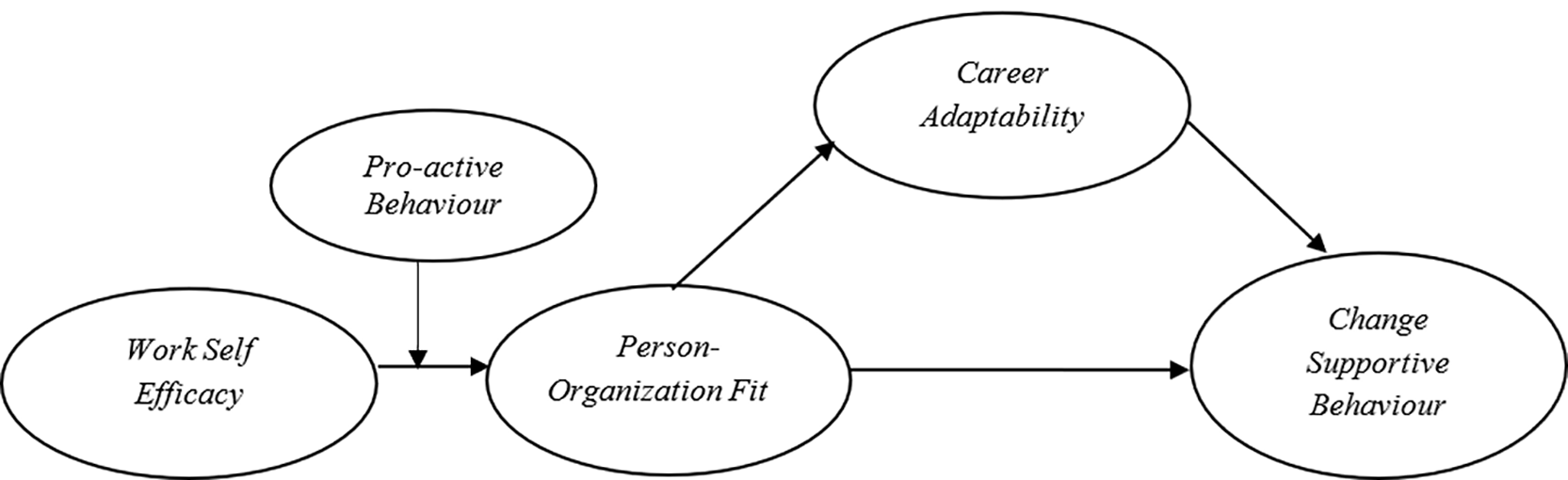
The hypothesized relationships among Work Self-Efficacy (exogenous variable), Person–Organization Fit (endogenous/mediating), Career Adaptability (mediating), Change Supportive Behavior (outcome), and Proactive Behavior (moderator). Solid arrows indicate direct effects (H1, H3, H4, H5); the curved arrow indicates the moderation path (H2); the dashed arrow indicates the mediation path (H6). Source: Compiled by researchers, 2025.
Research Hypotheses
Based on the conceptual framework above, the following hypotheses can be derived.
Work self-efficacy has a significant effect on Person-Organization Fit among employees of the Coordinating Ministry for Political and Security Affairs.
Proactive Behavior can moderate the relationship between Work Self-Efficacy and Person-Organization Fit among employees of the Coordinating Ministry for Political and Security Affairs.
Person-Organization Fit has a significant effect on Career Adaptability among employees of the Coordinating Ministry for Political and Security Affairs.
Career adaptability has a significant effect on change supportive behavior among employees of the Coordinating Ministry for Political and Security Affairs.
Person-organization fit has a significant effect on change supportive behavior among employees of the Coordinating Ministry for Political and Security Affairs.
Career adaptability can mediate the relationship between person-organization fit and change supportive behavior among employees of the Coordinating Ministry for Political and Security Affairs.
This study adopted a quantitative research design with a cross-sectional survey approach, aimed at testing hypothesized relationships through measurable data and statistical analysis (Hair et al., 2008). Survey methodology was selected as the primary data collection strategy to capture respondents’ beliefs, perceptions, and behavioral orientations (Neuman, 2014). The population comprised civil servants of the Coordinating Ministry for Political and Security Affairs of the Republic of Indonesia who had served for less than three years, specifically targeting their behavioral responses to organizational change following the ministerial separation. From this population of 184 civil servants meeting the inclusion criteria, all were invited to participate. Respondent selection followed a two-stage procedure: purposive sampling was first applied to identify civil servants directly affected by the organizational restructuring (Sugiyono, 2017), followed by simple random sampling to select participants from within this eligible group. Primary data were collected through observation, semi-structured interviews, and a self-administered Likert-scale questionnaire, while secondary data were obtained from official institutional documents (Creswell, 2009).
Data analysis employed descriptive statistics and Structural Equation Modeling–Partial Least Squares (SEM-PLS) using SmartPLS 4.0. The measurement model (outer model) was evaluated through indicator reliability (outer loadings >0.708), composite reliability (CR ≥ 0.70), internal consistency (Cronbach’s alpha ≥0.60), convergent validity (AVE > 0.50), and discriminant validity using the Fornell-Larcker criterion (Hair et al., 2017; Fornell & Larcker, 1981). The structural model (inner model) was assessed using the coefficient of determination (R2), predictive relevance (Q2), effect size (f2), and the variance inflation factor (VIF < 5) to evaluate collinearity (Hair et al., 2014, 2019a). Hypothesis testing employed bootstrapping with 5,000 subsamples, applying a significance threshold of p < 0.05 and a critical t-value of 1.96. Mediation analysis followed the procedure described by Baron and Kenny (1986), supplemented by the approach of Hayes (2009) and Preacher and Hayes (2008), evaluating the significance of both direct and indirect pathways. Through these stages, the study is expected to provide empirical evidence regarding the influence of Work Self-Efficacy, Proactive Behavior, Person–Organization Fit, and Career Adaptability on Change Supportive Behavior among Civil Servants in the Coordinating Ministry for Political and Security Affairs of the Republic of Indonesia. Written informed consent was obtained from all participants prior to data collection. Participants received an information sheet explaining the purpose of the study, the voluntary nature of participation, the anonymity of responses, and their right to withdraw at any time without consequences. For questionnaires distributed online, participants provided consent by selecting an “I agree to participate” option before accessing the survey items. No identifying information was collected from participants.
The reflective measurement model is a measurement model that assumes that indicators are manifestations of constructs.
The measurement model was first assessed by examining outer loading values to determine indicator reliability. Items with outer loadings exceeding 0.708 were retained, as they indicate that the construct explains more than 50% of the indicator variance (Hair et al., 2019a). The results for exogenous and moderator variables are presented in Table 1.
| Construct | Item | Outer Loading |
|---|---|---|
| WSE | WSE1 | 0.876 |
| WSE3 | 0.870 | |
| WSE6 | 0.844 | |
| PB | PB2 | 0.887 |
| PB3 | 0.894 | |
| POF | POF1 | 0.857 |
| POF2 | 0.836 | |
| POF3 | 0.833 | |
| POF4 | 0.795 | |
| POF5 | 0.819 | |
| POF7 | 0.842 | |
| POF8 | 0.869 | |
| CSB | CSB1 | 0.898 |
| CSB2 | 0.826 | |
| CSB3 | 0.822 |
Based on Table 1 above, it can be seen that the outer loading value in the work self ecfficacy variable there are several items that are omitted because to meet the CR value <0.95. As for some of the items that were removed, they were WSE2, WSE4, WSE5, WSE7, WSE8, WSE9, WSE10, all of these items were removed because they had an outer loading value of <0.708. While the others have an outer loading value above 0.708. In the person organization fit (POF) construct, almost all items have an outer loading value above 0.708, meaning that all constructs can explain more than 50% of the variance of the indicator. However, there is only 1 item, namely POF6, which has a value of <0.708 so it must be eliminated because the item is considered unable to explain the variance of the indicator. For the proactive behavior (PB) construct, there are 2 items that must be eliminated, namely PB1 and PB 4 while the rest, namely PB 2 and PB 3, are considered to be able to explain more than 50% of the variance of the indicator because it has an outer loading value of >0.708. the last is for the Change supportive behavuour (CSB) construct, all items are considered to be able to explain the variance of the indicator because they have a value above 0.708. where the highest outer lading value is in item CSB 1 of 0.898.
Based on the Table 2, it can be seen that the Career adaptability (CA) construct has 4 dimensions, including Concern (CO), Control (CN), Curiosity (CU) and Confidence (CF) and each dimension has 6 indicators. Overall the outer loading value of this dimension is more than 0.708 which means that the construct is able to explain more than 50% of the variance of the indicator. In the CO dimension, there are 2 items or indicators that are omitted, namely CO2 and CO6 because the value is below 0.708 where the highest outer loading value is 0.889 and the lowest is 0.834 while for the CN dimension there is 1 item that is omitted, namely CN3, the highest outer loading value is 0.830 and the lowest is 0.760 for the CU dimension, there are several items that are omitted, namely CU1, CU3 and CU4 because the outer loading value is below 0.708. The highest outer loading value is 0.855 and the lowest is 0.830. The last one is in the CF dimension where the highest outer loading value is 0.896 and the lowest is 0.834 and there is 1 item that is omitted, namely in CF2. The outer loading value in the Career adaptability (CA) construct has a value above 0.708. This shows that the construct is able to explain more than 50% of the variance of the indicator.
Assessment of the reliability of internal consistency using Joreskog’s composite reliability (Hair et al., 2019b). Here are the CR and Cronbach alpha values of the construct variable. The CA dimensions also demonstrated adequate reliability: Concern (α = 0.873, CR = 0.913), Control (α = 0.876, CR = 0.910), Curiosity (α = 0.802, CR = 0.883), and Confidence (α = 0.917, CR = 0.937), as shown in Table 3.
| Construct | Cronbach’s Alpha | Composite Reliability (CR) | |
|---|---|---|---|
| WSE | 0.829 | 0.898 | |
| POF | 0.928 | 0.942 | |
| PB | 0.739 | 0.884 | |
| CSB | 0.807 | 0.886 | |
| CA | Concern (CO) | 0.873 | 0.913 |
| Control (CN) | 0.876 | 0.910 | |
| Curiosity (CU) | 0.802 | 0.883 | |
| Confidence (CF) | 0.917 | 0.937 | |
Composite reliability and Cronbach’s alpha values for all constructs fell within the acceptable range (above 0.70 and below 0.95), confirming internal consistency without redundancy. WSE achieved values of 0.829 (α) and 0.898 (CR); POF achieved 0.928 and 0.942; PB achieved 0.739 and 0.884; and CSB achieved 0.807 and 0.886. The CA dimensions also demonstrated adequate reliability: Concern (α = 0.873, CR = 0.913), Control (α = 0.876, CR = 0.910), Curiosity (α = 0.802, CR = 0.883), and Confidence (α = 0.917, CR = 0.937), as shown in Table 3.
The next step to performing a measurement model is convergent validity. An acceptable Average Variance Extracted (AVE) must have a value of >0.50 which means that the construct is able to explain at least 50% of the variance of the item (Fornel & Larcker, 1981). If the AVE value is <0.5, the item with the lowest outer loading can be removed. The highest AVE was observed for Proactive Behavior (0.793), followed by Confidence (0.750), Work Self-Efficacy (0.745), Concern (0.724), Change Supportive Behavior (0.722), Curiosity (0.716), Person-Organization Fit (0.699), and Control (0.670), as reported in Table 4.
| Construct | AVE | |
|---|---|---|
| WSE | 0.745 | |
| POF | 0.699 | |
| PB | 0.793 | |
| CSB | 0.722 | |
| CA | Concern (CO) | 0.724 |
| Control (CN) | 0.670 | |
| Curiosity (CU) | 0.716 | |
| Confidence (CF) | 0.750 | |
All constructs have an AVE value of >0.5, indicating that the items in each variable are able to explain the variation and form a unit of the construct. The highest AVE score was found in Proactive Behavior (0.793), followed by Work Self-Efficacy (0.745), Change Supportive Behavior (0.722), and Person-Organization Fit (0.699), while for the Career Adaptability dimension, the highest AVE score was found in confidence (0.750) compared to concern (0.724), control (0.670), and curiosity (0.716). These results ensure that the indicators in each construct are valid and capable of explaining the significant percentage of item variance.
The purpose of discriminant validity testing is to ensure that each concept of each latent model has a difference with other latent variables. Where the construct in question has a higher value compared to other constructs. In this study, the discriminant validity test used the Fornell-Larcker criteria.
The Fornell-Larcker criterion was applied to assess discriminant validity. As shown in Table 5, the square root of each construct’s AVE (presented on the diagonal) exceeded all inter-construct correlations in the corresponding row and column, confirming that each construct is empirically distinct from the others. For instance, Career Adaptability’s diagonal value (0.908) exceeded its highest correlation with other constructs, and similarly for all remaining variables.
Structural model measurements in reflective models include the following, including 1) multicoloniarity measurement, 2) R2 value measurement, 3) effect size (f2) value measurement, 4) predictive relevance (Q2) value measurement, and 5) hypothesis testing. The first step in the structural model test is a multicollinearity test to determine whether or not research data is biased on independent variables. The criterion used is that the inner value of VIF should not be ≥5 (Hair et al., 2014). The results were that the VIF value for the variables of work self efficacy, proactiver behaviour, person organization fit and career adaptability was 3,012; 2.040; 2.945; 2.945;. The value is still below 5 which means that multicollinearity does not occur (Hair et al., 2014). Furthermore, structural testing of the model was used for the relationship between the construct, significance value and R square of the research model. The R-square value can be used to assess the influence of a particular independent variable on a dependent variable. The estimated value of R-square can be seen in the following table.
Table 6 presents R2 and Q2 values for the endogenous constructs. Career Adaptability (R2 = 0.660, Q2 = 0.497), Change Supportive Behavior (R2 = 0.549, Q2 = 0.388), and Person-Organization Fit (R2 = 0.685, Q2 = 0.541) all fall within the moderate explanatory range (Hair et al., 2014). The Q2 values, obtained through blindfolding, substantially exceed zero, demonstrating that the model possesses meaningful predictive relevance for all three endogenous constructs (Sarstedt et al., 2014; Hair et al., 2017). Predictive analysis using Q2 through blindfolding showed strong values for Career Adaptability (Q2 = 0.497), Change Supportive Behaviour (Q2 = 0.388), and Person-Organization Fit (Q2 = 0.541), meaning that the model has high predictive relevance (Sarstedt et al., 2014; Hair et al., 2017).
Direct impact analysis
This analysis aims to test the direct influence between dependent and independent variables that refer to the hypothesis that has been proposed. The testing process was carried out using the bootstrapping function on SmartPLS 4.0. The hypothesis is accepted when the significance level is less than 0.05 or the t-value exceeds its critical value (Hair et al., 2014). The statistical t-value for the significance level of 5% was 1.96. The results of the hypothesis testing that test the direct effect can be seen in the table below.
Bootstrapping results for the direct effect hypotheses are presented in Table 7. Three of the four direct-effect hypotheses were supported. Work Self-Efficacy significantly predicted Person-Organization Fit (H1: β = 0.364, t = 4.204, p < 0.001). Person-Organization Fit significantly predicted Career Adaptability (H3: β = 0.813, t = 21.383, p < 0.001). Person-Organization Fit also significantly predicted Change Supportive Behavior (H5: β = 0.857, t = 4.403, p < 0.001). However, Career Adaptability did not significantly predict Change Supportive Behavior (H4: β = 0.181, t = 1.240, p = 0.216), and this hypothesis was rejected.
As shown in Table 8, Proactive Behavior significantly moderated the relationship between Work Self-Efficacy and Person-Organization Fit (H2: β = 0.421, t = 5.425, p < 0.001), confirming its role as a positive moderator. In contrast, Career Adaptability did not significantly mediate the relationship between Person-Organization Fit and Change Supportive Behavior (H6: β = 0.147, t = 1.252, p = 0.211), and this mediation hypothesis was rejected. The complete structural model with path coefficients and significance levels from the SEM-PLS bootstrapping analysis is presented in Figure 3.
| Hypothesis | Path | β | Mean | SD | t-Statistic | p-Value | Decision |
|---|---|---|---|---|---|---|---|
| H2 | WSE → PB × POF | 0.421 | 0.416 | 0.078 | 5.425 | 0.000 | Supported |
| H6 | POF → CA → CSB | 0.147 | 0.134 | 0.117 | 1.252 | 0.211 | Not Supported |
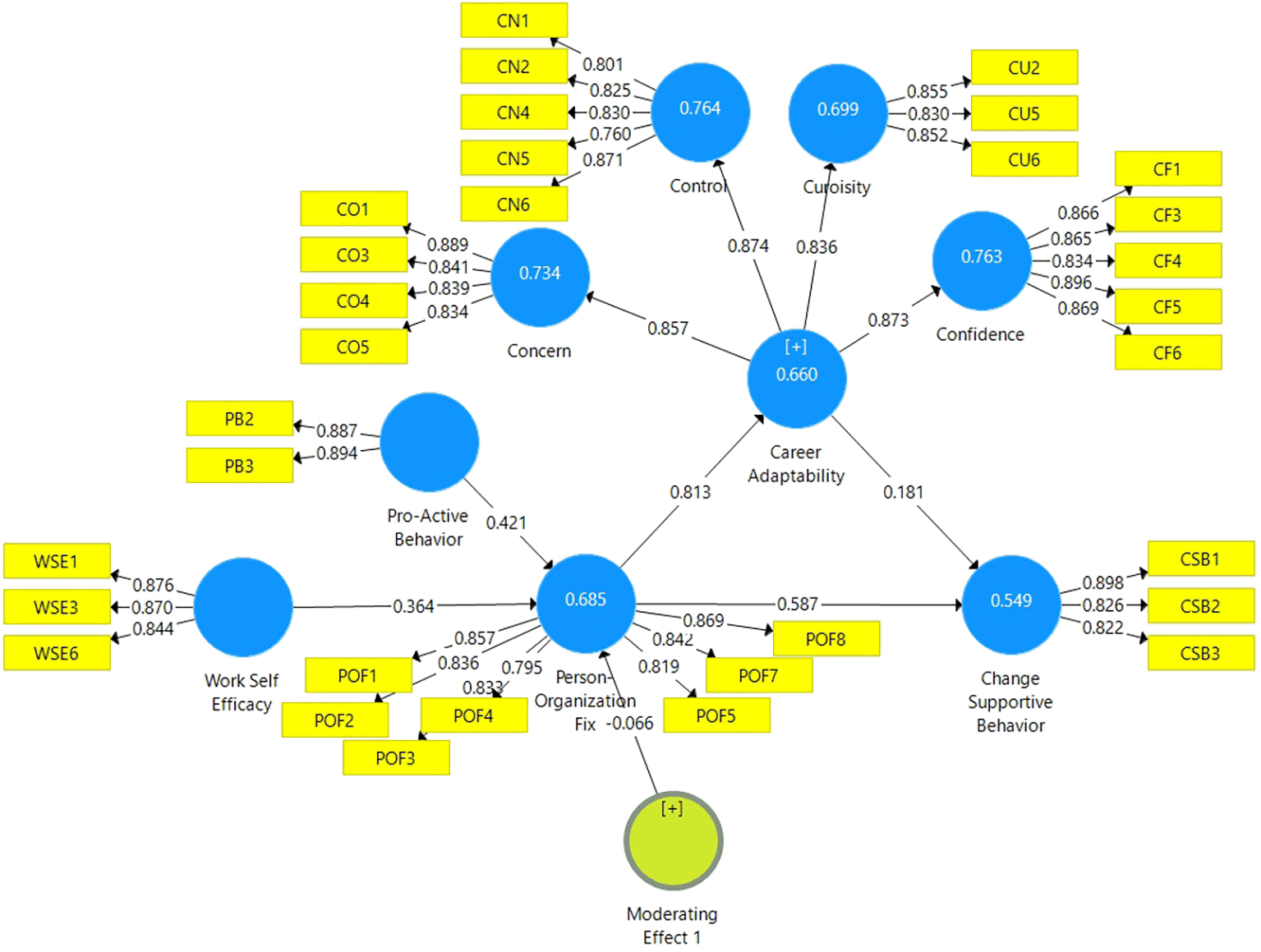
Path coefficients (β) and t-statistics from bootstrapping analysis (5,000 subsamples) using SmartPLS 4.0. Significant paths (p < 0.001) are indicated with asterisks (***). Non-significant paths are shown without asterisks. Source: Primary data processed, 2025.
The discussion carried out in this study is based on theories related to the research and then associated with empirical studies or previous research. This was done to assist in confirming support related to hypothesis testing in this study. So that the results of this research are expected to have a significant theoretical contribution and can be used as a connecting bridge for future researchers.
The results of the analysis showed that Work Self-Efficacy had a significant effect on Person-Organization Fit in employees of the Coordinating Ministry for Political and Security Affairs of the Republic of Indonesia (t = 4.204 > 1.97; p = 0.000), confirming that employees’ confidence in completing tasks determines their ability to adapt to the new environment. The separation of the Coordinating Ministry for Political and Security Affairs of the Republic of Indonesia into the Coordinating Ministry for Political and Security Affairs of the Republic of Indonesia and the Coordinating Ministry for Law, Human Rights, Immigration, and Corrections of the Republic of Indonesia requires employees to adjust to the new work and environment, which is accelerated through four factors of self-efficacy according to Bandura (1989), namely the achievement of goals, performance, observation of others, and cognitive conditions. A quick adaptation strategy includes building rapport with superiors, being professional towards clients or strategic partners, and the ability to work in a team to complete tasks effectively.
The role of proactive behavior as a moderation variable between work self efficacy and person organization fit.
Proactive Behaviour played a significant role as a moderator in the effect of Work Self-Efficacy on Person-Organization Fit (t = 5.425 > 1.97; p = 0.000), suggesting that proactive attitudes strengthened the relationship. Proactive attitudes, such as building good relationships with their bosses and being open to direction, encourage employees to take the initiative and express innovative ideas in a psychologically safe work environment (Robert et al., 2025). Proactive actualization of employees of the Coordinating Ministry for Political and Security Affairs of the Republic of Indonesia · is reflected in the ability to find solutions to work problems, for example collecting and analyzing additional data to estimate security conditions in a particular region, so that solutions are executed procedurally.
Based on the analysis, Person-Organization Fit has a significant effect on the Career Adaptability of employees of the Coordinating Ministry for Political and Security Affairs of the Republic of Indonesia · (t = 21.383 > 1.97; p = 0.000), showing that employee compatibility with the agency accelerates career adaptation. This match helps employees understand the character of the agency, follow the direction of the leadership, and prepare themselves for a higher career path, so that they can make a positive contribution to the organization. Previous research has also emphasized that emotional attachment and positive perceptions of the psychological climate, as well as a clear organizational structure, are important factors in employee engagement and career development (Ojokuku et al., 2022).
Career Adaptability does not have a significant effect on Change Supportive Behaviour in employees of the Coordinating Ministry for Political and Security Affairs of the Republic of Indonesia · (t = 1.24 < 1.97; p = 0.216), suggesting that career adaptation is not a direct indicator of support for change. Although employees adjust to new tasks and career paths, this is more of a personal responsibility and preparation for the future than a form of active participation in organizational change. Employees still need to build confidence, curiosity, and complete tasks efficiently, so as to create a professional and characterful organizational climate even though they do not directly support change.
Individual organizational fit to change and supportive behavior
Person-Organization Fit has a significant effect on Change Supportive Behavior in employees of the Coordinating Ministry for Political and Security Affairs of the Republic of Indonesia · (t = 4.403 > 1.97; p = 0.000), indicating that employee compatibility with the agency encourages active support for change. This support is reflected through participation in meetings, presentation of problems or input to leaders, and discussions between colleagues to equalize perceptions in completing work (Franco & Neiva, 2023; Mehboob, 2023). Thus, employee involvement that is in harmony with the characteristics of the agency accelerates adaptation to change and supports adaptive organizational performance.
The Role of Career Adaptability in Mediating the Influence of Person Rganization Fit on Change Supportive Behavior.
Career Adaptability did not mediate the influence of Person-Organization Fit on Change Supportive Behaviour (t = 1.252 < 1.97; p = 0.211), suggesting that career adaptation is an individual’s choice to shape work experience, but is not directly related to support for organizational change. Person-Organization Fit still encourages Career Adaptability, but Career Adaptability does not affect Change Supportive Behavior, which is prioritized from the perspective of organizational interests to organize the performance and new tasks of employees. Previous research confirms that challenging and varied tasks can increase employees’ ability to adapt and gain appreciation, so Change Supportive Behaviour is an institutional effort to adjust employees to their new functions and tasks (Liu et al., 2023).
Based on the causality analysis between work self-efficacy, proactive behavior, person-organization fit, career adaptability, and change supportive behavior, several important findings were obtained. Work self-efficacy has been proven to have a significant effect on person-organization fit, because employees’ confidence in self-ability accelerates the process of adjustment to organizational values and culture. In addition, proactive behavior plays a role as a moderator that strengthens the relationship, because proactive attitude helps employees understand their duties, functions, and work rhythms at the Coordinating Ministry for Political and Security Affairs of the Republic of Indonesia faster. Furthermore, person-organization fit has a significant effect on career adaptability, where the compatibility between employees and organizations is the foundation for their ability to adapt to career demands. However, career adaptability does not have a significant effect on change supportive behaviour, because employee support for change is driven more by compliance with organizational rules and needs, rather than by career adaptation. Person-organization fit has also been shown to have a significant effect on change supportive behavior, because the sooner employees adjust to organizational values, the easier it is for them to accept and support new policies after agency separation. In line with that, career adaptability does not mediate the influence of person-organization fit on change supportive behavior, because career adaptation is more of an individual interest while change support comes from organizational demands. Based on the findings of the study, several recommendations can be made. For the Coordinating Ministry for Political and Security Affairs of the Republic of Indonesia ·, these results show that employees’ readiness in accepting and carrying out duties is not just an encouragement to achieve a career, but is formed from the match of values and work culture so that a proactive attitude can be used as an additional indicator in performance assessment. For the relevant ministries, it is recommended that the Coordinating Ministry for Political and Security Affairs of the Republic of Indonesia · Encourage the ministries under its coordination to develop a proactive work culture to face increasingly complex cross-agency coordination demands. For the next researcher, it is recommended to examine career adaptability in the context of local government, especially in OPDs that have similar tasks, and to use respondents with more homogeneous characteristics so that the influence of career adaptation on change support can be observed more clearly.
This study was approved by the Research Ethics Committee at Universitas Negeri Surabaya Approval Number: [B/118601/UN38.7/PP.11.01/2025], dated 25 August 2025. All procedures were conducted in accordance with the ethical standards of the institutional research committee and with the 1964 Helsinki Declaration and its later amendments.
| Views | Downloads | |
|---|---|---|
| F1000Research | - | - |
|
PubMed Central
Data from PMC are received and updated monthly.
|
- | - |
Provide sufficient details of any financial or non-financial competing interests to enable users to assess whether your comments might lead a reasonable person to question your impartiality. Consider the following examples, but note that this is not an exhaustive list:
Sign up for content alerts and receive a weekly or monthly email with all newly published articles
Already registered? Sign in
The email address should be the one you originally registered with F1000.
You registered with F1000 via Google, so we cannot reset your password.
To sign in, please click here.
If you still need help with your Google account password, please click here.
You registered with F1000 via Facebook, so we cannot reset your password.
To sign in, please click here.
If you still need help with your Facebook account password, please click here.
If your email address is registered with us, we will email you instructions to reset your password.
If you think you should have received this email but it has not arrived, please check your spam filters and/or contact for further assistance.

Comments on this article Comments (0)