Keywords
Academic Writing, TPACK Framework, Technology Integration, Postgraduate Students, Scopus Database

This article is included in the Artificial Intelligence and Machine Learning gateway.
Academic Writing, TPACK Framework, Technology Integration, Postgraduate Students, Scopus Database
The ability to write academically is a key skill that postgraduate students need to excel at in order to have a competitive edge in both higher education and the workplace. Taufiqulloh et al.1 stated that these skills will require high-level cognitive skills in organising ideas logically and presenting them in an international journal format. Today, English is used as a medium of scientific writing and is an essential window into the international research community. Many of the traditional assessment practices, however, do not usually provide feedback quickly enough to support learning, leaving what is known as a learning gap. In enhancing these writing outcomes, Hafizah & Sayadi2 stress that the readiness of students in self-directed learning is a must. This is prompting higher education institutions to give digital innovations greater priority to shorten the feedback cycle and enable students to make more precise improvements to their drafts. According to Peungcharoenkun & Waluyo,3 technology can facilitate more accessible and actionable feedback for students that will ultimately shape student writing. Moreover, Ahmed et al.4 highlight that AI tools such as ChatGPT have a pivotal role in improving language learning by helping students overcome linguistic obstacles. Bastida & Saysi5 point out that digital competence and self-efficacy of learners are significant predictors of their competence in dealing with complex research writing tasks.
The practical problems associated with the postgraduate students are the high cognitive load during the whole scientific writing process. Academic writing can be a frightening task for advanced learners because of the requirement to produce original work, formalities, and the necessity to perform within a set of guidelines. Excessive cognitive load, if not managed properly, can have a major negative impact on writing performance and quality.6 Linguistic problems (e.g., not knowing how to use the correct words and grammar) continue to be a leading concern of graduate researchers that contributes to their writing anxiety and delays. These emotional and cognitive factors are found to have significant impacts on writing success, particularly when writing in a non-native English context.7 Ali et al.8 found that student motivation is greatly affected by the provision of support tools to overcome these psychological obstacles. In addition, artificial intelligence can assist students in overcoming the initial “writer’s block” problem.9 To overcome these challenges, Hsu & Goldsmith10 stress the importance of knowing the association between anxiety and performance in designing effective instructional interventions in postgraduate programs.
Technological Pedagogical Content Knowledge (TPACK) is a holistic model that could be used to maximise the flexibility of writing instruction by integrating technology, pedagogy, and content. The success of technology in the classroom is a function of teachers’ ability to align the technology with the teaching method and content knowledge, this model claims.11 In order to support their professional development and teaching practice, educators need to have a high-level understanding of TPACK.12 The use of ICT in the teaching and learning of English has been proved to provide more room for adaptive learning and student-centred learning. In the TPACK framework, Kühn13 stresses that the use of web tools can help to develop more interactive and dynamic learning spaces. Similarly, Al-Abdullatif & Alsubaie,14 explain that students’ intention to use AI is heavily influenced by their perception of the tool’s usefulness in achieving academic goals. Alfahid & Yousuf Zai15 further states that blended learning models offer flexibility to second language learners that they can use to improve their macro-skills on their own. Graham16 provides a foundational argument that remains relevant: technology should not be divorced from pedagogical strategy and content mastery.
Moreover, TPACK has been significantly shaped by the development of technology, particularly in the “Technology” aspect, where new technologies such as Automated Writing Evaluation (AWE) and Large Language Models (LLMs) like ChatGPT have emerged and revolutionized the field. With these AI tools, it is now possible to offer real-time corrections, enhancing the coherence and structural organization of the text. Heriyawati & Romadhon17 argue that AI platforms are considered key tools for postgraduate students to save time in the thesis revision process, which used to take months but can now be completed in weeks. According to Alharbi & Hassan Al-Ahdal,18 Saudi EFL teachers believe that ChatGPT is a useful tool in making learning experiences personalized and promoting collaborative writing. Lu & Zeng19 caution that effectively using AI-generated model texts for comparison is useful, but sometimes they are not stylistically natural or contextually relevant. In addition, Muthmainnah et al.20 suggest that AI can offer linguistic support but cannot completely replace the teacher’s role of critical thinking, so there is a need for the teacher to intervene actively. To support this, Chugh et al.21 emphasize that ChatGPT should be used as a “learning assistant” to support students, not as a voice replacement.
In addition, in pedagogical terms, the technology integration in the TPACK framework should help postgraduate students’ Self-Regulated Learning (SRL) development. AI tools help facilitate the complexity of tasks by handling mechanical tasks, leaving students to think about higher-order logic and original argumentation. Kundu & Bej22 argue that by fostering learner autonomy and offering emotional reassurance through the revision process, personalized AI feedback is effective in improving student satisfaction. Engeness & Gamlem23 consider the AI-generated feedback to be a “cultural tool” that acts as a mediation between the writing process and the student’s zone of proximal development. To learn effectively, students need to critically examine machine output instead of unthinkingly copying it on digital scaffolding.24 In addition, Ahmed et al.4 highlight that a student’s metacognitive intentions and planning and monitoring their own learning play a significant role in influencing the level of AI-powered SRL acceptance. Last but not least, Carless25 states that the most important objective for such feedback loops is to create competent independent learners who are able to meet complex academic challenges.
However, while AI offers many advantages, there are also substantial ethical issues that come with its application, including plagiarism, dependence, and “hallucination”. Though there are numerous benefits, ethical concerns with the use of AI, especially plagiarism, dependency and “hallucination”, are significant issues in the global academic world. A growing concern is that the reliance on AI could hinder critical thinking and independent thought in graduate studies. Teachers in all subject areas are confronted with serious ethical issues about possible dishonesty and the lack of real intellectual growth.26 The potential for AI “hallucinations” to produce fabricated references or misleading information presents a tangible threat to the integrity of scientific work.27 Alghamdi & Alghizzi28 raises doubts about how far AI can go before it ceases to be truly human and how much the key ethical and educational value of feedback is compromised. To address these risks, Deep & Chen29 recommends that writing assignments need to be restructured to focus on human critical thinking that is not amenable to AI. Furthermore, Gerlich30 points out that cognitive offloading may adversely affect the problem-solving abilities of students to such a degree that this phenomenon may become permanent unless it is accompanied by other pillars of academic virtues.
Furthermore, from 2016 to 2026, the number of publications about AI, TPACK, and academic writing increased significantly in the global research output in the Scopus database. The analysis shows that the post-pandemic era triggered a period of quick expansion, due to the need for digital learning materials and pedagogical innovation. Sukmojati et al.31 concluded that the studies related to critical thinking in ELT have now focused on practice, especially technology-based practice, and Indonesia and China are among the significant countries. According to Al Viana et al.,32 there is an important trend of curriculum changes involving the use of advanced NLP skills to address 21st-century learning needs. Moreover, Sukmojati et al.33 emphasize that interest in the fields of media branding and media communication has now shifted towards the application of AI to boost the visibility of institutions. However, Lim & Kumar34 stated that the most bibliometric studies still lack in-depth analytical synthesis, suggesting that there is a need for a more in-depth qualitative interpretation of the trends. Finally, it reminds researchers that it is essential to track the technology acceptance factors in order to guarantee the effectiveness of higher education policies in the future. This study aims to provide an overview of Academic Writing Skills Using the TPACK Framework in Postgraduate Students. This study examines the subsequent research inquiries:
1. Analyzing the main information about “Academic Writing Skills Using the TPACK Framework in Postgraduate Students,”
2. Analyzing trends publications related to “Academic Writing Skills Using the TPACK Framework in Postgraduate Students,”
3. Analyzing source production over time related to “Academic Writing Skills Using the TPACK Framework in Postgraduate Students,”
4. Investigating authors’ production over time regarding “Academic Writing Skills Using the TPACK Framework in Postgraduate Students,”
5. Determine the global cited documents related to “Academic Writing Skills Using the TPACK Framework in Postgraduate Students,”
6. Determining the bibliographic coupling countries related to “Academic Writing Skills Using the TPACK Framework in Postgraduate Students,”
7. Investigating connected organization related to “Academic Writing Skills Using the TPACK Framework in Postgraduate Students”
8. Investigating commonly used co-occurrence keywords related to “Academic Writing Skills Using the TPACK Framework in Postgraduate Students”
9. Proposing thematic maps related to “Academic Writing Skills Using the TPACK Framework in Postgraduate Students”.
This study is carried out through a bibliometric approach. Todeschini35 define bibliometrics as a method based on empirical analysis of scientific publications to quantitatively assess research output. According to Sukmojati et al.31 bibliometric analysis is used to identify the academic landscape of a particular topic by analyzing the quality and quantity of publications, journal sources, primary contributors, and the connections between data. This approach to literature review is different from the traditional literature review in that it is able to synthesize an extensive body of literature, uncover gaps in the literature, and uncover emerging topics in a non-biased, data-driven manner. The methodological approach of this study is qualitative descriptive analysis, which aims to identify bibliometric variables, which are the publication titles, the years, the authors and the institutions. The data collection was performed in Scopus as its coverage is very broad and interdisciplinary, and it provides extensive metadata for citation analysis.
In this bibliometric study, data collection was carried out in a systematic manner to identify, screen and select relevant publications that are related to the optimization of academic writing skills among post-graduates based on the Technological Pedagogical Content Knowledge (TPACK) framework. According to Ivan and Tomaz (2015) to ensure the validity, the relevance and quality of the documents analyzed in the research procedure were used; the approach to the bibliometric review was followed in several stages. Scopus was selected due to its broad interdisciplinary coverage and comprehensive citation metadata. The choice of this database was made because it offers very broad coverage of articles and conference papers from reputable journals or other academic publications, which are well-suited to the bibliometric analysis. The publication period in this study is from 2016 to 2026, in order to discover the trends and developments of the research on TPACK and academic writing in higher education in the past decade, as seen in Figure 1.
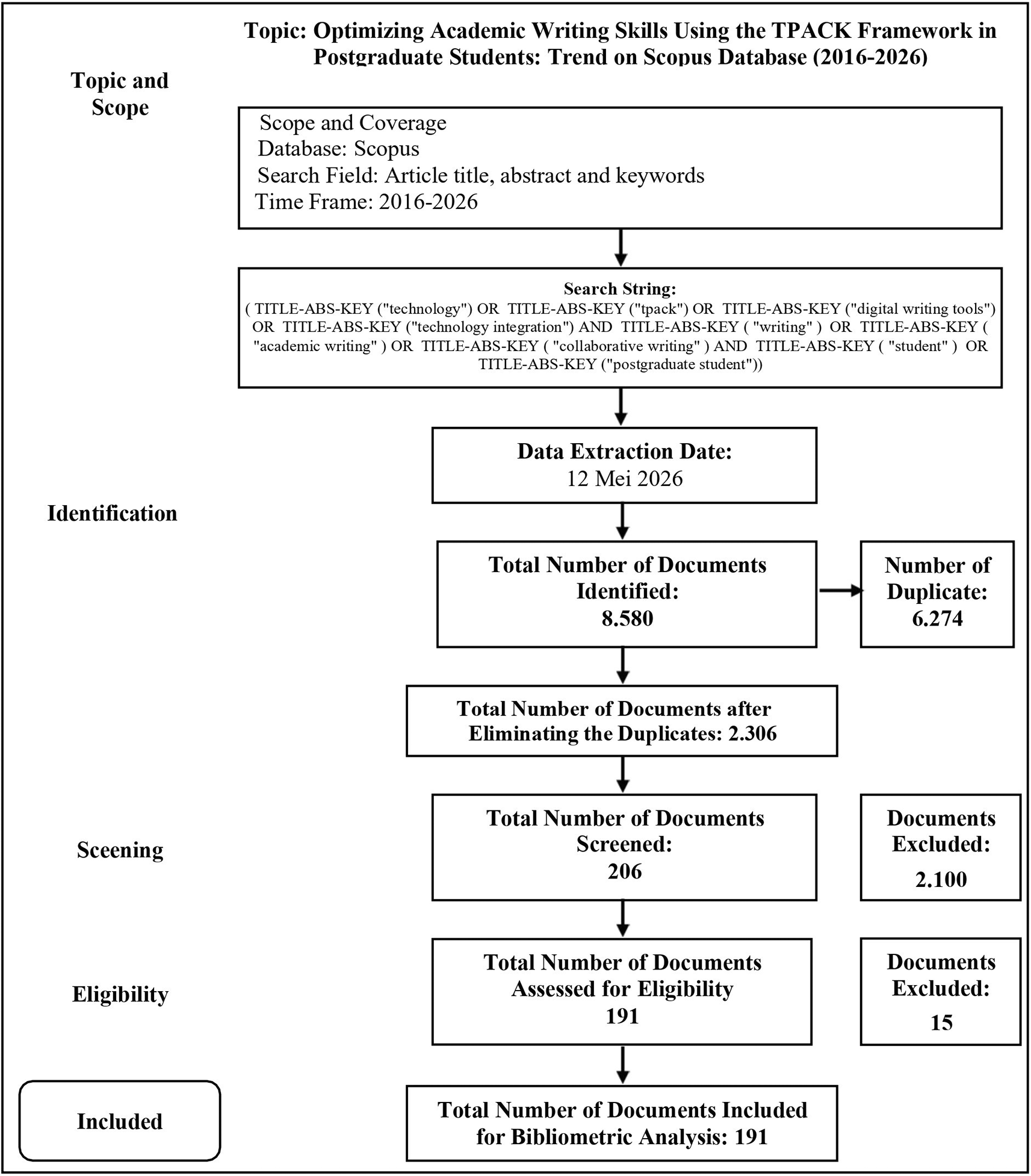
To ensure that the maximum number of relevant documents was retrieved, the data search strategy was carried out using both ‘article title’ and ‘abstract’ and ‘keywords’ search fields were used. The researchers used keywords and Boolean operators to narrow down the search results based on the focus of the research. The data extraction was done on May 12, 2026. From the initial search, the Scopus database yielded 8,580 documents. To prevent data duplication and ascertain the accuracy of the analysis, duplicate documents were viewed at the identification phase. 6.274 documents were found to be duplicates and then deleted, of which 2,306 documents were left for the next step of analysis.
Furthermore, screening was conducted, which included reading the publications and deciding upon their relevance to the scope and topic of the study. In this stage, 2,100 documents were excluded due to not conforming to the inclusion criteria, including not being related to the topic of TPACK, not discussing academic writing, not being related to higher education, and not involving postgraduate students as research subjects. 206 documents were leaving for further evaluation.
Moreover, the researchers did a detailed analysis of the titles, abstracts and keywords of the articles on the eligibility stage for fitting the documents with the research goals. The evaluation was carried out in terms of methodological relevance, research context, publication quality and thematic relevance to the optimization of academic writing in the framework of TPACK. In this phase, 15 new documents were discarded due to less relevance to the research focus or less discussion about TPACK integration.
Overall, 191 documents after applying all inclusion criteria were qualified for analysis in this bibliometric research. These documents were then analysed as primary data for investigating publication patterns, research productivity, thematic growth, collaboration networks and emerging issues in the optimization of academic writing skills of post-graduate students using the TPACK framework. Overall, the data collection process is presented in Figure 1, which shows the steps for identification, screening, eligibility and inclusion of all documents used in this study.36
In data analysis, three main tools were used: VOSviewer, Biblioshiny (R 4.4.1), and Microsoft Excel. The aim of the use of this software ensemble is to generate a detailed analysis of contributions and trends in terms of different bibliometric aspects. The researchers first applied the R program version 4.4.1 and the Bibliometrix (Biblioshiny) package to calculate various performance indicators, including the number of publications per year, citation performance, author productivity, and the local source impact based on the h-index, g-index, and m-index. Biblioshiny has been used to create thematic maps of the density and centrality of research topics.
Secondly, the software VOSviewer was used to generate graphical representations of networks to establish links between data elements. This analysis also comprises keyword co-occurrence mapping to identify research focus and to group the main themes, and mapping of collaboration networks between countries and authors. Thirdly, all raw data obtained and manipulated from Scopus were arranged and presented in a Microsoft Excel file. In this way, the research findings could be presented transparently and reproducibly, so that the research results that were obtained were valid and applicable to the optimization of academic writing skills for postgraduate students.
The data collected from 2016 to 2026, a total of 191 documents were found from 94 publication sources, as shown in Figure 2. The results suggest the research topic has been widely covered in various journals and conference papers, highlighting its significance in the academic community. The annual growth rate of 15.43% indicates that the research area has been steadily expanding in terms of publications over time, reflecting a gradual increase in its academic significance and impact during the period under study.
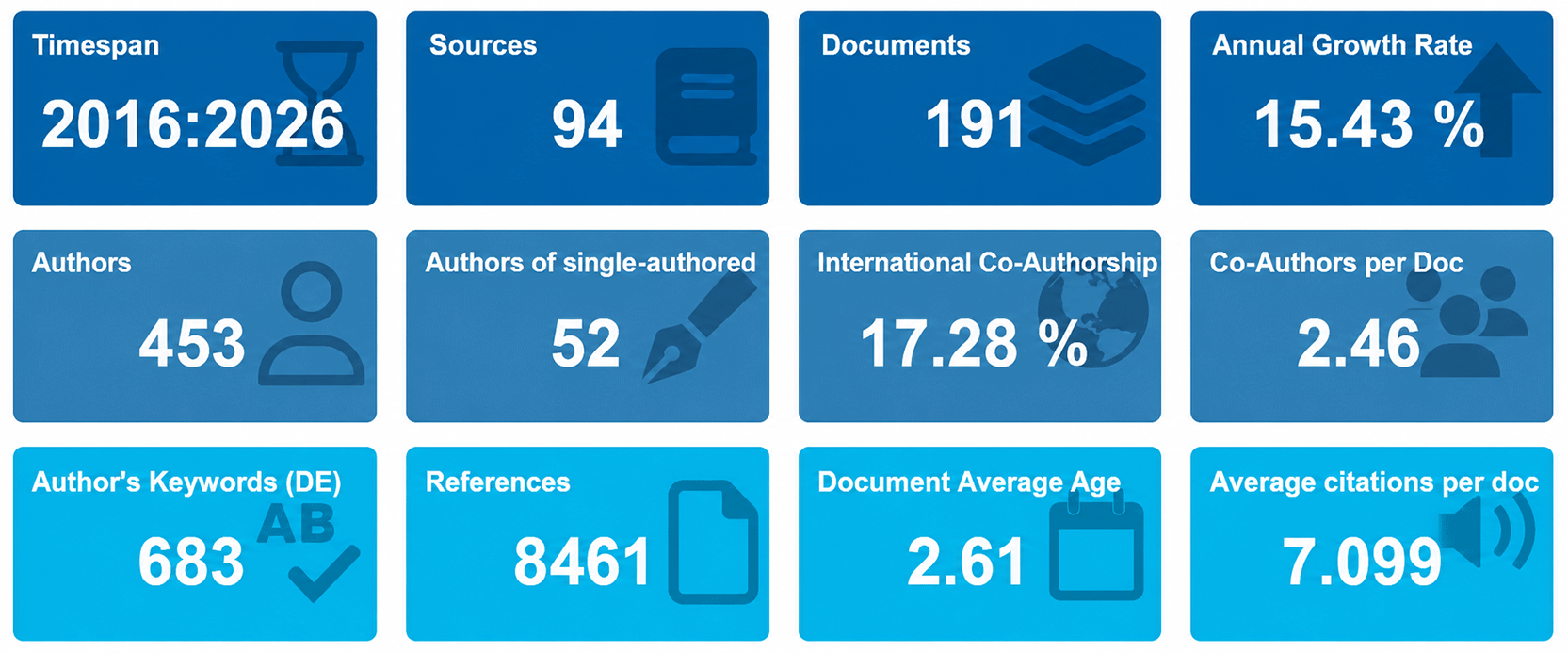
The number of authors was 453 for publications in the dataset. There are 52 single-authored documents, suggesting that most studies were carried out in co-authorship. This is also confirmed by the co-authorship of 2.46, meaning that the average document contained 2–3 authors. In addition, the international co-authorship rate is 17.28%, which indicates a fair level of international research collaboration. The discovery indicates that there are significant opportunities for enhancing academic partnerships between countries and further research development.
The analysis also determined 683 author keywords, which showed a wide range of research topics and the focus of the research field. Moreover, the total of the documents had 8,461 references, showing that the studies were theoretically and empirically well-founded. The average document date of 2.61 years indicates that the literature incorporated into the database is not very old and is current. The average citation per document value (7.099) indicates that the publications have a relatively high academic impact and visibility among scholars.
The two figures represent the publication life cycle and cumulative growth of the research field in the period of 2016–2026. These visualisations, taken together, give a holistic view of the pattern of development, productivity and level of maturity of the scholarly domain being studied, as seen in Figure 3.
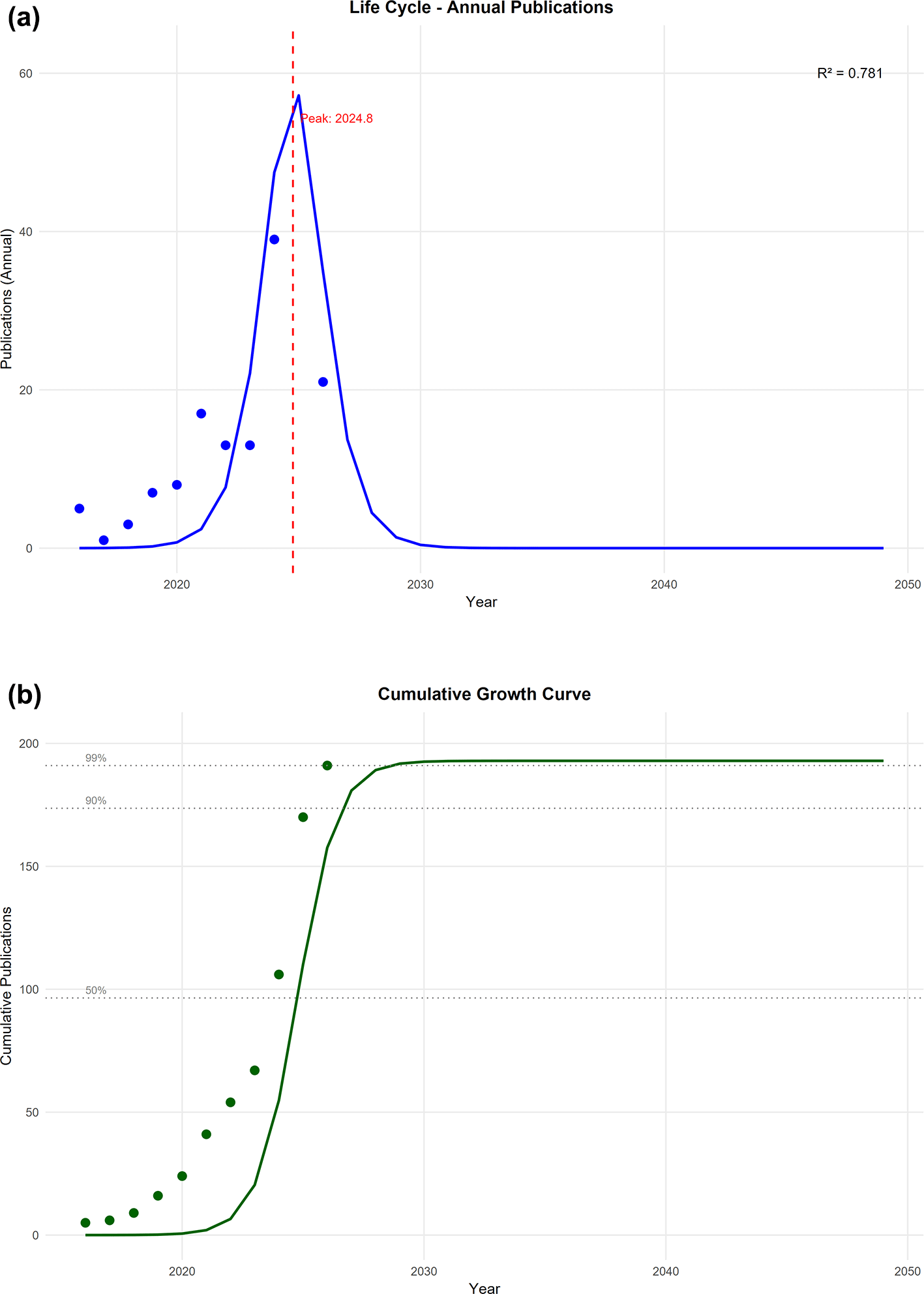
The first figure is called ‘Life Cycle – Annual Publications’ and shows the distribution of publications over time on an annual basis. The data show that there was an incremental rise in the number of publications between 2016 and 2021, reflecting the early introduction and subsequent academic interest in this topic. In this early period, the total number of publications was fairly small and thus marked an exploratory period with growing scholarly interests. Starting in 2022, however, the number of publications caught up very quickly and indicates a shift from the introductory phase towards the rapid-growth phase. The most notable growth was from 2023 to 2025, with the number of publications increasing rapidly to a maximum around 2025 (marked by a peak in the graph). This is the highest point of maximum research output, and it indicates that the topic had a great deal of visibility in the research community.
The coefficient of determination (R2 = 0.781) also suggests that the fitted growth model captures a significant amount of the variability of the publication trend, thus indicating a high degree of statistical support and consistency with a typical scientific growth curve. The curve then decreases, suggesting a stabilisation or saturation stage in the research life cycle after the peak period. This type of growth is typical in the field of bibliometrics, where the period of expansion is followed by a consolidation stage as the discipline develops.
The second is the Cumulative Growth Curve, which helps to visualise a cumulative scholarly output over the period that is being analysed on a yearly basis. The curve shows a typical sigmoid growth curve: a slow growth period before 2021, followed by a period of rapid growth from 2022 to 2026. Around 2024, the cumulative number of publications hit the 50% mark, showing that the majority of the publications were generated in the past, during the recent growth phase. In addition, the curve was towards the 90% and 99% levels soon after 2025, indicating that most of the academic publications were packed into a relatively small period of time.
Combined, both numbers reflect a high and fast growth in the research field in recent years. The ionsynchronisation between the annual publication surge and the steep increasing curve of cumulative publications suggests that the topic is currently in a mature growth stage with a high number of scientific publications, growing academic interest, and growing scientific consolidation.
The data represent the source production over time in the line of international journals over 10 years (2016–2026) in the fields of linguistics and language teaching, psychology and academic writing research. In general, the publication trend shows a significant rise with time, especially from 2022, reflecting the rising academic interest and scholarly focus on the research area under study, as displayed in Figure 4.
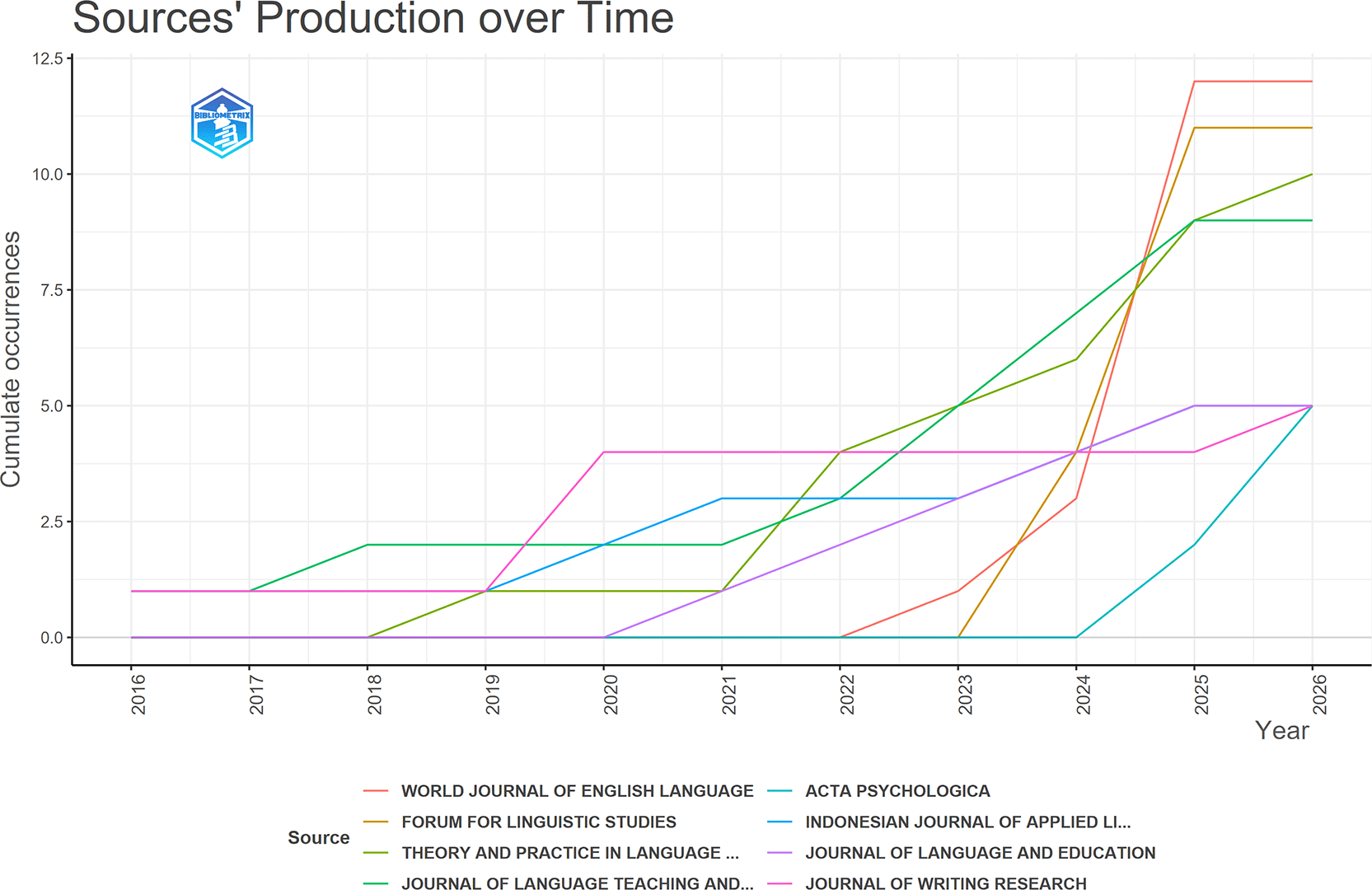
In the first five years (2016–2019), the number of publications was still small and was published in a small number of journals, among others, the Journal of Language Teaching and Research, the Indonesian Journal of Applied Linguistics, and the Journal of Writing Research. This condition indicates that the research field was still at its nascent stage, and scholarly contributions were still relatively small. In spite of this, the firm impression of publications in these articles demonstrates that the subject has not ceased to be of academic interest. However, from 2020 to 2022, publication productivity started to grow slightly, particularly in the Journal of Language Teaching and Research, Journal of Writing Research and Theory and Practice in Language Studies. The increase in this trend shows that the research area began to be discussed more widely in the international academic community. Moreover, a growth in the dissemination and scholarly treatment of the field can be seen in the number of publications in journals like the Journal of Language and Education.
The greatest increase was between 2023 and 2026. The World Journal of English Language and Forum for Linguistic Studies showed outstanding growth, with 12 and 11 publications for each in 2025 and 2026, respectively. In the coming years, Theory and Practice in Language Studies took over as the most published journal with 10 publications in 2026. The presence of the Acta Psychologica in the years 2025–2026 also represents a stretch of the research field into psychological and interdisciplinary aspects. Overall, the data show a steady growth in the scientific production and reveal that the research field is now a multidisciplinary one with a growing academic visibility published in reputable international journals.
The visualization of the Authors’ Production over Time shows the chronological development and the academic productivity of authors who have published articles on optimizing academic writing skills based on the TPACK model from 2016 to 2026, as seen in Figure 5. In general, the data show a significant transition away from using general technology for writing and the increasing use of artificial intelligence (AI), automated feedback systems, and generative AI tools in academic writing situations, especially since 2022.
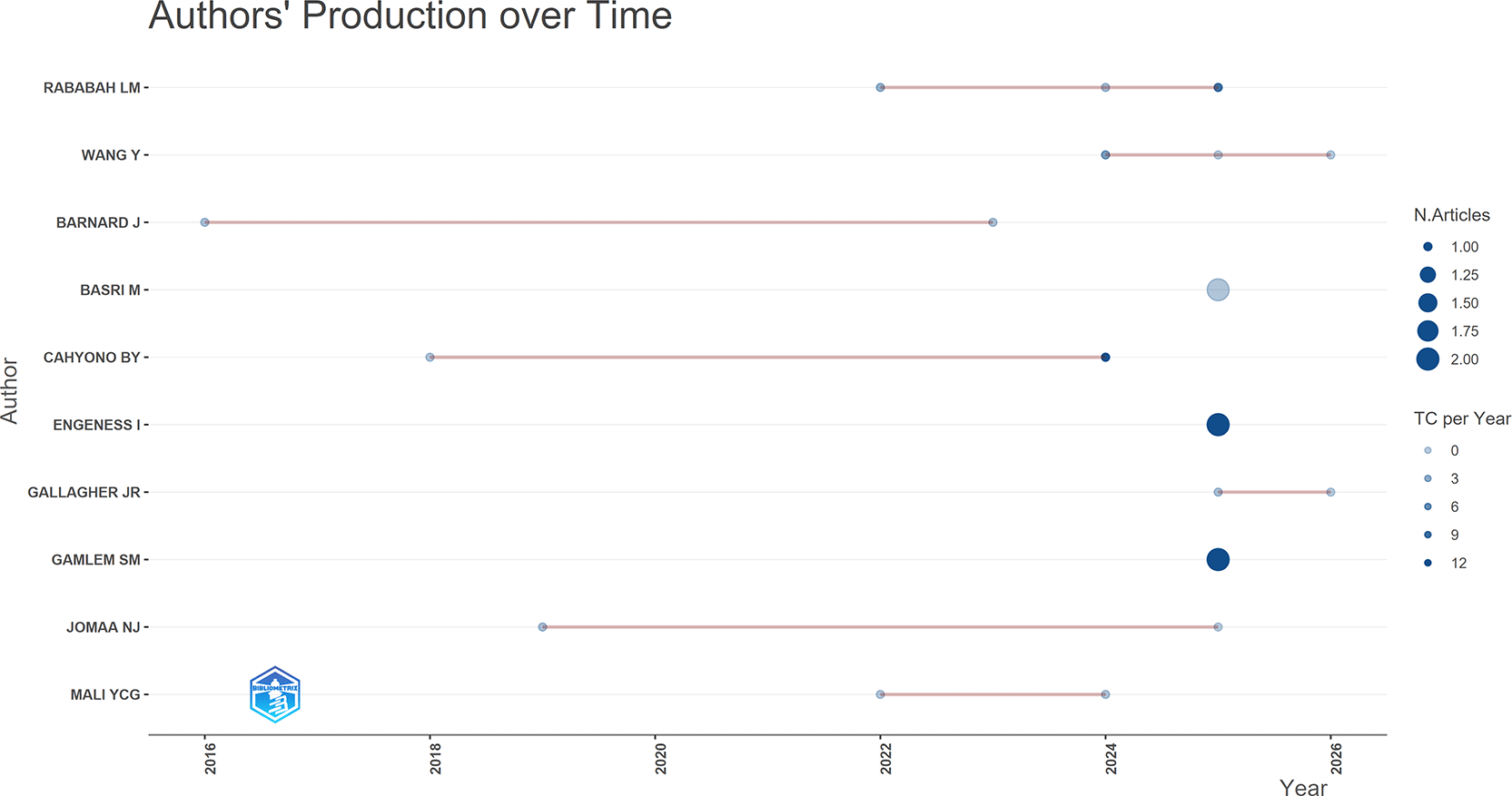
BARNARD J has the most years of publications (2016 to 2023). The author’s initial research was on how to use Twitter as a pedagogical tool to teach storytelling skills, which then expanded into a wider range of research into participatory online learning. The development is a representation of the initial level of the integration of digital technology in academic writing teaching. Likewise, CAHYONO BY showcases consistent research efforts from 2018 to 2024, including research on Automated Writing Evaluation (AWE) tools such as Tumblr and ChatGPT. Specifically, the publication about ChatGPT integration had the highest citation impact in 2024, with 35 cited and a TCpY of 11.67, showing its significant influence in current studies related to AI-enhanced academic writing.
Moreover, this is a golden era for publications focused on academic writing using AI between 2024 and 2026. This is the time when WANG Y and RABABAH LM become prolific researchers, contributing to research on AI writing in EFL writing, the use of Grammarly to improve writing proficiency and the attitudes of graduate students towards academic writing with generative AI. Furthermore, ENGENESS I and GAMLEM SM are also highly cited papers with 22 citations and a TCpY of 11, respectively.
In terms of bibliometrics, bubble size reflects the number of articles produced, and color intensity reflects the number of citations per year. In turn, authors with more scholarly productivity and citation impact, like CAHYONO BY, ENGENESS I, and GAMLEM SM, are prominent in their positions. The results indicate that the current trends of research focus on technology-supported pedagogical approaches, technology-mediated feedback and AI-enhanced writing environment in postgraduate academic writing instruction.
The Most Global Cited Documents analysis generated by Biblioshiny identifies the most influential publications in the research field of “Optimizing Academic Writing Skills Using the TPACK Framework in Postgraduate Students,” based on documents indexed in the Scopus database from 2016 to 2026. The impact of these works was evaluated using three key bibliometric indicators: Total Citations (TC), Citations per Year (TC per Year), and Normalized Total Citations (Normalized TC). Together, these indicators reflect the academic visibility, temporal impact, and relative performance of each publication within the field, as shown in Table 1.
Črček N (2023), published in the Journal of Language Education, ranks first with 80 Total Citations and 20 Citations per Year, demonstrating its substantial global influence. However, when considering relative impact adjusted for publication year, Wang C (2025) in the Journal of Second Language Writing achieves the highest Normalized TC value of 17.85, supported by an impressive 26.5 Citations per Year. This highlights the strong scholarly interest in studies focusing on AI-assisted writing and technology-enhanced writing instruction.
Additionally, Liu Y (2024), published in the International Journal of Applied Linguistics, exhibits significant contemporary relevance with 65 Total Citations and 21.7 Citations per Year. Several recent publications from 2025, including Engeness I, also record high Normalized TC values, further underscoring the growing research trend in digital learning environments and AI-powered feedback systems.
Foundational studies published earlier, such as Purnawarman P (2016) with 64 TC, Moore Ns (2016) with 44 TC, and Feng H-H (2016) with 29 TC, continue to maintain relatively high citation counts despite their age. This sustained impact indicates that early research on technology-supported writing instruction has provided a solid foundation for subsequent studies on AI integration in academic writing.
Overall, the majority of highly cited publications originate from prominent journals in applied linguistics, computer-assisted language learning, and writing research, including the Journal of Writing Research, Computer Assisted Language Learning, JALT CALL Journal, and ReCALL. These bibliometric findings illustrate a clear paradigm shift in academic writing research—from traditional digital support toward AI-driven approaches, automated feedback technologies, and pedagogical innovations underpinned by the TPACK framework in postgraduate education.
The country-based bibliographic coupling analysis based on VOSviewer allows for obtaining an overview of the intellectual relationship and common scholarly references between countries that have published papers on the topic “Optimizing Academic Writing Skills Using the TPACK Framework in Postgraduate Students” in the Scopus database over the 2016–2026 period. The analysis used a maximum threshold of 25 countries per document, and a minimum threshold of one document per country and one citation per country. This meant that all countries that reached the minimum scholarly requirements were connected to the visualization network, as illustrated in Figure 6.
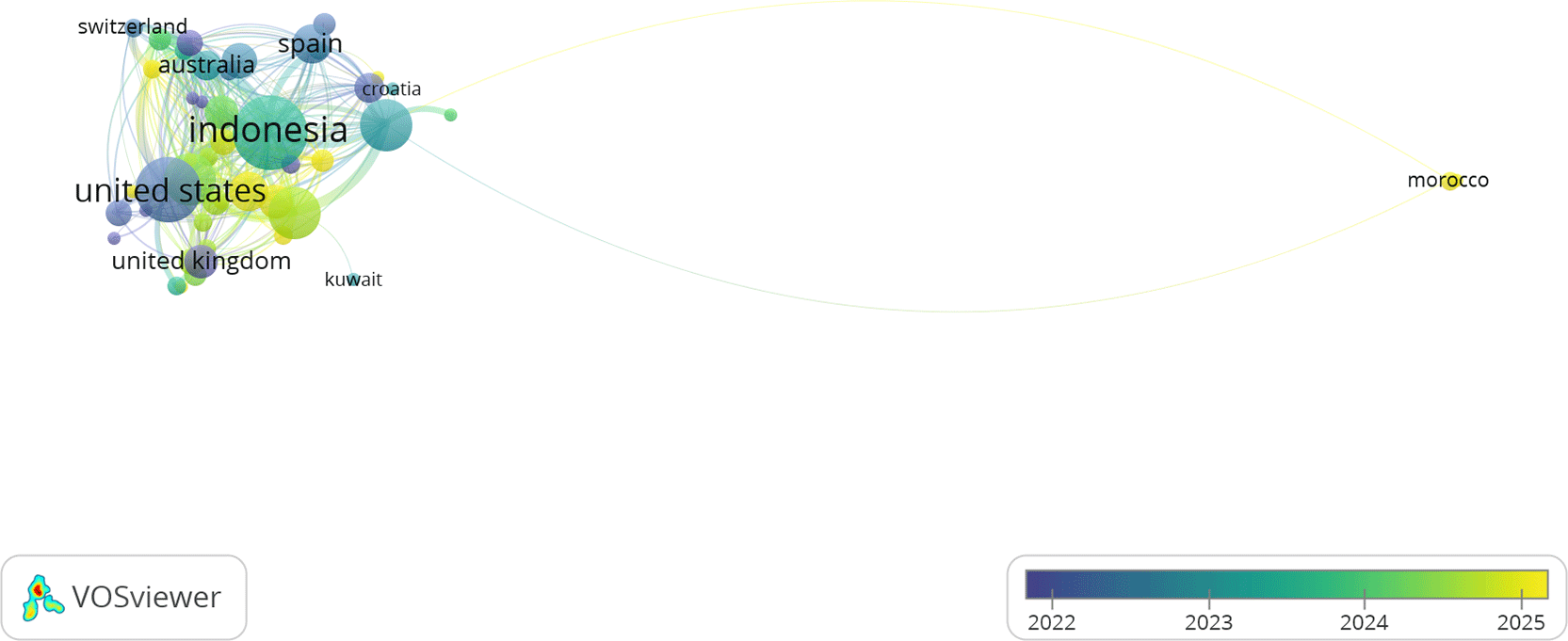
The structure of the network shows that Indonesia and the US are in the most dominant and central position in the bibliographic coupling map. They have a large node size, which suggests high publication productivity and coupling strength, meaning that they have a large number of shared references with other countries in the field. Indonesia seems to be a hub that links many countries, including Spain, Australia, Croatia, Kuwait, Switzerland, and the United Kingdom, indicating that Indonesian research has substantial influence on the discussions regarding the integration of TPACK, the use of digital media and technology in education, and the emergence of AI-supported academic writing in higher education. The United States also has a strong bibliographic presence, being well-connected with neighbouring countries. This suggests that U.S.-based research has a high level of conceptual and methodological overlap with research conducted internationally on TEAPW. Spain and Australia are secondary influential players, with their nodes of size comparable to that of the main group, and in proximity to the main cluster, which indicates that they are also involved in collaborative and thematically related research. Other than that, Croatia shows a significant linkage strength, reflecting the growing involvement in this area of research.
An aspect of the visualization that is very important is the isolation of Morocco, which is only coupled with the main network by long coupling lines. This pattern indicates that Morocco is less integrated, nor is it as active in publications, relative to the other fields. However, its relationship with the main cluster suggests intellectual affiliation with mainstream research in the field of educational technology and academic writing development. Overlay color visualization represents the temporal trends of publications. The nodes are colored to show when the research was done, with earlier work (2022) colored dark blue and more recent work (2024–2025) colored green or yellow. The dominance of green-yellow shades reflects that research on three specific topics, AI-assisted writing, digital literacy, and TPACK-based pedagogical innovation in academic writing education has significantly grown in recent years, especially in postgraduate academic writing education.
The VOSviewer visualization of the connected organizations shows the institutional collaborations and intellectual linkage between contributing organizations. In the analysis, only institutions with at least ten citations and one document relevant to the article were included, which resulted in a network consisting of only the institutions with measurable scholarly impact and citation visibility as presented in Figure 7.
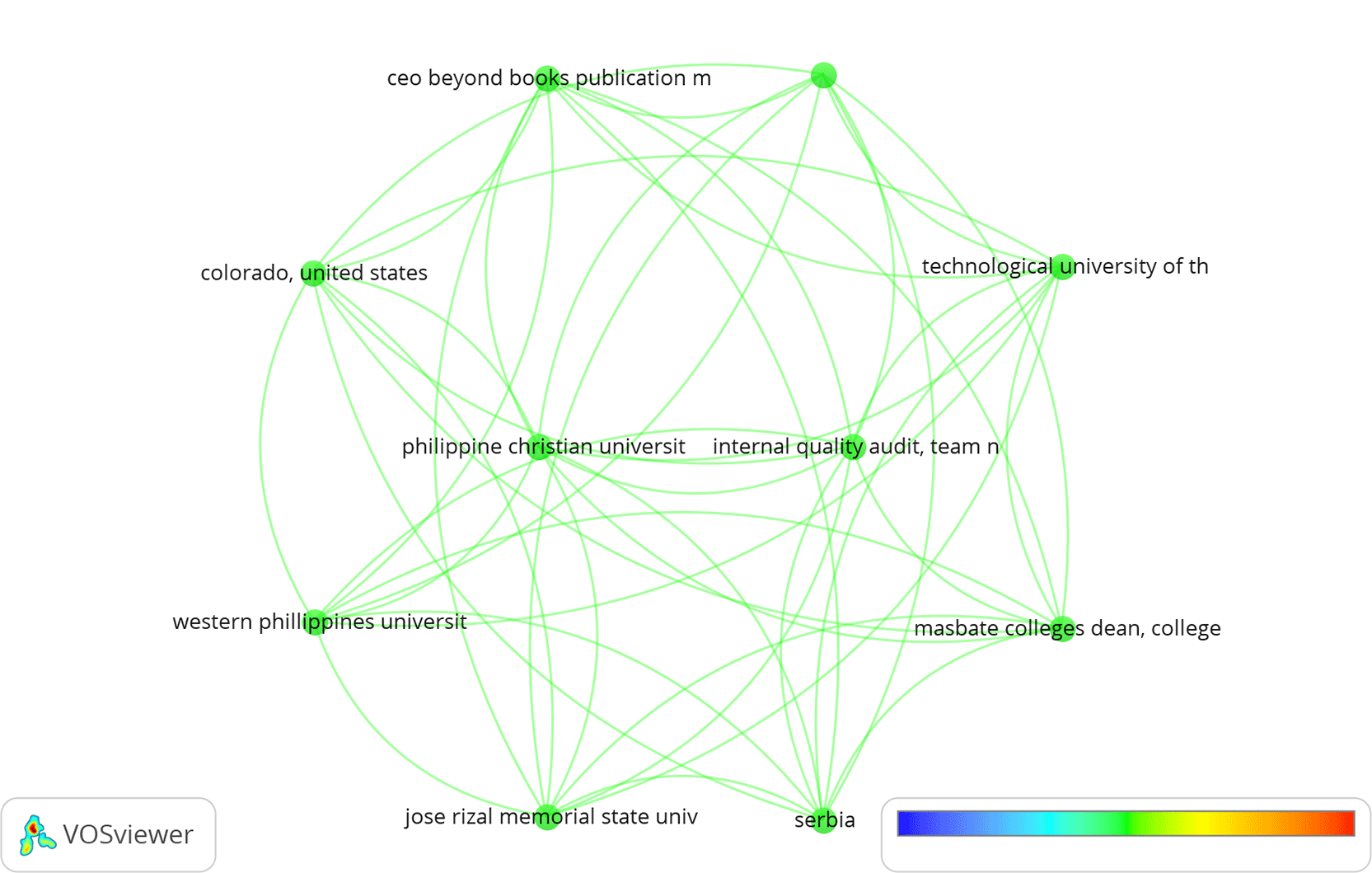
The visualization shows a very connected organizational structure, with a large number of links between institutions. In VOSviewer, nodes are the organizations, and lines are the relationships between them, either as collaboration or bibliographic context. The relatively homogeneous size of the nodes indicates that the institutions that participated in the study published with similar rates and impact in this research field. Furthermore, the biggest institutions found were the Philippine Christian University, Western Philippines University, Jose Rizal Memorial State University and Masbate Colleges. These institutions create a middle group of collaborative institutions, which warrant that research on academic writing, educational technology and TPACK-based pedagogical innovation has a significant contribution from the institutions of higher learning in the Philippines. The high level of interconnections indicates intellectual interaction and thematic coherence in the areas of digital literacy, AI-supported writing, teaching and learning environments.
Moreover, international institutional involvement is represented by organizations from Serbia, Colorado from the United States and the Technological University network. Such institutions have high levels of contact with the central cluster, suggesting cross-national scholarly interactions and common research interests in technology-enhanced academic writing and digital pedagogy. The existence of “Publication Managers,” “Internal Quality Audit Teams,” and academic administrative bodies also indicates that there are institutional governance and quality assurance procedures that shape academic writing practices through technology. In summary, the network visualization shows that TPACK-based academic writing optimization research is collaborative, interdisciplinary, and progressing toward an increasing international network. The high percentage of organizational links suggests the field is developing in a relationship network where common academic interests converge in the fields of educational technology, artificial intelligence and postgraduate writing teaching.
The co-occurrence keyword analysis from VOSviewer shows the evolution of the intellectual structure and thematic interconnections over the past decade in the field, as shown in Figure 8. For this analysis, a minimum of three occurrences of a keyword was used. Therefore, 793 keywords were identified, of which 75 keywords met the threshold and were added to the network of visualisation.
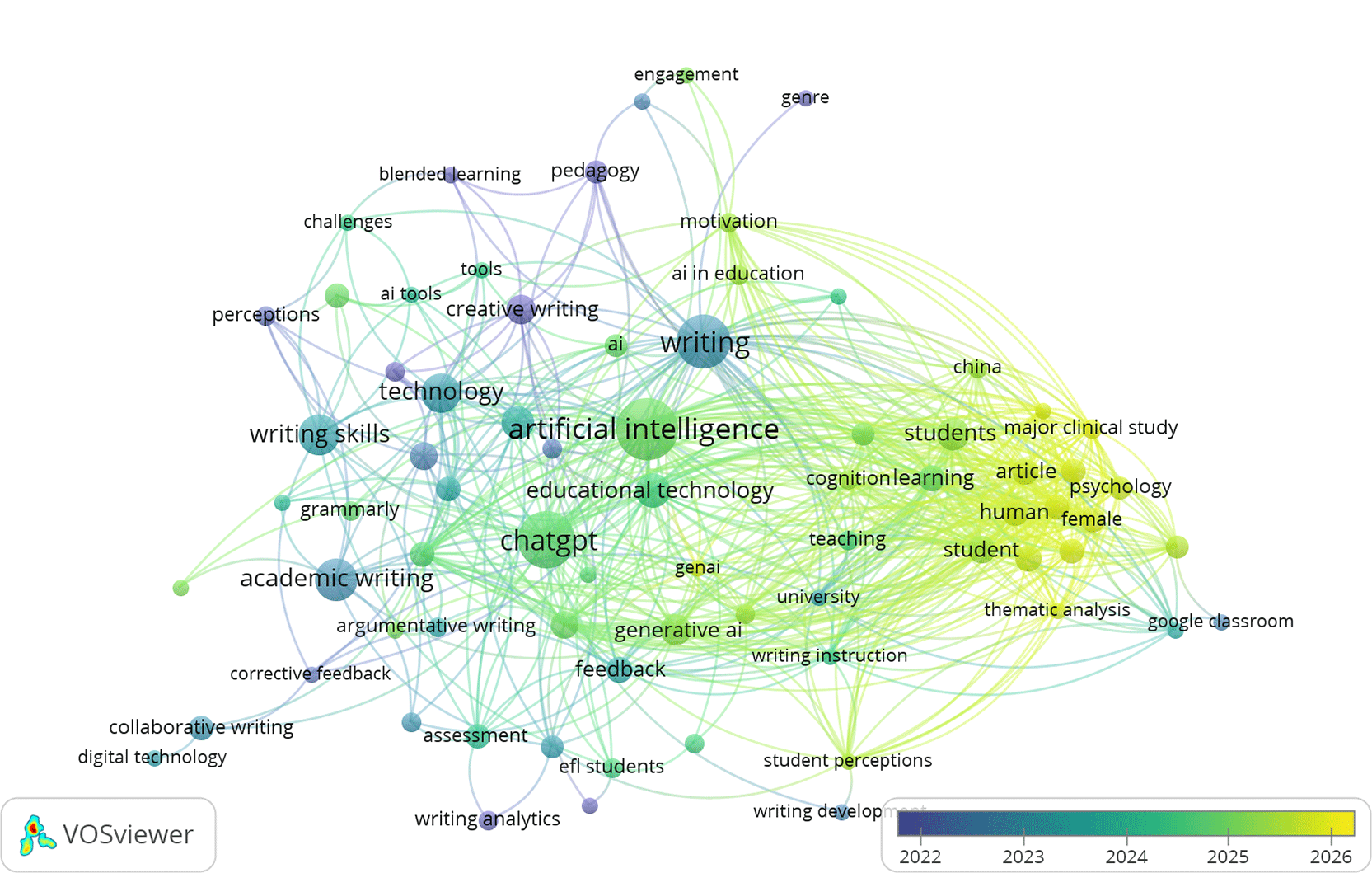
The visualisation shows a graph with nodes representing the various topics and their corresponding weights. The overlay visualisation shows that the most prominent and interconnected nodes within the network are the ones associated with AI, ChatGPT, writing, academic writing, and educational technology. The results show that current studies on academic writing with postgraduate learners have been increasingly digitising and integrating with artificial intelligence technologies and pedagogical innovations. Artificial intelligence is the most prominent node themes in co-occurrence keywords analysis, indicating that it has the biggest scholarly impact. AI is connected with the other important themes in a multi-dimensional way, such as feedback, generative AI, writing instruction, students and technology.
Moreover, the significant linkages between ChatGPT and generative AI, academic writing, assessment and feedback indicate a significant paradigm shift in teaching academic writing that is bringing generative AI into the classroom as a pedagogical and cognitive assistant tool. This is quite consistent with the TPACK model, which focuses on the interaction and interweaving of technological knowledge, pedagogical knowledge, and content knowledge to improve instructional effectiveness and learning outcomes.
From a temporal perspective, the color gradient displayed in the overlay visualization illustrates the chronological evolution of research themes between 2022 and 2026. Keywords represented in darker blue and purple tones, such as pedagogy, creative writing, and blended learning, were more prevalent during the earlier phase of the analyzed period (2022–2023). In contrast, keywords shown in green to yellow tones, including students, human, psychology, generative AI, and ChatGPT, indicate emerging and rapidly growing research interests during the most recent years (2024–2026). Overall, the findings suggest that recent scholarly trends have increasingly focused on the utilization of artificial intelligence to enhance academic writing proficiency, learner engagement, feedback mechanisms, and technology-enhanced learning practices in higher education contexts.
The thematic map created by Biblioshiny gives a detailed picture of the conceptual structure and thematic change of research. The map depicts the relevance degree (centrality) and the development degree (density) of the research themes in four quadrants, as shown in Figure 9, to indicate the importance and maturity of each thematic cluster in the research landscape.
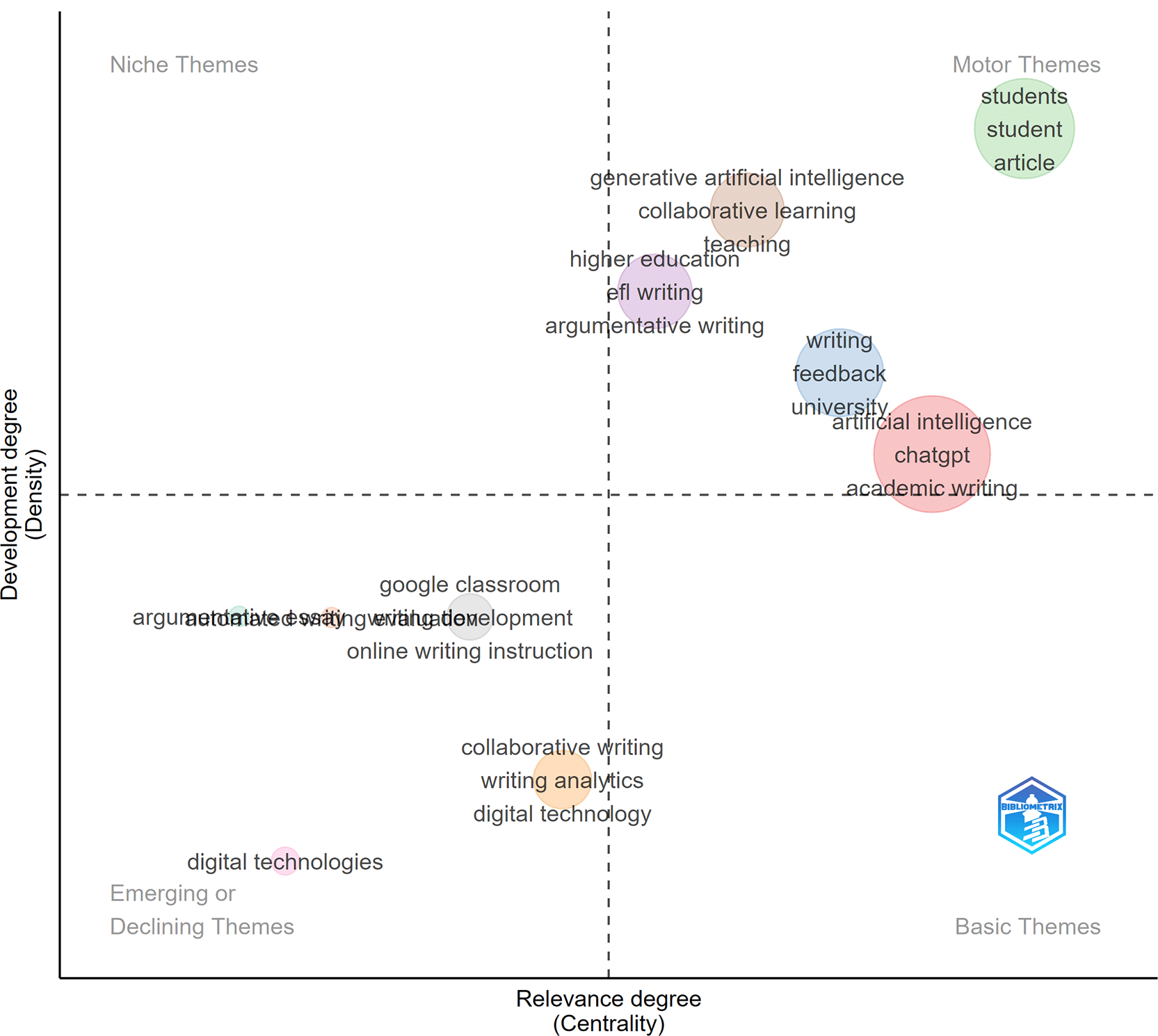
Students and student appeared repeatedly in the upper right quadrant, known as ‘motor themes’, suggesting that those were the most prominent and developed themes. These themes are very central and dense, meaning that they are highly interconnected and are significant in the current conversation about writing in higher education supported by AI. The ubiquity of ChatGPT and artificial intelligence (AI) further validates the increasing incorporation of generative AI technologies into the teaching and learning of academic writing and pedagogies that follow the TPACK model. Inside the upper-left quadrant are more specialised, yet less interconnected themes, including generative artificial intelligence, higher education, and argumentative writing. Most of these themes show a fair amount of internal development but are still relatively specialised in the area of research.
Collaborative writing, writing analytics, and digital technology fall into the bottom right quadrant called ‘Basic Themes’. These themes are considered to be basic and transversal to be able to provide support for the elaboration of more advanced topics in academic writing and educational technology research. Lastly, the bottom left quadrant depicts emerging or declining themes, such as digital technologies, online writing instruction, and other topics. These low-density and centrality scores suggest that they are either new research areas that are emerging or themes becoming less studied. Overall, the thematic map shows that there is a clear movement towards using AI in academic writing research in technology-enhanced postgraduate education.
The results of this bibliometric study reveal that the field of studying the optimization of academic writing skills in the context of TPACK in the postgraduate field has grown significantly from 2016 to 2026. The 15.43% annual growth rate and the surge in publications following 2022 suggest the field is experiencing fast growth, fueled by technological innovation and the wider use of AI in higher education. This is in line with the findings of Al Viana et al.32 which indicated an increasing trend in the use of technology-enhanced learning environments with AI tools and natural language processing (NLP). Likewise, Sukmojati et al.31 noted that after the pandemic period, more attention was paid to how educational transformation is being undertaken in a practical approach through digital pedagogies and learning systems with technology.
The publication life cycle analysis also shows that there has been the largest rise in the number of publications from 2023 to 2025, indicating that recent developments in generative AI technologies, such as ChatGPT, have already emerged as key drivers of research productivity. The results confirm Ahmed et al.4 who suggested that ChatGPT can help overcome language barriers and assist with idea generation, thereby significantly contributing to language learning and the development of academic writing. Furthermore, Heriyawati & Romadhon17 revealed that postgraduate students believe that the use of AI-assisted writing platforms is an efficient writing tool that can speed up the process of revising their thesis and enhance writing quality. Hence, the skyrocketing number of publications suggests that using AI writing tools in postgraduate education settings is gaining traction.
The source production analysis also shows that journals specializing in linguistics, educational technology and writing research began to be the preferred outlets for the production of this topic. The interdisciplinary journals that appeared in 2025–2026, like Han & Hiver,37 indicate that the focus of the discussion on academic writing has shifted from language teaching to psychological and cognitive aspects. This phenomenon provides another argument that AI technologies play an increasing role in students’ cognitive processes, learning behaviors and critical thinking patterns.30 Thus, academic writing research is not considered merely from the pedagogical point of view but also from the psychological and behavioral point of view.
The authors’ production analysis identifies the emerging trend of research interest in the use of AI in writing teaching and AI-based feedback systems. Studies by researchers like CAHYONO BY, ENGENESS I, and GAMLEM SM have highlighted their role as key influencers in the fields of AI integration in education, AI-driven feedback, and digital scaffolding. In line with Engeness & Gamlem,23 who theorized the AI feedback as a culturally mediational tool that could help students to develop their writing by providing guided interaction, the findings revealed that students experienced a sense of instruction and direction in their writing from the AI feedback. Similarly, Kundu & Bej22 claimed that personalized feedback through the use of AI has positive impacts on learner satisfaction, autonomy, and engagement. With the growing focus on feedback mechanisms in the scholarly literature, AI technologies are increasingly seen not only as writing technologies but also as educational facilitators in the context of TPACK.
The study of the most cited documents also shows a shift from traditional technology-assisted writing studies to the exploration of pedagogical innovations that incorporate AI. The papers that are most cited from 2023 to 2025 tended to be on generative AI, automated writing evaluation, and second-language writing enhancement. This discovery aligns with the study of Lu & Zeng,19 who concluded that using model texts created by ChatGPT to enhance students’ text quality and perceptions of writing in appropriate educational practices is beneficial. Nevertheless, Gerlich30 noted that AI technologies should be a complementary tool, not a substitute for human critical thinking. The rise in the number of citations for AI-powered research papers is a sign of the growing interest and controversy surrounding the use of AI in the classroom.
The bibliographic coupling analysis showed that Indonesia and the United States had the dominant role in the international research network. The presence of strong Indonesia indicates that the country has been making significant contributions to the use of technology in language learning and pedagogical innovation using TPACK. This result is aligned with the result obtained by Sukmojati et al.,31 which indicated that Indonesia was one of the countries that contributed to the study of technology-based ELT in recent years. Furthermore, the partnership of countries indicates that academic writing optimization has become a worldwide issue that needs interdisciplinary and cross-national academic collaboration. However, the moderate level of international co-authorship (17.28%) suggests that there is still potential to expand international collaboration.
The co-occurrence keyword analysis revealed that the most prominent and interrelated themes were “artificial intelligence,” “ChatGPT,” “academic writing,” and “educational technology. The results showed that the use of AI in academic writing teaching has emerged as the mainstream of the academic writing teaching discourse. ChatGPT, feedback, assessment, and generative AI are closely intertwined, embodying a pedagogical shift towards AI-enhanced writing environments where students are expected to become self-regulated learners and adapt instruction as needed. The result is in strong support of the TPACK framework proposed by Zhang & Li,38 which highlights a need for the integration of technological knowledge with the pedagogical knowledge and content knowledge. Moreover, Dahri et al.39 highlighted that metacognitive awareness and self-regulated learning readiness have a significant impact on students’ acceptance of AI-based learning tools, further emphasizing the need for pedagogically guided implementation of AI.
The thematic map analysis further indicates that the motor themes of artificial intelligence, ChatGPT, academic writing, and students have high centrality and density. These themes suggest that they are not only conceptually developed but also have a strategic significance for the future development of the field. Other themes like collaborative writing, writing analytics and digital technology are still very basic and not yet fully developed, and thus offer space for further research. Further evidence of the ongoing dynamism of the field of online writing instruction and digital technologies is evident in emerging themes that focus on the ways in which teachers are utilizing digital tools and the ways in which students are using print- or web-based technologies to create and engage with texts.
While the findings of this research are encouraging, ethical issues regarding the use of AI tools are still very significant and worth consideration. The concerns of plagiarism, dependency, cognitive offloading, and AI hallucinations remain a challenge for higher education institutions around the world. When it comes to teaching with AI, instructors often face ethical challenges with regard to academic honesty and real student learning.26 Likewise, Wakjira et al.40 cautioned that in overreliance on automated systems, AI-produced misinformation and unwarranted citations could pose a risk to the credibility of science. In conclusion, AI technologies have significant pedagogical value. However, their successful incorporation into the TPACK framework demands a nuanced approach to teaching that prioritizes a balance between the benefits of AI and the maintenance of critical thinking, creativity, and ethical academic practices.
The findings of this bibliometric study showed that the research about the optimization of academic writing skills has seen a significant increase among PGR students in the period 2016–2026 in accordance with the TPACK-based approach. The results highlight that AI, ChatGPT, academic writing, education technology, and feedback systems are the prevailing trends in today’s academic conversation. The use of AI-based technologies in academic writing education signifies a profound shift in the pedagogical approach to teaching and learning, moving toward technology-enhanced and student-centered classrooms. Moreover, the thematic and co-occurrence analysis shows that the use of generative AI and automated feedback mechanisms tends to be increasingly seen as key parts of postgraduate writing development in the context of the TPACK framework. The study also emphasizes the importance of interdisciplinary and international collaborations and their contribution to the advancement of the research field. Despite these positive developments, ethical concerns related to plagiarism, dependency, and AI-generated misinformation remain critical challenges. Thus, future studies should focus on balanced use of AI in higher education, fostering critical thinking, academic integrity, self-regulated learning, and sustainable pedagogical innovation within educational environments.
| Views | Downloads | |
|---|---|---|
| F1000Research | - | - |
|
PubMed Central
Data from PMC are received and updated monthly.
|
- | - |
Provide sufficient details of any financial or non-financial competing interests to enable users to assess whether your comments might lead a reasonable person to question your impartiality. Consider the following examples, but note that this is not an exhaustive list:
Sign up for content alerts and receive a weekly or monthly email with all newly published articles
Already registered? Sign in
The email address should be the one you originally registered with F1000.
You registered with F1000 via Google, so we cannot reset your password.
To sign in, please click here.
If you still need help with your Google account password, please click here.
You registered with F1000 via Facebook, so we cannot reset your password.
To sign in, please click here.
If you still need help with your Facebook account password, please click here.
If your email address is registered with us, we will email you instructions to reset your password.
If you think you should have received this email but it has not arrived, please check your spam filters and/or contact for further assistance.

Comments on this article Comments (0)