Keywords
employee well-being, Job Demands-Resources (JD-R) model, job crafting, work engagement, exhaustion, PLS-SEM, UAE organizations, burnout, job performance, occupational health

employee well-being, Job Demands-Resources (JD-R) model, job crafting, work engagement, exhaustion, PLS-SEM, UAE organizations, burnout, job performance, occupational health
Employee well-being refers to individuals’ emotional and functional states in the workplace, which significantly impact overall life satisfaction and mental health. Although multidimensional, it is consistently associated with job satisfaction, engagement, burnout, stress, leadership quality, and workplace design. In the United Arab Emirates (UAE), employee well-being occupies a distinctive nexus of rigorous, swiftly evolving business cultures and innovative national happiness initiatives. Influenced by public discourse and government policies, organizations, particularly in the public sector, are increasingly considering well-being, happiness, and employee engagement as strategic priorities.1,2 In the UAE, job demands often manifest as extended working hours and intensely competitive atmospheres,3 and considerable physical and mental health risks, including stress, obesity, and cardiovascular disease.4,5 If unaddressed, these intense expectations can precipitate burnout and impede overall productivity. Conversely, job resources are essential for mitigating these demands and enhancing psychological engagement. High-commitment human resource systems and explicit performance management in UAE firms foster perceived support, work-life balance, and innovative behavior.6–8 Although flexible, family-oriented policies remain uncommon despite their acknowledged importance,9 structured corporate wellness initiatives demonstrate efficacy by enhancing satisfaction, decreasing absenteeism, and yielding positive economic outcomes.4,10 Ultimately, while UAE firms increasingly recognize well-being as a fundamental catalyst for performance, ongoing challenges related to heavy workloads and chronic health risks necessitate sustained, comprehensive policies. Thus, the JD-R framework offers a systematic method for comprehending how balancing specific local demands with targeted organizational resources can enhance occupational health within the UAE’s evolving economy. Building on these foundations, this study aims to identify the primary behavioural and psychological drivers of job performance in the UAE organizational context. By integrating an expanded JD-R framework, the research systematically maps how specific workplace factors shape core employee outcomes. Specifically, the study evaluates the health-impairment pathway of the JD-R model by examining the direct impact of high job demands on employee exhaustion. Furthermore, the research investigates the complex mediating roles of job crafting, work engagement, and exhaustion, illustrating how these factors bridge the gap between baseline workplace conditions and final performance outcomes.
Research from the United Arab Emirates (UAE) indicates elevated yet inconsistent levels of stress and burnout across the healthcare, hospitality, and public sectors. A significant body of evidence highlights that these outcomes are primarily driven by demanding occupational factors, including high workloads, shift work, role ambiguity, poor work–life balance, and insufficient organizational support.11–15 Despite the introduction of wellness programs, these core issues are often only partially addressed. Furthermore, the broader work environment specifically an institution’s organizational culture and prevailing leadership styles serves as a strong predictor of employee stress levels and overall well-being.11 In Sharjah’s public sector, employees typically report considerable overall job satisfaction; however, moderate-to-high levels of depersonalization and diminished personal accomplishment are prevalent and significantly correlated with reduced happiness.16 In UAE hotels, burnout markedly increases psychological discomfort and the propensity to resign, with distress serving as a principal mechanism in explaining the relationship between burnout and staff turnover.17 Table 1 below shows the sector-wise well-being issues in the UAE.
Although workplace well-being programs are becoming increasingly common, empirical evidence concerning their effectiveness is notably inconsistent, especially when interventions adopt a generic, individual-centered approach instead of being customized to particular business contexts and workforce requirements. Numerous umbrella and scoping reviews demonstrate that universal psychological treatments have only small to moderate effects, often supported by low to very low-certainty evidence.20–23 A review of 75 eHealth experiments indicated that average effects on depression, anxiety, and stress are minimal and have remained static over the past decade.24 Moreover, universal eHealth stress management interventions implemented among unselected employees have shown no significant positive outcomes and, in some cases, have indicated potential harm, whereas the same content was effective when specifically targeted at highly stressed workers.25 This deficiency is further substantiated by a comprehensive UK survey involving 46,336 workers, which found that participants in individual-level interventions did not exhibit superior outcomes compared to non-participants.26 The UAE workforce exhibits a distinctive demographic and epidemiological profile; 89% of the population comprises expatriates from over 200 countries and faces a significant prevalence of chronic illnesses such as obesity, diabetes, and hypertension.27
Despite governmental initiatives such as the Ministry of Happiness and the National Program for Happiness aimed at prioritizing wellbeing in policy,6,28,29 significant implementation gaps endure, resulting in disparate outcomes, especially for marginalized populations, including low-status expatriates and female administrators.30–32 The COVID-19 pandemic highlighted disparities in mental health and resilience among employees.12,33–35 Migrant workers face heightened risks of depression (25%) and suicide ideation (6.3%), with factors such as poor income and extended working hours exacerbating their vulnerability.36 Table 2 below presents the current levels of workplace stress and the prevalence of health issues in the UAE.
Research on employee well-being in the UAE is expanding, with numerous studies assessing its impact on outcomes such as performance, innovation, job satisfaction, and health. Yet coverage remains fragmented by sector and outcome, and measurement tools are not yet standardized. A global review notes that many worker wellbeing instruments lack full psychometric robustness and cross-study standardization.38,39 Rigorous long-term and economic impact evaluations within the UAE remain limited.40,41
Although a growing body of literature documents employee well-being challenges in the UAE, significant gaps persist. Most studies focus narrowly on a single sector or a limited set of outcomes; cross-sector, multi-construct analyses are rare. More critically, despite the theoretical prominence of the JD-R model globally, no empirical study has systematically examined the mediating role of job crafting as a bridge between organizational/personal resources and performance outcomes within a UAE context using PLS-SEM. Furthermore, while prior UAE research documents burnout and exhaustion, the downstream behavioral mechanisms linking these states to job performance through proactive employee strategies remain theoretically underexplored in this setting. The present study addresses these gaps by applying an expanded JD-R framework to a multi-sector UAE sample, treating job crafting, work engagement, and exhaustion as simultaneous mediators in a structural model, thereby providing the first PLS-SEM-based test of the full JD-R motivational and health-impairment pathways in the UAE organizational context.
The welfare of employees in the United Arab Emirates (UAE) is shaped by a distinctive demographic profile, rapid economic development, and national policies that emphasize happiness and quality of life. Yet challenges persist, including high rates of chronic diseases, occupational stress, burnout, and mental health disorders across sectors such as healthcare, education, construction, and among migrant workers.16,27,30,31,33,36,42,43 Chronic disease risk factors are highly prevalent among UAE employees and account for almost 65% of national mortality.27 Beyond physical health, burnout and emotional exhaustion negatively affect job satisfaction. Substantial cross-sectional evidence links burnout with reduced satisfaction and performance.16,37 Leadership and organizational support emerge as crucial for improving workplace happiness; multiple studies show that top management commitment enhances retention and performance.1,6,44 Gender and nationality disparities persist in economic perceptions and mental health outcomes.43 Migrant and low-status blue-collar workers face even greater mental health risks, with depression and suicidal ideation more prevalent among these laborers.36 National happiness initiatives appear to have limited micro-level impact, with persistent gaps between macro policy visions and individual employee experiences.28,29,45,46
Burnout is associated with significant repercussions globally, such as physical ailments, depression, insomnia, injuries, and elevated levels of absenteeism and presenteeism.47,48 The Gulf Cooperation Council (GCC) region closely mirrors this global trend, as healthcare personnel exhibited elevated levels of stress, anxiety, and burnout during the COVID-19 pandemic.49,50 The effect is also apparent in Dubai government institutions, where unaddressed mental health issues correlate with significant presenteeism, 20% absenteeism, and a 15% increase in staff turnover. Nonetheless, tackling these challenges is often hindered by cultural stigma; in the UAE, stigma leads 60% of affected employees to deliberately refrain from seeking assistance.19 The establishment of formal mental health programs within Dubai government entities is associated with a 30% increase in employee satisfaction and an estimated 4:1 return on investment.19 Table 3 presents the Evidence on UAE work stress.
In light of the shortcomings of generic methodologies, contemporary conceptual and review literature strongly supports a paradigm shift away from static, top-down solutions. Scholars advocate for proactive, customized, and multifaceted frameworks that are intricately aligned with comprehensive organizational policies.41,53–55 In uniquely diversified and high-risk situations such as the UAE, implementing these principles requires a thoughtful, context-specific approach. The design of well-being initiatives must be based on local empirical data on specific health risks and workforce demographics.27 Successful programs cannot depend solely on individual coping strategies; instead, they must amalgamate individual-level instruments such as mindfulness, positive psychology, and resilience training with structural organizational adjustments, including job redesign, flexible scheduling, and participatory work practices.53,55–57
A critical structural deficiency in several modern well-being programs is their excessive focus on individual behavior modification, neglecting the broader organizational elements. Numerous extensive analyses indicate that conventional wellness programs often overlook essential systemic factors influencing occupational health, including workload, scheduling, job design, and the prevailing organizational culture.41,53–55 Individual-level interventions such as resilience training or mindfulness programs frequently fail to yield significant results due to inadequate implementation and a fundamental disconnect from essential structural changes.26,54 Contrary to shallow add-on health initiatives, evidence increasingly substantiates the effectiveness of systemic, organizational-level transformations. Interventions that fundamentally transform working conditions such as extensive job and task redesign, the implementation of flexible working arrangements, and participatory organizational modifications exhibit markedly more consistent and enduring improvements in employee well-being.56,57
The Job Demands–Resources (JD-R) model explains work in terms of two interrelated dimensions: demands that deplete energy and resources that enhance motivation. These two aspects influence two trajectories that determine burnout, engagement, health, and performance.58–60 Job demands encompass elements of work that necessitate prolonged physical, cognitive, or emotional exertion and are associated with costs such as workload, time constraints, emotional pressures, and work–family conflict.58,61,62 Elevated or persistent expectations can diminish well-being, heighten stress, and increase the risk of burnout. Conversely, job resources encompass physical, psychological, social, or organizational attributes that facilitate goal attainment, alleviate demands, and foster development (such as autonomy, feedback, social support, and equitable leadership). In summary, demands deplete energy, whereas resources cultivate motivation and resilience.
The model Figure 1 provides insight into how workplace stress and support converge to affect fatigue and engagement, thereby impacting performance and other outcomes. Core processes differentiate between the health-impairment trajectory, wherein job demands deplete energy, leading to exhaustion, burnout, and deteriorating health58,60,61,63,64 and a motivational trajectory, where job resources like autonomy, feedback, and supportive development enhance engagement and well-being.58,59,61,63,65,66 Exhaustion and burnout correlate with increased turnover intentions and diminished satisfaction and service quality, while engagement is positively connected with satisfaction and perceived performance.61,66,67
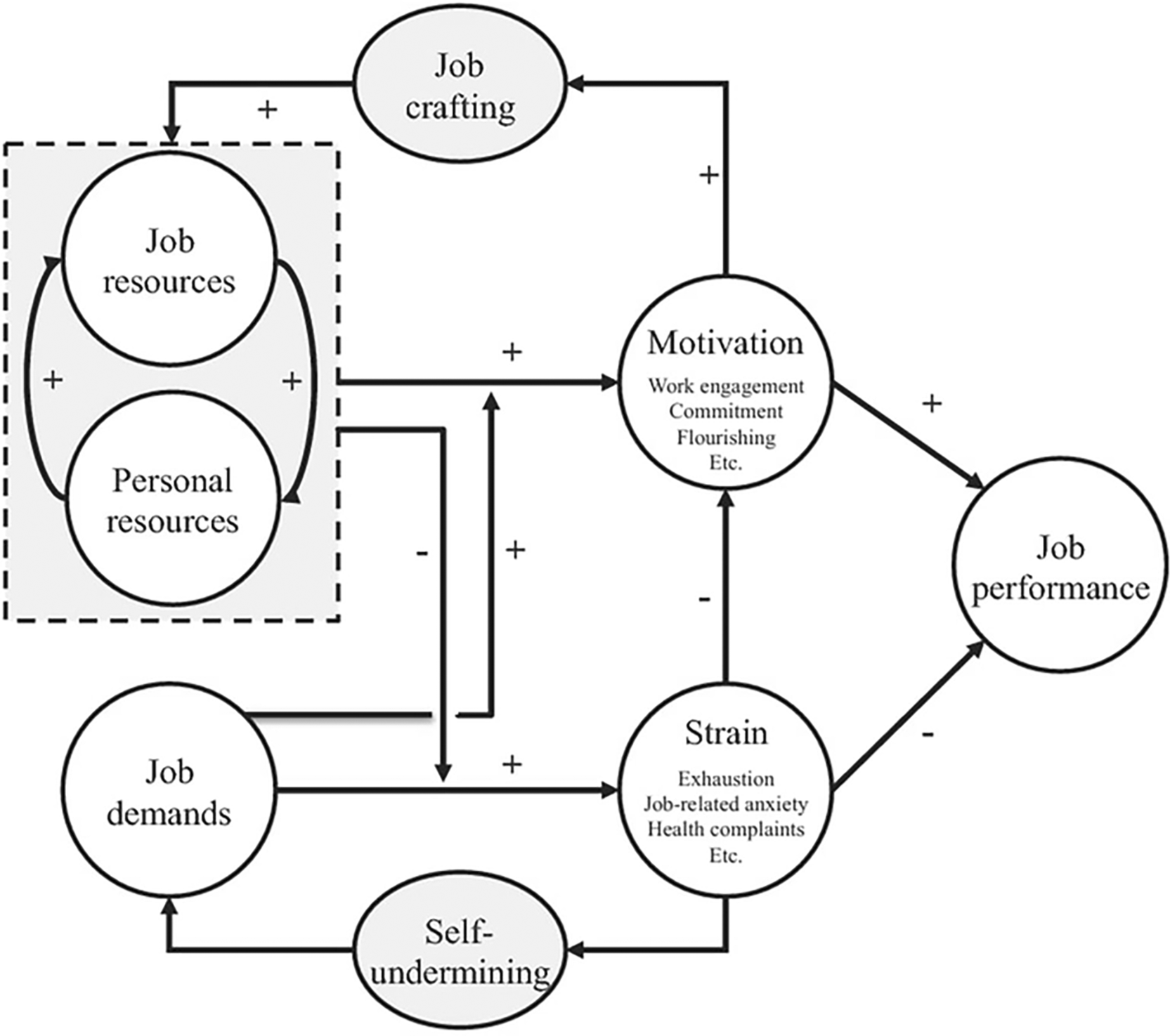
The model illustrates the dual-process framework comprising the motivational pathway (Job Resources → Job Crafting → Work Engagement → Job Performance) and the health-impairment pathway (Job Demands → Exhaustion → Job Performance). Personal resources are depicted as moderating both pathways. The expanded model includes job crafting as a proactive behavioral mechanism mediating the resource–performance relationship.
The JD-R framework views job crafting as an active, ongoing process in which employees continually modify their work to fit their needs and strengths, creating feedback loops. When crafted well, they boost engagement and access to resources, fueling an upward spiral of even greater engagement. However, if coping strategies are maladaptive and demands exceed capacity, stress builds, self-regulation falters, and burnout can lead to a downward spiral of strain and fatigue.58,68,69 Job crafting renders the JD-R model dynamic: engaged and resourced employees are inclined to seek additional resources and meaning, whereas prolonged high demands may result in maladaptive cycles and burnout.
Based on the JD-R theoretical framework and the reviewed literature, the following hypotheses are formally stated:
Job and personal resources are positively associated with employee job crafting behaviors.
Job and personal resources are positively associated with work engagement.
Job demands are positively associated with employee exhaustion (health-impairment pathway).
Job demands are positively associated with employee job crafting behaviors.
Job crafting is positively associated with work engagement.
Job crafting is negatively associated with employee exhaustion.
Job crafting is positively associated with job performance.
Work engagement is positively associated with job performance.
Exhaustion is negatively associated with job performance.
This study pursues three research objectives:
• To determine the primary behavioral and psychological drivers of job performance in the UAE organizational context.
• To investigate the mediating roles of job crafting, work engagement, and exhaustion between employee resources and job demands on performance outcomes.
• To evaluate the health-impairment pathway of the JD-R model by examining the impact of job demands on employee exhaustion.
This study received ethical approval from the Institutional Review Board (IRB) of Abu Dhabi University prior to commencement of data collection (File Number: CAESS-7; IRB Chair: Rania Al Dweik; Approval Date: 9 November 2025; Expiry Date: 9 November 2026). All procedures were conducted in accordance with the Declaration of Helsinki and applicable national guidelines for research involving human participants. Prior to participation, all respondents were provided with a detailed study information sheet outlining the purpose of the study, data confidentiality measures, and their right to withdraw at any time without consequence. Written informed consent was obtained from all participants before the questionnaire was administered. Responses were fully anonymized during analysis to ensure participant confidentiality. The IRB approval certificate is submitted as a supplementary document alongside this manuscript.
This study adopts a quantitative, cross-sectional research design employing Partial Least Squares Structural Equation Modelling (PLS-SEM). PLS-SEM is particularly well-suited because it accommodates reflective measurement models, handles non-normal data distributions effectively, and is appropriate for studies with moderate sample sizes and predictive theoretical purposes.70 The study employed a purposive convenience sampling strategy. Given the limited access to a comprehensive national sampling frame for the UAE’s diverse, multi-sector workforce, which comprises 89% expatriates from over 200 countries, a convenience sample was the most feasible approach to reach respondents across multiple sectors within the project timeline. Convenience sampling is widely accepted in organizational psychology research when the primary objective is theory testing rather than population-level generalization,71 and is consistent with similar JD-R studies.61,66 The sample size of N = 160 exceeds the minimum threshold recommended for detecting medium effect sizes (f2 ≥ 0.15) with 80% power at α = 0.05, which requires approximately 77 observations for the maximum number of predictors in any single equation.70
Data were collected via a structured online questionnaire distributed through professional networks and organizational contacts across various sectors in the UAE, including education, healthcare, manufacturing, construction, and transportation. Table 4 below presents the demographic profile of respondents. All participants were required to provide written informed consent prior to participation, with responses anonymized to ensure confidentiality. The questionnaire yielded a final valid sample of N = 160 respondents.
The questionnaire operationalized six latent constructs using multi-item reflective scales measured on a five-point Likert scale (1 = Strongly Disagree to 5 = Strongly Agree). Job resources (JR1–JR10) and personal resources (PR1–PR4) were combined into a single second-order “Resources” construct consistent with Bakker et al.,58 who treat job and personal resources as functionally equivalent energetic regulators within the JD-R framework, both serving to buffer demands and enable proactive behavior. Table 5 presents the measurement instrument constructs and their respective indicators.
Data analysis followed the two-step PLS-SEM procedure recommended by Hair et al.,70: (1) assessment of the measurement model (outer model) to establish reliability and validity, followed by (2) evaluation of the structural model (inner model) to test hypothesized paths. Bootstrapping with 5,000 iterations was employed to generate path coefficient significance levels (t-statistics and p-values) at a two-tailed significance level of α = 0.05. All analyses were conducted using SmartPLS 472 with standardized results reported. The descriptive statistics are shown in Table 6 below.
Prior to evaluating the structural relationships, the psychometric properties of the measurement model were assessed using indicator reliability (outer loadings), internal consistency reliability (Cronbach’s Alpha and Composite Reliability), convergent validity (average variance extracted [AVE]), and discriminant validity (Fornell–Larcker criterion and HTMT ratio).
Construct Reliability and Validity
A summary of construct reliability and validity is shown for all constructs in Table 7.
| Construct | Cronbach’s α | CR (ρa) | CR (ρc) | AVE |
|---|---|---|---|---|
| Exhaustion (EX) | 0.76 | 0.814 | 0.843 | 0.575 |
| Job Crafting (JC) | 0.786 | 0.810 | 0.862 | 0.612 |
| Job Demands (JD) | 0.848 | 0.881 | 0.882 | 0.557 |
| Job Performance (JP) | 0.758 | 0.779 | 0.846 | 0.582 |
| Resources† | 0.915 | 0.921 | 0.927 | 0.497† |
| Work Engagement (WE)* | 0.686* | 0.783 | 0.858 | 0.753 |
* WE Cronbach’s α = 0.686 represents a minor shortfall relative to the recommended 0.70 threshold70; however, composite reliability (ρc = 0.858) and AVE (0.753) both exceed their respective thresholds, supporting overall construct validity.
† Resources AVE = 0.497 marginally falls below the recommended threshold of ≥0.50; however, the composite reliability (ρc = 0.927) substantially exceeds its threshold, and all outer loadings for this construct range from 0.600 to 0.781, providing sufficient evidence of convergent validity. This marginal shortfall is considered acceptable.70,73 CR = Composite Reliability; AVE = Average Variance Extracted.
Indicator Reliability (Outer Loadings)
All indicator outer loadings were assessed against the recommended threshold of ≥0.60.70 JR1 was excluded prior to final analysis as its loading (0.55) fell below this threshold. Table 8 presents the outer loadings from bootstrapping with 5,000 subsamples.
Discriminant Validity: Fornell–Larcker Criterion
Table 9 presents discriminant validity results using the Fornell–Larcker criterion.74 Diagonal values (√AVE) exceed all off-diagonal correlations, confirming discriminant validity.
Discriminant Validity: Heterotrait-Monotrait (HTMT) Ratio
The HTMT ratio was assessed as an additional criterion for discriminant validity.73 Values below 0.90 indicate acceptable discriminant validity. Table 10 presents the HTMT matrix.
| JC | JD | JP | Resources | WE | |
|---|---|---|---|---|---|
| Exhaustion (EX) | 0.233 | 0.296 | 0.257 | 0.357 | 0.111 |
| Job Crafting (JC) | 0.163 | 1.002 * | 0.831 | 0.734 | |
| Job Demands (JD) | 0.242 | 0.288 | 0.259 | ||
| Job Performance (JP) | 0.795 | 0.677 | |||
| Resources | 0.606 |
* HTMT value for JC↔JP = 1.002 exceeds the 0.90 threshold, signalling a potential discriminant validity concern between Job Crafting and Job Performance. This is acknowledged as a study limitation. All other HTMT values are well below 0.90. HTMT values computed via SmartPLS 472 bootstrapping (N = 5,000 subsamples).
As shown in Figure 2, the measurement model’s acceptability was confirmed; the structural model was assessed using PLS-SEM bootstrapping (5,000 subsamples, two-tailed tests, α = 0.05) to estimate path coefficients, effect sizes (f2), and predictive relevance (Q2).
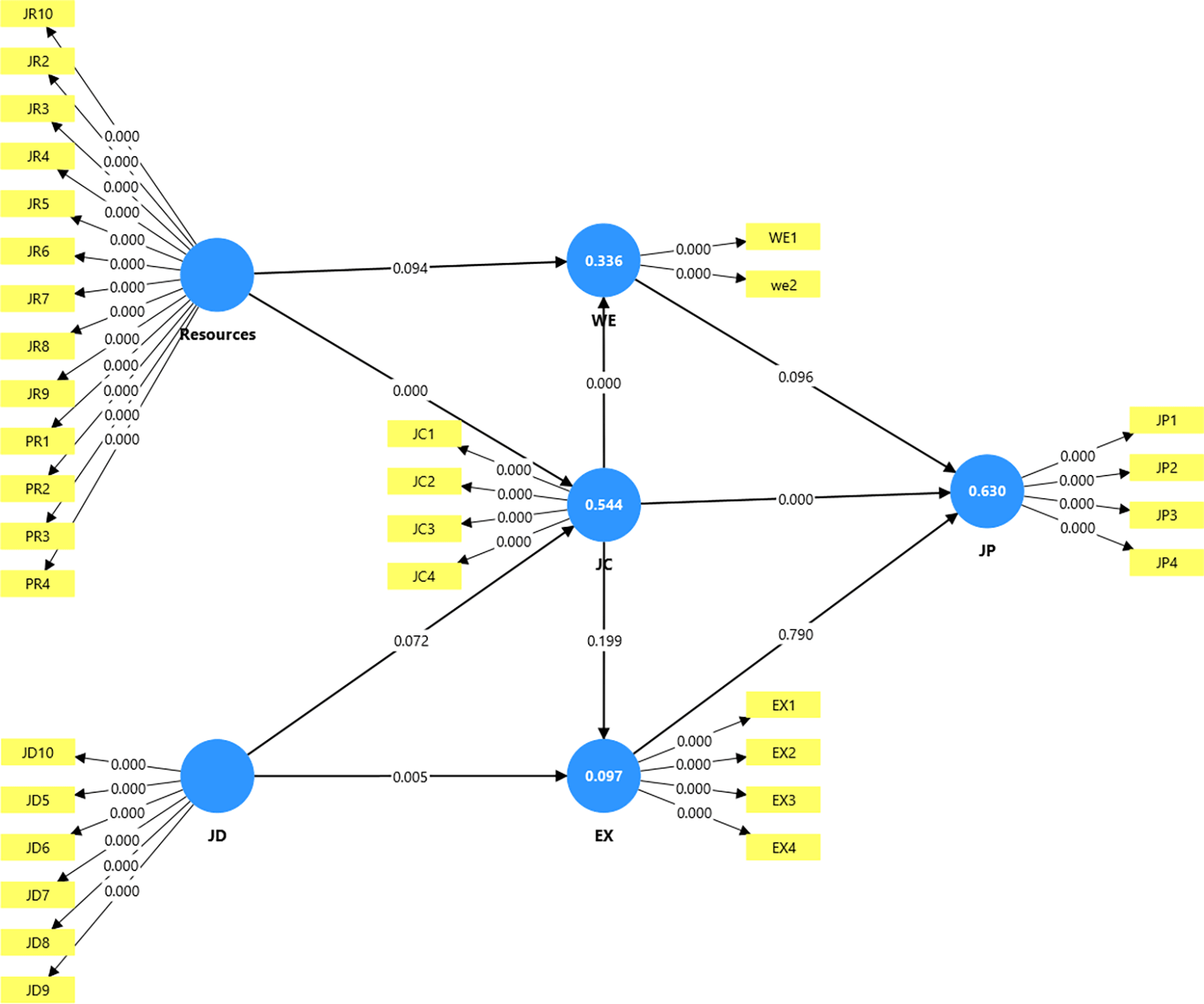
Path coefficients (β) are displayed on each structural arrow. Significant paths (p < 0.05) are shown in solid lines; non-significant paths are shown in dashed lines. R2 values: Job Crafting (R2 = 0.544), Work Engagement (R2 = 0.336), Exhaustion (R2 = 0.097), Job Performance (R2 = 0.630).
Path Coefficients
Table 11 presents the Path coefficients results.
R 2 Values and Model Explanatory Power
Table 12 presents the R2 values of the constructs.
Effect Sizes (f 2)
Table 13 presents the Cohen’s effect size of all the paths.
Predictive Relevance (Q 2) and Model Fit
Table 14 presents the Predictive relevance and model fit indices of the research.
Indirect and Total Effects
Table 15 presents the total and specific indirect effects.
This study applied the JD-R framework to a multi-sector sample from the UAE and tested nine structural hypotheses using PLS-SEM. The results yield a nuanced picture of how organizational and personal resources, job demands, and employee behavioral responses collectively shape performance outcomes in this distinctive labor market context.
The most striking finding is the dominant role of job crafting in driving performance. H1 (Resources → JC: β = 0.759, f2 = 1.180) is the strongest path in the model, aligning closely with Conservation of Resources (COR) theory,78–80 which posits that individuals with abundant resources are motivated to proactively invest them to acquire additional resources. This “gain spiral” manifests in the UAE context as resource-rich employees actively reshaping their roles, relationships, and task boundaries.81 H5 (JC → WE: β = 0.455, f2 = 0.146) and H7 (JC → JP: β = 0.727, f2 = 0.939) further confirm the centrality of job crafting: not only does it substantially enhance engagement, but it is also the most powerful direct predictor of job performance in this model. This finding extends the work of Rudolph et al.82 and Dubbelt et al.83 to a UAE context, demonstrating that proactive job redesign behaviors transfer robustly across cultures. The indirect pathway Resources → JC → JP (β = 0.552, CI [0.422, 0.678]) explains the dominant mechanism through which resources translate into performance, with job crafting acting as a full mediator.
H3 (JD → EX: β = 0.281, f2 = 0.087, p = 0.005) confirms the classical JD-R health-impairment pathway: elevated job demands deplete employees’ energy, resulting in exhaustion. This is consistent with the broader empirical literature61,63 and is particularly relevant in the UAE context, where 55% of respondents work 40–49 hours weekly. However, H9 (EX → JP: β = −0.014, f2 = 0.000, p = 0.790) was not supported, indicating that exhaustion does not directly translate into reduced job performance in this sample. This finding departs from classical burnout literature but resonates with the cultural dynamics of the UAE workforce. As a predominantly expatriate labor market where job retention concerns are acute, UAE employees may demonstrate remarkable resilience in maintaining performance standards even under conditions of emotional depletion consistent with the professionalism norms documented by Khan & Khurshid37 and Almarzooqi et al.16
Four hypotheses were not supported, each revealing substantive contextual insights. H2 (Resources → WE: β = 0.157, p = 0.094) was not directly significant; however, the strong indirect effect Resources → JC → WE (β = 0.345, p < 0.001) demonstrates that in the UAE context, resources do not independently fuel engagement without first triggering crafting behaviors. H4 (JD → JC: β = 0.121, p = 0.072) was marginally non-significant, potentially reflecting UAE-specific cultural appraisal of demands as hindrances rather than challenges. H6 (JC → EX: β = −0.118, p = 0.199) was also not supported, suggesting that while crafting enhances engagement, it does not significantly reduce exhaustion. This may reflect the dual-edged nature of crafting: increasing challenging demands may also increase workload, partially offsetting restoration benefits.68 Finally, H8 (WE → JP: β = 0.106, p = 0.096) was marginally non-significant, suggesting engagement’s impact on performance may be contingent on UAE-specific contextual and measurement factors.
These findings broadly support and extend the JD-R literature58,63 while revealing important UAE-specific contextual boundary conditions. The dominant role of job crafting aligns with Tims et al.81 and Rudolph et al.82 but reveals that the crafting-engagement-performance chain is the primary performance driver in this context. The non-significant exhaustion–performance relationship contrasts with findings from Western studies61,66 but is consistent with the dynamics of cultural professionalism and occupational precarity documented in UAE-specific literature.16,37 The model explains 63.0% of the variance in job performance, a substantial R2 value that underscores the explanatory power of the JD-R framework in this setting.
This study successfully applied PLS-SEM to test the JD-R model in a UAE organizational context (N = 160). The key findings are:
• H1 (Supported): Resources strongly predict job crafting (β = 0.759, f2 = 1.180), confirming the motivational resource-crafting pathway.
• H2 (Not Supported): Resources do not directly predict work engagement, but do so indirectly through job crafting (β indirect = 0.345, p < 0.001).
• H3 (Supported): Job demands significantly predict exhaustion (β = 0.281, f2 = 0.087, p = 0.005), confirming the health-impairment pathway.
• H4 (Not Supported): Job demands do not significantly predict job crafting (β = 0.121, p = 0.072), potentially reflecting UAE-specific cultural dynamics.
• H5 (Supported): Job crafting significantly enhances work engagement (β = 0.455, f2 = 0.146, p < 0.001).
• H6 (Not Supported): Job crafting does not significantly reduce exhaustion (β = −0.118, p = 0.199).
• H7 (Supported): Job crafting is the strongest direct predictor of job performance (β = 0.727, f2 = 0.939, p < 0.001).
• H8 (Not Supported): Work engagement does not significantly predict job performance (β = 0.106, p = 0.096).
• H9 (Not Supported): Exhaustion does not directly impair job performance (β = −0.014, p = 0.790), suggesting UAE employees maintain performance standards despite depletion.
The model paths reported are strongly aligned with established theories within the Conservation of Resources (COR) and Job Demands–Resources (JD-R) frameworks. Practical recommendations include:
• Developing Resources to Facilitate Job Crafting: Invest in employment and personal resources to initiate job crafting. Organizations could enhance autonomy, feedback, and supervisory support while cultivating personal resources such as proactive personality, emotional intelligence, and resilience through recruiting and training.82
• Applying Structured Job Crafting Interventions: Job crafting has consistently demonstrated enhancement in work engagement, task and creative performance, organizational citizenship behavior, and career satisfaction, while concurrently reducing burnout.81–83 Organizations should conduct job crafting workshops in which employees establish specific objectives, such as soliciting feedback, engaging in mentorship, and pursuing new initiatives.
• Regulating Demands to Avert Exhaustion: Elevated job expectations consistently forecast burnout and fatigue, whereas resources mitigate these impacts.59 Organizations must oversee workload, mitigate obstructive pressures such as role conflict and excessive workload, and implement job redesign and recuperation strategies to avert chronic strain.69
This study provides four key conclusions for the UAE organizational context:
• Job crafting is the pivotal performance mechanism: it is the strongest direct predictor of job performance (β = 0.727, f2 = 0.939) and the critical mediator between resources and both engagement and performance.
• The motivational pathway of the JD-R model is confirmed in the UAE context: Resources → Job Crafting → Work Engagement → Job Performance. The total indirect effect of resources on performance (β = 0.606, p < 0.001, CI [0.500, 0.708]) strongly supports this chain.
• The health-impairment pathway is only partially confirmed. While job demands significantly predict exhaustion (β = 0.281, p = 0.005), exhaustion does not translate into reduced job performance (β = −0.014, p = 0.790), suggesting UAE employees demonstrate considerable resilience.
• The model explains 63.0% of the variance in job performance and 54.4% in job crafting, indicating strong predictive relevance.
• For HR Leaders and Organizations: Invest in crafting-enabling programs that create structured opportunities for employees to proactively shape their roles, seek feedback, and build skill resources. Job crafting workshops, strengths-based performance conversations, and role redesign initiatives can substantially improve performance outcomes.
• For Managers: Provide robust job and personal resources autonomy, informational feedback, mentoring, and development opportunities as these directly fuel crafting behaviors (β = 0.759), which in turn drive performance.
• For Well-Being Policy: Although exhaustion did not directly impair performance in this sample, demand-driven exhaustion (β = 0.281) warrants attention through workload management, role clarity, and burnout prevention programs, particularly given that 55% of respondents work 40–49 hours weekly.
This study has several limitations that should be acknowledged. First, the cross-sectional design precludes causal inference; longitudinal designs would permit stronger conclusions regarding the temporal ordering of resource acquisition, job crafting, and performance. Second, the convenience sampling approach introduces self-selection bias and limits generalizability to the broader UAE population; a probability-based sample would strengthen external validity. Third, the Work Engagement construct employs only two indicators; while reliability indices are acceptable, future research should employ established multi-item scales (e.g., UWES-984) to enable more precise measurement. Fourth, the HTMT value for JC↔JP (1.002) slightly exceeds the 0.90 threshold, suggesting partial construct overlap that warrants attention in future instrument development. Fifth, with N = 160, the study may lack power for detecting small indirect effects; future research should employ larger samples and G*Power-informed designs. Future research should employ longitudinal designs, investigate moderation effects (e.g., cultural orientation, sector type, occupational precarity), and test the model across different UAE industries to assess boundary conditions of these findings.
This study was approved by the Institutional Review Board (IRB) of Abu Dhabi University prior to data collection (File Number: CAESS-7; IRB Chair: Rania Al Dweik; Approval Date: 9 November 2025; Expiry Date: 9 November 2026). All procedures were conducted in accordance with the Declaration of Helsinki. All participants were informed of the study’s purpose and provided written informed consent before participation. Responses were fully anonymized during analysis to ensure participant confidentiality. The IRB approval certificate is provided as a supplementary document.
| Views | Downloads | |
|---|---|---|
| F1000Research | - | - |
|
PubMed Central
Data from PMC are received and updated monthly.
|
- | - |
Provide sufficient details of any financial or non-financial competing interests to enable users to assess whether your comments might lead a reasonable person to question your impartiality. Consider the following examples, but note that this is not an exhaustive list:
Sign up for content alerts and receive a weekly or monthly email with all newly published articles
Already registered? Sign in
The email address should be the one you originally registered with F1000.
You registered with F1000 via Google, so we cannot reset your password.
To sign in, please click here.
If you still need help with your Google account password, please click here.
You registered with F1000 via Facebook, so we cannot reset your password.
To sign in, please click here.
If you still need help with your Facebook account password, please click here.
If your email address is registered with us, we will email you instructions to reset your password.
If you think you should have received this email but it has not arrived, please check your spam filters and/or contact for further assistance.

Comments on this article Comments (0)