Keywords
organizational agility; hospital performance; innovation ambidexterity; resource orchestration capability; regulatory pressure; digital orientation; PLS-SEM

This article is included in the Health Services gateway.
organizational agility; hospital performance; innovation ambidexterity; resource orchestration capability; regulatory pressure; digital orientation; PLS-SEM
Hospitals operate in an environment characterized by intense service demands, persistent regulatory change, technological turbulence, and rising expectations for quality, efficiency, and responsiveness. These conditions are especially salient in healthcare because hospitals must continuously reconcile operational efficiency, service quality, patient safety, and regulatory compliance under environmental volatility. Recent reviews and empirical studies therefore increasingly portray healthcare organizations as settings in which adaptive capability, rather than static resource possession alone, becomes critical for sustained performance (Prashar, 2024; Sarmiento Falla & Karwowski, 2024; Yağmur & Myrvang, 2023).
This challenge makes organizational agility increasingly relevant in healthcare. Agility enables an organization to sense change, reconfigure resources, accelerate decisions, and respond effectively to shifting stakeholder demands. In the broader agility literature, this capability has long been associated with responsiveness under uncertainty, while recent evidence in healthcare shows that agility helps organizations coordinate human, technological, and process adjustments more effectively in dynamic clinical environments (Overby et al., 2006; Melián-Alzola et al., 2020; Nguyen et al., 2025).
Three gaps motivate this study. First, prior work in hospital management often examines competition, innovation, resources, regulation, or digitalization separately, even though hospital outcomes are more likely produced by the interaction of these conditions than by isolated effects. Second, although agility has received growing attention in healthcare, the literature still offers limited evidence on how concrete strategic antecedents are translated into performance through agility as a mediating mechanism. Third, digital orientation is frequently presented as a strategic enabler, but its boundary role in strengthening the value of agility remains underexamined in hospital settings (Prashar, 2024; Sarmiento Falla & Karwowski, 2024; Kindermann et al., 2021; Nguyen et al., 2025).
To address these gaps, this study develops and tests an integrated model in which industry competitive intensity represents external market pressure; innovation ambidexterity and resource orchestration capability capture internal strategic capabilities; regulatory pressure reflects institutional demands; organizational agility serves as the mediating conversion capability; and digital orientation is modeled as a strategic boundary condition. This integrated framing draws on industry-based, resource-based, and institution-based reasoning and is consistent with recent calls to explain organizational outcomes through capability-conversion mechanisms rather than through direct antecedent effects alone (Sirmon et al., 2011; Kindermann et al., 2021; Nguyen et al., 2025).
Empirically, the study draws on survey data from 173 hospital directors in Indonesia. The key-informant design is appropriate because the focal constructs are organizational in nature and require respondents with cross-functional and strategic visibility. Prior healthcare and strategy studies likewise rely on senior organizational informants when assessing capabilities, governance, and performance conditions that are not directly observable through a single operational unit (Ediansyah et al., 2022; Melián-Alzola et al., 2020).
The article contributes in three ways. First, it offers a more integrated explanation of hospital performance by combining industry-based, resource-based, and institution-based reasoning in a single model. Second, it clarifies that organizational agility functions as a strategic conversion capability linking antecedent conditions to hospital performance. Third, it provides boundary insight on digital orientation by showing that digital strategic intent does not necessarily magnify agility’s performance effect. These contributions speak directly to contemporary debates on healthcare adaptability, digital transformation, and capability-based performance explanation (Prashar, 2024; Kindermann et al., 2021; Nguyen et al., 2025).
The hospital context is well-suited to a multi-theoretical explanation because performance emerges from the interaction of market forces, internal capabilities, and institutional constraints. The industry-based view suggests that environmental rivalry shapes strategic behavior by increasing pressure for service differentiation, efficiency, and responsiveness. In hospital markets, competition has been linked to variation in quality, efficiency, and strategic positioning, although the magnitude and direction of these effects depend on policy design and market structure (Wardhani et al., 2019; Brekke et al., 2021; Strumann et al., 2022; Dohmen et al., 2023).
The resource-based tradition emphasizes that performance differences depend not only on the possession of resources but also on how those resources are mobilized. Resource orchestration capability is therefore especially relevant in hospitals, where leaders must structure, bundle, and leverage clinical, administrative, and technological resources across interdependent units. Recent work rooted in a resource orchestration perspective shows that strategic resource deployment and complementary digital capability development are central to organizational agility and performance under conditions of digital transformation (Sirmon et al., 2011; Mao et al., 2024; Tajeddini et al., 2024).
Innovation ambidexterity extends this capability logic by highlighting the need to balance exploration and exploitation. Hospitals must simultaneously experiment with new services, technologies, and organizational practices while refining established routines that sustain reliability and safety. Evidence from healthcare suggests that ambidextrous innovation supports adaptability, creative performance, and more balanced strategic renewal, especially when organizations face complex service demands and operational constraints (Jansen et al., 2006; Foglia et al., 2019; Mutonyi et al., 2024; van de Wetering et al., 2021).
The institution-based view adds another essential dimension. Hospitals are highly regulated organizations that face accreditation demands, government standards, reimbursement rules, reporting requirements, and patient-safety expectations. Regulatory pressure can constrain discretion, but it can also stimulate capability development by forcing process discipline, coordination, and quality system upgrading. Studies of hospital accreditation and healthcare governance indicate that institutional compliance can reshape organizational routines and, under some conditions, support better service quality and organizational legitimacy (Wardhani et al., 2019; Hussein et al., 2021).
Organizational agility provides the conceptual bridge across these perspectives. Agility refers to the capacity to sense change, make timely decisions, and reconfigure organizational action in a flexible and coordinated way. In recent evidence reviews, agility is increasingly treated as an organizational-level capability with broad performance implications, while healthcare studies emphasize its role in crisis response, intensive care coordination, and adaptive service delivery (Overby et al., 2006; Melián-Alzola et al., 2020; Yağmur & Myrvang, 2023; Nguyen et al., 2025).
Digital orientation reflects a strategic commitment to the use of digital technologies for process redesign, service development, and organizational renewal. A hospital may endorse digital transformation strategically, yet strategic orientation alone does not guarantee performance unless it is translated into concrete processes, interoperable systems, and managerial execution. Accordingly, recent digital-orientation research treats digital orientation as a meaningful strategic stance, but one whose value depends on complementary capabilities and implementation mechanisms (Kindermann et al., 2021; Ranjan, 2024; Tajeddini et al., 2024).
Competitive intensity can increase the need for rapid adaptation because hospitals exposed to stronger rivalry must monitor competitors, respond to service innovation, and adjust their strategic actions more quickly. Competition may therefore stimulate sensing, decision speed, and responsiveness, all of which align with the logic of agility. In healthcare markets, competitive environments have been associated with stronger incentives to improve quality and strategic responsiveness, although the effects remain context-dependent (Wardhani et al., 2019; Brekke et al., 2021; Strumann et al., 2022).
Industry competitive intensity has a positive effect on organizational agility.
Competitive pressure may also influence hospital performance directly when rivalry motivates better service differentiation, stronger efficiency, and sharper strategic positioning. However, this direct effect is theoretically ambiguous because competition can also intensify cost burdens and strategic strain. Even so, several studies suggest that under appropriate institutional conditions, competition may discipline hospitals and improve selected performance dimensions such as efficiency or quality (Dohmen et al., 2023; Strumann et al., 2022).
Industry competitive intensity has a positive effect on hospital performance.
Innovation ambidexterity should enhance agility because organizations that balance exploratory and exploitative innovation are better able to renew capabilities without abandoning operational discipline. In hospitals, the capacity to experiment while refining established routines should improve responsiveness to technological, clinical, and managerial change. Prior research connects ambidexterity with adaptive capability, patient agility, and creative performance in healthcare-related settings (Jansen et al., 2006; Foglia et al., 2019; Mutonyi et al., 2024; van de Wetering et al., 2021).
Innovation ambidexterity has a positive effect on organizational agility.
Ambidextrous innovation may also improve hospital performance directly by enabling service renewal, process improvement, and stronger alignment with changing patient and stakeholder expectations. When exploratory and exploitative activities are balanced, hospitals may achieve both renewal and operational reliability, which can strengthen service outcomes and competitive positioning (Jansen et al., 2006; Foglia et al., 2019).
Innovation ambidexterity has a positive effect on hospital performance.
Resource orchestration capability should strengthen agility because leaders who can effectively structure, bundle, and leverage resources are better equipped to redeploy assets, coordinate cross-functional action, and respond to emerging contingencies. This argument fits hospital settings, where agility requires not only resources but also managerial capacity to recombine them rapidly across clinical and administrative domains. Resource orchestration theory and recent empirical work both suggest that such capability is central to organizational agility in digitally transforming environments (Sirmon et al., 2011; Mao et al., 2024; Tajeddini et al., 2024).
Resource orchestration capability has a positive effect on organizational agility.
Resource orchestration may also influence hospital performance directly by improving the productivity and strategic value of organizational assets. When hospitals deploy their resources coherently, they should be better positioned to align investments, workflows, and service capabilities with performance goals. Prior evidence likewise indicates that managerial orchestration of heterogeneous resources can support stronger organizational outcomes (Sirmon et al., 2011; Tajeddini et al., 2024).
Resource orchestration capability has a positive effect on hospital performance.
Although regulation is often associated with constraint, regulatory pressure can induce hospitals to become more adaptive by requiring process standardization, system upgrading, coordination, and responsiveness to external scrutiny. In healthcare, compliance demands often trigger internal redesign and capability strengthening, particularly in domains linked to patient safety, reporting, and quality assurance (Wardhani et al., 2019; Hussein et al., 2021).
Regulatory pressure has a positive effect on organizational agility.
Regulatory pressure may also improve hospital performance directly when compliance strengthens quality assurance, patient safety, and institutional legitimacy. Hospitals that align effectively with regulatory requirements may benefit through better service consistency, improved governance, and stronger stakeholder trust, particularly when accreditation and compliance systems are meaningfully implemented rather than treated as ceremonial requirements (Wardhani et al., 2019; Hussein et al., 2021).
Regulatory pressure has a positive effect on hospital performance.
Organizational agility should have a positive effect on hospital performance because agile hospitals can respond more quickly to environmental shifts, reconfigure resources more effectively, and maintain alignment between operations and stakeholder demands. Recent literature reviews and empirical studies consistently indicate that agility is associated with improved organizational outcomes, including resilience, responsiveness, and performance-related benefits in healthcare and beyond (Overby et al., 2006; Prashar, 2024; Yağmur & Myrvang, 2023; Nguyen et al., 2025).
Organizational agility has a positive effect on hospital performance.
If agility is the capability that translates strategic antecedents into coordinated action, then several antecedents may influence hospital performance primarily through organizational agility rather than through direct pathways. This mediating logic is consistent with capability-based reasoning, which posits that strategic resources and pressures must be converted into organizational action before they generate observable outcomes (Sirmon et al., 2011; Zhao et al., 2010; Nguyen et al., 2025).
Organizational agility mediates the effect of industry competitive intensity on hospital performance.
Organizational agility mediates the effect of innovation ambidexterity on hospital performance.
Organizational agility mediates the effect of resource orchestration capability on hospital performance.
Organizational agility mediates the effect of regulatory pressure on hospital performance.
A stronger digital orientation may reinforce the value of agility because digitally oriented hospitals are expected to support faster information flows, better process integration, and more scalable responses. However, digital orientation should be understood as a strategic predisposition rather than an automatic performance driver. Its strengthening role is likely to emerge only when digital commitment is translated into operational capabilities, implementation discipline, and organizational alignment (Kindermann et al., 2021; Ranjan, 2024; Tajeddini et al., 2024).
Digital orientation positively moderates the relationship between organizational agility and hospital performance.
The study employed a quantitative explanatory design and treated the hospital as the unit of analysis. The empirical setting consisted of hospitals in Indonesia that actively provide healthcare services and face competitive, operational, and regulatory demands relevant to the model constructs. Because all focal variables represent organizational attributes rather than individual traits, the hospital was the appropriate analytic unit.
Sampling used a purposive non-probability approach because the study required respondents with strategic and cross-functional knowledge of the hospital. The observation unit was the hospital director because this role has direct visibility over competitive conditions, innovation initiatives, resource allocation, regulatory compliance, and overall organizational performance.
Sample adequacy was established through an a priori statistical power analysis using G*Power 3.1.9.4. Following the F-test family for linear multiple regression (fixed model, R2 deviation from zero), the analysis specified six predictors, an alpha level of 0.05, statistical power of 0.90, and a medium effect size of f2 = 0.15. The calculation yielded a minimum requirement of 123 respondents. This ex ante procedure is consistent with established guidance on G*Power-based research planning, minimum sample justification, and broader discussions of sample adequacy in PLS-SEM research (Faul et al., 2007; Faul et al., 2009; Kang, 2021; Kock & Hadaya, 2018).
Data collection combined direct distribution at a seminar aligned with the study theme and online distribution through professional hospital networks. Only fully completed questionnaires from respondents who met the study criteria were retained. The final dataset comprised 173 hospital directors, exceeding the a priori minimum by 50 responses and providing a comfortable empirical basis for the model estimation.
The respondent profile also adds credibility to the dataset. All usable responses came from hospital directors, ensuring role consistency across cases. The gender composition was nearly balanced, with 88 male directors (50.9%) and 85 female directors (49.1%). Geographically, the sample was broad rather than concentrated in a single province: Banten contributed 35.8% of responses, West Java 18.5%, DKI Jakarta 11.0%, and East Java 10.4%, with additional representation from Central Java/DIY, Sumatra, Kalimantan, Lampung, Sulawesi, Bali, and Nusa Tenggara. In service-payment orientation, most hospitals served both publicly insured and private/self-paying patient segments (77.5%), while 13.3% were more concentrated in publicly insured patients and 9.2% were more concentrated in private/self-paying patients. This spread indicates that the model was tested across heterogeneous institutional and market conditions rather than within a narrowly homogeneous hospital group.
The sample adequacy evidence and respondent profile are summarized in Table 1.
This study received ethical approval from the Research Ethics Committee of Universitas Esa Unggul, Indonesia (Dewan Penegakan Kode Etik Universitas Esa Unggul, Komisi Etik Penelitian; approval number 0925–06.040/DPKE-KEP/FINAL-EA/UEU/VI/2026; approved on 10 June 2026).
The study involved an organizational survey of professional respondents and did not involve patients, patient-level clinical records, clinical interventions, biological specimens, medical treatment, access to identifiable patient data, or vulnerable participants. Before completing the questionnaire, respondents were informed about the academic purpose of the study, the voluntary nature of participation, confidentiality of responses, anonymized reporting, and their right not to participate or to stop completing the questionnaire. Electronic written informed consent was obtained before questionnaire completion through the survey information and consent process. Participants proceeded to the questionnaire only after confirming their willingness to participate. All responses were reported in aggregate and handled in accordance with the confidentiality obligations set by the ethics committee.
The questionnaire was developed from established scales and then refined through content validation, face validation, back-translation, and pretesting. The instrument captured industry competitive intensity, innovation ambidexterity, resource orchestration capability, regulatory pressure, organizational agility, digital orientation, and hospital performance. This multi-stage refinement process was intended to improve semantic clarity, contextual relevance, and content adequacy before large-scale administration, which is particularly important in cross-context organizational survey research. The anonymized respondent-level dataset, indicator coding, variable codebook, and supporting analysis outputs are provided in Zenodo as underlying and extended data.
To reduce method-related contamination in the single-informant survey design, the study implemented several ex ante procedural remedies, including confidentiality assurances, careful item wording, contextual adaptation, and pretesting. In addition, common method bias was assessed statistically through Harman’s single-factor logic. These procedures follow widely cited recommendations for diagnosing and reducing method bias in survey-based behavioral research (Podsakoff et al., 2003).
The hypotheses were tested using SmartPLS 4. The analysis followed the standard PLS-SEM sequence: assessment of the reflective measurement model, evaluation of the structural model, mediation testing, moderation testing, and predictive assessment using PLSpredict and CVPAT. This sequence is consistent with contemporary reporting guidance for explanatory and predictive PLS-SEM research (Benitez et al., 2020; Hair and Alamer, 2022; Hair et al., 2019; Guenther et al., 2023; Shmueli et al., 2019).
SmartPLS 4 was used for PLS-SEM estimation, bootstrapping, PLSpredict, and CVPAT. G*Power 3.1.9.4 was used for a priori sample-size estimation. The study and analysis plan were not preregistered in an independent registry.
Before evaluating the measurement quality, the respondent profile confirms that the dataset is substantively appropriate for organizational-level analysis. All 173 respondents were hospital directors. The gender distribution was nearly even (50.9% male and 49.1% female), the geographic coverage extended across major Indonesian regions, and most hospitals operated across both publicly insured and private/self-paying service segments. This profile strengthens the relevance of the sample because it reflects directors working under diverse market and regulatory conditions. After item purification, 42 indicators were retained across seven reflective constructs. The retained indicators comprised three items for digital orientation, six for hospital performance, three for industry competitive intensity, six for innovation ambidexterity, 12 for organizational agility, three for regulatory pressure, and nine for resource orchestration capability.
The final measurement model retained 42 indicators across seven constructs after the measurement-purification stage. The retained indicators covered all focal constructs and preserved the substantive dimensionality of the model. Table 2 consolidates the retained and deleted indicators together with the construct-level reliability and convergent-validity results. Cronbach’s alpha values ranged from 0.781 to 0.950, composite reliability values ranged from 0.872 to 0.958, and all AVE values exceeded 0.50.
Discriminant validity was acceptable because the highest HTMT value remained below the 0.90 threshold Henseler et al. (2015). Model fit was also acceptable for an estimated model (SRMR = 0.070), and the collinearity diagnostics were broadly within acceptable limits, although a few indicators and one structural path were borderline and therefore interpreted cautiously. Overall, the measurement results indicate that the constructs were sufficiently reliable and valid for structural-model testing.
The retained indicators, deleted indicators, reliability, convergent validity, discriminant validity, SRMR, and collinearity diagnostics are summarized in Table 2.
The structural model reveals a clear pattern: organizational agility is the pivotal mechanism in the framework. Innovation ambidexterity, resource orchestration capability, and regulatory pressure significantly improved organizational agility, whereas industry competitive intensity did not. Hospital performance, in turn, was significantly improved by organizational agility, indicating that performance gains emerged when hospitals translated antecedent conditions into adaptive organizational action.
The direct paths from industry competitive intensity, innovation ambidexterity, resource orchestration capability, and regulatory pressure to hospital performance were all statistically non-significant. This pattern indicates that several strategic antecedents were consequential only after passing through organizational agility. In other words, hospitals did not benefit simply from pressure, innovation posture, resources, or regulation alone; they benefited when those inputs were converted into agility.
The moderation test shows that digital orientation did not strengthen the positive effect of organizational agility on hospital performance. The direct control path from digital orientation to hospital performance was also not significant, suggesting that digital strategic intent by itself was insufficient to intensify the performance returns of agility.
The direct effects and moderation results are presented in Table 3.
The bootstrapped PLS-SEM path diagram of the final model is presented in Figure 1.
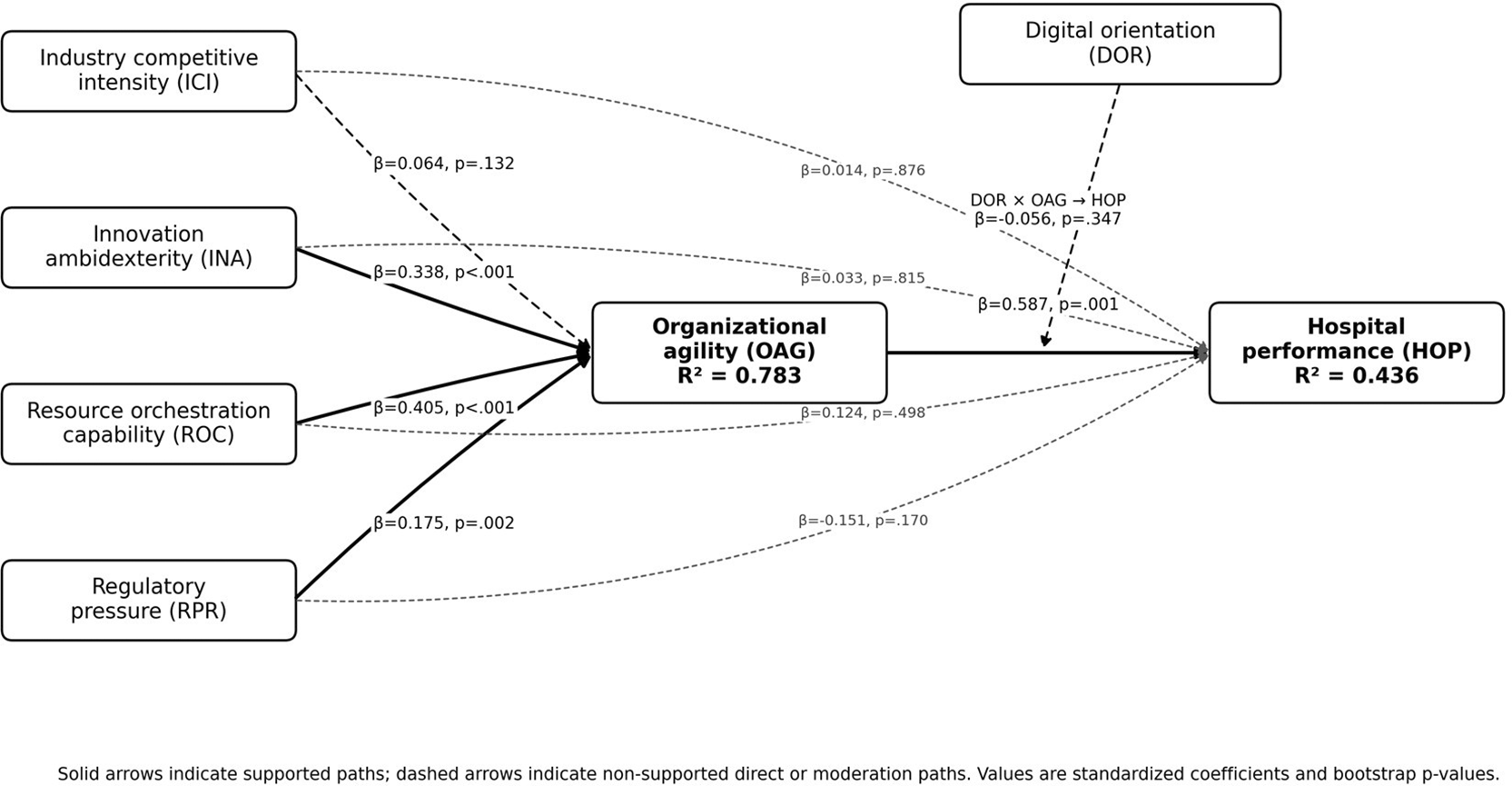
Note. The figure reports the final PLS-SEM model after indicator purification. Values shown on the structural paths are standardized coefficients and bootstrap p-values, and the values inside the endogenous constructs are R2. Solid arrows indicate supported paths; dashed arrows indicate non-supported direct or moderation paths.
The mediation results show that organizational agility is the mechanism through which several antecedents influence hospital performance. The indirect effects of innovation ambidexterity, resource orchestration capability, and regulatory pressure were significant, whereas the indirect effect of industry competitive intensity was not.
This pattern is consistent with indirect-only mediation: several antecedents did not have significant direct effects on hospital performance, but they became meaningful once routed through organizational agility. This interpretation follows mediation logic emphasizing that explanatory variables may matter less as isolated drivers than as enablers of an intermediate conversion mechanism (Zhao et al., 2010).
The model also showed acceptable predictive relevance. Both endogenous constructs produced positive Q2predict values. Furthermore, the CVPAT results indicated that the PLS-SEM model outperformed both the linear-model benchmark and the indicator-average benchmark at the latent-variable level, supporting the model’s out-of-sample usefulness (Shmueli et al., 2019).
The indirect effects, R2, Q2predict, and CVPAT results are summarized in Table 4.
The empirical story of the model is clear and theoretically meaningful: hospital performance improved not because hospitals merely faced stronger pressure or possessed valuable capabilities, but because those conditions were converted into organizational agility. In this model, agility functions as the operational bridge between strategic inputs and performance outcomes. Hospitals performed better when they could sense change early, coordinate decisions quickly, and reconfigure actions without losing service reliability. Put simply, the antecedents created potential, whereas agility turned that potential into results.
The non-significant role of industry competitive intensity is especially revealing. Competition alone neither increased agility nor improved performance. In a hospital setting, rivalry is rarely experienced as a pure market signal; it is filtered through regulation, referral arrangements, reimbursement mechanisms, quality mandates, and service obligations. For that reason, competitive pressure may heighten awareness of external threats without automatically triggering rapid internal adaptation. This reading is consistent with studies showing that competition in healthcare produces mixed effects because organizational response capacity depends heavily on governance design and institutional conditions (Wardhani et al., 2019; Brekke et al., 2021; Strumann et al., 2022; Dohmen et al., 2023).
Innovation ambidexterity improved organizational agility but did not directly improve hospital performance. This means that balancing exploration and exploitation matters primarily because it enhances adaptive capacity rather than because it guarantees immediate results on its own. Hospitals that can experiment with new ideas while simultaneously refining established routines appear better prepared to respond to clinical, technological, and managerial change. In other words, ambidexterity becomes strategically valuable when it is translated into a faster and more coordinated organizational response. That interpretation aligns with prior work linking ambidexterity to adaptive capability, patient agility, and creative performance in healthcare-related settings (Jansen et al., 2006; Foglia et al., 2019; Mutonyi et al., 2024; van de Wetering et al., 2021).
Resource orchestration capability emerged as the strongest antecedent of organizational agility. This is one of the study’s most important findings because it shifts the conversation away from resource possession toward resource deployment. Hospitals do not become agile simply because they own resources; they become agile when leaders know how to structure, bundle, and leverage those resources across interdependent functions. In practice, this means aligning people, processes, technologies, and budgets so that the organization can move quickly without becoming disorganized. That logic is fully consistent with resource orchestration theory and with recent evidence that managerial resource deployment is central to agility in digitally transforming environments (Sirmon et al., 2011; Mao et al., 2024; Tajeddini et al., 2024).
Regulatory pressure also improved organizational agility, but it did not improve hospital performance directly. This result usefully extends institution-based reasoning. Regulation appears to matter less as coercive force alone and more as a trigger for disciplined routines, process redesign, stronger reporting systems, and better coordination. In other words, regulation became strategically valuable when it pushed hospitals to build adaptive organizational responses rather than when it was treated merely as a compliance obligation. This helps explain why regulation can be experienced simultaneously as a burden and as a catalyst for internal strengthening in hospital settings (Wardhani et al., 2019; Hussein et al., 2021).
The unsupported moderation effect of digital orientation provides an equally important boundary insight. Strategic commitment to digitalization did not amplify the agility-performance relationship. This suggests that digital orientation, by itself, may be too upstream and too symbolic to create additional performance gains unless it is translated into interoperable systems, managerial routines, workforce capability, and process redesign. The finding therefore tempers overly optimistic assumptions that digital ambition automatically magnifies performance. A hospital may be digitally oriented in strategic language yet still fall short in implementation depth, integration quality, or execution discipline (Kindermann et al., 2021; Ranjan, 2024; Tajeddini et al., 2024).
Taken together, the results support an indirect-only view of strategic influence. Several antecedents mattered, but they mattered through organizational agility. That is the main contribution of the model: it explains why hospitals may possess promising capabilities or face strong external demands and still fail to improve performance unless those inputs are converted into agile organizational action. The study therefore offers a more process-oriented explanation of hospital performance, one that is easier to understand in practice because it connects pressure, capability, and outcomes through a visible organizational mechanism.
First, the study advances hospital strategy research by integrating industry-based, resource-based, and institution-based logic in a single explanatory framework. This matters because hospital outcomes are rarely shaped by one strategic force in isolation; they emerge from the interaction of environmental pressure, managerial capability, and institutional demands. By bringing these lenses together, the study responds to recent calls for more integrative explanations of healthcare agility and performance rather than fragmented single-factor accounts (Prashar, 2024; Sarmiento Falla & Karwowski, 2024; Nguyen et al., 2025).
Second, the study strengthens agility theory by showing that organizational agility is not simply another antecedent of performance but the principal conversion capability linking strategic conditions to hospital outcomes. This mechanism-oriented interpretation is important because it shifts the analytical focus from whether antecedents matter to how they matter. The findings support the view that agility should be examined not only as a direct predictor, but also as the organizational process through which hospitals translate readiness and pressure into results (Nguyen et al., 2025; Yağmur & Myrvang, 2023; Overby et al., 2006).
Third, the study refines digital-orientation research by showing that digital strategic intent does not automatically intensify the performance returns of agility. This negative result is theoretically valuable because it discourages overly linear assumptions about digitalization and shows that strategic orientation must be complemented by implementation capability and organizational fit before stronger performance effects are likely to emerge. In that sense, the study helps separate digital ambition from digital execution, which is an increasingly important distinction in contemporary transformation research (Kindermann et al., 2021; Ranjan, 2024; Tajeddini et al., 2024).
For hospital leaders, the managerial message is practical and direct: performance improvement should begin with building agile capability rather than assuming that competition, regulation, or digital strategy will automatically deliver better outcomes. The central managerial question is not only whether the hospital faces pressure or possesses strategic resources, but whether leadership can convert those conditions into faster, better coordinated, and more flexible organizational responses (Prashar, 2024; Nguyen et al., 2025).
A first priority is to strengthen resource orchestration routines. Leadership teams should regularly review how clinical, administrative, and technological resources are structured, bundled, and leveraged across units. Cross-functional coordination forums, rapid escalation routines, and disciplined resource reallocation can make the hospital more responsive when service conditions change. Because resource orchestration was the strongest antecedent of agility in this study, improvements in this area are likely to generate the largest managerial payoff.
A second priority is to manage innovation ambidextrously. Hospitals should support exploratory initiatives such as new service experimentation and digital trials, while also refining existing processes, quality routines, and patient-service flows. The objective is not innovation volume alone, but a disciplined balance between renewal and operational reliability. That balance is what strengthens agility and helps hospitals adjust without undermining service consistency (Foglia et al., 2019; van de Wetering et al., 2021; Mutonyi et al., 2024).
A third implication concerns regulatory management. Rather than treating regulation only as a compliance burden, hospital leaders can use regulatory demands as triggers for process redesign, capability upgrading, and organizational learning. The findings suggest that regulation becomes strategically valuable when it is translated into better routines, stronger coordination, and more disciplined execution. Hospitals that comply only symbolically are less likely to benefit than those that operationalize compliance into everyday managerial practice.
Finally, digital orientation should be operationalized, not merely declared. Hospitals need to translate digital ambition into implementation governance, staff capability, interoperable systems, and measurable process improvement. Without that translation, digital orientation may remain a strategic slogan rather than a performance-enabling capability. This result reminds managers that digital commitment creates value only when it is tied to execution mechanisms that reinforce agility in daily operations.
This study demonstrates that hospital performance is shaped less by isolated antecedents than by the hospital’s ability to transform those antecedents into agile action. In Indonesian hospitals, innovation ambidexterity, resource orchestration capability, and regulatory pressure strengthened organizational agility, while competition intensity did not. Organizational agility, in turn, became the only direct path to hospital performance and the core mechanism through which several antecedents generated meaningful effects.
Methodologically, the study relies on a statistically adequate sample of 173 hospital directors, exceeding the a priori minimum requirement of 123 respondents derived from G*Power analysis. The sample also reflects meaningful organizational diversity across major regions and across publicly insured versus private/self-paying patient segments. Substantively, the findings show that hospitals benefit less from isolated pressures or strategic intentions than from the managerial ability to convert those conditions into coordinated, flexible, and timely organizational responses (Faul et al., 2007; Faul et al., 2009; Kang, 2021).
The study has several limitations. First, it uses cross-sectional data and therefore cannot establish temporal causality. Second, although the director-based key-informant design is substantively appropriate for organizational constructs, the use of a single primary respondent per hospital means that common source effects cannot be ruled out completely despite the procedural remedies used in the study. Third, the study was conducted in one national setting, which may limit generalizability to other healthcare systems.
Future research could extend this model through longitudinal designs, multi-informant data, and greater use of objective performance indicators. Comparative studies across hospital ownership types, regulatory regimes, or national contexts would also help clarify whether the agility mechanism observed here is context-specific or more broadly generalizable.
The study protocol, entitled “How Organizational Agility Translates Internal Capabilities into Hospital Performance: Evidence from 173 Hospital Directors in Indonesia,” was approved by the Research Ethics Committee of Universitas Esa Unggul, Indonesia (Dewan Penegakan Kode Etik Universitas Esa Unggul, Komisi Etik Penelitian; approval number 0925–06.040/DPKE-KEP/FINAL-EA/UEU/VI/2026; approved on 10 June 2026). The approval was issued for the protection of the human rights and well-being of research subjects and is valid for one year from the date of approval.
The study involved professional respondents in their organizational role as hospital directors. It did not involve patients, patient-level clinical records, clinical intervention, biological specimens, medical treatment, or access to identifiable patient data. Participation was voluntary. Before completing the questionnaire, respondents were informed about the purpose of the study, the confidentiality of their responses, the aggregate and anonymized reporting of results, and their right not to participate or to stop completing the questionnaire. Electronic written informed consent was obtained before questionnaire completion through the survey information and consent process. Participants proceeded to the questionnaire only after confirming their willingness to participate. Respondent identities and institutional identities were kept confidential in accordance with the ethical approval obligations.
During the preparation of this manuscript, generative AI assistance was used only to support language editing, clarity improvement, formatting alignment, and journal-scope adjustment. The authors reviewed and edited the output and take full responsibility for the content of the manuscript.
| Views | Downloads | |
|---|---|---|
| F1000Research | - | - |
|
PubMed Central
Data from PMC are received and updated monthly.
|
- | - |
Provide sufficient details of any financial or non-financial competing interests to enable users to assess whether your comments might lead a reasonable person to question your impartiality. Consider the following examples, but note that this is not an exhaustive list:
Sign up for content alerts and receive a weekly or monthly email with all newly published articles
Already registered? Sign in
The email address should be the one you originally registered with F1000.
You registered with F1000 via Google, so we cannot reset your password.
To sign in, please click here.
If you still need help with your Google account password, please click here.
You registered with F1000 via Facebook, so we cannot reset your password.
To sign in, please click here.
If you still need help with your Facebook account password, please click here.
If your email address is registered with us, we will email you instructions to reset your password.
If you think you should have received this email but it has not arrived, please check your spam filters and/or contact for further assistance.

Comments on this article Comments (0)