Keywords
innovation ambidexterity; regulatory pressure; resource orchestration capability; organizational agility; PLS-SEM

This article is included in the Health Services gateway.
innovation ambidexterity; regulatory pressure; resource orchestration capability; organizational agility; PLS-SEM
Organizations are increasingly expected to remain agile in responding to environmental change to stay competitive. Organizational agility is commonly defined as an organization’s ability to adapt quickly to changes in markets, technology, and regulation (Baskarada & Koronios, 2018). Low agility can lead to missed opportunities and declining performance. Prior research suggests that agility is shaped by internal capabilities such as innovation ambidexterity, balancing exploration of new opportunities with exploitation of existing competencies (March, 1991; Jansen et al., 2006; Raisch & Birkinshaw, 2008), external forces such as regulatory pressure that create coercive institutional demands (DiMaggio & Powell, 1983; Kostova & Roth, 2002), and managerial capability to orchestrate resources by structuring, bundling, and leveraging them to build capabilities (Sirmon et al., 2007, 2011; Zeng et al., 2021).
Empirical evidence that jointly examines these three drivers of agility remains limited, particularly in developing country contexts such as Indonesia. Accordingly, this study investigates: (1) the effect of innovation ambidexterity on organizational agility, (2) the effect of regulatory pressure on organizational agility, and (3) the effect of resource orchestration capability on organizational agility.
Organizational agility is an evolving concept in the literature. Beyond viewing agility as speed of response, conceptual work emphasizes agility as continuous, evolutionary adaptation and systematic entrepreneurial innovation (Baskarada & Koronios, 2018). Within the 5S framework, agility is described as a set of five dynamic capabilities, namely sensing, searching, seizing, shifting, and shaping, which enable organizations to detect signals of change, search for opportunities, capture opportunities, reallocate resources, and reshape their environment (Baskarada & Koronios, 2018). This view aligns with the dynamic capabilities perspective, which argues that in conditions of deep uncertainty, organizations need strong dynamic capabilities, including the ability to determine when to change, weigh the costs of change against risks, and calibrate the level of agility required (Teece et al., 2016).
In highly regulated industries such as healthcare, coercive requirements, accreditation standards, and compliance audits can raise operational complexity while simultaneously pushing organizations to upgrade processes and technologies. Institutional theory suggests that such pressures motivate adoption of new practices to gain legitimacy (DiMaggio & Powell, 1983; Scott, 2014), whereas the dynamic capabilities perspective emphasizes the need to sense and respond under uncertainty (Eisenhardt & Martin, 2000; Teece et al., 2016). Prior research links organizational agility to information-processing and digital capabilities that help organizations sense change and respond rapidly (Overby et al., 2006; Sambamurthy et al., 2003), and to knowledge processes that enable quick reconfiguration and performance improvement (Cegarra-Navarro et al., 2016).
This study contributes to the organizational agility literature in three ways. First, it develops and tests an integrated model that explains Organizational Agility (OAG) through the joint effects of Innovation Ambidexterity (INA), Resource Orchestration Capability (ROC), and Regulatory Pressure (RPR), thereby bridging capability-based and institutional explanations that are often examined separately. Second, it clarifies the relative importance of these drivers by showing that internal capabilities, especially innovation ambidexterity and resource orchestration capability, carry greater explanatory weight than external regulatory pressure in shaping agility. This helps explain why organizations exposed to similar regulations may still differ substantially in their adaptive responsiveness. Third, the study provides evidence from the Indonesian hospital context, a setting characterized by high service criticality and strong regulatory demands, thereby extending the empirical scope of agility research beyond commonly studied private-sector and technology-intensive contexts. Together, these contributions position organizational agility as a capability-dependent response to environmental demands rather than a direct outcome of external pressure alone.
Organizational agility captures an organization’s ability to sense and respond quickly to environmental change (Baskarada & Koronios, 2018; Felipe et al., 2016; Overby et al., 2006). The literature often conceptualizes agility as comprising responsiveness, competency, flexibility, and speed, which together enable organizations to detect and interpret change, respond to heterogeneous stakeholder demands, and implement adjustments rapidly (Budiman et al., 2023; Cegarra-Navarro et al., 2016). The 5S framework further positions agility as continuous evolutionary adaptation directed toward entrepreneurial innovation (Baskarada & Koronios, 2018). Dynamic capabilities such as sensing and seizing help organizations identify and capture opportunities, whereas shifting and shaping support resource reallocation and market reconfiguration to sustain advantage (Baskarada & Koronios, 2018). From the dynamic capabilities perspective, agility is not merely speed; it is an embedded capacity to learn, respond, and innovate over time (Teece et al., 2016).
Innovation ambidexterity refers to an organization’s ability to pursue both exploration (search, experimentation, and variation) and exploitation (refinement, efficiency, and incremental improvement) in a balanced way (March, 1991; Jansen et al., 2006; Raisch & Birkinshaw, 2008). This balance is central to ambidexterity theory because the two logics compete for attention and resources, yet jointly support adaptation and renewal (Gibson & Birkinshaw, 2004; O’Reilly & Tushman, 2013). In dynamic environments, ambidexterity is often enabled by dynamic capabilities that help organizations reconfigure resources and routines to support both types of innovation (Eisenhardt & Martin, 2000; Teece et al., 2016). Recent evidence also suggests that stronger ambidexterity is associated with higher innovation performance and resilience, particularly when organizations align exploration–exploitation activities with strategy and resource deployment (Farzaneh et al., 2022; Katou et al., 2021).
Regulatory pressure refers to external coercive demands from regulators and public authorities (e.g., laws, licensing requirements, accreditation standards, and enforcement mechanisms) that constrain and shape organizational practices (Kostova & Roth, 2002; Scott, 2014). From an institutional perspective, such pressures can lead organizations to adopt new structures and routines to gain legitimacy and avoid sanctions (DiMaggio & Powell, 1983). In healthcare, compliance demands are often coupled with uncertainty and resource constraints, which increases the need to reconfigure processes while maintaining service continuity.
Resource orchestration refers to managerial actions that structure, bundle, and leverage resources to build capabilities and create value in dynamic environments (Sirmon et al., 2007, 2011). Structuring involves acquiring, accumulating, and divesting resources; bundling integrates resources into capabilities; and leveraging mobilizes capabilities to capture value (Sirmon et al., 2011). This perspective extends the resource-based view by emphasizing how managers actively combine and redeploy resources rather than treating resources as static assets.
Conceptually, ambidextrous innovation supports agility by expanding the organization’s repertoire of response options (through exploration) while improving execution speed and reliability (through exploitation). This dual capacity helps organizations sense emerging opportunities and mobilize rapid responses, which are core features of agility (Felipe et al., 2016; Overby et al., 2006).
Innovation ambidexterity has a positive effect on organizational agility.
Regulatory pressure may foster agility in two ways. First, it can trigger investment in sensing and compliance-monitoring mechanisms that improve an organization’s ability to detect environmental change. Second, it can encourage the development of reconfiguration routines—aligned with dynamic capabilities—that support timely adaptation under uncertainty (Eisenhardt & Martin, 2000; Teece et al., 2016). Empirical work in health supply systems also highlights the role of strategic agility as organizations navigate regulatory and demand volatility while ensuring reliability (Dube et al., 2024).
Regulatory pressure has a positive effect on organizational agility.
In turbulent and regulated contexts, resource orchestration is critical for agility because it enables timely reallocation of managerial attention, technology, and operational resources to match shifting demands and constraints (Teece et al., 2016). Evidence from platform and emerging-market contexts suggests that orchestration approaches shape the ability to reconfigure resources and scale responses, which are closely associated with agility (Zeng et al., 2021). Similarly, studies on resilience emphasize that orchestration helps organizations maintain continuity while adapting to shocks, supporting agile performance (Ahmed et al., 2021; Tikas, 2024).
Resource orchestration capability has a positive effect on organizational agility.
This study employed a cross-sectional survey design using a self-administered questionnaire to examine organization-level relationships among innovation ambidexterity, regulatory pressure, resource orchestration capability, and organizational agility in private general hospitals in Indonesia. The unit of analysis was the hospital director (or a top executive formally authorized to evaluate organization-level strategy, capability deployment, and environmental pressures). After screening for completeness and consistency, 81 usable responses from hospital directors were retained for the final analysis.
The study used a purposive survey approach because the constructs were organizational in nature and required respondents with strategic visibility over hospital-level innovation, regulatory response, resource deployment, and agility. The key informants were hospital directors or top executives formally authorized to evaluate organization-level strategy, capability deployment, and environmental pressures. After screening for completeness and consistency, 81 usable responses from hospital directors were retained for the final analysis. Participant recruitment and data collection were conducted from 1 March 2026 to 13 May 2026, after ethical approval had been obtained on 25 February 2026.
This study received ethical approval from the Research Ethics Committee of Universitas Esa Unggul, Indonesia (Dewan Penegakan Kode Etik Universitas Esa Unggul, Komisi Etik Penelitian; approval number 0925–02.071/DPKE-KEP/FINAL-EA/UEU/II/2026; approved on 25 February 2026).
The study involved an organizational survey of professional respondents and did not involve patients, patient-level clinical records, clinical interventions, biological specimens, medical treatment, access to identifiable patient data, or vulnerable participants. Participation was voluntary. Before completing the questionnaire, respondents were informed about the purpose of the study, the confidentiality of their responses, aggregate and anonymized reporting, and their right not to participate or to stop completing the questionnaire. Electronic written informed consent was obtained from all participants before questionnaire completion through the survey information and consent process. Participants proceeded to the questionnaire only after confirming their willingness to participate.
The instrument was adapted from established scales and was tailored to the Indonesian hospital context. Innovation ambidexterity was modeled as a second-order construct reflecting the balance between exploratory and exploitative innovation, adapted from Jansen et al. (2006) with an initial pool of 14 items (seven exploration and seven exploitation). Resource orchestration capability was adapted from the resource orchestration literature (Sirmon et al., 2011) with 12 items capturing managerial capability in structuring, bundling, and leveraging organizational resources. Regulatory pressure was adapted from Kostova and Roth (2002) with four items. Organizational agility was adapted from Zhang and Suntrayuth (2024) with 17 items covering responsiveness, speed, flexibility, and resilience. Based on instrument testing, the main survey used 11 items for innovation ambidexterity, 12 items for resource orchestration capability, four items for regulatory pressure, and 17 items for organizational agility.
Before administering the main survey, a pilot test was conducted with 30 respondents who were different from the main sample to assess instrument validity and reliability. Pilot data were analyzed using exploratory factor analysis to evaluate construct validity and Cronbach’s alpha to assess internal consistency in SPSS. Sampling adequacy was supported by Kaiser Meyer Olkin values ranging from 0.650 to 0.845 and a significant Bartlett’s test (p < 0.001). Cronbach’s alpha values ranged from 0.768 to 0.957, indicating acceptable internal consistency. Based on factor loading and reliability criteria, three items in the innovation ambidexterity construct were removed, while items for resource orchestration capability, regulatory pressure, and organizational agility were retained. After the final instrument was established, the order of items in the main questionnaire was randomized to minimize order effects and response patterns.
The research model is presented in Figure 1.
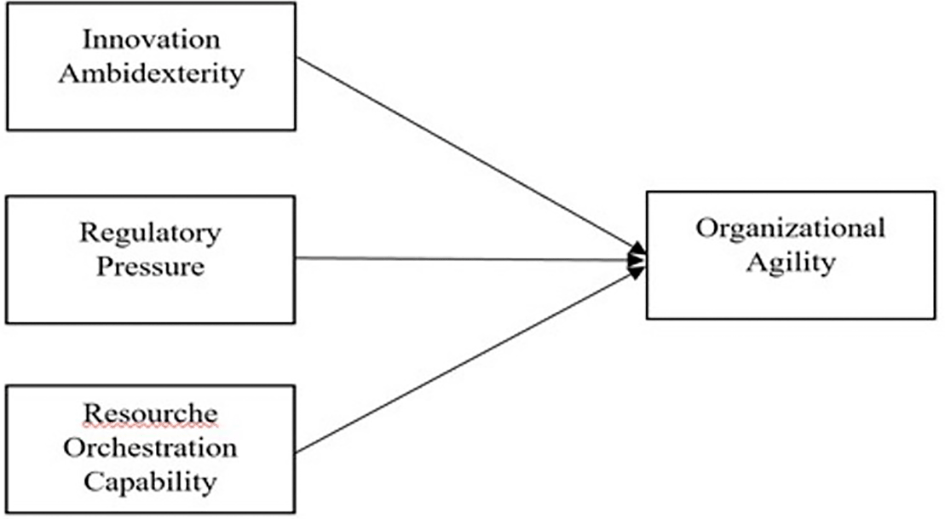
Note. The figure presents the proposed structural model linking innovation ambidexterity, regulatory pressure, and resource orchestration capability to organizational agility.
Data analysis was conducted with SmartPLS 4 using the PLS-SEM procedure. The assessment followed the standard two-stage approach: evaluation of the measurement model and evaluation of the structural model (Hair et al., 2022). To test the significance of path coefficients and effect sizes, bootstrapping was run with 5,000 subsamples using a two-tailed test, a significance level of 0.05, percentile bootstrap confidence intervals, and a fixed random seed (with parallel processing enabled).
The measurement model was assessed before testing the structural relationships, following recommended PLS-SEM procedures for internal consistency reliability, convergent validity, and discriminant validity (Hair et al., 2022; Henseler et al., 2015).
After indicator purification, the final reflective measurement model retained 29 indicators across four constructs: Innovation Ambidexterity (INA; 8 items), Resource Orchestration Capability (ROC; 8 items), Regulatory Pressure (RPR; 3 items), and Organizational Agility (OAG; 10 items). Cross-loading inspection indicated that each retained indicator loaded highest on its intended construct, supporting indicator-level discriminant validity.
Regarding internal consistency reliability and convergent validity, the detailed results for Cronbach’s alpha, rho_A, composite reliability, and AVE are reported in Appendix Table A1.
Discriminant validity was further examined using the heterotrait–monotrait ratio (HTMT). All HTMT values were below the conservative threshold of 0.90, namely: OAG–INA = 0.892, ROC–INA = 0.807, ROC–OAG = 0.870, RPR–INA = 0.648, RPR–OAG = 0.830, and RPR–ROC = 0.779. Although the OAG–INA and ROC–OAG pairs were relatively high, they remained below 0.90. In addition, the bias-corrected 95% confidence intervals for all HTMT pairs did not include 1.00 (e.g., OAG–INA: 0.767–0.964; ROC–OAG: 0.754–0.956), providing stronger evidence of discriminant validity (Henseler et al., 2015).
Overall, the updated measurement model demonstrates acceptable psychometric quality and is suitable for structural model evaluation.
For transparency, the HTMT ratios and the HTMT bootstrap confidence interval summary are reported in Appendix Tables A2-A3, while a summary of collinearity diagnostics and the auxiliary SPSS-based CMB assessment is provided in Appendix Table A4.
Because all variables were collected from a single survey source at one point in time, common method bias (CMB) was assessed using a collinearity-based diagnostic strategy based on latent variable scores, complemented by collinearity diagnostics (Kock, 2015). A summary of the auxiliary SPSS regression-based CMB assessment and related collinearity diagnostics is provided in Appendix Table A4.
The same pattern is consistent with the inner-model collinearity diagnostics in SmartPLS (INA - > OAG = 2.220; ROC - > OAG = 2.603; RPR - > OAG = 1.633), all of which are comfortably below commonly used thresholds. A consolidated summary of the PLS-SEM and SPSS collinearity/CMB diagnostics is presented in Appendix Table A4.
Taken together, the collinearity diagnostics indicate that multicollinearity is not a concern in either the measurement or structural model, and the CMB risk appears limited.
Model fit was assessed using the SmartPLS model fit indices. The full set of PLS-SEM model fit statistics is reported in Appendix Table A5.
The NFI value is relatively modest, which is not uncommon in PLS-SEM and should not be interpreted in isolation. As recommended in the PLS-SEM literature, model fit should be evaluated together with measurement quality and structural predictive relationships rather than relying on a single global index (Hair et al., 2022).
After establishing adequate measurement properties, the structural model was estimated using bootstrapping in SmartPLS. The results indicate that all three hypothesized antecedents significantly and positively influence organizational agility (OAG).
The structural model results show that all three proposed effects are positive and statistically significant; detailed bootstrapping results for all structural paths are provided in Appendix Table A6.
The positive coefficient for resource orchestration capability indicates that hospitals with stronger capabilities in structuring, bundling, and leveraging resources tend to exhibit higher organizational agility. This finding is consistent with the resource orchestration perspective, which emphasizes managerial action in mobilizing and recombining resources to respond to environmental change (Sirmon et al., 2007; Sirmon et al., 2011), and aligns with dynamic capability arguments on organizational adaptation and reconfiguration in turbulent environments (Teece et al., 2016).
The positive coefficient for regulatory pressure suggests that external institutional demands can stimulate organizational agility when hospitals translate compliance requirements into managerial routines, coordination mechanisms, and process adaptation. This result is consistent with institutional theory, which posits that organizations adapt their structures and practices in response to coercive and normative pressures (DiMaggio & Powell, 1983; Scott, 2014), and with evidence that institutional pressures can shape organizational implementation and response patterns (Kostova & Roth, 2002; Dube et al., 2024).
Overall, the structural results show that INA, ROC, and RPR jointly contribute to explaining variation in organizational agility, with INA emerging as the strongest predictor among the three.
To complement statistical significance testing, effect sizes (f2) were examined to assess the substantive contribution of each exogenous construct to organizational agility. Detailed effect-size (f2) results are provided in Appendix Table A7.
These effect sizes reinforce the path coefficient results by indicating that innovation ambidexterity is the most influential driver of organizational agility in the model, followed by resource orchestration capability, while regulatory pressure plays a smaller but still meaningful role. Substantively, this pattern suggests that internal strategic and managerial capabilities (INA and ROC) are more central to agility formation than external institutional pressure, even though regulatory pressure remains a statistically significant catalyst.
This study examined how Innovation Ambidexterity (INA), Resource Orchestration Capability (ROC), and Regulatory Pressure (RPR) shape Organizational Agility (OAG) in the Indonesian hospital context represented by this sample. The updated PLS-SEM results show that all three antecedents have positive and significant effects on organizational agility, with a clear ordering of influence: Innovation Ambidexterity is the strongest predictor, followed by Resource Orchestration Capability, and then Regulatory Pressure. This pattern indicates that organizational agility is primarily built through internal strategic and managerial capabilities, while external institutional pressure plays a meaningful but comparatively smaller catalytic role.
The findings provide consistent support for the proposed model among 81 hospital directors and indicate that organizational agility in private hospitals is jointly shaped by strategic orientation (innovation ambidexterity), managerial capability (resource orchestration capability), and institutional context (regulatory pressure). In line with agility research, the results suggest that agility is not driven by a single factor but emerges from the interaction of sensing/responding orientation, resource deployment capability, and external adaptation demands (Overby et al., 2006; Sambamurthy et al., 2003).
The strongest effect in the model is the positive relationship between Innovation Ambidexterity and Organizational Agility (β = 0.438, p < 0.001; f2 = 0.447, large effect). This finding suggests that organizations that are better able to balance exploration (experimentation, new solutions, renewal) and exploitation (refinement, efficiency, reliability) are more capable of responding quickly and effectively to change. This result is consistent with the organizational ambidexterity literature, which emphasizes the importance of simultaneously pursuing alignment and adaptability in dynamic environments (Raisch & Birkinshaw, 2008; O’Reilly & Tushman, 2013).
The magnitude of the effect is substantively important. A large effect size indicates that innovation ambidexterity is not merely associated with agility, but is a central explanatory driver in the model. This extends prior work by positioning ambidexterity not only as a predictor of innovation or performance outcomes, but also as a foundational antecedent of organizational agility. In practical terms, the result implies that organizations become more agile when they can embed innovation efforts into ongoing operations without undermining service continuity and execution discipline. This is especially relevant in regulated service environments, where organizations must innovate while maintaining reliability and compliance.
The positive and significant effect of resource orchestration capability on organizational agility (β = 0.366, p = 0.004) supports H3. This result indicates that hospitals are more agile when directors and top management teams can effectively structure, bundle, and leverage organizational resources, rather than merely possess resources in isolation. In the hospital context, agility depends on how leaders coordinate clinical, administrative, digital, and relational resources to enable timely operational and strategic responses (Sirmon et al., 2011; Teece et al., 2016).
This finding is theoretically consistent with resource orchestration and dynamic capability arguments. Resource orchestration highlights managerial actions that turn resource portfolios into deployable capabilities (Sirmon et al., 2007; Sirmon et al., 2011), while the dynamic capability view emphasizes the organization’s ability to integrate and reconfigure resources in changing environments (Teece et al., 2016). In private hospitals, this means that agility is strengthened when leaders can align people, processes, and technology resources across functions and redeploy them quickly in response to service demands, operational disruptions, or policy changes. The result is also consistent with the idea that agility reflects the organization’s capacity to sense and respond through coordinated reconfiguration of routines and capabilities (Overby et al., 2006; Felipe et al., 2016).
The positive and significant effect of regulatory pressure on organizational agility (β = 0.218, p = 0.005) supports H2. This indicates that, in the private hospital setting, regulatory pressure does not only function as a compliance burden; it can also act as a catalyst for organizational adaptation. Institutional theory helps explain this result: organizations often adjust structures, routines, and decision processes to maintain legitimacy under coercive and normative pressures (DiMaggio & Powell, 1983; Scott, 2014).
In practical terms, directors may respond to accreditation requirements, service standards, reporting obligations, and policy changes by strengthening coordination, standardizing critical processes, and improving decision speed. These responses can increase organizational agility when compliance efforts are translated into better routines and organizational discipline rather than treated as administrative box-ticking. This interpretation is consistent with work showing that institutional pressures influence organizational implementation behavior (Kostova & Roth, 2002) and with recent evidence that regulatory and governance demands can shape hospitals’ organizational responses and performance-related practices (Dube et al., 2024).
A context-sensitive interpretation helps explain the relative ordering of effects observed in this study. In the Indonesian hospital setting represented by this sample, organizational leaders (including hospital directors and top management teams) are likely required to manage multiple demands simultaneously, such as service continuity, operational efficiency, compliance requirements, and ongoing organizational adaptation. Under these conditions, organizational agility is less likely to be driven by external pressure alone and more likely to depend on whether the organization has the internal capability to respond in a coordinated and timely manner.
This contextual reading is consistent with the empirical pattern. Regulatory Pressure is positive and significant, indicating that external requirements may create urgency and direction for change. However, its smaller effect size relative to Innovation Ambidexterity and Resource Orchestration Capability suggests that regulatory signals do not automatically translate into agile outcomes. Instead, organizations appear to become more agile when leaders can balance exploratory and exploitative innovation while simultaneously mobilizing and reconfiguring resources effectively. In this sense, regulatory pressure may act as a trigger, but ambidexterity and orchestration capabilities appear to be the primary mechanisms that convert pressure into organizational agility.
Importantly, this is a contextual interpretation rather than a direct test of leadership characteristics, because the present model does not explicitly measure director-level traits (e.g., leadership style, risk orientation, or decision centralization). The purpose of this discussion is therefore to situate the findings in a realistic organizational context, not to infer unmeasured personal attributes. Future research can extend this study by modeling leadership characteristics directly as antecedents, moderators, or boundary conditions of the capability–agility relationships.
This context-specific interpretation also broadens the relevance of the findings beyond healthcare. Many organizations in regulated service sectors face a similar tension between compliance obligations and adaptive responsiveness. The present results suggest that, even under strong institutional pressure, internal capability development remains central to agility, which may help explain why organizations facing similar regulations differ in their adaptive performance.
The pattern of results provides a clearer theoretical explanation of organizational agility than a single-lens model would allow. Although Regulatory Pressure is positively associated with Organizational Agility, its effect is weaker than that of Innovation Ambidexterity and Resource Orchestration Capability. This indicates that external institutional demands may create urgency and direction for change, but they do not automatically produce agile organizational responses. Rather, agile outcomes appear to depend on whether organizations possess the internal capability to balance exploratory and exploitative innovation while simultaneously mobilizing and reconfiguring resources in a coordinated manner. In this sense, the findings support a capability-dominant explanation of agility that is activated—but not determined—by institutional pressure.
This interpretation is especially meaningful in the Indonesian hospital context represented by this sample, where organizations are likely to face concurrent demands related to service continuity, operational reliability, and regulatory compliance. Under such conditions, internal capability development becomes central to converting environmental pressure into adaptive action. At the same time, this contextual reading should not be interpreted as a direct test of leadership characteristics or governance structures, as these variables were not explicitly modeled. Instead, the contribution of the present study is to provide an empirically grounded and context-sensitive explanation of why capability-based drivers may be more influential than regulatory pressure in shaping organizational agility in regulated service environments.
This study offers three main theoretical contributions.
First, it extends the organizational agility literature by demonstrating that Innovation Ambidexterity and Resource Orchestration Capability are distinct but complementary antecedents of organizational agility. The stronger effect of INA suggests that balancing exploration and exploitation provides an overarching strategic basis for adaptive behavior, while ROC contributes by enabling the managerial coordination and deployment required for execution.
Second, the study adds nuance to institutional theory in the agility context by showing that Regulatory Pressure can play a positive role in shaping organizational agility. Rather than functioning only as a restrictive force, regulatory pressure may increase organizational attentiveness and accelerate adaptation, especially when internal capabilities are sufficiently developed.
Third, by modeling capability-based and institutional drivers simultaneously, the study provides a more integrated explanation of agility. This helps explain why organizations exposed to similar external pressures may still differ in agility outcomes: the difference may lie in their internal capability configurations, especially ambidexterity and resource orchestration.
The findings also offer clear implications for managers seeking to improve organizational agility.
First, organizations should prioritize the development of Innovation Ambidexterity by balancing initiatives aimed at improving existing processes/services with initiatives focused on experimentation and renewal. Overemphasis on exploitation may increase efficiency but reduce adaptability, while excessive exploration may create implementation fragmentation. Agility requires both orientations to coexist and be managed deliberately.
Second, organizations should strengthen Resource Orchestration Capability, particularly managerial routines for reallocating resources, coordinating cross-functional activities, integrating knowledge, and aligning execution with strategic priorities. The results indicate that agility depends not only on resource availability but also on the ability to mobilize resources coherently and rapidly.
Third, managers should treat Regulatory Pressure as a strategic signal, not merely a compliance obligation. Regulatory changes can be used to legitimize internal transformation, accelerate process redesign, and improve organizational readiness. However, the smaller effect size of RPR also indicates that external pressure will not generate agility without internal capability development. Compliance initiatives are therefore likely to be more effective when linked to broader capability-building efforts rather than handled as isolated administrative tasks.
Overall, the evidence suggests that organizations can strengthen agility most effectively when they combine ambidextrous innovation orientation, resource orchestration discipline, and proactive responses to regulatory demands.
This study examined the effects of Innovation Ambidexterity (INA), Resource Orchestration Capability (ROC), and Regulatory Pressure (RPR) on Organizational Agility (OAG) in the Indonesian hospital context represented by the sample. Using PLS-SEM, the results show that all three antecedents have positive and statistically significant effects on organizational agility. Among them, Innovation Ambidexterity is the strongest predictor, followed by Resource Orchestration Capability, while Regulatory Pressure plays a smaller but still meaningful role. The model explains a substantial proportion of variance in organizational agility (R2 = 0.807), indicating strong explanatory power.
The findings contribute to the organizational agility literature by showing that agility is best understood as the outcome of both internal capability development and external institutional stimulus, with internal capabilities carrying greater explanatory weight. Specifically, the results highlight that the ability to balance exploration and exploitation (INA) and the ability to mobilize and reconfigure resources (ROC) are central mechanisms for building agility, while regulatory pressure (RPR) may function as a trigger that encourages adaptation but does not, by itself, guarantee agile outcomes.
From a managerial perspective, the study suggests that organizations seeking to improve agility should prioritize capability-building efforts, especially ambidextrous innovation and resource orchestration routines, while treating regulatory demands as opportunities to accelerate transformation rather than as compliance tasks only. Overall, the study offers an integrated and contextually grounded explanation of organizational agility that may be relevant to other organizations operating in regulated service environments.
This study has several limitations that should be considered when interpreting the findings.
First, the study uses a cross-sectional design, which limits strong causal inference. Although the hypothesized relationships are theoretically grounded and statistically supported, future research should use longitudinal designs to examine how changes in innovation ambidexterity, resource orchestration capability, and regulatory pressure shape organizational agility over time.
Second, the data were collected using a single-source survey design, which may introduce common method bias. Although the study applied collinearity-based diagnostics and found no indication of severe bias, future research could strengthen inference by using multi-source data (e.g., combining survey responses with organizational performance or operational records) and/or time-lagged data collection.
Third, the current model does not directly measure director-level or leadership characteristics (e.g., leadership style, risk orientation, decision centralization). As discussed, the interpretation of the Indonesian hospital context is therefore contextual rather than a direct test of leader attributes. Future studies could explicitly model leadership characteristics as antecedents, moderators, or boundary conditions to explain when and why the effects of INA, ROC, and RPR on OAG become stronger or weaker.
Fourth, the study is situated in the Indonesian hospital context, which improves contextual relevance but may limit generalizability to other countries, industries, or governance settings. Future research should conduct cross-region or cross-country comparisons to test whether the relative importance of capability-based and institutional drivers of agility remains stable across different regulatory and organizational environments.
Fifth, although the measurement model was improved and showed acceptable psychometric properties, some construct pairs were conceptually close and showed relatively high (but acceptable) HTMT values. Future research may refine or extend the measurement scales—especially in contexts where organizational capability constructs are expected to overlap conceptually—to further strengthen construct distinctiveness.
Building on these limitations, future research can extend this study in at least three directions: (1) testing longitudinal and multi-source models of organizational agility, (2) incorporating leadership and governance variables into the capability–agility framework, and (3) examining the model in other regulated service sectors to assess the broader applicability of the findings.
Taken together, the findings suggest that organizational agility in regulated environments is not simply a compliance outcome, but a capability-dependent response in which internal strategic and managerial capacities determine how effectively organizations convert external pressure into adaptive action.
The study protocol, entitled “The Effects of Innovation Ambidexterity, Regulatory Pressure, and Resource Orchestration Capability on Organizational Agility: Evidence from Indonesian Hospitals,” was approved by the Research Ethics Committee of Universitas Esa Unggul, Indonesia (Dewan Penegakan Kode Etik Universitas Esa Unggul, Komisi Etik Penelitian; approval number 0925–02.071/DPKE-KEP/FINAL-EA/UEU/II/2026; approved on 25 February 2026). The approval was issued for the protection of the human rights and well-being of research subjects and is valid for one year from the date of approval.
The study involved professional respondents in their organizational role as hospital directors or top executives. It did not involve patients, patient-level clinical records, clinical intervention, biological specimens, medical treatment, or access to identifiable patient data. Participation was voluntary. Before completing the questionnaire, respondents were informed about the purpose of the study, the confidentiality of their responses, the aggregate and anonymized reporting of results, and their right not to participate or to stop completing the questionnaire. Electronic written informed consent was obtained from all participants before questionnaire completion through the survey information and consent process. Participants proceeded to the questionnaire only after confirming their willingness to participate. Respondent identities and institutional identities were kept confidential in accordance with the ethical approval obligations.
During the preparation of this manuscript, generative AI assistance was used only to support language editing, clarity improvement, formatting alignment, and journal-scope adjustment. The authors reviewed and edited the output and take full responsibility for the content of the manuscript.
| Views | Downloads | |
|---|---|---|
| F1000Research | - | - |
|
PubMed Central
Data from PMC are received and updated monthly.
|
- | - |
Provide sufficient details of any financial or non-financial competing interests to enable users to assess whether your comments might lead a reasonable person to question your impartiality. Consider the following examples, but note that this is not an exhaustive list:
Sign up for content alerts and receive a weekly or monthly email with all newly published articles
Already registered? Sign in
The email address should be the one you originally registered with F1000.
You registered with F1000 via Google, so we cannot reset your password.
To sign in, please click here.
If you still need help with your Google account password, please click here.
You registered with F1000 via Facebook, so we cannot reset your password.
To sign in, please click here.
If you still need help with your Facebook account password, please click here.
If your email address is registered with us, we will email you instructions to reset your password.
If you think you should have received this email but it has not arrived, please check your spam filters and/or contact for further assistance.

Comments on this article Comments (0)