Keywords
Low-carbon development; Community forestry; Incentive schemes; Forest governance; Systematic review

This article is included in the Ecology and Global Change gateway.
Low-carbon development; Community forestry; Incentive schemes; Forest governance; Systematic review
Climate change is widely recognised as one of the most pressing global challenges of the twenty-first century, with profound implications for ecosystems, economies, and human well-being (IPCC, 2022). The land use, land-use change, and forestry (LULUCF) sector contributes significantly to global greenhouse gas (GHG) emissions, accounting for approximately 13–21% of total anthropogenic emissions (FAO, 2020). At the same time, forests and agricultural lands offer substantial opportunities for carbon sequestration and emission reduction, making them central to climate change mitigation strategies (Griscom et al., 2017).
In response to the climate crisis, many countries have committed to reducing emissions through their Nationally Determined Contributions (NDCs) under the Paris Agreement (UNFCCC, 2015). A growing number of these commitments emphasise land-based mitigation, including reforestation, avoided deforestation, sustainable forest management, and the adoption of climate-smart agricultural practices (Seddon et al., 2019). Among the most prominent mechanisms is REDD+ (Reducing Emissions from Deforestation and Forest Degradation), which provides financial incentives for developing countries to conserve and sustainably manage their forests (Angelsen et al., 2012). Similarly, payment for ecosystem services (PES) schemes and voluntary carbon markets have emerged as tools to channel private and public finance towards nature-based solutions (Wunder, 2015).
Despite the proliferation of incentive-based mechanisms, their effectiveness in achieving both carbon mitigation and livelihood improvement remains contested (Börner et al., 2017). A growing body of evidence suggests that top-down, technocratic approaches often fail to address the complex social, political, and institutional contexts in which land-use decisions are made, while multi-stakeholder partnerships have been proposed as a more inclusive mechanism to tackle climate change (Bulmer & Yáñez-Araque, 2023). Moreover, incentive policies rarely operate in isolation; they interact with regional planning frameworks (e.g., land zoning, spatial plans) and local forest management practices (e.g., community forestry, agroforestry). However, the integration of these three domains incentives, planning, and community-based management is poorly understood, and there is limited systematic evidence on how they jointly influence low-carbon development outcomes (Ribot & Larson, 2005).
Furthermore, governance challenges such as power asymmetries, elite capture, weak state authority, gender inequities, and lack of trust in external actors frequently undermine the intended impacts of forest carbon projects (Angelsen, 2009; McDermott et al., 2012). Transaction costs, insecure land tenure, and short-term policy horizons further constrain the participation of local communities, particularly smallholders and women (Aggarwal & Brockington, 2020; Corbera et al., 2010). While numerous case studies have examined individual projects or policy instruments, a comprehensive synthesis that integrates evidence across different geographic and institutional contexts is urgently needed.
Existing reviews have focused on discrete aspects of low-carbon land-use interventions. For example, some systematic reviews have examined the cost-effectiveness of REDD+ (Rakatama et al., 2017), the adoption of agroforestry (Torralba et al., 2016), or the role of PES in conservation (Ezzine-de-Blas et al., 2016). Others have explored governance challenges in forest carbon projects (Brockhaus et al., 2014) or the social equity implications of PES (Pascual et al., 2014). However, no prior systematic review has explicitly examined the integration of three interrelated domains incentive policies, regional planning, and community-based forest management for community-based low-carbon development. Furthermore, the specific conditions under which such integration leads to positive environmental and socio-economic outcomes remain unclear.
This review addresses this gap by systematically synthesising empirical evidence from 13 studies spanning 11 countries. It adopts a PEO (Population, Exposure, Outcome) framework to structure the analysis and draws on concepts from multilevel governance, principal-agent theory, and restorative justice to interpret findings.
This systematic review is guided by four research questions derived from the PEO framework. First, what types of incentive policies, regional planning mechanisms, and community-based forest management practices have been implemented in community-based low-carbon development contexts? Second, how do these interventions influence carbon emission reduction, carbon sequestration, and socio-economic outcomes for local communities? Third, what contextual factors such as land tenure, institutional capacity, local participation, and gender norms moderate the relationship between interventions and outcomes? Fourth, what evidence gaps and policy recommendations emerge from the literature on integrated approaches?
The aim of this systematic review is to synthesise empirical evidence on the integration of incentive policies, regional planning, and community-based forest management for community-based low-carbon development. To achieve this aim, the review identifies and characterises the types of interventions reported in the literature, assesses their environmental and socio-economic outcomes, analyses key success factors and barriers, and provides evidence-based policy recommendations for more equitable and effective interventions.
This review contributes to theory by applying and extending concepts of multilevel governance, polycentricity, principal-agent relations, and restorative justice to the analysis of land-based climate mitigation. Practically, the findings are relevant to policymakers, project developers, and practitioners engaged in REDD+, PES, carbon farming, and community forestry. The review also supports the achievement of multiple Sustainable Development Goals (SDGs), including SDG 1 (No Poverty), SDG 5 (Gender Equality), SDG 13 (Climate Action), and SDG 15 (Life on Land).
This study employed a systematic literature review (SLR) design following the Preferred Reporting Items for Systematic Reviews and Meta-Analyses (PRISMA) 2020 guidelines (Page et al., 2021). The SLR approach was selected to systematically identify, evaluate, and synthesize empirical evidence on the integration of incentive policies, regional planning, and community-based forest management for low-carbon development. A qualitative thematic synthesis was conducted due to the heterogeneity of study designs, outcomes, and contexts among the included studies (Popay et al., 2006).
The eligibility criteria were established a priori using the PEO framework (Population, Exposure, Outcome) (Moola et al., 2020). Studies were included if they: (1) focused on local communities (Population); (2) addressed at least one of three exposure domains incentive policies, regional planning, or community-based forest management; (3) reported at least one outcome environmental (e.g., carbon emission reduction, carbon sequestration) or socio-economic (e.g., income, participation, livelihoods); (4) were empirical research articles (original studies); (5) were published in English; (6) were published between 2016 and 2026; and (7) were open access. Table 1 presents the full inclusion and exclusion criteria applied during the study selection process.
Three electronic databases were searched: Scopus, Springer, and ScienceDirect. These databases were selected because they provide comprehensive coverage of peer-reviewed literature in environmental science, forestry, public policy, and development studies. The search was conducted on 3 May 2026. Table 2 summarises the databases and the last search dates.
| No | Database | Last Search Dates |
|---|---|---|
| 1 | Scopus | 03 May 2026 |
| 2 | ScienceDirect | 03 May 2026 |
| 3 | Springer | 03 May 2026 |
The search strategy combined keywords related to low-carbon development, community-based approaches, incentive policies, regional planning, and forest management using Boolean operators (AND, OR). The following simplified search string was applied across all databases (Lefebvre et al., 2019): (“low carbon” OR “low-carbon”) AND community AND (incentive OR planning OR forest).
The search was limited to peer-reviewed research articles published between 2016 and 2026 in English. No additional filters (e.g., country or study design) were applied at this stage to maximise sensitivity.
The study selection process followed the PRISMA 2020 flow diagram (Page et al., 2021). Figure 1 presents the number of records identified, screened, assessed for eligibility, and included in the final synthesis.
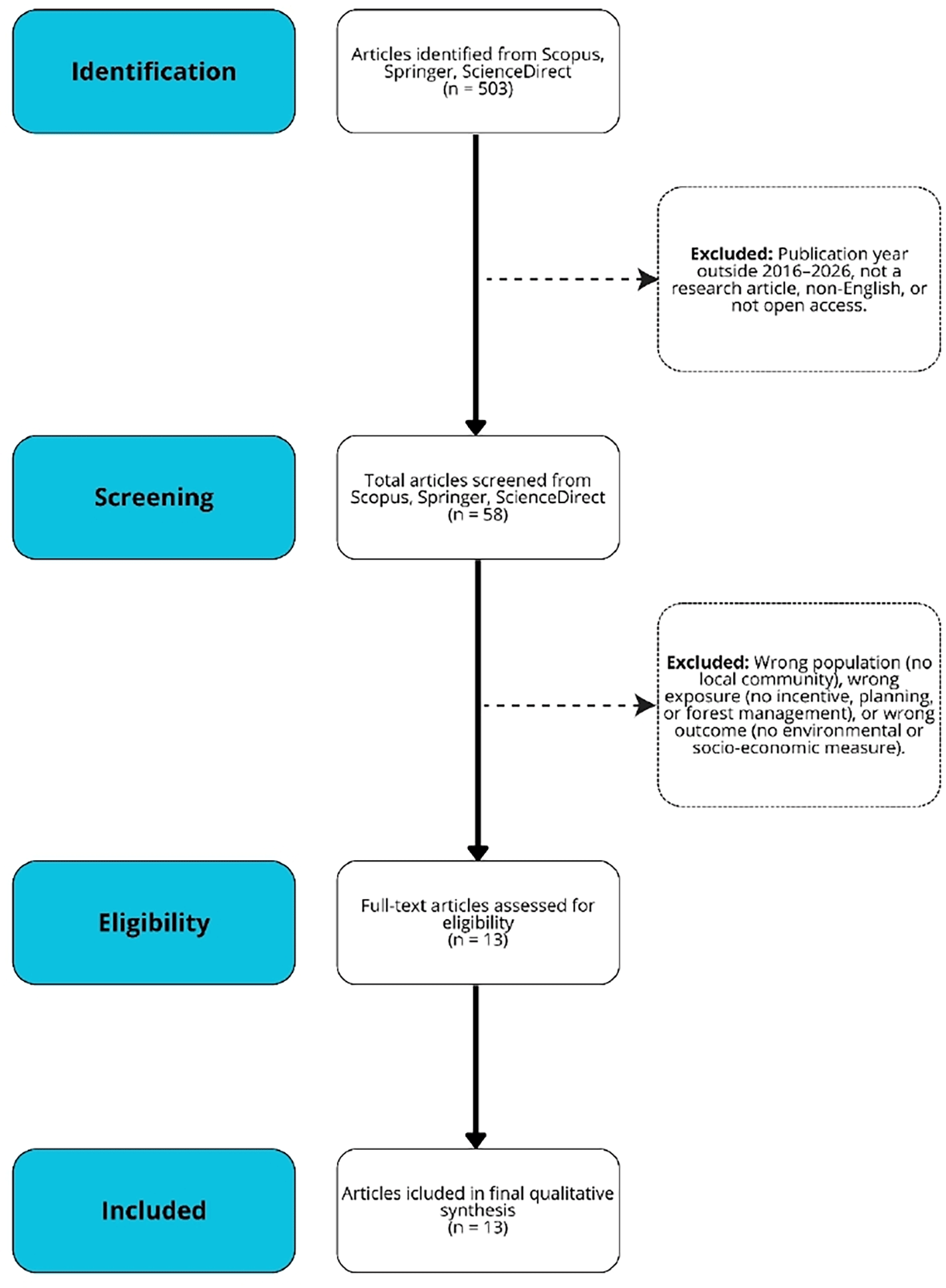
Source: Authors (2026) based on PRISMA 2020 (Page et al., 2021).
A total of 503 records were initially identified from the three databases: Scopus (n = 118), Springer (n = 377), and ScienceDirect (n = 8). No duplicate records were found across databases. After title and abstract screening, 58 records were retained (Scopus = 42, Springer = 14, ScienceDirect = 2). The remaining 445 records were excluded because they did not meet the eligibility criteria for publication year (2016–2026), document type (research articles), language (English), or open access status (see Table 1).
The full texts of the 58 potentially eligible articles were retrieved and assessed independently by two reviewers. During this full-text eligibility stage, 45 articles were excluded for the following reasons: (i) wrong population (no local community involvement); (ii) wrong exposure (no incentive policy, regional planning, or community-based forest management); or (iii) wrong outcome (no environmental or socio-economic measure). Consequently, 13 studies met all inclusion criteria and were included in the thematic synthesis. The inter-rater agreement for full-text screening was high (Cohen’s κ = 0.89, 95% CI: 0.82–0.96), indicating strong consistency between reviewers (Cohen, 1960).
A standardised data extraction form was developed based on the PEO framework and the review’s research questions (Buscemi et al., 2006). The following information was extracted from each included study: (1) author(s), year, and country; (2) study design and methods; (3) population (type and size); (4) exposure domains (incentive type, planning mechanism, forest management practice); (5) environmental and socio-economic outcomes; (6) key success factors and barriers; and (7) funding sources if reported. Data extraction was performed independently by one reviewer and verified by a second reviewer to minimise errors.
The methodological quality of the 13 included studies was assessed independently by two reviewers using the Mixed Methods Appraisal Tool (MMAT) version 2018 (Hong et al., 2018). The MMAT is designed for systematic reviews that include qualitative, quantitative, and mixed-methods studies, making it appropriate for the heterogeneous designs of the included studies (six qualitative, five mixed-methods, two quantitative modelling studies). Each study was rated against five criteria specific to its design category. For the two modelling studies (Rossita & Boer, 2025; Suwarno et al., 2018), which do not fit into standard MMAT categories, a descriptive appraisal was conducted based on transparency of assumptions, validation, and reproducibility. Disagreements between reviewers were resolved through discussion. No study was excluded based on quality; the assessment was used to interpret the strength of evidence in the synthesis. Table 3 presents the risk of bias assessment.
| ID | Author(s) (Year) | Study Design | MMAT Criteria/Quality Indicators | Risk of Bias Judgment |
|---|---|---|---|---|
| S1 | Delma et al. (2026) | Mixed-methods | All five criteria met | Low |
| S2 | Luttrell et al. (2018) | Mixed-methods | All five criteria met | Low |
| S3 | Beth et al. (2026) | Qualitative | 1–4 ✓, reflexivity X | Moderate |
| S4 | Morello et al. (2025) | Qualitative | 1–4 ✓, reflexivity X | Moderate |
| S5 | Suwarno et al. (2018) | Modelling | Transparent assumptions, validation, sensitivity analysis | Moderate |
| S6 | Rossita & Boer (2025) | Modelling | Transparent assumptions, sensitivity analysis | Moderate |
| S7 | Andrews & Borgerhoff Mulder (2018) | Qualitative | 1–4 ✓, reflexivity X | Moderate |
| S8 | Tripathy et al. (2025) | Mixed-methods | All five criteria met | Low |
| S9 | Mantey et al. (2024) | Qualitative | All five criteria met | Low |
| S10 | Akinbami et al. (2019) | Mixed-methods | All five criteria met | Low |
| S11 | Sharma et al. (2023) | Qualitative | 1–4 ✓, reflexivity X | Moderate |
| S12 | Zhu & Lo (2021) | Qualitative | All five criteria met | Low |
| S13 | Rodriguez-Ward et al. (2018) | Qualitative | 1–4 ✓, reflexivity X | Moderate |
Table 3 shows that the majority of studies demonstrated high or moderate quality. Most qualitative and mixed-methods studies met four or five MMAT criteria. Common limitations were lack of researcher reflexivity in qualitative studies and insufficient reporting of sampling strategies. The two modelling studies were transparent in their assumptions but relied on data and parameters that may limit generalisability. No study was rated as low quality across all domains.
Given the heterogeneity of study designs, outcomes, and contexts, a thematic synthesis approach was employed (Thomas & Harden, 2008). This method is appropriate for integrating findings from qualitative, quantitative, and mixed-methods studies in systematic reviews. The synthesis proceeded in three stages: (1) line-by-line coding of extracted data; (2) organisation of codes into descriptive themes based on the PEO framework; and (3) generation of analytical themes that go beyond the original findings to answer the review’s research questions. Coding was performed manually using a structured coding sheet developed by the research team. The synthesis focused on identifying patterns in exposure types, outcomes, success factors, barriers, and governance challenges across the included studies. The results of the synthesis are presented in tabular and narrative form in the Results and Discussion section ( Tables 4 and 5).
| ID | Author(s) (Year) | Country/Location | Study Method | Population (P) | Exposure (E) | Outcome (O) | Key Findings |
|---|---|---|---|---|---|---|---|
| S1 | Delma et al. (2026) | Bhutan | Mixed-methods (quantitative carbon break-even analysis + qualitative FGDs & interviews) | 20 Community Forest Management Groups (CFMGs) across 5 agro-ecological zones | Incentive: carbon break-even price (USD 35/MgCO2); Planning: community forest zoning; Forest management: foregone timber harvest, CFMG governance | Carbon sequestration potential (151,012 MgCO2/year); mixed stakeholder perceptions | Carbon break-even price sensitive to leakage & transaction costs; need for carbon rights clarity, longer management plans, capacity building |
| S2 | Luttrell et al. (2018) | Brazil, Cameroon, Indonesia, Peru, Tanzania (5 countries) | Mixed-methods (interviews with key informants, document review) | 22 subnational REDD+ initiatives; local communities, smallholders, concession holders | Incentive: REDD+ carbon credits; Planning: subnational jurisdictional planning; Forest management: SFM, logging restrictions, conservation | Implementation costs (start-up); cost-sharing patterns; number of organizations involved (139 organizations) | Subnational & government organizations bear significant costs (56% burden-sharing); polycentric governance emerging but hollow core (lack village-level involvement) |
| S3 | Beth et al. (2026) | England, UK | Qualitative (4 focus groups, n = 24 farmers) | Farmers (arable, livestock, mixed) | Incentive: ELMS, SFI, Countryside Stewardship; Planning: spatial planning for agroforestry; Forest management: agroforestry (silvopastoral, silvoarable) | Perceived benefits & barriers; low adoption (3.3%) | Financial viability, scheme inflexibility, long-term vs short-term policy mismatch; trust in government low; peer learning & trusted advisors key facilitators |
| S4 | Morello et al. (2025) | Brazil (Mato Grosso – Amazon, Cerrado, Pantanal) | Qualitative (semi-structured interviews, n = 46 smallholders) | Smallholder farmers | Incentive: input-based vs output-based contracts (PES); Planning: Economic-Ecological Zoning (ZEE); Forest management: forest conservation, reforestation | Preferences for contract types; perceptions of ES; willingness to participate | Farmers prefer input-based contracts over output-based due to risk from neighbors’ actions; forests seen as ES source despite deforestation; need for technical support & flexible schemes |
| S5 | Suwarno et al. (2018) | Indonesia (Central Kalimantan – West Kotawaringin & Kapuas districts) | Agent-based modeling (LUCES model) | Local communities, private companies, households | Incentive: forest moratorium, premium prices for NTFP; Planning: spatial planning, land zoning; Forest management: agroforestry, timber plantations, conservation | Land-use change dynamics; CO2 emissions reduction (up to 36% with livelihood support) | Moratorium alone ineffective; adding livelihood support (premium NTFP prices) reduces emissions by 23–36% in West Kotawaringin; context matters between districts |
| S6 | Rossita & Boer (2025) | Indonesia (national-level, with focus on West Kalimantan & Central Kalimantan) | Quantitative (COMAP model, cost analysis) | Private sector (companies), communities, government | Incentive: carbon credits, REDD+; Planning: NDC mitigation planning, land allocation by forest function; Forest management: reforestation, rehabilitation, RIL, ENR, forest protection | Mitigation costs (USD/ha, USD/tC); total cost for NDC target (USD 34.3 billion life cycle) | Indirect & transaction costs 10–43% & 4–19% for private sector; most cost-effective: forest conservation & peatland management; need incentives & financing diversification |
| S7 | Andrews & Borgerhoff Mulder (2018) | Tanzania (Pemba Island, Zanzibar) | Qualitative (interviews with 93 respondents, FGDs, participatory mapping) | 18 shehia with CoFMAs (REDD-ready), community members, SCCs | Incentive: performance payments (motivation payments); Planning: High Protection Areas (HPA) zoning, village land use planning; Forest management: CoFMA, monitoring, restoration | Perceptions of forest management improvement; corruption indicators; leakage | REDD+ shehia show better management & communication but higher perceived corruption; no significant emission reduction yet; leakage & elite capture challenges; cMLS framework useful |
| S8 | Tripathy et al. (2025) | India (18 states, 9,570 villages) | Mixed-methods (case study, interviews, FGDs, document analysis) | Smallholder farmers, members of PFFCS/PLDCS (172 cooperatives) | Incentive: VCS carbon credits (VERRA); Planning: cooperative-based planning (PFFCS); Forest management: agroforestry (Melia, Ailanthus) | Carbon credits generated (78,000); farmer income (INR 250,000 average); contribution to 8 SDGs | Participatory governance, transparent revenue sharing (tri-party agreement), reinvestment key to success; ROI 92%; model scalable |
| S9 | Mantey et al. (2024) | Kenya (Trans-Nzoia & Bungoma counties) | Qualitative (85 interviews, 10 FGDs, Process Net-Map) | Smallholder farmers, dairy cooperatives, community facilitators, women (>70%) | Incentive: output-based carbon payments + extension services; Planning: project-based planning; Forest management: SALM (agroforestry, residue mgt, cover crops, manure mgt) | Adoption rates; gender equity in benefit sharing; transaction costs | Women main adopters but lack control over assets/benefits due to gender norms; carbon payments low; digital tools used only for data collection, not for participation/transparency |
| S10 | Akinbami et al. (2019) | Nigeria (Southwest – Oyo, Ondo, Ogun states) | Mixed-methods (survey n = 595, FGDs n = 240) | Rural women (crop farming, food processing, NTFP collection, non-farming) | Incentive: PES, biogas, rainwater harvesting; Planning: vegetation zone-based adaptation planning; Forest management: NTFP collection, farming | Awareness of climate impacts (high); income trends; perceived challenges & opportunities | Women highly aware of climate impacts; poverty, limited credit, cultural norms constrain entrepreneurship; opportunities in rainwater harvesting, biogas, irrigation, producer organizations |
| S11 | Sharma et al. (2023) | Scotland, UK | Qualitative (22 semi-structured interviews, document analysis) | Local communities, landowners, investors, NGOs, public sector | Incentive: tax relief, WCC, voluntary carbon markets, natural capital; Planning: Scottish Forestry Strategy, land use planning; Forest management: FLS retreat from production to regulation, community asset transfer, private investment | Tree planting increase; land price inflation (30–70% above asking); emergence of “green lairds”; community access challenges | Rescaling of forest governance to private & non-profit sectors; uneven playing field; communities cannot compete with well-resourced investors; state role shifts from implementation to regulation |
| S12 | Zhu & Lo (2021) | China (Greater Khingan Range – “Pinetown”) | Ethnographic (42 in-depth interviews, 5 FGDs, participatory observation) | Local community members, SOFE workers, NTFP collectors, assemblers, factory managers | Incentive: NTFP commercialization; Planning: NFCP policy, local forest bureau planning; Forest management: NTFP collection (pinecones, berries, fungi, herbs) | Restorative justice outcomes: recognitional, procedural, distributive (inequity) | NTFP projects politicized (top-down symbolic); local knowledge ignored; overexploitation due to weak enforcement; benefits uneven: SOFE workers gain more than individual collectors; lack of procedural justice |
| S13 | Rodriguez-Ward et al. (2018) | Peru (Madre de Dios region) | Qualitative (93 interviews, participant observation, multi-level actor mapping) | Local communities, indigenous groups, Brazil nut concessionaires, miners, NGOs, government (regional & national) | Incentive: REDD+ carbon credits, PES; Planning: regional land use planning (ZEE), REDD+ Working Group; Forest management: forest conservation, SFM, Brazil nut concessions, ecotourism | Deforestation trends (increasing); actor influence; REDD+ implementation challenges; coalition building | REDD+ created multi-stakeholder dialogue but failed to address main drivers (illegal mining, agriculture); lack of coordination across levels; state still central; mistrust of NGOs; polycentric governance not sufficient without strong state authority |
The systematic search and screening process yielded 13 eligible studies that met all inclusion criteria: empirical research articles published between 2016 and 2026, written in English, open access, with a focus on local communities and at least one exposure domain (incentive policies, regional planning, or community-based forest management) and one outcome (environmental or socio-economic).
A total of 13 studies met the inclusion criteria. Table 4 summarises their key characteristics, including geographic location, study design, population, exposure domains, and primary outcomes.
As shown in Table 4, the evidence spans 11 countries across three continents: South America (Brazil, Peru), Africa (Kenya, Tanzania, Nigeria), Asia (Bhutan, Indonesia, India, China), and Europe (United Kingdom). Two studies are multi-country Luttrell et al. (2018) covering five nations; Rodriguez-Ward et al. (2018) focused on Peru but with international comparisons. Notably, only three studies originate from temperate developed countries Beth et al. (2026) England; Sharma et al. (2023) Scotland; and Delma et al. (2026) Bhutan, which is developing but with a high-income status in terms of forest governance. The majority (10 studies) are set in tropical developing economies where forest-dependent communities face acute pressures from agriculture, mining, and logging.
Methodologically, the included studies employ qualitative (Andrews & Borgerhoff Mulder, 2018; Beth et al., 2026; Morello et al., 2025; Rodriguez-Ward et al., 2018; Sharma et al., 2023; Zhu & Lo, 2021), mixed-methods (Akinbami et al., 2019; Delma et al., 2026; Luttrell et al., 2018; Mantey et al., 2024; Tripathy et al., 2025), and quantitative modeling (Rossita & Boer, 2025; Suwarno et al., 2018) designs. No single randomised controlled trial was identified, reflecting the complexity and context-specificity of community-based low-carbon interventions. The geographic and methodological heterogeneity across studies necessitates a thematic rather than statistical synthesis. The following sections therefore organise the evidence around the three core domains of exposure incentives, planning, and forest management before examining cross-cutting success factors, barriers, and governance dynamics.
Across the 13 studies, each of the three exposure domains (incentive policies, regional planning, community-based forest management) appears in various forms, but their integration is rarely seamless. This section synthesises how these pillars manifest on the ground.
Incentive policies are the most frequently reported exposure domain (present in all 13 studies). They take multiple forms: direct carbon payments and carbon credits (Andrews & Borgerhoff Mulder, 2018; Luttrell et al., 2018; Mantey et al., 2024; Rossita & Boer, 2025; Tripathy et al., 2025), payment for ecosystem services (PES) and agri-environment schemes (Akinbami et al., 2019; Beth et al., 2026; Morello et al., 2025), tax relief and natural capital markets (Sharma et al., 2023), forest moratoriums with premium prices (Suwarno et al., 2018), and NTFP commercialisation (Zhu & Lo, 2021). The two Kenyan projects (Mantey et al., 2024) used output-based payments tied to verified emission reductions, but farmers received minimal and irregular sums, undermining motivation. In contrast, the Indian cooperative model (Tripathy et al., 2025) successfully sold VERRA-certified credits and distributed revenues via a transparent tri-party agreement. A key insight is that the presence of an incentive does not guarantee effectiveness; its design (input-based vs. output-based, payment level, timing, and transaction costs) strongly moderates outcomes (Mantey et al., 2024; Morello et al., 2025; Rossita & Boer, 2025).
Regional and spatial planning appears in 10 studies, often as a framework for allocating land uses and mediating conflicts. In Peru (Rodriguez-Ward et al., 2018), the Regional Government’s Economic-Ecological Zoning (ZEE) and the REDD+ Working Group created a multi-stakeholder platform, but planning remained disconnected from powerful mining and agriculture sectors. In Indonesia (Rossita & Boer, 2025; Suwarno et al., 2018), land allocation based on forest functions (production, protection, conservation) was central to NDC mitigation planning, yet implementation suffered from overlapping mandates and weak enforcement. In Scotland (Sharma et al., 2023), the Scottish Forestry Strategy and post-Brexit land use policies shifted planning responsibilities from the state to private and community actors, producing an “uneven playing field”. In Tanzania (Andrews & Borgerhoff Mulder, 2018), village-level High Protection Areas (HPAs) and CoFMAs provided a formal planning mechanism, but leakage to neighbouring areas remained high.
Community-based forest management is the operational anchor in 12 studies. Forms include Community Forest Management Groups (CFMGs) in Bhutan (Delma et al., 2026), CoFMAs in Tanzania (Andrews & Borgerhoff Mulder, 2018), Primary Farm Forestry Cooperative Societies (PFFCS) in India (Tripathy et al., 2025), sustainable agricultural land management (SALM) in Kenya (Mantey et al., 2024), agroforestry in England (Beth et al., 2026) and Brazil (Morello et al., 2025), and NTFP collection in China (Zhu & Lo, 2021) and Nigeria (Akinbami et al., 2019). A consistent finding is that functioning local institutions are a prerequisite for any carbon or incentive mechanism to work (Andrews & Borgerhoff Mulder, 2018; Delma et al., 2026; Tripathy et al., 2025). However, even where CFMGs exist, they may lack carbon rights, technical capacity, or financial resources to engage with carbon markets (Delma et al., 2026; Luttrell et al., 2018; Rossita & Boer, 2025).
The ways in which these three pillars interact or fail to interact determine the outcomes reported in the studies. The next section distils the recurring conditions that enable success and those that perpetuate failure.
Across the 13 studies, a set of recurring success factors and barriers emerges consistently, cutting across geographic and methodological contexts. Table 5 synthesises these factors, illustrating the conditions that enable or obstruct the integration of incentives, planning, and community-based forest management for low-carbon development.
As Table 5 shows, the most frequently cited success factor is participatory governance and transparent benefit sharing, exemplified by the IFFDC cooperative in India (Tripathy et al., 2025) where a tri-party agreement and reinvestment of carbon revenues into community assets built trust and sustained participation. Flexible, context-sensitive scheme design was highlighted in England (Beth et al., 2026) and Brazil (Morello et al., 2025), where rigid planting densities and short contract durations discouraged adoption. Trusted, locally embedded advisory support emerged as a critical enabler: in England (Beth et al., 2026), farmers preferred the Woodland Trust over government agencies; in Kenya (Mantey et al., 2024), the absence of such intermediaries reduced participation.
Conversely, lack of trust in government and external actors was the most pervasive barrier, reported in six studies (Andrews & Borgerhoff Mulder, 2018; Beth et al., 2026; Luttrell et al., 2018; Morello et al., 2025; Rodriguez-Ward et al., 2018; Sharma et al., 2023). In Peru (Rodriguez-Ward et al., 2018), indigenous federations distrusted NGOs as potential carbon intermediaries; in Tanzania (Andrews & Borgerhoff Mulder, 2018), REDD-ready shehia were perceived as more corrupt than non-REDD ones. High transaction costs and insignificant carbon payments undermined financial viability across multiple contexts (Delma et al., 2026; Luttrell et al., 2018; Mantey et al., 2024; Rossita & Boer, 2025). The multi-country REDD+ study (Luttrell et al., 2018) found that most initiatives had not sold credits by 2015, and many organisations bore costs without compensation. In Kenya (Mantey et al., 2024), payments were minimal and irregular, failing to cover opportunity costs.
Short-term policy horizons versus long-term tree growth created a fundamental mismatch: schemes lasted 3–5 years while trees take decades to mature (Beth et al., 2026; Morello et al., 2025; Tripathy et al., 2025). In Scotland (Sharma et al., 2023), short-termism inflated land prices by 30–70%, pricing out communities. Gender inequities were starkly documented in Kenya (Mantey et al., 2024) and Nigeria (Akinbami et al., 2019): women performed most of the labour but lacked control over land, assets, and carbon revenues. In Bhutan (Delma et al., 2026), women’s priorities (NTFP, water) differed from men’s (timber), yet carbon pathway design ignored this divergence.
Weak state authority, overlapping mandates, and elite capture were evident in Peru (Rodriguez-Ward et al., 2018), where illegal mining continued because regional government lacked sanctioning power, and in China (Zhu & Lo, 2021), where top-down NTFP projects served as political showcases while local initiatives received no support. Leakage and additionality challenges were repeatedly noted: in Bhutan (Delma et al., 2026), assuming 50% leakage doubled the carbon break-even price; in Tanzania (Andrews & Borgerhoff Mulder, 2018), leakage occurred from REDD+ shehia to unprotected neighbours.
These barriers are not merely technical or financial; they reflect deeper governance asymmetries that are analysed in the following section.
Beneath the surface of individual projects lie structural governance challenges that shape who decide, who bears risk, and who benefits. Three interconnected dimensions recur across the 13 studies: multilevel governance gaps, power asymmetries, and procedural and recognitional injustices.
Multilevel and polycentric governance – promise and hollow core
Several studies explicitly draw on polycentric governance theory (Ostrom, 2017) to analyse REDD+ and landscape approaches. The multi-country study (Luttrell et al., 2018) found that initiatives involving organisations from international, national, subnational, and local levels were more robust, but a “hollow core” the absence of village-level institutions was common (13 out of 22 initiatives lacked local organisation involvement). In Peru (Rodriguez-Ward et al., 2018), the REDD+ Working Group created a space for dialogue, but indigenous federations operated a parallel indigenous REDD+ working group, and local governments (district mayors) were excluded. In Tanzania (Andrews & Borgerhoff Mulder, 2018), SCCs existed but community members perceived them as corrupt and unaccountable.
In Scotland (Sharma et al., 2023), the rescaling of forest governance from state to private and community actors produced an uneven playing field: “green lairds” (wealthy investors) could buy land at 30–70% above asking price, while communities could not compete. The study argues that polycentric solutions require a strong state to set rules and redistribute benefits a finding that challenges the “state-denialist” strand of polycentric theory.
Power asymmetries: who decides, who bears risk, who benefits?
Power asymmetries operate vertically (between levels) and horizontally (between actor types). In Kenya (Mantey et al., 2024), project developers and carbon technical providers controlled data, methodologies, and benefit distribution; farmers had no copy of contracts and lacked “boldness to ask”. In Peru (Rodriguez-Ward et al., 2018), NGOs and private companies (e.g., BAM) were the main champions of REDD+, while land users (miners, farmers) were excluded. In China (Zhu & Lo, 2021), the state-owned forestry enterprise (SOFE) decided NTFP projects based on political symbolism, ignoring local knowledge.
Risk transfer is a consistent pattern: upstream actors (carbon buyers, donors) shift performance risks downstream to smallholders and communities. In Kenya (Mantey et al., 2024), output-based contracts made farmers bear the risk of crop failure due to fall armyworm, yet pesticide use was restricted. In Indonesia (Rossita & Boer, 2025), transaction costs (4–19% of total) were borne by private companies, reducing their incentive to invest. In Bhutan (Delma et al., 2026), CFMGs would bear leakage and transaction costs unless compensated.
Procedural and recognitional injustices: local knowledge, gender, and the politics of voice
Drawing on restorative justice theory, the China study (Zhu & Lo, 2021) reveals that NTFP management suffered from recognitional injustice (top-down decisions ignoring local knowledge), procedural injustice (no public consultation; experts excluded), and distributive injustice (SOFE workers gained more than individual collectors). In Brazil (Morello et al., 2025), smallholders were not involved in designing PES contracts, leading them to prefer input-based over output-based schemes because they feared neighbours’ actions would affect their compliance.
Gender is a cross-cutting recognitional issue. In Kenya (Mantey et al., 2024) and Nigeria (Akinbami et al., 2019), women’s labour and knowledge are essential for project implementation, but women are not recognised as decision-makers. In Bhutan (Delma et al., 2026), women’s priorities (NTFP, water) differed from men’s (timber), yet carbon pathway design focused on timber foregone.
The severity and manifestation of these governance challenges are not uniform; they are moderated by contextual factors such as land tenure, gender norms, and institutional history, to which the next section turns.
Contextual factors do not merely influence outcomes they fundamentally reshape the causal pathways between interventions and results. The 13 studies identify several key moderators.
Land tenure security and carbon rights appear as prerequisites for investment and participation. In Bhutan (Delma et al., 2026), CFMGs manage forests but do not own land or carbon rights; the lack of clarity on carbon ownership was a major barrier. In Scotland (Sharma et al., 2023), tenant farmers with short leases could not commit to tree planting. In Peru (Rodriguez-Ward et al., 2018), overlapping land titles and concessions (legacies of incomplete decentralisation) made REDD+ certification impossible. In England (Beth et al., 2026), farmers on tenanted land were excluded from agroforestry schemes unless landlords agreed.
Gender norms and intra-household bargaining power strongly moderate benefit distribution. In Kenya (Mantey et al., 2024), women’s participation rates (>70%) did not translate into control over benefits because cultural norms assign cattle and land to men. The study calls for “gender-sensitive participatory project design” and targeting women’s collective action. In Nigeria (Akinbami et al., 2019), women’s entrepreneurship was constrained by lack of credit, land ownership, and cultural dependency on government.
Institutional capacity and trust vary widely. In Peru (Rodriguez-Ward et al., 2018), regional government suffered from “revolving door” personnel, loss of institutional memory, and weak sanctioning power. In England (Beth et al., 2026), farmers’ distrust of government was rooted in past scheme failures and political instability (e.g., Brexit). In Tanzania (Andrews & Borgerhoff Mulder, 2018), trust in SCCs was lower in REDD-ready shehia, indicating that external interventions can unintentionally erode social capital.
Market conditions and policy stability moderate financial viability. In Bhutan (Delma et al., 2026), carbon break-even price was highly sensitive to carbon market prices (assumed USD 35/MgCO2). In India (Tripathy et al., 2025), success depended on VERRA certification and access to international buyers. In England (Beth et al., 2026), farmers worried about the collapse of end-markets for apples and nuts, citing historical examples. In Indonesia (Rossita & Boer, 2025), the discount rate used in life-cycle cost analysis (5%) significantly affected total cost estimates, with sensitivity analyses showing 13–41% variation.
Political regime type shapes the space for participation. In China (Zhu & Lo, 2021), the authoritarian context allowed top-down imposition of NTFP projects without consultation, and local officials feared career consequences if they resisted. In democratic settings (e.g., Scotland, England, Peru), civil society and indigenous groups had more avenues to voice dissent, though power asymmetries persisted.
Across all these moderators, one tool digital technology is increasingly seen as a potential game-changer, but its current application falls far short of its promise.
Only one study (Mantey et al., 2024) explicitly examined the role of digital tools in smallholder agricultural carbon projects (SACPs), while others mentioned data gaps but not digital solutions. In Kenya (Mantey et al., 2024), digital tools were used for data collection and reporting (mobile apps, SMS, GPS farm tracking) and stakeholder coordination among top-level actors. However, their use was confined to the SLM component; they were not applied to carbon credit marketing, benefit distribution, or participatory feedback. As a result, digital tools reinforced upward accountability (monitoring of farmers by project developers) but did not enhance farmers’ bargaining power or access to information.
The study (Mantey et al., 2024) notes that digital tools have untapped potential to reduce transaction costs, increase transparency, and enable grievance mechanisms. For instance, blockchain-based carbon credit registries could provide real-time benefit-sharing data, and mobile payment systems could reduce intermediaries. However, without investment in local capacity and inclusive design, digital tools risk exacerbating existing inequalities, especially for women who have lower digital literacy.
Data gaps in the broader literature are substantial. Only two studies (Rossita & Boer, 2025; Suwarno et al., 2018) use quantitative modelling, and neither includes participatory validation. Longitudinal data on carbon outcomes beyond project cycles are absent. Transaction costs are rarely reported in detail Luttrell et al. (2018) and Rossita & Boer (2025) are exceptions. Gender-disaggregated data are missing from most studies Mantey et al. (2024) and Akinbami et al. (2019) are exceptions. No study reports on the long-term permanence of carbon credits or the fate of communities after project withdrawal.
Methodological limitations of the included studies affect generalisability. Qualitative studies (n = 6) provide rich context but cannot quantify impact. Mixed-methods studies (n = 5) are stronger but often lack statistical power. Agent-based models (Suwarno et al., 2018) and cost models (Rossita & Boer, 2025) rely on assumptions that may not hold across scales. Publication bias (over-reporting of positive outcomes) cannot be ruled out, although several studies (Andrews & Borgerhoff Mulder, 2018; Luttrell et al., 2018; Mantey et al., 2024; Zhu & Lo, 2021) report negative or mixed findings.
Despite these limitations, the synthesis offers robust theoretical insights that extend beyond the individual cases.
The findings of this review engage with and extend several theoretical frameworks used in the original studies.
Polycentric governance theory (Ostrom, 2017) is explicitly invoked in Luttrell et al. (2018) and Rodriguez-Ward et al. (2018). The evidence supports the idea that multiple centres of decision-making can enhance resilience, but it also reveals a central role for the state that polycentric theory sometimes downplays. In Peru (Rodriguez-Ward et al., 2018), the state remained the only actor capable of controlling illegal mining; in Scotland (Sharma et al., 2023), state retreat produced inequities; in Indonesia (Suwarno et al., 2018), the moratorium was ineffective without state enforcement. The review suggests a qualified polycentrism: nested governance works best when higher-level authorities set binding rules and redistribute resources to lower levels.
Principal-agent theory and bargaining power theory are used in Mantey et al. (2024) to analyse governance challenges in agricultural carbon projects. The layered principal-agent relationships in the carbon credit component (buyers → project developers → technical providers → field managers → farmers) create information asymmetries and shift risk downstream. Bargaining power is highly asymmetrical: upstream actors control finance, certification, and data infrastructure, while downstream actors have limited alternatives. The study (Mantey et al., 2024) recommends using digital tools for “shared project planning, transparent benefit distribution, and feedback” to rebalance incentives.
Restorative justice theory is applied in Zhu & Lo (2021) to evaluate NTFP projects in China. The framework’s three tenets – recognitional, procedural, and distributive justice reveal that political symbolism overrides local needs, that consultation is absent, and that benefits flow to state employees rather than individual collectors. This framework could be extended to other contexts (e.g., REDD+ resettlement, carbon forestry benefit-sharing) to diagnose inequities.
Rescaling theory (from critical geography) is central to Sharma et al. (2023), which traces how Scottish forest governance has shifted from state implementation to regulation, and how private and community actors have been brought in on an uneven playing field. The concept of “glocal woodlands” captures the entanglement of global carbon markets and local land use decisions. The study argues that rescaling is not a zero-sum transfer of power but a reconfiguration that requires new accountability mechanisms.
Cultural multilevel selection (cMLS) theory is used in Andrews & Borgerhoff Mulder (2018) to explore how cooperative institutions for forest management might spread under REDD+. The authors apply the Price equation to show that group-level benefits can favour the spread of costly conservation norms, but leakage, elite capture, and motivational crowding can impede this process. The Pemba case provides a real-world testbed for cMLS predictions.
Human ecology theory underpins Akinbami et al. (2019), which examines the feedback loops between climate impacts, livelihood activities, and ecosystem degradation. The study’s policy recommendations rainwater harvesting, biogas, irrigation, and producer organisations are grounded in the idea of sustainable co-evolution between social systems and ecosystems.
Collectively, these theoretical lenses converge on a central insight: technical interventions (carbon credits, planting targets, digital monitoring) cannot succeed without addressing the political, social, and institutional contexts in which they are embedded.
This review confirms that integrating incentive policies, regional planning, and community-based forest management can reduce carbon emissions and improve livelihoods when designed with participatory governance, transparent benefit-sharing, and long-term flexibility. However, persistent barriers distrust in government, high transaction costs, gender inequities, weak state authority, and leakage consistently undermine outcomes. Contextual factors such as land tenure, gender norms, and institutional capacity strongly moderate success. To achieve equitable low-carbon development, policies must move beyond technical fixes, address power asymmetries, and place local communities at the center of decision-making and benefit distribution.
Policymakers and project designers should prioritize flexible, long-term incentive schemes that combine carbon payments with upfront support to reduce risk for smallholders, alongside investments in transparent benefit-sharing mechanisms and trusted, locally embedded advisory services. To address governance asymmetries, states must strengthen land tenure security, clarify carbon rights, and enforce cross-sectoral coordination between agriculture, mining, and forestry agencies. Gender-responsive approaches including joint land titles, women-only savings groups, and targeted capacity building are essential to ensure that women’s labor translates into decision-making power and equitable benefit distribution. Digital tools should be expanded beyond monitoring to support participatory planning, real-time payment distribution, and grievance feedback. Finally, future interventions must be co-designed with local communities, piloted at jurisdictional scales, and evaluated using longitudinal, gender-disaggregated data to fill critical evidence gaps.
This study is a systematic literature review that does not involve the collection of primary data from humans, animals, or biological specimens. All data used in this review were derived from previously published scientific articles that are openly accessible (open access). Therefore, no approval from a research ethics committee (ethical approval) nor informed consent from participants is required. This research has been conducted in accordance with the ethical principles of scientific publication, including avoiding plagiarism, properly citing all sources, and not manipulating results or interpretations.
| Views | Downloads | |
|---|---|---|
| F1000Research | - | - |
|
PubMed Central
Data from PMC are received and updated monthly.
|
- | - |
Provide sufficient details of any financial or non-financial competing interests to enable users to assess whether your comments might lead a reasonable person to question your impartiality. Consider the following examples, but note that this is not an exhaustive list:
Sign up for content alerts and receive a weekly or monthly email with all newly published articles
Already registered? Sign in
The email address should be the one you originally registered with F1000.
You registered with F1000 via Google, so we cannot reset your password.
To sign in, please click here.
If you still need help with your Google account password, please click here.
You registered with F1000 via Facebook, so we cannot reset your password.
To sign in, please click here.
If you still need help with your Facebook account password, please click here.
If your email address is registered with us, we will email you instructions to reset your password.
If you think you should have received this email but it has not arrived, please check your spam filters and/or contact for further assistance.

Comments on this article Comments (0)