Keywords
Mobile Serious Games, Nursing Students, Clinical Skills, Knowledge

Mobile Serious Games, Nursing Students, Clinical Skills, Knowledge
Nursing education aims to integrate theoretical knowledge into real practice and to assist students in developing problem-solving abilities.1 Nursing students require learning approaches that support clinical reasoning and decision-making in safe learning environments.2 However, capturing the attention of nursing students has become a challenge for nursing educators.3 Students who live in a digital environment tend to value innovative and active learning strategies. In addition, the need to strengthen traditional learning can increase motivation and promote more effective learning.4 As technology-based learning strategies have developed as a new form of educational learning, they are now gaining attention in health education.5 Therefore, innovative learning approaches are increasingly needed in nursing education. One of these is serious games.
Serious games are used as edutainment tools that combine digital technologies and immersive environments to support learning.6 Serious games align in nursing education to developing graduates with strong clinical reasoning, evidence-based knowledge, and professional autonomy.7 Serious games can be played through various platforms.8 However, serious games delivered through mobile phones offer distinct pedagogical advantages in nursing education by supporting ubiquitous access, portability, flexible practice opportunities, and continuous engagement, which are essential for the development of clinical competencies.9 These affordances enable just-in-time learning and repeated exposure to clinical scenarios, which can enhance clinical decision-making and procedural skill development.
Several previous meta-analyses have shown that serious games have a positive effect on improving the knowledge, skills, and competence of nursing students; however, the reported results remain varied and are accompanied by high heterogeneity.10,11 However, existing meta-analyses have not distinguished the specific contribution of mobile-based platforms, particularly how mobile-specific affordances such as portability and ubiquitous access influence nursing competencies. As a result, the effectiveness of mobile serious games in improving clinical skills and learning outcomes remains unclear. Therefore, this study aims to systematically synthesize randomized controlled trial evidence to evaluate their impact on nursing students’ knowledge and clinical skills.
This meta-analysis was conducted in accordance with the Preferred Reporting Items for Systematic Reviews and Meta-Analyses (PRISMA) 2020 Statement.12 The research protocol was registered in the International Prospective Register of Systematic Reviews (PROSPERO) under the registration number CRD420251167985. The completed PRISMA checklist is available as extended data in Zenodo.13
Studies were selected based on the following inclusion criteria: 1) Population: nursing students; 2) Intervention: mobile serious games; 3) Comparison: a comparison group receiving standard intervention or no intervention; 4) Outcome: learning outcomes, namely knowledge and skills; 5) Study type: the study design was randomized controlled trials, considered the gold standard for assessing an intervention’s effectiveness.14 As for the exclusion criteria, studies were excluded if they were published before 2016, were not published in English, and computer-based serious games were excluded to ensure a specific focus on mobile platforms, which provide unique affordances such as portability and ubiquitous access that may differently influence learning outcomes.
The literature search was conducted by five independent reviewers across nine electronic databases: Scopus, ScienceDirect, IEEE, SAGE Journals, PubMed, Taylor & Francis, EBSCO, CINAHL, and the Cochrane Library (CENTRAL) during the period from January 1, 2026, to February 15, 2026. The main search strategy used a combination of keywords and Boolean operators (AND/OR). The keywords used were ((“nursing student*” OR “student nurse*” OR “pupil nurse*”)) AND ((“serious game*” OR “game-based learning” OR “digital game*” OR “simulation game*” OR “mobile game”)). All identified records were imported into Rayyan AI, and duplicate records were removed prior to screening. The inter-rater reliability was assessed using Cohen’s kappa coefficient (κ = 0.90), indicating almost perfect agreement. Any disagreements were resolved through discussion until consensus was reached.
Data extraction was conducted independently by five researchers using a previously developed extraction form. The information collected included: authors and year of publication, study objectives, sample size, participant characteristics, type of intervention (game name), game format, total playing time, platforms, control group, time of measurement, study outcomes, and main findings. The extraction results were compared between the researchers to ensure the accuracy and completeness of the data.
The meta-analysis was conducted using Comprehensive Meta-Analysis (CMA) software version 2 (Biostat, Englewood, NJ). Data from similar outcomes were pooled to obtain a combined effect estimate. Heterogeneity across studies was evaluated using the I2 statistic; I2 values>50% with p-values <0.05 indicated substantial heterogeneity. The effect estimate was calculated using a random-effects model with the standardized mean difference (SMD) as the effect size and a 95% confidence interval (CI). Subgroup analysis was conducted to identify factors affecting variation in results, with groups defined by academic year, platform, total playing time, and game format.
Sensitivity analysis was conducted using a leave-one-out approach to assess the robustness of the pooled results. Publication bias was assessed using funnel plot visualization and Egger’s regression test. The synthesis of results involved pooling effects, interpreting findings, and presenting results in tables and forest plot graphs. The entire analysis was conducted by two researchers and reviewed by two additional researchers to ensure consistency and accuracy of the results.
The methodological quality assessment was conducted to identify potential risks of bias in all included studies. Two independent researchers assessed each article using the Cochrane Risk of Bias 2 (RoB 2) tool for randomized controlled trials (RCTs) (Sterne et al., 2019). The assessment covered five domains: randomization process, deviations from intended interventions, missing outcome data, measurement of the outcome, and selection of the reported result. Each domain was classified as low risk of bias, some concerns, or high risk of bias, and the overall judgment was determined based on the results across all domains. Any discrepancies in the assessments between the researchers were resolved through discussion until consensus was reached. The results of the risk of bias assessment are presented in Table 1 (Study Risk of Bias Assessment Using ROB 2 Tool).
A total of 544 studies were identified from nine databases. After removing 121 duplicates, 423 studies were screened based on title and abstract, of which 386 studies were excluded. A total of 37 articles were assessed through full-text review, and 27 articles were excluded for not meeting the inclusion criteria. Ultimately, 10 studies were included in the systematic review and met the criteria to proceed to the meta-analysis. The completed PRISMA flow diagram is available as extended data in Zenodo.13
A total of 10 RCT studies published between 2019 and 2026 involved nursing students at various academic levels (from first-year to clinical practice) as participants. The interventions used consisted of serious games with varying playing durations, ranging from short sessions of approximately ±2 minutes to repeated use over 7 days up to 8 weeks. Outcome measurements were conducted at various time points, generally immediately after the intervention, and several studies performed follow-up evaluations up to 2–4 weeks to assess learning retention. The intervention platforms were predominantly smartphones (Android/iOS) and web-based multi-device applications. The control groups generally received conventional learning, such as lectures, demonstrations, or no additional intervention. The intervention topics encompassed various nursing clinical skills, with the primary outcomes comprising knowledge and clinical skills, along with additional variables such as anxiety, satisfaction, and learning curve. The complete study characteristics are presented in Table 2: Study Characteristics.
| No | Author (year) | Participants, Sample Size | Intervention Group | Control Group | Follow- up | Outcomes | |||
|---|---|---|---|---|---|---|---|---|---|
| Intervention Type/Name | Format Games | Duration | Platforms | ||||||
| 1 | Akbari HajiAbad et al. (2026)25 | Third- and fourth-year surgical nursing students I: 29, C: 28 | Co-Surgeon | Puzzles reflecting surgical nurse roles with scenario, Mayo stand setup activities, and puzzles | 3 weeks, at least 6 hours | Mobile (smartphone; Android & iOS) | Conventional lecture-based education | 2-week | - Learning scores (clinical reasoning) - The satisfaction scores of learners |
| 2 | Bayram & Caliskan (2019)26 | First-year nursing students I: 43, C: 43 | Game-based VR phone application | VR simulation, scenario-based learning and procedural gameplay | 10 min every 1 week | Mobile phone (Android) | Traditional learning | 1-week | - Tracheostomy Care Knowledge Test - Psychomotor skills |
| 3 | Demirel & Kaya (2026)27 | 1st-year nursing students I: 30, C: 30 | Interactive Digital Game (IDG) | Realistic clinical scenarios, patient identification, immediate pop-up feedback | 1 week of unlimited access (min. One session). | Web-based (Access in Mobile phones + multi-platforms) | Theoretical instruction and 8-hour laboratory demonstration/practice. | 1-week | IMI knowledge, skill performance, test anxiety (RTAS), and satisfaction (VAS). |
| 4 | Farsi et al. (2021)28 | First semester nursing students SG: 18, Simulation group: 18, C: 18 | Virtual CPR serious game | Virtual emergency scenario of CPR, self-learning, guidance & feedback | ± 2 minutes for 2 weeks | Smartphone | Traditional simulation training with mannequin and control group | 2-week | CPR knowledge and skill |
| 5 | Fijačko et al. (2024)29 | Undergraduate nursing students I: 22, C: 21 | MOBICPR serious smartphone game | Interactive smartphone gestures to perform BLS on a virtual patient, evidence-based clinical scenario and gamification elements | Freely at home for 2 weeks | Smartphone | Wait-list control group | 2-week and 4-week | -Theoretical knowledge of adult BLS -Practical skills in adult BLS |
| 6 | Genç et al. (2025)30 | Senior (4th-year) nursing students I: 36, C: 38 | Natural Disaster Survival mobile serious game | -Interactive gameplay -Simulation-based learning -Scenario-based disaster training | 15 sessions and each session 40 min for 8 weeks | Mobile phones + mixed platforms | No intervention | 8-week | Disaster literacy scale and general disaster preparedness belief scale |
| 7 | Gu et al. (2022)31 | Nursing students during clinical internships I: 77, C: 77 | Game-based Mobile App | Goal-oriented tasks, scenario-based animations, and error-driven obstacles. | 7 days of access. | Mobile application (Android). | Traditional training (theory, demo, and one practice session). | Final assessment after 7 days. | Skill performance scores, incidence of errors, and learning curves. |
| 8 | Kulakaç & Çilingir (2024)32 | 2nd-year nursing students I: 45, C: 47 | Serious Game-based Web Application | Interactive computer application, challenging tasks, and repetition capabilities | 2 weeks of access. | Web-based (Access in Mobile phones + multi-platforms) | Standard education protocol with no additional digital intervention. | 4-week long-term retention test. | Stoma care knowledge and skill scores (immediate and 4-week retention). |
| 9 | Nasirzade et al. (2024)33 | 5th semester undergraduate nursing students I: 21, C: 21 | BAM Game (Burn Assessment Mission Game) | Multimedia learning, scenario-based stages, timed questions and feedback, and gamification elements | 2 weeks of access | Web-based (Access in Mobile phones + multi-platforms) | Feedback lecture | 2-weeks | Comparing skills and knowledge scores |
| 10 | Tang et al. (2023)34 | Nursing students who practiced in the hospital I: 52, C: 53 | Game-based Mobile App Simulation | 2D animations, simulation exercise sorting tasks, interactive clinical stages | 7 days of access. | Mobile application + Multi-platform: Android, Windows, Mac) | Traditional teaching (theoretical and operational training). | Final assessment after 7 days. | Skill scores and learning curves (repetition mastery). |
The effects of the use of mobile serious games on the learning outcomes of nursing students are presented in Figures 1 and 2. Compared with conventional learning methods, mobile serious games showed statistically significant improvements in both knowledge and clinical skills. The meta-analysis results showed a moderate effect on knowledge (SMD = 0.72 (0.34–1.1); p < 0.001) and a large effect on skills (SMD = 1.01 (0.55–1.46); p < 0.001), indicating that mobile serious games–based learning was more effective than traditional approaches in improving cognitive and psychomotor learning outcomes in nursing education. These findings suggest that mobile serious games can provide meaningful improvements in clinical competence, particularly by enhancing students’ ability to apply knowledge and perform clinical procedures in simulated or practice-based settings. Sensitivity analysis using the leave-one-out approach showed that no single study significantly altered the pooled effect size, indicating the robustness and stability of the results.
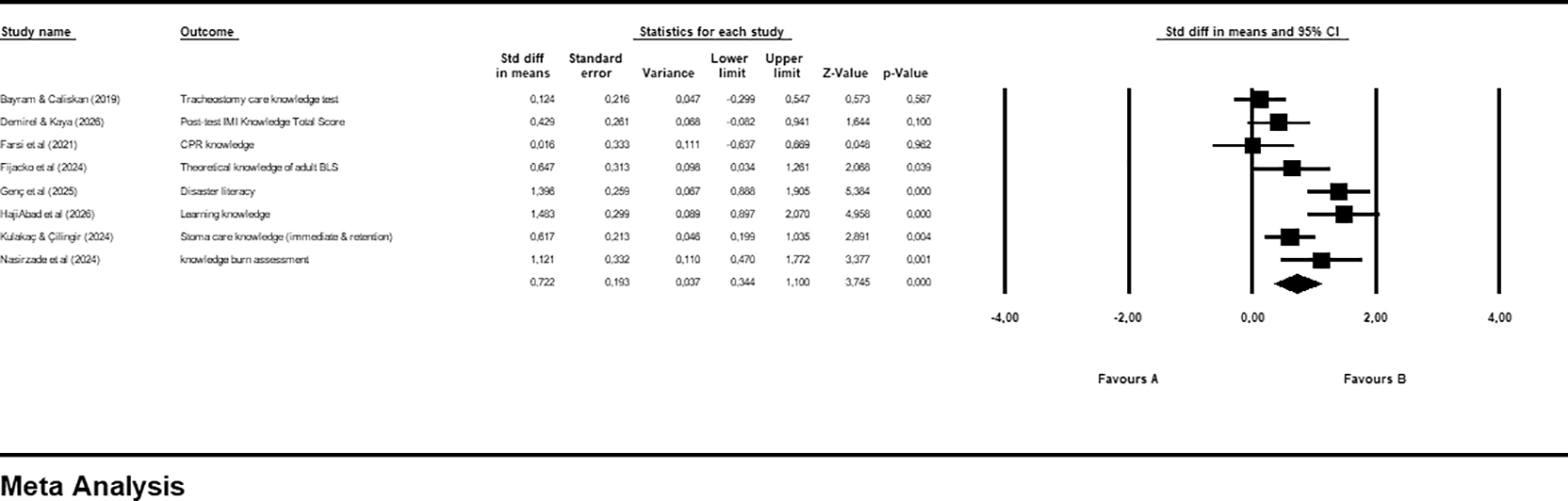
This figure presents the pooled standardized mean difference comparing mobile serious games with control or conventional learning approaches for knowledge outcomes among nursing students.
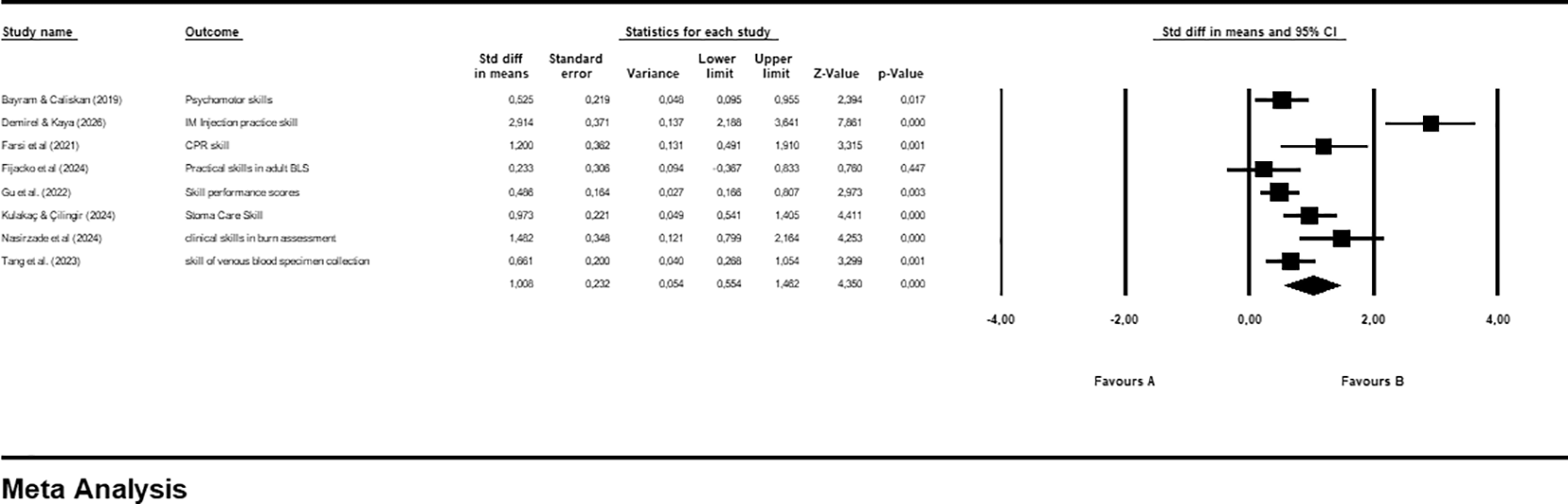
This figure presents the pooled standardized mean difference comparing mobile serious games with control or conventional learning approaches for clinical skills outcomes among nursing students.
Significant heterogeneity was observed for knowledge outcomes (I2 = 75.21%) and skills outcomes (I2 = 85.22%) (p < .05) (Figures 1 and 2). These results indicate substantial to considerable variability among the included studies. This heterogeneity may be explained by students’ academic level, intervention platform, total usage time (total play time), and game format ( Table 3: Subgroup Analysis). Based on academic level, there were significant differences in effect on knowledge outcomes (p < 0.001) and skills outcomes (p = 0.022). Final-year students (years 3–4) showed a greater effect on knowledge (SMD = 1.353) compared with early-year students (years 1–2; SMD = 0.378). A similar pattern was also observed for skills, with final-year students showing a greater effect (SMD = 1.482) than early-year students (SMD = 1.139).
| Variable | Knowledge | Skills | ||||
|---|---|---|---|---|---|---|
| N | SMD (CI 95%) | p | N | SMD (CI 95%) | p | |
| Academic year | <0,001 | 0,022 | ||||
| 1–2nd years | 5 | 0,378 [0,17;0,62] ** | 5 | 1,139 [0,38;1,9] ** | ||
| 3-4th years | 3 | 1,353 [1,02;1,69] *** | 1 | 1,482 [0,8;2,16] *** | ||
| Platforms | 0,439 | 0,044 | ||||
| Mobile phones | 4 | 0,562 [−0,01;1,21] * | 4 | 0,550 [0,26;0,84] *** | ||
| Multi-platform | 4 | 0,873 [0,43;1,32] *** | 4 | 1,464 [0,63;2,3] *** | ||
| Total Play Time | <0,001 | 0,782 | ||||
| 1 week | 2 | 0,248 [−0,01;0,57] | 4 | 1,081 [0,31;1,85] ** | ||
| 2 weeks | 4 | 0,604 [0,21;0,99] ** | 4 | 0,952 [0,46;1,45] *** | ||
| >3 weeks | 2 | 1,434 [1,05;1,82] *** | ||||
| Format Games | 0,925 | 0,012 | ||||
| Scenario-based | 4 | 0,763 [0,13;1,39] ** | 3 | 1,861 [0,84;2,88] *** | ||
| Simulation & scenario-based | 3 | 0,715 [−0,07;1,5] * | 3 | 0,459 [0,22;0,69] *** | ||
| Non scenario & simulation | 1 | 0,67 [0,19;1,04] *** | 2 | 0,803 [0,49;1,11] *** | ||
Based on the platform, no significant difference was found in knowledge outcomes (p = 0.439); however, a significant difference was found in skills outcomes (p = 0.044). Multi-platform–based interventions showed a greater effect on skills (SMD = 1.464) compared with interventions that used mobile phones only (SMD = 0.550). Based on total usage time, there was a significant difference in knowledge outcomes (p < 0.001), but not in skills outcomes (p = 0.782). The effect on knowledge increased with the duration of use, with the greatest effect observed in interventions lasting more than three weeks (SMD = 1.434), followed by two weeks (SMD = 0.604) and one week (SMD = 0.248). Based on game format, there was a significant difference in skills outcomes (p = 0.012), but not in knowledge outcomes (p = 0.925), with the greatest effect observed in scenario-based games (SMD = 1.861).
Funnel plot inspection revealed an asymmetrical distribution, with most studies clustered on the positive effect side and a relative absence of studies on the negative side, suggesting potential publication bias. The findings are limited by the small number of included studies and the variability in study designs, which may affect the generalizability of the results.
This systematic review and meta-analysis provide strong evidence that serious games accessed on mobile/smartphone devices are effective in improving the learning outcomes of nursing students. By synthesizing data from 10 randomized controlled trials (RCTs), this study shows that mobile serious games interventions significantly improve learning outcomes, namely a moderate effect on knowledge and a large effect on skills compared with control conditions. The consistency of the results is supported by previous meta-analyses that show the promising potential of mobile games in education.15
Serious games (SG) improve learners’ academic achievement and promote participation in learning activities.16 In nursing, SG can develop essential competencies in nursing, including procedural skills, health assessment, communication skills, and clinical reasoning abilities.17 Serious games generally apply a learning-by-doing approach, in which players are actively involved in tasks that resemble real-world situations, thereby enhancing the understanding and retention of the material.18 The provision of immediate feedback on players’ actions helps maintain motivation and provides clear learning guidance.19 Smartphones also support learning flexibility by enabling easy access to educational content at any time and place.20 However, the use of mobile devices in learning still requires proper management, as without adequate strategies, smartphones can become a distraction for learners.21
The subgroup analysis shows that the intervention’s effectiveness is affected by several factors. Final-year students show greater improvement than early-year students. Longitudinal studies indicate that students’ critical thinking abilities increase significantly from the first year to the final year.22 Trained users with prior experience or knowledge tend to find it easier to master learning tasks relates to learning maturity.6 This study shows that mobile phone–based interventions that can also be accessed on other platforms (multi-platform) have a greater effect on skills than applications that use mobile phones only. The affordances of these platforms support real-time interconnectivity and distributed processing, thereby enabling flexible access to learning materials across various devices and sensory channels.23 The subgroup analysis also shows that longer total play time is associated with greater improvement in knowledge. Longer duration tends to produce better learning outcomes, as it provides opportunities for repeated exposure and reinforcement of the material.24 However, no significant difference was found between scenario-based and non-scenario-based games.
This review affirms that integrating mobile serious games into the nursing curriculum has the potential to improve students’ knowledge and clinical skills through technology-enhanced learning approaches. As interactive digital learning systems, mobile serious games utilize advancements in mobile computing technologies, including portable devices, real-time user interaction, and ubiquitous access, to support scalable and adaptive learning environments. These systems enable dynamic content delivery and user engagement, which can improve learning performance and interaction quality. In practice, mobile serious games can be integrated as supplementary tools within blended learning environments, for example as pre-clinical preparation, reinforcement during clinical rotations, or self-directed learning modules accessible anytime and anywhere. In technology, these findings suggest advancing the design and development of mobile serious game technologies within mobile computing environments. Further research is also needed to explore how variations in game design, interactivity, and platform integration influence learning outcomes. In addition, the reported effect sizes from this review may serve as a reference for future experimental studies aimed at evaluating and optimizing mobile serious game interventions.
Several limitations need to be considered when applying the results of our study. There was the limited number of included randomized controlled trials (n = 10), relatively high heterogeneity across studies (I2 > 75%), reflecting variations in intervention design, duration of use, participant characteristics, technology platforms, as well as outcome measurement methods. Although subgroup and sensitivity analyses were conducted, the exact sources of variability could not be fully identified. Additionally, the relatively small number of included RCTs limits statistical power, particularly for subgroup analyses, which may affect the stability, reliability of subgroup findings, and generalizability of the results. Variations in outcome measures, intervention fidelity, and reporting quality may further introduce bias and limit comparability, while the inability to perform advanced analyses such as meta-regression restricts deeper exploration of moderating factors. Moreover, most studies reported only short-term outcomes, limiting conclusions about long-term knowledge retention and skill sustainability. Finally, although publication bias was assessed using funnel plots, the possibility of selective reporting cannot be entirely excluded.
This research shows that mobile serious games have potential as technology-enhanced learning to improving nursing students’ knowledge and clinical skills compared with conventional learning methods. The identified effects show meaningful improvement, particularly in clinical skills and knowledge. These findings support integrating mobile serious games into nursing education, enabling more flexible, scalable, and learner-centered instructional environments. By utilizing features such as portability, real-time interaction, and ubiquitous access, mobile-based learning technologies can facilitate continuous practice and enhance learner engagement. Future research should therefore focus on advancing the design and development of mobile serious game technologies, as well as evaluating their long-term effectiveness and optimizing their implementation in nursing education.
The authors used Trinka AI for language refinement and Rayyan AI to assist in the study screening process of this systematic review. All AI-assisted outputs were thoroughly reviewed and validated by the authors. The authors take full responsibility for the final content of this manuscript.
| Views | Downloads | |
|---|---|---|
| F1000Research | - | - |
|
PubMed Central
Data from PMC are received and updated monthly.
|
- | - |
Provide sufficient details of any financial or non-financial competing interests to enable users to assess whether your comments might lead a reasonable person to question your impartiality. Consider the following examples, but note that this is not an exhaustive list:
Sign up for content alerts and receive a weekly or monthly email with all newly published articles
Already registered? Sign in
The email address should be the one you originally registered with F1000.
You registered with F1000 via Google, so we cannot reset your password.
To sign in, please click here.
If you still need help with your Google account password, please click here.
You registered with F1000 via Facebook, so we cannot reset your password.
To sign in, please click here.
If you still need help with your Facebook account password, please click here.
If your email address is registered with us, we will email you instructions to reset your password.
If you think you should have received this email but it has not arrived, please check your spam filters and/or contact for further assistance.


Comments on this article Comments (0)