Keywords
melatonin, Yin- Yang, chronobiology, hypothalamus, headache, autonomic nervous system

This article is included in the Global Public Health gateway.
melatonin, Yin- Yang, chronobiology, hypothalamus, headache, autonomic nervous system
Biological rhythms modulate diverse physiological processes and are essential in sustaining homeostasis. In mammals, the suprachiasmatic nucleus (SCN) of the hypothalamus functions as the master circadian pacemaker, synchronizing peripheral oscillators within tissues and organ networks through hierarchical neuronal and humoral signaling pathways.1 This temporal coordination is mediated by transcriptional-translational feedback loops involving key clock genes, such as CLOCK, BMAL1, PER, and CRY. These generate approximately 24-hour oscillations in gene expression which modulate metabolism, endocrine function, immune responses, thermoregulation, behaviour, and sleep-wake cycles.2 Disruption of these molecular oscillators can precipitate the misalignment between central and peripheral clocks, a condition implicated in migraine vulnerability.3 Migraine is a complex, recurrent neurobiological disorder characterized by episodic attacks of predominantly unilateral headaches, often accompanied by sensory, autonomic, and cognitive symptoms.4 Attacks usually progress through distinct phases – a premonitory phase, where some may then experience aura, followed by a headache phase, and a postdromal phase – with variable symptom-free intervals between episodes.5 Beyond its clinical heterogeneity, migraine may exhibit a time-dependent profile on multiple levels, with attack onset clustering at specific diurnal or circadian times and revealing individual variability.6 Clinical correlation with disturbed sleep-wake rhythms,7 reduced nocturnal melatonin secretion,8 and hypothalamic engagement during the premonitory phase9 suggest that migraine is linked with a disturbance in biological rhythms. Recent studies have demonstrated that migraineurs exhibit a circadian, weekly and seasonal attack onset, most commonly during the early morning hours (6 a.m. to 12 p.m.), as well as a broad circannual peak between April and October,6,10–13 thus implying that migraine is sensitive to disturbances in biological synchronization. Alignment with natural temporal cycles (i.e. diurnal, seasonal, lunar, and syzygial) is considered fundamental in traditional Chinese medicine (TCM) for preserving bodily stability.14
Classical Chinese medical philosophy conceptualizes physiological regulation through the interaction between Yin and Yang, representing complementary inhibitory and excitatory operations that alternate rhythmically over temporal scales. Yin corresponds to consolidation, restoration, cooling, and internal nourishment, whereas Yang corresponds to stimulation, metabolic mobilization, and sensory engagement.15 Health is sustained when these opposing but interdependent forces remain proportionally balanced and temporally synchronized.16 This adaptive modulation of Yin and Yang, Qi, blood, and Zang-Fu organ activity follows circadian sequences, while the interplay between Ying Qi (nutritive energy) and Wei Qi (defensive energy) governs interchanges between internal nourishment and external defense. In the Yellow Emperor’s Classic of Internal Medicine, this relationship is described through the principle of “mutual responsiveness of the natural and the human” (天人相应), which proposes that physiological rhythms within the human body mirror environmental cycles comprising day/night alternation, seasonal progressions and climatic variation.17 These ideas are congruent with current chronobiological understanding associating Yin-Yang equilibrium with molecular oscillations and circadian rhythm control.18 The historical connection between migraine and circadian rhythms in TCM extends over centuries. In ancient Chinese medical texts, migraine was described as “head wind” (头风), “brain wind” (脑风), or “one-sided head wind” (偏头风),19 and time-dependent tendencies of some diseases have also been reported.20 Based on TCM principles, headache disorders are primarily determined by the meridian system, the functional relationships among the Zang-Fu organs, as well as the nature of the pathogenic factors influences.21 Classical TCM theory further proposes that the circulation of Qi and blood through the meridian network follows rhythmic temporal sequences across the 24-hour cycle. These rhythmic fluctuations are believed to influence the functional predominance of different organ systems throughout the day and night. Such ideas are consistent with contemporary findings that neuronal activity, vascular tone, endocrine secretion, and metabolic processes exhibit a circadian phase dependence.14 Furthermore, TCM theory also emphasizes seasonal physiological rhythms, describing functional associations between the Zang-Fu organ system and the annual cycle (liver/spring, heart/summer, spleen/late summer, lung/autumn, kidney/winter).22 These seasonal correspondences reflect the belief that human physiological processes adapt continuously to environmental rhythms. This concept is consistent with modern observations of circannual variation in endocrine function, immune performance, and neurological disease manifestations, as well as seasonal modulations in migraine frequency.22–24 Disruptions including Yin-Yang harmony, Ying Qi-Wei Qi disharmony, Zang-Fu organ misalignment with seasonal timing, or disordered Qi-blood circulation may precipitate migraine attacks.25 TCM integrates circadian principles by viewing diurnal Qi oscillations as central to health maintenance, with migraine attributed to temporal misalignment - a paradigm that parallels chronobiology’s understanding that SCN-driven phase perturbations increase attack susceptibility. These observations imply that migraine may involve a disrupted temporal regulation, which aligns with contemporary chronobiology and classical Yin-Yang theory.6,26 Environmental zeitgebers, central clock mechanisms, endocrine rhythms, and autonomic balance interact reciprocally to maintain physiological stability, while a disruption in these processes may precipitate migraine attacks. An integrative multi-scale model of these interactions is presented in Figure 1, and key representation correspondences between circadian biology and Yin-Yang theory are summarized in Table 1. The following sections examine chronobiological mechanisms of migraine across molecular, endocrine, hypothalamic, and systems levels, while also considering how these processes relate to principles described in Yin-Yang theory.
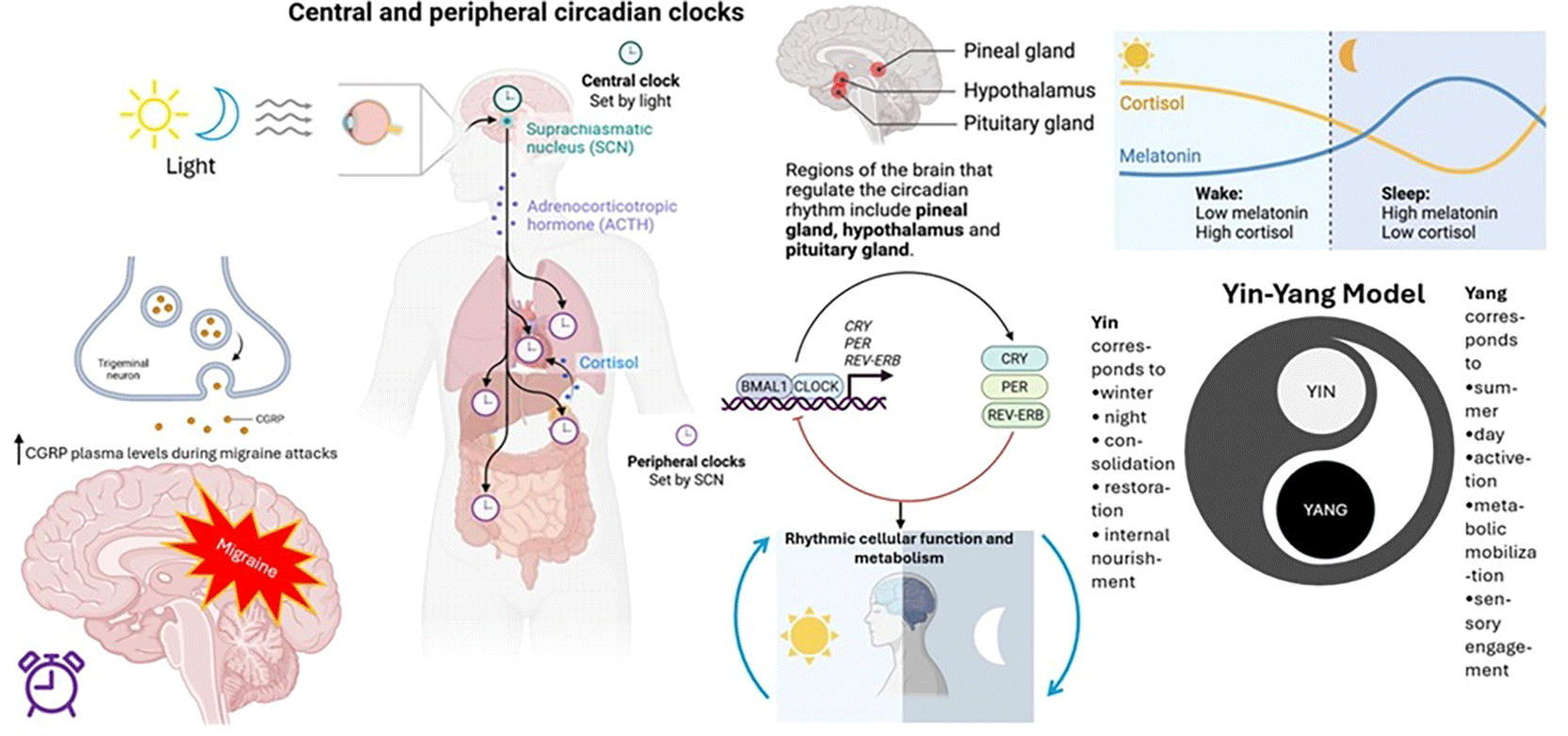
CGRP, calcitonin gene-related peptide; SCN, suprachiasmatic nucleus. Note: Source modified from BioRender.com.
Comparative features of chronobiology and concepts of Yin–Yang regulation.
| Domain | Yin (Inhibitory/restorative) | Yang (Excitatory/activating) | Migraine-relevant disturbance | Reference |
|---|---|---|---|---|
| Circadian Phase | Nocturnal consolidation, melatonin | Diurnal activation | Early-morning attacks during Yin-Yang transition | 10,46,49,50 |
| Molecular Clock | PER/CRY repression phase | CLOCK/BMAL1 activation phase | Circadian misalignment alters excitability thresholds | 33–44 |
| Neuroendocrine | Melatonin secretion | Arousal-related signaling | Reduced melatonin lowers trigeminovascular inhibition | 49,50,53,82,83 |
| Hypothalamic Regulation | Energy conservation, inhibitory tone | Arousal, autonomic activation | Premonitory hypothalamic activation before attacks | 57,59–61,65–67 |
| Autonomic Nervous System | Parasympathetic dominance | Sympathetic dominance | Dysautonomia across migraine phases | 70,71 |
| Cellular Metabolism | Biosynthesis, energy storage | Adenosine triphosphate production, oxidative metabolism | Mitochondrial dysfunction, reactive oxygen species accumulation | 30–32 |
| Redox Balance | Antioxidant systems | Oxidative processes | Oxidative stress increases neuronal excitability | 30 |
| Cortical Excitability | Inhibitory containment | Glutamatergic excitation | Susceptibility to cortical spreading depression | 41–43,72–74 |
| System Stability | Homeostatic oscillation | Activation responses | Transition to pathological state under imbalance | 68,69,75–78 |
In TCM, Yin and Yang describe reciprocal self-regulating physiological processes operating at multiple temporal scales, from moment-to-moment functional adjustments to diurnal alternation, seasonal variation, and cyclical environmental influences.27 Health is maintained through a rhythmic alternation and mutual containment between these complementary phases. Temporal dysregulation becomes pathogenic when rhythmic alternation loses proportional balance or phase alignment. Disease may arise when the body fails to adapt appropriately to environmental changes such as climatic variation, seasonal transitions, or alterations in daily activity patterns. This notion closely corresponds to the chronobiological model of circadian misalignment, in which a disruption of the internal clocks relative to environmental cues increases disease vulnerability.28 This conceptualization also aligns with systematic biology, demonstrating that Yin-Yang dynamics reflect measurable neuroimmune and redox balances, with disturbances manifesting as inflammation, circadian disruption, and increased disease susceptibility.29 Contemporary research provides biological correlates to these principles across multiple organizational levels. On a cellular level, mitochondrial energy metabolism exemplifies Yang-driven activation through oxidative phosphorylation and adenosine triphosphate (ATP) generation, whereas biosynthetic and storage processes correspond to Yin.30,31 Imbalances manifest as mitochondrial dysfunction, including impaired ATP synthesis or excessive reactive oxygen species accumulation. Similarly, cellular redox states (GSH/GSSG, NAD+/NADH ratios) embody Yin-Yang interdependence, perturbations in oxidative stress versus antioxidant capacity disrupt homeostasis and alter neuronal excitability.30 On a systemic level, Yin-Yang interrelations extend to gene-protein networks, where oscillatory regulation of transcriptional and post-transcriptional modules – including microRNAs – maintains a temporal coordination of immune, metabolic, and neuronal activity.30 Deviations from these rhythmic patterns are associated with mitochondrial dysfunction, increased oxidative stress, and enhanced neuronal excitability, all of which are implicated in migraine pathophysiology and the initiation of attacks.32 In a Yin and Yang scheme, these changes correspond to a relative weakening of Yin-related inhibitory, restorative processes and a predominance of Yang-related excitatory, energy-demanding activity.
Circadian clock components provide measurable substrates for oscillatory physiological control, as transcriptional-translational feedback loops formed by CLOCK/BMAL1 and PER/CRY proteins generate 24-hour rhythms through phased activation and subsequent repression of clock-controlled genes.33 This circadian oscillatory architecture has also been described as a complementary day/night regulatory system analogous to the Yin-Yang model, in which molecular processes active during one phase simultaneously prepare the organism for the opposing one.34 Experimental evidence demonstrates that core clock components exhibit phase-opposed functions, meaning that transcriptional activators (e.g., CLOCK/BMAL1) promote processes associated with the active phase, while repressive components (e.g., PER/CRY complexes) accumulate to terminate this activity and initiate the opposing phase. This reciprocal organization buffers environmental fluctuations and stabilizes internal physiological conditions despite large external variations.34 Instability in this reciprocal buffering mechanism could increase susceptibility to pathological phase shifts, including the abrupt neuronal hyperexcitability observed at migraine onset. The alternating dominance of CLOCK/BMAL1-driven transcription and PER/CRY-mediated repression corresponds to recurring rotations between functionally excitatory and inhibitory phases, analogous to rhythmic Yin-Yang interdependence. Genetic findings from familial studies suggest a direct link between circadian oscillatory regulation and susceptibility to migraine.35 A missense mutation in casein kinase 1 delta (CK1δ), a critical regulator of PER protein phosphorylation and circadian period stability, was identified in two independent pedigrees exhibiting both familial migraine and advanced sleep phase syndrome.36 CK1δ modulates the timing of PER protein degradation within the negative feedback loop of the molecular clock. Altered CK1δ kinetics shorten circadian period length and destabilize oscillatory phase alignment.37 The co-segregation of migraine with a mutation that affects core clock operations shows that the disruption of molecular circadian regulation can lower the threshold for paroxysmal neurological activation.38 Genome-wide association studies have identified enrichment of migraine-risk loci in pathways related to neuronal excitability, synaptic regulation, and circadian-controlled transcriptional networks.39,40 Notably, a systematic review found that 110 of 168 migraine susceptibility genes identified in genome-wide association studies were clock-controlled genes, suggesting a correlation between circadian gene expression signatures and migraine susceptibility, though the mechanistic significance of this enrichment requires further investigation.13 Considering that PER and CRY oscillations regulate downstream transcriptional programs influencing ion channel expression, neurotransmitter turnover, and metabolic activity, altered circadian amplitude or phase coherence may modify neuronal excitability thresholds over the 24-hour cycle.41 Studies demonstrate that the disruption of core clock components alters synaptic plasticity and glutamatergic transmission, mechanisms central to cortical spreading depolarization.41,42 Given that migraine initiation depends on variable excitability rather than static structural abnormalities, instability within molecular feedback may contribute to susceptibility to episodic attacks.43 In keeping with the Yin-Yang principle, this molecular feedback architecture illustrates a system in which accumulation, peak dominance, and internally mediated reversal maintain oscillatory balance. When feedback timing or amplitude become unstable, phase coherence may deteriorate. Migraine can therefore be understood as consequence to instability of circadian regulation networks, particularly during critical transitions between nocturnal inhibitory consolidation and diurnal activation, periods when declining melatonin levels may reduce inhibitory control over calcitonin gene-related peptide (CGRP) signaling in the trigeminovascular system.44,45
Melatonin provides a functional endocrine correlate of Yin predominance.46 In TCM theory, Yin represents antioxidation, nocturnal quiescence, and restorative processes, while Yang corresponds to oxidation and daytime activity. Melatonin, a potent antioxidant secreted nocturnally, embodies the biochemical substrate of Yin.47 From a Yin-Yang perspective, melatonin deficit represents Yin deficiency, a state characterized by impaired antioxidant capacity, diminished nocturnal restoration, and unopposed Yang activity that lowers the threshold for trigeminovascular activation.48 Reduced nocturnal melatonin levels in individuals with migraine have been consistently reported across multiple studies, particularly during attack periods.49,50 One study confirmed significantly lower nocturnal serum melatonin (mean difference − 12.29 pg/mL) and urinary melatonin metabolite levels in adult migraine patients compared to healthy controls.51 However, when compared with amitriptyline, melatonin demonstrated reduced efficacy for attack duration and severity, with no consistent advantage on analgesic use or response rate. Melatonin did though demonstrate a more favourable tolerability profile, including a lower risk of sleepiness.50 A network meta-analysis in 2025 found no statistically significant differences in monthly headache frequency between melatonin and amitriptyline, naproxen, valproic acid, topiramate, or propranolol, though melatonin was superior to placebo.52 Melatonin directly inhibits trigeminovascular stimulation by reducing CGRP release and nitric oxide synthesis while modulating neurogenic inflammation.53 These inhibitory actions, suppressing excitatory neuropeptides and oxidative mediators, exemplify Yin’s physiological role in counterbalancing Yang-driven neuronal excitation.54 Both melatonin receptor 1 and melatonin receptor 2 are co-localized with CGRP and its receptor component RAMP1 in trigeminal ganglion neurons, providing an anatomical substrate for melatonin’s modulatory effects on nociceptive signaling.45 The circadian timing of melatonin secretion parallels Yin-Yang oscillations, with reduced amplitude or misaligned phase representing diminished nocturnal inhibitory consolidation. Migraineurs exhibit disrupted chronobiological stability, being more languid (e.g. tired after circadian rhythm changes) and rigid (e.g. coping poorly with activity at unusual hours) than controls, reflecting impaired adaptability at the Yin-Yang interface. This reduction lowers the threshold for trigeminovascular activation, consistent with the observation that many migraine attacks begin during early morning hours when the transition from nocturnal Yin to diurnal Yang occurs.10
Recent studies highlight the hypothalamus, which governs both circadian rhythms and melatonin secretion, as the central hub in migraine pathophysiology, integrating circadian, metabolic, endocrine, and autonomic functions.55,56 In migraineurs, this homeostatic system fails to maintain internal stability, triggering attacks when regulatory balance collapses. From the perspective of integrative chronobiology and TCM theory, the hypothalamus may be viewed as a key modulator coordinating circadian, metabolic, and autonomic signals, including circadian light cues, metabolic state, endocrine signaling, and autonomic control. This integrative function parallels the TCM concept that central regulatory systems coordinate the temporal circulation of Qi and blood and maintain balanced exchanges between Yin-dominant restorative states and Yang-dominant active states. Neuroimaging reveals premonitory hypothalamic activation preceding migraine pain onset by up to 48 hours.57,58 The hypothalamus governs sleep-wake transitions, autonomic tone, endocrine rhythms, and energy homeostasis, all domains implicated in premonitory symptoms such as yawning, food craving, thirst, mood changes, and fatigue.59 Hypothalamic activation during the premonitory phase shows altered functional connectivity with the spinal trigeminal nucleus and altered metabolic responses to glucose challenge compared to interictal periods, with faster recovery of hypothalamic BOLD response after glucose administration during the premonitory phase, thus suggesting dysregulated energy sensing.60 Perturbations in hypothalamic circuits compromise the interplay between inhibitory and excitatory processes, disrupting the balance between inhibitory and excitatory regulation, i.e. the Yin-Yang oscillatory architecture. In migraine, this disharmony manifests through multiple mechanisms: hypothalamic orexinergic neurons and neuropeptide systems (including orexin, neuropeptide Y, PACAP, oxytocin, and vasopressin) modulate both arousal states and trigeminovascular nociception, representing Yang-activating forces.61 CGRP plays a central role in this network, with evidence demonstrating hormone-dependent and sex-dependent variations in CGRP signaling that may explain the increased migraine susceptibility observed in women.62,63 These variations have implications for both migraine pathophysiology and treatment, as CGRP-targeted therapies have proven effective for both episodic and chronic migraine.64 Furthermore, stress-induced activation of hypothalamic kappa opioid receptors on tuberoinfundibular dopaminergic neurons increases circulating prolactin, which sensitizes trigeminal nociceptors in a sexually dimorphic manner by downregulating prolactin receptor long isoforms.65 This pathway thus connects disrupted hypothalamic endocrine control (diminished Yin-inhibitory tone) with enhanced peripheral nociceptor responsiveness (a Yang-dominant excitatory state).66 Hypothalamic neurons responding to changes in physiological and emotional homeostasis can activate meningeal nociceptors by enhancing parasympathetic tone and releasing vasoactive intestinal polypeptides, while simultaneously reducing the threshold for transmission of nociceptive trigeminovascular signals from the thalamus to the cortex.67
Biological systems sustain homeostasis through dynamic regulation of opposing physiological processes. In migraine, multi-scale oscillatory dysregulation, spanning seconds to years, represents a failure of Yin-Yang balance across temporal, autonomic, metabolic, and neurophysiological domains. Systems-level modeling structures, including self-organized criticality and dissipative structure theories, demonstrate that small perturbations can be amplified under conditions of disharmony, triggering shifts from stable function to symptomatic states.68,69 Circadian and seasonal oscillations embody Yin-Yang temporal rhythmicity. A 2023 systematic review and meta-analysis found that approximately 50% (2698/5385) of migraineurs across 8 studies exhibited circadian patterning of attacks, with a clear circadian trough between 11 p.m. to 7 a.m. and a broad circannual peak between April and October.13 Individuals with migraine more frequently exhibited extreme (early or late) chronotypes rather than intermediate chronotypes, and demonstrate greater rigidity and languidity in response to circadian rhythm changes, indicating reduced capacity for smooth Yin-Yang transitions.10 Autonomic nervous system inequality represents a cardinal manifestation of Yin-Yang dysregulation in migraine. The sympathetic nervous system corresponds to Yang (activation, arousal, vasoconstriction, energy mobilization), while the parasympathetic nervous system corresponds to Yin (restoration, vasodilation, energy conservation, inhibitory tone).14 Migraine-related alterations in autonomic function follow a complex pattern characterized by variance between sympathetic and parasympathetic tone during attack phases.70 Subjects suffering from migraine with aura exhibit resting supine sympathetic hypofunction and intact parasympathetic function, but with head-up tilt, their sympathico-vagal balance increases dramatically, reflecting an impaired capacity in maintaining proportional Yin-Yang adaptations during postural challenges.71 Cortical spreading depression (CSD) susceptibility varies with sleep-wake state, demonstrating Yin-Yang temporal modulation of neuronal excitability. The optical stimulus threshold to trigger cortical spreading depression is significantly higher in the wake state (Yang-predominant) compared to sleep (Yin-predominant), indicating that Yin states lower the threshold for pathological excitation.72 Cortical spreading depression evoked during wakefulness produces smaller and shorter changes in cerebral blood volume compared to sleep and is associated with a transient heart rate decrease (enhanced Yin-parasympathetic tone), whereas cortical spreading depression triggered during sleep causes a transient heart rate increase (compensatory Yang-sympathetic activation).73 These findings show that the same pathophysiological event produces opposite autonomic responses depending on the baseline Yin-Yang state, and that the brain’s vulnerability to spreading depression oscillates with circadian and ultradian rhythms. The spread of cortical spreading depression at 2–6 mm/min parallels the progression of migraine aura and reflects a self-propagating wave where Yang-excitatory forces overwhelm Yin-inhibitory containment. Various factors including nutrition, stress, sleep deprivation, age, alcohol, inflammation, and oxidative stress worsen cortical spreading depression susceptibility by destabilizing the underlying Yin-Yang balance.74,75 On a molecular level, PER/CRY feedback loops lose temporal precision.76 On a cellular level, ionic gradients and neurotransmitter systems lose proportional control.77 Systemically, autonomic balance shifts unpredictably between sympathetic and parasympathetic predominance.78
This review shows several strengths and limitations. A major strength is the integrative approach that synthesizes contemporary chronobiological research with principles from classical Chinese medicine interpretations to provide a unified structure for discussing migraine as a disorder of temporal regulation. By examining molecular, neuroendocrine, autonomic, and behavioral dimensions across multiple time scales, the analysis highlights convergent evidence that migraine susceptibility is influenced by cyclical oscillatory processes rather than static pathology. The study also generates clinically testable hypotheses regarding chronotype, treatment timing, and preventive strategies targeting rhythmic stability. However, several limitations should be acknowledged. First, the Yin-Yang model functions primarily as a perspective theory rather than a mechanistic structure and therefore cannot substitute for experimentally testable biological explanations. Second, genetic and molecular findings linking circadian clock dysfunction to migraine susceptibility are still limited and require replication in larger and more diverse populations to establish causal relationships. Third, reported circadian patterns of migraine attacks vary substantially among studies, reflecting methodological differences, population heterogeneity, and the influence of individual chronotype. Lastly, chronotherapeutic approaches for migraine, although promising, remain largely investigational, and robust randomized trials are needed to determine their efficacy and clinical applicability, especially in a heterogenic disorder as migraine. These limitations underscore the need for rigorous multidisciplinary/translational research to clarify pathways validate integrative models and translate chronobiological insights into effective clinical interventions.
Future research should adopt an integrative, multi-scale approach to clarify how circadian dysregulation contributes to migraine susceptibility and progression. Large-scale genetic and functional studies are needed to confirm associations between circadian clock gene variants, including CK1δ and related pathways, and migraine risk across diverse populations, and to determine whether clock-controlled genes implicated in neuronal excitability exhibit altered circadian expression patterns in migraineurs. Prospective cohort studies should evaluate whether the individual chronotype predicts attack timing, severity, and progression from episodic to chronic migraine, while randomized controlled trials should investigate whether chronotype-guided interventions improve outcomes compared with standard care. Given that a substantial proportion of protein-coding genes display a circadian regulation, pharmacokinetic and pharmacodynamic studies are also warranted to determine optimal timing of preventive and acute therapies relative to the circadian phase. Further research should examine sex-specific circadian mechanisms, particularly interactions between hormonal fluctuations across the menstrual cycle, pregnancy, and menopause and circadian clock function. In addition, high-quality trials are needed to evaluate melatonin formulations, dosing strategies, and timing of administration, as well as behavioral interventions that promote circadian alignment, including sleep optimization and stress reduction. Time-based therapeutic principles described in traditional Chinese medicine, which conceptualize physiological regulation as rhythmic alternation over the 24-hour cycle, also warrant rigorous empirical investigation. Well-designed clinical studies examining time-dependent acupuncture, medication timing, and other chronobiological interventions could clarify whether aligning treatment with biological rhythms improves migraine outcomes. By integrating molecular chronobiology with TCM formulation of reciprocating Yin-Yang balance, future research may establish a basis for future preventive research aimed at stabilizing multi-scale oscillatory networks rather than treating migraine as a static disorder. Such integrative approaches may ultimately enable time-based treatment approach strategies that restore physiological rhythmic coherence and reduce migraine burden.
The convergence of TCM Yin-Yang theory and modern chronobiology offers a perspective for interpreting migraine in relation to biological rhythms. Evidence reviewed herein demonstrates that migraine pathophysiology involves disrupted temporal coordination at molecular, cellular, endocrine, and systems levels, from unstable PER/CRY feedback loops and reduced nocturnal melatonin amplitude to hypothalamic dysregulation and autonomic imbalance. These observations may have clinical implications. Circadian misalignment and delayed sleep timing are associated with higher migraine frequency and severity independent of total sleep duration, while individuals with migraine demonstrate reduced capacity for smooth circadian reconfigurations, manifested as increased rigidity and languidity.3,10 Approximately 50% of migraineurs exhibit circadian periodicity of attacks, with a clear trough during nocturnal hours when Yin predominance is maximal, and peaks during morning transition to Yang-dominant states.13 These observations support the rationale for chronotherapeutic approaches that restore oscillatory balance. Potential strategies that warrant investigation include melatonin supplementation to restore nocturnal Yin predominance, with network meta-analysis demonstrating efficacy comparable to or exceeding conventional prophylactic agents.79 Chronotherapy, timing medication administration according to circadian rhythms is a promising but still experimental method to optimize therapeutic efficacy and minimize adverse effects, given that approximately 50% of all protein-coding genes in mammals exhibit circadian expression trends, including targets of migraine-related therapeutics.11 Behavioral interventions targeting sleep hygiene, circadian alignment, and stress reduction address the environmental and lifestyle factors that destabilize Yin-Yang balance.80,81
| Views | Downloads | |
|---|---|---|
| F1000Research | - | - |
|
PubMed Central
Data from PMC are received and updated monthly.
|
- | - |
Provide sufficient details of any financial or non-financial competing interests to enable users to assess whether your comments might lead a reasonable person to question your impartiality. Consider the following examples, but note that this is not an exhaustive list:
Sign up for content alerts and receive a weekly or monthly email with all newly published articles
Already registered? Sign in
The email address should be the one you originally registered with F1000.
You registered with F1000 via Google, so we cannot reset your password.
To sign in, please click here.
If you still need help with your Google account password, please click here.
You registered with F1000 via Facebook, so we cannot reset your password.
To sign in, please click here.
If you still need help with your Facebook account password, please click here.
If your email address is registered with us, we will email you instructions to reset your password.
If you think you should have received this email but it has not arrived, please check your spam filters and/or contact for further assistance.

Comments on this article Comments (0)