Keywords
Reporting practices, research quality, reproducibility, spinal cord stimulation, low back pain, spinal cord injury

This article is included in the Research on Research, Policy & Culture gateway.
Reporting practices, research quality, reproducibility, spinal cord stimulation, low back pain, spinal cord injury
Responsible research practices advance rigorous, transparent and reproducible research,1 however they are not necessarily applied. For example, up to 40% of randomized controlled trials published across medical fields misrepresent statistically non-significant results as favorable.2 Up to a quarter of clinical trials submitted to a clinical journal can contain flawed or fabricated data.3 Replication efforts in psychology and cancer science show only 26–39% of key scientific findings could be reproduced.4,5 These findings raise concerns on the rigor and trustworthiness of health and medical research.
Spinal cord stimulation, a form of neuromodulation, is an emerging treatment in spinal cord injury6 or chronic low back pain.7 In spinal cord stimulation, an electrical current is used to stimulate nerves in the spinal cord, either through the skin (transcutaneous) in rehabilitation for spinal cord injury, or via a stimulator implanted in the epidural space to treat chronic low back pain. Responsible practices are needed in research on both types of spinal cord stimulation to ensure treatment benefits and potential harms are captured. However, responsible practices may not be routinely applied. For example, a methodological review of 25 studies on spinal cord stimulation in spinal cord injury found that most studies had low internal validity, limiting how well results could be attributed to the treatment being tested.8 Internal validity was low because treatment was not randomized, or participants or assessors were not blinded to treatment. Separately, a Cochrane review of 13 trials on spinal cord stimulation in low back pain found that most trials had low validity due to the lack of participant or investigator blinding to treatment (10 trials), missing trial registration details (5 trials), discrepancies between trial registration and the study report (1 trial), or retrospective publishing of trial protocols and registrations (2 trials).7 Importantly, individuals involved in the research process who stand to benefit from commercializing spinal cord stimulation devices can be conflicted in ways that bias research findings in favor of stimulation.9
Strategies to improve responsible practices in research on spinal cord stimulation are needed. Many factors influence the research process, and complicate efforts to identify strategies to enable good research practices, or barriers that hinder their application. Reporting guidelines and standards enable consistent reporting practices, a key aspect of responsible research practices, through standardized criteria for clear and transparent reporting of research. Journals often encourage or enforce the use of reporting guideline checklists in their Instructions to Authors as a strategy to improve reporting practices.10,11 Criteria that are common or shared across reporting guidelines for research on spinal cord stimulation represent broad consensus on key features needed for rigor, transparency and reproducibility. In contrast, criteria that are unique to one guideline may actually be relevant for rigor, transparency and reproducibility in others, but may not have been captured. It is important to identify and consolidate key criteria for rigor, transparency and reproducibility across reporting guidelines, and ensure all relevant criteria are captured, as a first step to identify and evaluate broader strategies for good research practices.
We aimed to identify and consolidate key criteria for rigor, transparency and reproducibility across reporting guidelines for research on spinal cord stimulation, and ensure all relevant criteria are captured. We conducted a scoping review to synthesize information from criteria on rigor, transparency and reproducibility in reporting guidelines and standards in spinal cord stimulation. We extended the search to include reporting guidelines and standards for other forms of neuromodulation as aspects of rigor, transparency and reproducibility in related approaches may also be relevant to spinal cord stimulation. We used results from the scoping review to update a causal graph12 of factors and mechanisms that influence the research process.
Causal inference is a framework to identify and estimate causal effects from observational data, particularly when randomized trials are not feasible.12,13 Subject-matter expertise is used to specify a plausible causal directed acyclic graph.14 The effects of potential strategies (i.e. exposures) on outcomes are then identified from the causal graph by procedures to minimize bias, before causal effects are estimated.12,15
An initial causal graph was specified to show how potential strategies affect rigor, transparency and reproducibility (Figure 1). Potential strategies, other factors and outcomes are represented as nodes in the graph, and arrows between nodes indicate the direction of causation.
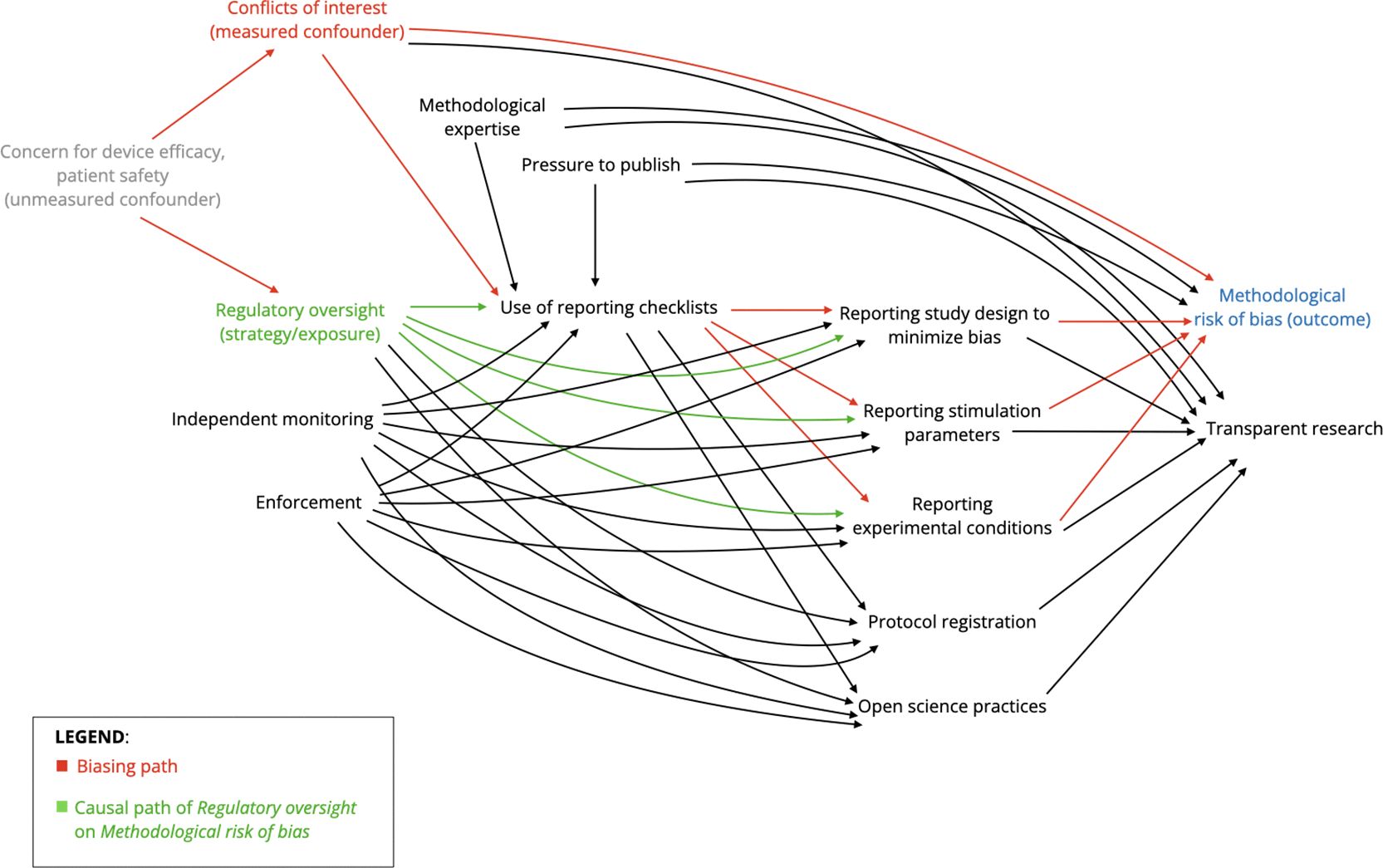
This scoping review was designed to synthesize information from reporting criteria on rigor, transparency and reproducibility, and update nodes and paths in the graph. The scoping review is reported using the Preferred Reporting Items for Systematic reviews and Meta-Analyses (PRISMA) reporting guideline extension for scoping reviews.16 The protocol and registration are available on the Open Science Framework (https://osf.io/a9jw2/). The protocol was developed using the Joanna Briggs Institute (JBI) methodology for scoping reviews.17
Articles were included from inception to 12 September 2024 if they were (1) standards, guidelines, recommendations or statements (study types; ‘unit of study’ in JBI methodology) for research on humans, (2) on rigor, transparency and reproducibility, in the fields of stimulation or neuromodulation (JBI ‘context’) and (3) written in English. Systematic or narrative reviews were included if they met the above criteria. Articles on neuromodulation were included if they involved stimulation. Clinical practice guidelines, primary research, commentaries, opinions and editorials were excluded.
Four databases (Scopus, Embase, Medline, Web of Science) were searched from inception to 12 September 2024. Searches included the following keywords: (1) standard OR guideline OR recommend OR statement, (2) research OR study OR reporting, (3) open science OR reproducible OR transparent OR rigor OR integrity OR quality, (4) stimulation OR neuromodulation.
The complete search strings for each database are available (S1 File- refer to extended data) and were developed in consultation with an academic librarian.
Records retrieved from the databases were uploaded onto the review software Covidence18 and duplicates removed. Titles and abstracts retrieved from the searches were screened by the lead reviewer. Full-text PDFs of included articles were retrieved and assessed for inclusion by two independent reviewers. Differences were resolved by discussion. All articles that fulfilled eligibility criteria were selected for inclusion in the scoping review.
Two reviewers (KN and JD; KN and MH) independently extracted data using a standardized Excel sheet. The following data were extracted from each article: stimulation type, clinical area, and text on responsible practices from the article, which was classified into one of five main types ( Table 1). A type labeled “Other” was included to capture potential types of responsible practices that did not fall into one of the main types. Examples of types of responsible practices are shown ( Table 1). Types of responsible practices, except for Other, are indicated as nodes in the initial causal graph (Figure 1).
Descriptive data were summarized in tables. Text on responsible practices from the article was classified into one of five main types. Text on responsible practices that could not be classified under any listed type were classified under Other. Data were compiled in tables showing data entered by each reviewer side by side.
Consensus discussion was used to assess the causal graph and determine if existing nodes and paths should be retained, revised or deleted, or if new nodes and paths should be added. This process is broadly consistent with guidance on developing causal graphs for research using observational data.19,20
Pairs of reviewers differed in classifying types of responsible practice in one of these three ways: (1) at least one reviewer classified the responsible practice as Other, (2) reviewers classified the responsible practice differently, (3) the responsible practice was classified by one reviewer but not by the other. Differences between reviewers, or considerations flagged by reviewers for further discussion, were discussed.
Differences between reviewers were resolved through consensus discussion and used to refine the causal graph. When there were no differences between reviewers (i.e., the responsible practice type and supporting text were the same for reviewers 1 and 2), no changes were made to the causal graph. When there were differences between reviewers (i.e. the responsible practice type or the supporting text differed between reviewer 1 and 2), these were discussed and a decision was made to retain, revise or delete existing nodes and paths. When responsible practices from the article were classified by either reviewer under Other or flagged for further consideration, these were discussed, and a decision was made to either revise an existing node or add a new node. No statistical tests were performed.
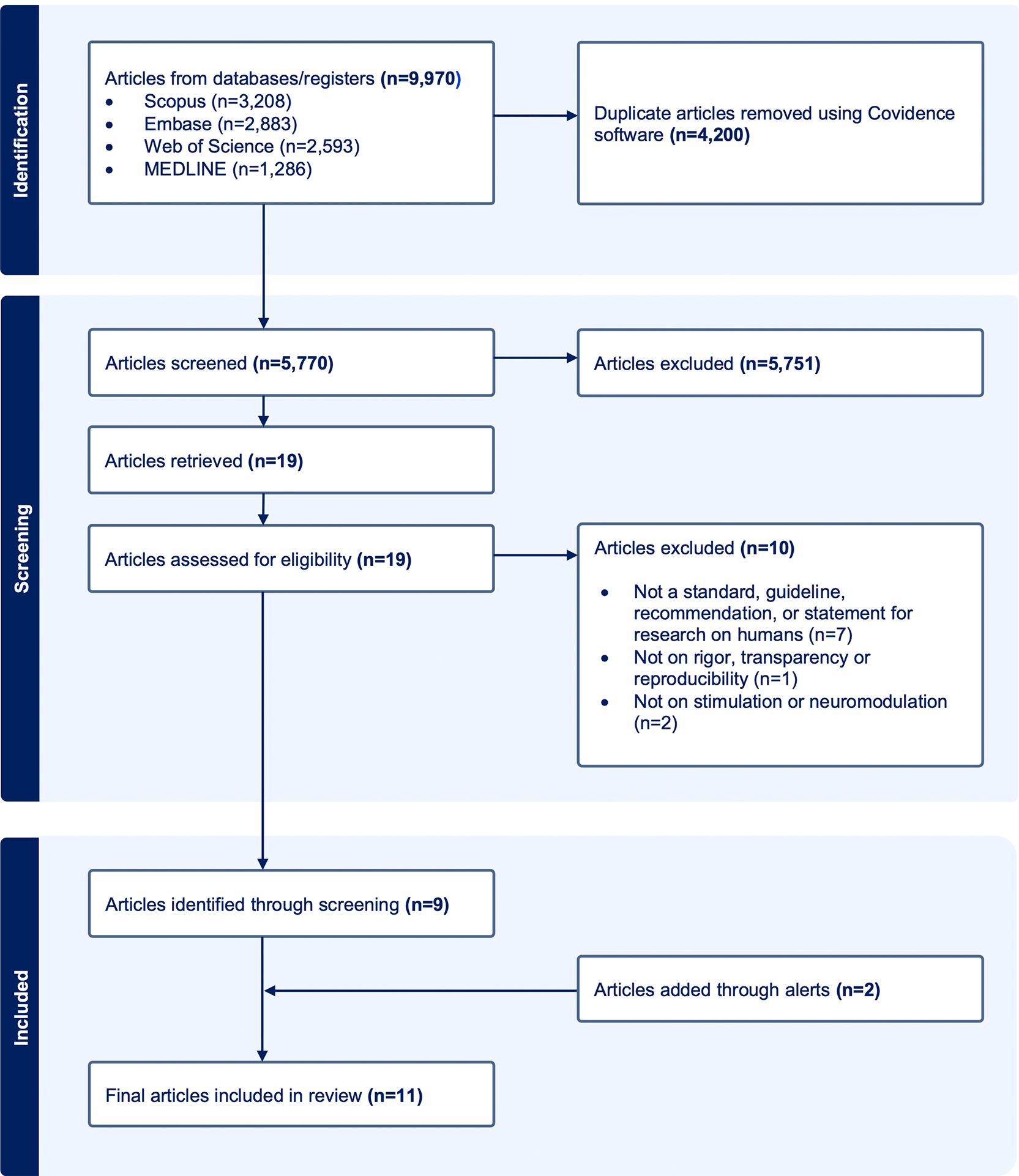
In total, 9,970 records were retrieved. After de-duplication, 5,770 titles and abstracts were screened by the lead reviewer. Of these, 19 were identified for potential inclusion and the full text articles were assessed by two independent reviewers. Nine of these satisfied inclusion criteria (Figure 2). Two articles identified through weekly article alerts up till 29 November 2024 using the same search strategies also met the inclusion criteria, resulting in 11 included articles (Figure 2).
All articles were published within the last 13 years. Each article was one of the following types: formal reporting guideline, standard or checklist developed through a Delphi process (n = 6 articles), general recommendations developed without a systematic consensus process (n = 4) or a systematic review (n = 1; Table 2). The articles guided the reporting of research in spinal cord stimulation (n = 6), transcranial electric stimulation (n = 3) and magnetic stimulation (n = 2), in clinical areas of pain (n = 4), chronic health conditions (n = 2), psychiatric disorders (n = 2), spinal cord injury (n = 1), and neurophysiology in healthy individuals (n = 2).
| Article | Type | Stimulation type | Clinical area |
|---|---|---|---|
| Bikson 201821 | General recommendations | Transcranial electrical stimulation | Neuropsychiatric disorders |
| Bresnahan 202422 | Formal reporting standard, guideline or checklist | Spinal cord stimulation | Chronic health conditions including Parkinson’s disease, migraine, treatment-resistant depression and pain |
| Charvet 201523 | General recommendations | Transcranial electrical stimulation | Attention deficit hyperactivity disorder, depression, multiple sclerosis, palliative care |
| Chipchase 201224 | Formal reporting standard, guideline or checklist | Transcranial magnetic stimulation | Neurophysiology in healthy individuals |
| Duarte 202425 | Formal reporting standard, guideline or checklist | Spinal cord stimulation | Chronic health conditions including Parkinson’s disease, migraine, treatment-resistant depression and pain |
| Ekhtiari 202226 | Formal reporting standard, guideline or checklist | Transcranial electrical stimulation | Neurophysiology in healthy individuals |
| Eshraghi 202127 | General recommendations | Spinal cord stimulation | Pain |
| Katz 202128 | General recommendations | Spinal cord stimulation | Pain |
| Malik 202429 | Formal reporting standard, guideline or checklist | Spinal cord stimulation | Spinal cord injury |
| McNicol 202130 | Systematic review | Spinal cord stimulation | Pain |
| Schneider 202231 | Formal reporting standard, guideline or checklist | Peripheral magnetic stimulation | Pain |
Types of responsible practices and examples are shown ( Table 1). Agreement between reviewers meant relevant nodes and paths of the causal graph remained unchanged. Reviewers agreed on nodes for Reporting of experimental conditions, Protocol registration, and Open science practices.
Differences between reviewers were resolved through consensus discussion and used to refine the causal graph (S1 Table- refer to data statement). Reviewers disagreed on whether the node Reporting study design to minimize bias was worded in sufficient detail to capture reporting practices for rigor, transparency and reproducibility. For example, the article text “Eligibility criteria for participants” was classified by reviewer 1 under Reporting study design to minimize bias, but the same text was classified by reviewer 2 under Other with the comment that eligibility criteria and participant characteristics (e.g. age, sex, comorbidities) must be reported regardless of impact on bias as they provide context needed to interpret research findings. Likewise, the article text “Level of expertise and training of repetitive peripheral magnetic nerve stimulation operator” was classified by reviewer 1 under Reporting experimental conditions with the comment that a separate node to capture training was unnecessary as surgeons performing spinal cord stimulation generally have similar training, but it was classified by reviewer 2 under Other with the comment that a separate node on training or education could be considered. To resolve these differences, the node Reporting study design to minimize bias was revised to Reporting study, participant and investigator characteristics to capture these characteristics.
Reviewers also disagreed on whether the node Reporting stimulation parameters was worded in sufficient detail to capture reporting practices for rigor, transparency and reproducibility. For example, the article text “Electrode manufacturer, product number and size” was classified by reviewer 1 under Reporting stimulation parameters, but it was classified by reviewer 2 under Other with the comment that ‘parameters’ typically refer only to stimulation settings such as frequency, amplitude and pulse width. To resolve these differences, the node Reporting stimulation parameters was revised to Reporting stimulation configuration and parameters to capture additional characteristics such as stimulation hardware details, electrode placement, device material and device manufacturer.
The reporting of adverse events was specified in 5 out of the 11 included articles, but reviewers observed that this was not captured in the causal graph, either explicitly or implicitly. For example, the article text “Ongoing monitoring for treatment-emergent adverse effects” was classified by both reviewer 1 and reviewer 2 under Other, with both commenting that it should instead be classified under Reporting study design to minimize bias or that a separate node on adverse events could be considered. Likewise, the article text “Side effects (e.g. discomfort, pain)” was classified by reviewer 1 under Other with the comment that a separate node on adverse events could be considered, but it was classified by reviewer 2 under Reporting experimental conditions. To resolve these differences, a new node, Reporting adverse events, was added. The refined causal graph is shown (Figure 3, expanded definitions of nodes are provided in S2 Table- refer to data statement).
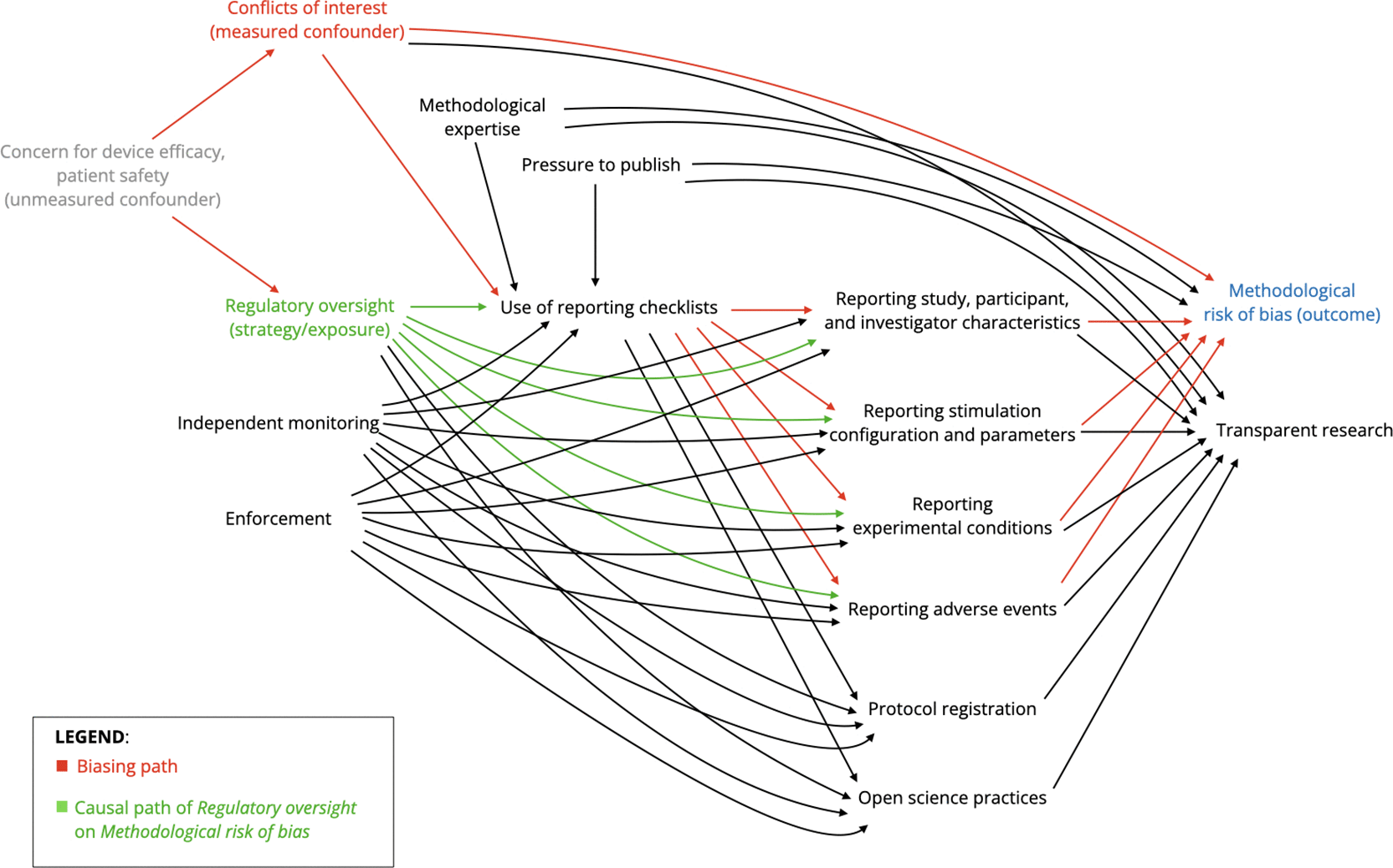
This scoping review aimed to identify and consolidate key criteria for rigor, transparency and reproducibility across reporting guidelines for research on spinal cord stimulation and other forms of neuromodulation, and ensure all relevant criteria are captured. This is a first step to inform efforts to identify and evaluate broader strategies for good research practices. We demonstrate how strategies for responsible research practices can be conceptualized within a causal framework of factors that influence the research process (Figure 1) and, to our knowledge, provide the first application in this field of using evidence to refine causal mechanisms for rigor, transparency and reproducibility (Figure 3). We found that (1) the reporting of study design to minimize bias should also capture reporting of participant and investigator characteristics, (2) the reporting of stimulation parameters should capture reporting of stimulation configuration settings, and (3) adverse events should be reported. Other key criteria include the reporting of experimental conditions, protocol registration, and open science practices.
Why should the responsible reporting of study design to minimize bias also capture participant and investigator characteristics? Differences in the characteristics of study participants, such as differences in comorbidities or causes of pain, can influence outcomes.30 For example, after a spinal cord stimulator is implanted, people with psychiatric comorbidities are more likely to experience re-operation, re-admission and post-operative complications compared to those without psychiatric comorbidities.32 Pain caused by nerve damage is thought to be more responsive to spinal cord stimulation than pain caused by tissue or joint damage, thus it is important to assess outcomes in context of participant eligibility criteria. In addition, differences in the characteristics of investigators, such as differences in familiarity with use of a spinal cord stimulator or experience in spinal cord stimulation research, can also influence outcomes.28 Characteristics of investigators are likely to be more variable in multi-centre studies, thus it is important to assess outcomes in context of skills and experience of investigators conducting the studies.
Why should the responsible reporting of stimulation parameters also capture how spinal cord stimulators are configured to deliver stimulation? Identifying the device’s name, manufacturer, model, software and electrode size facilitates comparisons across studies and between regulatory-approved and experimental devices.29 Electrode specifications are particularly important as they affect the stimulation area and charge density, or the amount of electrical charge delivered to a specific area over time. For instance, larger electrodes stimulate a broader area while smaller electrodes target specific spinal segments.33 If charge density is too high, non-target tissue may be stimulated. However if it is too low, the target neurons may not be reached.34 By reporting both stimulation area and charge density in electrode selection, readers can better understand how stimulation was performed,
Why should adverse events be reported? The incomplete or selective reporting of adverse events can conceal any potential lack of safety of spinal cord stimulation. For example, a Cochrane review of 13 spinal cord stimulation trials in low back pain found that only two trials fully reported the number of adverse events in each study arm.7 However, between 2012 and 2019, 520 adverse events related to spinal cord stimulators were reported to the Australian Therapeutic Goods Administration—79% of which were “severe” and 13% “life-threatening”.35 The discrepancy between the small number of adverse events reported in clinical trials versus the large number of adverse events in real-world experiences reinforces the need for complete and transparent reporting.
The restriction of eligibility to articles in English, and title and abstract screening by a single investigator, may have excluded relevant guidelines published in other languages and influenced the consistency of study selection. Also, this scoping review could only assess guidelines and standards for the reporting of research on spinal cord stimulation, but provides limited information on enablers and barriers of these practices. Other aspects of the causal graph (e.g. the influence of conflicts of interest, or the pressure to publish) are beyond the scope of this study.
The responsible reporting of research in spinal cord stimulation should include the reporting of study design, participant and investigator characteristics, stimulation parameters and configuration, and adverse events. Other key criteria include the reporting of experimental conditions, protocol registration, and open science practices. Under the causal graph, there are now more complete information to inform efforts to identify and evaluate broader strategies for good research practices.
| Views | Downloads | |
|---|---|---|
| F1000Research | - | - |
|
PubMed Central
Data from PMC are received and updated monthly.
|
- | - |
Provide sufficient details of any financial or non-financial competing interests to enable users to assess whether your comments might lead a reasonable person to question your impartiality. Consider the following examples, but note that this is not an exhaustive list:
Sign up for content alerts and receive a weekly or monthly email with all newly published articles
Already registered? Sign in
The email address should be the one you originally registered with F1000.
You registered with F1000 via Google, so we cannot reset your password.
To sign in, please click here.
If you still need help with your Google account password, please click here.
You registered with F1000 via Facebook, so we cannot reset your password.
To sign in, please click here.
If you still need help with your Facebook account password, please click here.
If your email address is registered with us, we will email you instructions to reset your password.
If you think you should have received this email but it has not arrived, please check your spam filters and/or contact for further assistance.

Comments on this article Comments (0)