Keywords
Hemodialysis; vascular access; infection; time to mortality; Kaplan–Meier; Cox regression.

Hemodialysis; vascular access; infection; time to mortality; Kaplan–Meier; Cox regression.
For patients with end-stage renal disease (ESRD) vascular access is the cornerstone of effective hemodialysis treatment, directly Impacting the outcomes and quality of care.1–3 There are three main types of vascular access: arteriovenous fistulas (AVFs), central venous catheters (CVCs), and arteriovenous grafts (AVGs).4,5 They have certain functions in clinical practice. Due to their permanency, lower infection rates and an exceptional long-term integrity AVFs are considered as the best practice among these vascular accesses.6–8 However, several factors such as advanced age, comorbidities, and vascular anatomy frequently complicate the selection process, resulting in diverse access choice and outcomes.9–11
For patients receiving hemodialysis, Vascular access type (VAT) plays a critical role in survival.12 CVCs were reported to be associated with higher risk of morbidity and mortality13–15 and were linked to higher rates of bloodstream infections, occlusion and access related complications.14 On the other hand, although AVFs and AVGs require more time to mature and technical expertise to create, they are associated with superior long-term results.16,17 Despite these finding, CVCs are still widely utilized, especially in patients requiring urgent initiation of hemodialysis or those who experience difficulties creating an AVF or AVG.14 This underlines the need for more search into the survival implications of these VATs.
The epidemiology and clinical aspects of vascular access have been previously investigated, but the complex factors that influence choice of access and influence the survival time have not been well understood among diverse patient populations.10,18 Furthermore, differences in facility infrastructure, clinical practices, and patient demographics highlight the need for tailored research efforts that can inform decision-making, potentially resulting in personalized interventions and improved patient outcomes and resource use in the long run.19
The present study aims to compare time to mortality among hemodialysis patients according to VAT. It also aims to examine the association between vascular access-related infection and time to mortality across different VATs. Additionally, demographic, clinical, and access-related characteristics of the study cohort will be described to provide contextual understanding of the sample profile. The results of the present study are expected to contribute to the growing body of evidence investigating vascular access outcomes and provide valuable insights that may guide clinicians and policymakers in enhancing vascular access management and improving the quality of care for patients undergoing hemodialysis.
A multi-center retrospective cohort design was employed in the present study to examine the impact of VAT on survival time in patients underwent hemodialysis. Data were collected from patient’s medical records of four different hospitals in Amman-Jordan. The study period spanned seven years, from January 2019 until February 2026, to secure a sufficient sample size and a comprehensive dataset for analysis.
The study population consisted of deceased adult patients (≥18 years) with ESRD who had undergone maintenance hemodialysis. Patients were included if they had a documented type of vascular access, infection status recorded, and a documented time to mortality. Patients were excluded if they did not have medical records that included critical information on VAT, infection status, or time to death. All deceased hemodialysis patients with complete relevant data who met our criteria for inclusion were included in this stud. A total enumeration sampling method was used. As such, no formal sample size calculation was performed prior to data collection as it was conducted on all eligible cases available. The number of 160 deceased hemodialysis patients was deemed sufficient to compare time to mortality among the VATs and to assess the relationship between VAT, infection status, and time to mortality.
Data were collected in a structured data collection sheet from patients’ medical records. Data included demographic and clinical characteristics, type of vascular access, infection status, metabolic complications and time to mortality. The type of vascular access was classified as CVC, AVF, or AVG. The infection status was either present or absent and was used in this study as the access related complication of interest.
Descriptive and inferential statistics were utilized to analyze the data. Data were summarized as frequencies and percentages for categorical variables and means (with standard deviation, median and range) for continuous variables. Time to death was defined as the time (in months) between hemodialysis initiation and death. No censored observations were used, because all the patients were dead.
Time to mortality was compared according to VAT and infection status by using the Kaplan–Meier analysis. The Mantel–Cox log-rank test was used to compare differences in survival distributions. The relationship between VAT and infection status was explored using the Pearson chi-square test.
Cox proportional hazards regression was performed to examine whether infection was an independent predictor of time to death after controlling for VAT. Hazard ratios (HRs) and 95% confidence intervals (CIs) were reported. A p value of < .05 was considered statistically significant.
A total of 160 hemodialysis patients were included in the study, (n = 85, 53.1%) were males. The mean age was 64.66 years (SD = 11.00), with age ranged from 35 to 81 years. Cardiovascular disease (CVD) and diabetes mellitus (DM) were each reported in 150 patients (93.8%), while 140 patients (87.5%) had hypertension. The majority of the sample (n = 150, 93.8%) received the standard hemodialysis regimen (three times weekly). CVC was the most utilized VAT (n = 90, 56.3%), followed by AVF (n = 55, 34.4%) and AVG (n = 15, 9.4%). Infection was reported in 100 patients (62.5%), and metabolic complications were reported in 150 patients (93.8%) (Table 1).
| Variable | Category | N | % |
|---|---|---|---|
| Gender | Male | 85 | 53.1 |
| CVD | Yes | 150 | 93.8 |
| DM | Yes | 150 | 93.8 |
| Hypertension | Yes | 140 | 87.5 |
| Dialysis regimen | Two/week | 10 | 6.2 |
| Three/week | 150 | 93.8 | |
| VAT | CVC | 90 | 56.2 |
| AVF | 55 | 34.4 | |
| AVG | 15 | 9.4 |
Time to mortality differed across VATs. Patients with AVF had the longest mean time to mortality at 106.82 months, followed by patients with CVC at 33.11 months, while patients with AVG had the shortest mean time to mortality at 17.33 months. The median time to mortality was also highest among patients with AVF (84.00 months), compared with CVC (13.00 months) and AVG (7.00 months). Kaplan-Meier analysis showed a statistically significant difference in time to mortality across VATs, as confirmed by the log-rank test, χ2 (2) = 58.752, p < .001. These findings indicate that VAT was significantly associated with time to mortality among hemodialysis patients (Table 2 & Figure 1).
| VAT | N | Mean, months | SD | Median, months | Range, months |
|---|---|---|---|---|---|
| CVC | 90 | 33.11 | 38.63 | 13.00 | 0.25–120 |
| AVF | 55 | 106.82 | 71.42 | 84.00 | 12–264 |
| AVG | 15 | 17.33 | 18.13 | 7.00 | 3–42 |
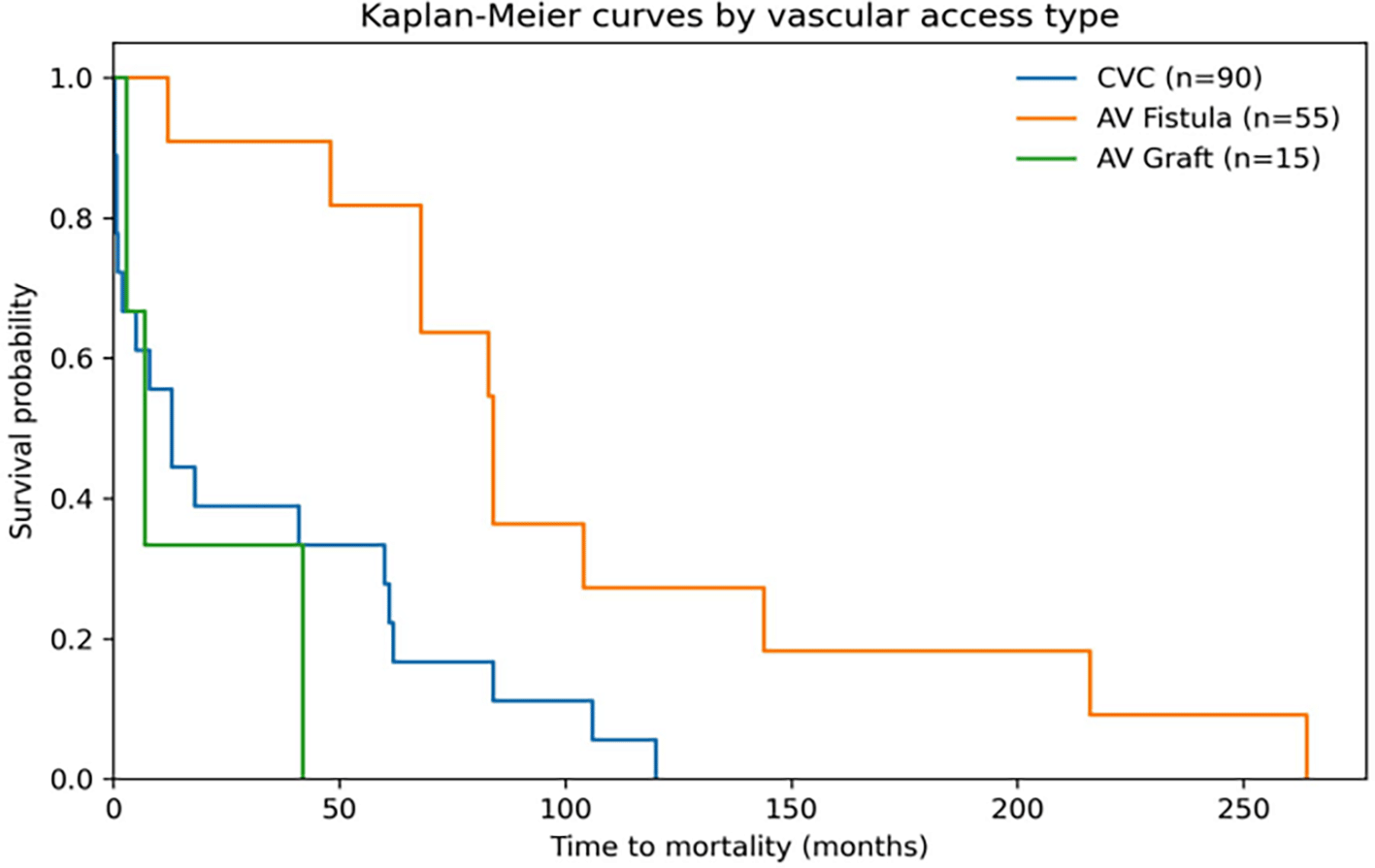
Kaplan-Meier curves comparing time to mortality according to VAT.
Infection rates differed substantially across VATs, with the highest rate observed among patients with CVC (n = 80, 88.9%), followed by AVF (n = 15, 27.3%) and AVG (n = 5, 33.3%). Chi-square test demonstrated a statistically significant association between VAT and infection status χ2 (2,160) = 61.306, p < .001 with a large effect size (Cramer’s V = 0.619), indicating a strong association between VAT, particularly among patients with CVC, and the occurrence of infection (Table 3).
| VAT | Infection | |
|---|---|---|
| Yes | No | |
| CVC | 80 (88.9) | 10 (11.1) |
| AVF | 15 (27.3) | 40 (72.7) |
| AVG | 5 (33.3) | 10 (66.7) |
| Total | 100 (62.5) | 60 (37.5) |
Time to mortality was further compared according to infection status. Patients experienced infection had a shorter mean time to mortality than those who did not, with mean times of 47.39 months and 72.94 months, respectively. The median time to mortality was also lower among patients with infection than those without infection, 29.50 months versus 68.00 months, respectively. Kaplan-Meier analysis showed a statistically significant difference in time to mortality according to infection status, as confirmed by the log-rank test, chi-square (1) = 7.469, p = .006. These findings suggest that infection was associated with shorter time to mortality among hemodialysis patients (Table 4 & Figure 2).
| Infection status | N | Mean, months | SD | Median, months | 95% CI |
|---|---|---|---|---|---|
| Yes | 100 | 47.39 | 53.78 | 29.50 | 36.72–58.06 |
| No | 60 | 72.94 | 72.89 | 68.00 | 54.11–91.77 |
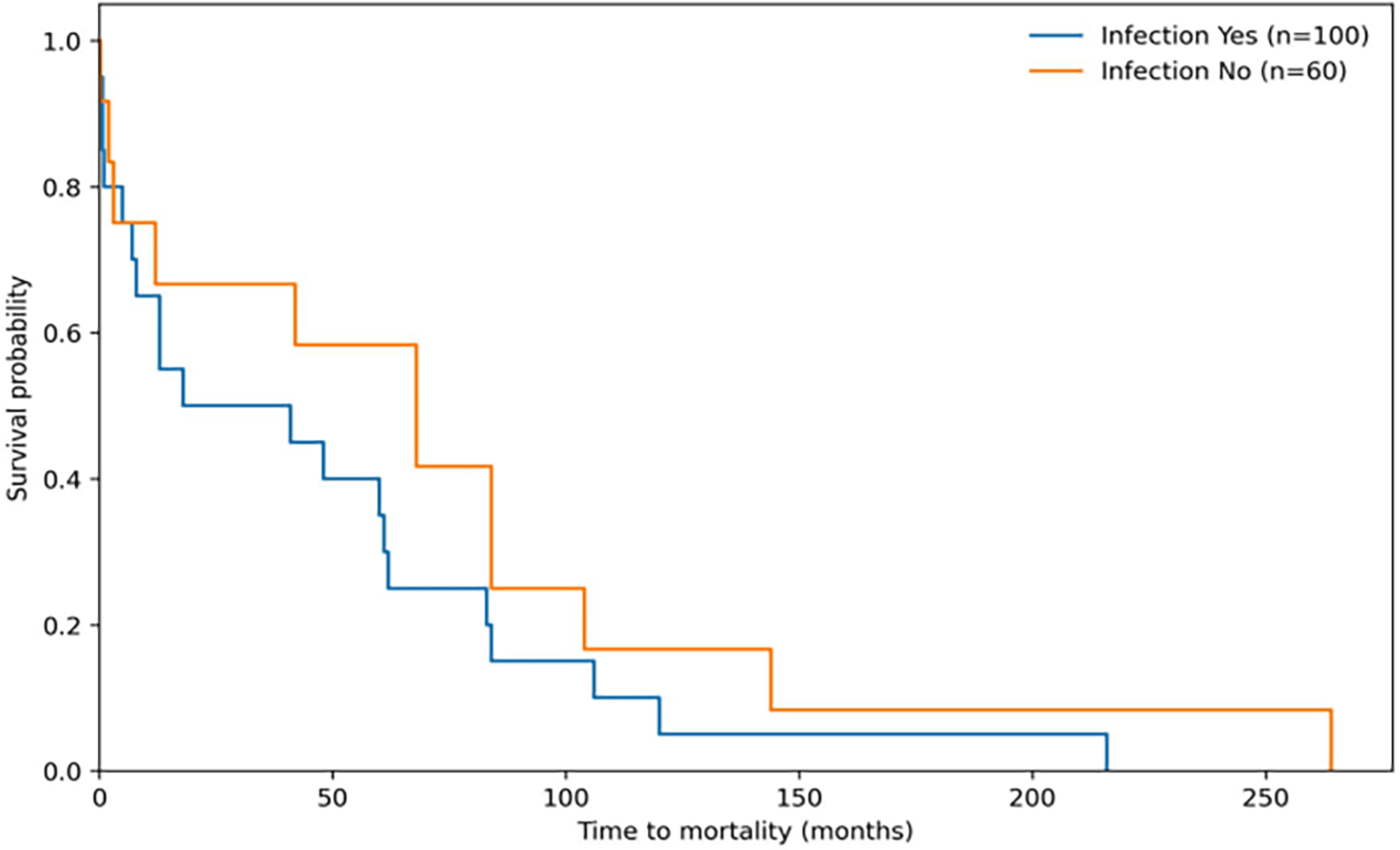
Kaplan-Meier curves comparing time to mortality according to infection status.
Cox regression analysis was conducted to examine whether infection independently predicted time to mortality after adjustment for VAT. The model revealed that infection was not an independent statistically significant predictor of time to mortality, HR = 0.610, 95% CI = 0.348–1.069, p = .084. However, VAT remained significantly associated with time to mortality. Compared with CVC, AVF was associated with a lower hazard of earlier mortality, HR = 0.207, 95% CI = 0.115–0.374, p < .001, while AVG was not significantly different from CVC, HR = 1.282, 95% CI = 0.622–2.640, p = .501 (table 5).
The results of the present study revealed that the VAT was found to be significantly related to the mean and median survival time of the hemodialyzed population; AVFs had the longest mean and median survival time compared to CVCs and AVGs which had the shortest mean and median survival time. The findings are consistent with the previous studies that have consistently shown that AVFs provide superior long-term results, reduced complication rates and a lower mortality risk among hemodialysis patients.20,21 The mean survival time for patients with AVFs was 104.40 months with a median of 84 months, which is much greater than the mean of CVCs (36.79 months) and AVGs (17.33 months).
The improved survival of AVFs is likely due to their durability, decreased infection and thrombosis rates in comparison to CVCs and AVGs.22,23 Kim et al. conducted a multi-center prospective cohort study to explore the association of all-cause mortality with the type of vascular access for patients who are newly initiated on hemodialysis, and found that patients with AVF had significantly better survival than those with other VATs.24
In a similar study, Gil Giraldo et al. (2020) performed a prospective observational study to evaluate the effect of vascular access on the outcome of hemodialysis patients admitted to the hospital and to determine related mortality. In their study, they investigated 100 hemodialysis patients admitted to the hospital for any reason from August 2017 to July 2018, and found that 18% of patients died while during hospitalization and 27% died within the follow-up period. They discovered that VAT was an independent risk factor for death.25
The high prevalence of CVC use could be attributed to the high clinical complexity of the study population, such as older age, multiple comorbidities and perhaps limited vascular options. The shorter survival times found in these patients are probably related to the increased incidence of bloodstream infections, thrombosis of the catheter and poor dialysis efficiency among CVC patients. In the present study, 100 infections had taken place. Of these, 85.0% were related to CVCs, 10.0% to AVFs and 5.0% to AVGs.
In a retrospective cross-sectional study aimed to assess the prevalence of Catheter-related bloodstream infection in hemodialysis patients at a tertiary hospital in Ethiopia, Weldetensae et al. (2023) found that the incidence of Catheter-related bloodstream infection was frequent and gram-negative predominance among the patients on hemodialysis, and early fistulas should be planned to minimize the use of temporary vascular access.26 A similar retrospective cohort study by Kazakova et al. (2020) involving 2,352 older hemodialysis patients found that using AVFs significantly decreased bloodstream infection rates when compared to CVCs or AVGs, with incidence rates of 0.3, 1.3, and 0.8 episodes per 1,000 person-days, respectively.27 These results are in line with the results obtained in the present study which showed the protective effect of fistulas against infections.
The log-rank test confirmed that the differences in the survival distributions between the different types of vascular access were statistically significant (p = .009). The results of this study underscore the importance of the choice of vascular access on patient outcomes. Similarly, Roldão et al. (2023) studied the survival of elderly patients who underwent hemodialysis, according to vascular access. Their research indicated that patients with CVCs that were replaced with AVFs had a significantly higher survival rate than those with just CVCs. Particularly, early creation of AVFs was correlated with better survival outcomes.15 Optimization of vascular access should focus on the use of AVFs as much as possible, and limit the use of CVCs, particularly when hemodialysis is anticipated to be a long-term requirement.28,29
It is important to note, however, that this observed difference in survival between VATs not only reflects the type of access used but also serves as a marker for the overall clinical pathway and quality of care for patients in the pre-dialysis phase.30 Recent vascular access recommendations have moved away from a strict “fistula-first” approach to a patient-centered model that highlight the value of selecting the right access to right patient at right time, recognizing that survival differences may partly affected by patient selection, comorbidity status, late referral, frailty, and delayed access planning rather than access type alone.30 The present findings are clinically relevant, however, as the predominance of catheter use and high infection rate, coupled with the shorter survival among temporary access groups, indicate potentially modifiable system-level gaps in vascular access preparation.31 This interpretation was reinforced by recent evidence, as the creation of permanent access prior to initiation of hemodialysis was linked to reduced all-cause mortality, and maintenance hemodialysis populations continued to be linked to the presence of catheter dependence, which was linked to infection and cardiovascular risk pathways.32 Therefore, the establishment of a coordinated vascular access pathway with early referral to nephrology, vascular mapping within appropriate timeframe, development of an educational program, multidisciplinary follow-up and early access to a permanent vascular access when feasible is essential to improve survival.31,33
There are some limitations to the present study that should be taken into account when interpreting the results of the present study. First, because of the retrospective design of the present study, the causal relationships between VAT and the outcomes cannot be inferred as they could have been influenced by unmeasured confounding variables. Second, that vascular access was not randomized but allocated based on clinical indication, vascular anatomy and physician judgment, and that vascular access selection may create an inherent selection bias, as patients with worse vascular status and higher numbers of comorbidities are more likely to have CVCs placed than AVFs or grafts. Third, the study might also have residual confounding factors related to the quality of vascular mapping, the timing of creation of the vascular mapping, and good follow up of dialysis protocols.
This work emphasizes the importance of vascular access for survival of patients on hemodialysis. The results are highly encouraging for the use of AVF as the best vascular access. The need to reduce the dependence on CVCs and to overcome the obstacles to AVF creation should be prioritized to enhance outcomes and improve survival time in these vulnerable patients.
The present retrospective study was conducted in accordance with the ethical principles outlined in the Declaration of Helsinki and relevant institutional guidelines to ensure the protection of participants’ rights, privacy, and dignity. Prior to the commencement of the study, ethical approval was obtained from the Institutional Review Boards (IRBs) of all participating hospitals. Approval was granted by Istiklal Hospital and Alahli Hospital in August 2025, Prince Hamzah Hospital in September 2025, and Al Basheer Hospital in November 2025. Data collection at each hospital began only after the respective ethical approval had been obtained. Ethical approval numbers were not assigned by these IRBs, as issuing reference numbers for approved studies is not part of their standard operating procedures.
Given the retrospective nature of the study, informed consent was waived by the respective IRBs because the research involved the use of existing de-identified medical records and posed minimal risk to participants. To maintain confidentiality and data security, all extracted information was anonymized prior to analysis and securely stored, with access restricted to authorized members of the research team only. No personally identifiable information was collected, recorded, or reported in the study.
| Views | Downloads | |
|---|---|---|
| F1000Research | - | - |
|
PubMed Central
Data from PMC are received and updated monthly.
|
- | - |
Provide sufficient details of any financial or non-financial competing interests to enable users to assess whether your comments might lead a reasonable person to question your impartiality. Consider the following examples, but note that this is not an exhaustive list:
Sign up for content alerts and receive a weekly or monthly email with all newly published articles
Already registered? Sign in
The email address should be the one you originally registered with F1000.
You registered with F1000 via Google, so we cannot reset your password.
To sign in, please click here.
If you still need help with your Google account password, please click here.
You registered with F1000 via Facebook, so we cannot reset your password.
To sign in, please click here.
If you still need help with your Facebook account password, please click here.
If your email address is registered with us, we will email you instructions to reset your password.
If you think you should have received this email but it has not arrived, please check your spam filters and/or contact for further assistance.

Comments on this article Comments (0)