Keywords
Bioavailability, Hydrophilic Polymers, Pioglitazone, Solid Dispersion

Bioavailability, Hydrophilic Polymers, Pioglitazone, Solid Dispersion
Pioglitazone HCl (Pio) is an oral antidiabetic drug from the thiazolidinedione class that acts as a selective agonist of the peroxisome proliferator-activated receptor gamma (PPAR-γ). This drug increases insulin sensitivity in patients with type 2 diabetes mellitus (T2DM).1 Despite its outstanding proven therapeutic effectiveness, the biopharmaceutical performance of Pio remains limited due to its very low water solubility and slow dissolution rate. Based on the biopharmaceutics classification system (BCS), Pio is categorized as a class II drug, meaning a drug with low solubility but high permeability. As a result, its absorption rate and bioavailability are highly dependent on the dissolution rate, making it a major challenge in the development of effective oral formulations.2,3
Various formulation approaches have been explored to enhance the solubility and dissolution rate of Pio, such as complex formation, nanocrystals, cocrystals, lipid-based systems, and solid dispersions (SDs). Among these methods, SDs technology is one of the most effective strategies for improving the physicochemical properties and biopharmaceutical performance of water-insoluble drugs.4,5 This technique involves dispersing the drug into a polymer carrier to form a homogeneous matrix that can improve drug wetting, reduce crystallinity, and increase the surface area exposed to the dissolution medium.6,7 Polymer selection is crucial to the success of SD systems. Hydrophilic polymers such as polyvinylpyrrolidone (PVP), polyethylene glycol (PEG), hydroxypropyl methylcellulose (HPMC), and poloxamer are widely used because they stabilize the amorphous form of drugs and accelerate the dissolution process. In addition, manufacturing methods such as solvent evaporation, melt fusion, spray drying, or hot-melt extrusion also significantly affect the physicochemical properties, stability, and drug release profile.8,9
The increasing interest in the application of polymers in solid dispersion systems for Pio signifies the necessity for a thorough assessment of the existing scientific evidence. Therefore, this systematic review aims to critically analyze the impact of various polymer matrices and preparation techniques on the solubility, dissolution behavior, and overall biopharmaceutical performance of Pio. The results of this study are expected to provide scientific insights for the rational design of formulations and contribute to enhancing therapeutic outcomes in T2DM management.
A systematic search was conducted across several database, which included Scopus, PubMed, ScienceDirect, and Google Scholar databases were searched from the beginning to the end of February 2026. This search utilized a combination of Boolean operators (AND, OR) and specified fieldas (title, abstract, and all fields) to ensure thorough coverage. The search terms employed were as follows: (“pioglitazone” OR “thiazolidinedione” OR “antidiabetic”) AND (“solid dispersion” OR “solid solution” OR “amorphous”) AND (“bioavailability” OR “solubility” OR “dissolution” OR “formulation”). This process was conducted in accordance with the Preferred Reporting Items for Systematic Reviews and Meta-Analyses (PRISMA) guidelines.10
All studies that investigated the use of Pio in SDs to enhance solubility and dissolution were systematically reviewed. The inclusion criteria were: (1) experimental studies (in vitro, in vivo, or biopharmaceutical); (2) studies reporting outcomes related to solubility, dissolution, or bioavailability; (3) articles published in English; and (4) publications between 2013 and 2026. All article titles and abstracts were retrieved, and reviewed independently by the authors. Any disagreements were resolved through discussion among the author team.
Data extraction was performed independently by the authors using a predefined form. For in vitro studies, the following data were collected: author, publication year, country, SDs preparation method, polymer matrix, solubility, dissolution medium, drug loading, physical state of drug in the SDs, and maximum drug release. Data extracted for in vivo studies were polymer matrix, study design, animal model, Cmax, time to reach maximum concentration (tmax), and area under the plasma concentration-time curve (AUC). Any discrepancies were resolved through consensus. Data were summarized qualitatively and categorized based on polymer type and SD preparation technique.
The methodological quality and risk of bias of the included studies were evaluated using the Joanna Briggs Institute (JBI) critical appraisal tools. The assessment checklist includes nine criteria distributed across four main domains at JBI Quasi-Experimental Studies tools11: i) sampling techniques; ii) study subjects; iii) data collection; and iv) analysis methods. Each criterion was rated as “yes” (scoring one point), “no” (zero points), “unclear” (zero points), or “not applicable” (zero point). The methodological quality of each study was then categorized as low (0–3 points), moderate (4–6 points), or high (7–9 points).12 To ensure the data selection and extraction process is conducted strictly and without bias, the systematic review requires two authors to determine the eligibility of the journals used with a score of 80% based on the A Measurement Tool to Assess Systematic Reviews (AMSTAR) guidelines.13
The PRISMA flow diagram summarizing the study selection is presented in Figure 1. A total of 10,266 articles were retrieved from the selected databases. Among these, 6 articles were identified as duplicates, and 570 articles were automatically excluded as ineligible through screening tools. Consequently, 9,696 articles were extracted. A total of 9,685 records were excluded because they did not meet the established inclusion criteria. Of that number, 11 articles qualified for full-text review, and only 10 articles were included in our systematic review. One article was excluded article because it lacks a control group and contains incomplete data.
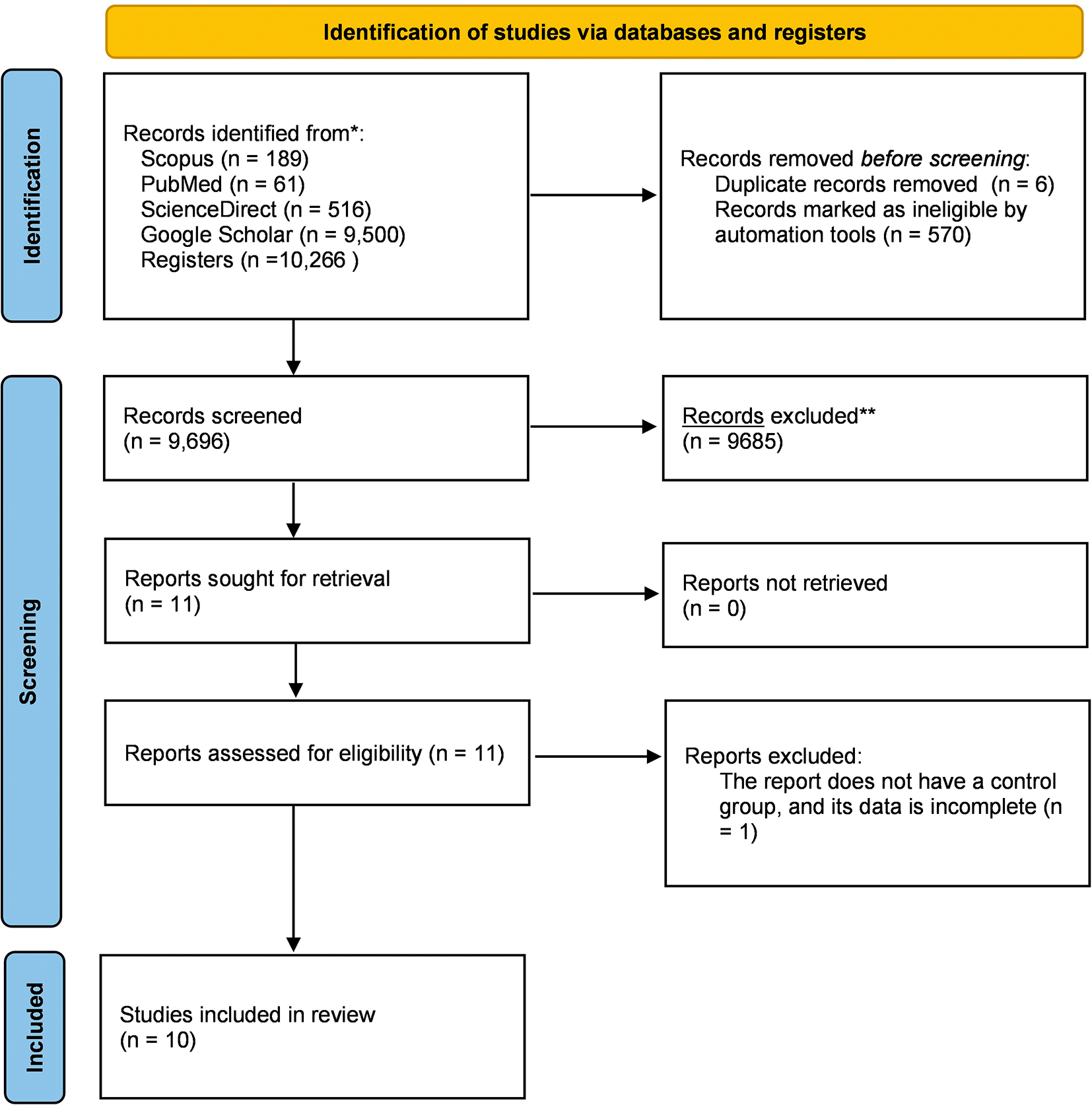
The methodological quality of the included studies was generally high. All studies achieved JBI scores above 75%, indicating a low risk of bias. Detailed quality assessment results are provided in Table 4.
Across the ten in vitro studies reviewed, SDs with various polymers can enhance the dissolution of Pio. The commonly used polymers included Solutol, Poloxamer, Gelucire, PVP, PEG, polyethylene polypropylene glycol (PEPPG), hydroxypropyl methylcellulose (HPMC), β-cyclodextrin, Soluplus, and Eudragit. PVP dominates in the development of Pio-SDs. The preparation methods applied encompassed melting-based methods (microwave, melting method) and solvent-based methods (kneading, solvent evaporation, spray drying, freeze-dried).8,9 The dominant preparation method was the solvent evaporation ( Table 2). Solutol HS 15, Gelucire 50/13, and Eudragit EPO are the most effective polymers for drug release (98 to 100%) and significant dissolution enhancement. Eudragit EPO provides the highest dissolution enhancement (8.34-fold), demonstrating the best potential for improving Pio solubility and dissolution. In contrast, PEPPG 188 and PVP K90 show lower dissolution enhancement compared to other polymers.
PVP
Nine studies investigated the use PVP K30, PVP K90, and PVP K17 in Pio SDs. SDs were prepared using methods such as spray drying, solvent evaporation, and kneading, with solvent dissolution medium, including phosphate buffer pH 6.8 and 0.1 N HCl pH 1.2. The results showed that PVP K30 and PVP K17 facilitated superior Pio release relative to PVP K90, with release rates of 91.68% and 99.39%, respectively, via the spray-drying technique. These findings indicate that PVP K30 and PVP K17 are highly effective in enhancing the dissolution of Pio, which can contribute to improved drug bioavailability and therapeutic efficacy
Poloxamer
Six studies were conducted using Poloxamer 407 and Poloxamer 188, employing methods such as solvent evaporation, melting method with cooling process, and microwave irradiation. A formulation containing Poloxamer 407 showed excellent Pio release, with a release rate of 92.48% in 0.01 N HCl pH 1.2. This rate is 2.77 times higher than that of crystalline Pio. Similarly, SDs prepared using the microwave method utilizing Poloxamer 188 achieved a release rate of 98.60% in phosphate buffer pH 7.4. Both polymers effectively enhanced Pio release.release.
PEG 6000
Four studies used PEG 6000 with melting method and solvent evaporation methods. Formulations that employed solvent evaporation with 0.1 N HCl at pH 1.2 as dissolution medium achieved a pioglitazone release of up to 102.43%, indicating a significant increase in release, whereas formulations using melting method resulted in a release of only 3.125% of the loaded drug in phosphate buffer at pH 6.8.
HPMC
Three studies used HPMC with melting method, spray drying, and solvent evaporation methods. In the melting method formulation using phosphate buffer pH 6.8 as dissolution medium Pio release reached 2.75%, while in spray drying with 0.3 M HCl pH 2 as dissolution medium, release increased to 94%. The solvent evaporation formulation in 0.1 N HCl at pH 1.2 as dissolution medium showed high Pio release, reaching 99.92%.
Solutol HS 15
Three studies used Solutol HS 15 with solvent evaporation and melting methods. In solvent evaporation with 0.01 N HCl at pH 1.2, Pio release reached 98%, showing a significant improvement, while the melting method resulted in 85% release. Solutol HS 15 is effective in enhancing Pio release, particularly with the solvent evaporation method.
Glucire
Three studies used Gelucire 50/13 with solvent evaporation, melting method, and physical mixture methods. Pio release reached 100% with solvent evaporation using 0.01 N HCl pH 1.2, 98% with melting method, and 95.62% with physical mixture. Gelucire 50/13 is effective in enhancing Pio release, especially with the solvent evaporation method.
PEPPG 188
Two studies used the PEPPG 188 polymer with melting method and solvent evaporation methods. Pio release reached 3.125% with melting method and 36% with solvent evaporation using purified water, indicating lower effectiveness compared to other polymers, but still providing a significant increase in release (1.47 and 4 dold).
β-cyclodextrin
Two studies used the polymer β-cyclodextrin with melting method and kneading methods. The highest Pio release reached 92.68% with solvent evaporation using 0.1 N HCl at pH 1.2, while other methods showed lower release.
Soluplus
One study used the polymer Soluplus with the freeze-drying method. The release of Pio reached 10%, showing a lower increase compared to other polymers, but it still has potential to improve its solubility.
Eudragit EPO
One study used the polymer Eudragit EPO with the solvent evaporation method. The release of Pio reached 100.52% with an 8.34-fold increase in dissolution.
Solvent evaporation
The solvent evaporation method was the most frequently applied preparation technique for pioglitazone HCl solid dispersions, being reported in 8 of the 10 reviewed studies. This method effectively improved the solubility and dissolution of pioglitazone through amorphous phase formation and enhanced drug–polymer interactions. Various hydrophilic polymers, including PVP K30, PEG 6000, Poloxamer 407, Gelucire 50/13, Solutol HS 15, HPMC, and Eudragit EPO, demonstrated favorable drug release performance. Several studies reported that Eudragit EPO and PEG 6000 increased dissolution by more than eight-fold compared with pure pioglitazone, while Gelucire 50/13 and Solutol HS 15 achieved drug release profiles approaching 100%. In addition, solvent evaporation-based formulations improved pharmacokinetic parameters, including Cmax and AUC, indicating enhanced oral bioavailability of pioglitazone. However, the use of organic solvents remains an important consideration for large-scale pharmaceutical development.
Melting method/Hot-melt method
The melting method or hot-melt method was applied in 5 studies of pioglitazone HCl solid dispersions and demonstrated the ability to improve drug solubility and dissolution through reduced crystallinity and amorphous phase formation. Polymers such as PEG 6000, PVP, HPMC, Poloxamer 407, Gelucire 50/13, and β-cyclodextrin were used in this approach. Formulations containing Gelucire 50/13 and Poloxamer 407 showed high drug release, reaching 98% and 89.12%, respectively. However, the dissolution enhancement was generally lower than that achieved by solvent evaporation, possibly due to thermal exposure during preparation. Nevertheless, this method remains promising for industrial-scale pharmaceutical development because it does not require organic solvents.
Spray drying
The spray drying method was applied in 2 studies of pioglitazone HCl solid dispersions and improved drug dissolution through the formation of smaller particles and a more amorphous system. Polymers used in this method included PVP K17, PVP K30, and HPMC, with drug release reaching up to 94%. However, its application remains limited due to the requirement for specialized equipment and relatively high production costs.
Kneading
The kneading method was applied in 2 studies of pioglitazone HCl solid dispersions and improved drug dissolution through enhanced drug–polymer interactions and reduced crystallinity. Polymers used in this method included Poloxamer 407, PVP K30, and β-cyclodextrin, with drug release reaching 81.86%, 80.89%, and 59.92%, respectively. Although its effectiveness was generally lower than solvent evaporation, the kneading method remains a simple and cost-effective alternative because it does not require specialized equipment.
Physical mixture
The physical mixture method was applied in 2 studies of pioglitazone HCl solid dispersions and improved drug dissolution through direct mixing of the drug and polymer without heating or solvent use. Polymers used in this method included Solutol HS 15, Poloxamer 407, and Gelucire 50/13, with drug release ranging from 36.41% to 43.72%. Although the dissolution enhancement was lower than that achieved by other methods, physical mixture remains a simple, rapid, and practical approach for pharmaceutical formulation development.
Microwave method
The microwave method was applied in 1 study of pioglitazone HCl solid dispersions and significantly improved drug dissolution using Poloxamer 188, achieving drug release up to 98.60%. This enhancement may be attributed to the formation of a more amorphous system and a more homogeneous drug distribution within the polymer matrix. In addition, the microwave method offers shorter processing time and better energy efficiency than conventional techniques, although its application remains limited to research-scale development.
Freeze drying
The freeze-drying method was applied in 1 study of pioglitazone HCl solid dispersions and improved drug dissolution through the formation of a more amorphous and porous system using Soluplus as the polymer. This method also helps maintain the stability of thermosensitive materials, although its application remains limited due to longer processing times and relatively high production costs.
As presented in Table 3, the polymers Solutol HS 15 and Gelucire 50/13 showed significant pharmacokinetic improvement. Solutol HS 15 increased Cmax (64.37 ± 5.18 μg/mL), tmax (0.83 ± 0.020 hours), and AUC (216.37 ± 52.61 μg.h/mL), with a 4-fold increase in AUC compared to the control. Gelucire 50/13 provided Cmax (72.81 ± 13.77 μg/mL), tmax (1.00 ± 0.00 hours), and AUC (290.77 ± 143.53 μg.h/mL), with a 3.18-fold increase in AUC. Meanwhile, β-cyclodextrin showed a 1.49-fold increase in AUC, with a Cmax of 22.81 ± 0.8 μg/mL and a tmax of 2.00 hours. These results indicate that Solutol HS 15 and Gelucire 50/13 are more effective in improving the pharmacokinetics of Pio compared to β-cyclodextrin.
As summarized in Table 1, research on Pio-SDs has been predominantly conducted in India, followed by China, Germany, and Bangladesh. The years 2013 and 2018 were the most significant, with considerable research contributions to the development and characterization of the formula. The most frequently employed SDs preparation methods are solvent-based methods and melting utilizing polymers such as PVP, Poloxamer 407, HPMC, and PEG.
| Authors | Year | Country | In vitro release study | In vivo absorption study | Solid dispersion preparation method | Polymer | Solubility (mg/l) | Assessed | Conclusion | References |
|---|---|---|---|---|---|---|---|---|---|---|
| Swain et al. | 2019 | India | √ | √ | Solvent | Solutol HS 15 | 276.81 ± 3.5 | Solubility Dissolution Cmax AUC | Bioavailability and dissolution ↑ | 27 |
| Cremophor RH 40 | 219.93 ± 4.68 | |||||||||
| Poloxamer 188 | 136.05 ± 3.51 | |||||||||
| Poloxamer 407 | 149.26 ± 4.53 | |||||||||
| PEG 4000 | 86.44 ± 4.43 | |||||||||
| Povidone K-15 | 104.31 ± 3.21 | |||||||||
| HPMC | 37.80 ± 4.69 | |||||||||
| Distilled water | 8.22 ± 2.63 | |||||||||
| Swain & Subudhi | 2019 | India | √ | √ | Solvent | Poloxamer 407 | 267.89 ± 4.35 | Solubility Dissolution Cmax AUC | Bioavailability and dissolution ↑ | 28 |
| Gelucire 50/13 | 342.38 ± 4.48 | |||||||||
| Melting | Poloxamer 407 | 260.56 ± 4.93 | ||||||||
| Gelucire 50/13 | 287.79 ± 5.23 | |||||||||
| Physical mixture | Poloxamer 407 | 136.14 ± 5.25 | ||||||||
| Gelucire 50/13 | 183.85 ± 3.46 | |||||||||
| Shi et al. | 2014 | China | √ | X | Melting | PVP K30 | 12.75 ± 0.09 | Solubility | Solubility ↑ | 29 |
| PVP K90 | 12.77 ± 0.78 | |||||||||
| PEG 6000 | 11.59 ± 0.43 | |||||||||
| PEPPG 188 | 11.80 ± 0.18 | |||||||||
| HPMC | 12.82 ± 0.69 | |||||||||
| β-cyclodextrin | 13.39 ± 0.04 | |||||||||
| Pokharkar et al. | 2013 | India | √ | √ | Solvent | PVP K17 | 135.95 ± 0.72 | Solubility Dissolution | Bioavailability and dissolution ↑ | 4 |
| PVP K30 | 91.69 ± 1.09 | |||||||||
| HPMC E3 | 86.86 ± 0.63 | |||||||||
| Shi et al. | 2013 | China | √ | X | Solvent | PVP K30 | 27 | Dissolution | Dissolution ↑ | 30 |
| PVP K90 | 25 | |||||||||
| PEG 6000 | 17 | |||||||||
| PEPG 188 | 22 | |||||||||
| Taupitz et al. | 2013 | Germany | √ | X | Solvent | Soluplus | 597.1 ± 20.78 | Solubility Dissolution | Solubility Dissolution ↑ | 31 |
| Ghyadh & Al-Khedairy | 2023 | India | √ | X | Melting | Poloxamer 188 | 51.69 ± 0.014 | Solubility Dissolution | Solubility Dissolution ↑ | 32 |
| β-cyclodextrin | 20.51 ± 0.006 | |||||||||
| Poloxamer 188 + β-cyclodextrin | 22.75 ± 0.008 | |||||||||
| Faisal et al. | 2013 | Bangladesh | √ | X | Solvent | HPMC | NR | Dissolution | Dissolution ↑ | 33 |
| PEG 6000 | ||||||||||
| PVP K30 | ||||||||||
| Poloxamer 407 | ||||||||||
| Eudragit EPO | ||||||||||
| Kovvasu & Chowdary | 2018 | India | √ | √ | Solvent | β-cyclodextrin | 0.418 ± 0.01 | Solubility Dissolution Cmax AUC | Bioavailability and dissolution ↑ | 34 |
| Poloxamer 407 | 0.527 ± 0.043 | |||||||||
| PVP K30 | 1.165 ± 0.054 | |||||||||
| Chhater & Praveen | 2013 | India | √ | X | Solvent | PVP K30 | 28.00 ± 0.00 | Solubility Dissolution | Solubility Dissolution ↑ | 35 |
| PEG 6000 | 35.00 ± 0.00 |
| Polymer | Solid dispersion preparation method | Dissolution medium | Pioglitazone loading (%) | Pioglitazone state in SD | Maximum pioglitazone release (%) | Dissolution improvement compared to pioglitazone in the same study (fold) | References |
|---|---|---|---|---|---|---|---|
| Solutol HS 15 | Solvent evaporation | 0.01 N HCl pH 1.2 | NR | Amorphous | ~98 | 2.58 | 27 |
| Melting | Crystalline | 85 | 2.24 | ||||
| Physical Mixture | 43.7 | 1.15 | |||||
| Poloxamer 407 | Solvent evaporation | 0.01 N HCl pH 1.2 | 97.64 ± 3.29 | Amorphous | 92.48 ± 2.88 | 2.77 | 28 |
| Melting method | 92.33 ± 4.38 | 89.12 ± 3.16 | 2.25 | ||||
| Physical mixture | 98.65 ± 4.92 | 43.72 ± 2.56 | 1.55 | ||||
| Solvent evaporation | 96.68 ± 2.13 | NR | 75.05 ± 2.3 | 6.23 | 33 | ||
| Kneading | NR | NR | 80.89 | 2.42 | 34 | ||
| Poloxamer 188 | Microwave | Phosphate buffer pH 7.4 | 80 | Amorphous | 98.60 ± 0.115 | NR | 32 |
| Gelucire 50/13 | Solvent evaporation | 0.01 N HCl pH 1.2 | 89.75 ± 5.84 | Amorphous | 100 | 2.75 | 28 |
| Melting method | 89.33 ± 6.39 | 98 | 2.23 | ||||
| Physical mixture | 95.62 ± 3.45 | 36.41 ± 3.32 | 1.5 | ||||
| PVP K30 | Melting method | Phosphate buffer pH 6.8 | NR | Amorphous | 3.4 | 1.6 | 29 |
| Spray drying | 0.3 M HCl pH 2 | 98.66 ± 0.51 | Crystalline | 65 | 1.625 | 4 | |
| Solvent evaporation | Purified water | NR | Amorphous | 45 | 5 | 30 | |
| Solvent evaporation | 0.1 N HCl pH 1.2 | 91.68 ± 1.19 | NR | 87.51 ± 2.8 | 7.26 | 33 | |
| Solvent evaporation | Phosphate buffer pH 7.4 | 95.14 | NR | 83 | 1.80 | 35 | |
| Kneading | 0.1 N HCl pH 1.2 | NR | NR | 81.86 | 2.17 | 34 | |
| PVP K90 | Melting method | Phosphate buffer pH 6.8 | NR | Amorphous | 3.4 | 1.6 | 29 |
| Solvent evaporation | Purified water | NR | Amorphous | 30 | 3.3 | 30 | |
| PVP K17 | Spray drying | 0.3 M HCl pH 2 | 99.39 ± 0.62 | Crystalline | 80 | 2 | 4 |
| PEG 6000 | Melting method | Phosphate buffer pH 6.8 | NR | Amorphous | 3.125 | 1.47 | 29 |
| Solvent evaporation | Purified water | NR | Crystalline | 33 | 3.7 | 30 | |
| 0.1 N HCl pH 1.2 | 98.68 ± 1.91 | NR | 102.43 ± 1.6 | 8.50 | 33 | ||
| Phosphate buffer pH 7.4 | 97.54 | NR | 84 | 1.83 | 35 | ||
| PEPPG 188 | Melting method | Phosphate buffer pH 6.8 | NR | Amorphous | 3.125 | 1.47 | 29 |
| Solvent evaporation | Purified water | NR | Crystalline | 36 | 4 | 30 | |
| HPMC | Melting method | Phosphate buffer pH 6.8 | NR | Amorphous | 2.75 | 1.3 | 29 |
| Spray drying | 0.3 M HCl pH 2 | 97.80 ± 1.08 | Crystalline | 94 | 2.35 | 4 | |
| Solvent evaporation | 0.1 N HCl pH 1.2 | 92.68 ± 2.9 | NR | 99.92 ± 4.5 | 7.99 | 33 | |
| β-cyclodextrin | Melting method | Phosphate buffer pH 6.8 | NR | Amorphous | 3.4 | 1.6 | 29 |
| Kneading | 0.1 N HCl pH 1.2 | NR | NR | 59.92 | 1.29 | 34 | |
| Soluplus | Freeze dried | Phosphate buffer pH 6.5 | NR | NR | 10 | 5 | 31 |
| Eudragit EPO | Solvent evaporation | 0.1 N HCl pH 1.2 | 97.68 ± 0.99 | NR | 100.52 ± 2.0 | 8.34 | 33 |
| Polymer matrices | Study design | Type of animal | Sex | Weight (kg) | No. of subjects | Cmax (μg/mL) | tmax (h) | AUC (μg.h/mL) | AUC improvement (fold) | References |
|---|---|---|---|---|---|---|---|---|---|---|
| Solutol HS 15 | Single dose | Rabbits | Male | 1.83 ± 0.08 | 6 | 64.37 ± 5.18 | 0.83 ± 0.020 | 216.37 ± 52.61 | 4.00 | 27 |
| Gelucire 50/13 | Single dose | Rabbits | Male | 1.78 ± 0.004 | 9 | 72.81 ± 13.77 | 1.00 ± 00 | 290.77 ± 143.53 | 3.18 | 28 |
| β-cyclodextrin | Single dose | Rabbits | Male | 1.5–2.5 | 18 | 22.81 ± 0.8 | 2.00 ± 00 | 226.81 ± 00 | 1.49 | 34 |
| Quality category | Studies, n (%) |
|---|---|
| High | 10 (100) |
| Moderate | 0 |
| Low | 0 |
Polymers in SDs significantly enhance the solubility of poorly water-soluble drugs thru various mechanisms such as amorphous dispersion formation, drug-polymer interactions, and the maintenance of supersaturated states. Amorphous drug forms have higher free energy and greater molecular mobility compared to crystalline forms, which can prevent recrystallization during storage and use.14–16 Drug-polymer interactions, such as with PVP, thru hydrogen bonding to form intermolecular complexes can maintain the physical stability of amorphous drugs under various storage conditions.17 Polymers can maintain drug supersaturation in solution,16 for example, Eudragit shows better ability compared to PEG and PVP.18 The research results show a significant increase in solubility; SDs of medamine and albendazole with water-soluble polymers increased their respective solubilities by more than 50 and 27 times.18 SDs optimized with hydroxypropyl methyl cellulose-HF (HPMCAS-HF) polymer showed good physical stability and no evidence of phase separation during storage.19 The use of polymers such as PVP K30 and PEG 6000 significantly improved the dissolution rate compared to the pure drug and increased drug release rate in various pH media.20 The dissolution medium plays an important role in increasing drug solubility. From the results of in vitro studies, the dissolution medium that most significantly increased the dissolution of Pio was HCl pH 1.2. This effect cause by Pio being a weak base derivative of thiazolidinedione with a pKa value of 5.19 and log P of 3.96.21 The solubility of this compound is influenced by pH, being 1.5 mg/mL (pH 1.2), 0.9 mg/mL (pH 4.4), and 0.1 mg/mL (pH 6.8).22
The selection of the drug SD manufacturing method must consider various factors, including the properties of the drug and polymer, formulation goals, production scale, safety, regulations, final product quality, as well as available time and resources. By considering all these factors, an optimal formulation can be achieved to improve drug solubility and bioavailability.9 SDs were prepared using three different methods: kneading, hot-melt, and microwave. PEG 20000 and PVP K30 were used. SDs produced by the kneading method were free-flowing, with a maximum yield percentage (89.16 ± 0.002% to 94.38 ± 0.005%) and drug content (>98%), while the hot-melt and microwave methods were sticky, with a significant decrease in drug content (51.89 ± 0.001 to 78.63 ± 0.002%).23 The solvent evaporation method is the dominant technique in the preparation of Pio-SDs due to its ability to effectively enhance drug solubility and release. This method involves dissolving the drug and the polymer carrier in the same solvent, followed by solvent removal through evaporation. This process results in the formation of an SDs where the drug is dispersed in the polymer matrix.24 The solvent evaporation method can be used with a wide variety of drugs and polymers. This flexibility allows for the optimization of formulations to achieve the desired solubility and dissolution characteristics. The solvent evaporation method can be scaled up from laboratory to industrial scale, making it suitable for large-scale production. This scalability is supported by the development of models and criteria for efficient transfer from laboratory to kilolab scale.25
This review has several limitations, including the fact that most studies are from specific countries, such as India, so the results may not be fully representative of the global population. Additionally, while many in vitro studies show improved dissolution, more in-depth in vivo data are still limited. Differences in dissolution media conditions, such as pH and composition, can affect dissolution results and cannot be generalized to all physiological conditions. The review was limited to English-language publications and did not include quantitative meta-analysis.
This study shows that using hydrophilic polymers in SDs formulation of Pioglitazone HCl can improve the drug’s solubility and bioavailability, potentially enhancing therapeutic effectiveness in T2DM. The implication is the development of more effective drug formulations with lower side effects, particularly using polymers like Solutol HS 15 and Eudragit EPO. Future research needs to focus on exploring new polymers to prevent crystallization, as well as more in-depth in vivo studies to validate the in vitro findings. Additionally, research needs to consider the development of industrial-scale formulations and long-term stability, as well as the influence of physiological conditions on drug dissolution. Technologies such as spray drying and emulsification can also be explored to improve formulation efficiency.
| Views | Downloads | |
|---|---|---|
| F1000Research | - | - |
|
PubMed Central
Data from PMC are received and updated monthly.
|
- | - |
Provide sufficient details of any financial or non-financial competing interests to enable users to assess whether your comments might lead a reasonable person to question your impartiality. Consider the following examples, but note that this is not an exhaustive list:
Sign up for content alerts and receive a weekly or monthly email with all newly published articles
Already registered? Sign in
The email address should be the one you originally registered with F1000.
You registered with F1000 via Google, so we cannot reset your password.
To sign in, please click here.
If you still need help with your Google account password, please click here.
You registered with F1000 via Facebook, so we cannot reset your password.
To sign in, please click here.
If you still need help with your Facebook account password, please click here.
If your email address is registered with us, we will email you instructions to reset your password.
If you think you should have received this email but it has not arrived, please check your spam filters and/or contact for further assistance.

Comments on this article Comments (0)