Keywords
Nature-Based Solutions, Sustainability competencies, Education for Sustainable Development, Environmental education, Green infrastructure

Nature-Based Solutions, Sustainability competencies, Education for Sustainable Development, Environmental education, Green infrastructure
The climate crisis and the loss of biodiversity are global challenges with direct impacts on social stability, economies, and human health (Abbasi et al., 2023; Ripple et al., 2023). Increasingly extreme climate change has triggered a rise in the frequency of natural disasters (Thomas et al., 2014), disrupted food systems (Chandipwisa et al., 2025), and widened social inequalities, especially among the most vulnerable groups (Cevik & Jalles, 2023). Simultaneously, ecosystem degradation and species extinction have weakened critical ecosystem services (Isbell et al., 2017). Responding requires to this complex issue requires cross-sectoral collaboration, including the education sector.
Education plays a strategic role in shifting values and behaviors towards sustainability, as emphasized in the Education for Sustainable Development (ESD) 2030 framework (United Nations Educational, 2020). In line with ESD, Nature-Based Solutions (NbS) have emerged as an approach that addresses socio-ecological challenges while enabling ongoing learning (Cárdenas et al., 2021). Operationally, NbS areunderstood as planned ecosystem-based to address environmental problems, strengthen socio-ecological resilience, and provide educational and social benefits for communities (Oen, 2019). Therefore, integrating NbS in learning can provide a concrete and contextual learning.
Contextual learning experiences through NbS have the potential to foster sustainability competencies central to ESD. However, the empirical relationship between the implementation and competency development of NbS in education requires systematic synthesis (Brundiers et al., 2021; Wiek et al., 2011). Theoretically, the sustainability competencies framework proposed by Wiek et al. (2011) and reinforced by UNESCO (2017) identifies key competencies spanning cognitive, social-emotional, and behaviorial domains. The inherent characteristics of NbS involve direct interaction with socio-ecological systems, complexity in decision-making, and the implementation of solutions in real-world contexts. This aligns closely with the principles of transformative learning and action-oriented pedagogy necessary to foster these competencies.
Research on NbS has developed rapidly, with various systematic reviews highlighting their roles in public policy and climate change mitigation. A systematic review by De Lemos et al. (2024) shows that NbS are generally studied to support sustainable development. In urban settings, Cansian et al. (2025) emphasize drainage systems and green infrastructure, while (Van der Jagt et al., 2023) highlight environmental governance aspects involving public participation and ecological justice. Furthermore, several systematic reviews on NbS in early childhood and primary education demonstrate benefits for learning development and engagement (Johnstone et al., 2022; Mann et al., 2022), yet do not explicitly examine the development of sustainability competencies as outlined in the ESD concept. This gap results in limited integration of NbS into curricula and formal educational practices oriented toward the development of sustainability competencies. Therefore, this article offers a new perspective by exploring NbS as a pedagogical approach in formal education to develop sustainability competencies within the framework of Education for Sustainable Development (ESD), constituting its main novelty.
This study aims to provide a comprehensive analysis that bridges the knowledge gap through three interrelated research questions. RQ1: What are the research trends, knowledge structure, and thematic developments related to Nature-Based Solutions (NbS) in the context of Education for Sustainable Development (ESD)? RQ2: How does the integration of NbS in learning environments (school–university) contribute to the development of students’ sustainability competencies? RQ3: What practices and learning strategies are most effective for transforming educational environments through the implementation of NbS? Overall, RQ1 establishes the conceptual foundation and research context, RQ2 examines the theoretical and empirical relationships between NbS and sustainability competencies, while RQ3 translates evidence into practical guidelines for sustainable education transformation.
This study integrates bibliometric analysis and a systematic literature review (SLR) to examine NbS approaches in the context of ESD. Bibliometric analysis is employed to identify publication patterns, research trends, and the conceptual structure of NbS–ESD studies through the analysis of scientific metadata (Donthu et al., 2021), while SLR is used to systematically synthesize empirical evidence relevant to the research questions (Rogge et al., 2024). Data were retrieved from the Scopus database, selected for its multidisciplinary coverage, publication quality, and reliable citation data, thereby supporting the validity of both analyses (Yumnam et al., 2024).
Bibliometric analysis was used to examine large-scale publication data, map research patterns and dynamics, and identify emerging topics in NbS–ESD research (Lyu et al., 2023). This method enables a comprehensive understanding of NbS approaches in the context of ESD. The analysis was conducted using VOSviewer (version 1.6.20) and R Studio (version 4.4.2), which support data processing and visualization in bibliographic analysis (Lyu et al., 2023). Scopus was used as the primary data source, ensuring high data validity (Gu et al., 2021), addressing the following research question:
What are the research trends, knowledge structure, and thematic developments related to Nature-based Solutions (NbS) in the context of Education for Sustainable Development (ESD)?
Table 1 summarizes the results of the expanded keyword screening process related to “nature-based solutions” and “education for sustainable” in the context of ESD, conducted based on predetermined inclusion criteria within the social sciences domain. The search strategy was gradually refined using the TITLE-ABS-KEY fields and supplemented with several additional filters, including peer-reviewed journals published in English and indexed at the final publication stage. Bibliographic data were obtained from the Scopus database, covering publications from 2015 to 2025, based on a search conducted on November 22nd, 2025. The time span of 2015–2025 was chosen to represent a decade of research development on NbS and ESD. This period begins in 2015, marking an important milestone with the launch of the 2030 Agenda and 17 Sustainable Development Goals (SDGs) by the United Nations, which signaled a global shift toward cross-sectoral sustainability approaches, including in education.
A systematic review was conducted to map the literature on the role of NbS in developing sustainability competencies from school to university levels. The review followed the PRISMA protocol to ensure transparency and rigor in study selection. Using the PRISMA framework ( Figure 1), this review addressed two research questions:
How does the integration of nature-based solutions (NbS) in learning environments (school–university) contribute to the development of students’ sustainability competencies?
What practices and learning strategies are most effective for transforming educational environments through the implementation of NbS?
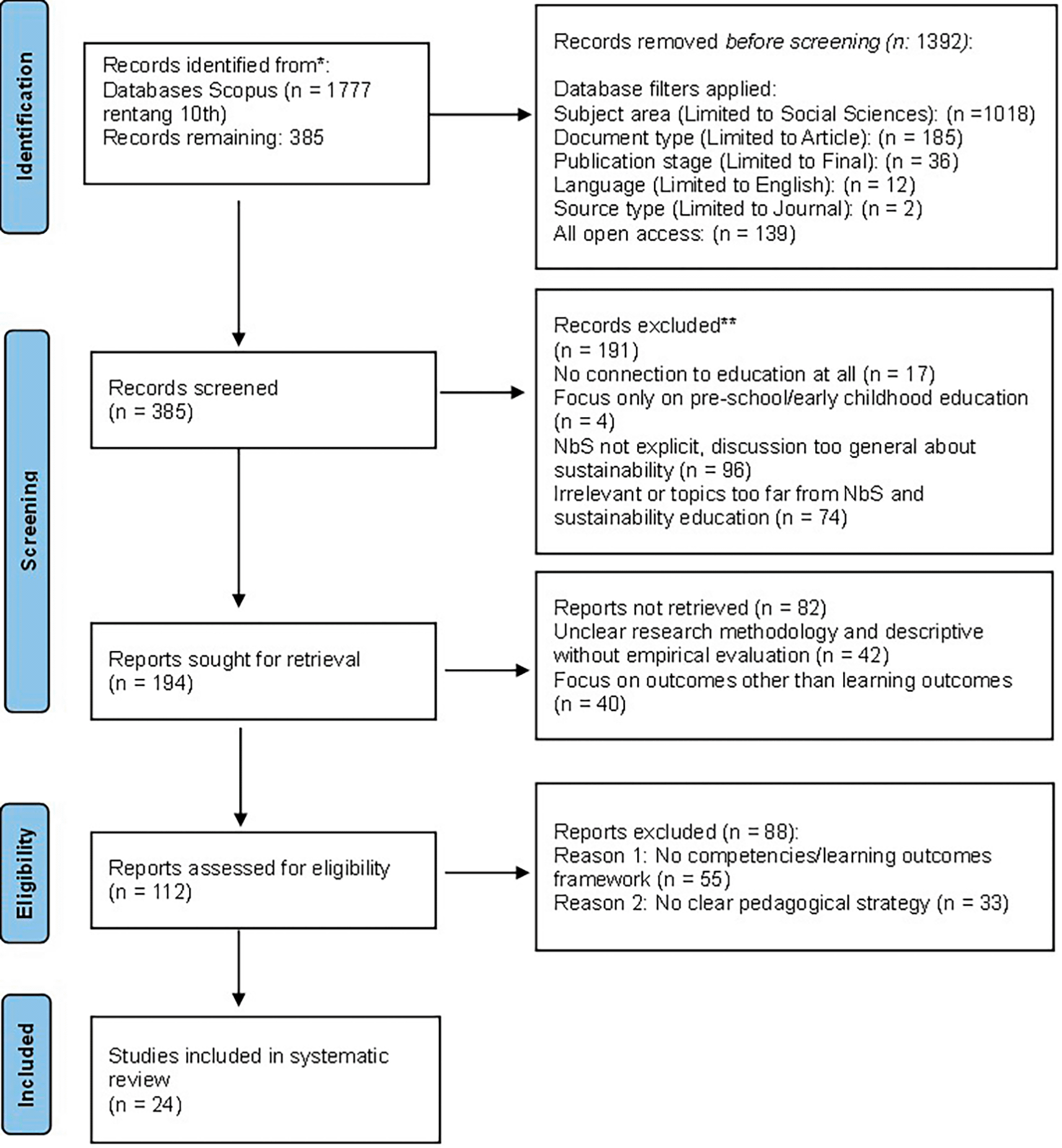
The initial stage involved a systematic search of the Scopus database using predefined keyword combinations ( Table 1), yielding 1,777 articles related to “nature-based solutions” and “education for sustainable.” Automatic filters were then applied to align the results with the research scope: publication period (2015–2025), social sciences subject area, journal articles only, final publication stage, English language, and open-access availability. After this screening, 1,392 records were excluded, leaving 385 articles for further review.
At the screening stage, the remaining 385 articles were assessed based on their titles and abstracts. Of these, 191 articles were excluded for irrelevance, including a lack of connection to education, a focus on non-formal education, or overly general discussions of NbS without an explicit sustainability framework. Among the 194 records that remained, 82 were further excluded due to unclear methodology or a focus on outcomes unrelated to learning, leaving a final set for full-text review.
A total of 112 articles entered the in-depth eligibility assessment stage through full-text review. At this stage, the researchers ensured that each study explicitly discussed the sustainability competencies framework and described pedagogical strategies or educational interventions integrating NbS. As many as 88 articles were deemed ineligible because they did not meet clear competency criteria or lacked detailed pedagogical strategies
As presented in Table 3, the bibliometric dataset comprised 524 articles published between 2015 and 2025, indicating the rapid expansion of research on Nature-based Solutions (NbS) within Education for Sustainable Development (ESD) contexts. The field demonstrated a remarkably high annual growth rate of 65.57%, reflecting increasing scientific attention toward the integration of ecological and sustainability-oriented approaches in education. In total, 2,395 authors contributed to the publications, with an average of 8.9 co-authors per document and an international co-authorship rate of 33.4%, suggesting that NbS–ESD research has developed through highly collaborative and interdisciplinary networks. Furthermore, the dataset recorded an average of 10.22 citations per document across 4,766 references, indicating growing academic recognition and intellectual consolidation of the field over the last decade. To further examine how this rapid expansion evolved over time, the annual scientific production trend was analyzed to identify the temporal dynamics and acceleration patterns of NbS–ESD research across the last decade.
Figure 2 illustrates a substantial increase in scientific publications related to Nature-based Solutions (NbS) within Education for Sustainable Development (ESD) contexts during the 2016–2025 period. Publication output remained relatively low and stable in the early years, with only 2 articles published in 2016, gradually increasing to 9 articles in 2019. However, a notable acceleration emerged after 2020, when the number of publications rose from 29 articles in 2020 to 56 in 2022, before increasing sharply to 72 articles in 2023, 118 in 2024, and reaching a peak of 187 publications in 2025. This exponential growth indicates rapidly expanding academic interest in the integration of NbS within sustainability-oriented educational research. The sharp increase after 2020 also suggests that NbS has increasingly gained recognition not only as an environmental management approach, but also as an emerging framework within sustainability learning and educational transformation.
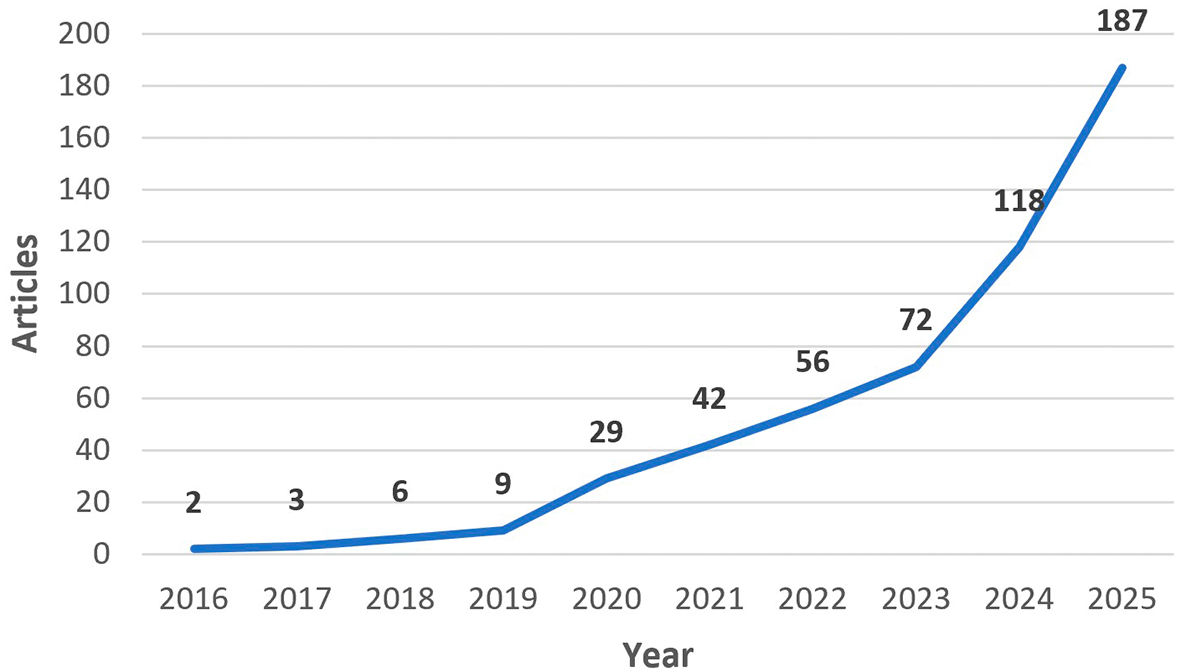
Figure 3 illustrates the temporal evolution of research themes within NbS–ESD studies from 2016 to 2025. The changing prominence of keywords across publication years suggests a gradual transformation in the conceptual orientation of the field. Based on the trend topic analysis, three major thematic phases were identified: (1) the techno-environmental orientation phase (2016–2019), (2) the socio-ecological transition phase (2020–2022), and (3) the pedagogical and sustainability transformation phase (2023–2025).
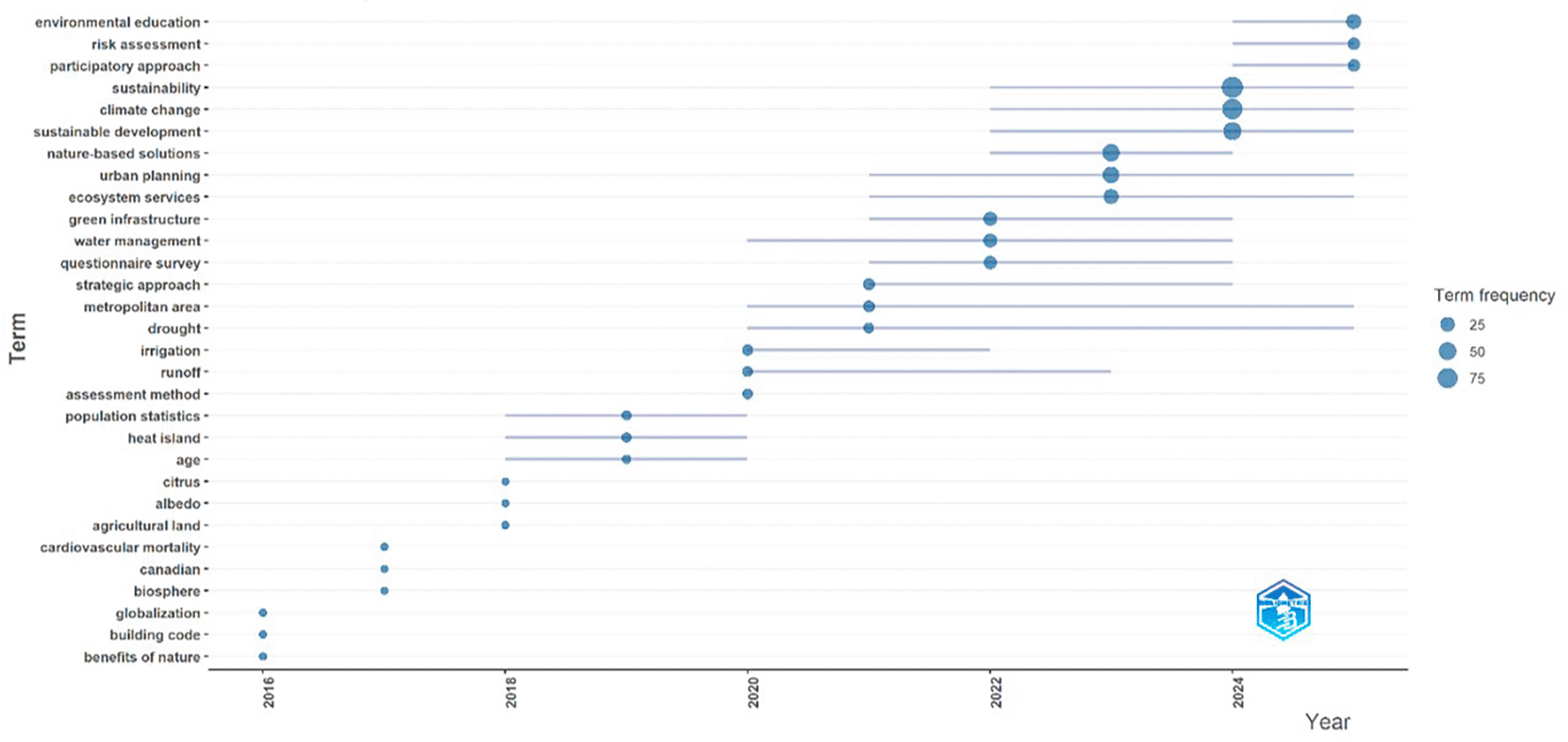
Phase 1: Techno-Environmental Orientation (2016–2019). The early development of NbS research was predominantly characterized by techno-environmental and management-oriented themes. During this phase, dominant topics included benefits of nature, biosphere, agricultural land, water management, runoff, and metropolitan area, reflecting a strong focus on ecological management, environmental planning, and urban resilience. Educational and sustainability learning dimensions remained relatively limited during this period.
Phase 2: Socio-Ecological Transition (2020–2022). Between 2020 and 2022, NbS research began to expand toward broader socio-ecological sustainability perspectives. Themes such as ecosystem services, green infrastructure, sustainability, climate change, and participatory approach became increasingly prominent, indicating a gradual shift from purely technical interventions toward more integrated approaches emphasizing sustainability, collaboration, and socio-ecological resilience.
Phase 3: Pedagogical and Sustainability Transformation (2023–2025). Recent developments demonstrate the emergence of stronger educational and sustainability-oriented perspectives within NbS research. Figure 3 shows increasing prominence of themes related to environmental education, participatory approach, climate change, and sustainable development, suggesting that NbS has increasingly been positioned not only as an environmental strategy, but also as a context for sustainability learning and educational transformation.
Overall, the temporal evolution of research themes demonstrates a gradual transformation in the conceptual orientation of NbS research within ESD contexts over the last decade. The field evolved from an early techno-environmental focus emphasizing ecological management and urban resilience toward broader socio-ecological and sustainability-oriented perspectives, before increasingly incorporating educational and transformative learning dimensions. These trends indicate that NbS is progressively being positioned not only as an environmental intervention approach, but also as an emerging framework for sustainability learning and educational transformation.
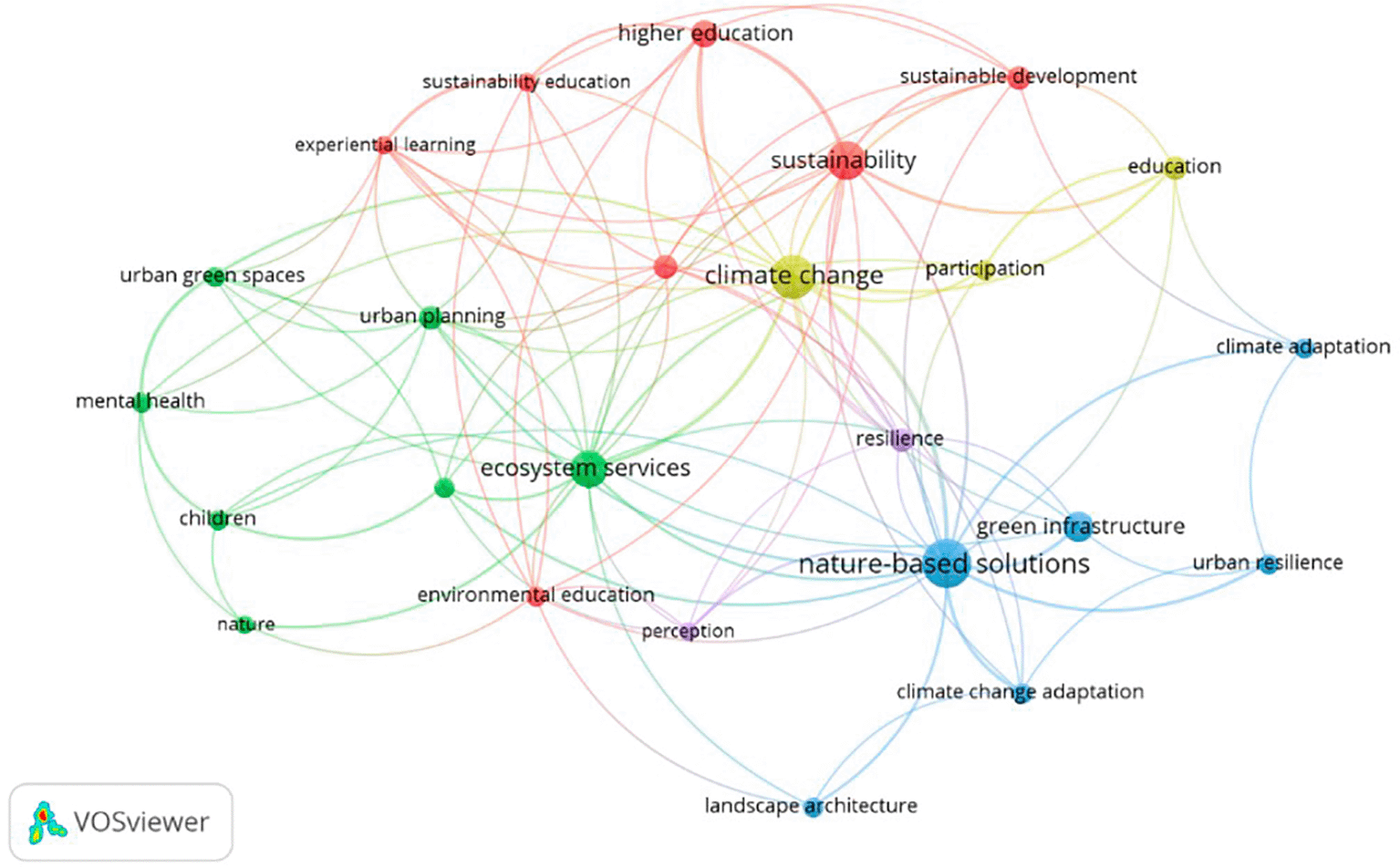
Figure 6 illustrates the knowledge structure of NbS research within ESD contexts through the co-occurrence relationships among major research themes. The network visualization reveals that the field is characterized by several interconnected thematic clusters centered around “nature-based solutions,” “sustainability,” “climate change,” and “ecosystem services”. These central nodes function as conceptual bridges linking ecological, educational, and socio-environmental dimensions within the broader NbS–ESD discourse. The dense interconnections among keywords further indicate that the field has evolved as an interdisciplinary knowledge domain integrating environmental management, sustainability studies, and educational perspectives.
The network structure reveals three dominant thematic clusters shaping the intellectual landscape of NbS–ESD research. The first cluster reflects a techno-ecological orientation, represented by themes such as green infrastructure, urban resilience, climate adaptation, and landscape architecture. This cluster emphasizes the role of NbS as an environmental and urban management strategy aimed at enhancing ecological resilience and adaptive capacity. The second cluster highlights sustainability education and transformative learning perspectives, encompassing themes including sustainability, sustainability education, experiential learning, higher education, and participation. The close relationships among these themes indicate increasing attention toward the integration of NbS into sustainability-oriented learning environments and participatory educational practices. Meanwhile, the third cluster represents an eco-relational and wellbeing-oriented perspective, characterized by themes such as ecosystem services, urban green spaces, mental health, children, and nature. This cluster suggests a growing recognition of the relational connections between human wellbeing, ecological awareness, and environmental learning experiences within NbS research.
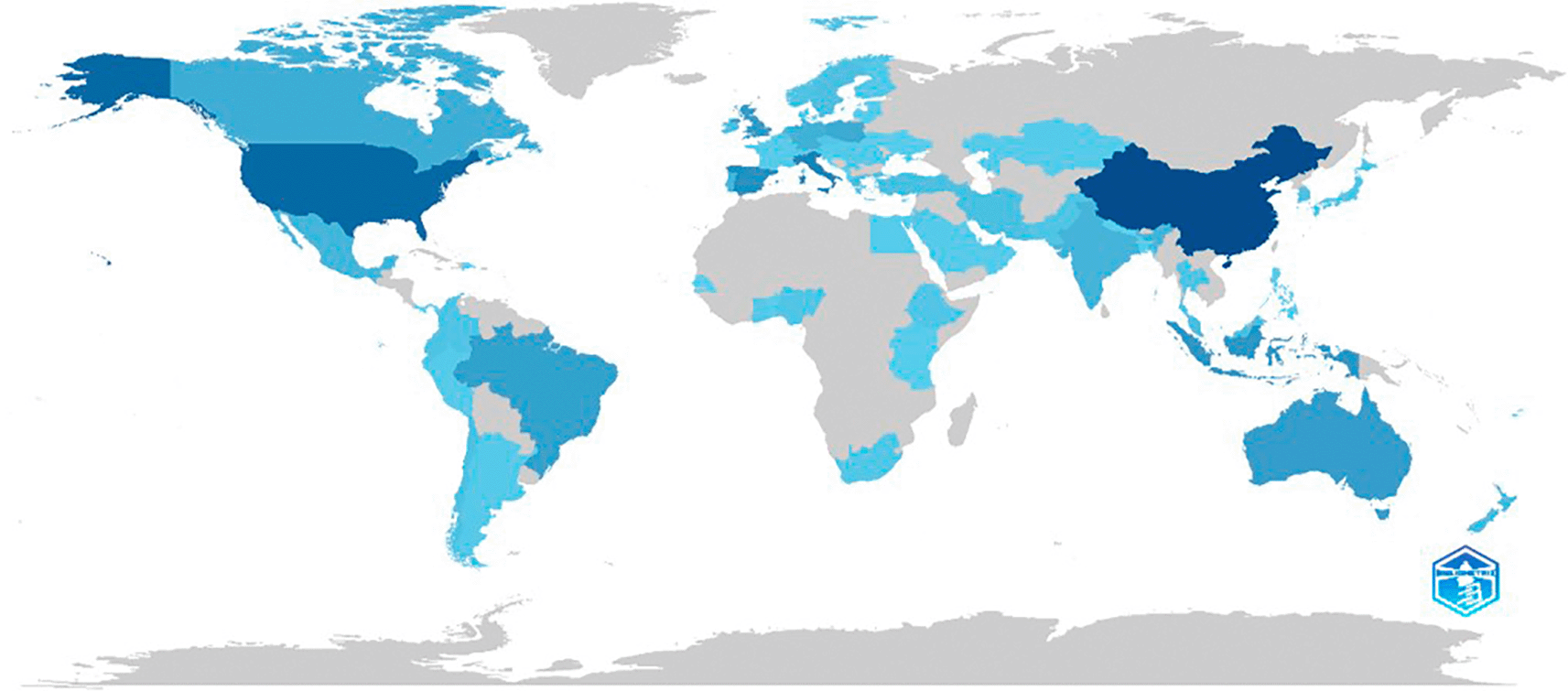
Figure 4 demonstrates that NbS–ESD research has developed through a geographically diverse but uneven global distribution. China leads in publication output (253 documents), followed by the United States (195), Italy (140), Spain (118), and Indonesia (105), indicating strong research productivity across both developed and developing countries. The spatial distribution further reveals that Europe, North America, and parts of Asia constitute the dominant centers of scientific production within the field. The increasing contribution from countries such as Indonesia suggests the growing involvement of Global South regions in NbS–ESD research, particularly in relation to sustainability and climate-related educational challenges. Nevertheless, the overall distribution pattern indicates that scientific production remains concentrated within a limited number of highly productive national research networks.
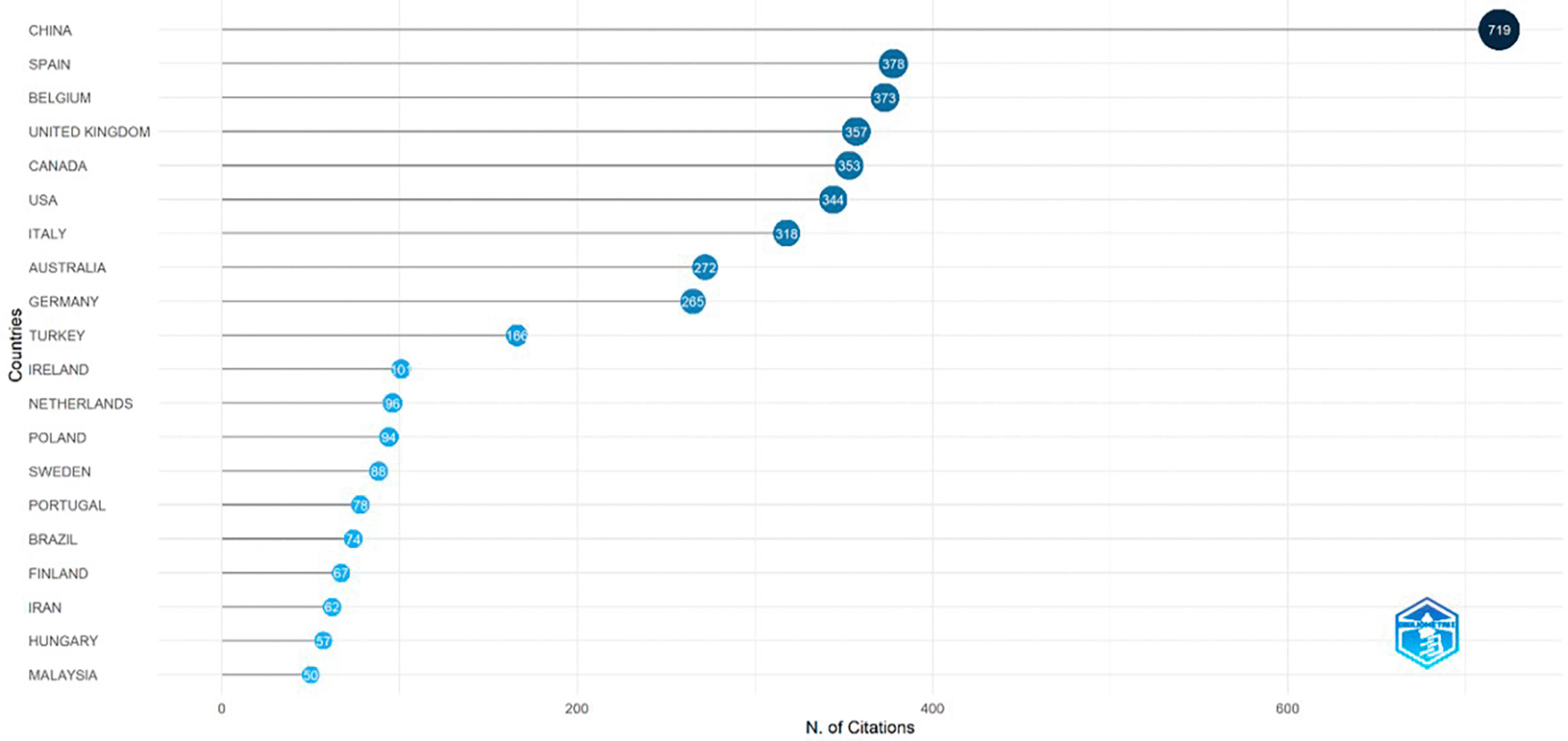
Despite the broader geographical distribution of publications, citation influence remains strongly concentrated among a smaller group of countries. As illustrated in Figure 5, China records the highest citation impact (719 citations), followed by Spain (378), Belgium (373), the United Kingdom (357), Canada (353), and the United States (344). European countries demonstrate particularly strong citation performance relative to publication volume, suggesting their central role in shaping the conceptual and theoretical development of NbS–ESD research. In contrast, several emerging contributors from the Global South exhibit lower citation influence despite increasing publication output. This imbalance indicates that the global production and dissemination of NbS knowledge continue to be shaped by asymmetrical scientific visibility and research influence.
The knowledge structure and global distribution of NbS–ESD research reveal an increasingly interconnected yet uneven field. While the thematic network demonstrates growing convergence among techno-ecological, sustainability, and educational perspectives, the global research landscape remains dominated by a limited number of influential countries and research networks. These patterns suggest that NbS–ESD research is progressively evolving into an interdisciplinary and globally expanding field, although important epistemic imbalances in knowledge production and scientific influence still persist.
Overall, the bibliometric findings indicate that NbS–ESD research has evolved into an increasingly interdisciplinary and globally expanding field. However, the dominance of techno-ecological perspectives, the uneven global distribution of scientific influence, and the relatively limited emphasis on pedagogical mechanisms and sustainability competency development suggest important gaps within the existing literature. In particular, while educational themes have become increasingly visible in recent years, the ways in which NbS are operationalized in learning environments and contribute to the development of sustainability competencies remain insufficiently synthesized. Therefore, a systematic literature review was conducted to further examine the integration of NbS in educational contexts and its implications for sustainability learning.
Following the bibliometric findings, which indicate that NbS research has increasingly expanded from techno-environmental orientations toward broader pedagogical and sustainability-oriented perspectives, a systematic literature review was conducted to further examine how NbS are integrated within educational contexts. To deepen understanding of the pedagogical roles of NbS in sustainability education, 24 selected studies were synthesized under the theme of Integration of NbS in Learning Environments and Sustainability Competencies. The reviewed studies encompass various educational levels and forms of NbS implementation, providing insights into how NbS-based learning environments contribute to the development of sustainability competencies, participatory learning processes, and transformative socio-ecological learning experiences.
To provide a broader understanding of how NbS are operationalized within educational contexts, Table A2 maps the diverse forms of NbS implementation and their contributions to sustainability-oriented learning across different educational levels. Across the reviewed studies, NbS were commonly integrated through school gardens, ecological restoration projects, urban green infrastructure, permaculture systems, and participatory sustainability initiatives that transformed learning spaces into direct socio-ecological engagement environments. The synthesis further indicates that the pedagogical complexity of NbS integration progressively increased across educational settings, ranging from sensory and experiential ecological interactions in early educational contexts toward more systemic, participatory, and transdisciplinary sustainability approaches in higher education.
Analysis of Table A3 further reveals several interrelated pedagogical strategies that support the transformation of educational environments through NbS implementation. Experiential learning emerged as the dominant pedagogical approach, shifting learning processes from passive instruction toward direct ecological engagement through ecosystem observation, gardening practices, and environmental restoration activities, which frequently positioned NbS sites as “living laboratories” (Michalik-Śnieżek et al., 2025; Saputra et al., 2025; Bock & Wickings, 2025). In addition, project-based learning and participatory-community approaches promoted collaborative and solution-oriented sustainability learning through green infrastructure co-design, prototyping activities, and small-scale environmental interventions (Kelemen et al., 2025; Kepczynska-Walczak, 2025; Pereira et al., 2025; Reckner et al., 2024). Several studies also highlighted the importance of intergenerational knowledge co-production and participatory engagement in strengthening contextual and community-based learning processes (Apanovich et al., 2025).
The reviewed literature further demonstrates the expansion of NbS pedagogy beyond conventional environmental learning approaches. Gamification and art-based learning strategies, including multispecies role-play, speculative storytelling, and citizen-science drawing activities, were increasingly used to foster imaginative and reflective ecological engagement (Menconi et al., 2025; Fan, 2025; O’Donnell, 2025; Jiménez-Navarro et al., 2024). Simultaneously, place-based and Indigenous-oriented learning approaches contributed to the contextualization and decolonization of sustainability education through the integration of local ecological knowledge, rituals, and cultural practices (Manteaw et al., 2025; Mitra et al., 2025; Stanger, 2025). Moreover, technology-enhanced and interdisciplinary learning models utilizing artificial intelligence, Internet of Things (IoT), and digital twin technologies increasingly connected theoretical sustainability concepts with real-world socio-ecological monitoring and problem-solving activities (Martinez Otalora et al., 2025; Russo, 2025; Huang et al., 2025; Twomey et al., 2025; Veloso et al., 2025).
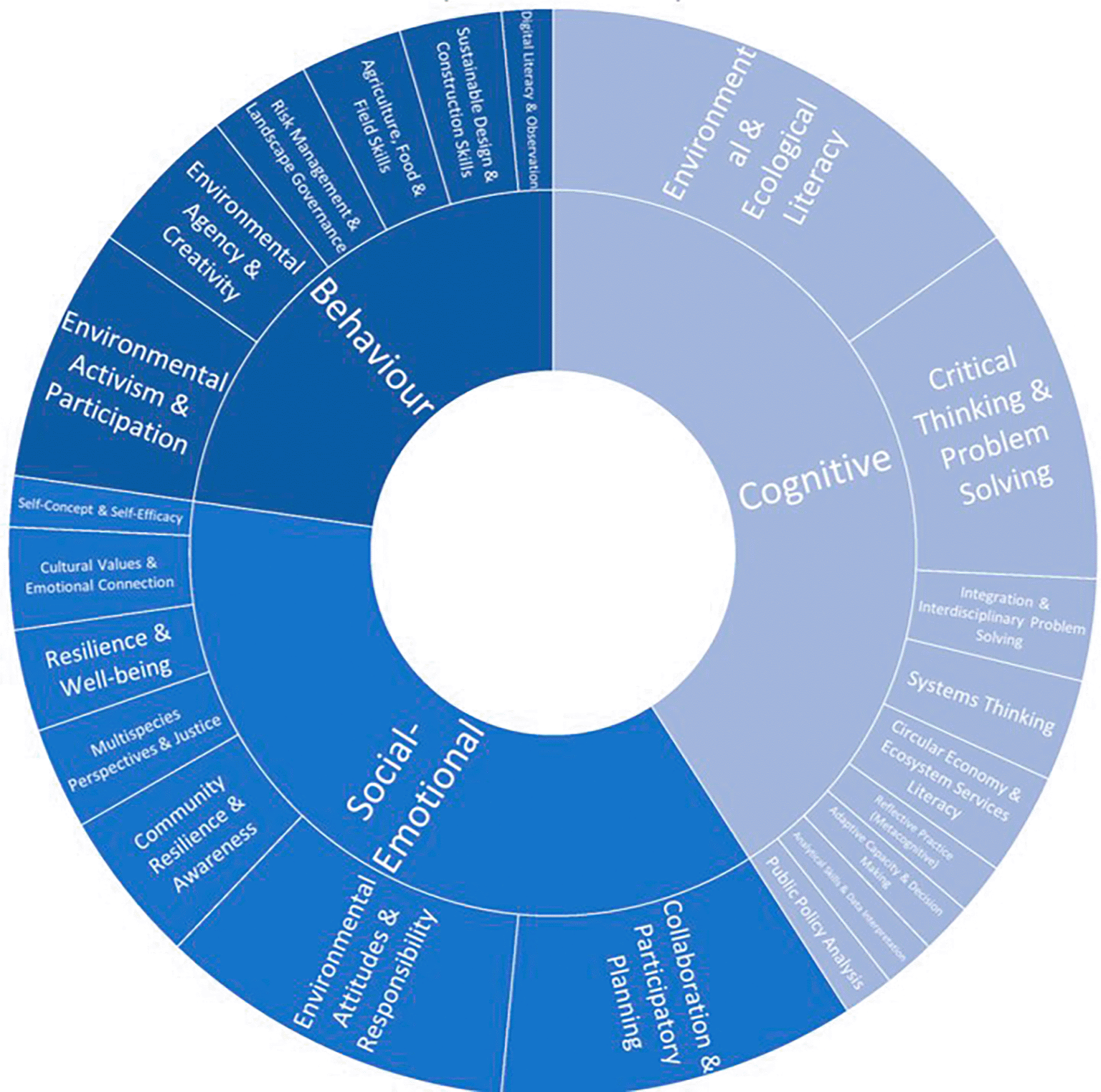
Through these participatory, experiential, and interdisciplinary learning approaches, NbS-based educational environments were consistently associated with the development of broader sustainability competencies. The synthesis of the reviewed literature identified three dominant and interconnected competency domains: cognitive, social-emotional, and behavioral as summarized in Figure 7.
Among these competency domains, cognitive competencies emerged as the most prominent domain, particularly in relation to environmental and ecological literacy, systems thinking, critical thinking, and problem-solving capacities. Across the reviewed studies, these competencies were primarily developed through direct interaction with ecological systems and authentic sustainability challenges implemented in NbS settings functioning as “living laboratories” (Bock & Wickings, 2025; Menconi et al., 2025; Michalik-Śnieżek et al., 2025; Veckalne et al., 2025). Additional approaches such as permaculture education and biodiverse edible school programs further strengthened learners’ understanding of ecosystem interconnections and circular sustainability systems (Akram et al., 2025; Shen et al., 2025). Moreover, restoration activities, citizen science initiatives, and project-based sustainability interventions promoted analytical and causal reasoning through engagement with real-world environmental problems (Fan, 2025; Jiménez-Navarro et al., 2024; Pereira et al., 2025). Systems thinking also emerged as a recurrent competency through the exploration of interconnected socio-ecological systems, including sponge city models and sustainable agroforestry practices (Ma & Jin, 2022; Shen et al., 2025; Veloso et al., 2025).
Beyond cognitive dimensions, NbS-based learning environments also fostered strong social-emotional competencies through sustained relational engagement with natural and community environments. Several studies demonstrated that long-term interaction with organisms, urban green spaces, and school gardens contributed to the development of emotional connection with nature, stewardship, responsibility, and ecological care (Apanovich et al., 2025; Bock & Wickings, 2025; Kelemen et al., 2025). Nature-based play environments further supported sensory literacy and embodied ecological awareness among learners (Mårtensson et al., 2025). In addition, participatory learning activities, including co-design workshops and school garden-based participatory action research, strengthened interpersonal collaboration, collective responsibility, and community-oriented sustainability engagement (O’Donnell, 2025; Kelemen et al., 2025).
The reviewed literature further indicates that NbS integration contributes to the development of behavioral and action-oriented sustainability competencies. These competencies were frequently associated with environmental agency, climate action awareness, and the capacity to translate sustainability knowledge into practical interventions (Jiménez-Navarro et al., 2024; Lingos et al., 2025). Several studies highlighted the development of technical and applied sustainability skills through the construction and implementation of green roofs, rain gardens, biopores, and ecobricks within NbS learning projects (Kepczynska-Walczak, 2025; Nugroho et al., 2024). Furthermore, interdisciplinary collaboration emerged as a recurring competency that interconnected cognitive and social-emotional dimensions across multiple studies. The synthesis also identified several NbS-specific emergent competencies, including place-based awareness, critical-transgressive awareness, and community disaster preparedness, which were considered difficult to cultivate through conventional classroom-centered learning approaches (Manteaw et al., 2025; Michalik-Śnieżek et al., 2025; Veloso et al., 2025).
The reviewed studies further suggest that the integration of NbS across educational levels demonstrates a gradual progression in pedagogical and systemic complexity. In primary education settings, NbS were predominantly implemented through direct interaction with natural environments that supported sensory exploration and concrete ecological experiences. At the secondary education level, NbS integration increasingly emphasized functional green infrastructure and nature-based technologies that encouraged problem-solving and systems understanding. Meanwhile, in higher education contexts, NbS were more frequently positioned within transdisciplinary and sustainability-oriented frameworks aimed at addressing complex urban, ecological, and community challenges. This progression indicates that NbS-based learning environments can support sustainability competency development across diverse educational contexts while adapting to different levels of cognitive, social, and participatory engagement.
Overall, the reviewed literature demonstrates that NbS are increasingly positioned not merely as environmental interventions, but as transformative socio-ecological learning ecosystems that integrate experiential, participatory, and sustainability-oriented pedagogies. Through direct engagement with ecological systems, collaborative problem-solving, and contextual learning experiences, NbS-based educational environments support the development of holistic sustainability competencies encompassing cognitive, social-emotional, and behavioral dimensions. These findings further suggest a broader pedagogical shift in sustainability education, where nature is no longer treated solely as an object of study, but increasingly functions as an active co-educator within transformative learning processes.
Nature-based Solutions (NbS) have traditionally been conceptualized primarily as environmental and infrastructural interventions aimed at addressing ecological degradation, climate adaptation, biodiversity conservation, and urban resilience (Celletti et al., 2025). Earlier NbS discourse was therefore largely dominated by techno-environmental perspectives emphasizing ecosystem management, green infrastructure, and sustainability governance (McPhearson et al., 2022). However, the findings of this review demonstrate a notable conceptual transition within recent NbS research, particularly in educational contexts. Beyond their ecological functions, NbS are increasingly being positioned as pedagogical environments that facilitate sustainability-oriented learning processes through direct interaction with socio-ecological systems. This transition appears to be closely associated with the growing recognition that conventional classroom-centered sustainability education is often insufficient to address the complexity, interconnectedness, and contextual nature of contemporary environmental challenges (Fuentes-Vilugrón et al., 2025; R. Wang & Kumar, 2025). Consequently, NbS-based learning environments have emerged as alternative pedagogical spaces capable of supporting more experiential, participatory, and systems-oriented forms of sustainability learning.
This pedagogical transformation reflects a broader shift within sustainability education from classroom-centered knowledge transmission toward experiential and socio-ecological forms of learning. The reviewed findings suggest that NbS-based learning environments increasingly function as “living laboratories” that enable learners to engage directly with ecological systems, sustainability challenges, and community contexts (Michalik-Śnieżek et al., 2025; Saputra et al., 2025; Bock & Wickings, 2025). Such patterns strongly align with experiential learning perspectives, which argue that meaningful understanding is constructed through concrete experience, reflection, and contextual interaction rather than passive reception of information (Kolb, 1984). At the same time, the growing emphasis on participatory, place-based, and community-oriented NbS practices indicates that sustainability learning is increasingly being understood as an embodied and relational process (P. Wang, 2025). This supports broader socio-constructivist and transformative sustainability education perspectives, which emphasize that sustainability competencies are more effectively developed through direct engagement with complex real-world socio-ecological systems than through abstract and decontextualized instruction alone (Warners et al., 2025).
Furthermore, the findings of this review suggest that NbS contribute to a significant reconceptualization of the role of nature within educational processes. Rather than functioning solely as an object of environmental observation, nature increasingly emerges as an active pedagogical space that shapes cognitive, social-emotional, and behavioral dimensions of sustainability learning (Warners et al., 2025). This transformation is particularly visible in participatory and interdisciplinary NbS approaches that encourage collaboration, ecological responsibility, systems thinking, and contextual problem-solving. In this sense, NbS-based learning environments resonate strongly with relational and transformative approaches in sustainability education, which position learning as a process of developing interconnectedness between humans, communities, and ecological systems (Aboytes & Barth, 2020; Singer-Brodowski, 2023). Consequently, the pedagogical integration of NbS extends beyond environmental awareness toward the formation of more holistic sustainability competencies, while simultaneously redefining sustainability education as a contextual, participatory, and transformative socio-ecological learning process.
Some conventional approaches within Education for Sustainable Development (ESD) have been criticized for placing excessive emphasis on cognitive dimensions of learning and the transmission of environmental knowledge, often with limited attention to relational, emotional, and action-oriented dimensions of sustainability learning (Grund et al., 2023; Jickling & Wals, 2012). While ecological literacy and sustainability awareness remain fundamental components of ESD, contemporary sustainability challenges increasingly demand educational approaches that extend beyond knowledge acquisition alone. Issues such as climate change, biodiversity loss, and socio-environmental inequality require learners not only to understand sustainability problems conceptually, but also to develop relational, ethical, emotional, and action-oriented capacities for engaging with complex socio-ecological systems (Costa & Cipolla, 2025; Elder et al., 2023). In this regard, the findings of this review indicate that NbS-based learning environments provide a broader pedagogical foundation for sustainability education by facilitating more holistic forms of competency development that extend beyond purely cognitive learning outcomes.
Within the cognitive domain, the reviewed studies suggest that NbS-based learning environments contribute to the development of several interconnected sustainability competencies, particularly systems thinking, ecological literacy, critical thinking, and sustainability problem-solving capacities. These findings resonate with sustainability education literature emphasizing systems thinking as a core competency for understanding and addressing complex socio-ecological challenges (Sposab & Rieckmann, 2024). Through direct engagement with ecological systems and real-world environmental interventions, learners are encouraged to interpret environmental issues not as isolated phenomena, but as dynamic interactions between environmental, social, and technological dimensions of sustainability (Elder et al., 2023). These findings further support sustainability education perspectives suggesting that authentic and place-based learning environments are more effective in fostering higher-order sustainability thinking than decontextualized classroom instruction alone (Jickling & Wals, 2012).
Beyond cognitive competencies, the findings further suggest that NbS-based learning environments play a particularly important role in fostering social-emotional and behavioral dimensions of sustainability learning. Sustained interaction with natural and community environments appears to strengthen ecological empathy, stewardship, relational awareness, and collective responsibility toward socio-ecological systems. These competencies are especially important because sustainability action is often shaped not only by knowledge acquisition, but also by emotional attachment, ethical orientation, and a sense of agency toward environmental issues (Grund et al., 2023). Participatory and community-oriented NbS practices further encourage learners to perceive themselves as active contributors within sustainability processes rather than passive recipients of environmental information (Cárdenas et al., 2021). In this sense, NbS-based pedagogies support the development of sustainability agency by connecting ecological understanding with contextual action, collaborative engagement, and lived environmental experiences.
The findings of this review further suggest that the educational significance of NbS extends beyond the development of sustainability competencies toward a broader reconsideration of how sustainability learning is conceptualized and enacted. This shift is particularly important because some conventional educational approaches have often positioned sustainability learning as an individual and classroom-centered process focused primarily on the acquisition of environmental knowledge (Jickling & Wals, 2012; Warners et al., 2025). However, the reviewed studies indicate that NbS-based learning environments increasingly function as participatory socio-ecological learning systems in which learning emerges through direct interaction with ecological processes, community participation, and collaborative engagement with real-world sustainability challenges (Grund et al., 2023). In this context, sustainability learning becomes less centered on the passive transmission of environmental information and more oriented toward situated, relational, and action-oriented engagement within living socio-ecological systems.
This transformation is particularly visible in the participatory and place-based characteristics of NbS implementation across educational contexts. Many reviewed studies emphasize collaborative processes such as community co-design, participatory environmental restoration, school gardening, citizen science, and interdisciplinary sustainability projects that actively involve learners in socio-ecological decision-making and collective environmental action (Kelemen et al., 2025; Kepczynska-Walczak, 2025; Pereira et al., 2025; Reckner et al., 2024). Such practices position learners not merely as recipients of sustainability knowledge, but as active participants within dynamic ecological and social systems. These findings resonate with socio-constructivist and transformative sustainability education perspectives, which argue that sustainability learning is more effectively developed through contextual participation, collaboration, and experiential engagement than through isolated classroom instruction alone (Jickling & Wals, 2012). Consequently, NbS-based pedagogies appear to facilitate forms of learning that are simultaneously ecological, social, and participatory in nature.
Interestingly, several reviewed studies also reveal an emerging shift from predominantly technical and functional interpretations of NbS toward more relational and socio-ecological perspectives of sustainability learning. While dominant NbS approaches frequently emphasize ecosystem services, environmental management, and engineering-oriented sustainability interventions some studies increasingly conceptualize NbS as processes of rebuilding relationships between humans, communities, and the more-than-human world. (Stanger, 2025), for instance, frames NbS through Indigenous knowledge systems, eco-social justice, and posthumanist perspectives that emphasize reciprocity, coexistence, and relational ecological awareness rather than merely environmental problem mitigation. This suggests that NbS-based sustainability education may contribute not only to improving environmental competencies, but also to fostering deeper ethical, relational, and ecological understandings of human–nature interdependence. In this sense, NbS reposition sustainability learning from managing environmental problems toward fostering ecological participation and socio-ecological coexistence.
Taken together, these findings suggest that NbS extend beyond environmental interventions or pedagogical tools by creating participatory socio-ecological learning environments that reconnect learners with ecological processes, community participation, and relational forms of sustainability engagement. This perspective broadens sustainability education beyond environmental awareness toward more contextual, relational, and transformative forms of socio-ecological learning. Consequently, NbS-based learning environments offer important insights for rethinking sustainability education in ways that are more participatory, relational, and responsive to contemporary socio-ecological challenges (Jickling & Wals, 2012).
The bibliometric findings indicate that the rapid global expansion of NbS research is closely associated with increasing international attention toward climate resilience, urban sustainability, biodiversity conservation, and sustainability transition agendas (United Nations Educational, 2017). The substantial growth of publications after 2020 reflects how NbS have become increasingly integrated into broader global sustainability frameworks, particularly within discussions surrounding the Sustainable Development Goals (SDGs), green infrastructure, and climate adaptation strategies. At the same time, the global distribution analysis reveals that research productivity and citation influence remain concentrated in several countries, particularly China, the United States, Italy, and Spain. This dominance may be influenced by stronger research infrastructures, sustainability-oriented policy frameworks, greater funding availability, and more established interdisciplinary research networks related to environmental and urban sustainability transitions. Consequently, the development of NbS research appears not only as a scientific response to contemporary socio-ecological challenges, but also as a reflection of unequal global capacities in sustainability knowledge production.
At the epistemic level, these imbalances raise important implications for the development of sustainability education and NbS discourse. The concentration of influential research within particular geographical and institutional contexts may unintentionally universalize sustainability perspectives that are shaped predominantly by Global North priorities, urban governance models, and techno-managerial approaches (Nakajima & Asatani, 2025). As a result, locally grounded ecological knowledge, Indigenous perspectives, and context-specific sustainability practices from underrepresented regions may receive comparatively limited visibility within dominant NbS discussions (Stanger, 2025). This is particularly important because sustainability learning and socio-ecological practices are inherently contextual and culturally situated. Therefore, a more pluralistic and context-sensitive development of NbS research may be necessary to support more inclusive and globally representative forms of sustainability education and socio-ecological learning.
This study demonstrates that Nature-based Solutions (NbS) are increasingly evolving beyond their conventional role as environmental and infrastructural interventions toward becoming transformative pedagogical approaches within sustainability education. By integrating bibliometric analysis with a systematic review, the findings reveal a significant conceptual transition in NbS research from techno-environmental orientations toward broader socio-ecological and educational perspectives. Across school and university contexts, NbS-based learning environments consistently support the development of interconnected cognitive, social-emotional, and behavioral sustainability competencies through experiential, participatory, and contextual learning processes. Furthermore, the findings suggest that NbS not only strengthen ecological literacy and systems thinking, but also foster relational awareness, sustainability agency, and participatory socio-ecological engagement. Overall, this review highlights the growing potential of NbS to reposition sustainability education from classroom-centered knowledge transmission toward more relational, action-oriented, and transformative forms of sustainability learning capable of responding to complex contemporary socio-ecological challenges.
This review contributes theoretically by strengthening the emerging conceptualization of NbS as pedagogical and socio-ecological learning systems rather than merely environmental management strategies. The findings extend existing sustainability education literature by demonstrating how direct interaction with ecological systems, participatory learning processes, and contextual environmental engagement contribute to holistic sustainability competency development. In particular, the study reinforces critiques of cognitively dominant sustainability education approaches and highlights the importance of relational, emotional, and action-oriented dimensions of sustainability learning. Furthermore, the review suggests the need for more integrative theoretical frameworks capable of connecting NbS, experiential learning, socio-ecological systems thinking, and transformative sustainability education within diverse cultural and educational contexts.
The findings provide important implications for educators, curriculum developers, policymakers, and urban sustainability planners seeking to operationalize Education for Sustainable Development (ESD) through NbS implementation. Educational institutions can increasingly utilize school gardens, urban green spaces, ecological restoration projects, and community-based environmental initiatives as “living laboratories” that support experiential and participatory sustainability learning. The review also highlights the importance of integrating project-based, place-based, and interdisciplinary learning strategies into formal curricula to strengthen sustainability competencies across educational levels. In addition, teacher professional development and institutional support are essential to facilitate meaningful NbS integration within educational practice. More broadly, the findings suggest that educational and urban sustainability policies should increasingly recognize learning environments as interconnected socio-ecological spaces that support both environmental resilience and transformative sustainability learning.
Several limitations should be acknowledged in interpreting the findings of this study. First, the bibliometric and systematic review analyses were limited to Scopus-indexed English-language journal articles, which may exclude relevant studies published in other databases, regional journals, or non-English contexts. Second, the reviewed literature remains geographically uneven, with strong dominance from Global North countries and limited representation of local and Indigenous sustainability perspectives from underrepresented regions. Third, many reviewed studies employed descriptive and cross-sectional approaches, limiting deeper understanding of the long-term impacts of NbS-based learning on sustainability competency development. Future research should therefore expand database coverage, strengthen comparative and longitudinal designs, and further investigate culturally contextualized NbS pedagogies across diverse socio-ecological settings. Additional research is also needed to develop more operational and assessable sustainability competency frameworks capable of supporting the systematic integration of NbS within formal education systems.
In preparing this manuscript, the authors used ChatGPT (OpenAI) with the aim of optimizing readability and language structure. After using this tool, the authors conducted an in-depth review and manual editing of all content. The authors take full responsibility for the accuracy and integrity of the published article content.
| Views | Downloads | |
|---|---|---|
| F1000Research | - | - |
|
PubMed Central
Data from PMC are received and updated monthly.
|
- | - |
Provide sufficient details of any financial or non-financial competing interests to enable users to assess whether your comments might lead a reasonable person to question your impartiality. Consider the following examples, but note that this is not an exhaustive list:
Sign up for content alerts and receive a weekly or monthly email with all newly published articles
Already registered? Sign in
The email address should be the one you originally registered with F1000.
You registered with F1000 via Google, so we cannot reset your password.
To sign in, please click here.
If you still need help with your Google account password, please click here.
You registered with F1000 via Facebook, so we cannot reset your password.
To sign in, please click here.
If you still need help with your Facebook account password, please click here.
If your email address is registered with us, we will email you instructions to reset your password.
If you think you should have received this email but it has not arrived, please check your spam filters and/or contact for further assistance.

Comments on this article Comments (0)