Keywords
nurse burnout; public hospitals; Africa; work environment; nurse retention; occupational stress

nurse burnout; public hospitals; Africa; work environment; nurse retention; occupational stress
Burnout among healthcare professionals has become a significant global public health concern, particularly affecting nurses who are at the frontline of patient care (Fathuse et al., 2023). Burnout is commonly described through three dimensions: emotional exhaustion, depersonalisation, and reduced personal accomplishment, which have been widely reported among nurses in African and South African contexts (Owuor et al., 2020; Moses et al., 2024). Increasing healthcare demands, workforce shortages, and resource constraints have intensified the risk of burnout among nurses, with important implications for staff well-being and patient outcomes (Fathuse et al., 2023; Barnard et al., 2023; Opoku et al., 2022). Studies conducted in African healthcare settings have consistently demonstrated that excessive workload, inadequate staffing, limited organisational support, and challenging work environments contribute significantly to burnout among nurses (Owuor et al., 2020; Barnard et al., 2023).
In African countries, the burden of nurse burnout is particularly pronounced due to persistent health system challenges, including inadequate staffing, limited infrastructure, and constrained financial resources (Owuor et al., 2020; Fathuse et al., 2023). Nurses working in public hospitals across the continent often operate in high-pressure environments characterised by high patient-to-nurse ratios, insufficient medical supplies, excessive workloads, and limited organisational support (Fathuse et al., 2023; Barnard et al., 2023). These conditions increase exposure to chronic stress and emotional fatigue, contributing to elevated levels of burnout across diverse African healthcare contexts. Evidence from African studies further demonstrates that poor working environments, inadequate resources, and organisational challenges are consistently associated with increased burnout among nurses (Owuor et al., 2020; Barnard et al., 2023; Afulani et al., 2021).
Evidence from sub-Saharan Africa further indicates that burnout is widespread and associated with adverse outcomes such as decreased job satisfaction, increased absenteeism, higher turnover intention, and compromised quality of patient care (Owuor et al., 2020; Opoku et al., 2022). Additionally, organisational factors including poor leadership, ineffective communication, and lack of professional support have been identified as key contributors to burnout in resource-limited settings (Ashipala & Nghole, 2023), underscoring the complex and multifactorial nature of burnout, which extends beyond individual coping capacity to broader systemic and organisational determinants.
Despite growing research on burnout in Africa, there is a lack of consolidated evidence specifically focusing on organisational and systemic drivers in public hospital settings, which limits the development of targeted, contextually relevant interventions. Existing studies are often confined to specific countries, healthcare settings, or professional groups, making it difficult to draw broader conclusions about the factors contributing to burnout across the continent. Consequently, there is a need to systematically map and synthesise the available evidence to understand better the key drivers of burnout among nurses working in African public hospitals. Scoping reviews are particularly useful for exploring broad and complex topics, identifying key concepts, mapping available evidence, and highlighting gaps in the literature (Arksey & O’Malley, 2005; Levac et al., 2010). Therefore, this scoping review aims to map and synthesise evidence on factors contributing to burnout among nurses working in public hospitals in Africa.
This scoping review aims to map and synthesise evidence on factors contributing to burnout among nurses working in public hospitals in Africa.
1. To identify key factors contributing to burnout among nurses in public hospitals in Africa.
2. To examine organisational and system-level drivers influencing burnout in healthcare settings.
3. To explore the impact of burnout on nurse well-being and patient care outcomes.
4. To identify gaps in the existing literature to inform future research and interventions.
Main Review Question
Sub-questions
2. What organisational factors contribute to burnout among nurses in African public hospitals?
3. What system-level factors contribute to burnout among nurses in African public hospitals?
4. What impact does burnout have on nurse well-being and patient care outcomes?
5. What research gaps exist regarding burnout among nurses in African public hospitals?
A scoping review design was employed to map and synthesise existing evidence on factors contributing to burnout among nurses in public hospitals in Africa. Scoping reviews are appropriate for exploring broad and complex topics and for identifying key concepts, evidence gaps, and types of available evidence (Arksey & O’Malley, 2005; Levac et al., 2010). This review followed the methodological framework proposed by Arksey and O’Malley (2005), enhanced by Levac et al. (2010). It was reported in accordance with the Preferred Reporting Items for Systematic Reviews and Meta-Analyses Extension for Scoping Reviews (PRISMA-ScR) guidelines (Tricco et al., 2018).
Eligibility Criteria.
The eligibility criteria were defined using the Population–Concept–Context (PCC) framework:
• Population: Nurses, including professional nurses, enrolled nurses, and nursing assistants
• Concept: Burnout and its contributing factors
• Context: Public hospitals in Africa
Studies were included if they:
• Examined factors contributing to burnout among nurses
• Were conducted in public healthcare settings within Africa
• Used qualitative, quantitative, or mixed methods designs
• Were published in English between 2020 and 2026
Studies were excluded if they:
A comprehensive literature search was conducted across four electronic databases: PubMed, CINAHL, Scopus, and Web of Science. The search strategy combined keywords and Boolean operators, including terms such as “nurse burnout,” “emotional exhaustion,” “public hospitals,” and “Africa.” Synonyms and related terms were used to enhance the sensitivity of the search. The search was limited to English-language studies published between 2020 and 2026.
A total of 990 records were identified through database searching. All retrieved records were imported into EndNote 21 reference management software, where duplicate records were identified and removed before screening. Following deduplication, 870 records remained for title and abstract screening. Screening was conducted independently by two reviewers using the predefined inclusion and exclusion criteria. Potentially relevant studies were retained for full-text review. Full-text articles were then assessed independently by the two reviewers for eligibility. Any disagreements regarding study inclusion were discussed and resolved through consensus. Where consensus could not be reached, a third reviewer was consulted to make the final decision. A total of 50 full-text articles were assessed for eligibility, of which 39 were excluded for not meeting the inclusion criteria. Ultimately, 11 studies were included in the review. The study selection process is illustrated in the PRISMA-ScR flow diagram.
Data were extracted using a standardised data charting form developed by the reviewers in line with the objectives of the study and the Population–Concept–Context (PCC) framework. The form was piloted on a small sample of included studies to ensure consistency, clarity, and completeness of the extracted data.
The following information was extracted from each study: author(s), year of publication, country of study, study design, sample characteristics (including sample size and study population), and key findings on factors contributing to burnout among nurses. Additional contextual information, such as healthcare setting characteristics and organisational factors, was also captured where relevant to enhance the depth of analysis.
The data extraction process was conducted iteratively, allowing for ongoing refinement of the data charting categories as familiarity with the included studies increased. Any modifications to the extraction framework were discussed and agreed upon by the reviewers to ensure consistency and transparency throughout the process. To enhance reliability, the extracted data were cross-checked by the reviewers for accuracy and completeness.
A total of 990 records were identified through database searching. After removal of duplicates, 870 records remained and were screened based on titles and abstracts. Of these, 820 records were excluded, and 50 full-text articles were assessed for eligibility. Following full-text review, 39 articles were excluded for not meeting the inclusion criteria. Ultimately, 11 studies were included in the final review. The study selection process is illustrated in the PRISMA-ScR flow diagram.
Eleven studies published between 2020 and 2026 were included in this review. The studies were conducted in South Africa, Namibia, Kenya, Ghana, and broader African contexts. The included studies employed a range of research designs, including qualitative studies, cross-sectional surveys, structural equation modelling studies, systematic reviews, and umbrella reviews. Most studies focused exclusively on nurses, while some included broader healthcare professional populations, with nurses representing many participants. Publication years ranged from 2020 to 2026, with most studies published between 2021 and 2024. Table 1 summarises the characteristics of the included studies.
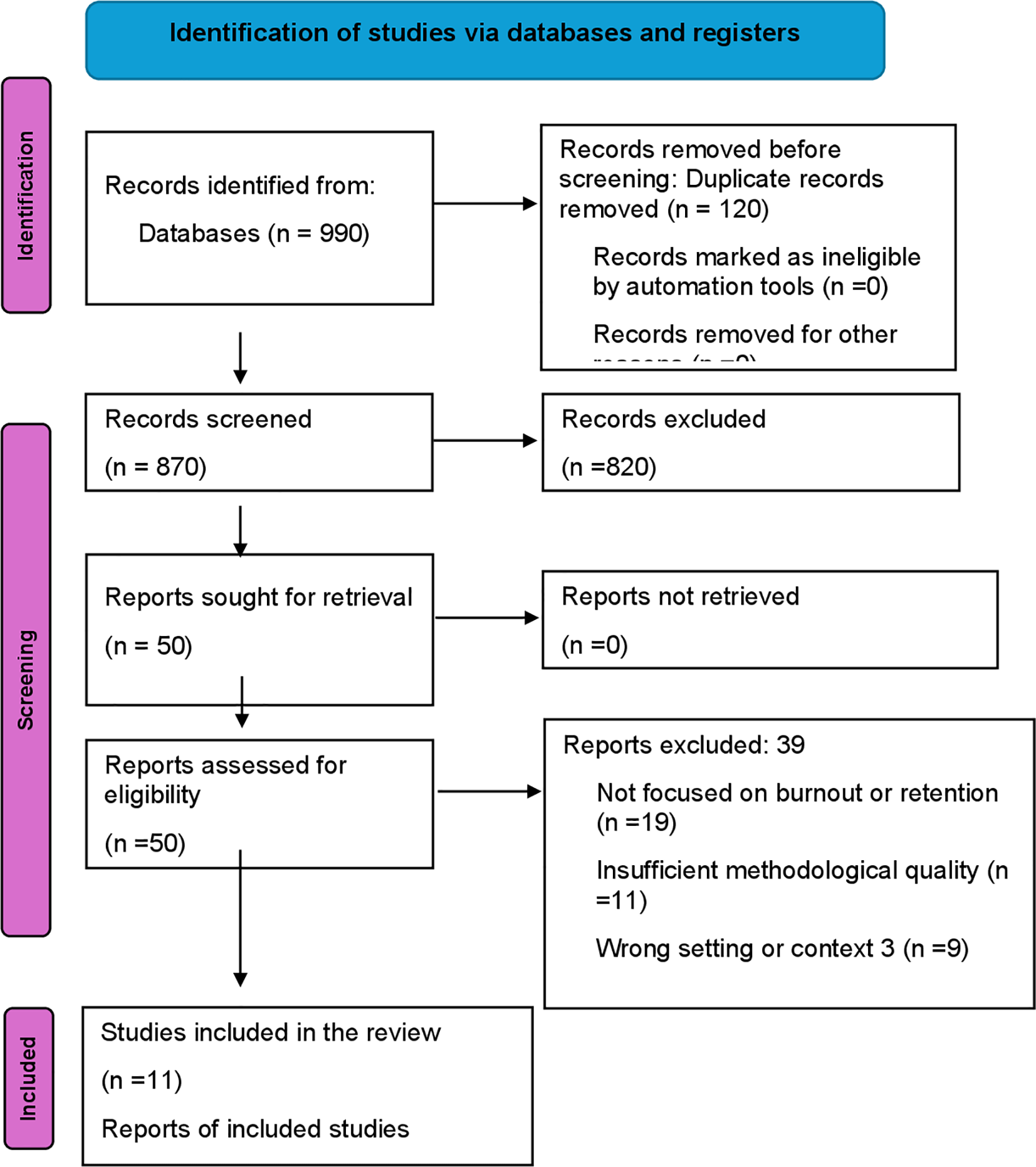
The flow diagram illustrates the identification, screening, eligibility assessment, and inclusion of studies in this scoping review in accordance with the Preferred Reporting Items for Systematic Reviews and Meta-Analyses Extension for Scoping Reviews (PRISMA-ScR) guidelines. A total of 990 records were identified through database searching, of which 11 studies met the eligibility criteria and were included in the final review.
| No. | Author(s) & Year | Study design | Population & sample | Key findings/themes |
|---|---|---|---|---|
| 1 | Ashipala & Nghole (2023) | Qualitative exploratory study | 20 nurses, Namibia | Burnout is linked to poor management support, inadequate resources, and a lack of wellness programmes. |
| 2 | Dhanpat & De Braine (2022) | Cross-sectional quantitative study | 203 South African nurses | Work environment, job characteristics, and training opportunities influenced job satisfaction and retention. |
| 3 | Owuor et al. (2020) | Systematic review | 2,543 nurses from seven African countries | High prevalence of emotional exhaustion, depersonalisation, and reduced personal accomplishment among nurses. |
| 4 | Moses et al. (2024) | Cross-sectional survey | 302 healthcare professionals (majority nurses), South Africa | Burnout associated with workload, job demands, and inadequate management support. |
| 5 | Fathuse et al. (2023) | Systematic review | 33 African nursing studies | Workload, staffing shortages, poor management support, and resource constraints were major contributors to burnout. |
| 6 | Barnard et al. (2023) | Cross-sectional study | Emergency nurses, South Africa | High job demands, limited resources, and capability constraints contributed significantly to burnout. |
| 7 | Afulani et al. (2021) | Cross-sectional study | Maternity healthcare providers, Kenya | Burnout and stress are associated with workload, workplace conditions, and organisational factors. |
| 8 | Opoku et al. (2022) | Cross-sectional study | Nursing professionals, Ghana | Burnout significantly influenced intention to quit and professional attrition. |
| 9 | Ditlopo et al. (2024) | Structural equation modelling study | Primary healthcare nurses, South Africa | Workload, professional support, and practice environment affected job outcomes and standards of care. |
| 10 | Banyane & Friedlander (2026) | Cross-sectional study | ICU nursing staff, South Africa | Burnout is associated with ICU workload, staffing pressures, emotional exhaustion, and workplace stressors. |
| 11 | El-Fatah et al. (2025) | Descriptive correlational study | Paediatric oncology nurses, Egypt | Burnout was significantly associated with psychological distress and workplace demands. |
| No. | Author(s) & Year | Study Design | Population & Sample | Key Findings/Themes |
Thematic analysis of the included studies identified five key themes reflecting the major factors contributing to burnout among nurses in African public hospitals: (1) emotional and physical exhaustion due to excessive workload; (2) poor management support and communication gaps; (3) inadequate resources and infrastructure; (4) work environment and staffing conditions; and (5) limited access to wellness and professional development programmes.
Excessive workload emerged as a dominant and recurrent driver of burnout across the included studies (Owuor et al., 2020; Fathuse et al., 2023; Barnard et al., 2023). Nurses consistently reported experiencing both physical fatigue and emotional exhaustion because of high patient-to-nurse ratios and persistent staffing shortages (Owuor et al., 2020; Fathuse et al., 2023; Barnard et al., 2023). In resource-limited settings, nurses frequently assume multiple roles to compensate for workforce gaps, resulting in sustained occupational strain and chronic stress. This pattern reflects a systemic imbalance between job demands and available resources within healthcare systems (Owuor et al., 2020).
These findings are further supported by Barnard et al. (2023), who reported that high job demands, limited resources, and insufficient organisational support contributed significantly to burnout among emergency nurses in South Africa. Similarly, Afulani et al. (2021) found that excessive workload, workplace stressors, and challenging working conditions contributed to psychological stress and burnout among maternity healthcare providers in Kenya. Collectively, the evidence highlights excessive workload as a critical organisational factor driving burnout within African public hospital settings.
Poor management support and ineffective communication emerged as significant organisational contributors to burnout across the included studies (Ashipala & Nghole, 2023; Moses et al., 2024). Nurses frequently reported feeling undervalued and excluded from decision-making processes, which negatively impacted morale, job satisfaction, and overall engagement (Ashipala & Nghole, 2023). These findings reflect a breakdown in supportive leadership practices and highlight the importance of inclusive and responsive management structures within healthcare settings.
Evidence from South African and broader African contexts further indicates that supportive management practices are associated with lower levels of burnout and higher levels of professional satisfaction (Moses et al., 2024). Conversely, inadequate leadership and poor communication have been linked to increased emotional detachment, reduced motivation, and disengagement among nurses (Owuor et al., 2020; Ashipala & Nghole, 2023). Collectively, these findings underscore the critical role of leadership and organisational communication in shaping workplace experiences and mitigating burnout in resource-constrained healthcare environments.
Inadequate resources and infrastructure emerged as a significant systemic driver of burnout across the included studies. Resource constraints, including shortages of medical equipment, essential supplies, and healthcare personnel, were consistently reported in African public hospital settings (Owuor et al., 2020; Fathuse et al., 2023). Nurses working in under-resourced environments frequently encounter challenges in delivering safe and effective care, which contributes to frustration, moral distress, and emotional strain (Owuor et al., 2020).
These constraints are particularly pronounced in healthcare facilities across Africa, where chronic resource shortages and infrastructural limitations exacerbate workload pressures and reduce the capacity of healthcare systems to adequately support nursing staff (Fathuse et al., 2023; Barnard et al., 2023). In addition, limited access to equipment, inadequate organisational support, and challenging working conditions further contribute to occupational stress and burnout among nurses (Barnard et al., 2023). Collectively, the findings highlight that insufficient resources not only hinder service delivery but also intensify occupational stress, thereby increasing the risk of burnout among nurses.
The quality of the work environment emerged as a significant determinant of burnout across the included studies. Key factors such as staffing levels, teamwork, leadership style, organisational culture, and professional support were found to influence nurses’ emotional well-being, job satisfaction, and intention to remain in their positions (Dhanpat & De Braine, 2022; Ditlopo et al., 2024). Inadequate staffing and poor organisational climates were associated with increased workload pressures and reduced support for frontline staff, thereby exacerbating the risk of burnout.
Evidence further indicates that positive work environments characterised by supportive leadership, effective teamwork, adequate staffing, and professional support are associated with lower levels of burnout and improved job outcomes among nurses (Ditlopo et al., 2024). Conversely, unfavourable work environments contribute to job dissatisfaction, increased turnover intention, and reduced quality of care (Dhanpat & De Braine, 2022; Ditlopo et al., 2024). Collectively, these findings highlight the central role of organisational context and staffing conditions in shaping both nurse well-being and healthcare system performance.
Limited access to wellness programmes and professional development opportunities emerged as an important organisational factor contributing to burnout. Nurses consistently reported inadequate access to psychological support services, mentoring, and training opportunities, which are essential for building resilience and coping with workplace stress (Ashipala & Nghole, 2023). The absence of such support structures reduces nurses’ capacity to manage occupational demands, thereby increasing vulnerability to emotional exhaustion and disengagement.
Evidence further indicates that opportunities for training and professional development play a critical role in enhancing job satisfaction, motivation, and retention among nurses (Dhanpat & De Braine, 2022). In contrast, the lack of investment in staff development and well-being contributes to decreased morale and increased intention to leave. Furthermore, inadequate organisational support and limited workplace wellness initiatives have been associated with higher levels of occupational stress and burnout among nurses (Ashipala & Nghole, 2023). Collectively, these findings highlight the importance of integrating wellness initiatives and continuous professional development into organisational strategies aimed at reducing burnout in healthcare settings.
This scoping review mapped and synthesised evidence on factors contributing to burnout among nurses working in public hospitals in Africa. Five major themes emerged from the review: excessive workload and staffing shortages, poor management support and communication, inadequate resources and infrastructure, unfavourable work environments and staffing conditions, and limited access to wellness and professional development programmes. These factors were consistently associated with emotional exhaustion, reduced job satisfaction, increased turnover intention, and compromised quality of patient care. The findings indicate that burnout among nurses is influenced by interconnected organisational and systemic factors rather than individual factors alone.
This scoping review aimed to map and synthesise evidence on factors contributing to burnout among nurses in public hospitals in Africa. The findings demonstrate that burnout is a multifaceted phenomenon shaped by interacting organisational, structural, and systemic challenges within healthcare systems.
A key finding of this review is the central role of excessive workload in driving burnout. High patient-to-nurse ratios and persistent staffing shortages were consistently identified as major contributors to emotional and physical exhaustion (Dubale et al, 2019; Owuor et al., 2020). These findings are consistent with global evidence indicating that increased workload is associated with higher levels of burnout and poorer patient outcomes, including increased mortality and prolonged hospital stays (Lasater et al, 2021). Within the context of African public hospitals, these pressures are intensified by chronic workforce shortages and limited resources, reflecting a systemic imbalance between job demands and available resources, as described by the Job Demands–Resources (JD–R) model.
The findings also underscore the critical role of management support and communication in shaping nurses’ experiences of burnout. Supportive leadership and inclusive decision-making were associated with lower levels of burnout and higher job satisfaction (Moses et al., 2024). In contrast, poor communication and lack of managerial support contributed to disengagement and emotional detachment. These findings align with organisational and leadership theories that emphasise the importance of supportive management practices in fostering positive work environments and mitigating occupational stress.
Resource limitations and inadequate infrastructure emerged as significant systemic drivers of burnout. Nurses working in under-resourced environments often face challenges in delivering safe and effective care, leading to frustration and moral distress (Fathuse et al., 2023). This reflects broader health system constraints, including underfunding and inequitable resource distribution, which exacerbate workload pressures and limit the capacity of healthcare systems to support frontline staff.
Furthermore, the quality of the work environment was identified as a key determinant of both burnout and retention. Positive work environments characterised by adequate staffing, teamwork, and supportive leadership were associated with improved nurse well-being and better patient outcomes (Schlak et al, 2021). Conversely, unfavourable work environments contribute to job dissatisfaction and increased turnover intention. The lack of wellness programmes and professional development opportunities further compounds burnout, as nurses require access to psychological support, mentoring, and continuous training to cope with workplace demands (Ashipala & Nghole, 2023).
Collectively, these findings highlight that burnout among nurses in African public hospitals is not merely an individual-level issue, but a systemic challenge rooted in organisational and structural deficiencies. The findings are consistent with Maslach’s Burnout Theory, which conceptualises burnout as a response to chronic workplace stress, and are further supported by the JD–R model, which explains how excessive job demands combined with insufficient resources lead to burnout. These frameworks provide a useful lens for understanding the complex interplay of factors identified in this review.
The findings of this review have important implications for health policy and nursing practice across Africa. Healthcare organisations should prioritise strategies aimed at reducing workload pressures through adequate staffing and workforce planning. Strengthening leadership capacity, improving communication between management and frontline nurses, and ensuring the availability of essential resources may help reduce burnout and improve job satisfaction. Furthermore, investment in wellness programmes, psychological support services, and continuous professional development opportunities may enhance nurse well-being and retention. Policymakers should consider burnout prevention as a key component of health system strengthening initiatives.
This review also identified important gaps in the literature, particularly the limited availability of context-specific studies examining burnout in African district hospital settings. The existing evidence remains fragmented across countries and healthcare contexts, limiting the development of targeted, contextually relevant interventions. Future research should focus on evaluating the effectiveness of organisational- and policy-level interventions to reduce burnout and improve nurse retention in resource-constrained healthcare systems.
A key strength of this scoping review is its comprehensive synthesis of evidence from multiple African countries and healthcare contexts, providing a broad overview of factors contributing to burnout among nurses in public hospitals. The review followed established scoping review methodologies and PRISMA-ScR reporting guidelines, enhancing transparency and methodological rigour.
However, several limitations should be acknowledged. The review included only studies published in English, which may have resulted in the exclusion of relevant studies published in other languages. The search was limited to selected electronic databases and may not have captured all available evidence. Additionally, as a scoping review, the study aimed to map existing evidence rather than assess the quality of individual studies or determine causal relationships. Variations in study design, measurement tools, and reporting methods across the included studies may also have influenced the consistency of the findings.
This scoping review identified key factors contributing to burnout among nurses in public hospitals in Africa, including excessive workload, poor management support, inadequate resources, unfavourable work environments, and limited access to wellness and professional development programmes. The findings demonstrate that burnout is driven by interconnected organisational and systemic challenges rather than individual factors alone.
Addressing nurse burnout, therefore, requires a multifaceted and system-level approach, including improved staffing levels, strengthened leadership and communication, enhanced resource allocation, and the implementation of structured wellness and professional support programmes. These interventions are essential for improving nurse well-being, strengthening workforce retention, and ensuring the delivery of safe, high-quality patient care.
Despite providing important insights, the review highlights a limited body of context-specific evidence, particularly within district hospital settings across Africa. Further research is needed to evaluate the effectiveness of targeted interventions and to inform contextually relevant strategies aimed at reducing burnout and improving health system performance.
This scoping review contributes significantly to the nursing and health systems literature by providing a comprehensive synthesis of evidence on nurse burnout within public hospital settings across Africa. Through the application of a rigorous scoping review methodology guided by the Population–Concept–Context (PCC) framework, the study identifies consistent systemic and organisational drivers of burnout that extend beyond individual country contexts. These findings generate contextually relevant and transferable insights that can inform policy development, health system strengthening strategies, and workforce management interventions. Furthermore, the study offers practical implications for policymakers, healthcare managers, and researchers aiming to enhance nurse well-being, improve retention, and ultimately strengthen the quality and safety of patient care in African health systems.
This scoping review used data from published peer-reviewed articles and other publicly available sources. The study did not involve human participants, patient records, or the collection of primary data. Consequently, ethical approval and informed consent were not required. The review was conducted in accordance with principles of research integrity, transparency, and appropriate citation of all sources.
| Views | Downloads | |
|---|---|---|
| F1000Research | - | - |
|
PubMed Central
Data from PMC are received and updated monthly.
|
- | - |
Provide sufficient details of any financial or non-financial competing interests to enable users to assess whether your comments might lead a reasonable person to question your impartiality. Consider the following examples, but note that this is not an exhaustive list:
Sign up for content alerts and receive a weekly or monthly email with all newly published articles
Already registered? Sign in
The email address should be the one you originally registered with F1000.
You registered with F1000 via Google, so we cannot reset your password.
To sign in, please click here.
If you still need help with your Google account password, please click here.
You registered with F1000 via Facebook, so we cannot reset your password.
To sign in, please click here.
If you still need help with your Facebook account password, please click here.
If your email address is registered with us, we will email you instructions to reset your password.
If you think you should have received this email but it has not arrived, please check your spam filters and/or contact for further assistance.

Comments on this article Comments (0)