Keywords
Artificial intelligence; machine learning; financial services; predictive analytics; explainable AI; risk management; financial innovation.

This article is included in the Artificial Intelligence and Machine Learning gateway.
Artificial intelligence; machine learning; financial services; predictive analytics; explainable AI; risk management; financial innovation.
Artificial intelligence (AI) has emerged as a transformative technology that is reshaping industries by enabling machines to perform tasks that traditionally require human intelligence, such as learning, reasoning, pattern recognition, and decision-making (Li et al., 2019). Rapid advancements in machine learning (ML), deep learning (DL), natural language processing (NLP), reinforcement learning, and explainable artificial intelligence (XAI) have significantly enhanced the capability of AI systems to analyze complex datasets, automate processes, and generate data-driven insights Lo and Repplinger (2020). Consequently, AI has become a strategic resource across numerous sectors, particularly in finance, where organizations increasingly rely on intelligent systems to improve decision-making, operational efficiency, and service delivery (Dwivedi et al., 2023; Rane et al., 2024).
The financial sector is characterized by the generation of vast volumes of structured and unstructured data from financial markets, customer transactions, regulatory reporting, digital payment systems, and online platforms (Chiu et al., 2021). Conventional statistical and econometric methods often face limitations in processing these large-scale, dynamic, and nonlinear datasets Brynjolfsson and McElheran (2019). AI technologies overcome many of these challenges by facilitating real-time data analytics, predictive modeling, anomaly detection, and automated decision-making (Zetzsche et al., 2020). Recent evidence indicates that AI has become integral to modern financial services, supporting applications such as credit scoring, fraud detection, portfolio optimization, algorithmic trading, financial forecasting, anti-money laundering (AML), and customer relationship management (Aldoseri et al., 2023; Rane et al., 2024).
Over the past decade, research on AI applications in finance has expanded considerably. Machine learning algorithms have demonstrated promising performance in forecasting asset prices, evaluating creditworthiness, predicting bankruptcy, optimizing investment portfolios, and assessing market sentiment Buxmann and Schmidt (2021). Similarly, deep learning architectures have improved predictive accuracy by capturing complex nonlinear relationships within financial data, while NLP techniques have enabled financial institutions to extract valuable information from earnings reports, financial news, analyst reports, and social media data (Kumar et al., 2022). Furthermore, AI-powered algorithmic trading systems execute transactions at high speed with minimal human intervention, thereby improving execution efficiency and reducing behavioral biases in investment decisions (Aldoseri et al., 2023).
Beyond investment and trading, AI has become an essential tool for strengthening financial risk management and operational resilience. Intelligent systems are increasingly employed to detect fraudulent transactions, monitor cyber threats, identify money laundering activities, and support regulatory compliance through continuous monitoring of financial operations (Chaboud et al., 2019). In customer-facing services, AI-powered virtual assistants, chatbots, and robo-advisors provide personalized financial advice, automate routine inquiries, and enhance customer engagement while reducing operational costs (Ghosh et al., 2021). These applications have contributed to improved service quality, increased organizational efficiency, and enhanced customer satisfaction across the financial industry (Dwivedi et al., 2023; Rane et al., 2024).
Despite these advances, the growing body of literature presents mixed and sometimes contradictory evidence regarding the effectiveness and broader implications of AI adoption in finance (Goodfellow et al., 2018). While numerous studies report substantial improvements in predictive accuracy and operational efficiency, others suggest that these gains are highly dependent on data quality, model architecture, feature engineering, market conditions, and evaluation methodologies (Arner et al., 2017). In several cases, the performance advantages of AI diminish after accounting for transaction costs, overfitting, data leakage, and model validation procedures. Moreover, many advanced AI models operate as “black boxes,” limiting their interpretability and raising concerns regarding transparency, accountability, fairness, and regulatory compliance in highly regulated financial environments (Arrieta et al., 2020).
The increasing adoption of AI has also intensified concerns regarding ethical governance, algorithmic bias, cybersecurity, privacy protection, and explainability. Financial institutions must comply with evolving regulatory frameworks that require transparent and accountable AI systems capable of supporting responsible decision-making (Chen et al., 2022). Explainable Artificial Intelligence (XAI) has consequently emerged as an important research area aimed at improving the interpretability of AI models while maintaining predictive performance. Nevertheless, balancing model accuracy with transparency remains a significant challenge for both researchers and practitioners (Arrieta et al., 2020; Dwivedi et al., 2023).
Although the literature on AI in finance has grown rapidly, existing evidence remains fragmented across different financial application domains, AI techniques, geographical settings, and research methodologies Kearns and Nevmyvaka (2019). Previous review studies have often concentrated on specific topics such as algorithmic trading, fraud detection, or credit risk assessment, with limited integration of findings across the broader financial ecosystem (Kritzman et al., 2021). Furthermore, relatively few reviews have systematically examined methodological quality, synthesized empirical evidence across multiple application domains, or critically assessed the ethical, regulatory, and implementation challenges associated with AI adoption in finance. This fragmentation limits the development of a comprehensive understanding of the current state of knowledge and future research priorities Doshi-Velez and Kim (2017).
To address these gaps, this study conducts a systematic review of the literature on artificial intelligence in finance following the Preferred Reporting Items for Systematic Reviews and Meta-Analyses (PRISMA 2020) guidelines. The review synthesizes evidence published between 2010 and 2025 from peer-reviewed journal articles and selected authoritative reports. Specifically, the review aims to: (i) identify the major application areas of AI within the financial sector; (ii) examine the AI techniques and technological platforms underpinning these applications; (iii) critically evaluate empirical evidence regarding their effectiveness, opportunities, and limitations; (iv) analyze the ethical, regulatory, and implementation challenges associated with AI adoption; and (v) identify emerging research gaps and future research directions. By integrating evidence across diverse financial domains, this review provides a comprehensive and up-to-date synthesis that contributes to both academic scholarship and practical decision-making regarding the adoption and governance of artificial intelligence in finance.
This systematic review was conducted in accordance with the Preferred Reporting Items for Systematic Reviews and Meta-Analyses (PRISMA 2020) guidelines to ensure methodological rigor, transparency, and reproducibility. A predefined review protocol guided the entire review process, including literature identification, screening, eligibility assessment, quality appraisal, data extraction, and synthesis. The review adopted a qualitative evidence synthesis approach to comprehensively examine the applications, opportunities, challenges, and emerging trends of artificial intelligence (AI) in finance.
A comprehensive literature search was conducted using three multidisciplinary electronic databases: Scopus, Web of Science, and Google Scholar. To complement peer-reviewed literature, targeted searches were also undertaken in reputable industry repositories and reports published by recognized financial institutions, technology organizations, and international agencies.
The search strategy combined artificial intelligence-related keywords, including “artificial intelligence,” “machine learning,” “deep learning,” “natural language processing,” and “explainable artificial intelligence,” with finance-related keywords such as “risk management,” “algorithmic trading,” “credit scoring,” “fraud detection,” “portfolio management,” and “financial decision-making.” Boolean operators (AND, OR) and database-specific search syntax were employed to optimize both the sensitivity and specificity of the search. The search was restricted to studies published between 2010 and 2025, reflecting the rapid evolution of AI technologies during this period.
Eligibility criteria were established prior to the literature search to ensure consistency in study selection. Studies were included if they were published in English and met at least one of the following criteria: (i) empirical studies employing quantitative, qualitative, or mixed-methods research designs; (ii) systematic or narrative reviews with clearly documented methodologies; or (iii) industry reports presenting verifiable data, transparent analytical procedures, and evidence-based findings relevant to AI applications in finance.
Studies were excluded if they consisted of editorials, opinion articles, commentaries, conference abstracts without full papers, non-peer-reviewed blog posts, or publications lacking sufficient methodological transparency or empirical evidence. Duplicate records identified during the search process were also removed before screening.
The study selection process followed the PRISMA 2020 framework. All retrieved records were imported into a reference management system for duplicate identification and removal. The remaining studies underwent a two-stage screening process. First, titles and abstracts were independently reviewed against the predefined eligibility criteria to identify potentially relevant studies. Subsequently, full-text articles were assessed to determine their final eligibility for inclusion in the review.
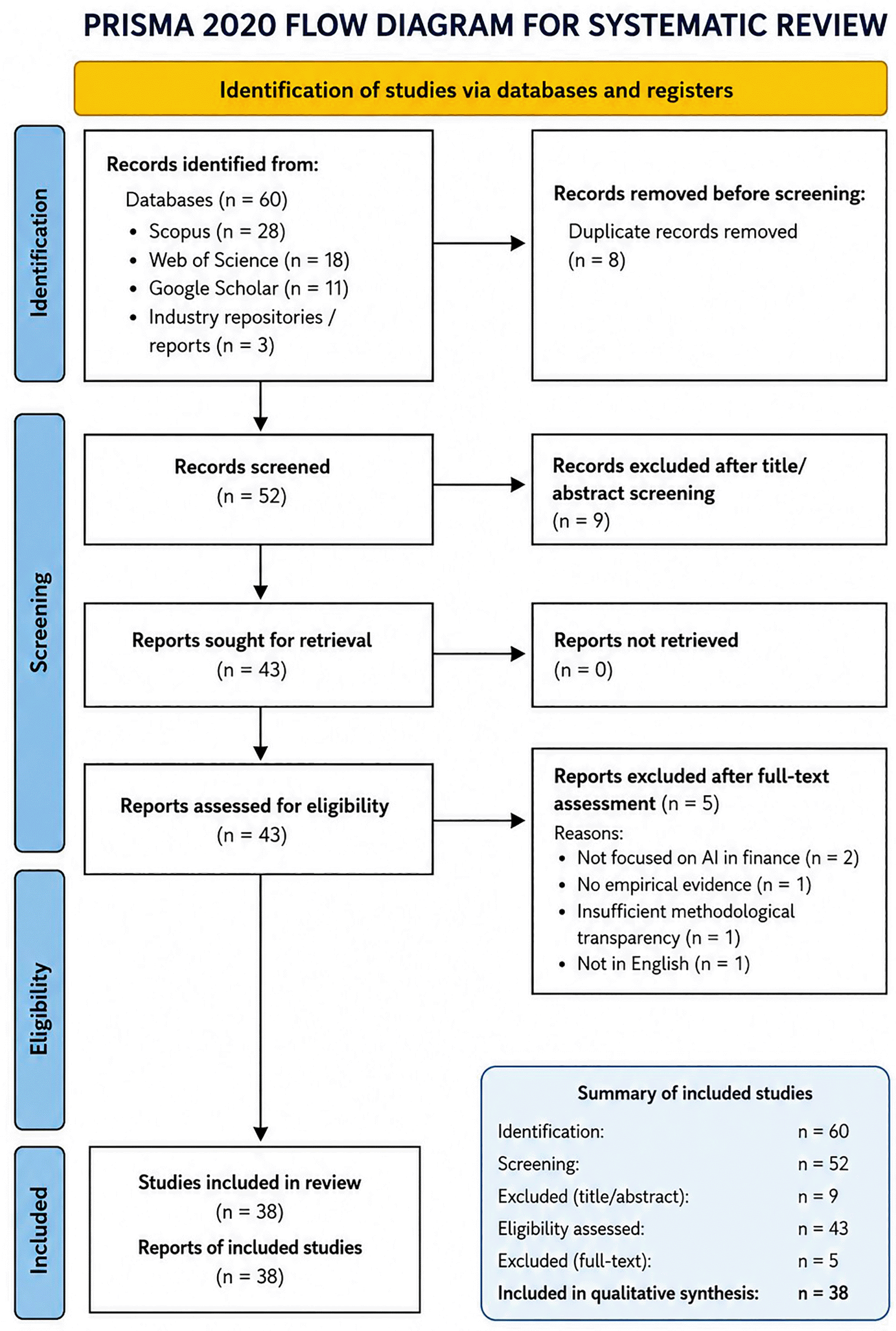
The initial search identified 60 potentially relevant records. Following duplicate removal, title and abstract screening, and full-text assessment, 38 studies satisfied all inclusion criteria and were included in the final qualitative synthesis. The complete study selection process is illustrated in the PRISMA 2020 flow diagram in Figure 1.
The methodological quality of the included studies was evaluated using an adapted quality appraisal checklist suitable for multidisciplinary research involving artificial intelligence and financial applications. The assessment considered study design, methodological rigor, transparency of data sources, reproducibility of analytical methods, validity of evaluation metrics, and clarity of reported findings. Studies demonstrating insufficient methodological quality or inadequate reporting were excluded during the eligibility assessment to ensure that the synthesized evidence was robust and reliable.
A standardized data extraction form was developed before the review commenced to ensure consistency across studies. Information extracted from each eligible publication included authorship, publication year, country of study, research objectives, AI techniques employed, financial application domain, datasets used, methodological approach, evaluation metrics, key findings, reported limitations, and recommendations for future research. The standardized extraction process minimized bias and facilitated systematic comparison across the included studies.
An inductive thematic synthesis approach was employed to integrate findings from the included studies. Initially, full-text articles were subjected to open coding to identify recurring concepts, methodologies, AI techniques, application areas, challenges, and research outcomes. Related codes were then grouped into descriptive categories through constant comparison, before being synthesized into broader analytical themes representing the current state of knowledge on artificial intelligence in finance.
To strengthen the credibility of the findings, a subset of studies was independently coded by multiple reviewers, and discrepancies were resolved through discussion and consensus. Sensitivity analyses were performed to assess the stability of the identified themes under alternative coding structures. Finally, methodological triangulation was undertaken by comparing evidence from peer-reviewed academic studies with high-quality industry reports, thereby enhancing the validity, robustness, and practical relevance of the synthesized findings.
The systematic search yielded 60 records from Scopus, Web of Science, Google Scholar, and selected industry repositories. After removing duplicate records, the remaining studies underwent title and abstract screening based on the predefined eligibility criteria. Publications that were not directly related to artificial intelligence in finance, lacked methodological rigor, or did not provide empirical evidence were excluded. The full texts of the remaining articles were subsequently assessed for eligibility. Following the full-text review, 38 studies met all inclusion criteria and were included in the final qualitative synthesis. Figure 1 presents the PRISMA 2020 flow diagram illustrating the study selection process.
The included studies were published between 2010 and 2025, reflecting the rapid growth of AI applications in financial services. Most studies employed quantitative research designs using machine learning algorithms trained on historical financial datasets. Mixed-methods studies and systematic reviews constituted a smaller proportion of the evidence base. Most publications originated from developed economies, particularly the United States, China, the United Kingdom, Germany, and other European countries. Only a limited number of studies examined AI implementation in developing countries, highlighting an important geographical research gap. Machine learning was the most frequently investigated AI technique, followed by deep learning, natural language processing, reinforcement learning, and explainable artificial intelligence. The results are presented in Table 1.
The methodological quality assessment demonstrated that most studies employed robust analytical methods and clearly reported their datasets, evaluation procedures, and validation metrics. However, several studies relied on proprietary financial datasets, limiting reproducibility and independent verification. Similarly, only a few studies explicitly evaluated algorithmic fairness, explainability, or long-term implementation outcomes. The results in Table 2 show overall, 79% of the included studies demonstrated high methodological quality, supporting the credibility of the synthesized evidence.
The thematic synthesis identified five major themes describing the current application of artificial intelligence in finance as presented in Table 3.
Theme 1: Predictive Analytics and Machine Learning
Predictive analytics emerged as the most frequently investigated application. Most studies demonstrated that machine learning algorithms outperform traditional statistical techniques when forecasting financial markets, assessing credit risk, predicting bankruptcy, and identifying investment opportunities. Nevertheless, the review revealed that predictive performance varies substantially across datasets, market conditions, and validation procedures, indicating that model superiority remains highly context-dependent.
Theme 2: Risk Management and Fraud Detection
The reviewed studies consistently demonstrated that AI substantially improves fraud detection, anti-money laundering, cybersecurity monitoring, and credit risk assessment through real-time analysis of large transactional datasets. However, dependence on proprietary institutional data limits reproducibility and raises concerns regarding model transferability across financial institutions.
Theme 3: Algorithmic Trading and Investment Management
AI-powered algorithmic trading systems improve execution speed, market responsiveness, and portfolio optimization. Despite these benefits, several studies identified concerns regarding increased market volatility, systemic financial risk, and reduced transparency associated with highly automated trading strategies.
Theme 4: Customer Service Automation
Virtual assistants, chatbots, and robo-advisors improve customer engagement through personalized financial advice and automated service delivery. While these technologies reduce operational costs and improve service accessibility, customer trust remains strongly associated with transparency and explainability.
Theme 5: Explainability, Ethics, and Regulation
Explainable AI, fairness, privacy protection, cybersecurity, and regulatory compliance emerged as the fastest-growing research themes. Although explainability techniques continue to evolve, their practical implementation remains limited across many financial institutions.
The synthesis identified several recurring research gaps presented in Table 4. First, only a small number of studies employed longitudinal research designs, limiting understanding of the long-term organizational and financial impacts of AI adoption. Second, the geographical distribution of the literature is heavily concentrated in developed economies, with limited evidence from Africa, Latin America, and other developing regions. Third, relatively few studies examined cybersecurity resilience, adversarial attacks, algorithmic fairness, and explainable AI under real-world financial conditions. Fourth, methodological heterogeneity including differences in datasets, validation procedures, performance metrics, and reporting standards limits comparability across studies and complicates evidence synthesis.
Overall, the synthesis demonstrates that artificial intelligence has transformed financial services through enhanced predictive analytics, fraud detection, portfolio management, customer engagement, and operational efficiency. Nevertheless, the review also identifies significant methodological, ethical, and regulatory challenges that continue to constrain widespread implementation. Addressing explainability, fairness, transparency, cybersecurity, and methodological standardization will be critical for realizing the full potential of AI within the global financial sector.
The synthesis of the 38 studies included in this review reveals that artificial intelligence (AI) has become an increasingly important technology across multiple financial domains, including predictive analytics, credit risk assessment, fraud detection, algorithmic trading, portfolio management, regulatory compliance, and customer relationship management. Despite the diversity of application areas, the evidence demonstrates several recurring patterns concerning the effectiveness, limitations, and implementation challenges of AI in financial services.
The majority of empirical studies reported that AI techniques, particularly machine learning and deep learning algorithms, outperform conventional statistical models in predictive tasks involving large and complex financial datasets. Improved prediction accuracy was consistently observed in credit scoring, market forecasting, fraud detection, and portfolio optimization, primarily due to AI’s ability to identify nonlinear relationships and hidden data patterns (Aldoseri et al., 2023; Rane et al., 2024). Nevertheless, the synthesized evidence indicates that these performance improvements are highly context-dependent. Several studies noted that model accuracy varies considerably across datasets, financial markets, institutional settings, and evaluation procedures. Models demonstrating excellent performance under controlled experimental conditions frequently experience substantial reductions in predictive capability when applied to heterogeneous real-world financial environments. This finding suggests that the reported superiority of AI models should be interpreted cautiously, as external validity and generalizability remain insufficiently established.
A second major finding concerns the growing application of AI in financial risk management and fraud detection. Across the reviewed literature, AI-based systems consistently demonstrated superior capabilities in detecting anomalous transactions, assessing credit risk, identifying money laundering activities, and monitoring cybersecurity threats compared with traditional rule-based approaches. These improvements are largely attributed to the integration of multiple data sources and the capacity of machine learning algorithms to continuously adapt to evolving financial risks (Rane et al., 2024). However, the review also identified important methodological limitations. Many studies relied on proprietary institutional datasets that restrict reproducibility and independent validation. Furthermore, relatively few investigations evaluated the transferability of AI models across different regulatory, economic, and institutional contexts, limiting confidence in their broader applicability.
The reviewed studies further demonstrate substantial growth in the adoption of AI for algorithmic trading and investment management. Machine learning algorithms, reinforcement learning models, and predictive analytics have been widely employed to optimize trading strategies, automate trade execution, and support portfolio construction. Most empirical evidence indicates improvements in execution speed, market responsiveness, and investment decision-making. Nevertheless, the synthesis also reveals persistent concerns regarding systemic financial stability. Several studies emphasize that highly automated trading systems may amplify market volatility during periods of financial stress, particularly when multiple institutions deploy similar algorithmic strategies simultaneously. Consequently, while AI enhances market efficiency under normal conditions, its implications for systemic risk remain insufficiently understood and require further empirical investigation.
Another prominent theme emerging from the synthesis relates to AI-supported portfolio management and customer-facing financial services. Robo-advisors, intelligent recommendation systems, virtual assistants, and automated financial planning tools have significantly expanded personalized financial services while reducing operational costs. These technologies improve customer engagement through individualized investment recommendations and continuous portfolio monitoring. However, the review indicates that empirical evidence regarding their long-term effectiveness remains limited. Most studies evaluate short-term performance indicators such as customer satisfaction or investment returns, whereas longitudinal evidence examining sustained behavioral change, financial well-being, and investment outcomes remains scarce, particularly within developing economies.
Across the included studies, explainability, transparency, and ethical governance emerged as recurring challenges affecting AI implementation in finance. Although explainable artificial intelligence (XAI) has received increasing scholarly attention as a mechanism for improving model interpretability, practical implementation remains inconsistent across financial institutions. The review demonstrates that many advanced AI models continue to operate as complex “black-box” systems, making it difficult for regulators, financial institutions, and consumers to understand or justify automated decisions. This lack of transparency raises concerns regarding accountability, fairness, bias, and regulatory compliance, particularly in high-stakes applications such as credit approval, fraud detection, and investment advice (Arrieta et al., 2020; Dwivedi et al., 2023). Consequently, explainability has emerged as one of the most important priorities for future AI research in financial services.
The PRISMA-based synthesis further identified several important research gaps that consistently appear across the reviewed studies. First, there is a notable shortage of longitudinal studies examining the long-term organizational, financial, and societal impacts of AI implementation. Most existing studies evaluate AI performance immediately after model development or deployment, providing limited evidence regarding sustainability, organizational adaptation, and long-term financial outcomes.
Second, relatively few studies investigate AI implementation across different regulatory and institutional environments. The evidence is heavily concentrated in developed economies, particularly North America, Europe, and China, with comparatively limited research conducted in emerging and low-income financial markets. This geographical imbalance limits the generalizability of current knowledge and highlights the need for context-specific investigations within developing economies, where financial infrastructure, digital maturity, and regulatory environments differ substantially.
Third, the review reveals limited empirical evidence concerning the robustness and security of AI systems operating under adverse conditions. Critical issues such as adversarial attacks, model drift, cybersecurity vulnerabilities, data privacy, algorithmic fairness, and operational resilience remain underexplored despite their direct implications for financial stability and consumer protection. Similarly, only a small proportion of the reviewed studies explicitly evaluated ethical governance frameworks or compared alternative explainability techniques within real-world financial applications.
Finally, the synthesis demonstrates considerable methodological heterogeneity across the literature. Differences in datasets, model architectures, performance metrics, validation procedures, and reporting standards complicate direct comparison between studies and reduce opportunities for quantitative evidence synthesis. Future research would benefit from greater methodological standardization, transparent reporting practices, publicly available benchmark datasets, and independent validation studies to improve reproducibility and facilitate cumulative scientific progress.
Overall, the findings indicate that AI has substantially transformed financial services by improving predictive analytics, operational efficiency, risk management, customer engagement, and investment decision-making. However, the evidence synthesized through this systematic review also demonstrates that the successful adoption of AI depends not only on technological advancement but equally on robust governance frameworks, explainable models, ethical implementation, regulatory compliance, and context-specific evaluation. Addressing these challenges will be essential for ensuring that AI contributes to sustainable, transparent, and inclusive financial systems.
Artificial intelligence (AI) has significantly enhanced efficiency, decision-making, and risk management in the financial sector, with applications spanning algorithmic trading, fraud detection, and customer service. However, AI performance remains context-dependent, and methodological gaps such as limited longitudinal studies, cross-jurisdictional analyses, and underexplored challenges like model drift and adversarial vulnerabilities persist. Socio-ethical benefits for financial inclusion are under-evidenced, and issues of transparency and governance require greater attention. Future research should focus on robust evaluation, cross-context validation, and ethical implementation to ensure responsible deployment and sustain competitive advantage in the evolving financial sector.
| Views | Downloads | |
|---|---|---|
| F1000Research | - | - |
|
PubMed Central
Data from PMC are received and updated monthly.
|
- | - |
Provide sufficient details of any financial or non-financial competing interests to enable users to assess whether your comments might lead a reasonable person to question your impartiality. Consider the following examples, but note that this is not an exhaustive list:
Sign up for content alerts and receive a weekly or monthly email with all newly published articles
Already registered? Sign in
The email address should be the one you originally registered with F1000.
You registered with F1000 via Google, so we cannot reset your password.
To sign in, please click here.
If you still need help with your Google account password, please click here.
You registered with F1000 via Facebook, so we cannot reset your password.
To sign in, please click here.
If you still need help with your Facebook account password, please click here.
If your email address is registered with us, we will email you instructions to reset your password.
If you think you should have received this email but it has not arrived, please check your spam filters and/or contact for further assistance.

Comments on this article Comments (0)