Keywords
Child Poverty, Child Deprivation, Multidimensional Poverty, Southeast Asia, Low Middle-Income Countries

Child Poverty, Child Deprivation, Multidimensional Poverty, Southeast Asia, Low Middle-Income Countries
Child poverty is recognized as a multifaceted issue, reflecting a situation in which essential rights are not fulfilled. (UNICEF 2023). Currently, one in five children worldwide lives in extreme poverty. A total of 417 million children in low- and middle-income countries experience deprivation in more than two essential living needs, including education, health, shelter, nutrition, sanitation, and clean water (UNICEF 2025). Consequently, children are the most at risk of falling into a cycle of intergenerational poverty.
Due to its complexity, child poverty spans material, psychosocial, and multidimensional deprivations. Material lack involves unmet physical needs such as inadequate education, sanitation, clean water, healthcare, and housing (Dat et al. 2015; Isaura et al. 2022; Cortes-Cely et al. 2026; Sánchez Vargas & Dip 2026) which directly dictates a child’s social life (Shaoqi et al. 2018). Consequently, impoverished children face diminished physical and mental health, poor social development, and increased risks of violence or neglect, severely limiting their future prospects (Crawford 2017; Ozoemenam et al. 2022).
Southeast Asia, where over half the population is young (ASEAN Secretariat 2023), faces a critical gap between monetary poverty reduction and child well-being (World Bank 2024). Poverty affects 23.4% of children in the Philippines (UNICEF 2025), 11.44% in Indonesia (BPS 2024), and up to 20% in Cambodia and Laos via multidimensional deprivations (Alkire et al. 2025). These figures confirm that children in this region are two to three times more likely to be impoverished than adults (OPHI 2025).
Child poverty arises from an intricate interplay of determinants. While household characteristics influence the micro level, geographical and infrastructural factors such as inadequate health facilities, sanitation, and clean water perpetuate poverty at a higher level. In Southeast Asia, these deficiencies are prevalent in rural areas, where poor sanitation directly drives stunting (Isaura et al. 2022; Blankenship et al. 2020; Cetthakrikul et al. 2018; Yunitasari et al. 2022). Furthermore, existing social protection systems often remain fragmented and child-insensitive, focusing on general households rather than age-specific needs. Analysing these complexities is essential for mapping contextual policies and understanding the unique barriers to children’s rights within the region’s heterogeneous dynamics.
Despite extensive literature, child poverty determinants in lower-middle-income Southeast Asian countries remain understudied at a regional level. This study employs a Systematic Literature Review (SLR) to synthesize fragmented, single-country evidence from the last decade into a holistic framework. By identifying dominant determinants, it aims to bridge theoretical gaps and provide practical strategies for breaking the intergenerational poverty cycle.
This study utilizes a Systematic Literature Review (SLR) design, adhering to the PRISMA 2020 protocol to ensure transparency, accuracy, and replicability (Page et al. 2021; Sarkis-Onofre et al. 2021). The review aims to comprehensively synthesize child poverty determinants within Southeast Asia. Research focus was structured using the PEO (Population, Exposure, Outcome) framework, a standard for analyzing qualitative cause-and-effect relationships in health (Capili 2020; Aboagye et al. 2021; Hosseini et al. 2024). Specifically, the study examines the child population (0–18 years) subjected to socio-economic, environmental, and geographical poverty drivers in Southeast Asia’s lower-middle-income nations.
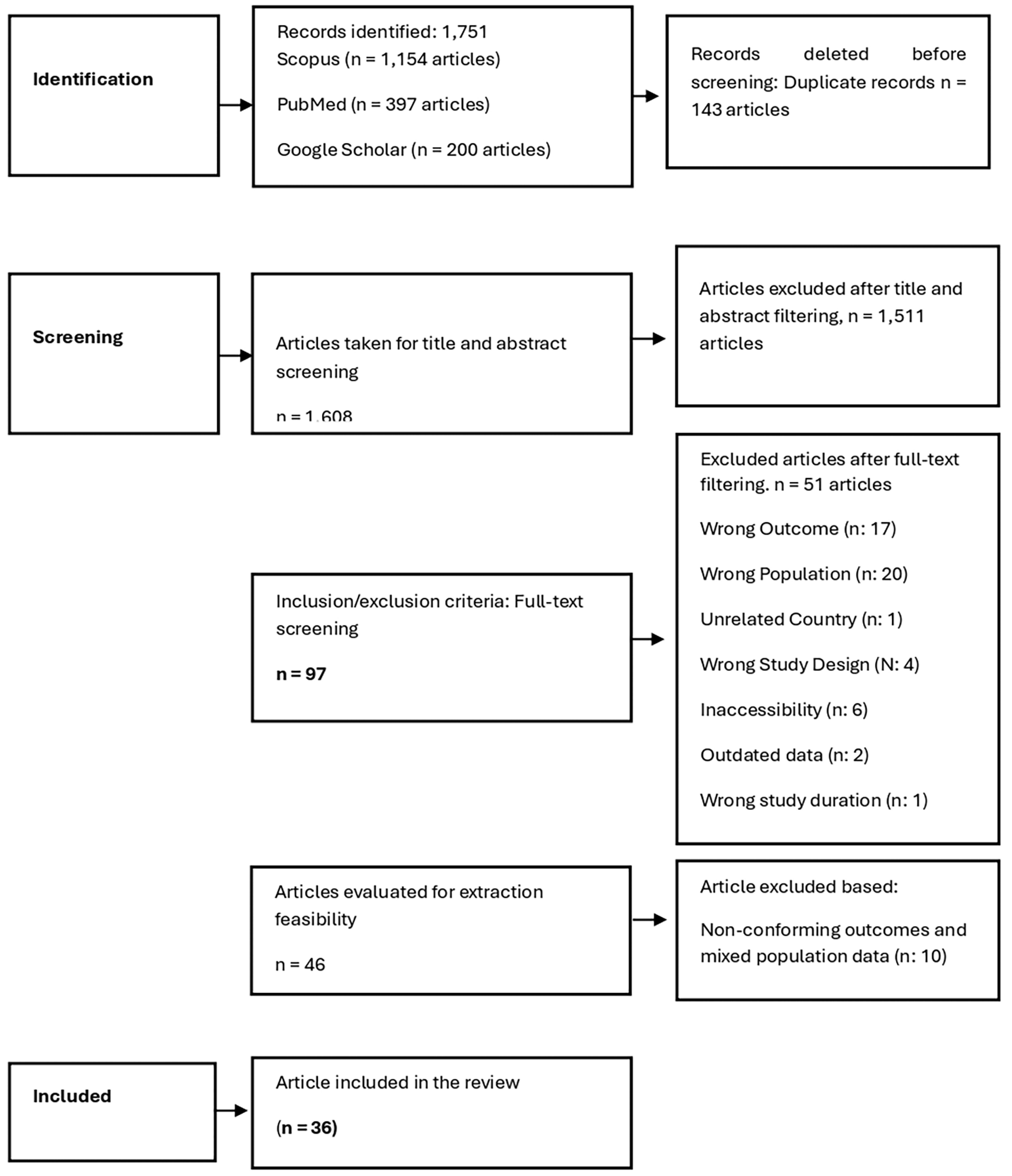
The literature search strategy was carried out on three reputable databases in February 2026, namely Scopus, PubMed, and Google Scholar, which resulted in a total of 1,751 articles. The three databases were searched for literature using boolean operators; (TITLE-ABS-KEY (“Child” OR “Childhood”) AND (“Poverty” OR “Deprivation”) AND (“Indonesia” OR “Vietnam” OR “Philippines” OR “Lao PDR” OR “Myanmar” OR “Cambodia” OR “Timor Leste” OR “Southeast Asia”)) AND PUBYEAR >2014 AND PUBYEAR <2026 AND (LIMIT-TO (OA, “all”)) AND (LIMIT-TO (AFFILCOUNTRY, “Indonesia”) OR LIMIT-TO (AFFILCOUNTRY, “Philippines”) OR LIMIT-TO (AFFILCOUNTRY, “Cambodia”) OR LIMIT-TO (AFFILCOUNTRY, “Myanmar”) OR LIMIT-TO (AFFILCOUNTRY, “LAOS”)) AND (LIMIT-TO (DOCTYPE, “ar”)) AND (LIMIT-TO (LANGUAGE, “ENGLISH”)). After removing 143 duplicates using automatic reference management (Herwansyah et al. 2022), 1,608 articles were selected based on specific inclusion and exclusion criteria.
Study feasibility was determined by rigorous inclusion and exclusion criteria. Inclusion was limited to empirical, full-text English articles (quantitative, qualitative, or mixed methods) published between 2015 and 2025, focusing on multidimensional child poverty in Indonesia, Vietnam, the Philippines, Cambodia, Lao PDR, Myanmar, and Timor-Leste. Conversely, non-empirical works like narrative reviews and protocols without primary data were excluded. To enhance collaborative screening and efficiency, the AI-driven Rayyan platform was utilized (Ouzzani et al. 2016; Johnson & Phillips 2018). Screening was conducted independently by three reviewers against the PEO-based criteria, and any disagreements were resolved through discussion until consensus was reached. Finally, data from eligible studies were qualitatively synthesized to explore the socio-economic, environmental, and cultural determinants of child poverty in Southeast Asia.
Following PRISMA 2020 guidelines (Page et al., 2021), the study selection was conducted in distinct stages on Figure 1. An initial search on February 6, 2026, across Scopus (n = 1,154), PubMed (n = 397), and Google Scholar (n = 200) identified 1,751 records. After removing 143 duplicates, 1,608 articles were screened by title and abstract, leading to the exclusion of 1,511 irrelevant works. The remaining 97 articles underwent full-text eligibility assessment, where 51 were excluded for reasons such as incorrect outcomes, populations, or study designs. A further 10 articles were removed following in-depth screening due to non-conforming data. Ultimately, 36 articles met all criteria and were included in the qualitative synthesis.
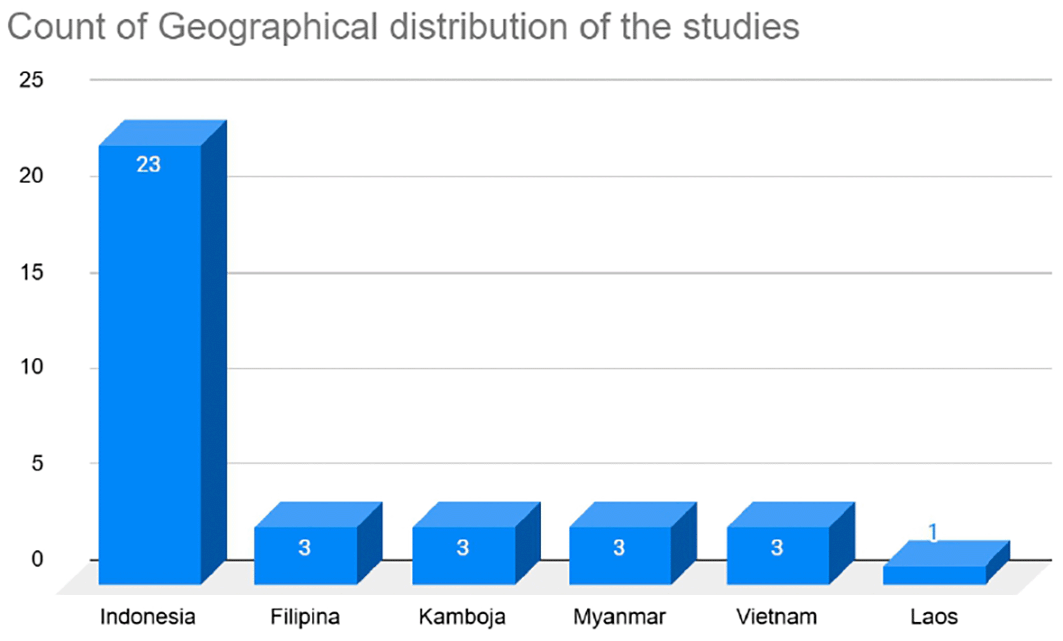
Among the selected final review studies, twenty-three were conducted in Indonesia, three in the Philippines, three in Cambodia, three in Myanmar, three in Vietnam, and one in Laos. A detailed distribution of the study is presented in Figure 2.
Based on Table 1, the data extracted from the 36 included studies are presented according to author, study design, country of study, population and sample, outcome, and key results. The extraction reveals a predominance of cross-sectional and quantitative designs, with Indonesia accounting for the majority of the studies and the remaining evidence distributed across the Philippines, Cambodia, Myanmar, Vietnam, and Laos. The outcomes examined span a range of child poverty indicators such as stunting, acute respiratory infection, child labour, and early marriage, reflecting the multidimensional nature of deprivation in the region. These extracted characteristics provide the basis for the thematic synthesis of determinants discussed in the following section.
| No. | Authors | Study design | Country of study | Population & sample | Outcome | Results |
|---|---|---|---|---|---|---|
| 1 | Mauludyani et al. 2025 | Cross-sectional study using multilevel linear regression analysis | Indonesia | Population: 514 districts/cities in Indonesia. Population: children under five years of age (toddlers) | Sanitation and drinking water, food security | 1. At the district level, poverty, food expenditure >65%, lack of access to clean water, and length of schooling for women are significantly positively associated with stunting. |
| 2 | Fatimah et al. 2025 | Comparative study with cross-sectional design | Indonesia | Population: Poor households in the urban area of Cianjur Regency. Sample: Total 126 respondents (mothers with children under the age of five (toddlers) | Food Security | 1. Food Security: The majority of households experience food insecurity (92.1% in urban areas and 96.7% in rural areas) |
| 3 | Alristina et al. 2025 | Cross-sectional study using multilevel linear regression analysis | Indonesia | Population: All mothers or primary caregivers of children attending Posyandu in Surabaya. Sample: 657 mothers who had at least one child between the ages of 36 and 59 months | Household income, parental education, employment status, food security | 1. Prematurity: Low maternal education was associated with a 3-fold higher risk of preterm birth (AOR = 3.23; p < 0.001). In addition, prematurity correlates with home ownership. |
| 4 | Manrique-de Hitta et al. 2025 | Cross-sectional analytics | Philippines | Population: Primary caregivers with infants and young children aged 0–23 months living in the Fourth District of Camarines Sur. Sample: 628 people | household income, parental education, Sanitation and drinking water, parental employment status, food security | 1. Stunting factors for infants aged 0–6 months include age (risk decreases), economic status, and non-college maternal education (lower risk), while for children aged 6–24 months, risk increases with age and is higher in males. |
| 5 | Mitra et al. 2025 | Case-control study | Indonesia | Population: All children aged 12–59 months in the Fifty Health Center Working Area, Pekanbaru, Indonesia. Sample: 108 children | Household income, parental education, parenting, parental employment status | 1. Sociodemographic factors (knowledge, attitudes, and income) are indirectly related to stunting through its influence on parenting (β = 1.33; p < .001) 2. Parenting (practices of feeding, hygiene, sanitation, and health services) has a direct impact on stunting (β = 0.09; p = .049) |
| 6 | Agushybana et al. 2025 | Cross-sectional study design | Indonesia | Population: Households in Indonesia that represent 83% of the population in 13 provinces. Sample: 3397 children | parental education, Sanitation and drinking water, spatial gaps, parents’ employment status, maternal health, spatial gaps | 1. Key stunting drivers include older child age, low birth weight (LBW), incomplete prenatal care, poor sanitation, and lack of maternal health (KIA) books. Interestingly, in 1997, paternal elementary education was linked to higher stunting rates compared to fathers with no formal schooling. |
| 7 | Khoiruddin et al. 2025 | Quantitative using binary and multinomial logit regression | Indonesia | Population: Children in Indonesia. Sample: 261,673 children aged 5–15 years | parental education, parental employment status, asset ownership, spatial gap, Smoking culture at home | 1. Informal work is consistently associated with a higher risk of multidimensional child poverty, especially in rural households 2. Single parent status, large number of children, and smoking increase children’s vulnerability to deprivation 3. There is a real territorial gap, where children in rural areas face a much higher risk of deprivation than in urban areas |
| 8 | Idawati et al. 2024 | Cross-sectional survey | Indonesia | Population: All married women under the age of 19 in rural areas of Aceh Province. Sample: 507 females | Early Marriage | 1. Parental influence is the primary driver of early marriage in Aceh, with a 10.34 times higher risk for women under heavy parental pressure. Economics also play a key role; women from the poorest families are 2.23 times more vulnerable than those from the wealthiest. |
| 9 | Ayu et al. 2024 | Observational quantitative analytics with case-control design | Indonesia | Population: All short and very short toddlers living in rural areas in Batu Bara Regency. Sample: 100 households with short and very short toddlers with an age range of 12–59 months | Parental education, Sanitation and drinking water, maternal health, smoking culture at home | Research identified several major risk factors for stunting: 1. Low maternal education, Birth weight, Formula feeding for less than 6 months, Lack of access to proper drinking water, Poor maternal nutritional status during pregnancy, Low family wealth index. |
| 10 | Seran & Sengkoen 2024 | Quantitative with descriptive and inferential analysis methods using multiple linear regression | Indonesia | Population: Households with children under five in the Belu Regency area, especially in Atambua City and Halilulik Village. Sample: 100 households with children under the age of five (toddlers) | Parental Education, Household Income, Parent’s Employment Status | 1. Nutritional factors contribute the largest to the incidence of stunting (13.41%) 2. Children with low nutritional intake have a 4.913 times greater risk of stunting 3. In addition, low maternal education levels (≤ junior high school) increased the risk of stunting by 8,081 times, and low-income families. |
| 11 | Laksono et al. 2024 | Secondary data analysis with a cross-sectional study design using the two-stage stratified sampling method | Indonesia | Population: All Indonesian children under the age of five (toddlers) living in urban poor communities. Sample: 43,284 children | Parental Education, Parental Employment Status | 1. Factors that significantly increase the risk of stunting include: low maternal education, unemployed mothers, the poorest poverty rate, no ANC during pregnancy, older children (compared to the 0–11 month group), and male children |
| 12 | Iwo et al. 2024 | Longitudinal research using data from the Study of the Tsunami Aftermath and Recovery (STAR) | Indonesia | Population: Individuals and households in 13 districts in Aceh and North Sumatra. Sample: 5,429 children | Parental Education, Post-Disaster | 1. Disaster is one of the causes of children’s deprivation |
| 13 | Simaremare et al. 2024 | Observational studies with a cross-sectional approach | Indonesia | Population: All households in Indonesia. Sample: 9,243 children aged 0–59 months from 60 disadvantaged areas in Indonesia | Sanitation and drinking water | 1. Multivariate analysis showed that factors significantly related to increased risk of diarrhea were the age of children 12–23 months and 24–35 months, as well as a history of ISPA in the past month. |
| 14 | Fu. et al. 2023 | Qualitative research using curriculum vitae analysis and thematic analysis | Cambodia | Population: Children living in residential care institutions (RCIs) in Cambodia. Sample: 25 children aged 12 to 17 years | Incomplete family structure | 1. Children feel material benefits and educational opportunities at RCI compared to previous difficult conditions 2. Peer support who have “similar sad stories” is an important factor for children’s adaptation |
| 15 | Andrestian et al. 2023 | Exploratory qualitative investigation with phenomenological methods | Indonesia | Population and sample: Youth marriage perpetrators, families, health workers, and related government agencies in South Kalimantan. | Parental Education, Parenting, Early Marriage | 1. Teenage marriage in South Kalimantan is triggered by economic motives, adolescent desires, social pressure, and lack of motivation to complete formal education. |
| 16 | Bustos et al. 2023 | Cross-sectional study using multilevel linear regression analysis | Philippines | Population: Children living in extreme poverty in 10 regional regions of the Philippines. Sample: 2,945 children aged between 6 months and 12 years | Spatial Gaps | 1. Enrollment in 4Ps was associated with a lower chance of stunting (adjusted OR = 0.55), although this relationship was influenced by geographic factors of the area of residence |
| 17 | Htet et al. 2023 | Repeated cross-sectional surveys or panel studies | Myanmar | Population: Households in rural Chin State (mountainous), Magway Region (plain/dry zone), and Ayeyarwady Region (river delta). Sample: 3,745 children | Parent Education, Sanitation and Drinking Water, Food Security, Maternal Health | 1. Child age and short maternal height are consistently determinants of stunting in all three regions |
| 18 | Utami et al. 2023 | Qualitative: empirical legal research | Indonesia | Population and sample: children who enter into early marriage. | Early Marriage | 1. Early marriage causes vulnerability to children’s rights, including vulnerability to education, the right to sustainable livelihood, the right to growth and development, and the right to be free from violence. |
| 19 | Um et al. 2023 | Analysis of secondary data from the cross-sectional population survey (Cambodia Demographic and Health Survey/CDHS) | Cambodia | Population: Children under the age of five in Cambodia. Sample: 29,171 children aged 0–59 months | Parental education, Sanitation and drinking water, parental employment status, smoking culture at home | 1. ISPA risk increases with child age (6–35 months), maternal smoking, and poor toilet hygiene. Conversely, high maternal education, breastfeeding, top-tier wealth, and more recent survey data correlate with lower risk. |
| 20 | Santri et al. 2023 | Cross-sectional study | Indonesia | Population of families with children under the age of 5 years in Indonesia whose data is recorded in SDKI 2017. Sample: 4,953 households with children under 5 years of age | parental education, Sanitation and drinking water, spatial gaps, smoking culture at home | 1. Symptoms of ISPA are significantly related to rural residence, high wealth index, frequency of father’s daily smoking, and low level of father’s education. |
| 21 | Tran et al. 2023 | Longitudinal studies that are a follow-up to a double-blind randomized controlled trial | Vietnam | Population: Descendants of women participating in preconception micronutrient supplementation (PRECONCEPT) studies in 20 communes. Sample: 4,186 children | Parent education | 1. Maternal factors, home environment, and child nutrition mitigate cognitive gaps (7–42%) in early age 2. A high-quality home environment reduces the socio-emotional gap by 43% at the age of 6–7 |
| 22 | Herliana & Douiri 2017 | Cross-sectional study | Indonesia | Population: Children aged 12–59 months in Indonesia. Sample: 14,401 children | parental education, Access to health facilities, parental employment status | 1. There are 13 factors that are significantly related to low immunization coverage, including: living in the Maluku and Papua regions, older children (36–47 months), high birth households, large family sizes, uneducated mothers, and the poorest households. |
| 23 | Suyanto et al. 2023 | Mixed method approach | Indonesia | Population: Girls who perform early marriage in the Horseshoe area, East Java. Sample: 300 respondents for quantitative surveys and 30 informants for in-depth interviews. | Parental Education, Early Marriage, Patriarchy | 1. Early marriage is driven by economic and sociocultural factors, including the old virginity stigma for those over 20. Consequently, 57.7% of respondents sacrificed their education. Strong patriarchy persists, burdening wives with domestic labor even during pregnancy and exposing them to domestic violence. |
| 24 | Kharisma et al. 2022 | This study uses secondary cross-sectional data with the Instrumental Variable (IV) analysis method | Indonesia | Population: All children in Indonesia covered by the IFLS-5 survey. Sample: 9,950 observations of children aged 5 to 14 years | parental education, household income, parental employment status, Incomplete family structure, spatial gap | 1. Core parental presence (both parents) reduces child labor probability by 0.440 points versus single-mother households. Additional risks include increasing child age, the household head’s employment status, and large family size. |
| 25 | Kang & Kim 2019 | Quantitative | Myanmar | Population: 76990 children. Samples: 4217 ages 0–59 months | Parents’ employment status, maternal health | 1. Stunting is related to: age and gender in children, nutritional status in mothers, access to care facilities, mother’s work, mother’s health status, |
| 26 | Ulep & Casas 2022 | Cross-sectional studies using linear probability model (LPM) and Oaxaca-Blinder decomposition method | Philippines | Population: All children aged 0–60 months in the Philippines covered in the national survey. Sample: 1,881 children | Parent education, Sanitation and drinking water, food security, maternal health | 1. Maternal factors (height, education, and BMI) account for more than 50% of the total gap. 2. Specifically, maternal height contributes 26%, maternal education 18%, maternal BMI 17%, quality of prenatal care 12%, dietary diversity 12%, and child iron supplementation 5% to stunting inequality. |
| 27 | Yunitasari et al. 2022 | Mixed methods | Indonesia | Population: Mothers involved in Maternal and Child Nutrition Security projects in rural areas. Sample: 152 mothers with children aged 0–23 months | Parental education, Sanitation and drinking water, access to health facilities, smoking culture at home | 1. Stunting drivers include male gender, older age, poverty, and poor ANC access. Critical contributors involve sanitation–water synergy, genetic misconceptions, condensed milk misuse, and cigarette spending prioritized over nutrition. |
| 28 | Blankenship et al. 2020 | Secondary data analysis using nationally representative data from the Demographic and Health Survey (DHS) | Myanmar | Population: Children under the age of 5 in Myanmar. Sample: 3,981 children | Sanitation and drinking water, parental employment status, maternal health, spatial disparities | 1. Stunting is driven by short maternal stature (<145 cm), perceived small birth size, non-clinical delivery, maternal employment, unsafe water, specific topography (delta/coastal/highlands), and poverty. Wasting stems from maternal underweight, open defecation, maternal work, and coastal residency. |
| 29 | Karpati et al. 2020 | Secondary analysis of national survey data using the Multiple Overlapping Deprivation Analysis (MODA) methodology | Cambodia | Population: Children in Cambodia. Sample: 7,906 children under five years old (0–59 months) | Parental education, Sanitation and drinking water, maternal health, spatial gaps | 1. Children who do not experience deprivation in three or more dimensions have a significant reduction in the probability of stunting. 2. Other significant risk factors include the mother’s height < 145 cm, being in the two lowest quintiles of wealth, and the child’s increasing age |
| 30 | Boulom et al. 2020 | Cross-sectional survey | Laos | Population: All residents in 23 villages in Nong District are isolated and difficult to access. Sample: 173 households with a father, mother, and at least one child aged 12–47 months | Household income, asset ownership, food security | 1. Factors that are significantly positively related to nutritional status include asset ownership (mobile phones or electric rice mills), collection of non-timber forest products (insects/ant eggs), and diversity of household diets. 2. As many as 90% of households experience food insecurity. |
| 31 | Sandra et al. 2020 | Quantitative research using the Ordinary Least Square (OLS) multiple regression analysis method | Indonesia | Population: All districts and cities in 34 provinces in Indonesia. Sample: 301 districts/cities in Indonesia, with a focus on children aged 11–17 years | Parent Education | 1. Educational participation has a negative and significant effect on child labor; The higher the child’s attendance at school, the lower their time to work |
| 32 | Adam & Salim 2018 | This study uses a survey design with a cross-sectional study approach | Indonesia | Population: All students at SDN Salulayang, Mamuju District. Sample: 90 children | Household income, parental education | 1. There was a significant relationship between maternal education level (p = 0.005) and parental income (p = 0.006) and stunting incidence. 2. Higher levels of education facilitate access to nutritional information, while adequate income allows families to obtain optimal nutritional intake |
| 33 | Minh et al. 2016 | Cross-sectional design | Vietnam | Population: 11,663 Women in Vietnam. Sample: 1,383 women who had live births in the last two years | Parental education, Sanitation and drinking water, spatial gaps | 1. Stunting barriers are disproportionately high in poor rural ethnic minorities (38% vs. <1% wealthy urban). Low education and inadequate facilities significantly restrict access to professional birth attendants and ANC, directly increasing child mortality risks. |
| 34 | Bima et al. 2022 | Qualitative approach with cross-sectional study design | Indonesia | Population: Children living in poor households in urban areas in Indonesia. Sample: Children aged 6–17 years old as main participants in six urban villages in three cities (North Jakarta, Makassar, and Surakarta) | Parental Education, Identity | 1. Poor children in the city experience the impact of their parents’ economic difficulties. 2. In addition, it was found that 37% of poor children in urban areas do not have birth certificates, which hinders their access to various government assistance programs. |
| 35 | Tantan & Astuti 2021 | Quantitative research using the Multiple Overlapping Deprivation Analysis (MODA) framework | Indonesia | Population: Children living in the Jakarta Metropolitan Area (JMA) which includes the DKI Jakarta area, part of West Java, and part of Banten. Sample: Children aged 0–17 years old | Food Security | 1. The Health and Food and Nutrition dimensions have the highest level of deprivation, where about 1 in 2 children experience it |
| 36 | Dat et al. 2015 | Longitudinal analysis using Young Lives survey data with an empirical approach of logit ordered regression model (cross-sectional) and fixed-effects model (panel) | Vietnam | Population: Children in Vietnam. Sample: includes children aged 11–12 years in Round 2 and 14–15 years old. | Sanitation and drinking water, parents’ employment status | 1. Children tend to prioritize deprivation that has a direct impact on their well-being, such as shelter and water and sanitation, over long-term deprivation such as children’s health and employment. |
This review of 36 studies investigates child poverty determinants in six Southeast Asian nations: Indonesia, Cambodia, Myanmar, the Philippines, Laos, and Vietnam. By analysing cases of stunting, ARI, child mortality, and labour, the research demonstrates that child poverty is an accumulation of human rights failures rather than mere income deficiency. Based on Table 2, the study classifies these drivers into seven 6 dimensions: household, infrastructure, spatial, cultural, disaster-related, and environmental.
| Dimensions/themes | Country | Indicator | Studies | Key finding |
|---|---|---|---|---|
| Household Characteristics | Indonesia, Cambodia, Myanmar, Philippines, Laos, Vietnam |
| 7 24 2 13 2 8 2 7 |
|
| Infrastructure Gap | Indonesia, Myanmar, Vietnam |
| 142 |
|
| Spatial Gaps | Indonesia, Myanmar, Vietnam |
| 9 |
|
| Culture | Indonesia |
| 1 4 |
|
| Disaster | Indonesia |
| 1 |
|
Household characteristics are primary determinants of child poverty across Indonesia, Cambodia, Myanmar, Laos, the Philippines, and Vietnam. Evidence from Indonesia and Myanmar shows that low income and lack of assets correlate strongly with multidimensional deprivation and stunting (Mauludyani et al. 2025; Seran & Sengkoen 2024; Mitra et al. 2025; Htet et al. 2023). Conversely, productive assets protect children from food insecurity (Khoiruddin et al. 2025; Htet et al. 2023; Boulom et al. 2020). Maternal factors specifically low education, unemployment, and poor physical health are critical triggers for stunting and low health literacy (Laksono et al. 2024; Mauludyani et al. 2025; Ayu et al. 2024; Agushybana et al. 2025; Herliana & Douiri 2017). Furthermore, incomplete family structures exacerbate vulnerability to poverty and child labor (Khoiruddin et al. 2025; Kharisma et al. 2022; Fu et al. 2023).
Infrastructure gaps specifically limited access to sanitation, clean water, and healthcare are primary determinants of child health in Indonesia, Myanmar, Cambodia, and Vietnam. In Indonesia, untreated water and poor sanitation triple the risk of stunting by compromising infant metabolism and immunity (Mauludyani et al. 2025; Ayu et al. 2024; Yunitasari et al. 2022). Similar environmental correlations exist in Myanmar, where maternal decision-making is pivotal (Htet et al. 2023), and in Cambodia, where poor water quality triggers acute respiratory infections (Um et al. 2023). Beyond physical health, these environments hinder cognitive development and school attendance. This is further exacerbated by spatial and socio-economic stratification; underprivileged families often rely on lower-tier health centers, while urban, affluent groups access superior hospital services, highlighting deep systemic development inequalities (Bima et al. 2022).
Spatial disparities function as structural determinants of child deprivation in Southeast Asia, with rural areas facing the highest severity. In Indonesia, urban superiority is evident as urban children face a 50% lower stunting risk than rural peers due to stable infrastructure and healthcare access (Agushybana et al. 2025). Conversely, rural Indonesian children suffer from higher respiratory disorders and diarrhea, driven by environmental dust and physical barriers to clinics (Santri et al. 2023; Simaremare et al. 2024). Similar patterns emerge in the Philippines, where mountainous urban and lowland rural areas face stunting due to food distribution barriers (Bustos et al. 2023). In Myanmar, a nutritional dichotomy exists coastal areas are wasting epicenters due to poor sanitation, while mountainous regions suffer from chronic stunting caused by isolation (Blankenship et al. 2020). These spatial injustices often intersecting with ethnic minority status in Vietnam lock rural families into low-wage informal labour, perpetuating intergenerational poverty (Minh et al. 2016; Khoiruddin et al. 2025). Meanwhile, many children in urban areas lack birth certificates, which results in the loss of access to education, social assistance, and healthcare (Bima et al. 2022; Li et al. 2023).
Indonesian sociocultural norms often prove more influential than law in driving early marriage, typically as a reaction to school dropout or social shaming (Suyanto et al. 2023; Utami et al. 2023). Reinforced by patriarchal systems, girls are frequently treated as economic assets and subjected to domestic burdens rather than receiving an education (Idawati et al. 2024; Fitriahadi et al. 2025). This environment prioritizes communal identity over individual educational rights, locking children into traditional cycles of marriage (Suyanto et al. 2023; Andrestian et al. 2023).
Natural disasters significantly drive child poverty in Indonesia by eroding family assets and disrupting educational investment (Iwo et al. 2024; Khoiruddin et al. 2025). Infrastructure destruction and limited financial safety nets often trap children in long-term poverty cycles following these shocks (Schmidt et al. 2021; Bastos et al. 2001). Notably, the statistical impact is profound: a rise in disaster victims can increase the likelihood of child poverty by up to 5.7 times (Daoud et al. 2016), underscoring the role of environmental shocks in regional deprivation.
In Indonesia and Cambodia, unsafe household environments, especially smoking cultures, are the main behavioral and structural factors that exacerbate multidimensional child poverty and threaten their survival (Khoiruddin et al. 2025; Behbod et al. 2018; Anniina et al. 2026). In Indonesia, parental smoking habits trigger the risk of ISPA and high stunting rates (29.5%) due to the diversion of nutrition funds for cigarette shopping and health misinformation (Santri et al. 2023; Yunitasari et al. 2022; Belvin et al. 2015). Meanwhile, in Cambodia, smoking (especially by mothers) was found to increase the risk of ISPA and pneumonia symptoms in toddlers by up to 1.6 times compared to non-smoking households (Um et al. 2023; Hatt & Waters 2006; Gehring et al. 2006). Collectively, these findings underscore the urgency of creating a safe domestic environment to ensure the fulfilment of children’s nutrition and physical health.
The results of data extraction on child poverty in Southeast Asia show limited scope due to the dominance of studies centered in Indonesia, so that findings in other countries have not been represented in a diverse manner. This inequality can be seen from the number of literatures dominated by Indonesia as many as 23 articles, while other countries have very minimal representation, namely the Philippines, Cambodia, Vietnam, and Myanmar with only 3 articles each, and Laos with 1 article. This condition causes the picture of child poverty in the Southeast Asian region as a whole to not be mapped comprehensively and balanced.
This review identifies child poverty in Southeast Asia as a multidimensional failure of rights across six dimensions: household, infrastructure, spatial, cultural, disaster, and environment. The findings reveal that financial aid alone cannot mitigate these complexities. Effective poverty alleviation requires a transition toward integrated, cross-sectoral strategies that pair equitable infrastructure development with inclusive, context-sensitive policies. Shifting the focus to the collective fulfilment of basic rights is essential for breaking the intergenerational poverty cycle.
Bazlin Fadilah is a Master’s candidate in Social Development and Welfare at the Gadjah Mada University, Yogyakarta, Indonesia. Her research interests include poverty, childhood, and social policy.
Siti Munawaroh is a Master’s Candidate in Social Development and Welfare at the Gadjah Mada University, Yogyakarta, Indonesia. Her research interest include poverty and empowerment.
Arif Hermawan is a Master’s Candidate in Social Development and Welfare at the Gadjah Mada University, Yogyakarta, Indonesia. His research interest include poverty, gender, and empowerment.
| Views | Downloads | |
|---|---|---|
| F1000Research | - | - |
|
PubMed Central
Data from PMC are received and updated monthly.
|
- | - |
Provide sufficient details of any financial or non-financial competing interests to enable users to assess whether your comments might lead a reasonable person to question your impartiality. Consider the following examples, but note that this is not an exhaustive list:
Sign up for content alerts and receive a weekly or monthly email with all newly published articles
Already registered? Sign in
The email address should be the one you originally registered with F1000.
You registered with F1000 via Google, so we cannot reset your password.
To sign in, please click here.
If you still need help with your Google account password, please click here.
You registered with F1000 via Facebook, so we cannot reset your password.
To sign in, please click here.
If you still need help with your Facebook account password, please click here.
If your email address is registered with us, we will email you instructions to reset your password.
If you think you should have received this email but it has not arrived, please check your spam filters and/or contact for further assistance.

Comments on this article Comments (0)