Keywords
sexual minority youth, identity exploration, social media, minority stress, systematic literature review

sexual minority youth, identity exploration, social media, minority stress, systematic literature review
Identity exploration in adolescence is a fundamentally internal process, yet when it unfolds on social media, it draws fuel from the outside: available identity representations, accessible community narratives, and information about the experiences of others who share similar identities. For sexual minority youth (SMY), defined here as adolescents and young adults with minority sexual and gender identities, access to such referents is often possible only in digital spaces when physical environments fail to provide them (Shen et al., 2023). Data from the Trevor Project (2025) indicate that more than 18,000 SMY between the ages of 13 and 24 in the United States actively use TikTok, Discord, YouTube, and Instagram to seek connection and make sense of their identities. In Indonesia, where population-specific data remain scarce, the normative context shaped by socioreligious pressures and regional regulations renders digital spaces the only relatively available arena for identity exploration among minority youth (ILGA World, 2024). The eSafety Commissioner of Australia (2024) found that young people with minority sexual identities use the internet significantly more often to form new friendships (37%) compared to the national average (25%), underscoring that for SMY, social media functions as an irreplaceable social infrastructure in the identity formation process.
Yet the very space that SMY most depend on harbors a paradox that cannot be dismissed. The Trevor Project (2025) reports that fewer than 40% of SMY feel their home environments are affirming or supportive, making online spaces the primary alternative for seeking information and connection around identity. Data from the HRC Foundation (2021) reveal that 96% of SMY are exposed to identity-based hostile content online, 49% of transgender and nonbinary adolescents experienced gender identity-based cyberbullying in the past year, and 66% do not trust platforms to act when violations are reported. These barriers are not limited to external attacks; they also materialize as structural constraints on communication. Stegeman et al. (2024) identified strategic invisibility, a condition in which individuals with marginalized identities deliberately restrict their online identity expression in response to the risks of excessive visibility. Strand (2019) described the dilemma of precarious visibility, in which becoming visible invites persecution while remaining invisible means losing access to community and identity recognition. Wang and Zhou (2024) documented cruel optimism when Douyin’s algorithms structurally foreclose the possibility of identity recognition. Oz et al. (2024) further demonstrated that differences in affordances between Facebook and Twitter meaningfully shape SMY’s tendency to express or conceal their minority identities.
Beyond these external pressures, SMY also contend with barriers that arise from within. Shen et al. (2023) established that minority stress, defined as chronic psychological distress arising from stigma, discrimination, and expectations of rejection, constitutes the primary mechanism through which the mental health of SMY is affected, including in online interaction contexts. Pease et al. (2022) confirmed that minority stressors among gender-diverse individuals are significantly associated with severe psychological distress. Yu et al. (2025) demonstrated that internalized homophobia directly mediates individuals’ tendencies to conceal their identities and avoid self-disclosure in digital spaces. Tan et al. (2025) extended these findings to Southeast Asia, showing that exposure to negative media messages about sexual minority identities in Malaysia significantly worsens mental health inequities, a dynamic with direct relevance to Indonesia given comparable sociocultural configurations. These layered barriers are compounded by the macro context: ILGA World (2024) reports that 32% of United Nations (UN) member states still criminalize consensual same-sex relationships, while Indonesia, though not formally criminalizing, exerts normative pressure through regional regulations and socioreligious norms that produce de facto equivalent barriers. Salerno & Williams (2023) showed that the intersection of race-based microaggressions and minority stressors produces more severe distress among SMY from marginalized racial groups, while Tao and Fisher (2023) found that web-based discrimination is significantly associated with reduced civic engagement online and elevated mental health risk among SMY.
Although individual studies have documented these barriers from various perspectives, no systematic literature review (SLR) has synthesized the factors that inhibit SMY identity exploration in social media environments as a unified body of knowledge. Escobar-Viera et al. (2021) focused on engagement with digital health interventions for sexual and gender minorities (SGM); Pampati et al. (2021) synthesized the sexual health education literature; Gilbey et al. (2020) reviewed the effectiveness of digital interventions for sexual minority youth; none synthesized identity exploration barriers in social media as their primary focus. The absence of such a synthesis has left understanding fragmented: researchers, practitioners, and policymakers lack a comprehensive map of how these factors interact and which platforms most prominently function as sources of barriers. This study addresses that gap by answering the question: “What factors are reported to inhibit identity exploration among sexual minority youth in social media environments?” through an SLR of 30 empirical studies from 18 countries, guided by an integrative framework comprising Communication Privacy Management (CPM; Petronio, 2002), Minority Stress Theory (MST; Meyer, 2003), and Affordances Theory (Gibson, 1977; Bucher & Helmond, 2017).
The three theories employed in this review were selected not to explain the process of identity exploration itself, which is operationalized based on Erikson (1968), Marcia (1966), and Cass (1979), but rather to explain the mechanisms of barriers operating at the psychological, communicative, and structural-platform levels. Identity exploration in this framework is the affected outcome, not the process the theories explain. The acronym SMY has been defined in the preceding section and is used consistently throughout.
Communication Privacy Management (CPM) Theory, as described by Griffin et al. (2019, pp. 145-155), explains how individuals make decisions to disclose or conceal personal information through the active and ongoing management of privacy boundaries. Developed by Sandra Petronio in 1991 and continually refined through 2002, the theory yields three core concepts relevant to this review. Privacy rules are principles that individuals construct based on their calculations of the risks and benefits of disclosure; for SMY, these rules are systematically tightened by histories of rejection, internalized stigma, and perceptions of unsafe audiences. Co-ownership refers to the condition in which private information is shared with another party who then becomes a co-owner of that information; the risk of unsafe co-ownership leads SMY to avoid disclosure on platforms with undefined audiences. Boundary turbulence occurs when privacy boundaries are violated without consent, producing emotional and relational consequences that cause individuals to restrict themselves further. In digital contexts, context collapse, the collapse of diverse audiences into a single undifferentiated audience, constitutes the most common source of structural boundary turbulence experienced by SMY (Hanckel et al., 2019; Talbot et al., 2022).
Minority Stress Theory (MST; Meyer, 2003) explains why SMY experience greater mental health disparities by locating the root of the problem in disproportionate exposure to social stress arising from stigmatized status. Meyer (2003) distinguished distal stressors, objective external events such as discrimination, victimization, and microaggression, from internalized proximal stressors, including internalized stigma, expectations of rejection, and identity concealment as a form of self-protection. Frost and Meyer (2023) updated this framework with the concept of developmental collision, a condition in which SMY who come out at younger ages are exposed to minority stress precisely at the most developmentally vulnerable stage. In the Indonesian context, this burden operates within a social landscape shaped by religious norms, collectivist family structures, and regional regulations that collectively amplify proximal stressors among adolescents with minority identities (ILGA World, 2024). In this review, MST explains the internal psychological conditions that SMY bring when they enter social media environments and why the privacy rules they construct within the CPM framework tend to be highly selective and restrictive.
Affordances Theory in the context of social media explains how digital platforms actively shape the possibilities and constraints of users’ actions, rather than serving as neutral containers for human communication (Gibson, 1977; Bucher & Helmond, 2017). Ronzhyn et al. (2022) defined social media affordances as actual or imagined properties of platforms that emerge from the relations among technological, social, and contextual dimensions, rather than belonging to the technology alone. Consequently, the same platform may feel empowering to one group while simultaneously constraining to another. The concept of imagined affordances, users’ perceptions of a platform’s possibilities and constraints that are not always accurate, explains why the barriers SMY perceive cannot be reduced to technical features alone but must be understood as products of the complex interaction among platform architecture, users’ psychological conditions, and social context. Davis and Chouinard (2016) added the concept of disaffordances, platform properties that structurally impede certain actions, which explains how context collapse and heteronormative algorithmic curation are not mere technical failures but barriers produced by platform design itself.
The three theories are arranged in a layered hierarchy: MST explains why SMY carry particular internal stress burdens; CPM explains how those burdens are translated into privacy and identity communication decisions; Affordances Theory explains in what medium those decisions are actualized or foreclosed. The relationship among them is mutually constitutive because minority stress shapes the initial psychological condition, that condition determines how privacy rules are constructed within CPM, and platform affordances determine the space in which those privacy rules are applied or violated. This mechanism is circular: platform disaffordances worsen proximal stressors, which in turn drive privacy rules toward greater restrictiveness, producing a deep identity concealment that is difficult to interrupt from any single vantage point. This integrative framework is proposed explicitly for the first time in this review, responding to the theoretical fragmentation that has dominated prior literature, in which most studies employed a single theoretical lens without connecting it to mechanisms operating at other levels.
This review followed PRISMA 2020 guidelines (Page et al., 2021) and a protocol pre-registered at the Open Science Framework (https://doi.org/10.17605/OSF.IO/ZF7RT) prior to data collection. The selection of thematic synthesis over meta-analysis was based on substantial heterogeneity in study designs, construct operationalizations, and outcome reporting across included studies. No overlapping reviews were identified following searches of PROSPERO and the Cochrane Database. All supporting data, including the extraction sheet, quality appraisal matrix, thematic coding framework, and search strings, are available in the Supporting Information and publicly accessible via the OSF Repository, as documented in the Data and Software Availability section of this article.
Searches were conducted across Scopus, Web of Science (WoS), and JSTOR, covering publications from January 2016 through April 2026. The 10-year range was selected because it is methodologically well-established in systematic reviews in psychology and communication science (Siddaway et al., 2019) and because 2016 represents a substantive inflection point in algorithmic social media ecology that qualitatively altered the conditions under which SMY identity exploration unfolds (van Dijck et al., 2018; Bucher, 2018). Scopus was selected for its comprehensive coverage of international literature including non-Western regions; WoS ensures inclusivity of literature indexed in the Science Citation Index Expanded (SCIE) and Social Sciences Citation Index (SSCI; Singh et al., 2021); JSTOR captures scholarship from gender studies and critical social science traditions not always fully indexed in the other two databases.
Search strings were developed using Boolean operators within a Population-Exposure-Outcome (PEO) framework. The PICO framework was not applied because the research question is observational rather than experimental (Khan et al., 2003; Munn et al., 2018). Three clusters were constructed: (1) Population: LGBTQ*, sexual minority, gay, lesbian, bisexual, queer, transgender; (2) Exposure: homophobia, stigma, hate speech, cyberbullying, harassment, discrimination; (3) Outcome: social media, Instagram, TikTok, Reddit, identity exploration, coming out, identity concealment. Full search strings are available as Supporting Information 4 in the OSF Repository.
Studies were included if they focused on SMY aged 12 to 25 years; involved exposure to stigma or discrimination in social media contexts; measured processes of identity exploration; constituted primary empirical research; were published in English between 2016 and 2026; and were available in full text. Studies were excluded if they were editorials, theoretical papers without empirical data, other systematic reviews, or dissertations.
Searches yielded 813 records (Scopus: 385; WoS: 370; JSTOR: 58). Following deduplication via Zotero, 408 unique records were independently screened by two reviewers (VER and GS) using Rayyan. A total of 311 records were excluded at the title and abstract stage; 97 were advanced to full-text assessment. Of these 97, 67 were excluded: not involving SMY (n = 24), no social media component (n = 23), no identity focus (n = 8), and insufficient data (n = 12). Thirty articles met all inclusion criteria and were incorporated into the synthesis. Inter-rater reliability was assessed using Cohen’s kappa (κ): the abstract screening stage yielded κ = .99 (agreement = 99.8%; Landis & Koch, 1977) and the full-text stage yielded κ = .90 (agreement = 95.9%), both categorized as almost perfect agreement. All disagreements were resolved through consensus discussion. The complete selection process is illustrated in Figure 1.
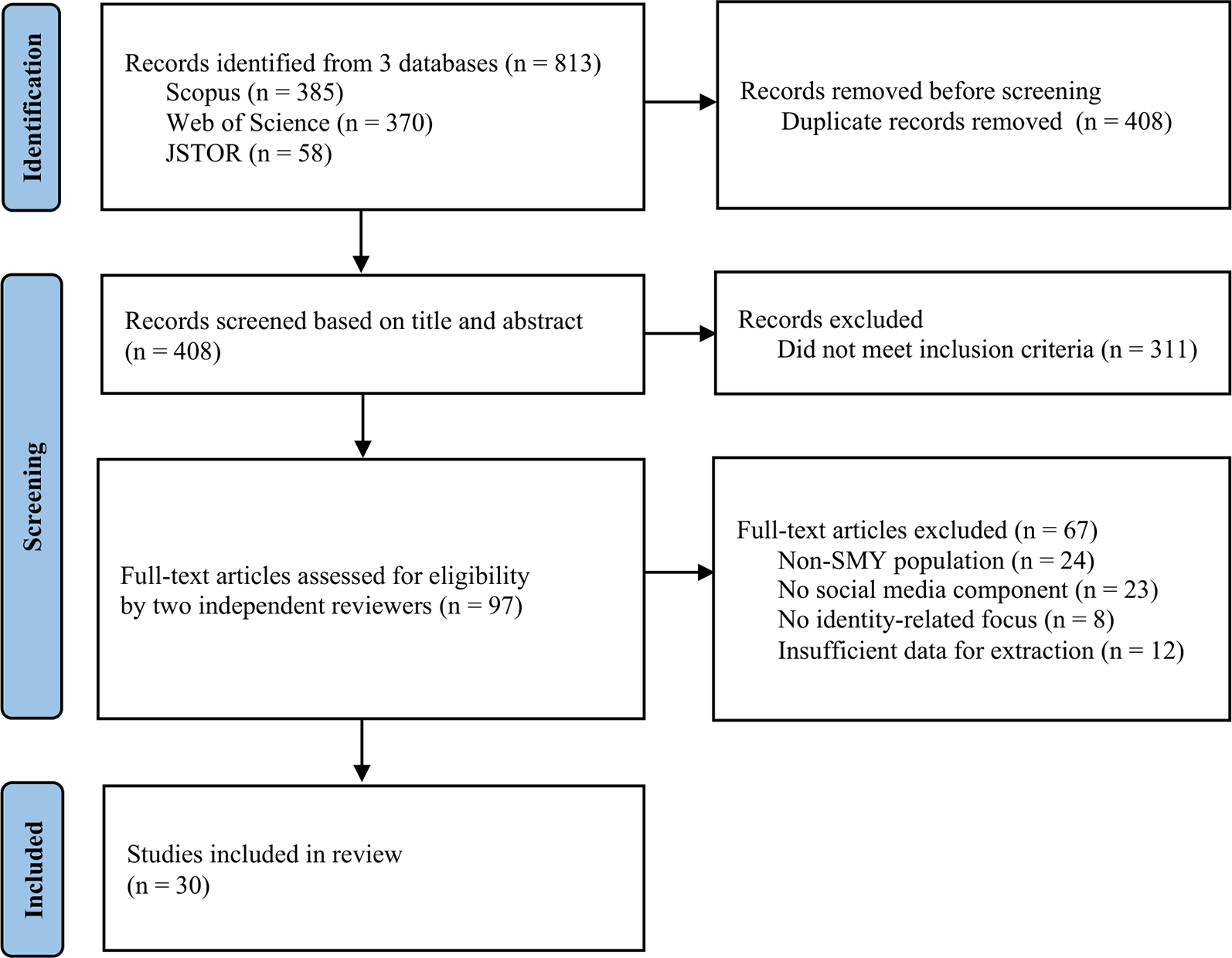
Records were identified through database searches of Scopus (n = 385), Web of Science (n = 370), and JSTOR (n = 58), yielding 813 records in total. Following deduplication, 408 unique records were screened at the title and abstract stage, of which 311 were excluded. The remaining 97 records were assessed for full-text eligibility, of which 67 were excluded (non-SMY population, n = 24; no social media component, n = 23; no identity-related focus, n = 8; insufficient data for extraction, n = 12). Thirty articles met all inclusion criteria and were included in the thematic synthesis. SMY = sexual minority youth.
A structured extraction form was piloted on 10 studies prior to full extraction. Two reviewers independently extracted seven categories of information: bibliographic identification, study characteristics, operationalization of identity exploration, theoretical framework, inhibiting factors, identity outcomes, and key findings. The complete data extraction sheet is available as Supporting Information 1 in the OSF Repository.
Quality was assessed using three Joanna Briggs Institute (JBI) instruments (Aromataris & Munn, 2020): the JBI Qualitative Research Checklist (Lockwood et al., 2020; 10 items) for 19 qualitative studies; the JBI Analytical Cross-Sectional Studies Checklist (Moola et al., 2020; 8 items) for eight quantitative studies; and the Mixed Methods Appraisal Tool (MMAT; Hong et al., 2018; 5 items) for three mixed-methods studies. Assessments were conducted independently and informed interpretive weighting rather than serving as a basis for exclusion. The full appraisal matrix is available as Supporting Information 2 in the OSF Repository.
Thematic synthesis (Thomas & Harden, 2008) was applied in three stages: inductive line-by-line coding, development of descriptive themes, and generation of analytical themes that move beyond individual study descriptions. The CPM-MST-Affordances framework was applied as a sensitizing framework after themes emerged from the data, not prior to coding. PRISMA 2020 items not applicable to non-meta-analytic thematic synthesis, including effect measures, heterogeneity assessment, sensitivity analyses, GRADE, and CERQual, were not applied; the thematic synthesis coding framework is available as Supporting Information 3 in the OSF Repository.
Thirty empirical articles met all inclusion criteria, published between 2016 and 2026. The majority were published between 2021 and 2025 (n = 27; 90.0%), reflecting the rapid growth of literature during and after the COVID-19 pandemic. The corpus comprised 19 qualitative studies (63.3%), eight quantitative studies (26.7%), and three mixed-methods studies (10.0%). The dominance of qualitative designs reflects the complexity of subjective identity exploration experiences that are more readily captured through narrative than statistical measurement.
Studies were conducted across 18 countries or regions. The United States contributed the largest share (n = 7; 23.3%), followed by Malaysia, the United Kingdom, and Ireland at n = 3 each (10.0%), and Australia and China at n = 2 each (6.7%). Thirteen studies (43.3%) originated from outside Western liberal democratic contexts, including Indonesia, Malaysia, India, Bangladesh, Ecuador, Mexico, Hungary, and Lebanon, reflecting meaningful geographic diversity, though representation from Sub-Saharan Africa, the broader Middle East, and Central and Eastern Europe remains limited.
The most frequently studied platforms were Facebook (n = 13; 43.3%), Instagram (n = 11; 36.7%), Twitter or X (n = 8; 26.7%), and Reddit (n = 6; 20.0%), with Grindr, TikTok, Tumblr, and WhatsApp each at n = 5 (16.7%). Sample sizes ranged from six participants (Jerome & Hadzmy, 2022) to 39,389 Reddit posts (Stevens et al., 2021). The list of included studies is presented in Table 1, with the complete version available in the OSF Repository as Supporting Information 1.
| No. | Author (Year) | Design | Country | N | Platform | Identity exploration concept | Key inhibiting factors (Exposure) | Theme(s) |
|---|---|---|---|---|---|---|---|---|
| 1 | Downes et al. (2026) | Mixed | Ireland | 2,806 | X, Facebook | Online engagement as identity exploration space | Anti-LGBTQI+ hate speech; internalized negative sentiments; identity concealment | T1, T2, T3, T4 |
| 2 | Chapagain et al. (2025) | Quant. | Global | 18,434 posts | LGBTQ+ minority stressors: identity concealment, expected rejection, internalized stigma | Identity concealment; expected rejection; internalized stigma; psychological distress | T2, T4 | |
| 3 | Riedl et al. (2025) | Qual. | Lebanon | 14 | Identity in tech-mediated communication contexts | Identity-based violence; platform features weaponized; emotional exhaustion; self-censorship | T1, T2, T3, T4 | |
| 4 | Yu et al. (2025) | Quant. | China | 657 | Grindr, Blued, TikTok | SNS use for self-relevant information and community engagement | Internalized homophobia; societal stigma; negative social experiences via SNS | T1, T2, T3 |
| 5 | Sulistiyani et al. (2025) | Qual. | Indonesia | 25 | Telegram, Grindr, Instagram | Dual-persona strategy (front/backstage) under institutional stigma | Fear of institutional stigma; moral surveillance; religious-cultural pressure; emotional fatigue | T1, T2, T3, T4 |
| 6 | Olmedo Neri (2025) | Qual. | Mexico | 15 | Facebook, Twitter, Instagram | Recalibrating hate speech impact; creating safe digital spaces | Hate speech; dehumanization; anonymity enabling perpetrators; internalized homophobia | T1, T2, T4 |
| 7 | Tan et al. (2025) | Quant. | Malaysia | 675 | Facebook, Twitter, Instagram | Public and private identity expression including coming out | Negative LGBT media messages; cisgenderism; heterosexism; anti-LGBT narratives | T1, T2, T3 |
| 8 | Steele et al. (2025) | Qual. | Australia | 11 | Grindr | Attitudes and behaviors related to identity via dating apps | Conformity pressure to gay norms; commodification; harassment; predatory behaviors | T1, T4 |
| 9 | Szabó (2025) | Qual. | Hungary | 16 | TikTok, YouTube, Instagram, Facebook, Twitter | LGBTQ+ identity negotiation under anti-gender political movements | Online harassment; homophobic comments; government oppression; visibility constraints | T1, T2, T3, T4 |
| 10 | Herrmann et al. (2024) | Quant. | Germany | 165 | Facebook, WhatsApp, Instagram, Reddit | Social media for identity exploration and community-finding (TGD youth) | Cyberbullying; adverse online interactions; hostile environment for TGD adolescents | T1, T2, T4 |
| 11 | Ringrose et al. (2024) | Mixed | UK | 551/65/29 | TikTok, Instagram, Snapchat | Online interactions shaping body image and identity exploration | Toxic content normalization; heteronormative body policing; algorithmic amplification | T1, T4 |
| 12 | Pinch et al. (2024a) | Qual. | USA | 215 | General SM, Grindr | Strategic self-presentation through associations and implicit disclosure | LGBTQ+ stigma; PrEP stigma; fear of judgment; context collapse; platform design | T1, T2, T4 |
| 13 | Wang & Zhou (2024) | Qual. | China | 76 vids+35 posts | Douyin, Zhihu | Platform influence on gay representation and identity visibility | Algorithmic invisibility; homonormative curation; cruel optimism | T3, T4 |
| 14 | Pinch et al. (2024b) | Qual. | India | 35 | Emotional, psychological, and social aspects of queer identity | Intersecting stigma (caste, class, religion); audience harassment; collectivist pressure | T1, T2, T3 | |
| 15 | Gillin & Signorella (2024) | Mixed | USA | 185 | Facebook, Reddit, Tumblr, Twitter | SOGI in online gaming environments | Identity-based insults and threats; identity invalidation; toxic gaming; anonymity | T1, T4 |
| 16 | Stegeman et al. (2024) | Qual. | Multi-country | 27 | TikTok, Instagram | Hyper (in)visibility: managing risks of online exposure as LGBTQ+ creators | Harassment; doxxing; outing; over-moderation; algorithmic penalization of LGBTQ+ content | T1, T2, T4 |
| 17 | Sheanoda et al. (2024) | Qual. | Australia | 19 | Facebook, Instagram | Sexuality, gender, and culturally diverse cyberbullying experiences | Cyberbullying; hate speech; CALD definitional confusion about harm | T1, T3, T4 |
| 18 | Jerome & Hadzmy (2022) | Qual. | Malaysia | 6 | Not specified | Coming out as disclosure and acceptance of sexual identity | Social, legal, and religious condemnation; forced closetedness | T1, T2, T3 |
| 19 | Magrath (2022) | Qual. | UK | 25 | Twitter, Facebook | Bisexual burden framework for identity among soccer fans | Anti-LGBT discrimination; online abuse; anonymity amplifying discrimination; bisexual erasure | T1, T4 |
| 20 | Talbot et al. (2022) | Qual. | UK | 16 | Facebook, Twitter, Tumblr | Social media for LGBTQ+ identity exploration and coming out | Hate speech; trolling; threats; context collapse; fear of outing by family/peers | T1, T2, T4 |
| 21 | Woznicki et al. (2021) | Quant. | USA | 183 | YouTube | Online media for identity development and community engagement | Discriminatory family environment; rejection; internalized homophobia; COVID-19 proximity | T1, T2 |
| 22 | Stevens et al. (2021) | Quant. | USA | 39,389 posts | Questioning sexuality as normal developmental aspect | Institutional stigma; cost barriers; parental consent requirements; school closures | T2, T3 | |
| 23 | Hermosa-Bosano et al. (2021) | Quant. | Ecuador | 303 | Grindr, Tinder, Facebook, Instagram | GSN apps for identity and relationship exploration | Discrimination based on appearance, skin color, gender expression, nationality | T1, T2, T3 |
| 24 | Charmaraman et al. (2021) | Quant. | USA | 1,033 | Meaning-making process of sexual identity | Smaller social networks; lack of support; loneliness; avoidance of parental audiences | T1, T2, T4 | |
| 25 | Littman (2021) [⚠] | Qual. | USA | 100 | Facebook, Tumblr, Twitter, Reddit | Gender dysphoria and identity changes through transition/detransition | Internalized homophobia; social influence; inadequate clinical evaluation; social contagion | T1, T2 |
| 26 | Hayfield & Křížová (2021) | Qual. | UK | 80 | Facebook, Twitter, Tumblr | Pansexual/panromantic identity articulation online | Pansexual identity erasure; mononormativity; monosexism; identity invalidation | T1, T2, T4 |
| 27 | Nova et al. (2021) | Qual. | Bangladesh | 61 | Facebook, Bigo Live, WhatsApp | Social media as primary identity exploration space for Hijra community | Lack of technical skills; Western-centric platform design; harassment; social exclusion | T1, T3, T4 |
| 28 | Tuah & Mazlan (2020) | Qual. | Malaysia | 10 | Self-disclosure as identity exploration; Twitter as safe space | Fear of societal backlash; denial of existence; government intolerance | T1, T2, T3 | |
| 29 | Hanckel et al. (2019) | Qual. | Multi-country | 23 | Facebook, YouTube, Instagram, Snapchat, Tumblr | Identity curation and exploration through affordance management | Context collapse; heteronormative environment; identity labor burden; unintended disclosure risk | T1, T2, T4 |
| 30 | Chester et al. (2016) | Qual. | USA | 12 | Stress of concealing or revealing sexual identity online | Homophobia; internalized homophobia; concerns about reactions; potential loss of friendships | T1, T2 |
The dominance of particular platforms in the corpus suggests that research on SMY identity exploration tends to concentrate on social media ecosystems characterized by high visibility, content persistence, and audience convergence, indicating that platform characteristics constitute an important context in digital identity exploration research.
Addressing the first subsidiary research question, analysis of the definition and theoretical framework columns in the extraction sheet revealed substantial variation in how included studies operationalize the construct of identity exploration. Of the 30 studies, 12 (40.0%) defined the construct explicitly, while 18 (60.0%) employed it implicitly as part of a broader process.
Five conceptualization patterns were identified: (1) exploration as a self-discovery process, the most common pattern (n = 14), encompassing the testing and evaluation of various aspects of sexual identity (Chester et al., 2016; Hanckel et al., 2019); (2) exploration as part of the coming out process (n = 8), in which disclosure to others is viewed as an integral component (Jerome & Hadzmy, 2022; Talbot et al., 2022); (3) exploration as identity labor, the active management of digital personas as a form of exploration (n = 6; Hanckel et al., 2019; Stegeman et al., 2024); (4) exploration through online communities as identity referents (n = 5; Charmaraman et al., 2021; Stevens et al., 2021); and (5) exploration as visibility and self-representation in public digital spaces (n = 5; Wang & Zhou, 2024; Szabó, 2025). The most frequently used theoretical frameworks among included studies were Minority Stress Theory (n = 9; 30.0%), followed by Affordances Theory (n = 5; 16.7%), and Goffman’s theory of self-presentation (n = 4; 13.3%).
The accumulation of these five conceptual patterns demonstrates that identity exploration in the reviewed literature is no longer understood as an isolated internal cognitive manifestation. Although self-discovery dominates theoretically, the majority of research positions self-disclosure, impression management, and digital participation as integral and intertwined elements. This affirms that identity articulation is constructed at the intersection of individual subjective experience and the relational structures of digital ecosystems. Consequently, this conceptual heterogeneity necessitates analytical engagement that critically interrogates the methodological quality of the studies forming the corpus.
Quality assessment using three JBI instruments yielded 23 studies (76.7%) rated as low risk of bias, six (20.0%) as moderate, and one (3.3%) as high. The single high-risk study was Littman (2021), which received a score of 4 out of 10 on the JBI Qualitative Checklist due to recruitment through online forums explicitly rejecting trans-affirmative narratives, insufficient independent verification of participants’ experiences, an inability to ensure adequate representativeness of participant voices, and use of the Rapid-Onset Gender Dysphoria (ROGD) framework, which has been widely critiqued in the scientific literature (Restar, 2020). Findings from Littman (2021) were retained with substantially reduced interpretive weight and were not used as the basis for any independent empirical claim. Six moderate-risk studies (Nos. 13, 18, 22, 23, 28, 30) generally exhibited weaknesses in researcher positionality transparency, data representation, or confound control, but their findings were retained with explicit notation where relevant. The quality appraisal matrix is presented in Table 2, with the complete version available in the OSF Repository as Supporting Information 2.
| No. | Author (Year) | Instrument | Score | Risk level | Primary bias concern |
|---|---|---|---|---|---|
| 1 | Downes et al. (2026) | Mixed (MMAT) | 5/5 | Low | Mixed-methods; large sample n = 2,806; adequate integration |
| 2 | Chapagain et al. (2025) | Quant. (JBI-8) | 8/8 | Low | Large dataset; NLP validated; multi-model comparison |
| 3 | Riedl et al. (2025) | Qual. (JBI-10) | 9/10 | Low | Small sample n = 14; reflexivity documented; researcher influence stated |
| 4 | Yu et al. (2025) | Quant. (JBI-8) | 8/8 | Low | SEM; validated instruments; n = 657 |
| 5 | Sulistiyani et al. (2025) | Qual. (JBI-10) | 10/10 | Low | Full reflexivity; data saturation achieved; ethics documented |
| 6 | Olmedo Neri (2025) | Qual. (JBI-10) | 8/10 | Low | Small n = 15; researcher positioning not stated explicitly |
| 7 | Tan et al. (2025) | Quant. (JBI-8) | 8/8 | Low | Mediation analysis; PHQ-9 standardized; n = 675 |
| 8 | Steele et al. (2025) | Qual. (JBI-10) | 8/10 | Low | Small n = 11; researcher positioning not stated |
| 9 | Szabó (2025) | Qual. (JBI-10) | 8/10 | Low | Small n = 16; researcher positioning not explicit |
| 10 | Herrmann et al. (2024) | Quant. (JBI-8) | 8/8 | Low | Clinical-community sample n = 165; validated instruments |
| 11 | Ringrose et al. (2024) | Mixed (MMAT) | 5/5 | Low | Multi-method; n = 551/65/29; adequate integration |
| 12 | Pinch et al. (2024a) | Qual. (JBI-10) | 9/10 | Low | Large qualitative n = 215; researcher influence not fully stated |
| 13 | Wang & Zhou (2024) | Qual. (JBI-10) | 7/10 | Moderate | Researcher positioning and ethics not clearly stated |
| 14 | Pinch et al. (2024b) | Qual. (JBI-10) | 10/10 | Low | Intersectionality documented; full reflexivity |
| 15 | Gillin & Signorella (2024) | Mixed (MMAT) | 5/5 | Low | Mixed-methods n = 185; adequate integration |
| 16 | Stegeman et al. (2024) | Qual. (JBI-10) | 9/10 | Low | Purposive multi-country; researcher influence not fully stated |
| 17 | Sheanoda et al. (2024) | Qual. (JBI-10) | 8/10 | Low | CALD youth n = 19; researcher positioning not explicit |
| 18 | Jerome & Hadzmy (2022) | Qual. (JBI-10) | 6/10 | Moderate | Very small n = 6; data representation and analysis unclear |
| 19 | Magrath (2022) | Qual. (JBI-10) | 8/10 | Low | n = 25; researcher positioning not stated explicitly |
| 20 | Talbot et al. (2022) | Qual. (JBI-10) | 8/10 | Low | Small n = 16; positioning and influence not explicit |
| 21 | Woznicki et al. (2021) | Quant. (JBI-8) | 7/8 | Low | n = 183; confounding not fully controlled |
| 22 | Stevens et al. (2021) | Quant. (JBI-8) | 6/8 | Moderate | NLP public data; confounders not addressed; exposure not directly measured |
| 23 | Hermosa-Bosano et al. (2021) | Quant. (JBI-8) | 6/8 | Moderate | Exploratory; n = 303; standard criteria not fully stated |
| 24 | Charmaraman et al. (2021) | Quant. (JBI-8) | 8/8 | Low | Cross-sectional n = 1,033; validated instruments |
| 25 | Littman (2021) [⚠] | Qual. (JBI-10) | 4/10 | High | Self-selecting sample from anti-trans forums; ROGD framework contested; identity verification inadequate |
| 26 | Hayfield & Křížová (2021) | Qual. (JBI-10) | 8/10 | Low | n = 80; researcher positioning not explicit |
| 27 | Nova et al. (2021) | Qual. (JBI-10) | 8/10 | Low | Non-Western context; n = 61; ethics not fully stated |
| 28 | Tuah & Mazlan (2020) | Qual. (JBI-10) | 6/10 | Moderate | Very small n = 10; analysis and researcher positioning unclear |
| 29 | Hanckel et al. (2019) | Qual. (JBI-10) | 8/10 | Low | Multi-site n = 23; positioning not fully stated |
| 30 | Chester et al. (2016) | Qual. (JBI-10) | 6/10 | Moderate | Very homogeneous n = 12; positioning and influence not stated |
The dominance of low-risk studies demonstrates that the conceptual patterns in this synthesis rest on an empirically solid, valid, and methodologically coherent evidence base, providing a robust foundation from which to examine the factors inhibiting identity exploration across diverse research contexts.
Thematic synthesis yielded four analytical themes describing the factors that inhibit SMY identity exploration on social media. Themes were developed inductively: descriptive codes emerged from line-by-line coding of findings in the extraction sheet, were grouped by conceptual similarity, and were interpreted using the CPM-MST-Affordances framework after themes had formed from the data, not before. The thematic coding is presented in Table 3, with the complete version available in the OSF Repository as Supporting Information 3.
| Analytical theme | Descriptive code | n | Level of analysis | Articles contributing |
|---|---|---|---|---|
| T1 - Interpersonal Stigma & Discrimination | Online hate speech | 16 | Interpersonal | Downes 2026; Olmedo Neri 2025; Sheanoda 2024; Herrmann 2024; Stegeman 2024; Magrath 2022; Talbot 2022; Gillin 2024; Steele 2025; Szabó 2025; Ringrose 2024; Pinch 2024b; Nova 2021; Hermosa-Bosano 2021; Hayfield 2021; Chester 2016 |
| T1 - Interpersonal Stigma & Discrimination | Family and peer rejection | 8 | Interpersonal | Woznicki 2021; Chester 2016; Talbot 2022; Pinch 2024a; Charmaraman 2021; Jerome 2022; Tuah 2020; Tan 2025 |
| T1 - Interpersonal Stigma & Discrimination | Identity erasure and invalidation | 6 | Interpersonal | Hayfield 2021; Magrath 2022; Nova 2021; Stegeman 2024; Olmedo Neri 2025; Herrmann 2024 |
| T1 - Interpersonal Stigma & Discrimination | Layered and appearance-based discrimination | 5 | Interpersonal | Pinch 2024b; Hermosa-Bosano 2021; Sulistiyani 2025; Stevens 2021; Charmaraman 2021 |
| T2 - Psychological Internal Barriers | Internalized homophobia and stigma | 14 | Individual | Yu 2025; Chester 2016; Woznicki 2021; Olmedo Neri 2025; Tan 2025; Steele 2025; Sulistiyani 2025; Downes 2026; Pinch 2024b; Riedl 2025; Tuah 2020; Jerome 2022; Hermosa-Bosano 2021; Littman 2021 |
| T2 - Psychological Internal Barriers | Expected rejection | 12 | Individual | Chapagain 2025; Yu 2025; Tan 2025; Woznicki 2021; Chester 2016; Tuah 2020; Jerome 2022; Pinch 2024a; Sulistiyani 2025; Downes 2026; Talbot 2022; Hanckel 2019 |
| T2 - Psychological Internal Barriers | Identity concealment as active strategy | 11 | Individual | Chapagain 2025; Downes 2026; Talbot 2022; Hanckel 2019; Pinch 2024a; Chester 2016; Charmaraman 2021; Sulistiyani 2025; Jerome 2022; Tuah 2020; Stegeman 2024 |
| T2 - Psychological Internal Barriers | Emotional exhaustion and identity labor burden | 8 | Individual | Riedl 2025; Sulistiyani 2025; Hanckel 2019; Stegeman 2024; Szabó 2025; Charmaraman 2021; Olmedo Neri 2025; Steele 2025 |
| T2 - Psychological Internal Barriers | Social isolation and absence of affirming network | 5 | Individual | Charmaraman 2021; Woznicki 2021; Sulistiyani 2025; Stevens 2021; Chapagain 2025 |
| T3 - Sociocultural & Legal Constraints | Legal, religious, and governmental condemnation | 7 | Individual + Interpersonal | Jerome 2022; Tuah 2020; Szabó 2025; Sulistiyani 2025; Riedl 2025; Tan 2025; Olmedo Neri 2025 |
| T3 - Sociocultural & Legal Constraints | Conservative sociocultural norms | 6 | Individual + Interpersonal | Jerome 2022; Tuah 2020; Sulistiyani 2025; Hermosa-Bosano 2021; Nova 2021; Pinch 2024b |
| T3 - Sociocultural & Legal Constraints | Institutional barriers | 4 | Interpersonal | Stevens 2021; Sulistiyani 2025; Nova 2021; Littman 2021 |
| T4 - Structural Platform Barriers | Context collapse and public-by-default design | 7 | Platform | Talbot 2022; Hanckel 2019; Pinch 2024a; Olmedo Neri 2025; Downes 2026; Charmaraman 2021; Stegeman 2024 |
| T4 - Structural Platform Barriers | Algorithmic invisibility and homonormative curation | 6 | Platform | Wang & Zhou 2024; Ringrose 2024; Stegeman 2024; Szabó 2025; Sulistiyani 2025; Herrmann 2024 |
| T4 - Structural Platform Barriers | Over-moderation and penalization of LGBTQ+ content | 4 | Platform | Stegeman 2024; Ringrose 2024; Wang & Zhou 2024; Olmedo Neri 2025 |
| T4 - Structural Platform Barriers | Western-centric design and digital literacy gaps | 4 | Platform | Nova 2021; Sheanoda 2024; Pinch 2024b; Sulistiyani 2025 |
| T4 - Structural Platform Barriers | Platform anonymity as enabler of hostility | 4 | Platform | Magrath 2022; Gillin 2024; Olmedo Neri 2025; Riedl 2025 |
4.4.1 Theme 1: Psychological internal barriers (n = 24; 80.0%)
Psychological internal barriers, consistent with proximal stressors in MST (Meyer, 2003) and the privacy rules construction mechanism in CPM (Petronio, 2002), were present in 80.0% of studies. Five subthemes were identified.
Internalized homophobia and stigma (n = 14) constituted the most consistently documented subtheme. Yu et al. (2025) demonstrated through structural equation modeling among 657 LGB individuals in China that social networking site use and self-esteem function as parallel mediators in the relationship between romantic relationship status and internalized homophobia, with gender and coming-out status as significant moderators. Chester et al. (2016) found that gay men with stronger internalized homophobia constructed highly restrictive privacy rules on Facebook. Woznicki et al. (2021) added that internalized homophobia compounded by discriminatory family environments and forced physical proximity during the COVID-19 pandemic significantly inhibited online identity exploration.
Expected rejection (n = 12) operates even before actual negative interactions occur. Chapagain et al. (2025), through NLP analysis of 18,434 Reddit posts, demonstrated that expected rejection is detectable as a linguistically distinct feature, computationally differentiable from other MST constructs such as identity concealment and internalized stigma. Tuah and Mazlan (2020) documented that LGBTQ youth in Malaysia strategically chose Twitter for its relative anonymity, illustrating that expected rejection concretely shapes platform preferences.
Identity concealment as an active strategy (n = 11) represents a behavioral response to psychological pressure. Hanckel et al. (2019) documented elaborate identity curation strategies, including maintaining multiple accounts with distinct personas and restricting LGBTQ+ content to more anonymous platforms. Charmaraman et al. (2021) found that sexual minority adolescents (n = 1,033) consistently avoided posting about sexual orientation on platforms whose audiences included parents.
Emotional exhaustion and identity labor burden (n = 8) are the cumulative consequences of sustained identity management. Riedl et al. (2025) documented among queer journalists and activists in Lebanon that platform-based violence via WhatsApp produced emotional exhaustion that drove self-censorship and withdrawal from public discourse. Sulistiyani et al. (2025) found among MSM in Palu, Indonesia, that persistent religious, cultural, and patriarchal pressures created chronic psychological tension, compelling individuals to adopt dual digital personas that prove psychologically draining.
Social isolation and loneliness (n = 5) compounds all other subthemes. Charmaraman et al. (2021) found that SMY maintained smaller social media networks and reported fewer positive social interactions compared to heterosexual peers. Stevens et al. (2021), through analysis of 39,389 r/LGBTeens posts, documented that anxiety and negative affect were the dominant themes expressed even on platforms that SMY had self-selected as spaces of refuge.
4.4.2 Theme 2: Interpersonal stigma and discrimination (n = 26; 86.7%)
This theme emerged most frequently (86.7%) and encompasses factors arising from social relations, consistent with distal stressors in MST and boundary turbulence in CPM. Four subthemes were identified.
Hate speech, harassment, and cyberbullying (n = 16) carried the highest frequency. Downes et al. (2026), the largest study in the corpus (n = 2,806), found that more than one in five LGBTQI+ individuals in Ireland experienced online hate speech in the past year, with documented impacts on mental health and sense of identity, particularly among younger individuals and those who are transgender or gender non-conforming. Herrmann et al. (2024) demonstrated quantitatively among 165 TGD adolescents in Germany that cyberbullying was significantly associated with internalizing problems that inhibit online identity expression.
Family and peer rejection (n = 8) constituted the most influential source of boundary turbulence within the CPM framework. Talbot et al. (2022) documented elaborate audience management strategies developed by LGBTQ+ students in the United Kingdom in response to the risk of being discovered by family on Facebook. Pinch et al. (2024a) found that GBQ adolescents developed highly sophisticated implicit and temporal disclosure strategies to navigate non-affirming audiences.
Identity erasure and invalidation (n = 6) was particularly salient for subgroups whose identities go unrecognized even within the broader LGBTQ+ community. Hayfield and Křížová (2021) documented among 80 pansexual and panromantic individuals that mononormativity and monosexism created a unique barrier in which individuals must actively negotiate the validity of their identities even in ostensibly affirming spaces.
Layered and appearance-based discrimination (n = 5) was most pronounced in Global South contexts. Pinch et al. (2024b) applied an intersectionality framework to show that for queer individuals in Mumbai, India, the convergence of sexual minority stigma with caste-, class-, and religion-based stigma exponentially amplified the perceived risk of online self-disclosure. Hermosa-Bosano et al. (2021) documented in Ecuador that discrimination based on appearance, skin color, and gender expression created layered barriers extending beyond sexual orientation discrimination alone.
4.4.3 Theme 3: Sociocultural and legal constraints (n = 20; 66.7%)
This theme encompasses factors operating at the macro-social level and was most prominent in studies from non-Western contexts. Three subthemes were identified.
Legal, religious, and governmental condemnation (n = 7) shapes an encompassing ecology of risk. Jerome and Hadzmy (2022) documented among young gay men in Malaysia that social, legal, and religious condemnation of homosexuality establishes background conditions that fundamentally constrain all identity expression. Riedl et al. (2025) showed that in the Lebanese context, platform-based violence via WhatsApp was compounded by infrastructural failures that permitted perpetrators to operate without consequence, a form of institutional negligence that consolidates state-level condemnation in digital form. Szabó (2025) documented how anti-gender government rhetoric in Hungary creates an atmosphere of social danger that substantially inhibits LGBTQ+ online identity expression.
Conservative sociocultural norms (n = 6) were most prominent in Southeast Asia and Latin America. Sulistiyani et al. (2025) documented among MSM in Palu, Indonesia, that Islamic religious pressure, patriarchal values, and community moral surveillance compelled individuals to adopt dual digital personas. Tan et al. (2025) found that 76% of 675 LGBT+ participants in Malaysia regularly saw negative LGBT-related messages on social media in the past year, with exposure positively associated with depression, non-suicidal self-injury (NSSI), and suicidal ideation, mediated through negative future expectations.
Institutional barriers (n = 4) operate through formal institutions. Stevens et al. (2021) documented that cost barriers and parental consent requirements for mental health services, compounded by school closures, dramatically narrowed LGBTQ+ youth access to formal support. Nova et al. (2021) documented among 61 Hijra individuals in Bangladesh that Facebook’s binary gender design assumptions created structural exclusion from digital communication infrastructure itself.
Collectively, these findings demonstrate that barriers to identity exploration operate not merely through internal psychological repression or overt acts of discrimination. The macrostructure comprising legal regulations, cultural norms, religious doctrine, and institutional apparatuses actively conditions the digital communication ecosystem to dictate the boundaries of what may be articulated, to whom identity may be displayed, and the risks that accompany every act of identity expression in digital spaces.
4.4.4 Theme 4: Structural platform and algorithmic barriers (n = 15; 50.0%)
This theme encompasses factors originating from platform architecture, technical design, algorithmic systems, and moderation mechanisms. Four subthemes were identified.
Context collapse and public-by-default design (n = 7) were the most frequently cited platform barriers. Hanckel et al. (2019) documented how LGBTIQ+ youth developed elaborate identity curation strategies in response to the risks of context collapse. Talbot et al. (2022) documented that Facebook’s public-by-default design, in which content is automatically visible to all contacts unless manually configured, compelled users to perform additional identity labor merely to achieve basic privacy. Within the CPM framework, this constitutes a source of structural boundary turbulence produced by platform architecture rather than individual violations.
Algorithmic invisibility and homonormative curation (n = 6) represent a systemic, invisible form of barrier. Wang and Zhou (2024) analyzed gay content on Douyin and HIV-related content on Zhihu, finding that algorithms systematically favored ideally-bodied, romantically normative gay content while rendering non-conforming content invisible. Drawing on the concept of cruel optimism, they argued that algorithmic visibility creates an illusion of inclusion that is systematically foreclosed by platform infrastructure. Ringrose et al. (2024) documented how TikTok, Instagram, and Snapchat algorithms amplify content that polices heteronormative embodiment.
Over-moderation and penalization of LGBTQ+ content (n = 4) reveals a fundamental platform policy paradox. Stegeman et al. (2024) documented among 27 LGBTQ+ creators that they developed strategic invisibility, deliberately limiting the visibility of their own content in response to over-moderation perceived to disproportionately target LGBTQ+ content. The paradox identified is this: the safety mechanisms designed to protect users simultaneously suppress the identity expression of those same users.
Western-centric design and digital literacy gaps (n = 4) were particularly salient in the Global South. Nova et al. (2021) documented that Facebook’s binary gender assumptions create structural exclusion for Hijra identities in Bangladesh. The reliance on Western cultural references in platform interface design, combined with technical skill barriers, creates an additional layer of structural exclusion for SMY whose identities were not anticipated in the design process.
These findings indicate that barriers to identity exploration do not merely originate from external social risks faced by individuals. They also stem from a deficit of user control over identity communication processes in digital platforms. Context collapse limits audience management, algorithmic curation affects identity visibility, content moderation constrains self-expression, while non-inclusive technological design limits the representational options available to users.
Four cross-thematic patterns were identified through cross-study comparison. First, geographic and legal context substantially moderated barrier intensity: studies from Western liberal democracies documented platform barriers and interpersonal discrimination as the most prominent factors, while studies from non-Western contexts documented an overlap between macro-level constraints and platform barriers that created a far more multidimensional ecology of risk. Second, transgender and gender-diverse adolescents faced the most severe barriers yet were the least represented; of the 30 studies, only four substantially centered transgender experiences (Herrmann et al., 2024; Ringrose et al., 2024; Stegeman et al., 2024; Littman, 2021). Third, the intersection of marginalized identities consistently amplified barriers; studies from India (Pinch et al., 2024b), Bangladesh (Nova et al., 2021), and Indonesia (Sulistiyani et al., 2025) documented how platforms designed in Western contexts create context-specific structural exclusions. Fourth, all four themes operate synergistically: internalized stigma (Theme 2) amplifies the perceived threat of interpersonal discrimination (Theme 1), which is exacerbated by macro-level norms (Theme 3) and facilitated by platform architecture (Theme 4), producing a compounding effect that renders identity exploration barriers substantially more difficult to address than if each factor operated independently.
Cross-thematic synthesis demonstrates that barriers to identity exploration operate through distinctive and intertwined mechanisms. Psychological barriers shape internal perceptions of disclosure risk, interpersonal barriers dictate expectations of audience response, sociocultural barriers set the limits of legitimate identity articulation, while platform barriers condition the visibility of identity in digital environments. These findings affirm that SMY identity construction does not unfold in a social vacuum but within a communication ecosystem simultaneously shaped by psychological pressures, social relations, cultural norms, and technological architecture. The mapping of all four analytical themes to the integrative theoretical framework is presented in Table 4.
| Analytical theme | n Studies (%) | Primary subthemes | CPM mechanism (Petronio, 2002) | MST and affordances mechanisms |
|---|---|---|---|---|
| T1 - Interpersonal Stigma and Discrimination | 26 (86.7%) | Hate speech/cyberbullying (n = 16); family/peer rejection (n = 8); identity erasure (n = 6); layered discrimination (n = 5) | Mass boundary turbulence: others violate privacy boundaries; privacy rules tighten; fear of future co-ownership increases | MST: distal stressors (discrimination, victimization, microaggression); Aff: platform anonymity amplifies hostility |
| T2 - Psychological Internal Barriers | 24 (80.0%) | Internalized stigma (n = 14); expected rejection (n = 12); identity concealment (n = 11); emotional exhaustion (n = 8); social isolation (n = 5) | Privacy rules formed through risk calculations distorted by internalized stigma; co-ownership perceived as unsafe | MST: proximal stressors (internalized stigma, expected rejection, concealment); Aff: imagined affordances more constraining than actual affordances |
| T3 - Sociocultural and Legal Constraints | 20 (66.7%) | Legal/religious/governmental condemnation (n = 7); conservative non-Western norms (n = 6); institutional barriers (n = 4) | Contextual privacy rules: legal and religious norms generate collective, coercive privacy rules; boundary management is not autonomous | MST: structural distal stressors (criminalization, institutional discrimination); Aff: affordances perceived differently across legal contexts |
| T4 - Structural Platform Barriers | 15 (50.0%) | Context collapse (n = 7); algorithmic invisibility (n = 6); LGBTQ+ over-moderation (n = 4); Western-centric design (n = 4); anonymity as enabler (n = 4) | Platform design produces involuntary context collapse as structural boundary turbulence; public-by-default yields disclosure without user consent | MST: novel digital structural distal stressors; Aff: tension between actual disaffordances and imagined affordances determines perceived platform safety |
This review yields three principal theoretical contributions. First, it proposes an integrative CPM-MST-Affordances framework that, for the first time, explicitly connects privacy communication mechanisms, minority psychological conditions, and platform architecture within a unified explanatory model. Second, it strengthens the argument that barriers to SMY identity exploration do not originate solely from individuals’ internal conditions but are actively produced by platform design and algorithms. Third, it challenges the universality of Western-based barrier models through the substantial Global South representation in the corpus. Each contribution is elaborated below.
The first contribution is the proposition of an integrative CPM-MST-Affordances framework. Within this framework, CPM is extended beyond its conventional application in interpersonal relationship contexts (Petronio & Reierson, 2009) to the context of minority stigmatization in digital spaces, where privacy rules are formed not by unconstrained personal preference but by risk calculations systematically distorted by the burden of minority stress. Conversely, MST is enriched by CPM through the addition of a concrete communicative mechanism: how proximal stressors are translated into specific, observable privacy and identity disclosure decisions. Affordances Theory emerges as the third layer supporting the preceding two, explaining why privacy decisions cannot be separated from the technical context of the platform in which they are made. Platform disaffordances operate synergistically with proximal stressors in MST: the context collapse produced by public-by-default design is not merely a technical barrier but directly exacerbates expected rejection as a proximal stressor. An SMY who already carries the burden of anticipated rejection will respond to the risk of context collapse by constructing increasingly restrictive privacy rules, producing a deep identity concealment. This circular mechanism is what makes the CPM-MST-Affordances framework more than a simple combination of three theories: it explains how barriers across three levels mutually reinforce one another into a cohesive system that resists single-point disruption.
This review demonstrates that mapping SMY identity exploration barriers yields a more complete understanding when read through the combination of three lenses: CPM, MST, and Affordances Theory. These lenses complement one another in explaining patterns that emerge from the corpus. CPM helps clarify how SMY privacy rules in digital spaces are formed not by free personal preference but by risk calculations systematically distorted by minority stress burdens. MST contributes understanding of the proximal stressors that SMY carry, while reading these findings through CPM reveals how those stressors are translated into specific, observable privacy decisions. Affordances Theory completes both lenses by explaining why SMY privacy decisions cannot be separated from the technical context of the platform in which they are made.
The second contribution strengthens the argument that barriers to digital identity exploration do not originate solely from psychological conditions or interpersonal dynamics but also from platform architecture that produces barriers through its own design and algorithmic logic. The concepts of cruel optimism (Wang & Zhou, 2024) and strategic invisibility (Stegeman et al., 2024) articulate this mechanism precisely: platforms create structural conditions in which inclusion is promised yet systematically foreclosed. Barriers are not only products of hostile users but of platform infrastructure itself.
The third contribution, the substantial Global South representation (43.3% of studies), reveals that barriers vary dramatically according to legal and cultural context. This challenges the universality of barrier models developed within Western liberal democratic settings and points to the need for frameworks sensitive to local juridical and cultural contexts in understanding SMY experiences on social media. These theoretical contributions carry implications not only for scholarly constructivism but also for how clinical practitioners understand and accompany SMY.
The emotional exhaustion and identity labor burden consistently documented across the corpus indicate that digital identity management constitutes intensive psychological work for SMY rather than an ordinary social activity. The concept of developmental collision (Frost & Meyer, 2023) underscores that exposure to identity stressors on social media occurs precisely at the developmental stage at which SMY are most vulnerable. Mental health practitioners working with SMY need to integrate social media assessment into their clinical frameworks: which platforms contribute most to burden, what identity labor strategies are deployed, and where boundary turbulence most frequently occurs. This integration will also foster contextual intelligence about platform risks rather than merely technical skills.
Restricting assessment to internal psychological dimensions alone would reproduce the same bias that has dominated prior literature. The findings of this review consistently demonstrate that SMY identity exploration barriers are layered. A clinician who assesses only a client’s internalized homophobia, without mapping family rejection dynamics on specific platforms (Theme 1), the community religious norms shaping disclosure risk (Theme 3), and the context collapse risks the client faces on the platforms they use daily (Theme 4), will arrive at an incomplete picture of that client’s psychological burden. These three layers of barriers operate simultaneously, not sequentially.
Within the CPM framework, boundary turbulence experienced by SMY does not always originate from internal conditions; it can originate from boundary violations structurally produced by platform design, which are subsequently internalized as psychological burden. Comprehensive clinical assessment needs to capture all these layers simultaneously.
These implications extend equally to educators and school counselors: SMY who most need space for identity exploration face digital environments that systematically obstruct that process. Educators who understand the mechanisms of algorithmic invisibility and over-moderation of affirming LGBTQ+ content can serve as bridges for SMY seeking communities and identity representations hidden by platform infrastructure. Stevens et al. (2021) documented that cost and parental consent barriers compound SMY isolation from formal support; educators may represent the first point of entry before access to mental health services becomes possible. Change at the practitioner and educator level is crucial but insufficient as long as the platform infrastructure producing these barriers remains unaddressed.
Theme 4 findings indicate that platform interventions cannot be limited to reactive content moderation. Context collapse and algorithmic invisibility are architectural barriers that require architectural responses: SMY-informed algorithmic audits to identify and correct heteronormative curation; privacy-by-default features that reduce context collapse; culturally contextualized moderation mechanisms that do not disproportionately target LGBTQ+ content; and meaningful engagement with non-Western SMY communities in the platform design process.
Theme 3 findings show that globally operating platforms bear different responsibilities in different legal contexts. The infrastructural negligence documented by Riedl et al. (2025) in Lebanon is a concrete illustration of how platform business decisions can compound existing forms of oppression. Platform policies that do not account for local legal contexts create disproportionate risks for the most vulnerable groups.
The most pressing policy implications arise from the synergistic interaction among all four themes rather than from each theme in isolation. When an SMY in a non-Western context such as Indonesia or Malaysia faces religious pressure that criminalizes their identity (Theme 3), carries a deep internalized stigma burden (Theme 2), enters a platform whose algorithms suppress their community’s visibility (Theme 4), and contends with the real boundary turbulence produced by the risk of being discovered by family (Theme 1), these four layers cannot be addressed by improving algorithms or content moderation alone. What is needed is a layered policy response that simultaneously targets psychological barriers through mental health support embedded in platforms, interpersonal barriers through mechanisms protecting against family rejection in digital spaces, macro-level barriers through cross-platform and governmental policy advocacy, and structural barriers through user-centered redesign that centers marginalized users.
Compared with prior reviews, this study advances understanding in substantive ways. Escobar-Viera et al. (2021) focused on engagement with digital health interventions for SGM; Pampati et al. (2021) synthesized the sexual health education literature; Gilbey et al. (2020) reviewed the effectiveness of digital interventions for LGBTIQ+ youth. None synthesized identity exploration barriers in social media as their primary focus. When Escobar-Viera et al. (2021) found that SMY engagement with digital health interventions increased when affirming content was available, the present review adds a critical dimension absent from their analysis: the availability of affirming content is itself structurally impeded by algorithmic invisibility and over-moderation of LGBTQ+ content (Theme 4). The intervention effectiveness measured by Escobar-Viera et al. may thus have been compromised before it could be measured by the structural barriers newly documented in this review. Similarly, when Gilbey et al. (2020) evaluated the effectiveness of digital interventions for LGBTIQ+ youth, that evaluation proceeded on the assumption that platforms are relatively neutral media. Theme 4 findings empirically challenge this assumption: platforms are not neutral media but actors that actively shape the accessibility conditions of interventions themselves.
Three of the most pressing gaps merit understanding in their conceptual dimensions. The underrepresentation of transgender youth in the corpus (only four of 30 studies) reflects not merely a data shortage but the fact that dominant identity exploration constructs in the literature have been operationalized around gay and lesbian developmental trajectories that do not accommodate transgender experiences, which resist reduction to the logic of a single coming-out trajectory. The dominance of qualitative designs (63.3%) reflects the immaturity of quantitative measurement tools for constructs such as boundary turbulence and context collapse in SMY contexts. The absence of research from Sub-Saharan Africa and the Middle East means that SMY experiences under the most severe criminalization have not yet entered this body of knowledge in any meaningful way.
The position of the CPM-MST-Affordances integrative framework within the broader theoretical landscape also warrants acknowledgment. Most studies in the corpus employed MST as their sole theoretical framework (n = 9; 30.0%) or Goffman’s theory of self-presentation (n = 4; 13.3%). MST excels at explaining why SMY carry certain psychological burdens but lacks a concrete communicative mechanism; Goffman explains self-presentation strategies but neither connects those internal conditions to the minority stress forming their backdrop nor to the platform architecture serving as their medium. The CPM-MST-Affordances combination fills all three layers simultaneously and indicates that the relationship between minority stress, privacy calculations, and platform disaffordances represents a direction worth pursuing empirically.
Closing the circle with the paradox opened in the background: the findings of this review confirm that the paradox is neither accidental nor a mere failure of implementation. It is structural. Social media platforms are designed according to a market logic that optimizes for mass engagement and visibility, a logic that inherently tends to reproduce majority norms, including heterosexual and cisgender norms. When SMY enter these platforms to seek community and understand their identities, they do not enter a neutral space; they enter infrastructure that actively produces conditions that obstruct their identity exploration. Platform companies’ responsibility to change these conditions is not merely ethical but flows from the recognition that technological architecture itself participates in the production of barriers.
First, restricting inclusion to English-language publications introduces selection bias favoring Anglophone contexts; literature in Indonesian, Arabic, or Mandarin was not captured, meaning SMY experiences from those linguistic communities may be underrepresented. Second, the dominance of qualitative designs (63.3%) limits the generalizability of findings and precludes quantitative meta-analytic synthesis, though this is an understandable consequence of a topic grounded in subjective experience. Third, the rapid evolution of platform ecology means that some findings from studies conducted between 2016 and 2020 may describe algorithmic conditions and moderation policies that have since changed substantially. Fourth, the underrepresentation of transgender and gender-diverse adolescents (only four of 30 studies) constitutes a serious limitation reflecting a conceptual gap in the literature rather than merely a data shortage. Fifth, the dominance of convenience sampling through already-active SMY communities means that the most isolated SMY are likely underrepresented, producing estimates of barrier intensity that are probably conservative with respect to the most vulnerable subgroup.
Sixth, the inclusion of Littman (2021) with substantially reduced interpretive weight remains a contestable decision given the substantial controversy surrounding the Rapid-Onset Gender Dysphoria (ROGD) framework (Restar, 2020); the decision was made to preserve the transparency of the pre-registered selection process. Seventh, the absence of a grey literature search excludes government reports, policy documents, and findings from practitioners working directly with SMY communities. Eighth, the non-application of formal certainty of evidence assessment using GRADE or CERQual constitutes a methodological limitation that precludes strong statements about the confidence level of findings, though the inapplicability of both frameworks to thematic synthesis across 18 countries with high contextual heterogeneity provides adequate justification.
The findings and limitations of this review collectively point toward five interrelated research priorities. Empirical testing of the CPM-MST-Affordances framework through longitudinal quantitative designs is the most pressing next step: the identified patterns indicate that as minority stress increases, privacy rules tend to become increasingly restrictive, and this effect may be amplified by platforms with greater disaffordances, yet this relationship has not been tested prospectively. Alongside this, research that centers transgender adolescents as a primary population rather than a subgroup within broader studies must become a priority, given the stark disparity between the severity of barriers they face and the minimal empirical attention they have received. At the intervention level, effectiveness trials of affirming digital literacy programs integrating platform affordance knowledge into psychological support for SMY are urgently needed. Geographically, research from Sub-Saharan Africa and the Middle East would fill the most significant gap in this body of knowledge, particularly for understanding how barriers operate under conditions of the most severe criminalization. Finally, the development of valid quantitative instruments for the constructs of boundary turbulence and context collapse within SMY contexts would make meta-analytic synthesis possible where it currently is not.
This review began with a paradox: the social media platforms that SMY most depend on to understand themselves are the same platforms that systematically produce conditions that obstruct that very process. Through thematic synthesis of 30 empirical studies from 18 countries, that paradox proved to be neither accidental nor a mere failure of implementation, but structural. The four identified themes, interpersonal stigma and discrimination, psychological internal barriers, sociocultural and legal constraints, and structural platform and algorithmic barriers, do not operate in isolation. They form a mutually reinforcing barrier system: internalized minority stress tightens privacy rules, platform disaffordances worsen expected rejection, and macro-level norms consolidate both within an ecology of risk that resists disruption from any single point of intervention.
The CPM-MST-Affordances combination used as an interpretive lens in this review helps illuminate how the three levels of barrier mechanisms are interconnected within a single coherent reading. This reading also indicates that the relationship between psychological conditions, communication decisions, and platform architecture represents a direction worth pursuing empirically in future research. Its implications extend across disciplinary boundaries: for clinical practitioners, platform designers, and policymakers alike, these findings offer a more comprehensive map of where and how intervention is most likely to produce meaningful change.
| Views | Downloads | |
|---|---|---|
| F1000Research | - | - |
|
PubMed Central
Data from PMC are received and updated monthly.
|
- | - |
Provide sufficient details of any financial or non-financial competing interests to enable users to assess whether your comments might lead a reasonable person to question your impartiality. Consider the following examples, but note that this is not an exhaustive list:
Sign up for content alerts and receive a weekly or monthly email with all newly published articles
Already registered? Sign in
The email address should be the one you originally registered with F1000.
You registered with F1000 via Google, so we cannot reset your password.
To sign in, please click here.
If you still need help with your Google account password, please click here.
You registered with F1000 via Facebook, so we cannot reset your password.
To sign in, please click here.
If you still need help with your Facebook account password, please click here.
If your email address is registered with us, we will email you instructions to reset your password.
If you think you should have received this email but it has not arrived, please check your spam filters and/or contact for further assistance.

Comments on this article Comments (0)