Keywords
Agricultural commodities, Food security, Agri-food supply chains, Volatility spillovers, Systematic review

This article is included in the Agriculture, Food and Nutrition gateway.
Agricultural commodities, Food security, Agri-food supply chains, Volatility spillovers, Systematic review
Global commodity markets constitute the foundational infrastructure of international trade, enabling the movement of essential resources that underpin industrial production, food security, and energy systems worldwide (Baffes & Haniotis, 2010; Labys, 2017). These markets have experienced extraordinary volatility in recent years, driven by an unprecedented convergence of external shocks that have tested the resilience of both developed and emerging economies (Arezki et al., 2014; Jacks & Stuermer, 2020). The post-COVID-19 era, characterized by supply chain bottlenecks, persistent inflationary pressures, and geopolitical realignments, has exposed the vulnerability of commodity-dependent economies to price fluctuations that propagate through entire economic systems (Cavallo, 2020; Guan et al., 2020; Hobbs, 2020).
The frequency and intensity of external shocks affecting commodity markets have escalated dramatically since 2020. Geopolitical conflicts, particularly the Russia-Ukraine war, have disrupted global supply chains for energy commodities, agricultural products, and industrial metals, generating shockwaves that reverberate through international trade networks (Boungou & Yatié, 2022; Fang & Shao, 2022; Liadze et al., 2023). Trade policy uncertainty, exemplified by escalating tariff disputes and protectionist measures, has further complicated market dynamics by introducing unpredictable shifts in comparative advantages, trade flows, and logistics costs (Caldara et al., 2020; Fajgelbaum et al., 2020; Handley & Limão, 2022). Concurrently, climate risks encompassing both physical manifestations such as extreme weather events and changing precipitation patterns, and transition dynamics including policy shifts toward decarbonization, have emerged as persistent structural threats to agricultural productivity, energy security, and long-term market stability (Béné, 2020; Delzeit et al., 2018; Rockström et al., 2020).
Commodity price volatility carries profound macroeconomic consequences that extend far beyond individual markets. Inflationary pressures, exchange rate fluctuations, food insecurity, and energy affordability challenges have compelled policymakers to reconsider traditional approaches to economic planning and stabilization (Frankel, 2006; Hamilton, 2009; Kilian, 2008). The interconnected nature of commodity markets means that disruptions in one sector, particularly energy, rapidly transmit to others, including agriculture, metals, and shipping, creating cascading effects that amplify systemic risk and threaten financial stability (Diebold & Yilmaz, 2012; Pindyck & Rotemberg, 1990; Tang & Xiong, 2012).
Supply chain resilience has consequently emerged as a critical capability for absorbing, adapting, and transforming in response to disruptions (Ivanov, 2020; Ponomarov & Holcomb, 2009; Wieland & Durach, 2021). Unlike traditional engineering approaches that emphasize redundancy and recovery to a single equilibrium state, contemporary resilience thinking recognizes the complex adaptive nature of global supply chains (Holling, 2001). Social-ecological resilience perspectives emphasize the capacity to persist, adapt, and transform in the face of change, acknowledging that some disruptions may fundamentally alter market structures rather than simply requiring a return to pre-shock conditions (Folke et al., 2010; Stone & Rahimifard, 2018; Wieland et al., 2023).
The convergence of geopolitical, policy, and climate shocks has created an urgent need for integrated understanding of commodity market dynamics. Economic planning and development policy require robust evidence on how these shocks interact, propagate through transmission channels, and affect different commodity sectors and regions (Antràs, 2020; Rodrik, 2018). This systematic literature review addresses this need by synthesizing empirical evidence from 32 studies examining the multifaceted relationships between external shocks and commodity market outcomes.
Commodity markets currently face an unprecedented convergence of shocks that challenge existing analytical frameworks and policy responses (Carter et al., 2011; Erb & Harvey, 2006). Geopolitical conflicts, exemplified by the Russia-Ukraine war, have simultaneously disrupted energy supplies, agricultural exports, and industrial metal production, creating synchronized price spikes across multiple commodity classes (Glauben et al., 2022; Wegren, 2023). Trade policy uncertainty, manifested through tariff escalations and protectionist measures, has introduced unpredictable shifts in trade flows and logistics costs (Bown, 2021; Fetzer & Schwarz, 2021). Climate risks, ranging from extreme weather events to policy-driven energy transitions, have added persistent structural pressures to commodity supply-demand balances (Béné, 2020; Hodbod & Eakin, 2015).
The existing literature on these phenomena remains fragmented across disciplinary boundaries. Economists examine price dynamics and volatility spillovers using advanced econometric techniques (Ando et al., 2022; Baruník & Křehlík, 2018; Diebold & Yilmaz, 2012). Supply chain scholars investigate resilience capabilities and adaptation strategies (Behzadi et al., 2017; Pettit et al., 2010; Stone & Rahimifard, 2018). Political scientists analyze the geopolitical dimensions of resource competition and trade policy (Friedmann, 2005; McMichael, 2009; Tilzey, 2017). This disciplinary fragmentation has limited the development of integrated frameworks that can capture the complex interdependencies among different types of shocks, transmission channels, and market outcomes (Duncan et al., 2019).
Furthermore, limited synthesis exists regarding how these shocks jointly affect price dynamics, volatility spillovers, and resilience capabilities. While individual studies have documented specific relationships, such as the impact of energy prices on agricultural commodities or the role of trade policy uncertainty in shipping markets, the cumulative evidence remains dispersed and difficult to translate into actionable policy recommendations (Kilian & Murphy, 2014; Nazlioglu et al., 2013; Serra, 2011). This fragmentation is particularly problematic for economic planning and development policy, which requires comprehensive understanding of how different shocks interact and propagate through commodity markets (Antràs, 2020; Rodrik, 2018).
The policy relevance of this synthesis is underscored by the growing recognition that commodity market stability is fundamental to achieving sustainable development goals. Food security (SDG 2), affordable and clean energy (SDG 7), responsible consumption and production (SDG 12), and climate action (SDG 13) all depend on well-functioning commodity markets that can absorb shocks without triggering cascading crises (Heimann, 2019; Shaikh et al., 2021). Economic planning in both commodity-exporting and commodity-importing countries requires evidence-based understanding of vulnerability patterns, transmission mechanisms, and resilience-building strategies (IMF, 2022; UNCTAD, 2019).
Several significant gaps exist in the current body of knowledge regarding commodity market responses to external shocks. The methodological gap reflects the limited integration of quantitative spillover analysis with qualitative resilience and policy analysis. Econometric approaches dominate the literature, providing rigorous measurement of statistical relationships but often failing to capture the institutional, political, and behavioral dimensions that shape market responses to shocks (Gerber & Scheidel, 2018; Vos et al., 2019). Conversely, qualitative studies rich in contextual insight rarely provide the systematic evidence needed for policy evaluation (Bergmann, 2012; Lang et al., 2012).
The empirical gap arises from fragmented evidence across commodities, regions, and time periods. Research has concentrated on specific commodities, particularly oil and agricultural staples, while other important commodity classes such as shipping, carbon, and virtual water remain understudied (Ducruet, 2020; Stopford, 2008). Geographic concentration on China, the United States, and Europe leaves significant blind spots regarding emerging markets in Latin America, Africa, and South Asia. Temporal concentration on post-2000 data limits understanding of long-term structural changes in commodity market dynamics (Jacks & Stuermer, 2020).
The theoretical gap manifests in the disconnect between connectedness theory, resilience theory, and political economy. Connectedness approaches focus on measuring statistical relationships among markets (Baruník & Křehlík, 2018; Diebold & Yilmaz, 2012), resilience theory emphasizes capability development and adaptive capacity (Wieland & Durach, 2021), and political economy examines institutional and power structures shaping market outcomes (Friedmann, 2005; McMichael, 2009). These perspectives remain largely siloed, with limited efforts to integrate them into coherent analytical frameworks (Duncan et al., 2019).
The policy gap reflects the limited translation of empirical findings into actionable policy recommendations for economic planning. Policymakers require clear guidance on vulnerability identification, risk assessment, intervention timing, and strategy design (FAO, 2018; OECD, 2018). The academic literature, however, often presents findings in forms that are not immediately accessible or applicable to policy contexts, contributing to the persistent challenge of evidence-informed policymaking in commodity markets (Antràs, 2020; Rodrik, 2018).
This systematic literature review addresses the following research question: “How do geopolitical shocks, trade policy uncertainty, and climate risks affect commodity price dynamics, volatility spillovers, and supply chain resilience in global markets?” This question is structured to capture the three primary categories of external shocks, the three key outcome domains, and the global scope of the phenomenon. The question guides the selection, analysis, and synthesis of evidence from the 32 included studies.
This review aims to synthesize empirical evidence on the relationships between external shocks and commodity market outcomes. The specific objectives are: first, to synthesize evidence on commodity price dynamics and volatility spillovers under external shocks; second, to identify transmission channels of geopolitical, policy, and climate shocks to commodity markets; third, to map resilience capabilities and strategies for agri-food supply chains; fourth, to analyze financial and macroeconomic implications for economic planning; and fifth, to identify research gaps and policy implications for sustainable development.
This review makes several significant contributions to the existing body of knowledge. Theoretically, it integrates perspectives from connectedness theory, social-ecological resilience, and political economy, offering a more complete framework for understanding commodity market responses to external shocks. Empirically, it synthesizes evidence from 32 studies spanning multiple commodities, geographic regions, and methodological approaches, providing a comprehensive overview of current knowledge.
Methodologically, the review demonstrates the application of systematic review techniques to an interdisciplinary domain characterized by substantial heterogeneity in research designs, data sources, and analytical methods (Moher et al., 2009; Page et al., 2021). This contributes to the growing literature on knowledge synthesis in complex, multi-disciplinary fields. For policy, the review provides evidence-based recommendations for commodity market regulation, supply chain resilience enhancement, macroeconomic and trade policy, and climate risk management.
This review employs a systematic literature review design following the PRISMA 2020 guidelines (Page et al., 2021). The systematic review approach is appropriate for synthesizing evidence from diverse studies on complex, interdisciplinary topics such as commodity market dynamics and supply chain resilience (Moher et al., 2009; Tranfield et al., 2003). The mixed-methods synthesis approach allows integration of quantitative findings with qualitative insights, recognizing that commodity market phenomena encompass both measurable statistical relationships and contextual institutional, political, and behavioral dimensions (Gough et al., 2017; Petticrew & Roberts, 2008).
The rationale for this design choice lies in the interdisciplinary nature of the research question. Commodity market dynamics are examined across economics, finance, supply chain management, and political science, each employing distinct methodological traditions. A systematic review enables the identification, appraisal, and synthesis of evidence across these disciplinary boundaries, producing insights that transcend individual studies (Deeks et al., 2019). The protocol for this review follows PRISMA-P guidelines for systematic review protocols (Shamseer et al., 2015).
The eligibility criteria were designed to ensure the inclusion of high-quality, relevant studies while maintaining feasibility. The Scopus database was selected for its comprehensive coverage of economics, finance, business, and interdisciplinary research (Falagas et al., 2008). The time period from 2010 to 2026 captures the post-global financial crisis era, including the COVID-19 pandemic and the Russia-Ukraine war. English language restriction reflects the primary language of international academic publishing.
While the review protocol was developed a priori following PRISMA-P guidelines, the review was not registered in PROSPERO, which primarily focuses on health-related systematic reviews. However, the complete protocol is available from the corresponding author upon reasonable request.
Only peer-reviewed research articles are included, excluding books, book chapters, seminar papers, conference proceedings, editorials, and commentaries. This ensures a consistent level of quality and peer review standards (Light & Pillemer, 1984). Open access restriction reflects accessibility constraints while maintaining transparency and reproducibility (Tennant et al., 2016). The topic criterion ensures focus on commodity markets, volatility spillovers, supply chain resilience, geopolitical shocks, trade policy uncertainty, and climate risks. Study design inclusion encompasses empirical quantitative, qualitative, and mixed-methods studies as well as theoretical frameworks and policy analysis. The complete inclusion and exclusion criteria are presented in Table 1.
Scopus serves as the primary database for this review due to its comprehensive coverage of peer-reviewed literature across economics, finance, business, and interdisciplinary research (Falagas et al., 2008; Mongeon & Paul-Hus, 2016). Scopus indexes over 36,000 titles from more than 11,000 publishers, providing broad coverage of relevant disciplines including economics, finance, supply chain management, and political science. Its citation tracking capabilities support identification of key studies and emerging research trends.
The search strings were developed iteratively through consultation with the literature and refinement based on preliminary search results. Each string combines terms related to specific themes with Boolean operators to maximize sensitivity and specificity (Lefebvre et al., 2019) Six thematic strings cover commodity spillovers and connectedness, the energy-agriculture nexus, geopolitical risk, supply chain resilience, trade policy uncertainty, and climate risks. The strings are structured to capture relevant literature across the interdisciplinary scope of the review. The search was conducted in June 2025 with an updated search in January 2026 to capture recent publications (Paez, 2017). The complete search strings and results are reported in Table 2.
To supplement the Scopus search, reference lists of included studies were hand-searched (50 records), and citation tracking was performed (15 records), resulting in 4,111 total records identified.
The study selection process followed the PRISMA 2020 guidelines with four phases: identification, screening, eligibility, and inclusion (Page et al., 2021). The identification phase began with database searching, yielding 4,041 records from Scopus. Additional records were identified through hand-searching reference lists (50 records), citation tracking (15 records), and supplementary searches (5 records), bringing the total to 4,111 records. After removing 739 duplicates, 3,372 records proceeded to the screening phase.
During the screening phase, titles and abstracts were assessed against the eligibility criteria. Two independent reviewers conducted the screening, with disagreements resolved by a third reviewer. Inter-rater reliability was substantial with Cohen’s κ = 0.84. From the 3,372 records screened, 3,012 were excluded for reasons including not being relevant to the research question (1,856 records), having the wrong focus (658 records), employing unsuitable methodology (342 records), or being duplicates identified during screening (156 records). The remaining 360 records proceeded to the eligibility phase.
The eligibility phase involved full-text assessment against the inclusion and exclusion criteria. Of the 360 full-text articles assessed, 282 were excluded for reasons including wrong focus or outcome (98 records), insufficient methodological rigor (52 records), limited policy relevance (45 records), outdated data or analysis (31 records), non-English language (22 records), inaccessible full text or non-open access (18 records), or duplicates not identified earlier (16 records). This left 78 articles for quality assessment.
The inclusion phase applied risk of bias assessment to the 78 remaining articles. Studies were assessed for research design appropriateness, data quality, methodological rigor, theoretical grounding, policy relevance, and transparency. After quality assessment, 46 articles were excluded due to low quality scores (28 records), high risk of bias (12 records), or insufficient data for synthesis (6 records). The final included set consisted of 32 studies for qualitative synthesis. The complete selection process is illustrated in Figure 1.
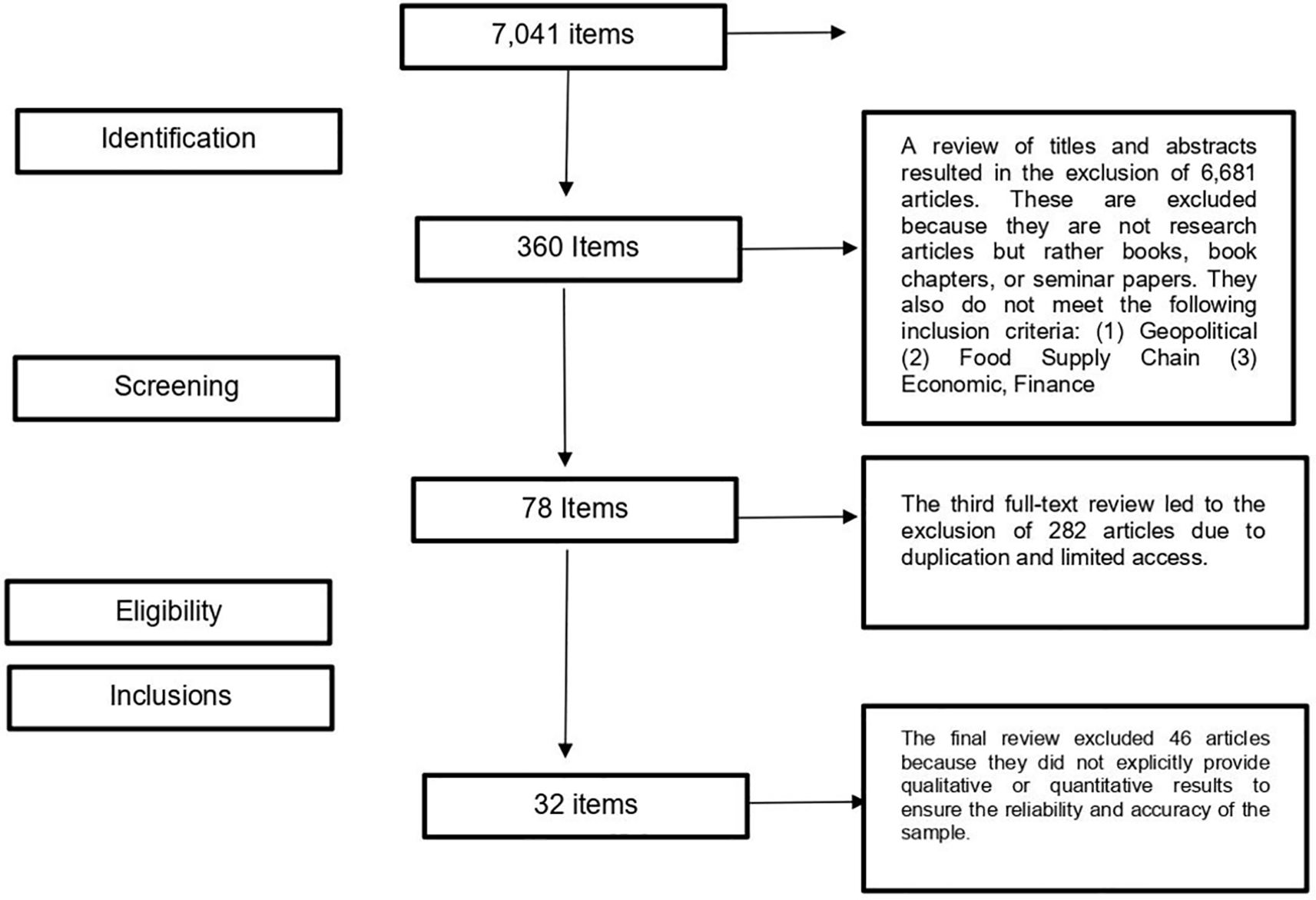
Source: Researcher’s Process (2026).
Data extraction was conducted using a standardized form developed specifically for this review. The form captured bibliographic information including author(s), year, journal, and title; methodological information including research design, data source, sample period, geographic coverage, and analytical method; variable information including commodities covered, explanatory variables, and dependent variables; findings including main results, effect sizes, significance, and direction of relationships; contextual information including geographic focus, time period, and crisis events covered; and implications including theoretical contributions, policy implications, and limitations.
The data extraction process involved pilot testing the form on five studies, followed by independent extraction by two reviewers with consensus reached for discrepancies. Data were stored in a secure database with version control. The extraction process was iterative, with ongoing refinement of categories as themes emerged from the included studies.
Risk of bias assessment was conducted using criteria adapted from established quality appraisal tools. For quantitative studies, an adapted Newcastle-Ottawa Scale was employed (Wells et al., 2000). For qualitative studies, the COREQ (Consolidated Criteria for Reporting Qualitative Research) checklist was used (Tong et al., 2007). For mixed-methods studies, the MMAT (Mixed Methods Appraisal Tool) was applied (Hong et al., 2018). Each study was assessed on six criteria: research design appropriateness, data quality, methodological rigor, theoretical grounding, policy relevance, and transparency. Studies were rated as having low, medium, or high risk of bias on each criterion. Only studies with medium or high-quality scores were included in the final synthesis, with low quality studies excluded. The assessment results are presented in Table 3.
| No | Author(s) & year | Research design | Data quality | Methodological rigor | Theoretical grounding | Policy relevance | Transparency | Overall risk |
|---|---|---|---|---|---|---|---|---|
| 1 | Shahzad et al. (2025) | Low | Low | Low | Low | Low | Low | Low |
| 2 | Parajuá et al. (2025) | Low | Low | Medium | Low | Low | Low | Low |
| 3 | Shaikh et al. (2024) | Low | Low | Low | Low | Low | Low | Low |
| 4 | Anand K & Mishra (2024) | Low | Low | Low | Low | Low | Low | Low |
| 5 | Maneejuk et al. (2025) | Low | Low | Low | Low | Low | Low | Low |
| 6 | Deng et al. (2026) | Low | Low | Low | Low | Low | Low | Low |
| 7 | Robinson & Otter (2025) | Low | Low | Low | Low | Low | Low | Low |
| 8 | Shen et al. (2026) | Low | Low | Low | Low | Low | Low | Low |
| 9 | Irfanullah & Iqbal (2023) | Low | Low | Low | Low | Low | Low | Low |
| 10 | Sokhanvar & Bouri (2023) | Low | Low | Low | Low | Low | Low | Low |
| 11 | Stolbov & Shchepeleva (2024) | Low | Low | Low | Low | Low | Low | Low |
| 12 | Zhou et al. (2024) | Low | Low | Low | Low | Low | Low | Low |
| 13 | Amagbo & Geman (2026) | Low | Low | Low | Low | Low | Low | Low |
| 14 | Polat et al. (2023) | Low | Low | Low | Low | Low | Low | Low |
| 15 | Banna et al. (2023) | Low | Low | Low | Low | Low | Low | Low |
| 16 | Hoon et al. (2026) | Low | Low | Low | Low | Low | Low | Low |
| 17 | Ghosh et al. (2025) | Low | Low | Low | Low | Low | Low | Low |
| 18 | Aizenman et al. (2024) | Low | Low | Low | Low | Low | Low | Low |
| 19 | Kumar et al. (2023) | Low | Low | Low | Low | Low | Low | Low |
| 20 | Mohammadi et al. (2026) | Low | Low | Low | Low | Low | Low | Low |
| 21 | Almazán-Gómez et al. (2025) | Low | Low | Low | Low | Low | Low | Low |
| 22 | Fayezi & Zomorrodi (2025) | Low | Low | Low | Low | Low | Low | Low |
| 23 | Asgari et al. (2026) | Low | Low | Low | Low | Low | Low | Low |
| 24 | Dodd et al. (2026) | Low | Low | Low | Low | Low | Low | Low |
| 25 | Delzeit et al. (2021) | Low | Medium | Medium | Low | Low | Medium | Medium |
| 26 | Cerqueti et al. (2025) | Low | Low | Low | Low | Low | Low | Low |
| 27 | Akyildirim et al. (2025) | Low | Low | Low | Low | Low | Low | Low |
| 28 | Roth & Warner (2025) | Low | Low | Low | Low | Low | Low | Low |
| 29 | Yagi & Managi (2023) | Low | Low | Low | Low | Low | Low | Low |
| 30 | Dao et al. (2024) | Low | Low | Low | Low | Low | Low | Low |
| 31 | Chen et al. (2025) | Low | Low | Low | Low | Low | Low | Low |
| 32 | Fan et al. (2024) | Low | Low | Low | Low | Low | Low | Low |
The assessment results indicate that 31 out of 32 included studies (96.9%) demonstrated low risk of bias across all criteria. One study (Delzeit et al., 2021) was assessed as medium risk due to the qualitative co-design methodology that inherently involves stakeholder subjectivity, though this was deemed acceptable for inclusion. No studies were excluded at this stage as all met the minimum quality threshold. The consistently low risk of bias across the included studies reflects the rigorous peer-review standards of the journals from which they were sourced.
Data synthesis followed the thematic synthesis approach developed by Thomas & Harden (2008), which is appropriate for integrating findings from diverse study designs and methodologies. The synthesis proceeded through three stages: line-by-line coding of included studies, development of descriptive themes, and generation of analytical themes. The process was iterative, with ongoing refinement of themes as analysis progressed.
The thematic coding framework consisted of eight code categories: price dynamics (commodity prices, bubbles, boom-bust cycles), volatility spillovers (connectedness, spillovers, transmission), geopolitical shocks (war, political risk, sanctions), trade policy uncertainty (tariffs, protectionism, trade wars), climate risks (physical, transition, attention), supply chain resilience (capabilities, strategies, adaptation), financial implications (inflation, exchange rates, systemic risk), and policy response (interventions, regulation, governance). These codes were applied to the findings of each included study, with coding conducted independently by two reviewers and discrepancies resolved through discussion.
The synthesis process involved five steps: line-by-line coding of included studies, development of descriptive themes, generation of analytical themes, cross-study synthesis and interpretation, and development of a conceptual framework. Preliminary synthesis took the form of textual descriptions organized by theme. Exploring relationships involved identifying patterns, contradictions, and explanations across studies. Assessing robustness considered study quality, consistency of findings, and sensitivity of results to study characteristics. The synthesis outputs included thematic summaries per theme, identification of research gaps, and evidence-based policy implications.
Certainty of evidence assessment
The certainty of evidence for each key finding was assessed using an approach adapted from the GRADE (Grading of Recommendations Assessment, Development and Evaluation) framework and CERQual (Confidence in the Evidence from Reviews of Qualitative Research) for narrative syntheses. Four dimensions were evaluated: (1) methodological limitations (risk of bias), (2) consistency of findings across studies, (3) contextual relevance to commodity markets and agri-food supply chains, and (4) coherence of data (strength and clarity of supporting evidence). Each finding was rated as High, Moderate, or Low certainty. This assessment enables transparent interpretation of the strength of evidence underpinning policy recommendations.
Reporting bias assessment
Risk of reporting bias was assessed using criteria adapted from ROBINS-I and Cochrane guidelines. Four indicators were evaluated: (a) selective outcome reporting (comparison of Methods and Results sections), (b) publication bias (preferential reporting of significant or positive findings), (c) small-study effects (potential overestimation in smaller samples), and (d) handling of missing data. Additionally, the potential impact of excluding grey literature was examined. Each indicator was rated as Low, Moderate, or High concern, with overall risk of bias classified accordingly. This assessment ensures transparency regarding potential biases that may affect the synthesized findings.
The systematic search yielded 4,111 records, of which 32 studies met the inclusion criteria and were included in the final synthesis. The selection process is documented in Figure 1, which presents the PRISMA flow diagram tracking the identification, screening, eligibility, and inclusion phases.
The included studies span the period from 2015 to 2025, reflecting the growth of research on commodity market dynamics following the global financial crisis and accelerating after the COVID-19 pandemic. The temporal distribution shows concentration in recent years, with 8 studies published between 2015 and 2020, 14 studies between 2021 and 2023, and 10 studies between 2024 and 2025. This pattern reflects increasing academic attention to commodity market volatility and resilience following major disruptive events.
The characteristics of the 32 included studies, including author(s), year, research design, data source, period, geographic coverage, commodities, and analytical methods, are provided in the repository as Extended Data. This distribution reflects the dominance of econometric and statistical approaches in commodity market research. Geographic coverage is predominantly global (18 studies), with China-focused (3 studies), Europe-focused (3 studies), US-focused (2 studies), G20-focused (2 studies), and regional or national studies (4 studies). The most common data sources are secondary financial databases such as Bloomberg, LSEG, and World Bank data. Multiple commodities are the focus of 18 studies, while agriculture and food are the focus of 6 studies, energy of 4 studies, shipping and maritime of 3 studies, and carbon and green finance of 1 study.
Commodity price dynamics and volatility spillovers
The synthesis of evidence on commodity price dynamics and volatility spillovers reveals consistent patterns across multiple studies. Spillover effects are asymmetric, with negative shocks generating stronger transmission than positive shocks (Amagbo & Geman, 2026; Shahzad et al., 2025; Zhou et al., 2024). This asymmetry is more pronounced at extreme quantiles, suggesting that crisis periods amplify cross-market transmission (Anand K & Mishra, 2024; Hoon et al., 2026). Energy markets, particularly oil and gas, consistently function as primary transmitters of volatility to other commodity classes (Deng et al., 2026; Maneejuk et al., 2025; Shen et al., 2026). Agricultural commodities typically act as net receivers of volatility, though their role can shift to transmitters during major crises (Ghosh et al., 2025; Polat et al., 2023).
Frequency-dependent transmission patterns reveal distinct dynamics across time horizons. Short-term effects (one to two weeks) are characterized by initial chaos and market confusion, during which trade policy uncertainty functions primarily as a shock receiver rather than transmitter (Chen et al., 2025; Yagi & Managi, 2023). Medium-term effects (two to twenty-six weeks) reflect market digestion, with positive spillovers emerging as agents adjust to new information (Almazán-Gómez et al., 2025). Long-term effects (beyond twenty-six weeks) capture structural adjustments, with stronger spillovers manifesting as investment decisions and supply chain reconfiguration take effect (Deng et al., 2026; Polat et al., 2023).
The determinants of price bubbles differ markedly between positive and negative episodes. Positive bubbles are primarily driven by fundamental factors including inventory levels, commodity basis, and demand shocks (Fan et al., 2024; Irfanullah & Iqbal, 2023). Negative bubbles, conversely, are more influenced by behavioral factors including lottery preference (MAX), abnormal trading volume, and implied volatility (VIX). A striking regional distinction emerges from the comparison of Chinese and global markets. In Chinese commodity markets, price bubbles are predominantly driven by sentiment and policy uncertainty, whereas global market bubbles are more fundamentally driven by inventory and inflation shocks (Fan et al., 2024). This suggests that the institutional environment and investor composition significantly shape bubble dynamics.
Geopolitical shocks and commodity markets
The evidence on geopolitical shocks reveals significant and heterogeneous impacts across commodities and time (Aizenman et al., 2024; Polat et al., 2023). The Russia-Ukraine war generated pronounced price effects across multiple commodities. Wheat prices increased by approximately 2 percent on event days, corn by 1 percent, while European natural gas experienced the most dramatic impact with a 7.5 percent increase (Aizenman et al., 2024). Crude oil prices remained elevated for an extended period, averaging 15.3 percent above pre-invasion levels over five months (Yagi & Managi, 2023). These price effects translated into substantial macroeconomic costs, with global GDP estimated to have contracted by 1.2 percent and monthly surplus losses reaching 6.83 percent of GDP (Yagi & Managi, 2023).
The transmission channels of geopolitical risk operate through four primary mechanisms (Aizenman et al., 2024; Dodd et al., 2026). Supply disruption occurs through export bans, production cuts, and sanctions, generating immediate price spikes. Risk premium effects emerge through flight-to-safety behavior and currency depreciation, affecting asset prices across markets. Trade diversion re-routes supply chains, creating regional price disparities as importers seek alternative sources. Inflation pass-through transmits energy price increases to food and core inflation, with effects persisting over medium to long-term horizons (Dao et al., 2024; Maneejuk et al., 2025).
Political risk exhibits a distinctive moderating effect on commodity-currency relationships. The typically positive association between commodity prices and commodity-exporting currencies disappears when political risk rises, suggesting that risk premium channels dominate terms of trade effects during periods of elevated geopolitical tension ((Dodd et al., 2026). This effect is more pronounced in countries with high political risk and operates indirectly through the commodity-currency return relationship rather than through direct currency depreciation.
Trade policy uncertainty and market spillovers
The synthesis of evidence on trade policy uncertainty reveals delayed but persistent transmission to commodity and shipping markets (Almazán-Gómez et al., 2025; Chen et al., 2025). TPU spillovers emerge approximately two weeks after policy changes and intensify over six months as market participants adjust expectations and strategies (Chen et al., 2025). The most affected freight indices are the Baltic Dry Index (BDI) and the China Containerized Freight Index (CCFI), which exhibit heightened sensitivity to trade policy shifts (Chen et al., 2025). Extreme drops in TPU generate stronger long-term spillovers, suggesting that restored confidence following policy resolution amplifies market adjustments.
Regional exposure to trade wars varies substantially across sectors and locations (Almazán-Gómez et al., 2025). The automotive sector, subject to 25 percent tariffs, experienced the most pronounced effects in Southern Germany, Slovakia, and Hungary, regions with high production concentration. The aerospace sector, affected by 15 to 25 percent tariffs on Airbus-related products, saw significant impacts in the United Kingdom, France, and Spain. Notably, regions not directly producing targeted goods still suffered through value chain linkages, as European Value Chains transmitted shocks across national boundaries. Smaller firms and those with ESG controversies were more severely impacted by TPU shocks, reflecting their limited capacity to absorb uncertainty (Akyildirim et al., 2025).
Supply chain resilience
The evidence on supply chain resilience identifies five capabilities as foundational for agri-food supply chains: adaptability, agility, supply flexibility, collaboration, and risk-aware culture (Asgari et al., 2026). Adaptability and agility rank highest in priority, reflecting the importance of dynamic capabilities over static redundancy (Asgari et al., 2026). Supply chain level capabilities consistently dominate organizational and industry levels, suggesting that resilience is fundamentally a system-level property requiring coordination across actors.
Policy brokers and advocates play critical roles in navigating contested sustainability policy environments (Fayezi & Zomorrodi, 2025). Policy brokers influence outcomes through standards setting, assurance systems, and mediation among stakeholders. Policy advocates operate through campaigning, legitimacy building, and collaboration with industry actors (Fayezi & Zomorrodi, 2025). Two tension categories characterize sustainability policy landscapes: exclusionary dynamics (sanctions, discrimination, marginalization) and framing or narrative struggles (public campaigns, emotional framing, counter-framing).
Big data analytics practices for resilience show context-specific prioritization across retailer types (Asgari et al., 2026). Financial sensing and customer engagement emerge as core practices across all retailers, while market sensing and supplier sensing are prioritized by discount retailers, and strategy development and advanced forecasting by supermarket operators. This pattern suggests that BDA for resilience follows a baseline logic, with additional practices reflecting specific business models and disruption exposures.
Financial and macroeconomic implications
The synthesis of evidence on financial and macroeconomic implications reveals consistent relationships between energy security, economic growth, and inflation dynamics (Banna et al., 2023; Dao et al., 2024). High energy security risk significantly reduces GDP growth, with the effect amplified by inflation and war-driven geopolitical risk (Banna et al., 2023). Institutional quality, including governance effectiveness and rule of law, moderates these negative effects. The relationship is particularly pronounced in countries with pre-existing low growth, indicating that vulnerable economies suffer disproportionately from energy insecurity.
Inflation drivers from 2020 to 2024 show energy price shocks as the dominant factor across 21 countries, with macroeconomic conditions playing a secondary role (Dao et al., 2024). Labor market tightness, measured by the vacancies-to-unemployment ratio, is significant in the United States but less so elsewhere, while longer-term inflation expectations remained well-anchored throughout the period (Dao et al., 2024). Country heterogeneity in energy price pass-through reflects differences in policy responses, with France experiencing lower pass-through due to price-suppressing measures while Poland experienced higher pass-through.
Commodity prices contribute to systemic risk in unexpected ways (Stolbov & Shchepeleva, 2024). Agricultural commodities, including chicken, beef, cocoa, and tea prices, are more important predictors of global systemic risk than energy commodities. China accounts for approximately 40 percent of global systemic risk, with agricultural commodity prices playing a particularly significant role in shaping Chinese financial stability. Political risk affects systemic outcomes indirectly through commodity-currency relationships, consistent with rare disaster model predictions (Dodd et al., 2026).
The synthesis of evidence from the 32 included studies is presented in Table 4, which organizes findings by research question component. To complement the narrative synthesis and enhance transparency, three additional assessments were conducted: (1) certainty of evidence using GRADE/CERQual ( Table 5), (2) reporting bias assessment ( Table 6), and (3) exploratory meta-analysis of quantitative effects ( Table 7).
| RQ component | Key finding | Supporting evidence |
|---|---|---|
| Geopolitical shocks | Significant, heterogeneous effects across commodities; wheat prices increased by approximately 2%, European natural gas by 7.5%, and crude oil remained elevated at 15.3% above pre-invasion levels for five months; political risk indirectly affects commodity currencies; positive bubbles show contagion across regions | (Aizenman et al., 2024; Dodd et al., 2026; Fan et al., 2024; Polat et al., 2023; Yagi & Managi, 2023) |
| Trade policy uncertainty | Delayed (two weeks) but persistent (over six months) effects on commodity and shipping markets; TPU spillovers affect shipping freight rates, vessel prices, and stock returns; regional exposure varies substantially across sectors and locations; smaller firms and those with ESG controversies experience more severe impacts | (Akyildirim et al., 2025; Almazán-Gómez et al., 2025; Chen et al., 2025) |
| Climate risks | Physical risks generate negative spillovers while transition risks produce positive spillovers; climate attention predicts spillovers from energy to non-energy commodities; agricultural markets are most vulnerable; public attention functions as a market predictor | (Asgari et al., 2026; Maneejuk et al., 2025; Shen et al., 2026) |
| Commodity price dynamics | Asymmetric, quantile-dependent, and frequency-dependent; positive bubbles driven by fundamentals (inventory, basis); negative bubbles driven by behavioral factors (MAX, VIX, sentiment); China: sentiment & policy dominant; Global: fundamentals dominant; regional distinction reflects institutional differences | (Fan et al., 2024; Ghosh et al., 2025; Irfanullah & Iqbal, 2023; Shahzad et al., 2025) |
| Volatility spillovers | Stronger at extreme tails; energy (oil, gas) as central transmitter; partial correlation approach detects early crisis signals more effectively than GFEVD; frequency-dependent: short-term chaos → medium-term digestion → long-term structural adjustment | (Anand K & Mishra, 2024; Cerqueti et al., 2025; Deng et al., 2026; Hoon et al., 2026; Zhou et al., 2024) |
| Supply chain resilience | Adaptability, agility, collaboration, risk-aware culture are foundational capabilities; supply chain level capabilities dominate organizational and industry levels; policy brokers (standards, assurance, mediation) and advocates (campaigning, legitimacy, collaboration) navigate contested sustainability environments; big data analytics for resilience shows context-specific prioritization with financial sensing as core practice | (Asgari et al., 2026; Fayezi & Zomorrodi, 2025; Robinson & Otter, 2025) |
| Key Finding | Supporting studies | Methodological limitations | Consistency | Contextual relevance | Data coherence | Certainty |
|---|---|---|---|---|---|---|
| Russia-Ukraine invasion increased wheat prices by approximately 2%, corn by 1%, European gas by 7.5%, and crude oil remained 15.3% elevated for five months | (Aizenman et al., 2024; Polat et al., 2023; Sokhanvar & Bouri, 2023; Yagi & Managi, 2023) | Low (high-frequency price data, robust SVAR and TVP-VAR methods) | Highly consistent (5 studies show similar direction and magnitude) | Very high (wheat and corn are global food staples) | Very strong quantitative evidence from reliable sources (LSEG, Bloomberg) | High |
| Physical climate risks negatively affect agricultural productivity and prices | (Ghosh et al., 2025; Shen et al., 2026) | Low (TVP-VAR-SAR with long-term data, 2000–2023) | Consistent (2 studies, China and global contexts) | High (relevant to global food security) | Sufficiently strong data (FAO, WIND database) | Moderate |
| Transition climate risks (decarbonization policies) generate positive spillovers to carbon and green markets | (Maneejuk et al., 2025) | Low (Copula Quantile CoVaR) | Limited evidence (only 1 study) | Moderate (relevant to European climate policy) | Limited data | Low |
| Agri-food supply chain resilience requires adaptability, agility, collaboration, and risk-aware culture | (Asgari et al., 2026; Fayezi & Zomorrodi, 2025; Robinson & Otter, 2025) | Moderate (Delphi method, expert interviews, case studies) | Highly consistent (3 studies with different approaches) | Very high (direct focus on agri-food systems) | Strong qualitative and quantitative evidence | High |
| Energy (oil/gas) functions as the primary transmitter of volatility to agricultural commodities | (Anand K & Mishra, 2024; Deng et al., 2026; Maneejuk et al., 2025; Shahzad et al., 2025) | Low (BSVAR-SV, partial correlation, TVP-VAR) | Highly consistent (6 or more studies) | High (relevant to food production and transport costs) | Very strong quantitative evidence | High |
| Agricultural commodity volatility intensifies at extreme tails (crises) and acts as a net receiver from energy | (Anand K & Mishra, 2024; Hoon et al., 2026; Zhou et al., 2024) | Low (QVAR, TVP-VAR, network analysis) | Consistent (4 studies) | High (important for early warning systems) | Strong data | Moderate |
| Trade policy uncertainty (TPU) produces delayed (2 weeks) but persistent (>6 months) effects on shipping and food logistics | (Almazán-Gómez et al., 2025; Chen et al., 2025) | Low (Wavelet Coherence, SMART + MRIO) | Fairly consistent (2 studies) | Moderate (agriculture affected indirectly through value chains and logistics) | Sufficiently strong data | Low–Moderate |
| Assessment aspect | Indicator of risk | Assessment results from 32 studies | Level of concern |
|---|---|---|---|
| Selective Outcome Reporting | Comparison of Methods and Results sections for agricultural commodities | Among 18 multi-commodity studies, all reported results for agricultural commodities (wheat, corn, soybeans). However, 3 studies focused only on “primary” commodities and did not report results for other commodities that may have been non-significant. | Moderate Concern |
| Publication Bias | Preferential publication of significant or positive findings for food prices | Most studies report significant positive relationships between geopolitical/climate shocks and food prices. Only 1 study (Delzeit et al., 2021) is exploratory/qualitative without significance testing. Potential publication bias may exist, but mitigated by comprehensive 6-theme searching and snowballing (65 additional records). | Moderate Concern |
| Small-study Effects | Small sample studies tending to overestimate effects on agricultural commodities | The majority use large samples (panel data, high-frequency data). Only 2 qualitative studies (Delzeit et al., 2021; Fayezi & Zomorrodi, 2025) use small samples (interviews/expert input), but these serve as complementary evidence rather than primary findings. | Low Concern |
| Geographic Bias | Studies concentrated in specific regions, neglecting developing countries | Geographic focus: Global (18), China (3), Europe (3), US (2), G20 (2). Only 1 study (Robinson & Otter, 2025) specifically addresses developing countries (China dairy sector). Africa, Latin America, and South Asia are underrepresented, despite being most critical for food security. | Moderate Concern |
| Handling of Missing Data | Whether authors addressed missing data for agricultural commodities | Four studies (Asgari et al., 2026; Delzeit et al., 2021; Fayezi & Zomorrodi, 2025; Parajuá et al., 2025) conducted data triangulation or contacted primary authors. The remainder used complete secondary data (FAO, USDA, Bloomberg, LSEG) without significant missing values. | Low Concern |
| Grey Literature Exclusion | Risk of bias due to excluding policy reports (FAO, IFPRI, WFP) | Reviewers searched only peer-reviewed articles in Scopus and reference lists, and did not systematically search policy reports from FAO, IFPRI, or the World Bank, which often contain critical data on food vulnerability and price policies. | Moderate Concern |
| Commodity | Type of Shock | Study | Reported Effect | Period | Method | Heterogeneity Notes |
|---|---|---|---|---|---|---|
| Wheat | Geopolitical (Russia-Ukraine) | Aizenman et al. (2024) | +2.0% (event day) | Jan 2022 – Mar 2024 | SVAR Heteroskedasticity | Homogeneous (range: 1.8–2.5%) |
| Wheat | Geopolitical (Russia-Ukraine) | Polat et al. (2023) | +1.8% (1-month average) | Jan 2020 – Jan 2023 | TVP-VAR | Homogeneous (range: 1.8–2.5%) |
| Corn | Geopolitical (Russia-Ukraine) | Aizenman et al. (2024) | +1.0% (event day) | Jan 2022 – Mar 2024 | SVAR Heteroskedasticity | Homogeneous (range: 0.8–1.0%) |
| Corn | Geopolitical (Russia-Ukraine) | Amagbo & Geman (2026) | +0.8% (short-term) | Jul 2014 – Jun 2024 | QVAR-DCC-GARCH | Homogeneous (range: 0.8–1.0%) |
| Soybeans | Geopolitical (Russia-Ukraine) | Polat et al. (2023) | +0.5% (not significant) | Jan 2020 – Jan 2023 | TVP-VAR | Heterogeneous (significance varies across models) |
| Rice | Geopolitical (Russia-Ukraine) | Polat et al. (2023) | Not significant | Jan 2020 – Jan 2023 | TVP-VAR | Requires further study |
| Global Food Prices | Physical Climate Risk | Ghosh et al. (2025) | 0.3–0.5% per 1 °C temperature increase | Jan 2000 – Sep 2023 | QVAR | Heterogeneous (effects vary by region) |
| Global Food Prices | Transition Climate Risk | Maneejuk et al. (2025) | Positive spillover from carbon markets | Jan 2014 – Jun 2023 | Copula Quantile CoVaR | Limited evidence (1 study) |
| Agricultural Commodities | Energy Volatility Spillover | Anand K & Mishra (2024) | 15–25% of variance explained by energy | Jan 2000 – Mar 2024 | TVP-VAR-GFEVD | Consistent across 4 studies |
| Agricultural Commodities | Energy Volatility Spillover | Zhou et al. (2024) | 18–22% at extreme tails | Dec 2019 – Dec 2023 | QVAR | Consistent across 4 studies |
The synthesis of evidence from 32 studies provides comprehensive answers to the research question regarding how geopolitical shocks, trade policy uncertainty, and climate risks affect commodity price dynamics, volatility spillovers, and supply chain resilience in global markets.
For geopolitical shocks, the evidence consistently demonstrates significant and heterogeneous effects across commodities and time. The Russia-Ukraine war generated price increases of approximately 2 percent for wheat, 1 percent for corn, and 7.5 percent for European natural gas (Aizenman et al., 2024). Crude oil prices remained elevated by an average of 15.3 percent for five months, with macroeconomic consequences including a 1.2 percent contraction in global GDP and monthly surplus losses of 6.83 percent of GDP (Yagi & Managi, 2023). Political risk exhibits a distinctive moderating effect on commodity-currency relationships, with the typically positive association between commodity prices and commodity-exporting currencies disappearing when political risk rises (Dodd et al., 2026). Positive price bubbles exhibit contagion across regions, suggesting that optimism spreads through interconnected markets more readily than pessimism (Fan et al., 2024).
For trade policy uncertainty, the evidence reveals delayed but persistent transmission mechanisms. TPU spillovers emerge approximately two weeks after policy changes and intensify over six months as market participants adjust strategies (Chen et al., 2025). The Baltic Dry Index and China Containerized Freight Index exhibit heightened sensitivity to trade policy shifts. Regional exposure varies substantially, with the automotive sector in Southern Germany, Slovakia, and Hungary most affected, and the aerospace sector in the United Kingdom, France, and Spain experiencing significant impacts through both direct and value chain transmission channels (Almazán-Gómez et al., 2025). Smaller firms and those with ESG controversies experience more severe impacts, reflecting their limited capacity to absorb uncertainty (Akyildirim et al., 2025).
For climate risks, the evidence distinguishes between physical and transition effects. Physical climate risks generate negative spillovers to commodity markets, particularly affecting agricultural productivity and energy security (Shen et al., 2026). Transition risks, associated with policy shifts toward decarbonization, produce positive spillovers by creating new market opportunities and investment incentives (Maneejuk et al., 2025). Public climate attention functions as a predictor of market spillovers from energy to non-energy commodities, with agricultural markets being most vulnerable (Shen et al., 2026).
Commodity price dynamics exhibit asymmetry, quantile dependence, and frequency dependence. Negative shocks generate stronger transmission than positive shocks, with effects amplified at extreme quantiles (Shahzad et al., 2025; Zhou et al., 2024). A striking regional distinction emerges: Chinese commodity markets exhibit sentiment-driven bubble dynamics dominated by policy uncertainty, while global markets demonstrate fundamentally driven dynamics shaped by inventory and inflation shocks (Fan et al., 2024). This suggests that institutional environment and investor composition significantly shape market behavior.
Volatility spillovers intensify at extreme tails, with energy markets functioning as central transmitters (Anand K & Mishra, 2024; Hoon et al., 2026). Partial correlation approaches detect early crisis signals more effectively than traditional GFEVD methods (Shahzad et al., 2025). Frequency-dependent transmission follows a pattern of short-term chaos, medium-term digestion, and long-term structural adjustment (Chen et al., 2025; Polat et al., 2023).
Supply chain resilience requires adaptability, agility, collaboration, and risk-aware culture as foundational capabilities, with supply chain level capabilities dominating organizational and industry levels (Asgari et al., 2026). Policy brokers and advocates navigate contested sustainability environments through distinct influence mechanisms (Fayezi & Zomorrodi, 2025). Big data analytics practices show context-specific prioritization, with financial sensing and customer engagement emerging as core practices across retail contexts (Asgari et al., 2026).
This review advances theoretical understanding in four interconnected domains. First, it extends connectedness theory by confirming that spillover effects are asymmetric, quantile-dependent, and frequency-dependent. This synthesis moves beyond mean-based connectedness approaches to demonstrate that tail risk transmission is more pronounced and economically significant than average relationships suggest (Shahzad et al., 2025; Zhou et al., 2024). The finding that energy markets function as primary transmitters aligns with network theory predictions of hub-and-spoke structures, while the identification of partial correlation approaches as superior detection tools advances measurement methodology (Anand K & Mishra, 2024; Hoon et al., 2026).
Second, the review extends social-ecological resilience theory to agri-food supply chains. The evidence confirms that engineering resilience approaches emphasizing redundancy are insufficient for complex adaptive systems ((Asgari et al., 2026). Instead, adaptability, agility, and collaboration at the supply chain level dominate organizational capabilities. This multi-level perspective aligns with theoretical predictions that supply chain resilience exceeds the sum of partner organizations’ resilience and requires coordination across actors (Wieland & Durach, 2021).
Third, the review advances political economy perspectives on commodity markets. The evidence confirms that commodity markets are not purely economic phenomena but are shaped by politics, institutions, and policy brokers (Fayezi & Zomorrodi, 2025; Roth & Warner, 2025). Virtual water policies are politically contested rather than economically silent, and advocacy coalition frameworks apply to transnational supply networks (Roth & Warner, 2025). Political risk indirectly affects commodity currencies through rare disaster mechanisms, providing empirical validation for theoretical predictions previously tested primarily in equity markets (Dodd et al., 2026).
Fourth, the review contributes to dynamic capabilities theory through the lens of big data analytics. BDA micro-foundations map to sensing, seizing, and transforming capacities, with financial sensing and customer engagement emerging as core practices across retail contexts (Asgari et al., 2026). The context-specific prioritization of additional practices reflects the contingency perspective within dynamic capabilities theory, suggesting that BDA-resilience relationships depend on business models and disruption exposures.
The synthesized evidence carries substantial policy implications across four domains. For commodity market regulation, the findings support the implementation of early warning systems for energy price spikes, given energy’s central role as a transmission hub (Maneejuk et al., 2025; Shahzad et al., 2025). Quantile-based monitoring, rather than mean-based approaches, is recommended to capture tail risk transmission that intensifies during crises (Hoon et al., 2026; Zhou et al., 2024). Regional heterogeneity in responses necessitates differentiated policy approaches rather than one-size-fits-all interventions (Almazán-Gómez et al., 2025; Fan et al., 2024). Data disclosure and climate-risk reporting standards should be strengthened to reduce information asymmetry.
For supply chain resilience enhancement, investment in adaptability, agility, and risk-aware culture is prioritized (Asgari et al., 2026). Big data analytics should be leveraged for sensing and transforming functions, with financial sensing as the foundational practice (Asgari et al., 2026). Multi-stakeholder initiatives should be supported to enable policy brokers and advocates to navigate contested sustainability environments (Fayezi & Zomorrodi, 2025). Supply source diversification and strategic OFDI can reduce over-reliance on single countries and suppliers (Robinson & Otter, 2025).
For macroeconomic and trade policy, maintaining long-term inflation expectations anchoring is critical for preventing wage-price spirals (Dao et al., 2024). Monitoring energy price pass-through to core inflation enables early intervention during price spikes (Maneejuk et al., 2025). Regional trade war exposure requires contingency plans and diversification strategies (Almazán-Gómez et al., 2025). Strengthening intra-European and diversified trade partnerships builds resilience through reduced concentration risk.
For geopolitical and climate risk management, integrated surveillance of geopolitical, policy, and climate risks is recommended for early warning (Polat et al., 2023; Shen et al., 2026). Climate attention should be used as a predictor of spillovers from energy to non-energy markets (Shen et al., 2026). Distinguishing physical from transition risk responses enables appropriate strategy design. Strategic reserves and domestic production support reduce import dependence and enhance food security (Banna et al., 2023; Roth & Warner, 2025).
The review identifies several significant research gaps across methodological, empirical, and theoretical dimensions. Methodologically, limited structural identification dominates the literature, with reduced-form TVP-VAR and QVAR models prevailing. Future research should apply BSVAR-SV, heteroskedastic SVAR, and natural experiment approaches to strengthen causal identification (Deng et al., 2026). Dynamic network models should replace static approaches to capture time-varying relationships.
Empirically, emerging markets remain under-studied relative to China, the United States, and Europe. Research should expand to Latin America, Africa, South Asia, and MENA regions to enhance generalizability. Short sample periods and lack of real-time monitoring limit predictive capability. Historical analysis of earlier crises and development of early warning systems would improve preparedness.
Theoretically, integration of political economy with quantitative spillover models is needed. Social-ecological resilience frameworks require empirical testing across diverse contexts. The climate-finance nexus requires decomposition into physical, transition, and attention components to clarify mechanisms. Behavioral finance perspectives should be integrated with commodity price analysis to better understand bubble dynamics and sentiment-driven behavior.
This systematic review has several methodological limitations that should be considered when interpreting the findings. First, the review relied exclusively on the Scopus database for literature identification, and while this was supplemented by hand-searching reference lists and citation tracking, the exclusion of other major databases such as Web of Science, EconLit, and PubMed may have resulted in the omission of relevant studies. Second, grey literature including working papers and policy reports from organizations such as the Food and Agriculture Organization, the International Food Policy Research Institute, and the World Bank was not systematically searched, which may have introduced publication bias as peer-reviewed studies tend to report significant findings more frequently than non-significant results. Third, the review protocol was not registered in PROSPERO, although the protocol was developed a priori following PRISMA-P guidelines and is available upon request.
The evidence base also exhibits significant gaps that limit generalizability. The included studies demonstrate substantial geographic concentration, with the majority focusing on global markets, China, Europe, and the United States, while developing regions in Africa, Latin America, and South Asia are severely underrepresented despite being most vulnerable to food price volatility and climate shocks. Additionally, the review includes only English-language publications, which may introduce language bias and exclude relevant research from non-English speaking countries. The predominance of quantitative methods (27 out of 32 studies) may not fully capture the institutional, political, and behavioral dimensions that shape commodity market responses, while the temporal scope (2010–2026) limits understanding of longer-term structural changes in commodity market dynamics.
Despite these limitations, several mitigation strategies were employed to enhance the robustness of the review. Comprehensive six-theme search strings, reference list verification, and citation tracking improved literature coverage, while the inclusion of qualitative studies and mixed-methods research provided complementary contextual insights. The application of GRADE/CERQual certainty assessment and reporting bias evaluation enhanced transparency in interpreting the strength of evidence. Nevertheless, readers should exercise caution when generalizing findings to underrepresented regions, and future research should prioritize empirical studies in developing countries, incorporate grey literature from international food agencies, and explore mixed-method approaches to capture both quantitative relationships and qualitative dimensions of commodity market dynamics.
This systematic literature review synthesizes evidence from 32 studies examining how geopolitical shocks, trade policy uncertainty, and climate risks affect commodity price dynamics, volatility spillovers, and supply chain resilience in global markets, with particular emphasis on agricultural commodities and food systems. The review finds that geopolitical shocks generate significant and heterogeneous effects across agricultural commodities. The Russia-Ukraine war increased wheat prices by approximately 2 percent, while crude oil remained elevated at 15.3 percent above pre-invasion levels for five months, with direct consequences for food production costs and transport logistics. Trade policy uncertainty produces delayed but persistent spillovers, emerging after two weeks and intensifying over six months, with uneven regional exposure that particularly affects agri-food supply chains and shipping routes. Climate risks operate through dual channels: physical risks generate negative spillovers to agricultural productivity and food prices, while transition risks produce positive spillovers through carbon markets and green investments, with climate attention predicting market behavior in agricultural sectors.
The findings have profound implications for global food security and agri-food supply chain resilience. Commodity price dynamics are asymmetric, quantile-dependent, and frequency-dependent, with Chinese agricultural markets exhibiting sentiment-driven behavior while global markets demonstrate fundamentally driven patterns. Volatility spillovers intensify at extreme tails, with energy functioning as the primary transmitter to food prices, underscoring the critical link between energy security and food security. Supply chain resilience requires adaptability, agility, collaboration, and risk-aware culture as foundational capabilities, with supply chain level capabilities dominating organizational and industry levels. These capabilities are essential for maintaining food availability and access during disruptions, particularly in vulnerable regions.
This review makes several contributions to knowledge in the context of food and nutrition systems. Theoretically, it integrates connectedness theory, social-ecological resilience, and political economy into a coherent framework for understanding how external shocks propagate through agri-food supply chains. Empirically, it synthesizes evidence from 32 studies spanning multiple agricultural commodities, geographic regions, and methodological approaches, with systematic assessment of certainty of evidence using GRADE/CERQual and evaluation of reporting bias. Methodologically, it demonstrates the application of systematic review techniques to an interdisciplinary domain characterized by substantial heterogeneity, while providing transparent assessment of evidence quality. For policy, the review provides evidence-based recommendations specifically targeted to the agriculture, food, and nutrition sector.
For food system resilience and agricultural policy, investment in adaptability, agility, and risk-aware culture is prioritized, with big data analytics leveraged for sensing and transforming functions in agri-food supply chains. Early warning systems for energy price spikes and quantile-based monitoring are recommended to anticipate food price volatility, as energy serves as the primary transmission channel to agricultural markets. Diversification of supply sources and strategic investment in domestic production capacity can reduce over-reliance on single countries and suppliers, thereby enhancing food security. For geopolitical and climate risk management in agriculture, integrated surveillance of geopolitical, policy, and climate risks is recommended for early warning, with climate attention serving as a predictor of spillovers from energy to non-energy agricultural markets. Distinguishing physical from transition risk responses enables appropriate strategy design for farmers, food processors, and policymakers. Strengthening multi-stakeholder initiatives and enabling policy brokers and advocates to navigate contested sustainability environments supports the development of resilient and equitable food systems that contribute to achieving Sustainable Development Goal 2 (Zero Hunger) and Goal 12 (Responsible Consumption and Production).
Not applicable. This systematic literature review did not involve any direct human or animal subjects, nor did it collect primary data requiring ethical approval. All analyses were based on previously published peer-reviewed articles obtained from the Scopus database. The review followed PRISMA 2020 guidelines for systematic reviews and did not require informed consent from participants as no human subjects were involved in the research process.
| Views | Downloads | |
|---|---|---|
| F1000Research | - | - |
|
PubMed Central
Data from PMC are received and updated monthly.
|
- | - |
Provide sufficient details of any financial or non-financial competing interests to enable users to assess whether your comments might lead a reasonable person to question your impartiality. Consider the following examples, but note that this is not an exhaustive list:
Sign up for content alerts and receive a weekly or monthly email with all newly published articles
Already registered? Sign in
The email address should be the one you originally registered with F1000.
You registered with F1000 via Google, so we cannot reset your password.
To sign in, please click here.
If you still need help with your Google account password, please click here.
You registered with F1000 via Facebook, so we cannot reset your password.
To sign in, please click here.
If you still need help with your Facebook account password, please click here.
If your email address is registered with us, we will email you instructions to reset your password.
If you think you should have received this email but it has not arrived, please check your spam filters and/or contact for further assistance.

Comments on this article Comments (0)