Keywords
sepsis, emergency medicine, critical care, observational study, mixed-methods research, sub-Saharan Africa, Ghana, low-resource settings

sepsis, emergency medicine, critical care, observational study, mixed-methods research, sub-Saharan Africa, Ghana, low-resource settings
Sepsis, a life-threatening organ dysfunction caused by a dysregulated host response to infection, accounts for approximately 11 million deaths annually worldwide.1 While advances in intensive care have reduced mortality rates in high-income countries, low-resource settings continue to bear a disproportionate burden. In sub-Saharan Africa, case fatality rates reach 47.2%, though the true burden is likely underreported due to limited diagnostic capacity and inconsistent case definitions.2 This disparity is compounded by multiple factors, including pathogen diversity, antimicrobial resistance, and persistent resource constraints.3
Evidence-based sepsis management protocols such as the Sepsis Six bundle ( Table 1) and guidelines from the Surviving Sepsis Campaign emphasise early recognition, timely antimicrobial therapy, fluid resuscitation, and organ support.4,5 While these protocols have improved outcomes in well-resourced settings, studies from sub-Saharan Africa have demonstrated increased mortality associated with aggressive fluid resuscitation protocols implemented without adaptation to local resource limitations and monitoring capacity.6,7 This highlights the need for context-specific evidence to guide sepsis management in resource-limited settings.
In Ghana, sepsis care is further complicated by limited critical care infrastructure, fragmented referral systems, and major financial barriers to treatment. ICU capacity is severely constrained, with a median of five staffed ICU beds and four ventilators across the thirteen operational ICUs, and ten of the sixteen regions have no ICU beds.8 Emergency medicine and pre-hospital systems are developing, contributing to delayed referrals and the “no-bed syndrome,” where critically ill patients face multiple interfacility transfers before receiving definitive care.9,10 ICU care is also largely financed through out-of-pocket payments, creating substantial barriers to timely access.11 Despite this high burden, there are limited empirical data describing how patients with suspected or confirmed sepsis are managed in the early stages of care in Ghana. Existing studies have focused largely on maternal or neonatal sepsis,12,13,14 leaving a critical knowledge gap regarding adult sepsis management in emergency and critical care settings.
The Ghana Early Management of Sepsis (GEMS) Project seeks to address this gap by systematically characterising sepsis severity, early intervention strategies, and resource-related constraints in two Ghanaian emergency departments (EDs) and two ICUs. Using a mixed-methods approach, the study integrates quantitative clinical data with qualitative exploration of clinician decision-making under resource constraints. By documenting current practices and identifying barriers to optimal care, this study will generate foundational evidence to support development of context-adapted national sepsis guidelines and inform sepsis care improvement efforts in similar resource-limited settings globally. This study also aligns with Sustainable Development Goal 3.8 (https://www.un.org/sustainabledevelopment/health/), which seeks to ensure universal health coverage and access to essential health services.
This study aims to investigate early sepsis care practices and resource availability, and their associations with patient outcomes in emergency and critical care settings in Ghana. Specific objectives are to: (1) describe the clinical characteristics and severity distribution of adult patients with suspected or confirmed sepsis presenting to participating emergency departments and intensive care units, and estimate the proportion of screened admissions who meet sepsis criteria, with risk stratification using qSOFA scores15; (2) characterise management strategies by documenting the timing and delivery of Sepsis Six bundle components within the first six hours following sepsis suspicion; and (3) identify resource-related constraints in early sepsis management and evaluate associations between resource availability, early interventions, and patient outcomes across participating sites.
This is a mixed-methods, multicentre observational cohort study. The quantitative component will involve abstraction of clinical data from patient medical records, while the qualitative component will consist of semi-structured interviews with clinicians. The qualitative component will employ thematic analyses of semi-structured interview responses, using both deductive and inductive coding, to explore clinician experiences and resource-related barriers to care. Patients and the public were not involved in the design, conduct, or reporting of this study.
The study will be conducted in four units at two major referral hospitals in Accra, Ghana: the Accident and Emergency Centre and Ground Floor Surgical ICU at the Korle Bu Teaching Hospital (KBTH) and the Emergency Department and General ICU at the University of Ghana Medical Centre (UGMC). Both hospitals serve diverse urban and peri-urban populations and offer advanced diagnostic and laboratory services, but differ significantly in operational workflows, documentation systems, and care delivery models. KBTH uses hybrid paper-based and electronic documentation systems, and patients or relatives facilitate aspects of service delivery, including transporting laboratory samples and obtaining prescribed medications, whereas UGMC operates a centralised care model with fully integrated electronic medical records and internal reimbursement. These differences, which are outlined in Table 2, provide an opportunity to examine how systemic factors influence the timeliness and consistency of early sepsis management. Data collection commenced in January 2026 at one site and is ongoing, and analysis is expected to be completed by September 2026.
| Unit | Unit type | Capacity | Diagnostic capability | Workflow | Critical care capability | Referral role |
|---|---|---|---|---|---|---|
| KBTH - Hybrid paper and electronic records * | ||||||
| A&E | Tertiary ED | High-volume national referral | On-site laboratory, CT, Ultrasound | Patient-mediated sample transport; decentralised medication procurement | Advanced emergency stabilisation and critical care | National referral centre |
| GF-SICU | Surgical ICU/HDU | 4 ICU beds +4 HDU beds | On-site laboratory, CT, Ultrasound | Patients/relatives transport samples; decentralised medication procurement | MV; multiorgan monitoring support | Post-operative and critically ill referrals |
| UGMC - Fully integrated EMR | ||||||
| ED | Quaternary ED | Advanced emergency care unit; 2-bed critical care bay | On-site laboratory, MRI, CT, Ultrasound | Centralised medication dispensing and sample transport; internal reimbursement system | Advanced emergency stabilisation and critical care; MV | National referral centre |
| GICU | General ICU | 16 ICU beds | On-site laboratory, MRI, CT, Ultrasound | Centralised medication dispensing and sample transport; internal reimbursement system | MV; multiorgan monitoring support | Quaternary referral centre |
The study population will comprise two groups. The quantitative arm will recruit adult patients with a clinical diagnosis or suspicion of sepsis presenting to ED or admitted to the ICU from inpatient or outpatient status. Inclusion criteria are age 18 years or older; clinical suspicion or diagnosis of sepsis at presentation or within 72 hours of ED presentation or ICU admission; and availability of medical records documenting interventions and assessments within the first six hours of sepsis suspicion. Patients under 18 years of age, those diagnosed with sepsis more than 72 hours after admission, routine post-operative admissions without signs of infection or organ dysfunction, and readmissions during the study period will be excluded.
Sepsis will be identified based on clinical judgment supported by documented signs of infection and organ dysfunction, consistent with Sepsis-3 definitions.16 As complete SOFA calculation is frequently infeasible because of incomplete laboratory documentation, qSOFA ( Table 3) will be used for retrospective risk stratification because it relies on routinely documented bedside clinical parameters (respiratory rate, Glasgow Coma Scale score, and systolic blood pressure) and is more feasible for retrospective assessment in these settings.16 For sedated patients, neurologic assessment will use the validated SOFA-NeuroRASS conversion.17
| Criterion | Score |
|---|---|
| Respiratory rate ≥ 22/min | 1 |
| Altered mental status (GCS <15) | 1 |
| SBP ≤100 mmHg | 1 |
The qualitative component will purposively recruit emergency physicians and intensivists directly involved in sepsis care, and nurse managers in charge of resource management at participating units who consent to participate in recorded interviews. Eligible participants will be approached face-to-face by a team member who will conduct the interview. Healthcare personnel without direct involvement in sepsis care or with fewer than 12 months of experience at the site, or with supervisory or evaluative roles over a research team member at the site will be excluded. Figure 1 describes the expected workflow of the study at commencement.
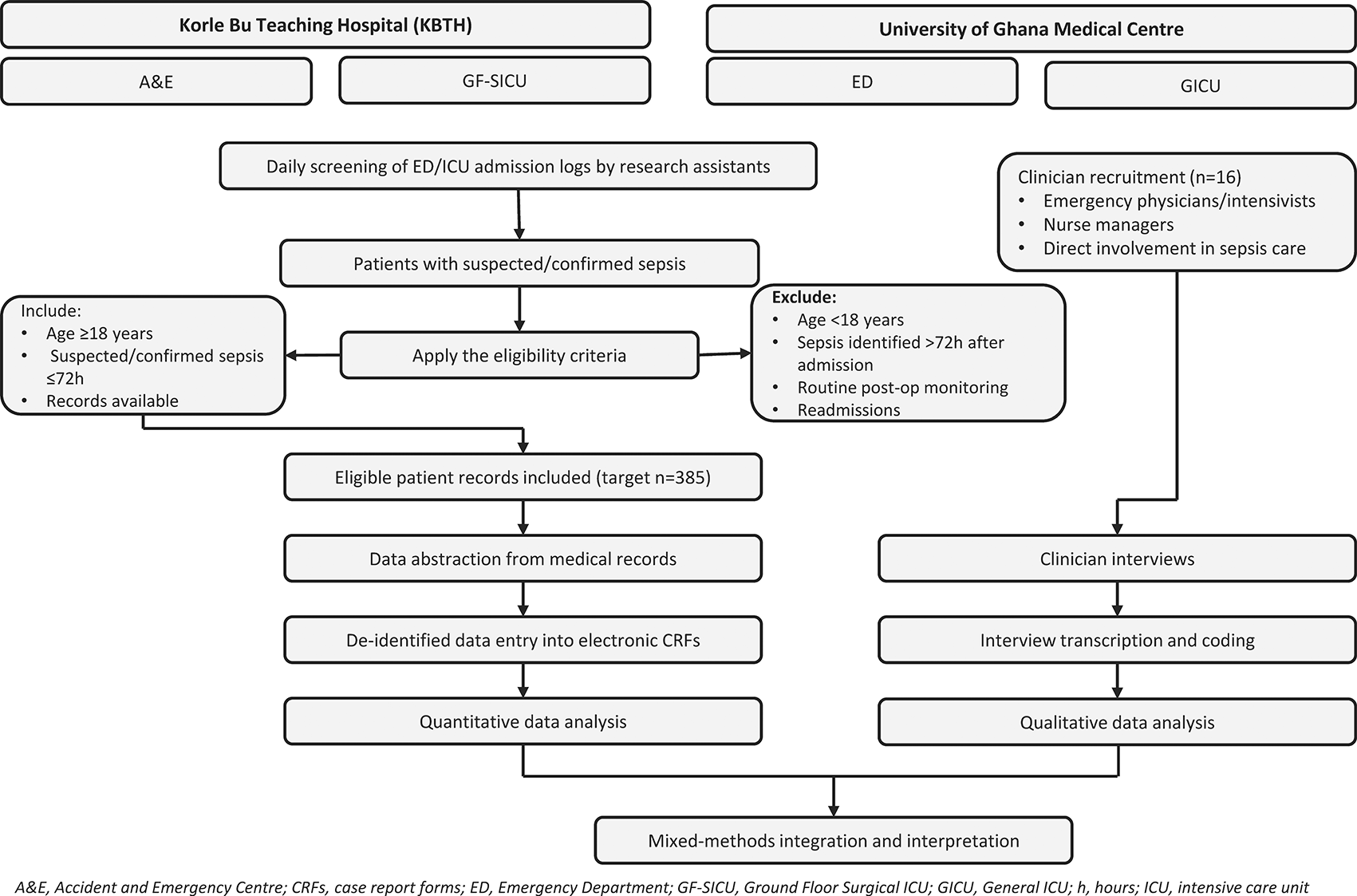
A&E, Accident and Emergency Centre; CRFs, case report forms; ED, Emergency Department; GF-SICU, Ground Floor Surgical ICU; GICU, General ICU; h, hours; ICU, intensive care unit.
Quantitative variables to be collected include demographics, comorbidities, suspected source of infection, presenting symptoms, vital signs, Glasgow Coma Scale or Richmond Agitation-Sedation Scale scores, and retrospectively calculated qSOFA scores. Laboratory investigations will include serum lactate, blood counts, renal and liver function tests, and microbiological cultures where available. Documentation of Sepsis Six bundle components, adjunct therapies such as vasopressors or mechanical ventilation, and clinical outcomes including mortality and length of stay will also be abstracted.
The primary outcome will be partial Sepsis Six bundle compliance within six hours, defined as receipt of empiric antibiotics, intravenous fluids, and blood cultures. This definition is based on published data from sub-Saharan Africa that demonstrates low complete bundle implementation rates.18,19 Complete Sepsis Six implementation was not selected as the primary outcome because some bundle elements, especially serum lactate testing, urine output monitoring, and oxygen delivery, may be inconsistently documented or variably available across settings, potentially introducing substantial measurement bias unrelated to clinician intent or quality of care. Secondary outcomes include in-hospital mortality, length of stay, and delivery of individual bundle components. Key predictor variables will include qSOFA score, timing of interventions, and availability of diagnostic and therapeutic resources during the first six hours of care. Resource availability will be assessed using documentation of access to diagnostic investigations, monitoring equipment, medications, oxygen therapy, vasopressors, and mechanical ventilation. Qualitative variables will comprise thematic findings regarding barriers to sepsis recognition and bundle implementation, clinician decision-making under resource constraints, and adaptive strategies employed at each site. The variables and outcomes are outlined in Table 4.
Research assistants trained in data abstraction will identify eligible patients through daily review of ED and ICU admission logs. Clinical data will be abstracted from paper or electronic medical records and entered into secure, password-protected electronic case report forms (CRFs) built in Qualtrics (Qualtrics, Provo, UT, USA) (see Additional file 1). Data abstraction will focus on the first six hours following documented suspicion of sepsis. To address potential measurement comparison issues from the differing documentation systems at KBTH and UGMC, identical structured CRFs will be used at both sites, and study site will be a covariate in all multivariable analyses. Double data entry will be performed on a random 20% sample to assess quality, with weekly data quality control checks.
Semi-structured interviews will be conducted in English either in person at the unit or via Zoom, according to the participants’ preference. Each interview will follow prompts from an interview guide (see Additional files 2 and 3) and will last about 45 minutes. Audio recordings will be transferred immediately to secure, encrypted storage and deleted from recording devices. Verbatim transcription will be performed by two independent investigators, and coded transcripts will be stored in password-protected software accessible only to the core research team. All study data will be retained for a minimum of five years after study completion.
The primary risk of bias is incomplete or inconsistent clinical documentation, especially at KBTH, given the current shutdown of the national Lightwave Health Information Management System (LHIMS) (https://www.myjoyonline.com/hospitals-return-to-manual-records-as-lhims-contract-stalls/). This will be mitigated through standardised abstraction training, use of structured CRFs, and systematic assessment of missingness. Patients with insufficient documentation will be excluded and recorded as non-participants.
Regional data indicate that 86% of patients received fluid resuscitation, 61% received antibiotics within six hours,18 and 71% of surveyed African hospitals could obtain blood cultures.19 Assuming independence of these components, baseline partial compliance is estimated at 35%, a likely conservative estimate as these interventions are often correlated in clinical practice. For a 95% confidence level and ± 5% margin of error, the required sample size is 350 patients, increased to 385 to account for approximately 10% incomplete or missing data.
For the qualitative component, purposive semi-structured interviews will be conducted with 16 clinicians (two physicians and two nurse managers from each unit), consistent with published recommendations for thematic analysis in studies with focused objectives and relatively homogeneous participant groups.20
Statistical analyses will be conducted using R (R Foundation for Statistical Computing, Vienna, Austria) or Stata (StataCorp, College Station, TX, USA). Descriptive statistics will summarise patient demographics, clinical characteristics, qSOFA-based risk stratification, resource availability, and Sepsis Six bundle delivery. Continuous variables will be reported as means with 95% confidence intervals (CIs) or medians with interquartile ranges depending on distribution, while categorical variables will be summarised as frequencies and percentages.
For Objective 1, sepsis presentation will be estimated as the proportion of screened admissions meeting study inclusion criteria. Multivariable logistic regression will examine associations between baseline clinical characteristics and in-hospital mortality,21 with results presented as adjusted odds ratios (aORs) and 95% CIs. Prespecified covariates will include age, qSOFA score, comorbidities, suspected source of infection, and key resource-related variables.
For Objective 2, timing of Sepsis Six bundle components will be categorised as within 1 hour, 1–6 hours, or more than 6 hours after sepsis suspicion. Partial bundle compliance will be calculated as a proportion with 95% CIs and compared across facilities, unit type, and risk categories using chi-square, t-test, or Mann-Whitney U testing as appropriate. For Objective 3, resource availability and use of diagnostic and therapeutic interventions will be described as frequencies and percentages. Associations between resource availability, delivery of early interventions, and clinical outcomes will be examined using multivariable regression models adjusted for baseline risk profiles and demographic factors. Exploratory subgroup analyses may compare outcomes by facility type, ICU versus ED setting, and qSOFA risk category.
Missing data patterns will be assessed descriptively. Complete-case analysis will be performed for primary analyses, with sensitivity analyses conducted if missingness exceeds 10% for key variables. Patients will be followed until hospital discharge or death, and loss-to-follow-up will be described with reasons reported where available.
Qualitative data will undergo thematic analysis in NVivo (QSR International, Melbourne, Australia) using combined deductive and inductive coding by two investigators independently. Quantitative and qualitative findings will be integrated during interpretation to provide a comprehensive understanding of early sepsis management practices in Ghanaian emergency and critical care settings.
Study findings will be disseminated through peer-reviewed publications, presentations at national and international scientific conferences, and engagement with clinicians, hospital leadership, and health policymakers in Ghana. Findings will also be shared with participating institutions to inform quality improvement initiatives and future development of contextual sepsis management guidelines. De-identified study data will be shared in accordance with institutional approvals and applicable data-sharing agreements.
The study is ongoing. Participant recruitment and data collection commenced KBTH in January 2026 and are scheduled to commence at UGMC in August 2026. Data collection is expected to continue until the target sample size is achieved, after which data analysis and dissemination of findings will follow.
The GEMS Project will be the first multicentre study to systematically characterise early sepsis management practices in Ghanaian emergency and critical care settings. By integrating quantitative assessment of clinical care with qualitative exploration of clinician decision-making and resource constraints, the study will generate evidence on how sepsis is recognised and managed within a resource-limited health system, directly addressing a critical gap in both regional and global sepsis literature.
A major strength is the mixed-methods design. Quantitative data alone cannot adequately explain why practice variations occur or how clinicians adapt standard protocols under resource constraints. The qualitative component will contextualise quantitative patterns, identify practical barriers, and capture adaptive strategies that are amenable to intervention. Integration of both data sources will support development of recommendations that are contextually feasible and operationally relevant to Ghanaian emergency and critical care settings.
Findings will have immediate relevance by identifying modifiable targets for quality improvement within participating EDs and ICUs and will generate preliminary evidence to support development of national sepsis guidelines adapted to varying levels of resource availability across Ghana’s healthcare system. The study may also contribute to broader discussions regarding adaptation of international sepsis guidelines for low-resource settings where monitoring capacity, staffing, and access to critical care interventions remain constrained.
Several limitations are considered. The study will be conducted in two academic centres in urban Accra, which are better resourced than many regional and district hospitals in Ghana. Findings may therefore overestimate diagnostic and monitoring capacity, and underestimate delays in care relative to lower-level facilities. Use of retrospective clinical documentation introduces risk of incomplete capture of sepsis recognition, timing of interventions, or resource limitations. To minimise inconsistency, research assistants will undergo standardised abstraction training and use structured data collection instruments. Publication of this protocol prior to completion of analysis promotes transparency, reduces selective reporting, and documents planned quantitative and qualitative analyses before study findings are known. As an observational study, the findings will identify associations rather than establish causality. The relatively small qualitative sample may not capture all perspectives, although purposive sampling will ensure inclusion of clinicians directly involved in operational and clinical decision-making.
Two operational considerations merit acknowledgement. At KBTH, the ongoing shutdown of the national Lightwave Health Information Management System has necessitated a return to paper-based records, which may affect the completeness and legibility of documented clinical data. Standardised abstraction training and structured case report forms will mitigate this risk. For the qualitative component, clinicians working in busy emergency and critical care environments may have limited availability for interviews, and some may be reluctant to discuss resource limitations on record. Scheduling flexibility and assurances of confidentiality will be emphasised during recruitment to encourage participation.
Despite these limitations, this study provides an important opportunity to describe sepsis management in a setting where empirical data remain limited. Many of the resource constraints examined, including delays in diagnostics, staffing limitations, fragmented referral systems, and inconsistent access to critical therapies, are shared across emergency and critical care settings in Ghana and similar low-resource contexts. The methodological approach and resulting evidence may therefore inform sepsis care improvement efforts in comparable settings in sub-Saharan Africa and beyond.
Sepsis represents a major and inadequately characterised burden on Ghana’s healthcare system. The GEMS Project will generate foundational evidence on sepsis presentation and severity, early management practices, and resource-related constraints in Ghanaian emergency and critical care settings. By employing rigorous mixed-methods approaches, this study will provide practical insights to inform clinical guideline development, health policy decisions, and future research to reduce preventable sepsis-related mortality in Ghana and similar settings globally.
This study will be conducted in accordance with the ethical principles of the Declaration of Helsinki and all applicable institutional and national regulations. The study has received ethical approval from the Ethics and Scientific and Technical Committee at KBTH (KBTH-STC 00193/2025), and the Institutional Review Boards (IRBs) at UGMC (UGMC/IRBREVIEW/076/25) and the University of Florida (UF) (IRB202501878). As the quantitative component involves retrospective review of existing medical records without direct patient contact, a waiver of informed consent was granted by all partic ipating sites on the grounds of minimal risk. Written informed consent will be obtained from all clinician participants prior to interview.
| Views | Downloads | |
|---|---|---|
| F1000Research | - | - |
|
PubMed Central
Data from PMC are received and updated monthly.
|
- | - |
Provide sufficient details of any financial or non-financial competing interests to enable users to assess whether your comments might lead a reasonable person to question your impartiality. Consider the following examples, but note that this is not an exhaustive list:
Sign up for content alerts and receive a weekly or monthly email with all newly published articles
Already registered? Sign in
The email address should be the one you originally registered with F1000.
You registered with F1000 via Google, so we cannot reset your password.
To sign in, please click here.
If you still need help with your Google account password, please click here.
You registered with F1000 via Facebook, so we cannot reset your password.
To sign in, please click here.
If you still need help with your Facebook account password, please click here.
If your email address is registered with us, we will email you instructions to reset your password.
If you think you should have received this email but it has not arrived, please check your spam filters and/or contact for further assistance.

Comments on this article Comments (0)