Keywords
smart farming, smallholder agriculture, technology adoption, economic impacts, climate-smart agriculture, sustainability.

This article is included in the Agriculture, Food and Nutrition gateway.
smart farming, smallholder agriculture, technology adoption, economic impacts, climate-smart agriculture, sustainability.
Smallholder farmers in tropical regions face increasingly complex pressures caused by climate change, environmental degradation, limited market access, weak institutional support, and household economic uncertainty. Changes in rainfall patterns, rising temperatures, droughts, floods, soil salinity, and supply chain disruptions have reduced productivity and increased the vulnerability of smallholder farmers in Ghana, the Lower Mekong Basin, East Java, Bangladesh, Fiji, Mauritius, and Assam1–8 These conditions affect not only agricultural production, but also income, food consumption, education, health, and livelihood sustainability. Adaptation strategies also vary according to gender, access to resources, and social position within the household.9,10 In addition, agricultural risks in vulnerable regions often occur in compound forms and reinforce one another.11 Food system vulnerability may also emerge from the combined effects of climate change and dependence on external inputs, such as phosphate fertilizers.12 Therefore, smallholder farmers should not be viewed only as recipients of technology, but also as actors with their own knowledge, strategies, and adaptive capacities. This review is important because it examines how smart farming and related agricultural innovations contribute to economic outcomes, technology adoption, smallholder resilience, and the sustainability of tropical agricultural systems. In this review, smart farming is understood broadly as a set of technology-based, knowledge-based, and management-oriented innovations that support better farm decision-making, resource use efficiency, productivity, adaptation, and sustainability in smallholder farming systems.
Previous studies show that agricultural innovation and smart farming have potential to improve the economic welfare of smallholder farmers, although the outcomes depend on social, institutional, and ecological contexts. Oil palm adoption can increase household expenditure, calorie consumption, dietary diversity, and education investment, but the benefits are not always evenly distributed among farmer groups.13,14 Productivity gaps among smallholder farmers also remain substantial because of limited access to quality seedlings, fertilizers, cultivation practices, markets, and extension services.15,16 Nutrient imbalances in smallholder oil palm plantations further indicate that production improvement cannot rely only on land expansion but also requires proper input management.17 Integrated crop-livestock farming systems can improve productivity, income, resource efficiency, and sustainability.18–22 Climate services, participatory approaches, and the integration of local knowledge with forecasting technologies can also strengthen farmers’ decision-making.23–25 Other studies show that the adoption of agricultural innovations is influenced by technology perception, access to credit, extension services, cooperatives, local commodities, post-harvest practices, agroforestry, and economic feasibility.21,22,26–33 However, these findings remain dispersed across different commodities, regions, technologies, and research traditions. A systematic synthesis is therefore needed to explain how economic impacts and adoption determinants are connected in tropical smallholder systems.
In addition to economic and technological factors, previous studies emphasize the role of local knowledge, cultural values, gender relations, and ecological sustainability in the adoption of agricultural innovations. Local knowledge contributes to resource classification, seed conservation, pest control, livestock treatment, biodiversity protection, and food security.34–40 In Indonesia, customary institutions, land rights, labor systems, ancestral values, and communal practices influence how farmers accept or reject change.41–45 Agricultural innovations and external shocks can also affect women differently, especially in relation to time allocation, access to income, and decision-making.46–49 Human-wildlife relations and conservation are also shaped by cultural perceptions and local livelihoods.50,51 Local knowledge can support climate adaptation strategies, but economic gains may also create trade-offs with biodiversity, environmental quality, governance, and long-term sustainability.52–55 For this reason, smart farming should be understood not only as technological modernization, but also as a socio-technical and socio-ecological process shaped by economic, institutional, cultural, gender, and environmental dimensions.
Based on this background, this study aims to systematically review the literature on the economic impacts and adoption determinants of smart farming among smallholder farmers in tropical agricultural systems. The first objective is to identify how smart farming and related agricultural innovations contribute to income, consumption, productivity, education, and the economic resilience of smallholder farming households. The second objective is to analyze the factors influencing adoption, including access to credit, extension services, cooperatives, markets, land ownership, education, technology perception, and institutional support. The third objective is to explain how local knowledge, cultural values, gender, and social systems shape the acceptance of agricultural technology. The fourth objective is to examine how smart farming relates to ecological sustainability, resource conservation, and the risk of trade-offs between economic gains and ecosystem functions. By linking adoption determinants with economic outcomes, this review provides policy-relevant insights for improving farm management, rural development strategies, and institutional support for tropical smallholder agriculture. Accordingly, this study addresses three research questions: How does smart farming adoption affect the economic welfare of smallholder farmers in tropical regions? What economic, technological, institutional, social, and cultural factors determine smart farming adoption? How can local knowledge and cultural values be integrated into smart farming development to support economic resilience and agricultural sustainability?
This study employed a Systematic Literature Review (SLR) design to examine the economic impacts and adoption determinants of smart farming among smallholder farmers in tropical agricultural systems. The SLR approach was used to identify, select, classify, and synthesize previous research findings in a systematic and transparent manner. This study did not apply meta-analysis because the reviewed articles differed in research design, geographical context, commodity focus, technology type, indicators, and outcome measures. Therefore, the findings were analyzed using a narrative-thematic synthesis.
The unit of analysis was scientific articles, while the object of analysis was research findings related to economic impacts, adoption determinants, local knowledge, cultural values, gender, institutions, and agricultural sustainability. The final review included 59 articles published between 2016 and 2026. These articles covered various tropical and developing-country contexts, including Indonesia, Ghana, India, Bangladesh, Pakistan, Ethiopia, South Africa, Seychelles, Mauritius, Fiji, Ecuador, Peru, Cameroon, Togo, Madagascar, the Philippines, Vietnam, Timor-Leste, Laos, Cambodia, Thailand, and Dominica. The 59 articles included in the final synthesis were treated as the primary analytical sources, while additional references, if any, were used only to support the background and methodological framing of the review.
The sources used in this study were scientific articles collected from academic sources, selected based on predefined criteria, and summarized in a research matrix. The article search was conducted using keywords relevant to smart farming, smallholder agriculture, economic impacts, technology adoption, local knowledge, and sustainability. The main keywords included smart farming, precision agriculture, digital agriculture, climate-smart agriculture, smallholder, economic impact, economic resilience, livelihood, technology adoption, local knowledge, indigenous knowledge, cultural values, agroforestry, and integrated farming. The search string combined terms related to smart farming, smallholder agriculture, economic outcomes, adoption, and sustainability using Boolean operators, for example: (“smart farming” OR “precision agriculture” OR “digital agriculture” OR “climate-smart agriculture”) AND (“smallholder” OR “small-scale farmer” OR “farming household”) AND (“economic impact” OR “income” OR “productivity” OR “technology adoption” OR “livelihood” OR “sustainability”). The article search was conducted using the Scopus database, which was selected because of its broad coverage of peer-reviewed literature in agricultural, economic, environmental, and sustainability studies. To reduce database-related bias, the search process was supported by predefined keywords, explicit inclusion and exclusion criteria, title and abstract screening, full-text eligibility assessment, and a structured data extraction matrix.
The keywords were used individually and in combination. The identified articles were screened based on the relevance of their titles, abstracts, and full texts. The search focused on studies related to small-scale agriculture, especially in tropical regions and developing countries. Articles that discussed technology without a clear connection to smallholder farmers, economic impacts, adoption, or sustainability were excluded. Articles on large-scale agriculture, purely industrial farming, or non-agricultural technologies were also removed.
Articles were included when they met at least one of the core thematic criteria of this review. First, the article had to discuss smallholder farmers, farming households, local agricultural communities, or small-scale farming systems. Second, the article had to be related to smart farming, climate-smart agriculture, digital agriculture, agroforestry, integrated farming systems, agricultural innovation, or agricultural adaptation strategies. Third, the article had to report findings on economic impacts, adoption determinants, local knowledge, cultural values, gender relations, customary institutions, conservation, or ecological sustainability.
Articles were excluded when they were not related to small-scale agriculture, did not discuss adoption or economic impacts, did not provide extractable findings, were not relevant to the research questions, or only discussed technology without the socio-economic context of farmers. Articles without clear methodological information and main findings were also excluded from the final synthesis. Table 1 summarizes the inclusion and exclusion criteria applied in this review.
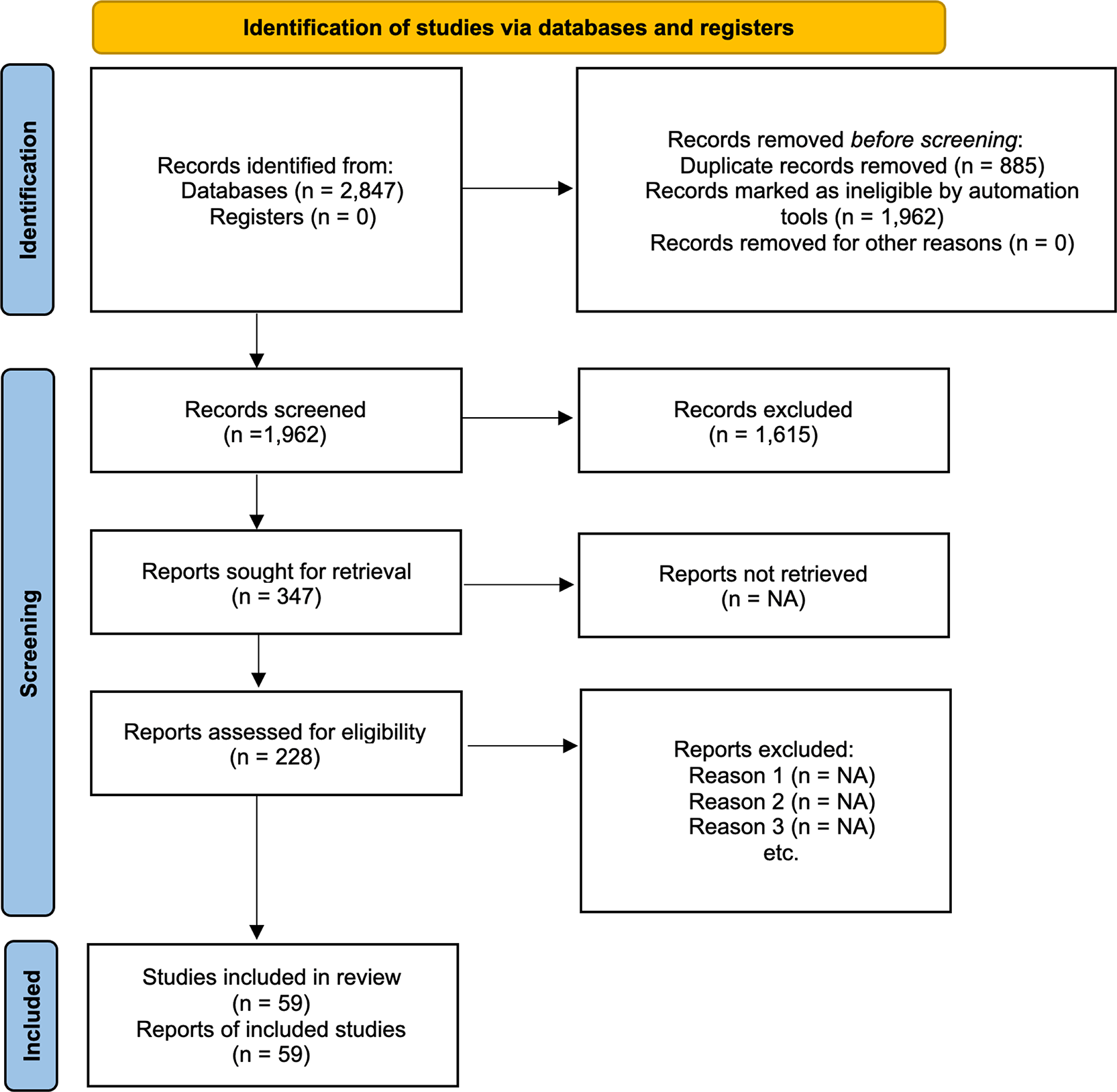
The article selection procedure followed four stages: identification, screening, eligibility assessment, and final inclusion. In the identification stage, 2,847 documents were obtained from relevant academic sources. After removing 885 duplicates, 1,962 documents were screened based on title and abstract. Of these, 1,615 documents were excluded because they were not aligned with the research focus.
A total of 347 documents were then read in full to assess their eligibility. During this stage, 288 documents were excluded because they did not meet the inclusion criteria or were not relevant to the research questions. The final selection resulted in 59 articles included in the SLR analysis. Figure 1 PRISMA flow diagram of the article selection process.
Information was extracted using a research matrix. The matrix recorded article title, author names, year of publication, research location, study focus, research method, sample or research subjects, main findings, research limitations, and relevance to this study.
Each article was coded according to the main themes of the review: economic impacts, adoption determinants, local knowledge, cultural values, gender relations, institutions, and sustainability. Quantitative findings, such as income changes, productivity, consumption, profitability, adoption rates, or vulnerability levels, were recorded as descriptive evidence. Qualitative findings, such as farmers’ perceptions, cultural values, local practices, institutional barriers, and customary arrangements, were recorded as narrative themes.
One article could contribute to more than one theme. However, each article was counted only once in the total number of 59 articles. The methodological quality of each article was assessed based on the clarity of research objectives, appropriateness of methods, transparency of data sources, relevance of findings, and contribution to the research questions.
The findings were analyzed using narrative-thematic synthesis. The analysis was conducted by reading the main findings of each article, coding the relevant evidence, and grouping the findings according to the research questions.
The first analytical theme focused on economic impacts, including income, productivity, consumption, profitability, production costs, educational expenditure, food security, and household welfare. The second theme focused on adoption determinants, including access to credit, extension services, cooperatives, markets, land status, education, gender, technology perception, and institutional support. The third theme focused on local knowledge, cultural values, customary institutions, gender relations, biodiversity conservation, and ecological sustainability.
Quantitative data were not statistically pooled. Instead, they were used as descriptive evidence to support the interpretation of findings. Qualitative data were used to explain contexts, patterns, and variations across studies. This procedure ensured that the synthesis remained transparent, consistent, and traceable to the articles included in the research matrix. Although the review relied on Scopus-indexed literature, the use of systematic screening, eligibility assessment, and thematic coding helped maintain the transparency and consistency of the synthesis process.
The final review included 59 articles published between 2016 and 2026. The studies covered smart farming, climate-smart agriculture, digital agriculture, agroforestry, integrated farming systems, local knowledge, cultural values, gender relations, institutional support, and sustainability in tropical and developing-country smallholder systems. The geographical coverage included Asia, Africa, Latin America, the Caribbean, and small island states. Indonesia was one of the most dominant study contexts, particularly in studies on oil palm smallholders, yield gaps, fertilization practices, integrated oil palm-cattle systems, agroforestry, local knowledge, customary institutions, sago, honeybee conservation, and human-wildlife relations.14–17,20,36,37,41,42,50 Other country contexts included Ghana, India, Ethiopia, Fiji, Bangladesh, South Africa, Ecuador, Mauritius, Seychelles, Peru, Pakistan, Togo, Madagascar, the Philippines, Sri Lanka, Kenya, Dominica, and Guinea-Bissau.1,5,7,11,12,18,26–29,31,32,38,49,56,57 The reviewed articles varied in research design, methodological approach, farming system, and thematic focus. Quantitative studies mainly examined household welfare, productivity, consumption, adoption behavior, technology perception, economic outcomes, and climate vulnerability.4,13,14,22,26,27 Qualitative studies focused on farmer perceptions, local ecological knowledge, cultural values, customary institutions, gendered adaptation, and community-based resource management.34,35,44,53,54 Mixed-method and participatory studies were found in research on climate services, adaptation strategies, agroforestry, social-ecological vulnerability, and the integration of local and scientific knowledge.2,23,24,56,58 Field experiment and modeling approaches appeared in studies on integrated crop-livestock systems, beef cattle intensification, rainfall prediction, and spatial vulnerability assessment.4,18,19,58 The reviewed farming systems included oil palm, agroforestry, food crops, plantation crops, livestock, integrated crop-livestock systems, homegardens, sago, honeybee conservation, Jatropha, Moringa, and local poultry. Table 2 summarizes the general characteristics of the included studies.
The characteristics of the included studies indicate that smart farming adoption in tropical smallholder systems cannot be examined only as a technological issue. The reviewed evidence covers economic, institutional, cultural, gender, and ecological dimensions. Studies on commercial crops and integrated farming systems mainly contributed evidence on productivity, income, consumption, profitability, and economic resilience.13,14,18–20,59 Studies on digital agriculture and climate services contributed evidence on adoption determinants, information access, technology perception, and farmer decision-making.23–26 Studies on local knowledge, customary institutions, agroforestry, and traditional practices contributed evidence on cultural compatibility, biodiversity conservation, community-based resource management, and ecological sustainability.34–36,41,42,53 This diversity supports the use of narrative-thematic synthesis because the included studies differ in context, method, indicator, and outcome measure.
This section analyzes the economic impacts of smart farming and related agricultural innovations by identifying the main pathways through which adoption affects smallholder welfare. The findings include household consumption, productivity, profitability, income, education expenditure, postharvest losses, climate-related risks, and livelihood vulnerability. Because this study uses a narrative-thematic synthesis rather than a meta-analysis, the economic outcomes are interpreted descriptively and analytically across thematic categories. The findings are grouped into six categories: household consumption and welfare, oil palm productivity, integrated farming systems, alternative commodities, agroforestry and economic sustainability, and economic losses related to climate and production risks. Table 3 summarizes the economic impacts of smart farming adoption and related agricultural innovations.
| Economic impact category | Main findings |
|---|---|
| Household consumption and welfare | Calorie consumption increased by 7.5% and 13%; total consumption expenditure increased by 25%; education expenditure increased by 31% and 39%13,14 |
| Oil palm productivity | Actual smallholder yield remained below potential yield; independent smallholder productivity reached only 3 to 5 tons FFB/ha/year; fertilizer use showed nutrient imbalance15–17,60 |
| Integrated farming systems | Productivity increased from 2.8 to 35.6 tons/ha; net income increased from USD 359 to more than USD 3,500/ha; profitability increased by up to 415%18–20 |
| Alternative commodities | Indigofera production was economically feasible; Jatropha productivity remained below commercialization targets; local poultry generated a profit margin of 62.85% |
| Agroforestry and economic sustainability | Agroforestry supported household income and subjective welfare; LER was above 1; food import dependence and mixed sustainability performance remained key concerns28–30,49 |
| Economic losses and climate risks | Tomato postharvest losses reached 26% to 28%; production costs increased; income declined during shocks; rice yield could decline by up to 40%; salinity and declining coconut production increased livelihood risks6,12,31,44,47,48,61 |
The economic impacts of smart farming and related agricultural innovations can be understood through four main analytical pathways: welfare improvement, productivity enhancement, income diversification, and risk reduction. These pathways show that economic benefits are not generated by technology alone. They emerge through the interaction between technology, input access, market conditions, household capacity, and ecological context. Therefore, the reviewed evidence is interpreted not as separate study results, but as a set of mechanisms explaining how innovation affects smallholder economic outcomes.
The first pathway is welfare improvement. Evidence from oil palm-based smallholder systems indicates that agricultural innovation can improve household consumption, dietary quality, and education expenditure when production gains are translated into household purchasing power.13,14 This suggests that the economic effect of smart farming should not be measured only through farm income or yield. Household-level indicators, such as calorie consumption, food diversity, non-food expenditure, and education spending, provide a broader explanation of how innovation affects welfare.
The second pathway is productivity enhancement. Yield gap studies show that smallholder productivity remains below potential levels because of limited access to quality inputs, fertilizer management, technical knowledge, and extension support.16,17,60 This indicates that smart farming cannot be effective if it is introduced into farming systems where basic agronomic constraints remain unresolved. In this context, technology adoption must be accompanied by input management, technical assistance, and institutional support.
The third pathway is income diversification. Integrated farming systems, alternative commodities, agroforestry, and local poultry show that smallholders can improve income when innovations are linked to diversified production systems and local market opportunities.18–22,28–30,33,41,49 However, this pathway depends on value chain readiness, market access, productivity levels, and farmers’ capacity to manage multiple enterprises. Without these conditions, diversification may remain technically possible but economically limited.
The fourth pathway is risk reduction. Several studies show that climate shocks, postharvest losses, salinity, rising production costs, food import dependence, and livelihood disruption can weaken the economic benefits of agricultural innovation.5–7,12,31,44,47,48,57,61 This means that smart farming should not be evaluated only by its ability to increase output. It should also be assessed by its capacity to reduce vulnerability and stabilize household livelihoods under climate, market, and ecological uncertainty.
The economic impact of smart farming adoption is conditional, emerging when technology is supported by input access, extension services, market linkages, household capacity, and ecological resilience. Conversely, when these enabling conditions are weak, smart farming may produce uneven benefits or fail to address existing structural constraints. From an agricultural economics perspective, these results indicate that smart farming should be assessed not only by its productivity effects, but also by its contribution to farm management efficiency, household welfare, market participation, and resilience to economic and ecological shocks.
This section analyzes the determinants of smart farming adoption by examining how economic capacity, technology perception, institutional access, social inclusion, local knowledge, cultural values, and ecological pressure interact in smallholder farming systems. These determinants are summarized in Table 4.
| Determinant category | Main findings |
|---|---|
| Economic and household assets | Education, farming experience, land size, vehicle ownership, household assets, credit, livestock ownership, income, and adaptive capacity influenced adoption2,15,27,56 |
| Technology and perception | Adoption was shaped by perceived cost, usefulness, compatibility with local knowledge, preferred communication channels, and trust in climate information23–26 |
| Institutions and markets | Land tenure, marketing chains, contract arrangements, processing infrastructure, subsidies, government support, and institutional coordination influenced adoption |
| Social and gender factors | Gender influenced access to resources, labor allocation, strategy choice, information, household structure, and adoption decisions9,10,27,46 |
| Local knowledge and culture | Local knowledge, cultural values, traditional practices, and ancestral meanings shaped whether innovations were accepted, adapted, or resisted1,35,44,53,54 |
| Ecological conditions and climate risks | Drought, salinity, flooding, climate pressure, agroecological conditions, and multi-hazard vulnerability influenced adoption needs and constraints3–5,33 |
The determinants of smart farming adoption can be analyzed through five interconnected dimensions: capacity to adopt, willingness to adopt, institutional access, social inclusion, and ecological pressure. These dimensions indicate that adoption is not merely a technical decision. It is shaped by farmers’ resources, perceptions, support systems, social relations, and environmental risks.
The first dimension is capacity to adopt. Education, farming experience, land size, household assets, credit access, livestock ownership, and income determine whether farmers have the material and knowledge resources needed to adopt agricultural innovation.2,15,27,56 This suggests that adoption is more likely among farmers who have stronger economic capacity and better access to productive resources. Conversely, farmers with limited assets and low adaptive capacity may be unable to adopt innovation even when they recognize its potential benefits.
The second dimension is willingness to adopt. Farmers’ perceptions of cost, usefulness, risk, and compatibility influence whether technology is considered acceptable and practical. Digital tools and climate services are more likely to be adopted when they are affordable, trusted, accessible, and aligned with farmers’ existing knowledge systems.23–26 This shows that technology adoption depends not only on availability, but also on farmers’ interpretation of its value and relevance.
The third dimension is institutional access. Land tenure security, extension services, cooperative support, market linkages, contract arrangements, processing infrastructure, subsidies, and policy coordination influence farmers’ opportunity to adopt and sustain innovation.12,16,32,45,60 Weak institutions and fragmented markets can reduce adoption even when technologies are technically suitable. Therefore, institutional arrangements function as enabling or limiting conditions for smart farming adoption.
The fourth dimension is social inclusion. Gender relations affect access to land, labor, income, information, technology, and household decision-making. Men and women may adopt different strategies because they face different constraints and control different resources.9,10,27,46 This means that adoption analysis must consider who has access to innovation, who controls its use, and who receives its benefits. Without this perspective, smart farming may reproduce existing inequalities within farming households and communities.
The fifth dimension is ecological pressure. Drought, salinity, flooding, soil degradation, climate variability, and multi-hazard exposure create demand for innovation, but they can also reduce farmers’ ability to adopt it.3–5,11,33 This creates a paradox: farmers who most need innovation may also be those with the weakest capacity to adopt it. Therefore, ecological risk should be treated not only as a reason for adoption, but also as a constraint that shapes adoption feasibility.
Smart farming adoption is shaped by the interaction between economic capacity, technology perception, institutional support, social inclusion, and ecological pressure. Adoption is more likely when farmers have sufficient resources, trust the technology, receive institutional support, participate in decision-making, and operate in systems that can absorb ecological risks. Thus, smart farming should be understood as a socio-technical and socio-ecological process rather than a purely technological decision. This implies that adoption feasibility depends on the alignment between farm-level capacity, institutional support, market access, technology affordability, and policy instruments that reduce adoption barriers for smallholder farmers.
This section analyzes how local knowledge, cultural values, gender relations, customary institutions, and ecological sustainability shape the social acceptance and environmental viability of smart farming. These dimensions show that adoption is not determined only by economic capacity and technology access, but also by locally embedded knowledge systems, cultural meanings, social relations, and ecological conditions. Local knowledge appears in resource classification, seed conservation, traditional pest control, crop diversity management, home garden practices, agroforestry systems, indigenous zoning, climate interpretation, and human-nature relations. Cultural values are reflected in ancestral heritage, customary rules, collective resource governance, and symbolic meanings attached to crops, land, forests, and wildlife. The main findings are summarized in Table 5.
| Theme | Main findings |
|---|---|
| Local knowledge and resource classification | Local knowledge supported species classification, crop diversity conservation, and the use of locally important plant species34,36,38 |
| Traditional practices and food conservation | Traditional storage, sago use, and homegarden systems supported food security, medicinal use, income, and ecological functions35,37,40 |
| Cultural values and customary institutions | Ancestral heritage, Sasi, daleh, and Dusung systems shaped farming practices, resource governance, and innovation acceptance41–44 |
| Gender and household relations | Gender shaped labor allocation, access to income, decision-making, adaptation strategies, and household food responsibilities9,10,46–48 |
| Ecological sustainability | Agroforestry and integrated systems supported ecological functions, but trade-offs with biodiversity, emissions, salinity, and sustainability performance remained9,10,46–48 |
| Risk, conservation, and human-nature relations | Wildlife conflict, conservation pressures, multi-hazard vulnerability, and agroecological practices shaped risk management and livelihood resilience11,50,51,53 |
The reviewed evidence indicates that local knowledge, cultural values, gender relations, customary institutions, and ecological sustainability function as social and ecological filters in smart farming adoption. These factors determine whether innovation is understood as useful, acceptable, adaptable, or disruptive. Therefore, local and cultural dimensions should not be treated as external background variables. They are part of the adoption system itself.
Local knowledge functions as a practical knowledge system for classifying resources, managing biodiversity, conserving seeds, controlling pests, interpreting climate, and sustaining food systems. Evidence from species classification, crop diversity, honeybee conservation, traditional rice storage, sago use, and homegarden systems shows that local knowledge contributes directly to resource management and household resilience.34–38,40 This indicates that smart farming should not replace local knowledge. Instead, it should be designed to complement and strengthen existing knowledge systems.
Cultural values and customary institutions function as filters of innovation acceptance. Crops, land, forests, and farming practices often carry meanings related to ancestral heritage, collective identity, customary rules, and community-based governance. These meanings influence whether farmers perceive innovation as acceptable, threatening, useful, or incompatible with inherited practices.41–44 Therefore, smart farming adoption requires cultural compatibility. Technology that conflicts with customary meanings or communal resource arrangements may face resistance even when it offers technical or economic benefits.
Gender relations determine how the benefits and burdens of innovation are distributed within households. Evidence from oil palm households, climate adaptation strategies, tourism disruption, and Indigenous food systems shows that men and women have different access to land, labor, income, information, and decision-making.9,10,46–48 This means that smart farming cannot be considered inclusive only because it increases production. It must also be assessed by whether it improves women’s access to resources, reduces unequal labor burdens, and supports fairer decision-making.
Ecological sustainability functions as the boundary condition for economic gains. Agroforestry and integrated farming systems can improve soil structure, water availability, resource efficiency, and emission performance, but productivity gains may also create trade-offs with biodiversity, ecosystem functions, salinity, and long-term sustainability.5,18,33,55,57 Therefore, smart farming should not be evaluated only through economic indicators. It must also be assessed through its effects on biodiversity, emissions, soil and water conditions, and ecosystem resilience.
Risk, conservation, and human-nature relations further show that agricultural innovation operates within contested social-ecological landscapes. Wildlife conflict, conservation pressures, multi-hazard vulnerability, and agroecological practices reveal that farming systems are shaped by both livelihood needs and ecological constraints.11,50,51,53 This suggests that smart farming should be integrated with risk management, conservation planning, and community-based ecological knowledge.
Local knowledge, cultural values, gender relations, customary institutions, and ecological sustainability determine whether smart farming becomes socially accepted and environmentally viable. These factors influence not only adoption decisions, but also the distribution of benefits, the legitimacy of innovation, and the long-term sustainability of farming systems. Smart farming in tropical smallholder contexts should therefore be designed as a locally embedded transformation process rather than a uniform technological package. For agricultural policy and farm management, this means that economic gains from smart farming need to be balanced with cultural compatibility, gender inclusion, resource conservation, and sustainability trade-offs.
The synthesis of the reviewed evidence reveals three interconnected layers: economic outcomes, adoption-enabling conditions, and socio-cultural and ecological embeddedness. The economic outcome layer shows that smart farming and related agricultural innovations may improve household consumption, income, productivity, profitability, education expenditure, food security, and livelihood resilience. Evidence from oil palm, integrated farming systems, Indigofera, local poultry, agroforestry, and alternative commodities shows that agricultural innovation can generate measurable welfare benefits for smallholder households.13,14,18,19,30,49 However, these benefits are not evenly distributed. Several studies reported persistent yield gaps, postharvest losses, increasing production costs, income decline, salinity, climate shocks, and livelihood vulnerability.5,6,12,31,44,48 These findings indicate that the economic benefits of smart farming are conditional rather than automatic. Economic gains are more likely to occur when farmers have sufficient production capacity, market access, input availability, institutional support, and resilience to ecological stress.
The second layer is the adoption-enabling layer. This layer explains why economic benefits emerge in some contexts but remain limited in others. The reviewed studies show that adoption is shaped by education, farming experience, land size, assets, access to credit, livestock ownership, income, extension services, and market access.2,27,56,60 Technology-related factors also influence adoption, especially perceived affordability, usefulness, compatibility, risk, and trust in information systems.23–26 Institutional and market conditions further determine adoption opportunities through land tenure security, cooperative support, contract arrangements, processing infrastructure, subsidy access, policy coordination, and extension networks.12,16,32,45 Gender relations are also part of this enabling layer because men and women often have different access to land, labor, income, information, technology, and household decision-making power.9,10,46 Thus, adoption depends not only on whether a technology is available, but also on whether farmers are able, willing, and institutionally supported to use it.
The third layer is the socio-cultural and ecological layer. This layer determines whether smart farming is locally acceptable and environmentally sustainable. Local knowledge contributes to biodiversity classification, crop diversity management, food storage, pest control, climate interpretation, and community-based conservation.34–36,38,53 Cultural values and customary institutions shape farmers’ perceptions of innovation, especially when crops, land, forests, and farming practices carry meanings related to ancestral heritage, collective identity, or customary governance.41–44 Ecological sustainability also acts as a boundary condition because productivity gains can involve trade-offs with biodiversity, soil health, water availability, emissions, and ecosystem functions.5,18,33,55,57 This layer highlights that smart farming adoption is embedded in social and ecological systems. Therefore, technology that ignores local knowledge, cultural values, gender relations, customary institutions, or environmental risks may produce limited or uneven outcomes. Table 6 synthesizes the relationships among these thematic layers.
Figure 2 presents the thematic heatmap of findings across the major thematic layers. The heatmap shows that economic impact is most prominent in studies on oil palm and commercial crops, integrated crop-livestock systems, and climate-risk-related livelihood studies. Adoption determinants are strongest in studies on oil palm and commercial crops, digital agriculture and climate services, and gender-household relations. Technology and digital tools are most prominent in studies on digital agriculture and climate services, while institutional support appears strongly in commercial crop, climate service, and climate-risk contexts. Local knowledge and cultural values are most prominent in studies on agroforestry, traditional practices, and community-based farming systems. Sustainability and climate risk appear strongly across agroforestry, integrated farming, local knowledge, and climate vulnerability studies. Overall, the heatmap indicates that economic outcomes are not isolated from social, institutional, cultural, gender, and ecological conditions.
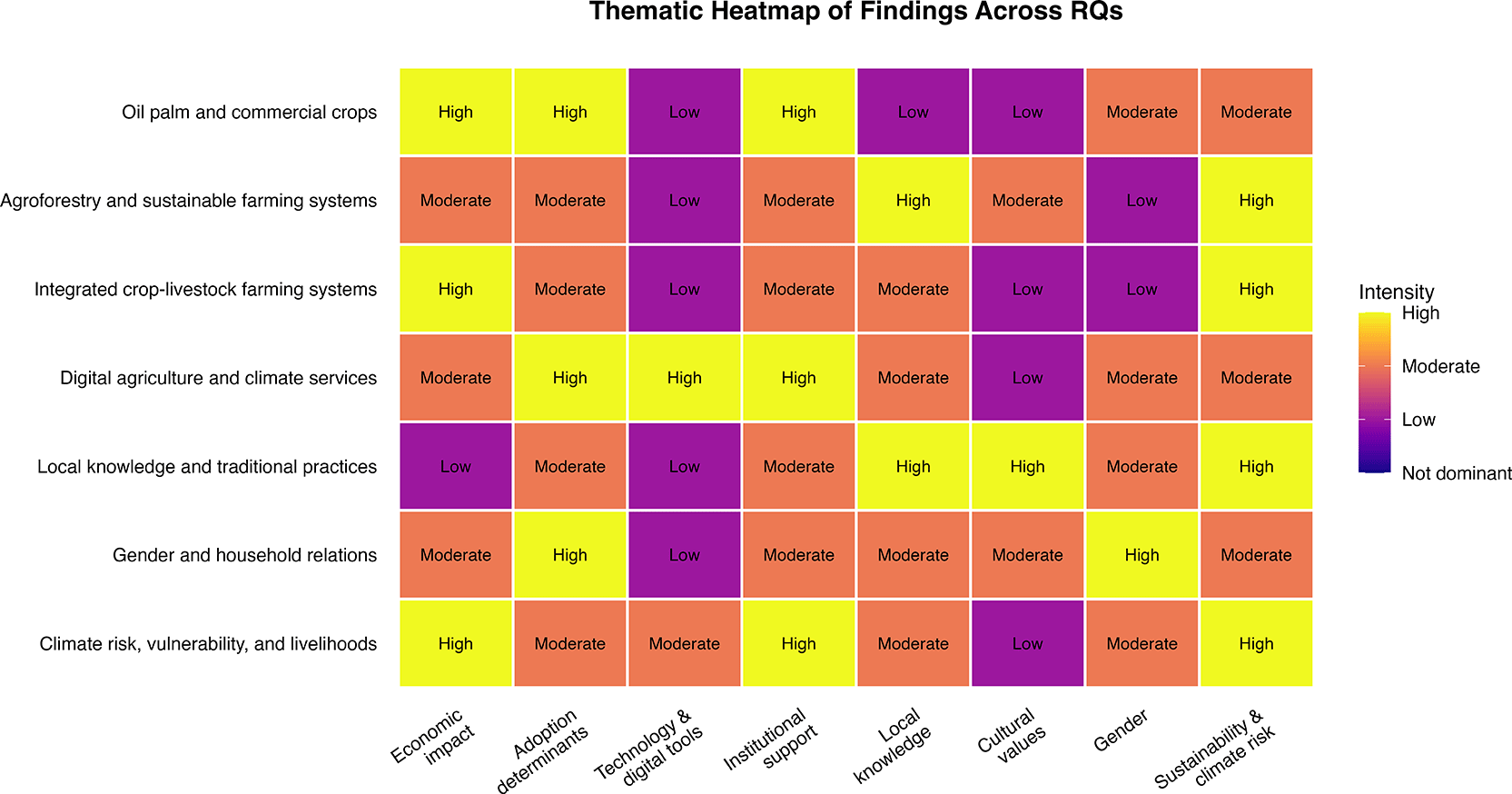
The heatmap summarizes the relative prominence of key themes identified across the 59 included studies. Intensity levels indicate whether each theme was not dominant, low, moderate, or high within each thematic group.
Figure 3 presents the conceptual framework derived from the synthesis. The framework shows that economic, technological, institutional, socio-cultural, and ecological factors shape smart farming adoption. Adoption then influences economic outcomes, including productivity, income, consumption, profitability, education expenditure, and food security. These outcomes further contribute to resilience and sustainability through livelihood resilience, adaptive capacity, ecological sustainability, and reduced vulnerability. The framework also shows that socio-cultural and ecological factors are not external or secondary elements. Rather, they are part of the adoption environment that determines whether technology becomes acceptable, usable, and sustainable. This supports the view that smart farming in tropical smallholder systems should be conceptualized as a socio-technical and socio-ecological process, not merely as technological modernization.
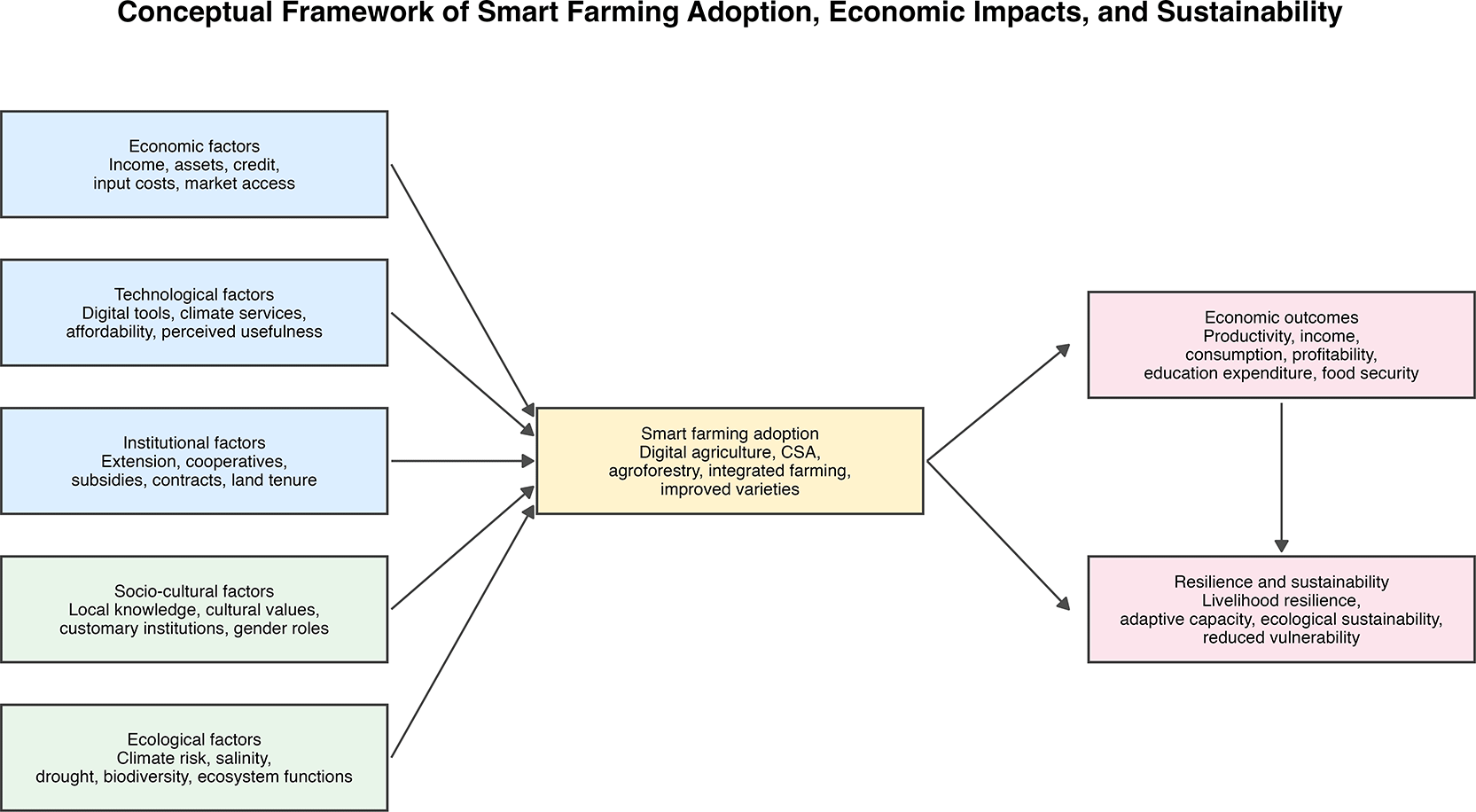
The framework illustrates how economic, technological, institutional, socio-cultural, and ecological factors shape smart farming adoption, which then influences economic outcomes, resilience, and sustainability among smallholder farmers.
The synthesis indicates that smart farming adoption in tropical smallholder systems is a conditional transformation process. Economic benefits depend on whether technologies are supported by adequate resources, accessible institutions, functioning markets, inclusive social relations, and ecological resilience. The reviewed evidence also shows that adoption is not determined only by technology performance. It is shaped by farmers’ capacity to adopt, willingness to use technology, institutional support, cultural compatibility, gender relations, and environmental constraints.
This integrated interpretation shows that smart farming should not be positioned as a stand-alone technological solution. Instead, it should be understood as a locally embedded process that connects economic incentives, institutional arrangements, cultural meanings, gendered resource access, and ecological limits. Thus, successful adoption depends on enabling policies, inclusive institutions, locally relevant knowledge integration, and sustainability-oriented farm management. Therefore, the main contribution of this review lies in linking smart farming adoption with agricultural economic outcomes, farm management decisions, rural development priorities, and policy-relevant sustainability strategies. This synthesis extends the discussion of smart farming by positioning adoption as an interaction between economic incentives, institutional access, cultural compatibility, gendered resource control, and ecological constraints.
This review has several limitations. First, the search was limited to the Scopus database, which may exclude relevant studies from other databases or grey literature. Second, the narrative-thematic synthesis did not allow for statistical pooling of effect sizes. Third, the broad definition of smart farming adopted in this review may have included studies that some readers would not consider as smart farming. Fourth, the review included articles published until 2026, and more recent studies may have emerged during the review process. Despite these limitations, the review provides a comprehensive synthesis of the evidence available up to the search date.
This systematic review has synthesized evidence from 59 articles on the economic impacts and adoption determinants of smart farming in tropical smallholder systems. The findings show that smart farming and related agricultural innovations can improve productivity, household consumption, income, profitability, education expenditure, food security, and livelihood resilience. However, these benefits are not automatic. They depend on farmers’ access to credit, extension services, markets, secure land tenure, affordable technology, institutional support, and the capacity to manage climate and ecological risks.
The review also shows that adoption is shaped by local knowledge, cultural values, gender relations, customary institutions, and sustainability concerns. Technologies are more likely to produce positive outcomes when they are compatible with local practices, culturally acceptable, gender-inclusive, and adapted to ecological conditions. Conversely, innovations that ignore social inequality, customary systems, land insecurity, market barriers, and environmental risks may produce limited or uneven benefits.
Overall, smart farming in tropical smallholder systems should be understood as a socio-technical and socio-ecological process, not merely as the introduction of modern agricultural technology. Policy support should therefore combine technological assistance with credit access, extension strengthening, market inclusion, land tenure security, gender-sensitive approaches, and recognition of local knowledge to improve farm management, rural development outcomes, and the economic resilience of smallholder agriculture. As this review was based on Scopus-indexed literature and narrative-thematic synthesis, future studies may expand the evidence base by incorporating additional databases, grey literature, bibliometric analysis, meta-analysis, and longitudinal empirical studies. Future research should prioritize longitudinal and comparative studies to examine how smart farming affects smallholder welfare, equity, and sustainability over time.
During the preparation of this work, the authors used Scopus AI to assist with literature identification and initial article search, and ChatGPT (OpenAI, GPT-4) for language refinement, readability improvement, and manuscript editing. After using these tools, the authors reviewed and edited the content as needed and take full responsibility for the content of the manuscript.
| Views | Downloads | |
|---|---|---|
| F1000Research | - | - |
|
PubMed Central
Data from PMC are received and updated monthly.
|
- | - |
Provide sufficient details of any financial or non-financial competing interests to enable users to assess whether your comments might lead a reasonable person to question your impartiality. Consider the following examples, but note that this is not an exhaustive list:
Sign up for content alerts and receive a weekly or monthly email with all newly published articles
Already registered? Sign in
The email address should be the one you originally registered with F1000.
You registered with F1000 via Google, so we cannot reset your password.
To sign in, please click here.
If you still need help with your Google account password, please click here.
You registered with F1000 via Facebook, so we cannot reset your password.
To sign in, please click here.
If you still need help with your Facebook account password, please click here.
If your email address is registered with us, we will email you instructions to reset your password.
If you think you should have received this email but it has not arrived, please check your spam filters and/or contact for further assistance.

Comments on this article Comments (0)