Keywords
Narrative intervention, narrative persuasion, behavior change, climate mitigation activities, randomized controlled trial

This article is included in the Climate gateway.
Narrative intervention, narrative persuasion, behavior change, climate mitigation activities, randomized controlled trial
Climate change is driven by increased greenhouse gas concentration in the atmosphere.1 India is considered highly vulnerable countries to these changes, possessing limited capacity to cope with the exposure. A national survey revealed that while approximately 70% of Indians believe global warming is happening, only 31% attribute it to natural environmental changes, highlighting a gap in understanding anthropogenic causes.2
Overconsumption is a primary driver of environmental degradation, creating a significant lag in carbon mitigation efforts.3 While policy planners have addressed climate impacts for decades, there is growing evidence that relying solely on technological solutions is insufficient. Instead, encouraging behavioral shifts to reduce excessive consumption is essential.3
Adaptation behavior is influenced by cognitive, affective, and socio-cultural factors. Shifting from automatic, associative thinking to deliberate, analytic thinking is one pathway to cognitively process climate action.4 However, behavioral modification depends on individuals perceiving the risk of climate change as sufficiently serious and believing they are capable of effective adaptation. Thus, understanding community perceptions is critical for implementing effective climate plans.5
Research in environmental psychology suggests that the arts, specifically stories and visuals, can influence attitudes and beliefs by making the “invisible” nature of climate change felt closely in the present and imagined future.6 Narrative persuasion, which embeds messages within a story featuring identifiable characters and a plot, enhances message retention and persuasion through identification and transportation.7
Despite high climate concern, data regarding the willingness to engage in climate actions remains scarce, and behavioral change interventions are rarely utilized in India. This study is believed to be the first in India to utilize a narrative intervention, examining whether persuasive narrative text can increase the willingness of young working professionals to adopt personal mitigation activities.
This study was designed as a feasibility and acceptability randomized controlled trial to assess the effectiveness of a narrative and behavioral science intervention. The study was conducted from April 2023 to August 2024. The study was undertaken after obtaining ethical clearance from the Institutional Ethics Committee at IIPH-Delhi (Certificate number: IIPHD_IEC_S_2023) and was prospectively registered with the Clinical Trial Registry of India (Registration number: CTRI/2023/03/051206). As an open-label study, participants were informed of the purpose and time commitment, and fully written informed consent was obtained before their participation. The study was conducted in accordance with the principles stated in the Declaration of Helsinki and other applicable guidelines.
Participants were working professionals aged 23 to 35 residing in the Delhi NCR region. Inclusion criteria required participants to be comfortable with English and to have read at least one climate change story previously. The population of interest included fiction readers with moderate risk perception, specifically those who believed global warming is human caused but did not view the risks as severe or personally important.
During screening, individuals were asked “How worried are you about global warming?”. Only those responding “somewhat worried” or “not very worried” were selected. Individuals selecting the category as “very worried” were excluded.
Eighty participants were randomly assigned (1:1) to either the intervention or control group (n = 40 each) using a computer-generated randomization sequence.
The intervention was delivered via a website designed specifically for the study.
Intervention group (Narrative & Engagement): Upon entry, participants chose a “climate change savior” avatar. This process included reinforcing messages (e.g., “That’s a great choice!”). Participants then read a story adapted from In Flight Entertainment by Helen Simpson, set in the Indian subcontinent. The interface included a progress bar and completion of the task triggered “joyful” reinforcement (Supplementary Figure 1). This approach aimed to reduce psychological distance and promote engagement.
Control group (Information only): Participants received objective information regarding good nutritive practices without behavioral science elements or narrative components. Navigation was limited to simple “next” and “close” buttons.
Outcomes were assessed at baseline (Pre), immediately post-intervention (Post), and at a one-month follow-up using items adapted from prior research on climate mitigation,8 climate views9 and narrative research10 (Supplementary Table 1).
Data were analyzed using R Version 4.6.0. Due to non-normal distribution, continuous data are presented as medians with interquartile ranges (IQR). Baseline differences were assessed using the Wilcoxon Rank-Sum test and Chi-squared/Fisher’s Exact Test.
To evaluate the intervention effect, a series of linear mixed-effects models were utilized. This approach was chosen to model the repeated-measures structure and to statistically control for significant baseline differences (confounding) in age, gender, and education identified during the randomization check. The definitive intervention effect was evaluated by the statistical significance of the Group * Time interaction term. A Pearson’s correlation was used to test the mechanism between Transportation scores and changes in PCMA. A P-value of <0.05 was considered statistically significant.
Of the 80 participants randomized, 12 were lost to follow-up, leaving 68 for final analysis (Intervention: n = 37; Control: n = 31). Distribution of sex and education did not differ significantly between groups ( Table 1). The intervention group was significantly younger (Median 25.0 vs. 27.0, P = 0.042) and had a significantly lower baseline PCMA score compared to the control group (Median 3.25 vs. 3.50, P = 0.043). There were no significant baseline differences in PACT or FI scores.
| Characteristic | Overall N = 68 | Control N = 31 | Intervention N = 37 | P-value 1 |
|---|---|---|---|---|
| Age, Median (IQR) | 26.0 (23.0, 28.5) | 27.0 (25.0, 29.0) | 25.0 (22.0, 28.0) | 0.042 1 |
| Gender, n (%) | 0.07 2 | |||
| Female | 46 (68%) | 25 (81%) | 21 (57%) | |
| Male | 22 (32%) | 6 (19%) | 16 (43%) | |
| Education, n (%) | 0.08 2 | |||
| Sciences | 50 (75%) | 26 (87%) | 24 (65%) | |
| Others (Commerce and Humanities) | 17 (25%) | 4 (13%) | 13 (35%) | |
| Baseline PACT, Median (IQR) | 3.50 (3.00, 4.00) | 3.50 (3.00, 4.00) | 3.50 (3.50, 4.00) | 0.30 1 |
| Baseline PCMA, Median (IQR) | 3.44 (3.00, 3.75) | 3.50 (3.25, 3.88) | 3.25 (2.88, 3.63) | 0.043 1 |
| Baseline FI, Median (IQR) | 3.50 (3.00, 4.00) | 3.75 (3.25, 4.00) | 3.25 (3.00, 3.75) | 0.075 1 |
For the intervention effects ( Table 2), the group × time interaction was not statistically significant for PCMA (B = 0.67, 95% CI: −0.79, 2.1, P = 0.362), PACT (B = −0.28, 95% CI: −0.71, 0.14, P = 0.184), or FI (B = 0.92, 95% CI: −0.53, 2.4, P = 0.211). Across both time points, the intervention group maintained significantly lower scores than the control group on PCMA (P = 0.029) and FI (P = 0.042).
A “ceiling effect” was observed as participants uniformly reported high initial concern regarding global warming and its future impacts, with a majority of the individual perception items scoring the maximum median of 4 (Supplementary Table 2). For within-group changes in behavioral willingness, the control group showed a small, significant increase in willingness to manage AC temperatures (P = 0.037), while the intervention group showed a marginal, non-significant trend (P = 0.053) (Supplementary Table 3). No other items showed significant pre-post change. Fisher’s Exact test found no significant difference between groups regarding beliefs in reducing catastrophic harm (P = 0.282).
Participants in the intervention group reported high engagement ( Figure 1), with median scores of 4 for “Imagined being the character” and 3 for “Felt fully absorbed”. However, Pearson’s correlation analysis revealed no significant relationship between engagement (Transportation score) and the change in willingness (PCMA change score) (r = −0.05, P = 0.757).
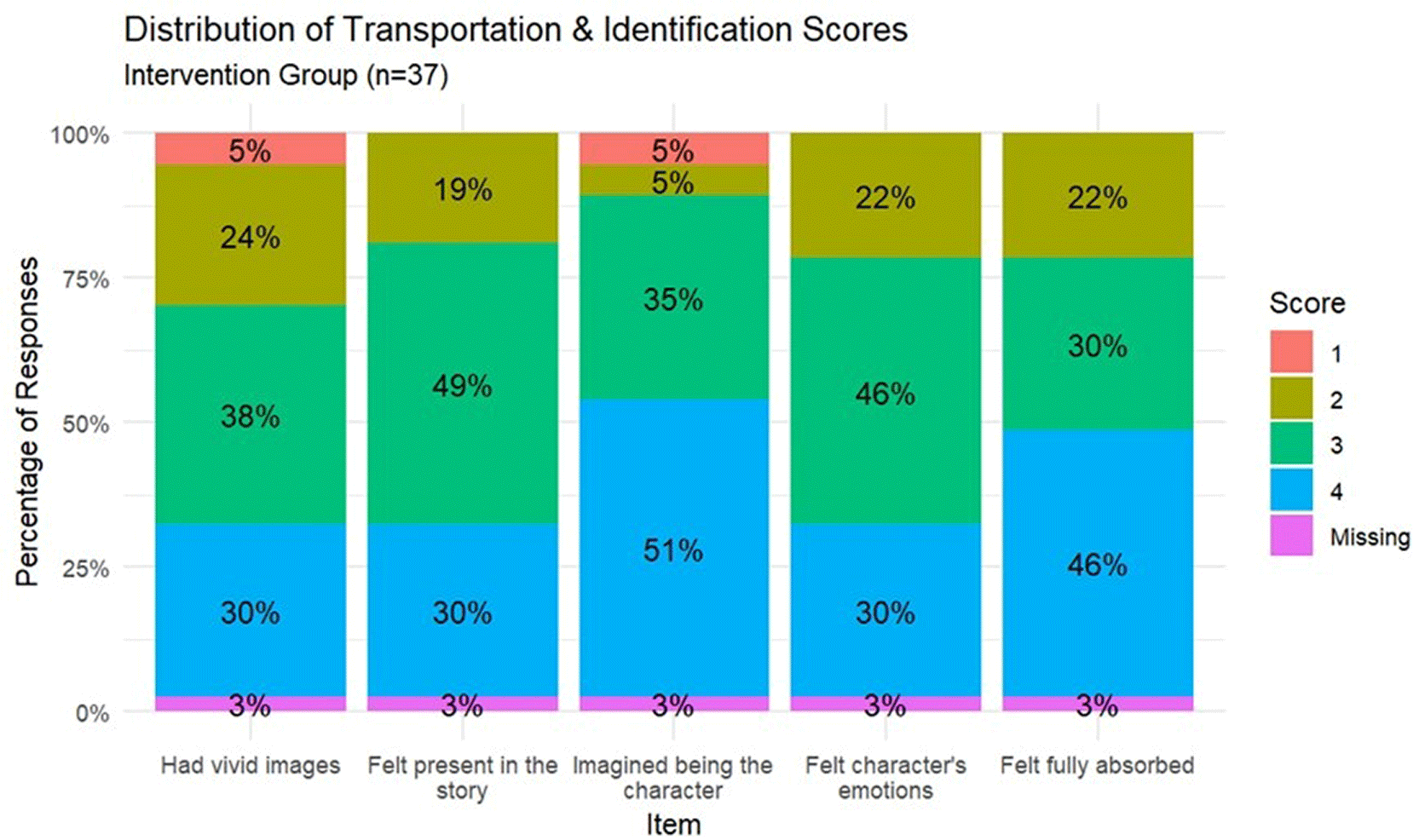
This study assessed the impact of narrative persuasion and behavioral science techniques on climate mitigation willingness among young working professionals. Contrary to the hypothesis, the results indicated no significant interaction effect between the intervention and time on PCMA scores. This is comparable to other studies suggesting that narrative style intervention may not always translate into behavior change11 or exert only a small impact on persuasion.12 While participants in the intervention group reported high levels of engagement with the story, this transportation did not translate into an immediate or sustained increase in behavioral willingness.
Several factors may explain these null findings. First, a “ceiling effect” at baseline significantly limited the room for improvement. Participants in both groups were already “somewhat” or “not very” worried, yet their baseline willingness to using LED bulbs or reducing plastic was already near maximum. This suggests that the barrier to climate action may not be a lack of willingness or awareness, but rather structural barriers where individuals intend to act but fail to do so due to external constraints. Prior literature posits that education and awareness, may be insufficient precursors for behavior change,13 while economic, institutional and socio-cultural barriers may constrain adoption of mitigation activities.14
Second, baseline imbalances from randomization complicated the interpretation of results. The intervention group was significantly younger and started with lower PCMA scores than the control group. Although linear mixed-effects models were used to statistically adjust for these confounders, the inherent differences suggest that the two groups may have had different starting motivations. The control group, being slightly older, may have already established more sustainable household habits, whereas the younger intervention group may have had less agency over their household infrastructure.
Third, the duration and intensity of the intervention may have been inadequate. While the transportation scores were high, literature often highlights that deeper behavioral changes typically require repeated reinforcement.15 The lack of correlation between transportation scores and PCMA change reinforces the possibility that while the story was entertaining, it was presented in third person perspective and did not successfully link the narrative world to the participants’ real-world behavioral choices. First person narratives have greater persuasive potential when compared to third person narratives.16
While our study is a novel application of narrative intervention in India, it is limited by a small sample, a short one-month follow-up, and reliance on self-reported willingness rather than observed behavior.
A brief, one-time narrative intervention combined with gamified elements was not sufficient to significantly increase the willingness for climate mitigation activities among young Indian professionals. Future research should explore longitudinal interventions, use of culturally specific narratives paired with structural “nudges”, and objective measures of behavior change.
The study was undertaken after obtaining ethical clearance from the Institutional Ethics Committee at IIPH-Delhi (Certificate number: IIPHD_IEC_S_2023) and was prospectively registered with the Clinical Trial Registry of India (Registration number: CTRI/2023/03/051206). The study was conducted in accordance with the principles stated in the Declaration of Helsinki and other applicable guidelines.
| Views | Downloads | |
|---|---|---|
| F1000Research | - | - |
|
PubMed Central
Data from PMC are received and updated monthly.
|
- | - |
Provide sufficient details of any financial or non-financial competing interests to enable users to assess whether your comments might lead a reasonable person to question your impartiality. Consider the following examples, but note that this is not an exhaustive list:
Sign up for content alerts and receive a weekly or monthly email with all newly published articles
Already registered? Sign in
The email address should be the one you originally registered with F1000.
You registered with F1000 via Google, so we cannot reset your password.
To sign in, please click here.
If you still need help with your Google account password, please click here.
You registered with F1000 via Facebook, so we cannot reset your password.
To sign in, please click here.
If you still need help with your Facebook account password, please click here.
If your email address is registered with us, we will email you instructions to reset your password.
If you think you should have received this email but it has not arrived, please check your spam filters and/or contact for further assistance.

Comments on this article Comments (0)