Keywords
Digital Social Innovation; Sustainability Literacy; Sustainability; Socio-technical Learning; Innovation Ecosystems; Sustainability Transitions

This article is included in the Research Synergy Foundation gateway.
Digital Social Innovation; Sustainability Literacy; Sustainability; Socio-technical Learning; Innovation Ecosystems; Sustainability Transitions
Despite growing awareness of sustainability challenges, a persistent gap remains between individual knowledge and collective action. Sustainability literacy - the capacity to translate environmental and social understanding into practical, habitual steps - has emerged as a critical framework for bridging this divide (Hamadi et al., 2024; Williams et al., 2025). Yet in practice, knowledge remains fragmented: individuals struggle to accumulate, share, and mobilize it toward meaningful collaboration. It is a problem of awareness and structure: traditional learning approaches tend to be project-oriented and episodic, lacking the institutional scaffolding needed to sustain the transition from literacy to impact (Sanabria-Z et al., 2022; Mintchev et al., 2022).
Addressing this structural gap requires reframing sustainability literacy not as a fixed body of knowledge but as a dynamic, collective process. Knowledge must be captured, collaboratively transformed, and embedded within socio-technical systems capable of supporting long-term capability building (Foster & Stagl, 2018; Barth et al., 2023). This perspective shifts the focus from individual learning outcomes to the institutional conditions that enable knowledge-to-action transitions to become continuous and self-reinforcing rather than one-off project deliverables.
Digital Social Innovation (DSI) has emerged as a promising vehicle for institutionalized learning. By operating simultaneously as an educational tool and an institutional framework, DSI holds the potential to convert isolated individual knowledge into coordinated collective action anchored in concrete problem-solving processes (Buck et al., 2025). Crucially, DSI positions technology not merely as a digitalization platform, but as a socio-technical strategy with social, individual, and institutional dimensions. Prior sustainability transition research has underscored the need to account for beliefs, motivations, and social drivers of change, alongside the institutional transparency required to reduce fragmentation (Friedrich & Hendriks, 2024). Yet how these dimensions interact within a DSI context and whether DSI can genuinely institutionalize sustainability literacy remain poorly understood.
To understand DSI’s role more precisely, it must be positioned not merely as a digital development instrument, but as a social framework that actively constructs the sustainability of knowledge; one that transforms isolated understanding into coordinated, concrete action through what scholars describe as a socio-technical approach (Florek-Paszkowska & Ujwary-Gil, 2025). When DSI is treated purely as a technological deployment, it tends to reproduce the fragmentation it aims to address: individuals engage with platforms episodically, institutions adopt tools without embedding them in broader learning cultures, and the knowledge-to-action transition stalls at the level of individual effort. DSI, by contrast, encourages engagement with group expectations rather than isolated personal ones, fostering the kind of sustained collaboration that organizations need to make sustainability a habitual, rather than exceptional, practice (Dionisio et al., 2024).
Social innovation literature has long recognized this collective dimension. Research examining collaborative, participatory, and culturally situated methodologies consistently points toward community-driven processes as the backbone of sustainable literacy development (Piccarozzi, 2017). Digital technology extends this further, enabling communities to co-create, share ideas, and experiment across geographic boundaries and amplifying what social practice already does well (Baker & Mehmood, 2015). What remains underexplored, however, is how this interaction between digital infrastructure and social practice actually operates as a structured learning mechanism within institutional settings, rather than as a loose aggregation of tools and communities.
Evidence suggests that DSI-related learning does not emerge from open, unconstrained environments. It is mobilized within innovation spaces that interact with both institutional norms and broader societal pressures (K. Stam et al., 2023). Sustainability, under this lens, is not the output of a single project but the product of continuous experimentation, repeated configuration, and deliberate process transitions accumulated over time (Mäkitie et al., 2023). Yet current research has largely failed to model how the individual, social, and institutional dimensions of this process co-evolve, treating them as separate variables of a learning ecosystem.
Social innovation incubators offer a particularly revealing context for examining these dynamics. By providing structured environments for mentoring, peer collaboration, and digital platform engagement, incubators create the conditions under which DSI can be studied not as an abstract concept but as a lived institutional practice. Young practitioners within these settings are especially relevant subjects: they are deeply embedded in digital culture, accustomed to collaborative learning modalities, and positioned at the intersection of idealism and institutional reality (Maynard et al., 2023). Studying them allows this research to trace how digitally mediated learning builds competencies simultaneously at the individual, collective, and organizational levels (Qureshi et al., 2021; Sanabria-Z et al., 2022; Mintchev et al., 2022).
Central to this study is a reframing of DSI as a leadership mechanism that initiates, guides, and sustains social innovation activities rather than organizations or platforms acting in the abstract. This perspective responds to a recurring limitation in DSI scholarship: the tendency to locate agency in systems and structures while leaving the human driver of those systems theoretically underspecified (Annosi et al., 2023; Mettenberger et al., 2024). By placing the individual leader at the center of analysis, this study asks not only whether DSI produces sustainability literacy, but under what leadership conditions that process becomes possible.
To answer this, the study proposes a model in which five leadership-level antecedents (social mission, innovation design, social impact focus, governance environment, and social environment) shape how DSI is practiced as a learning strategy, which in turn cultivates sustainability literacy. These antecedents represent distinct but interrelated dimensions of how a leader positions themselves relative to purpose, process, accountability, and innovation. Their influence on DSI learning, and DSI learning’s subsequent influence on sustainability literacy, is examined through a sequential mediation structure tested via PLS-SEM.
The empirical analysis reveals an important and theoretically informative finding at the measurement stage. Following rigorous assessment of validity and reliability through consistent PLS-SEM in SmartPLS 4, three constructs (social mission, innovation design, and social impact focus) demonstrated robust psychometric properties and were retained in the structural model. Governance environment and social environment did not meet the required thresholds for convergent validity and reliability and were therefore excluded from further analysis. Rather than a shortcoming, this study interprets the finding as a substantive signal: in the context of young social innovation practitioners operating within incubator settings in Indonesia, the learning dynamics of DSI appear to be most immediately driven by design intentionality, impact orientation, and mission clarity, while governance structures and environmental conditions may operate through more distal or conditional pathways that warrant dedicated future investigation.
Two research questions organize this inquiry. First, which leadership-level factors meaningfully shape DSI as a learning strategy within social innovation settings? Second, how does DSI learning, as enacted by individual leaders, translate into institutionalized sustainability literacy? Data were collected from 202 young practitioners leading social innovation activities within incubator settings in Indonesia: a context that renders these questions both empirically tractable and practically urgent, given the pace of digital transformation and the scale of sustainability challenges the country faces.
The remainder of this paper is structured as follows: Section 2 reviews the theoretical foundations and develops the research hypotheses. Section 3 describes the research methodology. Section 4 presents the results of the PLS-SEM analysis. Section 5 discusses the findings in relation to existing literature. Section 6 concludes with theoretical contributions, practical implications, and directions for future research.
This study is built on the intersection of socio-technical systems theory, social learning theory, and institutional theory of sustainability transitions. Each contributes a distinct but complementary layer of explanation. The socio-technical systems theory explains why digital and social dimensions of innovation cannot be treated separately; social learning theory explains how knowledge moves from individual practitioners to collective and institutional practice; and institutional theory explains under what conditions that movement becomes stabilized as durable organizational competency. Together, these three perspectives provide the conceptual architecture for understanding DSI learning strategy as a mediating mechanism between individual-level leadership orientations and institutionalized sustainability literacy.
Socio-technical systems theory, originally developed within the tradition of transition studies, holds that technological change and social change are co-evolutionary processes (Geels, 2002; Savaget et al., 2019). Applied to DSI, this theoretical lens reframes digital platforms not as standalone tools that deliver learning, but as socially embedded infrastructures whose learning potential is realized only through the organizational relationships, cultural norms, and institutional routines that surround them (Buck et al., 2025; Certomà & Corsini, 2021). This perspective is consequential for the present study because it shifts the analytical focus away from digital capability per se and toward the social and institutional conditions under which digital capability is converted into sustainability literacy.
Social learning theory extends this foundation by providing the micro-level mechanism through which socio-technical systems produce knowledge outcomes at the individual and collective levels. Drawing on Bandura's (1977) foundational work and its subsequent elaborations in organizational and sustainability learning contexts, social learning theory posits that knowledge is constructed through observation, interaction, and reflective practice within social environments (Bandura, 1977; Mezirow, 1991). In the DSI context, this means that sustainability literacy does not emerge simply because digital platforms make information accessible; it emerges because practitioners engage with one another around that information, test it against real-world problems, and collectively refine their understanding through iterative experimentation (Montiel et al., 2020; Höffken & Lazendic-Galloway, 2024). Social learning theory therefore explains both the pathway through which DSI learning strategy operates (social interaction mediated by digital tools) and why individual-level antecedents such as innovation design, social mission, and impact orientation matter: they shape the quality and direction of the social learning process itself.
Institutional theory completes the framework by explaining how learning outcomes become stabilized and reproduced beyond the level of individual or group activity. Drawing on the neo-institutional tradition, this perspective holds that organizational practices achieve durability when they become embedded in the formal and informal rules, norms, and cognitive frameworks that govern institutional life (DiMaggio & Powell, 1983; Scott, 2001). For sustainability literacy specifically, institutionalization means the transition from individual awareness and group competency to organizationally sanctioned routineswhere sustainability-oriented thinking and problem-solving become the expected standard of practice rather than the exceptional initiative of motivated individuals (Castaño et al., 2025; Jokinen et al., 2023). In the social innovation incubator context, this institutionalization process is both the goal of DSI learning strategy and its most demanding challenge: it requires that individual leaders not only enact sustainability-oriented learning but create the organizational conditions under which that learning outlasts their own direct involvement. The five antecedent constructs examined in this study (Social Mission, Innovation Design, Social Impact Focus, Governance Environment, and Social Environment) are theoretically positioned as the individual level conditions that determine whether DSI learning strategy can fulfil this institutional ambition (see Figure 1).
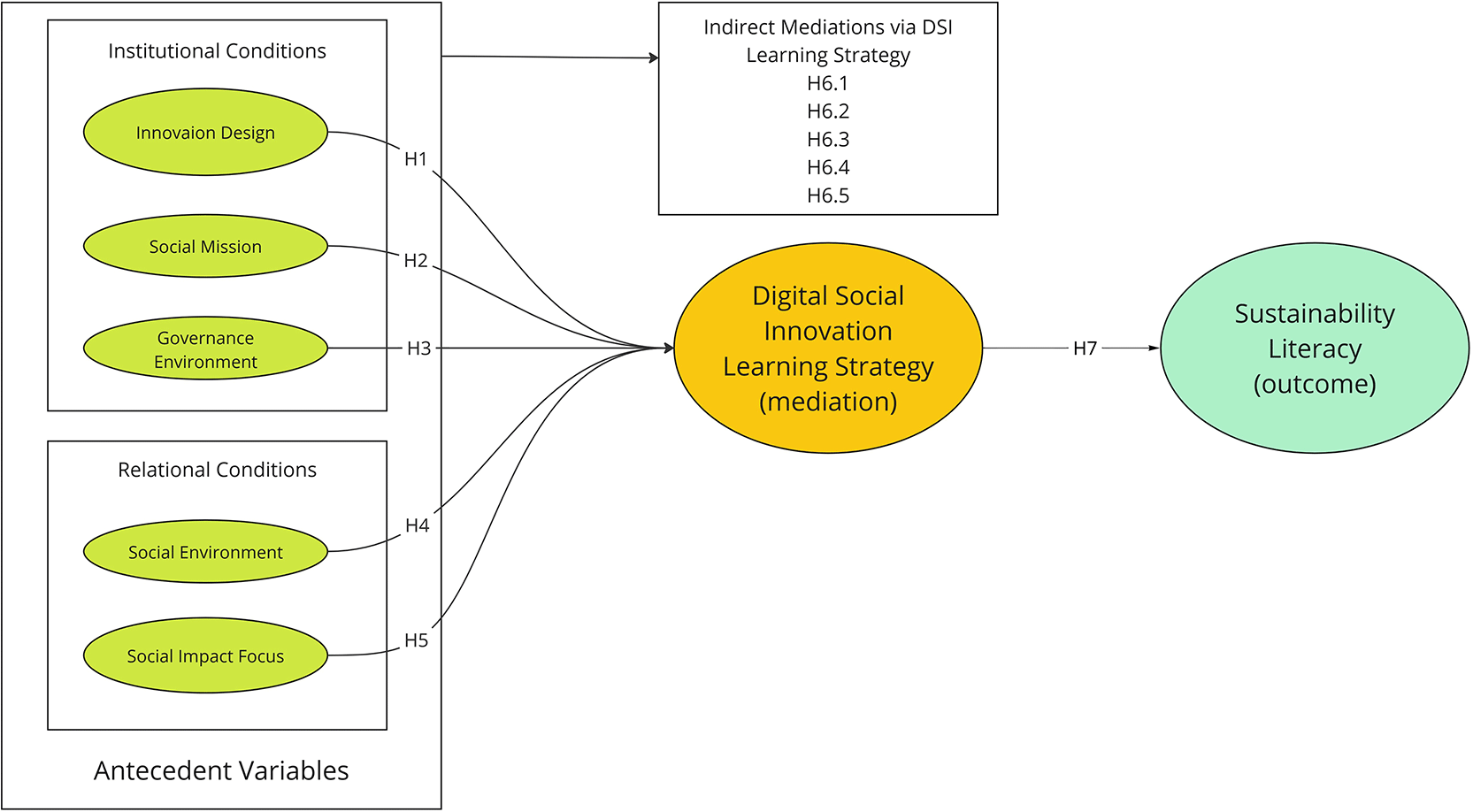
Good design, combined with the social mission and the integration of Digital Social Innovation into the framework, will determine the scope and intensity of the educational endeavors. Social innovators are usually motivated by the aspiration to address societal changes and emerging issues, and by the hope of generating social values, which are also defined as change agents within communities (Baker & Mehmood, 2015). The social-mission-oriented prioritizes the long-term impact of social and environmental objectives rather than efficiency and performance metrics to achieve the learning design.
Consequently, the spectrum of DSI is essential to further analysis of the connection between innovative design and social mission in educational methodology, as digital social innovation is shaped by the interaction of socio-technical design and normative social objectives (Certomà & Corsini, 2021). The review suggests that structuring the learning process and a social mission provide meaning and values, influencing learning motivation and perceived value of the learning outcome in a social innovation context (Strasser et al, 2019). Because every element contributes to the development of the learning environment, where sustained engagement is highly expected, collective reflection becomes routine, and there is alignment in the formation of a social mission, when digital technology is applied within an organization, these elements cannot be separated in the context of DSI. The effectiveness of DSI in promoting social organizations as a continuous learning is highly important.
(H1): Social mission empowers DSI learning strategy that leads to sustainability literacy.
Innovation design is a pivotal aspect for strategizing the social innovation initiative when facilitating learning, as design encompasses, particularly, the organization of technology and services that orchestrate levels of relationship and resources, and assists an individual in addressing challenges and exploring new possibilities (Piccarozzi, 2017). The innovation design itself will influence the diffusion of innovation through the configuration as a mechanism that affects perception, experimentation, and adoption of the new practice, with trialability, compatibility, and observability, which will eventually influence how learning and information dissemination take place (Rogers, 2003).
Furthermore, from an educational perspective, well-defined innovation could promote sustainable, iterative learning, in which experimentation, feedback, and adaptation occur in the real world (Ryan et al., 2025). The innovation design will facilitate the routine embedded in the learning practices beyond formal training settings (Foster & Stagl, 2018). It is pivotal to note that integrating infrastructure with innovation design eventually fosters collaboration and mutual learning among individuals, enabling social innovation to connect experience and the Development of new knowledge (Certomà & Corsini, 2021).
(H2): Innovation design leads to DSI learning strategy to achieve sustainability literacy. The stronger is the innovation design, the more persistent a social innovaton leader achieves sustainability literacy.
Besides the social environment, this literature considers the governance structure, where continuous learning in the context of social innovation should consider how arrangements affect the level of innovation and its sustainability. Governance consists of officials and formal and informal regulations that structure decision-making and accountability, affecting both participants and resources allocated within the organization (Piccarozzi, 2017). In the DSI context, effective collaboration often requires a structure that combines centralized coordination and decentralized participation to align strategy and localized experimentation, especially in educational practice (Shulla et al., 2020; Chen et al., 2020). Governance is sound when it is explicit, imposing regulations to restrict unnecessary flexibility (Masselot et al., 2023).
What is implied by the literature is that social environment and governance do not automatically act as direct accelerators of learning approaches in the DSI context, in contrast to innovative Design and social mission. However, the social environment and governance determine whether learning is possible in a socio-technical context (Strasser et al, 2019). It is crucial, then, to value a supportive social environment and governance that have a structure to promote institutional conditions necessary for DSI to function as an ongoing learning method (Certomà & Corsini, 2021). An unsupported governance framework suggests that weak social ties may impede the effectiveness of the mediated learning effort.
(H4): Governance environment structure DSI learning strategy to achieve sustainability literacy. The better is the governance environment, the stronger is the DSI learning strategy.
Social impact orientation occupies a distinct and somewhat paradoxical position in the DSI learning framework. On one hand, the entire premise of social innovation rests on a commitment to systemic societal and environmental transformation rather than short-term performance improvement (Piccarozzi, 2017; Baker & Mehmood, 2015). On the other hand, social impact is notoriously difficult to operationalize, abstract in its framing, and variable in its institutional interpretation which means its relationship to the learning process is rarely linear or direct (Strasser et al., 2019; Foster & Stagl, 2018).
This study positions social impact orientation as a normative boundary condition for DSI learning: it does not function as a straightforward input that produces learning outputs, but rather as the evaluative frame through which individuals and organizations decide what is worth learning, which problems deserve collective attention, and whether a given learning process is directionally aligned with sustainability goals. Social impact orientation requires individuals to engage in self-reflection about whether their actions serve broader social groups rather than personal interests (Foster & Stagl, 2018): a form of critical reflexivity that becomes a powerful filter for what knowledge gets prioritized and disseminated within the organization.
In the DSI context, social impact orientation shapes the content and legitimacy of learning rather than its mechanics. Digital technology can certainly create monitored, transparent communication environments; but when it comes to learning outcomes, the definition and salience of social impact within the organization will determine how problem-solving and decision-making are conducted, and therefore what sustainability literacy actually means in practice for that institution (Piccarozzi, 2017). From this perspective, social impact orientation should not be treated as peripheral to DSI learning; instead, it is the normative architecture within which DSI learning acquires meaning.
Institutionalizing this orientation requires more than a declared mission. It demands that learning processes, governance standards, and innovation practices are explicitly aligned with social accountability and environmental responsibility beyond static compliance toward dynamic innovation routines (Nazarko, 2020; Piccarozzi, 2017). For social innovation incubators, this means that social impact orientation is embedded not just in organizational rhetoric but in the actual design of learning activities, the criteria by which progress is assessed, and the standards by which members are invited to reflect on their contributions.
The empirical relationship between social impact orientation and DSI learning, however, may not be direct in all institutional contexts. Where social impact is treated as a given organizational value (as is often the case in social innovation incubators where participants self-select into impact-driven work) its influence on learning may operate at a more foundational level, shaping the institutional preconditions for DSI rather than serving as a proximate trigger of learning activity. This conditional positioning does not diminish its theoretical importance; rather, it suggests that social impact orientation may exert its most significant influence in interaction with other structural and relational factors, including governance systems and social mission clarity.
(H3): Social impact focus structure DSI learning strategy to achieve sustainability literacy. The better is the social impact focus, the stronger is the DSI learning strategy.
The social environment within digital social innovation is not merely a backdrop against which learning occurs. Collaboration, trust, and participatory interaction are the defining characteristics of a productive social environment in DSI, and these factors collectively shape the degree to which knowledge moves from individual holders into shared organizational practice (Baker & Mehmood, 2015; Strasser et al., 2019). Without a sufficiently open and mutually supportive social environment, even well-designed DSI initiatives tend to produce episodic learning rather than the continuous, institutionalizing learning that sustainability literacy requires.
Digital tools have extended the reach and depth of this social environment in important ways. Social media platforms and digital collaboration tools have enabled non-hierarchical participation, reflective communication, and real-time problem-solving across organizational boundaries (Nambisan, 2017; Certomà & Corsini, 2021). The transparency created by digital interaction further reinforces these effects, making individual and group contributions visible in ways that traditional learning environments rarely achieve (van de Gevel et al., 2020; Osorno-Hinojosa et al., 2022).
Critically, however, the social environment’s influence on DSI learning is relational rather than mechanical. Its effects are mediated by the quality of interpersonal commitment within the group with which members engage, the mutual support they extend, and the degree to which interaction is treated as a collective responsibility rather than an individual choice (Strasser et al., 2019). This relational quality is particularly salient among young social innovation practitioners, whose learning cultures are still being formed and who are especially sensitive to the norms and interpersonal dynamics of the environments in which they work. In this context, a strong social environment does not simply accelerate learning; it makes the kind of collaborative, sustainability-oriented learning that DSI demands structurally possible.
It is worth acknowledging, however, that social environment may not always operate as a direct and immediately visible antecedent of DSI learning. In institutional contexts characterized by loose organizational structures (such as social innovation incubators in developing countries) the social environment may function more as a moderating or enabling condition, shaping how other more proximal drivers of DSI learning (such as innovation design and social mission) are received and enacted, rather than independently generating learning activity on its own. This conditional character is itself theoretically informative and warrants empirical examination.
(H5): Social environment foster DSI learning strategy to achieve sustainability literacy. The better is the social environment, the more persistent is the DSI learning strategy.
Digital Social Innovation is not a passive conduit between antecedent conditions and sustainability outcomes. It is an active, iterative mechanism through which individual orientations and organizational conditions are converted into collective learning practice (Buck et al., 2025; Certomà & Corsini, 2021). DSI operates as a socio-technical system in which digital infrastructure and social interaction are mutually constitutive, meaning that the learning it generates is neither purely technological nor purely social, but emerges from their ongoing integration within an organizational context (Certomà et al., 2020; Dionisio et al., 2024).
This mediating role is theoretically grounded in the socio-technical learning systems perspective, which holds that knowledge is not simply transmitted through digital tools but is propagated and consolidated through the social dynamics those tools facilitate (Buck et al., 2025). DSI learning strategy, in this sense, is the mechanism through which individual-level antecedents (whether oriented toward design, mission, governance, environment, or impact) acquire institutional form and directional coherence. Without this mediating layer, the connection between individual practitioner orientations and organizationally stabilized sustainability literacy would remain fragmented and episodic. The following hypotheses examine how each of the five antecedent constructs reaches sustainability literacy through this mediating mechanism, rather than independently of it.
Social mission provides the normative foundation upon which DSI learning is built and given direction. In social innovation, mission clarity is is the evaluative framework through which practitioners determine which knowledge is worth pursuing, which problems deserve collective attention, and how learning outcomes should be assessed against social and environmental criteria (Piccarozzi, 2017; Strasser et al., 2019). Without an explicit social mission, DSI learning risks becoming technically proficient but normatively directionless.
Mission statements and value commitments, however sincere, remain at the level of intention until they are operationalized through structured learning activities that make them actionable and institutional (Jokinen et al., 2023). DSI learning strategy serves as the bridge between mission as declared value and sustainability literacy as enacted institutional competency. It is through the learning process that social mission is translated from personal conviction into shared organizational practice (Foster & Stagl, 2018).
This mediating pathway is also supported by the socio-technical learning literature which emphasizes that the sustainability of organizational knowledge depends on the alignment between the normative goals of an institution and the learning mechanisms it employs (Barth et al., 2023; Holst, 2023). When social mission and DSI learning are well aligned, practitioners experience the learning process as meaningful and directionally coherent.
DSI learning strategy mediates the relationship between social mission and sustainability literacy, such that a clearer and more institutionally embedded social mission strengthens DSI learning, which in turn deepens the development of sustainability literacy.
Innovation design in the context of DSI refers to the deliberate structuring of social innovation activities in which practitioners make about how problems are framed, how solutions are iterated, and how learning is embedded into the innovation process itself. Research consistently identifies design intentionality as a critical enabler of organizational learning, particularly in digital innovation contexts where the absence of structured design leads to technology adoption without meaningful knowledge integration (Rogers, 2003; van de Gevel et al., 2020). When innovation is designed with participatory principles, the resulting process aligns naturally with the socio-technical learning logic of DSI (Calabrese et al., 2021; Dionisio et al., 2024).
A well-designed innovation process creates the conditions for DSI learning to function as a genuine socio-technical mechanism. Without the DSI learning layer, design quality alone produces innovation activity but not necessarily sustainability literacy, since the translation of design intentions into durable, sustainability-oriented institutional knowledge requires a structured learning process as its carrier (Certomà & Corsini, 2021; Buck et al., 2025). This relationship is further supported by research showing that digital platforms, when embedded within intentional innovation design, enable the kind of iterative, reflective learning that sustainability literacy demands (Nambisan, 2017; Osorno-Hinojosa et al., 2022). In the context of young social innovation leaders in Indonesian incubators, innovation design represents one of the most proximal and controllable antecedents of DSI learning quality, making its mediated relationship with sustainability literacy both theoretically expected and empirically tractable.
DSI learning strategy mediates the relationship between innovation design and sustainability literacy, such that higher quality innovation design strengthens DSI learning, which in turn enhances the institutionalization of sustainability literacy.
Social impact orientation refers to the degree to which individual practitioners and their organizations are guided by an explicit commitment to long-term societal and environmental transformation, as distinct from short-term performance metrics (Piccarozzi, 2017; Foster & Stagl, 2018). However, research consistently notes that social impact is inherently abstract and context-dependent, making its direct operationalization within a learning framework technically challenging (Strasser et al., 2019).
This abstraction is precisely why DSI learning strategy assumes particular theoretical importance as a mediator in this relationship. Social impact orientation cannot produce sustainability literacy on its own; it requires a structured learning mechanism that translates normative impact commitments into concrete organizational practices, documented knowledge, and institutionalized competencies (Foster & Stagl, 2018; Certomà & Corsini, 2021). DSI learning strategy provides this translation mechanism: through iterative digital collaboration, reflective practice, and collective problem-solving, impact orientation is operationalized into specific learning activities that are directionally aligned with sustainability goals.
Rogers' (2003) diffusion of innovations framework also highlights that the adoption of new practices depends not only on the perceived desirability of outcomes but on the compatibility and trialability of the mechanisms through which those outcomes are pursued. DSI learning strategy serves as the compatible and triable mechanism through which social impact orientation finds its organizational expression. Furthermore, research on sustainability transitions confirms that impact-oriented actors are most effective at producing systemic change when they operate through structured learning environments that give their orientations institutional form and legitimacy (K. Stam et al., 2023; Mäkitie et al., 2023).
DSI learning strategy mediates the relationship between social impact focus and sustainability literacy, such that a stronger organizational commitment to social and environmental impact deepens DSI learning, which in turn strengthens the institutionalization of sustainability literacy.
Governance structure in the DSI context refers to the formal and semi-formal systems through which social innovation activities are regulated, accountable, and aligned with broader institutional standards. In innovation organizations, governance performs a dual function: it creates the procedural transparency and accountability that legitimize learning activities, and it establishes the institutional scaffolding within which experimentation and knowledge sharing can occur without organizational risk (Nazarko, 2020; Piccarozzi, 2017). From a sustainability perspective, effective governance ensures that learning is not only innovative but also responsible; embedded within frameworks of social accountability and environmental consideration.
The theoretical basis for DSI learning strategy mediating the governance-literacy relationship lies in the recognition that governance structures do not produce learning directly. Rather, they create the institutional conditions under which DSI learning can be legitimately pursued, formally recognized, and systematically integrated into organizational practice. Research on institutionalized learning emphasizes that the stabilization of knowledge within organizations requires not only the motivation to learn but also the structural authorization to do so: governance provides precisely this authorization, while DSI learning strategy provides the mechanism through which authorized learning is enacted (Certomà & Corsini, 2021; Buck et al., 2025).
Furthermore, when governance systems make decision-making visible and participation legitimate, digital platforms can be used not merely for communication but for genuine collective knowledge construction (Nazarko, 2020; van de Gevel et al., 2020). It is important to note, however, that in newly established or loosely structured incubator environments, formal governance systems may still be developing, which means their mediated effect on sustainability literacy may be conditional on organizational maturity.
(H6.4): DSI learning strategy mediates the relationship between governance environment and sustainability literacy, such that more transparent and accountable governance systems strengthen DSI learning, which in turn facilitates the institutionalization of sustainability literacy.
The social environment within DSI encompasses the relational and interactional quality of the organizational context in which learning occurs, including trust between members, the openness of participation, and the degree to which collaboration is treated as a structural norm rather than an optional activity (Strasser et al., 2019; Baker & Mehmood, 2015). A high-quality social environment creates the relational preconditions for DSI learning to function as genuine collective knowledge construction, rather than as parallel individual activity loosely coordinated through digital tools (Certomà & Corsini, 2021).
The mediation argument here draws on socio-technical learning theory, which holds that digital tools amplify the social dynamics already present in an organizational environment rather than creating those dynamics from scratch (Nambisan, 2017). A collaborative, trusting social environment enables DSI platforms to be used for substantive knowledge exchange. A poor social environment, conversely, reduces digital platforms to broadcast channels where information is transmitted but not genuinely processed or integrated (Osorno-Hinojosa et al., 2022).
This relational mediation logic is particularly relevant in the Indonesian social innovation incubator context, where interpersonal trust and community cohesion are culturally significant determinants of collaborative engagement (Baker & Mehmood, 2015). Research on collective learning in digitally mediated environments further supports the expectation that social environment quality predicts DSI learning depth, which in turn predicts the degree to which sustainability literacy becomes institutionalized rather than remaining at the level of individual awareness (Barth et al., 2023; Strasser et al., 2019). Importantly, social environment may function more reliably as an indirect, mediated antecedent than as a direct driver of literacy outcomes: a theoretical expectation that the current study is positioned to test empirically.
(H6.5): DSI learning strategy mediates the relationship between social environment and sustainability literacy, such that a more collaborative and trust-based social environment strengthens DSI learning, which in turn enhances the institutionalization of sustainability literacy.
Sustainability literacy is best understood not as a fixed individual competency, but as an emergent capability that rises when individual knowledge is systematically integrated into structured institutional learning and progressively stabilized into shared practice (Castaño et al., 2025). This distinction matters for how learning is designed and evaluated. The more theoretically defensible position, supported by an expanding body of literature, is that literacy becomes sustainable precisely when the learning process operates at a level where individual knowledge is continuously drawn outward (Barth et al., 2023; Sposab & Rieckmann, 2024).
This multidimensional character of sustainability literacy has direct implications for how it is studied. It cannot be captured through a single static measure, nor through self-reported knowledge alone. It manifests across interconnected learning levels: individual cognitive integration, collective sense-making and communication, and institutional conditioning that transforms one-off learning events into durable innovation routines (Barth et al., 2023; Holst, 2023). Literacy continuity, in this sense, is a property of the relationships between learning loops across these levels, and of the organizational context that gives those loops coherence and direction.
Existing research has largely examined sustainability literacy from the organizational or systemic level, treating institutions as the primary agents of sustainable learning (Foster & Stagl, 2018; Jokinen et al., 2023). While this macro-level view is valuable, it risks obscuring the reality that institutional learning is initiated, sustained, and given direction by specific individuals who occupy bridging roles within organizations. In the context of social innovation, these individuals are not passive participants in a system; they are the actors who decide what knowledge gets shared, how experimentation is framed, and whether collaborative learning becomes a routine or remains an exception.
This study therefore positions the individual social innovation leader as the entry point of the sustainability literacy process, not as its end point. The individual leader is the one who first encounters sustainability challenges, interprets them through a particular value orientation, designs responses that draw others in, and creates the conditions under which collective and institutional learning can take root. Without attending to this individual-level initiation, explanations of how sustainability literacy becomes institutionalized remain structurally incomplete. As Jokinen et al. (2023) observe, sustainability literacy in practice involves the ongoing translation of specialized individual knowledge into generalized institutional competencies.
This framing also responds to a broader critique in the sustainability transitions literature, where agency has been consistently identified as undertheorized relative to structural and systemic factors (Annosi et al., 2023; Mettenberger et al., 2024). It is important to view literacy sustainability not as a single competency, but rather as the manifestation of complex elements, including individual ability, community understanding, and practices that are not isolated to one person’s capability within an institution. In other words, Sustainability literacy can be understood as an emergent capability that arises when the integration of individual competencies and structured institutionalization in learning activities occurs and the stabilization of knowledge is formed and created. (Castaño et al., 2025).
DSI learning strategy strengthen the sustainability literacy, such that a stronger DSI learning strategy potentially creates more outcome on sustainability literacy.
The approach taken in this research to address the challenges of the issue is pragmatic, employing a quantitative research design in which the position of Digital Social Innovation (DSI) is investigated in the context of a Social Innovation Incubator. This study applies a cross-sectional survey approach to assess the factors suspected to influence DSI and to examine its effectiveness in enhancing sustainability literacy. We view this methodology as suitable for analyzing socio-technical aspects, as statistical modeling enables the examination of complex relationships among latent constructs within socio-technical learning systems (Hair et al., 2014).
In the quantitative approach, data were collected from social innovation leaders and analyzed using Partial Least Squares Structural Equation Modelling (PLS-SEM) to investigate the relationships affecting DSI effectiveness. PLS-SEM is considered a quantitative tool capable of modeling complex phenomena, in which various latent components can be formed and tested to formulate novel theories (Hair et al., 2014). Given the objective of empirically testing the proposed conceptual framework, PLS-SEM is appropriate for analyzing predictive relationships and examining mediation effects within the model.
The context of this research is applied to social innovator leaders in incubators operating in the field of social innovation, characterized by the promotion of technology-based and technology-driven projects, particularly related to the dissemination of information technology aimed at addressing social challenges. In this study, social innovation leader as an individual is analyzed to examine the learning structure within related organization and how technology is used to share information, with a focus on assessing the organization’s sustainability literacy. This research views social innovation leaders as a favorable context for studying DSI because aspects of digital technology use are considered not only from the perspective of IT project implementation but also from those of social, institutional, and organizational influence throughout the entire leadership process.
Indonesia was chosen for its unique social context, in which digitalization is adopted alongside environmental challenges, making it an important context for research, particularly regarding the impact of incubators operating in the field of social innovation. Sustainability is essential in Indonesia, given the still significant social and environmental challenges. Nevertheless, this study does not intend to generalize at the national level; instead, it focuses on the contextual and conceptual significance, including economic transition, resource limitations, location, and diverse cultures, which are expected to enrich the insights from this study.
The selection of respondents aged 19 to 30 in this study is deliberate and theoretically grounded across three intersecting rationales: developmental, digital, and contextual. From a developmental standpoint, the 19–30 age range corresponds to what Arnett (2000) theorizes as emerging adulthood: a distinct life stage characterized by identity exploration, heightened openness to value formation, and active engagement with social and institutional roles. This period is particularly significant for sustainability literacy research because it represents the window during which individual sustainability orientations are most formative and most susceptible to institutional shaping (Castaño et al., 2025; Jokinen et al., 2023). Young adults in this range are neither passive recipients of organizational norms nor fully socialized into fixed professional identities: they are actively constructing the knowledge frameworks, collaborative habits, and mission commitments that will later define their institutional contributions. Studying them at this developmental stage therefore captures the sustainability literacy formation process at its most dynamic and consequential point, rather than examining outcomes that have already been stabilized or calcified through years of professional experience.
From a digital engagement standpoint, individuals aged 19 to 30 represent the cohort most deeply embedded in the digital cultures and platform practices that DSI depends upon. Research consistently identifies this age group as the most active and fluent users of digital collaboration tools, social media platforms, and participatory digital environments through which DSI learning strategy operates (Maynard et al., 2023; Nambisan, 2017). Their familiarity with digital tools is not merely instrumental; it is culturally constitutive, meaning that digital interaction is already integrated into how they construct knowledge, build social relationships, and engage with institutional problems. This makes them uniquely positioned to evaluate DSI not as an external technological intervention but as a learning environment they inhabit and co-produce.
From a contextual standpoint, the 19 to 30 demographic constitutes the primary active population within social innovation incubators in Indonesia. This age group represents the dominant participant profile in incubator programmes nationally, where youth-led social entrepreneurship has been actively promoted through government and civil society initiatives as a strategic response to sustainable development challenges (OECD, 2019; Dionisio et al., 2024). Focusing on this group therefore ensures that the sample is not only theoretically appropriate but also institutionally representative of the population most directly engaged with DSI in the Indonesian development context. Furthermore, research on social innovation in developing countries consistently identifies young practitioners as the primary agents of grassroots digital innovation: the individuals who translate sustainability goals into practical, locally embedded solutions (Mettenberger et al., 2024; Friedrich & Hendriks, 2024).
Regarding data collection, the researchers chose a purposive sampling strategy to obtain respondents who are considered to provide insights into the effectiveness of DSI, especially in relation to sustainability literacy. It means we set clear criteria for selecting respondents: only those who are actively involved in an incubator, where the incubator must be related to the mission of social innovation and use digital technology to address social and sustainability challenges. In our quantitative survey, we collected 202 surveys from young individuals aged 19 to 30 who were active in social innovation within the social innovation incubator. The data collection process was conducted over 3 months using Google Forms for the online questionnaire, with informed consent obtained beforehand to ensure participants’ voluntary participation.
To measure the quantitative attributes, we use the five-point Likert scale ranging from 1 (strongly disagree) to 5 (strongly agree). The measured items were extracted from the literature on social innovation, digital collaboration, and sustainability-oriented learning to encompass the learning-oriented and socio-technical aspects of DSI’s positioning. Based on the literature review and analysis of the pivotal element in DSI for Social Innovation Incubators, we formulate seven latent constructs: Innovation Design, Social Mission, Governance Environment, Social Environment, Social Impact Focus, Digital Social Innovation Learning Strategy, and Sustainability Literacy ( Table 1). All latent variables reflect and encapsulate the practitioner’s subjective learning context, attitude, and experiences, rather than the objective structural elements, to align with prior applications of PLS-SEM in sustainable learning and social innovation research. These indicators are positioned to manifest the perception of covariance as learning-related variables develop.
This study building constructs and indicators to review the innovative design in learning opportunities and social mission for framework experimentation. This indicator also examines how governance and social impact shape the institutional conditions in which DSI initiatives operate. The importance of indicators is to review how sustainability for environmental, economic, and social factors in the community context, which is the social innovation incubators for the DSI learning strategy.
The SmartPLS 4.0 software is used to run Partial Least Squares Structural Equation Modelling (PLS-SEM) calculations for the chosen quantitative method. PLS-SEM supports the context analysis of this study as an appropriate method for exploratory research and theory-building, as it can handle complex models with multiple variables and indicators. The PLS-SEM focuses on predictive analysis rather than covariance-based model fit, which positions PLS-SEM as a good choice for analyzing complex socio-technical learning models (Hair et al., 2014).
The PLS-SEM protocol was used to evaluate the measurement model’s reliability and robustness, including indicator reliability, internal consistency, convergent validity, and discriminant validity. Thus, this study evaluates the path coefficients, R2, effect sizes, and predictive relevance, where the bootstrap technique with a 5% significance threshold is applied to manage and understand the hypothesis testing of the research (Hair et al., 2014).
We applied standard validity and reliability assessments, following the principles of Partial Least Squares Structural Equation Modeling (PLS-SEM), to ensure the robustness and credibility of the findings. Thus, we evaluate the model in two stages. The indicators of reliability, internal consistency, convergent validity, and discriminant validity are all thoroughly investigated and recommended for PLS-SEM procedures (Hair et al., 2017; Hair et al., 2019). We use outer loadings for indicator reliability, and for internal consistency reliability we use Composite Reliability (CR) as one of the most appropriate compared to Cronbach’s alpha in PLS-SEM (Hair et al., 2017). We also assess convergent validity by applying Average Variance Extracted (AVE), to make sure each construct explains substantial portion for all the variance of the indicators (Fornell & Larcker, 1981; Hair et al., 2019). Furthermore, discriminant validity was evaluated in this study to make sure that the distinction of empirical aspects of the phenomenon model to be captured (Hair et al., 2014).
For the measurement model of this study, we investigate the structural model to determine the interrelation among the construct variables developed. We investigated the path coefficients, coefficients of determination (R2), and effect sizes (f2) to understand the relative impact of each exogenous construct. We conduct collinearity diagnostics to confirm that multicollinearity did not affect the computed relationships. The purpose is to confirm that the reliability of the hypothesis testing is strengthened to provide a more robust understanding of Digital Social Innovation as learning styles, and to review its impact on sustainability literacy (Hair et al., 2014). This study implements procedural adjustments aimed at reducing the risk of the likelihood of common method bias resulting from data that is indeed dependent on human perception. The procedural measures referred to include ensuring the anonymity of respondents, reducing item ambiguity, and aligning measurements so that they can be viewed from a quantitative perspective. These measurements will be predominantly observed for common method variance.
Ethical standards for investigations involving human participants are adhered to, with due consideration of ethical principles. We obtained informed consent from all participants to ensure voluntary involvement in the survey. The researcher ensured participants’ anonymity was maintained. The research team entity with access to securely private data was also considered, and all review boards granted institutional evaluation.
The total survey sample for this study comprises 202 participants involved in social innovation initiatives or projects within social innovation incubators. We selected only participants who met the specified inclusion criteria: direct involvement in a digitally mediated social innovation project or initiative whose purpose is to address emerging sustainability-related challenges.
In Table 2, the result shows that participants are predominantly young practitioners aged 19 to 30, as all respondents fall within the predefined age category. The sample includes both male (47.52%) and female (52.48%) participants across various organizational positions, with the majority serving as Field Leaders (77.72%). Respondents are primarily located outside Java (91.09%), and their organizations operate in service (35.6%), product (31.1%), or combined service–product models (33.1%).
To achieve robustness and reliable results that support the constitution of a correct model, the PLS-SEM protocol is reinforced with Consistent PLS-SEM algorithm to measure indicator reliability, construct validity, and internal consistency, in line with PLS-SEM guidelines (Hair et al., 2019). The consistent PLS-SEM (PLSc-SEM) algorithm performs a correction of reflective constructs’ correlations so that the result is consistent with a factor-model.
4.2.1 Construct Reliability and Validity
To achieve indicator reliability, this study evaluated the extent to which each indicator adequately represented its respective latent construct using the outer loading coefficient. Our measurement model consisted of seven reflective constructs namely Social Mission (KC), Innovation Design (KP), Social Impact Focus (KU), Governance Environment (KS), Social Environment (KM), Digital Social Innovation Learning Strategy (DSI), and Sustainability Literacy (SL) which operationalized in the measurement instrument.
Table 3 presents the reliability and validity statistics for all seven constructs in the measurement model. Five constructs (Social Mission (KC), Innovation Design (KP), Social Impact Focus (KU), DSI Learning Strategy, and Sustainability Literacy (SL)) demonstrated satisfactory reliability and convergent validity across all criteria. Cronbach’s alpha values for these constructs ranged from 0.754 to 0.937, all exceeding the 0.70 threshold. Composite reliability (ρ_c) values ranged from 0.863 to 0.952, and ρ_a values ranged from 0.854 to 0.938, both comfortably above the minimum requirement. AVE values for these five constructs ranged from 0.504 to 0.800, each surpassing the 0.50 convergent validity threshold, indicating that the majority of variance in each construct is explained by its indicators rather than by measurement error.
It is worth noting that Innovation Design (KP) exhibited a moderate divergence between ρ_a (0.898) and ρ_c (0.863). While both values exceed the reliability threshold, this gap suggests that certain indicators within the construct carry unequal reflective weight, which is consistent with the item-level heterogeneity inherent in a multidimensional design construct. Both reliability estimates remain within acceptable ranges, and the AVE of 0.629 confirms adequate convergent validity; the construct was therefore retained in the structural model.
Two constructs (Social Environment (KM) and Governance Environment (KS)) did not satisfy the full set of validity criteria and were consequently excluded from the structural model. Social Environment (KM) returned a ρ_c of 0.783 and an AVE of 0.504, which is borderline if considering the 0.50 convergent validity criterion. This indicates that the indicators comprising this construct share insufficient common variance with the latent variable, suggesting that the construct as operationalized did not adequately capture the social environment dimension in this particular sample context. Governance Environment (KS), while achieving acceptable Cronbach’s alpha (0.829) and ρ_a (0.890), returned an AVE of 0.574 indicating that measurement error accounted for a disproportionate share of indicator variance relative to the construct itself. Although some prior studies have applied a relaxed AVE threshold of 0.40 under specific conditions (Fornell & Larcker, 1981), the concurrent reliability concerns and the theoretical sensitivity of this construct in the present context led to the decision to exclude it from further structural analysis in the interest of measurement integrity.
The exclusion of KM and KS from the structural model is not treated as a study limitation alone, but as a substantive empirical finding. It suggests that in the context of young social innovation practitioners operating within Indonesian incubator settings, governance structures and social environment conditions may not function as directly measurable individual-level perceptions within a single reflective measurement model. These constructs may instead operate as contextual or moderating conditions whose influence is more diffuse and institutionally embedded.
The five retained constructs (Social Mission (KC), Innovation Design (KP), Social Impact Focus (KU), DSI Learning Strategy (DSI), and Sustainability Literacy (SL)) collectively demonstrate strong psychometric properties and provide a sound basis for structural model estimation.
4.2.2 Convergent and discriminant validity
In managing the convergent validity, the Average Variance Extracted (AVE) for each retained construct were then developed. The threshold for HTMT is <0.85 for conceptually distinct constructs, or < 0.90 as a more lenient criterion when constructs are theoretically related (Fornell & Larcker, 1981; Hair et al., 2017). Furthermore, for the discriminant validity, the Heterotrait–Monotrait ratio (HTMT) is applied. Our results for discriminant validity show that the HTMT values are all below the recommended threshold, indicating that the model is empirically distinct and can be clearly differentiated from one another (Henseler et al., 2015; Hair et al., 2017).
As shown in Table 4, the majority of construct pairs satisfied the conservative HTMT threshold of 0.85, providing evidence that most constructs in the model are sufficiently distinct from one another to support discriminant validity. Construct pair of DSI Learning Strategy and Sustainability Literacy (HTMT = 0.832) approached the conservative threshold but remained within the lenient boundary of 0.90. The elevated HTMT value between DSI Learning Strategy and Sustainability Literacy is theoretically anticipated rather than problematic: as the mediating mechanism and its primary outcome, these two constructs are designed to share conceptual proximity, with DSI learning functioning as the direct institutional precursor to sustainability literacy. Their remaining discriminant distinction is further supported by the fact that DSI captures the process of socio-technical learning while sustainability literacy captures the institutionalized outcome of that process, a conceptual boundary that is theoretically meaningful even when empirical overlap is present. Similarly, the moderate elevation between Innovation Design and Social Impact Focus reflects their shared grounding in purposeful, outcome-oriented innovation leadership, though each construct captures a distinct dimension (design intentionality versus impact evaluation commitment) that is theoretically and operationally separable. Taken together, the HTMT results provide adequate support for discriminant validity across the measurement model, with the two borderline pairs understood as theoretically coherent rather than indicative of construct redundancy. The measurement model satisfied the proposed criteria for reliability and validity. Discriminant validity was established when the square roots of the Average Variance Extracted (AVE) for each construct exceeded the corresponding inter-construct correlations, consistent with the Fornell–Larcker criterion (Fornell & Larcker, 1981; Hair et al., 2017). Consequently, the ultimate collection of constructs and indicators was deemed appropriate for further structural model investigation.
A set of latent constructs has been developed based on problem analysis and a literature review. Based on this construct, hypotheses are formulated for testing, requiring tools to evaluate the interrelationships among constructs and to test the hypotheses. Therefore, the structural model of PLS-SEM is used to test hypotheses, assess collinearity, and evaluate explanatory power, in accordance with best practices for PLS-SEM (Hair et al., 2017; Hair et al., 2021).
4.3.1 Collinearity and model assessment
The coefficients of determination indicate substantial explanatory power for both endogenous constructs. In Table 5, the three retained antecedents explained 60.2% of the variance in DSI Learning Strategy (R2 = 0.602, adjusted R2 = 0.596), and DSI Learning Strategy alone explained 69.2% of the variance in Sustainability Literacy (R2 = 0.692, adjusted R2 = 0.691). Both values fall within the substantial range for social-science research, and the negligible difference between R2 and adjusted R2 for each construct indicates that the model is not over-fitted: the predictors contribute genuine explanatory power rather than inflating it through construct proliferation.
| Endogenous Construct | R2 | Adjusted R2 | Interpretation |
|---|---|---|---|
| DSI Digital Social Innovation Learning Strategy | 0.602 | 0.596 | Substantial |
| SL Sustainability Literacy | 0.692 | 0.691 | Substantial |
The inner variance inflation factors (VIF) were examined to assess collinearity among the predictor constructs, following the recommendation that values should remain below 5.0 to ensure that path-coefficient estimates are not distorted by multicollinearity (Hair et al., 2017). Table 6 presents the VIF statistics for the structural model. All predictor VIFs fell below the 5.0 threshold: Social Mission (2.57), Innovation Design (2.62), and Social Impact Focus (4.04). The path from DSI Learning Strategy to Sustainability Literacy returned a VIF of 1.000, as expected given that DSI is the sole predictor of Sustainability Literacy in the structural equation. Social Impact Focus (4.04) nonetheless exceeds the more conservative threshold of 3.3 (Kock, 2015), indicating that it shares an appreciable, though not problematic, portion of its variance with the other two antecedents. This pattern is consistent with the discriminant-validity assessment, where the HTMT ratio between Innovation Design and Social Impact Focus (0.879) was the highest among the retained predictors. The elevated but sub-threshold collinearity surrounding Social Impact Focus reduces the precision of significance testing for that specific path and helps explain its non-significant first-stage coefficient, without indicating a severe collinearity problem in the model.
| Path | f2 | Interpretation |
|---|---|---|
| KC → DSI | 0.198 | Medium |
| KP → DSI | 0.038 | Small |
| KU → DSI | 0.026 | Small |
| DSI → SL | 4.228 | Exceptionally large |
Effect sizes assessed with Cohen’s f2 followed the same pattern as the path coefficients (Table 7). The path from DSI Learning Strategy to Sustainability Literacy returned an f2 of 2.25, well above the 0.35 large-effect threshold, reflecting a very large practical effect and providing strong support for the centrality of the learning strategy in the model. Among the antecedents, Social Mission exerted a medium effect on DSI Learning Strategy (f2 = 0.198), whereas Innovation Design (f2 = 0.038) and Social Impact Focus (f2 = 0.026) exerted small effects, with Social Impact Focus the weakest unique contributor of the three. The modest unique contribution of Social Impact Focus is consistent with its elevated VIF: once the variance it shares with Social Mission and Innovation Design is accounted for, its independent explanatory contribution is small, a finding that warrants dedicated attention in future research designed to disentangle these theoretically related constructs.
4.3.2 Hypothesis testing results
Hypotheses were tested using the bootstrapping procedure with 5,000 subsamples, following the recommended approach for PLS-SEM significance testing under a two-tailed distribution at a significance level of α = 0.05 (Hair et al., 2019). Under these criteria, a path is considered statistically significant when the t-statistic exceeds the critical value of 1.96 and the corresponding p-value falls below 0.05. Table 8 reports the direct structural paths.
Three of the four hypotheses received statistical support. H7, positing a positive effect of DSI Learning Strategy on Sustainability Literacy, was strongly supported (β = 0.832, t = 30.54, p < 0.001; 95% CI [0.776, 0.882]). This is the most substantial path in the model, indicating that DSI Learning Strategy exerts a powerful and statistically unambiguous effect on the institutionalization of sustainability literacy. The stability of this estimate is further confirmed by the negligible difference between the original sample coefficient (0.832) and the bootstrap mean (0.833), alongside the very low standard deviation (0.027), collectively demonstrating that this path is robust across all 5,000 bootstrap samples. This finding provides strong empirical validation for the study’s central theoretical proposition that DSI, when enacted as a structured socio-technical learning mechanism by individual social innovation leaders, is a powerful driver of sustainability literacy outcomes.
H1, positing a positive effect of Social Mission on DSI Learning Strategy, was supported (β = 0.450, t = 5.02, p < 0.001; 95% CI [0.276, 0.629]); among the three retained antecedents, Social Mission was the strongest and most reliable predictor of DSI learning, consistent with its medium effect size. Among the three antecedent constructs retained in the structural model, Social Mission emerged as the strongest and most statistically reliable predictor of DSI learning, consistent with the medium effect size (f2 = 0.198) identified in the model assessment stage. This finding affirms that the clarity and institutional embeddedness of a social innovation leader’s mission orientation is the most proximal and influential individual-level condition for DSI learning strategy effectiveness. The bootstrap mean (0.737) closely mirrors the original coefficient (0.734), and the standard deviation (0.043) indicates stable estimation across samples.
H2, positing a positive effect of Innovation Design, was supported at the 0.05 level (β = 0.199, t = 2.37, p = 0.018; 95% CI [0.038, 0.362]), though its coefficient and effect size are modest relative to Social Mission. This result indicates that the deliberate, sustainability-oriented structuring of innovation activities by individual practitioners contributes meaningfully to DSI learning, albeit with a smaller independent contribution once shared variance with other predictors is accounted for. The bootstrap mean (0.645) aligns closely with the original coefficient (0.642), and while the standard deviation (0.050) is higher than that of H7, it remains within an acceptable range for a path of this magnitude. The small but statistically significant effect of Innovation Design is consistent with the theoretical expectation that design intentionality functions as a necessary but not sufficient condition for DSI learning; it shapes the structural opportunity for learning to occur, but mission clarity and impact orientation determine whether that opportunity is substantively realized.
H3, positing a positive effect of Social Impact Focus, was not supported (β = 0.203, t = 1.80, p = 0.072; 95% CI [−0.020, 0.430]); although the coefficient is comparable in magnitude to that of Innovation Design, its wider confidence interval includes zero, a result that must be read alongside its elevated VIF (4.04) and small unique effect size, indicating that its independent contribution cannot be distinguished from zero in this sample rather than that it is theoretically irrelevant. This finding must be interpreted in conjunction with the collinearity assessment, where Social Impact Focus returned the highest VIF value in the model (4.04). The collinearity between KU and the other antecedent constructs - particularly Innovation Design (HTMT = 0.785) - inflates the standard error of the KU path coefficient estimate, reducing statistical power and making it more difficult to detect an independent effect even where one may theoretically exist. The non-significance of H3 is therefore understood not as evidence that social impact orientation is irrelevant to DSI learning, but rather that its unique contribution is statistically indistinguishable from those of Social Mission and Innovation Design in the present sample configuration. Future research employing larger samples or revised measurement instruments that more precisely differentiate these theoretically adjacent constructs may be better positioned to isolate the independent effect of social impact orientation on DSI learning strategy.
Hypotheses concerning Governance Environment (H4) and Social Environment (H5), together with their mediated counterparts (H6.4, H6.5), were not evaluated in the structural model because both constructs failed to meet convergent-validity thresholds at the measurement stage and were excluded prior to structural estimation; they are interpreted in the Discussion as distal institutional conditions rather than proximate individual-level predictors.
Because the conceptual framework positions DSI Learning Strategy as the mechanism through which the antecedents shape Sustainability Literacy, the model was specified without direct antecedent–outcome paths; each antecedent’s total effect on the outcome therefore operates entirely through the mediator and equals its specific indirect effect ( Table 9). The indirect effect of Social Mission on Sustainability Literacy through DSI Learning Strategy was positive and significant (β = 0.374, t = 4.66, p < 0.001; 95% CI [0.223, 0.535]), supporting H6.1, as was the indirect effect of Innovation Design (β = 0.166, t = 2.35, p = 0.019; 95% CI [0.031, 0.303]), supporting H6.2. The indirect effect of Social Impact Focus was not significant (β = 0.169, t = 1.82, p = 0.069; 95% CI [−0.017, 0.356]), so H6.3 was not supported, following from its non-significant first-stage path.
A robustness check added direct antecedent–outcome paths alongside the mediated paths. The direct effect of Social Mission was significant (β = 0.257, p = 0.002), whereas those of Innovation Design (β = 0.077, p = 0.181) and Social Impact Focus (β = 0.102, p = 0.173) were not. With the direct paths included, the indirect effects of Social Mission (β = 0.231, p < 0.001) and Innovation Design (β = 0.106, p = 0.033) remained significant, while that of Social Impact Focus did not (β = 0.104, p = 0.085). The mediation of Innovation Design is therefore full (indirect-only), whereas that of Social Mission is complementary (partial): mission shapes sustainability literacy both through the learning strategy and directly. The mediator-to-outcome path remained strong under this fuller specification (β = 0.521, p < 0.001), and the model explained 75.7% of the variance in Sustainability Literacy (R2 = 0.757).
This study set out to examine the individual-level conditions under which Digital Social Innovation (DSI), reframed as a leadership-enacted learning mechanism, institutionalizes sustainability literacy among young social innovation practitioners in Indonesian incubators. The structural model, estimated on cross-sectional data from 202 practitioners, yielded a clear pattern of results across three categories. Four hypotheses were supported: Social Mission was the strongest antecedent of DSI Learning Strategy (H1: β = 0.450, p < 0.001), Innovation Design was a secondary but significant predictor (H2: β = 0.199, p = 0.018), DSI Learning Strategy exerted a strong effect on Sustainability Literacy (H7: β = 0.832, p < 0.001), and the indirect effects of Social Mission (H6.1: β = 0.374, p < 0.001) and Innovation Design (H6.2: β = 0.166, p = 0.019) through the learning strategy were significant. One hypothesis was tested but not supported: Social Impact Focus showed a directionally positive but non-significant path to DSI Learning Strategy (H3: β = 0.203, p = 0.072), and its indirect effect on Sustainability Literacy was likewise non-significant (H6.3: β = 0.169, p = 0.069), a pattern attributable to elevated collinearity rather than theoretical irrelevance. Finally, the hypotheses concerning Governance Environment (H4, H6.4) and Social Environment (H5, H6.5) were not evaluated in the structural model because both constructs failed to meet convergent-validity thresholds at the measurement stage and were excluded prior to structural estimation.
Taken together, these results position DSI Learning Strategy as the primary mechanism through which leadership orientations translate into institutionalized sustainability literacy, with mission clarity as the dominant driver and innovation design as a complementary but less powerful channel. The sections that follow interpret each finding in relation to the existing literature.
Social Mission emerged as the strongest and most reliable antecedent of DSI Learning Strategy (β = 0.450, f2 = 0.198), carrying a medium effect size that accounts for a meaningful share of unique variance in DSI learning. This finding is consistent with the expectation that a clearly articulated social purpose provides the normative direction that channels learning activities toward sustainability goals. Prior research has emphasised the role of mission orientation in legitimising and sustaining social innovation activities within incubator settings (Spanuth & Urbano, 2024; Qureshi et al., 2021), and the present result extends that claim to the specific domain of learning-strategy enactment: practitioners who report stronger alignment with their initiative’s social mission also report more active engagement with DSI learning practices. Read through the lens of social learning theory (Bandura, 1977; Mezirow, 1991), mission clarity may function as the motivational anchor that gives direction to collaborative sense-making and experiential learning, transforming diffuse digital experimentation into purposeful knowledge construction.
Innovation Design was a significant but more modest predictor (β = 0.199, f2 = 0.038), with a small effect size indicating that its unique contribution, while statistically distinguishable from zero, is substantially smaller than that of Social Mission. The finding supports the proposition that the structural and procedural architecture of innovation initiatives facilitates DSI learning (Bernert et al., 2025; Sultana & Turkina, 2023), but the relative weakness of its coefficient suggests that design infrastructure is a necessary condition rather than a sufficient driver. This is consistent with the intermediary-mechanism literature, which positions design intentionality as the vehicle through which innovation ecosystems convert strategic intent into practical learning routines (Annosi et al., 2023; K. Stam et al., 2023). That Social Mission exerts more than twice the unique influence of Innovation Design is a practically important finding: it implies that incubator programmes that invest heavily in digital tooling and process design but lack a compelling and clearly communicated social mission may achieve less than those that prioritise normative clarity.
Social Impact Focus, despite a directionally positive coefficient (β = 0.203), did not reach significance (p = 0.072), and its 95% confidence interval [−0.020, 0.430] includes zero. However, this result must be read alongside two diagnostics. First, Social Impact Focus returned the highest inner VIF among the retained antecedents (4.04), which, while below the 5.0 problem threshold (Hair et al., 2017), exceeds the conservative 3.3 benchmark (Kock, 2015) and indicates that it shares an appreciable portion of its variance with Social Mission and Innovation Design. The HTMT ratio between Innovation Design and Social Impact Focus (0.879) was the highest in the retained antecedent set, confirming conceptual proximity. Second, its unique effect size was small (f2 = 0.026), meaning that once the shared variance with the other two antecedents is accounted for, Social Impact Focus contributes little independent explanatory power. These diagnostics suggest that the non-significance of H3 is a product of the measurement configuration: specifically, the difficulty of isolating impact orientation from mission clarity and design intentionality in a single cross-sectional survey rather than evidence that social impact orientation is irrelevant to DSI learning. Future research employing larger samples, longitudinal designs, or revised instruments that sharpen the conceptual boundaries between these theoretically adjacent constructs may be better positioned to detect an independent effect.
The path from DSI Learning Strategy to Sustainability Literacy was the strongest in the model (β = 0.832, f2 = 2.25), with the learning strategy alone accounting for 69.2% of the variance in the outcome (R2 = 0.692). The effect size exceeds the large-effect threshold (0.35) by a substantial margin, providing strong evidence that DSI Learning Strategy is not merely a statistical predictor but a substantively powerful mechanism in this context.
The magnitude of this path, however, invites scrutiny of whether the mediator and the outcome are empirically separable. The HTMT ratio between DSI Learning Strategy and Sustainability Literacy (0.899, 95% CI [0.842, 0.945]) satisfies the inferential criterion for discriminant validity (the confidence interval does not include 1 and the ratio falls below the 0.90 lenient threshold) yet the proximity confirms that the two constructs lie close together empirically. Several further pieces of evidence support their distinctness. First, the Fornell–Larcker criterion is met: the square root of AVE for each construct exceeds its correlations with the other (Fornell & Larcker, 1981). Second, in the supplementary model that added direct antecedent-to-outcome paths, the DSI-to-SL path remained strong and highly significant (β = 0.521, p < 0.001), demonstrating that the mediator retains substantial unique explanatory power even when alternative pathways to literacy are permitted. Moreover, the constructs are conceptually distinct: DSI Learning Strategy captures the process of socio-technical learning (i.e., the practices through which practitioners experiment with, share, and refine sustainability-related knowledge using digital tools) whereas Sustainability Literacy captures the institutionalised outcome of that process (i.e., the durable, collectively held capability that persists in organisational routines). Read through social learning theory, the learning strategy is the mechanism of knowledge acquisition and sharing; read through institutional theory, sustainability literacy is what that mechanism leaves behind once practice settles into taken-for-granted capability (Scott, 2001). On this reading, the strong path is the empirical trace of an institutionalising mechanism rather than an artefact of item overlap. The interpretation is advanced as the better-supported one rather than as a settled fact: the constructs’ empirical proximity and the cross-sectional design leave some residual ambiguity that future research using longitudinal or experimental designs could more fully resolve.
The mediation analysis reveals an instructive asymmetry. In the base fully-mediated model, both Social Mission (β = 0.374, p < 0.001) and Innovation Design (β = 0.166, p = 0.019) exerted significant indirect effects on Sustainability Literacy through DSI Learning Strategy, whereas Social Impact Focus did not (β = 0.169, p = 0.069). The supplementary direct-paths model clarified the nature of these mediated relationships (Zhao et al., 2010; Nitzl et al., 2016). Social Mission showed complementary (partial) mediation: its direct effect on Sustainability Literacy was significant (β = 0.257, p = 0.002), and its indirect effect through DSI Learning Strategy remained significant (β = 0.231, p < 0.001). This pattern suggests that mission clarity shapes sustainability literacy through two channels: one that operates through the digital learning strategy, and one that operates more directly, possibly through the normative orientation and motivational commitment that a strong social mission instils in practitioners independently of the specific learning practices they adopt. Innovation Design, by contrast, showed full (indirect-only) mediation: its direct effect on Sustainability Literacy was not significant (β = 0.077, p = 0.181), meaning that its influence on literacy operates entirely through the DSI Learning Strategy. This is consistent with the characterisation of design intentionality as a structural enabler whose contribution to sustainability outcomes is channelled through the learning infrastructure it supports, rather than exerting an independent influence on literacy. Social Impact Focus showed no mediation, following from its non-significant first-stage path.
These mediation patterns carry a practical implication: whereas mission can drive sustainability literacy even without a well-designed learning infrastructure, design without mission has no direct route to the outcome. The two antecedents are complementary but not symmetric in their mechanisms.
Two analytically distinct types of non-significance must be carefully differentiated, as each carries different implications for theory and future research.
The non-significant path from Social Impact Focus (tested, not supported) to DSI Learning Strategy (H3: β = 0.203, p = 0.072) reflects a measurement-configuration issue rather than theoretical irrelevance. The coefficient is directionally positive and comparable in magnitude to that of Innovation Design, but its wider confidence interval [−0.020, 0.430] and elevated VIF (4.04) indicate that the construct’s shared variance with Social Mission and Innovation Design reduces the precision of significance testing for this specific path. The small unique effect size (f2 = 0.026) confirms that once shared variance is partialled out, little independent contribution remains. This pattern is consistent with a construct that is theoretically meaningful but empirically difficult to separate from adjacent constructs in a cross-sectional survey of this sample size. It suggests that in the context of young social innovation practitioners, impact orientation may be so closely interwoven with mission clarity and design intentionality that it does not operate as an independent antecedent at the individual level. Future research should consider either (a) increasing sample size to improve statistical power, (b) refining measurement instruments to sharpen the conceptual boundaries between these three antecedents, or (c) repositioning Social Impact Focus as a moderating condition on the Social Mission → DSI or Innovation Design → DSI paths rather than as a parallel predictor.
Governance Environment and Social Environment (excluded, not evaluated) were removed at the measurement stage because they did not meet convergent-validity thresholds. Social Environment returned a composite reliability of 0.666 and an AVE of 0.410, indicating insufficient shared variance among its indicators. Governance Environment, while achieving acceptable alpha (0.829), returned an AVE of 0.483, and its indicators (derived from negatively worded, reverse-coded survey items) correlated negatively with every other construct, a pattern that points to residual measurement artefact rather than substantive relationships. Critically, the two constructs did not separate from each other (HTMT = 0.918 in the full model), suggesting that respondents did not experience governance structures and social-environmental conditions as distinct, proximate, individual-level attributes. These constructs are therefore interpreted as distal institutional conditions (ambient features of the wider institutional setting within which social innovation incubators operate) rather than as proximate, individually perceived antecedents of DSI learning. Their exclusion is treated as a substantive finding, not merely a limitation: it suggests that governance and environmental conditions may be more appropriately studied at the organisational or ecosystem level, or as moderating or boundary conditions on the individual-level relationships identified in the present model. Future research employing multi-level designs, case-study methods, or qualitative approaches that can capture institutional context more directly would be better positioned to examine these constructs.
Three theoretical contributions follow from these findings, organised along the study’s theoretical hierarchy. First, the study repositions DSI as an individual-level, leadership-enacted learning mechanism rather than a platform or venture phenomenon. The strength of the chain running from Social Mission and Innovation Design through DSI Learning Strategy to Sustainability Literacy, together with the mediation evidence showing that design operates entirely through the learning strategy while mission also operates directly, locates DSI in what leaders do rather than in the digital systems they use. This responds to a recurrent limitation in DSI scholarship: the tendency to locate agency in platforms and structures while leaving the human driver of those systems theoretically underspecified (Annosi et al., 2023; Mettenberger et al., 2024). The finding that mission-driven leadership exerts the strongest unique influence on DSI learning, and that this influence partially bypasses the learning strategy to shape literacy directly, aligns with socio-technical systems theory’s insistence that technical and social subsystems are jointly constitutive (Geels, 2002) and with social learning theory’s emphasis on the normative and motivational conditions under which learning produces durable capability (Bandura, 1977).
The study also reconceptualises sustainability literacy as an emergent institutional capability rather than an educational outcome. The very large effect of DSI Learning Strategy on Sustainability Literacy (β = 0.832, R2 = 0.692), together with the discriminant-validity evidence that supports the constructs’ separateness, is consistent with an institutionalisation reading in which the learning strategy is the process and literacy is the settled, collectively held result. This framing draws on institutional theory’s distinction between enacted practice and taken-for-granted institution (Scott, 2001; DiMaggio & Powell, 1983) and extends it to the sustainability literacy domain, where the dominant conceptualisation has treated literacy as an individual cognitive property acquired through formal education (Holst, 2023; Sposab & Rieckmann, 2024). The present findings suggest that literacy, in the context of social innovation incubators, is better understood as a collective property that emerges from structured, mission-driven learning processes.
Further, the study extends DSI theory to a developing-economy incubator context and marks where that theory holds and where it must be re-specified. The strong role of Social Mission, the secondary role of Innovation Design, and the non-significance of Social Impact Focus together suggest that the motivational and normative dimensions of DSI may matter more in resource-constrained settings than the design-sophistication dimensions that dominate the higher-income DSI literature (Mintchev et al., 2022; Masselot et al., 2023; Ryan et al., 2025). The exclusion of Governance Environment and Social Environment further signals that constructs developed in institutionally stable, higher-income contexts may not transfer directly to settings characterised by institutional heterogeneity and weaker formal governance structures. These findings contribute an empirically grounded, individual-level perspective to a field that has been theorised predominantly at the platform and system level.
The findings carry practical implications for incubator designers, social innovation facilitators, and sustainability policymakers. The most actionable finding is the dominance of Social Mission as the primary lever for DSI learning (β = 0.450, f2 = 0.198). Incubator programmes should invest first in articulating and communicating a clear, compelling social mission that practitioners can internalise and enact. The complementary mediation pattern in which mission shapes literacy both through the learning strategy and directly suggests that mission is not merely an input to programme design but a pervasive orientation that conditions the entire learning environment. Concretely, this means that onboarding processes, mentoring structures, and programme milestones should be explicitly linked to the initiative’s social purpose, not treated as generic skill-building exercises.
Innovation Design is a secondary but significant lever (β = 0.199, f2 = 0.038). Its full mediation through DSI Learning Strategy indicates that design infrastructure contributes to sustainability literacy only when it is channelled through structured digital learning practices: collaborative experimentation, iterative prototyping, and digitally mediated knowledge sharing. Incubator managers should therefore treat design not as an end in itself but as the architecture through which DSI learning operates. This implies that investments in digital tooling and process design should be evaluated against their capacity to support learning, not merely their technical sophistication.
The strong mediator-to-outcome path (β = 0.832) reinforces the centrality of DSI learning infrastructure. Organisations that establish digital experimentation as a routine, ongoing practice (rather than a one-time activity during a digital initiative) are more likely to produce durable sustainability literacy that persists beyond individual practitioners. The practical corollary is that incubators should design learning environments in which individual knowledge is shared, documented, and integrated into organisational routines, so that literacy becomes a collective institutional property rather than an individual attribute.
Finally, the exclusion of Governance Environment and Social Environment from the individual-level model should not be taken to mean that governance is unimportant. Rather, it suggests that governance structures and social-environmental conditions may operate as background enabling conditions that are more appropriately addressed at the policy and institutional level (through regulatory frameworks, funding mandates, and cross-sector partnerships) than through incubator-level programme design alone.
Several limitations should be noted. First, the study employed a cross-sectional survey design, which limits the inference of temporal and causal relationships among the constructs. Although the structural model is theoretically specified and the results are consistent with the hypothesised direction of effects, the data do not permit claims about the causal ordering of antecedents, mediator, and outcome. Future research could employ longitudinal designs to examine how DSI learning and sustainability literacy develop over time within incubator settings.
Second, the sample was drawn from young social innovation practitioners within Indonesian incubators, which limits the generalisability of the findings to other age groups, organisational types, institutional settings, and national contexts. Multi-country and multi-sector comparative designs would strengthen the external validity of the framework.
Third, the fully-mediated base model was specified a priori rather than tested against competing model specifications. The supplementary direct-paths model was estimated as a robustness check, and its results (R2 = 0.757; Social Mission showing complementary mediation, Innovation Design showing full mediation) support the mediating role of DSI Learning Strategy. However, the base-model specification remains an assumption of the design rather than an empirical finding.
Fourth, common method bias is a concern in cross-sectional, self-report survey research. Procedural remedies were applied at the design stage: respondents were assured anonymity, predictor and outcome items were separated within the instrument, and no answer was identified as correct or incorrect. Statistically, the inner-model VIF values were examined following the full-collinearity approach of Kock (2015); all values fell below 3.3 for the mediator-to-outcome path (VIF = 1.00) and below 5.0 for the antecedent paths, providing no indication of common method bias distorting the structural results. Nonetheless, common method bias cannot be entirely excluded in single-source data.
Fifth, a formal endogeneity test, such as a Gaussian copula procedure, was not undertaken. The theoretical specification and the use of conceptually distinct item sets for each construct mitigate but do not eliminate the endogeneity concern, and this is noted as a further robustness step for future research.
Sixth, the constructs of Governance Environment and Social Environment did not meet measurement thresholds and could not be evaluated structurally. Future research should consider alternative operationalisations, potentially at the organisational or ecosystem level, or using qualitative methods, to capture the institutional conditions that the present individual-level measurement model was unable to isolate.
Finally, the DSI Learning Strategy construct, while strongly predictive, does not capture all potential components of digitally mediated learning. Factors such as Communities of Practice (CoPs), digital badges, and micro-credentials have been shown to enhance learning motivation, engagement, and competency recognition in practice-oriented settings (Mulcahy et al., 2021; Bruch et al., 2023; Miller et al., 2024) but were not directly analysed in this study. Incorporating these elements may refine understanding of the mechanisms through which DSI learning operates and deepen the framework’s explanatory power.
Conclusively, this study has successfully identified the factors that influence Digital Social Innovation (DSI) in the context of social innovation incubators in Indonesia, along with its outcomes. The study emphasizes DSI’s socio-technical nature, underscoring its complexity far beyond that of digitalization projects alone. The emphasis on sustainability literacy within the incubator setting shows that DSI’s effectiveness is influenced by the environmental structure and other normative elements that position it as a framework for transforming knowledge into sustainability competency.
The findings of this study conclude that Innovation Design, Social Mission, and Social Impact Focus are substantially correlated with the effectiveness of the DSI learning strategy. Meanwhile, Governance Environment and Social Environment are not found to be statistically significant in relation to the effectiveness and implementation of DSI. However, the theoretical interpretation of the findings indicates the relevance of governance environment and social environment to shaping contextual elements within the DSI framework. The conclusion is that all latent constructs developed in this study are related to the effectiveness of DSI in achieving sustainability literacy.
Furthermore, this study concludes that social innovation theorization and continuous learning are related to its findings. The theoretical implications of this study enhance existing theory by highlighting the importance of structural, environmental, and normative factors when initiating DSI in organizations, especially in the context of social innovation incubators. Practically and managerially, this study also has implications by guiding incubator managers, practitioners, and the government to utilize this theory in implementing DSI, particularly on how to create an environment that supports digital experimentation where social missions are clearly defined, and knowledge dissemination is expected in digital technology initiatives within organizations, with the primary goal of sustainability literacy.
The findings from this study enrich the understanding of factors that can achieve sustainability literacy within organizations and also inform sustainability futures by viewing DSI as a socio-technical learning framework. This study successfully illustrates the importance of the learning process when digital technology is used as a social tool rather than merely a functional organizational tool. The study also concludes that the institutional environment serves as an alternative space for investigating ways to negotiate, collaborate, and share knowledge through the DSI framework.
In conclusion, this study highlights the importance of multi-level theory and socio-technical characteristics as the face of DSI. DSI is positioned as a framework that cannot separate multi-level theory and socio-technical aspects as inherent qualities of DSI, enabling it to understand the complexities of digitalization as an innovation tool for achieving sustainability rather than merely as an auxiliary tool. Future research should consider the dynamics of longitudinal studies to supplement further investigation of DSI, both to enhance DSI theory and to improve practical applications in the real world.
Ethical approval for this study was obtained from the of the School of Business and Management, Institut Teknologi Bandung, Indonesia (number: 4133/IT1.C09.4.5.DA.00/2022, dated 01 July 2022). Before participation, informed consent was obtained from all participants prior to data collection. Consent was written and indicated by participants’ voluntary completion of the online questionnaire after reading the consent preamble.
| Views | Downloads | |
|---|---|---|
| F1000Research | - | - |
|
PubMed Central
Data from PMC are received and updated monthly.
|
- | - |
Provide sufficient details of any financial or non-financial competing interests to enable users to assess whether your comments might lead a reasonable person to question your impartiality. Consider the following examples, but note that this is not an exhaustive list:
Sign up for content alerts and receive a weekly or monthly email with all newly published articles
Already registered? Sign in
The email address should be the one you originally registered with F1000.
You registered with F1000 via Google, so we cannot reset your password.
To sign in, please click here.
If you still need help with your Google account password, please click here.
You registered with F1000 via Facebook, so we cannot reset your password.
To sign in, please click here.
If you still need help with your Facebook account password, please click here.
If your email address is registered with us, we will email you instructions to reset your password.
If you think you should have received this email but it has not arrived, please check your spam filters and/or contact for further assistance.

Comments on this article Comments (0)