Keywords
Perceived Organizational Support; Personality Traits; Organizational Commitment; Publication Performance; Higher Education

Perceived Organizational Support; Personality Traits; Organizational Commitment; Publication Performance; Higher Education
The increasing emphasis on research productivity has transformed scholarly publication performance into a critical indicator of academic excellence and institutional competitiveness in higher education. Universities worldwide are increasingly evaluated based on their research outputs, citation impact, international collaborations, and contributions to scientific knowledge. Consequently, publication performance has become a strategic priority for higher education institutions seeking to improve their reputation, secure external funding, and strengthen their position in global university rankings. In many developing countries, including Indonesia, publication performance has also become a central criterion in academic promotion systems, institutional accreditation processes, and government funding allocations. Despite these growing expectations, many universities continue to face substantial challenges in fostering sustainable research productivity among academic staff, particularly within private higher education institutions where resource constraints, teaching workloads, and limited research support often hinder scholarly output (Rohmah et al., 2022; Hidayat, 2023; Wijayanto et al., 2022).
Research productivity is not solely determined by individual competencies and academic qualifications. Contemporary organizational research suggests that institutional factors play a crucial role in shaping employee performance and work-related outcomes. Among these factors, perceived organizational support has emerged as one of the most influential determinants of employee attitudes and behaviors. Organizational support reflects employees’ perceptions regarding the extent to which their institution values their contributions and cares about their well-being. When employees perceive higher levels of support, they are more likely to develop positive attitudes toward their organization, demonstrate stronger commitment, and engage in behaviors that contribute to organizational success.4,5,6 Within higher education settings, organizational support may include research funding opportunities, mentoring systems, professional development programs, access to research infrastructure, administrative assistance, and recognition of scholarly achievements. Such support mechanisms are expected to encourage lecturers to engage more actively in research activities and enhance their publication performance.
Previous studies have consistently demonstrated the positive influence of organizational support on employee performance through various psychological and behavioral mechanisms. Organizational support has been linked to increased employee engagement, job satisfaction, well-being, citizenship behavior, knowledge-sharing behavior, and professional commitment.7,8,9,10 Within academic environments, organizational support has also been found to strengthen lecturer commitment and improve academic performance outcomes.11,12,13 However, despite growing evidence regarding the benefits of organizational support, empirical findings concerning its relationship with scholarly publication performance remain fragmented. Existing studies have largely focused on general employee performance, teaching effectiveness, or organizational citizenship behavior, while limited attention has been given to publication performance as a specific outcome of organizational support in higher education institutions.14,15 Given the strategic importance of research productivity in contemporary universities, further investigation is needed to understand the mechanisms through which organizational support contributes to publication performance.
Organizational commitment represents one of the most frequently examined mechanisms linking organizational practices and employee performance. Organizational commitment reflects an employee’s psychological attachment, loyalty, and willingness to contribute to organizational goals. According to social exchange theory, employees who perceive strong organizational support tend to reciprocate through greater commitment and positive work behaviors. Numerous studies have reported that organizational support positively influences organizational commitment, which subsequently enhances employee performance and organizational effectiveness.16,17,18 In academic settings, organizational commitment has been shown to improve lecturer performance, research engagement, and work outcomes.19,20,21 Furthermore, recent evidence suggests that organizational commitment serves as a critical mediating mechanism connecting organizational conditions with employee performance outcomes.19,22 Nevertheless, limited empirical research has specifically examined the mediating role of organizational commitment in explaining how organizational support translates into scholarly publication performance among lecturers in private universities.
In addition to organizational factors, individual characteristics also play an important role in determining academic performance. Personality has long been recognized as a significant predictor of work attitudes, motivation, persistence, and job performance. Individuals possessing favorable personality traits, particularly conscientiousness, responsibility, self-discipline, and achievement orientation, are more likely to engage in behaviors that support professional success and long-term career development.22 Within academic environments, personality characteristics may influence lecturers’ willingness to undertake research activities, manage publication-related challenges, and maintain commitment to scholarly work. Despite its theoretical relevance, personality has rarely been integrated with organizational support and organizational commitment within a single explanatory framework for publication performance. Consequently, understanding how personality interacts with organizational support and commitment can provide a more comprehensive explanation of scholarly productivity in higher education institutions.
Although previous studies have separately examined organizational support, personality, organizational commitment, and employee performance, several important gaps remain. First, limited empirical evidence exists regarding the relationship between organizational support and publication performance among lecturers, particularly within private universities. Second, the mediating role of organizational commitment in linking organizational support and scholarly productivity remains underexplored. Third, existing research has largely examined organizational and individual determinants independently, providing limited understanding of how personality and organizational commitment jointly contribute to publication performance. Addressing these gaps is important because publication productivity has become a key strategic objective for universities seeking sustainable academic competitiveness. Therefore, this study investigates how organizational support drives publication performance by examining the roles of personality and organizational commitment among lecturers in private universities. By integrating organizational support theory and social exchange theory, this study contributes to the higher education and organizational behavior literature by explaining the psychological mechanisms through which organizational support enhances scholarly productivity and by identifying key factors that can strengthen research performance in higher education institutions.
This study is primarily grounded in Organizational Support Theory (OST) and Social Exchange Theory (SET). Organizational Support Theory posits that employees develop global beliefs regarding the extent to which their organization values their contributions and cares about their well-being.23 When employees perceive strong organizational support, they are likely to reciprocate through positive attitudes, stronger commitment, and enhanced performance. Similarly, Social Exchange Theory suggests that favorable organizational treatment creates reciprocal obligations, motivating employees to contribute beyond formal job requirements. In academic environments, organizational support can encourage lecturers to engage more actively in research activities and scholarly publication, ultimately improving publication performance.
Perceived organizational support (POS) refers to employees’ beliefs that their organization appreciates their contributions and is concerned about their welfare.23 Extensive research has demonstrated that POS serves as a critical antecedent of organizational commitment across different organizational settings. Employees who perceive strong support from their institutions tend to develop emotional attachment, loyalty, and a stronger desire to remain within the organization.24,25,26
Recent studies further suggest that organizational support strengthens employees’ affective commitment by fostering trust, recognition, and psychological security.27,28,29 In higher education institutions, perceived institutional support has been associated with stronger academic loyalty and commitment among faculty members.30 Similarly, Wang & Zhou (2025) found that organizational support contributes significantly to employees’ commitment even under rapidly changing work environments. Since publication activities often require substantial institutional resources, mentoring, and research support, lecturers who perceive strong organizational support are expected to develop stronger organizational commitment.
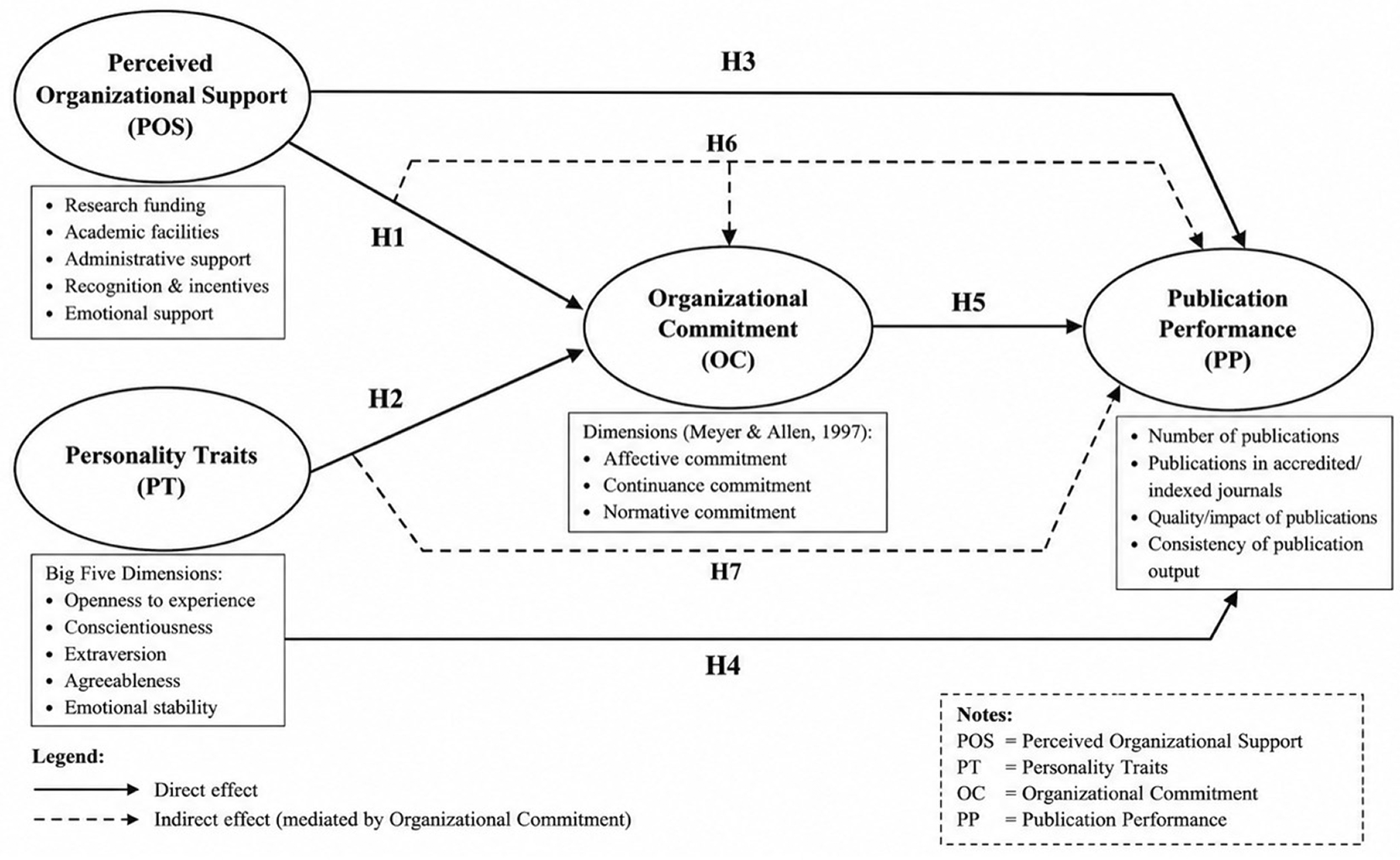
Perceived organizational support positively influences organizational commitment.
Personality traits represent relatively stable patterns of thinking, feeling, and behaving that influence individuals’ attitudes and work-related behaviors. The Big Five personality framework suggests that traits such as conscientiousness, openness to experience, emotional stability, agreeableness, and extraversion significantly shape workplace outcomes. Among these dimensions, conscientiousness and openness are particularly relevant in academic settings because they are associated with persistence, self-discipline, intellectual curiosity, and achievement orientation.
Previous studies have reported that employees with positive personality characteristics tend to demonstrate stronger attachment and commitment toward their organizations.32 In higher education contexts, personality traits influence lecturers’ willingness to engage in institutional activities, maintain professional responsibilities, and align personal goals with organizational objectives. Fitriani & Amin (2023) found that favorable personality traits significantly contribute to academic productivity and professional engagement among university academics. Furthermore, research by Abdyasir et al. (2025) revealed that conscientious individuals exhibit stronger organizational commitment and lower turnover intentions. Consequently, lecturers possessing positive personality traits are expected to develop stronger commitment toward their institutions.
Personality traits positively influence organizational commitment.
Publication performance reflects lecturers’ ability to produce scholarly outputs, including journal articles, conference papers, books, and other scientific publications. Research productivity has become one of the most important indicators of academic effectiveness and institutional competitiveness.34
Organizational Support Theory suggests that employees who perceive higher levels of support are more motivated to perform effectively because they view organizational assistance as an investment in their professional development.23 In academic settings, organizational support may include research grants, publication incentives, administrative assistance, research mentoring, and access to scholarly resources. Such support mechanisms reduce barriers to research productivity and encourage lecturers to engage more actively in scholarly activities.
Previous studies have consistently demonstrated positive associations between perceived organizational support and employee performance outcomes.24,25,28 Accordingly, lecturers who perceive stronger organizational support are expected to achieve higher publication performance.
: Perceived organizational support positively influences publication performance.
Individual differences play a crucial role in determining research productivity. Personality traits influence motivation, persistence, creativity, and the ability to cope with challenges associated with academic publishing. Academic publishing often requires long-term commitment, resilience, self-regulation, and continuous learning, all of which are strongly associated with personality characteristics.
Fitriani & Amin (2023) found that Big Five personality traits significantly predict academic output among university academics. Particularly, conscientious individuals tend to demonstrate higher levels of productivity due to their strong achievement orientation, discipline, and persistence. Similarly, openness to experience facilitates intellectual curiosity and knowledge creation, which are essential components of scholarly productivity. Therefore, lecturers possessing favorable personality traits are expected to demonstrate stronger publication performance.
Personality traits positively influence publication performance.
Organizational commitment refers to employees’ psychological attachment and loyalty toward their organization. Meyer et al. (2019) conceptualized commitment as comprising affective, continuance, and normative dimensions, all of which influence employees’ attitudes and behaviors.
Prior research consistently demonstrates that organizational commitment contributes positively to employee performance and organizational effectiveness.36,37 Within academic institutions, committed lecturers are more likely to invest effort in research activities, participate in institutional initiatives, and contribute to organizational goals. Organizational commitment has also been linked to faculty effectiveness, academic performance, and job performance among academics.38,39 Therefore, lecturers with stronger organizational commitment are expected to exhibit higher levels of publication performance.
Organizational commitment positively influences publication performance.
Organizational commitment has frequently been identified as a key mechanism linking organizational conditions with employee outcomes. Social Exchange Theory suggests that employees who receive support from their organizations develop stronger commitment, which subsequently motivates them to contribute more effectively toward organizational objectives.
Previous studies have demonstrated the mediating role of organizational commitment in relationships involving organizational justice, leadership, employee engagement, communication, and performance outcomes.38,40,41 Furthermore, research indicates that organizational support influences employee outcomes indirectly through commitment mechanisms.27,31,42 In academic environments, lecturers who perceive strong institutional support are more likely to develop organizational commitment, which subsequently enhances their motivation to conduct research and publish scholarly work.
Similarly, personality traits may influence publication performance through organizational commitment. Individuals with favorable personality characteristics tend to establish stronger psychological attachment to their institutions, resulting in greater willingness to contribute to organizational goals and research productivity.22,32 Therefore, organizational commitment is expected to serve as an important mediating mechanism linking organizational support and personality traits to publication performance.
Organizational commitment mediates the relationship between perceived organizational support and publication performance.
Organizational commitment mediates the relationship between personality traits and publication performance.
Based on organizational support theory and commitment theory, this study proposes an integrated conceptual model to explain the performance of lecturers in terms of their publications. The model proposes that the perceived organizational support and personality traits directly affect job performance and indirectly through the mediating role of organizational commitment. The conceptual framework of this study is shown in Figure 1.
This study employed a quantitative cross-sectional survey design to examine the relationships among perceived organizational support, personality, organizational commitment, and publication performance among lecturers in private universities. A quantitative approach was considered appropriate for testing the proposed hypotheses and evaluating the structural relationships among latent constructs.
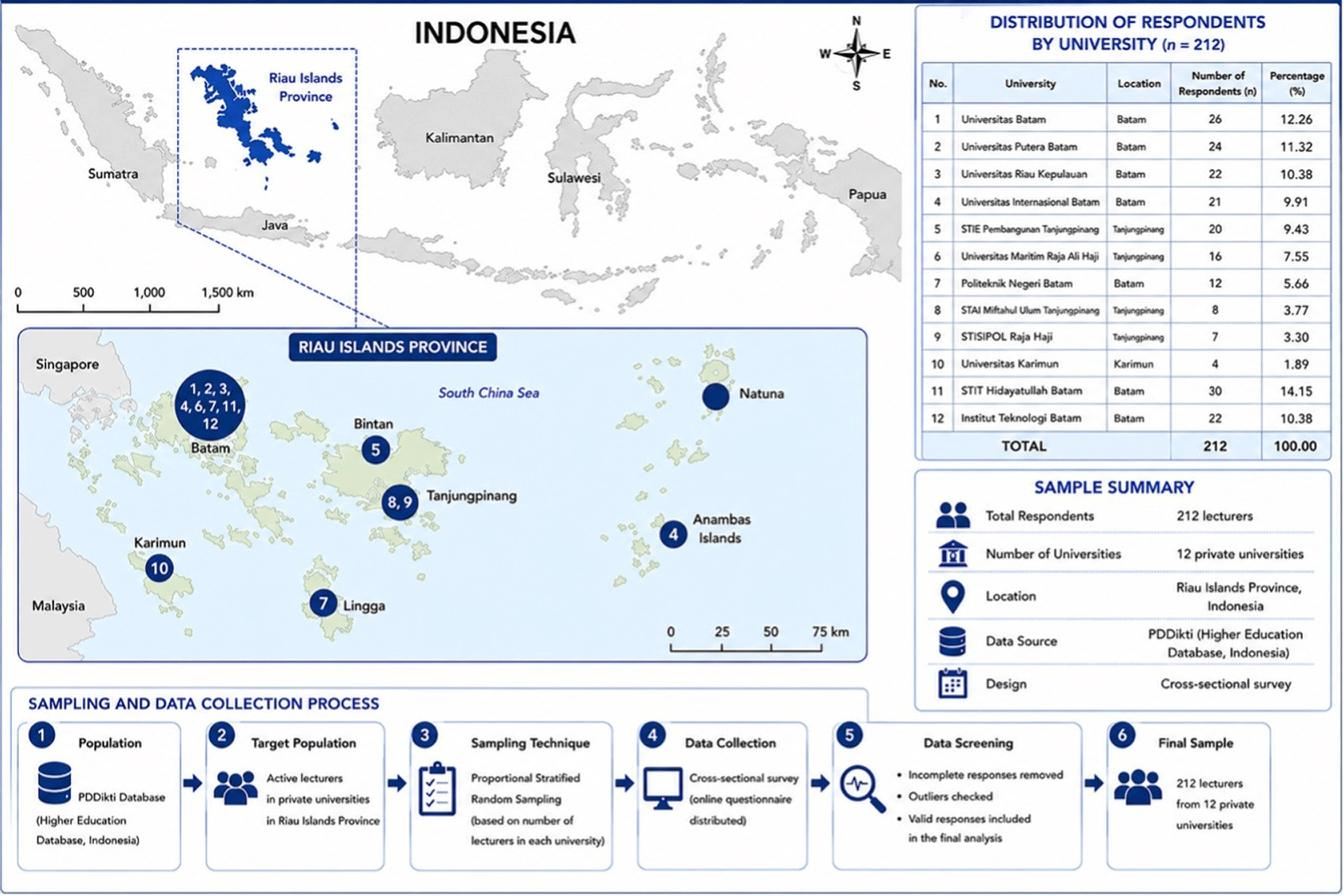
The study population consisted of lecturers from 12 private universities in the Riau Islands Province, Indonesia. Using purposive sampling, 212 lecturers were selected based on three criteria: (1) permanent lecturer status, (2) a minimum of two years of academic experience, and (3) active involvement in research and publication activities. Data were collected through a self-administered questionnaire distributed between January and April 2026. Participation was voluntary, and respondents were assured of anonymity and confidentiality.
Figure 2 presents the geographical distribution of respondents and the sampling process. The study involved 212 lecturers from 12 private universities located across the Riau Islands Province, including Batam, Tanjungpinang, Karimun, Lingga, Natuna, and Anambas Islands. Batam contributed the largest proportion of respondents (52.83%), reflecting its position as the province’s primary higher education hub.
All constructs were measured using previously validated scales adapted to the higher education context. Perceived organizational support was measured based on Organizational Support Theory.23 Personality was assessed using the Big Five dimensions. Organizational commitment was measured through affective, continuance, and normative commitment.35 Publication performance was evaluated using indicators related to publication quantity, indexed publications, publication quality, and consistency of scholarly output.43,44 All items employed a five-point Likert scale ranging from 1 (strongly disagree) to 5 (strongly agree).
Common method variance (CMV) was assessed using Harman’s single-factor test.45 The first factor accounted for less than 50% of the total variance, indicating that common method bias was not a significant concern in this study.
Data were analyzed using SmartPLS 4.0. Following the recommended PLS-SEM procedure, the analysis was conducted in two stages. First, the measurement model was assessed through indicator reliability, composite reliability, average variance extracted (AVE), and discriminant validity. Second, the structural model was evaluated using path coefficients, coefficient of determination (R2), effect size (f2), predictive relevance (Q2), and bootstrapping with 5,000 resamples to examine the significance of direct and indirect effects.46,47,48
This study was reviewed and approved by the Research Ethics Committee of Universitas Riau Kepulauan, Indonesia, under Approval No. 019/KL/R/UNRIKA/XI/2025, prior to the commencement of data collection. The ethics committee determined that the study complied with institutional ethical standards and internationally recognized principles for research involving human participants, including respect for participant autonomy, confidentiality, privacy, voluntary participation, and minimization of potential risks. Verbal informed consent was obtained from all participants prior to their participation in the study. Before completing the questionnaire, participants were informed about the purpose of the research, the voluntary nature of participation, their right to withdraw at any time without consequences, and the measures taken to ensure confidentiality and anonymity. Written informed consent was not required because the study involved a minimal-risk anonymous questionnaire, no personally identifiable information was collected, and no intervention or sensitive personal data were involved. The use of verbal informed consent was reviewed and approved by the Research Ethics Committee as part of the approved study protocol. All research procedures were conducted in accordance with the ethical principles outlined in the Declaration of Helsinki and the applicable institutional guidelines governing social science and educational research involving human participants.
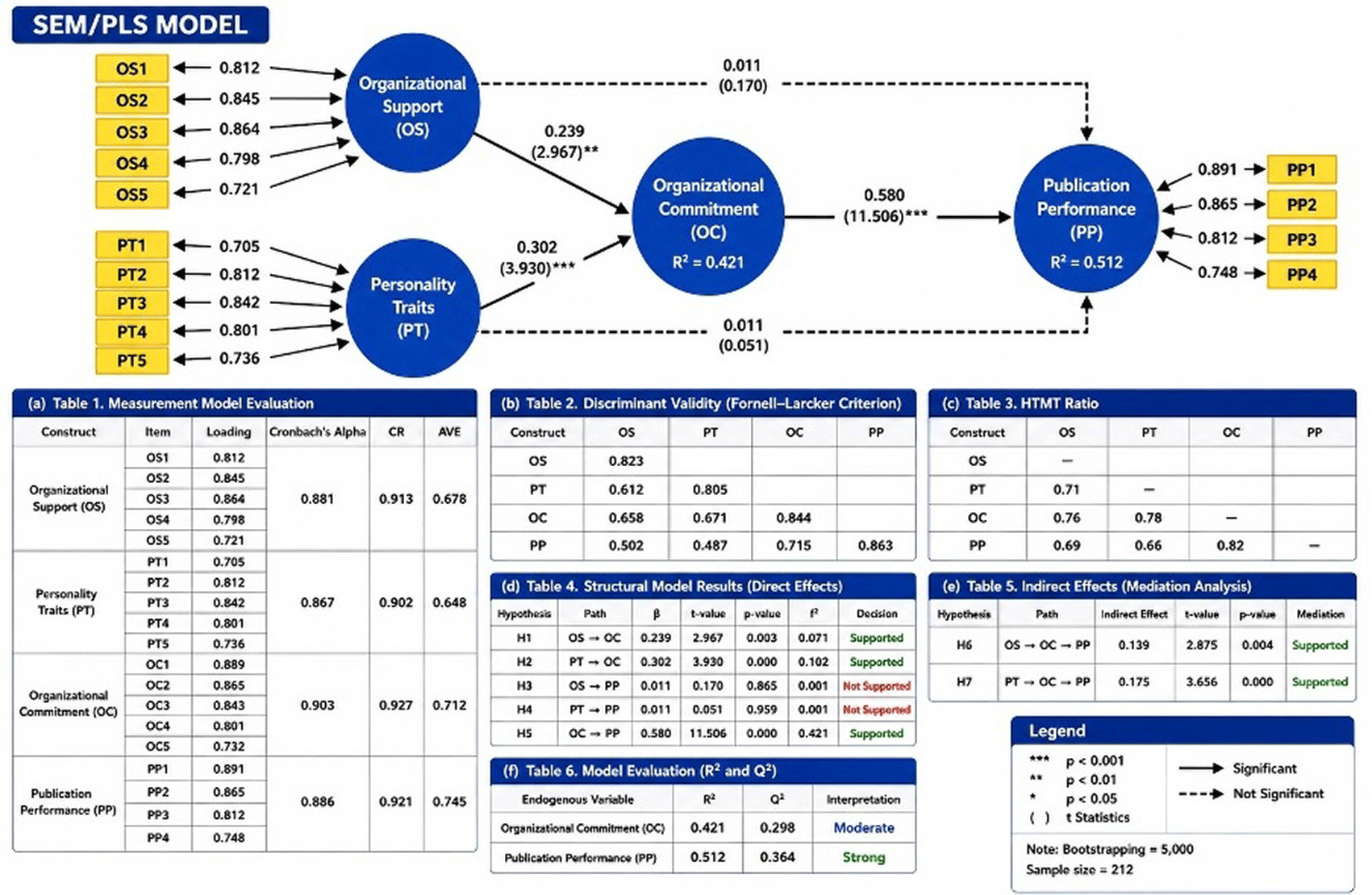
Following the established PLS-SEM procedure, the empirical analysis was conducted in two stages. The measurement model was first evaluated to confirm the reliability and validity of the study constructs. Subsequently, the structural model was assessed to examine the proposed relationships and determine the explanatory and predictive power of the research model. Figure 3 presents an integrated summary of the PLS-SEM results, combining the measurement model assessment, structural model evaluation, mediation analysis, and model performance indicators reported in Table 1, Table 2, Table 3, Table 4, Table 5 and Table 6.
| Construct | OS | PT | OC | PP |
|---|---|---|---|---|
| OS | 0.823 | |||
| PT | 0.612 | 0.805 | ||
| OC | 0.658 | 0.671 | 0.844 | |
| PP | 0.502 | 0.487 | 0.715 | 0.863 |
| Hypothesis | Path | Indirect effect | t-value | p-value | Mediation |
|---|---|---|---|---|---|
| H6 | OS → OC → PP | 0.139 | 2.875 | 0.004 | Supported |
| H7 | PT → OC → PP | 0.175 | 3.656 | 0.000 | Supported |
| Endogenous variable | R2 | Q2 | Interpretation |
|---|---|---|---|
| Organizational Commitment | 0.421 | 0.298 | Moderate |
| Publication Performance | 0.512 | 0.364 | Strong |
The measurement model was assessed through indicator reliability, internal consistency reliability, convergent validity, and discriminant validity. As summarized in Figure 3 and detailed in Table 1, all indicator loadings exceeded the recommended threshold of 0.70, ranging from 0.705 to 0.891, indicating satisfactory indicator reliability.
The Cronbach’s alpha values ranged from 0.867 to 0.903, while composite reliability (CR) values ranged from 0.902 to 0.927, exceeding the recommended threshold of 0.70. Furthermore, the average variance extracted (AVE) values ranged from 0.648 to 0.745, demonstrating adequate convergent validity as all values were above the minimum threshold of 0.50. Overall, these results confirm the reliability and convergent validity of the measurement model.
Discriminant validity was evaluated using the Fornell–Larcker criterion and the heterotrait–monotrait ratio (HTMT). As reported in Figure 3 and Tables 2 and 3, the square root of AVE for each construct exceeded its correlations with other constructs, while all HTMT values remained below the recommended threshold of 0.90. These findings confirm satisfactory discriminant validity among the constructs.
The structural model was evaluated by examining the significance of the hypothesized relationships among the constructs. The path coefficients presented in Figure 3 and Table 4 indicate that perceived organizational support had a positive and significant effect on organizational commitment (β = 0.239, p = 0.003), supporting H1. Likewise, personality positively influenced organizational commitment (β = 0.302, p < 0.001), supporting H2.
In contrast, perceived organizational support did not have a significant direct effect on publication performance (β = 0.011, p = 0.865), and personality also showed no significant direct influence on publication performance (β = 0.011, p = 0.959). Therefore, H3 and H4 were not supported. As illustrated in Figure 3, both relationships were represented by dashed paths, indicating non-significant effects.
Organizational commitment exhibited a strong positive effect on publication performance (β = 0.580, p < 0.001), supporting H5. This relationship showed the largest effect size (f2 = 0.421), highlighting organizational commitment as the most influential predictor of publication performance in the proposed model.
The mediating role of organizational commitment was assessed using the bootstrapping procedure. As shown in Figure 3 and Table 5, organizational commitment significantly mediated the relationship between perceived organizational support and publication performance (β = 0.139, p = 0.004), supporting H6.
Similarly, organizational commitment significantly mediated the relationship between personality and publication performance (β = 0.175, p < 0.001), supporting H7. The significance of the indirect effects, combined with the non-significant direct effects of perceived organizational support and personality on publication performance, indicates the presence of indirect-only mediation. These findings suggest that organizational commitment functions as the primary mechanism through which organizational support and personality contribute to lecturers’ publication performance.
The explanatory power of the model was assessed using the coefficient of determination (R2) and predictive relevance (Q2). As reported in Figure 3 and Table 6, perceived organizational support and personality jointly explained 42.1% of the variance in organizational commitment (R2 = 0.421), indicating a moderate level of explanatory power.
Furthermore, the model explained 51.2% of the variance in publication performance (R2 = 0.512), suggesting substantial explanatory power. The Q2 values for organizational commitment (0.298) and publication performance (0.364) were greater than zero, confirming the predictive relevance of the model.
Overall, the integrated results presented in Figure 3 demonstrate that organizational commitment occupies a central position in the model, serving as the primary pathway through which perceived organizational support and personality enhance publication performance among lecturers in private universities.
The findings provide important insights into how organizational and individual factors contribute to scholarly productivity among lecturers in private universities. Consistent with Organizational Support Theory and Social Exchange Theory, the results indicate that publication performance is not driven directly by organizational support or personality traits. Instead, both factors exert their influence primarily through organizational commitment, highlighting the central role of psychological attachment in transforming institutional resources and individual capabilities into research outcomes.
The results reveal that perceived organizational support significantly enhances organizational commitment among lecturers. This finding supports H1 and aligns with Organizational Support Theory, which posits that employees develop stronger attachment and loyalty when they perceive that their organization values their contributions and cares about their well-being. In the context of higher education, organizational support may take the form of research grants, publication incentives, mentoring programs, access to research facilities, and administrative assistance. Such support mechanisms signal institutional investment in academic development and encourage lecturers to reciprocate through stronger commitment to organizational goals.
This finding is consistent with previous studies demonstrating positive relationships between perceived organizational support and organizational commitment across educational and organizational settings.11,26,30 It also supports recent evidence suggesting that organizational support strengthens affective attachment and organizational loyalty by fostering trust, recognition, and psychological security.27,28,29 The present study extends this literature by showing that organizational support remains a critical antecedent of commitment in private universities, where resource limitations and publication pressures often challenge academic engagement.
The findings further demonstrate that personality traits significantly influence organizational commitment, supporting H2. Lecturers who exhibit favorable personality characteristics, particularly conscientiousness, responsibility, persistence, and openness to experience, are more likely to develop stronger commitment toward their institutions. These individuals tend to align personal aspirations with organizational objectives and maintain higher levels of involvement in academic activities.
The result supports prior studies emphasizing the role of personality in shaping work attitudes and organizational attachment.22,32 It is also consistent with evidence reported by Fitriani & Amin (2023), who found that positive personality traits contribute to academic productivity and professional engagement in higher education institutions. The present findings suggest that personality serves not only as an individual resource but also as a psychological foundation that strengthens lecturers’ commitment to institutional missions and long-term academic goals.
One of the most important findings of this study is that organizational commitment emerged as the strongest predictor of publication performance. The significant relationship between organizational commitment and publication performance supports H5 and confirms that committed lecturers are more likely to invest effort in research activities, persist through publication challenges, and contribute to institutional research objectives.
This finding is consistent with previous studies linking organizational commitment to employee performance, faculty effectiveness, and academic productivity.20,21,36 From a theoretical perspective, the result supports Social Exchange Theory, which suggests that employees who develop strong commitment are more willing to reciprocate organizational support through behaviors that benefit the organization. In academic settings, such reciprocity is reflected in sustained research engagement, scholarly collaboration, and publication output.
Interestingly, perceived organizational support and personality traits did not exert significant direct effects on publication performance. These findings indicate that the availability of institutional support or favorable personality characteristics alone is insufficient to enhance research productivity. Instead, lecturers must first develop a strong sense of commitment before organizational resources and personal attributes can be translated into meaningful publication outcomes.
The most significant contribution of this study lies in demonstrating the mediating role of organizational commitment. The findings reveal that organizational commitment significantly mediates the relationships between perceived organizational support and publication performance, as well as between personality traits and publication performance. Moreover, the absence of significant direct effects alongside significant indirect effects indicates the presence of indirect-only mediation.
These results reinforce previous studies identifying organizational commitment as a critical mechanism linking organizational conditions and employee outcomes.38,40,42 However, the current study extends the literature by applying this mechanism to publication performance, a domain that has received limited attention in organizational support research. The findings suggest that publication productivity should not be viewed merely as a function of research funding, facilities, or individual characteristics. Rather, publication performance emerges when organizational support and personal capabilities cultivate a stronger psychological bond between lecturers and their institutions.
From a managerial perspective, these findings imply that universities seeking to improve publication performance should move beyond providing material resources alone. Institutional policies should simultaneously foster organizational commitment through recognition systems, supportive leadership, transparent career development pathways, and a research-oriented organizational culture. Strengthening commitment appears to be the most effective strategy for converting organizational support and individual potential into sustained scholarly productivity.
This study contributes to the higher education and organizational behavior literature in several ways. First, it extends Organizational Support Theory and Social Exchange Theory by demonstrating that perceived organizational support does not directly translate into higher publication performance among lecturers. Instead, its influence operates through organizational commitment, suggesting that psychological attachment is a necessary mechanism through which organizational resources are converted into scholarly outcomes.
Second, this study contributes to the growing body of research on academic productivity by integrating organizational and individual determinants within a single explanatory framework. While previous studies have often examined organizational support, personality, and organizational commitment separately, the present findings reveal how these factors interact to influence publication performance. In particular, personality traits were found to strengthen organizational commitment rather than directly enhance publication productivity, highlighting the importance of psychological and attitudinal processes in explaining research performance.
Third, the finding of indirect-only mediation provides new empirical evidence regarding the central role of organizational commitment in higher education institutions. Existing research has extensively documented the positive effects of organizational support and personality on employee attitudes and performance outcomes. However, evidence explaining how these factors contribute specifically to publication performance remains limited. By identifying organizational commitment as the primary mediating mechanism, this study advances understanding of the pathways through which organizational and individual factors influence scholarly productivity.
Finally, the study contributes to the emerging literature on research performance in private universities, particularly within developing-country contexts. Given the increasing importance of research output for institutional competitiveness, accreditation, and academic reputation, the findings provide a more nuanced explanation of how organizational and personal resources can be transformed into sustainable publication performance.
The findings offer important implications for university leaders, policymakers, and higher education managers seeking to improve research productivity among lecturers. The results indicate that increasing publication performance requires more than providing research funding, infrastructure, or publication incentives. While these forms of support remain important, their effectiveness depends on the extent to which they strengthen lecturers’ organizational commitment.
University administrators should therefore prioritize policies that foster stronger emotional attachment and institutional identification among academic staff. Such initiatives may include transparent promotion systems, recognition of research achievements, mentoring programs, equitable workload allocation, professional development opportunities, and supportive academic leadership. These practices can reinforce lecturers’ sense of belonging and encourage sustained engagement in research activities.
The findings also highlight the strategic importance of human resource management in higher education. Recruitment and talent development policies should consider personality characteristics associated with long-term academic engagement, such as conscientiousness, openness to experience, and achievement orientation. Lecturers possessing these characteristics are more likely to develop stronger commitment and contribute to institutional research goals.
Furthermore, policymakers and university governing bodies should recognize organizational commitment as a strategic asset for enhancing research performance. Investments in research infrastructure and publication support systems are likely to generate greater returns when accompanied by institutional practices that cultivate commitment, trust, and long-term academic engagement. Consequently, universities seeking to strengthen their publication culture should focus not only on providing resources but also on building organizational environments that encourage commitment-driven scholarly productivity.
This study examined the relationships among perceived organizational support, personality, organizational commitment, and publication performance among lecturers in private universities. The findings indicate that perceived organizational support and personality significantly influence organizational commitment, while organizational commitment exerts a strong positive effect on publication performance. In contrast, neither perceived organizational support nor personality demonstrated significant direct effects on publication performance. These results suggest that organizational commitment serves as the primary mechanism through which organizational and individual factors contribute to scholarly productivity.
The study extends Organizational Support Theory and Social Exchange Theory by demonstrating that organizational support and personality do not automatically translate into higher research output. Instead, their influence is realized through the development of stronger organizational commitment. The findings therefore highlight the importance of psychological attachment and institutional identification in transforming organizational resources and personal attributes into meaningful academic outcomes.
From a practical perspective, the results suggest that universities seeking to improve publication performance should move beyond resource-based interventions alone. While research funding, facilities, incentives, and professional development remain important, their effectiveness depends on the extent to which they strengthen lecturers’ commitment to their institutions. Policies aimed at fostering supportive academic environments, recognition systems, career development opportunities, and research-oriented organizational cultures may be more effective in promoting sustainable scholarly productivity.
Several limitations should be acknowledged. First, the study employed a cross-sectional design, limiting the ability to establish causal relationships. Second, the sample was restricted to private universities in the Riau Islands Province, which may affect the generalizability of the findings to other higher education contexts. Future studies may adopt longitudinal designs, include broader institutional settings, and examine additional organizational and psychological factors that may influence publication performance. Further research could also explore potential moderating variables, such as academic rank, research experience, or institutional research culture, to provide a more comprehensive understanding of scholarly productivity in higher education.
This study was conducted in accordance with the ethical principles for research involving human participants. Participation was voluntary, and informed consent was obtained from all respondents prior to data collection. Participants were assured of the confidentiality and anonymity of their responses, and all data were used solely for research purposes. No personally identifiable information was collected or disclosed.
| Views | Downloads | |
|---|---|---|
| F1000Research | - | - |
|
PubMed Central
Data from PMC are received and updated monthly.
|
- | - |
Provide sufficient details of any financial or non-financial competing interests to enable users to assess whether your comments might lead a reasonable person to question your impartiality. Consider the following examples, but note that this is not an exhaustive list:
Sign up for content alerts and receive a weekly or monthly email with all newly published articles
Already registered? Sign in
The email address should be the one you originally registered with F1000.
You registered with F1000 via Google, so we cannot reset your password.
To sign in, please click here.
If you still need help with your Google account password, please click here.
You registered with F1000 via Facebook, so we cannot reset your password.
To sign in, please click here.
If you still need help with your Facebook account password, please click here.
If your email address is registered with us, we will email you instructions to reset your password.
If you think you should have received this email but it has not arrived, please check your spam filters and/or contact for further assistance.

Comments on this article Comments (0)