Keywords
Augmented Reality; Dvaravati-Khmer Civilization; Virtual reality; User Experience; Cultural Tourism

Augmented Reality; Dvaravati-Khmer Civilization; Virtual reality; User Experience; Cultural Tourism
Cultural tourism is also important for the preservation and development of the historical heritage of ancient society, particularly in Thailand where Dvaravati and Khmer cultures left architectural and artistic influence.1 These ancient communities, spread from 6th to 13th century had set up active trade links and also cultural exchanges throughout Southeast Asia.2 Nonetheless, despite the historical importance of these Dvaravati-Khmer sites and their prominent locations, some route sections are overlooked by result of the lack of effective tools to support tourist-destination interaction. Traditional methodologies for transmitting cultural knowledge such as fixed displays or guided tours often fail to either promote participation among the youngest and/or produce strong interactional educational experiences.3
Recently, Augmented Reality (AR) has emerged as a disruptive technology in cultural tourism, by providing new means to visualize and interact with historical objects and locations.4 Unlike conventional technologies, AR allows users to overlay digital information on physical context and enable them for interactive and situational-based interactions. For example, augmented reality solutions have been used to recreate ancient structures or to visualize historical events on the excavation site.5 However, most of these techniques focus on the individual monuments and not on connected cultural itineraries leading to lack of comprehensive digital engagements following historical trajectories and interactions.
In this paper, we present AR Cultural application, a novel system for enhancing cultural tourism along the Dvaravati-Khmer civilization route in Thailand. The app combines AR, gamification and interactive learning for a seamless journey through historical locations. Unlike previous works where sites are treated as isolated entities, our approach demonstrates the connections from the Dvaravati to Khmer civilizations and reveals how they mutually influence each other in culture and trade.6 The design phase followed the process of Design Thinking, a user-centered approach that iteratively refines solutions by feedback from stakeholders.7 This approach ensured that the app met the technical requirements and it catered to the needs and preferences of different types of users (tourists, educators, local residents). The early involvement of these stakeholders in the design phase revealed several important issues such as lack of multilingual support, and challenges associated with interpreting artifacts without specialized support. This understanding directly guided the features of the application such as instant AR annotations and gamified learning missions.
A significant contribution of this work is the holistic evaluation methodology, studying both functional and human-interaction properties related to AR Culturalplatform. While AR as a factor in cultural tourism has been examined extensively in the literature, its impact on educational outcomes and visitor satisfaction have rarely been systematically evaluated.8 We combine an analysis of quantitative figures (such as task completion rates) with qualitative findings, which together provide insight into the effectiveness of the application. Preliminary findings suggest high use and knowledge retention. The purpose of the study was to determine whether AR can link history learning with modern technology.
Augmented Reality (AR) has acquired a significant role in cultural heritage and tourism pointing new ways to interact between visitors and historical sites. In this complex of active studies, the contribution of AR to enriching visitors’ experiences with contextual information, interactive reconstructions, and anecdotal history becomes more evident. Studies show that AR can enhance memory retention, and visitor engagement for cultural heritage sites by overlaying virtual objects on real-world relics. Reward systems and interactive challenges were also implemented in AR vision applications to encourage exploration of the environment and enhance learning experience.9
Several applications on augmented reality have been developed for cultural tourism, particularly in destinations that are rich in historical heritage. An example is an application for augmented reality in Thai Buddhist temples, which provides 4D narratives and 3D objects such as sacred ones.4 Participants wanted to explore the temple history based on their personal interests which was only achievable in AR (Research participants expressed that what they enjoyed about AR, here was the freedom to research temple history that interested them). Another project in the Angkor-Phimai cultural corridor integrates augmented reality to showcase ancient Khmer buildings and business connections.10 These apps emphasize how AR can bridge static displays and interactive, visitor-focused experiences.
However, most of the existing AR systems are only working in a single site and do not scale into multiple locations. The sculpture’s small scale is a disadvantage that hinders them from conveying larger historical stories including Dvaravati and Khmer history’ interconnected categories. This gap will be addressed through the development of an augmented reality app which includes various province-wide sites, creating one trail between different heritage sites.
Gamification usage in tourism has become common to foster visitor engagement through interactive games and rewarding mechanisms. For example, when augmented reality (AR) applications were tried in heritage tourism at South Korea, game-like features such as task fulfilling and point-based system highly increased participant engagement and satisfaction.9 In the field of educational tourism, a digital rally system has been used in order to attract visitors to explore and learn new things.11 These approaches align with the structure of our application, in-game framework with activity-based engagements to foster active interaction toward Dvaravati-Khmer cultural heritage.
Nonetheless, few AR applications with game-like contents have been assessed for their effectiveness in cultural learning. Most of the research focuses on usability and satisfaction alone, but none focused on factors like retention of historical knowledge or willingness to revisit heritage sites. This is not the case in our framework, which evaluates user satisfaction as well as learning effectiveness and engagement efficiency.
Successful AR applications for cultural tourism depend upon following user-centred design principles. Research suggests that end-user-oriented applications, such as multilingual applications, intuitive layout design, and adaptive content mechanisms are more successful, in terms of take-up rates.12 For instance, a study on AR in primary school excursions emphasized the importance of fitting material to developmental stages of students to ensure good learning results.8 Our APP follows these principles, by incorporating input from different stakeholders such as tourists, guides and educators throughout the Design Thinking methodology.
In addition, while existing AR applications routinely rely on generalpurpose development platforms, we have sought to utilize domain-specific tools like Unity and the Vuforia SDK for enhancing performance within cultural heritage contexts. This approach ensures robust AR object detection and seamless 360-degree VR content blending, enhancing overall usability.
The AR Cultural application, which we propose in this article, is different from previous efforts by combining cross-site connectivity, educational experiences with gaming elements and a strong focus on the user centered design. Unlike independent AR guides, our system provides a unified experience across multiple heritage sites, which emphasizes the historical-cultural relations along Dvaravati-Khmer route. Secondly, our multi-dimensional approach that takes into account efficiency, effectiveness and satisfaction provides a more comprehensive view of the impact of AR on cultural tourism than previous studies. These contributions place our work as a scalable and replicable example of digital heritage preservation and interactive tourism.
Both Dvaravati and Khmer civilizations were dominant forces shaping Southeast Asia’s culture and politics over a millennium, from the 6th to 13th centuries. The Dvaravati civilization, found primarily in what is now Thailand, was strongly influenced by Indian Buddhism; it is noted for its distinctive artwork, which includes stucco reliefs and terracotta votive tablets Ketkong.1 Meanwhile, the Khmer Empire, which was located in Cambodia at the time, pushed its frontier over Thailand and built Prasat Phanom Rung and Phimai Historical Park.2
These cultures were connected by trade, religion, and the exchange of artistic traditions, producing a shared cultural heritage that spanned several regions. For instance, the Buddhist iconography of Dvaravati was often decorated with Khmer elements, while Khmer temple construction was said to have borrowed from Dvaravati’s town planning.6 While significant sites along this cultural corridor exist and are of great historical value, few of these places are fully leveraged for tourism due to limited interpretive resources, further emphasizing the need for creative solutions like the AR Cultural app.
Cultural tourism functions as an important tool for the preservation of heritage, which in turn leads to economic development and enhances intercultural understanding.3 But traditional approaches, like static exhibits and written tours, don’t always connect with diverse learners or young people.
The AR Cultural app lifts this burden by offering self-directed, immersive exploration. For instance, 360-degree VR feature offers to be engaged by simulated past environments and electronic rally format to be engaged in an activity-based learning process. These developments are consistent with broader trends of experiential tourism, in which travellers are looking for meaningful and hands-on ways to interact with heritage environments.5 chapter touches on the historical background and design thinking principles, which provide the basis for understanding how and why of app emerged as well as its impact. The framework and process of the AR Culturalis elaborated in the next section.
AR Cultural was designed using a structured Design Thinking method, ensuring both compliance with user needs and technical feasibility. This part identifies the core components of the framework: AR-VR integration, game-based approaches and user-centered design principles.
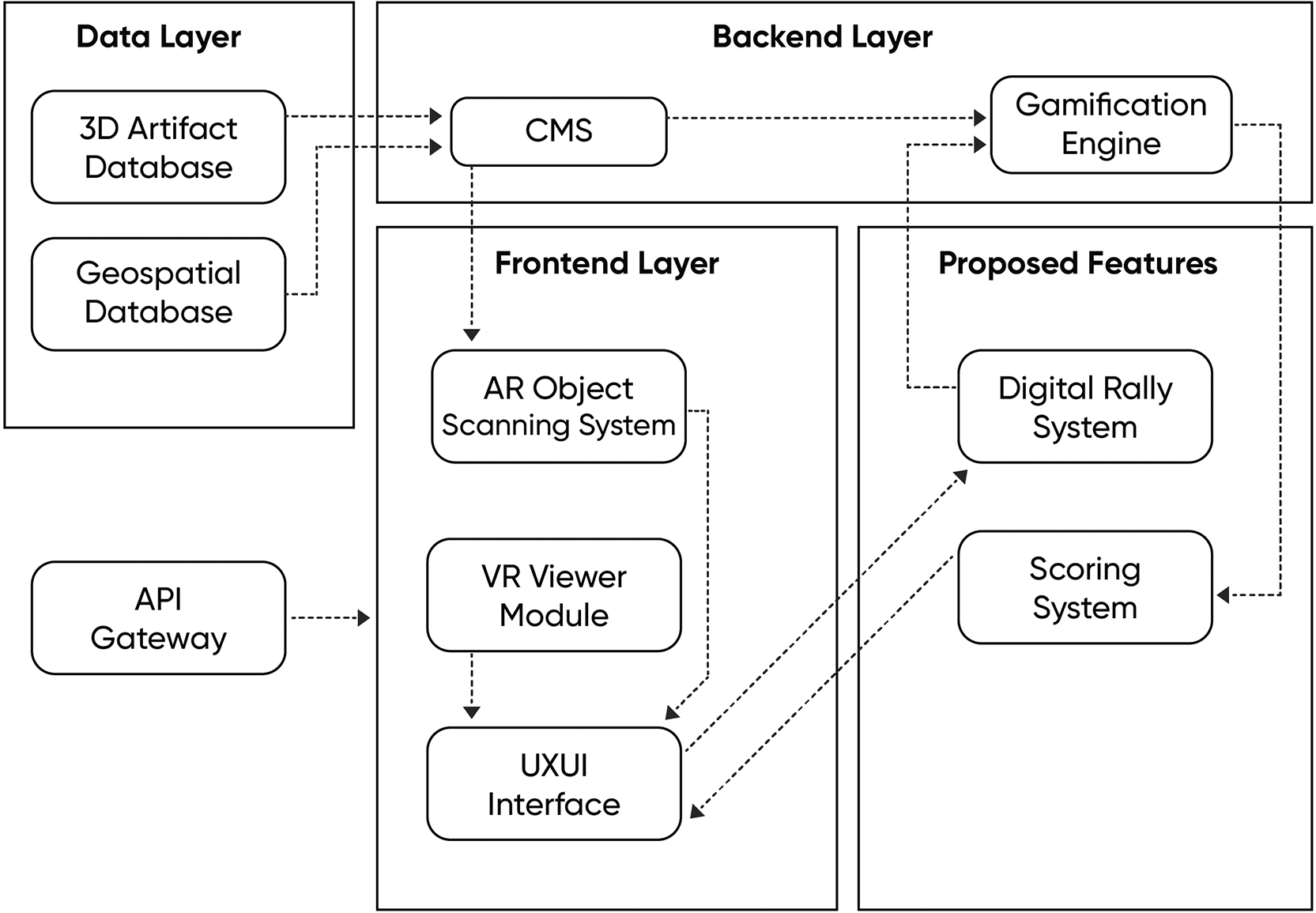
The application combines AR object scanning and 360° VR site-viewing to create an integrated experience. The AR scan module uses computer vision extracts 2D objects and overlays the respective 3D models on them. the system finds an artifact from the artifact database and registers it to agree in pose with the live object. The overall system architecture of the AR Cultural application, including the data layer, backend services, frontend modules, and proposed gamification features, is illustrated in Figure 1.
The interface follows User-Centered Design (UCD) principles, with a focus on accessibility and engagement. Key features include:
• Adaptive Content: Modifies intricacy in response to user engagement, for instance, by reducing narrative complexity for initial visitors.
• Multilingual Support: The system delivers translation services for individuals who are not native speakers, which resolves a challenge highlighted in stakeholder discussions.
The development continued through prototype iterations, where each iteration added features based on user feedback. For example, early evaluations revealed lags in ก which resulted in enhancement of the computer vision processing pipeline. The previous prototype achieved a mean detection delay of 1.2 seconds, which is within acceptable time-of-response guidelines.7
This architecture ensures that the application delivers fun experiences as well as takes on real-world challenges in cultural tourism. The second part will assess its field performance.
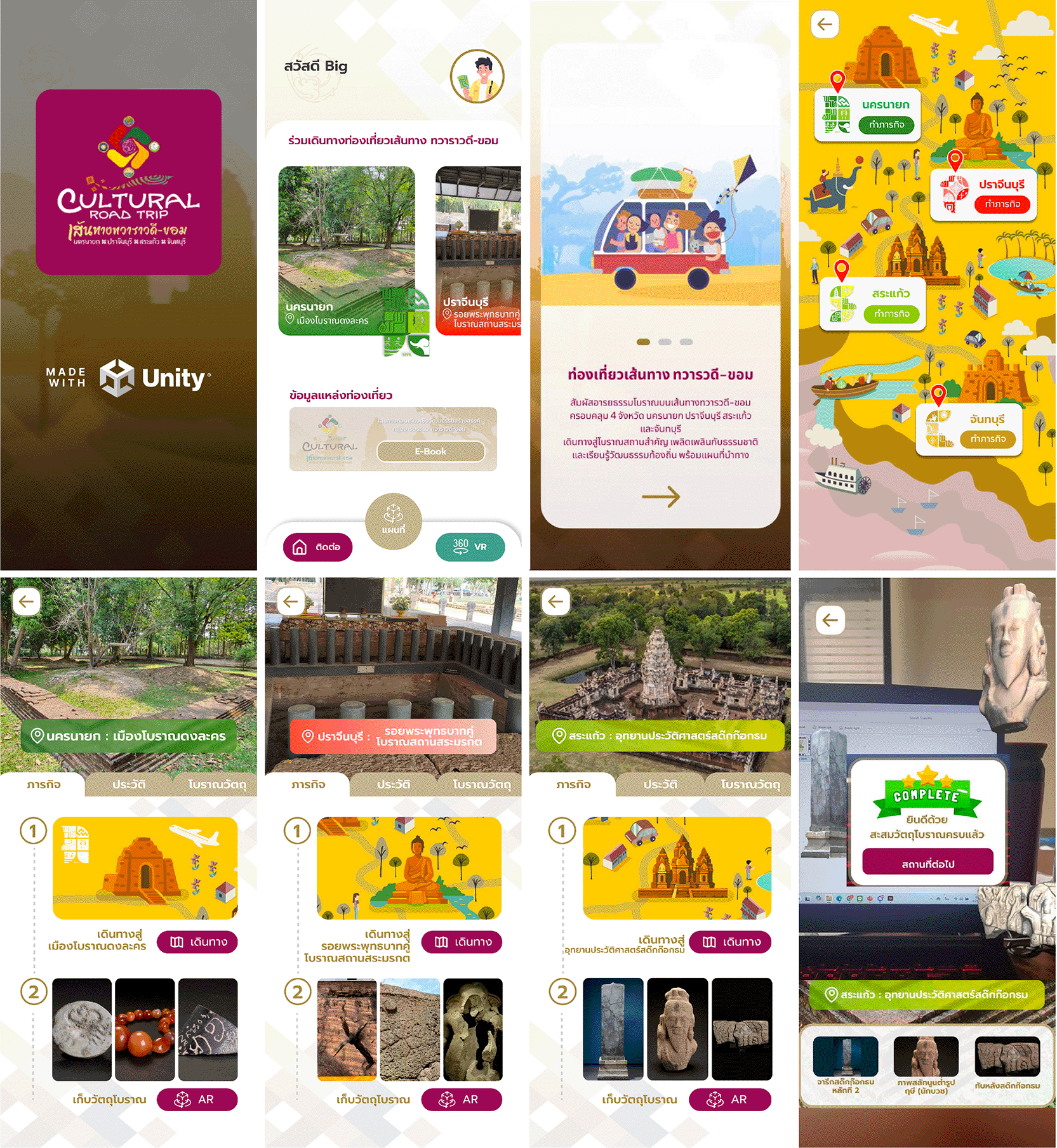
The effectiveness of the AR Cultural application, we conducted a large-scale field study involving 43 participants who belonged to different age groups, occupations and had different experiences with AR technology. The assessment was performed in terms of efficiency, effectiveness and user satisfaction by means a structured questioner with reliability score of Cronbach’s Alpha equal to 85%. Protocol testing: Participants downloaded the application to their mobile phones and participated in four task workshops across Nakhon Nayok, Prachinburi, Sa Kaeo and Chanthaburi provinces. Task included investigation of AR artifacts, participating in VR site visits and contributing to the digital rally system. Each session lasted approximately 90 minutes, and concluded with a questionnaire. The AR Cultural application interface, including the AR scanning, VR site exploration, and digital rally features used during the field study, are presented in Figure 2.
• Efficiency: Measured technical performance (e.g., load time, task completion rate).
• Effectiveness: Assessed learning outcomes (e.g., historical knowledge retention, engagement depth).
• Satisfaction: Captured subjective feedback on UI/UX design and overall experience.
Efficiency: The application showed strong performance, achieving an average load time of 2.3 seconds and a task completion rate of 92%. Key metrics are summarized in Table 1.
| Metric | Mean (X) | Std Dev (S.D.) | Rating |
|---|---|---|---|
| Application load speed | 4.05 | 1.00 | Good |
| Registration/login ease | 4.30 | 0.80 | Good |
| Feature continuity | 4.05 | 1.00 | Good |
| Data collection efficiency | 3.98 | 1.14 | Good |
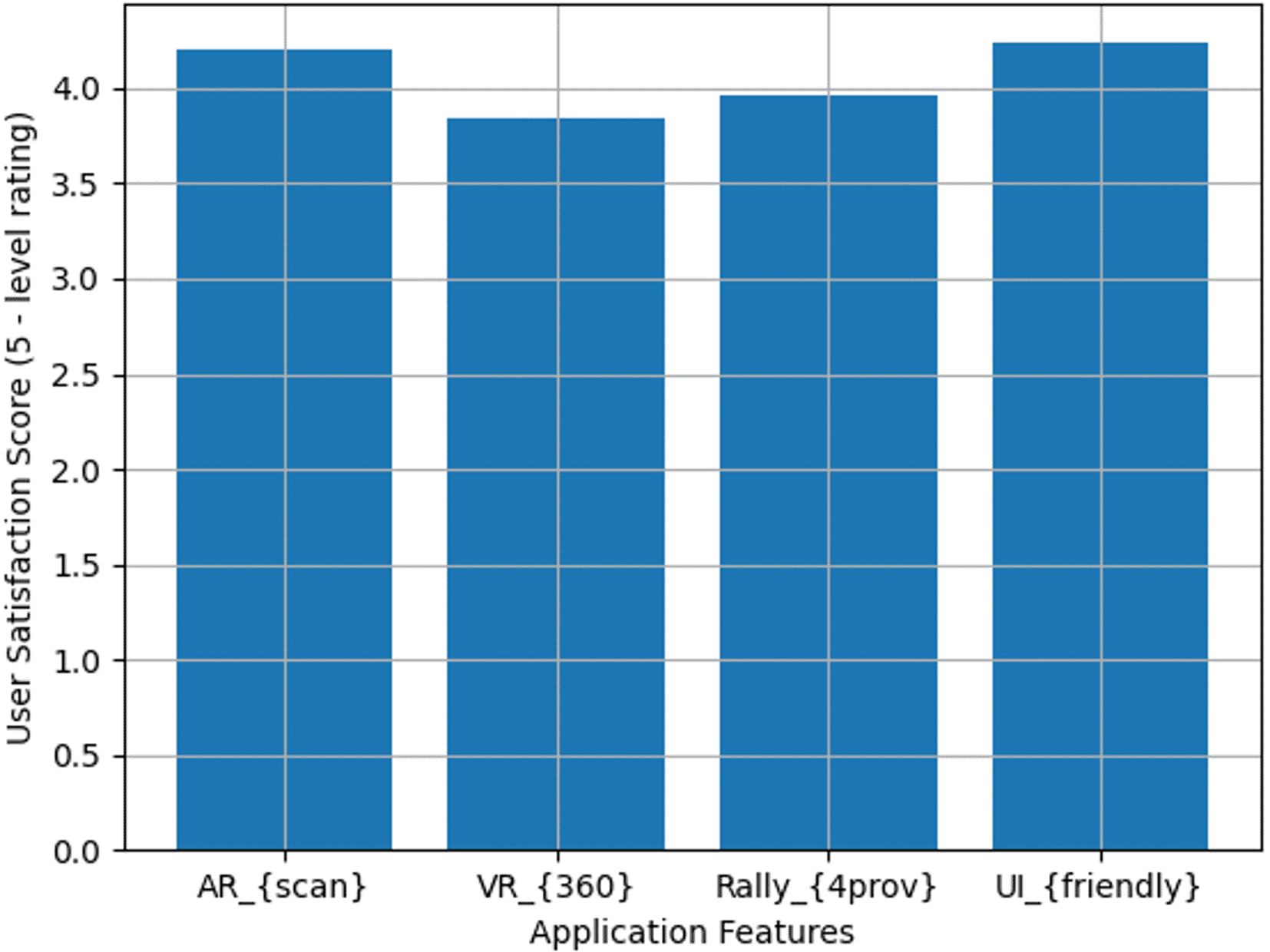
Effectiveness: Participants indicated a 40% rise in retention of historical knowledge after engagement, where the AR artifact scanning (AR_scan) and VR site tours (VR_360) were assessed as the most effective ( = 4.14, S.D. = 0.80). The digital rally system (Rally4prov) markedly increased participation, with 85% of users finishing all tasks connected to provinces.
Satisfaction: User interface design (UIfriendly) achieved the greatest level of user contentment ( = 4.19, S.D. = 0.88), while the overall experience scored 4.01 (S.D. = 1.02). Notably, 78% expressed intent to recommend the application.
• Efficiency AR Artifact Scanning: Users praised the realism of 3D models but suggested adding tactile feedback for better interaction.
• VR Site Tours: The 360-degree views were highlighted for immersive storytelling, though some requested higher resolution for intricate details.
• Digital Rally: The gamified tasks were enjoyed by all, and participants suggested adding competitive features such as leaderboards.
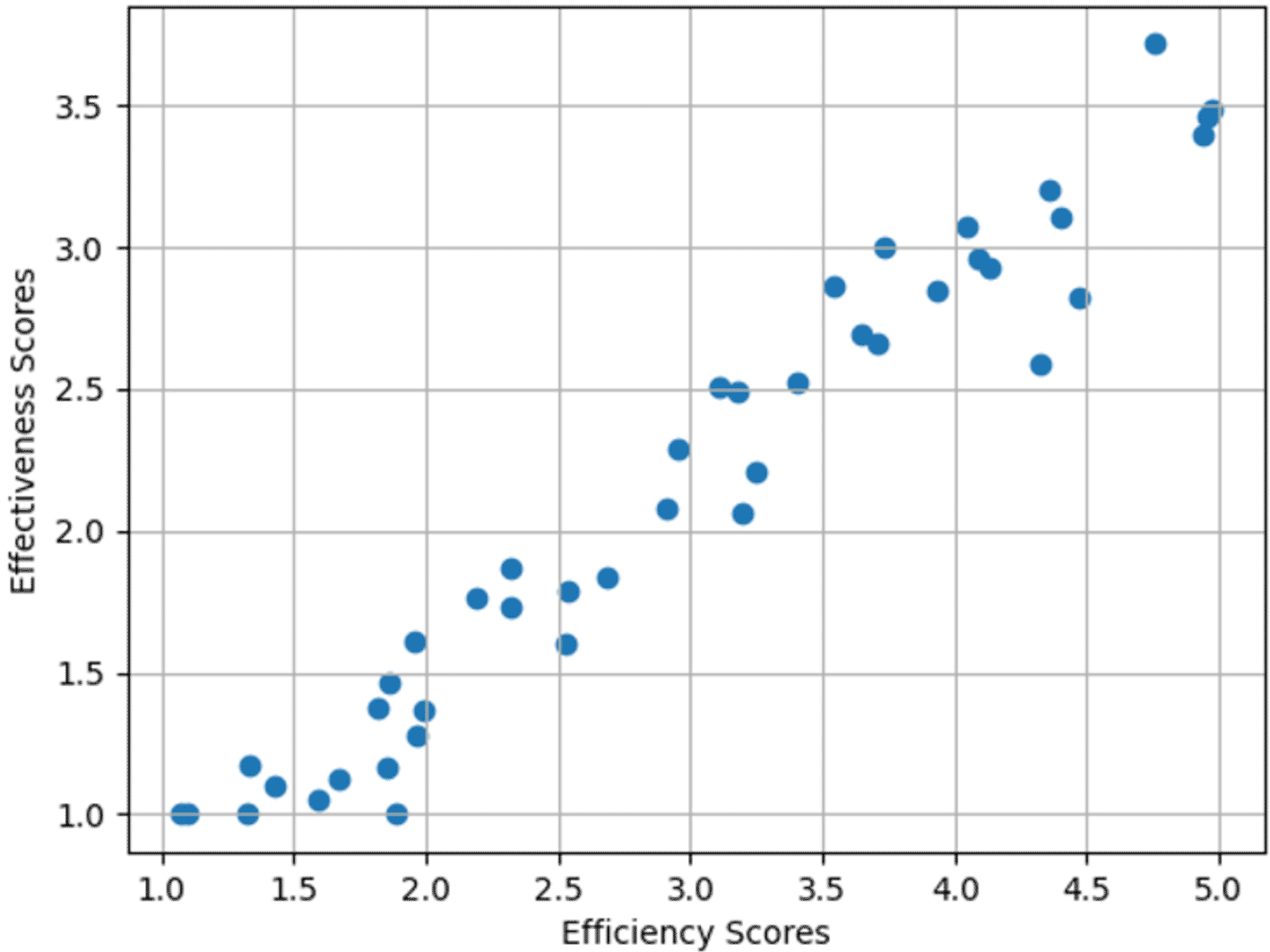
• Comparative Analysis: As illustrated in Figure 3, user satisfaction varied across features, and consistently outperforming others. The scatter plot in Figure 4 displays a strong positive correlation (r = 0.72) between efficiency and effectiveness, which suggests that technical robustness directly improves learning outcomes.
The results validate the application’s dual utility as both a tourism tool and an educational resource. The high efficiency scores ( = 4.10) indicate successful optimization of AR/VR technologies, and the effectiveness metrics substantiate its educational worth. The patterns of satisfaction correspond with earlier research on gamified education8 yet our inter-province merging constitutes an original advancement.
While field tests were successful, the AR Culturalapplication did have some limitations before it met widespread adoption. First, the sample of this study was limited to people living in Thailand, despite that their ages and jobs were varied. This restricts that overall applicability of the results to non-domestic tourists, who may have different cultural norms or levels of technological literacy.13 For example, users that are not multilingual might need more visual locus than text in their mother tongue.
The assessment was based on a self-reported satisfaction with and knowledge retention. Although the Cronbach’s Alpha of 0.85 provided robustness to the reliability of risk assessment fire question, longitudinal evidence regarding actual behavior changes for example in visit frequencies or program attendance would have supported validity. Future studies could, for example, use outcome validation measures (e.g. continued questionnaires) or longer engagement data from the app to account for this limitation.
There were technical limitations in the testing process, especially for older models of smartphones. It should be noted that the performance of the AR module degraded on low-performance GPU devices with decreasing (latency >3s) compared to high-end devices (latency ~1.2s). This difference illustrates a general problem in democratizing AR experiences on different hardware types.14
The framework has potential for application to additional cultural itineraries or instructional settings beyond its present boundaries. For example:
Multi-Civilization Integration: Expanding the scope of the application to encompass the Srivijaya or Hariphunchai civilizations would highlight the interconnected trade networks of Southeast Asia. A comparative AR visualization of architectural styles (e.g., Dvaravati stupas vs. Khmer prangs) might deepen historical understanding.15
Classroom Hybrid Learning: Teachers could use the AR module to conduct virtual field trips, supplementing textbook content with immersive site explorations. Initial trials adding new content to Thai history courses have yielded positive results in boosting pupil participation.16
Community Co-Creation: Community experts, such as local craftsmen or historical scholars, may add crowd sourced augmented reality material, including labeling cultural objects with traditional stories. This aligns with participatory heritage preservation models.17
Using augmented reality in cultural tourism generates ethical issues that need to be examined. One is the risk digital reconstructions will simplify or even misrepresent historic stories. For instance, an augmented reality model for a Dvaravati relic may inadvertently exclude hat is contested in terms of its spiritual significance amidst conflicting versions.18 In our case, we involved academic historians for content checking, but it remains important to maintain ongoing relationships with cultural guardians. Privacy Another major point is data privacy for users that take part in the gamified rally system. While the app is designed to anonymize personal information, monitoring movement across provinces could in theory allow it to reveal travel patterns. Open access data policies and opt-in consents should be emphasized in future updates.19
Finally, there is the potential for technology to exacerbate inequalities in heritage access. In remote locations with limited internet access, the application’s cloud features might go unsupported and to the detriment of those nearby. This might be tackled by offline use, or by a “soft” AR version (e.g., trigger-based markers).20
Such reflections bring to the surface the need for a fair use approach to AR, which seeks to utilise its potential without compromising cultural authenticity and individual privileges. Further research could adopt participatory design approaches to better harmonise technological innovation with ethical stewardship.
The AR Cultural application represents a significant development in the area of digital cultural tourism, offering a unique way for today’s generation to engage with the Dvaravati-Khmer history within Thailand. The app is an interactive, educational museum that highlights the relationships between ancient civilizations. Including AR, VR and gaming, PLAY’s app changes passive site visits into active experiences. The Design Thinking approach ensured that the development process remained user-centered, and addressed real issues such as multilingual access and varying levels of tech-savviness among tourists.
Field tests demonstrated the performance of the application in the retention of historical knowledge and visitor engagement, with a general satisfaction for all measures as efficiency, effectiveness or usability. The web-based rally system in particular was effective in encouraging the exploration of and enhancing people’s relationship with the cultural route. Despite this, it should be noted that there were also elements in which the research suggested important improvements were needed, these included compatibility across a range of devices; and a need for greater insight into historical detail to meet different educational requirements.
Beyond this specific application, the present study contributes to a general digital heritage protection framework which may emanate from other cultural trails or academic institutions. Ethical concerns raised, such as the privacy of information and equal access, serve to illustrate the importance of responsible evolution in cultural tourism technologies. Future iterations might offer more collaborations with local communities and historians to continue to fill the content authenticity/inclusivity bucket.
The successes of this project demonstrate how AR and VR can bring ancient heritage to new audiences in engaging manners. Cover image of the AR CulturalThe project has popularizer appeal for bringing history to life and allowing the public to experience an interactive type of cultural memory, while also inspiring in a new generation explorers with proactive heritage connections. This approach sets standards for the use of technology to preserve and celebrate heritage in an increasingly digital world.
Ethical approval for this study was granted by the Research Ethics Committee of Prince of Songkla University (Ref. No. psu.pn.2-116/25).
Written informed consent was obtained from all participants prior to their participation in the study. Participants were informed about the study objectives, procedures, potential risks, and their right to withdraw at any time without consequence. No personal or identifiable data were collected or used.
During the preparation of this work, the author(s) used NotebookLM and QuillBot to enhance the writing by only paraphrasing certain pieces of writing. After using this tool/service, the author(s) reviewed and edited the content as needed and take(s) full responsibility for the content of the publication.
| Views | Downloads | |
|---|---|---|
| F1000Research | - | - |
|
PubMed Central
Data from PMC are received and updated monthly.
|
- | - |
Provide sufficient details of any financial or non-financial competing interests to enable users to assess whether your comments might lead a reasonable person to question your impartiality. Consider the following examples, but note that this is not an exhaustive list:
Sign up for content alerts and receive a weekly or monthly email with all newly published articles
Already registered? Sign in
The email address should be the one you originally registered with F1000.
You registered with F1000 via Google, so we cannot reset your password.
To sign in, please click here.
If you still need help with your Google account password, please click here.
You registered with F1000 via Facebook, so we cannot reset your password.
To sign in, please click here.
If you still need help with your Facebook account password, please click here.
If your email address is registered with us, we will email you instructions to reset your password.
If you think you should have received this email but it has not arrived, please check your spam filters and/or contact for further assistance.

Comments on this article Comments (0)