Keywords
Mapping, Methodology, Research, Gaps, Priorities, Existing Scoping review

Mapping, Methodology, Research, Gaps, Priorities, Existing Scoping review
• Scoping reviews are well-established methods for evidence synthesis, with the aim of mapping key concepts and existing literature, and identifying research gaps in a defined area.
• Scoping review frameworks, such as Arksey & O’Malley, Levac et al., and the Joanna Briggs Institute (JBI), have provided a foundational structure and emphasized procedural rigor and consistency.
• The study introduces the conceptual model the Integrated Scoping Review Framework (ISRI) that conceptualize the procedural flow of the scoping review from inception to knowledge translation.
• Based on the findings, the study identified eleven distinct research gaps and seven crosscutting research priorities.
• Evidence showing that equity, compassion, and stakeholder engagement are consistently underrepresented.
Research is the process of inventing knowledge or delineating on existing research to generate new concepts, methodologies and understandings. It often involves analyzing former studies, which help framing research inquiries to build constructive outcome. At the outset, research gap as an area where lack of information restricts the inference of a specific question. It is an area that inadequate research information and the processes have caused a limit to the ability to reach a full proof conclusion to a research question.1 Alongside this, research gaps varies from methods & design, variables, sampling method, and data collection. It occurs due to a diverse explanations ranging from inaccurate information, partial or biased evidence including procedures of research that are unsuitable. However, when identification of these research gaps happens, it presents prospects for new research to be done.2 Research needs can be initiated to determine gaps, which will help expand the field of study. While research seeks to uncover groundbreaking information on its own, the author necessities to address the research gaps and needs, ensuring these will be explicitly prioritized through scoping review.
A scoping review, or scoping study, is a form of knowledge synthesis that addresses an exploratory research question aimed at mapping key concepts, types of evidence, and gaps in research related to a defined area or field by systematically searching, selecting, and synthesizing existing knowledge.3 The scoping review has become an increasingly popular approach for synthesizing research evidence.4 It aims to map the existing literature in a field of interest in terms of the volume, nature, and characteristics of the primary research.5 Their utility has been demonstrated across range of disciplines diverse, from globalization and health systems6 to compassion in healthcare,7 patient engagement,8 environmental change and health,9 and methodological innovations in priority setting.10 More recently, guidelines for conducting scoping reviews11 and reporting scoping reviews12 have been published to promote consistency in their methodological and reporting quality need improvement. In the foundational framework of Arksey and O’Malley, they introduced an optional “consultation exercise,” which has been heralded as a valuable tool to strengthen both the process and outcomes of scoping reviews, as well as to support the dissemination and relevance of the findings. However, subsequent researchers, including,13 emphasized that earlier frameworks such as those by Arksey and O’Malley, Levac et al., and the Joanna Briggs Institute left several methodological issues unresolved. Previous methodological analyses of scoping reviews have infrequently addressed the co-occurrence of these limitations across domains thus leaving a gap in understanding where enhancements are most critically required.
Despite the rapid growth of scoping reviews, studies often lack in conceptualization across the scoping review literature. In this context, the author aims to (1) synthesize methodological framework used in scoping reviews to identify research gaps and research priorities; (2) analyze the types of gaps and priorities reported across published literature; and (3) propose an Integrated Scoping Review Framework that embeds the procedural flow with the aim of providing robust methodological guidance for achieving optimal outcomes and effectively navigating future research directions.
This scoping review was directed by the question of which methodological frameworks has been utilized in the current scoping reviews. Its purpose is to outline the methodologies employed in existing scoping reviews and to understand how authors identify gaps and research priorities within their work, which ultimately sketches to identify research gaps, and priorities to guide future research endeavors.
The population includes published scoping studies pertaining to health disciplines spanning from January 2000 to May 2025. The concept focuses on mapping the methodologies, and identifying gaps and priorities in existing scoping reviews. The context refers to open-access, peer-reviewed journals.
This section introduces the Integrated Scoping Review Framework developed for this study. The framework integrates existing methodological guidance while incorporating procedural flow and ongoing iterative refinement. Its purpose is to provide researchers with a structured and methodologically rigorous approach to conducting scoping reviews. The proposed steps of the Integrated Scoping Review Framework are illustrated in Figure 1.

The author employed a descriptive and systematic scoping review design, following the foundational five-stage methodological framework proposed by Arksey and O’Malley (2005) and aligned with the reporting standards of the PRISMA-ScR (Preferred Reporting Items for Systematic Reviews and Meta-Analyses extension scoping review) 2020 guidelines. The conduct of this review adhered to the five stage: (1) identifying the research question, (2) identifying relevant studies, (3) study selection, (4) charting the data, and (5) collating, summarizing, and reporting the results, however, (6) optional ‘consultation exercise’ of the framework was not carried out in this research. The data analysis was conducted into two sections: first, descriptives statistics were used to summarize study characteristics and frequency of methodological frameworks used by the included studies; second, an inductive content analysis was carried out on the textual data pertaining to reported research gaps, priorities, and authors’ methodological discussions.
Protocol registration
This scoping review protocol is registered on the Open Science Framework (https://doi.org/10.17605/OSF.IO/4VNS8).
Inclusion criteria
This scoping review was conducted in accordance with the Arksey and O’Malley framework, incorporated Joanna Briggs Institute (JBI) guidelines, and reported following the PRISMA-ScR checklist. Eligible sources included open peer-reviewed articles and grey literature published in English from January 2000 and May 2025 that employed established scoping review methodologies in existing studies while addressed identified gaps and priorities within health disciplines.
Exclusive criteria
We excluded studies that has not reported in English, had inaccessible full text literature, lacked methodological detail, had unrelated titles, and studies that did not employ explicit methods to identify research gaps, needs, or priorities stated.
A comprehensive literature search for this scoping review was conducted across major electronic databases, including PubMed, EBSCO, Springer Nature, OSF registries, and grey literature sources from January 2000 to May 2025. The electronic database search and the update for the scoping review was completed in August 2025, respectively. Search terms integrated synonyms for “scoping review” with keywords associated with “research gap,” “gaps,” “research,” “identify,” “needs,” and “priorities,” “research priorities”,“methodology”, “mapping” as well as “mapping methodology”. Screening occurred in three consecutive phases: first, titles and keywords was assessed for relevance and duplicates were removed; second, abstracts and titles were screened against the inclusion criteria; and finally, full texts were assessed for eligibility. Any discrepancies during screening or data charting were resolved through consensus ensuring methodological transparency and reducing selection bias. We organized and extracted information through a structured charting matrix and synthesized narratively.
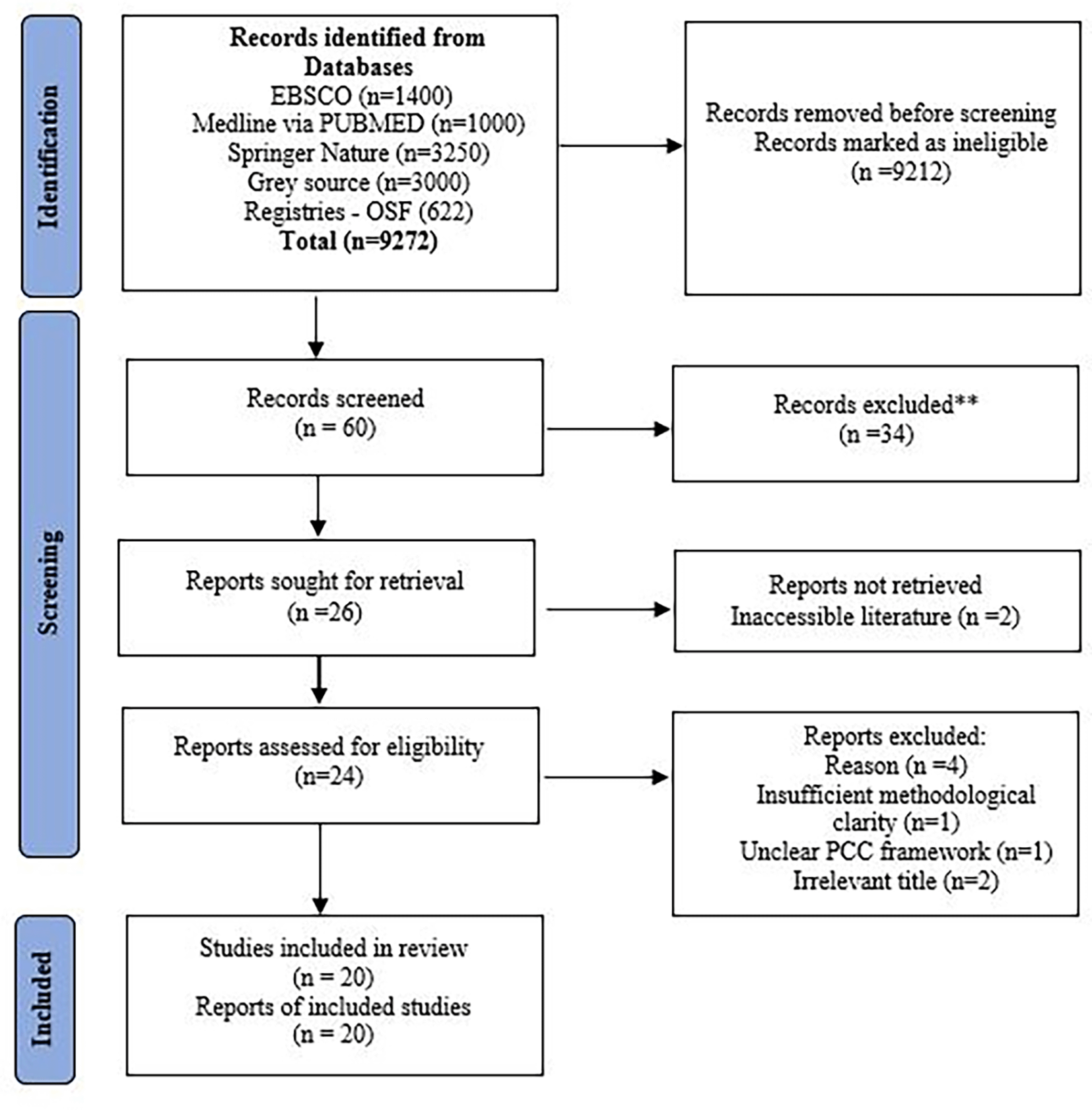
The literature search yielded 9,272 records across database including EBSCO (1,400), PubMed (1,000), Springer Nature (3,250), grey literature sources (3,000), and OSF registry (622). After eliminating the majority of 9,212 ineligible records, only 60 records advanced to the screening phase. Following title and abstract screening, 34 records were excluded, leaving 26 reports for full-text review. Two reports were inaccessible, and four excluded due to insufficient methodological clarity (n = 1), unclear PCC framework (n = 1), and irrelevant titles (n = 2). Finally, 20 studies met the inclusion criteria and were included in the final evidence base for this review are illustrated in Figure 2.
Data from the included studies were extracted from EndNote and exported to a MS Excel spreadsheet for further analysis. Two reviewers independently assessed the titles, abstracts, and full texts to check for eligibility. The data were organized and synthesized narratively based on JBI guidelines. The following variables from each study: (1) author(s), (2) year of publication, (3) study title, (4) methods, (5) identified research gaps, (6) identified needs or priorities, (7) health discipline, and (8) source. The comprehensive data charting extraction matrix and synthesis tables are provided as extended data and can be accessed via the OSF repository.32
The data analysis was conducted in two stages. First, descriptive statistics were used to summarize the characteristics of the included scoping review studies. Second, an inductive content analysis was performed on the textual data related to reported research gaps, research priorities. The results of these analyses are presented in Tables 1 and 2.
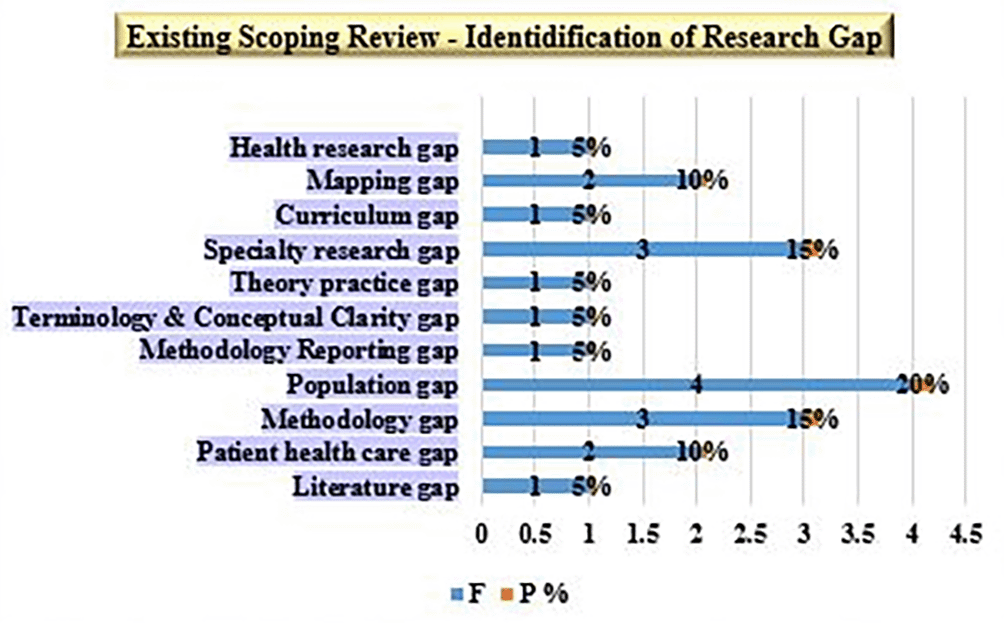
Scoping reviews fulfill a critical role in mapping, types of available evidence and identifying gaps within specific topics or fields. This approach offers a broad view of existing research and can contribute to identifying and setting research priorities.14 This scoping review paper identified 11 types of research gaps across the included studies reflects; the most frequently reported gap is the population gap (20%), followed by methodology gap and specialty research gap (15% each). Patient health care gap and mapping gap both accounted for (10%), while literature gap, methodology-reporting gap, terminology & conceptual clarity, theory practice gap, curriculum gap, and Health research gap each represented the smallest proportion at (5%) as illustrated in Figure 3.
Scoping reviews are increasingly employed to identify and describe approaches that support the prioritization of primary research topics within health-related fields.10 This approach aligns with the work of,15 who identified 28 distinct prioritization criteria for health research. In the present study, the scoping review process was used to synthesize seven clearly defined research priorities, which are summarized in Table 3 & illustrated in Figure 4.
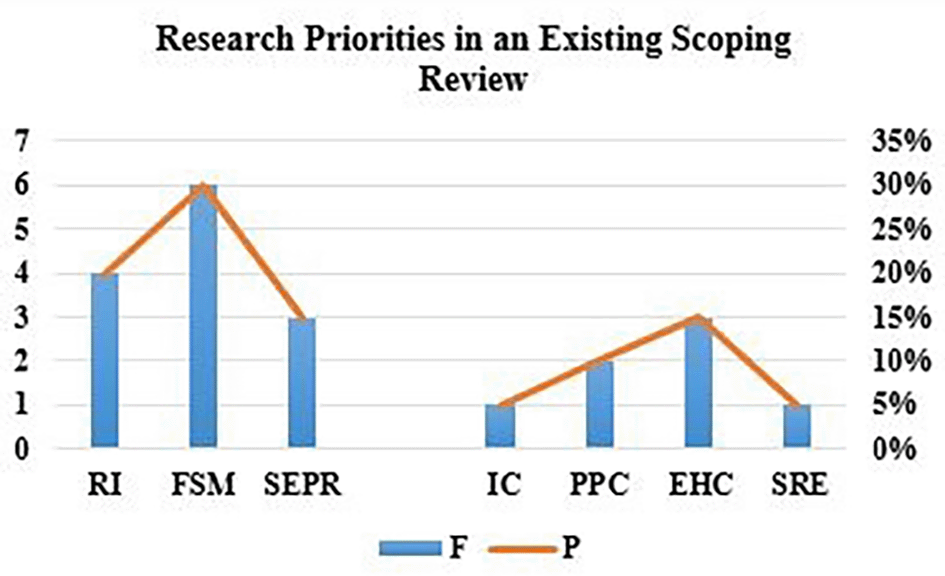
Note: * RI - Research Innovation & Expansion, FSM - Frameworks, Standardization & Methodological Rigor, SEPR – Stakeholder Engagement and Participatory Research, IC- Interdisciplinary Collaboration, PPC - Priority Populations & Contexts, EHC - Evidence-Driven Healthcare, SRE - Substandard Research Evidence.
Scoping reviews have emerged as an important approach for assessing methods used to identify research gaps and establish research priorities. Our review of 20 studies highlights the existing research gaps and priorities reported within the scoping review literature.
This review affirms the growing significance of scoping reviews, evidenced by a marked increase (75%) in publications between 2021 and 2025, primarily within the health sciences (55%) and gaining high visibility (65% in PubMed). Furthermore, the field demonstrates improved rigor, with high adherence to reporting standards, including 90% of studies clearly identified in the title and 85% following PRISMA-ScR (Tricco et al., 2018). However, a critical limitation remains only half (50%) of the studies explicitly identified research gaps or priorities in their titles, which may restrict their utility for agenda setting. This finding highlights a clear need for future scoping reviews to improve the communication of identified gaps, in line with established priority-setting frameworks,16 to maximize the translational impact of this scholarly evidence synthesis. As per the objectives set to map the methodological frameworks employed, the majority of studies (45%) simply identified as “Scoping review” without specifying a named framework, indicating a reliance on generic labeling despite the availability of established guidance. Among those using specific frameworks, the Arksey & O’Malley framework as updated by Levac et al. (20%) was the most common, followed by the JBI Scoping review methodology (15%). The remaining specific frameworks were each employed in a minority of studies (5% each), suggesting that while structured approaches are utilized, and a substantial portion of the field lacks explicit methodological specification.
The present scoping review identified four overarching thematic areas through descriptive content analysis. It revealed a predominant focus on Methodology and Research, accounting (65%) of the studies, reflecting strong attention to methodological innovation and rigor. Emerging domains accounted for (30%) of studies, highlighting scoping reviews’ role in rapidly identifying gaps in areas such as precision health, climate change, mental health, healthy ageing, and Solastalgia. In contrast, human-centered themes were underrepresented: Education, Training, and Capacity Building comprised (15%), while Stakeholder and Community Engagement and Practice, Care, and Compassion each accounted for only (10%). This limited attention to participatory approaches and compassionate care underscores ongoing challenges in integrating patient and community perspectives, indicating that while methodological refinement is prioritized, human-centered approaches remain comparatively neglected.
These trends are reflected as the specific research gaps identified across the literature. Population gaps (20%), consistently emerge, with multiple studies highlighting limited public involvement and underrepresentation of key demographic groups.17 Reported that research engagement was often constrained to basic survey methods, while18 similarly noted frequent omission of gender, race/ethnicity, and socioeconomic status, reinforcing the exclusion of underrepresented populations. Community engagement was commonly limited to later project phases19 and children and families were particularly underrepresented compared with other stakeholder groups20 indicating a persistent need for inclusive and participatory approaches across contexts.
Methodological gaps (15%) also show consistent patterns.21 highlighted a lack of standardized methods and inconsistent definitions of research gaps, while9,22 further observed limited use of quantitative and mixed-methods approaches, few Indigenous participants, and reliance on invalidated measures. Together, these findings suggest that methodological limitations remain widespread and constrain comparability across studies.
Specialty research gaps (15%), reveal both commonalities and divergences.23 emphasized poor study designs and limited focus on mental health and public interventions, whereas24 highlighted disparities between expert insights and research findings, showing that gaps are not only methodological but also conceptual. Similarly25 noted limited research on neonatal and postpartum outcomes, midwifery education, and professional values, indicating that certain clinical and professional domains are consistently neglected. Patient-centered healthcare gaps (10%) also converge across studies.7,8 both reported a lack of empirical understanding of compassion, missing patient and family perspectives, and inconsistent theoretical frameworks, demonstrating recurring challenges in advancing patient-centered approaches. Mapping gaps, likewise found (10%) of studies, reveal common limitations, including unclear roles in research prioritization and restricted use of mapping to assess published evidence.10,26 Finally, several less frequently reported gaps each identified (5%) exhibit complementary findings6,27: described difficulties accessing commercially sensitive data, incomplete methodological reporting, and limited familiarity with research methods, while Refs. 28, 29 and 30 highlighted inconsistencies in research priority categorization, limited educational and clinical interventions, and deficiencies in skill-based instruction. In a review of Ref. 31 emphasized the need for a structured, universal framework to bridge research efforts with evidence-based practice, reflecting a crosscutting recommendation across the literature. Overall, while individual studies emphasize different aspects of research gaps, patterns consistently point to limited inclusivity, methodological inconsistency, and insufficient patient-centered approaches, underscoring the need for more participatory and methodologically robust research strategies.
Building on these findings, research prioritization is essential for enabling stakeholders to align healthcare and research activities with community needs and evidence-based practices. The reviewed studies emphasize improving outcomes for vulnerable populations, particularly children, older adults, and families, addressing some of the gaps in inclusivity and participatory approaches identified earlier. These priorities highlight the need for interventions that are equitable, feasible, and capable of generating meaningful improvements in health systems. Despite ongoing challenges, the findings provide a roadmap to guide researchers, funders, and policymakers in planning and investing in future research. Continued collaboration among stakeholders is crucial to translate these priorities into action and ultimately strengthen healthcare services while enhancing community well-being. From the synthesized evidence, an Integrated Framework was developed to illustrate the procedural flow of review done and to inform future research and practice.
This review has several limitations. First, no formal quality appraisal of the included studies or assessment of author expertise was conducted. Although critical appraisal is not a standard requirement for scoping reviews, given their aim to map existing literature rather than evaluate the validity of individual study findings, its absence limits the ability to assess the rigor and methodological quality of the included studies. Second, the review is descriptive rather than evaluative, focusing on identifying methodological frameworks and research gaps rather than examining the effectiveness of study impact. Finally, the optional Consultation Exercise (Arksey & O’Malley, Step 6) was intentionally excluded. While this ensured that the ISRI Framework was integrated to illustrate the procedural flow from the published evidence, rather than developing a novel framework, and it has not yet been externally validated.
Future research should balance methodological innovation with greater attention to underrepresented areas such as community engagement, equity, and compassionate care. In practice, integrating stakeholder perspectives and emerging research findings can enhance the relevance, equity, and impact of health interventions.
Scoping reviews are essential for mapping the breadth of existing research, revealing where evidence is robust as well as identifying notable gaps. However, our findings reveal human-centered, equity-focused, and practice-oriented domains were underrepresented. Furthermore, a significant portion of the literature relies on generic methodological labeling of scoping review (45%), indicating a widespread need for enhanced procedural specification. In response to this, and recognizing the strength of established approaches, our integrated scoping review framework is introduced not to supplant existing models, but as a structured guide to explicitly standardize the execution, methodological specification, and reporting of scoping reviews for future researchers, thereby supporting greater consistency and utility in priority setting.
Blessy Little Christy P-Writing original draft, writing review & editing, conceptualization, methodology, formal analysis, data curation, Dr Lamiaa Al Jamea - review, validation, supervision, Sumi Soman - study selection processes - (title and abstract screening followed by full text screening). All authors read and approved the study.
| Views | Downloads | |
|---|---|---|
| F1000Research | - | - |
|
PubMed Central
Data from PMC are received and updated monthly.
|
- | - |
Provide sufficient details of any financial or non-financial competing interests to enable users to assess whether your comments might lead a reasonable person to question your impartiality. Consider the following examples, but note that this is not an exhaustive list:
Sign up for content alerts and receive a weekly or monthly email with all newly published articles
Already registered? Sign in
The email address should be the one you originally registered with F1000.
You registered with F1000 via Google, so we cannot reset your password.
To sign in, please click here.
If you still need help with your Google account password, please click here.
You registered with F1000 via Facebook, so we cannot reset your password.
To sign in, please click here.
If you still need help with your Facebook account password, please click here.
If your email address is registered with us, we will email you instructions to reset your password.
If you think you should have received this email but it has not arrived, please check your spam filters and/or contact for further assistance.

Comments on this article Comments (0)