Keywords
Quality Experience, Brand Trust, Brand Value, Brand Loyalty, Cultural Heritage Tourism

Quality Experience, Brand Trust, Brand Value, Brand Loyalty, Cultural Heritage Tourism
Research focusing on the experiential perspective of brand trust in heritage tourism holds significant relevance in both academic and industry contexts. Academically, this study addresses an existing literature gap by exploring how brand trust can be cultivated within the realm of heritage tourism, characterized by its emotional, experiential, historical, and cultural dimensions. Previous inquiries have primarily examined brand trust in contexts such as retail, restaurants, and technology,1,2 few have provided comprehensive insights specifically within the heritage tourism sector. This study further contributes to theoretical development by integrating variables such as quality of experience, perceived value, and destination loyalty,3,4 while enriching multidisciplinary understanding through an approach that synthesizes elements of marketing, cultural studies, and psychology.
From an industry perspective, this research offers practical advantages for stakeholders, such as destination marketers and heritage site managers, in formulating branding strategies centered on trust and the creation of authentic tourist experiences.5,6 This is particularly crucial for supporting the sustainability of heritage tourism, which not only facilitates cultural preservation but also generates substantial economic benefits for local communities.7 Furthermore, this study is especially pertinent in the context of shifting global trends, such as the evolving behaviors of post-pandemic travelers, who are increasingly emphasizing authenticity and trust as means of rebuilding confidence in tourism destinations8 Amidst heightened competition in the tourism sector, a brand trust strategy grounded in quality experience can serve as a significant competitive advantage for destinations. Thus, this study not only advances theoretical discourse but also offers practical insights for the sustainable development of heritage tourism.
An analysis of previous studies reveals several research gaps and limitations deserving of attention. First, many studies exhibit geographical and cultural limitations. For instance,9 highlighted the necessity for validation across diverse locations and cultures. Similar constraints are noted in studies by,3,4 which focus on specific locales without broader applicability to other cultural contexts. Second, most of the research is confined to specific industries or destinations, such as fast food10 or war tourism.11 Consequently, further exploration is imperative in other sectors and destinations to enhance the applicability of findings.
Additionally, many studies employ a cross-sectional approach without accounting for temporal changes. For example, consumer behavior during the COVID-19 pandemic was examined but post-pandemic shifts were not explored,8 while longitudinal studies were recommended to better understand dynamic relationships.12 Moreover, there is a lack of inclusion of relevant moderating or mediating variables. Studies by,1,4 have identified the need for further exploration of additional factors to enhance model complexity.
In the digital context, some studies remain restricted to specific platforms or sectors. For instance, one study focused solely on e-commerce live streaming, highlighting the need for adaptation in other technology-driven sectors.13 Additionally, the lack of comparative studies across destinations or tourism types represents a significant limitation. Another study, for example, examined heritage sites in India without comparing them to other locations.5 Finally, theoretical, and methodological approaches in some studies require further refinement. Some researchers suggested testing their model in different destinations,14 while other recommended between-subject experiments to strengthen the validity of findings.15 Addressing these gaps can enable future research to contribute more broadly and deeply to the fields of tourism and brand trust.
This study offers novelty by exploring the relationship among quality experience, brand trust, brand value, and brand loyalty in the context of heritage tourism, a topic that remains underexplored in existing research. Most prior studies have focused on other sectors, such as traditional restaurants, border tourism, or technology products, leaving heritage tourism relatively understudied. Furthermore, while some studies have examined the impact of quality experience on brand loyalty, the role of brand trust as a mediator has not been extensively explored within heritage tourism. This study broadens its geographical scope by examining heritage tourism destinations in Indonesia, a context rich in culture and unique geography. Indonesia, known for its rich historical and cultural heritage, is home to iconic UNESCO World Heritage Sites like Borobudur Temple and Prambanan Temple, which attract millions of visitors annually. Its diverse artistic traditions, such as batik craftsmanship and wayang kulit (shadow puppetry), offer tourists a deeply immersive experience. Moreover, Indonesia’s breathtaking natural landscapes, ranging from Bali’s pristine beaches to Komodo Island’s rugged beauty, enhance its global appeal as a premier travel destination. Additionally, this research provides a more comprehensive and relevant conceptual framework by integrating theories such as Relationship Marketing Theory and Tourism Consumption Theory. By incorporating brand trust and brand value as mediating variables, this study offers a novel contribution to understanding the complex relationship between quality experience and brand loyalty in heritage tourism.
The foundation of successful tourism marketing has been the ability to deliver an exceptional and immersive experience that exceeds visitors’ expectations. Quality Experience remains a fundamental driver in shaping destination appeal, influencing traveler satisfaction, and fostering long-term engagement. The Experience Economy, asserting that high-quality experiences enhance the perceived value for tourists.16 In the context of heritage tourism, authentic and immersive experiences contribute significantly to increased satisfaction and engagement among visitors.4 Scholars argue that heritage tourism relies not only on physical attractions but also on sensory and emotional engagement, which deepens tourists’ connection to historical and cultural narratives.11 A meaningful experience fosters a sense of attachment and appreciation, influencing revisit intentions and long-term brand loyalty.3 Moreover, incorporating interactive and personalized elements into heritage tourism enhances experiential depth, reinforcing tourists’ perceptions of authenticity and cultural significance.5 Additionally, the integration of storytelling and guided interpretation enhances tourists’ emotional engagement, allowing them to connect more deeply with the historical and cultural significance of a destination.17 Furthermore, the use of digital technologies, such as augmented reality and virtual reality, has been shown to amplify the immersive quality of heritage tourism experiences, making historical narratives more accessible and engaging for diverse audiences.18
Brand trust refers to the confidence that consumers have in a brand based on consistent experiences and the credibility of information provided.19 In the tourism industry, trust in a destination is largely shaped by prior experiences, visitor testimonials, and the quality of services offered.7 A study by,3 confirms that brand trust serves as a mediating factor in strengthening tourist loyalty. Trust plays a crucial role in reducing perceived risk, particularly in tourism, where consumers often rely on intangible factors such as reputation and word-of-mouth recommendations.20 When tourists develop trust in a destination, they are more likely to engage in repeat visits and recommend the location to others, reinforcing positive brand associations.21 Additionally, brand trust fosters emotional attachment, which enhances tourists’ willingness to overlook minor service failures and maintain long-term loyalty.2 Studies suggest that trust is not only built through direct experiences but also through digital engagement, where online reviews and influencer endorsements significantly shape consumer perceptions.13 As tourism becomes increasingly competitive, destinations that prioritize trust-building strategies such as transparency, authenticity, and consistent service quality gain a sustainable advantage in retaining loyal visitors.12
Brand value represents tourists’ perceptions of the benefits and quality of a destination, ultimately influencing their loyalty.22 In heritage tourism, brand value is shaped not only by the destination’s intrinsic qualities but also by its cultural appeal, historical significance, and the unique experiences it offers.11 A strong brand value fosters emotional attachment, encouraging tourists to develop a deeper connection with the destination and increasing their likelihood of revisiting.5 Additionally, brand value plays a crucial role in shaping tourists’ word-of-mouth recommendations, as visitors who perceive high value are more likely to advocate for the destination within their social circles.6 Studies suggest that brand value is not solely determined by tangible attributes but also by intangible elements such as such as brand associations, stories, authenticity, and cultural experiences.23,24 Furthermore, digital engagement and social media interactions have emerged as key drivers of brand value, allowing destinations to reinforce their appeal and maintain long-term relationships with visitors.25 As competition among heritage tourism destinations intensifies, strategic brand value management becomes essential for sustaining visitor interest and fostering loyalty.26
The results of hypothesis testing regarding the influence of Quality Experience on Brand Trust have revealed significant findings across various industries and countries. A study conducted by,7 in Indonesia, during the COVID-19 pandemic, found that tourism experiences exert a significant impact on brand trust. This research, which involved 125 domestic tourists in Bali, underscored the importance of high-quality experiences in fostering trust within the tourism sector, particularly during crises.
A similar investigation by,2 in Turkey explored the relationship between Brand Experience and Brand Trust within the sports industry, utilizing the Brand Resonance Model. With a sample of 385 respondents aged 18 to 65, the study confirmed that brand experience plays a crucial role in enhancing brand trust among sports consumers in developing countries.
Customer experience was further analyzed by,13 in China, in the context of e-commerce live streaming. Their study, which involved 449 respondents, demonstrated that Customer Experience significantly influences consumer trust in influencers, highlighting the importance of interactive and satisfying experiences in establishing trust on digital platforms.
Supporting these findings,12,21 provided additional empirical evidence. Customer experience in the full-service hotel sector in China significantly contributes to Brand Trust, drawing on data from 732 hotel guests.21 Concurrently, a study in Vietnam identified a positive relationship between Online Brand Experience and Trust within the online banking industry, based on a sample of 486 respondents.12 Collectively, these studies reinforce the relevance of quality customer experiences in establishing trust across various industries.
Based on the findings presented, the following hypothesis is proposed:
Quality Experience positively influences Brand Trust.
Numerous studies have examined the impact of Quality Experience on Perceived Value across diverse contexts, yielding significant findings in various countries, types of tourism, and respondent demographics. Collectively, these studies underscore the assertion that high-quality experiences enhance the perceived value among customers and tourists.
The initial study conducted by,11 in Iran—a developing nation—focused on war tourism with a sample of 330 tourists. The results indicated that quality experience significantly influenced tourists’ perceived value in this specific context.
Similarly, a study in South Korea, also classified as a developing country, explored visitor experiences in water parks.9 Including 376 respondents, this study reaffirmed the significant positive relationship between Quality Experience and Perceived Value.
A study conducted in China, another developing country, within the domain of cultural heritage tourism.4 Their study, which involved 504 tourists across four heritage sites, revealed that high-quality experiences in museum rejuvenation substantially impacted tourists’ perceived value.
In Indonesia,3 investigated creative tourism, engaging 369 tourists visiting creative attractions. Their findings confirmed that Quality Experience significantly influences tourists’ Perceived Value.
Research conducted by,27 in the border region between the Dominican Republic and Haiti focused on border tourism, surveying 583 visitors. Their study corroborated previous findings, emphasizing the considerable impact of Quality Experience on Perceived Value.
Lastly,28 in China examined intangible cultural heritage tourism, specifically puppet performances, with 325 tourists participating as respondents. Their research validated that Quality Experience significantly affects tourists’ Perceived Value, reinforcing the importance of high-quality experiences across various cultural attractions.
Considering these findings, the following hypothesis is proposed:
Quality Experience positively influences Brand Value.
Numerous studies have examined the impact of Quality Experience on Brand Loyalty across various contexts, including retail, tourism, and other industries. A study in India investigated the effect of Customer Experience on Attitudinal Loyalty within the lifestyle retail sector, utilizing a sample of 840 shoppers.29 Their findings indicated a significant relationship between customer experience and brand loyalty. Another study in Germany explored the concepts of Brand Experience and Brand Loyalty in the gastronomy sector, involving 138 student respondents.30 Their results confirmed the critical role of brand experience in fostering brand loyalty.
In South Korea concentrated on the smartphone industry, specifically targeting iPhone and Galaxy users, with a sample of 598 participants.1 Their findings demonstrated that a positive Brand Experience significantly enhances brand loyalty. A study in China examined full-service hotels, engaging 732 hotel guests. However, their findings did not reveal a significant relationship between Customer Experience and Brand Loyalty within this sector.21 Another study in the UK assessed Customer Experience and Loyalty in international retail, involving 606 consumers. Their results confirmed a strong positive relationship.31 In South Korea, research investigated the relationship between Tourism Experience and Brand Loyalty in night tourism, surveying 487 tourists.6 Their findings underscored the importance of tourism experience in cultivating brand loyalty.
Research in Indonesia analyzed Experience Quality and Tourist Loyalty in creative tourism, employing a sample of 369 tourists.3 Their results affirmed a significant relationship between experience quality and tourist loyalty. Although most studies corroborate the significant effect of Quality Experience on Brand Loyalty, the research conducted by,21 in China presents a contrasting viewpoint, suggesting that industry-specific factors may influence the strength of this relationship.
Consequently, the following hypothesis is proposed:
Quality Experience positively influences Brand Loyalty.
The impact of Brand Trust on Brand Loyalty has been extensively investigated across various countries and industries. In Croatia,32 examined fast food brand communication among 452 university students and confirmed a significant relationship between Brand Trust and Brand Loyalty. Similarly, in China, research focused on halal branding and found a strong positive correlation using a sample of 17 Muslim international students.33 Turkey has also contributed to this research, with a an application of the Brand Resonance Model within the sports industry and surveyed 385 respondents to demonstrate significant results.2 Another study in Turkey by,34 investigated airline services among 567 airline passengers, confirming a strong connection between Brand Trust and Brand Loyalty. In Brazil, research studied customer-brand relationships in retail, utilizing a sample of 210 consumers, and reaffirmed that Brand Trust plays a crucial role in fostering brand loyalty.35 Vietnam also saw research in this area, examining banking omnichannel services among 1,547 bank customers and reaffirming the significance of Brand Trust in the formation of loyalty.36 Lastly, in India, an investigation explored over-the-counter (OTC) medicine purchases during COVID-19, with a sample of 525 customers, and confirmed the relationship between Brand Trust and Brand Loyalty.8
Given these consistent findings, the hypothesis is proposed that:
Brand Trust positively influences Brand Loyalty.
The significant impact of Perceived Value on Brand Loyalty has been widely documented across various studies. In Singapore, research on mobile technology surveyed 514 respondents and confirmed that Perceived Value has a significant effect on Brand Loyalty.37 Similarly, in China, an examination of traditional restaurants involving 1,082 customers highlighted the crucial role of Perceived Value in the formation of brand loyalty.6 In India, an analysis of the heritage tourism involving 328 tourists demonstrated a significant effect of Perceived Value on Brand Loyalty.5
Given these consistent findings, the hypothesis is proposed that:
Perceived Value positively influences Brand Loyalty.
This section describes the research methods employed to achieve the study’s objectives. The methodology includes research design, population and sample, data collection methods, variable measurement, and data analysis techniques. Each component is structured to ensure that the study is conducted systematically and reliably. This research adopts a quantitative approach using an online survey method. This method was chosen to identify and analyze the relationships among the key research variables: brand loyalty, quality experience, brand value, and brand trust. The quantitative approach enables efficient data collection from a large sample within a short timeframe.
The research population consists of individuals with experience with the brand under investigation. The sample was selected using a purposive sampling method, ensuring that the respondents met the inclusion criteria relevant to the study to obtain in-depth insights from experts in heritage tourism and brand management by targeting individuals with proven experience and active engagement in quality consumer experiences. This approach ensures that only participants who meet rigorous inclusion criteria—such as significant industry expertise and the capacity to provide meaningful reflections on brand trust and loyalty—are selected. At the same time, those lacking the required background are excluded. As a result, the strategy enhances both the depth and credibility of the collected data, thereby reinforcing the conceptual framework that links quality experience, brand trust, brand value, and after all, brand loyalty. 573 respondents met the eligibility criteria and completed the questionnaire validly.
To ensure a comprehensive understanding of the study’s key variables, a structured questionnaire was developed and divided into two main sections. The first section focused on gathering socio-demographic information, including age, gender, education level, and occupation. The second section measured the core variables of the study: brand loyalty, quality experience, brand value, and brand trust.
Specifically, brand loyalty was assessed using four items adapted from.38 Quality experience was measured using five items from.39 Brand value was evaluated using three items.10 Lastly, brand trust was measured using three items adapted.40 The measurement scales employed in this study have been rigorously tested for validity and reliability in previous research contexts. Confirmatory Factor Analysis (CFA) and Cronbach’s alpha tests have consistently demonstrated strong construct validity and internal consistency across various studies, reinforcing the robustness of these instruments in assessing Quality Experience, Brand Trust, and Brand Value. Furthermore, all items were measured using a 5-point Likert scale, ranging from 1 (Strongly Disagree) to 5 (Strongly Agree), ensuring consistency in response evaluation). Synthesizing these relationships, the measurement scales employed in this research have been rigorously tested for validity and reliability in previous studies. Confirmatory factor analyses (CFA) have consistently demonstrated that the constructs of quality experience, brand trust, and brand value are measured with strong construct validity, ensuring that the scales accurately capture the intended dimensions. Furthermore, reliability coefficients such as Cronbach’s alpha, have consistently exceeded the acceptable threshold of 0.70 in diverse contexts, confirming the internal consistency and stability of these measurement instruments. These robust psychometric properties provide a solid foundation for the application of the scales within this study, bolstering the credibility of the findings.
To further strengthen the credibility of our empirical results, the study employs several strategies to mitigate potential biases inherent in online surveys, including respondent bias and common method bias. Participant anonymity was rigorously maintained, reducing the likelihood of social desirability bias and ensuring that respondents feel comfortable providing honest and detailed responses. Additionally, the survey design incorporated randomized ordering of items to minimize order effects. A pilot test was conducted to detect and rectify any ambiguities in the survey instrument. Furthermore, established statistical controls, such as Harman’s single-factor test, were utilized to assess and control for common method variance. Collectively, these measures contribute to the robustness and reliability of our findings by systematically addressing potential sources of bias. Data were collected through an online survey designed to reach relevant respondents. To mitigate potential biases, such as respondent bias and common method bias, this study implements several strategies. Anonymity and confidentiality are ensured to reduce social desirability bias, allowing respondents to provide honest answers without external pressure. Additionally, the survey design incorporates randomized question ordering to minimize order effects and response patterns. A pilot test was conducted to identify and rectify ambiguities in the questionnaire, enhancing clarity and reliability. Furthermore, statistical controls, such as Harman’s single-factor test, were applied to assess and control for common method variance, ensuring the robustness of the findings. To ensure the validity of the data, a screening process was conducted to detect and remove invalid responses, such as random answering patterns or straight-line responses. This process adhered to the recommendations.41
Data analysis was performed using Partial Least Squares Structural Equation Modeling (PLS-SEM) with the SEMinR software. The analysis process consisted of three main stages:
Internal consistency reliability was assessed using Cronbach’s Alpha, with all variables scoring above 0.7, indicating high reliability. Convergent validity was tested using factor loadings and Average Variance Extracted (AVE), both of which met the required thresholds. Discriminant validity was evaluated using the Fornell-Larcker criterion, confirming that the highest cross-loading correlations were with their respective constructs.
The explanatory power of predictor variables on dependent variables was assessed using adjusted R2 values. For brand loyalty, the adjusted R2 value was 0.7159, indicating substantial explanatory power. For brand trust, the adjusted R2 value was 0.4289, indicating moderate explanatory power. For brand value, the adjusted R2 value was 0.5902, also indicating moderate explanatory power. Common Method Bias (CMB) was tested using the Full Collinearity Variance Inflation Factor (FCVIF), confirming no presence of common method bias.
The data collection process yielded a total of 573 respondents. The respondent profile indicates that the majority were male (360 respondents, 62.83%), while female respondents accounted for 213 (37.17%).
In terms of educational background, respondents displayed a diverse distribution. A small proportion, 3 respondents (0.52%), had a high school diploma or equivalent, while 7 respondents (1.22%) held an associate degree (D3) or bachelor’s degree (S1). A significant number possessed postgraduate education, with 166 respondents (28.97%) holding a master’s or doctoral degree (S2/S3). Nonetheless, the reported educational data exhibits redundancy and warrants review for accuracy.
Regarding occupation, 98 respondents (17.1%) identified as students, while 116 respondents (20.24%) were categorized as government employees. A total of 103 respondents (17.98%) were military or police personnel (TNI/Polri). Respondents employed in the private sector numbered 121 (21.12%), while the largest group comprised 135 respondents (23.56%), who identified as entrepreneurs.
Internal consistency reliability
Internal consistency reliability testing was conducted for four variables: Brand Loyalty, Brand Trust, Brand Value, and Quality Experience, using Cronbach’s Alpha as the primary indicator. The results indicate high reliability for all variables. The Cronbach’s Alpha values were 0.8398 for Brand Loyalty, 0.8253 for Brand Trust, 0.7683 for Brand Value, and 0.8499 for Quality Experience (See Table 1).
| Variable | Cronbach’s alpha | Description |
|---|---|---|
| Brand Loyalty | 0.8398 | Very Good |
| Brand Trust | 0.8253 | Very Good |
| Brand Value | 0.7683 | Very Good |
| Quality Experience | 0.8499 | Very Good |
According to,42 acceptable internal consistency reliability values range from 0.80 to 0.90, with a minimum threshold of 0.70 (or 0.60 for exploratory research) and a maximum threshold of 0.95 to avoid redundancy that could compromise content validity.43 Hence, all variables in this study meet the criteria for good reliability, ensuring internal consistency among the construct items.
Convergent validity testing
Convergent validity testing was conducted on 573 respondents using Indicator Reliability (Outer Loadings) and Average Variance Extracted (AVE) as the evaluation criteria. According to,41,44 an acceptable outer loading value is above 0.7, as it indicates that at least 50% of the variance in the indicator is explained by the construct. Additionally, a good AVE value should be above 0.5.
The results show that all variables—Brand Trust, Brand Value, Quality Experience, and Brand Loyalty—have outer loading values exceeding 0.7 for all indicators, with AVE values of 0.7420, 0.6831, 0.6256, and 0.6251, respectively. These findings confirm strong convergent validity for all variables (See Table 2).
Discriminant validity testing
Discriminant validity was tested using the Fornell-Larcker criterion, as recommended.45 The results indicate that the square root of AVE for each variable is higher than the correlations between constructs, confirming discriminant validity (See Table 3).
| Variable | 1 | 2 | 3 | 4 |
|---|---|---|---|---|
| Brand Trust | 0.8614 | 0.0000 | 0.0000 | 0.0000 |
| Brand Value | 0.6709 | 0.8265 | 0.0000 | 0.0000 |
| Quality Experience | 0.6549 | 0.7682 | 0.7910 | 0.0000 |
| Brand Loyalty | 0.6771 | 0.7820 | 0.7919 | 0.8221 |
However,46,47 argue that the Fornell-Larcker criterion may not effectively detect discriminant validity issues. Therefore, while the findings support discriminant validity, additional or alternative methods may be required for further confirmation.
The results of the hypothesis testing reveal that the effect of Brand Trust on Brand Loyalty yielded an original sample value of 0.1740 and a standard deviation of 0.0365. The calculated t-test value of 4.7684 exceeds the critical t-value of 1.96 at a 95% confidence level, thereby supporting the acceptance of the hypothesis (see Table 4). This outcome indicates that Brand Trust significantly influences Brand Loyalty, corroborating findings from prior studies conducted by several scholars.2,8,14,21,33–36,48
Subsequently, the hypothesis testing regarding the influence of Brand Value on Brand Loyalty resulted in an original sample value of 0.3524, a standard deviation of 0.0482, and a t-test value of 7.3178. Given that the t-value surpasses the critical threshold of 1.96, the hypothesis is accepted, confirming that Brand Value significantly affects Brand Loyalty (see Table 4). These results align with the research conducted by several scholars.5,6,15,20,37,49
The testing of the effect of Quality Experience on Brand Trust yielded an original sample value of 0.6549, a standard deviation of 0.0262, and a t-test value of 25.0086. Since the t-value is significantly greater than 1.96, the hypothesis is accepted, suggesting that Quality Experience has a significant influence on Brand Trust (see Table 4). This finding is consistent with studies conducted by several scholars.2,7,12,13,21
Next, the hypothesis testing regarding the effect of Quality Experience on Brand Value produced an original sample value of 0.7682, a standard deviation of 0.0188, and a t-test value of 40.9677. Since the t-value substantially exceeds 1.96, the hypothesis is accepted (see Table 4). This outcome confirms that Quality Experience significantly influences Brand Value, supporting previous research.3,4,9,11,27,28,50
Lastly, the hypothesis testing for the effect of Quality Experience on Brand Loyalty yielded an original sample value of 0.4072, a standard deviation of 0.0464, and a t-test value of 8.7689. Given that the t-value exceeds the critical threshold of 1.96, the hypothesis is accepted (see Table 4). This finding illustrates that Quality Experience has a significant impact on Brand Loyalty, corroborating prior studies.1,3,6,14,29–31
Overall, the structural model demonstrates significant relationships among all constructs in the study, supporting the conceptual framework (See Figure 1).
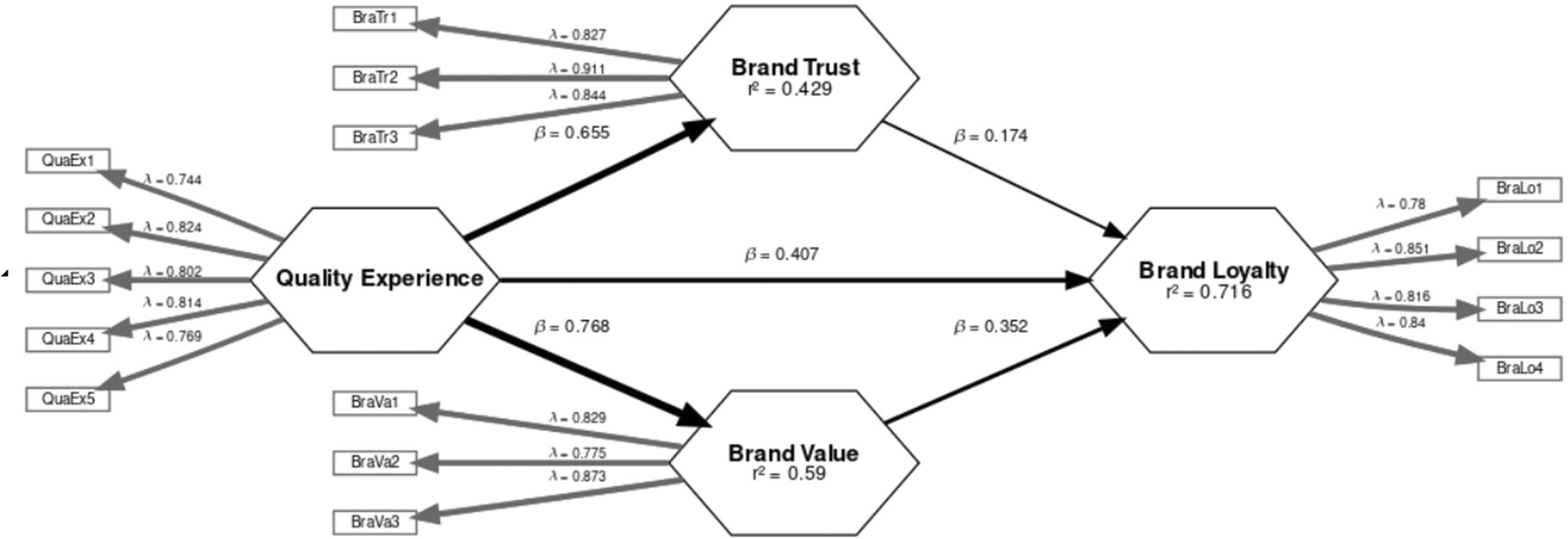
All tested hypotheses were accepted, confirming significant relationships among the examined variables. Quality Experience emerged as the predominant influencing factor, affecting both Brand Trust and Brand Value, and ultimately enhancing Brand Loyalty. These findings underscore the importance of improving high-quality brand experiences to fortify brand trust, brand value, and consumer loyalty.
This study offers several critical insights into marketing and brand management. Notably, Quality Experience demonstrates the most substantial influence relative to other variables, reinforcing its role as a key element in cultivating positive consumer–brand relationships. Furthermore, the study emphasizes the central role of Brand Loyalty, which is shaped by the interactions of Brand Trust, Brand Value, and Quality Experience, illustrating the complexity inherent in the consumer loyalty-building process.
Additionally, these findings align with previous studies, providing further validation and cross-cultural as well as cross-industry relevance. Another significant aspect is the high t-test values obtained in this study, which furnish strong quantitative evidence of the significance of the relationships among the examined variables.
This study effectively elucidates the significant relationships among quality experience, brand trust, brand value, and brand loyalty within the heritage tourism context. The findings demonstrate that high-quality experiences exert a strong influence on both brand trust and brand value, which ultimately reinforces brand loyalty.4,7 Brand trust plays a crucial role in establishing long-term relationships with tourists, while brand value serves as a pivotal element in enhancing positive perceptions of heritage destinations.1,6 The combined effects of these variables underscore the significance of marketing strategies focused on authentic and sustainable experiences in fostering tourist loyalty.3,5
Considering these findings, heritage site managers are advised to enhance the quality of tourist experiences by offering authentic, interactive, and culturally immersive services.6 Prioritizing staff training is imperative to ensure friendly and professional service, thereby reinforcing the destination’s brand values. Additionally, destination marketers should formulate branding strategies that emphasize high-quality experiences, utilizing social media and digital platforms to boost tourist engagement and employing visitor testimonials to strengthen the brand trust.12
Governments are encouraged to support heritage tourism preservation initiatives through promotional programs and to foster community involvement in destination management.8 Further research is recommended to adopt a longitudinal approach to gain deeper insights into the evolution of these relationships over time. Furthermore, future studies should examine the moderating or mediating roles of technology in enhancing tourist experiences.4,14
By implementing these recommendations, the heritage tourism sector can evolve sustainably, generating significant economic and social benefits for local communities.
This study was conducted in accordance with the ethical principles outlined in the Declaration of Helsinki. Formal ethical approval from an institutional review board was not obtained due to the nature of the research, which involved non-sensitive, anonymous responses from adult participants in public settings. Nevertheless, all procedures were carefully designed to ensure voluntary participation, confidentiality, and ethical integrity throughout the study.
Written informed consent for participation and publication was obtained from all participants (including legal guardians for minors). Consent for publication was distinct from consent to participate, and all participants understood this distinction. Personal data were anonymized in accordance with ethical standards, and consent documents are securely retained by the researchers.
| Views | Downloads | |
|---|---|---|
| F1000Research | - | - |
|
PubMed Central
Data from PMC are received and updated monthly.
|
- | - |
Provide sufficient details of any financial or non-financial competing interests to enable users to assess whether your comments might lead a reasonable person to question your impartiality. Consider the following examples, but note that this is not an exhaustive list:
Sign up for content alerts and receive a weekly or monthly email with all newly published articles
Already registered? Sign in
The email address should be the one you originally registered with F1000.
You registered with F1000 via Google, so we cannot reset your password.
To sign in, please click here.
If you still need help with your Google account password, please click here.
You registered with F1000 via Facebook, so we cannot reset your password.
To sign in, please click here.
If you still need help with your Facebook account password, please click here.
If your email address is registered with us, we will email you instructions to reset your password.
If you think you should have received this email but it has not arrived, please check your spam filters and/or contact for further assistance.

Comments on this article Comments (0)