Keywords
Teacher social competence instruments, proficient teachers, collaboration for learning improvement, parent/guardian/community involvement, involvement in professional organizations

Teacher social competence instruments, proficient teachers, collaboration for learning improvement, parent/guardian/community involvement, involvement in professional organizations
The teaching profession is an interactive social process, encompassing both the provision of instruction and the constructive management of classroom dynamics. It is therefore not surprising that teachers are required to possess adequate social competence, particularly in maintaining the quality of interactions and communications with students, colleagues, educational staff, parents/guardians, and the community. These effective social relationships play a crucial role in establishing networks that support the continuous improvement of educational quality.1–5 Socially competent teachers are reflected in their ability to evaluate and develop collaborative strategies, increase the involvement of parents/guardians and the community in the learning process, and actively engage in professional organizations and broader educational networks.6–8 It enables teachers to build harmonious professional relationships, facilitate knowledge exchange, and foster collaboration-based learning innovations.1,9 Thus, social competence is a critical dimension of teacher competency, playing a strategic role in ensuring the quality of the learning process and optimizing student learning outcomes.10–12
Social competence emphasizes teachers’ capacity to adapt and interact effectively with various stakeholders in the educational environment.9,13 However, teachers continue to face significant challenges in demonstrating social competence, particularly in fostering a constructive and student-centered learning climate. Low teacher social competence is characterized by ineffective interpersonal behavior and performance in the school context. Teachers with low social competence typically demonstrate ineffective communication and lack empathy in conveying messages, resulting in less responsive interactions with students and colleagues and a lack of positive relationship building.9,14,15 It can hinder student engagement in the learning process and reduce student comfort in the classroom.16 Teachers’ inadequate communication skills are often associated with students’ perceptions of teachers’ low interaction skills, as teachers are less able to receive feedback (including a culture of criticism) and establish conducive and persuasive two-way relationships.17 Furthermore, low social competence is also evident in the inability to adapt to the work environment, including a lack of objectivity and inclusiveness toward diverse student backgrounds, as well as suboptimal ability to demonstrate politeness and courtesy when interacting with school residents or students’ parents.18 This inability has a negative impact on the quality of social relationships at school and the effectiveness of learning, so that teachers cannot create a learning atmosphere that supports the overall social-emotional development of students.
Teachers are not only instructors but also facilitators capable of optimizing social networks to improve the quality of education,5,13,19 so their social competence needs to be evaluated periodically. However, to ensure that the development of teachers’ social competence is systematically monitored and documented, a valid, reliable, and credible evaluation instrument is needed, so that the assessment results can form the basis for appropriate interventions, training, or professional development. In Indonesia,3 developed the Teacher’s Social Competency Assessment in the Fourth Industrial Revolution Era with 25 items that produced a Cronbach’s α reliability of 0.40 (moderate) by measuring four main indicators: inclusivity and objectivity, effective and empathetic communication, cultural adaptation, and oral and written communication skills. Internationally,20 developed the Educators’ Social-Emotional Learning (EduSEL-R) scale with 20 items and a high reliability value (α = 0.92) using four main indicators: self-management, ethical problem-solving, self- and social awareness, and relationship skills. More recently,21 created the Transformative Social and Emotional Learning Competencies Scale (TSELCS 22) with 22 items with validity values of 0.545-0.773 and reliability values of 0.705-0.825 using five indicators: self-awareness, self-management, social awareness, relationship skills, and responsible decision-making.
Research on measuring teacher social competence has developed rapidly. However, existing instruments have not been fully contextualized with the latest government regulations, particularly the Regulation of the Director General of Teachers and Education Personnel Number 2626/B/HK.04.01/2023 concerning teacher competency models, including primary, junior, middle, and senior teachers.8 Existing instruments are generally unable to capture the complexity of social competence that proficient teachers must possess, including integrating of both theoretical and practical knowledge of learning, self-management, relationship management, and professional knowledge, in order to improve the quality of student-centered learning. The novelty of this research lies in the development of specific and contextual instruments, adapting to the latest regulations, while emphasizing the capabilities of proficient teachers, namely their performance in systematically evaluating and designing learning improvements. The proposed indicators focus on three important aspects: (1) collaboration to improve the learning process, (2) active involvement of parents/guardians and the community in learning, and (3) participation in professional organizations and broader networks to support improved learning quality to address various issues related to teacher social competence in previous studies (see the second paragraph). Furthermore, this study presents significant improvements in loading factor values, particularly for items previously below 0.70. Therefore, the developed instrument is expected to be more valid, reliable, and relevant to the professional practice of proficient teachers in Indonesia, and can serve as a credible evaluation tool for enhancing their social competence.
Based on the background and literature review above, the purpose of this study is to construct and test the validity and reliability of an instrument for assessing the social competence of proficient teachers.
This study uses the Research and Development (R&D) method with the ADDIE Model (Analysis, Design, Development, Implementation, and Evaluation) based on22 to design and develop a social competence assessment instrument for proficient teachers. The instrument was tested through needs analysis, design refinement, and evaluation of its validity and reliability, resulting in an valid and relevant tool to support the development of teachers’ social competence.
This research began with an analysis of trends in the development of teacher competency assessment instruments using a bibliometric approach. The results of the study indicate that to date, no publication has successfully designed a specific assessment instrument for proficient teachers, including aspects of social competency, that fully aligns with the latest regulations and teacher competency models.
Furthermore, the researchers also conducted an in-depth review of official regulations and guidelines related to teacher competency, including: the Academic Qualifications and Teacher Competency Standards,23 the Teacher Competency Model,8 the Operational Guidelines for the Teacher Competency Model,6 and the Supporting Module for the Teacher Competency Model.7 This analysis revealed that the government divides teacher functional placement levels based on competency fulfillment at each level, with proficient teachers placed at competency level three with an intermediate level of competency mastery. The meaning of this competency mastery level is reflected in teachers’ ability to evaluate and design improvements related to their knowledge of theoretical and practical learning principles, professional knowledge, self-management, and relationship management to improve the quality of student-centered learning.
Further details regarding this specific need analysis stage were published in September 2025 in the Jurnal Pendidikan Progresif, entitled: “Bridging policy and practice in competency assessment of Indonesian proficient teachers: A mixed methods gap analysis.”24
Referring to the results of the needs analysis, researchers designed a social competency instrument for proficient teachers using concepts, indicators, and sub-indicators from the latest teacher competency model regulations. Social competency refers to a teacher’s ability to communicate and interact effectively and efficiently with students, fellow teachers, parents/guardians, and the surrounding community. This ability to communicate and interact effectively and efficiently is demonstrated in learning and self-development.
Furthermore, the three main indicators for developing social competency are: (1) collaboration to improve learning (3 sub-indicators), (2) involvement of parents/guardians and the community in learning (2 sub-indicators), and (3) involvement in professional organizations and broader networks to improve learning (2 sub-indicators).6–8 The instrument design consists of seven items, with one item per sub-indicator, packaged on a seven-point semantic differential scale (see Table 1).
The instrument design was then evaluated for its content validity through Focus Group Discussion (FGD) to ensure that the constructed statement formulation could manifest the indicators and sub-indicators of proficient teacher competencies, namely that it could represent their performance at the intermediate competency level (evaluation and designing improvements).
The revised social competence assessment instrument for proficient teachers’, during the focus group discussions (FGD), then entered the advanced content validation stage. This process involved six raters with diverse expertise, covering curriculum, physical education, psychometrics, and teacher competency (see Table 2). Content validity testing was conducted using the25 formula with an acceptance threshold of ≥0.78 due to the use of four assessment/response categories. Furthermore, the instrument’s internal reliability was analyzed using Cronbach’s alpha coefficient with an eligibility criterion of ≥0.70,26 and inter-rater reliability was tested using Pearson’s Intraclass Correlation Coefficient (ICC) with a threshold value of ≥0.50.27 Based on these evaluation results, the researchers conducted a continuous revalidation process by accommodating various feedback and input from the raters until the instrument met the established content validity and reliability parameters.
The implementation phase was conducted through a pilot test of the constructed instrument on 321 proficient teachers, with an average age of 40.38 years (SD = 8.40) and an average length of service of 12.26 years (SD = 7.24). The instrument was distributed online using Google forms to teachers across Indonesia. Respondents were selected using a convenience sampling technique, involving teachers who were easily accessible and willing to participate in the research through a Google form survey.28,29 Respondents provided answers to the instrument using a seven-point semantic differential scale.
Based on demographic characteristics, respondents consisted of 138 male teachers (42.99%) and 183 female teachers (57.01%). In terms of educational level, there were 127 elementary school teachers (39.56%), 133 junior high school teachers (42.43%), and 61 high school teachers (19.00%). Based on employment status, 44 teachers are Non-Civil Servant teachers (13.71%), 179 teachers are Civil Servant teachers (55.76%), and 88 teachers are Government Employees with Work Agreements (GEWA) (27.41%). In terms of academic qualifications, there are eight teachers with Diploma degrees (2.49%), 269 teachers with Bachelor’s degrees (83.80%), 43 teachers with Master’s degrees (13.40%), and one teacher with a Doctorate (0.31%). Finally, 73 teachers (22.74%) do not have competency certificates, while 248 teachers (77.26%) have competency certificates.
Content validity was tested using25 formula with six raters and four rating categories, with a score criterion of ≥0.78. Content reliability was calculated using Cronbach’s alpha with a criterion of ≥0.70,26 while inter-rater reliability was measured using Pearson’s ICC with a criterion of ≥0.50.27
Construct validity and reliability were tested using Covariance-Based Structural Equation Modeling (CB-SEM) analysis. The criteria used include: (1) loading factor >0.70,30–32 (2) Cronbach alpha >0.70, composite reliability >0.70,26,33 and Average Variance Extracted (AVE) >0.50,33 and (3) discriminant validity based on34 (root of AVE> correlation between constructs). Model goodness of fit was assessed based on several indicators, including: Chi-square/df <3, Root Mean Square Error of Approximation (RMSEA) <0.08, Standardized Root Mean Square Residual (SRMR) <0.10, Normed Fit Index (NFI), Tucker-Lewis Index (TLI), and Comparative Fit Index (CFI) >0.90.26,33,35
In concurrent validity testing, the construction of the new teacher competency instrument was not correlated with the previous instrument, as the latter did not differentiate teacher competencies based on functional level. Instead, concurrent validity was tested using the Mann-Whitney U test by comparing the competencies of proficient teachers based on gender. The instrument is declared to meet concurrent validity if there is no significant difference between the two sample groups (asymp. sig. >0.05), which indicates that the teacher competency instrument construct items are consistently agreed upon by both groups. The entire evaluation process uses supporting programs, Microsoft Excel, SmartPLS, and SPSS version 29.
Based on the Aiken validity analysis results in Table 3, all items in the instrument, both the original and revised versions, were declared valid (≥0.78). In the original version, most items had high Aiken-V values, ranging from 0.78 to 1.00. Items 2, 3, and 6 achieved an Aiken-V of 1.00, indicating perfect agreement among experts. Meanwhile, items 4 and 7 had the lowest Aiken-V values, at 0.78, which is still considered valid but indicates slight differences in assessments among experts.
In the revised version, agreement increased on several items. For example, items 1 and 5 increased to an Aiken-V of 1.00, indicating full agreement among experts. Items 4 and 7 remained at an Aiken-V of 0.78, remaining valid but still relatively lower than the other items. Overall, the instrument revision successfully improved the quality of several items, resulting in higher expert agreement, confirming that the revised version is more valid and content-consistent than the original version. Thus, all instrument items can be used for measurement, with the revised version showing improvements in some items that previously had not reached full agreement.
During the instrument validation process, researchers identified and documented several important notes provided by reviewers as a basis for updating the item formulation to accurately represent the content, sub-indicators, and indicators of proficient teachers’ social competencies. This input served as the primary reference for refining the item wording to make it more operational, contextual, and aligned with the construct being measured (see Table 4).
For example, in Item 4, rater 5 (male, 37 years old) recommended revising the wording to “I actively communicate with parents to support learning at home.” This suggestion aimed to clarify the teacher’s concrete behavior in building partnerships with parents as part of social competency.
In Item 5, Rater 1 (male, 50 years old) noted that the item wording needed to be edited to better align with student-centered learning. This rater emphasized the importance of adjusting the item formulation to student-centered learning principles to align with the core competencies being measured in the instrument.
Furthermore, in Item 7, Rater 1 (male, 50 years old) appreciated the use of operational and concrete verbs, stating that the item exemplified the appropriate use of action verbs. Similarly, rater 5 (male, 37 years old) added that the item’s formulation substantially supports strengthening a culture of experience sharing among teachers.
In addition to validity testing, researchers also conducted reliability tests using Cronbach’s alpha and Pearson’s intraclass correlation coefficient (ICC). Based on the ICC analysis results presented in Table 5, the level of inter-rater consistency can be seen during the instrument validation and revalidation stages. The analysis used a two-way mixed effects model, person effects were considered random, and measurement effects were considered fixed.
| Intraclass correlationb | F test with true value 0 | |||||
|---|---|---|---|---|---|---|
| Value | Significance | |||||
| Validation | Revalidation | Validation | Revalidation | Validation | Revalidation | |
| Single measure | 0.352a | 0.527a | 4.259 | 7.629 | 0.003 | <0.001 |
| Average measure | 0.765c | 0.870c | 4.259 | 7.629 | 0.003 | <0.001 |
For the single measure, the ICC value in the validation stage was 0.352 with an F-test of 4.259 and a significance of p = 0.003. Meanwhile, in the revalidation stage, it increased to 0.527 with an F-test of 7.629 and a significance of p < 0.001. These results indicate significant inter-rater consistency at both stages, although the consistency for the single measure was relatively moderate, as categorized by.27
Meanwhile, for the average measure, which reflects the average consistency of the six raters, the ICC value at the validation stage was 0.765. It increased to 0.870 at the revalidation stage, categorized as “very good” by,26 with significance values of p = 0.003 and p < 0.001, respectively. These results indicate that when the assessment scores are combined, inter-rater consistency is high, even increasing at the revalidation stage.
Overall, the ICC results indicate that the instrument has good inter-rater consistency, with a clear increase at the revalidation stage, particularly for the average measure. It indicates that the instrument is not only content-valid but also inter-rater reliable.
After meeting the content validity and reliability requirements, the researchers continued testing the scale on 321 teachers across Indonesia to assess its construct validity and reliability (outer model) using the Covariance-Based Structural Equation Model (CB-SEM) analysis. Covariance-Based Structural Equation Modeling (CB-SEM) analysis plays a crucial role in quantitative research, particularly when the primary objective is theory testing and confirmation. CB-SEM analysis is designed to test the fit of a previously formulated theoretical model with empirical data through a covariance approach, making it highly relevant for use in theory-driven research.30,36–38
In the context of educational research and instrument development, CB-SEM is crucial for confirming the factor structure and conceptual model developed based on a theoretical review and expert validation. Therefore, CB-SEM is often used as a follow-up step after exploratory factor analysis (EFA) to ensure that the measurement and structural models meet rigorous methodological standards.39 Overall, the use of CB-SEM becomes crucial when research aims to confirm theoretical models, test hypotheses inferentially, and ensure construct validity and reliability, so that research findings have a high level of scientific trust and credibility.
Based on the results of the CB-SEM analysis, the seven items tested met all construct validity and reliability criteria. All items showed adequate factor loading values, ranging from 0.765 to 0.930, thus exceeding the recommended threshold (≥0.70) (see Figure 1).30–32
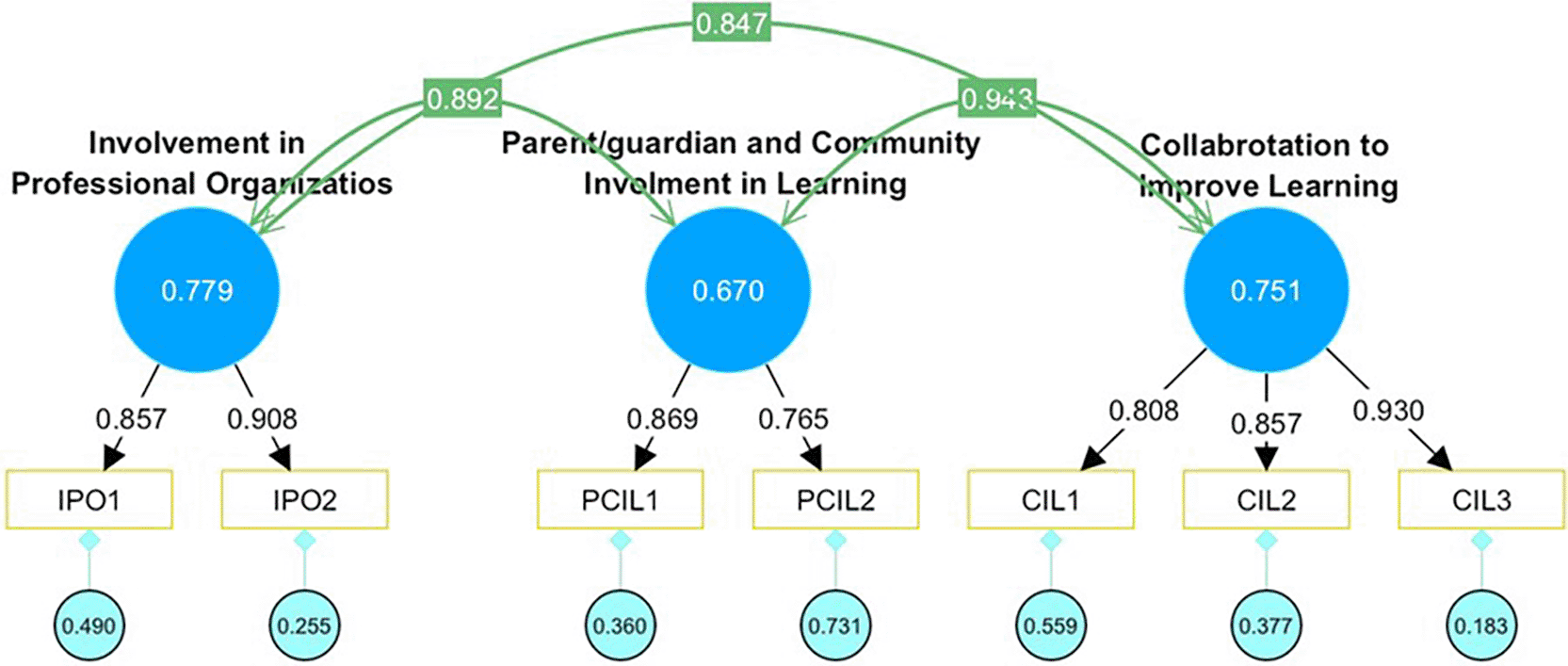
Figure 1 shows the results of the outer model analysis using CB-SEM for developing a social competence assessment tool for proficient teachers. The analysis covers three key constructs: Collaboration to Improve Learning, Involvement in Professional Organizations, and Parent/Guardian and Community Involvement in Learning. For Collaboration to Improve Learning (CIL), the items CIL1 (0.808), CIL2 (0.857), and CIL3 (0.930) demonstrate strong contributions, with CIL3 having the highest loading factor. For Involvement in Professional Organizations (IPO), indicators IPO1 (0.857) and IPO2 (0.908) show very high involvement. For Parent/Guardian and Community Involvement in Learning (PCIL), indicators PCIL1 (0.869) and PCIL2 (0.765) reflect significant involvement, though PCIL2 is slightly lower. All indicators exceed a loading factor of 0.7, confirming the instrument's validity and reliability.
Construct reliability was also confirmed through Cronbach’s alpha values (0.798 to 0.895) and composite reliability (0.796 to 0.898), which consistently met the feasibility criteria (≥0.70).26,30–33 In addition, the Average Variance Extracted value (average variance extracted) is in the range of 0.670-0.779, indicating the fulfillment of convergent validity (≥0.50).33 Furthermore, discriminant validity testing using the34 criteria shows that this social competence instrument has met the established requirements, with values ranging from 0.818 to 0.883. Overall, these findings confirm that the manifest variables are able to adequately represent the latent construct, so that the developed instrument has valid and reliable measurement capabilities (see Table 6).
Table 7 displays the model fit evaluation based on several absolute, incremental, and parsimonious indices within the CB-SEM framework. Overall, the estimated model demonstrates a substantially better fit than the null model, indicating that the proposed relationship structure has significant explanatory power for the data.
The Chi-square/df ratio of 6.766 in the estimated model exceeds the ideal limit, but is still acceptable given the sensitive nature of the Chi-square statistic to sample size and model complexity. Conversely, the very high Chi-square/df value in the null model (87.860) confirms the model without structural relationships. The RMSEA value of 0.134 indicates that the model fit is suboptimal in absolute terms. However, the very sharp decrease in the RMSEA value compared to the null model (0.520) reflects a significant improvement in fit. This situation suggests that the interpretation of model fit needs to consider model configuration and sample characteristics, and should not rely solely on a single indicator. Conversely, the residual and incremental indices provide strong evidence of a good fit. The very low SRMR value (0.032) indicates minimal difference between observed and model-estimated covariances. Furthermore, the NFI (0.960), TLI (0.934), and CFI (0.965) consistently exceed the goodness-of-fit threshold (>0.90), indicating good to excellent.26,33,35
Considering these indices, it can be concluded that, despite limitations in the RMSEA and Chi-square/df ratio, the estimated model generally has an adequate level of fit. Strong support from the incremental and residual indices strengthens the model’s suitability for use.
Based on the results of normality tests conducted using the Kolmogorov-Smirnov and Shapiro-Wilk tests, it appears that all indicators and research variables for both male and female groups showed significance values of less than 0.001 (see Table 8). It indicates that the data are not normally distributed and emphasizes the need for a nonparametric analysis approach to obtain valid and methodologically sound results. A more appropriate analysis is the Mann-Whitney U nonparametric statistical test to compare groups (gender).
Furthermore, the results of the Levene test for homogeneity of variance on all indicators and research variables showed a significance value greater than 0.05, ranging from 0.181-0.699. It indicates that the variance between groups on each variable is not significantly different, or in other words, the assumption of homogeneity of variance is met. Specifically, the collaboration indicator for improving learning obtained a sig. = 0.181, parental/guardian and community involvement sig. = 0.588, involvement in professional organizations sig. = 0.185, and overall social competence sig. = 0.699 (see Table 9).
Based on the results of the normality test, all indicators and research variables, for both the male and female groups, were not normally distributed, with a significance value of less than 0.001. Meanwhile, the homogeneity of variance test using Levene’s test showed that all variables had homogeneous variance, with a significance value greater than 0.05. This condition indicates that although the variances between groups were relatively equal, the data distribution did not meet the assumption of normality, so the use of the nonparametric Mann-Whitney U test was most appropriate.
To test the concurrent validity of the proficient teacher social skills assessment instrument, scores were compared between groups based on gender using the Mann-Whitney U test. The test results showed no significant differences between the male and female groups in all indicators and variables measured, namely collaboration for improving learning (sig. = 0.577), involvement of parents/guardians and the community (sig. = 0.976), involvement in professional organizations (sig. = 0.434), and social competence (sig. = 0.966) (see Table 10).
This insignificant difference supports the instrument’s consistency in measuring social skills, as the resulting scores are not affected by gender differences. In other words, the instrument is able to capture social skills variables uniformly and objectively across proficient teachers, thus indicating adequate concurrent validity.
The main objective of this study was to construct, validate, and test the reliability of the social competence assessment instrument for proficient teachers. The developed Aiken-V ranged from 0.78 to 1.00, with a single-measure ICC of 0.527 and an average measure of 0.870. In the CB-SEM analysis, the item loading factor values ranged from 0.765 to 0.930, indicating that this instrument is valid and reliable for assessing teachers’ social competence. This strong construct validity and reliability provide a solid methodological foundation for the instrument’s use in the context of professional evaluation. Cronbach’s alpha values of 0.798 to 0.895 and composite reliability of 0.796 to 0.898 indicate that the instrument is able to measure social competence consistently across respondents, while AVE values of 0.670 to 0.779 confirm convergent validity. Discriminant validity, meeting the Fornell-Larcker criteria ensures that each dimension of social competence is measured separately and does not overlap. The research findings underline the importance of using valid and reliable instruments in developing teachers’ social competence, so that the evaluations carried out can be the basis for planning effective training and interventions.30,33,40,41
This research successfully addresses the limitations of previous instruments. Previous research, both nationally and internationally, have shows that existing instruments are often only able to measure a portion of teachers’ social competence indicators. For example,3 developed the Teacher’s Social Competency Assessment instrument with 25 items, which achieved a Cronbach’s alpha reliability of only 0.40. Meanwhile,20 created the EduSEL-R with high reliability (α = 0.92). However, the instrument focused primarily on self-management and social awareness without integrating indicators of collaboration and parent/guardian involvement contextually with the latest national regulations in Indonesia. Yang et al.21 also developed the TSELCS 22, which emphasizes self-awareness, self-management, and responsible decision-making. However, the aspect of professional engagement in educational networks does not fully captured, even though professional communities or professional organizations are crucial for fostering an ecosystem of teacher innovation in teacher professional practice. This research fills this gap by presenting an instrument specifically for proficient teachers in Indonesia, aligning with the Regulation of the Director General of Teachers and Education Personnel Number 2626/B/HK.04.01/2023. It ensures that the instrument is not only theoretically relevant but also contextually relevant to professional practice and national policy.
Teacher social competence is an critical aspect of professional educational practice, as this ability forms the foundation for effective interactions among teachers, students, parents/guardians, colleagues, and the wider community. Tynjälä et al.1,5 suggest that social competence enables teachers to build productive professional networks, facilitate collaboration between teachers, and enhance the involvement of various stakeholders in the learning process. The results of this study indicate that the developed instrument is capable of measuring three key aspects of proficient teachers’ social competence: collaboration to improve the learning process, active involvement of parents/guardians and the community, and participation in professional organizations and educational networks. These three aspects simultaneously represent the complexity of social competence essential for teachers in organizing their social roles. Mastery of these aspects is a prerequisite for establishing high-quality professional interactions and influences the effectiveness of the learning process. Thus, teacher social competence not only functions as a pedagogical complement but also contributes directly to the quality of the learning process and student outcomes10–12 by conducting periodic evaluations and improvements according to student learning needs.
Collaboration to improve the learning process is a critical dimension of teacher social competence. Teachers who possess collaborative skills in communicating best practices are not only able to collaborate with colleagues in designing and implementing teaching and learning activities, but also can conduct independent learning and proactively evaluate the effectiveness of learning strategies and implement necessary improvements.42 Teacher collaboration has been recognized as a fundamental approach to improving learning and teaching43 because it enables the continuous exchange of knowledge and best practices and facilitates pedagogical innovation.44 The developed instrument can assess proficient teachers’ capacity to systematically collaborate, including their ability to identify learning challenges, design improvement strategies, and evaluate collaborative outcomes. This is particularly crucial that previous research indicates that teachers at various levels of education still face difficulties in optimizing professional collaboration, resulting in low innovation in learning practices and underutilization of existing professional networks.3,21
The second indicator measured by the instrument is the active involvement of parents/guardians and the community in the learning process. Teachers’ social competence in this context requires the ability to establish effective and empathetic communication with parties outside the school, as well as facilitate their participation in teaching and learning activities. Parental/guardian involvement can enhance motivation (both intrinsic and extrinsic), academic interest, study habits,45 and student achievement,46 while collaboration with the community can enrich resources and learning experiences at school.47 This study found that the instrument is capable of objectively measuring teachers’ skills in building relationships with external stakeholders, as reflected in the absence of significant differences in social competence scores based on gender. These findings indicate that the instrument is inclusive and able to objectively capture teachers’ abilities, so that the evaluation results serve as a foundation for planning interventions or training that are appropriate to teachers’ professional needs. It aligns with the findings of13 that regular evaluation of teachers’ social competence is key to ensuring constructive social interactions and encouraging active stakeholder involvement in education.
The final indicator measured is teacher participation in professional organizations and broader educational networks. Proficient teachers are not only responsible for classroom interactions but also for ongoing professional development, which requires active involvement in professional organizations and professional networks. Through this involvement, teachers demonstrate a transformative professional role by contributing to the development of educational knowledge and practices within the broader professional community.48 This involvement enables teachers to obtain the latest information, best practices, and learning innovations that they can adapt to their own classroom contexts.6–8 Therefore, the instrument construction must be able to systematically capture and assess teacher participation, including their ability to utilize professional networks to enhance the quality of learning. It is relevant to address the previous study by1,5 who observed that teachers who are not active in professional organizations tend to be less exposed to pedagogical innovation and broader social competency development, which can impact learning effectiveness and student engagement.
Beyond the methodological aspects, the findings of this study also have significant practical implications. With the availability of valid and reliable instruments, schools and educational stakeholders can regularly evaluate teachers’ social competencies, thus identifying weaknesses in communication, collaboration, and social engagement skills early and targeted training programs that address real needs. It is important considering that previous studies have shown that low teacher social competency negatively impacts learning effectiveness, student engagement, and the quality of social relationships in schools.9,11,14,16 Teachers with low social competence tend to have less responsive interactions, lower empathy, and reduce ability to build positive relationships with students and colleagues, resulting in a less conducive learning environment.16–18 With credible evaluation instruments, professional interventions can be specifically targeted, for example, through effective communication training, strengthening collaboration skills, or strategies to increase parent/guardian and community involvement.
This instrument also enables objective and inclusive measurement of social competence, as demonstrated by concurrent validity tests, which revealed no differences in scores based on gender. It confirms that the instrument consistently captures social competence variables across various groups, enabling the evaluation to be applied fairly and without bias. This consistency supports the literature emphasizing the objective nature of teacher social competence measurement, especially when used as a basis for professional development, accreditation, or promotion.13,24 This instrument emphasizes the importance of integrating theory and practice in developing teacher social competence. The indicators measured reflect teachers’ ability to systematically design, evaluate, and improve learning processes while simultaneously building harmonious social relationships with various stakeholders. Thus, this instrument not only assesses social competence statically but also emphasizes the dynamic dimensions of adaptability, decision-making, and professional collaboration, which are highly relevant to the demands of proficient teachers in the current Indonesian educational context.
Overall, the findings of this study indicate that the developed instrument not only meets methodological standards of validity and reliability but also holds significant theoretical and practical relevance. This instrument is capable of assessing critical dimensions of social competence for proficient teachers, supporting ongoing professional development, and serving as the foundation for effective interventions to improve the quality of social interactions in schools. Thus, this study makes a substantial contribution to the current literature on teacher social competence measurement. Furthermore, these results promote a contextual and adaptable tool for the professional practice of proficient teachers in Indonesia, which demands collaboration, stakeholder engagement, and active participation in broader educational networks in line with current social competence needs.
The social competence assessment instrument for proficient teachers meets the criteria for adequate validity and reliability. All instrument items demonstrated good content validity, indicated by an Aiken-V value of ≥0.78. In addition, construct validity and reliability were strengthened by loading factor values ranging from 0.765 to 0.930, Cronbach’s alpha value of 0.798 to 0.895, and composite reliability of 0.796 to 0.898. The AVE value confirmed good convergent validity, while the Fornell-Larcker discriminant test ensured that each dimension of social competence was measured specifically without overlap. Although several model fit indicators, such as Chi-square/df and RMSEA, were not optimal, the residual and incremental indices indicated a good to excellent level of model fit. Substantively, this instrument successfully measured three core dimensions of social competence: collaboration in improving learning, parental and community involvement, and participation in professional organizations. This instrument is relevant to teacher professional practice in Indonesia, aligns with the latest regulations, and is inclusive and objective because gender differences do not influence it. Therefore, this instrument is suitable for use as a credible evaluation tool to support the ongoing development of social competence in proficient teachers.
Several recommendations can be made regarding the implementation and development of this instrument. First, schools and education stakeholders are encouraged to routinely use the instrument as part of their professional competence evaluations for teachers. Evaluation results can inform planning of specific interventions, training, or development programs, thereby enhancing collaboration, parent/guardian involvement, and participation in teacher education networks. Second, teachers are expected to utilize this instrument to improve social skills, including collaboration and empathetic communication, as well as utilize professional networks to improve the quality of learning. Third, further research is recommended to develop a more comprehensive instrument, for example, incorporating additional indicators such as conflict management, pedagogical innovation, or cross-cultural adaptation, to better respond to teachers’ professional needs. Fourth, trials involving a broader and more diverse teacher population are needed to strengthen the instrument’s validity and reliability. Overall, this instrument can serve as a foundation for educational policy to improve teacher social competence and the quality of learning in Indonesia.
This study was approved by the Research Ethics Committee of Universitas Kristen Artha Wacana (Approval Letter No. 06/LEMLIT-UKAW/P.10/II.2025, dated February 3, 2025). Written and oral informed consent was voluntarily obtained from all participants. To protect the rights and privacy of participants and expert committee members, all collected information is kept confidential and used solely for research purposes.
| Views | Downloads | |
|---|---|---|
| F1000Research | - | - |
|
PubMed Central
Data from PMC are received and updated monthly.
|
- | - |
Provide sufficient details of any financial or non-financial competing interests to enable users to assess whether your comments might lead a reasonable person to question your impartiality. Consider the following examples, but note that this is not an exhaustive list:
Sign up for content alerts and receive a weekly or monthly email with all newly published articles
Already registered? Sign in
The email address should be the one you originally registered with F1000.
You registered with F1000 via Google, so we cannot reset your password.
To sign in, please click here.
If you still need help with your Google account password, please click here.
You registered with F1000 via Facebook, so we cannot reset your password.
To sign in, please click here.
If you still need help with your Facebook account password, please click here.
If your email address is registered with us, we will email you instructions to reset your password.
If you think you should have received this email but it has not arrived, please check your spam filters and/or contact for further assistance.

Comments on this article Comments (0)