Keywords
Impetigo, Pineapple Core Extract, Staphylococcus aureus, Streptococcus pyogenes, Susceptibility

Impetigo, Pineapple Core Extract, Staphylococcus aureus, Streptococcus pyogenes, Susceptibility
Impetigo is a contagious superficial skin infection most commonly caused by gram-positive bacteria, particularly Staphylococcus aureus (S. aureus) and Streptococcus pyogenes (S. pyogenes).1 Approximately 12% of the global population is at risk of developing impetigo, with an estimated prevalence of 111 to 140 million cases in developing countries.2,3 Although impetigo primarily affects children aged 2–5 years, it is not exclusive to this age group and can also develop in adults.1,4
Impetigo treatment commonly involves topical antibiotics, with fusidic acid being the recommended first-line therapy due to its effectiveness and minimal side effects.1,5–7 Fusidic acid exerts its antibacterial action by inhibiting bacterial protein synthesis, specifically binding to elongation factor G (EF-G) within the guanosine diphosphate (GDP) complex. This interaction prevents peptide translocation, thereby disrupting ribosomal function and halting bacterial growth.8,9 Despite its efficacy, one of the significant challenges in treating Staphylococcus aureus infections is the emergence of antibiotic-resistant strains, including methicillin-resistant Staphylococcus aureus (MRSA), which complicates therapeutic approaches and necessitates ongoing research into alternative treatment strategies.8
Given the increasing challenge of impetigo treatment, the urgent development of new antibiotics and alternative therapies is essential. Pineapple (Ananas comosus (L.) Merr. var. Queen), a widely consumed natural product, has shown promising antibacterial properties. An experimental study by Udin et al. (2018) demonstrated that a 96% ethanol extract derived from pineapple core exhibited antibacterial activity against S. aureus, with the 70% concentration yielding the most optimal effect.10
Despite its promising potential, the pineapple core—an agricultural byproduct—remains largely underutilized.11 Pineapple Core Extract (PCE) is rich in various bioactive compounds, with bromelain as its primary component, alongside flavonoids, saponins, and tannins, all of which have demonstrated antibacterial properties.12,13 This study aims to compare the in vitro susceptibility of S. aureus and S. pyogenes to fusidic acid and pineapple core extract (Ananas comosus (L.) Merr. var. Queen) in bacterial isolates obtained from patients with impetigo.
This experimental in vitro study employed a post-test-only control group design and was conducted from January to March 2025. The research was conducted at the Dermatology, Venereology, and Aesthetics Infection Outpatient Clinic of Mohammad Hoesin General Hospital (RSMH) in Palembang, the Palembang Regional Health Laboratory Center, and the Department of Pharmacy, Faculty of Mathematics and Natural Sciences, Universitas Sriwijaya, also in Palembang.
Pineapples (Ananas comosus (L.) Merr. var. Queen) were purchased from Ratu Materia Medica Herbal Laboratory Unit, in Batu City, Prabumulih, Indonesia. The plant was identified by botanist Sisca Antoni, and a voucher specimen (No. 000.9.3/7610/102.20/2024) was deposited in the Herbarium of the Department of Pharmacy, Faculty of Mathematics and Natural Sciences, Universitas Sriwijaya. The pineapple cores were separated, washed, and cut into small pieces. The cores were macerated using 96% ethanol for 72 hours. The resulting filtrate was evaporated using a rotary evaporator to obtain a crude Pineapple Core Extract (PCE). The extract was then used to prepare concentrations of 50%, 70%, and 100%.
A total of 60 bacterial isolates were obtained from patients with impetigo, comprising 30 cultures of S. aureus and 30 cultures of S. pyogenes. Study participants included patients with impetigo aged ≤19 years who had not undergone prior treatment, with Gram stain examination confirming the presence of Gram-positive cocci consistent with S. aureus and/or S. pyogenes. As all participants were under 19 years of age, written informed consent was obtained from parents or legal guardians, and age-appropriate assent was obtained from each participant prior to enrollment. Exclusion criteria included prior use of topical or systemic antibiotics within one week before the study and the presence of co-existing skin disorders that could manifest as secondary impetigo. The independent variables examined in this study were pineapple core extract (Ananas comosus (L.) Merr. var. Queen) and fusidic acid. In contrast, the dependent variable was the bacterial susceptibility of S. aureus and/or S. pyogenes cultures.
The samples were divided into five intervention groups: (1) Negative control: blank paper discs, (2) Positive control: 10 μg fusidic acid discs, (3) 50% PCE, (4) 70% PCE, and (5) 100% PCE. The susceptibility of bacterial isolates to each intervention was determined by measuring the diameter of the inhibition zone. Larger inhibition zones indicated higher susceptibility to the tested antimicrobial agents, while smaller zones suggested reduced sensitivity or resistance.
Specimen collection was performed using two sterile cotton swabs from the lesion site. The first swab was designated for Gram staining, while the second swab was placed in a sterile tube and transported to the Laboratory for culture testing. The culture process adhered to the Clinical and Laboratory Standards Institute (CLSI) M02 guidelines, utilizing blood agar to facilitate the growth of S. aureus and S. pyogenes. Bacterial isolates obtained from the culture were subsequently subjected to antimicrobial susceptibility testing using all assigned interventions.
All collected data were systematically documented, edited, and coded using SPSS version 25.0. Descriptive statistical methods were employed to summarize participant characteristics, including age, sex, education level, nutritional status, and antibiotic usage. Additionally, descriptive analysis was applied to independent variables such as susceptibility test results of pineapple core extract and fusidic acid, as well as the dependent variable, bacterial culture outcomes. Inferential analysis commenced with a normality assessment using the Shapiro–Wilk test. If the data demonstrated normal distribution (p ≥ 0.05), parametric tests were utilized; otherwise, non-parametric methods were applied. For two-group comparisons, either the Independent t-test or Mann–Whitney U test was used, depending on distribution characteristics. For comparisons among five groups, One-way ANOVA or the Kruskal–Wallis test was performed based on data normality. A significance threshold of α = 0.05 was maintained across all analyses.
In this study, the majority of impetigo patients were male (66.7%), with a mean age of 6.76 ± 4.96 years (range: 0–18 years). The highest proportion of cases was observed in the 1–5-year age group (43.3%). Additionally, 46.7% of patients had not yet attended school. Most participants belonged to families with a high socioeconomic status (70%) and had a normal nutritional status (60%). Regarding bacterial findings, S. pyogenes was isolated in 20% of cases, S. aureus in 60%, and mixed cultures of both bacteria in 20% of cases ( Table 1).
In this study, the inhibition zone diameters for S. aureus and S. pyogenes cultures, ranked in descending order, were as follows: the largest inhibition zone was observed in the 10 μg fusidic acid group, followed by the 100% PCE group, the 70% PCE group, the 50% PCE group, and finally the negative control group ( Table 2, Figure 1, and Figure 2).
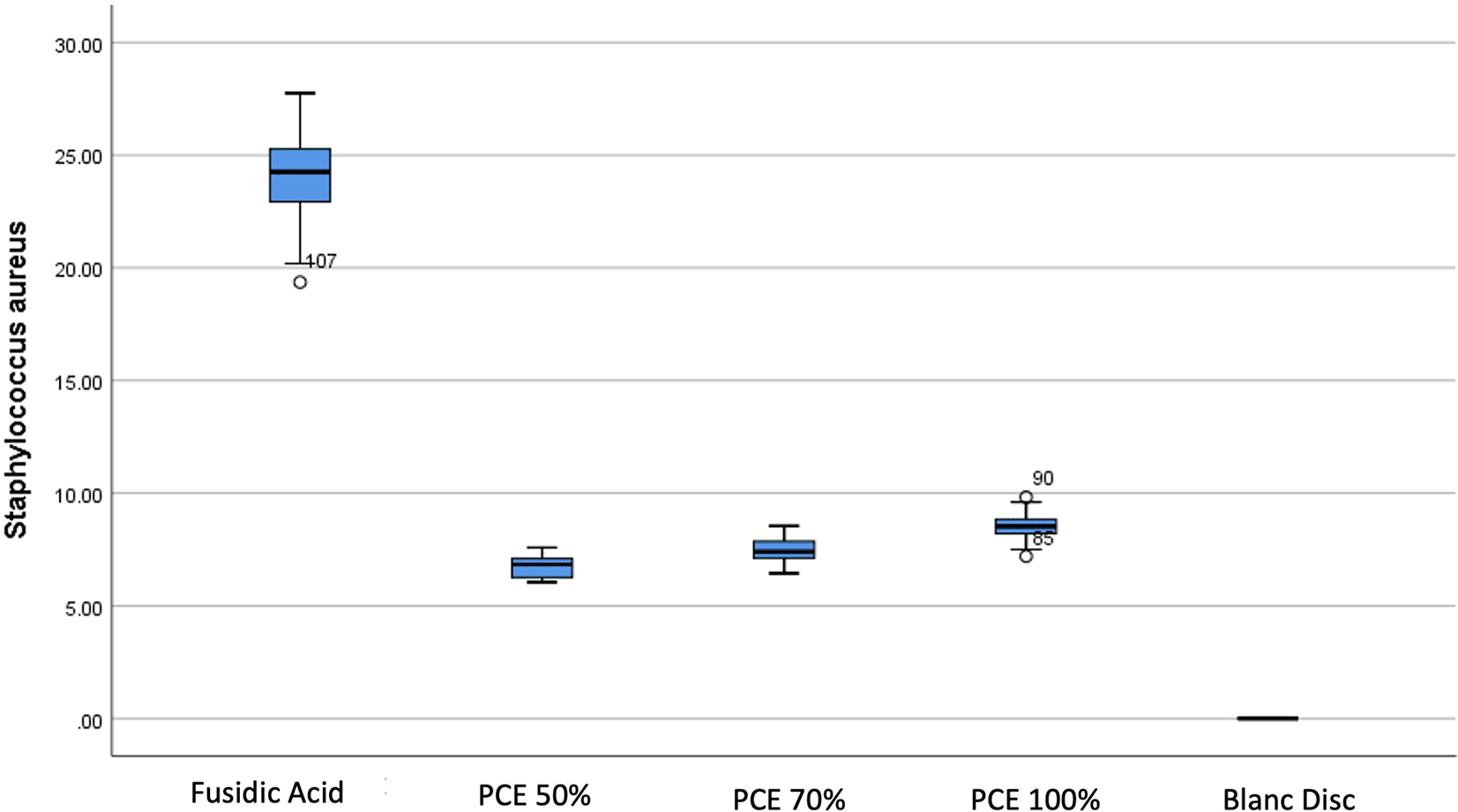
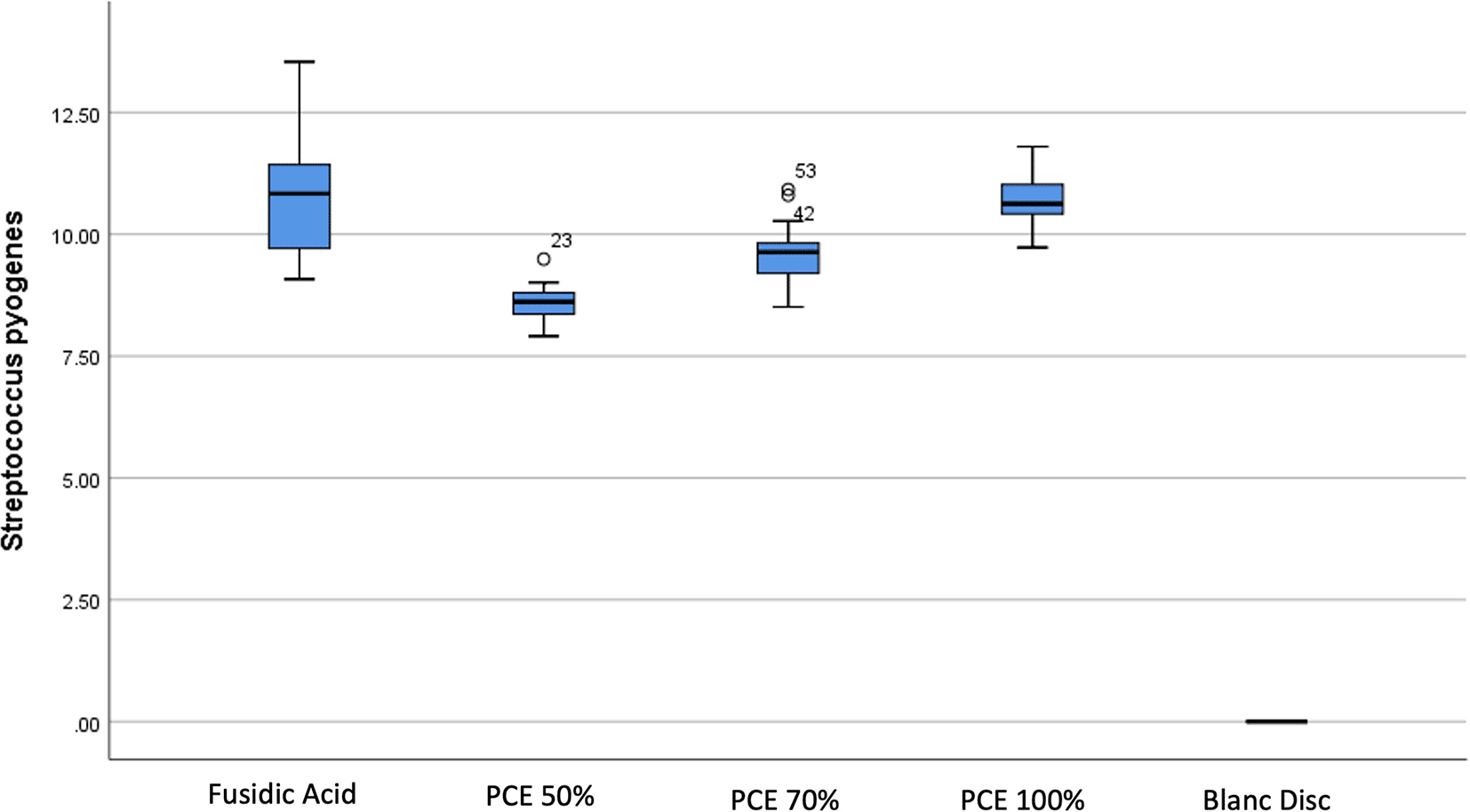
Bivariate analysis revealed a significant difference in the inhibition zone diameter of S. aureus among the 10 μg fusidic acid group, the negative control group, and the 50% PCE, 70% PCE, and 100% PCE groups (p < 0.05) ( Table 3). The multivariate analysis using the Kruskal-Wallis test revealed significant differences among the five study groups (p = 0.000; p < 0.05). Based on both statistical analyses, it can be concluded that differences in susceptibility exist between S. aureus isolates exposed to 50%, 70%, and 100% pineapple core extract compared to 10 μg fusidic acid in impetigo patients. Additionally, a significant difference was observed in the inhibition zone diameter of S. pyogenes between the 10 μg fusidic acid group and the negative control, as well as between the 50% PCE and 100% PCE groups (p < 0.05). However, no significant difference was found in the inhibition zone diameter of S. pyogenes between the 10 μg fusidic acid group and the 100% PCE group (p < 0.05) ( Table 4). It can be concluded that there is no difference in susceptibility between 100% PCE and 10 μg fusidic acid against S. pyogenes in impetigo patients.
| Group | Group | Mean ± SD | P value |
|---|---|---|---|
| Fucidic Acid 10 μg (24,13 ± 2,014) | Negative Control | 0.000 ± 0.000 | 0.000a* |
| PCE 50% | 6.74 ± 0.462 | 0.000b* | |
| PCE 70% | 7.48 ± 0.522 | 0.000b* | |
| PCE 100% | 8.51 ± 0.578 | 0.000b* | |
| Negative Control (0,00 ± 0,000) | PCE 50% | 6.74 ± 0.462 | 0.000a* |
| PCE 70% | 7.48 ± 0.522 | 0.000a* | |
| PCE 100% | 8.51 ± 0.578 | 0.000a* | |
| PCE 50% (6,74 ± 0,462) | PCE 70% | 7.48 ± 0.522 | 0.000b* |
| PCE 100% | 8.51 ± 0.578 | 0.000b* | |
| PCE 70% (7,48 ± 0,522) | PCE 100% | 8.51 ± 0.578 | 0.000b* |
| Group | Group | Mean ± SD | P value |
|---|---|---|---|
| Fucidic Acid 10 μg (10,77 ± 1,115) | Negative Control | 0.000 ± 0.000 | 0.000a* |
| PCE 50% | 8.58 ± 0.349 | 0.000b* | |
| PCE 70% | 9.59 ± 0.532 | 0.000b* | |
| PCE 100% | 10.69 ± 0.540 | 0.764b* | |
| Negative Control (0,000 ± 0,000) | PCE 50% | 8.58 ± 0.349 | 0.000a* |
| PCE 70% | 9.59 ± 0.532 | 0.000a* | |
| PCE 100% | 10.69 ± 0.540 | 0.000a* | |
| PCE 50% (8,58 ± 0,349) | PCE 70% | 9.59 ± 0.532 | 0.000b* |
| PCE 100% | 10.69 ± 0.540 | 0.000b* | |
| PCE 70% (9,59 ± 0,532) | PCE 100% | 10.69 ± 0.540 | 0.000b* |
This study, which analyzed inhibition zone diameters for S. aureus and S. pyogenes, found that 63.3% of S. aureus isolates exhibited sensitivity to fusidic acid. In contrast, all S. pyogenes isolates (100%) were sensitive to the antibiotic ( Table 5). A moderate inhibitory effect against S. aureus was consistently observed across all tested concentrations of PCE, namely 50%, 70%, and 100%. For S. pyogenes, a moderate inhibitory response was observed in all samples (100%) at a 50% concentration of PCE, decreasing to 83.3% at 70% PCE and only 6.7% at 100% PCE. Meanwhile, a strong inhibitory effect against S. pyogenes was observed in 16.7% of samples at a 70% concentration, increasing significantly to 93.3% at a 100% concentration ( Table 6).
| Bacteria | Inhibitory response | N | Percentage |
|---|---|---|---|
| S. aureus | Sensitive | 19 | 63.3 |
| Resistant | 11 | 36.7 | |
| S. pyogenes | Sensitive | 30 | 100.0 |
| Resistant | 0 | 0.0 |
| Bacteria | Concentration | Inhibitory response, n (%) | |
|---|---|---|---|
| Moderate | Strong | ||
| S. aureus | 50% | 30 (100) | 0 (0) |
| 70% | 30 (100) | 0 (0) | |
| 100% | 30 (100) | 0 (0) | |
| S. pyogenes | 50% | 30 (100) | 0 (0) |
| 70% | 25 (83.3) | 5 (16.7) | |
| 100% | 2 (6.7) | 28 (93.3) | |
Impetigo is a contagious superficial epidermal infection most commonly caused by Gram-positive bacteria, primarily Staphylococcus aureus and Streptococcus pyogenes.1 Various predisposing factors include age, gender, socioeconomic status, environmental hygiene, and the patient’s nutritional status.14 In this study, the majority of impetigo patients were male (66.7%) compared to females (33.3%). This finding is consistent with research by Kusuma et al., which reported that among 166 patients with impetigo, 52% were male and 48% were female. The higher incidence in males may be attributed to increased physical activity and motor skills, which facilitate more frequent skin contact and thus easier transmission of the infection.15
Impetigo is most prevalent in children aged 2–5 years, although it may also affect adults.1,4 In this study, most patients were aged 1–5 years, with a mean age of 6.76 ± 4.96 years. This finding aligns with Latifah et al., who also found that the dominant age group was 0–11 years, particularly among males. The high incidence in this age group may be due to the immaturity of the immune system, making children more susceptible to bacterial infections.16
Regarding education level, 46.7% of children had not yet been enrolled in formal schooling. Preschool and early school-aged children exhibit behavioral tendencies that elevate the risk of pathogen transmission, including frequent close physical contact, group play, and an inherent curiosity that drives environmental exploration. These behaviors increase their exposure to contaminated surfaces and facilitate the transfer of bacteria between hosts.14,17 Additionally, minor traumas or excoriations that break the skin barrier allow easier bacterial invasion.1,18
According to the World Health Organization (WHO), the most common causative agents of superficial pyoderma in tropical regions are S. aureus and S. pyogenes.5 In this study, S. aureus was isolated in 60% of impetigo patients, while S. pyogenes was identified in 20%. Additionally, 20% of cases exhibited mixed cultures containing both bacterial species. These findings are consistent with those reported by Nardi et al., who similarly observed a higher prevalence of S. aureus compared to S. pyogenes.19
Regarding antibacterial activity, the inhibition zone diameter of pineapple core extract against S. aureus was lower than that against S. pyogenes. The extract at 50% PCE, 70% PCE, and 100% PCE concentrations exhibited a moderate inhibitory effect on S. aureus. Meanwhile, for S. pyogenes, the 50% PCE and 70% PCE concentrations had moderate inhibitory activity, while the 100% PCE demonstrated a strong inhibitory response. Among all treatments, only the 100% PCE produced an inhibition zone comparable to that of 10 μg fusidic acid against S. pyogenes.
The relatively lower sensitivity of S. aureus in comparison to S. pyogenes can be attributed to its adaptive defense mechanisms. One key factor is the thick peptidoglycan (PG) layer of S. aureus, which serves as the primary target of bromelain. The composition of this PG layer can fluctuate due to metabolic phase variations or environmental adaptations under in vitro conditions. Additionally, S. aureus possesses the ability to modify its PG structure through O-acetylation of MurNAc residues, thereby enhancing resistance to proteolytic enzymes. Furthermore, the considerably thicker PG layer of S. aureus compared to S. pyogenes may restrict bromelain’s accessibility and reduce its effectiveness.20
The primary bioactive compound found in the core of pineapple is bromelain, a protease enzyme with the ability to hydrolyze protein bonds. This enzymatic action facilitates the breakdown of peptide bonds into smaller molecules or individual amino acids, thereby disrupting bacterial structural integrity. In addition to bromelain, pineapple core is also rich in polyPCEnols, flavonoids, and saponins, all of which have been recognized for their antibacterial properties.21
Bromelain suppresses bacterial growth by hydrolyzing proteins and glycoproteins present on the bacterial surface, leading to a reduction in cell wall integrity. In Gram-positive bacteria, the cell wall consists of an outer membrane composed of proteins, lipoproteins, and lipopolysaccharides, followed by a thick peptidoglycan layer and an inner plasma membrane. As a protease enzyme, bromelain specifically targets surface protein components, thereby compromising the structural integrity of the bacterial cell wall. Studies examining bromelain’s effects on Streptococcus mutans indicate that this mechanism is primarily driven by the disruption of amino acid structures within the cell wall.21
Another key mechanism underlying the antibacterial activity of PCE is attributed to flavonoid compounds, particularly those belonging to the flavanone subclass. According to Chusnie and Lamb, flavonoids exert their antimicrobial effects through three primary mechanisms: (1) Inhibition of nucleic acid synthesis via base intercalation and hydrogen bonding, thereby preventing the formation of DNA and RNA, (2) Disruption of cell membrane integrity through complex formation with extracellular proteins, resulting in membrane rupture and subsequent leakage of intracellular contents, and (3) Inhibition of energy metabolism by interfering with cytochrome C reductase, leading to disruptions in ATP production and biosynthetic pathways. Notably, the concentration of bromelain is significantly higher in the pineapple core compared to the fruit flesh, further enhancing its antibacterial potential.10
Udin et al. found that 96% ethanol PCE at concentrations of 50%, 60%, 70%, 80%, 90%, and 100% significantly inhibited the growth of S. aureus.10 Another in vitro study using the disc diffusion method by Mossfika et al. reported optimal inhibition with 75% pineapple tuber extract, yielding an average inhibition zone of 5.6 mm. The antibacterial activity was found to increase with higher concentrations, with average inhibition zones of 2.9 mm at 25%, 3.2 mm at 50%, and 5.6 mm at 75%.22
This study concludes that there is no significant difference in the susceptibility of S. pyogenes in impetigo patients between 100% PCE and 10 μg fusidic acid. A strong inhibitory response was observed in 93.3% of the isolates treated with the 100% PCE. These findings suggest that S. pyogenes is highly susceptible to a 100% concentration of PCE and that this natural antimicrobial agent exhibits antibacterial efficacy comparable to that of fusidic acid in impetigo cases.
Ethical approval for the study was granted by the Institutional Review Board of the Health Research Ethics Committee at Universitas Sriwijaya, Palembang, Indonesia (No. DP.04.03/D.XVIII.06.08/ETIK/012/2025), and the study was conducted in accordance with the latest version of the Declaration of Helsinki. Written informed consent was obtained from parents or legal guardians for all participants, as all participants were under 19 years of age. In addition, age-appropriate assent was obtained from all participating minors prior to enrollment.
| Views | Downloads | |
|---|---|---|
| F1000Research | - | - |
|
PubMed Central
Data from PMC are received and updated monthly.
|
- | - |
Provide sufficient details of any financial or non-financial competing interests to enable users to assess whether your comments might lead a reasonable person to question your impartiality. Consider the following examples, but note that this is not an exhaustive list:
Sign up for content alerts and receive a weekly or monthly email with all newly published articles
Already registered? Sign in
The email address should be the one you originally registered with F1000.
You registered with F1000 via Google, so we cannot reset your password.
To sign in, please click here.
If you still need help with your Google account password, please click here.
You registered with F1000 via Facebook, so we cannot reset your password.
To sign in, please click here.
If you still need help with your Facebook account password, please click here.
If your email address is registered with us, we will email you instructions to reset your password.
If you think you should have received this email but it has not arrived, please check your spam filters and/or contact for further assistance.

Comments on this article Comments (0)