Keywords
Dentures, Partial, Removable, Finite Element Analysis.

Dentures, Partial, Removable, Finite Element Analysis.
Advancements in computer technology have become crucial for restorative dentistry, making computer-aided design and computer-aided manufacturing (CAD/CAM) indispensable. These technological advancements have revolutionized the field of restorative dentistry and enabled the use of materials that were challenging to work with in previous times.1 However, the developments in digital processing have resulted in increased accessibility of such materials for manufacturing dental restorations with greater ease.1,2
Metal alloys continue to be the preferred materials for constructing frameworks for dental prostheses. However, the metallic appearance of metal alloys poses aesthetic challenges, complex and time-consuming processing, and potential allergic reactions. Consequently, there is an increased preference for using metal-free restorations among patients.3 There is a need for substitutes such as retentive elements made from thermoplastic resin or fiber-reinforced composites to replace the metal parts for entirely metal-free restorations. However, there is debate concerning the long-term durability of these alternative materials.4,5
At present, metallic alloys like cobalt-chromium (Co-Cr) prove suitable for crafting removable dental prosthetics by virtue of their robust strength, stiffness, resistance to corrosion, and ability to restore.6 The utilization of Co-Cr has been extensive in producing clasps for Removable Partial Dentures (RPD) owing to its resistance to corrosion, elevated elastic modulus, low density, strength, and cost-effectiveness.7 The Co-Cr alloy comes with certain drawbacks, such as fatigue failures when subjected to repetitive loads and an unattractive appearance. It exhibits a greater retention force, but undergoes deformation over the long term, resulting in a reduction in the removal force.7 Various approaches have been recommended in the literature to address aesthetic issues. For instance, King et al.8 proposed the utilization of lingual retentive clasps, whereas the incorporation of palatal I-bars, dual paths, or rotational paths of insertion was suggested by Highton et al.9 Some experimented with concealing visible clasps by applying tooth-colored veneers.9–12
The evolution of dental materials is an ongoing progression, as specific polymers have found unique and unexpected uses within the field of dentistry through numerous improvements.13,14 Patients have experienced greater satisfaction with RPD and other restorations used for dental prostheses incorporating polyether-ether-ketone (PEEK) instead of metal components. PEEK frameworks offer enhanced appearance, improved stability, reduced weight, and high functionality compared to metal frameworks.15 Moreover, no significant rest of clasp arm deformations have been reported in the CAD/CAM-produced PEEK clasps even after a 2 years’ follow-up period.16 PEEK (a thermoplastic polymer) possesses remarkable physical and chemical characteristics such as resistance to wear, resistance to water, strong biocompatibility, and maintaining stability at increased temperatures.17 These features make PEEK a possible substitute for metals.18,19 In comparison to metals, PEEK is simpler to mill, softer, and offers easy processing.20 However, it is important to note that the elastic modulus of PEEK is approximately 4.1 GPa,21 which is significantly lower as compared to that of Co-Cr measuring 220 GPa.22 There is no confirmation of the extent to which the rigidity of PEEK occlusal rests affects their effective functioning. The remarkable flexibility of PEEK poses challenges in achieving the essential retentive force and fatigue resistance required for PEEK claps,23,24 although limited clinical studies have explored its use in framework materials.25,26
In contemporary dental practice, both patients and practitioners increasingly favor metal-free prostheses, owing to their biocompatibility and superior aesthetic appeal. Nonetheless, obtaining comprehensive insights into the stress distribution across intricate shapes and variations in design parameters remains a challenge, particularly regarding the mechanical properties and performance of Polyether-Ether-Ketone (PEEK) clasps in dental prostheses. Hence, the primary objective of this study is to conduct a comparative analysis of the retentive capabilities of removable partial denture (RPD) clasps constructed from PEEK and cobalt-chromium (Co-Cr) alloys using Finite Element Analysis (FEA). By delving into the intricacies of stress distribution under diverse conditions, this research endeavors to provide a deeper understanding of the optimal parameters influencing the performance of PEEK and Co-Cr clasps, taking into account stress concentrations, deformation tendencies, and load distribution patterns.
An in vitro experimental investigation was conducted using Maxillary Kennedy class I cases, which encompassed the range of remaining teeth extending from the right first premolar to the left first premolar. The preparation of both first premolars on each side involved the incorporation of specific features, including mesial occlusal rest seats and proximal guiding planes. To introduce variability into the study, two distinct experimental models were developed: model 1 featured mesiobuccal retentive undercuts of 0.25 mm, while model 2 incorporated undercuts of 0.50 mm. In one instance, removable partial dentures (RPDs) were secured using clasps fabricated from a Co-Cr alloy material, while in another instance, the clasps were composed of polyether ether ketone (PEEK) material.
The Rest Proximal Aker (RPA) clasp design incorporated key elements such as the rest, proximal plate, and Akers clasps. The mesial rest and proximal plate were designed to mirror the characteristics of the RPI clasp. The distinguishing feature lies in the retentive arm, an Aker or circumferential clasp arm emerging from the superior portion of the proximal plate. This arm extended around the tooth to connect with the mesial undercut, thus contributing to enhanced retention.
To ensure the effectiveness of Akers’ clasp, careful consideration was given to its configuration. To maintain the vital releasing capability, it was ensured that the retentive arm of the Akers clasp originated from the proximal plate above the survey line. The arm then traversed the survey line in the middle of the tooth in order to join the undercut. This strategic design prevents loss of the vital releasing capability, as the rigid bracing portion of the arm remains flexible towards the gingiva, thereby maintaining the fulcrum point.
The remaining components provided stability and support. It was approximately 1.5–2 mm in width, with a length sufficient to provide stable support to the RPD framework.
For optimal strength and stability, the dimensions of the proximal plate were extended about 2/3 the distance between the marginal ridge and height of the contour. The width of the proximal plate was maintained at about 1.5 mm or more.
Akers’ clasp arm was carefully contoured to engage the undercut area of the abutment tooth. The Akers clasp arm formed a smooth, continuous contour in collaboration with the occlusal rest and the proximal plate. This contour ensures stability and retention without impinging on the gingiva, thereby providing an optimal design for effective and comfortable use in dental prosthetics.
The material parameters for PEEK were considered in this study, which exhibited an elastic modulus of approximately 3.6 GPa, and a Poisson’s ratio of 0.38. PEEK is a high-performance polymer with commendable strength and stiffness along with excellent fatigue resistance, wear resistance, and biocompatibility. In addition, it demonstrates resistance to chemicals and high temperatures, making it a suitable candidate for dental prosthetic applications ( Table 1).
The Finite Element Analysis (FEA) model was configured to represent a partially edentulous maxillary featuring two abutment teeth and an RPD equipped with PEEK clasps. Using computer-aided design (CAD) software, the 3D models were run into the FEA software for analysis. The material properties of PEEK were defined by considering its elastic modulus, Poisson’s ratio, and yield strength. Appropriate boundary conditions and loading scenarios were applied to simulate realistic conditions, including forces during mastication.
The model was subjected to different loads to simulate various masticatory movements and occlusal forces. Boundary conditions were set to replicate the forces and loads experienced by the RPDs in the oral cavity. This comprehensive setup aimed to provide a realistic and insightful assessment of the mechanical behavior of PEEK clasps in a simulated oral context.
A structural analysis was performed to assess the stress distribution, strain patterns, and deformation tendencies of the PEEK clasp models under different loading conditions. Critical areas prone to stress concentrations were identified, revealing potential weak points or failure zones. Additionally, the displacement and deflection characteristics were analyzed to understand the responsiveness of the model to applied loads.
A comprehensive approach was employed in the data analysis phase, encompassing both the quantitative and qualitative assessments. The stress values, strain distribution, and deformation characteristics obtained from FEA simulations were quantified for each variant of the PEEK clasp design. Numerical data were systematically compiled and compared, allowing for the identification of trends and correlations between different design parameters and their corresponding mechanical behaviors.
Qualitatively, a visual examination of the stress maps, deformation contours, and strain plots was conducted to gain nuanced insights into the distinctive performance characteristics of various PEEK clasp designs. Additionally, an assessment of aesthetic feasibility and clinical viability was performed.
To mimic the occlusal pressure experienced during chewing, various loading situations were simulated. To investigate clasp deformation during insertion and removal, lateral stresses were simulated and a uniform force of 50 N was applied vertically to the occlusal surface of the RPD. These loading scenarios were used to analyze the displacement, strain patterns, and stress distributions.
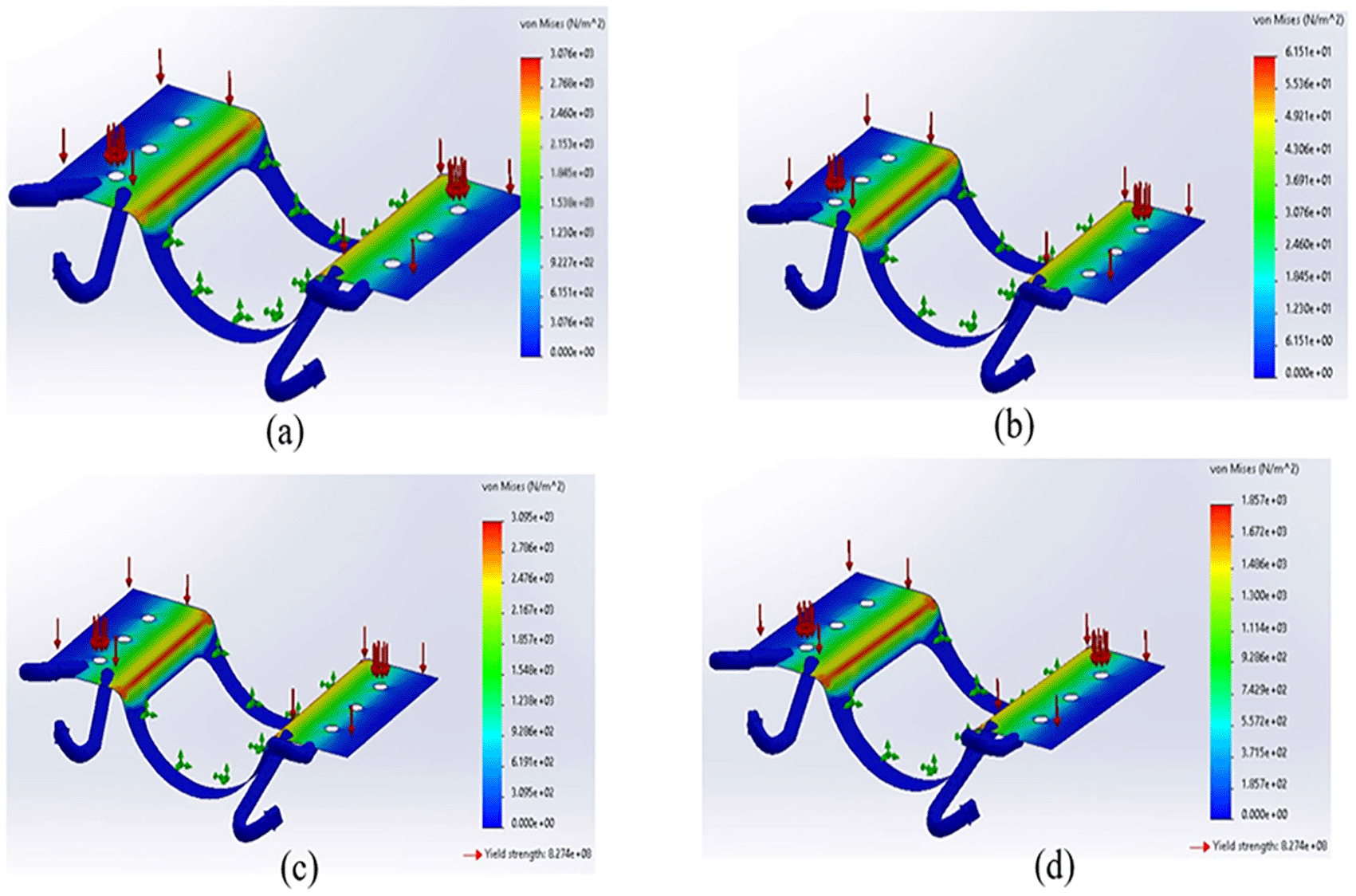
The finite element analysis was conducted revealing maximum yield strength of 3.076e+03 N/m2 for 0.25 mm and 6.152e+01 N/m2 for 0.50 mm for PEEK material and 8.274e+08 N/m2 for both Co-Cr 0.25 mm and 0.50 mm under 50N force application. According to FEA, PEEK clasps underwent reduced stress concentrations in comparison to Co-Cr, especially when there was a deep undercut (0.50 mm). Clinically, this implies that PEEK clasps may apply less tension to abutment teeth, thus lowering the possibility of long-term periodontal tissue injury or tooth movement concerns. PEEK may be a more secure option than Co-Cr, which shows higher stress concentrations for patients with sensitive abutment teeth or poor periodontal health, particularly in cases with shallow undercuts (0.25 mm). The analysis comprises 19,046 nodes and 10,684 elements, providing comprehensive insights into structural behavior ( Figure 1). The following is the formula for the stress through which it is calculated:
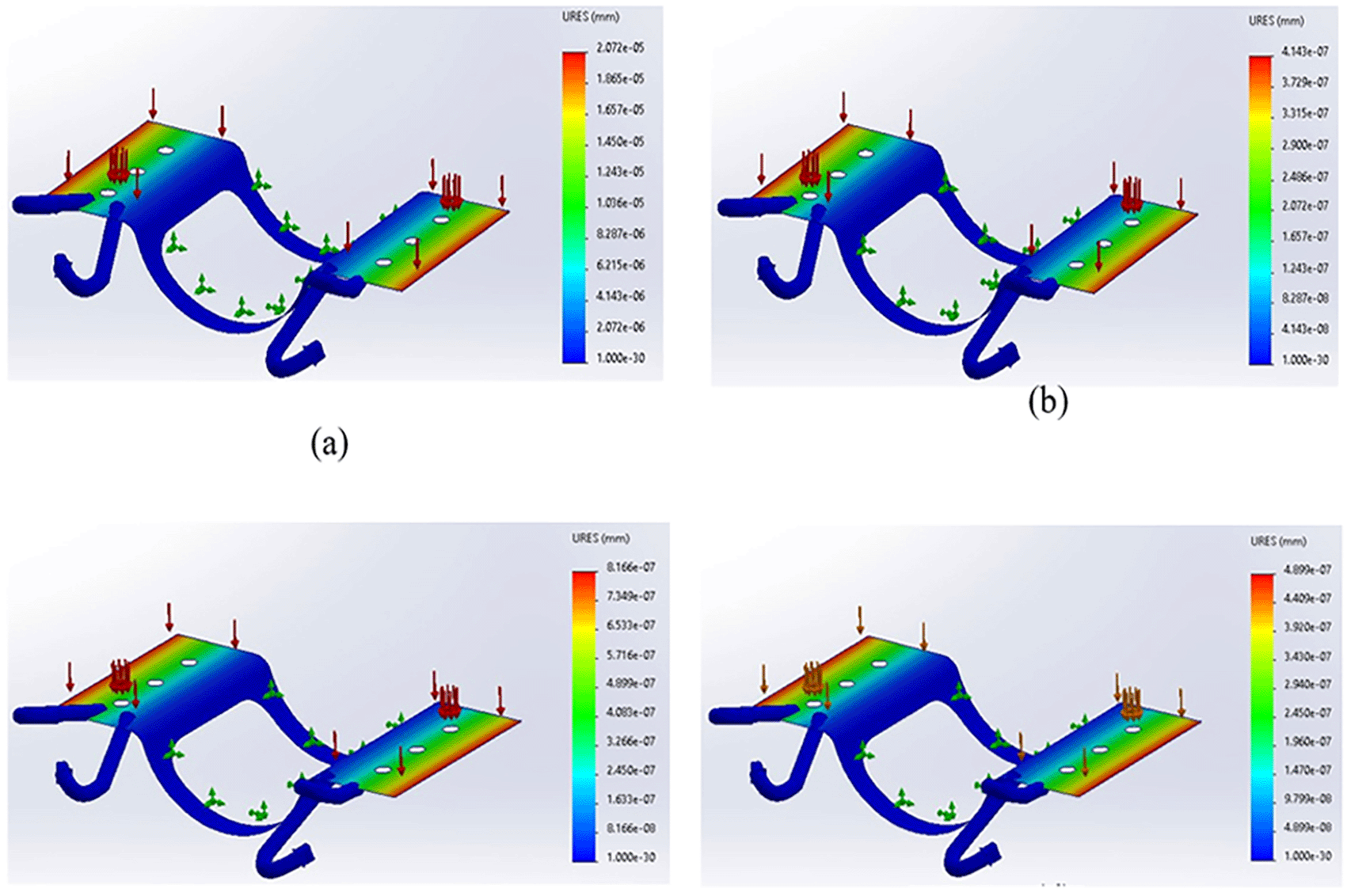
The maximum displacement for 0.25 mm under 50 N force was 2.072e-05 and for 0.50 mm was 4.143e-07, whereas for Co-Cr it was 8.166e-07 and 4.899e-07 for 0.25 and 0.50 mm respectively influence on structural behavior ( Figure 2). The PEEK clasps had greater maximum displacement values than Co-Cr, according to FEA research. This implies that PEEK clasps are less prone to causing discomfort during insertion and removal and can adjust to anatomical changes more readily. However, because of its smaller displacement, Co-Cr might be a better material in clinical situations when minimal clasp movement and long-term retention are essential.
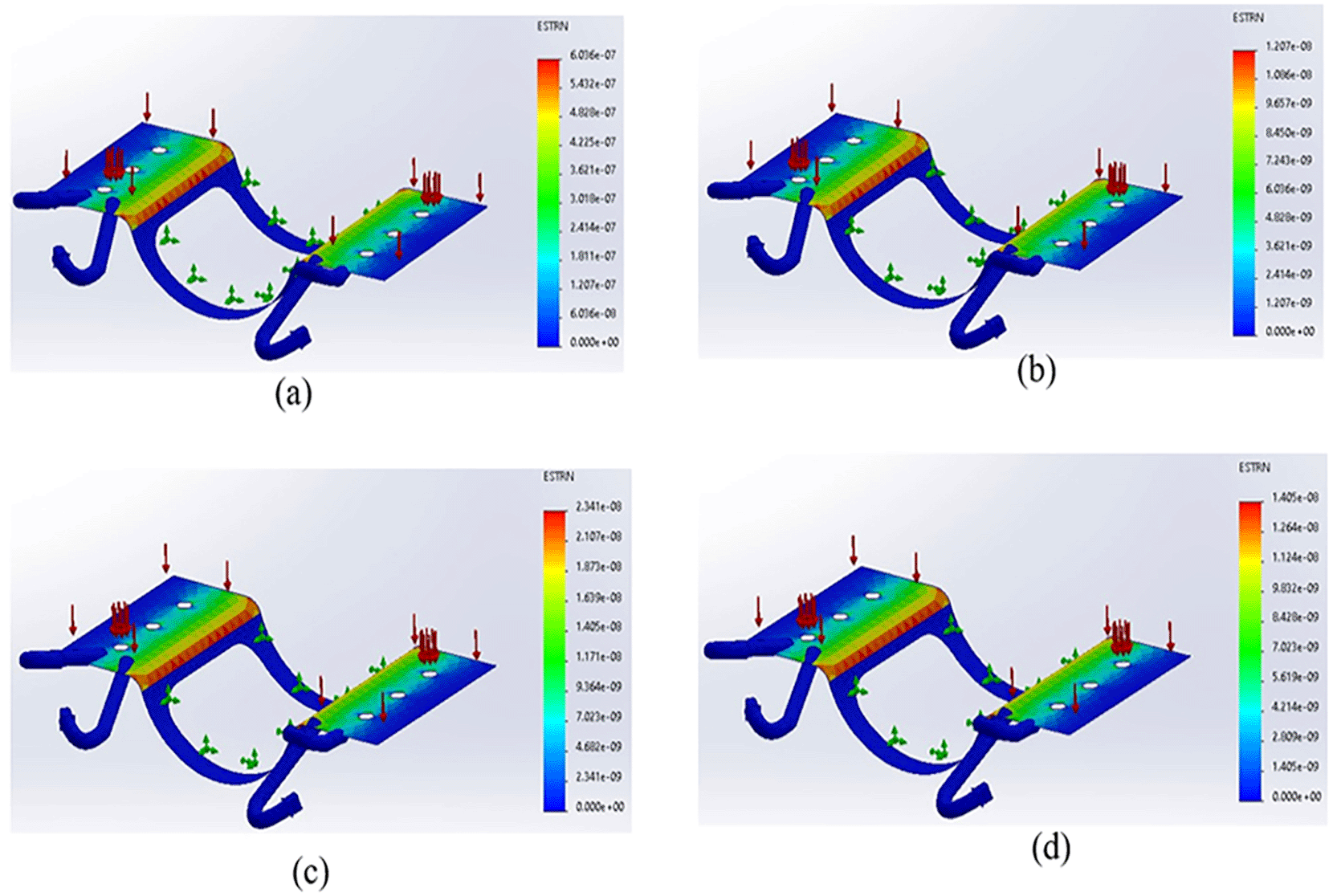
Strain is the measure of how much material deforms under stress, the analysis showed 6.063e-07 for 0.25 mm and 1.207e-08 for 0.50 of PEEK material. While Co-Cr shows 2.341e-08 and 1.405e-08 for 0.25 and 0.50 mm respectively ( Figure 3). In comparison to Co-Cr, PEEK shows more deformation under stress, which translates to greater flexibility in clinical settings. Although the increased deformation suggests that PEEK clasps may be less rigid and may lose retention over time, particularly in patients with strong occlusal stresses, flexibility is beneficial for patient comfort and aesthetic outcomes. Co-Cr, On the other hand, showed less deformation, suggesting that it is appropriate in situations where great durability and retention are required. This is calculated as follows:
The present study applied PEEK and Co-Cr in the FEA analysis, which showed that both provide a high yield strength, indicating that they can maintain high levels of stress without permanent deformation. The present study showed that an undercut of 0.50 mm in PEEK was better as compared to 0.25 mm, similarly, several researchers suggested deep undercuts (0.50 mm) and should be thicker than a clasp made of metal to gain a high level of stiffness and deformation resistance.27
Peng et al.1 proposed a prosthetic model and compared the results of PEEK and Co-Cr. During fatigue testing, the outcomes showed that even though PEEK displayed significantly lower average load values as compared to the Co-Cr alloy, it was sufficient for clinical purposes. It was found that PEEK employs less stress on abutments compared to the traditional clasp made up of alloys, and also provides sufficient retention, indicating a better alternative to metal clasps. Zoidis28 compared PEEK material with Ti-6Al-4Vand Co-Cr and revealed that PEEK is more resilient as compared to other materials. The study also showed that the internal stress generated by deformation reduces the force on the abutment during chewing.
Consistent with the present study result, a study stated that PEEK provides a low modulus of elasticity and a high amount of flexibility; however, it provides much less rigidity as compared to Co-Cr alloys.29,30 Hence, it is recommended that clasps made up of PEEK material should have deep undercuts for the purpose of providing functionality at an acceptable level. The parameters of the clasp-like taper, cross-section dimension, and thickness affect RPDs retention; however, combining these parameters will result in a variety of complex outcomes.31
Metals like titanium and Co-Cr, which have high amounts of rigidity, are not suitable for large undercuts because they will result in a high amount of stress on the area of abutments.32 Nonetheless, as current and previous studies revealed that PEEK material consists of a low level of modulus of elasticity, it holds a great advantage in clinical cases in which more pleasing aesthetic outcomes and enhanced periodontal health are needed.24
A case study was conducted in which a framework of fixed partial dentures was designed over a follow-up of two, three, and six months. The results of plaque accumulation in patients were much less satisfactory with the utilization and comfort of the applied PEEK material. It was found that the PEEK material, which is biocompatible and lightweight, was a reason for the significant results.33 Traditionally dental implants are made up of Co-Cr or titanium; however, as a result of its high level of elastic modulus compared to the bone, it can lead to jawbone overloading, which can ultimately cause resorption. So, in this case, PEEK material gives an excellent alternative. Furthermore, a study conducted FEA analysis on various framework materials for dental prostheses and the results showed that for PEEK, the stress amount in the abutments and implants was. Nevertheless, PEEK reported critical values of tensile stress in the trabecular bone, and Ti and Co-Cr only reached stress values below the limits in the bone.34
Although PEEK is biocompatible and flexible, its lower modulus of elasticity than that of Co-Cr raises questions regarding its long-term durability, particularly when subjected to repeated insertion and removal cycles. Over time, patients who have parafunctional behaviors such as bruxism or high functional requirements may lose memory. Clinicians must consider the aesthetic benefits of PEEK against possible trade-offs in functioning and retention, especially for prominent clasps, where the material’s reduced weight and advantages can increase patient satisfaction. PEEK may also place abutment teeth under reduced stress, which can improve periodontal health. Further studies are required to validate these results. PEEK is more suited for patients who value aesthetics, whereas Co-Cr is preferable in situations where greater strength is required. Ultimately, a decision between PEEK and Co-Cr should be made based on the demands of the individual patient.
When high stiffness and retention force are required, this flexibility may affect its performance. Furthermore, because PEEK is less rigid than the other materials, deeper undercuts (such as 0.50 mm) are required to obtain equivalent retention. This could restrict the use of PEEK in clinical circumstances where deeper undercuts are impractical. Furthermore, despite the superior wear resistance and biocompatibility that PEEK has demonstrated, less research has been done on how well it performs over the long term under cyclic loading and fatigue conditions in clinical settings than Co-Cr. Therefore, further research is necessary to assess the longevity of PEEK clasps, especially in patients with high functional demands.
It is crucial to recognize the limitations of depending only on computer models, even though this study used Finite Element Analysis (FEA) to provide insightful information about the mechanical behavior of PEEK and Co-Cr RPD clasps. Because FEA is a prediction technique, it cannot accurately recreate the intricacies of real-world clinical circumstances, even though it enables extensive stress-strain analysis under controlled conditions. Future research should test real prototypes in vitro and conduct long-term clinical trials to evaluate the PEEK and Co-Cr clasps’ performance, durability, and patient satisfaction in order–confirm these findings. The real-world relevance of the findings depends on this kind of validation, especially when considering the biocompatibility, fatigue resistance, and long-term use of materials in clinical settings.
The FEA data in this study, which compares PEEK with Co-Cr clasps, is both qualitative and quantitative, although it lacks a thorough statistical analysis. Confirming whether the observed changes are significant or the result of random variation is more difficult when tests such as p-values and confidence intervals are missing. To confirm that the observed variations in stress, deformation, and strain are both clinically and statistically meaningful, statistical testing should be included in future research.
However, further research is warranted to assess the long-term clinical performance, including considerations of biocompatibility, wear resistance, corrosion resistance, and aesthetic appeal. This study serves as a foundational step towards informed decision making in the selection and utilization of clasp materials in removable dental prosthetics.
The study conclusion showed that PEEK and Co-Cr alloys are suitable materials with unique benefits for removable partial denture (RPD) clasps. According to the results of Finite Element Analysis (FEA), PEEK is more flexible and aesthetically pleasing, which makes it a good option for patients who are sensitive to metals or who value aesthetics. However, its lower stiffness than that of Co-Cr might prevent it from being used in situations where strong retention forces are required. Owing to its exceptional strength and stiffness, Co-Cr is still a dependable material for use when mechanical performance and longevity are crucial.
These findings suggest that material selection should be based on patient-specific factors such as aesthetic preferences, material biocompatibility, and mechanical requirements. Further clinical studies are recommended to validate these in vitro results and explore the long-term performance of PEEK in dental applications.
| Views | Downloads | |
|---|---|---|
| F1000Research | - | - |
|
PubMed Central
Data from PMC are received and updated monthly.
|
- | - |
Provide sufficient details of any financial or non-financial competing interests to enable users to assess whether your comments might lead a reasonable person to question your impartiality. Consider the following examples, but note that this is not an exhaustive list:
Sign up for content alerts and receive a weekly or monthly email with all newly published articles
Already registered? Sign in
The email address should be the one you originally registered with F1000.
You registered with F1000 via Google, so we cannot reset your password.
To sign in, please click here.
If you still need help with your Google account password, please click here.
You registered with F1000 via Facebook, so we cannot reset your password.
To sign in, please click here.
If you still need help with your Facebook account password, please click here.
If your email address is registered with us, we will email you instructions to reset your password.
If you think you should have received this email but it has not arrived, please check your spam filters and/or contact for further assistance.

Comments on this article Comments (0)