Keywords
CFDST, CFST, torsional performance, fire resistance, systematic review, PRISMA, composite columns, residual strength.

This article is included in the Fallujah Multidisciplinary Science and Innovation gateway.
CFDST, CFST, torsional performance, fire resistance, systematic review, PRISMA, composite columns, residual strength.
Composite steel–concrete systems have become a cornerstone in modern structural design due to their high strength-to-weight ratio, superior ductility, and inherent fire resistance. Among them, Concrete-Filled Double Skin Steel Tubes (CFDST) represent an advanced evolution of conventional Concrete-Filled Steel Tubes (CFST), featuring an inner and outer steel tube separated by a concrete core. This configuration optimizes both structural efficiency and thermal stability, as the inner cavity mitigates weight and thermal stress while maintaining load-carrying integrity under fire and seismic conditions.1–3
The torsional behavior of composite tubular columns is particularly significant in structures subjected to asymmetric loads, curved bridge girders, or combined lateral-torsional demands. Experimental research has shown that torsion-dominated loading can induce local buckling, concrete cracking, and degradation of stiffness.4,5 In double-skin configurations, the confinement provided by both steel tubes enhances torsional ductility and prevents premature shear cracking.6 Moreover, the hollow core modifies the stress flow, allowing for improved energy absorption and reduced stiffness degradation under cyclic torsion.7
Simultaneously, the fire resistance of these composite systems remains a key determinant of structural safety. Under fire exposure, the outer steel tube experiences rapid temperature rise and loss of yield strength, while the concrete core and inner steel tube provide passive protection and structural continuity.1,2,8 Studies on CFDST columns under ISO-834 and ASTM E-119 curves revealed that residual load-bearing capacity can retain up to 70–85% of its ambient value after moderate fire durations, depending on geometry and load ratio.9,10
Despite the extensive work on either torsion or fire behavior separately, the coupled effect of fire exposure on torsional resistance of CFDST members has not yet been systematically investigated. This knowledge gap limits the development of design codes and predictive models addressing post-fire torsional stiffness and residual strength. Therefore, a systematic synthesis of existing findings is essential to identify parameters governing performance degradation, inter-material interaction, and potential synergies in CFDST systems.
Accordingly, the present study aims to:
1. Conduct a systematic review of existing torsional and fire studies on CFST and CFDST members.
2. Compare and synthesize their performance trends in terms of torque capacity, ductility, stiffness, and fire resistance.
3. Identify key research gaps and propose a detailed experimental program for investigating post-fire torsional performance of CFDST columns.
The review follows the Preferred Reporting Items for Systematic Reviews and Meta-Analyses (PRISMA) methodology to ensure transparency, reproducibility, and comprehensive coverage of the relevant literature.
This systematic review adheres to the PRISMA 2020 guidelines, ensuring a structured, transparent, and replicable approach to literature identification, screening, eligibility, and inclusion.11
The literature search was conducted using databases including Scopus, ScienceDirect, Web of Science, and Google Scholar, covering publications from 2003 to 2024. Keywords used were: CFDST, CFST, torsion, fire resistance, post-fire behavior, double-skin tubular columns, composite torsion, and residual strength.
Additionally, 37 experimental and analytical studies from previous systematic compilations were incorporated, as summarized in the provided data files.
Initial searches yielded approximately 108 articles. After removing duplicates, 103 records remained. Abstracts and titles were screened for relevance to torsional performance or fire response of CFST/CFDST systems. Numerical-only and purely theoretical papers without experimental or validated FE results were excluded unless directly linked to experimental datasets. This stage reduced the dataset to 78 studies.
Final inclusion required that:
• Specimens involve CFST or CFDST configurations, with or without inner tubes.
• Studies present measured mechanical or thermal responses (torque, stiffness, axial capacity, temperature field, residual strength).
• The methodology and results were reproducible and peer-reviewed.
Following full-text analysis, 37 studies met the PRISMA inclusion criteria:
AS shown in ( Figure 1) summarizes the study selection process:
• Records identified: 108
• Records screened after duplicates: 103
• Full-text assessed for eligibility: 87
• Full-text articles excluded: 78
• Studies included in synthesis: 37
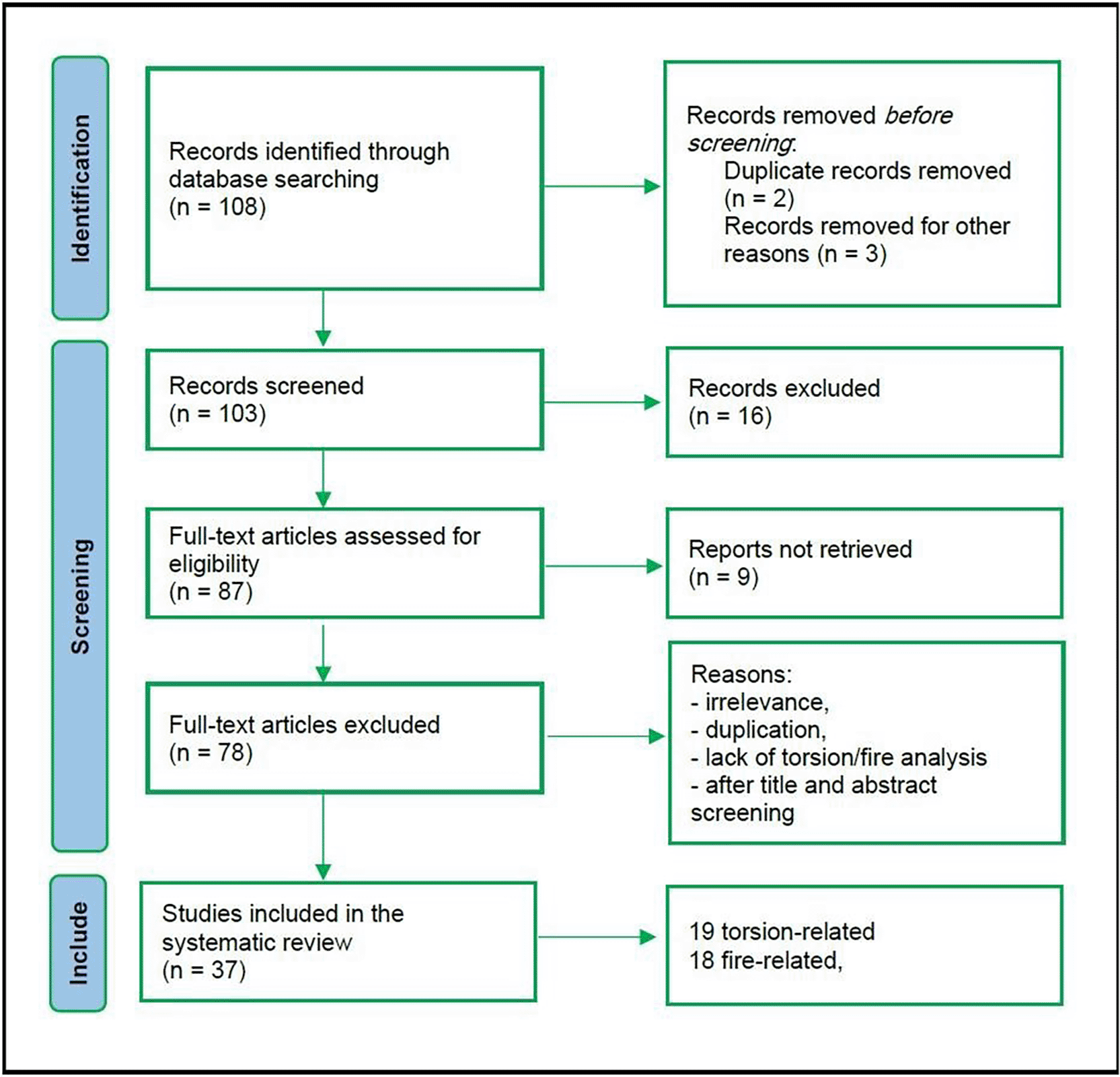
The systematic flow ensured balanced coverage of both torsional and fire aspects, providing a foundation for cross-comparison and synthesis of performance characteristics under combined conditions.
This section presents a comprehensive review and synthesis of prior experimental and analytical studies on the torsional and fire behavior of CFST and CFDST members. The discussion is structured into two main parts:
• Section 3.1 — Studies on torsional performance under ambient and combined loading conditions.
• Section 3.2 — Studies on behavior under elevated temperatures and fire exposure.
The findings are critically analyzed to establish trends, identify controlling parameters, and assess the existing limitations that motivate the current experimental program.
The systematic search identified 19 relevant studies (2003–2024) that addressed torsional resistance of CFST and CFDST members. The following table, ( Table 1), is a comparative summary of torsion studies.
| Reference No. | Author/Year | No. Specimens | Member Type | Section Shape | Outer Dimensions (mm) | Steel Thickness (mm) | Inner Tube/Dimensions | Concrete Type/Steel Strength MPa | Test Type | Ty/(kN m) | θy/(deg.) | Tp/(kN m) | θu/(deg.) | Failure Mode | Key Findings |
|---|---|---|---|---|---|---|---|---|---|---|---|---|---|---|---|
| 7 | Mutlag, S. E., & Lafta, A. M (2024) | 12 | Beams | Square | SHS 100 × 100 | 1.5 & 2 | With stiffening bars | HSC fc = 65.36 | Pure torsion | HST2-5 = 25.55 | 0.187 rad/m | HST2-5 =37.79 | 0.24 rad/m | Local buckling delayed; higher ductility & energy absorption | ↑ torsional strength vs unstiffened |
| 5 | Jia, Shi, Xian, Wang (2021) | 6 | CFST columns | Circular | Ø200 × 1000 | 4.2 | — | C50(fcu ≈ 54.), (fy = 353) | Pure torsion, Compression–torsion | CFST1-1 =64.5–72.0 | CFST1-1 =2.4–3.3 | CFST1-1 =74.8–84.6 | CFST1-1 =7.8–9.2 | Minor diagonal cracks (45°) in concrete, no buckling | Compression before torsion ↑ 12% torque; low axial load enhances torsion, high axial load reduces it; FE model validated and design equation proposed. |
| 17 | Wang, Jia, Shi, Tan (2020) | 18 | SRCFST Columns//L = 1000–1500 mm | Circular | D = 200 mm, L = 1000–1500 mm | 4.2 mm | I-shaped (120 × 80 × 3), Cross (80 × 40 × 3), C.tube (Ø120 × 3) | Concrete fc = 54.7 Steel fy = 353–378 | Compression + Torsion | CSFST1–1 = 71.5//CSFST1–2 = 69.3 | CSFST1–1 = 3.8° //CSFST1–2 = 3.6° | CSFST1–1 = 80//CSFST1–2 = 78.5 | CSFST1–1 = 9° //CSFST1– 2 = 8.5° | 45° diagonal cracks, no local buckling | Embedded steel improved torsional strength & ductility; axial compression <0.4 enhances strength. |
| 20 | Wang, Wang, Yu, Zhou, Hu (2019) | 72 (FE models) | STRC | Circular & Square | D = 200–300, H = 1000 | 2–5 | Reinforced concrete core | fcu = 51.38; fy = 32–425; | Pure torsion, Bending–torsion, Compression–bending–torsion | ~10–28 | ~1–2° | ~15–45 | ~5–10° | Concrete crushing at end gaps, no steel buckling | Verified FEM; axial load up to 0.3Nu ↑ torque, >0.4Nu ↓; parametric curves fitted (R2 > 0.96); correlation equations proposed for design. |
| 21 | Xin, Wang, Li, Chen (2018) | 8//4C+4S | CFST Short Columns//L = 475 mm | Circular (Ø200) & Square (200×200) | ϕ200 × 6.23 & 200 × 200 × 5.82 | 6.23 (circular), 5.82 (square) | Solid CFST | fc = 40.97; Es200000 fy = 327.97–383.69 | Pure Torsion, Bending-Shear, B-S-T | ~60–130(varies specimen) //C-T = 105//R-T = 130 | ~3–10°//C-T = 4°//R-T = 4° | ~90–170//C-T = 130//R-T = 170 | ~20–40°//C-T = 38°//R-T = 36° | Buckling (square), ductile torsional deformation (circular) | M/T ratio governs failure (B-S vs T); circular sections show higher ductility; simplified B-S-T interaction equations proposed. |
| 19 | Li, Han & Hou, 2018 | 20 (validation tests) | Columns | Circular & square (encased CFST) | Ø120/SHS 120×120 | ~3 | Inner CFST Ø80–120 | fc=30-80 fy=355 | Compression + torsion//FEM matched ests (Torque ~20–30 kNm) | - | - | Sc2-1=27 | Sc2-1 = 18 | Cracks in RC, buckling in steel | Outer RC improved fire & ductility; formulas proposed |
| 4 | Wang, Lu & Zhou (2018) | 6 | CFDST column/length 475mm | Circular & Square & Rectangular | Ø 325/SHS 300×300/RHS 300×200 | 3.45 – 5.8.15 (varied) | Ø 219 & 159/SHS 100×100 & 200×200/RHS 180×80 & 200×100 | (fc ≈ 30 – 40) /Es≈ ((1.87-2.39)× 105) | Cyclic loading (torsional/rotational) | CT1= 333.45 – RT1=126.37 | CT1=2.46 – RT1=0.87 | CT2=519.74 – RT1=149.57 | CT2 =11.87–RT1 = 5.34 | Local buckling of steel tube + concrete cracking | CFDST showed higher ductility and energy dissipation than CFST; increased steel thickness reduced stiffness degradation; larger hollow ratio reduced torsional resistance |
| 22 | Wang, Guo, Liu, Zhou, (2017) | 8 L = 975 + 8 L = 475 | CFST column Length 975mm & 475mm | Circular & Square | Ø 200/SHS 200×200 | 5.8 – 6.2 | Solid (no inner hollow tube) | fc ≈ (49–54.1) /fy ≈ (383.69) | Combined torsion + eccentric compression | R-T1 = 132//C-T1 = 101.4 | R-T1 = 5.4//C-T1 = 6.7 | R-T1 = 152.0//C-T1 = 127.2 | R-T1 = 49.5//C-T1 = 50.5 | Local buckling of steel + concrete cracking | Higher eccentricity → lower torsional strength; larger steel ratio improved capacity; square > circular under eccentric compression |
| 23 | Ren, Han, Hou, Tao & Li (2017) | 26 | CE-CFST, RC hollow, CFST | Square & Circular | B&D = 200, H = 600 | t = 2.98 | di = 80, 100, 120 | fci≈ 60, fco ≈ 40; fy ≈ 378 Es≈202 | Combined axial load + torsion | sc1-1= 22 sc4-1= 18 cc1-1= 20 cc4-1= 15 | sc1-1= 0.09, sc4-1= 0.08 cc1-1= 0.08, cc4-1= 0.1rad | sc1-1= 24.3 sc4-1= 18.5 cc1-1=21 cc4-1= 15.9 | sc1-1= 0.3,
sc4-1= 0.3rad cc1-1 = 0.3, cc4-1= 0.3rad | Diagonal cracks in outer RC, local buckling in steel tube | Inner CFST significantly improves torsional resistance; αcfst critical; axial load influence limited; superposition model predicts strength conservatively |
| 24 | Chen, Sheng, Fam, Wei (2017) | 10 | Dumbbell-shaped CFST member/L= 1200mm | Two circular tubes + steel web | Ø 100 & 108 &112 mm tubes, | 4 & 6 | Solid concrete fill between tubes | fc ≈ (30–40) | Pure torsion | - | - | DCFST 25-40 =25.29//CCFST-6 = 22.20 | Local buckling of tubes + concrete cracking | Dumbbell-shaped CFST > circular CFST in torsional strength & stiffness; connecting web improved torsional transfer | |
| 25 | Anumolu, Abdelkarim. ElGawady (2016) | 6 | HC-SCS Column length 625 mm | Circular (Double Skin) | D = 165 mm, H = 550 mm | Outer: 3.0–4.6 | Inner dia. = 42–75 and t= 3.0–5.0 | fc= 50; fy=60–365 | Pure torsion (cantilever) | - | -- | CO111=24.6//CO312=54.3 | CO1112.7=° //CO3123.5=° | Steel rupture or concrete shell cracking | Torsional capacity governed by outer steel tube and concrete shell thickness; FE model accurate (<5% error). |
| 6 | Huang, Han & Zhao (2013) | CHS 7 & SHS 5 | CFDST Length 550mm | Circular & Square | Ø 165/SHS 160×160 | 3–5 | Ø 42 & 60 & 75 | Normal (CHS fc=50) & (SHS fc=60) | Pure torsion | - | - | CO3I2 = 54.3//SO6I3= 48.8 | CO3I2 = 5.8° //SO6I3 = 5° | Ductile failure, local buckling + concrete cracking | Wall thickness ↑ → torque ↑; hollow ratio ↑ → torque ↓; CFDST carried much higher torsion than hollow steel; proposed design equations matched tests |
| 26 | Wang, Nie, Fan (2013) | 6//3C + 3R | CFST columns | Circular, Rectangular | C(Ø220) & R (200×150) | 6 mm | None (solid CFST) | fc= 49–58; fy = 336 | Axial + bending + torsion | ~15–20 | ~1° | 20–35 | ~4-20° | Local buckling of steel + concrete shear cracks | Axial and bending loads reduce torsional resistance; CFST shows ductile behavior; concrete delays buckling |
| 27 | Wang, Nie, Fan (2013) | Verification multiple past tests (≈74 specimens from L.R.) (9) | CFST columns | Circular | Ø = 133, 114, 216.3//L =450, 387, 1620 | t = 4.5 | Solid CFST | f’c ≈ 33.3, 27.4, 32.8, fy ≈ 324,280,362 | Pure torsion & combined axial–torsion (numerical + experimental validation) | TCB1-1 = 30, TB1-1 = 29, TCB1-1 = 21 | TCB1-1 = 6°, TB1-1 = 8°, TCB1-1 = 9° | TCB1-1 = 32, TB1-1 = 29, TCB1-1 = 22 | TCB1-1 = 32°, TB1-1 = 18°, TCB1-1 = 33° | Shear cracking in concrete, local buckling delayed | New laminated tubes model accurately predicts torsional behavior; simplified equations for Tu proposed; axial load reduces torsional capacity |
| 16 | Nie, Wang, Fan (2013) | 8//4C + 4R | CFST Columns//Length 1090mm | Circular & Rectangular CFST | Circular (Ø220) & Rectangular (200×150) | 6 mm | None (solid CFST) | Concrete fc= 49–58; Steel fy = 336 | Compression + Bending + Torsion (cyclic) | C-CT1 =113.8//R-CT1= 79.5 | C-CT1 =2.1° //R-CT1= 2° | ~C-CT1 =145.5//R-CT1= 94.8 | C-CT1 =19.9° //R-CT1= 19.9° | Local buckling (rectangular), diagonal cracking (circular)/or/Local buckling (steel tube), cracks along torsion axis | Ductility & hysteretic energy dissipation high; M/T ratio critical; circular > rectangular in performance. /or/Good seismic performance; ductile hysteresis; bending reduces torsion capacity; M/T ratio governs failure type |
| 15 | Nie, Wang, Fan (2012) | 8//4C + 4R | CFST | Circular, Rect. columns | Circular Ø220, Rect. 200×150 H = 1100 | 4 & 6 | Solid CFST | fcu ≈ 55; fy = 285–336 | Pure torsion, cyclic torsion, compression–torsion | 47–114 | 1.7–2.5° | 61–146 | 6–25° | Cracks + buckling (at high compression) | Cyclic torsion showed high energy dissipation; low axial load ↑ torque, high axial load ↓ torque; ductility excellent except at 0.6Nu. |
| 14 | Lee, Yun, Shim, Chang, G.C. Lee (2009) | Compare 4 sp. (Xu 1991, Beck 2003, Han 2007) | CFST (circular) Columns | Circular | D = 114–139.8, L = 1000 | 3.5–4.5 mm | Solid CFST | fc = 27–33; fy = 280–348 | Pure torsion, Compression + Torsion | ~15–25 | ~2–4° | ~35–42 | >30° (حتى 10×θy) | Empty steel tube → buckling; CFT → ductile, no torsional strength loss | Steel resisted 65–75% of torque; confined concrete provided ductility; torsional strength ↑ with axial load up to 0.6Nu. |
| 13 | Han, Yao & Tao, 2007 | 12 (tests) + FEM L=450 – 2000mm | CFST Columns | Circular & square | Ø114–1139.8/B114 | 3–4.5 | Solid concrete core | NC fc=20-36/fy=280-349 | Pure torsion | - | - | CH40 = 42 | CH40 = 8 | Local buckling prevented by concrete | CFST much stronger than hollow steel; formula proposed |
| 12 | Beck & Kiyomiya, 2003 | 2 steel tubes, 3 CFST, 1 plain concrete | column | CFST (circular) + control steel & concrete | Circular Ø139.8 × 1000 | 3.5, 4.0, 4.5 | Solid concrete core | fc ≈ 30, fy ≈ 340 Es=2.1× 10⁵ | Pure torsion (static) | ≈ 31.9 | ≈ 0.8–1.0 | ≈ 40.1 | >10 | Steel: local buckling; CFST: concrete shear cracks | CFST ~20% stronger than sum of steel + concrete; ductile post -yield; concrete prevented local buckling |
3.1.1 Overview of experimental studies
Research on the torsional performance of concrete-filled tubular columns has evolved over two decades, from early CFST investigations to recent explorations of double-skin composite (CFDST) and steel-reinforced variants.
Pioneering work by Beck and Kiyomiya (2003) and Han et al. (2007) established the fundamental torque–rotation (T–θ) response of CFST members under pure torsion.12,13 These studies revealed that the presence of infilled concrete prevents local buckling of steel tubes and enhances ductility by allowing stress redistribution after yielding.
Subsequent works such as Lee et al. (2009) and Nie, Wang & Fan (2012, 2013) expanded testing to include combined compression-torsion and cyclic torsion, demonstrating that axial compression up to approximately 0.4 Nu enhances torsional strength, whereas higher compression ratios reduce it. Circular CFST columns consistently exhibited greater ductility and energy dissipation than square or rectangular ones due to uniform confinement.14–16
3.1.2 Advancements with double-skin and reinforced configurations
The development of Concrete-Filled Double Skin Steel Tubes (CFDST) introduced a new mechanism for controlling torsional stiffness and reducing overall weight.
Huang, Han & Zhao (2013) performed one of the earliest experimental investigations on CFDST members under pure torsion, highlighting that increasing wall thickness substantially raised torsional capacity, while larger hollow ratios led to a reduction. Their results indicated that CFDST columns could resist 40–60% higher torque than equivalent hollow steel tubes due to confinement and composite action.6
Wang, Lu & Zhou (2018) conducted cyclic torsion tests on circular, square, and rectangular CFDST specimens, showing that outer steel tube thickness significantly influenced stiffness degradation. Ductile failure was achieved through concrete cracking and steel yielding, confirming superior energy dissipation and rotational ductility in CFDST compared to CFST columns.4
More recently, Mutlag & Lateef (2024) investigated high-strength CFST beams stiffened with internal cross-rods, achieving up to 40% improvement in torsional strength and delayed buckling onset. Internal steel stiffeners proved effective in enhancing confinement, showing potential for adoption in double-skin systems.7
Complementary studies such as Jia et al. (2021) and Wang et al. (2020) explored coupled compression–torsion responses through both experiments and ABAQUS simulations. These works established that torque capacity increases under moderate pre-compression due to enhanced concrete confinement, but decreases at high axial ratios. The numerical models were validated within a 5–10% deviation from experimental results, providing reliable design-oriented equations.5,17
3.1.3 Analytical and numerical insights
Finite element (FE) models (for example, Wang et al., 2019; Li, et al., 2018) successfully reproduced the torque–rotation behavior and stress transfer mechanisms.18,19 Analytical correlations between axial load ratio, hollow ratio, and torsional stiffness (GJ) were established with high accuracy (R2 > 0.95).
The consensus among these works indicates that torsional performance is governed by:
• Concrete confinement efficiency,
• Steel tube thickness and yield strength,
• Hollow ratio and inner tube geometry,
• Presence of axial compression, and
• Concrete type (HSC > NSC).
However, none of the studies incorporated post-fire residual torsional performance, leaving a significant gap in understanding the combined degradation of shear modulus (G) and torsional rigidity (GJ) after thermal exposure.
A total of 18 experimental and numerical studies (2003-2022) were identified that investigated the fire performance of CFST and CFDST members. The following table, ( Table 2), is a comparative summary Fire Studies.
| Reference No. | Author/Year | No. Specimens | Member Type | Section Shape | Outer Dimensions (mm) | Steel Thickness (mm) | Inner Tube/Dimensions | Concrete Type/Steel Strength (MPa) | Fire Code/Curve | Heating Duration (min) | Max Temp (°C) | Test Type | Ultimate Load/Capacity | Failure Mode | Key Findings |
|---|---|---|---|---|---|---|---|---|---|---|---|---|---|---|---|
| 10 | Chang et al., (2022) | 24 (axial tests), 12 (post-fire tests) | CFDST/CFSPT (UPVC inner tube) | SHS outer CHS inner | SHS (75–100 mm), CHS (31–37 mm) | 1.2 | Inner tube of steel or UPVC | Normal concrete (fc’ ≈ 30) | Elevated temp (post-fire residual) | Residual capacity after heating | - | Axial compression | 109–221 kN (average values per series) | Local buckling of steel tube, concrete crushing | Replacing inner steel with UPVC reduced cost and weight, while retaining good strength and ductility. Post-fire tests showed little effect of inner tube material on residual axial capacity. |
| 35 | Lopes & Rodrigues (2020) | 12 | Double-Skin & Double-Tube | Square | 220 outer/110 inner | 8/6 | Square inner tube | PC, HSC, LWC/S355 outer, S275 inner | ISO-834 | up to collapse (~180 min) | ~> 1000°C | Experimental | Measured | Local buckling & concrete crushing | Double-Tube with HSC inner gives highest ultimate collapse time |
| 38 | Wang, Huang, Yuan & Ye (2019) | 12 CFST circular columns | Slender CFST columns (L = 3470 mm, λ = 63.4) | Circular (CHS) | Ø 219 × 4.0 mm | 4.0 mm | Solid (no inner tube, only filled concrete) | NSC fcu ≈ 27–33/fy ≈ 320 | ISO-834 Standard Fire Curve | Until failure (varied, 33–90+ minutes depending on load & preload) | Furnace up to 1200°C (ISO-834 curve followed) | Experimental (full-scale furnace tests) | 395 – 923 kN (depending on load ratio) | Overall buckling (dominant), with occasional local bulging |
|
| 39 | Wang, He & Xiao/ (2019) | Review (data from >30 years of studies) | CFST columns | Circular, square, rectangular, elliptical | Various (150–1600 mm) | Various (4–25 mm) | Some studies CFDST | NSC, HSC, SCC, fiber-reinforced | ISO-834, ASTM E119, JIS A1304 | Up to 300 min | 1000+ (depending on furnace) | Review of fire tests & numerical studies | Summarized ranges from database | Global buckling, local buckling, concrete crushing, debonding | Larger cross-sections & lower load ratios improve FRR; circular best; Chinese & US codes most accurate; post-fire residual strength decreases with Tmax. |
| 36 | Tan et al. (2019) | Numerical (validated with 19 prior tests) | CFSST (stainless outer + carbon steel inner) | Square | e.g. 788 × 10 (model) | 10 | Inner carbon steel profile | Concrete infill/Stainless outer + Carbon inner | ISO-834 | up to failure (~>180 min in simulations) | Outer >1000°C/inner <125°C | Finite Element | Predicted | Local & global buckling depending on slenderness | Inner steel profile stays cool, sustaining load and enhancing fire resistance |
| 33 | Mohd et al. (2017) | 54 stub CFDST columns | Stub columns (L = 600 mm) | Circular (CHS outer and inner) | Ø101.6, Ø127, Ø152.4 with thickness 3 or 4 mm | Outer: 3–4 mm; Inner: 3–4 mm | Ø50.8, Ø76.2, Ø101.6 (t = 3–4 mm) | NSC (fcu = 38–43) /Outer fy = 409–597; Inner fy = 449–762 | ASTM E-119 Standard Fire Curve | 60 min and 90 min (at 600°C) | Furnace kept at 600°C | Experimental (fire furnace + axial compression) | Up to ~2000 kN (UTM capacity; actual failure loads varied 500–1600 kN depending on specimen) | Outward local buckling of outer tube, crushing of concrete, inward/outward buckling of inner tube | Longer exposure → more severe buckling & crushing.
|
| 40 | Song, Tao, Han & Uy/2017 | 36 push-out | CFST interface (bond study) | Circular & square tubes | Ø 150–200 (circular), 150×150 (square) | 4–6 mm | None | NSC fcu ≈ 30, HSC fcu ≈ 70, SCC fcu ≈ 50 Stainless Carbon | Elevated temperatures (20–800°C in furnace) | Constant temperature (1–2 h) | 800°C | Experimental push-out test | Bond strength reduced from ~2.5–3.5 MPa (20°C) → <0.5 MPa (800°C) | Debonding at interface, concrete crushing near ends | Bond strength decreases rapidly after 400°C; SCC moderate, HSC most sensitive; studs improve residual strength 20–40%. |
| 9 | Yao, Y., Li, H., Tan, K. (2016) | 42 numerical models (FEA) + 6 experimental columns for validation | Column | Circular (CFDST) and Square (CFDST) | Examples: 406×8, 219.1×5, 200×6, 350×8 | Outer: 3–8 mm; Inner: 3–5 mm (depending on specimen) | Examples: 165.1×3.0, 101.6×3.2, 89×3.5, 150×5 | NSC fcu 30 and HSC fcu 60 fy(275+430+630) | ISO-834 Standard Fire Curve | Until failure (18–107 minutes depending on specimen) | >1000°C (according to ISO-834 curve) | Finite Element Analysis (ABAQUS) + Validation with experimental data | Up to ~4420kN (specimen C4) | Local buckling of outer steel tube, progressive load transfer to inner tube and concrete until collapse |
|
| 41 | Ibañez, Romero & Hospitaler/ (2016) | 360 (numerical parametric study) | Concrete-Filled Tubular (CFT) Columns | Circular | D = 139.7, 193.7, 273, 323.9, 508 | t = 3.2, 5, 6.3, 16 | None (single-skin CFT) | Normal strength concrete (fc ≈ 30) | ISO-834 curve | Simulated up to failure (R30–R120) | Derived from ISO-834 exposure (not fixed, model-based) | Numerical parametric study (fiber beam model) | Reported as axial resistance ratio Nfi,Rd depending on λ, D/t, μ (no single value) | Axial buckling after progressive loss of steel then concrete core | Rotational restraint enhances FRR, axial restraint reduces capacity. Eurocode 4 (0.5L) unsafe for slender CFTs, UK NA (0.7L) more reliable. Authors recommend 0.7L in general, or 0.7L for stub & 0.5L for slender columns. |
| 3 | Romero, Espinos, Portolés, Hospitaler, Ibañez (2015) | 12 columns (6 at room temperature + 6 under fire) | Slender columns | Circular double-tube (outer and inner CHS) | Dext = 200 mm, thickness = 3 or 6 mm | Outer: 3–6 mm; Inner: 3–8 mm (varied) | Dint = 114.3 mm, thickness = 3–8 mm | Normal-strength concrete (C30) and Ultra-high strength concrete (C150) /Fy 377-512 | ISO-834 Standard Fire Curve | Until failure (33–104 minutes depending on configuration) | >1000°C (ISO-834 exposure) | Experimental program (room temperature & fire tests) | At room temperature: 1418 – 2076 kN (Nu); In fire tests: 283 – 415 kN (applied load ≈ 20% Nu) | Overall buckling (no local buckling observed); load redistribution from outer tube → concrete → inner tube until collapse |
|
| 8 | Zuki, Choong, Jayaprakash & Shahidan/ (2015) | 9 (3 control, 3 exposed 60 min, 3 exposed 90 min) | CFDST short columns | Circular | Ø 152.4 | Outer 4 mm, Inner 2 mm | Ø 101.6 × 2 mm | Normal strength concrete fc’ ≈30–38 | ASTM E-119 fire curve | 60 and 90 min (at 600°C) | Core 514–557°C, Inner steel 508–550°C | Experimental fire test + monotonic concentric axial load | Control: 1402 kN, 60 min: 1292 kN, 90 min: 1199 kN | Local outward buckling (outer), inward buckling (inner), crushing of concrete | Strength reduction only 7.8–14.5%; stiffness reduction more significant (11–36%); ductility nearly unchanged; concrete acted as effective thermal protection. |
| 1 | Han, Chen, Liao, Tao & Uy/ (2013) | 5 (3 square, 2 circular) | CFSST full-scale columns | Square & circular | 315×315×5, 630×630×10, Ø300×5 | 5–10 mm | None | SCC, fcu = 53–64/Es 2*10^5 | ISO-834 | Up to 240 min | ~1000°C furnace, 500–600°C core | Experimental fire test + FE modelling | NF = 940–7870 kN depending on size/load ratio | Local buckling, weld fracture (square), elephant’s foot bulge (circular), concrete crushing | Fire resistance ranged 67–220 min; Larger size = better FRR; Stainless steel improved residual strength compared to CFST. |
| 32 | Lu, Han, Zhao (2010) | 18 total (16 fire-tested, 2 ambient reference) | Stub columns (800 mm length) | Circular (CHS) and Square (SHS), inner and outer of same shape | Circular: 406×8, 219.1×5; Square: 350×8, 200×6 | Outer: 6–8 mm, Inner: 3–5 mm | Circular: 165.1×3, 101.6×3.2; Square: 150×5, 89×3.5 | (SCC) fcu =46.6 – 62.5, Steel fibre SCC, Steel + Polypropylene fibre SCC Fy =399-506 | Standards Australia; 1997.AS 1530.4 Standard Fire Curve | 18 – 138 minutes (until failure) | Outer tube: 400-963°C, Inner tube: <200° 59-197C | Experimental fire tests in gas furnace | Up to 4420 kN (S1–S3 specimens) | Compression failure with local bulging of steel tubes, crushing & cracking of concrete |
|
| 2 | Lu, Han, Zhao (2010) | 6 full-scale CFDST columns | Slender CFDST columns (L = 3810 mm) | Circular (CHS+CHS), Mixed (SHS+CHS), Square (SHS+SHS) | CHS300×5, SHS280×5 | 5 mm (both outer and inner tubes) | CHS125×5, CHS225×5, SHS140×5 | Self-consolidating concrete (SCC), fcu ≈ 26–38/fy ≈ 320 | ISO-834 Standard Fire Curve | 40 – 240 minutes (depending on protection & load) | Outer tube: up to 940°C; Inner tube: <500°C | Experimental full-scale furnace tests | 570 – 2050 kN (see specimen matrix) | Overall buckling; local bulging in SHS; cracking in concrete; SCC spalling prevented by confinement |
|
| 31 | Lu, Zhao, Han, (2009) | 6 | CFST stub columns | Square SHS L=760 mm | 150×150×5, 200×200×6, | 5–6 | None | High-strength SCC fc ≈ (90–99) | ISO 834/AS 1530.4 | 26–90 min, Tmax 920 °C | - | Axial compression fire test + FEA validation | 2787–4702 kN ultimate | Outward bulging of steel tube, crushing of core concrete | SCC-filled CFST had similar fire behaviour to normal CFST. Main failure due to outward bulging and compressive crushing. Interaction between steel & SCC maintained integrity, giving good ductility under fire. |
| 42 | Yang & Han (2008) | Theoretical | CFDST Columns | Circular & Square | 200–1000 (parametric) | 6–9 | Circular inner tube | Plain concrete/fy≈345 | ISO-834 | up to 180 min | ~1200°C | Numerical FEM | Predicted | Local buckling/thermal degradation | Larger diameter & lower void ratio reduce inner tube temperature and increase fire resistance |
| 28 | Han, Zhao, Yang, & Feng. (2003) | (8 without + 5 with) protective layers | CFST columns | CHS | CHS D = 150-219-478 L3810 | 4.6-5-8 | Solid (no inner tube) | fc≈ 39.6 –68.8/fy≈ 259-293-381 | ISO-834 | up to 196 min | C4-1=829°C/20min C4-2=434°C/177min | Numerical and experimental | - | Global buckling | Unprotected CFST columns do not provide sufficient resistance at high load ratios. Thermal protection is very effective in increasing FRR. Sectional diameter is the most important factor affecting FRR. |
| 29 | Han, Yang & Xu (2003) | 11 | Columns | SHS (Square), RHS (Rectangular) | 219×219×5.3,300×150×7.96, 300×200×7.96, 350×350×7.7 | 5.3–7.96 | Solid (no inner tube) | fcu =(18.7–49) Fy=341 Es=(1.87 + 2 + 1.83) * 10^5 | ISO-834 | 60–169 min | 500–786 | Axial load (Concentric & Eccentric) | 1795–4860 | Compression, Buckling | Fire protection reduced required coating by 25–70%; RSI and fire resistance formulas developed |
3.2.1 Experimental studies under standard fire curves
Research on fire performance has progressed extensively, focusing on axial compression and temperature-dependent degradation in both single-skin (CFST) and double-skin (CFDST) columns.
Early foundational work by Han, et al. (2003) and Han et al. (2003) examined CFST columns under ISO-834 fire curves, demonstrating that larger cross-sections and lower load ratios yield longer fire resistance durations (up to 169 min). Fire protection layers were found to reduce required coating thickness by up to 70%.28–30
The pioneering full-scale furnace tests by Lu et al. (2009, 2010) introduced self-consolidating concrete (SCC) and fiber-reinforced SCC for CFDST columns, showing that steel fibers enhanced fire resistance time by up to 60% and reduced spalling. The inner steel tube remained below 200°C even when the outer tube exceeded 900°C, maintaining post-fire load capacity and confirming CFDST’s superior thermal behavior compared to CFST.31,32
Zuki et al. (2017) conducted axial fire tests on CFDST short columns under ASTM E-119, reporting only 7–15% strength reduction after 60–90 min exposure. The outer tube exhibited outward bulging, while the inner tube deformed inward—yet the residual capacity remained above 85% of the ambient value, underscoring effective concrete confinement and dual-tube protection.33,34
3.2.2 Influence of material and geometry
Yao et al. (2016) combined FE simulations and validation tests to analyze circular and square CFDST columns under ISO-834 exposure.9 They found that inner high-strength steel significantly enhanced fire resistance, while outer high-strength steel had negligible effect due to early yielding. Concrete strength modestly affected fire endurance, but inner tube thickness and diameter were decisive.
Similarly, Romero et al. (2015) studied slender double-tube columns under both ambient and fire conditions. Their results showed that using a thick inner tube and thin outer tube achieved the longest fire duration (up to 104 min), while ultra-high-strength concrete in the core yielded limited improvement.
Lopes & Rodrigues (2020) extended this analysis to restrained square double-skin and double-tube columns, highlighting the influence of structural boundary conditions.35 Axial restraint reduced fire resistance, while rotational restraint increased it. Columns with high-strength concrete cores achieved longer collapse times compared to normal concrete, validating the beneficial confinement effect even under thermal strain.
3.2.3 Innovations in inner tube materials
A recent innovation by Chang et al. (2022) replaced the inner steel tube with UPVC pipes, introducing the Concrete-Filled Steel–Plastic Tubular (CFSPT) system.10 Tests showed comparable axial strength to traditional CFDST columns with significantly reduced weight and cost. Importantly, post-fire residual capacities were nearly identical between steel and UPVC inner tubes, demonstrating that thermal degradation of UPVC did not critically compromise performance.
Other hybrid studies36,37 investigated stainless steel outer tubes or steel-reinforced concrete cores, achieving enhanced residual capacities after 120–180 min of fire. These configurations maintained structural integrity and ductility well beyond conventional CFSTs, marking a trend toward multi-material CFDST systems optimized for fire resilience.
3.2.4 Key observations and gaps
A synthesis of all reviewed fire studies indicates that:
• Fire resistance of CFDST members generally ranges between (60–180) min at (600-900) °C under ISO-834 conditions, depending on cross-section and load ratio.
• The outer-to-inner steel thickness ratio and void ratio are the most influential geometric parameters.
• The inner tube acts as a secondary load path, delaying collapse and ensuring residual stiffness.
• Residual axial capacity often exceeds 70% of ambient strength, confirming the robustness of CFDST systems.
However, despite extensive fire research, torsional or post-fire torsional testing has not been performed in any of these studies. The interaction between thermal degradation and torsional rigidity remains unexplored, particularly the potential changes in shear modulus (G) and biomaterial bonding at steel–concrete interfaces after heating. This gap forms the basis for the proposed experimental program in the present study.
This section integrates the findings from torsional and fire studies to establish the performance correlations, degradation mechanisms, and governing parameters influencing CFDST behavior under combined fire and torsional effects. The discussion also highlights the gaps that form the scientific rationale for the proposed experimental program.
The geometric configuration of CFDST members plays a critical role in determining both torsional stiffness and fire resistance. Across the torsional studies,4,6,7 square and circular cross-sections exhibited distinct behaviors:
• Circular CFDST columns achieved higher torsional ductility and smoother T–θ curves, with energy absorption capacity up to 30–40% greater than square sections.
• Square and rectangular sections, however, provided improved torsional stiffness at small rotations but experienced earlier local buckling, particularly at flat steel faces.
• Increasing wall thickness (t = 3–6 mm) consistently elevated both the elastic and ultimate torque capacities, delaying the onset of local shear buckling.
In fire studies,2,3,8 geometry influenced temperature distribution and failure sequence. Circular outer tubes provided more uniform confinement and lower inner-tube temperature gradients, leading to longer fire endurance. Square sections developed stress concentrations at corners, accelerating local failure.
Hence, from a combined performance standpoint, circular CFDST members offer superior post-fire torsional resilience due to their balanced confinement, symmetric stress flow, and lower thermal strain differentials.
Both torsional and fire investigations emphasize the pivotal role of steel tube thickness and hollow ratio. In torsion, thicker steel tubes increase stiffness and delay local buckling, while smaller hollow ratios (i.e., smaller inner diameter) improve confinement efficiency.4,6
Similarly, in fire conditions, a smaller cavity ratio reduces heat penetration and improves load retention.1,9 For instance, CFDST columns with outer thickness ≥4 mm and inner-to-outer diameter ratio ≤0.6 maintained up to 80–90% residual strength after 90 min of exposure.33
However, excessive steel thickness (t > 8 mm) provides diminishing returns due to increased thermal conduction. Therefore, optimization of steel distribution between outer and inner tubes—such as thick inner + thin outer configuration3 - yields balanced fire and torsion resistance with improved ductility.
Concrete properties significantly affect torsional resistance and fire endurance.
Under torsion, high-strength concrete (HSC) enhances stiffness and torque capacity but may reduce ductility due to brittle cracking.7 In contrast, normal-strength concrete (NSC) or SCC promotes smoother post-yield rotation and higher energy absorption.
During fire exposure, SCC with steel or polypropylene fibers effectively mitigates spalling and improves confinement performance.2
Moreover, HSC cores in CFDST columns retain higher strength post-fire because of lower permeability and moisture diffusion, provided sufficient confinement exists.35
Hence, hybrid systems employing fiber-reinforced SCC for fire resistance and HSC for pre-fire torsional stiffness may achieve optimal overall performance.
Axial load interaction strongly affects both torsional and fire performance.
Torsional tests5,17 demonstrated that axial compression up to 0.3–0.4 Nu increases torsional strength by enhancing confinement. Beyond this limit, torsional capacity decreases due to premature concrete crushing.
In fire conditions,20,28,29 higher preload ratios significantly reduce fire resistance duration—by up to 16%—as thermal expansion amplifies internal stresses.
When combined, these effects suggest that residual post-fire torsional stiffness will depend heavily on prior axial load levels during heating. Columns subjected to realistic service loads may exhibit pronounced degradation in both torque capacity and rotation ductility post-fire.
Both sets of experiments revealed consistent failure patterns governed by the interaction between steel yielding and concrete cracking:
Post-fire torsional performance will likely be influenced by:
1. Reduction in steel yield strength (up to 60% at 600°C),
2. Degradation of concrete shear strength,
3. Loss of bond at steel–concrete interface, and
4. Residual geometric imperfections from thermal buckling.
Thus, assessing post-fire torsional behavior requires capturing the residual material properties and interface conditions—none of which have been experimentally quantified to date.
Integrating the torsion and fire literature suggests a coupled degradation model. Torsional stiffness GJ depends on both the shear modulus of steel and the integrity of the concrete core. Fire exposure simultaneously reduces steel’s shear modulus Gs and alters the concrete’s shear transfer capacity Gc. The combined reduction in effective torsional rigidity can be expressed conceptually as:
The literature indicates that while axial and flexural residual strengths of CFDSTs are well-documented, the post-fire torsional reduction factor (Tη) remains unknown. Given the observed 50–60% reduction in axial capacity after severe fire,1,38 it is reasonable to hypothesize a similar or greater decline in torsional rigidity due to the combined degradation of both materials.
From the synthesis of 37 studies, the following gaps are identified:
1. No experimental program has yet examined post-fire torsional performance of CFDST members.
2. Lack of constitutive models linking temperature-dependent material degradation to torsional stiffness and ultimate torque.
3. Absence of validated finite element models incorporating both thermal damage and torsional loading.
4. Limited understanding of residual interface bond between steel tubes and concrete after heating.
5. No design equations currently account for fire-induced torsional reduction factors in composite columns.
These gaps form the scientific foundation of the proposed experimental program, which aims to bridge the knowledge divide between isolated torsional and fire research.
To address the identified research gaps, the current experimental program is designed to investigate the torsional performance of CFDST members before and after fire exposure.
The goal is to quantify the degradation in torsional stiffness (GJ), ultimate torque (Tu), and rotation capacity (θu) due to fire-induced thermal damage, while examining the effects of cross-sectional geometry, steel thickness, and inner tube configuration on both pre-fire and post-fire torsional behavior.
This program represents the first systematic experimental attempt to couple fire exposure with torsional testing in CFDST columns, thereby linking two previously isolated research domains.
A total of 36 full-scale CFDST beams specimens (L = 2000 mm) are planned, divided into two main groups:
• Group A (Pre-fire): 18 specimens tested under torsion at ambient temperature.
• Group B (Post-fire): 18 specimens first exposed to fire and then tested under torsion after cooling.
Each group includes both square (100 × 100 mm) and rectangular (50 × 100 mm) sections, representing realistic cross-section geometries used in composite columns.
(a) Outer Tube Thickness
Three steel tube thicknesses will be investigated:
(b) Concrete Core Configuration
The concrete core will use ordinary normal-strength concrete (NSC) with a target strength of 30–35 MPa.
Two filling conditions will be considered:
(c) Inner Tube Configurations
This range covers three confinement levels: solid, wide cavity, and narrow cavity—corresponding to varying hollow ratios between 0.26 and 0.52.
For post-fire testing (Group B), specimens will be subjected to standard fire exposure following ISO-834 or ASTM E-119 temperature–time curves.
The target temperature is expected to reach 500–700°C on the outer surface with corresponding inner temperatures of 150–250°C.
The exposure duration will be selected to achieve realistic heating scenarios comparable to building fire durations (approximately 60–90 minutes).
After heating, specimens will undergo natural air cooling to room temperature before torsion testing, representing realistic post-fire conditions.
This phase aims to establish temperature-dependent reduction factors for steel and concrete and to correlate them with the post-fire torsional response.
After fire exposure (for Group B) or directly for Group A, specimens will be mounted in a pure torsion test rig, consisting of a fixed end and a rotating end.
A controlled rotational loading will be applied at one end at a constant angular rate, while torque is measured using a calibrated torque transducer.
Key parameters to be measured include:
Based on trends from prior studies, the following hypotheses will be examined:
1. Torsional capacity (Tu) decreases after fire exposure by approximately 40–60%, proportional to the degradation in steel yield and concrete shear strengths.
2. Residual stiffness (GJ) strongly depends on outer tube thickness and hollow ratio; thicker outer tubes will retain higher stiffness after fire.
3. Square sections are expected to show more pronounced stiffness degradation than circular or rectangular ones due to corner heat accumulation.
4. The inner tube geometry will significantly affect residual torque capacity—narrower cavities (Type B) expected to maintain better confinement.
5. Failure modes will shift from ductile yielding (pre-fire) to brittle shear cracking and delamination (post-fire).
This experimental program addresses the primary knowledge gap highlighted in the systematic review by providing the first direct experimental evidence of post-fire torsional degradation in CFDST columns.
Its novelty lies in the integration of thermal and torsional loading regimes, which enables development of a temperature-dependent torsional stiffness reduction model applicable to design and assessment of fire-exposed composite structures.
Furthermore, by including various geometries, hollow ratios, and thicknesses, the study will produce a comprehensive empirical dataset that supports:
The synthesis of existing literature reveals that while significant progress has been achieved in understanding the isolated torsional and fire behavior of CFST and CFDST members, the combined fire–torsion domain remains largely unexplored. To advance the state of knowledge and develop reliable design provisions, several research directions are recommended.
Future research should prioritize the development of integrated experimental setups capable of simultaneously applying torsional and thermal loading.
Unlike conventional axial–fire tests, these setups must allow controlled heating during torsion to simulate realistic loading sequences such as twisting of structural members during or immediately after a fire event.
Key recommendations include:
• Use of torsion–furnace systems with real-time thermal–mechanical coupling.
• Incorporation of variable heating rates to assess transient and steady-state torsional degradation.
• Testing of different fire exposure durations to establish residual torsional strength envelopes.
Such hybrid setups will provide essential data for validating advanced fire–torsion constitutive models and finite element simulations.
Existing design codes (e.g., Eurocode 4, AISC 360) address temperature effects for axial and flexural performance but not for torsion.
Future studies should therefore focus on developing temperature-dependent constitutive relationships for:
• The shear modulus (G) of structural steel and its reduction with temperature,
• The concrete shear strength (τc) degradation curve under thermal cycling,
• The bond–slip characteristics at steel–concrete interfaces after heating and cooling.
Experimental calibration of these parameters will enable reliable prediction of post-fire torsional stiffness (GJ) and residual energy dissipation capacity.
Validated finite element (FE) models integrating heat transfer, material degradation, and torsional loading are urgently needed.
Future modeling efforts should:
• Couple thermal–mechanical–damage formulations to simulate post-fire torque–rotation behavior;
• Incorporate contact and interface degradation between concrete and steel;
• Utilize multi-scale simulation frameworks linking material-level deterioration to global structural response.
Such models can be used to derive simplified design equations for engineering applications, reducing the reliance on extensive experimental testing.
The absence of analytical or empirical expressions for torsional reduction factors after fire is a critical limitation in current design practice.
Future research should aim to formulate:
Where Tη represents the temperature-dependent torsional reduction factor.
Parametric studies combining experimental data and FE simulations can be used to establish empirical correlations between Tη, temperature, steel thickness, hollow ratio, and exposure duration.
These correlations will form the foundation for next-generation fire design codes for composite tubular members.
To enhance fire and torsion performance while maintaining sustainability, future CFDST systems should incorporate advanced materials such as:
• Stainless steel or aluminum alloys for outer tubes, offering superior oxidation resistance.
• Fiber-Reinforced Concrete (FRC) or Geopolymer Concrete, providing reduced spalling and better post-fire recovery.
• Recycled steel and lightweight concretes to minimize embodied carbon and improve constructability.
Experimental investigations into CFDST–FRC and CFDST–geopolymer hybrids could reveal significant improvements in both torsional and thermal performance while supporting sustainable design objectives.
Real structures may experience torsional fatigue or cyclic twisting following fire events due to wind, seismic activity, or uneven thermal recovery.
Future studies should examine:
• Residual cyclic torsional stiffness and damping after fire exposure.
• Creep and relaxation effects during prolonged thermal exposure.
• Rehabilitation and strengthening techniques (e.g., external FRP wrapping or grouting of voids) for damaged CFDST columns.
These investigations will bridge the gap between short-term post-fire tests and long-term structural serviceability assessments.
Given the growing body of experimental and numerical data, machine learning (ML) models present a powerful tool for identifying nonlinear relationships among geometric, material, and thermal variables.
Future research should:
• Compile large databases of CFDST test results across torsion, fire, and combined scenarios.
• Employ ML techniques (e.g., gradient boosting, neural networks) to predict post-fire torque capacity and stiffness retention.
• Integrate ML-driven prediction models into probabilistic fire risk assessment frameworks for composite structures.
This approach will enable data-driven optimization of CFDST design under uncertain loading and fire conditions.
Table 3 shows summary of future research priorities.
This systematic review comprehensively examined the torsional and fire performance of Concrete-Filled Double Skin Steel Tube (CFDST) members based on 37 selected studies (19 torsion-related and 18 fire-related), following the PRISMA 2020 protocol. The integration of findings provides the first unified perspective on how geometric, material, and thermal parameters jointly influence the mechanical and residual behavior of CFDST systems.
The major conclusions are summarized as follows:
1. Distinct yet complementary behavior under torsion and fire:Torsional studies have demonstrated that CFDST columns exhibit superior energy dissipation, confinement efficiency, and rotational ductility compared to single-skin CFSTs. Conversely, fire studies confirm their exceptional thermal stability and residual load-bearing capacity due to the protective effect of the inner steel tube and concrete core.
2. Critical role of geometry and thickness:Both torsional resistance and fire endurance increase thicker outer steel tubes. Circular vs. Square/Rectangular Sections show more uniform confinement and reduced heat gradients, making them more resilient under post-fire torsional loading.
3. Material synergy and degradation:The dual steel–concrete system effectively delays local buckling and suppresses spalling under fire, but residual torsional stiffness may degrade by 40–60% depending on heating duration and section thickness. Concrete type (HSC, SCC, or fiber-reinforced) significantly influences the balance between strength and ductility.
4. Absence of post-fire torsional data:No prior study has experimentally assessed the post-fire torsional performance of CFDST members. This represents a critical research gap that limits current design code development and numerical model validation.
5. Proposed experimental program:The current study introduces a detailed testing matrix of 36 full-scale CFDST columns to quantify the degradation in torsional stiffness, torque capacity, and ductility before and after fire exposure. This program is expected to generate the first comprehensive database of post-fire torsional behavior for CFDST systems.
6. Future design and modeling implications:A multidisciplinary approach integrating thermal–torsional testing, temperature-dependent material laws, finite element modeling, and data-driven predictive tools is essential to develop reliable design-oriented torsional reduction factors (Tη) for fire-exposed composite members.
In summary, CFDST columns demonstrate exceptional promise as fire-resilient torsional members in modern composite construction. The findings of this systematic review and the proposed research program collectively provide a foundation for the next generation of fire–torsion interaction design models, guiding both experimental and analytical developments toward safer, more sustainable, and performance-based composite structures.
| Views | Downloads | |
|---|---|---|
| F1000Research | - | - |
|
PubMed Central
Data from PMC are received and updated monthly.
|
- | - |
Provide sufficient details of any financial or non-financial competing interests to enable users to assess whether your comments might lead a reasonable person to question your impartiality. Consider the following examples, but note that this is not an exhaustive list:
Sign up for content alerts and receive a weekly or monthly email with all newly published articles
Already registered? Sign in
The email address should be the one you originally registered with F1000.
You registered with F1000 via Google, so we cannot reset your password.
To sign in, please click here.
If you still need help with your Google account password, please click here.
You registered with F1000 via Facebook, so we cannot reset your password.
To sign in, please click here.
If you still need help with your Facebook account password, please click here.
If your email address is registered with us, we will email you instructions to reset your password.
If you think you should have received this email but it has not arrived, please check your spam filters and/or contact for further assistance.

Comments on this article Comments (0)