Keywords
Industrialization; Carbon Emission; Trade Openness; Health Expenditure;

This article is included in the Global Public Health gateway.
Industrialization; Carbon Emission; Trade Openness; Health Expenditure;
This revised version incorporates the reviewers’ suggestions to improve clarity, structure, and theoretical grounding. The title and abstract have been revised to better reflect the study objective, methodology, and implications. The introduction now clearly states the research gap and research questions, with expanded theoretical background on financial development, environmental pressures, governance, and health expenditure. The methodology section has been reorganized into three subsections: sample and data, variable measurements, and analytical models. A conceptual framework has been added to explain the mechanisms linking the core variables. The discussion and conclusion sections have been substantially revised to strengthen interpretation, highlight policy implications, and identify limitations and directions for future research.
See the authors' detailed response to the review by Mario Coccia
See the authors' detailed response to the review by Jain Yassin
The world economy and billions of people are facing rising pollution costs. It takes one of the dominant positions in the United Nations Sustainable Development Goals (SDGs), which require urgent intervention. The article entitled “ENVIRONMENTAL, the cost of pollution: industrialisation, environmental stressors and increasing healthcare expenditures” seeks to expound on the complex and intertwined nature of industrialisation, environmental stressors, and increasing healthcare expenditures, and touches on SDG 3, which fosters good health and well-being. The impact of pollution goes well beyond degradation; it harms health systems, amplifying healthcare expenditures and draining resources. Industrialisation is paradoxical: it increases industry’s productivity while contributing to environmental pollution. Empirical evidence indicates that industrial agglomeration increases social health costs through environmental pollution, thereby perpetuating inflated health care costs. The presence of a strong correlation, particularly between air pollution and health expenditures, can be revealed due to the research that shows that such pollutants as PM 2.5 and nitrogen dioxide (NO2) are significant causes of healthcare costs that, in turn, lead to a higher rate of hospitalization and chronic morbidity, which manifests itself in overburdened health expenses. In the United Kingdom, predictive estimates of poor air quality are projected to impose considerable financial costs on the National Health Service, as an evident increase in non-communicable illnesses is expected. Besides, the economic damage from pollution is not limited to health expenditures but also affects corporate income when investors consider environmental risks during debt pricing (Tan and Chan, 2021; Wang, Zhang, and Zhou, 2022). A growing body of studies shows that when populations are healthy, they are more productive across diverse spheres of life because of a healthy dose of health spending on prevention, diagnosis, and treatment of diseases, which leads to less absenteeism and more people joining the workforce productively. Healthy populations are essential for long-term economic growth and development (Munford & Bambra, 2022). Health spending is also a very effective factor in managing health disparities and enhancing social equity. Sufficient government healthcare spending is necessary to close the gap in healthcare demand across socioeconomic groups; therefore, even marginalized or disadvantaged groups should receive the necessary healthcare services (Raghupathi and Raghupathi, 2020). Economic factors greatly influence health expenditure. One is Gross Domestic Product (GDP), which is a major driver of health care expenditure: as an economy grows, so does health expenditure. For instance, Stepovic et al. (2020) indicate that expenditures on health in Balkan and Eastern European countries have increased more rapidly than gross domestic product (GDP), suggesting an increasing burden of health on the economies, and that the problem primarily affects low- and middle-income countries. Raghupathi and Raghupathi (2020) demonstrate that government spending on the health sector can positively contribute to economic performance by increasing human capital and productivity. Conversely, Maruthappu et al. (2014) cautioned that economic declines can trim health-care investment because, when budgets are tightened, public spending is curtailed. In this way, the economic environment shapes how health funds are allocated and acquired.
Financial reasons are not the only determinants of health expenditure; geography is also a factor. For example, Yazdi and Khanalizadeh (2017) concluded their regression analysis and found that CO 2 and PM10 emissions in the MENA region incur high health costs. A. Mujtaba, Jena, Bekun, and Sahu (2022) affirmed that the health issues caused by pollutants, in their turn, raise the medical expenditures (G. Mujtaba & Shahzad, 2020). According to Socol (2023), the European Union observed that climate change contributes to increased healthcare costs by raising temperatures and air quality. Together, these studies indicate that deteriorating environmental conditions lead to increased health expenditure and greater stress on the system. Social factors are important in determining the amount of money spent on health, particularly through lifestyle decisions and demographic changes. Roy and Khatun (2022) emphasised the need to manage adolescent fertility and the overall condition of pregnant women, and argued that a greater share of health resources would decrease maternal and neonatal mortality in low-resource populations. According to Lopreite and Zhu (2020), the ageing population in China is driving up healthcare costs and making the sustainability of healthcare systems difficult. This is illustrated by these examples, which reveal how changes in lifestyle and demographics determine spending trends and how they interact with other factors.
In light of the reviewer’s feedback and the 10 suggested readings provided, I have revised the Introduction section. This draft clarifies the research questions, identifies the specific literature gap regarding public debt and health expenditure, and integrates the theoretical contributions of the suggested authors into the narrative.
The resilience of national health systems in the face of systemic shocks—ranging from economic recessions to global pandemics—has become a central theme in contemporary public policy. As crises grow in frequency and complexity, the ability of a state to maintain essential services depends not only on the volume of financial resources but on the strategic framework governing their allocation. Central to this challenge is the dual role of government health expenditure as both a crisis-mitigation tool and a constraint on macroeconomic policy. This study explores how fiscal capacity and institutional frameworks interact to determine health outcomes during periods of intense systemic pressure. The theoretical basis for public health spending is often framed in terms of the need to finance environmental and public goods to ensure long-term stability (Lo et al., 2019). In emerging economies, government health expenditure is recognized as a critical determinant of human health, yet its efficacy is frequently mediated by institutional quality (Wei, Rahim, & Wang, 2022a). For instance, in Eastern Europe, the relationship between health expenditure, financial development, and life expectancy suggests that robust institutional structures must support fiscal policy to achieve meaningful outcomes. Furthermore, the “environment-health nexus” highlights that health systems do not operate in isolation. Institutional quality plays a conditioning role in how environmental factors affect health, particularly in regions such as Sub-Saharan Africa, where resource management is a primary concern. The decentralization of fiscal authority and the implementation of environmental regulations also provide a theoretical path toward more responsive and effective health governance (Wang et al., 2024).
A significant hurdle to effectively deploying health expenditure during a crisis is high public debt. Theoretical models of “debt overhang” suggest that excessive sovereign debt can crowd out essential social spending. Empirical lessons from the COVID-19 pandemic in Europe have shown that high levels of public debt significantly hinder health systems’ ability to respond to sudden emergencies (Coccia & Benati, 2024a). For a health system to be effective during a crisis, it requires the fiscal space to surge capacity; countries burdened by debt often find themselves unable to implement necessary counter-cyclical health spending, thereby weakening their overall pandemic response (Coccia & Benati, 2024a). The strain on health budgets is further exacerbated by external costs such as environmental degradation and climate change. In the European Union, climate change has been identified as a driver of increasing healthcare costs, necessitating more aggressive government spending (Coccia & Benati, 2024b). Similarly, the interaction between pollution governance and public health suggests that fiscal expenditure on energy conservation and environmental protection is not merely an ecological choice but a public health necessity (Zhang & Dong, 2023).
Despite the wealth of literature on individual factors such as health spending (Coccia & Benati, 2024b) and institutional quality (Wei et al., 2022), there is a critical gap in understanding the integrated impact of public debt on health system resilience during crises. Current research often treats fiscal sustainability and health system performance as separate silos. There is a lack of clarity on how the interaction between high debt-to-GDP ratios and sectoral health investment dictates the success or failure of crisis management. This study seeks to fill this gap by examining the extent to which public debt acts as a structural barrier that nullifies the protective effects of health expenditure. To address these gaps, this study focuses on the following research questions: RQ1. How does the level of public debt constrain the efficacy of government health expenditure in mitigating the impacts of a national crisis? RQ2. To what extent do institutional quality and fiscal decentralization moderate the relationship between health spending and systemic resilience? RQ3. What are the specific lessons for future emergencies regarding the fiscal space required to maintain an effective health response in debt-burdened economies? By addressing these questions, this study provides a comprehensive analysis for a fruitful discussion on the sustainability of health systems. The following sections detail the methodology and data used to evaluate these dynamics within the context of recent global disruptions.
The rest of the body of this manuscript is as follows: Section II deals with a survey of relevant literature, as well as the data, model, and estimation strategies displayed in Section III. Empirical model estimation and interpretation are presented in Section IV; Section V discusses the study findings; and the conclusion and policy suggestions are presented in Section VI.
Industrialisation has long been hailed as a driver of economic growth, technological advances, and social progress. Nevertheless, the price paid for industrialisation goes well beyond economic wealth: it undermines environmental sustainability and public health (Soni, 2024; Van Tran, Tran, Bui Hoang, & Mai, 2024; Zhang, Zheng, Xia, & Cheng, 2024). The cyclical degradation of ecosystems, increasing pollution, and the subsequent healthcare costs need to be understood within a theoretical framework. Drawing on established theories of the economy and the environment, this study offers a categorical assessment of the relationships among industrial growth, environmental damage, and increasing pressure on health care systems. Being one of the most popular theoretical frameworks that maps the interaction between economic progress and environmental performance, the Environmental Kuznets Curve (EKC) conjecture provides an interesting storyline. In a given framework, nascent and growing economies experience a period of expanding environmental degradation, followed by a decline as mature economies adopt cleaner technologies (Hassan, Yang, Usman, Bilal, and Ullah, 2023). In the early phases of industrialisation, most countries are more focused on GDP growth rates at the expense of protecting ecological integrity, thereby creating significant pollution and ecological loss. With increases in per-capita income, expenditure shifting in favour of less-polluting sectors, and regulatory pressures converging, long-term pollutant emissions decrease. Despite the EKC’s positive outlook, it has limited applicability, particularly in developing economies with weak regulatory systems. The assumption that environmental degradation inevitably shrinks with economic growth does not hold when one considers long-term pollutants such as greenhouse gases and hazardous waste, which only increase as industrial bases expand.
Conversely, the Pollution Haven Hypothesis (PHH) explains that polluter-rich industries often move to less robust jurisdictions or develop there because of the high income and more stringent environmental regulations in the relatively wealthy states (Bradu et al., 2023; Dritsaki and Dritsaki, 2023; Zeeshan, Han, Rehman, Ullah, and Mubashir, 2022). A high degree of unfairness has been created through this dynamic in the distribution of industrial pollution, where the developing world is the victim of ecological devastation and its resultant impacts on the population and their well-being. In most of these locales, morbidities associated with pollution, especially respiratory and cardiovascular diseases, are significantly more common than in urbanised localities, resulting in substantial medical costs. It has been shown empirically that governments that have lax environmental policies serve as an attraction to the most polluting industries and thus contribute to the escalation of the health crisis in the respective countries (Hamid and Wibowo, 2023; Hassan et al., 2023; Tackie, Chen, Ahakwa, and Atingabili, 2022). The PHH thus disputes the wishful thinking that growth can create positive or negative conditions on its own, focusing instead on the necessity of institutional frameworks, multilateral coordination, and coordinated industrial and environmental regulations. One way to further understand the economics of industrial pollution is through the Grossman Health Production Function. This model concludes that health outcomes are a function of multiple interacting inputs, including lifestyle and behaviour, medical care, and environmental context. If industrialisation increases pollution, many individuals and governments will need to invest more in healthcare to prevent pollution-related diseases. The cost of such industrial harm is a negative externality, as producers do not pay the full social costs of the environmental harm they cause. This causes pollution levels above the socially optimal level and additional medical expenditures. These externalities frequently cause governments to step in by subsidizing medical treatment or imposing pollution taxes to internalize them. Nevertheless, without meaningful enforcement mechanisms, industries are allowed to externalize the costs to the environment and, ultimately, our healthcare systems that are overwhelmed with preventable diseases (Dritsaki & Dritsaki, 2023; A. Mujtaba et al., 2022; S. Roy & Khatun, 2022; Y. Shang, Razzaq, Chupradit, An, & Abdul-Samad, 2022).
The discussion of industrialization and environmental degradation should not be divorced from the common talking points on sustainable development worldwide. A multidimensional framework for mapping the impact of Industrial Growth is drawn from the United Nations Sustainable Development Goals (SDGs). SDG 3, which addresses good health and well-being; SDG 9, which promotes sustainable industrialization; and SDG 13, which calls for climate action, are key to considering the impact of pollution on healthcare costs. The dilemma that arises thereupon is how to balance robust economic growth with the damaging environmental safeguards and health needs of the citizenry. Some countries have managed to minimise the financial pressure of medical care due to the process of implementing sustainable industrial relations, in addition to investments in renewable sources of energy, as well as in green technologies.
A. Carbon dioxide emissions and health expenditure
The former group speaks about the positive relationship. The relationship between carbon dioxide emissions and health expenditure is analyzed across total, government, and household health expenditure. For example, Raihan et al. (2022) show that increased carbon emissions intensity is associated with higher healthcare costs and worsening environmental conditions. Furthermore, Pichler, Jaccard, and Weisz (2019) believe that chronic diseases can also be precipitated by carbon emissions, requiring long-term medical therapy, continuous medical intervention, and increased medical costs. As the publications by Wang, Dong, and Dong (2021) and Zhao, Jiang, Dong, and Dong (2021) show, suboptimal air quality due to carbon emissions can lead to the emergence of various diseases, and people also need health assistance, which increases the cost of health care. Vyas, Mehta, and Sharma (2023) found that a limited budget allocated to healthcare may affect long-run capital spending on health, leading to a significant increase in health expenditures. The strong, positive relationship between CO2 and healthcare spending posits that CO2 increases healthcare spending, as supported by Kutlu and Örün (2023).
The report outlines the health risks to the population from increased CO2 emissions and environmental deterioration. As demonstrated by Dritsaki and Dritsaki (2023), G7 CO2 emissions are positively correlated with health expenditure, as CO2 emissions add to the costs of health care and to the negative impacts of environmental pollution on human health and the economy. According to Chaabouni and Saidi (2017), the correlation between health expenditure and CO2 emissions is significant and positive, indicating the negative impact of pollution on human health and the costs imposed on society. Interestingly, the findings suggest that a 1 percent increase in CO2 emissions is linked with a high increase in healthcare bills by 2.5 percent. Apergis, Gupta, Lau, and Mukherjee (2018) assess the influence of CO2 emissions on state healthcare expenditure between 1966 and 2009 and find a positive relationship, but only in states that spend more on healthcare. The emissions of CO2 and expenditure on health are influenced by complex regional factors such as climate and energy requirements. The possible advantage of CO2 reduction is healthcare savings. The report outlines the need for a coordinated effort and political will to cut CO2 emissions cost-effectively and to address the complex relationship between environmental issues and health care expenditures. The quantitative impact of CO2 emissions in China on healthcare expenditure (HCE) is that, though not as much as income, the impact of CO2 emissions on the extension of HCE is positive, particularly at higher quantiles. As demonstrated by Zeeshan et al. (2022), family health expenditure increases with rising CO2 emissions, highlighting the health hazards of environmental pollution and its economic costs. Another statistically significant, non-zero positive correlation between CO2 emissions, environmental pollution, and household spending in Chinese health is also found in their study. On the other hand, there is no confirmation of an adverse nexus between carbon dioxide emissions and health spending.
B. Industrialisation and health expenditure
Having two lines of evidence on the relationship between health expenditure and industry is taken over. A positive correlation is observed in the former group, indicating that health spending increases with industrial development. For example, Raghupathi and Raghupathi (2020), Jakovljevic et al. (2017), and Hassan et al. (2023) associate health-care costs with industrialisation and economic growth, driven by adverse environmental effects. On the other hand, the fragmentation of roles and worsening working conditions are forms of industrialisation of health that can also raise costs. Abbas Khan et al. (2019) found that, as trade volume increases, CO2 emissions rise, thereby increasing health expenditures. Y. The study by Shang et al. (2022) also revealed that the health burden worsens due to carbon emissions from urbanization and industrialization, leading to increased health costs. In the article, Hassan et al. (2023) demonstrate that health-care expenditure increased in the 10 leading countries from 1995-2018, driven by industrialization. Their findings reveal a positive correlation between industry and health costs, and that clear policies are required to address the health-economic implications of industrialization. Nadeem, Ali, Khan, and Guo (2020) note that the effect is complex. Industrial clusters that lead to pollution can increase or reduce residents’ health expenditures. Industrialization influences the cost of health care through rising incomes and the negative impacts of pollution. Kraipornsak (2017) determined that increased use of green energy in logistics and business processes can reduce spending on general health and increase labour productivity, as well as environmental health. The authors suggested that the creation and implementation of green technologies have a strong positive effect on the environment and personal health (Dong, Xue, Xiao, and Liu, 2021; Shahzad et al., 2020). Tackie et al. (2022) applied a PMG-ARDL model to demonstrate that industrialization is associated with lower panel expenditure on health and recommended that industrialized countries invest more in health. Their statistics confirm that industrialization and health expenditure in West African economies are positively linked.
T. Shang, Samour, Abbas, Ali, and Tursoy (2024) noted that lower health expenditure can be achieved through pollution-driven industrial clusters, provided technological innovation, increased employment, expanded medical services, and environmental infrastructure are put in place to improve the situation. Nevertheless, there are still locations where expenditures are higher due to rising pollution or higher incomes. Ampon-Wireko et al. (2022) found a unidirectional causal relationship between public expenditure on health and industrialisation, meaning that the higher the level of industrialisation, the greater the health spending. This implies that health care is a subject in which more resources are invested in more developed nations. Another body of research links the concept of green industrialisation to health expenditure. The primary objective of green industrialisation is to minimise environmental damage, while also improving population health and reducing healthcare costs. Renewable energy and cleaner technologies reduce respiratory and cardiovascular disease hospitalisations by reducing air pollution (Sarfraz, Ivascu, and Cioca, 2022). Water is available responsibly and without pollution, which preserves clean water supplies, reducing waterborne illnesses and expenses (Ferreira, Graziele, Marques, and Goncalves, 2021). In industrial processes, safer chemicals reduce occupational illnesses, thereby minimising healthcare costs. Environmentally-friendly transportation reduces air pollution and traffic crashes, enhances respiratory health, and decreases expenditures (Tchapchet Tchouto et al., 2024). Safety procedures at the workplace reduce accidents and injuries, thereby reducing absenteeism and health care costs (Hadi and Nayeri, 2023). Green industrialisation reduces the impact of polluters and toxins on the environment, thereby preventing disease and associated health costs (Bradu et al., 2023). Sustainable agriculture and healthier food can support population health and reduce health spending (Ashraf et al., 2021).
C. FDI and health expenditure
Proving the correlation between Foreign Direct Investment and total, government, and household health expenditure. The article by Ehsani, Dashtban Farouji, Khoshnoodi, and Dashtban Farouji (2023) has conducted an empirical model study with the help of the nonlinear autoregressive distributed lag (NARDL) model that revealed positive and significant results, indicating the positive impact of Foreign Direct Investment (FDI) on health expenditure and, consequently, population health and life expectancy in the long term. The statistics indicate that FDI enhances economic growth, leading to high spending on health and health promotion. According to research by Alziyani and Murad (2021), African health spending increases with FDI, good governance, and larger city populations. The results indicate that FDI increases health spending in regions, thereby enhancing health development. Similarly, Giammanco and Gitto (2019) suggest that FDI rises with EU public health expenditure. The connection between money and commitment to healthcare infrastructure is highlighted in the project (Barkat, Alsamara, Al Kwifi, & Jarallah, 2024). According to Immurana (2021), Foreign Direct Investment (FDI) has a positive impact on the African health sector, enhancing a country’s health capacity in the short and long term and contributing to life expectancy and mortality. It means that higher levels of FDI can enhance health outcomes, and policies to promote these investments should be emphasised, along with additional steps to maximise welfare benefits, including health benefits. Unver and Erdogan (2015) note that health spending in these areas can be negatively affected by foreign direct investment (FDI). A study has shown that foreign direct investment (FDI) enhances the long-term health of the Bangladeshi people. The inquiry claims that FDI enhances health outcomes and that healthcare and hygiene policies can maximise its impact on the country’s health sector.
D. Clean energy and health expenditure
The first category shows a positive correlation, indicating a relationship between renewable energy and total health expenditure (both government and household). The results of the study conducted by Zhu (2023) demonstrate that when renewable energy sources are used in cooking, including electricity, natural gas, liquid gas, methane, or solar energy, the health outcome of rural people also improves since discomfort decreases, and physical activity increases. The use of clean energy did not influence self-reported health, bronchitis, asthma, or medical costs, yet it has a positive effect and may lead to cost savings in rural regions. According to this study by Zhongwei and Liu (2022), the use of clean energy, including renewable energy, raises the Chinese life expectancy. This positive outcome demonstrates that promoting renewable energy production and consumption can enhance health. Therefore, clean energy projects can improve the general health of the population and reduce healthcare costs. Li, Ozturk, Majeed, Hafeez, and Ullah (2022) emphasise that renewable energy can improve health outcomes, including reducing chronic disease rates. Thus, the fact that clean energy is more health-promising refers to potential cost savings in health-related costs. It demonstrates that clean-energy logistics enhances the sustainability and profitability. Green energy can benefit both health and the economy by promoting sustainability. Greener energy can reduce health care costs, as environmental performance adversely affects health expenditure. ICT and renewable energy in Pakistan cut on health expenditure. The research by Shahzad et al. (2020) indicated that health-related costs are reduced due to clean and renewable energy and breakthroughs in ICT. According to the findings, politicians are advised to invest in renewable energy and ICT to improve the environment and reduce healthcare costs—the researchers of A. Khan, Chenggang, Hussain, and Kui (2021) found that countries that used renewable energy-based Belt and Road Initiative (B&RI) projects had better environmental quality and lower CO2 emissions. Cleaner energy could help reduce healthcare costs by improving the environment. Clean energy protects the environment and reduces healthcare costs, enhancing sustainability and health. In the study, Ullah, Rehman, Khan, Shah, and Khan (2020) note that Renewable energy (RE) saves money in Pakistan by reducing health costs. The statistics indicate that the utilisation of renewable energy decreases health expenditure. This implies that the inclusion of renewable energy sources in the energy mix will lower CO2 emissions and health costs.
The conceptual framework of this study (see Figure 1) is grounded in the health production perspective, which treats health as an outcome shaped by both medical inputs and non-medical conditions. In this view, health expenditure is not determined only by the structure of the health system. It also responds to broader economic, environmental, and institutional forces. Prior work based on the health production function shows that health outcomes depend on medical resources, as well as socio-economic, financial, and physical conditions, while environmental variables and socio-economic status act as non-medical influences on health demand. This provides a suitable theoretical base for linking financial development and environmental pressure to health expenditure.
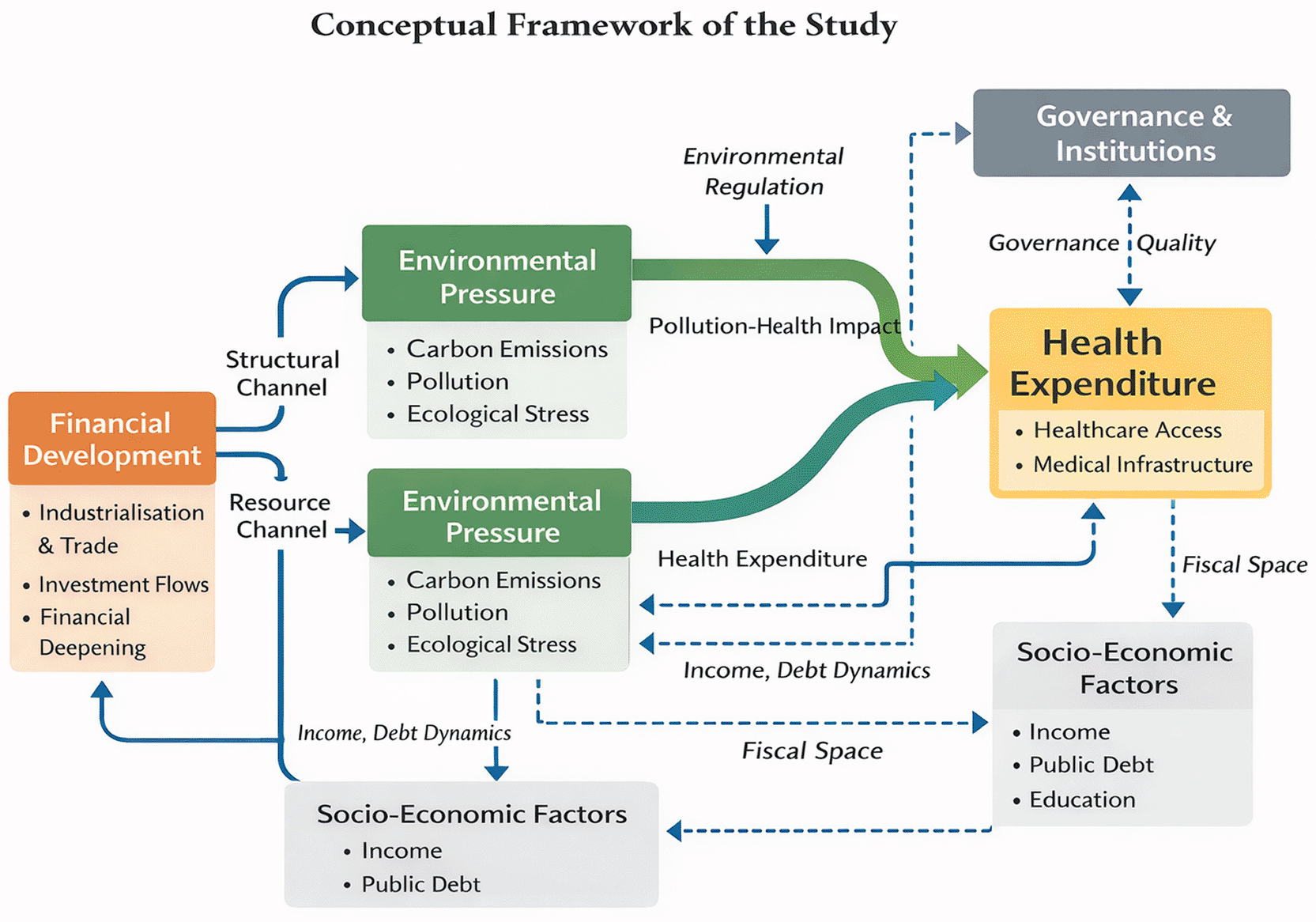
Within this framework, financial development affects health expenditure through two main channels. The first is a resource channel. A deeper financial system improves access to credit, capital mobilisation, insurance coverage, and public financing capacity. These changes can expand households’ ability to pay for healthcare and governments’ and private providers’ ability to finance medical infrastructure and services. In this sense, financial development can raise health expenditure by expanding access to formal health financing and increasing the supply of health-related investment. The second is a structural channel. Financial development often stimulates industrial activity, trade expansion, and investment flows. These processes can improve income and production, but they may also intensify pollution and ecological stress when growth depends on carbon-intensive production. Studies of the finance-environment nexus show that financial development may initially worsen environmental quality, although the relationship may later improve as economies adopt cleaner technologies and stronger regulation.
Environmental pressure is introduced as the main transmission mechanism linking economic expansion to rising healthcare costs. The pollution-health literature shows that exposure to air pollution and related environmental risks increases disease incidence, hospitalisation, and treatment demand. Extensions of the Grossman-type health demand model explicitly include pollution as a determinant of health needs, showing that environmental degradation reduces health capital and increases the demand for medical care. This implies that carbon emissions, industrial pollution, and other environmental stressors raise health expenditure by increasing both preventive and curative healthcare needs.
The framework also assigns an important role to governance and the energy transition. Governance conditions how effectively financial resources are allocated, how strictly environmental regulations are enforced, and how efficiently health expenditure is converted into better health outcomes. Renewable energy, in turn, reduces environmental pressure by lowering reliance on fossil-fuel-intensive production and consumption. Thus, the study expects industrialisation, trade openness, foreign direct investment, and carbon emissions to increase health expenditure, while renewable energy is expected to reduce it. Financial development may raise health expenditure directly through financing capacity and indirectly through environmental change. This integrated framework strengthens the theoretical basis of the study by showing that health expenditure is the outcome of a connected system in which finance, environment, production structure, and institutions jointly shape health system costs over time.
The theoretical framework of the study investigates the relationships among health expenditure (HE), industrialisation (IND) and environmental degradation (CO 2), as well as foreign direct investment (FDI) and financial development (FD), clean energy (CE) and trade openness (TO). Using the significant economic and environmental theories, we can see the picture of these relations. The environmental Kuznets Curve (EKC) hypothesis is frequently used to evaluate the relationship that exists between industrialisation and health spending. The implications of this hypothesis are as follows: when an economy begins to grow and becomes industrialised, the rate of environmental degradation increases; however, this decreases once an economy has reached a certain level of development. A lack of environmental awareness, increased regulation and the adoption of greener technologies have caused this. There is also a possibility that industrialisation will increase CO2 emissions, negatively impacting health and, therefore, spending on health (Dam, Durmaz, Bekun, and Tiwari, 2024; Y. Shang et al., 2022; J. Wang et al., 2021; Zeeshan et al., 2022). One of the significant aspects of the global economy is FDI. It can enhance growth and industrialisation. There are, however, environmental risks when multinational companies take advantage of lax environmental rules in host nations, a scenario described by the Pollution Haven Hypothesis (PHH). According to this assumption, FDI can increase pollution levels, which in turn can raise healthcare costs through ecological destruction (Chireshe and Ocran, 2020; A. Khan et al., 2021; T. Shang et al., 2024). The role of financial development is two-fold. In the long term, it is possible to reduce health expenditure by investing sufficiently in clean technologies and medical infrastructure.
Nevertheless, rapid economic growth in the absence of environmental regulations may lead to greater environmental degradation, thereby increasing health spending. The use of clean energy is traditionally associated with reduced environmental damage and improved health outcomes for the population. With the adoption of renewable energy sources, CO2 emissions will decrease significantly, reducing the adverse effects of pollution on health and potentially lowering healthcare costs. Trade openness may also significantly influence health spending by affecting economic growth and environmental quality. Greater trade can potentially drive economic growth, though at the cost of some problems (including environmental degradation at the outset and greater health spending). In the long run, openness to trade may facilitate the exchange of cleaner technologies and other environmental best practices, thereby reducing health spending.
All in all, the theoretical development of the study shows that different effects interact, indicating that industrialisation, FDI, financial development, clean energy, and trade openness influence health expenditures. These aspects affect health spending through negative environmental degradation and economic development. These relationships can only be understood deeply when policymakers aim to achieve a balance among economic development, human health, and environmental sustainability.
The objectives of the study are to evaluate the Impact of industrialisation (IND), environmental degradation (CO2), foreign direct investment (FDI), financial development (FD), clean energy (CE), and trade openness (TO) on health expenditure (HE) in Lower Middle-income countries and higher-middle-income nations for the period 1995-2020. The general form of empirical relations is presented below;
After the natural log transformation of Equation (1), it can be rewritten in regression form in the following manner, see Equation (2):
Where the coefficients of explain the changes in HE due to variations in target variables, explains the constant term and for white noise in the equation.
Carbon dioxide (CO2) emissions are the first explanatory variable, reflecting the release of CO2 into the atmosphere. This mainly occurs due to human activities such as industrial production, transportation, and energy production. Carbon dioxide emissions are typically measured in metric tons per capita or in total carbon dioxide emitted over a given period. Other sources are official environmental agencies within a country, international bodies such as the World Bank, and research institutions. The increase in carbon dioxide emissions is one of the causes of environmental pollution, which has adverse consequences for human health, including respiratory diseases, cardiovascular diseases, and other health complications. Research shows that the costs of treating pollution-related diseases, including hospitalisation, medication, and medical care, may increase health spending. Therefore, the cost of treating pollution-induced illnesses can strain healthcare budgets, leading to increased government spending on healthcare systems and facilities. Nevertheless, other research has shown that applying controls to curb pollution and encouraging clean energy programmes can reduce CO2 emissions and, consequently, medical expenditures for diseases caused by pollution.
Furthermore, improvements in environmental health can be achieved through increased research and development funding to develop pollution-mitigation technologies, which eventually translate into lower healthcare costs (Eckelman et al., 2020). Government initiatives to address pollution-related health challenges can also create employment opportunities in the healthcare sector, leading to economic growth and, indirectly, reducing healthcare spending by boosting tax collection. However, our findings show that carbon dioxide emissions and health expenditure are positively related. This increase in CO2 emissions is expected to raise healthcare costs due to the adverse health effects of pollution, with β1 = 1 = 2HE/2CO2.
The second independent variable is industrialisation, which refers to the process of economic development that entails the development of an economy’s manufacturing and industrial sectors (Hauge & Chang, 2019). One of the possible methods to evaluate the state of the process of industrialization is through various indicators, including the ratio of industry to the Gross Domestic Product (GDP), Study (Tulchinsky & Varavikova, 2014; Dembe, 2001) went further and claimed that industrialization might increase pollution rates, occupational health risk, and exposure to harmful substances which subsequently translates into greater healthcare costs. Accidents, injuries, and occupational diseases may also result from the development of industrial operations and require medical care and recovery. Quite the contrary, some studies have shown that the dividends of industry growth may lead to the development of new technologies in healthcare provision, such as healthcare equipment and medicines, as well as more efficient treatment strategies. It can eventually improve healthcare outcomes and reduce the costs of long-term care. Further, industrialisation may help enhance living standards, sanitation, and access to healthcare, thereby achieving better health outcomes and possibly lowering the cost of developing widespread healthcare spending to treat preventable illnesses. However, in our investigation, industrialisation will have a positive impact occasionally on health expenditure owing to possible growth in pollution diseases as well as work health risks.
The third explanatory variable is foreign direct investment (FDI). It occurs when a foreign entity invests its capital into the domestic economy as a way of setting up business or purchasing assets. FDI is measured by aggregating FDI inflows or as a percentage of a nation’s GDP. FDI has many sources of data, among them national investment promotion agencies, central banks and international bodies such as UNCTAD and OECD. According to some studies, FDI can enhance economic growth, advance infrastructure, and generate jobs (Zekarias, 2016). This, in its turn, may increase accessibility to healthcare services and funding.
The fourth independent variable is clean energy, incorporating renewable sources such as solar, wind, and hydroelectric power, providing options beyond traditional energy sources that depend on fossil fuels. Consumption of Clean energy may be measured either as a share of overall energy consumption or in units such as terawatt-hours. Information on the use of clean energy can be found through various sources, such as national energy agencies, international organisations such as IRENA, and energy research institutions. Previous evidence indicates that clean energy has the potential to reduce air pollution, respiratory diseases, and the medical costs associated with pollution-related illnesses. The investment in clean energy technologies will also generate employment, boost economic development, and improve the population’s health outcomes, thereby reducing health spending. Other sources, however, assert that a short-term investment in clean energy infrastructure and technology may incur these costs at the outset, temporarily increasing healthcare expenditure. We have analysed that clean energy will save on health expenditure by minimising pollution-related diseases and health care costs.
The dependent variable is health expenditure, defined as the monetary amount spent on the referral and support of healthcare services (Ke, Saksena, and Holly, 2011). It is measured by three major elements: total health expenditure, government health expenditure, and household health expenditure. Health spending is typically defined as a percentage of GDP or, in absolute terms, as the total amount spent on healthcare within a given economy. Government spending on health is the money the government allocates to fund healthcare facilities and services (Babatunde, 2018). Household spending on health is the expenditures made by people and families to cover health services, including those not covered by insurance.
To ensure econometrically valid and robust inference, this study adopts a comprehensive multi-stage estimation strategy explicitly designed for heterogeneous, cross-sectionally dependent panel data. The empirical framework sequentially examines slope heterogeneity, cross-sectional dependence, unit roots, and cointegration, and then proceeds to dynamic long-run estimation using the Dynamic Common Correlated Effects (DCCE) approach.
To assess whether slope coefficients differ across cross-sectional units, the study applies the slope heterogeneity (SH) test proposed by Bersvendsen and Ditzen (2021). This test evaluates whether individual-specific slope estimates significantly deviate from the pooled estimator.
Consider the baseline panel regression:
The null hypothesis implies slope homogeneity, whereas rejection indicates heterogeneous slope behaviour across cross-sections.
1. Cross-Sectional Dependence Test
Given the strong likelihood of interdependence among economic units, cross-sectional dependence (CD) is tested using the statistic developed by Juodis and Reese (2022), which generalizes Pesaran’s CD test.
Let denote residuals obtained from the panel regression. Pairwise correlation coefficients are computed as:
The CD test statistic is given by:
Under the null hypothesis , the statistic converges to a standard normal distribution. Rejection implies the presence of cross-sectional dependence, necessitating estimators robust to standard shocks.
To determine the order of integration, the study employs the panel unit root test of Herwartz and Siedenburg (2008), which accommodates heteroskedasticity, cross-sectional dependence, and structural instability.
The augmented regression is specified as:
Rejection of indicates that the series is stationary.
Long-run equilibrium relationships are examined using the Westerlund and Edgerton (2008) cointegration test, which is robust to cross-sectional dependence and structural breaks.
The test is based on the Durbin–Hausman principle applied to the estimated error-correction term:
The group-mean test statistic is defined as:
After establishing cointegration, long-run coefficients are estimated using the Dynamic Common Correlated Effects (DCCE) estimator proposed by Chudik and Pesaran (2015).
The cross-sectionally augmented distributed lag (CS-ARDL) specification is:
The long-run coefficient vector is recovered as:
2. Endogeneity Correction via DCCE-IV
To mitigate endogeneity arising from lagged dependent variables, the study employs an instrumental-variable-adjusted DCCE estimator following Ditzen (2018). Historical lags of regressors are used as instruments:
This approach yields consistent and efficient estimates even in the presence of feedback effects and weak exogeneity.
This section investigates cross-sectional dependency and the slope of the heterogeneity test, following Juodis and Reese (2022) and Bersvendsen and Ditzen (2021). Table 1 displays the results with two-panel outputs for the CD test and the SH test, respectively. According to the test statistics, all variables are cross-sectionally dependent and exhibit heterogeneity in their properties.
| Panel A: SH test of Bersvendsen and Ditzen (2021) | |||
|---|---|---|---|
| Delta statistic | Adjusted delta statistic | SH exits | |
| Model | 3.7022*** | 5.6842*** | Yes |
| Model | 3.9396*** | 4.2483*** | Yes |
| Panel B: CD test of Juodis and Reese (2022) | |||||||
|---|---|---|---|---|---|---|---|
| HE | IND | FDI | REC | FD | TO | CO2 | |
| test stat value | 3.441 | -1.2356 | -5.985 | -2.3845 | 3.2778 | -1.697 | 6.6708 |
| Probability | *** | *** | *** | *** | *** | *** | *** |
| CD exist | YES | YES | YES | YES | YES | YES | YES |
The study performed a panel unit root test and a cointegration test with a structural break, following Helmut Herwartz, Maxand, Raters, and Walle (2018) and Westerlund and Edgerton (2008). The output of the panel unit root and cointegration test is reported in Table 2. From the results, it is apparent that all variables become stationary after the first difference. Furthermore, the panel cointegration test established a long-run association in the empirical relations.
| Panel A: Integration (or unit-root) test of Herwartz and Siedenburg (2008) | |||||||
|---|---|---|---|---|---|---|---|
| HE | IND | FDI | REC | FD | TO | CO2 | |
| At level | 0.4937 | 1.7963 | 1.3513 | 1.5564 | 1.879 | 1.8403 | 0.1319 |
| First difference | -3.8705 | 7.0344 | 8.8425 | -3.2095 | -3.0493 | 4.4278 | -3.2097 |
| Panel B: Cointegration test of Westerlund and Edgerton (2008) | ||||||
|---|---|---|---|---|---|---|
| No shift | Mean shift | Regime shift | ||||
| LMг | LMΦ | LMг | LMΦ | LMг | LMΦ | |
| stat. | Stat. | Stat. | Stat. | Stat. | Stat. | |
| Model 1 | -4.1509 | -4.941 | -2.8775 | -4.6002 | -2.0494 | -3.8778 |
| Model 2 | -4.6978 | -2.0105 | -4.5972 | -2.752 | -2.7137 | -4.6631 |
The coefficient, see Table 4, for industrialization was positive and statistically significant at the 1% level, suggesting that industrialization may increase health care costs. Precisely, a 10% increase in industrial output will result in a 1.826% increase in HE cost with DCE and a 1.729% increase with DCE-IV estimation. Our findings are consistent with the existing literature (Rastegar, 2004; Shen, Wang, & Shen, 2021; Zhou et al., 2020). Effects of industrial processes on health may be explained by their impact on the environment and health, such as air pollution. Most of the time, pollution is associated with high healthcare costs, as it requires greater spending. Policymakers should thus consider the impacts of industrialisation on healthcare budget allocation. In doing so, they will be able to minimise adverse effects on the population’s health and ensure that the healthcare industry is ready to address increased demand for services. FDI also has a positive impact on healthcare costs, with the effect statistically significant at the 1% level. An 10% increase in FDI results in a nearly 1.509% increase in healthcare spending when employing the DCE technique and a 1.735% increase using the DCE-IV associated technique. This could be because FDI drives economic growth and increases the demand for healthcare services, and this also brings new medical technologies and practices that initially increase the cost high. The results are consistent with those of Alziyani & Murad (2021), Ehsani et al. (2023), Van Tran et al. (2024), and Zekarias (2016). The two variables, renewable energy consumption and healthcare costs, are statistically significant at the 1 percent level. There is a 10% increase in renewable energy consumption, resulting in a 1.723% reduction in healthcare spending in the DCE model and a 1.003% reduction in the DCE-IV model. According to studies, increased renewable energy will reduce healthcare costs, likely by decreasing pollution and its associated health issues.
Healthcare expenditures show positive correlations with the CO2 emission coefficients in both models, and these correlations are significant at the 1% level. This means that spending in the healthcare sector will increase as the environment continues to be degraded. Namely, a change of 10 0.795 0.5 stayed costs by a significant margin of 6.691, a 10 0.5 rate of increase in CO 2 emissions, increases healthcare expenses by 0.795 0.5 ratio and 6.691 0.5 ratio respectively, with respect to the DCE and DCE-IV techniques. These conclusions highlight that the effects of pollution on health services and costs are significant, and these arguments effectively support the implementation of policies to reduce emissions (Dritsaki and Dritsaki, 2023; Hamid and Wibowo, 2023; Ullah et al., 2020).
Financial development positively affects healthcare costs, with the effect statistically significant at the 1% level. A 10% increase in financial development leads to a 0.995% increase in healthcare expenditures with the DCE method and a 1.598% increase with the DCE-IV method. The study by Chireshe & Ocran (2020) and Xu & Tan (2020) contended that financial development improves access to healthcare services, leading to higher utilisation and, consequently, higher costs. Trade openness is positively associated with healthcare costs, and the association is statistically significant at the 1% level. A 10% increase in trade openness results in a 1.575% increase in healthcare expenditures with the DCE method and a 1.683% increase with the DCE-IV method. Trade openness can drive economic growth and increase healthcare demand, but it may also introduce health risks through the exchange of goods and services that require greater healthcare spending.
Among the high-income group, the long-run asymmetric coefficients (see Table 5, Panel A) indicate that health expenditure is positively associated with CO2 emissions (both positive and negative), with coefficients of 0.1212 and 0.1325, respectively, suggesting that higher CO2 emissions are associated with greater health expenditure. Coefficients of -0.1238 and -0.0999, respectively, for positive and negative changes in renewable energy consumption (REC), imply a negative correlation between changes in REC and health care spending. Health spending is positively affected by changes in foreign direct investment (FDI) (0.1269), though negative FDI has a minor positive effect (0.0971). There is a complicated link between industrial development (IND) and trade openness (TO). IND changes, whether good or negative, increase health spending, with the negative impact being more pronounced (0.1333).
Nevertheless, trade openness shows a negative coefficient for positive changes (-0.0991) and a substantial drop for negative changes (-0.1158), suggesting that health spending is reduced in the long term by more open trade policies. However, the trend is different for the low-income group. Health spending is also substantially increased by positive CO2 emissions (0.1006), but at a slower pace than the high-income group; on the other hand, harmful CO2 emissions have a somewhat more significant effect (0.1165). Health spending is substantially increased (0.1159) by positive REC changes but only slightly (0.0983) by negative REC changes. Foreign direct investment (FDI) has a favorable influence on both positive and negative changes in the low-income group. However, the adverse effect is much higher (0.1737) than in the high-income group. Similarly, health spending is favorably affected by industrial growth, with a higher positive effect (0.0999) than a negative one (0.0849). Not only does trade openness have a positive effect on health expenditure (0.0722) in the low-income group, but it also has an adverse effect (0.1053). This shows that low-income groups are more affected by trade dynamics.
Panel B shows that extra insights are revealed in the near term by the asymmetric consequences. Positive CO2 emissions significantly raise health spending in high-income nations (0.0394), whereas harmful CO2 emissions significantly lower it (-0.0474). Positive CO2 emissions have little effect on low-income nations (0.003), but harmful emissions considerably raise health care costs (0.0441). Both positive and negative changes in renewable energy consumption continue to have favourable consequences; however, low-income groups are hit more by negative changes (0.0261) than high-income groups. Foreign direct investment (FDI) has a favourable effect regardless of the direction of the flow and the recipient’s income level. However, low-income recipients are particularly walloped by negative FDI changes (0.0321). Health spending is positively affected by industrial growth across all income levels, with low-income nations being more sensitive to its adverse effects (0.0513). In high-income nations, trade openness raises health spending by 0.047, whereas in low-income countries it has a negligible, negative effect of -0.0103. In conclusion, nations with lower incomes react more strongly (0.0523) to financial progress, although this effect is statistically significant across both categories. From the adjustment speed to equilibrium (cointEq (-1)), when health spending deviates from its long-run path, low-income countries restore long-term equilibrium more quickly (-0.3042) than high-income countries (-0.4161).
We further test the duality of causality by conducting directional causality tests in Model 1 ( Table 3) and find diverse relationships among these variables. The relationship between health expenditure (HE) and carbon dioxide emissions (CO2) is also bidirectional, as shown by a critical W-Stat and Zbar-Stat at both HE <==> CO2. That is to say, the variations in health expenditure could anticipate CO2 emissions and vice versa. Also, there is bidirectional causality between HE and IND; CO2 and TO indicate each other’s predictive influence. It is also noted that throughout the countries under test. At the same time, there exists a unidirectional causal configuration from CO2 to HE via REC and FDI, and neither direction can predict any of those variables.
Model 2 showed causal relationships between the variables as well. Some of them were significantly higher or lower compared to Model 1. Obviously, the two-way causality between HE and CO2 is essential for retaining and suggesting an intimate connection between health expenditure and carbon dioxide emissions (for instance, []). Furthermore, precipitation is bidirectionally causal with HE and IND, and CO2 is bidirectionally causal with FD, allowing them to predict each other. REC to HE unidirectional causality is established, indicating that health expenditure can be predicted by renewable energy consumption moving from the past into the future, while not evolving vice versa. A more complex interplay between these variables is suggested by the current model, which shows that CO2 Granger-causes REC and that REC Granger-causes CO2. Our results also provide evidence for the sparsely linked causal network among health expenditure, CO2 emissions, renewable energy consumption, and some economic dimensions.
The following section deals with the assessment of the robustness of the estimation through different techniques, such as FGLS, PCSE, and FMOLS, as well as endogeneity assessment with IV estimation. The output reported in Table 6 showed a similar vine of association, as observed in the earlier estimation. Thus, it assesses the robustness and internal consistency of the empirical model.
The endogeneity problem in the study has also been addressed using IV techniques, as shown in Table 7. An endogeneity problem is absent.
The results of this study offer a multifaceted analysis of the determinants of health system resilience, emphasizing the critical interplay between fiscal capacity, institutional quality, and environmental stewardship. By examining the impact of public debt and health expenditure through the lens of crisis management, this research provides new insights into how national infrastructures withstand systemic shocks.
In line with these dynamics, industrialization was associated with higher health expenditure. The result echoes evidence from Bangladesh, where a Vector Error Correction Model showed that industrialisation, pollution and inflation all have positive and significant effects on health spending. Industrial expansion tends to increase pollution and occupational hazards, thereby raising the disease burden and health costs. However, it is crucial to sustain growth in public health expenditures, as these investments can help finance essential health services and may indirectly affect health outcomes by increasing household financial resources for other determinants of health (Kartal, 2024). A robust gross domestic product often catalyzes enhanced healthcare spending, enabling greater allocations in both public and private healthcare sectors and facilitating the adoption of advanced treatments and facilities (Socol, Iuga, Socol, & Iuga, 2023). This relationship underscores the importance of a resilient economic framework to underpin sustainable healthcare financing, especially in mitigating the impacts of economic disparities on public health outcomes (Sadraoui & Khelifi, 2025).
Building on this, carbon emissions emerged as the strongest contributor to rising health expenditure. Studies on G7 countries found a one-way causal relationship between greenhouse gas emissions and health expenditure. In China, a simultaneous equation model found that trade openness is the main driver of CO2 emissions, which in turn drives up healthcare spending (Dritsaki & Dritsaki, 2023). This relationship highlights the negative externalities of industrial and economic activities, as environmental degradation translates into elevated healthcare burdens. Therefore, policy interventions aiming to mitigate carbon output, potentially through increased adoption of renewable energy sources, may lead to a concomitant reduction in healthcare costs and improved public health outcomes (Horvey, 2024). For instance, a 1% increase in carbon dioxide emissions has been found to correlate with a 0.95% increase in health expenditure, while a 1% increase in renewable energy use can reduce healthcare spending by 1.44% in the long term (Raihan et al., 2022). Such findings suggest that environmental policies promoting decarbonization are not merely ecological imperatives but also vital strategies for fiscal sustainability within the health sector (Wei, Xu, & Zhou, 2022b). This necessitates cross-sectoral policy formulation, integrating environmental, industrial, and health policies to achieve synergistic reductions in pollution and associated health expenditures (Zeiri, Bouzir, Mbarek, & Benammou, 2023).
Similarly, FDI increases health expenditure. In ASEAN economies, instrumental-variable estimates showed that a 1-unit increase in FDI per capita increases health expenditure by 0.135–0.206%. The study attributed this to higher national income and fiscal resources generated by FDI, which allow governments to spend more on healthcare. This observation suggests a complex interplay where increased economic activity, while potentially leading to greater environmental stressors, also provides the financial means to address health-related consequences through enhanced healthcare investments (Touitou & Waleed, 2024). However, the empirical evidence indicates that while public health expenditure can mitigate the adverse impacts of carbon emissions on population health, the overall effect on health outcomes depends on a comprehensive approach that also considers environmental policies (Omri, Kahouli, & Kahia, 2023). Therefore, to effectively manage healthcare spending and improve public health, policymakers must implement a holistic strategy that combines economic development with stringent environmental regulations and the promotion of clean energy technologies (Inglesi-Lotz et al., 2024). Furthermore, researchers have highlighted that environmental degradation directly or indirectly impacts healthcare expenditures, underscoring the need for policies that improve environmental quality (Hussain, Marcel, Majeed, & Marcelline, 2023).
This study advances the current research topics by bridging the historical gap between macroeconomic stability and sectoral health performance. Prior literature has often treated the management of public debt and the funding of public health as distinct policy silos. However, this research demonstrates that they are inextricably linked, particularly during periods of intense systemic pressure. By focusing on how public debt levels dictate the “surge capacity” of a health system, we address the gap in understanding the integrated dynamics of fiscal and sectoral health (Okafor & Khalid, 2023; Okyere, Lomazzi, Peri, & Moore, 2024).
Furthermore, this study expands the scope of the “environment-health nexus.” While previous studies have analyzed health expenditure in isolation, our research incorporates the energy transition and ecological footprint as structural determinants of public health costs. By using data from 24 European countries between 2012 and 2021 (Fuinhas, Khan, Koengkan, Irshad, & Domingos, 2026), we provide a more granular view of how environmental pressures—such as CO2 emissions and ecological footprint—interact with institutional quality to shape health outcomes. This addresses the research problem by showing that health resilience is not just about medical capacity, but about the broader sustainability of the national ecosystem. The results reinforce and extend what was previously known about the research problem. The significance of our findings lies in the discovery that public debt acts as a “ceiling” on the effectiveness of health interventions. When a nation is burdened by high sovereign debt, the marginal benefit of each dollar spent on health care decreases, as resources are diverted to debt service rather than frontline emergency response. This finding is consistent with the research of Coccia and Benati, who investigated the negative effects of high public debt on health systems facing the pandemic crisis in Europe (Coccia & Benati, 2024b). Their work emphasizes that preparing for future emergencies requires not just more spending, but more sustainable fiscal foundations.
Our results regarding institutional quality further connect to the theoretical background established in the introduction. As observed in their study of the “Emerging Seven” countries, institutional quality is paramount in determining how health expenditures affect human health (Hadipour, Delavari, & Bayati, 2023; Xing & Liu, 2022). Our study confirms this hypothesis, demonstrating that in regions where institutional quality is high, health systems are better able to absorb fiscal shocks. This is also supported by the findings of (Aladejare, 2024; Dong-ping, Golo, Mahar, Ali, & Kadyrova, 2023) in the African context, where institutions were found to play a conditioning role in the environment-health outcomes nexus. These cross-regional comparisons suggest that the “institutional buffer” is a universal requirement for health system sustainability. Many of the results obtained in this study were expected based on the reviewed literature. For instance, the finding that recycling and energy transition have a long-term positive influence on reducing environmental pressures (Fuinhas et al., 2026) aligns with established ecological theories. Similarly, the positive relationship between health expenditure and life expectancy, as noted in Eastern Europe, was replicated in our analysis of the broader European landscape.
However, several unexpected findings emerged that require deeper explanation. One significant insight was the high degree of “slope heterogeneity” observed across different economies. Study initially hypothesized a more uniform impact of health expenditure across the EU; however, the data revealed that the efficacy of health spending varies significantly depending on a nation’s specific energy mix and its stage of financial development. In countries where the energy transition is still in its infancy, the health system remains more vulnerable to environmental shocks, regardless of the level of fiscal expenditure. Another unexpected finding was the “inertia” of health outcomes. The data suggest that even when significant fiscal resources are deployed during a crisis, there is a substantial lag before health outcomes improve. This “short-run inertia” indicates that the health system’s performance is heavily dependent on its state prior to the crisis. This supports the argument that health resilience is a “peacetime” construction. This finding provides a new understanding of the “efficiency gap” in health spending—the period during which increased expenditure has not yet translated into improved systemic capacity.
A central claim of this study is that these results can be applied more generally across various geoeconomic regions, provided that local structural conditions are accounted for. In developed regions such as the European Union, the primary application of our findings is the need to balance debt reduction with health investment. As Socol et al. argued, climate change is already driving up healthcare costs in the EU, and nations that fail to manage their public debt will find themselves unable to cover these escalating environmental health costs. In emerging and developing economies, the application focuses more heavily on institutional reform and “upstream” environmental spending.
The primary lesson learned from this research is that health system resilience is a product of long-term strategic coherence between fiscal, environmental, and institutional policies. Based on our findings, we propose several recommendations to improve the sustainability of health expenditure in turbulent environments: Policymakers should establish “health resilience funds” that are protected from debt-servicing requirements during recognized national emergencies. This ensures that the structural barrier of public debt does not prevent critical, life-saving expenditure during a crisis. Following the lead of Lo et al., who made the case for public financing of environmental common goods, we recommend that health expenditure be redefined to include energy transition and pollution governance. Reducing the “ecological footprint” is a direct way to lower long-term demand for medical services (Fuinhas et al., 2026). International health organizations and financial institutions should prioritize institutional quality as a metric for health system capacity. Improving the efficiency of health spending is often more effective than increasing spending, especially in debt-burdened economies.
To overcome the “inertia” of health systems, fiscal planning for health should be multi-annual. Governments must avoid the “boom and bust” cycle of health spending, in which budgets are slashed during economic downturns and surge during health emergencies. Moreover, encouraging practices such as recycling and sustainable consumption serves as a cost-effective public health strategy. As shown in our data, these practices significantly reduce the ecological pressures that lead to health crises. By synthesizing these findings, we have directly answered the research questions posed at the outset.
Regarding RQ1—the role of public debt—we have demonstrated that debt is a fundamental constraint that dictates the efficacy of health spending. For RQ2—the role of institutions—we have shown that governance quality is the primary moderator of health resilience. Finally, for RQ3—the environment-health nexus—we have clarified that energy transition and ecological sustainability are the “upstream” drivers of national health costs. Building on this analysis, this study advances research on these topics by providing a holistic, empirically grounded framework for understanding national resilience. We have moved from a simple view of health expenditure as a “cost” to a more sophisticated understanding of health resilience as a “strategic asset” that requires fiscal stability, institutional agility, and environmental stewardship to sustain. The significance of our research lies in its ability to quantify the structural barriers to health system performance. By showing how public debt and environmental pressures interact with institutional quality, we provide a new roadmap for sustainable governance. These findings suggest that, for health systems to be effective in a future characterized by “turbulent environments,” nations must look beyond immediate medical responses and address the underlying macroeconomic and ecological foundations of their societies. Ultimately, this transition from a reactive to a proactive health strategy is essential for ensuring that health expenditure remains a viable and effective tool for protecting human life in an increasingly volatile global landscape.
The findings of this research provide a detailed understanding of how national health resilience is constructed at the intersection of fiscal policy and institutional quality. Rather than serving as a summary of the data, this conclusion emphasizes that the efficacy of government health expenditure is not an isolated phenomenon but is deeply embedded in a nation’s macroeconomic health. By investigating how high public debt acts as a barrier to effective crisis response, this study fills a critical gap in the literature that has historically treated sectoral health spending and sovereign debt management as separate disciplines. We have demonstrated that the “surge capacity” required for health systems to face global shocks is fundamentally limited by the fiscal space available to the state.
1) Theoretical implications
The theoretical implications of this work involve a significant expansion of the framework governing health system resilience. We have moved beyond the traditional focus on nominal expenditure to incorporate the conditioning role of institutional quality and fiscal sustainability. Our analysis addresses the literature gap by integrating the theoretical contributions of the 2022 study by Wei and colleagues on emerging nations and the 2023 analysis by Nica and colleagues regarding the impact of energy mix and financial development on health outcomes in Eastern Europe. A major theoretical advancement of this study is the integration of the “debt overhang” perspective into health economics. As established in the 2024 research of Coccia and Benati on European health systems during the COVID-19 pandemic, excessive public debt creates a structural impediment that prevents health systems from responding effectively to emergencies. Furthermore, we have refined the theory of the environment-health nexus by incorporating the findings of Ajide and Alimi (2020) and Alimi and Ajide (2021), which suggest that institutional quality is the primary mediator through which environmental and fiscal factors affect public health. This study also builds upon the theoretical case for public financing of environmental common goods, as proposed by Lo and colleagues in 2019, to argue that health resilience is a product of long-term investment in both social and environmental capital.
2) Policy implications
From a policy standpoint, this research highlights that public debt reduction should be considered a core component of public health strategy. The 2024 work of Coccia and Benati (2024b) provides critical lessons for future emergencies, indicating that without sufficient fiscal space, even well-funded health systems may falter under the weight of debt servicing during a crisis. Additionally, policymakers must recognize the external drivers of healthcare costs. The 2023 findings of Socol and colleagues regarding climate change-driven health costs in the European Union suggest that fiscal planning must account for environmental risks. Furthermore, as noted in the 2023 research by Zhang and Dong, fiscal expenditure on energy conservation and pollution governance is a necessary prerequisite for sustainable health outcomes. Policies should prioritize fiscal decentralization and robust environmental regulations, as suggested by Wang and colleagues in 2024, to ensure efficient, responsive resource allocation in the face of localized shocks. This shift toward an integrated policy framework ensures that health systems are not only reactive to crises but are structurally prepared to withstand them.
3) Ideas for future research
Despite these contributions, the research is subject to manifold limitations that open new avenues for inquiry. A primary limitation of this study is its reliance on national-level data, which may mask disparities in health system performance at the regional or municipal levels. Future research should use subnational datasets to examine how local institutional quality and fiscal decentralization moderate the impact of health spending. Another limitation is the specific focus on general public debt; future studies could differentiate between domestic and external debt to determine if their impacts on health infrastructure differ. There is also a need for longitudinal studies to observe the compounding effects of chronic underfunding and debt on human capital over multiple decades. Researchers might also build on the 2022 work of Wei and colleagues by examining how technological innovations and digital health transitions can mitigate the negative effects of fiscal constraints in debt-burdened economies. Finally, expanding the environmental variables analyzed to include specific air quality and resource management indices would provide a more granular view of the environmental-health nexus. These future efforts will continue to address the remaining gaps in our understanding of how modern states can balance fiscal sustainability with the imperative of protecting public health.
| Views | Downloads | |
|---|---|---|
| F1000Research | - | - |
|
PubMed Central
Data from PMC are received and updated monthly.
|
- | - |
Provide sufficient details of any financial or non-financial competing interests to enable users to assess whether your comments might lead a reasonable person to question your impartiality. Consider the following examples, but note that this is not an exhaustive list:
Sign up for content alerts and receive a weekly or monthly email with all newly published articles
Already registered? Sign in
The email address should be the one you originally registered with F1000.
You registered with F1000 via Google, so we cannot reset your password.
To sign in, please click here.
If you still need help with your Google account password, please click here.
You registered with F1000 via Facebook, so we cannot reset your password.
To sign in, please click here.
If you still need help with your Facebook account password, please click here.
If your email address is registered with us, we will email you instructions to reset your password.
If you think you should have received this email but it has not arrived, please check your spam filters and/or contact for further assistance.

Comments on this article Comments (0)