Keywords
High-flow priapism, vesicolithotripsy, arteriocavernosal fistula, penile erection, case report

High-flow priapism, vesicolithotripsy, arteriocavernosal fistula, penile erection, case report
differencen in the acknowledge there is funded from LPDP
See the authors' detailed response to the review by Muhammad Asykar Palinrungi
Priapism is defined as a prolonged penile erection lasting more than four hours, unrelated to sexual arousal and unrelieved by ejaculation. It is classified into three subtypes: ischemic (low-flow), non-ischemic (high-flow), and stuttering priapism.1,2 Ischemic priapism is a urological emergency due to impaired venous outflow and risk of corporal fibrosis, while high-flow priapism is less common and results from unregulated arterial inflow, often secondary to perineal or penile trauma leading to arteriocavernosal fistula.2–4
High-flow priapism typically presents as a painless, partially rigid erection, and is not associated with tissue ischemia. Diagnosis is supported by history, physical examination, cavernous blood gas analysis (revealing well-oxygenated blood), and penile color Doppler ultrasound, which can detect turbulent arterial flow into the corpora cavernosa.5,6
Postoperative high-flow priapism is rarely reported in literature. Most documented cases are associated with traumatic etiology and some reported priapism after invasive interventions such as spinal cord procedures and endoscopic internal urethrotomy.7,8 Here, we describe a rare case of high-flow priapism occurring after vesicolithotripsy, emphasizing the diagnostic challenge and management approach. This case report followed the 2013 CARE guidelines.
A 48-year-old male, presented to the emergency department with complaints of persistent penile erection accompanied by pain for approximately one week. The erection began one day postoperatively following a vesicolithotripsy procedure performed at another facility. The patient reported that the erection started after removal of the Foley catheter on postoperative day (POD) 1, with an Erection Hardness Score (EHS) of 3 and pain intensity rated at 6/10 on the Visual Analog Scale (VAS). Despite self-administration of pseudoephedrine starting on POD 3, the erection persisted and intensified to an EHS of 4 with ongoing pain (VAS 4). The patient denied any history of trauma, hematuria, or blood discharge from the urethral meatus.
His past medical history included multiple prior urological interventions: percutaneous nephrostomy, left-sided ureteroscopy (URS), and double-J (DJ) stent placement, followed by a left nephrectomy in the same year. The patient had no known history of hypertension, diabetes mellitus, cardiovascular, or vascular disease.
On examination, the patient was afebrile with stable vital signs (blood pressure 131/89 mmHg, heart rate 90 bpm, respiratory rate 20 breaths/min, and temperature 36.7°C). Abdominal examination was unremarkable. Suprapubic region was non-tender with an empty bladder impression. Genital examination revealed a rigid, erect penis (EHS 4) without signs of discoloration or necrosis (Figure 1). Flank and costovertebral angle tenderness were absent.
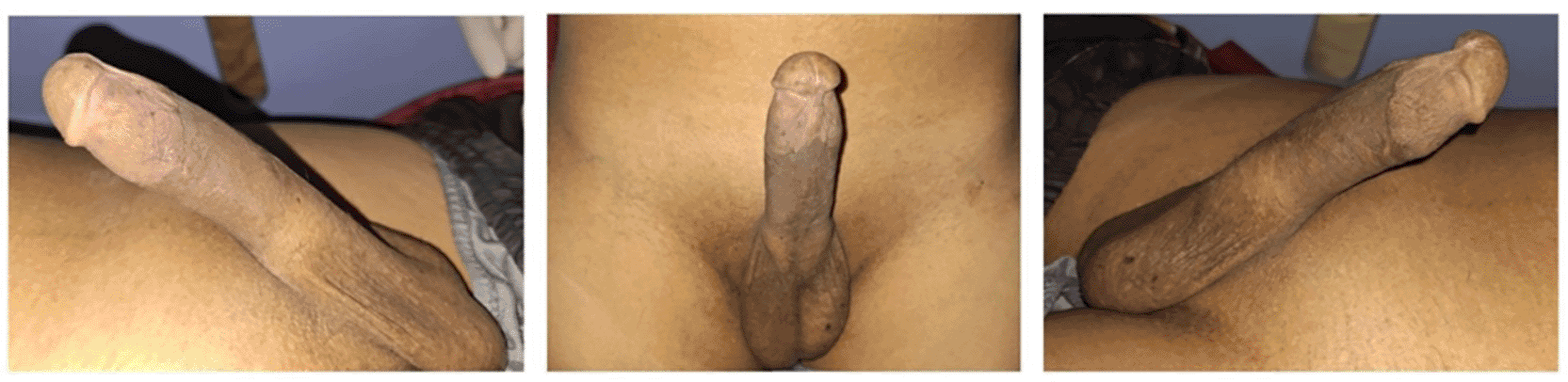
Laboratory results showed mild leukocytosis with neutrophil predominance, and low hematocrit (33%). Other hematological and biochemical values were within normal limits. Based on clinical presentation and lack of ischemic features, a working diagnosis of high-flow priapism was established.
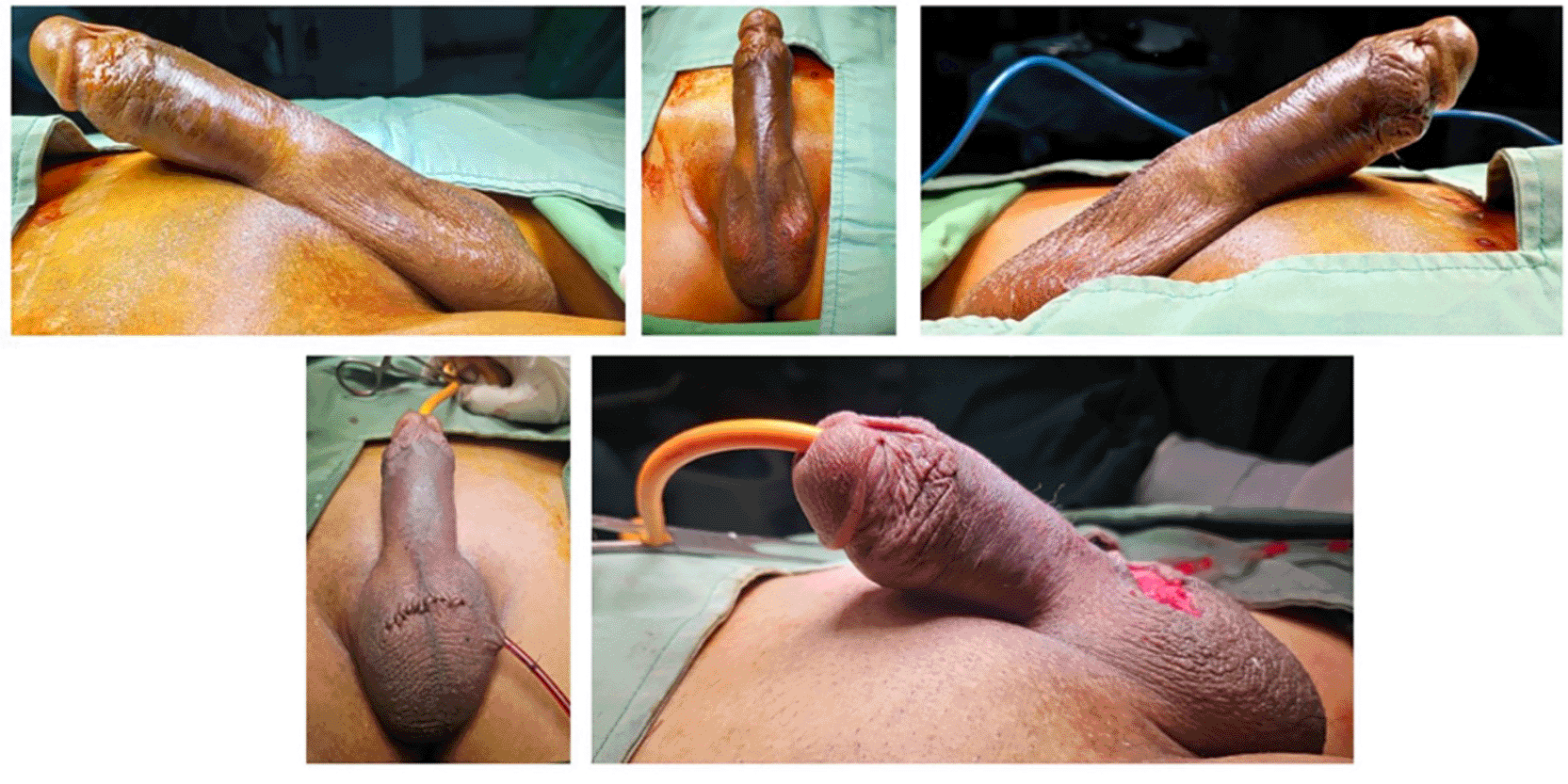
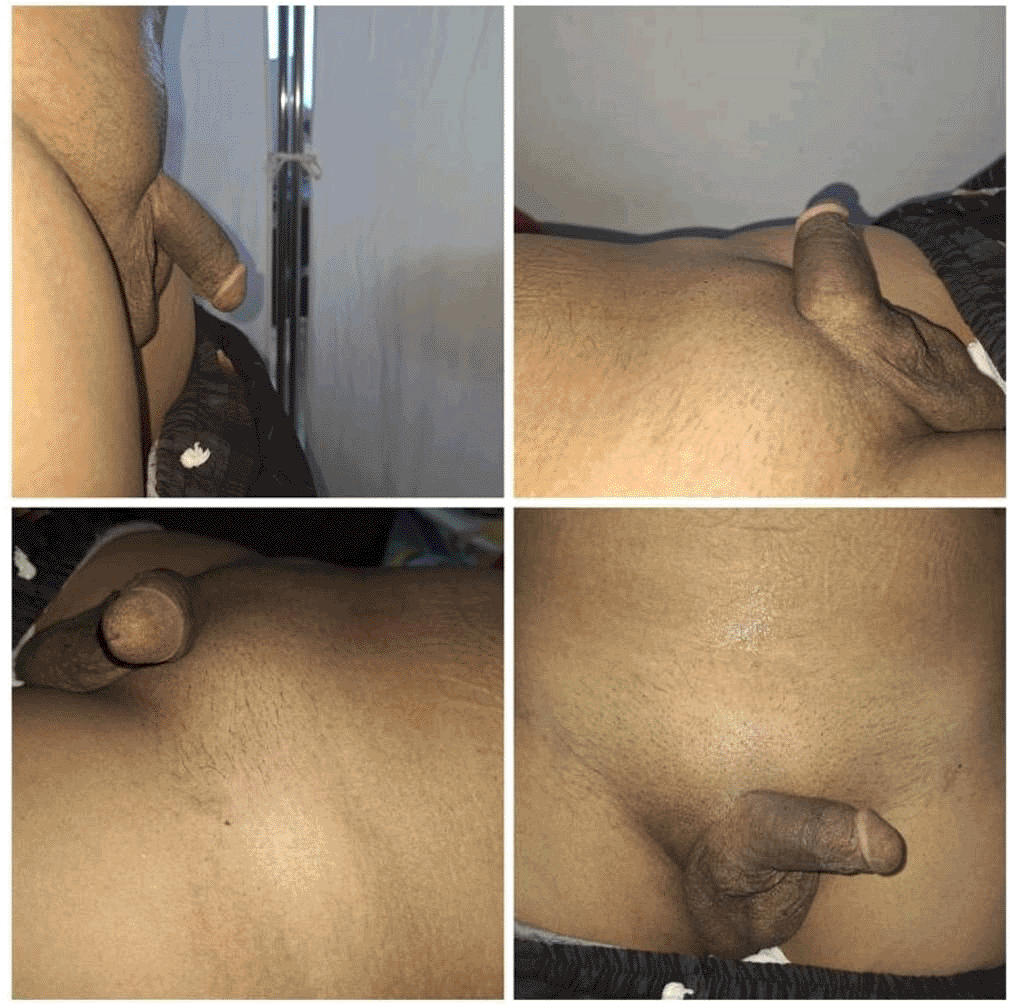
The patient was scheduled for further evaluation including cavernous blood gas analysis, penile Doppler ultrasonography, chest radiography, electrocardiography, and immediate surgical intervention with proximal shunt procedure after failure of conservative aspiration and irrigation with normal saline (Figure 2). No issues were encountered during the laboratory and radiological testing. Follow-up was done at outpatient care at postoperative 30th day (Figure 3). The patient reported no postoperative complaints and demonstrated good tolerance to all medications, with no gastrointestinal, allergic, or systemic complaints noted after the procedure. The patient remained able to perform daily activities as usual without any functional limitation.
High-flow priapism is a rare urological condition, representing less than 5% of all priapism cases.9 Unlike ischemic priapism, which results from venous outflow obstruction and carries a risk of corporal ischemia, high-flow priapism arises from unregulated arterial inflow into the corpora cavernosa, typically due to arteriocavernosal fistula formation. It is usually painless or minimally painful and presents as a partially to fully rigid erection that does not subside with ejaculation or conservative measures.9–12
The etiology of high-flow priapism is most commonly traumatic, often following blunt perineal injury or penile trauma.9,10 However, iatrogenic causes, particularly after urological procedures, have been reported few in literature.13–15 In this report, we describe a rare case of iatrogenic high-flow priapism following vesicolithotripsy, which, to our knowledge, is scarcely documented in the literature.
Several case reports support that transurethral interventions can cause arterial injury leading to high-flow priapism. Karagiannis et al. reported a case following internal urethrotomy, where angiography revealed extravasation from the left cavernosal artery. The patient was successfully treated with superselective embolization, resulting in complete detumescence and preserved erectile function.16 Similarly, Aphinives et al. documented a post-internal urethrotomy case where priapism developed on postoperative day one. Although an initial shunt failed, the condition was ultimately managed with Gelfoam embolization, with full recovery of erectile function after one year.15
Our case aligns with these reports in terms of delayed postoperative onset and the suspected mechanism—arterial fistula formation secondary to instrumentation. However, what makes our case notable is the procedure type, vesicolithotripsy, not previously implicated directly in high-flow priapism, although other bladder and urethral manipulations have been. Given the lack of perineal trauma and the temporal association with Foley catheter removal, it is plausible that either mucosal trauma or abrupt intra-cavernosal pressure changes contributed to an arteriocavernosal injury.
In addition to surgical trauma, spinal and epidural anesthesia have also been linked to high-flow priapism. Das et al. reported intraoperative penile engorgement under spinal anesthesia for laser prostatectomy, potentially due to sympathetic-parasympathetic imbalance.14 Ruan et al. described painful priapism during an epidural morphine-bupivacaine trial, suggesting a spinal mechanism whereby opioid-induced inhibition of sympathetic tone allows unregulated arterial inflow.17 These cases further emphasize the delicate autonomic balance governing penile hemodynamics, which can be disrupted even without direct mechanical trauma.
The diagnostic approach to high-flow priapism includes cavernosal blood gas analysis, which reveals oxygenated blood (pO2 > 90 mmHg, pCO2 < 40 mmHg, pH > 7.4), and penile Doppler ultrasound, which identifies turbulent high-velocity flow at the site of fistula. In our case, although Doppler was not yet completed, the clinical history and preserved EHS score in the absence of ischemic features pointed strongly toward a non-ischemic etiology.5,6
Management strategies differ significantly between priapism types. While ischemic priapism requires urgent decompression to prevent fibrosis, high-flow priapism often allows for initial observation. However, when symptoms are persistent or bothersome, as in our patient, intervention is warranted. Selective arterial embolization is the treatment of choice, demonstrating high success and low complication rates.6,15 In settings without interventional radiology support, surgical options such as distal/proximal shunting (e.g., Winter procedure) remain viable, though traditionally used in ischemic priapism.
In resource-limited settings such as many regional or rural hospitals in Indonesia, access to advanced interventional radiology services for selective arterial embolization is frequently unavailable. This presents a significant challenge in the management of high-flow priapism, where superselective embolization has been shown to provide both effective detumescence and high rates of erectile function preservation.5,8,18 In the absence of embolization, clinicians are often required to rely on surgical alternatives, including shunting procedures. These approaches, although more traditionally applied in ischemic priapism, may be employed in persistent high-flow cases when other measures fail. However, outcomes can be variable. Repeated or improperly indicated distal shunting may disrupt the corporal integrity and compromise erectile function, especially in prolonged cases or when performed without precise localization of the fistula.
In our case, a proximal shunt was performed as a last resort due to the unavailability of embolization and failure of conservative measures. While detumescence was achieved, long-term erectile function could not be guaranteed. This scenario raises an important concern regarding the limitations in treatment escalation and definitive care in peripheral hospitals. In metropolitan centers, patients with high-flow priapism would be evaluated promptly with penile Doppler and referred for embolization, often preserving full erectile capability.
For many patients in regional areas, the absence of interventional options may result in either prolonged priapism, which itself risks corporal fibrosis, or surgical interventions with uncertain outcomes. Follow-up care is also often suboptimal, making it difficult to assess erectile recovery and leading to delayed consideration of penile prosthesis insertion if needed.
Furthermore, while penile prosthesis implantation may be a logical step in cases of irreversible erectile dysfunction post-priapism, financial constraints and lack of surgical expertise for prosthetic urology in district hospitals limit its feasibility. Thus, clinicians are faced with a therapeutic dilemma, either delay treatment in hopes of referral (with the risk of worsening outcomes) or proceed with suboptimal but immediately available procedures.
These constraints underscore the importance of improving urological care networks, referral systems, and training in managing urological emergencies like priapism at the district level. Moreover, establishing protocols for prompt identification and referral to tertiary centers where embolization is available could improve long-term outcomes and reduce the need for irreversible interventions such as penile prostheses.
This case highlights the importance of considering high-flow priapism as a potential postoperative complication, even in the absence of direct trauma. Iatrogenic arterial injury during vesicolithotripsy or other transurethral procedures may disrupt penile vascular regulation, resulting in persistent erections.
In ideal settings, selective arterial embolization remains the preferred modality due to its high success rate and preservation of erectile function. However, in many regional or resource-limited centers, interventional radiology is not available. Consequently, clinicians are often compelled to perform surgical shunting procedures, which, while effective for detumescence, may compromise future erectile function and limit therapeutic escalation options, particularly when penile prosthesis implantation is not feasible due to economic or logistical barriers.
This case underscores the urgent need to strengthen referral systems, improve access to advanced urological care, and develop context-appropriate management protocols for priapism in underserved areas to optimize long-term outcomes.
| Views | Downloads | |
|---|---|---|
| F1000Research | - | - |
|
PubMed Central
Data from PMC are received and updated monthly.
|
- | - |
Provide sufficient details of any financial or non-financial competing interests to enable users to assess whether your comments might lead a reasonable person to question your impartiality. Consider the following examples, but note that this is not an exhaustive list:
Sign up for content alerts and receive a weekly or monthly email with all newly published articles
Already registered? Sign in
The email address should be the one you originally registered with F1000.
You registered with F1000 via Google, so we cannot reset your password.
To sign in, please click here.
If you still need help with your Google account password, please click here.
You registered with F1000 via Facebook, so we cannot reset your password.
To sign in, please click here.
If you still need help with your Facebook account password, please click here.
If your email address is registered with us, we will email you instructions to reset your password.
If you think you should have received this email but it has not arrived, please check your spam filters and/or contact for further assistance.

Comments on this article Comments (0)