Keywords
E-Learning System, Digital Culture, University of Fallujah.

This article is included in the Fallujah Multidisciplinary Science and Innovation gateway.
E-Learning System, Digital Culture, University of Fallujah.
Our contemporary world is witnessing rapid developments and greater use of digital technologies, paving the way for the rapid and widespread adoption of e-learning, especially post-pandemic. E-learning encompasses a wide range of digital tools and educational strategies aimed at enhancing the teaching and learning experience, based on flexibility, accessibility, and interactivity. The spread of this type of education, which meets the diverse needs of learners, is due to the widespread availability of internet connectivity, the global focus on lifelong learning, and its ability to adapt to individual learner needs. This approach has demonstrated significant potential in improving learner engagement, knowledge retention, and overall educational outcomes. E-learning methods have diversified, and there is an increasing need to develop a future vision for its philosophy related to the employment of information and communication technology (ICT) and its uses in all areas of the training system (Dritsas & Trigka, 2025:1). The transition to online education has radically changed the lifestyle of university students, impacting their overall well-being. This change stems from the fundamental role of social interaction in the learning process. It not only enhances the acquisition of basic social skills but also helps develop skills and self-confidence, contributing to the better development of students’ personalities (Alkhaldi et al., 2024: 2).
The emergence of major developments in the use of information and communications technology in the late twentieth century brought about a true revolution in the global environment and ushered humanity into a new era—the Age of Information and Knowledge. This led to the birth of a new, distinct entity that we might call the “digital society.” Given the digital revolution’s ability to transform all information and data into digital information that is easier to handle in new, different ways than before, its effects have pervaded all aspects of life and significantly impacted culture. Indeed, there have been civilizational leaps that have shaken societal culture. Consequently, many educational institutions now suffer from significant gaps between what exists and what should be in the educational process. This, in turn, has weakened the ability of many universities in developing countries to engage with these electronic means. This is due to a lack of desire to change, given the greater prevalence of the traditional model of education, which has become part of their current culture. This has widened the gap between the new education system that many educational institutions and universities have begun to implement and the traditional system they used. This is due to the lack of a digital culture within the institutions of these countries that better supports the transition to the use of e-learning systems in their universities.
(Joshua et al., 2015) explained in his study, through which they sought to understand how to incorporate culture during the design of an e-learning system, that higher education institutions cannot ignore integrating culture into their e-learning system, as it promotes the effective use of e-learning content and services. This situation applies to the University of Fallujah, the subject of this study, as it suffers from past events and crises that have contributed to these problems. Among the most significant of these was the Ministry of Higher Education and Scientific Research’s decision to extend the service of the eldest faculty members on the condition that they transfer to newly established universities. This decision has led some faculty members to prefer using the same systems and programs they have used throughout their academic careers to accomplish their tasks, which has prompted the university’s senior management to take cautious steps to reduce resistance to this change.
Therefore, we can express our research problem through the following question:
Can the university’s senior administration utilize its existing e-learning system, or the one it seeks to develop in the future, to enhance its digital literacy in the near term, thereby reducing the cultural gap between it and other universities in the education sector?
Therefore, through this study, we generally seek to achieve a set of objectives through which we attempt to identify important points that contribute to reducing the research gap that occurs in the higher education and scientific research sector in general, and at the University of Fallujah, which we are focusing on in particular, the most important of which are:
1. Exploring and understanding the role of implementing e-learning systems in promoting digital culture at the university.
2. Determining the importance of e-learning systems for the university and identifying the best methods for enhancing the university’s digital culture in general.
3. This research will be a valuable addition to the body of knowledge regarding the process of promoting digital culture in Iraqi universities in general, by highlighting the key strengths and weaknesses that universities will face when transitioning to the digital aspect of the educational process.
In the following section, we focus on presenting the theoretical framework of the research. In the third section, we review the scientific aspect of the research by highlighting the research sample and how it was selected. In the fourth section, we review the results, followed by a discussion of the results.
With the beginning of the 1990s and the spread of information technology, many terms emerged that were conceptually linked to the term “electronic,” such as e-shopping, e-commerce, and e-government. The term “e-learning” also emerged. As a result of this spread, educational institutions have employed it to maximize the proliferation of information technology and the Internet in diversifying their work methods and approaches, whether in administrative work or its application in the educational process. Therefore, the term “e-learning” has become one of the most resonant terms in our world today, and the possibilities of supporting teaching and learning with the help of computers are endless. The expression “A3” (anytime, anywhere, anyone) represents the first steps in e-learning today, and the use of computers in education can be described as “1.0” at the beginning of e-learning (Ebner, 2007:1).
The introduction of these systems has accelerated the development of the learning process in educational institutions. Given the limitations of non-adaptive systems, new open, intelligent systems have been introduced that are used in conjunction with web technology. This is of paramount importance for e-learning technology applied worldwide (Burov et al., 2025: 125). Stephen Downes, who first used the concept of e-learning 2.0, stated in his article, “For all this technology, it is important to realize that the emergence of Web 2.0 is not a technological revolution, but rather a social revolution that means that the usability of technology has become simpler today, so that we do not have to learn how to use it technologically, but in a social way. The next generation has expanded the scope of the current e-learning 1.0 using smart systems (Jafar et al., 2004: 52). The partial content of the learner, such as the (Mash Up) technology, requires us to rethink how to integrate many different applications so that they fit better into the work and learning environment for learners (Alby, 2007: 89). Thus, quality education has become an essential part of the future quality of human life and the long-term sustainability of the world, as new digital technologies are transforming education, formal and informal learning contexts (Klašnja-Milićević & Ivanović, 2021: 1).
(Devgun & Naik, 2013:48) define e-learning as a set of programs, information, and additional educational packages available electronically to users at any time and in any place. That is, it represents a combination of online methods, structures, and tools that are coordinated into systems that lead to or aim to achieve learning (Mulabu, 2023:8). It is thus an educational method conducted through electronic means using information and communication technology, which helps acquire knowledge through receiving and understanding educational resources via digital media (Yuki and et al., 2025:1084). It focuses on bringing about a permanent, relative change in behaviour that occurs because of practice or experience (Adigun et al., 2025:3). We also define e-learning as the process of using technology to deliver educational programs and lectures to students using the Internet and flexible electronic programs that enable students to learn better and interact with teachers and colleagues from anywhere without restrictions. The use of electronic technology and network platforms to implement educational activities provides a flexible educational environment and personalized teaching methods (Wang, 2025:2).
When discussing e-learning systems, we note that these systems represent a new and significant shift in education compared to traditional models. They offer users greater flexibility and ease of use and access to information, as well as providing continuous learning without specific spatial or temporal constraints (Popovska et al., 2025:1). When examining these systems, we note that the first generation of them focused largely on measuring and managing training processes, thus leaving the educational process unchanged. They also did not provide any means to support internal content production processes due to their reliance on commercial educational software (Ismail, 2001:329). Today, learning management systems contain numerous features that help instructors seamlessly accomplish their traditional tasks remotely. With their advantages, they can offer innovative teaching and learning methods that meet educational needs. For example, they enable instructors to use these systems in university education and offer hybrid courses to students (Islam, 2013:387). To enable users to make better use of educational logic, with its flexibility and adaptability, it helps them build a model of their goals and preferences individually, allowing them to use these models for long periods (Attia & Arteimi, 2021: 2). Technological developments, as Brusilovsky (2001) points out, are bringing about significant and noticeable changes in all sectors of society. Therefore, the education sector must be active and not remain inactive or indifferent to these changes. Today, all traditional teaching techniques are constantly being reviewed and re-evaluated to suit new technologies emerging in society. Internet-oriented applications are now constantly seeking to meet the needs of the educational process (Tzouveli et al., 2008:224). In contrast to traditional systems, e-learning provides specific, generally targeted content to each learner. Learners can develop an advanced learning experience through the customization they desire, as this system can customize and present content based on the learner’s strengths and weaknesses (Murtaza et al., 2022: 81323). The system also provides a set of methods that help instructors deliver education easily and provide electronic resources more quickly to enhance student learning. Among these methods is the use of the Internet and web pages in a manner that mimics the presentation of texts in a paper format (Kattoua et al., 2016:754).
With the emergence of the COVID-19 pandemic, widespread lockdowns have emerged, and various forms of learning and teaching have emerged, such as blended learning, online learning, and smart learning. E-learning has become an increasingly imperative strategy for higher education institutions (Yahiaoui et al., 2022:1). It is likely, because of the current global situation, that e-learning systems will increase significantly due to learners’ increased need for these systems, given their high flexibility and ability to enhance focus on the educational process. E-learning today offers innovative methods that help support and enable high-quality learning and teaching (Buhari & Roko, 2017:114). E-learning has become a significant trend for educational organizations in recent years, due to its ability to overcome the time and space constraints imposed by traditional education, as well as its ability to provide organizations with richer resources than traditional classrooms to facilitate the learning process (Wang, 2014:189).
The importance of e-learning lies in its provision of comprehensive education in times of crisis, as it brings about the development of educational systems in educational institutions, ensuring that no student is deprived of education due to their location or social class (Dhawan, 2020:18). It has the potential to transcend geographical boundaries, making education accessible to a wider and more diverse audience, providing students with flexibility, access to digital resources, and basic skills in using electronic platforms (Adeniyi et al., 2024:1687). E-learning also contributes to environmental sustainability by reducing the need for physical classroom spaces and the associated energy consumption for heating, cooling, and lighting those spaces, as well as enhancing the ability of instructors to reach students who may not have had the opportunity to attend a traditional classroom-based program. Education also has the potential to reduce costs associated with traditional classroom-based programs, such as building maintenance and transportation costs. However, there may be costs associated with developing and implementing e-learning programs, and these costs may be borne by students or institutions (Ahmad et al., 2023: 2). E-learning systems also help university professors plan, manage, deliver, and monitor the educational process more quickly and accurately than traditional methods. They also aim to enhance universities’ ability to deliver education more easily to students, especially during periods of closure. These systems are available free of charge in most countries, helping ensure the continuity of the learning process even during disruptions (Almaiah et al., 2020:5262).
Despite its importance and potential, e-learning and its systems face numerous challenges that require careful scientific research. These challenges relate to issues such as the digital divide, data privacy concerns, resistance to technology adoption, and the equitable implementation of e-learning solutions. Furthermore, the scalability of personalized learning systems remains a concern, particularly in large-scale educational environments. The increasing reliance on data-driven methodologies underscores the need for robust frameworks to ensure data security and ethical compliance (Dritsas & Trigka, 2025:2). It also makes some people lazy due to their perception of ineffectiveness, while other factors undermine its importance, including the lack of direct interaction with lecturers (Luckyardi & Rahman, 2021:51). Despite these challenges, there are numerous benefits to using e-learning, including communication and interaction among students, group development, and increased access to knowledge (Benta et al., 2014:1170). Hence, we can say that when conducting e-learning, students must have independence, i.e., they must have the ability to enhance their motivation to learn. They must also know that online learning requires them to be independent in attending lectures, even if they do not meet the lecturers directly (Nashruddin et al., 2025:1391).
The terms “multimedia,” “electronic culture,” and “digital culture” have been used interchangeably. One example of this is their emergence in the late 1990s. One of the pioneers of digital culture is K. Veltman, who linked this phenomenon to traditional objects of culture and art through information and communication technologies (ICTs) within the scope of this concept (Muzykant & Shlykova, 2019:107). The term “digital culture” was coined by the philosopher Charlie Geer in 2002, yet the term’s key characteristics still need to be generalized to ensure its intended purpose (Petrykiva & Malafieiev, 2024:182). Digital culture is a word equivalent to what is called in French (cyber culture) and consists of two parts (Cyber), meaning the definition and diagnosis of everything that is processed via the computer network (Culture), derived from what is called space or the virtual or networked world. As for the media dictionary, the term “digital culture” is taken from the English translation of the term (cyberespace) coined by the American fiction writer (William Gibson) in 1984 in his famous novel (Neromança Reseaux) in which he imagined a virtual world based on information networks (Abdul Aziz & Zahia, 2021:24).
Digital literacy is a concept that describes how technology and the Internet shape the way we interact as humans (Rashied, 2022:24). It represents an individual’s ability to read, analyze, understand, study, and form general insights that help in understanding the diversity of social life (Wijaya, 2023:99). To transform elements of literacy and traditional culture into new digital forms and environments that impact various aspects of life (such as education, entertainment, work, and politics), one must first understand how technology is socially constructed and how it interacts with human behaviour, values, and societal norms (Mothafar et al., 2024). In this context, digital literacy represents the social system that can facilitate or hinder the adoption and effective use of digital technologies within organizations (Wang & Zhang, 2025:4). As Deuze sees it, it is an emerging set of values, practices, and expectations regarding the way people behave and interact within a contemporary networked society (Shin et al., 2023:2). Being interactive and instantaneous in nature, users can communicate and create content at any time and share that content with other users at the same time (Yavaşgel & Turdubaeva, 2021:12).
Therefore, “digital literacy” is an essential component of educated societies. It refers to individuals’ ability to identify, organize, understand, evaluate, and analyze information using digital technology. This entails practical knowledge of advanced technology and an understanding of how to employ it (Kārkliņš, 2011:8). It represents a set of values, practices, and expectations related to how individuals interact and engage with digital networks in the twenty-first century. This digital literacy is characterized by emerging features rooted in online and offline phenomena and linked to trends and developments that preceded the World Wide Web (Deuze, 2006:63). It is defined as the skills, abilities, and tendencies to use digital technologies to achieve personal, professional, and work goals (Reedy & Goodfellow, 2014:2). Researchers define it as employing technology, information, and communications to disseminate scientific knowledge and study the social phenomena resulting from the use of various electronic technologies to acquire new skills that help them better accept and accomplish new tasks.
The World Economic Forum (2021) stated in its report that digital culture refers to an organization’s culture of flexibility in responding to new challenges in the technological era, enabling organizations to maintain their competitiveness. The fundamental difference between a normal organizational culture and a digital culture is its focus on technology. Not all organizations can transform their current culture into a digital one. Firican (2023) proposed three strategies an organization can choose from to transform its culture into a digital one: adapting the digital transformation to the current culture, adapting the culture to fit the new status quo, or changing the culture entirely. Theoretically, these three strategies can be implemented, but in practice, they are not, which will certainly be difficult, time-consuming, and potentially costly (Rahman et al., 2025:3).
If we move on to explaining how to define and measure digital culture within organizations, we note that digital culture is not related to organizations that have made great strides in the field of technology, but rather to the digital mindset they possess and their digital habits, which are formed in a flexible and creative work environment (Abhari et al., 2021:5801). The culture of learning is based on a set of attributes: “personal mastery” or self-control encouraging the creation of a purposeful, social, and organizational collective effort to achieve success, “mental paradigm” or mental state the force that changes the learner’s mindset, behaviour, and attitudes, “shared vision” or common sense commitment to others, “collective learning”, organizational thinking patterns that outperform individual thinking skills, and “systemic thinking” or thinking patterns, the ability to think differently from others (148: Chukwuere et al., 2017). At the university level, digital culture can be observed and measured through the digital behavior it adopts in carrying out its tasks. This is clearly demonstrated by its establishment of a set of digital platforms to accomplish the daily work and tasks of its colleges and departments alike, which saves more time and effort, in addition to training those in charge of these platforms to master their tasks more quickly. This, in turn, enhances its digital culture, which it seeks to spread throughout the university.
Digital culture represents a set of tools that organizations use to enhance value creation, as it increases their ability to adapt to the requirements of the era, helping them benefit from digital technologies more than their competitors (Türkcan, 2025:334). A positive digital culture enhances work within organizations, increasing employees’ ability to adapt and communicate openly, as well as enhancing their willingness to engage with new technologies (Cetinkaya & Surucu, 2025:237). Grover et al. (2022) also argue that digital culture enhances virtual collaboration among employees and effectively supports their development to enhance their capabilities and enable them to compete in the digital environment (Held et al., 2025:5-6). Digital culture is also characterized by decision-making at lower organizational levels: front-line and lower-level employees are empowered to act proactively and independently, participate in decision-making, take responsibility, and abandon the “not my job” mentality in Favor of accountability. Executives consciously devolve decisions to lower organizational levels, increasing their delegation, decreasing their control, and encouraging a more facilitative organization (Firican, 2023:795).
Moving on to the difficulties that organizations face when transitioning to digital culture, we see that digital culture constitutes a set of norms, values, and practices closely linked to the use of digital technology in society. This radical cultural shift reflects the comprehensive integration of technology into every aspect of our daily lives, impacting how we communicate and interact with each other (Junaedi et al., 2023:118). Therefore, without understanding digital culture and how to use it to accomplish organizational tasks, most organizations, including educational organizations (universities), will face many problems that hinder their ability to accomplish their educational tasks, making it more difficult to achieve their goals due to fear of the unknown and unwillingness to change.
Changes in teaching, learning, technology, and administration have ushered universities into what is now called “coexistence with digital culture.” This coexistence is not isolated (one-time) or incidental, but rather a continuous and ongoing process (Jones & Lau, 2009:8). Culture, therefore, can be viewed generally as shared values, aspirations, motivations, feelings, beliefs, meanings, and interpretations of an organization’s significance, stemming from similar knowledge that can be passed down through generations (Joy & Kolb, 2009:71). Although online technology and its applications have transformed learning processes through e-learning, and how we perceive knowledge, sciences, and other cultures, the public finds it difficult to access this knowledge due to a lack of contextual factors, such as historical developments, which have become an obstacle to understanding the existence of e-learning (Hasebrook & Muhr, 2007:1).
The changes implemented in teaching, learning, technology, and administration have led universities to what is now called “coexistence with digital culture.” Therefore, culture and learning are now considered crucial for developing e-learning because they reflect the behaviour of those who use them. A culture of learning requires understanding how learners absorb skills and knowledge within their educational environment, their interaction with change, their focus on goals, their innovative mindset, and their ability to adapt to change (Caldwell, 2012: 43). The relationship between e-learning and its systems and digital culture at the university level is reciprocal. The e-learning system works to enhance and develop digital culture among teachers and learners, enabling individuals to use technology efficiently and effectively. Meanwhile, e-learning, through its tools and methods, transfers knowledge and develops digital skills among its users, thus enhancing the university’s ability to innovate in the educational field in general, ultimately leading to the achievement of its future goals.
To achieve the best results regarding the relationship between the two research variables, the researchers chose one of the newly established universities (the University of Fallujah), which has a greater opportunity to transition to a digital university compared to other universities in Iraq. This is because it is still in its early stages of development. Therefore, the transition to the use of digital technologies will be faster, as its staff are generally of average age. This makes the process of accepting digital cultural education more effective compared to other universities. The research relied on the method of random sampling, as it is an important method that provides researchers with accuracy in the results they seek to obtain through their study. This sample included a portion of the individuals in the community to be studied (professors). The selected sample shares the same characteristics as the community to be studied, as it included a group of professors at the university distributed across its colleges, departments, and centres. The researchers sent 85 questionnaires electronically to a group of instructors with the assistance of some middle-level leaders at the university. This method was adopted to enhance reliance on digital media, which creates a better incentive for them to transition. For more digital operations, the questionnaire was answered by 82 teachers who were previously identified for their high academic and cultural level, in addition to their scientific and educational experience, and the fact that some of them are officials in the university’s departments and colleges, which makes them capable of making individual and collective decisions that contribute to strengthening e-learning and digital culture at the university. Table 1 shows the questionnaires distributed to the faculty members at the university according to their job positions.
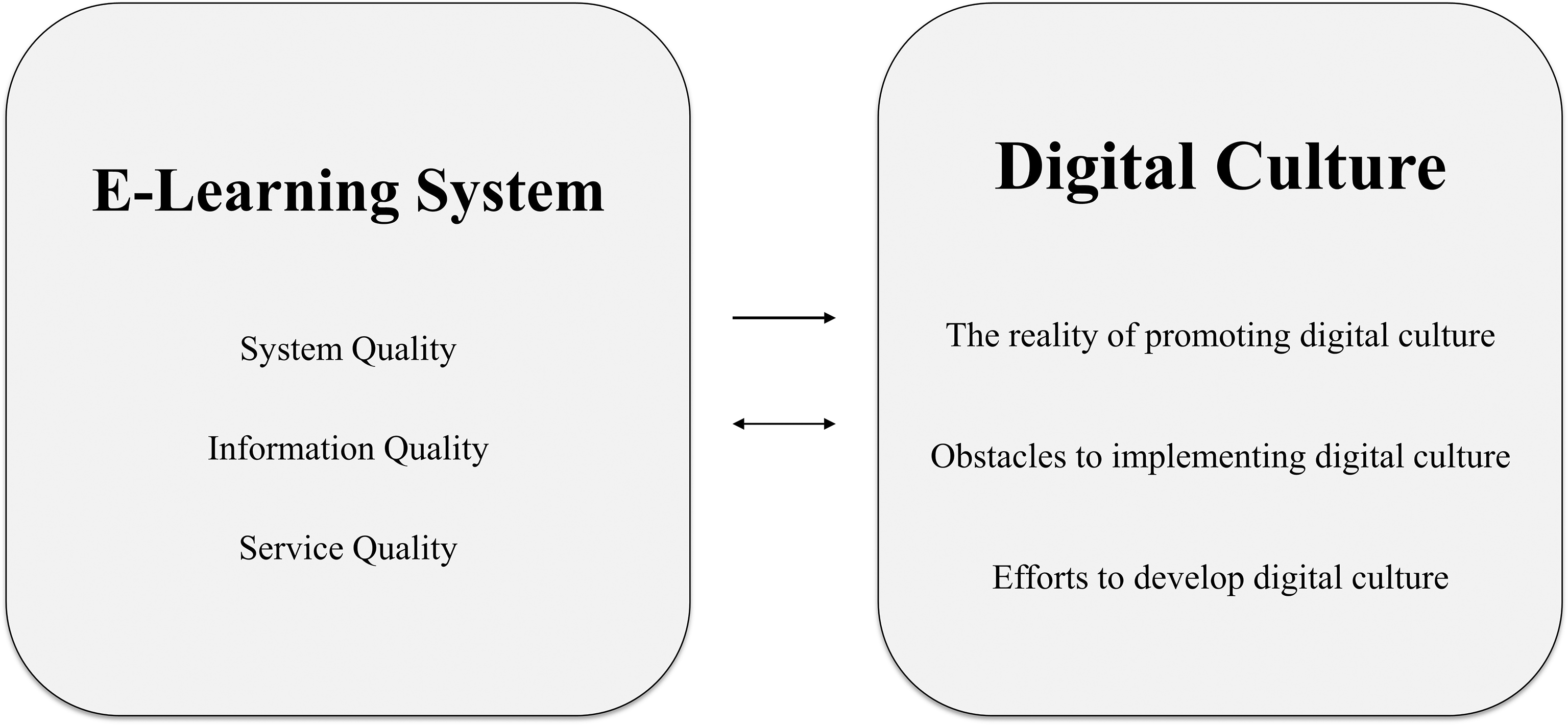
The hypothetical Diagram for the current research illustrates an image embodying an idea through which we attempt to understand the nature of the relationship between the independent and dependent variables in terms of influence and correlation. Hence, the independent variable (e-learning system) consists of the dimensions (system quality, information quality, service quality), while the dependent variable (digital culture) consists of the dimensions (the reality of promoting digital culture, obstacles to implementing digital culture, and efforts to develop digital culture). Figure 1 below illustrates the hypothetical research plan and the main research hypotheses were as follows:
The first main hypothesis (H0): There is no statistically significant correlation between the e-learning system in its dimensions (system quality, information quality, service quality) and digital culture at the University of Fallujah.
From this hypothesis, the following sub-hypotheses emerge:
- First sub-hypothesis (H0): There is no statistically significant correlation between system quality dimension and digital culture at the University of Fallujah.
- Second sub-hypothesis (H0): There is no statistically significant correlation between Information quality dimension and digital culture at the University of Fallujah.
- Third sub-hypothesis(H0): There is no statistically significant correlation between the Service Quality dimension and digital culture at the University of Fallujah.
The second main hypothesis (H0): There is no statistically significant impact of the e-learning system in its dimensions (system quality, information quality, service quality) and digital culture at the University of Fallujah.
From this hypothesis, the following sub-hypotheses emerge:
- First sub-hypothesis (H0): There is no statistically significant impact between system quality dimension and digital culture at the University of Fallujah.
- Second sub-hypothesis (H0): There is no statistically significant impact between the Information quality dimension and digital culture at the University of Fallujah.
- Third sub-hypothesis(H0): There is no statistically significant impact between the Service Quality dimension and digital culture at the University of Fallujah.
Measuring reliability is one of the most important statistical measures in management sciences. Cronbach’s Alpha was developed by Lee Cronbach in 1951 to provide a measure of internal consistency for statistical tests, expressed mathematically as a number between 0 and 1 (Tavakol & Dennick, 2011:53). Today, the measure is one of the most prominent and widely used reliable measures in the field of social and organizational sciences (Bonett & Wright, 2014:1). From what is stated in Table 2 Regarding measuring the stability coefficient of the research variables, it became clear to us that the stability coefficient of the research variables (the e-learning system and the digital culture) reached 95.7, and this value is very high from a statistical point of view, as it is much higher than the average. This indicates that the research variables have successfully passed the overall stability test. Regarding the research variables separately, the independent variable (the e-learning system) achieved a stability coefficient of 96.1, while the dependent variable (the e-culture) achieved a stability coefficient of 89.1. This indicates that the research variables have successfully passed the stability test from a statistical point of view.
From Table 3, the explanatory variable (E-learning System), which was measured through three main dimensions (system quality, information quality, and service quality), achieved good and high results overall. Its arithmetic mean value reached 3.51, which is a relatively high value, statistically speaking, as it is higher than the hypothetical mean value of 3. The standard deviation of the variable reached 0.95, while the coefficient of variation for the variable’s responses was 27.29, and the relative importance value overall reached 70.29. From the values in the table referred to above, it is clear to us the extent of the research sample members’ interest in the e-Learning System variable at the University, as it reflects the future vision that the university seeks to achieve in the near term. This was reflected in their responses to all the questionnaire items.
Regarding the dimensions of the variable, the second dimension (information quality) achieved a weighted arithmetic mean of 3.61, which is the highest among the average values of this variable. This value is statistically good, as it is higher than the hypothetical mean of 3. The standard deviation value of the dimension reached 0.87, and this value is the lowest value of deviation at the level of dimensions for this variable, meaning that it reflects a kind of homogeneity in the answers among the individuals of the researched sample. The coefficient of variation value reached 24.29, while the relative importance value of this dimension reached 72.23. The first dimension (system quality) came in second place in terms of arrangement, as it achieved a weighted arithmetic mean of 3.45, and this is a relatively medium to high value from a statistical point of view, as it is higher than the hypothetical mean value of 3. The standard deviation value reached 1.04, and this value is greater than one, while the coefficient of variation value reached 30.39, and the relative importance reached 69.16, which indicates that There is a general lack of homogeneity, as the topic of infrastructure is a relative matter determined by the implementation of specific projects for each college or department in the university. After (quality of service), it came in last place, as it achieved an overall average arithmetic mean value of (3.37), and the standard deviation of the dimension was (0.94), while the value of the coefficient of variation was (27.15) and the value of relative importance was (69.32), which indicates that the individuals of the researched sample at the university have a great deal of knowledge and awareness of the importance of training and technical support and its positive results in enhancing digital culture in general. This was observed by the researchers during their study, as many Professors made efforts to develop their skills by participating in workshops and training courses aimed at enhancing their digital culture inside the university.
The numbers in Table 4 show that the dependent variable (digital culture), which was measured through three main dimensions (enhancing the reality of digital culture, obstacles to implementing digital culture, and efforts to develop digital culture), achieved a weighted arithmetic mean of 3.54. This value is average and statistically good, as it is slightly higher than the average and higher than the hypothetical arithmetic mean of 3. The standard deviation of the variable was generally around 0.9, and this value indicates a low level of dispersion with the answers provided by the sample members subject to the research. The coefficient of variation for the respondents’ answers recorded a value of 25.61, while the relative importance of this variable reached approximately 70.87. These results, in general, indicate the presence of a lack of complete agreement among the sample members regarding the importance of digital culture. This is normal for college instructors, given that the subject of digital culture is still new to most of them, in addition to the fact that some colleges have a more traditional character. It is not a scientific specialty, as it is in the humanities, so the topic of digital culture is not of utmost importance to them.
As for the level of dimensions, it became clear to us through Table 4 that the first dimension (enhancing the reality of digital culture) achieved a weighted arithmetic mean of 3.69, and this value is good from a statistical point of view, as it is considered somewhat high from a statistical point of view, as it is higher than the hypothetical statistical mean, while the value of the standard deviation reached 0.9, and this value shows the presence of a kind of homogeneity in the answers of the sample members, the subject of the research, on the importance of this dimension, while the value of the coefficient of variation reached 25.61 in the dimension record, a relative importance of 70.87, while after (efforts to develop digital culture) came in second place in terms of arrangement, as it achieved a weighted arithmetic mean of 3.62, while the value of the standard deviation of the dimension was 0.91, and this value shows the presence of a kind of medium heterogeneity in the answers of the sample members, the subject of the research, while the value of the coefficient of variation reached 25.62, while the relative importance of the dimension reached a value of 72.32, and the second dimension (obstacles to applying digital culture) came in last place in terms of arrangement, as it achieved a statistically weighted arithmetic mean of 3.3 and this value is medium and somewhat low as it is close to the hypothetical mean and it reflects the extent of variation among sample members in their answers to the paragraphs of this dimension and their general agreement on the obstacles to applying digital culture, and this is a natural matter due to the lack of full application of digital culture by university lecturers, which made them uncertain about the extent of the existence of obstacles to digital culture or not, and with regard to the standard deviation of the dimension, its value reached 0.93 while the coefficient of variation recorded a value of 28.4 while the relative importance of the dimension reached 70.87. These results demonstrate the existence of a kind of lack of clarity by the sample members subject to the research regarding the dimension of obstacles to applying digital culture, as it reflects the external images that the university draws in the minds of those dealing with it in general, from lecturers, employees and students.
In this section of the research, we will examine the testing and interpretation of the hypotheses of association and influence between the two research variables (e-learning system) and its dimensions (system quality, information quality, service quality) and (digital culture) and its dimensions (the reality of promoting digital culture, obstacles to implementing digital culture, and efforts to develop digital culture). This will be achieved by analysing the data for these two variables using the statistical analysis program (SPSS) and a set of statistical tools, as follows:
A- Testing the main and sub-hypotheses of the research:
The first main hypothesis assumed that there is no statistically significant direct correlation between e-learning in its dimensions (infrastructure, training and technical support, procedures and strategies) and digital culture at the University of Fallujah.
Upon closer examination of Tables 4 and 5, it becomes clear to us that the dimensions of the independent variable (e-learning system) achieved significant statistical correlations with the dependent variable (digital culture), as all of these relationships were high and at a statistical significance level of 0.000, as the dimension (information quality) achieved the highest direct correlation with the variable (digital culture), with a value of 0.836** at a significance level of 0.000, while the dimension (service quality) came in second place in terms of ranking, as it achieved a significant correlation of 0.768** at a significance level of 0.000, while the dimension (system quality) came in last place, as it achieved a significant correlation of 0.672** at a significance level of 0.000. The correlation of these dimensions ranged from a strong direct relationship to a very strong relationship, and these results indicate the presence of a noticeable interest by the professors of the University of Fallujah in the dimensions of the e-learning system due to its major role in enhancing the digital culture of the university as a whole, and this is what This has had a positive impact on their overall performance through their tireless and continuous work to achieve a general digital culture, thus providing the best educational services to students.
A-1- Testing the Main Hypothesis of the Research:
By examining the figures in Table 5, we find that the independent variable (E-learning system) achieved a strong, significant correlation with the dependent variable (digital culture) at the general level. This relationship was at a statistical significance level of 0.000. This is a statistically strong relationship, as it reflects the extent of university professors’ interest in the two research variables. The correlation coefficient between the two variables reached 0.809**, a very strong direct relationship at a significance level of 0.000. Based on the data provided in the table above for the two research variables at the overall level, we reject the first main research hypothesis and accept the alternative hypothesis, which states:
The first main alternative hypothesis of the research: There is a statistically significant direct correlation between the e-learning system, with its dimensions (system quality, information quality, service quality), and digital culture at the University of Fallujah.
B- Testing the Main Hypothesis of Research Impact:
The simple linear regression test for research variables is one of the important statistical tests that aims to determine the type of influence relationship between the two research variables using a set of statistical methods to obtain reliable results for constructing scientific conclusions for the research, which serve as a basis for accepting or rejecting the hypotheses. In this research, we explain in detail the influence relationship between the two research variables, primarily with reference to the relationship between the dimensions of the explanatory variable (E-learning system) and the dependent variable (digital culture), as shown in Table 6. This is based on the results of the SPSS statistical program, as follows:
B-1- The second main hypothesis:
There is no statistically significant direct relationship between the e-learning system and its dimensions (system quality, information quality, service quality) and digital culture at the University of Fallujah.
Tables 5 and 6 shows that the calculated F value for the e-learning system variable is 79.662, which is statistically greater than the tabular F value at the 0.01 significance level. This indicates a statistically significant impact of the e-learning system variable on enhancing digital culture at the University of Fallujah. In other words, any change in the e-learning system variable will result in a clear and noticeable change in digital culture, as shown in the following linear regression equation:
The coefficient of determination Adjusted ( ) also reached 0.647. This value indicates that the e-learning system variable explains 65.5% of the digital culture variable. The value of (β) resulting from the statistical analysis reached approximately (β = 0.624), meaning that any change in the e-learning variable by one unit will lead to a change in digital culture by 62.4%. This percentage is statistically high.
Based on the results of the statistical analysis above, we reject the research hypothesis and accept the alternative hypothesis, which states:
The second main alternative hypothesis of the research: There is a statistically significant direct relationship between the e-learning system and its dimensions (system quality, information quality, service quality) and digital culture at the University of Fallujah.
The results obtained from the statistical analysis reveal that the e-learning system is an effective and influential means of promoting digital culture at the university in general, as it fosters critical thinking and innovation in the workplace. and This is what the researchers observed during their visits and their review of the mechanisms used by the university administration to promote digital culture. The results of the statistical analysis of the sample also showed that the university administration relies heavily on the quality of information in its work to enhance digital culture, more so than other elements such as system quality and service quality. Therefore, it is necessary to focus more attention on the information it receives, as it is the foundation upon which the remaining elements of the university’s digital transformation are built. Without accurate and reliable information, the university’s operations will remain weak, significantly impacting the achievement of its goals. The results also revealed a weakness in the quality of its system. Therefore, its administrations must work harder to enhance their electronic systems. This will contribute to developing the skills of its teaching and administrative staff in the short term, which will later be reflected in significantly enhancing educational skills. The higher the skills of the teaching staff, the more positively this reflects on their work. From what has been mentioned, e-learning systems play a significant and influential role in enhancing digital culture within the university, which in turn is positively reflected in the performance of their duties through the adoption of a new, unconventional culture that translates into better work performance.
This study analyses the relationship between the e-learning system and digital culture at the University of Fallujah. Based on the university’s perceptions of the e-learning approach, the level of digital culture within it will be determined, as well as the extent to which the university leadership will play a role in promoting digital culture to reach the desired level. The results obtained reveal that the university relies more heavily on the quality of information it possesses to enhance its digital culture. This is natural, as every transformation process the university undergoes requires valuable information to build and enhance its own digital culture. This reduces or even eliminates resistance from faculty and staff, as well as reduces student dissatisfaction due to their reliance on traditional educational methods from an early age. The more rapidly the university’s staff accepts this culture, the better its ability to achieve its goals. This will, in turn, positively impact how they accomplish their educational objectives, further enhancing digital culture within the university and making it a necessity and an essential part of its work. The university administration also relies on the quality of service as a second priority to enhance its digital culture. This is achieved by relying more heavily on the digital and technological means available to it to accomplish its work, in addition to converting a portion of its traditional work to electronic work to further enhance the digital culture. To implement this correctly, the university’s senior management is developing a series of ongoing training and development programs for its staff to master the work that will be implemented digitally more quickly and to reduce the resistance to change that some fear. Therefore, by providing ongoing digital training programs, the university administration has been able to transfer a large portion of its traditional work to an electronic format, in addition to creating digital platforms for students to define the specific tasks and responsibilities of everyone within the university. The quality of the university’s system came in last in the ranking, which is natural and in line with the reality of the university and confirms the validity of the answers obtained from the sample members, as the university is still in its early stages of development in terms of technology and work is still underway to enhance its digital and electronic process to achieve an integrated educational system. Therefore, the system currently being relied upon is still incomplete, and we hope that work on it will be completed soon.
Based on the research findings, the researchers recommend that the university’s senior management focus more on enhancing the quality of available information, as this is the foundation upon which the university cultivates a sound digital culture. This, in turn, reduces negative reactions to the information provided. Furthermore, the university administration must improve the quality of its services, even though they are currently acceptable. Continuous development is essential to ensure they are at least the best compared to other universities in the educational sector. Moreover, the statistical analysis revealed that while service quality was acceptable to respondents, it ranked last among the various dimensions. Therefore, the university administration must work harder to improve the quality of its educational services, as the current services do not meet the aspirations of those who benefit from them. This poses a future obstacle to achieving its goals. To accomplish this, the university should develop an integrated electronic system across all colleges and departments to reduce the time and effort required to complete tasks more accurately and quickly. The researchers also believe that it is necessary for the university administration to urge researchers to conduct further research that demonstrates their role in promoting digital culture within their university, to show the extent of the impact they contribute to promoting this culture. This can be done by adding leadership as an independent variable with the study variables, while making the e-learning system an intermediary variable.
Approval was obtained from the Scientific Research Ethics Committee at the College of Administration and Economics, University of Fallujah. Subsequently, the approval was submitted to the Department of Scientific Affairs at the Presidency of the University of Fallujah, granted to conduct the study at the University of Fallujah.
Below is the license issued by the Department of Scientific Affairs at the Presidency of the University of Fallujah.
UOF. HUM.2025.001
According to the requirements of the study, and given that there were two researchers working as professors at the same university, this allowed them the opportunity to meet and obtain prior permission from the members of the research sample verbally to answer the questionnaire items after obtaining the approval of the higher administration to conduct the research in general. Given the scientific qualifications and higher degrees of the members of the research sample, obtaining informed consent is not necessary in this case as there are no minors among them. Therefore, no request was submitted to obtain written approval from the higher authorities for the purpose of answering the questionnaire.
| Views | Downloads | |
|---|---|---|
| F1000Research | - | - |
|
PubMed Central
Data from PMC are received and updated monthly.
|
- | - |
Provide sufficient details of any financial or non-financial competing interests to enable users to assess whether your comments might lead a reasonable person to question your impartiality. Consider the following examples, but note that this is not an exhaustive list:
Sign up for content alerts and receive a weekly or monthly email with all newly published articles
Already registered? Sign in
The email address should be the one you originally registered with F1000.
You registered with F1000 via Google, so we cannot reset your password.
To sign in, please click here.
If you still need help with your Google account password, please click here.
You registered with F1000 via Facebook, so we cannot reset your password.
To sign in, please click here.
If you still need help with your Facebook account password, please click here.
If your email address is registered with us, we will email you instructions to reset your password.
If you think you should have received this email but it has not arrived, please check your spam filters and/or contact for further assistance.

Comments on this article Comments (0)