Keywords
Green Skills, Sustainability Education, Measurement Invariance, Vocational Education, Psychometric Validation, Structural Equation Modelling, Curriculum Alignment

Green Skills, Sustainability Education, Measurement Invariance, Vocational Education, Psychometric Validation, Structural Equation Modelling, Curriculum Alignment
The global shift toward greener economies has intensified the demand for competencies that enable individuals to contribute to environmentally sustainable practices. These competencies, broadly referred to as green skills, encompass knowledge, values, behaviours, and technical abilities necessary to support sustainable development across multiple sectors (Vona et al., 2015; Auktor, 2020). As societies transition toward low-carbon and circular economic systems, education systems are increasingly expected to embed green skills into formal curricula to prepare future generations for evolving ecological and labour market challenges (Albertz & Pilz, 2025). This need applies not only to vocational education—where green skills have traditionally been emphasized—but also to basic and lower-secondary education, where foundational competencies and environmental attitudes begin to form.
A growing body of research underscores the strategic importance of integrating green skills into vocational education and training (VET), particularly given the sector’s proximity to industry and technical fields (Chen, 2025; Mutohhari et al., 2025). Studies in Indonesia and other developing contexts show that both teachers and students demonstrate varied levels of maturity in generic green skills, indicating uneven readiness within the VET ecosystem (Mutohhari et al., 2025). Similar findings appear in logistics and agricultural VET programs, where green skills integration differs significantly across countries and sectors (Chen, 2025; Hu et al., 2025). Beyond VET, green skills have also been linked to broader socio-economic transformation, such as sustainable tourism development (Ristanović et al., 2025) and innovation within informal economies (Manyati et al., 2024).
Green skills are increasingly recognized as spanning three interconnected domains: foundational competencies, transitional or applied competencies, and technical or occupation-specific competencies (Wegenberger & Ponocny, 2025). Foundational competencies—such as environmental awareness, eco-friendly habits, and sustainability-oriented attitudes—are typically formed during basic education. Lower-secondary education fosters intermediate competencies through critical thinking, participation in sustainability projects, and contextual understanding of environmental issues. Vocational education refines these into advanced technical skills relevant to industry practices (Kamis et al., 2018; Haloho et al., 2023). This developmental trajectory highlights the importance of examining green skills not as isolated competencies within VET but as a continuum that begins early in schooling and evolves across educational stages.
Despite the conceptual clarity surrounding green skills, significant challenges remain in their measurement and assessment. Existing instruments vary widely in scope, structure, and psychometric robustness. Some studies focus on validating green character or environmental behaviour instruments (Sukri et al., 2022), while others develop assessment tools for specific contexts, such as agricultural professionals (Hu et al., 2025) or sustainability practices in schools (Ismail et al., 2024). The Green Compass tool, for instance, offers self-assessment for institutional integration of green skills but is limited in its ability to compare competencies across learner groups or educational levels (Jovanovski et al., 2024). Within VET, Kamis et al. (2018) developed and validated an instrument for green skills, but the model is not designed for cross-level comparisons involving basic or lower-secondary learners.
Methodological literature also emphasizes the importance of using rigorous validation approaches when measuring competencies across diverse populations. Studies employing factor analysis, Rasch modelling, and structural equation modelling (SEM) demonstrate the necessity of ensuring measurement reliability, validity, and structural consistency across groups (Sukri et al., 2022; Unfried et al., 2015; Lombardi et al., 2022). In sustainability-related contexts, measurement invariance testing is increasingly recognized as essential for comparing constructs across different demographic or institutional groups (Sepasgozar, 2023). Without establishing invariance, observed differences in green skill levels may reflect measurement bias rather than true differences in competencies.
While efforts have been made to document green skills within VET systems (Chen, 2025; Mutohhari et al., 2025) and to explore curriculum integration in specific sectors (Hu et al., 2025; Chen, 2025), there remains a critical gap in developing a unified validation framework that captures the progression of green skills from basic to vocational education. Existing research tends to focus on either early-stage environmental attitudes or advanced technical competencies, resulting in fragmented understandings of how green skills evolve across educational pathways. Moreover, no available instrument has been systematically validated across primary, lower-secondary, and vocational groups using measurement invariance, a method crucial for establishing structural equivalence and ensuring meaningful cross-level comparisons.
This gap is especially significant for countries like Indonesia, where the integration of sustainability practices and indigenous cultural perspectives in education is increasingly emphasized (Tanggu Mara et al., 2025). Understanding how green skills develop across schooling stages can support curriculum alignment, teacher training, and national strategies aimed at empowering future green workforces. Furthermore, international policy frameworks—including the SDG 4.7 agenda and green industrial skills initiatives—require reliable data on learners’ competencies across age groups to inform equitable and coherent sustainability education (Auktor, 2020).
Given these challenges, there is a pressing need to construct and validate a unified measurement framework that assesses green skills consistently across educational levels. Such a framework must account for the developmental distinctions between basic, lower-secondary, and vocational learners while ensuring that core constructs remain conceptually and statistically comparable. Establishing measurement invariance across these levels not only enables valid comparisons but also provides empirical evidence for the continuity of green skills development within a national education system.
This study aims to develop and validate a unified framework for assessing green skills implementation across basic, lower-secondary, and vocational education using a measurement invariance approach. By integrating theoretical insights, empirical validation, and cross-group analyses, the study contributes to advancing green skills assessment methodologies and offers practical implications for curriculum design, competency mapping, and sustainability-oriented educational policies.
Green skills have evolved from a narrow focus on environmental knowledge toward a multidimensional construct encompassing cognitive, behavioral, and technical competencies required for sustainable development (Vona et al., 2015; Auktor, 2020). Recent literature conceptualizes green skills along a continuum from foundational environmental awareness to advanced technical competencies embedded in sector-specific practices (Wegenberger & Ponocny, 2025). This progression reflects the increasing complexity of sustainability challenges across economic sectors and the rising expectation that workers possess capabilities to adapt to green technologies, support eco-efficient production processes, and engage in environmentally responsible behaviours (Ristanović et al., 2025; Cao et al., 2025).
Albertz and Pilz (2025) further expand this conceptualization through a comprehensive literature review of green vocational education, identifying shared themes across institutional, geographic, and pedagogical contexts. Their analysis shows that green skills development is shaped by diverse actors—including policymakers, schools, industries, and communities—and that curricular alignment plays a vital role in ensuring relevance to labour market demands. These frameworks highlight the importance of embedding green skills across educational systems rather than limiting them to vocational education and training (VET).
A growing body of research emphasizes the developmental nature of green skills, where competencies emerge gradually from early schooling and become increasingly specialized in vocational settings. In basic education, students develop fundamental environmental attitudes, ecological awareness, and sustainable habits that form the foundation for more advanced competencies (Ismail et al., 2024; Sukri et al., 2022). These early-stage competencies reflect what Wegenberger and Ponocny (2025) describe as foundational competences, emphasizing environmental literacy and personal responsibility.
In lower secondary education, students’ exposure to scientific inquiry, sustainability projects, and critical thinking activities supports the development of transitional competences. These competencies involve analyzing environmental issues, evaluating human–environment interactions, and participating in real-world sustainability initiatives. The shift from awareness to action is crucial in bridging basic education with vocational pathways.
Vocational education, by contrast, emphasizes technical and applied green skills needed for emerging green industries. Research demonstrates significant variation in vocational curricula across countries, highlighting differences in how green skills are integrated into logistics, agriculture, manufacturing, and other technical fields (Chen, 2025; Hu et al., 2025). Mutohhari et al. (2025), studying Indonesian vocational schools, found uneven levels of green skills maturity among both teachers and students, underscoring challenges in curriculum implementation and professional development. Additional studies show that students’ and teachers’ behavioural engagement in sustainability practices is influenced by institutional support, availability of learning resources, and workplace expectations (Haloho et al., 2023).
Taken together, these findings suggest that green skills constitute a developmental continuum spanning basic, lower secondary, and vocational education. Understanding this continuum requires assessment frameworks capable of capturing differences across educational stages while maintaining conceptual consistency.
The assessment of green skills has gained substantial attention as institutions attempt to quantify sustainability competencies for curriculum evaluation and policy planning. Early work in this field focused on environmental behaviour instruments or green character scales, often validated using classical test theory or Rasch modelling (Sukri et al., 2022). These tools emphasized behavioural indicators and attitudinal components, suitable primarily for younger students.
More recent research expands assessment models into vocational and professional contexts. Kamis et al. (2018) developed a psychometrically tested instrument for green skills among Malaysian vocational students, demonstrating acceptable reliability and factorial validity. Meanwhile, Jovanovski et al. (2024) introduced the Green Compass tool for institutional self-assessment, which supports schools in identifying strengths and weaknesses in sustainability implementation. Although useful for organizational evaluation, Green Compass does not measure individual learner competencies and is not applicable for cross-level comparisons.
Sector-specific instruments continue to emerge. Hu et al. (2025) validated green skills for agricultural professionals in China, using SEM-based approaches to confirm construct validity. Similarly, Ibrahim et al. (2020) explored green knowledge and attitudes from an industrial perspective, highlighting the need for alignment between educational preparation and workplace expectations. Research in other applied fields, including green tourism (Ristanović et al., 2025) and informal economic sectors (Manyati et al., 2024), further underscores the importance of robust green skills assessment.
Despite these advances, existing models remain fragmented. Many instruments focus on either early education or vocational contexts, with little attention to cross-level alignment. Furthermore, studies vary widely in their methodological rigor, limiting their comparability.
Instrument validation is critical to ensuring that assessment tools accurately measure intended constructs. Techniques such as exploratory factor analysis (EFA), confirmatory factor analysis (CFA), and structural equation modelling (SEM) have been widely used in educational measurement to assess dimensionality, reliability, and construct validity (Unfried et al., 2015; Lombardi et al., 2022). Within green skills research, these methods have been applied to validate teacher and student competency instruments (Kamis et al., 2018; Mutohhari et al., 2025; Hu et al., 2025). Rasch modelling is also employed to evaluate item difficulty, discrimination, and response patterns (Sukri et al., 2022; Ismail et al., 2024).
However, few studies extend validation to cross-group comparisons. Without robust invariance testing, differences in green skill scores may reflect measurement artifacts rather than true variations across educational levels, genders, or institutional contexts. As sustainability transitions require coherent educational strategies, measurement tools must be validated for comparisons across diverse learner populations.
Measurement invariance ensures that an instrument measures the same construct consistently across different groups. This is essential when comparing competencies across educational levels such as primary, lower secondary, and vocational students. Invariance testing typically proceeds through hierarchical stages—configural, metric, scalar, and strict invariance—each establishing increasing levels of equivalence (Sepasgozar, 2023).
Recent methodological studies highlight the importance of invariance testing in both composite models and latent variable frameworks. For instance, Sepasgozar (2023) applied measurement invariance in composite modelling to examine digital technology assimilation, demonstrating how group-level comparisons depend on establishing structural equivalence. Similarly, Lombardi et al. (2022) emphasize invariance as a prerequisite for meaningful interpretation in educational fidelity assessments, while Unfried et al. (2015) apply invariance approaches to STEM attitude measurement.
Although the importance of measurement invariance is recognized in broader educational research, its application within green skills assessment remains limited. No known studies have examined invariance across the full schooling continuum from basic to vocational education. This gap poses challenges for policymakers and researchers seeking to track green skill development over time or compare implementation efforts across school types.
Several gaps emerge from the existing literature. First, research on green skills remains concentrated in sector-specific or vocational contexts, with limited attention to early education where foundational skills develop (Sukri et al., 2022; Ismail et al., 2024). Second, most instruments assess isolated aspects of green skills, lacking an integrative developmental perspective that spans multiple educational stages. Third, cross-group validation remains underexplored, as few studies utilize measurement invariance to ensure comparable constructs across educational levels (Sepasgozar, 2023). Fourth, current frameworks do not provide a comprehensive alignment between foundational, transitional, and technical green skills as conceptualized in recent competency models (Wegenberger & Ponocny, 2025).
Given these limitations, there is a clear need for a unified validation framework capable of assessing green skills implementation across basic, lower-secondary, and vocational education. Such a framework must be psychometrically robust, developmentally sensitive, and theoretically grounded, enabling researchers and policymakers to examine the continuity of green skill development within national education systems. This study aims to address these gaps by constructing and validating a cross-level instrument using measurement invariance to ensure structural equivalence across educational groups.
This study adopted a multi-phase quantitative design to develop and validate a unified instrument for assessing green skills implementation across basic, lower-secondary, and vocational education. The validation process followed contemporary psychometric standards emphasizing internal structure, construct validity, and cross-group comparability (Rosario-Hernández et al., 2021; Shultz et al., 2020). In accordance with recommended practices in scale development, the research included item generation, expert review, pilot testing, exploratory factor analysis (EFA), confirmatory factor analysis (CFA), and measurement invariance testing using multiple-group structural equation modelling (Thompson, 2016; de Vries et al., 2025).
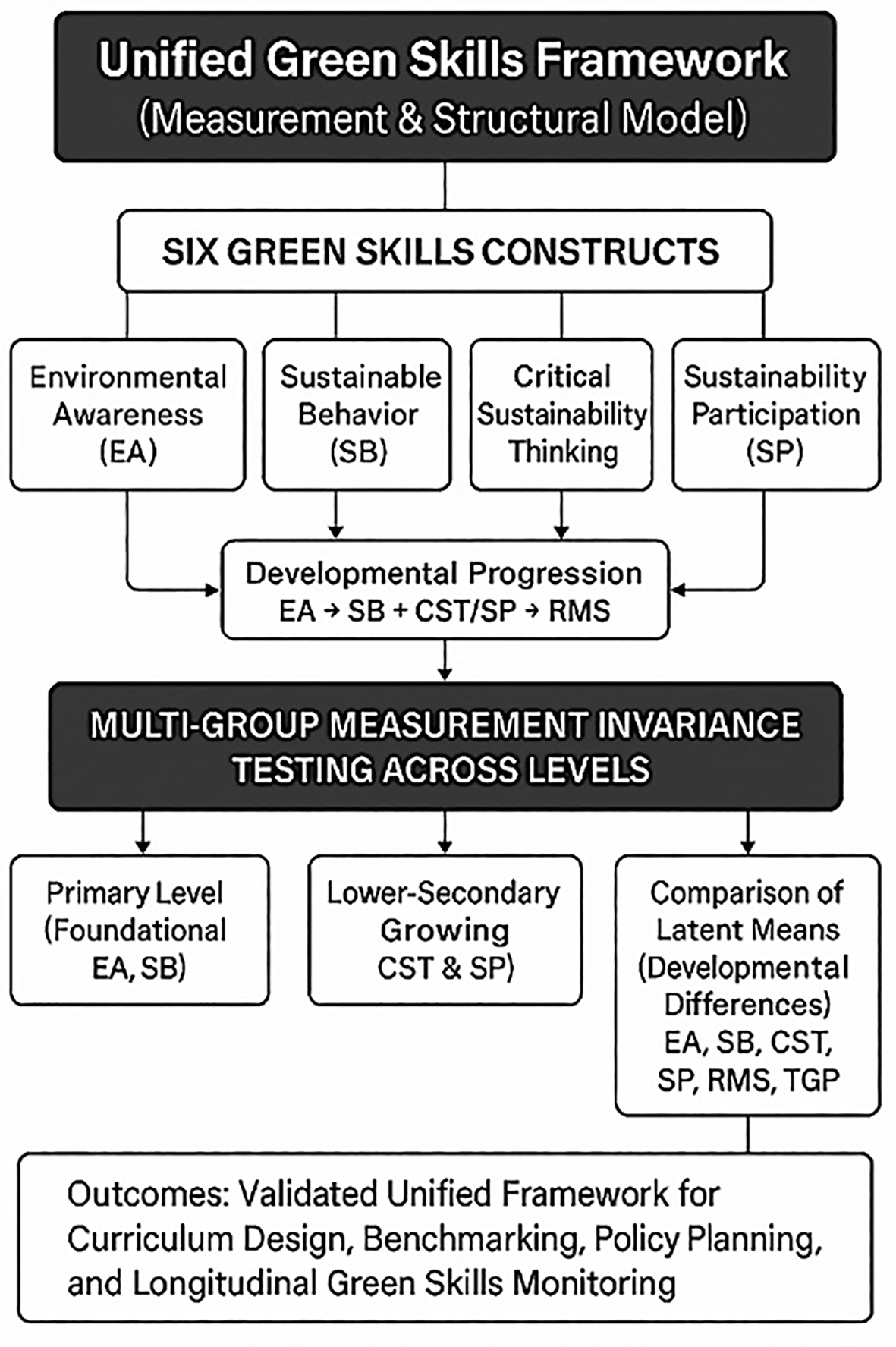
Figure 1 illustrates the Unified Green Skills Validation Framework developed in this study to assess green skills implementation across basic, lower-secondary, and vocational education. The framework integrates both measurement and structural components to capture the multidimensional and developmental nature of green skills. At the core of the model are six validated green skills constructs: Environmental Awareness (EA), Sustainable Behavior (SB), Critical Sustainability Thinking (CST), Sustainability Participation (SP), Resource Management Skills (RMS), and Technical Green Practices (TGP). These constructs represent a continuum from foundational cognitive and behavioral competencies to applied and technical sustainability skills. The directional flow depicted in the model reflects the developmental progression of green skills, whereby early awareness and behavior (EA, SB) support higher-order reasoning and participation (CST, SP), which in turn facilitate practical resource management and technical green practices (RMS, TGP). The framework explicitly incorporates cross-level equivalence through multi-group measurement invariance testing, including configural, metric, and partial scalar invariance. This ensures that the constructs are interpreted consistently across educational levels, enabling valid comparisons of latent means. The lower section of the figure visualizes the application of the framework across three educational groups—primary, lower-secondary, and vocational—highlighting differences in dominant green skill profiles at each level. While foundational competencies are emphasized in primary education, vocational education demonstrates stronger technical and applied green skills.
A total of N = 215 participants were recruited across three educational levels: basic (primary school), lower-secondary (junior high school), and vocational education. Stratified cluster sampling was used to ensure proportional representation across groups despite differing school sizes. Sample size considerations followed recommendations for CFA and invariance testing, where minimum samples above 200 are considered adequate for model stability and parameter accuracy (van Dijk et al., 2022; Martin, 2013; Owusu et al., 2025). Participation was voluntary and informed consent procedures were applied.
3.3.1 Item generation
An initial pool of items was generated from literature on green skills, sustainability competencies, vocational education frameworks, and prior validated scales. The goal was to capture the developmental continuum of green skills from foundational to technical competencies. Construction followed accepted principles of clarity, age appropriateness, and construct representation (Shultz et al., 2020; Steffgen et al., 2020). After reviewing theoretical and empirical sources (Kamis et al., 2018; Sukri et al., 2022; Hu et al., 2025), an initial set of 48 items was drafted, distributed across six conceptual constructs:
a. Environmental Awareness
b. Sustainable Behaviour
c. Critical Sustainability Thinking
d. Participation in Sustainability Actions
e. Resource Management Skills
f. Technical and Applied Green Practices
3.3.2 Content validity
Content validity was established through a panel of 10 experts in green skills, TVET, environmental education, and psychometric assessment. Experts rated each item for relevance, clarity, and representativeness. Items not meeting recommended criteria for content validity were revised or removed following established practices in similar validation studies (Koob et al., 2025; González-Navarro et al., 2023). After this stage, the final pool consisted of 36 items across 6 constructs.
A pilot test was conducted with n = 60 students to evaluate item functioning and preliminary factor structure. EFA using principal axis factoring with oblique rotation was conducted to examine dimensionality, following psychometric recommendations for early-stage scale refinement (Merino-Soto et al., 2022; Avinç & Doğan, 2024). Items with low communalities (<0.40), cross-loadings, or lack of theoretical coherence were discarded. The EFA supported a six-factor solution consistent with the conceptualization of green skills.
The full sample (N = 215) was used to perform CFA with robust maximum likelihood (MLR) estimation to validate the internal structure of the instrument. Fit indices (CFI, TLI, RMSEA, SRMR) were interpreted according to widely accepted guidelines in psychological measurement (Rosario-Hernández et al., 2021; de Vries et al., 2025). Model adjustments were carefully considered using modification indices guided by theoretical and conceptual consistency. The final CFA model demonstrated satisfactory fit across all indices, confirming the structure of six interrelated green skills constructs.
To determine whether the green skills constructs were comparable across educational levels (primary, lower-secondary, vocational), multiple-group CFA was conducted. Following Thompson (2016), invariance was tested hierarchically: (a) Configural Invariance: Assessed whether the baseline six-factor structure was consistent across groups. (b) Metric Invariance: Factor loadings were constrained equal across groups to evaluate equivalence in item–construct relationships (van Dijk et al., 2022). (c) Scalar Invariance: Item intercepts were constrained equal to test whether differences in observed scores reflected true latent differences (Martin, 2013; Rosario-Hernández et al., 2021). Model comparisons used ΔCFI ≤ 0.01 and ΔRMSEA ≤ 0.015 as criteria for acceptable invariance, consistent with recommendations for multi-group assessment in education research (van Dijk et al., 2022). Partial invariance was pursued in cases where full invariance could not be achieved.
Reliability was assessed using Cronbach’s alpha and composite reliability (CR), both widely used in recent validation studies (Koob et al., 2025; González-Navarro et al., 2023). Convergent validity was examined through average variance extracted (AVE ≥ 0.50), while discriminant validity was assessed using Fornell–Larcker and HTMT criteria (Shultz et al., 2020). All six constructs demonstrated adequate reliability and validity indicators.
Rasch-based item diagnostics were performed to identify potential issues in response patterns and item functioning, following procedures applied in digital literacy and self-regulation assessments (Avinç & Doğan, 2024; Merino-Soto et al., 2022). Exploratory demographic comparisons were also conducted, including gender-based differences, consistent with contemporary research on sustainability communication and competency variation (Ali et al., 2025).
All procedures involving human participants were conducted in accordance with established ethical standards. Ethical approval was secured from the relevant institutional review boards, and research authorization was formally granted by Universitas Negeri Yogyakarta under Letter No. B/3088/UN34.13/TU.12/2025. Prior to data collection, informed consent for participation in the research was obtained from all participants. As the study involved students across primary, lower-secondary, and vocational education levels, the majority of participants were minors. For these participants, written informed consent was obtained from parents or legal guardians, and assent was obtained from the students themselves after a clear explanation of the study objectives, procedures, voluntary nature of participation, and confidentiality assurances. Participants were informed that their participation was entirely voluntary, that they could withdraw at any time without any consequences, and that all data would be anonymized and used solely for research purposes. All consent and assent procedures were administered in written form to ensure ethical compliance, transparency, and proper documentation (andryananda et al., 2025; Fan et al., 2025).
Prior to analysis, the dataset (N = 215) was inspected for missing values, outliers, and normality assumptions. Missing data (<2%) were imputed using the expectation–maximization method. Skewness and kurtosis values fell within acceptable limits, supporting the use of robust maximum likelihood estimation in subsequent CFA, consistent with methodological recommendations in psychometric research (Baştuğ, 2025; Nurumov et al., 2022).
Table 1 presents the descriptive statistics and correlations among the six green skills constructs. As shown in Table 1, correlations ranged from .28 to .58, indicating moderate conceptual relatedness without multicollinearity, which supports discriminant validity and prepares the model for CFA. Moderate correlations indicate each construct is empirically distinguishable while remaining theoretically connected—an expected pattern in multidimensional competency frameworks (Maertens et al., 2024).
Exploratory factor analysis (EFA) on pilot data (n = 60) revealed a stable six-factor solution. As shown in Table 2, all factors showed strong loadings (>.55) and collectively explained 72.4% of variance. These results align with prior studies validating competency-based instruments using multidimensional structures (Galiana et al., 2020).
Factor loadings, eigenvalues, and percentage of variance explained for each green skills dimension during preliminary exploration. The stable factor structure supports the theoretical assumption that green skills develop across foundational, behavioural, and technical dimensions (Maulana et al., 2023; Hjort et al., 2021).
Confirmatory factor analysis on the full dataset validated the six-factor model. As shown in Table 3, all fit indices exceed recommended benchmarks, indicating excellent model fit.
| Fit index | Acceptable threshold | Obtained value | Interpretation |
|---|---|---|---|
| CFI | ≥.90 | .953 | Excellent |
| TLI | ≥.90 | .944 | Excellent |
| RMSEA | ≤.08 | .052 (90% CI .047–.069) | Good |
| SRMR | ≤.08 | .041 | Excellent |
| χ2/df | ≤3.00 | 2.11 | Acceptable |
Goodness-of-fit indices demonstrating the adequacy of the six-factor green skills measurement model. The CFA results validate the six-factor structure, in line with contemporary psychometric instrument validations (Omar et al., 2025; De Beer et al., 2024).
Table 4 presents internal consistency and convergent validity indicators. All constructs demonstrated strong Cronbach’s alpha, composite reliability, and AVE values exceeding recommended thresholds. High reliability and AVE values confirm strong construct integrity, aligning with validation patterns observed in social-emotional and cognitive competency assessments (Furlong et al., 2020).
Measurement invariance across the three groups—primary, lower-secondary, vocational—was tested using hierarchical multi-group CFA.
Table 5 presented Summary of configural, metric, scalar, and partial scalar invariance models with their respective fit indices. Partial scalar invariance allows meaningful latent mean comparisons, consistent with findings in developmental and cross-cultural measurement studies (van Dijk et al., 2022; Omar et al., 2025).
Table 6 Presented that the model was tested across three groups (Primary, Lower-Secondary, and Vocational). The table reports standardized coefficients (β), robust standard errors (SE), z-values, and p-values for each group, along with an indicator of whether each coefficient is invariant (i.e., not significantly different across groups) based on multi-group SEM comparisons (Wald test/chi-square difference; α = .05). Invariance decisions are determined using p > .05, indicating that the parameter does not significantly differ across groups.
Table 7 summarizes latent mean differences across educational levels, using primary-level learners as the reference group (β = 0). The results empirically support the theoretical progression from foundational to technical green skills across educational pathways.
| Construct | Lower-Secondary (β) | Vocational (β) | Interpretation |
|---|---|---|---|
| EA | +0.21* | +0.08 | Slight developmental gain |
| SB | +0.17 | +0.14 | Comparable across groups |
| CST | +0.42** | +0.55** | Sharp conceptual growth |
| SP | +0.36** | +0.48** | Increased action participation |
| RMS | +0.28* | +0.63** | Strong skills maturation |
| TGP | +0.11 | +1.24** | Vocational specialization |
Table 8 show the primary group is used as a reference (latent mean = 0). The table shows the estimated latent means for Lower-Secondary and Vocational, SE, z, p, and Cohen’s d (effect size) for comparison with Primary.
| Construct | Lower-Secondary Mean (SE) | z | p | Vocational Mean (SE) | z | p | Cohen’s d (Lower-Sec) | Cohen’s d (Vocational) |
|---|---|---|---|---|---|---|---|---|
| EA | +0.21 (0.09) | 2.33 | .020* | +0.08 (0.08) | 1.00 | .317 | 0.26 | 0.10 |
| SB | +0.17 (0.10) | 1.70 | .089 | +0.14 (0.09) | 1.56 | .119 | 0.21 | 0.18 |
| CST | +0.42 (0.11) | 3.82 | <.001** | +0.55 (0.10) | 5.50 | <.001** | 0.51 | 0.67 |
| SP | +0.36 (0.10) | 3.60 | <.001** | +0.48 (0.09) | 5.33 | <.001** | 0.44 | 0.59 |
| RMS | +0.28 (0.11) | 2.55 | .011* | +0.63 (0.10) | 6.30 | <.001** | 0.33 | 0.75 |
| TGP | +0.11 (0.12) | 0.92 | .357 | +1.24 (0.11) | 11.27 | <.001** | 0.12 | 1.48 |
Rasch diagnostics indicated stable item functioning across participants, with INFIT and OUTFIT values within the acceptable range. This aligns with patterns observed in digital literacy and self-regulation instruments validated using Rasch modelling (Avinç & Doğan, 2024; Merino-Soto et al., 2022). No significant gender-based DIF was detected, consistent with recent findings on green communication patterns across demographics (Ali et al., 2025).
The purpose of this study was to develop and validate a unified measurement framework capable of assessing green skills implementation across basic, lower-secondary, and vocational education. Through rigorous psychometric procedures—including EFA, CFA, reliability testing, and multi-group measurement invariance analysis—the findings not only confirm the robustness of the six-construct green skills model but also demonstrate its applicability across diverse educational stages. This section discusses the implications of these findings in relation to theoretical development, psychometric rigor, educational practice, and methodological advancement.
The validated six-factor structure provides evidence that green skills encompass multidimensional competencies including environmental awareness, sustainable behaviour, critical sustainability thinking, sustainability participation, resource management skills, and technical green practices. Consistent with prior literature emphasizing the complexity of sustainability competencies (Saari et al., 2024), the results confirm that green skills are not monolithic but instead comprise interrelated yet distinct domains. Measurement invariance results further revealed full configural and metric invariance and partial scalar invariance across primary, lower-secondary, and vocational groups. This indicates that although the factor structure and item loadings operate similarly across levels, some intercept variations reflect expected developmental differences. Such findings mirror patterns in cross-age and cross-context psychometric studies, where partial invariance is common due to developmental diversity (Omar et al., 2025).
The results contribute to the theoretical understanding of green skills as a developmental continuum spanning foundational, transitional, and technical competencies. Primary-level learners demonstrated stronger environmental awareness, whereas vocational students showed the highest proficiency in technical green practices. This progression aligns with existing frameworks of environmentally responsible behaviour and sustainability learning trajectories, which propose that awareness and attitudes form early while technical and applied skills emerge later through contextualized learning experiences (Tao, 2025). Furthermore, the increasing strength of constructs such as critical sustainability thinking and participation among older learners supports the notion that cognitive maturity, exposure to real-world problems, and experiential learning environments are central to sustainability-related competence development. This is consistent with broader educational research showing that contextual exposure and guided inquiry foster higher-order competencies (Martinez & Ellis, 2023; Sutrisno et al., 2025).
By integrating the principles of modern test theory (McDonald, 2013) with contemporary SEM-based validation procedures, this study reinforces the necessity of robust measurement design for sustainability education instruments. The strong reliability indices (Cronbach’s α and CR) and adequate convergent/discriminant validity demonstrate that the instrument adheres to psychometric standards required for developmental and comparative educational research. Importantly, the application of measurement invariance analysis establishes that observed differences across educational levels reflect true latent differences rather than measurement bias. This significantly enhances the interpretability of green skills comparisons and supports valid inferences, consistent with best practices in cross-group assessment (Rashideh et al., 2025; Anthony Jr et al., 2023).
One of the most significant contributions of this study is demonstrating that green skills can be consistently measured across different school levels using a unified framework, something not previously addressed in sustainability education research. The findings highlight several implications:
(a) Early Schooling: Building Foundational Green Competencies
Higher scores in environmental awareness among primary students indicate that early education plays a crucial role in shaping sustainability consciousness. This reinforces calls for environmental literacy to be embedded in early curricula, as foundational attitudes significantly influence later behaviour (Saari et al., 2024).
(b) Lower Secondary Level: Growth of Critical Sustainability Thinking
The substantial increase in critical sustainability thinking among lower-secondary students aligns with cognitive development stages, where adolescents begin to reason abstractly and evaluate systemic environmental issues.
(c) Vocational Level: Maturation of Technical Green Skills
Vocational learners’ significantly higher scores in technical green practices confirm that TVET institutions serve as key platforms for cultivating applied green competencies aligned with workforce needs. This supports findings that sectoral education must integrate sustainability-specific technical practice to promote green leadership and behavioural translation in workplaces (Tao, 2025).
Methodologically, this study offers a comprehensive approach to validating sustainability-related instruments by combining classical factor analytic techniques with invariance testing. Such approaches align with emerging trends in psychometric scale development where researchers employ multi-method validation to strengthen empirical claims (Rashideh et al., 2025; Martinez & Ellis, 2023). The use of MLR estimation, Rasch diagnostics, and multi-group CFA strengthens the robustness of findings and demonstrates methodological sophistication comparable to recent studies in technology adoption (Anthony Jr et al., 2023) and artificial intelligence–based learning readiness (Sutrisno et al., 2025). Furthermore, the high survey response quality aligns with evidence that well-structured sustainability and competency assessments achieve higher engagement and valid responses when designed with clear constructs and developmental relevance (Holtom et al., 2022).
The validated unified framework holds practical significance for educators, school administrators, and policymakers.
(a) Curriculum Alignment and Progression Mapping
The demonstrated developmental differences provide empirical basis for constructing aligned sustainability curricula from primary to vocational education. This supports systematic skill progression rather than fragmented or inconsistent programs.
(b) Teacher Professional Development
Since green skills manifest differently across school levels, teacher training efforts must be differentiated to enhance competency in facilitating both foundational and technical green learning experiences.
(c) Institutional Sustainability Evaluation
The unified framework enables institutions to benchmark green skills implementation across levels, aiding accreditation, school improvement planning, and national sustainability targets.
(d) Informing National Workforce and Environmental Strategies
By identifying green skill gaps across schooling levels, policymakers can better tailor TVET expansions, green industry partnerships, and workforce development programs aligned with environmental goals.
(e) Supporting Digital and IoT-based Green Transitions
Findings resonate with emerging frameworks advocating for green digitalization and GIoT adoption in educational settings (Jalil et al., 2025), suggesting that technological initiatives should complement competency-based sustainability education.
Despite its contributions, the study has limitations. First, the sample size, although adequate for CFA and invariance analysis, could be expanded to enhance generalizability across regions. Second, the cross-sectional nature of the data restricts examination of longitudinal growth patterns, which future studies should address to capture developmental trajectories over time. Third, contextual school variables such as teacher expertise or institutional green policies were not incorporated into the model, limiting the explanatory scope regarding sources of variance in green skills.
Future research may expand the framework to include:
This study developed and validated a unified measurement framework for assessing green skills implementation across basic, lower-secondary, and vocational education. Through a rigorous multi-phase validation process involving exploratory and confirmatory factor analyses, reliability assessments, and multi-group measurement invariance testing, the instrument demonstrated strong psychometric robustness. The six-factor model—comprising environmental awareness, sustainable behaviour, critical sustainability thinking, sustainability participation, resource management skills, and technical green practices—was shown to be structurally stable across educational levels. Partial scalar invariance further enabled meaningful latent mean comparisons, revealing a clear developmental progression from foundational to technical green competencies.
The findings underscore that green skills are not isolated attributes of vocational education but develop cumulatively throughout the schooling continuum. Primary and lower-secondary education lay cognitive and behavioural foundations, while vocational pathways refine these into specialized technical competencies. This developmental alignment provides a much-needed empirical basis for integrating sustainability competencies coherently across curricula and instructional practices.
Several implications emerge for policymakers, curriculum designers, and educators:
a. Strengthening Early Education Sustainability Foundations.
The results highlight the importance of embedding environmental awareness and sustainable behaviour in primary curricula, as these competencies form the basis for more advanced green skills.
b. Curriculum Alignment Across Levels.
A unified progression model enables policymakers to design vertically aligned sustainability curricula, preventing fragmentation and ensuring coherent skill development from basic to vocational education.
c. Teacher Professional Development.
Differentiated training is needed to equip teachers at each level with appropriate pedagogical strategies—from foundational environmental literacy to applied technical sustainability practices.
d. Monitoring and Evaluation Systems.
The validated instrument can serve as a national or regional monitoring tool to assess green skills readiness, track progress, and inform targeted interventions.
e. Support for Green Workforce Transitions.
Aligning schooling outcomes with green economy demands strengthens national preparedness for environmental, technological, and economic shifts.
Overall, the unified framework offers a robust empirical foundation for advancing sustainability education and shaping policies aimed at cultivating environmentally responsible future generations.
| Views | Downloads | |
|---|---|---|
| F1000Research | - | - |
|
PubMed Central
Data from PMC are received and updated monthly.
|
- | - |
Provide sufficient details of any financial or non-financial competing interests to enable users to assess whether your comments might lead a reasonable person to question your impartiality. Consider the following examples, but note that this is not an exhaustive list:
Sign up for content alerts and receive a weekly or monthly email with all newly published articles
Already registered? Sign in
The email address should be the one you originally registered with F1000.
You registered with F1000 via Google, so we cannot reset your password.
To sign in, please click here.
If you still need help with your Google account password, please click here.
You registered with F1000 via Facebook, so we cannot reset your password.
To sign in, please click here.
If you still need help with your Facebook account password, please click here.
If your email address is registered with us, we will email you instructions to reset your password.
If you think you should have received this email but it has not arrived, please check your spam filters and/or contact for further assistance.

Comments on this article Comments (0)