Keywords
Digital healthcare, E-leadership, E-Skills, E-Performance, Emerging Economies, Resilient Health Systems, SDG3

This article is included in the AI and Sustainability collection.
Digital healthcare, E-leadership, E-Skills, E-Performance, Emerging Economies, Resilient Health Systems, SDG3
E-performance has become a critical indicator of organisational effectiveness in the post-COVID era, particularly within healthcare systems in emerging economies where digital transformation has accelerated in response to unprecedented challenges.1 The pandemic necessitated rapid adoption of virtual management, telemedicine, and digital communication tools, highlighting the essential role of e-leadership in guiding teams remotely and fostering innovation, as well as the importance of e-skills in enabling employees to effectively utilise digital platforms and technologies.2–4 Organisations that integrate strong e-leadership with high levels of e-skills demonstrate enhanced adaptability, operational efficiency, and service quality, thereby translating digital capabilities into measurable performance outcomes.5,6 However, emerging economies often face structural barriers such as limited digital infrastructure, insufficient training, and resistance to technology adoption, which can hinder the full realisation of e-performance.7,8 Investigating the influence of e-leadership and e-skills on e-performance in healthcare organisations within these contexts is therefore essential for developing strategies that improve organisational resilience, optimise service delivery, and sustain competitive advantage in a digitally-driven post-pandemic landscape.
The interplay between e-leadership, e-skills, and e-performance forms a central pillar of effective digital transformation in post-COVID healthcare organisations within emerging economies. E-leadership involves the capacity of leaders to manage, support, and direct teams through digital platforms, using virtual communication, data-driven decision-making, and strategic oversight to maintain organisational coherence in increasingly technology-reliant environments.9–11 E-skills refer to the digital competencies employees require to operate telemedicine systems, manage clinical data, use digital communication tools, and solve problems within virtual workflows.12,13 Together, these capabilities shape e-performance, which reflects the organisation’s effectiveness in technology-mediated operations, including levels of productivity, quality of care, innovation, and operational efficiency. The integration of e-leadership and e-skills is essential because digital transformation succeeds only when leaders provide strategic direction and employees possess the competencies to execute digital tasks effectively.14,15 When aligned, this synergy enhances the implementation of digital initiatives, strengthens resource utilisation, and supports resilience in healthcare organisations operating under the infrastructural and workforce constraints characteristic of emerging economies. This interdependence therefore provides a critical foundation for understanding how digital capabilities can drive sustainable performance improvements in the post-pandemic landscape.
Previous studies on digital transformation in healthcare have largely examined e-leadership, e-skills, and e-performance as separate constructs, offering fragmented insights that overlook how these elements interact to shape organisational outcomes in the post-COVID era. Much of the existing literature centres on technologically advanced regions, providing limited evidence from emerging economies where digital infrastructure, skill levels, and leadership capacity differ significantly. Research has also tended to focus on the adoption of specific technologies rather than the broader organisational capabilities required to sustain digital performance. This review addresses these gaps by synthesising current evidence to highlight the combined influence of e-leadership and e-skills on e-performance, while contextualising these relationships within the unique structural and resource constraints faced by healthcare organisations in emerging economies. By doing so, it offers an integrated perspective that captures the complex, interdependent nature of digital capability development in settings that have been underrepresented in earlier scholarship.
Healthcare organisations in emerging economies are under mounting pressure to sustain effective digital operations in the post-COVID environment, yet many continue to experience inconsistent performance outcomes despite increased adoption of digital tools.16,17 Organisational readiness for digital transformation remains uneven, with notable gaps in leadership capacity, workforce digital competence, and the ability to convert technological investments into improved service delivery.18,19 These limitations have created a persistent divide between the expected benefits of digital healthcare and the actual performance achieved in practice. The absence of a clear understanding of how leadership-driven digital direction and employee digital capabilities work together to influence organisational performance leaves healthcare systems without a strategic foundation for strengthening digital readiness. This situation highlights the need for a comprehensive review that clarifies how the interaction between e-leadership and e-skills shapes e-performance, offering insights that can guide more effective and sustainable digital transformation in resource-constrained healthcare settings.
A review of the integration between e-leadership, e-skills, and e-performance is essential for advancing understanding of how healthcare organisations in emerging economies can achieve sustainable digital transformation in the post-COVID era. As digital technologies continue to redefine healthcare delivery, organisations must not only invest in tools but also develop the leadership and workforce capacities required to use them effectively. Yet current evidence offers limited guidance on how these capabilities jointly shape performance, leaving healthcare managers and policymakers without a coherent basis for planning digital development strategies. This study provides a timely synthesis that integrates leadership, skills, and performance dimensions, enabling a clearer appreciation of the organisational conditions necessary for successful digital operations. By situating these relationships within the unique constraints and opportunities of emerging economies, the review generates insights that can support targeted capacity building, inform policy direction, and enhance the effectiveness of digital health interventions where they are most needed, contributing to the achievement of SDG 3: Good Health and Well-Being.
The purpose of this study is to clarify how the interaction between e-leadership and e-skills influences e-performance in post-COVID healthcare organisations within emerging economies. Understanding these relationships is significant for policy because it provides evidence to guide strategic investments in digital capacity building, leadership development, and workforce training. The insights generated can support policymakers in designing targeted digital health policies that strengthen organisational readiness, reduce performance disparities, and enhance the effectiveness of national digital health strategies.
• To examine how e-leadership shapes digital performance within post-COVID healthcare organisations in emerging economies.
• To assess the influence of healthcare workers’ e-skills on organisational e-performance in digitally transforming settings.
• To analyse the combined effect of e-leadership and e-skills on overall digital performance outcomes.
• To identify contextual challenges and opportunities that affect the integration of digital leadership and workforce competencies in healthcare organisations.
• To generate evidence-based policy recommendations that can strengthen digital capacity, leadership development, and workforce preparedness in emerging economies, contributing to SDG 3.
• To propose future research directions that address gaps in understanding the digital transformation of healthcare organisations.
• To contribute to theoretical development by integrating e-leadership and e-skills within a cohesive framework explaining digital performance.
• To provide empirical insights that enhance understanding of digital capability development in resource-constrained healthcare environments.
This review employed a systematic and rigorous approach to synthesise literature on the influence of e-leadership and e-skills on e-performance in post-COVID healthcare organisations in emerging economies, with a focus on implications for SDG 3 of Good Health and Well-Being as shown in Figure 1. The study period spanned 2019–2025, capturing both the pre- and post-COVID digital transformation landscape in healthcare systems.
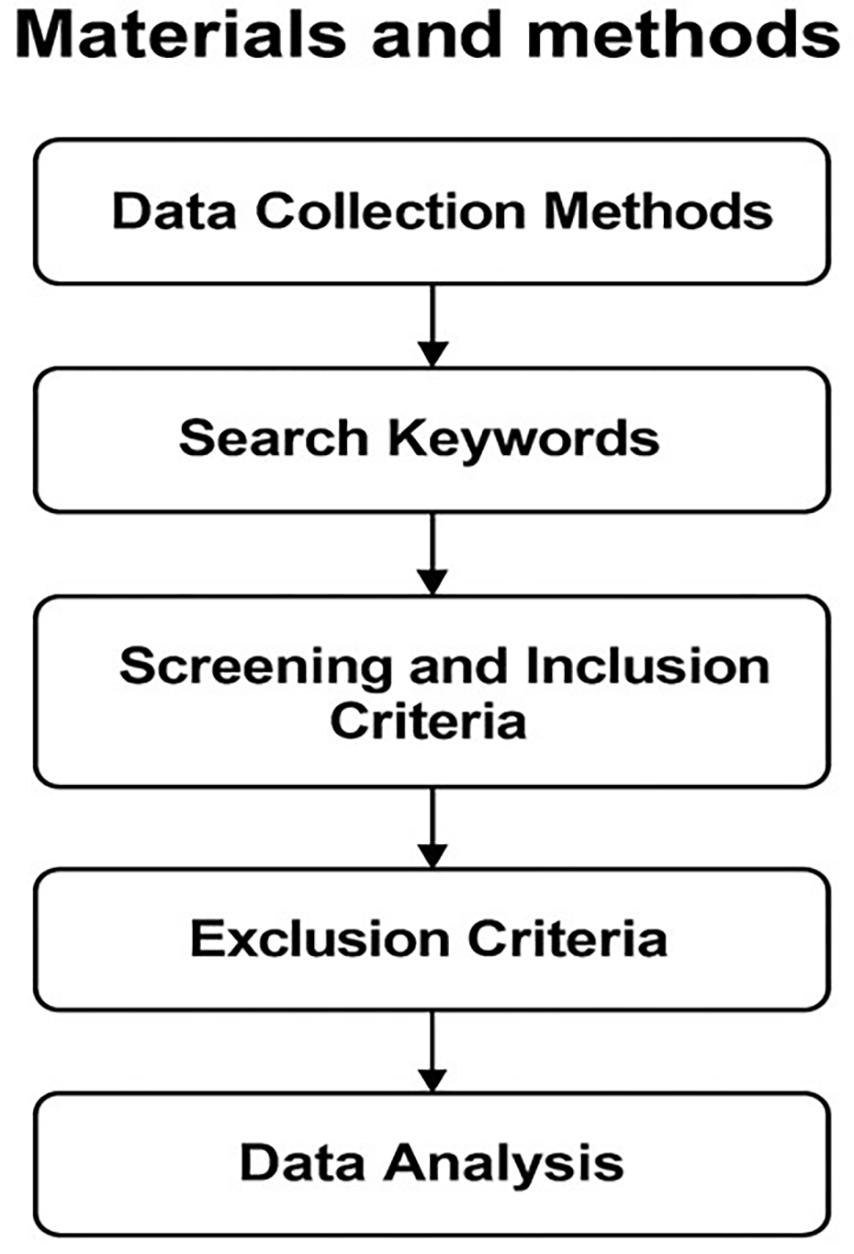
A comprehensive literature search was conducted using multiple academic databases, including Scopus, Web of Science, PubMed, and Google Scholar, to ensure wide coverage of peer-reviewed and high-quality publications. Grey literature, including government reports, WHO documents, and policy briefs from emerging economies, was also reviewed to contextualise findings. Data collection focused on studies examining e-leadership, e-skills, digital transformation, telemedicine, and organisational performance in healthcare settings.
The search strategy combined keywords and Boolean operators to maximise retrieval of relevant studies. Key search terms included: “e-leadership,” “digital leadership,” “e-skills,” “digital competencies,” “digital performance,” “e-performance,” “post-COVID healthcare,” “healthcare digital transformation,” “emerging economies,” and “developing countries.” Synonyms and variations were included to capture regional terminology, such as “telehealth adoption,” “virtual healthcare teams,” and “digital health workforce.”
Identified articles were screened in a three-step process: title review, abstract review, and full-text assessment. Studies were included if they:
• Were published between 2019 and 2025;
• Focused on healthcare organisations in emerging economies;
• Examined the role of e-leadership and/or e-skills in influencing digital or e-performance;
• Presented empirical data, systematic reviews, or theoretical discussions relevant to post-COVID digital transformation.
Data were extracted and synthesised thematically. Key information included study context, country, healthcare setting, type of digital intervention, measures of e-leadership, e-skills, and e-performance, and reported outcomes. Thematic analysis followed the five pathways identified in this review: strategic digital leadership and skills integration, remote collaboration and team performance, driving innovation and technological adoption, organisational resilience and adaptability, and quality, efficiency, and performance monitoring. Cross-country comparisons highlighted common trends, gaps, and contextual factors affecting digital performance.
The quality of included studies was assessed using the Mixed Methods Appraisal Tool (MMAT) to ensure methodological rigour across qualitative, quantitative, and mixed-methods designs. Peer-reviewed publication status, citation counts, and relevance to the review objectives were considered to enhance credibility. Triangulation of evidence from multiple sources, including empirical studies, systematic reviews, and policy reports, strengthened the reliability of findings.
The review process acknowledged potential biases, including selection bias and interpretive bias, given the researchers’ focus on digital transformation in emerging economies. Reflexivity was maintained by documenting search strategies, inclusion/exclusion decisions, and analytical reasoning. Multiple reviewers independently screened and coded studies, with discrepancies resolved through discussion to ensure transparency and objectivity.
This review is anchored on the Upper Echelons Theory (UET) by Hambrick and Mason (1984), which posits that organisational outcomes are largely influenced by the characteristics, experiences, and behaviours of top executives as shown in Figure 2. The theory assumes that leaders’ cognitive frames, values, and capabilities shape strategic decisions and determine how organisations respond to internal and external challenges.20 In the context of this study, UET provides a framework for understanding how e-leadership—through digitally competent and strategically oriented leaders—can guide healthcare organisations in emerging economies to achieve enhanced e-performance. Leaders who effectively manage virtual teams, leverage digital tools for decision-making, and align organisational strategies with emerging digital requirements are more likely to drive successful digital transformation.21,22
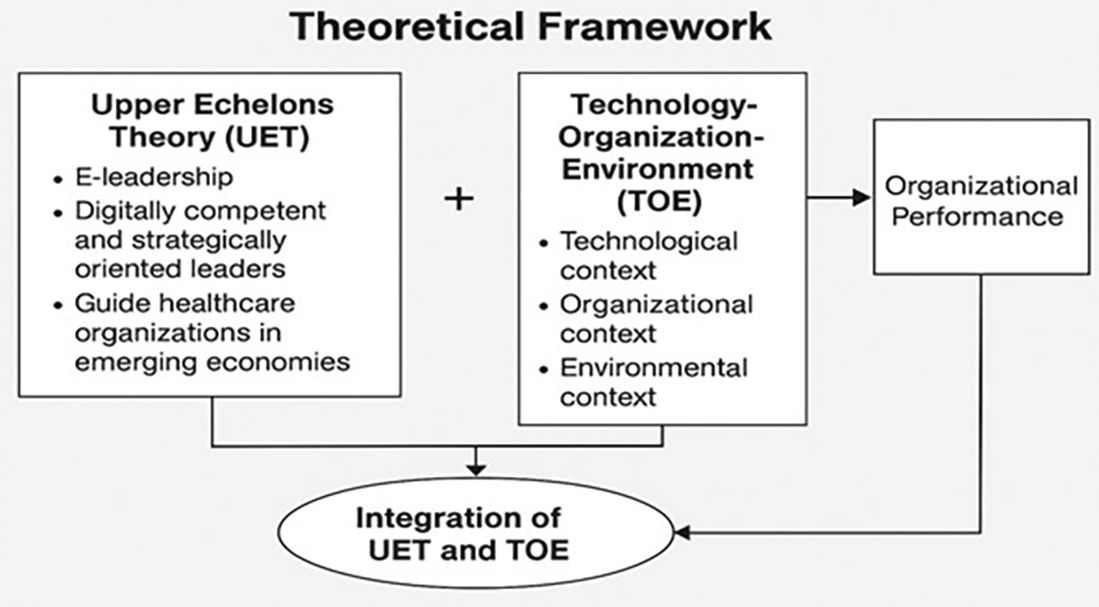
Complementing this, the study is also grounded in the Technology-Organization-Environment (TOE) framework developed by Tornatzky and Fleischer (1990). TOE posits that technology adoption and organisational performance are shaped by three interrelated contexts: the technological context (availability and suitability of digital tools), the organisational context (resources, workforce competencies, and leadership), and the environmental context (regulatory, social, and infrastructural conditions).23 In this study, the TOE framework provides a lens for examining how e-skills among healthcare employees interact with leadership and organisational resources to influence e-performance. It assumes that successful digital outcomes emerge when technology, organisational capability, and environmental factors are aligned, allowing healthcare organisations to optimise performance despite resource constraints.23
By integrating UET and TOE, this review establishes a conceptual foundation linking leadership behaviour and workforce competencies to measurable organisational performance. The combined theoretical grounding highlights the mechanisms through which digital capabilities can be effectively leveraged, offering both explanatory and practical insights. This approach not only guides the synthesis of existing literature but also informs strategies to enhance e-performance in post-COVID healthcare organisations in emerging economies, where structural and resource limitations often challenge digital transformation efforts.
Strategic digital leadership is crucial for ensuring that digital initiatives are effectively aligned with organisational goals, particularly in post-COVID healthcare settings.23–25 Leaders who provide clear direction, set priorities, and integrate technology planning into organisational strategy enable healthcare institutions to translate digital tools into measurable performance outcomes.26,27 For example, in Kenya, the Ministry of Health coordinated the implementation of nationwide telemedicine services, ensuring that virtual consultation platforms were aligned with hospital objectives and patient care needs.28,29 By strategically linking leadership decisions with organisational priorities, leaders can guide the adoption of technology in ways that directly improve service delivery.
The integration of e-skills with leadership further enhances this alignment.30 Resource allocation decisions are more effective when leaders understand the digital competencies of their workforce.31 In Nigeria, tertiary hospitals introduced e-learning platforms for nurses and medical staff, ensuring that investments in telehealth technologies were supported by staff capability to use these tools efficiently.32 Similarly, in India, hospital administrators combined strategic oversight with targeted training in electronic health records, which streamlined patient data management and reduced administrative delays.33,34 These examples demonstrate that leadership alone is insufficient; staff must also possess the skills to operationalise digital strategies.
Data-driven decision-making provides another avenue through which strategic leadership and e-skills converge to enhance e-performance.35 In Bangladesh, district-level health managers leveraged digital dashboards to track COVID-19 patient outcomes and allocate resources in real time.36 The leaders’ strategic interpretation of data, combined with staff competencies in digital tools, enabled hospitals to improve operational efficiency, optimise patient care, and respond swiftly to emerging needs.
Finally, the development of policies and protocols that integrate leadership direction with workforce digital capability ensures sustainability and consistency in healthcare delivery.37 In Ghana, hospital networks implemented standardised digital care protocols alongside comprehensive staff training programs.38 This integration improved adherence to clinical guidelines, enhanced virtual consultation efficiency, and created a culture of continuous digital competence.
The strategic integration of digital leadership and workforce e-skills directly contributes to SDG 3 by improving the accessibility, quality, and efficiency of healthcare services. By enhancing organisational capacity to deliver timely, reliable care, healthcare organisations in emerging economies can better achieve good health and well-being outcomes for their populations.
The post-COVID healthcare landscape has underscored the importance of remote collaboration, making the integration of e-leadership and e-skills essential for sustaining team performance.39 Effective leaders guide virtual teams to maintain operational efficiency and patient care, while employees’ digital competencies ensure smooth communication and task execution.40 In Brazil, hospital administrators managed virtual multidisciplinary teams during pandemic peaks using integrated telehealth platforms, ensuring that doctors, nurses, and administrative staff coordinated care across multiple facilities. Staff training in these tools enabled timely reporting and patient follow-ups, illustrating how leadership direction and workforce skills jointly support performance.41,42
Monitoring and evaluating team performance in virtual environments requires both leadership oversight and digital proficiency.43 In India, district hospitals implemented digital dashboards to track telemedicine consultations, enabling leaders to provide performance feedback and optimise service delivery.43,44 Similarly, in South Africa, provincial health departments used cloud-based platforms to monitor COVID-19 case management by remote healthcare teams, combining leadership decision-making with employees’ ability to update and analyse patient data digitally.45,46 This integration strengthened accountability and operational efficiency.
Motivating and engaging employees in virtual healthcare settings is critical to sustaining productivity.47 In Mexico, hospital managers organised online recognition programs and e-learning modules for frontline staff, combining leadership strategies with digital facilitation. Staff competence in using these platforms enabled continuous learning, knowledge sharing, and engagement, demonstrating the synergistic effect of e-leadership and e-skills on team morale and performance.48,49
Finally, fostering collaborative problem-solving and knowledge sharing online enhances organisational innovation and responsiveness.50 In Kenya, healthcare teams used WhatsApp groups and online forums to coordinate patient referrals and share best practices during COVID-19 surges.51 Leadership structured these channels to ensure goal-directed communication, while employees’ digital proficiency allowed for rapid problem-solving and coordinated action.
By strengthening remote collaboration and team performance, the integration of e-leadership and e-skills supports SDG 3 by ensuring continuity of care, improving service delivery efficiency, and enhancing patient outcomes even under challenging circumstances, particularly in resource-constrained healthcare systems.
Driving innovation and technological adoption in post-COVID healthcare organisations requires a strong synergy between e-leadership and e-skills.52 Leaders who actively encourage staff to adopt telemedicine and other digital healthcare tools create an environment conducive to innovation, while employees’ digital competencies determine the success of these initiatives.53,54 In India, hospital administrators promoted the use of mobile-based teleconsultation platforms for rural patients, combining leadership advocacy with training programs to ensure nurses and doctors could navigate these systems effectively.55–57 Similarly, in Colombia, regional health authorities introduced virtual diagnostic platforms in public hospitals, with leaders providing mentorship and support to staff, enabling the adoption of new technologies to improve patient outcomes.58,59
Providing targeted training and mentoring is essential for enhancing employee e-skills and fostering digital innovation.60 In Kenya, county health departments implemented structured training sessions on electronic health record management, telehealth applications, and remote monitoring tools.61 Leadership involvement ensured that training aligned with strategic goals, while employees’ digital proficiency allowed them to implement innovative solutions, such as remote patient monitoring for chronic disease management.62,63 In the Philippines, hospital administrators combined leadership-led workshops with peer mentoring programs to upskill staff in digital diagnostics, enabling teams to quickly adopt emerging technologies and optimise service delivery during pandemic pressures.64,65
Managing resistance to technological change is another critical dimension of innovation.66,67 In Nigeria, hospital leaders faced reluctance among older staff to adopt electronic patient management systems.68,69 By pairing leadership support with practical digital skills training, leaders successfully encouraged gradual adoption and demonstrated the benefits of digital workflows. Similarly, in Peru, leadership-led awareness campaigns and hands-on digital training reduced resistance among frontline healthcare workers, fostering a culture of openness to technology.70,71
Finally, implementing agile workflows that integrate leadership direction with digital competencies ensures that healthcare organisations remain adaptive and innovative.72,73 In South Africa, hospitals introduced flexible telehealth scheduling systems that allowed teams to respond quickly to patient surges, guided by leaders who coordinated workflows while ensuring staff could efficiently use the digital platforms.74,75 In Bangladesh, district hospitals adopted cloud-based patient management systems with leadership oversight and continuous digital skills enhancement for employees, enabling agile responses to changing healthcare demands.76
Encouraging innovation and technology adoption through leadership and digital skills directly supports SDG 3 by expanding access to healthcare, improving service quality, and enabling more efficient, equitable care delivery, particularly in underserved regions of emerging economies.
Building organisational resilience and adaptability in post-COVID healthcare settings requires a coordinated approach where e-leadership and e-skills work hand in hand.77,78 Leaders play a crucial role in guiding healthcare organisations through unprecedented challenges while ensuring that employees acquire the digital competencies necessary for effective service delivery.79,80 In India, hospital administrators led initiatives to upskill staff in telemedicine and remote monitoring during COVID-19 surges, enabling healthcare teams to maintain continuity of care while adapting to rapidly changing patient needs.81,82 Similarly, in Kenya, county health managers coordinated online training programs for nurses and medical staff, empowering them to utilise digital tools effectively while responding to fluctuating healthcare demands.83,84
Creating flexible digital workflows that leverage staff competencies is another key aspect of resilience.84,85 In Brazil, hospitals redesigned patient scheduling and electronic record management systems to allow real-time adjustments, with leadership providing guidance on workflow optimisation and staff trained to manage these digital processes efficiently.86,87 In the Philippines, hospital networks implemented cloud-based platforms for patient management, enabling teams to shift resources quickly between units during peak periods, demonstrating how leadership direction combined with employee digital skills can enhance organisational adaptability.88,89
Preparing teams to maintain service continuity requires both supportive leadership and competent digital staff.90,91 In Nigeria, healthcare administrators established virtual coordination centres during COVID-19 outbreaks, enabling real-time communication and monitoring of frontline teams. Staff proficiency in telehealth platforms allowed uninterrupted service delivery, while leadership ensured operational alignment and rapid decision-making.92,93 In Peru, regional health authorities introduced digital protocols for patient triage and teleconsultations, with leaders guiding their implementation and staff trained to handle these systems, ensuring consistent healthcare provision despite disruptions.94,95
Enhancing organisational capacity to respond to future healthcare disruptions relies on embedding resilience into both leadership practices and workforce capabilities.96 In South Africa, hospitals developed contingency plans that integrated digital tools for emergency response, supported by leaders who fostered a culture of continuous learning. Employees were trained to use these systems effectively, enabling agile responses to unforeseen challenges.97–99
Integrating e-leadership and e-skills to strengthen resilience supports SDG 3 by ensuring that healthcare systems can withstand shocks, maintain continuity of essential services, and provide reliable care during emergencies, ultimately protecting population health and well-being.
Improving quality, efficiency, and performance monitoring in post-COVID healthcare organisations depends on the coordinated integration of e-leadership and e-skills.100 Leaders who establish clear performance benchmarks and digital monitoring systems create a framework within which healthcare teams can operate efficiently, while employees’ digital competencies determine how effectively these systems are used.101,102 In India, district hospitals implemented digital dashboards to track patient outcomes, teleconsultations, and resource utilization.103 Leadership guided the interpretation of this data for timely decision-making, while staff trained in data entry and analysis ensured accurate and actionable information, leading to measurable improvements in service quality and operational efficiency.104
Efficiency is further enhanced when leaders and employees collaboratively streamline workflows using digital tools.105 In Kenya, hospitals optimised patient scheduling and laboratory processes through electronic health record systems.106 Leadership oversight ensured that workflow adjustments aligned with organisational goals, and staff proficiency in managing digital platforms reduced bottlenecks, improved turnaround times, and enhanced patient care.107 Similarly, in Brazil, hospital administrators combined leadership with staff training in telemedicine platforms to minimise delays in consultation services, demonstrating how digital competence and leadership guidance jointly support organisational efficiency.108
Monitoring performance requires ongoing feedback and accountability mechanisms.109 In Nigeria, healthcare managers used mobile reporting tools to track frontline team activities and patient care metrics.110 Leadership provided timely feedback and adjusted strategies based on real-time data, while staff e-skills ensured accurate reporting and responsiveness to guidance.111 In Mexico, hospital networks introduced online performance review systems, integrating leadership evaluation with staff ability to use digital platforms, resulting in improved adherence to clinical guidelines and higher service standards.112
Finally, integrating leadership and digital skills into continuous quality improvement initiatives ensures sustainability.113 In South Africa, hospitals implemented performance monitoring frameworks combining leadership-led audits with staff training on analytics tools, enabling identification of gaps and implementation of corrective measures.114,115
Strengthening quality, efficiency, and performance monitoring through e-leadership and e-skills directly contributes to SDG 3 by improving healthcare outcomes, enhancing service reliability, and ensuring that resources are effectively utilised to promote good health and well-being for populations in emerging economies.
The literature review is analyzed to identify similar findings, contradictions, existing gaps and areas requiring further research. Again, a comparative evaluation with previous studies is done to highlight similarities and explain any differences observed in the findings. Finally, policy interventions are identified as shown in Figure 3.
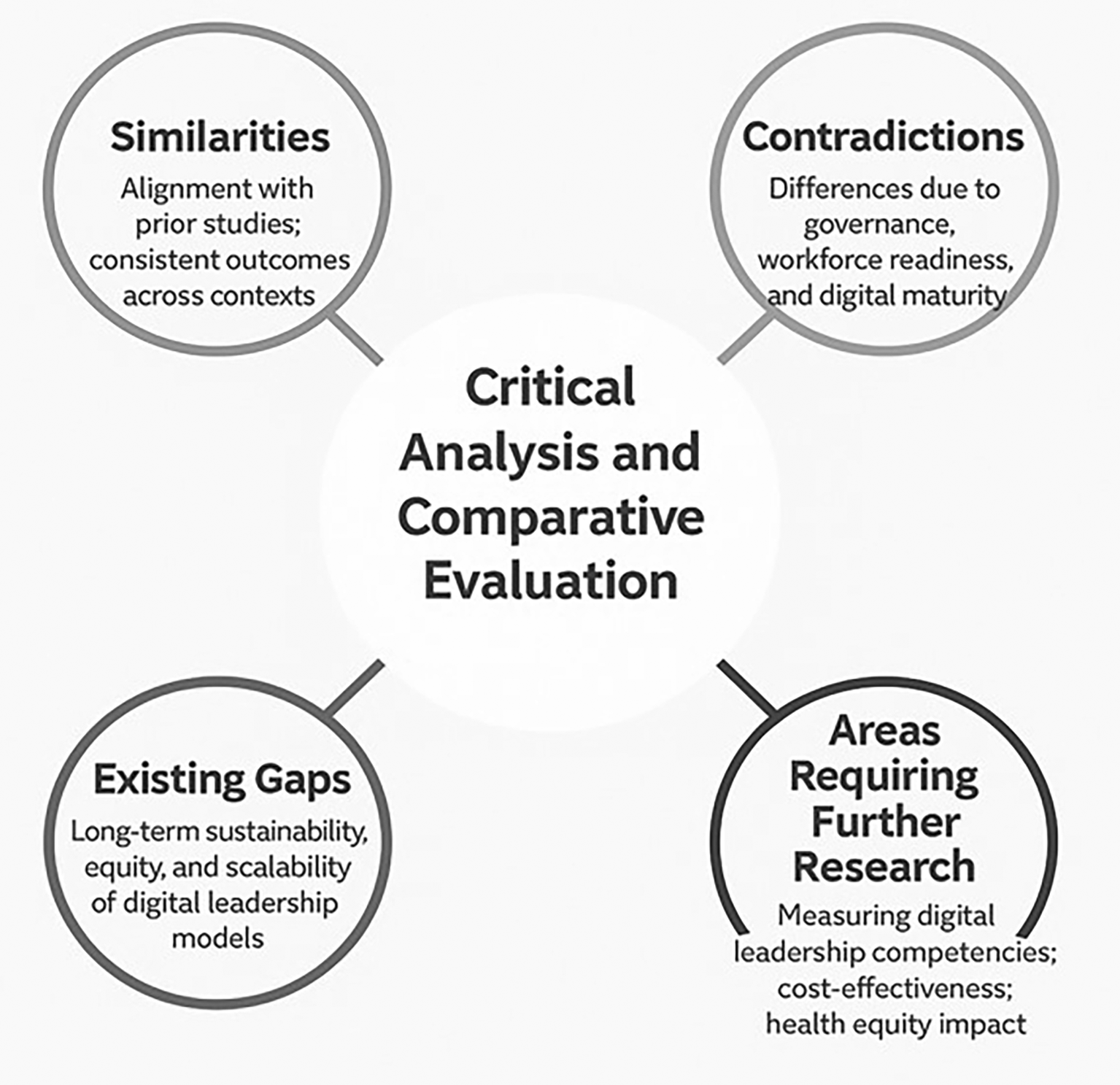
The reviewed literature presents strong convergence with prior studies indicating that strategic digital leadership enhances organisational alignment, service quality, and performance in healthcare, particularly in post-crisis contexts.23,24,26,27 Similar findings are evident in comparative studies from low- and middle-income countries, where leadership commitment and strategic clarity have been consistently associated with successful digital health implementation and improved care continuity.28,29,35 Evidence from Kenya, Bangladesh, and Ghana reinforces earlier research showing that leadership-driven coordination enables digital tools to translate into operational gains when aligned with institutional goals.36,38 However, contradictions emerge when compared with studies conducted in some high-income health systems, where advanced digital infrastructure alone did not yield improved outcomes due to weak leadership engagement or resistance to organisational change.30,31 Differences observed across contexts appear to stem from variations in governance capacity, workforce readiness, and the maturity of digital ecosystems, suggesting that leadership effectiveness is highly context-dependent rather than universally transferable.
Clear gaps remain within the literature concerning long-term sustainability, equity, and scalability of digital leadership models in healthcare. While studies from Nigeria and India highlight the importance of integrating leadership with workforce e-skills through training and e-learning platforms,32–34 limited empirical evidence evaluates the durability of these interventions beyond pilot phases or emergency periods such as COVID-19. Comparative analysis reveals that earlier studies focused predominantly on technology adoption metrics, whereas recent findings increasingly emphasise data-driven leadership and institutional learning cultures,35,36 indicating an evolution rather than a contradiction in scholarly focus. Areas requiring further research include the measurement of leadership competencies in digital governance, the impact of digital leadership on patient equity, and the cost-effectiveness of sustained e-skills development. Policy interventions should therefore prioritise embedding digital leadership competencies within national health leadership frameworks, mandating continuous professional digital training, allocating protected funding for workforce capacity building, and establishing standardised digital governance protocols to ensure consistent, scalable, and resilient healthcare delivery aligned with SDG 3.37,38
The literature demonstrates strong alignment with earlier studies that identify e-leadership and workforce e-skills as central determinants of effective remote collaboration and sustained team performance in healthcare settings.39,40,43 Evidence from Brazil, India, South Africa, Mexico, and Kenya reflects similar conclusions reached in pre- and post-COVID research, where virtual coordination platforms, when supported by leadership oversight and staff digital competence, enhanced continuity of care, accountability, and operational efficiency.41,42,44,45,51 These findings are consistent with prior studies conducted in both emerging and developed health systems, which highlight that technology-enabled teamwork improves responsiveness and multidisciplinary coordination when leaders actively structure communication, monitor performance, and foster engagement.47–49 Differences observed across contexts appear largely attributable to disparities in digital infrastructure, organisational culture, and training investment rather than contradictions in core outcomes. For instance, studies from resource-constrained settings place greater emphasis on low-cost tools such as WhatsApp and cloud-based dashboards, while earlier research from high-income contexts focused on enterprise-level collaboration platforms, reflecting contextual adaptation rather than divergent evidence.50
Notwithstanding these convergences, gaps persist in understanding the long-term effects of remote collaboration on workforce well-being, leadership burden, and service equity. While existing studies document short-term performance gains during crisis periods, limited longitudinal evidence assesses whether virtual collaboration models sustain team cohesion, motivation, and quality of care beyond emergency phases.43,47 Comparative evaluation with earlier literature suggests a shift from examining individual digital competence toward analysing collective digital workflows and leadership-mediated engagement, indicating an evolving research trajectory rather than inconsistency in findings.39,40 Areas requiring further research include the impact of sustained remote work on clinical decision-making quality, the digital divide among healthcare cadres, and standardised metrics for evaluating virtual team performance. Policy interventions should focus on institutionalising hybrid collaboration frameworks, integrating e-leadership competencies into health management training, investing in continuous digital upskilling for healthcare teams, and developing national guidelines for secure, inclusive, and performance-oriented virtual collaboration to strengthen health system resilience and advance SDG 3.48–50
The reviewed literature demonstrates substantial consistency with earlier studies that position e-leadership and workforce e-skills as mutually reinforcing drivers of healthcare innovation and digital technology adoption.52–54 Empirical evidence from India, Colombia, Kenya, the Philippines, South Africa, and Bangladesh aligns with previous research showing that leadership advocacy, mentoring, and strategic guidance significantly influence staff willingness and ability to adopt telemedicine, electronic health records, and cloud-based systems.55–59,61–65,74–76 Similar findings in earlier global health technology studies emphasised that innovation flourishes when leaders actively reduce uncertainty, signal organisational commitment, and align training with service delivery goals.60,72,73 Differences observed across contexts are primarily linked to workforce demographics and organisational readiness rather than contradictions in outcomes. For example, resistance among older healthcare workers in Nigeria and Peru contrasts with faster adoption in settings where prior digital exposure was higher, suggesting that variation arises from human capital and institutional culture rather than from the ineffectiveness of leadership or training approaches.66–71
Despite these convergent findings, notable gaps remain in the literature regarding the scalability, cost-effectiveness, and long-term institutionalisation of digitally driven innovation in healthcare systems. While many studies document successful short-term adoption during pandemic pressures, limited evidence evaluates whether innovation practices persist once external funding or crisis-driven urgency diminishes.52,60,72 Comparative evaluation with earlier research indicates a shift from focusing on technology availability toward examining behavioural change, resistance management, and agile workflows, reflecting an evolution in scholarly emphasis rather than inconsistency in conclusions.66,67 Areas requiring further research include the measurement of innovation leadership competencies, the impact of digital innovation on health equity across rural–urban divides, and mechanisms for embedding continuous innovation into routine healthcare governance. Policy interventions should therefore focus on integrating digital innovation leadership into national health workforce development strategies, mandating continuous professional digital training, incentivising innovation-friendly organisational cultures, and establishing adaptive regulatory frameworks that support experimentation while safeguarding data security and patient safety, thereby strengthening progress toward SDG 3.73–76
The literature reviewed demonstrates strong convergence with earlier studies that conceptualise organisational resilience in healthcare as a function of adaptive leadership combined with digitally competent workforces.77–80 Evidence from India, Kenya, Brazil, the Philippines, Nigeria, Peru, and South Africa mirrors prior research conducted during earlier public health crises, where leadership-led digital upskilling and flexible workflows enabled healthcare systems to maintain service continuity under extreme pressure.81–84,86–89,92,93 Comparative evaluation shows consistent findings that organisations with leaders capable of coordinating digital responses and staff able to operationalise telemedicine, cloud-based systems, and remote monitoring tools demonstrated higher adaptability and faster recovery rates.85,90,91,96 Differences across settings are not contradictory but reflect contextual variation in resource availability, institutional decentralisation, and digital maturity. For example, reliance on virtual coordination centres in Nigeria and protocol-driven digital triage in Peru contrasts with more system-integrated contingency planning in South Africa, indicating diverse pathways to resilience shaped by governance structures rather than divergence in outcomes.94,95,97–99
Despite this alignment, significant gaps persist in the literature regarding the institutionalisation and measurement of digital resilience over time. Most studies focus on crisis response during COVID-19, offering limited longitudinal evidence on whether digitally enabled resilience strategies remain effective once emergency conditions subside.77,90,96 Comparative analysis with earlier resilience literature suggests a conceptual shift from static preparedness models toward dynamic, learning-oriented frameworks that integrate leadership behaviour and workforce digital capability, highlighting an evolution rather than inconsistency in scholarly understanding.78,80 Areas requiring further research include standardised indicators for assessing digital resilience, the cost implications of sustained workforce upskilling, and the equity impacts of digital adaptation across rural and underserved populations. Policy interventions should therefore prioritise embedding digital resilience competencies within national health leadership standards, institutionalising continuous digital skills development, investing in interoperable and flexible digital infrastructure, and mandating adaptive emergency governance frameworks to ensure health systems remain robust, responsive, and aligned with SDG 3 objectives.96–99
The study examines relationship between literature review and the underpinning theoretical framework thereby identifying the persistent challenges and eminent gaps.
The literature review demonstrates strong theoretical alignment with Upper Echelons Theory by empirically illustrating how leadership cognition, strategic orientation, and digital competence shape organisational outcomes in healthcare settings20–22 as shown in Table 1. Evidence from Kenya, Nigeria, India, Bangladesh, and Ghana reflects the UET assumption that leaders’ values and capabilities directly influence strategic decisions related to technology adoption, data-driven decision-making, and policy formulation.23,26,27,35 The documented cases of leaders coordinating telemedicine initiatives, interpreting digital performance data, and embedding standardised digital protocols validate the theory’s core proposition that executive behaviour mediates organisational responses to environmental shocks such as COVID-19.28,29,36,38 However, the literature also reveals a persistent challenge that UET alone does not fully explain outcomes where leadership intent exists but performance gains remain limited due to workforce skill gaps or infrastructural constraints, suggesting that leadership characteristics are necessary but insufficient determinants of e-performance in isolation.30–32
| Aspect | Evidence from literature review | Link to UET and TOE | Persistent challenges and gaps | Policy intervention implications |
|---|---|---|---|---|
| Leadership influence on digital strategy | Leaders align telemedicine, dashboards, and digital protocols with organisational goals in Kenya, India, and Ghana26,28,36,38 | Strongly aligns with UET, which emphasises leaders’ cognition and strategic choices shaping outcomes20,21 | Leadership effectiveness varies due to limited digital competence measurement and contextual constraints | Integrate digital leadership competencies into national health leadership development frameworks |
| Workforce e-skills and operationalisation | E-learning and targeted digital training enable staff to use EHRs and telehealth systems effectively in Nigeria and India32–34 | Supports TOE organisational context highlighting workforce capability as a determinant of performance23 | Uneven digital skill distribution and lack of standardised skill assessment | Institutionalise continuous professional digital training linked to organisational strategy |
| Data-driven decision-making | Use of digital dashboards improves resource allocation and service efficiency in Bangladesh and India35,36,104 | Reflects UET through leaders’ interpretation of data and TOE technological context | Limited longitudinal evidence on sustained data use and performance gains | Develop national guidelines for digital performance monitoring and analytics capacity building |
| Policy and environmental alignment | Standardised digital protocols and regulatory coordination support sustainability in Ghana and Kenya28,37,38 | Aligns with TOE environmental context shaping adoption conditions23 | Weak enforcement and limited evaluation of long-term sustainability | Strengthen regulatory frameworks for interoperable and scalable digital health systems |
The Technology–Organization–Environment framework complements these gaps by contextualising how organisational and environmental factors interact with leadership to influence digital outcomes.23 The reviewed studies strongly support TOE’s organisational dimension, particularly the role of workforce e-skills and resource readiness in translating leadership strategies into performance gains, as seen in e-learning initiatives and targeted digital training programs in Nigeria and India.32–34 The technological and environmental dimensions are also implicitly reflected through examples of digital dashboards, telehealth platforms, and regulatory coordination by ministries of health.28,35,36 Despite this alignment, an eminent gap persists in the literature regarding the dynamic interaction between TOE components over time. Most studies adopt a cross-sectional or crisis-response perspective, offering limited insight into how technological, organisational, and environmental factors co-evolve to sustain e-performance beyond emergency contexts, particularly in resource-constrained healthcare systems.37 This limits the explanatory power of TOE in addressing long-term sustainability and institutional learning.
Persistent challenges emerging from the combined theoretical lens include uneven digital skill distribution among healthcare workers, limited measurement of leadership digital competence, and weak policy enforcement mechanisms to institutionalise digital practices.31,32,37 The literature rarely operationalises leadership cognition or workforce digital capability using standardised indicators, creating a gap between theoretical constructs and empirical measurement.20,23 Policy interventions should therefore focus on embedding digital leadership competencies within national health leadership development frameworks, institutionalising continuous professional digital training aligned with organisational strategy, and strengthening regulatory environments to support interoperable, scalable digital health systems.23,37,38 Such interventions would operationalise both UET and TOE by ensuring that leadership behaviour, organisational capacity, and environmental support mechanisms are synchronised to enhance e-performance and advance SDG 3 outcomes in post-COVID healthcare organisations.
The literature review demonstrates strong theoretical coherence with Upper Echelons Theory by illustrating how leadership cognition, strategic orientation, and behavioural choices shape the effectiveness of remote collaboration in post-COVID healthcare settings20–22 as shown in Table 2. Empirical examples from Brazil, India, South Africa, Mexico, and Kenya show that leaders who actively structure virtual communication, guide performance monitoring, and motivate remote teams influence organisational outcomes such as efficiency, accountability, and continuity of care.39,41,42,44,45,48,51 These findings are consistent with UET’s core assumption that organisational responses to disruption are filtered through leaders’ capabilities and values, particularly in virtual environments where direct supervision is limited. However, the literature also exposes a persistent challenge in that leadership intent alone does not guarantee improved team performance when employees lack adequate digital skills or when virtual collaboration tools are inconsistently adopted, indicating partial explanatory limits of UET when workforce capability is uneven.40,47
| Focus area | Evidence from literature | Theoretical link | Persistent challenges and gaps | Policy intervention implications |
|---|---|---|---|---|
| E-leadership in virtual teams | Leadership-guided remote coordination improves efficiency and care continuity39,41,44 | UET emphasises leaders’ cognition and behaviour shaping outcomes20,21 | Limited measurement of digital leadership capability | Integrate e-leadership standards into health management training |
| Workforce e-skills | Digital competence enables communication, reporting, and engagement40,42,49 | TOE organisational context highlights workforce capability23 | Uneven skill levels across cadres | Institutionalise continuous digital upskilling |
| Performance monitoring | Dashboards and cloud tools support feedback and accountability43,45 | UET (data interpretation) and TOE technological context | Short-term focus, limited longitudinal evidence | Develop standardised virtual performance metrics |
| Collaborative problem-solving | Online platforms enhance knowledge sharing and responsiveness50,51 | TOE organisational and environmental contexts | Informal tools raise data security concerns | Establish secure, regulated digital collaboration platforms |
The Technology–Organization–Environment framework complements these observations by capturing the broader contextual factors influencing remote collaboration outcomes.23 The organisational context is strongly reflected in the reviewed studies, particularly through workforce e-skills, access to digital platforms, and internal coordination mechanisms that enable virtual teamwork in resource-constrained settings.42,43,49 The technological context is evident in the use of dashboards, cloud-based platforms, and low-cost tools such as WhatsApp to support monitoring and knowledge sharing.44,45,51 Environmental influences, including infrastructural constraints and regulatory flexibility during COVID-19, further shaped how remote collaboration was operationalised. Despite this alignment, an eminent gap lies in the limited examination of how TOE dimensions interact dynamically over time. Most studies adopt short-term or crisis-oriented perspectives, offering insufficient insight into how remote collaboration structures evolve, stabilise, or deteriorate once emergency conditions subside.43,50
Persistent challenges emerging from the integration of literature and theory include unequal digital skill distribution across healthcare cadres, limited standardisation of virtual performance metrics, and weak governance of informal collaboration platforms.40,47,51 The literature rarely operationalises leadership digital competence or virtual team effectiveness using consistent indicators, creating a gap between theoretical constructs and empirical measurement within both UET and TOE.20,23 Policy interventions should therefore focus on embedding e-leadership competencies within national health leadership frameworks, institutionalising continuous digital skills development for healthcare teams, and establishing secure, standardised digital collaboration and performance monitoring guidelines. Such interventions would strengthen alignment between leadership behaviour, organisational capability, and environmental support, thereby enhancing sustainable remote collaboration and advancing SDG 3 outcomes in emerging economy healthcare systems.48–50
The literature review demonstrates strong theoretical alignment with Upper Echelons Theory by evidencing how leadership cognition, strategic intent, and behavioural commitment shape innovation and technology adoption in post-COVID healthcare organisations20–22 as shown in Table 3. Empirical examples from India, Colombia, Kenya, Nigeria, Peru, South Africa, and Bangladesh show that leaders who actively champion digital tools, mentor staff, and coordinate agile workflows significantly influence organisational willingness to innovate and adopt emerging technologies.52,55,58,61,68,74,76 These findings are consistent with UET’s proposition that executive characteristics determine how organisations respond to uncertainty and disruption, particularly during crises such as COVID-19. However, the literature also reveals a persistent challenge whereby leadership advocacy does not always translate into successful adoption when workforce digital competence is uneven or when resistance to change remains entrenched, highlighting the limits of UET in explaining innovation outcomes without considering organisational capacity.53,66,67
| Focus area | Evidence from literature | Theoretical link | Persistent challenges and gaps | Policy intervention implications |
|---|---|---|---|---|
| E-leadership and innovation advocacy | Leadership mentoring and advocacy drive adoption of telemedicine and diagnostics52,55,58 | UET highlights leadership cognition shaping innovation outcomes20,21 | Limited assessment of leaders’ digital innovation competence | Integrate digital innovation leadership into health executive training |
| Workforce e-skills and training | Targeted training enables staff to operationalise digital innovations60,61,64 | TOE organisational context emphasises workforce capability23 | Uneven skill levels and reliance on short-term training | Institutionalise continuous professional digital development |
| Resistance to technological change | Leadership and skills training reduce resistance among staff66,68,70 | UET (change leadership) and TOE organisational context | Persistent cultural and generational resistance | Implement structured change management and mentoring policies |
| Agile workflows and adaptability | Digital platforms enable rapid response and innovation72,74,76 | TOE technological and environmental contexts | Limited evidence on long-term sustainability | Strengthen regulatory and infrastructural support for agile digital systems |
The Technology–Organization–Environment framework complements these limitations by explaining how technological readiness, workforce e-skills, and environmental conditions interact to shape innovation performance.23 The reviewed studies strongly support the organisational context of TOE, particularly through evidence that targeted training, mentoring, and peer learning enhance staff capacity to operationalise digital innovations in Kenya and the Philippines.60,61,64,65 The technological context is reflected in the availability of teleconsultation platforms, electronic health records, and cloud-based systems, while the environmental context emerges through regulatory support and infrastructural constraints influencing adoption in rural and underserved settings.55,72,73 An eminent gap, however, lies in the limited longitudinal analysis of how these TOE dimensions evolve over time. Most studies emphasise rapid adoption during crisis periods, offering insufficient insight into whether innovation cultures and digital competencies are sustained beyond emergency-driven interventions.52,60
Persistent challenges arising from the integration of literature and theory include resistance to technological change among certain workforce segments, weak institutionalisation of innovation practices, and limited measurement of leadership digital competence and innovation outcomes.66,68,69 The literature rarely operationalises innovation leadership or workforce e-skills using standardised indicators, creating a gap between UET and TOE constructs and empirical assessment.20,23 Policy interventions should therefore prioritise embedding digital innovation leadership within national health leadership development frameworks, mandating continuous digital skills upgrading aligned with organisational strategy, incentivising innovation-friendly workplace cultures, and strengthening regulatory and infrastructural support for scalable digital health solutions. Such measures would synchronise leadership behaviour, organisational capacity, and environmental enablers, thereby enhancing sustainable technological adoption and advancing SDG 3 outcomes in emerging economy healthcare systems.73–76
The literature on organisational resilience and adaptability in post-COVID healthcare settings demonstrates a strong alignment with the Upper Echelons Theory (UET) and the Technology-Organization-Environment (TOE) framework as shown in Table 4. UET emphasizes that top executives’ characteristics, experiences, and cognitive frames shape strategic decisions, which is evident in the examples of India and Kenya, where hospital administrators and county health managers led initiatives to upskill staff in digital competencies and telemedicine practices.77–84 These leadership-driven interventions underscore how executives’ digital acumen and strategic orientation can directly influence organisational responses to crises. Similarly, the TOE framework is reflected in the emphasis on aligning technology, workforce competencies, and environmental conditions, such as in Brazil and the Philippines, where hospitals redesigned workflows and implemented cloud-based patient management platforms to ensure service continuity.84–89 The literature suggests that the interplay between digitally competent leadership and workforce e-skills is critical for enhancing resilience, supporting the conceptual proposition that organisational outcomes are contingent upon the interaction of human, technological, and environmental factors.
| Aspect | Literature insights | Theoretical alignment | Persistent challenges | Policy interventions |
|---|---|---|---|---|
| Leadership | Executives guide digital upskilling, telemedicine adoption (India, Kenya, Nigeria, Peru)77–95 | UET: Top leaders’ experience and strategic vision shape organisational responses20–22 | Limited empirical evidence on long-term impact of e-leadership; reliance on reactive measures | Leadership capacity-building in e-skills, strategic digital management training |
| Workforce e-skills | Staff trained in telehealth, cloud-based patient management, digital workflows77–95 | TOE: Workforce competencies interact with technology and environment to influence performance23 | Inconsistent digital literacy; insufficient integration with organisational strategy | National digital competency standards, continuous digital training programmes |
| Organisational resources & technology | Flexible digital workflows, cloud platforms, contingency plans, real-time coordination centres84–99 | TOE: Alignment of technological, organisational, and environmental contexts enhances e-performance23 | Resource limitations, infrastructural gaps, regulatory inconsistencies | Investment in digital infrastructure, interoperable systems, regulatory harmonisation |
| Adaptability & resilience | Agile responses to fluctuating healthcare demands, service continuity during crises77–99 | UET & TOE integration: Leadership and workforce digital capabilities drive organisational resilience | Predominantly crisis-driven adaptation; limited proactive resilience strategies | Policies for proactive resilience planning, cross-institutional knowledge sharing, sustainable digital transformation |
Despite this alignment, persistent challenges and gaps remain in the literature. Many studies highlight digital skill development and workflow redesign but provide limited empirical evidence on the sustained impact of e-leadership on long-term organisational performance.90–95 Additionally, structural constraints in emerging economies—such as inadequate digital infrastructure, inconsistent regulatory frameworks, and workforce shortages—are acknowledged but insufficiently addressed in current research.92–95 The literature also tends to focus on reactive adaptations during crises rather than proactive, integrated strategies for continuous resilience building. This gap indicates a need for longitudinal studies examining how leadership behaviours, e-skills, and organisational resources jointly influence e-performance over time, particularly in resource-limited healthcare systems.
Policy interventions should target both leadership capacity and workforce digital readiness to bridge these gaps. Governments and healthcare regulators can establish national digital competency standards and provide incentives for hospitals to adopt interoperable technologies, thereby enhancing alignment between the technological, organisational, and environmental dimensions identified by the TOE framework.96–99 Capacity-building programmes for healthcare leaders should emphasise strategic e-leadership, virtual team management, and data-driven decision-making, in line with UET principles, to strengthen organisational agility and resilience.96–99 Furthermore, policies should support infrastructure development, regulatory harmonisation, and cross-institutional knowledge sharing to ensure that digital transformation efforts are sustainable and inclusive, ultimately enabling healthcare organisations in emerging economies to maintain continuity of care during future crises.
The literature on improving quality, efficiency, and performance monitoring in post-COVID healthcare organisations demonstrates a clear connection to the Upper Echelons Theory (UET) and the Technology-Organization-Environment (TOE) framework as shown in Table 5. UET emphasises that top executives’ cognitive frames, experiences, and decision-making styles shape organisational outcomes, which aligns with examples from India and Kenya where leaders established digital dashboards and electronic health record systems to monitor patient outcomes and optimise workflows.100–107 Leadership involvement in guiding data interpretation, streamlining processes, and setting performance benchmarks underscores the theory’s premise that leaders’ characteristics and strategic vision critically influence organisational efficiency and quality. Simultaneously, the TOE framework is reflected in the integration of technology, organisational capacity, and environmental conditions, such as in Brazil and South Africa, where digital tools, workforce competencies, and leadership direction collectively facilitated continuous quality improvement.108–115 These examples highlight how effective alignment between e-leadership and e-skills can enhance performance monitoring and operational efficiency in healthcare settings.
Despite these positive outcomes, the literature also reveals persistent challenges and gaps. While numerous studies document improvements in workflow efficiency and patient care metrics, there is limited empirical evidence demonstrating the long-term sustainability of these digital interventions.103–112 Resource constraints, such as inadequate digital infrastructure, limited access to advanced analytics tools, and uneven workforce digital literacy, are recurrent issues in emerging economies.106,110,114 Furthermore, much of the literature emphasises reactive measures during pandemic peaks rather than proactive strategies for continuous performance monitoring, leaving gaps in understanding how healthcare organisations can institutionalise e-leadership and e-skills for sustained quality and efficiency. These gaps suggest a need for longitudinal studies and comprehensive frameworks that evaluate both technological adoption and leadership impact over time.
Policy interventions should focus on enhancing both leadership capacity and workforce digital competence to address these gaps. Governments and healthcare regulators can implement standards for digital performance monitoring, provide funding for interoperable health information systems, and incentivise hospitals to adopt advanced analytics platforms.100,113–115 Training programmes for healthcare leaders should prioritise strategic e-leadership, data-driven decision-making, and virtual team management, aligning with UET principles to strengthen organisational oversight and operational efficiency.100,101,104 Additionally, policies should promote infrastructure development, regulatory harmonisation, and knowledge sharing across institutions to ensure the sustainability and scalability of performance monitoring systems. These interventions collectively support the alignment of technology, organisational resources, and environmental conditions as proposed by the TOE framework, ultimately enhancing healthcare outcomes and contributing to SDG 3.
The practical implications of this review are significant for healthcare organisations in emerging economies seeking to enhance e-performance in post-COVID contexts. First, the evidence underscores that leadership capacity directly affects the successful integration of digital tools into healthcare operations. Executives who possess strong strategic orientation and digital literacy are better positioned to guide staff, allocate resources efficiently, and make informed, data-driven decisions. Practically, this implies that organisations should prioritise the recruitment and development of leaders who can combine strategic insight with technological competence, ensuring that decision-making processes are aligned with organisational goals and patient care needs. Leadership development programs should emphasise skills such as virtual team management, interpretation of digital performance metrics, and strategic planning for technology adoption to translate e-leadership into measurable improvements in service quality and operational efficiency.
Second, workforce digital competence emerges as a critical determinant of organisational outcomes. Staff trained in telemedicine, electronic health records, analytics tools, and workflow management systems are able to operationalise leadership directives and optimise performance. Practically, this suggests that healthcare organisations should invest in structured and continuous digital skills development for employees, including targeted training, e-learning platforms, and mentoring programs. Ensuring that staff can effectively use digital platforms improves not only efficiency and accuracy in service delivery but also strengthens adaptability and resilience during periods of crisis. Workforce capacity-building should also be integrated into broader organisational strategies, aligning training objectives with performance monitoring frameworks and quality improvement initiatives to maximise impact.
Third, the integration of leadership, workforce skills, and technological infrastructure supports sustainable performance monitoring and continuous quality improvement. The practical implication is that organisations need to implement interoperable digital systems, including dashboards and electronic health records, while simultaneously promoting standardised protocols for data management and workflow optimisation. These systems must be supported by leadership oversight and ongoing staff competence enhancement to maintain operational efficiency and ensure accountability. Policymakers and healthcare regulators also have a role in creating enabling environments by establishing competency standards, incentivising infrastructure investments, and promoting knowledge-sharing networks. Collectively, these practical measures facilitate proactive performance monitoring, institutionalise e-leadership and e-skills, and enhance organisational resilience, contributing to the achievement of SDG 3 by improving healthcare outcomes, continuity of care, and service reliability in resource-constrained healthcare systems.
Future studies should explore the long-term sustainability of digital interventions in healthcare, moving beyond short-term or crisis-driven analyses. While current literature demonstrates improvements in workflow efficiency, telemedicine adoption, and performance monitoring, there is limited empirical evidence on whether these gains persist once the immediate pressures of the pandemic subside. Longitudinal studies could provide insights into how leadership behaviour, workforce competencies, and technological resources interact over time to sustain organisational performance.
Another area for future research is the measurement and operationalisation of e-leadership and workforce digital skills. Current studies often describe leadership and digital competencies qualitatively, but standardised indicators and metrics are largely absent. Research should develop validated tools to assess leadership cognition, strategic decision-making, and digital literacy among healthcare staff, enabling more rigorous evaluation of the impact of these factors on organisational outcomes. Such studies would also clarify how variations in digital competence among employees influence the effectiveness of leadership interventions and technology adoption.
Future research should also investigate the equity and inclusivity implications of digital healthcare interventions. Evidence indicates that disparities in digital infrastructure, workforce skills, and access to technology exist across regions and healthcare cadres. Studies could examine how these disparities affect patient outcomes, organisational efficiency, and service accessibility, particularly for underserved populations. This research would provide guidance on designing digital interventions that are not only effective but also equitable and responsive to contextual challenges.
Additionally, there is a need to examine the interaction between technological, organisational, and environmental factors in shaping digital transformation. While TOE provides a useful framework, empirical evidence on how these components dynamically co-evolve in resource-constrained healthcare systems is limited. Future studies could adopt mixed-methods or systems-based approaches to understand the complex relationships among technology adoption, leadership practices, workforce capabilities, and regulatory or infrastructural conditions.
Finally, future research should focus on the impact of digital interventions on broader organisational outcomes such as innovation, resilience, and adaptability. While existing literature addresses specific metrics like efficiency and service quality, there is limited exploration of how e-leadership and workforce e-skills foster organisational learning, innovation capacity, and preparedness for future disruptions. Investigating these dimensions would provide a more comprehensive understanding of how digital competencies contribute to sustainable healthcare transformation in emerging economies.
These directions collectively highlight the need for rigorous, longitudinal, and context-sensitive research that bridges theoretical insights with practical outcomes, ensuring that digital transformation in healthcare is sustainable, equitable, and resilient.
Based on the findings of this review, several recommendations emerge for policymakers, healthcare leaders, and researchers to enhance e-performance in post-COVID healthcare organisations. Policymakers should prioritise the development of national digital leadership frameworks that embed e-leadership competencies within healthcare management standards. These frameworks should include measurable targets for leadership training, such as requiring all senior healthcare managers to complete certified e-leadership and data-driven decision-making programs within specified timelines. Evidence from Kenya demonstrates that the Ministry of Health successfully coordinated nationwide telemedicine services by aligning leadership decisions with hospital objectives and patient care needs, improving virtual consultation efficiency and service delivery outcomes.28,29 Aligning leadership development with organisational strategy ensures that executive decision-making is informed by digital insights and operational realities, contributing to sustainable quality improvement and service efficiency.
Healthcare organisations should strengthen workforce digital skills through continuous professional development programs focused on telemedicine, electronic health records, and digital analytics tools. Progress should be monitored through competency assessments and performance evaluations. Structured mentoring and peer-support initiatives can reinforce learning, while integrating digital skills training into everyday operational activities ensures that employees apply new competencies effectively. For example, hospitals in India combined leadership oversight with targeted training in electronic health records, reducing administrative delays and improving patient data management.33,34 Similarly, in Nigeria, tertiary hospitals implemented e-learning platforms for nurses and medical staff, enhancing their ability to operationalise telehealth technologies.32 These strategies enhance workflow efficiency, reduce errors, and enable staff to engage confidently with emerging technologies, fostering a culture of continuous learning and innovation.
Regulators should establish standards for digital infrastructure, interoperability, and data governance to support sustainable technology adoption in healthcare. Policies should define clear goals, such as equipping eighty percent of public hospitals with integrated electronic health record systems within five years, alongside benchmarks for data security and system usability. In South Africa, hospitals implemented performance monitoring frameworks combining leadership-led audits with staff training on analytics tools, enabling identification of gaps and implementation of corrective measures, demonstrating the value of aligning infrastructure, skills, and leadership direction.114,115 These actions address infrastructural gaps and promote equitable access to digital resources, particularly in underserved regions, ensuring that technological investments lead to measurable improvements in patient care.
Research efforts should generate evidence on the long-term impact of e-leadership and workforce digital skills on healthcare outcomes. Stakeholders should support longitudinal and mixed-methods studies to evaluate the sustainability, scalability, and cost-effectiveness of digital initiatives. Standardised indicators for leadership performance, workforce competency, and digital innovation adoption will enable comparative analyses across regions and healthcare contexts. In Bangladesh, district-level health managers successfully used digital dashboards to allocate resources and track COVID-19 patient outcomes, illustrating the practical benefits of integrating leadership oversight with staff digital competencies.36 Research findings should inform policy guidance and operational protocols, ensuring that empirical insights support continuous improvement initiatives and strategic planning.
Collaboration among governments, professional bodies, and healthcare institutions is essential for coordinated implementation. Shared knowledge platforms, cross-institutional training programs, and national guidelines for virtual collaboration and performance monitoring can help align leadership behaviour, workforce capacity, and technological resources. Hospitals in Brazil successfully managed virtual multidisciplinary teams using telehealth platforms during pandemic peaks, enabling coordinated care across multiple facilities while staff received training in digital tools.41,42 These coordinated strategies enable healthcare organisations to maintain resilience, improve service quality, and advance Sustainable Development Goal three objectives. Applying these recommendations in measurable, achievable, and time-bound ways ensures sustainable, equitable, and high-performing health systems.
The findings of this review highlight the essential role of integrating e-leadership with workforce digital skills in enhancing healthcare performance in post-COVID settings within emerging economies. Leadership that provides strategic direction, guides digital tool adoption, and monitors organisational outcomes directly influences efficiency, quality of care, and continuity of services. Workforce competencies in areas such as telemedicine, electronic health records, and data analytics are critical for operationalising these strategies, demonstrating that effective outcomes require both capable leadership and skilled personnel.
Successful digital transformation depends on the alignment of technological tools, organisational resources, and supportive environmental conditions. Healthcare institutions that implement digital dashboards, telehealth platforms, and cloud-based patient management systems experience measurable improvements in workflow efficiency, real-time decision-making, and overall service delivery. These results highlight the importance of synchronising leadership vision, workforce capability, and organisational context to drive sustainable performance.
Persistent challenges remain, including uneven digital skills among healthcare teams, limited assessment of leadership competence, infrastructural constraints, and a lack of evidence on the long-term sustainability and scalability of digital initiatives. Addressing these gaps requires longitudinal research, standardised evaluation metrics, and policy measures that institutionalise leadership development and workforce digital capacity.
Practical implications indicate that healthcare organisations combining strategic leadership with targeted digital skills training achieve improvements in efficiency, innovation, remote collaboration, and resilience. Success stories from emerging economies demonstrate that when leadership, technology, and workforce competencies are effectively aligned, healthcare systems can adapt to crises, maintain service continuity, and establish sustainable performance monitoring mechanisms.
Ultimately, integrating strategic leadership, digital skills development, and supportive organisational and technological infrastructures provides a clear pathway for strengthening quality, efficiency, innovation, and resilience in healthcare. Implementing coordinated policies, continuous professional development, and investments in interoperable technology will enable healthcare organisations in emerging economies to deliver high-quality, equitable, and resilient services in the post-pandemic era.
The first limitation concerns the contextual focus on emerging economies, which may restrict the generalisability of the findings. While the review draws on evidence from countries such as India, Kenya, Nigeria, and South Africa, healthcare systems in high-income contexts or other regions may experience different challenges and opportunities regarding e-leadership and workforce digital skills. Differences in infrastructure, regulatory environments, and organisational maturity could mean that strategies effective in emerging economies might not be directly transferable elsewhere.
The second limitation relates to the predominance of short-term and crisis-driven studies within the reviewed literature. Much of the evidence is derived from interventions and initiatives implemented during the COVID-19 pandemic, which may not accurately reflect the long-term sustainability, scalability, or institutionalisation of digital leadership and e-skills development. The lack of longitudinal studies limits the ability to assess whether observed improvements in efficiency, innovation, or service continuity are maintained over time.
The third limitation involves heterogeneity in measurement and reporting of digital competence and leadership outcomes. The reviewed studies often employ diverse metrics, qualitative assessments, or context-specific indicators, making direct comparisons difficult and reducing the ability to synthesise findings quantitatively. In addition, leadership competencies and workforce skills were rarely operationalised using standardised frameworks, which constrains the ability to draw definitive conclusions about the causal relationships between e-leadership, e-skills, and healthcare performance.
| Views | Downloads | |
|---|---|---|
| F1000Research | - | - |
|
PubMed Central
Data from PMC are received and updated monthly.
|
- | - |
Provide sufficient details of any financial or non-financial competing interests to enable users to assess whether your comments might lead a reasonable person to question your impartiality. Consider the following examples, but note that this is not an exhaustive list:
Sign up for content alerts and receive a weekly or monthly email with all newly published articles
Already registered? Sign in
The email address should be the one you originally registered with F1000.
You registered with F1000 via Google, so we cannot reset your password.
To sign in, please click here.
If you still need help with your Google account password, please click here.
You registered with F1000 via Facebook, so we cannot reset your password.
To sign in, please click here.
If you still need help with your Facebook account password, please click here.
If your email address is registered with us, we will email you instructions to reset your password.
If you think you should have received this email but it has not arrived, please check your spam filters and/or contact for further assistance.

Comments on this article Comments (0)