Keywords
Euphrates River, Nadhim Al-Warar, Pollutants, Microbial Contamination.

This article is included in the Fallujah Multidisciplinary Science and Innovation gateway.
This article is included in the Public Health and Environmental Health collection.
Euphrates River, Nadhim Al-Warar, Pollutants, Microbial Contamination.
River water pollution is a major environmental issue, especially in emerging and poor nations. River water provides drinking water and is utilized for home, agricultural, commercial, industrial, and recreational reasons. However, in certain nations, river water contamination is so severe that it is unsafe for usage. Water quality management relies on severe laws that govern solid waste, sewage, stormwater discharges, and requirements for treated and untreated wastewater, which take substantial financial resources and effort to implement efficiently.1 As a result, plans for managing water must include long-term strategies and policies of successfully remediating pollutants in the water. Industrial and agricultural activities near water bodies, aimed at securing food, result in severe pollution of rivers, posing a significant threat to the environment and human health. One of the most important chemical pollutants is acidic and alkaline compounds, as water is affected by chemicals discharged from fertilizer plants, oil refineries, plants producing vegetable oils, and many small factories located along rivers.2 This leads to a change in the permissible pH and alkalinity levels, consequently increasing organic matter in the water and thereby enhancing the activity of microorganisms such as pathogenic bacteria.3 Additionally, the increase in salinity in rivers affects the growth of microorganisms and renders the water unsuitable for drinking. Furthermore, the temperature of the water changes as suspended organic and inorganic matter increases, resulting in the discharge of wastewater and factory cooling water, disrupting the ecological balance of river water and water bodies. This imbalance reduces the levels of dissolved oxygen, alters metabolic processes, and increases chemical reactions, thereby affecting various forms of aquatic life.2
Many microorganisms, notably harmful bacteria and viruses, pollute Iraq's aquatic environment, posing widespread public health risks. These microbial pollutants might originate in food manufacturing facilities, medical facilities university laboratories, and scientific research centers.4 The situation is particularly bad in rural areas, where people routinely consume unchlorinated water.5 One of the most serious consequences of microbiological contamination in drinking water sources is the spread of antibiotic-resistant bacteria.6 There is pollution. Uncontrolled, uncontrolled, fast, and broad urbanization and industrial activity produce massive amounts of solid and liquid garbage in metropolitan regions. Untreated solid waste, rainfall, and agricultural runoff, in addition to municipal and industrial wastewater, are the primary sources of biological, chemical, and microbiological contamination in rivers.7 These pollutants come from industrial activity, sewage discharge, domestic garbage, municipal refuse, commercial markets, restaurants, and agricultural leftovers. In India, over half of all human waste is dumped into rivers and other bodies of water without being properly treated.3 Large-scale agricultural production is carried out in emerging countries to fulfill the increasing food needs of the people. The use of agrochemicals—such as fertilizers, insecticides, and herbicides—in agricultural activities leads in the discharge of numerous chemicals, including nutrients like nitrate and phosphate, into river systems. These contaminants come from both point and nonpoint sources. Furthermore, stormwater runoff acts as a key channel for carrying pollutants such as treated and untreated sewage, industrial effluents, petroleum-based hydrocarbons, and road dust into river water.5
The Nadhim Al-Warar represents an ancient hydrological system that has flowed continuously from the northern highlands to the Gulf for thousands of years. This natural flow remained undisturbed until the advent of modern technologies enabled human intervention, ultimately altering the river's original course. In Iraq, the Warar River serves as a critical natural barrier against desert expansion. Desertification, the process by which fertile and arable land is degraded into barren desert- poses a significant threat to food security and exacerbates poverty. This phenomenon, compounded by above-average surface temperatures recorded across Iraq, has become a major driver in the acceleration of climate change. Furthermore, rapid population growth, excessive control, and unsustainable management of water resources are key factors contributing to severe regional conflicts.3
The Euphrates River, an important river that runs across the Middle East, has encountered a worrying issue in recent years: pollution8 Military actions, industrial growth, and agricultural practices have all contributed to the decline in the river's water quality. The Euphrates River serves as one of all world's greatest rivers, sustaining the ancient civilization of Mesopotamia. It, together to the Tigris River, provides much of the water the Iraq and its neighboring countries require for development. However, a variety of pollutants have placed the river's ecosystem at peril.9 they are vital to the region's hydrology. According to research, the creation of dams in Turkey and Syria has resulted in a significant reduction in river discharge, with some areas seeing a flow decrease of more than 40%. The literature has focused on Turkey's Southwestern Anatolia Project (GAP). intending to increase the amount of irrigable cropland and improve the production of hydroelectric electricity. Concerns have been expressed, meanwhile,10 about how the project would affect nations farther down the line, such as Syria and Iraq. Key problems for the Euphrates River have been identified, including elevated salinity levels brought on by irrigation techniques and modifications to the river's flow pattern. These environmental ramifications put downstream ecosystems and water quality at danger, which is why additionally research and management techniques are needed to address these urgent issues.8 This study aims to analyze and compare the physical, chemical, and biological properties of the water in the two rivers before and after water treatment, study the impact of environmental pollution on the Euphrates and Warar Rivers.
The study was carried out in Ramadi City, Al-Anbar Governorate, Iraq, focusing on two key aquatic systems: The Euphrates River and the Nadhim Al-Warar. Sampling sites were located near Ramadi General Hospital, an area vulnerable to medical effluents, untreated sewage, and other anthropogenic discharges. The period of sampling extended from August 2023 to January 2024, before and after water treatment. This location was chosen due to its direct link to human health, as the discharged hospital and community wastes significantly contribute to microbial and chemical contamination, posing risks of waterborne infections and antibiotic-resistant pathogens.
Water samples were collected, two site were taken from the Euphrates River and Nadhim Al-Warar before and after treatment of water, during August 2023 to January 2024, using sterilized plastic containers to prevent any contamination during the collection process. The samples were labeled, and the locations and times of collection were carefully documented. They were then stored in sealed plastic containers and refrigerated at a temperature range of 4–8°C to preserve their natural properties for prompt analysis. The container of water must be subjected to a bacteriological investigation as soon as possible after collection, as long as the interval between sample collection and inspection does not surpass six hours (Mahamat, et al., 2021). The analyses were conducted in the laboratories of Department of Pathological Analysis, University of Fallujah. The study focused on comparing the physical, chemical, and microbiological characteristics of the water from the Euphrates River and Nadhim Al-Warar to assess water quality and the environmental impact of different sources.
Physical and chemical analysis:
Physical and chemical Parameters
Hydrogen ion concentration (pH) measurement
The pH of the water samples was measured using a portable pH meter (HANNA, Model pH 2.3). The device was calibrated prior to use according to the manufacturer's instructions. Measurements were taken directly in the field to ensure accurate representation of the water’s pH at the collection sites.11
Turbidity (NTU)
Turbidity was measured using a SUP_DC 2000 liquid analyzing meter turbidity transmitter. The device was calibrated using standard turbidity solutions, and the measurements were expressed in Nephelometric Turbidity Units (NTU). Samples were analyzed immediately after collection to prevent sedimentation or alteration in turbidity levels.12
Chloride ions
Chloride ions were measured according to the method described by,13 by taking 50 ml of sample water and then adding some drops of potassium chromate K2CrO4. The chloride (Cl-) was cleaned with a standard 0.0141 standard silver nitrate solution (until the color changed from yellow to skin red), and an average of three readings was taken, and the amount of chloride was estimated in mg/L.
Electrical Conductivity (EC)
Electrical conductivity was measured directly in the field using an EC meter (HANNA, Model H12300). The measurements were taken in units of millisiemens per centimeter (mS/cm). The electrical conductivity was then converted into salinity (%s) using the standard equation: All devices were calibrated before use to ensure accurate readings.13
Total Dissolved Solids (TDS)
The results were expressed in milligrams per liter (mg/L). The TDS meter was standardized with reference solutions before measurements to maintain accuracy.
Other parameters were evaluated following the guidelines established by.13 total alkalinity (TA), total hardness (TH), calcium (Ca), Sulfates, Sodium (Na) and Potassium(K) were analyzed using the technique described by,13 with a spectrophotometer calibrated to a wavelength of 543 nm.
Bacterial examination
Water samples were cultivated on nutrient agar medium using sterile swabs to ensure general bacterial growth, and incubated at 37°C for 24 hours. For bacterial differentiation, samples were also inoculated on MacConkey agar (to identify Gram-negative bacteria) and blood agar (to assess hemolytic activity). After incubation, colony characteristics (color, shape, size) were recorded. Gram staining was performed to distinguish between Gram-positive and Gram-negative bacteria, followed by microscopic examination to observe bacterial morphology, finally; the results were confirmed using the VITEK system.
The Statistical Packages of Social Sciences-SPSS (2019) program was used to detect the effect of difference groups (Before treatment and After treatment) in study parameters. T-test was used to significant compare between means in this study.14
In this study, Euphrates River water quality before and after treatment were analyzed, Samples were obtained from the Euphrates River in proximity to Ramadi Teaching Hospital, an area likely influenced by the discharge of wastewater, hospital effluents, and various human activities, the result were ( Table 1), Temperature remained constant at 20°C, indicating no thermal impact from the filtration process. The initial turbidity measurement of (6.0 ±0.32) prior to treatment indicates a considerable presence of suspended particles, organic matter, and microbial contaminants, which may pose health hazards and diminish water clarity. The high concentration of total dissolved solids were (924.0 ±29.83) before treatment and after treatment were decreased to (724.0 ±22.04), a continuous presence of dissolved contaminants, including salts, minerals, and potentially trace pollutants from hospital and urban runoff. The hardness level recorded at 499.0 ±26.72, further indicates the presence of dissolved calcium and magnesium, which, although naturally occurring, may be affected by the discharge of industrial and medical waste. This result agrees with,9 which observed the hardness considered to be a good indicator for the presence of some dissolved solid substance in water such as the Ca2+ and Mg2+. Additionally, the concentrations of chloride (179.0 ±8.52) and sodium (127.0 ±6.85) suggest possible contamination from wastewater and chemical discharges. Post-filtration, a notable decrease in turbidity (to 1.0 ±0.05). the statistical analysis demonstrated that most of the parameters evaluated in the Euphrates River water were not significantly altered by treatment, as the differences were non-significant (NS). This indicates that the water quality is relatively stable. However, certain sensitive indicators, including turbidity, total dissolved solids (TDS), and total suspended solids (TSS), showed significant differences at the level of (P≤0.05). This enhancement demonstrates the treatment's effectiveness in eliminating suspended particles and potential microbial contaminants, thereby significantly improving the water's aesthetic and hygienic quality. Nevertheless, the slight variations in major ions, alkalinity, and total dissolved solids indicate that the filtration process primarily focused on particulate pollutants rather than dissolved chemical contaminants.8
However, most other chemical parameters remained unchanged, indicating that the process is effective for removing particles but less so for dissolved chemicals.
| Parameters | Before treatment | After treatment | T-test |
|---|---|---|---|
| Temperature | 20.0 ±1.07 | 20.0 ±1.07 | 1.38S |
| Turbidity | 6.0 ±0.32 | 1.0 ±0.05 | 3.62* |
| pH | 8.2 ±0.47 | 8.1 ±0.52 | 0.562 NS |
| Electrical Conductivity | 1444.0 ±72.36 | 1442.0 ±64.05 | 116.53 NS |
| Alkalinity | 152.0 ±8.41 | 150.0 ±7.22 | 12.89 NS |
| Hardness | 499.0 ±26.72 | 500.0 ±33.74 | 22.63 NS |
| Calcium | 124.0 ±6.25 | 122.0 ±6.42 | 8.94 NS |
| Magnesium | 47.0 ±2.09 | 47.0 ±2.36 | 5.41 NS |
| Chloride | 179.0 ±8.52 | 176.0 ±7.53 | 12.78 NS |
| Sulfates | 284.0 ±16.37 | 286.0 ±14.94 | 18.05 NS |
| Sodium | 127.0 ±6.85 | 124.0 ±5.37 | 8.53 NS |
| Potassium | 5.8 ±0.32 | 5.8 ±0.28 | 0.562 NS |
| Total Dissolved Solids | 924.0 ±29.83 | 724.0 ±22.04 | 82.95* |
| Total Suspended Solids | 36.0 ±1.61 | 30.0 ±1.57 | 5.07* |
Although treatment significantly reduced TDS and TSS, the levels remained above international drinking water standards, highlighting the need for more advanced purification technologies.
| Parameters | Before treatment | After treatment | T-test |
|---|---|---|---|
| Temperature | 25.0 ±1.42 | 25.0 ±1.42 | 1.63 NS |
| Turbidity | 13.0 ±0.62 | 12.3 ±0.77 | 1.91 NS |
| PH | 7.5 ±0.37 | 7.5 ±0.37 | 0.437 NS |
| Electrical Conductivity | 4820.0 ±52.10 | 4800 ±46.98 | 71.92 NS |
| Alkalinity | 165.0 ±7.82 | 159.0 ±7.55 | 12.47 NS |
| Total Hardness | 1680.0 ±67.77 | 1692.0 ±75.02 | 104.52 NS |
| Calcium | 400.0 ±22.36 | 410.0 ±19.44 | 28.67 NS |
| Magnesium | 165.0 ±7.41 | 162.0 ±6.92 | 8.91 NS |
| Chloride | 588.0 ±32.76 | 599.0 ±25.31 | 34.68 NS |
| Sulfates | 1502.0 ±81.62 | 1510.0 ±72.33 | 98.22 NS |
| Sodium | 443.0 ±21.05 | 432.0 ±22.14 | 21.56 NS |
| Potassium | 13.4 ±0.57 | 12.8 ±0.51 | 1.03 NS |
| Total Dissolved Solids | 3600.0 ±98.02 | 3400.0 ±114.32 | 167.48* |
| Total Suspended Solids | 521.0 ±24.63 | 66.0 ±3.47 | 52.90* |
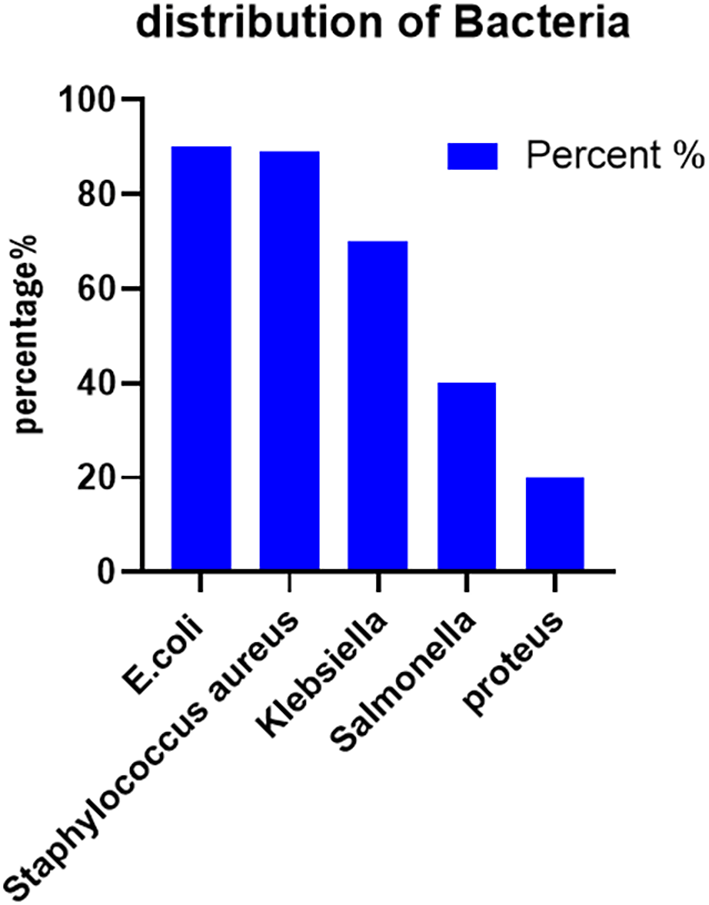
This confirms a high level of fecal pollution from human and animal sources, which poses a direct risk to human health.
These disparities are linked to slower water flow and the heavy discharge of industrial and agricultural waste into the Al-Warar.
| Parameters | Before treatment | T-test | After treatment | T-test | ||
|---|---|---|---|---|---|---|
| Euphrates | Nadhim Al-Warar | Euphrates | Nadhim Al-Warar | |||
| Temperature | 20.0 ±1.07 | 25.0 ±1.42 | 4.58 * | 20.0 ±1.07 | 25.0 ±1.42 | 4.58 * |
| Turbidity | 6.0 ±0.32 | 13.0 ±0.62 | 5.92 * | 1.0 ±0.05 | 12.3 ±0.77 | 6.41 * |
| pH | 8.2 ±0.47 | 7.5 ±0.37 | 0.618 * | 8.1 ±0.52 | 7.5 ±0.37 | 0.594 * |
| Electrical Conductivity | 1444.0 ±72.36 | 4820.0 ±52.10 | 328.05 * | 1442.0 ±64.05 | 4800 ±46.98 | 281.33 * |
| Alkalinity | 152.0 ±8.41 | 165.0 ±7.82 | 18.22 NS | 150.0 ±7.22 | 159.0 ±7.55 | 13.02 NS |
| Hardness | 499.0 ±26.72 | 1680.0 ±67.77 | 107.46 * | 500.0 ±33.74 | 1692.0 ±75.02 | 169.41 * |
| Calcium | 124.0 ±6.25 | 400.0 ±22.36 | 52.31 * | 122.0 ±6.42 | 410.0 ±19.44 | 72.35 * |
| Magnesium | 47.0 ±2.09 | 165.0 ±7.41 | 28.96 * | 47.0 ±2.36 | 162.0 ±6.92 | 34.88 * |
| Chloride | 179.0 ±8.52 | 588.0 ±32.76 | 81.42 * | 176.0 ±7.53 | 599.0 ±25.31 | 102.71 * |
| Sulfates | 284.0 ±16.37 | 1502.0 ±81.62 | 115.79 * | 286.0 ±14.94 | 1510.0 ±72.33 | 163.26 * |
| Sodium | 127.0 ±6.85 | 443.0 ±21.05 | 75.21 * | 124.0 ±5.37 | 432.0 ±22.14 | 67.93 * |
| Potassium | 5.8 ±0.32 | 13.4 ±0.57 | 4.87 * | 5.8 ±0.28 | 12.8 ±0.51 | 4.81 * |
| Total Dissolved Solids | 924.0 ±29.83 | 3600.0 ±98.02 | 216.45 * | 724.0 ±22.04 | 3400.0 ±114.32 | 192.62 * |
| Total Suspended Solids | 36.0 ±1.61 | 521.0 ±24.63 | 31.61 * | 30.0 ±1.57 | 66.0 ±3.47 | 22.75 * |
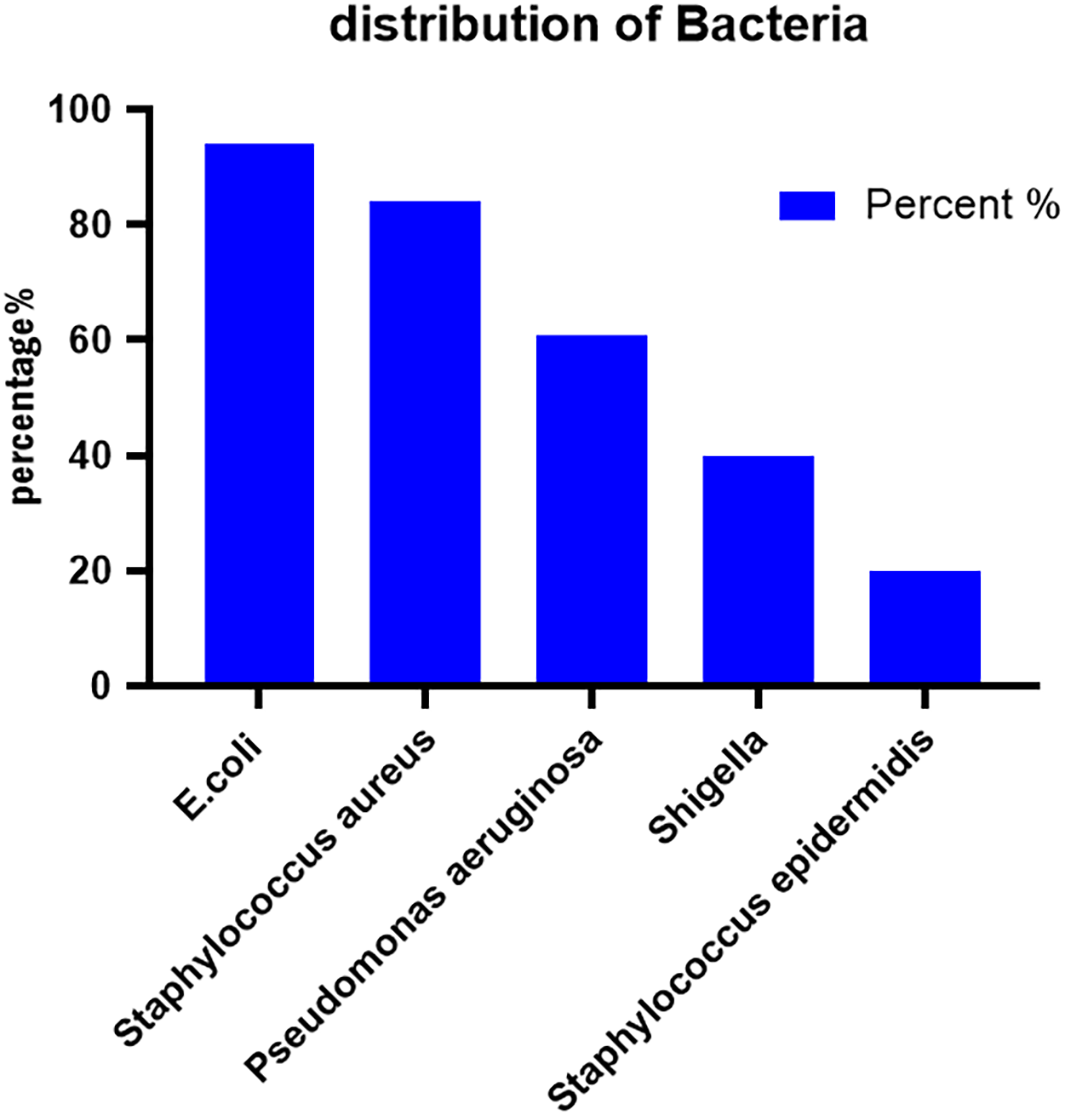
The presence of species such as Pseudomonas aeruginosa indicates contamination from residential wastewater, reinforcing the need for better disinfection.
The result of this study were, before treatment, the water contained a significant level of pollutants. The temperature remained stable at 25°C, and the pH value of 7.5 indicated neutral conditions. The turbidity was (13.0 ±0.62), indicating a moderate presence of suspended particles. The electrical conductivity was (4820.0 ±52.10), suggesting high mineral content. The total hardness was (1680.0 ±67.7), with notable concentrations of calcium (400.0 ±22.3), magnesium (165.0 ±7.4), chloride (588.0 ±32.7), and sulfates (1502.0 ±81.6). The total dissolved solids (3600.0 ±98.0) and total suspended solids (521.0 ±24.6),also pointed to considerable contamination. After treatment, statistical results concerning the Nadhim Al-Warar water demonstrated that the majority of parameters did not significantly change after treatment, as the values remained very close both before and after. This statistical stability (NS) suggests that the pollutants in Al-Warar are persistent and of high concentration, particularly salts (EC, Na, Cl, SO4), which were not impacted by conventional treatment. Only significant differences were noted in TDS and TSS, where values decreased significantly from (3600 ±98.02) to (3400 ±114.32) for TDS, and from (521 ±24.63) to (66 ±3.47) for TSS. Although these differences were statistically significant (P≤0.05), the TDS levels after treatment remained considerably higher than the permissible limits established by international standards. This indicates that conventional treatment was insufficient to manage the high salinity, and that advanced technologies such as reverse osmosis or membrane treatment are required.
The findings indicated notable disparities between the Euphrates River and Nadhim Al-Warar across most physical and chemical parameters both prior to and following treatment. The measurements of turbidity, electrical conductivity (EC), hardness, chloride, sulfates, sodium, and total dissolved solids (TDS) were significantly elevated in Al-Warar in comparison to the Euphrates, suggesting a higher degree of pollution in the water of Al-Warar. This increase may be linked to industrial and agricultural discharges, as well as wastewater effluents released into the canal, a conclusion supported by various local and regional studies investigating the sources of pollution in Al-Warar. In terms of temperature, the water in Al-Warar exhibited higher readings (25 °C) than that of the Euphrates (20 °C). This can be attributed to the slower flow and reduced aeration in the canal, which leads to a greater absorption of heat from the surrounding environment.
Regarding pH levels, the differences between the two water sources were minimal, with values remaining within a range close to neutrality (7.5–8.2). This suggests that human activities have not significantly impacted the acid-base balance of the water. The same observation applies to alkalinity, which did not show significant differences, indicating the stability of the carbonate system in both water sources. Concerning treatment outcomes, the results revealed that most parameters in the Euphrates experienced a significant reduction after treatment (for instance, turbidity decreased from 6.0 to 1.0 NTU, TDS from 924 to 724 mg/L, and TSS from 36 to 30 mg/L), underscoring the effectiveness of the treatment processes in enhancing water quality. Conversely, while a relative decrease was noted in some parameters in Al-Warar post-treatment (for example, TSS reduced from 521 to 66 mg/L), the values remained substantially higher than those of the Euphrates. This suggests that the treatment was inadequate in removing pollutants, or that the initial pollution levels exceeded the treatment capacity. In light of these findings, it can be concluded that Nadhim Al-Warar remains significantly impacted by pollution, necessitating further investigation and improved treatment strategies.
Bacterial distribution in Nadhim Al-Warar
The results of the distribution of bacteria isolated from the Al-Warar showed that the most abundant bacteria were E.coli and Staphylococcus aureus, with a percentage of 90%, while Klebsiella bacteria had a percentage of 70%, Salmonella bacteria had a percentage of 40%, and the least frequent bacteria were proteus bacteria with a percentage of 20%.
In this study, five isolates of coliform bacteria were obtained and identified from the water of the Al-Warar system located within the study area. The findings indicated a predominance of the Escherichia coli and Staphylococcus aureus genus among the isolate, this result agree with,13 who found the E.coli genus exhibited a predominant presence across all seasons and study locations within the Al-Warar water system, with a prevalence rate of 37%, The presence of these microorganisms is harmful to human health.15 This result confirms the significant level of fecal contamination present in the water due to waste. Both humans and animals contribute to this issue, and it is noteworthy that this genus exhibits considerable resistance to both low and high temperatures. Following this, the genus Klebsiella pneumoniae was identified at a prevalence of 70%, suggesting that the presence of this genus in the water is a strong indicator of human contamination in the water of Nadhim Al-Warar at the study locations.16 Additionally, Klebsiella was isolated, alongside Salmonella spp. and proteus spp. The detection of these species in water is highly detrimental to human health and is recognized as an invasive bacterium that originates from residential wastewater.
In this study isolated and identified five strains of coliform bacteria from the water of Euphrates River in Ramadi city. The highest rate of E.coli bacteria was recorded. then, Staphylococcus aureus genus recorded the second highest percentage of presence. These results are similar to the results of Nadhim Al-Warar and agree with.17 This evidence reinforces the detection of recent fecal contamination in water from human and animal origins. Furthermore, Pseudomonas aeruginosa, along with Staphylococcus epidermidis and Shigella spp., was isolated. The presence of these bacterial species in the water is detrimental to human health and is classified as an invasive bacterium linked to residential wastewater.18
Bacteria naturally inhabit water and constitute a vital component of the ecosystem. However, their populations can surge and their varieties can change in response to organic pollution sources. The presence of bacteria in river water typically indicates the nutrient levels within that aquatic environment. Elevated concentrations of nutrients in the water correlate with an increase in bacterial numbers.19,20
The study found a strong influence of environmental contamination on the water quality of the Euphrates and Nadhim Al-Warar rivers in Ramadi City. Water treatment was effective in reducing turbidity in the Euphrates River and helped to reduce suspended particles in Al-Warar, indicating a partial improvement in physical qualities. However, chemical and dissolved pollutants remained at high levels, notably in Al-Warar, and dangerous microorganisms such as E. coli and Staphylococcus aureus survived treatment. These data show that, while existing treatment procedures improve some physical properties, they are insufficient to address microbiological and chemical pollutants. To ensure safe and sustainable water for human consumption, it is vital to improve purification processes, upgrade treatment systems, and perform continuous health and environmental monitoring.
| Views | Downloads | |
|---|---|---|
| F1000Research | - | - |
|
PubMed Central
Data from PMC are received and updated monthly.
|
- | - |
Provide sufficient details of any financial or non-financial competing interests to enable users to assess whether your comments might lead a reasonable person to question your impartiality. Consider the following examples, but note that this is not an exhaustive list:
Sign up for content alerts and receive a weekly or monthly email with all newly published articles
Already registered? Sign in
The email address should be the one you originally registered with F1000.
You registered with F1000 via Google, so we cannot reset your password.
To sign in, please click here.
If you still need help with your Google account password, please click here.
You registered with F1000 via Facebook, so we cannot reset your password.
To sign in, please click here.
If you still need help with your Facebook account password, please click here.
If your email address is registered with us, we will email you instructions to reset your password.
If you think you should have received this email but it has not arrived, please check your spam filters and/or contact for further assistance.

Comments on this article Comments (0)